
M2-G1: A New Shotgun from Benelli
One of the leading manufacturers of 12-gauge semi-automatic shotguns today is the Italian company Benelli.
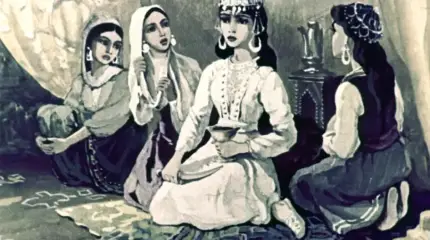
Such an unusual, multifaceted jambiya
The classic jambiya is an Eastern dagger with a broad, curved blade resembling a bird of prey's beak, and without a guard. It is an element of the national male costume of Yemenis, meaning in Yemen...

Methods of protecting firearms: the experience of centuries
Despite their lethality, firearms are vulnerable and even fragile. Since their invention, gunsmiths have sought ways to protect their weapons from external...
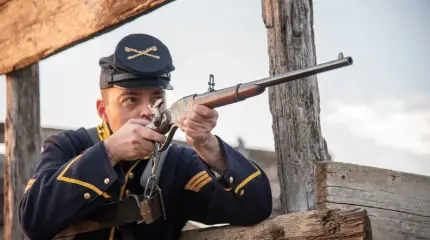
Spencer carbines: the first multi-shot rifle of the US Army and the Italian company Chiappa
The American Civil War primarily used muzzle-loading, cap-and-bolt rifles, but advances in weapons development had accelerated so rapidly that the conflict saw the use of...
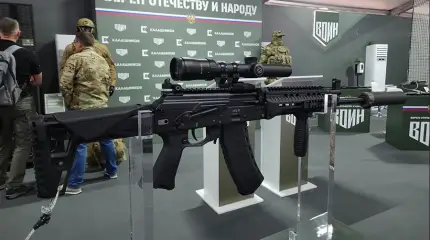
The New AK-12+: Pros and Cons
The Kalashnikov Concern presented a new version of the AK-12 assault rifle at the 11th Eastern Economic Forum. This time, it's a new model designed to address unique challenges. What makes the rifle...
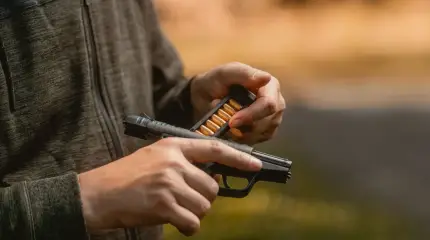
KelTec: Pistols… Flat, Handy, and Deadly
A pistol with a thick grip and a double-stack magazine isn't comfortable for everyone. A "thick pistol" is also awkward to carry in a jacket or coat pocket, or even tucked into the waistband of jeans.
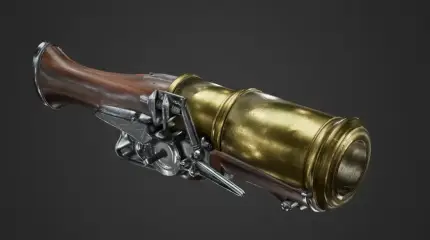
Grenade launchers: barrel, underbarrel, overbarrel
Cast iron grenades weighing 1–2 pounds appeared in all European armies by the early 18th century, and were armed with elite grenadier units. However, throwing such a "grenade" far enough...
Two stores - one pump
Where did the pump's history begin, where did it end today, and what future prospects exist for the world's most unusual "pump"? That's the subject of our story today.

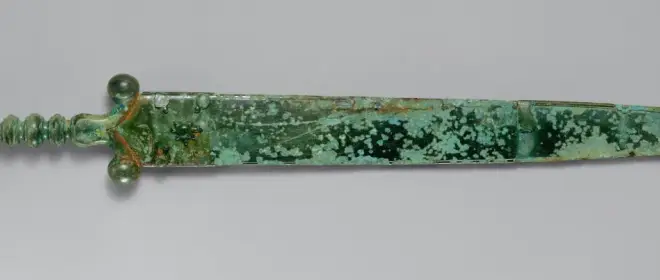
Exotic swords
Today we'll showcase the most exotic swords from the Metropolitan Museum of Art, which challenge conventional notions of what a real sword should look like.
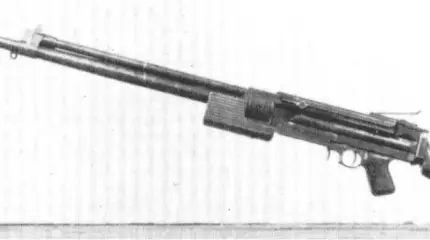
Lewis M1923/1924 Light Machine Gun: A Design Analysis of a Forgotten Predecessor of Modern Systems
This material is a historical and technical study of the extremely rare Lewis M1923/1924 light machine gun, also known as the captured lMG 107(f)....

Silent pistol without a silencer
At the end of the 19th century, engineers began attempting to create devices that could muffle the sound of gunshots. The Swiss and Danes led the way in this area.
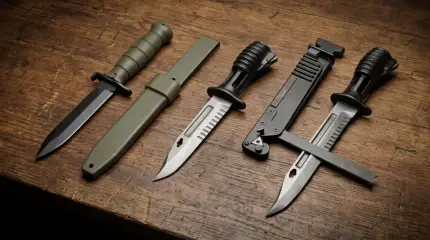
Who has the better bayonet knife?
This weapon's heyday is long past, but that doesn't make it a useless artifact. Everything is useful in battle, and the bayonet is no exception—all that remains is to choose the best of the best...
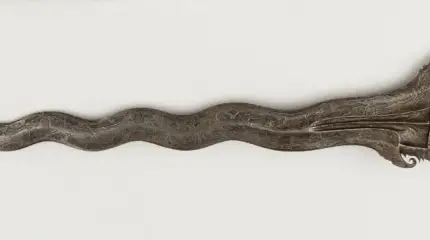
The blade is wavy like a snake
Today, our story will be dedicated to perhaps one of the most unique types of such weapons – the Malay kris...
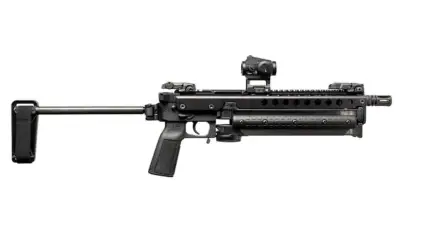
Another very modern submachine gun
In the 80s, NATO countries began investing heavily in weapons development. It was during this time that advanced weapons systems such as the strike...
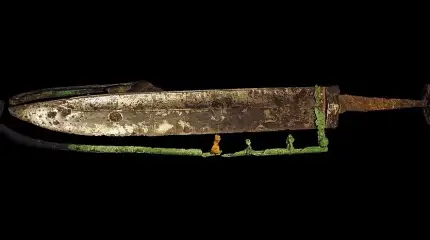
A little about scramasax
The name scramasax was coined by the historian Gregory of Tours in the 6th century, who wrote that the Frankish king Sigebert was attacked with "powerful knives, commonly called scramasaxes."
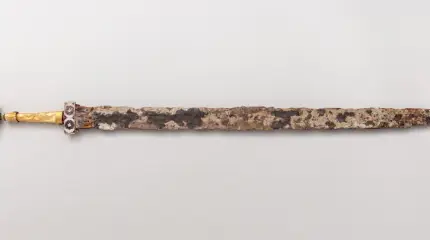
Blade Notches. Swords of Europe from 410 to 1066 AD.
The Sarmatians brought their long, slashing swords to Europe, and they were greatly appreciated by all horse-breeding and horse-riding peoples. The shorter Roman spatha was more comfortable, but required at least some...

Notches on blades. Iron comes to Europe.
In Europe, the Iron Age can quite legitimately be called "Celtic" (c. 700-0 BC). And not just any Celtic. During this time, the Hallstatt culture spread across central Europe...
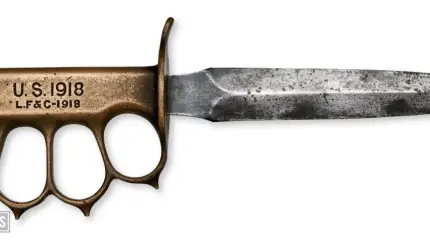
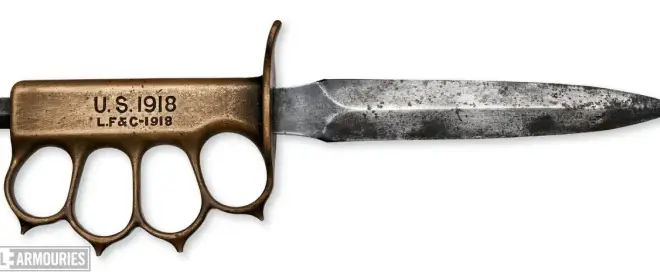
Trench knives of the First World War
Today we'll be at another vernissage, not of paintings this time, but of knives of a very specific type and purpose...
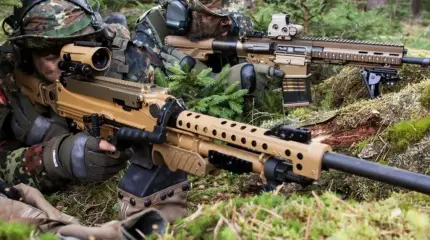
Why did the Germans slow down the MG5?
The MG5 is a machine gun that deliberately fires slower than its legendary ancestor, the MG42, trading in a barrage of firepower for precision and modularity...

The Heirs of Anne Oakley
The revolver's legendary reputation was forged by Wild West figures like Wyatt Earp and Wild Bill Hickok, among many others. However, it would be a mistake to think they'll never be replaced. And so, among...

The atomic bullet is a Cold War tale.
The legend of the Soviet 7,62mm nuclear cartridge in California promises a bullet that can destroy a tank with a single hit—but pick up a calculator and the beautiful tale runs into physics at the first glance.

How private owners transformed a museum exhibit into a modern machine gun.
In May of this year, a private manufacturer of weapons tuning parts presented a seemingly unconventional tuning kit for a machine gun long since retired from service in the Russian army. What was it all about, and why...

Combat knives of the Middle Ages
The Ancient World was replaced by the Middle Ages, and its weapons were very different from those of the preceding era. Iron was initially in short supply, so weapons made from it were expensive and valuable. Knives—yes, there were some...

About the appearance of some knives
When North American Indians began actively trading with Europeans around the early 18th century, they began demanding both knives and tomahawks. Often, they simply purchased strips of metal, and...