Minelaying by Kriegsmarine submarines in the Northern Theatre
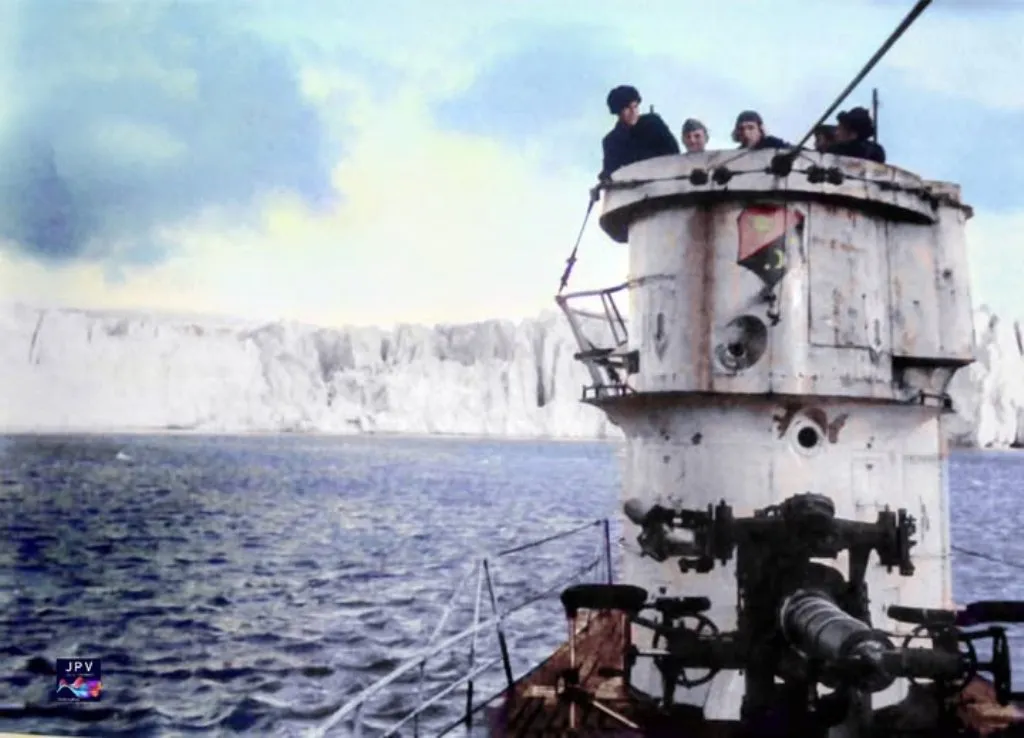
Beginning in late August 1942, Kriegsmarine submarines, attempting to complicate the activities of Soviet merchant ships, fleet and naval ships in the western sector of the Arctic, began laying mines in coastal waters. The brunt of the fight against them fell to the White Sea Naval Flotilla, established in August 1941 with its main base in Arkhangelsk. The BF included all formations and units of the former White Sea Naval Base, the Yokanga Naval Base, and the Northern Detachment of Ships (Novaya Zemlya). In August 1942, the Novaya Zemlya Naval Base (Belushya Bay, commander Captain 1st Rank D. G. Zhmakin) was established, and in March 1944, the Kara Naval Base (Dikson Island, commander Captain 1st Rank S. V. Kiselev).
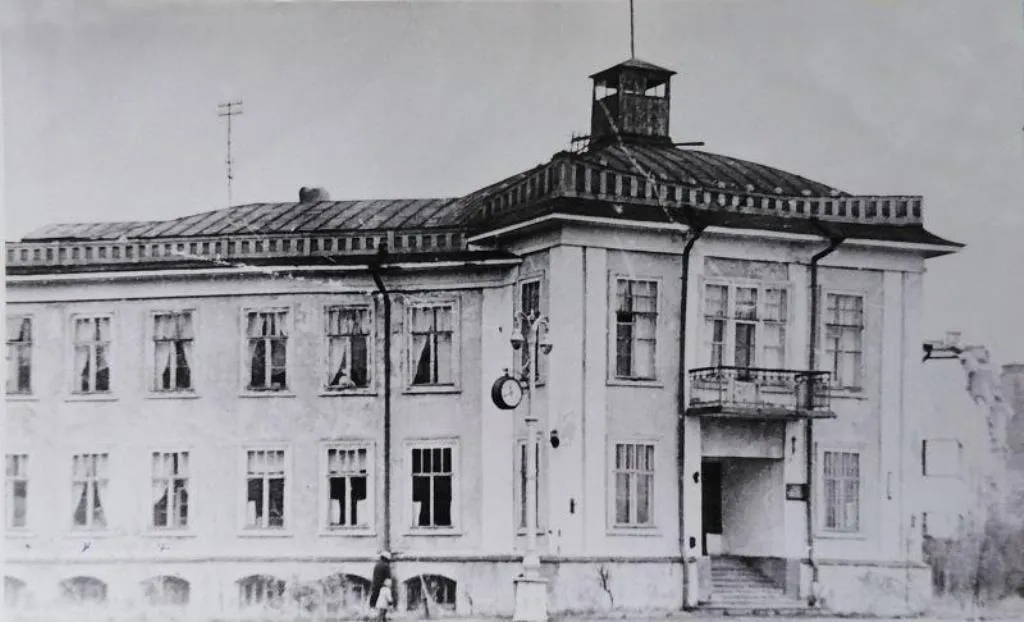
The White Sea Naval Base Headquarters. The three lower windows on the left are the naval base's mine and torpedo compartment.
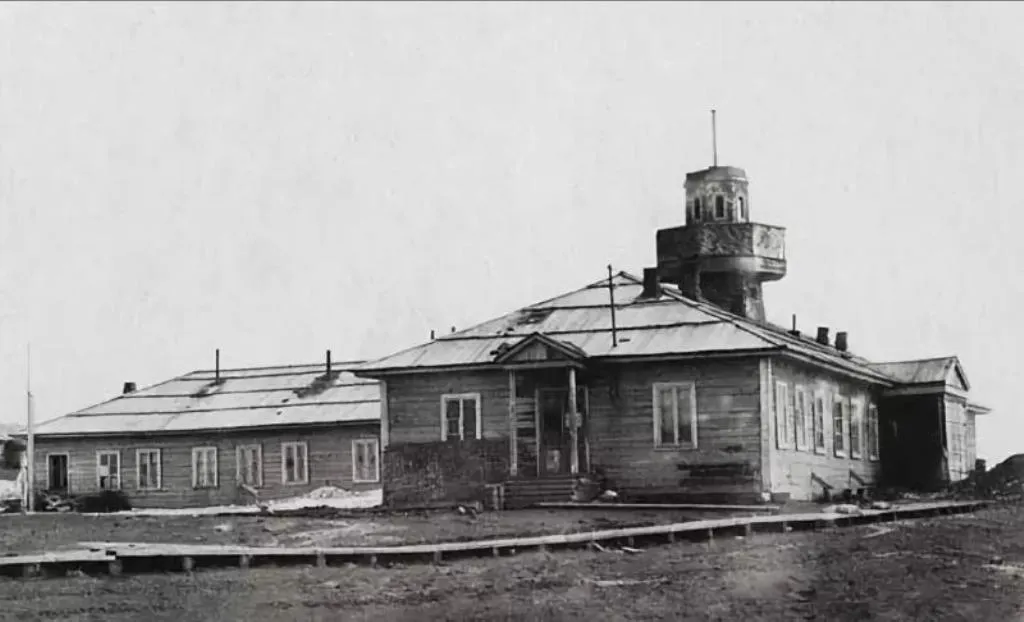
Headquarters of the Novaya Zemlya Naval Base, 1944
Ninety percent of the flotilla's ships were former civilian vessels, primarily fishing trawlers belonging to the Sevgosrybtrest NKRP. To combat the mine threat, the vessels were equipped with slow-moving ship guards, mine-sweeping equipment, anti-mine windscreens, and light equipment. artillery Anti-submarine weapons, machine guns, and depth charges were provided. During the first months of the war, the flotilla had only contact sweeps, so British naval minesweepers provided significant assistance.
The personnel of the newly formed units had no experience using minesweeping weapons. Of the 1260-person minesweeping brigade, only 10% were career sailors.
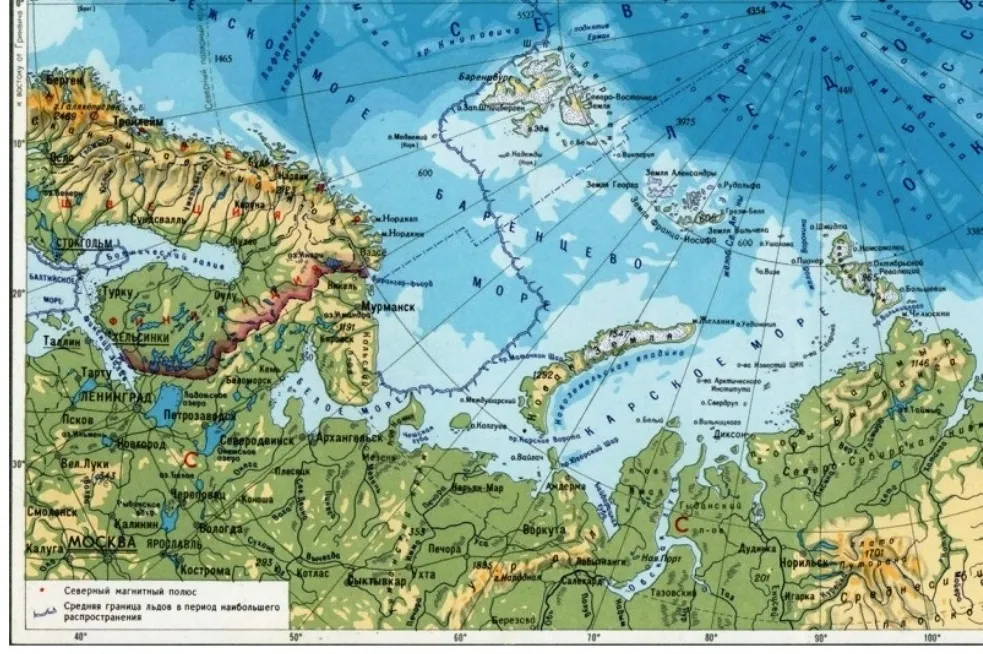
Western sector of the Soviet Arctic
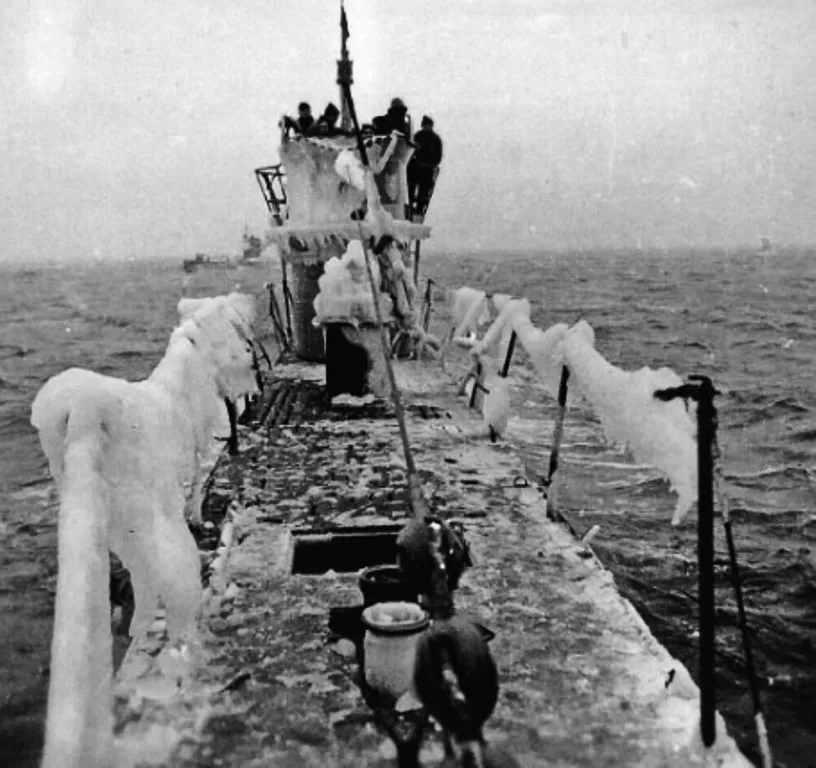
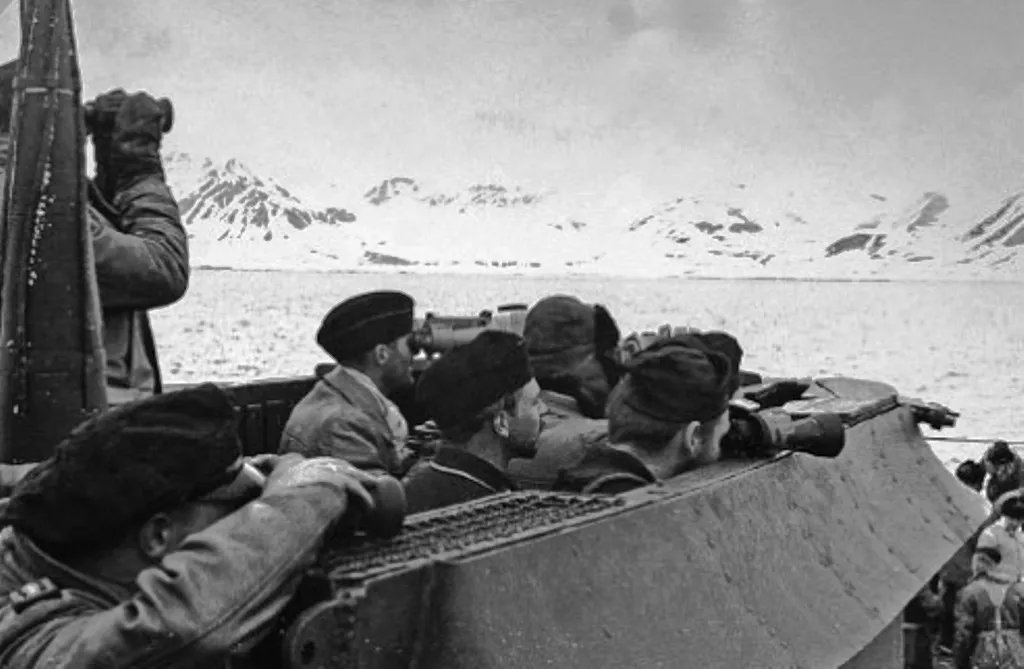
Type VIIC submarines in Arctic waters
Type VIIC torpedo submarines were used for minelaying, laying non-contact bottom mines (Torpedo-Grund-minen) using their 533-mm torpedo tubes. Two types of mines were used: TMB (used by the Kriegsmarine since 1939) and TMC (entered service in November 1939). A single torpedo tube could carry three TMB mines or two TMC mines. This means that a Type VII submarine could carry up to 33 TMB mines, but torpedoes were typically used in place of some of the mines. Depending on the mine type and explosive charge, the effective laying depth was 20–37 meters.
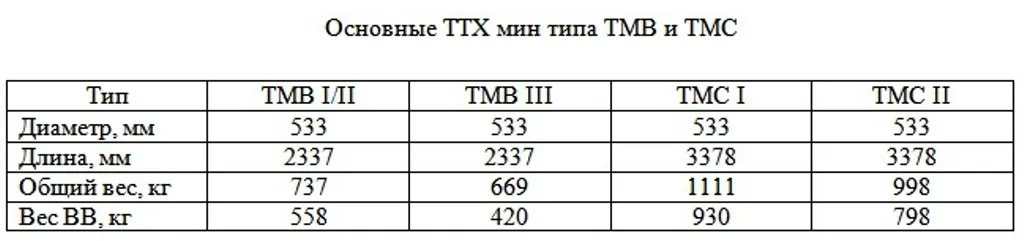
These types of mines primarily had magnetic fuses, although acoustic and combined magnetic-acoustic and magnetohydrodynamic fuses were also used. The mines' cylindrical bodies with hemispherical tips were made of aluminum alloy. Similar mines were also used by the Luftwaffe (LMA and LMB mines of various modifications, adopted in 1938). Their main differences from naval mines were the presence of a parachute system and their size.
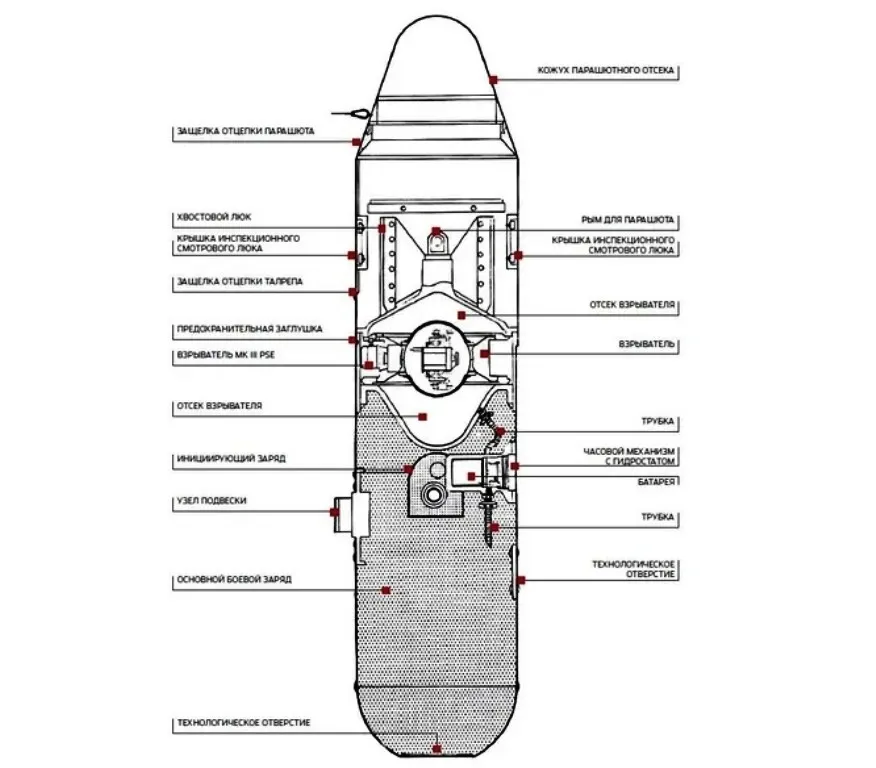
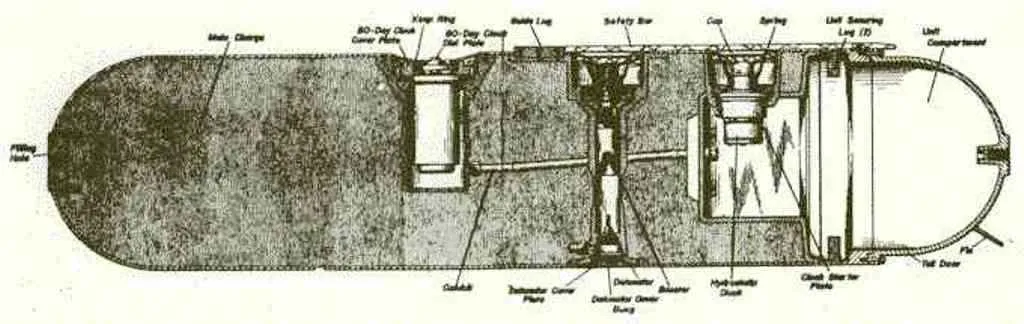
TMB type mine
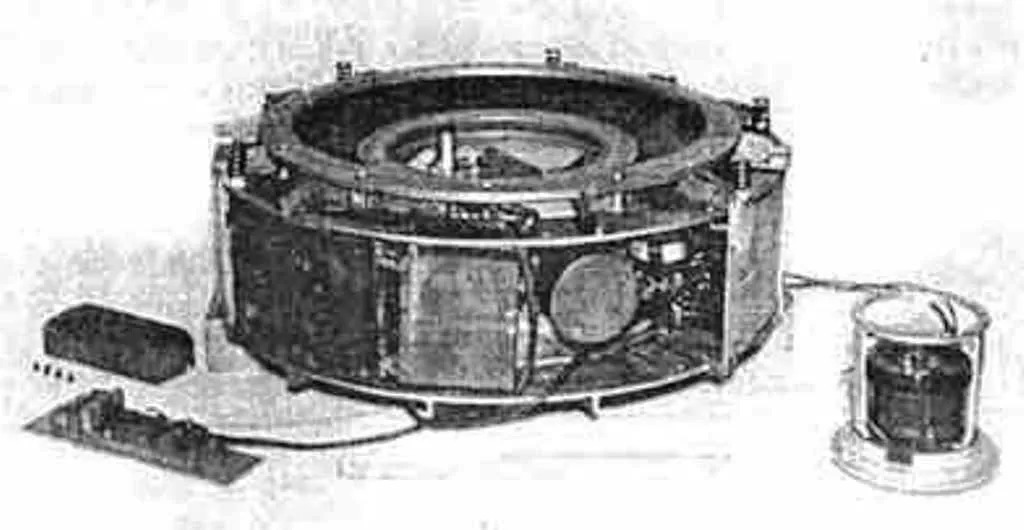
Magnetic-acoustic fuse type MA2 (in service since 1942)
Kriegsmarine mines were filled with explosives SW18 (50% TNT, 24% hexyl, 15% aluminum) or SW36 (67% TNT, 8% hexyl, 25% aluminum).
In November 1939, the Luftwaffe "gifted" the British an LMB that had crashed in shallow water in the Thames Estuary. Its study paved the way for the development of countermeasures against magnetic mines. Following the conclusion of Soviet-German agreements in 1940, Germany officially transferred several samples of its latest non-contact bottom mines (including the LMA and LMB types) to the USSR. However, the USSR failed to develop countermeasures in a timely manner.
The first minelaying in Soviet waters was a serious test for both the shore crews at the Tromsø base in Norway, where the submarines were based, and the submarine crews. Those on shore had no experience servicing such mines, nor did they have the means to load them. The crews, meanwhile, had no experience navigating the Arctic; modern charts were unavailable, so they were forced to rely primarily on Russian charts from 1901.
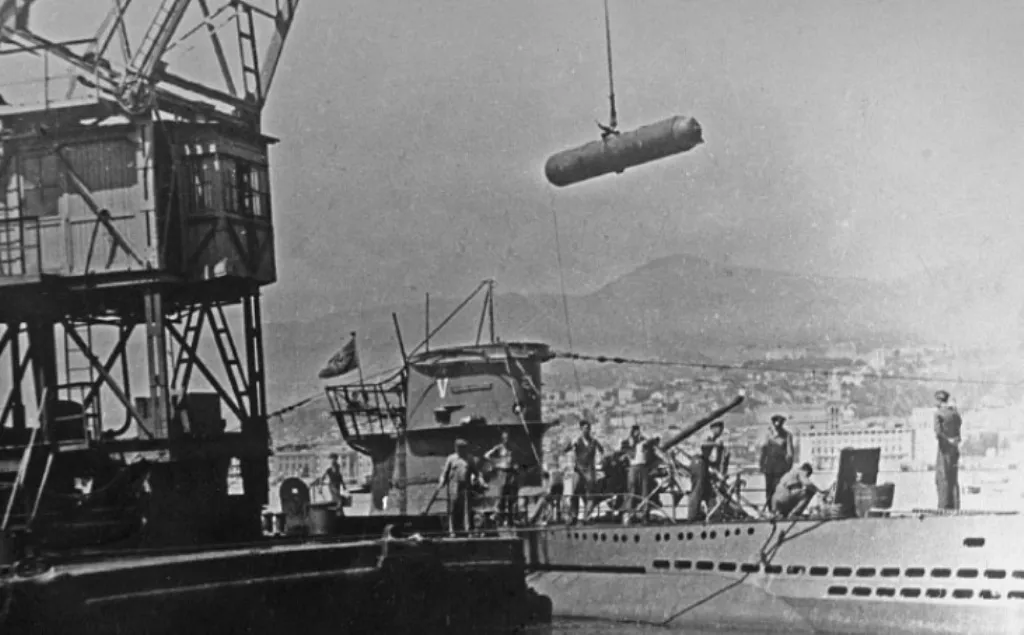
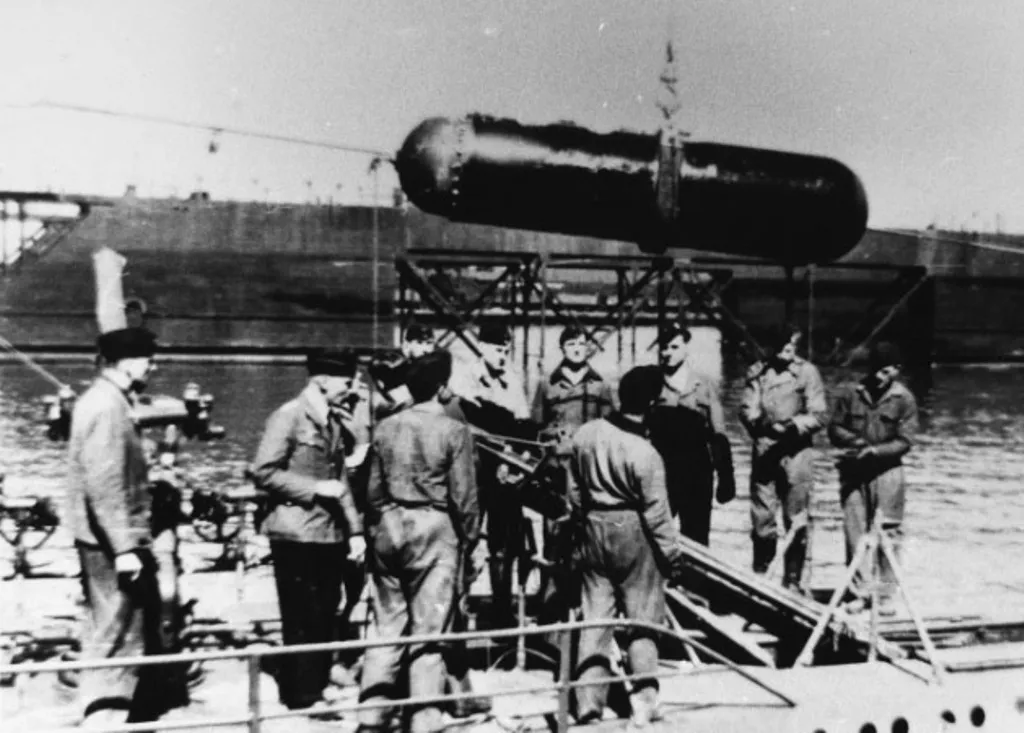
Loading a mine onto a Type VIIC submarine
And this despite the fact that they were to operate in shallow waters, where the submarine often couldn't even submerge in an emergency. Therefore, explosive charges were installed to sink the submarine, secret documentation was prepared for quick destruction or sinking, and individual components of the Enigma encryption machine were distributed among the crew members, who were to throw them overboard if necessary.
Since the submarines lacked a heating system, and the only "warm" areas were the diesel compartment and galley, the submariners suffered from the cold, and there was nowhere to dry their wet clothes after shifts on the bridge exposed to icy winds, waves, rain, and snow. And such expeditions lasted for weeks, sometimes even months.
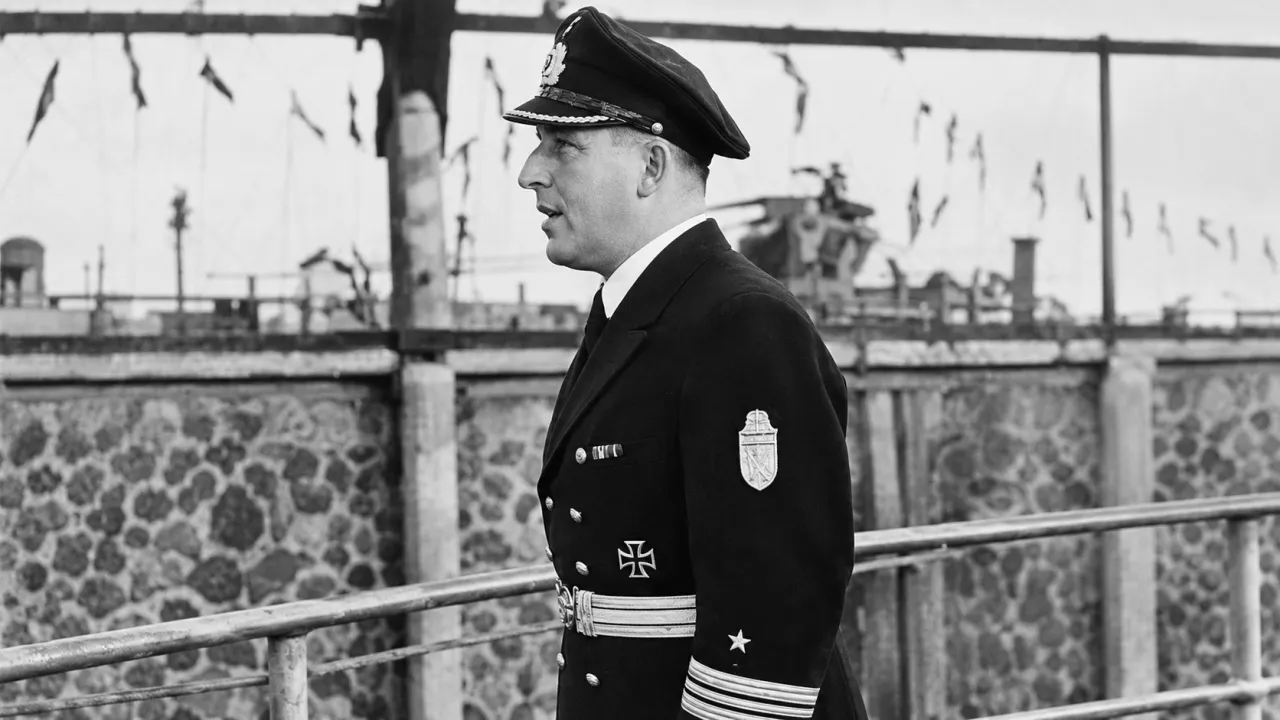
Commander of U 589, Lieutenant Commander Hans-Joachim Horrer
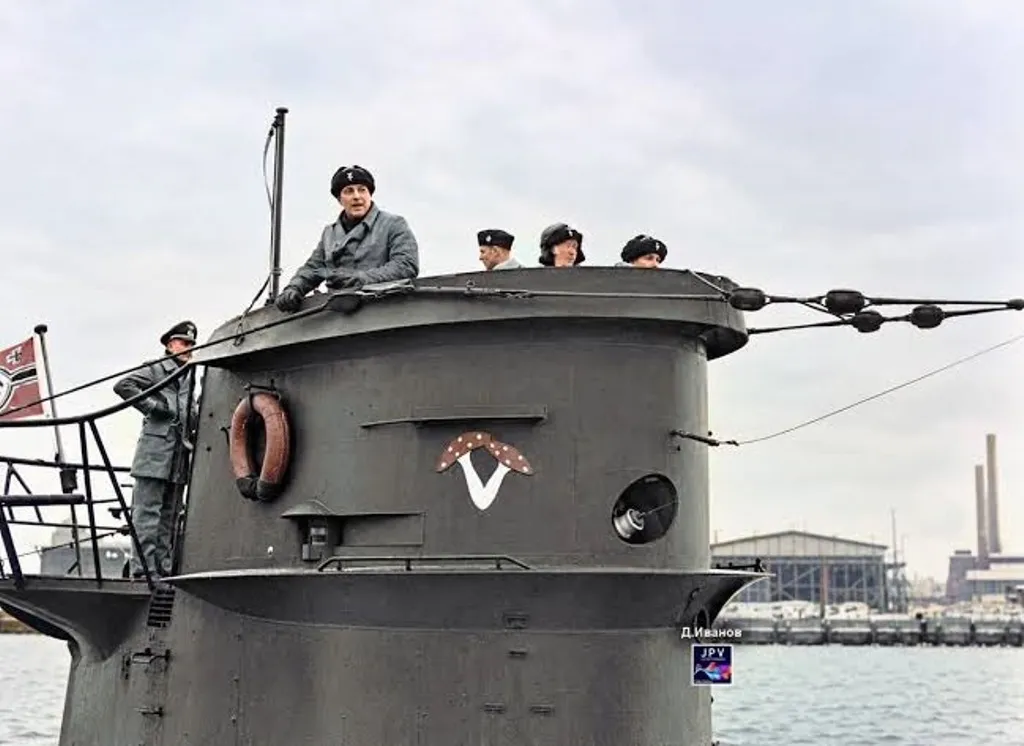
U 589. The emblem on its conning tower is a stylized fly agaric mushroom combined with the Latin letter "V" (the German propaganda slogan "Viktoria" - "Victory"), and the fly agaric was the personal talisman of the boat's commander, Hans-Joachim Horrer
On August 28, U-589 laid 16 mines at the entrance to the Matochkin Shar Strait. On October 1, the patrol vessel SKR-23 Musson (a mobilized fishing trawler RT-54 Sudak) was blown up and sank in this minefield. It had a displacement of 1200 tons, a speed of 12,5 knots, and was armed with two 76mm guns and two 7.62mm machine guns. Its crew consisted of 43 men, and its commander was Lieutenant Commander G. Ya. Kozin.
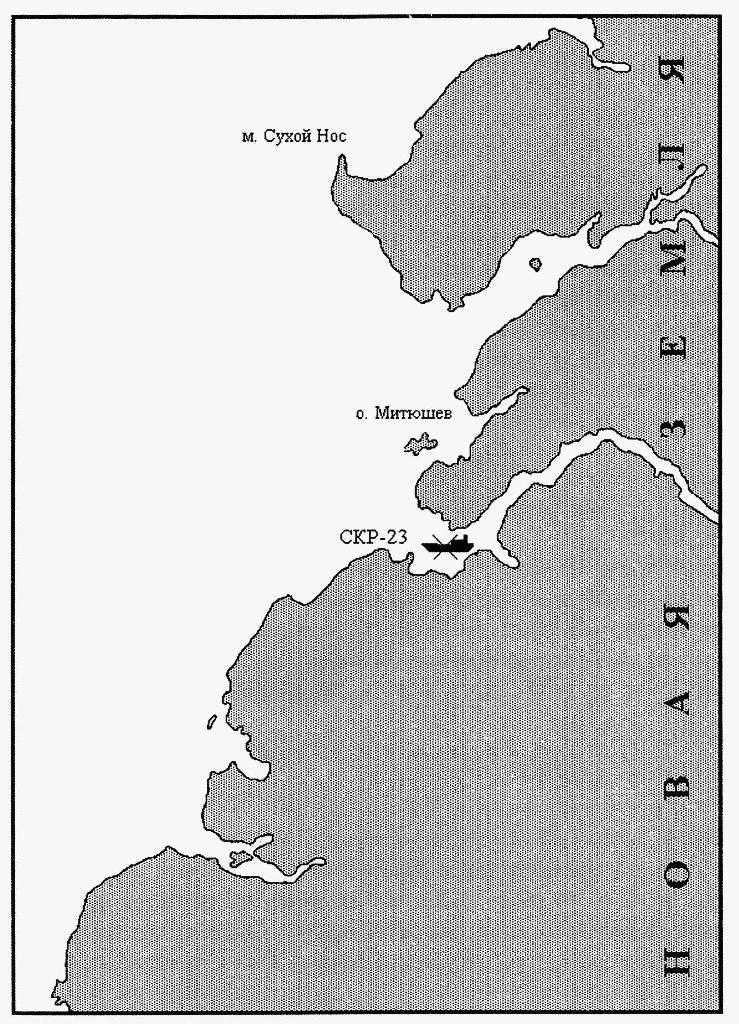
The crash site of SKR-23
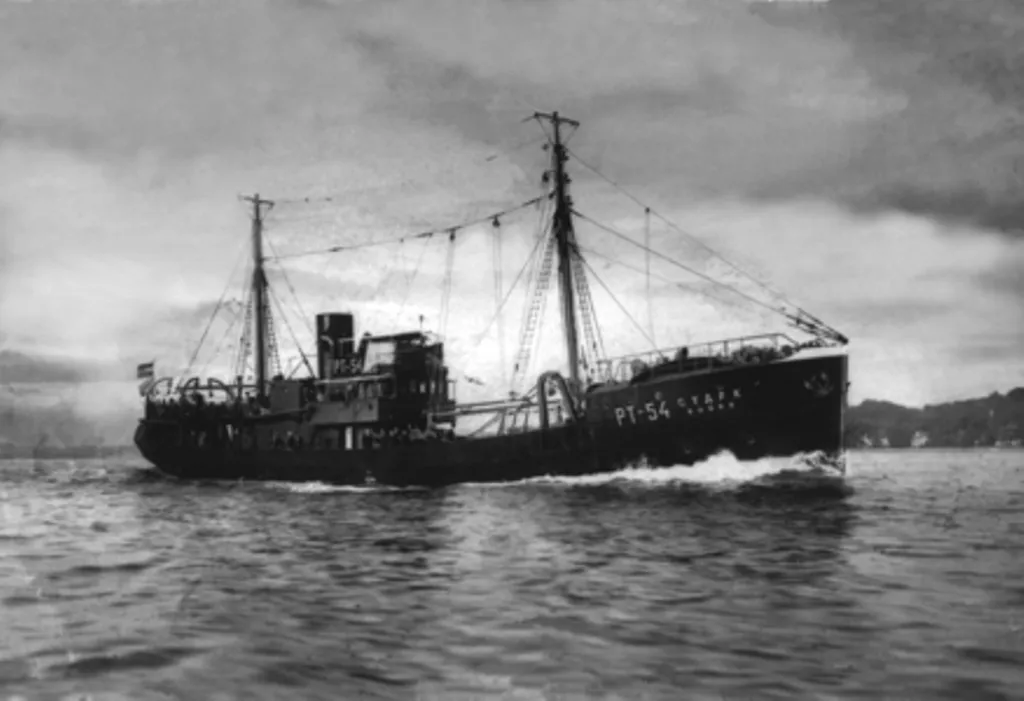
RT-54 "Sudak"

SKR-23 commander, Lieutenant Commander G. Ya. Kozin
On October 11, 1942, the Musson was on patrol in the Matochkin Shar Strait. At 4:00 PM, the ship broke patrol and headed for the Lagernoye camp to replenish its fresh water supplies. At 4:45 PM, while at coordinates 73° 17,6' N 54° 09,1' E and traveling at 10 knots, an explosion occurred under its stern. The Musson sank within five minutes from the damage it sustained, and only 18 sailors were saved.
On October 13, U-592 laid 24 mines at the entrance to the Yugorsky Shar Strait, and on October 14, the steamship Shchors (3770 GRT) was blown up and sank there. It was part of a convoy of six transports and three minesweepers and was blown up as it exited the Yugorsky Shar Strait into Belushya Bay. Ten people died.
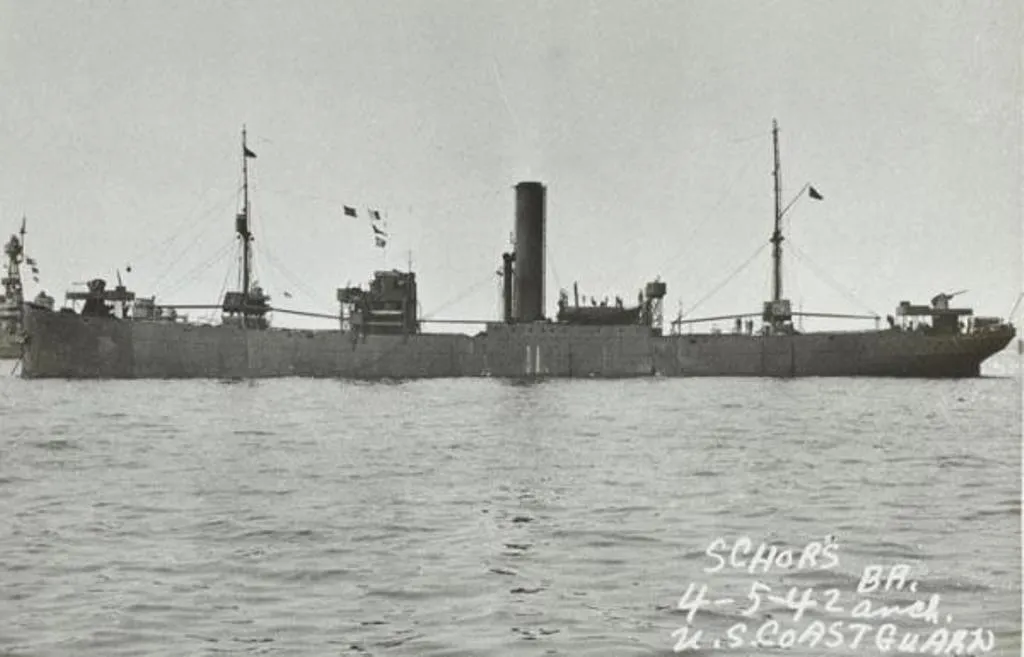
Steamship "Shchors"
Believing the transport to be under attack by a submarine, the escort ships bombed the area, detonating two more mines. Convoy traffic was temporarily suspended. To search for mines, two Soviet and three British minesweepers swept the strait from October 19 to 21, destroying six (according to other sources, ten) bottom mines. Only on October 21, with the completion of sweeping the western entrance to the strait, did convoy traffic resume. The British minesweepers then began sweeping the entrance to Matochkin Shar and destroyed three mines.
On July 25, 1943, while approaching the Yugorsky Strait, the White Sea Flotilla minesweeper TShch-58 (formerly the RT-94 Zhdanov trawler of the Sevgosrybtrest) struck and sank on mines laid by U-592. The TShch-58 was escorting a convoy of 19 river vessels traveling from the Pechora River to the Gulf of Ob. The explosion broke the minesweeper apart and sank in just two minutes. Ten crew members were killed, and the rest were picked up by convoy vessels.
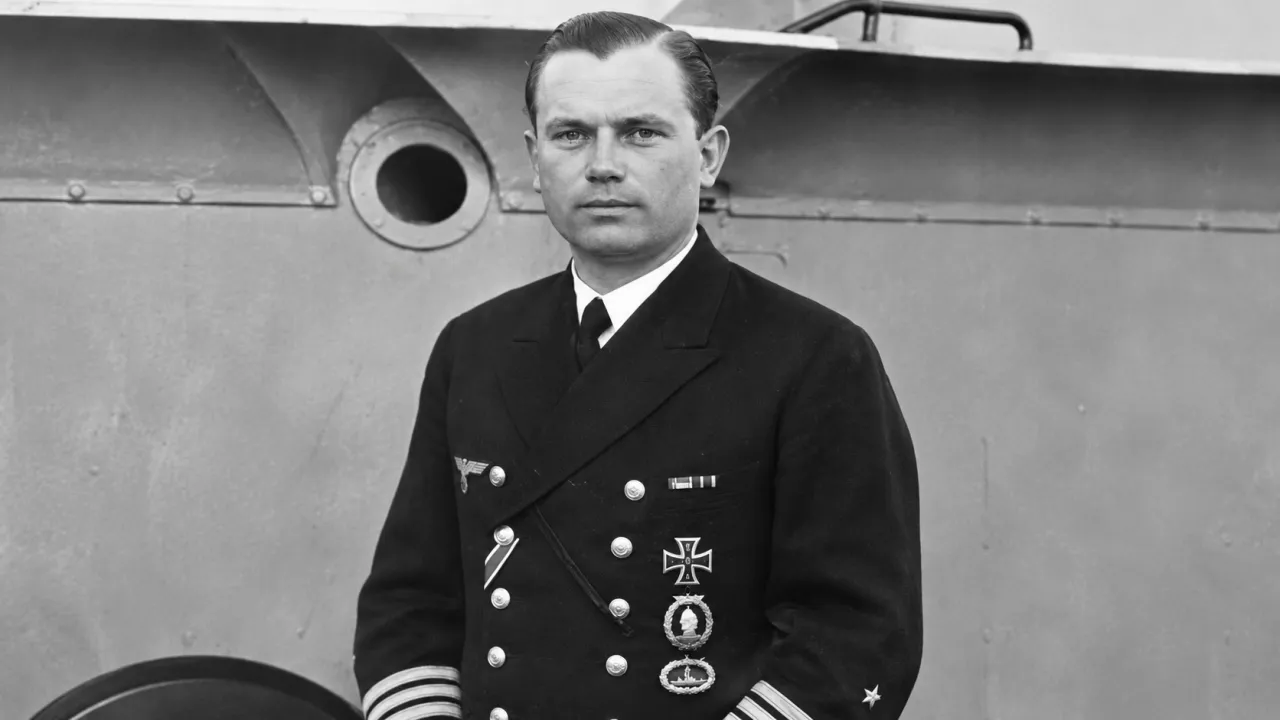
Commander of U 592, Lieutenant Commander Carl Borm
During the war, the Arctic regions and the Northern Sea Route acquired significant economic and military significance. The Pechora coal basin became the main fuel base for the northwest European part of the USSR, with coal production there increasing from 300 tons to nearly 3 million tons per year. In 1943, the Norilsk Metallurgical Plant reached its design capacity, and production of high-quality Norilsk coal increased sharply. Coal and salt production in Nordvik expanded rapidly.
In addition, imported cargo from the United States and Canada was transported along the NSR from the east, while supply cargo from Arkhangelsk was transported in the opposite direction. To support these shipments, 6-7 icebreakers, 36-47 transport vessels, and 8-9 survey vessels operated in the Pechora and Kara Seas.
From late July 1943, German U-boats began larger-scale minelaying operations in the Soviet North, which continued until mid-November, as long as ice conditions permitted. However, due to a shortage of submarines in more important theaters, most minelaying operations were cancelled.
The White Sea Flotilla, in turn, entered 1943 better prepared to combat mine threats. By July 1, it had 18 minesweepers, including several British-built TAM (Acoustic Magnetic Minesweeping) class minesweepers. The TAMs were equipped with the most advanced British mine countermeasures equipment available at the time—electromagnetic and acoustic sweeps. In addition, flotilla specialists installed loop electromagnetic sweeps on several of the minesweepers.
The first minelaying mission was carried out on July 20th in Belushya Bay by U-601, under the command of Lieutenant Commander Peter-Ottmar Grau. It's worth noting that before becoming a submariner, Grau commanded minesweepers from 1939 to 1941. What a twist of fate!

U 601 commander Lieutenant Commander Peter-Ottmar Grau
U 601 in polar waters
While the first three missions proceeded without incident, the crew of U 586 experienced a number of rather unpleasant moments. On July 23, while crossing the Barents Sea, two Pe-2 aircraft emerged from the clouds and fired cannons at the submarine. Fortunately for the submariners, all the shells missed, but the aircraft continued their hunt for several more days.
On the afternoon of July 27, with the keel just nine meters below the surface, a warship was spotted on the horizon. The submarine remained undetected and, finding greater depth, submerged and settled. A few hours later, U 586 surfaced and began laying mines at depths of 17–19 meters at intervals of approximately 350 meters in an area with coordinates 69° 00´ N 55° 00´ E in Pechora Bay.
In 1943, enemy submarines laid mines near the Yugorsky Shar Strait, in Pechora Bay, Belushya Bay, near Kolguyev Island, on the approach to Port Dikson, in the Gulf of Ob, and at the mouth of the Yenisei River. A total of 344 mines were laid.
On July 25, in the Yugorsky Strait, the minesweeper T-904 (side number 58, former RT-94 Zhdanov, 1165 tons), which was escorting a convoy of 15 river tugs from Pechora to Obskaya Bay, struck a mine laid by U 625 (commander – Lieutenant Commander Hans Benker) on July 20, broke in two, and sank within two minutes. Ten people were killed and three were seriously injured.
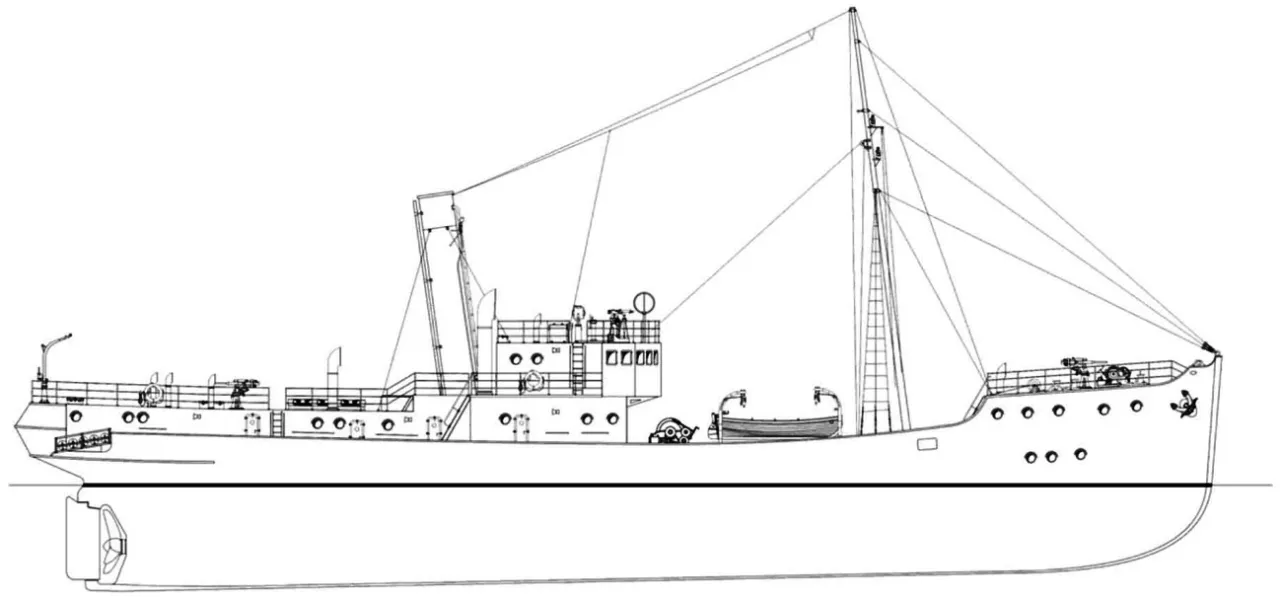
The T-904 RT-type minesweeper (in this case, a former Smena-type fishing trawler of the second series of the Severnaya Verf shipyard)
On August 25, 1943, in the Yugorsky Strait, the rescue tug Shkval of the White Sea military flotilla was blown up and sank by mines laid by U 625 on August 13, and on August 28, in the mouth of the Yenisei, the steamship Tbilisi of the Far Eastern Shipping Company was sunk by mines laid by U 636.
On September 13, while minesweeping in Yugorsky Shar, the T-100 type TAM minesweeper suffered serious damage to its hull and mechanisms from a nearby mine explosion.
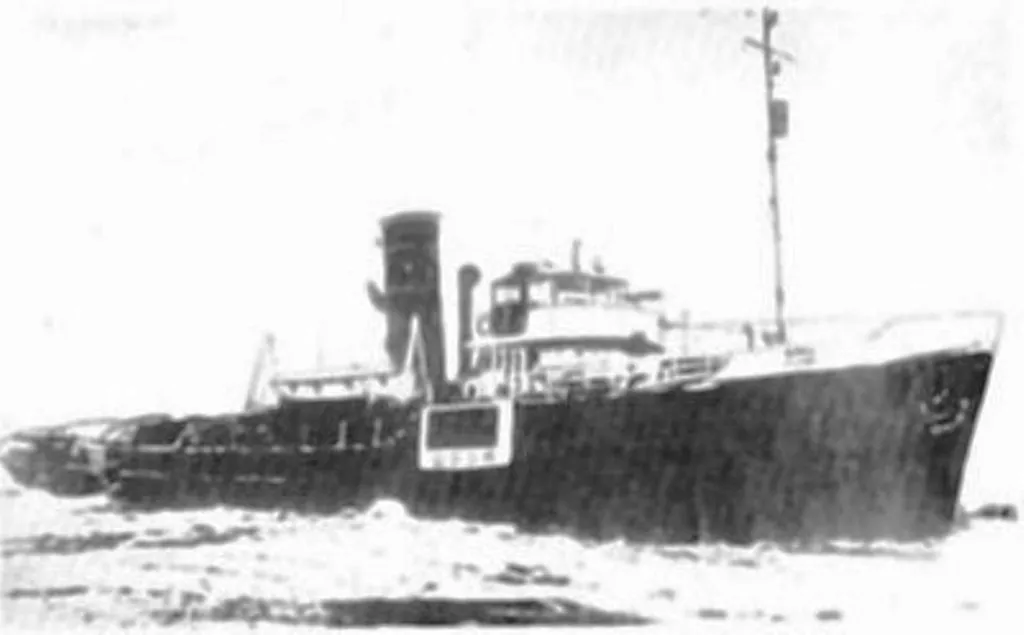
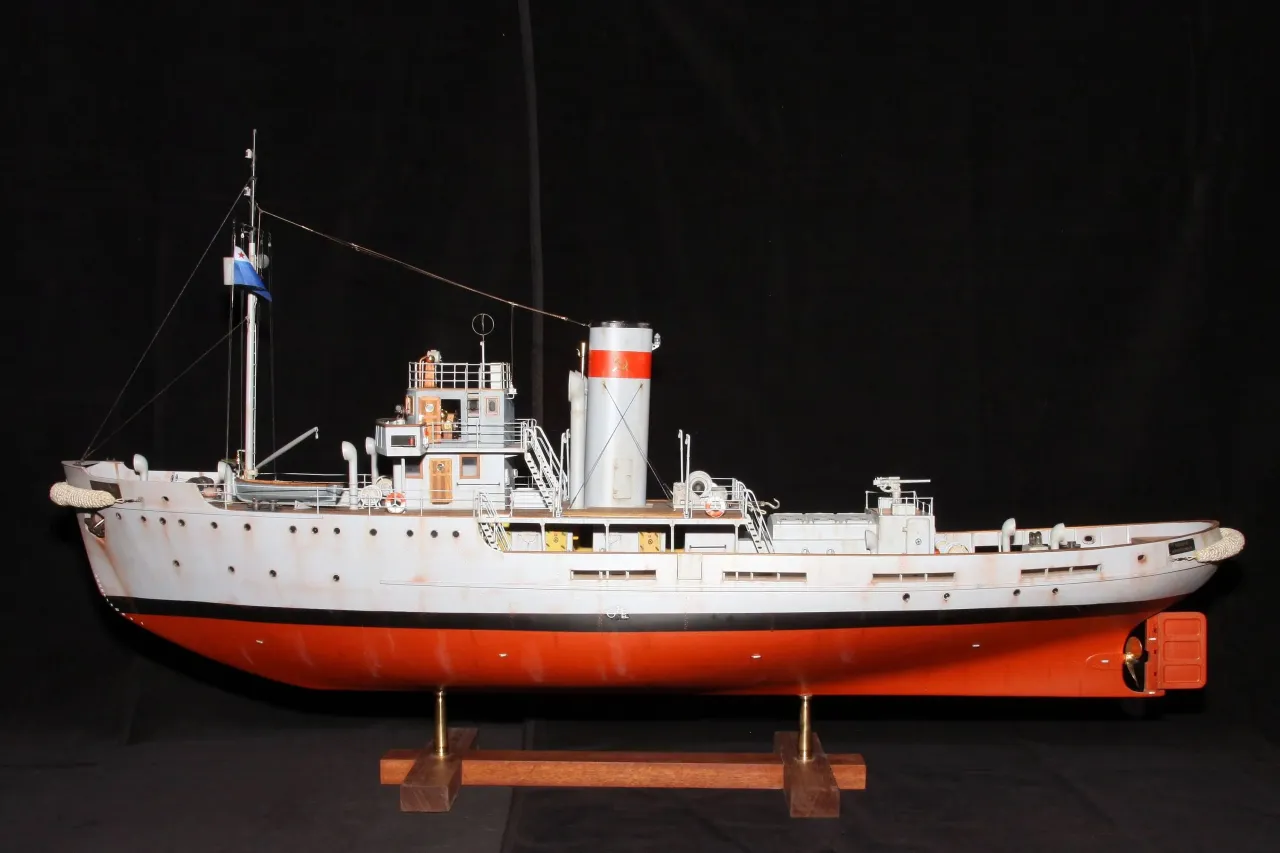
Rescue tug "Shkval"
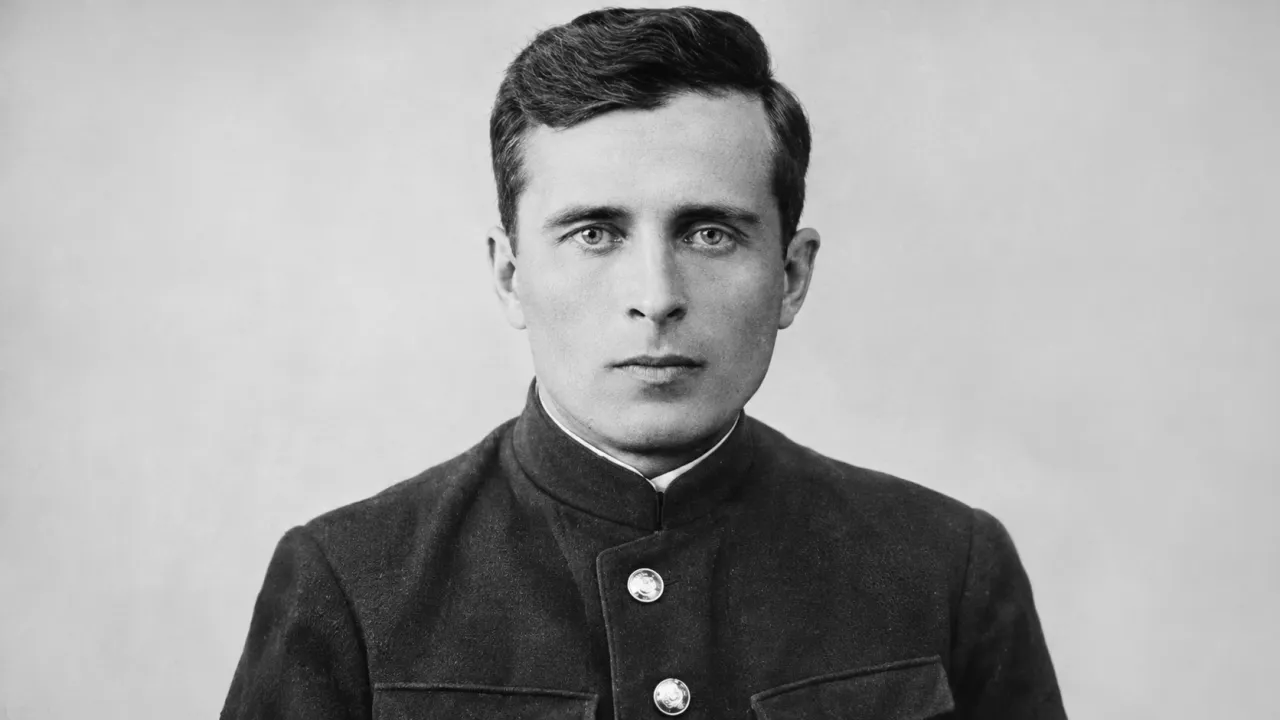
Captain "Shkval" V. S. Timofeev
In July 1941, the tugboat Shkval, a steamboat of the Northern Shipping Company, was transferred to the Navy and assigned to the White Sea Flotilla's rescue and salvage unit. On August 25, 1943, the Shkval was returning to Arkhangelsk after escorting a convoy of river vessels from the Pechora estuary to the Ob River through the Kara Sea. At 18:7 PM, the rescue ship struck two mines at the entrance to the Yugorsky Shar Strait. Forty-seven of the fifty-two people on board were killed, including Captain V.S. Timofeyev.
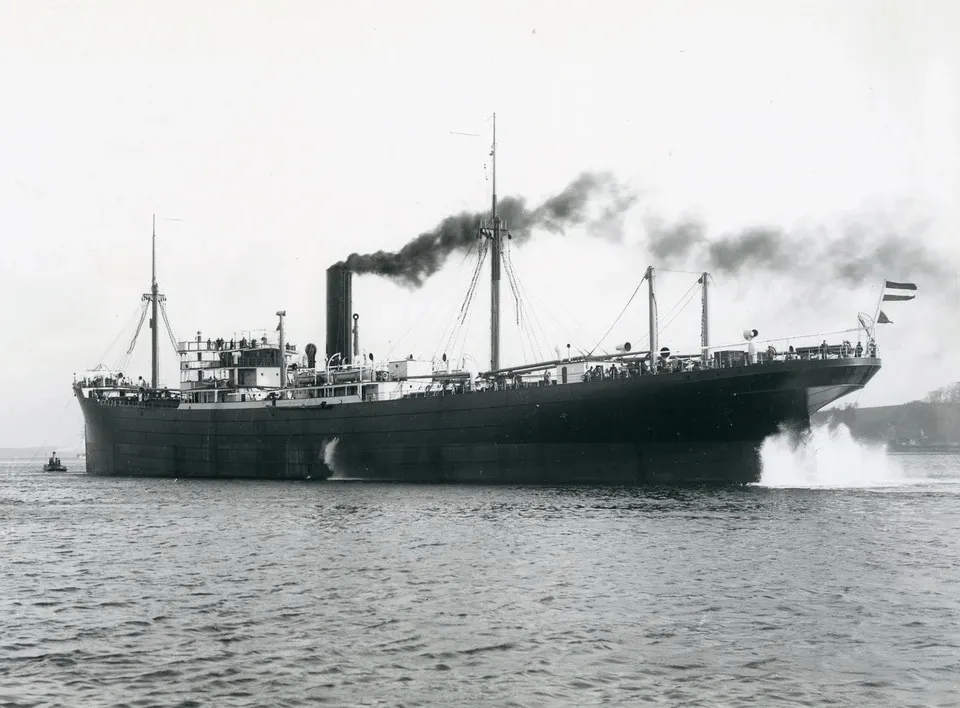
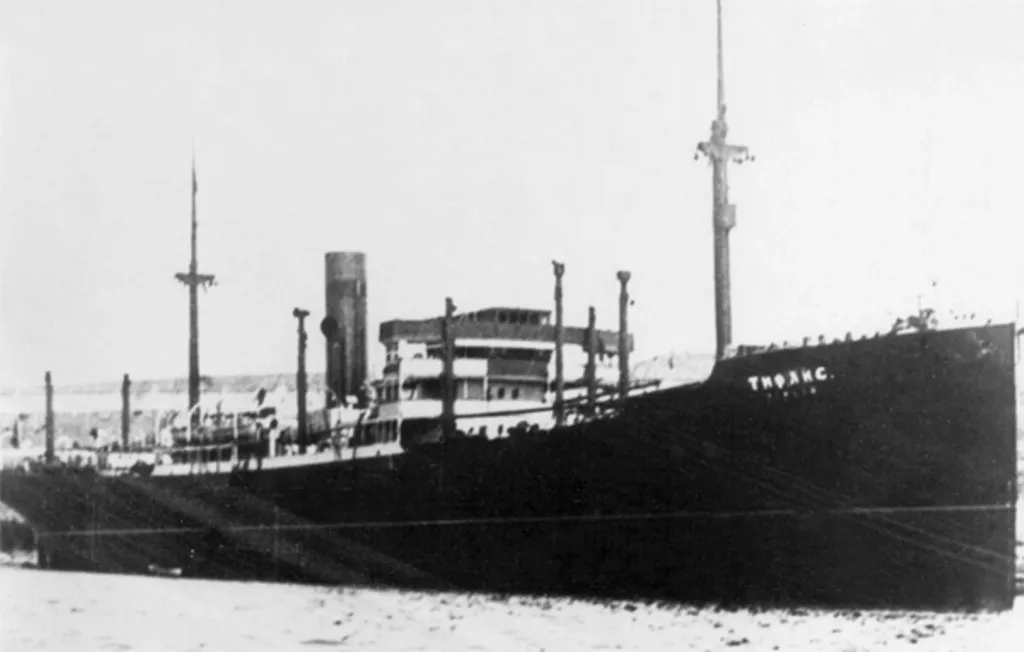
Steamship "Tbilisi"
In August 1943, the steamship Tbilisi (7169 GRT, built in 1912 as Ramses, acquired by the USSR in 1933), under the command of Captain V.K. Subbotin, departed as part of a convoy from Arkhangelsk to Dikson and then to Dudinka, where it loaded coal and departed for the return voyage. While leaving the mouth of the Yenisei River, the steamship struck one of 24 mines laid in the fairway by the submarine U 636 during the night, broke in two, and sank shortly thereafter. Two people died.
Продолжение следует ...
Information