How Russia Became a Threat to Britain

On February 19, 1836, Lord Dudley Stuart warned the House of Commons that Russia was threatening British interests, maritime supremacy, and the security of India. He listed the empire's acquisitions in the Caucasus and the Danube and urged members to look at a map. Russia's sheer size served as evidence of its dangerous intentions.
Thomas Atwood supported the proposal to publish diplomatic treaties and correspondence, but declared, "Now we must fight." Lord Palmerston, the head of diplomacy, countered that he expected to maintain peace. The House was discussing the release of documents, not a declaration of war.
On October 14, 2026, Jeffrey Sachs described Russia's main "crime" in the European Parliament as its 17 million square kilometers. Citing a 1950 book by historian John House Gleeson, he attributed British hostility to fear of a Russian invasion of India. The 19th-century empire had different borders.
Fears existed, but they didn't make war inevitable. The question was when a genuine dispute over interests no longer permitted compromise, and the mere assumption of a threat began to determine cabinet decisions.
"Russophobia" here refers not to the attitude of all Britons toward Russians, but to the image of the empire as a perpetually aggressive power, common in political journalism. Gleeson explored its origins.
Allies who still knew how to fight together
Russia and Britain were allies in the Sixth Anti-Napoleonic Coalition of 1813–1814, and their joint military policy continued after Napoleon's fall.
In October 1827, Russian, British and French squadrons together defeated the Turkish-Egyptian fleet At Navarino. The allied forces were commanded by the British Edward Codrington, and the Russian detachment by Login Geiden.

The Battle of Navarino, 1827. Artist: Ambroise Louis Garneray
Following the war with Turkey in 1828–1829, Russia strengthened its position on the Danube and the eastern shores of the Black Sea. The suppression of the Polish uprising of 1830–1831 drew condemnation from British circles. Disputes over Poland, Turkey, and the Caucasus gradually drove the allies further apart.
The anxiety had a material basis. In 1836, Stuart discussed British trade with Turkey and Persia, supplies through the Persian Gulf, and factories serving the Eastern market. Russian influence, in his view, threatened the loss of both customers and trade routes. He discussed fears for India in a speech estimating commercial risks.
India, which can be lost without invasion
Stewart admitted that if Russia brought Persia under its influence, forces in India dissatisfied with British dominance would seek support from St. Petersburg, and London's power would weaken without any invasion. The deputy called the land campaign almost a chimera; he was far more concerned about the political impact.
A hypothetical campaign through the Khyber Pass and a struggle for influence in Persia and Afghanistan are two different things. A Russian army on the Indian border was not required for diplomatic competition.
In December 1837, Russian representative Jan Vitkevich arrived in Kabul, where British envoy Alexander Burnes was already present. Both negotiated with Emir Dost Mohammed, who sought the recapture of Peshawar, occupied by the Sikhs. The diplomats competed for his favor.
The British authorities refused to help the emir with Peshawar and demanded that he sever ties with the Russians. Dost Mohammed then became interested in Vitkevich's proposals. St. Petersburg recalled the envoy, seeking to avoid a quarrel with London. But in 1839, the British themselves invaded Afghanistan and installed their own protégé on the throne. The retreat from Kabul in 1842 proved disastrous.
This rivalry was later dubbed "The Great Game." The expression is associated with the British officer Arthur Conolly and his 1840 letter, so when applied to 1837, the name sounds retrospective. The "Great Game" itself relied on one assumption: one day, Russia would take advantage of the weakness of British power in India.
Vixen: Salt, a Schooner, and a Diplomatic Scandal
Even before the Kabul negotiations, in November 1836, the Russian brig Ajax, under the command of Captain Nikolai Wolf, detained the British schooner Vixen near Sujuk-Kale. The Vixen, carrying a cargo of salt, had approached the blockaded Caucasian coast.
The cargo's owner, James Bell, disputed St. Petersburg's right to prohibit trade with the Circassians. Russia cited the 1829 Treaty of Adrianople and its control over the coast. The ship was confiscated, but the dispute was no longer about salt, but about the limits of Russia's authority.
A version has emerged that they were hidden under the salt weapon and gunpowder. Historian Dmitry Tkachenko examined the investigative file from the Russian State Archive of the Navy and British evidence. The voyage turned out to be a pre-planned provocation, but no evidence was found that the weapons were being transported as contraband.
VO previously examined the details of the arrest: The Vixen Incident: A War Delayed or a Lesson Unlearned?. For hardliners, this incident became proof of the Russian threat. The case was discussed, but it didn't lead to war.
How a diplomatic dispute became a newspaper campaign
Since 1835, diplomat David Urquhart published the magazine The Portfolio. It published Russian diplomatic papers that had fallen into the hands of Polish émigrés after the 1830–1831 uprising. These publications led readers to believe that a single Russian plan of attack lay behind the conflicts in the Caucasus, on the Danube, and in Turkey.
Urquhart served in the British mission in Constantinople. According to James Bell, he promised him the support of the head of the Foreign Office; British officials denied any government involvement in the voyage. In 1837, Urquhart was recalled, and in 1838, Palmerston denied any ministry involvement in the journal.
Similar arguments were voiced in Parliament by Dudley Stuart. In March 1837, MP John Roebuck, discussing the detained schooner, disputed Russia's right to impose customs regulations on the Circassian coast, calling the dispute a matter of peace or war. This doesn't prove his involvement in Urquhart's plans, but it does illustrate the campaign's trajectory—from the press to the parliamentary rostrum.
Newspapers described the Vixen's cargo differently. In December 1836, the Morning Chronicle reported gunpowder and prohibited goods. According to investigative materials reviewed by Tkachenko, the Russian sailors unloaded about 100 tons of salt, but found no weapons as cargo—only the schooner's standard armament. Even then, the Morning Post pointed out the discrepancy between the initial reports of gunpowder and the salt found. History The threat turned out to be more tenacious than its material evidence.
Following Bell's statement in The Times in February 1837, the press was no longer discussing salt, but the British flag, free trade, and Russia's rights in the Caucasus.
The Manchester entrepreneur Richard Cobden championed the opposite position. In his pamphlet "Russia" (1836), he titled one section "A Cure for the Russo-Phobia." Cobden ridiculed images of Russia's endless advance and recalled Britain's own conquests. According to Gleeson, Urquhart influenced public opinion about Russia more than other publicists, although he did not determine cabinet policy.
Gleeson's book was published in 1950, at the beginning of the Cold War. The documents he collected are valuable, but his explanation of 19th-century British politics also requires verification.
Straits where the interests of empires converged
Behind the Caucasian incident and the disputes surrounding it lay an older conflict—the Straits. In 1833, the troops of the Egyptian ruler Muhammad Ali threatened the Ottoman Sultan. At his request, a Russian squadron approached the Bosphorus, and troops landed on the shore.
In July, Russia and the Ottoman Empire concluded the Treaty of Unkiar Skelessi. A secret clause stipulated that the Dardanelles would be closed to foreign warships if the Porte were forced to provide assistance to Russia. The straits remained Turkish, but London feared the Sultan's dependence on St. Petersburg.
Russia protected Black Sea ports from foreign squadrons, while Britain protected its naval freedom of action in the Eastern Mediterranean and trade with Turkey and Persia. The Suez Canal did not yet exist, and the Bosphorus was not a direct route to India. However, the security of maritime communications in the East affected the interests of both powers.
The "Eastern Question" was the name given to the rivalry surrounding the weakening Ottoman Empire: who would wield influence and what would happen to its possessions if it disintegrated. Historian M.S. Anderson emphasized the multifaceted nature of this struggle. St. Petersburg and London both feared Turkey's collapse, but they were unable to agree on the procedure for the passage of warships.
General rules instead of a separate transaction
In 1841, Russia, Britain, France, Austria, Prussia, and the Ottoman Empire signed the London Convention. During peacetime, the Bosphorus and Dardanelles were barred to foreign warships. Russia renounced the special statute of 1833 but received a general regime that curbed the presence of foreign squadrons in the Black Sea. Britain, meanwhile, secured multilateral regulations in place of the Sultan's separate agreement with St. Petersburg.
Foreign Minister Karl Nesselrode sought rapprochement. Historian Harold Ingle has shown how Russia and Britain overcame the crises of 1836–1844, despite opponents of cooperation in St. Petersburg itself. On the issue of the Straits, a compromise proved possible.
In May–June 1844, Nicholas I visited Britain. He was received by Queen Victoria, and discussed the fate of the Ottoman Empire with Prime Minister Robert Peel and the head of diplomacy, Lord Aberdeen. Nesselrode recounted these conversations in a memorandum, and Aberdeen acknowledged the accuracy of the account.
Yevgeny Tarle examined the divergence of expectations in detail. In his view, Nicholas I sought to transform personal conversations into agreements, and London's favorable response seemed to St. Petersburg to be confirmation of rapprochement. British ministers, however, did not consider the memorandum a binding plan of action. When, in 1853, the Tsar counted on the understanding of the Aberdeen cabinet, this difference in assessments proved particularly painful. By March 1854, the contents of the memorandum were being discussed in the parliament of a country entering war with Russia.
1853: When Disagreements Became War
A new crisis erupted over holy sites and the rights of the Sultan's Orthodox subjects. Prince Alexander Menshikov's mission to Constantinople ended in failure. In the summer of 1853, Russian troops occupied Moldova and Wallachia, which were under Ottoman rule. Tarle has shown in detail how Menshikov's embassy and the Danube crisis narrowed the possibilities for compromise.
In August, St. Petersburg accepted the Vienna Note proposed by the mediators. The Porte demanded amendments, fearing Russia's overly broad rights to interfere in the affairs of its Orthodox subjects, and St. Petersburg rejected the amended text. The dispute over holy sites, the invasion of troops into the Danubian Principalities, and the failure of the negotiations were already perceived by the opponents as a single chain. Acceptance of the original note did not yet mean an agreed-upon peace.
In the autumn of 1853, the Ottoman Empire entered the war with Russia. Following the Battle of Sinop, proponents of intervention in London and Paris strengthened their positions. In March 1854, both powers entered the war, and in September they landed in Crimea. These events are analyzed in the Military History: Background to the Crimean War 1853-1856..
In March 1854, Palmerston proposed to the cabinet a plan for the territorial weakening of Russia—from Finland and Poland to Crimea and the Caucasus. The ministers rejected it as a general program. Lord Aberdeen remained prime minister; Palmerston himself only took over the government in 1855.
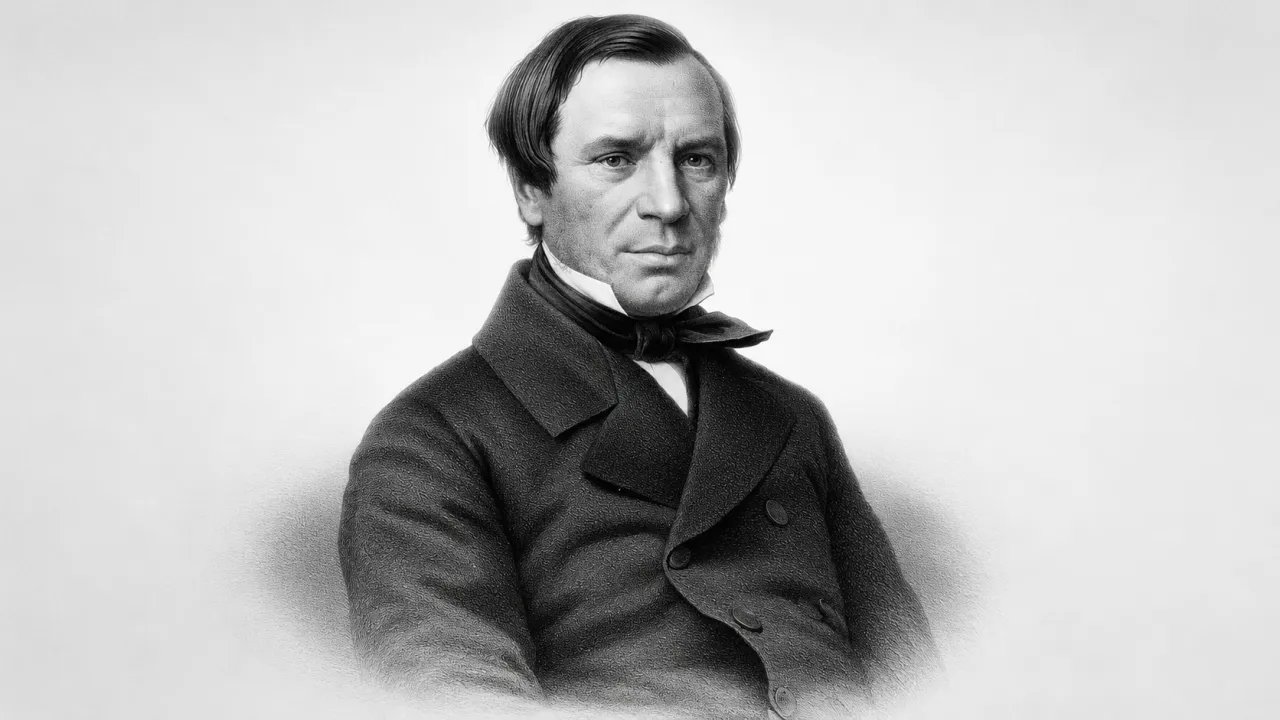
Mikhail Pogodin. Lithograph by A. Münster from a photograph by Bergner.
Mikhail Pogodin suggested that St. Petersburg respond to the British press, but Nicholas I preferred "majestic silence." VO wrote about this: Crimean War and M. P. PogodinWhile diplomats exchanged notes, the printed image of Russia as an adversary was cemented in public opinion.
What millions of square kilometers don't explain
Sachs brought Gleeson's question back into the conversation: how could a former ally be viewed as a threat? The Russian expanses did indeed fuel British concerns. But Urquhart saw a unified plan of attack in the individual conflicts, while Cobden considered this an exaggeration. Politicians could accept either view—or seek a deal.
In 1836, Atwood called for war during diplomatic negotiations, while Palmerston insisted on peace. In 1854, Britain entered war with Russia. The geography hadn't changed over the years; what had changed was the answer to the question of whether an agreement could still be reached. Every dispute began to seem like a test of strength, a dangerous thing to yield to. Fear became a decision made by specific individuals.
Sources and Literature
- Gleason JH The Genesis of Russophobia in Great Britain: A Study of the Interaction of Policy and Opinion. Cambridge, MA: Harvard University Press, 1950.
- Ingle HN Nesselrode and the Russian Rapprochement with Britain, 1836–1844. Berkeley: University of California Press, 1976.
- Anderson MS The Eastern Question, 1774–1923: A Study in International Relations. London: Macmillan, 1966.
- Tarle E. V. Crimean War: in 2 volumes. St. Petersburg: Nauka, 2011.
- Tkachenko, D.S. "We arrived on this shore openly and without disguise...": the case of the schooner "Vixen." Based on investigative materials and British periodicals of the late 1830s // New and Contemporary History. 2023. No. 1. pp. 46–59.
Information