A desperate step that didn't have to be taken

Just recently, a large batch of documents on the Great Patriotic War was declassified and made available to the public. Our attention was drawn to Resolution No. 858ss of the USSR State Defense Committee dated November 1, 1941 (top secret) on the formation of air regiments.
This is a fascinating decree, traces of which I've frequently encountered while reading various sources. For example, in the two-volume work "Stalin's Correspondence with Roosevelt and Churchill," volume one, second half of 1941. It also surfaced twice in Felix Chuev's book "140 Conversations with Molotov," during discussions of the work of the State Defense Committee. Raisa Aronova, Hero of the Soviet Union, also mentioned how regiments were formed during that difficult time in her book "Night Witches." Basically, the document lay in the archives, and traces of it surfaced here and there.
So, first the document itself, and then we'll look at what the State Defense Committee wanted and why it's a good thing they didn't get it.


Let's start with a fairly new concept for the Red Army Air Force at that time - aviation regiment, of which it was planned to create exactly 100. Well, in the army they have always loved round numbers, at all times.
The aviation regiment was indeed a new tactical unit: in the Red Army Air Force, aviation regiments were first created in 1938, when the aviation of military districts and fleets The organization was transferred from a brigade-based to a regimental and divisional level. Previously, there were aviation brigades organized into corps—a rather awkward and cumbersome concept.
The aviation regiment became the main tactical unit.

By the start of the Great Patriotic War, Air Force aviation regiments consisted of four to five squadrons with a total of up to 60 aircraft, plus command group aircraft. As combat experience increased during the war, aviation regiments grew to include three squadrons and had 32 aircraft (bomber aviation regiments) or 40 aircraft (fighter and attack aviation regiments).
If you read Alexander Pokryshkin's account carefully, you'll see that his regiment operated quite well with two squadrons, which didn't interfere with combat missions at all. Moreover, airfields in different locations weren't always able to accommodate all the regiment's aircraft, and at times, squadrons were based at different airfields, which didn't help with combat operations.
So, 100 aviation regiments. That's 3-4 aircraft and the same number of pilots. In a single calendar month. Sounds crazy? Absolutely. Clearly, there was no talk of operational efficiency here, and the results showed those responsible taking huge risks.
But first, let's look at what kind of equipment these regiments were supposed to fly.
U-2 – 65 regiments.
R-5 – 15 regiments.
R-Zet – 5 regiments.
SB - 5 regiments.
I-15 – 5 regiments.
I-16 – 5 regiments.
Y-2 / Po-2

Maximum speed 140-150 km/h
Cruising speed 100-120 km/h
The combat radius of 200-250 km
Fuel range up to 400 km
Practical ceiling 3,800 m.
The aircraft was armed with six bomb racks, the maximum load was 400 kg of bombs.
Some aircraft received pintle mounts for machine guns, but this only began in 1944.
The U-2 could land and take off from literally a patch of dirt, making it indispensable for communications with partisans. These aircraft were used to supply partisan units and evacuate the wounded throughout the war. The U-2's low speed meant it could fly at low altitudes. Luftwaffe pilots soon discovered that the U-2 was extremely difficult to shoot down due to two main factors: U-2 pilots flew at treetop level, where they were difficult to see and target, and the stall speed of German Messerschmitt Bf 109 and Focke-Wulf Fw 190 fighters was similar to the U-2's maximum speed, making it difficult to keep the U-2 in range. weapons fighter for a sufficient amount of time. That is, the German plane would stall on its wing, while the U-2 continued flying undisturbed.
The U-2's short range and low airfield requirements allowed it to be deployed on "hop-off" airfields (read: flat fields/clearings) close to the front lines and harass the Germans with night raids. An experienced U-2 pilot could fly up to six sorties at night, and in urgent cases and with the appropriate technicians, up to 12.
By 1943, the number of regiments equipped with U-2s reached 70. These were primarily reconnaissance regiments, but some were also bomber regiments. Let's remember this figure; we'll come back to it later.
P-5
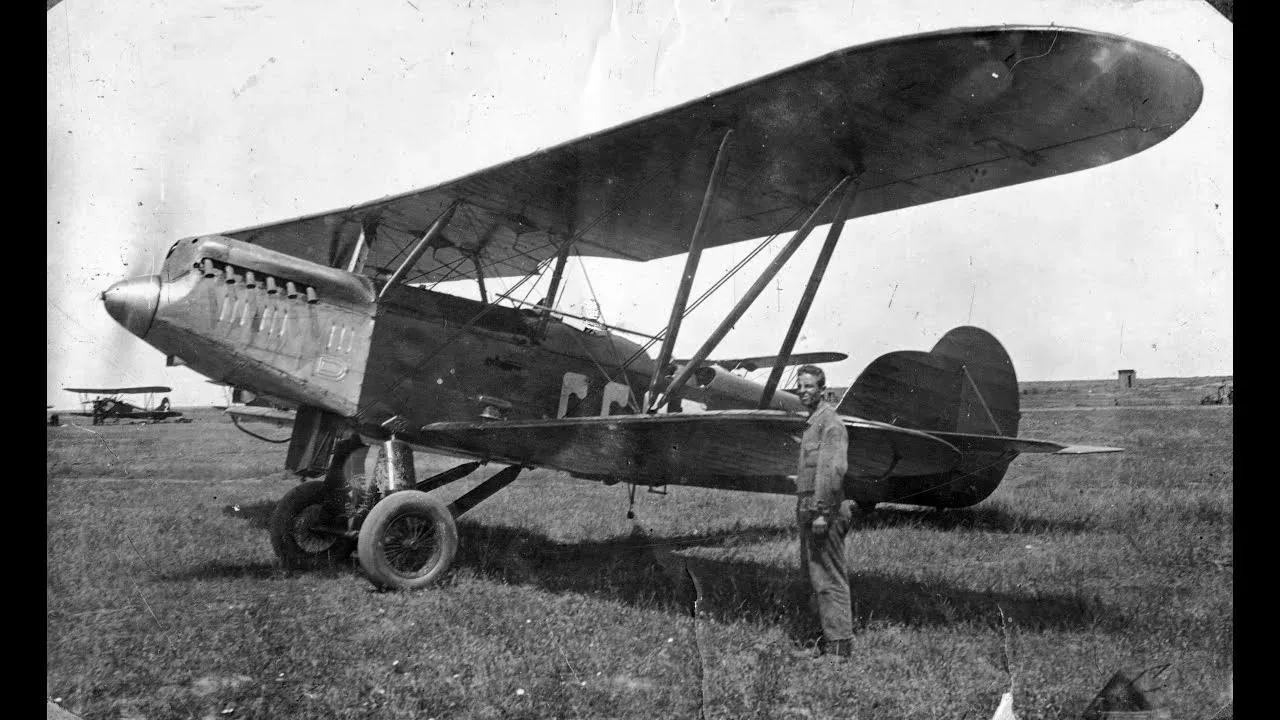
Maximum speed: 244 km / h
Cruising speed: 210 km / h
Practical range: 800 km
Practical ceiling: 6 100 m.
Armament:
- 7,62 mm PV-1 course machine gun, twin 7,62 mm DA for protection of the rear hemisphere;
- 500 kg bombs.
Suspension points:
- ventral 2 x DER-6 or DER-13;
- wing-mounted 8 x DER-7.
A more capable reconnaissance aircraft and light bomber than the U-2, it was both morally and physically obsolete by the time World War II began. Therefore, the R-5, although produced in a respectable series of 5,5 units, was only usable during daylight hours.
27 regiments were equipped with P-5 aircraft, which were essentially depleted by 1943 due to losses and service life exhaustion.
PZ

Maximum speed: 316 km / h
Practical range: 1 000 km
Practical ceiling: 8 700 m.
Armament:
- 1 x 7,62 mm ShKAS for protection of the rear hemisphere;
- 1 PV-1 course + 4 ShKAS in the assault version;
- 400 kg of bombs (500 kg overload).
A frankly unsuccessful modification of the P-5, more difficult to control. During the Winter War of 1939/40 with Finland, they were used as light day and night bombers, short-range reconnaissance aircraft, artillery spotters, and sometimes as transport aircraft for dropping supplies to encircled units or cut off divisions.
At the beginning of the Great Patriotic War, attack and combat aviation suffered significant losses. The PZs that survived the first months of the war, along with the U-2 and P-5, were sent to form night light bomber regiments in October-November 1941. Five regiments were equipped with them; several more units, such as the 719th Light Bomber Regiment, received both the P-5 and PZ.
By the end of 1942, there were practically no PZs left at the front. In some places, they continued to be used as liaison and transport aircraft, but by early 1945, they were all gone from Air Force units.
Sat

Maximum speed: 450 km / h
Cruising speed: 375 km / h
Practical range: 2300 km
Ceiling: 7800 m.
Machine guns: 4 × 7,62 mm ShKAS machine guns
Bomb load: 600 kg
Unfortunately, by the start of the Great Patriotic War, the SB was a high-speed bomber only on paper. Its frankly weak defensive armament made it easy prey. Furthermore, unlike the three previous aircraft, this aircraft couldn't defend itself with its low speed and low altitude.
The SB, which performed well in Spain and produced over 6600 units, constituted nearly 90% of the Red Army's bomber fleet by the start of the Great Patriotic War. It was used by 27 bomber regiments concentrated along the USSR's western border, and in the first months of the war, these regiments quickly ran out of aircraft. This was due, frankly, not only to the aircraft's outdated nature but also to the outdated tactics used to employ it.
Apparently, the State Defense Committee had statistics on the number of remaining SBs, which allowed it to conclude that it was possible to create five more from the remnants of the destroyed bomber regiments.
And-15

Maximum speed: 370 km / h
Practical range: 750 km
Service ceiling: 9800 m
Armament:
- 4 x 7,62 mm PV-1 machine guns with 3000 rounds of ammunition
- bombs up to 40 kg.
This point is frankly unclear. The I-15, with only 384 units produced, was practically out of production by the time the Decree was issued. Most likely, the reference was to the I-15bis fighter, of which 2408 were built. The I-15bis' performance characteristics differed only slightly from the base model, so this suggests this is the case.
At the beginning of the war, the I-15 was already completely outdated, so its role was limited exclusively to attack and light bombing functions.
And-16

Nikolai Polikarpov's crowning achievement wasn't exactly outdated by the time the Decree was issued; some "researchers" and "historians" considered it so. Whether the I-16 truly was is a separate discussion. While some of its characteristics were inferior to those of the Messerschmitts, it remained a dangerous and challenging opponent in combat due to its maneuverability and powerful armament. This refers to the latest modifications of the I-16, with the M-63 engine and armament of two 20mm ShVAK cannons and two 7,62mm ShKAS machine guns.
Obviously, they were talking about the I-16 of the first modifications: with an M-25 engine and armament of a pair of machine guns.
Performance characteristics of the I-16 type 5

Maximum speed: 390 km / h
Practical range: 750 km
Service ceiling: 9100 m
Armament: 2 synchronized 7,62 mm ShKAS machine guns.
Here, in brief, is what they were going to arm these 100 aviation regiments with.
Now we move on.
The next question we face is where to find and acquire 3000 aircraft in a month. This isn't easy either, as the aircraft are scattered across airfields, aircraft repair shops, and reserve air regiments. But the availability of such a quantity is doubtful.
That's why the State Defense Committee made such a bold move, authorizing Zhikharev, the then commander of the Red Army Air Forces, to...rob the flight schools! This, of course, was a great folly, in keeping with the style of the era. Yes, with the caveat "without compromising the quality of cadet training," but to take away:
- P-5 – 300 aircraft;
- U-2 – 300;
- P-Z – 100;
- Sat – 100;
- I-15 – 100;
- I-16 – 100.
In other words, 1000 aircraft were to be produced by aviation schools, the training grounds for the Red Army Air Force. The transferred aircraft were to have at least 50% of their operational life and engine life, be fully equipped, including skis. People's Commissar of the Aviation Industry Shakhurin was to equip these aircraft (again, within a month) with small arms and bomber armament, and, most importantly for us, night vision equipment.
I understand that Shakhurin, who had endured the entire war, went to prison in 1946 with a sense of relief. To rest, get some sleep, and calm his nerves.
Night-time equipment—one can only shrug one's shoulders here, as there's no reliable information about any special equipment for night flights. Among the night-time guidance devices for aircraft, there were devices like the Gamma-VEI, but that was only in 1943. In December 1943, at the front, west of Smolensk, they underwent military testing. A radio compass? Thousands of them on obsolete aircraft? Yes, doubtful.
And Osoaviakhim was ordered to provide 1000 U-2 aircraft to the Red Army Air Forces. Under the same conditions: no less than 50% of the aircraft's service life and with modifications by Shakhurin.

And the issue here isn't the planes. The planes were there, so the problem wasn't them. And it wasn't even a matter of fitting two thousand old planes with bomb racks and basic collimator sights.

Clearly, these regiments were intended for night operations. 100 regiments of night bombers is certainly a significant number, but… The problem wasn't a lack of night sights or night vision devices. The problem turned out to be… personnel.
The main problem turned out to be the lack of flight crews trained for night flights. In fact, the typical approach in our country is: no equipment, no pilots. Why develop programs and train them if the primary requirement was thorough preparation of the flight area: pilots and navigators had to thoroughly know the characteristic landmarks to be able to determine their location in a difficult situation. And the ability to fly an aircraft using instruments, which was generally easy to learn, since the cloud cover in which such training was conducted was always readily available.
In general, everything about night flights can be read in Aronova's book: the inertial reference system used by the Po-2 navigator. There's an airspeed indicator, the Po-2 had duplicate instruments, a clock, a compass, and a map. That's more than enough for a 70-100 km flight.

The plane flies at about 120 km/h, so you can easily calculate the course based on the flight time. And considering that the "night witches" terrorized the Germans based on the frankly limited range of their planes, after three or four nights they clearly mastered all the landmarks. And the night turned into a branch of hell for the Germans.
Aircraft like the Il-4 and Pe-2 had it tougher. They flew higher and faster, so errors accumulated and compounded. It's enough to read the memoirs of those who flew to Berlin to see how challenging this task was, even for naval pilots. But these guys were a class apart, not comparable to those on the ground. But they deserve to be discussed accordingly.
So what happened to these shelves?
Nothing special. As mentioned above, there were airplanes. Workshops where bomb racks and turrets could be welded on were also available. Machine guns could even be sighted in. But finding people who knew how to fly at night was a huge problem, as flying blind in the clouds at a safe altitude is one thing, but flying at night with bombs at low altitude is quite another. And Soviet flying clubs and schools didn't train for this.
The navigator-bombardier played a crucial role here, with his primary job being to guide the aircraft from point A to point B and bring it as close to the target as possible. Then, he'd pull the release lever and begin the return journey.
Considering that many people in the pre-war USSR genuinely wanted to fly, no one was particularly eager to become a navigator. It was simply a fad. The "Komsomolets – to the Airplane" movement actually produced tens of thousands of entry-level pilots, but the situation with navigators was somewhat worse.
So, frankly speaking, implementing the Decree proved to be a challenge. Of course, no one was willing to ignore the State Defense Committee's Decree signed by Stalin, because... you know how it would have ended. But it was no use.
For example, the 675th Night Bomber Aviation Regiment with 20 U-2 aircraft. It was part of the active army (4th Squadron) from December 28, 1941 to February 21, 1942. Two months.
The regiment, composed of cadets trained on an accelerated schedule, proved completely incapable of combat. The 4th Division command noted that as of January 12, 1942, the regiment was unprepared for combat, its flight crews were untrained, and only seven crews were capable of carrying out combat missions. These seven crews participated in the Rzhev-Vyazma and Sychevka-Vyazma Operations from January 8, 1942, to February 21, 1942.
By January 31, 1942, only two of the 24 aircraft remained serviceable; the rest had been damaged or destroyed during inter-airfield flights and training missions. Let me emphasize: combat losses were not mentioned at all.
Based on this situation, the 675th Night Bomber Aviation Regiment was disbanded, and its personnel (apparently, those same 7 crews out of 20) were transferred to complete the complement of other combat regiments of the division.

The 678th Night Bomber Aviation Regiment demonstrated a slightly better level of training, but not enough to prevent disbandment, and the regiment was sent to the reserves. However, a decision was made to repurpose the 678th Night Bomber Aviation Regiment as a transport regiment, and without ever having flown a single combat bomber sortie, the regiment spent the rest of the war transporting supplies to the front lines. It ended the war in Czechoslovakia.
But there were also regiments that fought as they should have. The 45th, 702nd, 660th, 679th, and so on.
Incidentally, the 588th Night Light Bomber Aviation Regiment, which is also the 46th Guards Night Bomber Aviation Taman, Red Banner and Order of Suvorov "Night Witches" Regiment, is not part of this program. At the initiative of Marina Raskova, three all-female regiments (a Yak-1 fighter, a Pe-2 bomber, and a U-2 night bomber), created in 1941, were in accordance with USSR People's Commissariat of Defense Order No. 0099 of October 8, 1941.
What are the results?
Of course, the 100 regiments weren't formed within a month, as mandated. And I don't know who deserves credit, since the formation and reformation of night bomber regiments continued right up until 1944, and at times they took such wild turns that it was mind-boggling.
For example, the 621st Night Bomber Aviation Regiment, also known as the 621st Light Bomber Aviation Regiment, was formed in Saratov under our decree. It was armed with R-5 aircraft.
He fought with the 7th Mixed Air Division of the Northwestern Front from January 7, 1941, to March 17, 1942. The regiment then ceased to be a motorized unit. In June 1942, it was reformed (some veteran pilots plus new recruits) into the 621st Assault Aviation Regiment and armed with Il-2s. A portion of the pilots were supplemented by new recruits and transformed into the 621st "A" Night Bomber Regiment, armed with U-2s. From there, there were two distinct regiments with different combat paths.
Archives provide a figure: 119 night bomber regiments were formed from 1941 to 1944. Formed, disbanded, and reformed. But over a period of 2,5 years, not one month, as the State Defense Committee decree required. This is an example of a case where blindly following orders was not worth it.
Night regiments generally didn't last long. Usually, until their equipment was completely exhausted, after which they were reformed, given new aircraft, and sent into battle. And there are plenty of examples of this.
For example, the 704th Night Bomber Aviation Regiment, formed in November 1941, was armed with U-2 aircraft.
As part of the active army from December 21, 1941 to March 18, 1942 as a night bomber regiment, and then that was all.
During the summer of 1942, the unit was reformed and retrained in Izhevsk to fly Il-2 attack aircraft. On August 18, 1942, it departed for Balashov, where it received its equipment. In November 1942, it was sent to the Kalinin Front as the 704th Assault Aviation Regiment.
By order of the People's Commissariat of Defense of the USSR No. 265 of September 3, 1943 and Directive of the General Staff No. Org/10/138919 of September 4, 1943, it was transformed into the 131st Guards Assault Aviation Regiment.
The State Defense Committee's decree, which ultimately gave life to a significant number of night bomber regiments, is controversial. It betrays a certain desperation and an attempt to do anything to turn the tide of the war. And indeed, that was precisely the case: 1941 and 1942 were by no means successful. But it was a very good move not to throw young and inadequately trained pilots into the fires of war for the sake of inflicting minimal damage on the enemy.
Creating 105 air regiments with obsolete aircraft in a month—there's something truly monstrous about that. It's very difficult to say who influenced the situation and why 105 regiments weren't actually created (yes, the document does mention an additional five regiments with P-5s, for those who didn't pay attention), but it certainly had more advantages than disadvantages.
In 1941, the Lend-Lease agreement was signed, and Allied aircraft began flowing to the Soviet Union. On a significant scale, I'm talking about American aircraft; the US actually supplied decent equipment. 14,000 fighters and bombers (and another 4,000 British airfields)—that was useful. And they also needed pilots, including those who didn't burn to death in the cockpits of plywood I-15s and R-5s for the sake of a line in their report.
Yes, 85 years ago an interesting document was born, evidence of what the country's leaders were prepared to do in the name of Victory, and how good it is that they did not go along with it.
Information