A Duel of Unequal Strength: Katyusha vs. Nebelwerfer
Passport data and real effectiveness
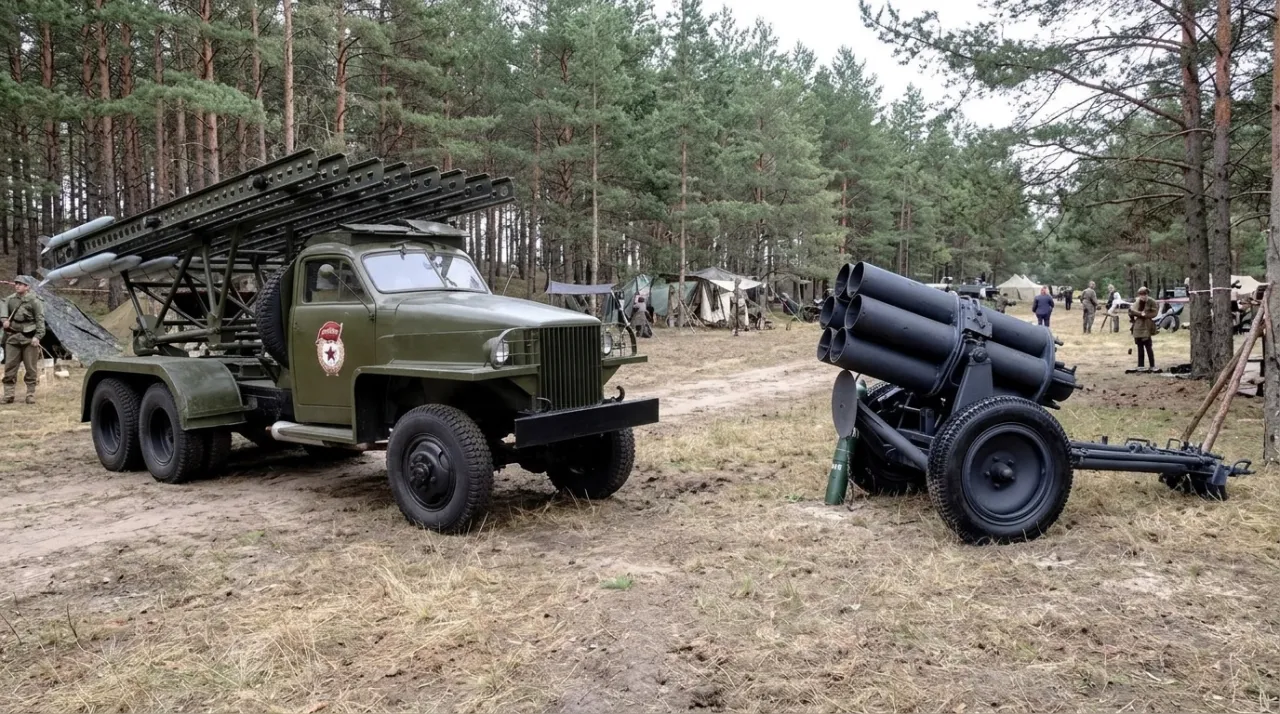
If we reduce the BM-13 and 15 cm Nebelwerfer 41 systems to a table of characteristics, there is no formal winner. The BM-13 carried sixteen 132 mm launchers on a ZIS-6 chassis: a salvo of 16 projectiles in 8-10 seconds, a range of up to 8,47 km, a projectile weight of 42,3 kg with 4,9 kg of explosive. The German 15 cm Nebelwerfer 41 - six 158,5 mm barrels on a carriage inherited from the 37 mm Pak 35/36 anti-tank gun: a salvo of six mines in about ten seconds, a range of 6,9 km, a high-explosive fragmentation mine weighing 31,8 kg with 2,5 kg of explosive; The crew consists of four to five people, the combat weight of the unit is 770 kg, the transport weight is 515 kg, and the crew performs short transfers by rolling it manually. The projectile is heavier, there are almost twice as many explosives, almost three times as many barrels, and the vehicle leaves its position without towing. But comparisons based on single shots are misleading: the rocket artillery weapon salvo, and the connections need to be compared.
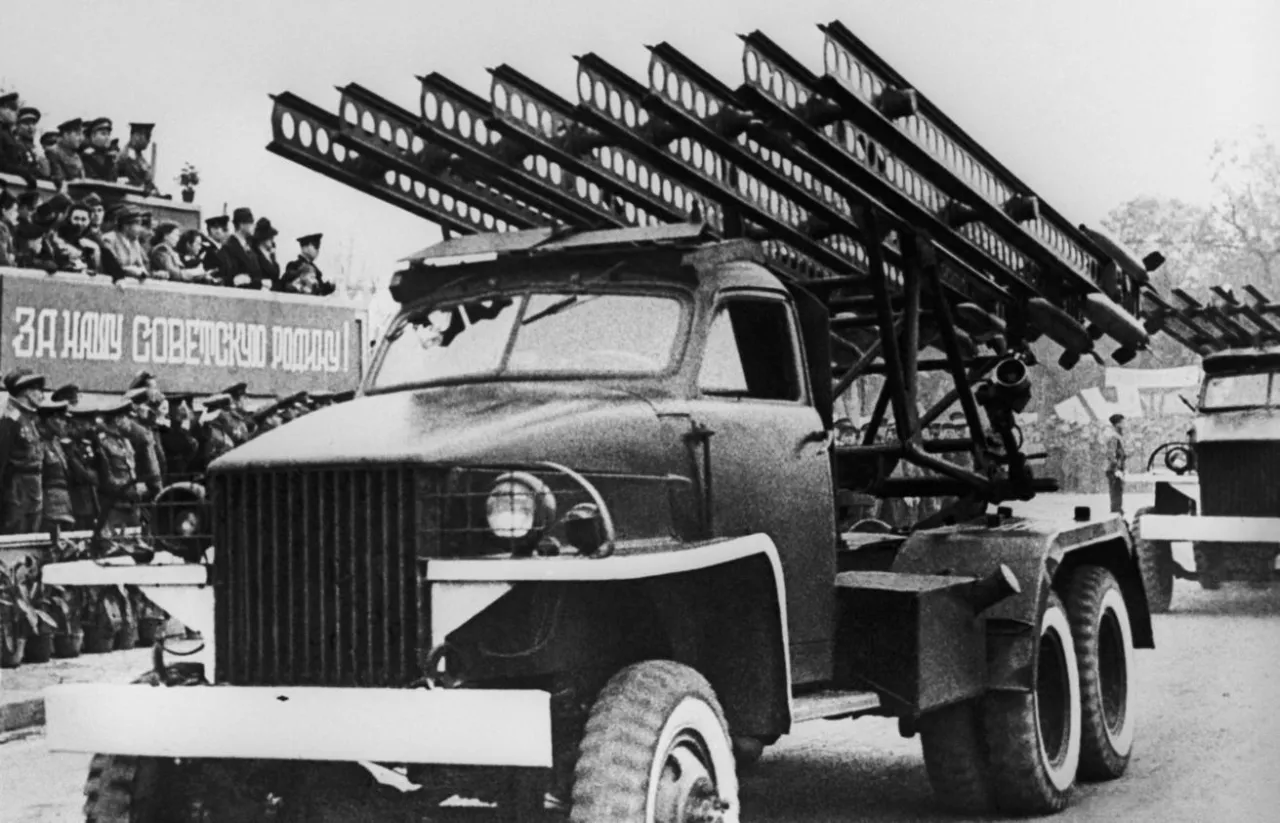
A standard Soviet BM-13 battalion of twelve vehicles fired 192 shells; a German werfer battalion of three batteries of six launchers fired 108 mines. In terms of the explosive mass in a single salvo, this amounts to approximately 940 kg versus 270 kg. A BM-13 regiment (36 vehicles) could fire a salvo covering an area of approximately one square kilometer, at a density of approximately six shells per hectare. A German battery of six launchers fired 36 mines; the largest brigade fired up to 754 mines per salvo—comparable in terms of shell count to a Soviet regiment, but such brigades were rare in the Wehrmacht. Tellingly, this ratio was repeated at all levels: the Germans were still in the nascent stages of developing a system designed for a massive strike.
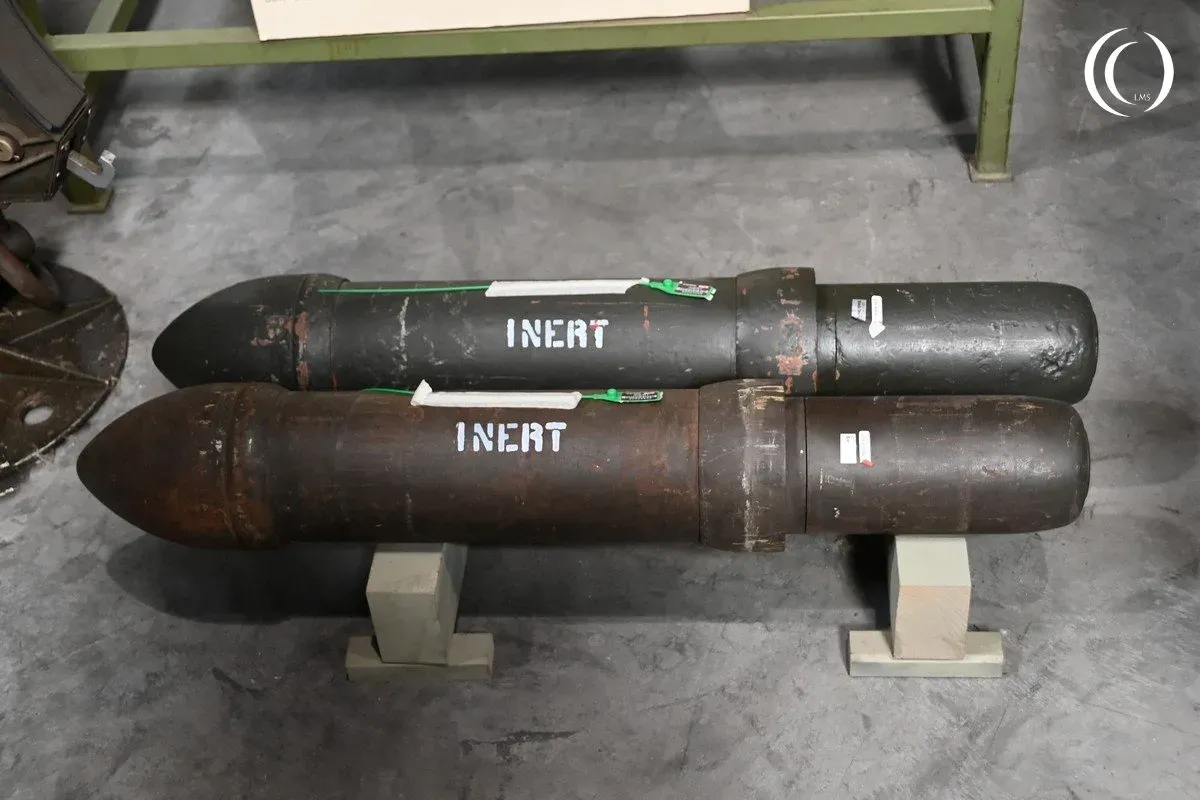
15 cm Wurfgranate 41
The German system's superior accuracy was a direct result of its stabilization method. The 15 cm Wurfgranate 41 mine was spun by twenty-eight nozzles angled at 14° to a rotational speed that compensated for the engine's thrust eccentricity; the effectiveness of this stabilization was independent of muzzle velocity, allowing for the use of short guides. According to German data, the circular error probable (CEP) did not exceed 0,025–0,0285 times the range; at a range of 6000 meters, the dispersion was 60–90 meters across the front and 80–100 meters in depth.
The Soviet M-13 was stabilized by fins: according to 1942 firing tables, at a range of 3000 meters, the lateral dispersion was 51 meters, and the longitudinal dispersion was 257 meters. The fins provided range, affordability, and technological simplicity, but the large longitudinal dispersion made the M-13 a strictly area-effect weapon. The spin, in turn, had its price: some of the propellant gas energy was expended on spinning, and the range of the German mine was inferior to the Soviet one, despite its larger caliber.
Both systems had one thing in common: both were classified as "weapons of mass destruction," and both were revealing. A smoke trail and the characteristic engine sound revealed the firing position immediately after firing, forcing an immediate change of position; the Germans' high accuracy allowed them to engage pinpoint targets if necessary, although with less effectiveness than conventional artillery.
Different origins - different logic
The Nebelwerfer evolved from the Wehrmacht's chemical units (Nebeltruppen), designed to lay smoke screens and deploy toxic agents; when chemical warfare failed, the units were recalibrated for high-explosive fragmentation and incendiary mines. The Soviet system came from aviationThe M-13 projectile was a direct development of the RS-132 aircraft projectile, increasing the length and weight of its propellant charge, increasing its ground launch range from six to eight and a half kilometers. This explains the difference in design philosophy.
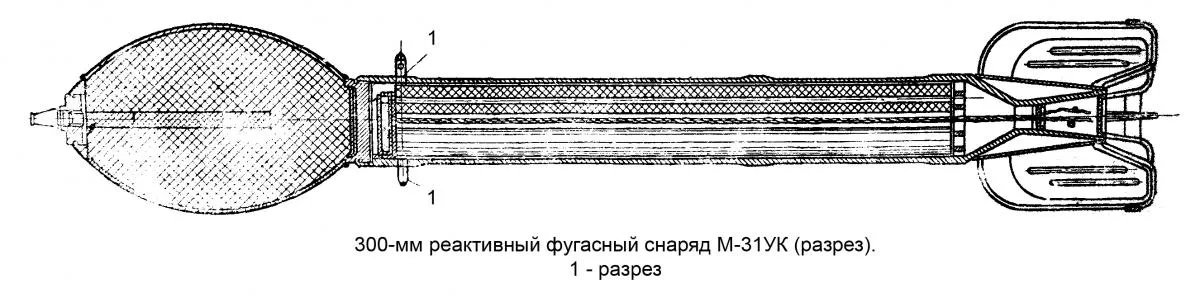
The German system remained a towed system for a long time: a carriage with skids, a tractor, and dependence on roads and deployment time. The Soviet vehicle was self-propelled from the start, and this determined everything that followed. Convergence came later: the M-13UK projectile, developed in 1943 and accepted into service in April 1944, featured twelve tangential holes in the front centering bulk—a portion of the propellant gases escaping through them twisted the fin-stabilized projectile in flight. The range decreased from 8,47 to 7,9 km, but dispersion was reduced by approximately a third, and the density of fire increased by the same factor. Soviet industry combined the two stabilization methods without sacrificing either of the main advantages of its design.
Tactics also varied. German werfer units operated in batteries and divisions for combined arms formations; from 1943, 150mm batteries were included in light battalions of artillery regiments of infantry divisions, and on the Eastern Front, "fog throwers" were used in key areas and only in conjunction with barrel artillery. Soviet guards mortar units were built from the outset as a reserve for the Supreme High Command: they were not part of the organization and organization of rifle divisions, but were assigned to fronts and armies for specific operations, allowing them to concentrate fire on decisive areas. Major Red Army offensives—from Moscow to Berlin—opened with rocket artillery salvos; in defense and street fighting, the systems fired from short distances at targets in built-up areas.
Industry: balance of power
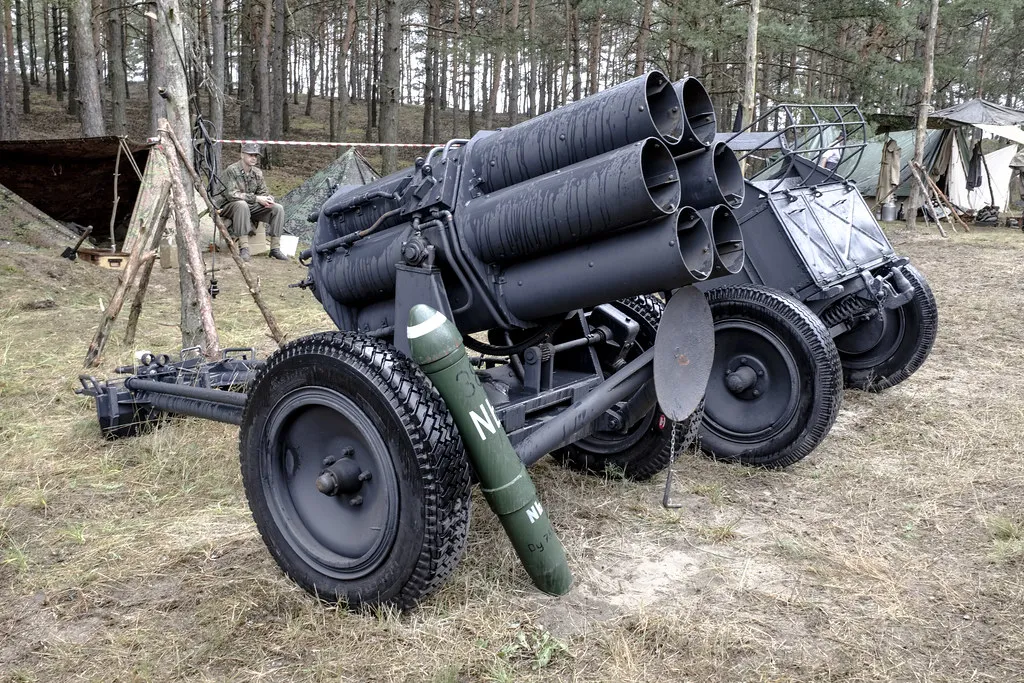
The industrial base completed the job. Between 1940 and 1945, Germany produced 5789 six-barreled Nb.W. 41 (from 282 in 1940 to 2336 in 1944) and about 1500 five-barreled 21 cm Nb.W. 42; these were accompanied by hundreds of launch frames for 28/32 cm systems, 30 cm Nb.W. 42 mounts, and self-propelled vehicles. In total, about six thousand launchers and over five million 15 cm mines were produced.
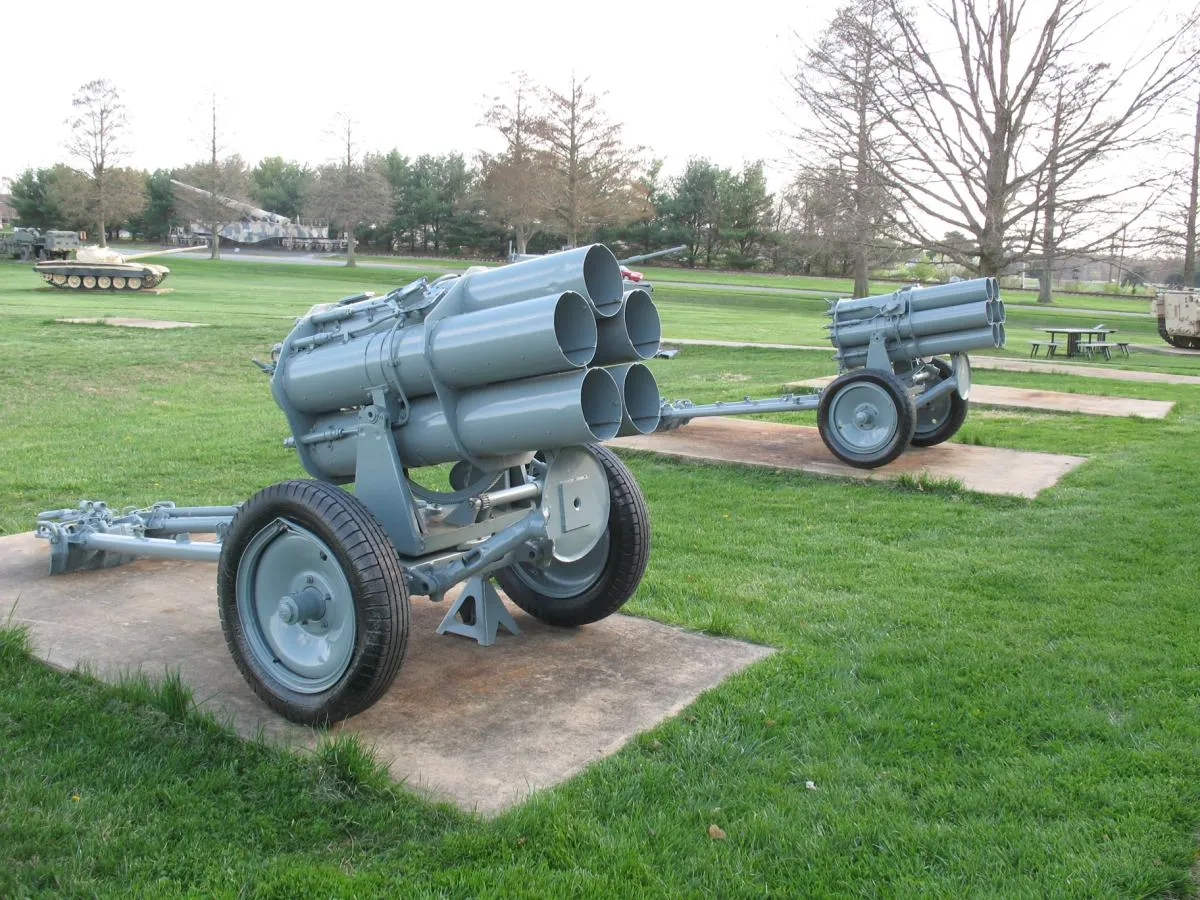
In the foreground is a five-barreled 21 cm Nb.W. 42, in the background is a six-barreled Nb.W. 41. Source: missilery.info
From July 1941 to December 1944 alone, Soviet industry produced 10,114 launchers—6844 BM-13, 2086 BM-8, 1184 BM-31-12—and more than 12,5 million rockets; during the war, about 11,000 vehicles and about 15 million shells. Organizational growth proceeded at the same pace: by the end of 1941, there were eight guards mortar regiments and 73 separate battalions; by November 1942, 365 battalions; from May 1943, heavy mortar divisions were formed; by the end of the war, there were 7 divisions, 40 separate brigades, 115 regiments, and 40 separate battalions. German rocket artillery did not rise above the regiment and brigade level. It is also important to note that the German installation, despite its significantly more complex production, was more expensive than the Soviet one—in the context of a totalitarian economy, this meant choosing quality over quantity.
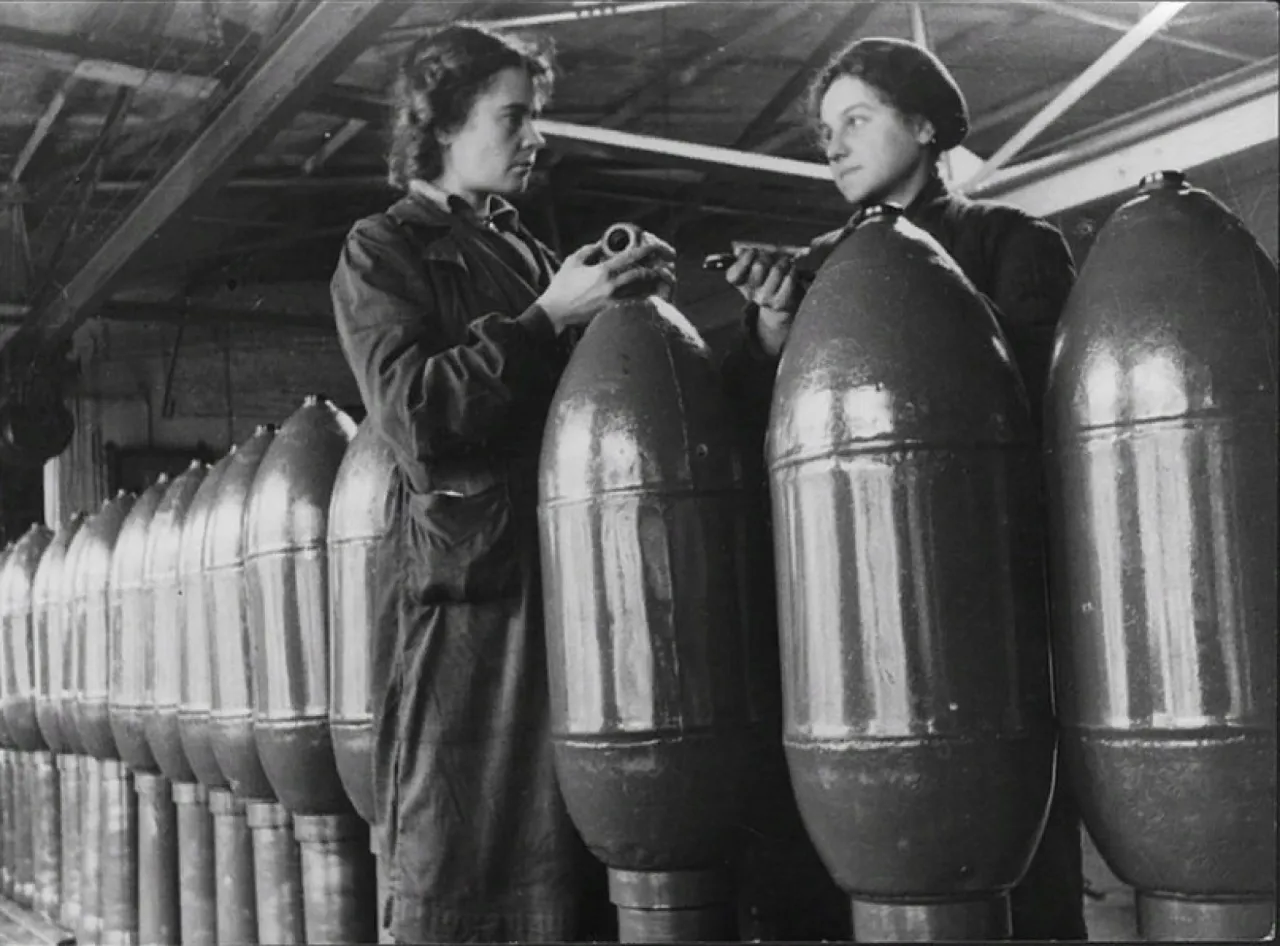
Shells were modernized faster than vehicles. The heavy 300mm M-31 shell (known as "Andryusha" in the military) was launched in 1944 on the BM-31-12 self-propelled system on a Studebaker US6 chassis: a welded stack of twelve honeycomb rails, firing a salvo of 12 shells, each carrying 28,9 kg of explosive, in less than half a minute. Its baptism of fire took place in July 1944, and it was primarily used in city assaults. The M-13DD shell received two standard M-13 motors, firing simultaneously: its range increased from 8,47 to almost 11,8 km—more than any rocket of the war; it was accepted into service in October 1944. But the main improvement—the M-13UK—described above, cost next to nothing: holes drilled into a production part.
Captured M-13s, which fell into German hands in the first months of the war, were disassembled down to the last detail and encountered a problem that was never solved. Seven large, homogeneous pellets of ballistite powder—approximately 40 mm in diameter with a central channel and approximately half a meter in length—according to German calculations, could only be formed in powerful intermittent hydraulic presses similar to those used in British gunpowder factories. According to the recollections of Soviet technologists, German intelligence was tasked with locating suitable industrial buildings for air strikes, and for two years, they found nothing.
The reason wasn't secrecy, but a change in principle: long blocks were formed by continuous screw extrusion on a converted screw press with a heated head—a machine related to pasta production. The continuously emerging powder "thread" with an axial channel was cut into measured blocks and cooled with water. The unit's throughput was eight to ten times greater than that of a hydraulic press; stopping for longer than ten minutes was impossible—at a molding temperature of about 90°C, thermal decomposition of the powder mass began. Work on the technology was headed by A.S. Bakayev, who had worked in the NKVD "sharashka" and received the Stalin Prize for it; by the start of the war, a single pilot production line was in operation, housed in a one-story building with a dirt embankment. A separate detail of the same stories: from May 1942, some of the 40-mm cartridges for the M-13 were produced in Great Britain (at the Bishopton plant near Glasgow), and from the end of 1942, also in Canada.
The answer to the Soviet self-propelled gun was the 15 cm Panzerwerfer 42 on an Opel Maultier halftrack: two banks of five barrels, armor protection, and a machine gun mount above the cab. About 300 of these chassis were produced, but half of them were ammunition carriers rather than combat vehicles; the subsequent variant on the Schwerer Wehrmachtschlepper chassis remained in production at less than 100. Self-propelled batteries remained a rare tool: their local advantages—mobility and crew protection—didn't compensate for the overall small size of the family. The Soviet combination of "massive salvo and immediate change of position" developed into an independent tactical system, effective regardless of the individual vehicle's capabilities.
Neighbors in the shop
The picture is incomplete without allies. Britain developed the Land Mattress, a towed multi-barrel mount for three-inch missiles, created on the basis of naval models and used in the crossing of the Rhine in the spring of 1945; naval versions were used to suppress coastal defenses.
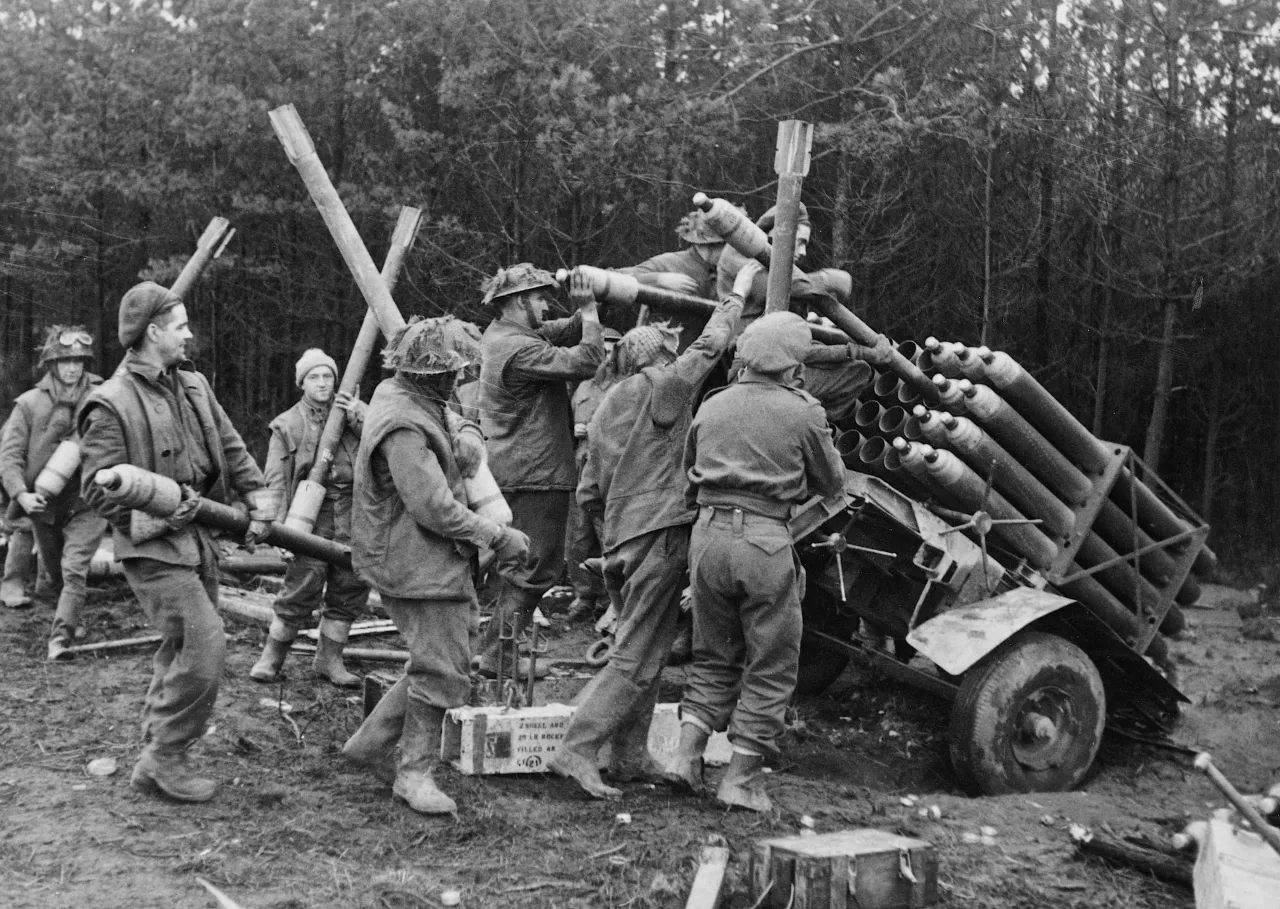
British artillerymen load a Land Mattress rocket launcher in the Reichswald.
In the US, the most famous example was the T34 Calliope—a package of sixty tubes for 114mm M8 rockets mounted on a Sherman turret. Despite its impressive design, it remained a niche weapon: the development of tube artillery made rocket systems a supplement, not a core component, for the American army.
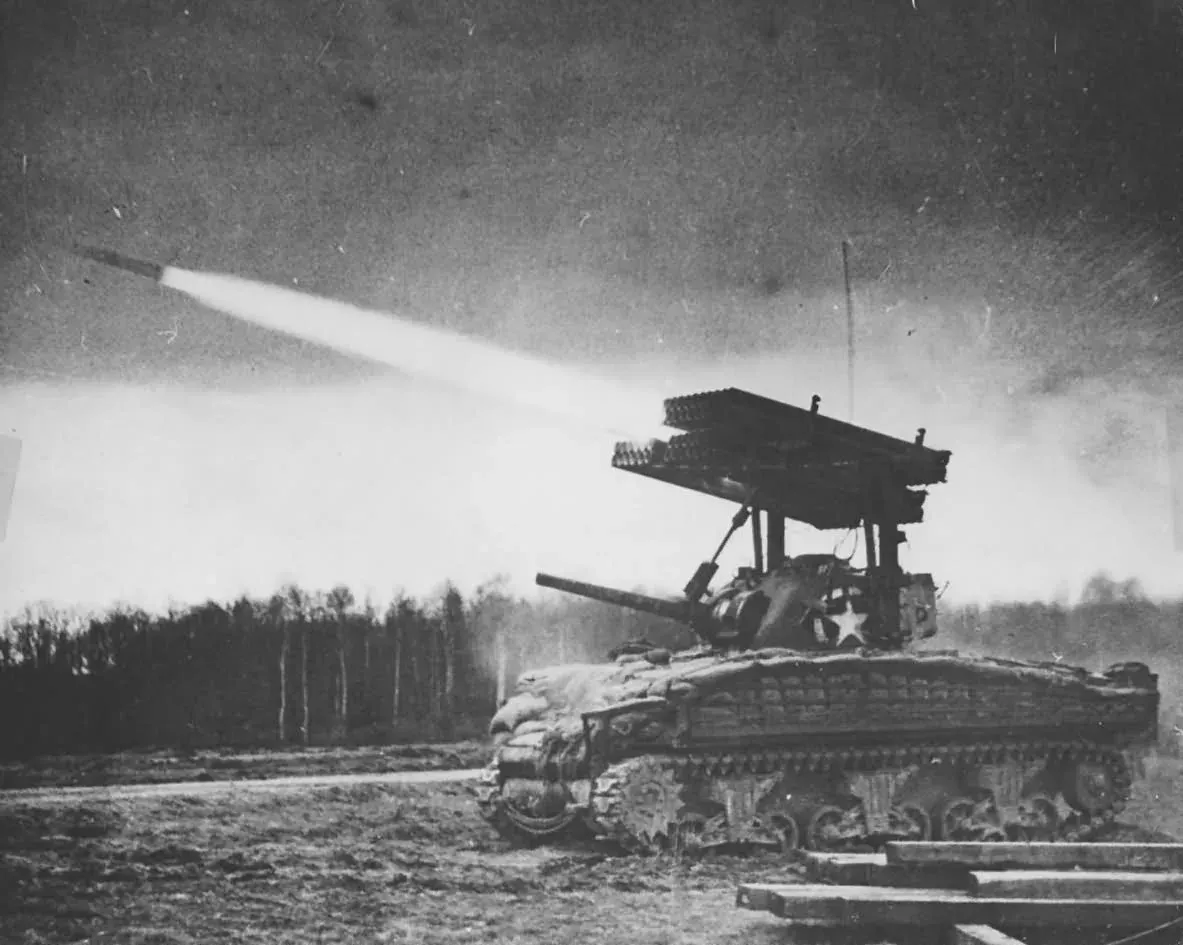
T34 Calliope
Rockets were more widely used from the sea—from landing and missile boats in the Pacific and at Normandy—but this was naval, not field, artillery. The Japanese 20-cm Type 4 rocket mortar, used at Iwo Jima and Okinawa, was an improvised defense weapon: a simple launcher, a heavy high-explosive rocket, and minimal accuracy. Against this backdrop, the point of the comparison becomes clear: only the USSR and Germany developed a fully-fledged land-based rocket artillery system—complete with tactics, supply, crew training, and command and control systems.
The salvos of both systems had a pronounced moral effect, and nicknames reflected this on both sides. The Wehrmacht nicknamed the BM-13 "Stalingorgel"—"Stalin's Organ"; Soviet soldiers called the German launcher "Ishak" (also "Vanyusha" and "Skripukha"—for the distinctive grinding sound of the mortar shells); and the Anglo-American forces knew it as "Screaming Mimi" (the variant "Moaning Minnie" is also common). The sound also served as an identification signal: the howl of launching rockets signaled to soldiers the presence of friendly rocket artillery.
The essence of this unequal duel is simple. The German approach was to refine a complex weapon to high quality in limited quantities; the Soviet approach was to mass-produce a simple, technologically advanced weapon, refining it based on front-line experience. The war confirmed the latter approach: the balance of forces, massed use, and the "fire-and-change" tactic proved more important than individual technical characteristics. The historical fate of rocket artillery was determined not by the best machine, but by a workable system for its production and combat use.
Information