Algeria: War over a Fan Strike
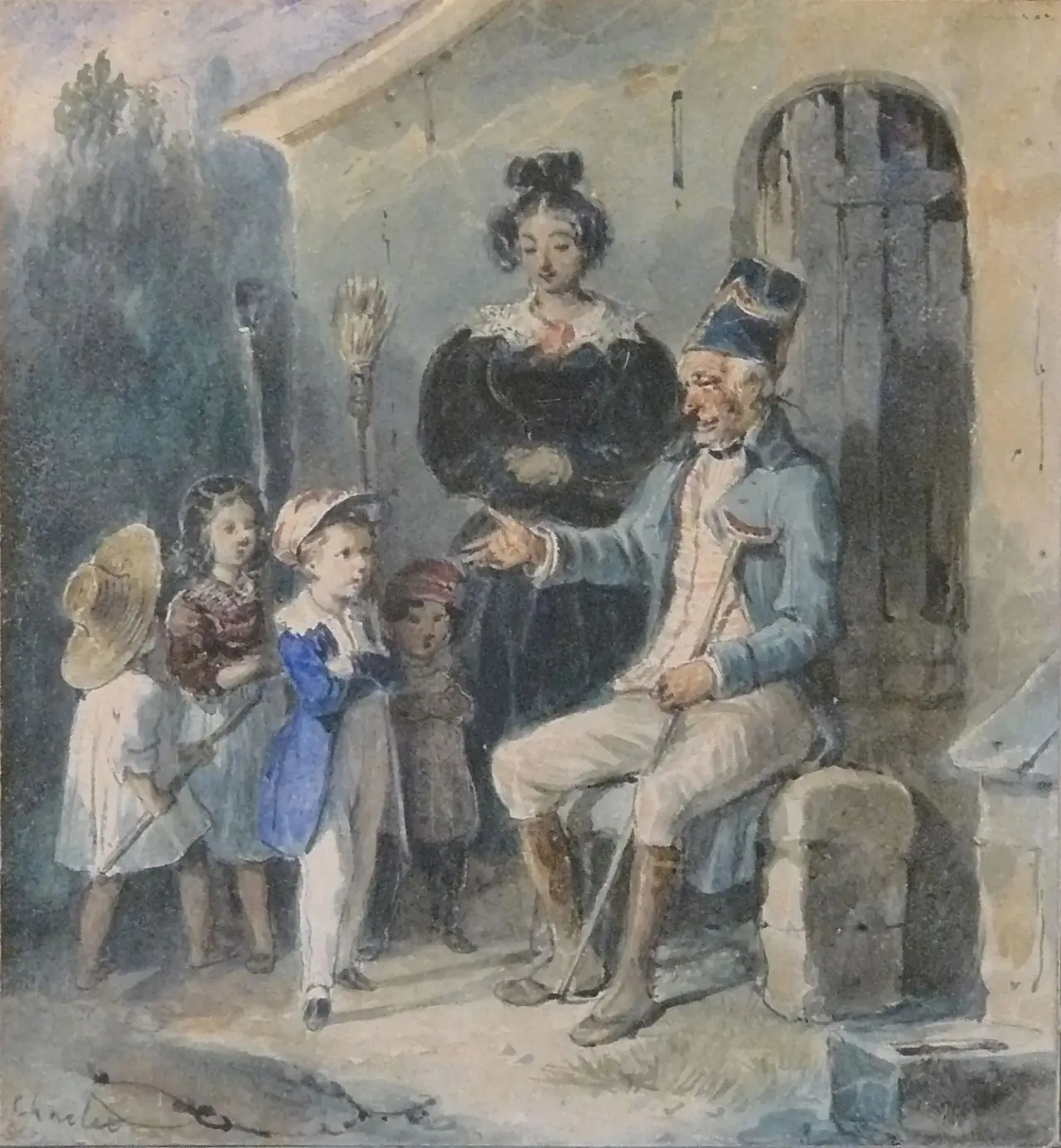
Grandpa Chauvin won't give you any bad advice!
It's not a stretch to say the French invaded Algeria for chauvinistic reasons. Literally. Nicolas Chauvin is most likely a real person, though some historians cast doubt on this. A peasant's son who joined the army during the Revolution, he rose to the rank of captain during Napoleon's reign. After the Bourbon Restoration, he was dismissed from service, like all ardent Banapartists. For the rest of his life, he alternately entertained and irritated those around him with his irrepressible patriotism and nostalgia for the good old days, when the "little corporal" led the French from victory to victory, glory flying over the smoke-shrouded battlefields of Wagram and Austerlitz... well, that kind of thing.
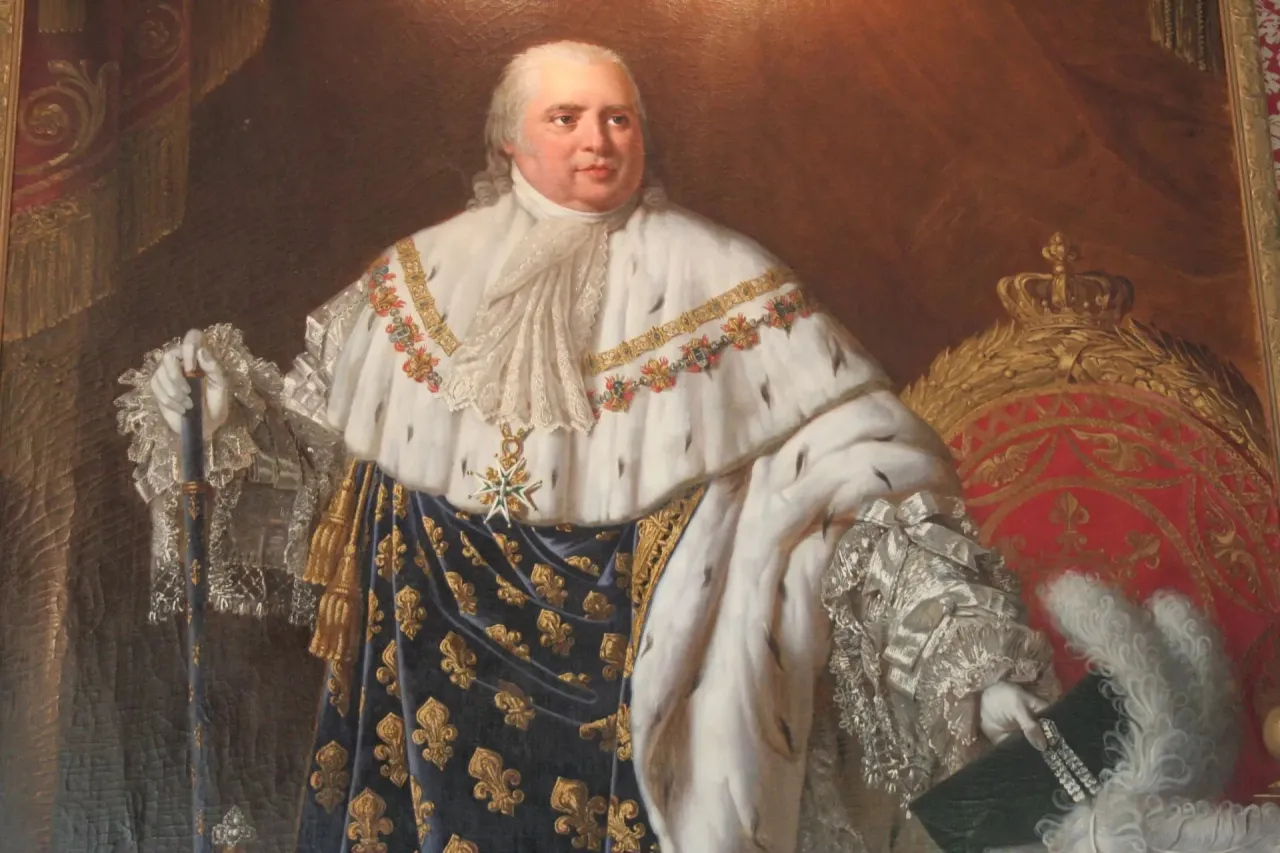
Even the artist Robert Lefevre couldn't make Louis XVIII look handsome!
And then he became a symbol. One must understand the era that began in France after Waterloo. The Bourbons, who returned to the throne, "We have forgotten nothing and learned nothing"This phrase is attributed to Talleyrand, Napoleon, and Alexander I, but whoever uttered it, they hit the nail on the head. First Louis XVIII, and then Charles X, ruled as if the revolution, the consulate, and the empire had never existed in France. The old aristocracy, having spent 25 years in exile, returned and began raking in the most lucrative government positions, ranks, medals, and pensions for their suffering. And the heroes of those very same Battles of Wagram and Austerlitz, who shed buckets of blood for the glory of France and the "little corporal," found themselves driven under the bed.
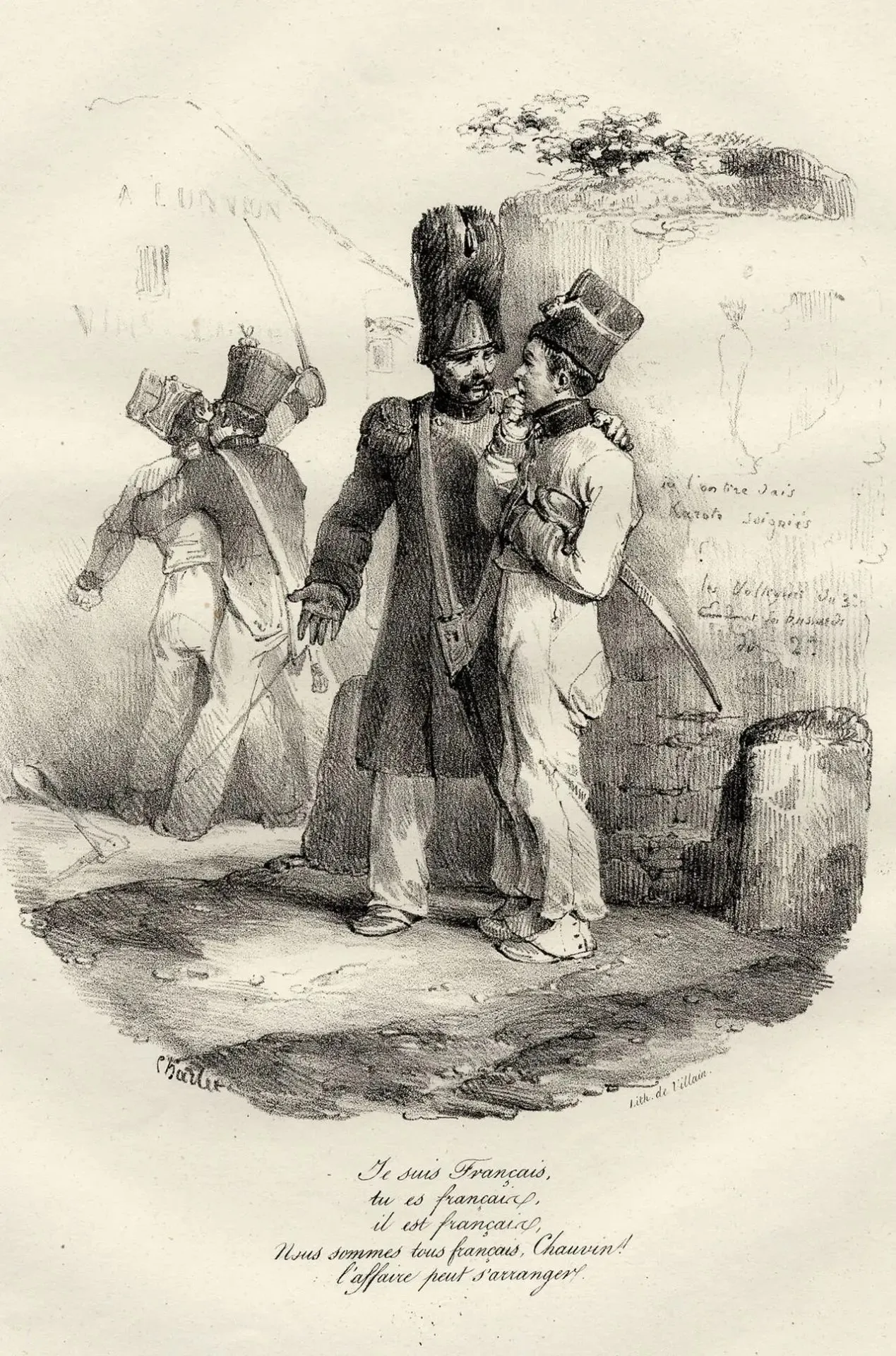
Chauvin separates two recruits who are engaged in a duel: “We are all French, and this matter can be settled!”
But society was completely different! A longing for glory, victory, and the social mobility that went with it was spreading among the French. So old Chauvin's grumbling not only struck a chord, but also made the old soldier (after his death, if he had ever lived) a symbol of those very "good old days." He appeared in plays and vaudevilles staged on street stages or in the cheapest theaters.
The typical scenario went something like this: the gilded youth are enjoying themselves in a tavern, where old Chauvin is gloomily drinking alone, trying to spout his ultra-patriotic maxims but being cruelly ridiculed by the young rascals. But then the roar of cannon fire is heard (in some scenarios, it's the explosion of a transported firework, in others, a salute to the arrival of Napoleon's ashes), the whole group begins to pretend to burn a brothel during a flood, and only Chauvin rises, chest out, and begins issuing sensible commands, which the idiots obey with eagerness and adoration.
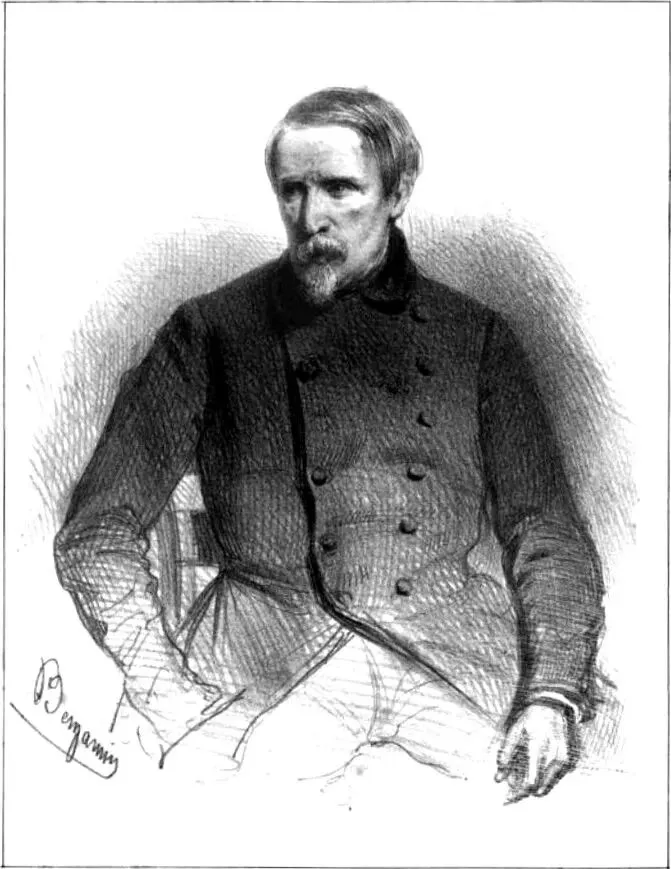
Nicolas-Toussaint Charlet
But the main contribution to the creation of the image of Chauvin (which already has the most distant relation to the original) was made by a group of artists, engravers and caricaturists who published in the magazines Charivari, Caricature and Nemesis, the most prominent (but far from the only!) of whom was Nicolas-Toussaint Charlet.
Our foreign policy drives me to despair; our roosters have turned into hens—beakless, tailless, and sexless. They're a flock of vile, patent-less speculators.
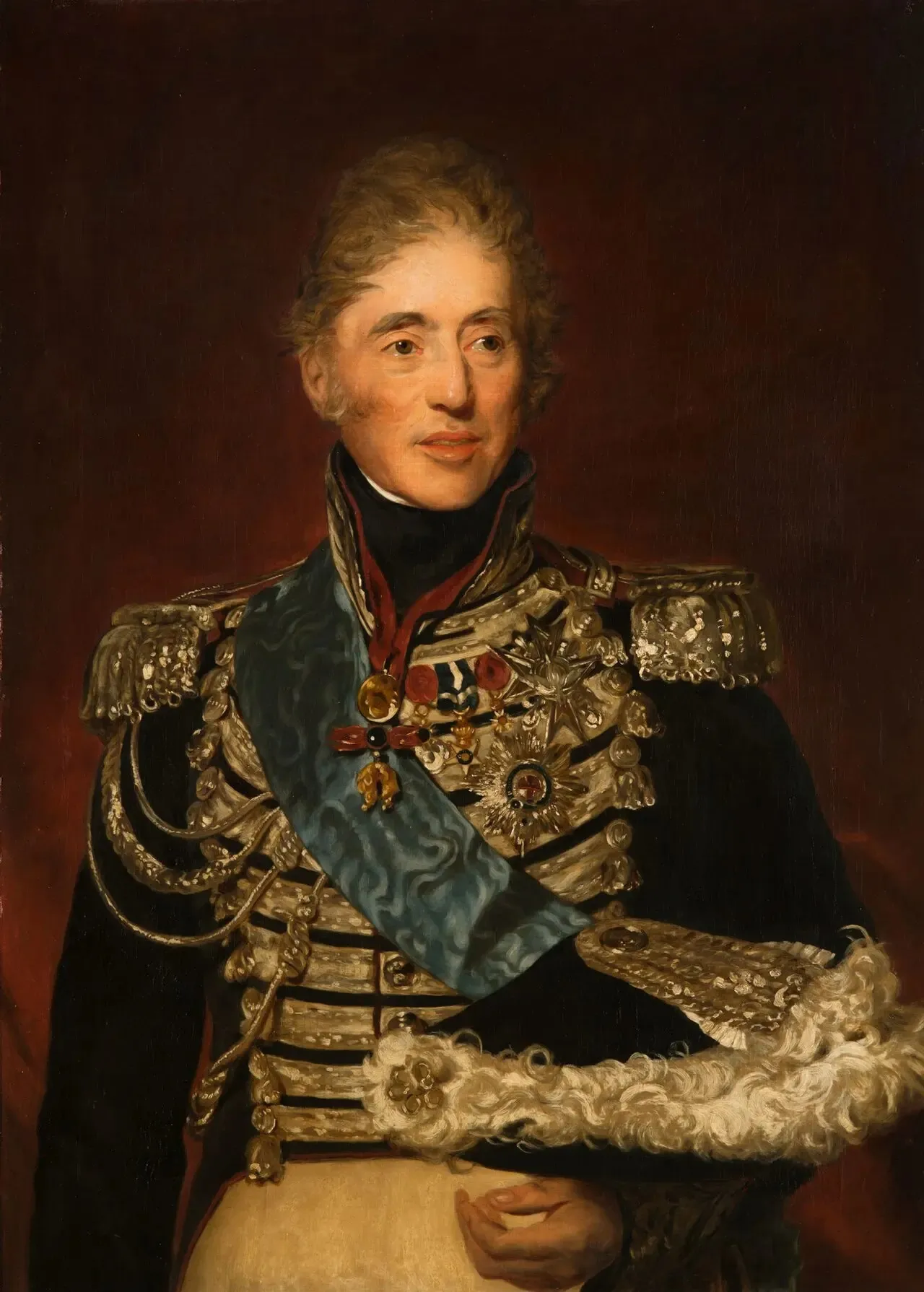
Charles X, after whom bourbon finally became only an American corn whiskey
King Charles X was, of course, a conservative, capable of organizing his beloved coronation according to the most hardcore medieval methods—in Reims Cathedral and with the rite of healing those afflicted with scrofula by the laying on of hands—but he was no fool. He understood perfectly well that society needed a victory. Well, any kind of victory! The Battle of Navarino in 1827 was beautiful and interesting, but along with the French, the Turks were conscripted into the underwater fleet The Russians and the English, so it's not quite the same. But who could the poor King of France defeat in those years? Attacking any European country would have meant getting beaten up by Russia and England, Prussia and Austria, which was fraught with danger—the bruises from Waterloo hadn't yet healed, and besides, Charles wasn't a "little corporal" and had only a limited understanding of military affairs.
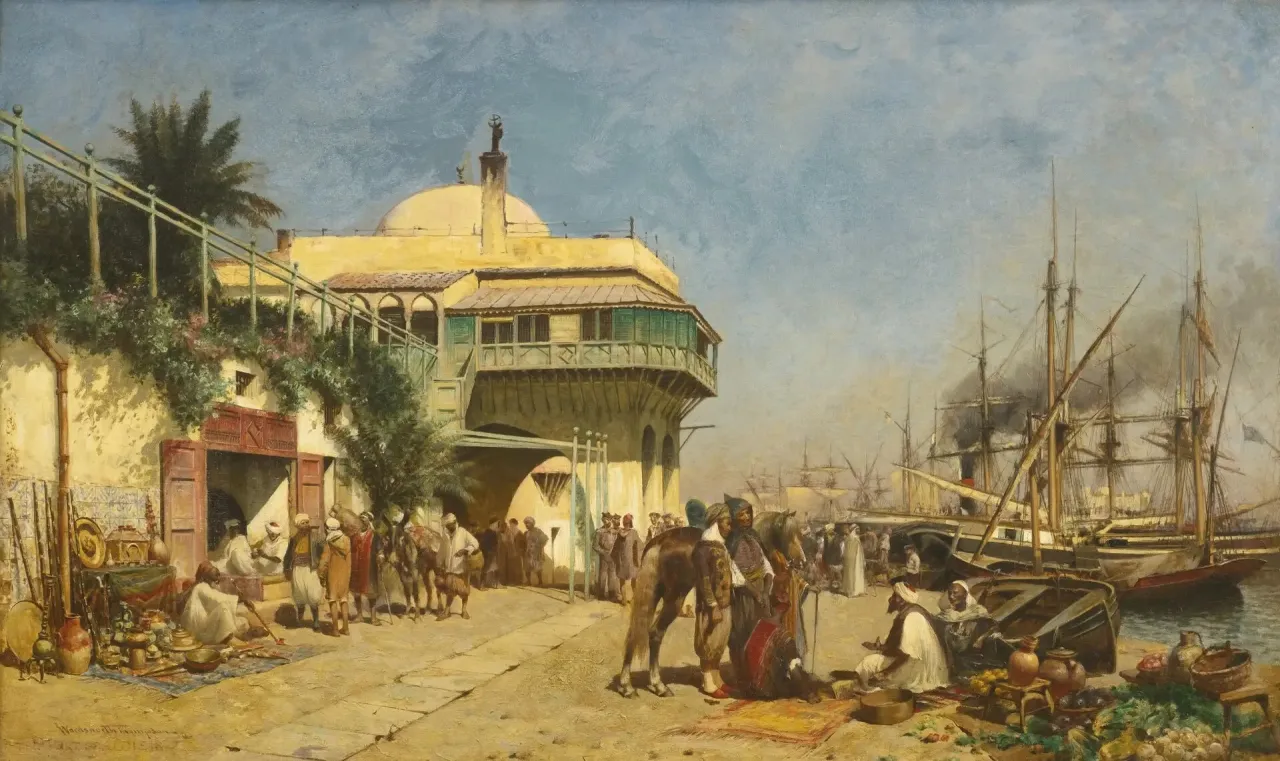
Alfred Wardsworth, "The Port of Algiers"
Upon reflection, nothing could be more convenient for French aggression than Algiers! Firstly, it was close: 400 miles away, and a sailing ship from Toulon to Algiers took an average of 4-5 days (clearly, everything depended on the wind, but that's about it). In that time, the soldiers in the holds wouldn't even have time to catch scurvy—fresh meat wouldn't spoil, wine wouldn't turn to vinegar, fruit wouldn't spoil. The ships could be crammed with troops without taking on too much water and provisions, and the horses wouldn't stagnate in their stalls without daily exercise. Secondly, Algeria's climate is Mediterranean, quite familiar and healthy for southern Europeans—free from malaria, fever, tsetse flies, and other delights of the rest of the "yellow heat of Central Africa."
Interestingly, Charles made no plans for what to do with Algeria after his victory. As the French historian Marcel Egreteau writes:
The king himself had neither the means nor the desire to seize the regency. The expedition was intended to achieve only a limited military success, enough to gild the monarchy's coat of arms.
But, first of all, this very victory was worth achieving...
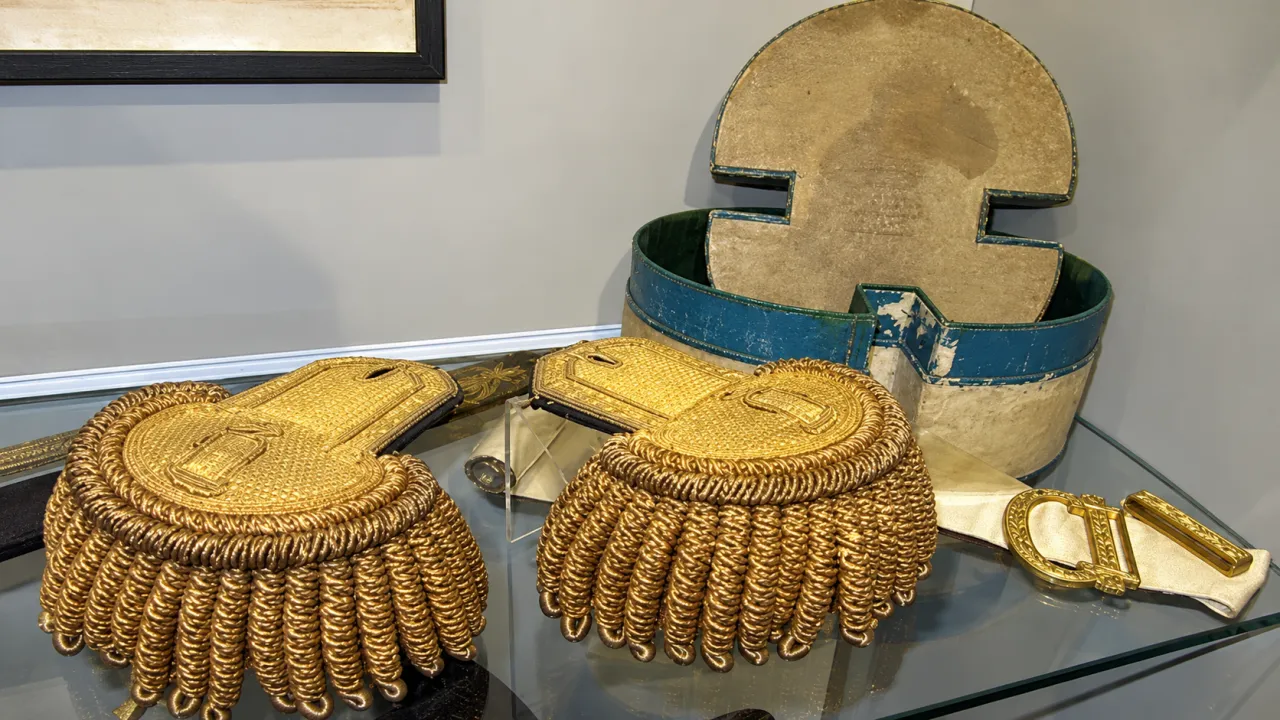
How experienced a spy Vincent-Yves Boutin was is demonstrated by the fact that his portrait has not been found, only a picture of his epaulettes in the Museum of Engineering Troops in Angers and a sabre in the Army Museum in Paris.
The "little corporal" first set his sights on Algeria in 1807, sending a military expedition to the country under the command of engineer-captain Vincent-Yves Boutin, an experienced spy. He entered under the guise of being the cousin of the French consul, with whom he stayed. Napoleon was well versed in military affairs, so he clearly formulated the objectives of Boutin's reconnaissance mission:
Is there a harbor on the coast capable of protecting the squadron from a stronger enemy? What ports could the army use to refuel after landing? And how many ports can the enemy blockade? What time of year is the air plague-free and safe to breathe? I'm guessing October.
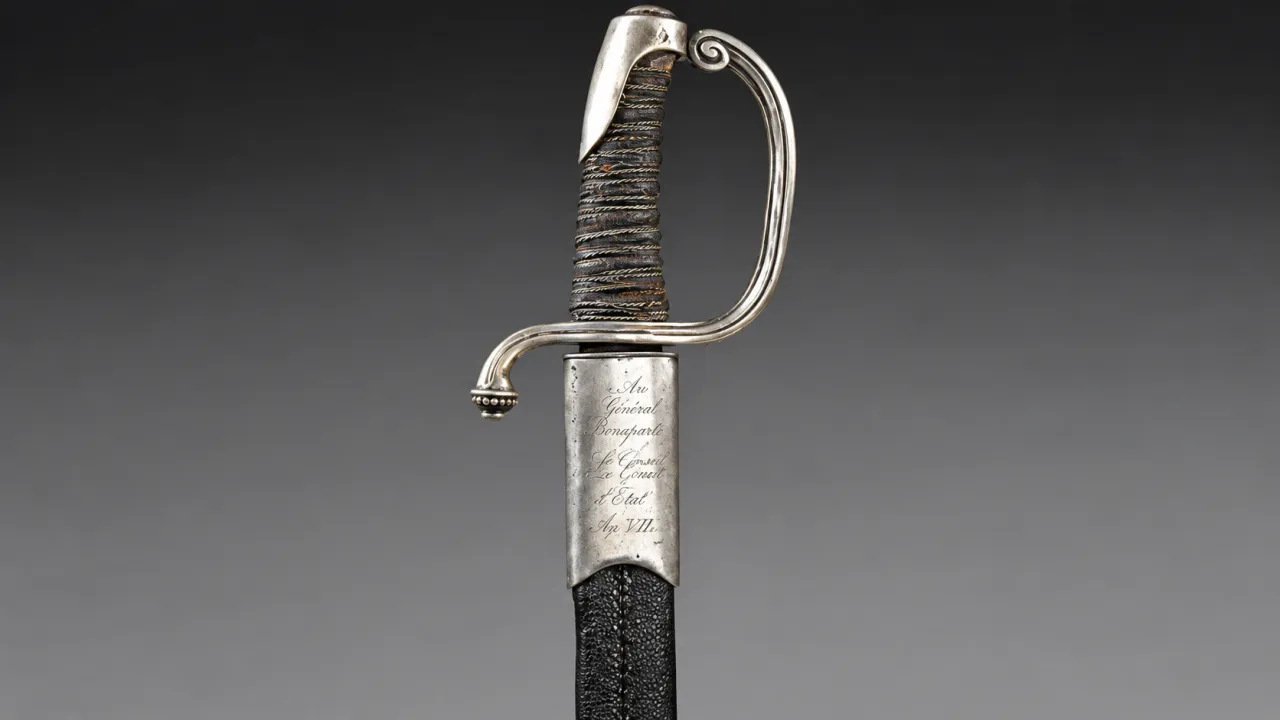
The Sabre of Vincent-Yves Boutin
On May 9, 1808, the spy departed Toulon for Algiers on the frigate Réquin. The ship had to swerve like a canteen, dodging potential attacks from the British fleet, so the Réquin only reached its destination on May 24. Boutin stayed at the home of the French consul, Dubois-Tinville. During his stay, he explored the surrounding area of Algiers, visiting Bab el-Oued and Bab Azoun, and discovered a convenient anchorage for the fleet in the town of Sidi Ferruch (sometimes spelled Sidi Ferrush), where, in his opinion, a landing was entirely possible.
Then begins a James Bond-esque story: on the return voyage, the Requin was intercepted by the British and forced to surrender. Before being captured, Boutin managed to throw overboard the documents containing his observations, topographic maps, and so on. This didn't stop the British from imprisoning him in La Valletta, Malta. But Boutin escaped after a few weeks and made his way to France via Istanbul, a circuitous route. In Paris, he reconstructed his findings from memory and reported personally to Napoleon at the Tuileries Palace. The "Corsican Monster" never made it to Algeria, but Charles X (who died in the Al-Ansariya Mountains in 1815) found Boutin's observations useful in his undertaking.
However, for war, besides reasons, a pretext is also needed. And the king already had one in store! Revolutions are not the best time for agriculture, but people, characteristically, want to eat every day. Therefore, in 1789–1790, grain arrived in France mostly from Algeria. Since there was nothing to take from the sans-culottes except for analysis, the dey supplied food on credit. Then an agreement was reached to repay the debts through the Algerian merchants of Jewish origin, Bakri and Busnakh. The dey was not satisfied with this agreement, since, in his opinion, the French were several million francs short of payment.
The years passed, the negotiations dragged on, and the dey increasingly asked himself: "When will I get my money back?" Since the film "Zhmurki" hadn't yet been made, there was no one to explain to Algeria's last dey, Hussein, that "They screwed you over like a complete loser, like a schoolboy..." The French consul, Deval, was fidgeting and wouldn't give a direct answer to the question "When?" Then Hussein wrote a letter personally to the French Foreign Minister, asking the same sacramental question and demanding immediate payment of 7 million francs, and also protesting the construction of fortresses on the territory of the French concessions.
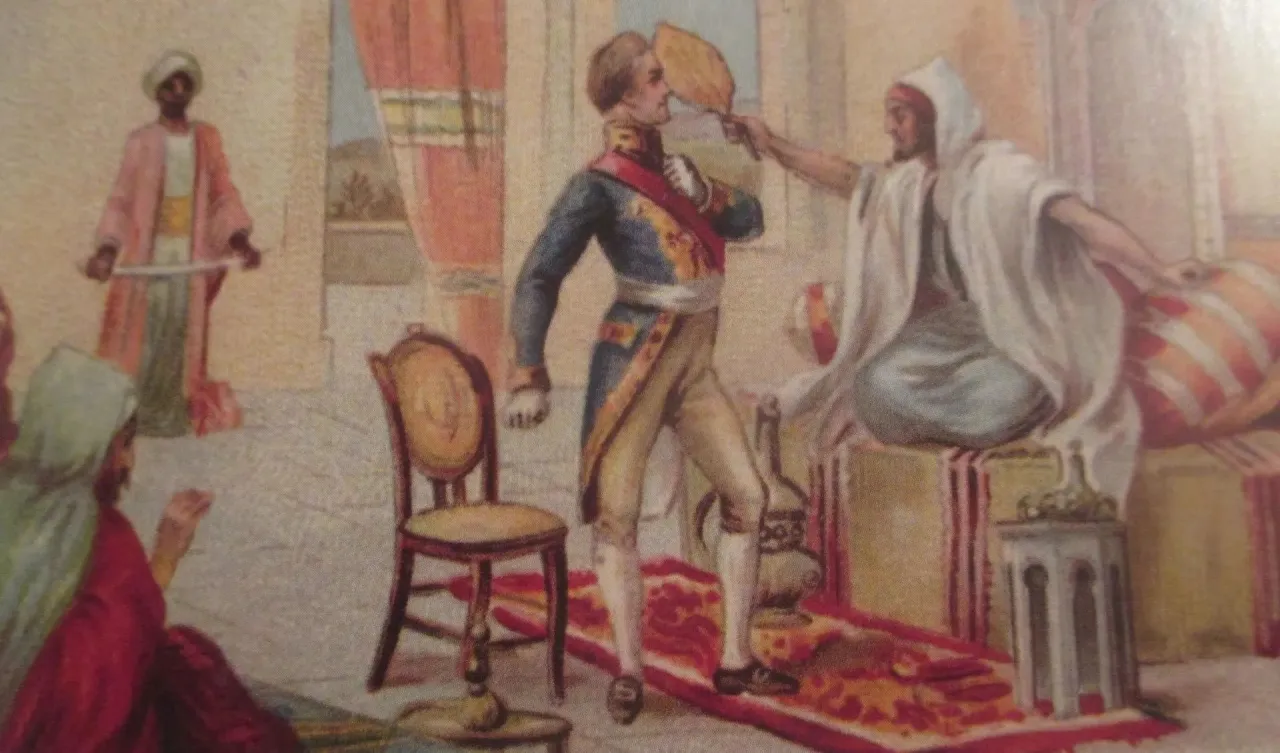
That same "fly swatter blow!"
But Dey Hussein's anger wasn't limited to words. In 1814, a treaty had been signed with France, declaring coral fishing off the coast of Algeria a French monopoly. Now he declared that anyone could fish for coral. Furthermore, he began detaining and plundering ships from countries that, according to the earlier treaty, were supposed to be French.
During a private audience on April 27, 1827, French Consul Paul Deval began to complain about these actions. Hussein replied that they were due to the French's dishonesty and that he would no longer allow them to enjoy special privileges in Algeria. He then asked why his letter to the Minister of Foreign Affairs had not yet received a response. Deval mockingly replied that the government wished to communicate with the Algerian authorities only through him, not directly. Enraged by such impudence, the Dey grabbed a large fan from one of the servants and struck the consul repeatedly with it. This blow was later called the "fly swatter blow" or the "fan blow," but it was precisely this blow that became the pretext for the war that Charles X so desperately needed.
As soon as news of the "fly swatter attack" became known in France, a schooner was dispatched to Algiers with orders for Deval to immediately abandon the "Barbaria." Hussein was given an ultimatum: apologize immediately for the insult inflicted on France by its consul. The apology was to be offered to Deval in the presence of all foreign consuls residing in Algiers, the French flag was to be hoisted on the Casbah, the capital's citadel, and the consul was to be given a 110-gun salute. Dey refused.
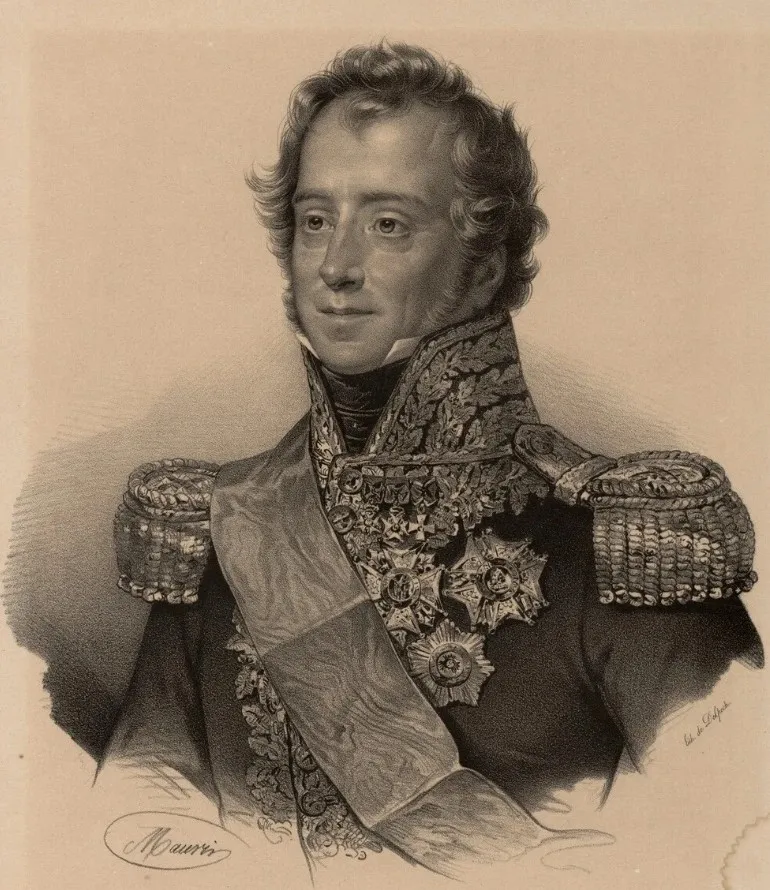
Auguste Victor de Gains, Comte de Bourmont
The war began with a blockade, a rather rudimentary one at that: a couple of frigates and four or five small ships stood at the entrance to the bay, but the entry and exit of ships was practically unimpeded. Several Algerian corsairs took advantage of this, put to sea, captured several merchant ships, and sent the prizes for sale in other African and Spanish ports.
In 1828, the French even began secretly exploring the possibility of negotiations with Hussein through the Sardinian consul. They hinted to the Dey that if he sent an ambassador to Paris, the incident could be resolved. Hussein was misled by such French insensitivity; he assumed he could be treated without ceremony and demanded the arrival of an envoy plenipotentiary. But in the summer of 1829, Charles X replaced his Minister of War with Auguste Victor de Guin, Count of Bourmont, who began preparing a military expedition. Toulon was chosen as the departure port. At an open legislative session of Parliament on March 2, 1830, the king openly announced his intentions. The European powers, with the exception of England, were quite receptive to Charles X's plan to punish Hussein.
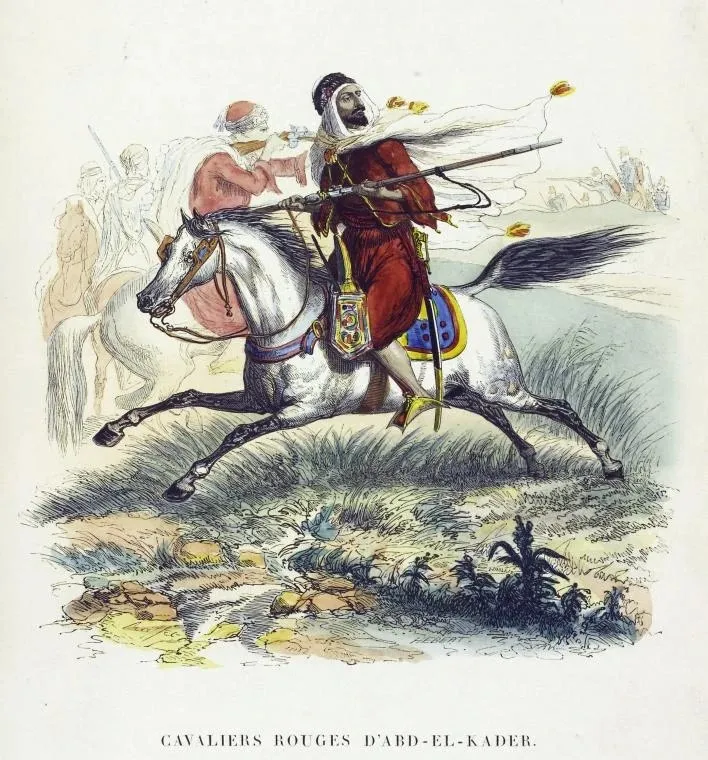
Algerian cavalry
What could the dey of Algiers have to offer against the French army? The exact number of troops is difficult to calculate. The French cite 72 fighters. Some historians cite much more modest figures: 22 regular troops, plus 5 Turks, 7 Bedouin horsemen, 10 Moors, and 10 Kabyles. The US consul in Algiers, Major Lee, reported that the number of irregular forces exceeded 30.
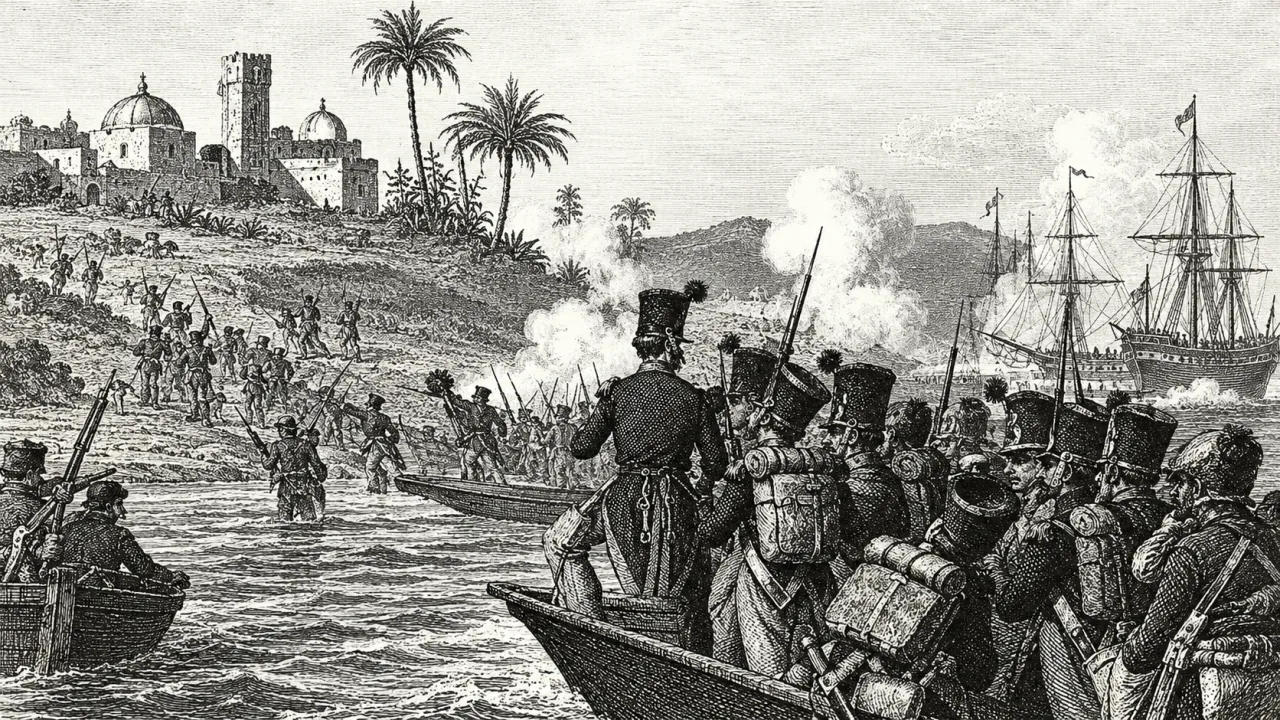
The French are landing
On June 3, part of Admiral Guy-Victor Duperré's invasion fleet (103 warships and 464 transport vessels) was spotted off the coast of Algiers. Dey Hussein decided that the landing would take place west of the city and, despite the fact that half of his troops had not yet arrived, sent part of his remaining forces to the western plain, where he ordered a camp to be established on the coast. However, the French took advantage of information obtained by Boutin back in 1808, and the ships soon headed south—for Sidi Ferruch, located 27 km from Algiers.
When the fleet approached the landing site on June 14, it turned out to be barely fortified and empty of enemy troops—even the coastal battery and the tower on the hill were empty. Since there were no obstacles to the landing, General de Bourmont unloaded all the troops and a significant portion by nightfall. artillery and provisions and ammunition: 34 thousand soldiers. During the landing, General Pierre Berthezen's division was detached to guard the bridgehead.
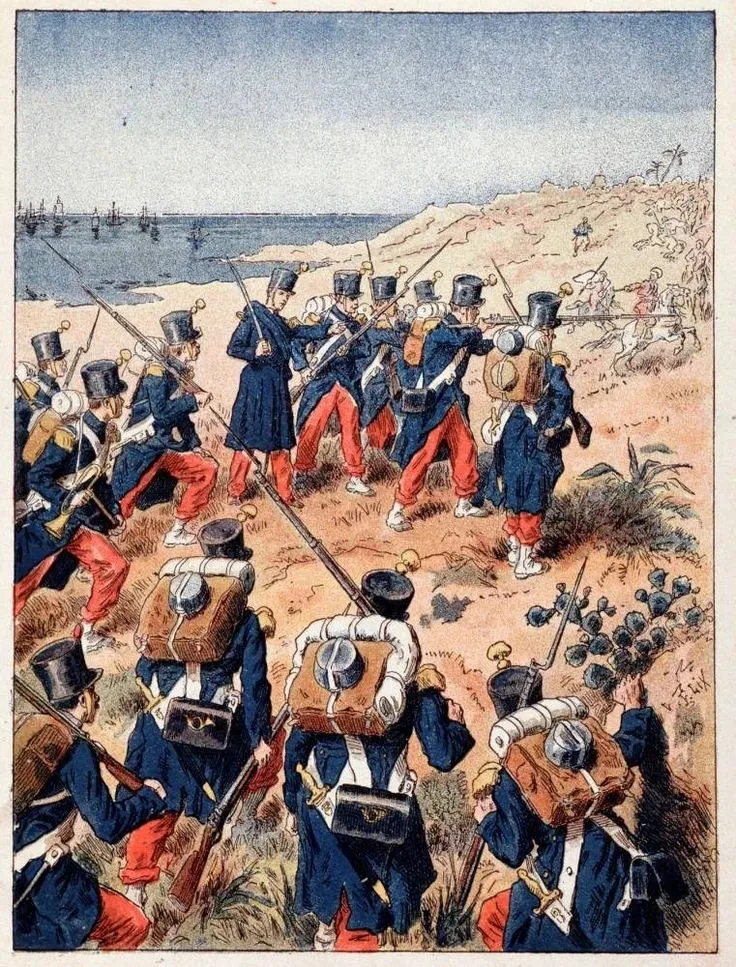
Battle of Staoueli
The Dey suddenly realized his situation and sent 7 Janissaries, 17 warriors from Oran and Constantine, and 5 Kabyles to Sidi Ferruch (other estimates of the Algerian troop strength include 10 Janissaries, 10 Moors from Algiers, 19 warriors from Oran, Titteri, and Médée, and 30 Kabyles). On June 19, the French and Algerian troops clashed on the battlefield at Staoueli. The Muslims began the battle, descending from the plateau through thick fog at 4:30 a.m. and attacking the French outposts. The Bey of Constantine's detachment attacked the positions of two brigades under Generals Charles-Marie Denis de Damrémont and Monck d'Uzère, but were repelled by artillery fire and a bayonet charge by the 15th Line Regiment.
Meanwhile, the main Algerian forces attacked the 28th Line Regiment and pushed it back, but General d'Arsin sent the 29th Line Regiment to their aid, which was able to rectify the situation. When the Algerian forces retreated and a gap opened between them and the French, Admiral Duperré's ships opened fire on the retreating troops, adding to the riot. The 37th Line Regiment fared worst of all: it engaged the Janissaries, who, although retreating, did so slowly and in an orderly fashion. In short, the French advance on the hill was soon hampered only by the need to bring up artillery on foot (they hadn't had time to unload the horses).
By 7:00 a.m., large groups of Algerian cavalry and General de Bourmont arrived on the field. The French commander ordered a full attack, and soon the locals fled. However, a large group of horsemen attempted to attack on the right flank, but were scattered by artillery fire. The battle ended by 13:00 p.m., when the dust settled behind the last fleeing Algerians. The French lost 57 men killed and 463 wounded in the battle. The descendants of the Gauls received a large number of trophies. weapons and cattle, so that in the evening the valiant grandsons of Napoleon's grenadiers gorged themselves on lamb.
Despite the decisive victory at Staoueli, de Bourmont hesitated to advance further until the artillery and horses were fully unloaded, so the Algerians soon reoccupied the plateau at Staoueli. On June 24, the 1st Division was sent to rectify the situation, and the dey's army retreated to Sidi Khalefa. Here, a decisive bayonet charge brought the French a swift and almost bloodless victory. However, among the few casualties was Amédée de Bourmont, one of the Count's four sons.
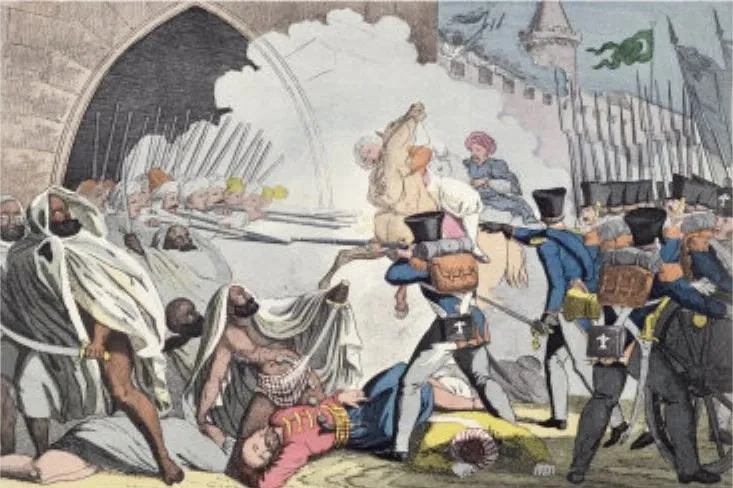
The battles at the gates of Algiers, apparently, were the capture of the fortress of Bordj Moulay Hassan
On June 29, the French approached the fortress of Bordj Moulay Hassan. This was the key to Algiers, whose fall would automatically lead to the fall of the city: from the heights of this fortress's hill, batteries could fire upon Algiers as if it were a firing range. On June 30, de Bourmont ordered the siege to begin. By July 3, all artillery had arrived at the walls, and the bombardment began early the next morning. At first, the fortress's garrison of 800 Janissaries and 1200 Moors responded vigorously, but by 10:00 a.m., the walls were razed to the ground, and the defenders ceased firing, left without cover. They soon detonated the remaining gunpowder and retreated to the Kasbah, while on the ruins of Bordj Moulay Hassan, the French established batteries, with the city of Algiers spread out before them.
In the afternoon, a parliamentarian from Dey Hussein arrived to de Bourmont and said that the Dey agreed to make all the required apologies to the king and reimburse France for all military expenses. The French refused. Then, some time later, two delegates arrived from the city and offered to bring Hussein's head. De Bourmont decided that the head would not be necessary without everything else, and said that France wanted
Information