The Most Useless Ships of World War II

Looking ahead, I'll let all naval enthusiasts, and especially the critics, know that I don't intend to stop here, and will follow up with a similar ranking article about the most useful ships of that war. There aren't many of those, and it's hard to imagine the amount of fun this will provide for those who like to discuss the author's misunderstandings. I'll be happy to please everyone, but for now, here's a ranking of the worst.
Let me tell you right away why there will be no Soviet battleships on this list, although they would be appropriate.
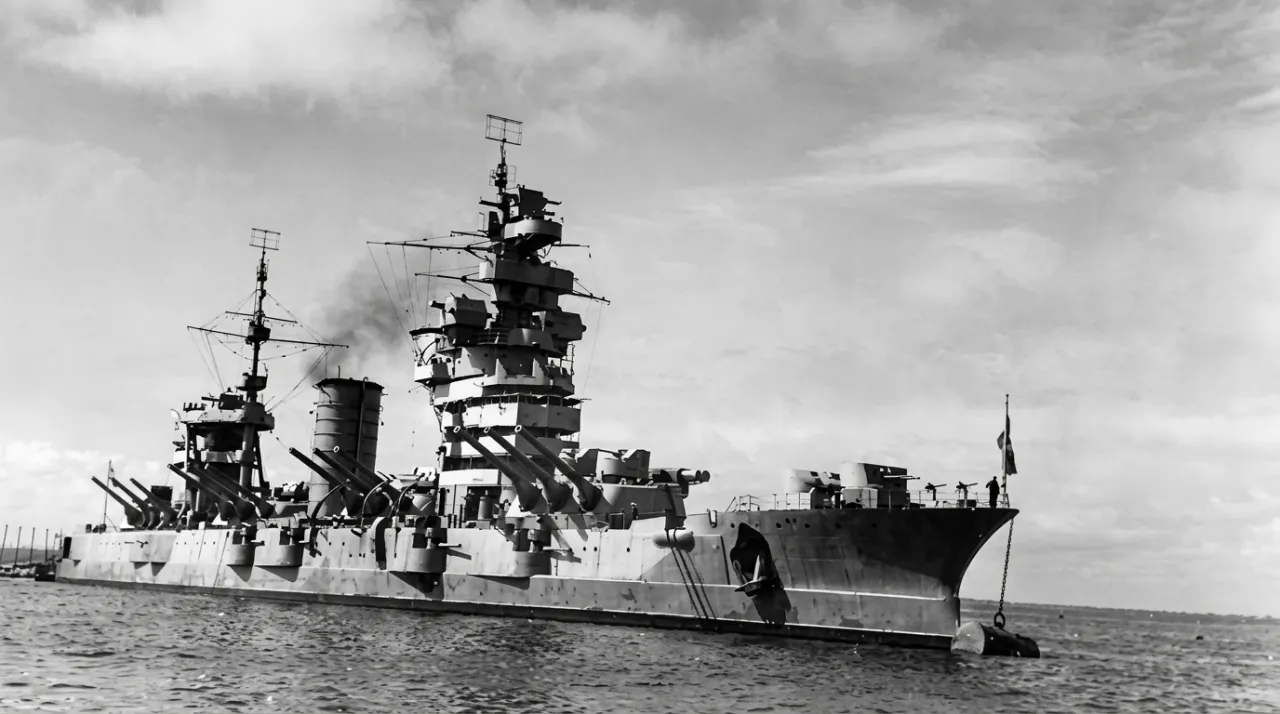
Firstly, old age must be respected, and these ships were produced before the First World War, and if they did nothing during that war, then what claims can be made against them during the Second World War, when they were very old and good for nothing ships?
Secondly, there was a certain benefit: the bombs that the Germans threw at these battleships could have caused much more damage elsewhere.
On the effectiveness of shooting at "clusters" tanks We won't discuss the "enemy infantry" aspect, as the Americans demonstrated it perfectly, dropping thousands of tons of metal on the Pacific islands where the Japanese were entrenched, and then seeing the Marines suffer at the hands of the supposedly "suppressed" and "annihilated" Japanese. Therefore, defining what constitutes an "infantry concentration" worthy of a 305mm shell is pointless. Moreover, these shells weren't exactly... dense. According to reports, the Gangut/Oktyabrskaya Revolyutsiya fired 257 main-caliber shells in 25 firings. Draw your own conclusions about how effective these firings were.
But today we have some more recent losers, so to speak. And I've tried very hard to ensure this list includes more than just battleships, although, admittedly, that's no easy task.
And number one on our list will be a submarine. Otherwise, some will say, "Look, now she'll start whining about the Tirpitz..." Although, of course, she's also worthy of our attention.
The most useless submarines
Submarine Surcouf, France
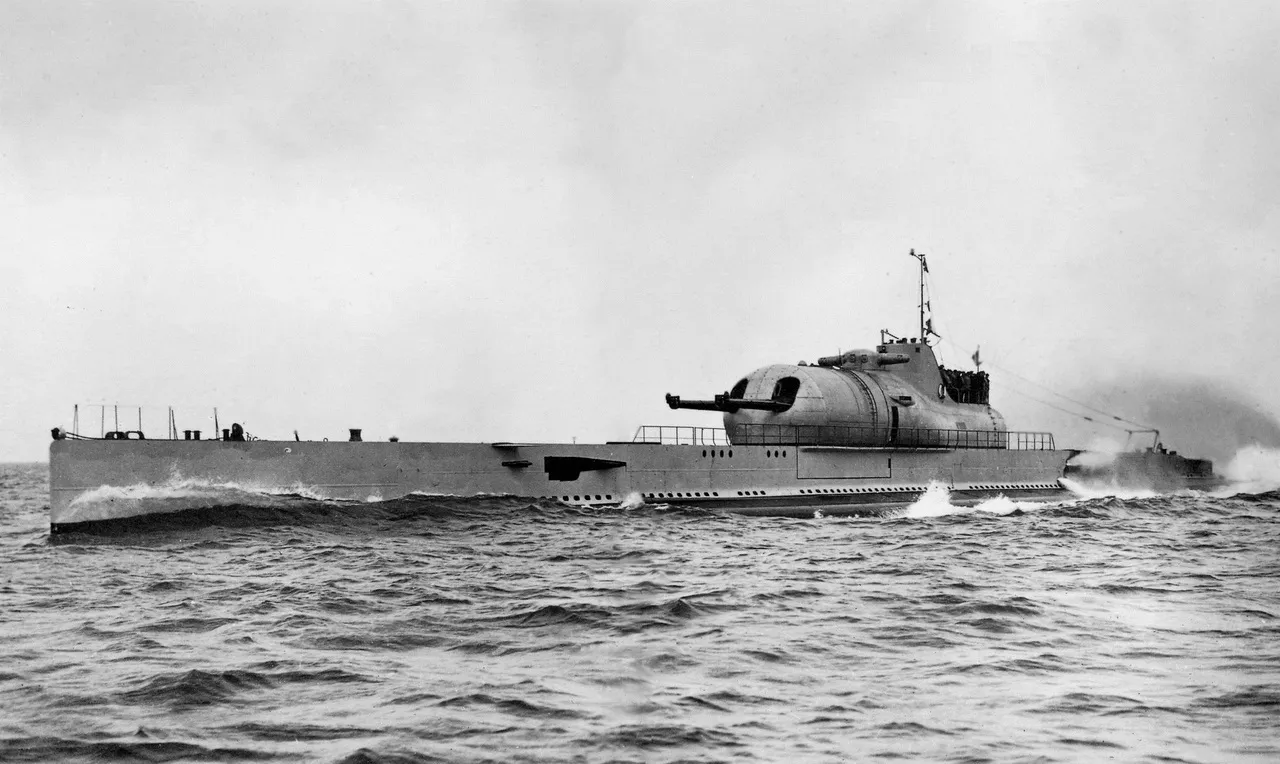
Commissioned in 1934, the submarine was designed for cruising operations along ocean lanes. In addition to a torpedo armament of eight 550mm and four 400mm tubes with a substantial supply of torpedoes, it was also armed with a turret with two 203mm guns and an anti-aircraft battery of two 37mm cannons and four 13,2mm machine guns. It also carried a Besson MB.411 floatplane for reconnaissance and artillery fire adjustment.
The ship's displacement is 2880 tons surfaced and 4330 tons submerged. Its length is 110 meters, and its cruising range is 12 miles.
The boat represented the pinnacle of post-World War I efforts to combine the stealth of a submarine with the firepower of a surface ship in a single vessel. Another feature of the Surcouf was its theoretical ability to conduct artillery Fire in a semi-submerged position. In reality, the submarine could fire, but firing from a semi-submerged position caused numerous leaks in the turret.
The boat's service turned out to be as follows: before the start of the war, the Surcouf wandered around ports, demonstrating the flag and the successes of French shipbuilding.
In June 1940, during Operation Catapult, French ships in British ports were taken under control by British sailors and marines. The Surcouf, which was in Portsmouth, was also captured. It's worth noting that the Surcouf was the only French ship whose crew offered armed resistance to capture. The incident resulted in the deaths of two British officers and a sailor, as well as a French midshipman.
Following these events, the crew of the Surcouf, with the exception of two officers and 14 sailors, refused further service in the ranks of the Fighting French and were sent to a prisoner of war camp in Liverpool.
The British assembled a new crew, consisting of French sailors, most of whom were not submariners. Unsurprisingly, the submarine's effectiveness was near zero, and the inexperienced crew operated the boat so extensively that repairs, which were themselves quite the adventure, were never completed.
It's important to remember that France was a metric country, while Britain was an imperial one. Every propeller and every tube had to be handcrafted, which didn't affect the boat's efficiency. Something was constantly breaking down, and the Surcouf saw virtually no combat.
On February 12, 1942, the Surcouf set sail, heading for the Panama Canal to cross into the Pacific Ocean. With only one engine functioning properly, the boat was unable to reach speeds above 13 knots. It is believed that on February 18, 1942, the Surcouf collided with the American cargo ship Thomson Lykes and sank, taking with it 127 French and three British sailors.
I-400-class submarines. Japan
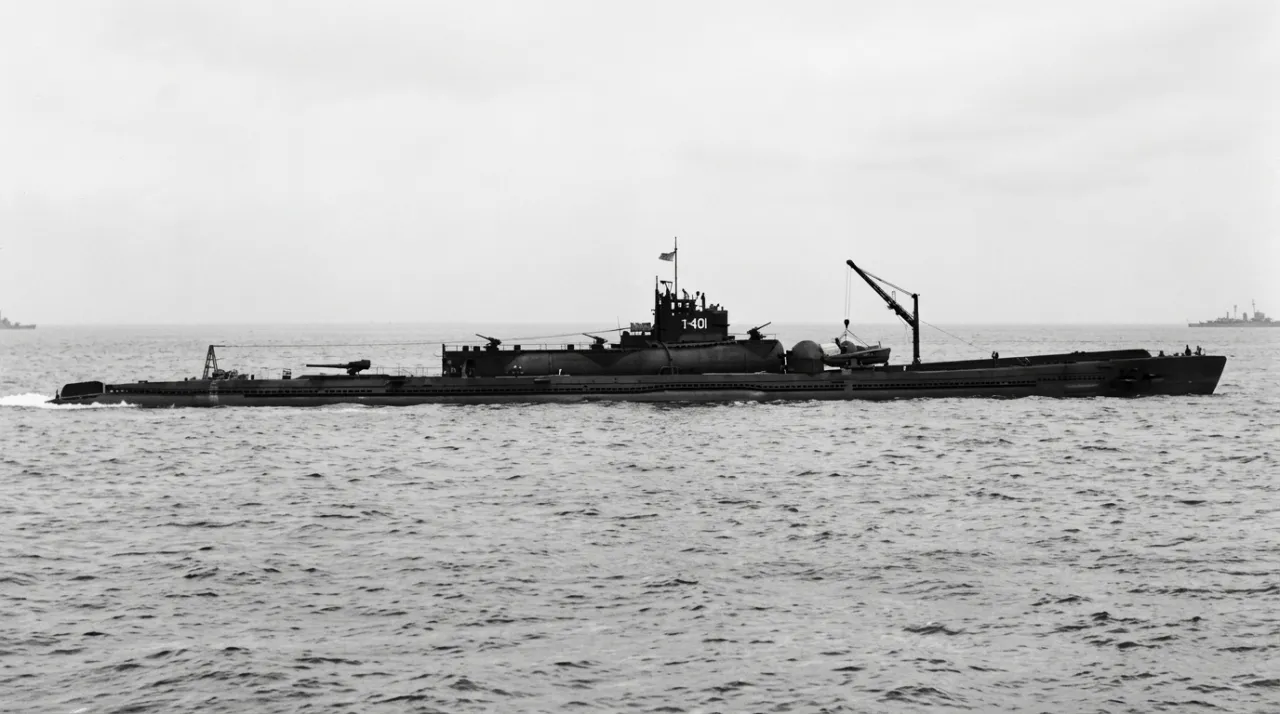
Designed in 1942-1943 as ultra-long-range submarine aircraft carriers for operations anywhere on the globe, specifically off the US coast, the I-400-class submarines were the largest built during World War II and remained so until the advent of nuclear submarines. They were truly enormous:
- standard surface displacement 3,530 t;
- full 5,223 t;
- underwater displacement 6,560 t
Maximum length (according to design waterline) – 122 m.
This thing is really huge.
The I-400 owes its birth to Admiral Yamamoto, who, immediately after the attack on Pearl Harbor, ordered work to begin on the creation of such a strange ship: an underwater aircraft carrier for attacks on the US coast.
While Japanese shipbuilders already had experience with mounting reconnaissance floatplanes on several submarine classes, the I-400 needed to carry a larger number of aircraft, none of them reconnaissance-oriented, to accomplish its intended missions. Requirements for the aircraft included carrying an aerial torpedo or two medium-caliber bombs.
The construction project was a complete failure: 18 submarines were planned, but in 1943, after the death of Admiral Yamamoto, this number was reduced to nine ships, of which only six were started and only three completed. Due to their late construction, the I-400-class submarines were never used in combat. After Japan's surrender, all three submarines were handed over to the United States and scuttled in 1946.
To appreciate these boats, it is enough to look at their armament:
- 8 533 mm torpedo tubes and 20 Type 95 torpedoes;
- 1 x 140 mm gun in the stern behind the wheelhouse;
- 3 three-barrel and 1 single-barrel 25-mm Type 96 anti-aircraft guns, located on the wheelhouse.
Aviation The I-400 type group consisted of three floatplanes, Aichi M6A Seiran torpedo bombers, with the ability to also transport a fourth one in a partially disassembled form in a hangar.
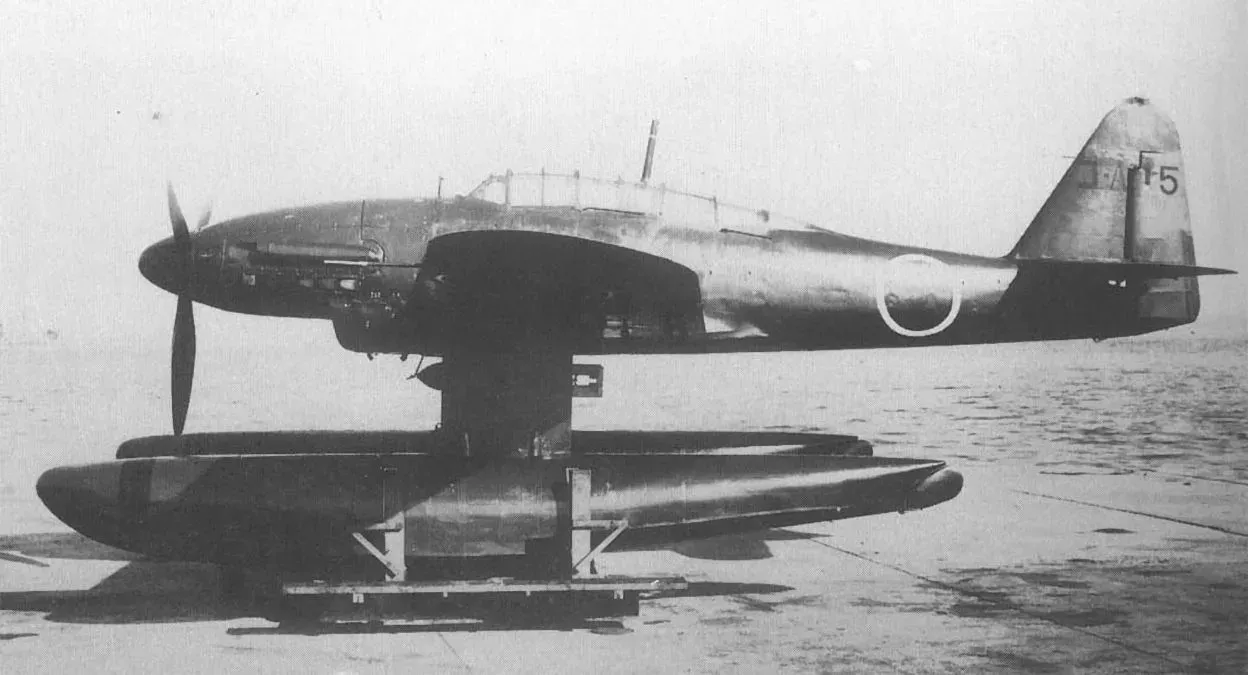
To launch aircraft, the boats had a launch catapult and launch rails.
The I-400 was no less an interesting project than the Surcouf, but it never saw use.
The most useless cruisers
Battlecruisers Alaska and Guam. USA
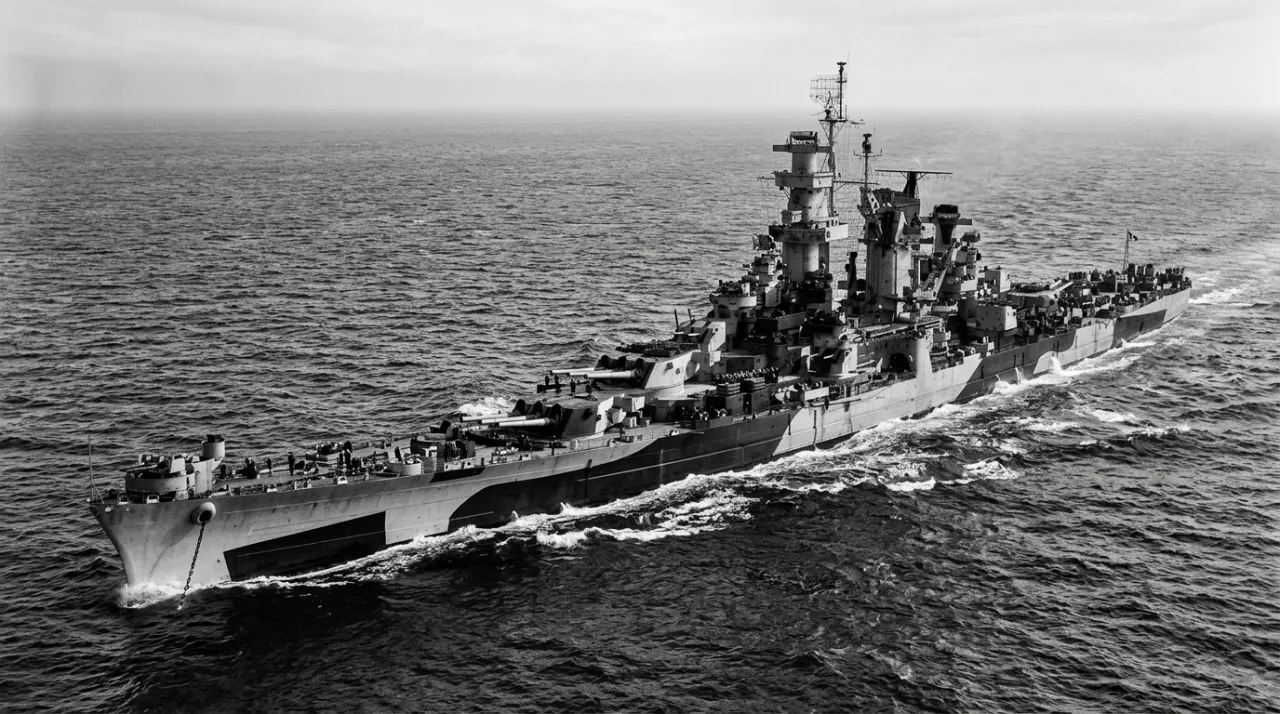
The Alaska-class battleship-like monsters were built to catch heavy cruisers in the ocean. fleet Japan and destroy them.
In reality, the resulting ships were inferior to the "light" battleships of the Dunkirk or Scharnhorst class in armor and main battery guns. Furthermore, the Alaska's 305mm guns fired 5-7 km closer than the Dunkirk's 330mm guns or the Scharnhorst's 280mm guns.
The main drawback of the Alaska-class battlecruisers was their inadequate protection against underwater damage. The ships lacked torpedo protection, which, in addition to several layers of watertight compartments, should have had a main armored bulkhead. On the Alaska-class, the underwater protection bulkheads were made of thin sheets of structural steel, and the protective layer itself was insufficient in width.
That is, the main trump card of the Japanese ships, the Long Lance torpedoes with a caliber of 610 mm, were fatal for the Alaska. weapons, and the 533 mm torpedoes were quite serious weapons, capable of sending this cruiser to the bottom with a couple of them.
The Alaska, the Soviet Kronstadt project, and the German and Japanese "large cruisers" were noticeably inferior to the Dunkirk and Scharnhorst. Yes, the French and German ships were considered battleships, but the Alaska had roughly the same displacement, and its main battery was larger than that of the Scharnhorst.
But the struggle for the Alaska's extra two knots, which came at the cost of a significant deterioration in other combat characteristics, proved quite detrimental to the latest generation of battlecruisers, which had finally ceased to be "battleships," that is, ships designed to engage battleships. In this regard, the Strasbourg performed much better than the German and American ships.
The combat successes of the Alaska and Guam were less than stellar. Yes, they entered the war in March 1945, but by the end of World War II, these cruisers had achieved nothing more than the Alaska shooting down two Japanese aircraft and the Guam downing one. And that's all the last two battlecruisers in the war could boast of. stories.
"Too large and expensive to be used as cruisers, too weak and vulnerable for joint operations with battleships, and obviously late in their appearance, they were, in the opinion of American experts themselves, "the most useless of the large ships built during the Second World War."
Kofman V.L.
Kofman V.L.
Deutschland heavy cruisers
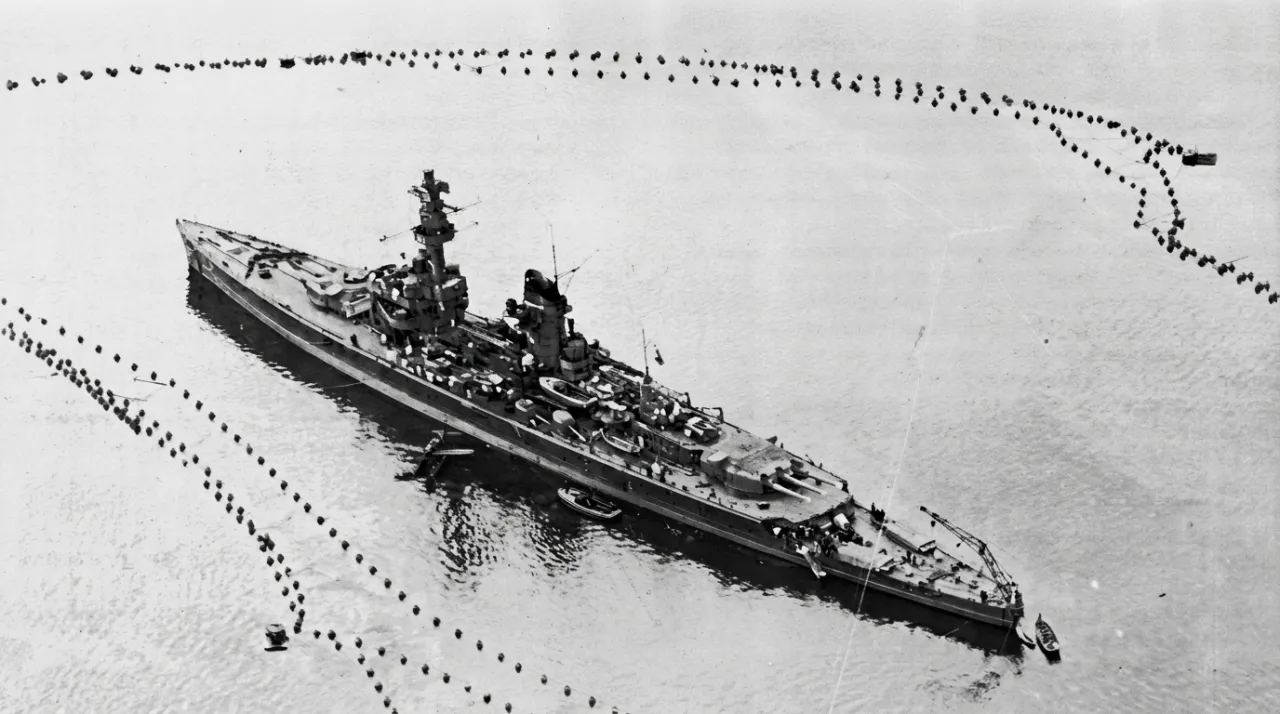
We'll discuss these ships in detail in the near future, but today we'll simply relegate them to the ranks of failures, for that's exactly what they were. "Pocket battleships," "perfect pirates"—well, yes, but no.
A great deal of armor was expended on three cruisers, but to little avail. We won't dwell on the details of these ships' design and armament; let's move straight to their combat effectiveness.
Deutschland / Lutzow
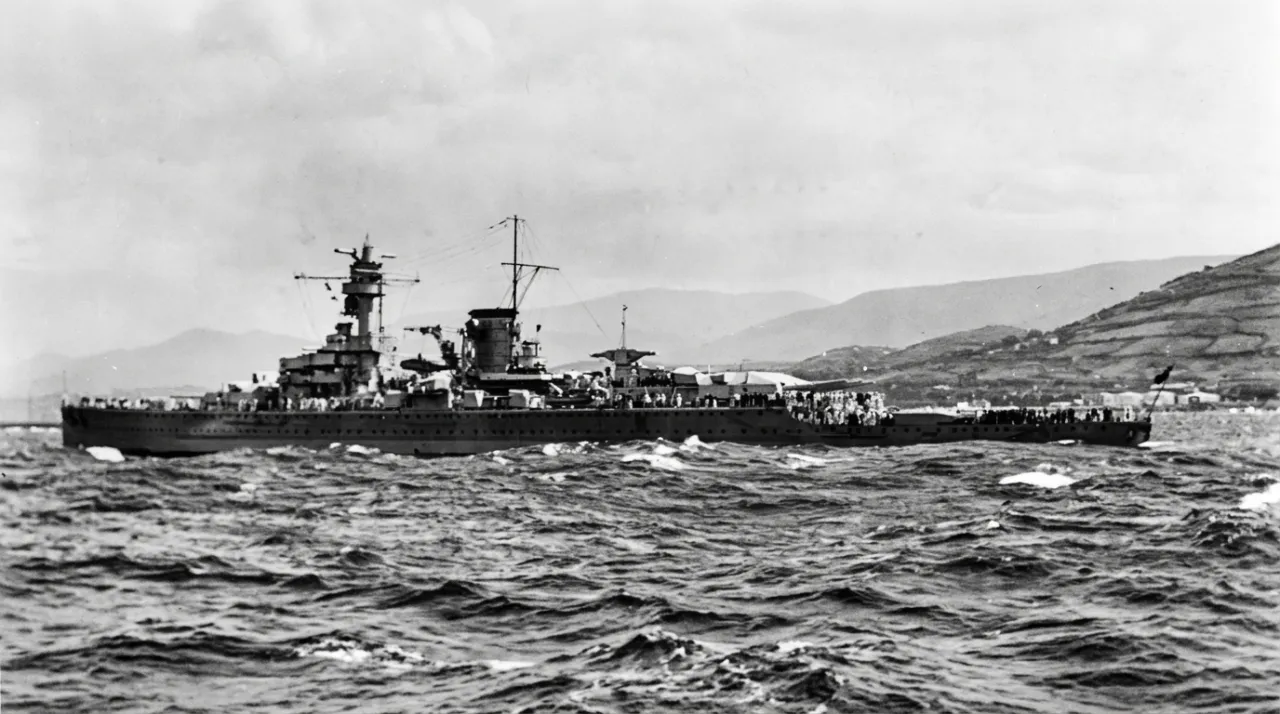
She went down in history as the first ship to be bombed by Soviet aircraft. Two 100-kg bombs from Spanish Republican Air Force SB bombers tore through the deck, killing 23 and wounding 73 crew members. It wasn't exactly a great start.
During her voyages, the Lützow sank two merchant ships with a combined displacement of 7,000 tons. And that's all the ship could boast about, because firing her main guns at advancing Soviet troops in the Baltics in 1945 is… well, we've already discussed the value of firing large calibers over large areas.
Admiral Scheer
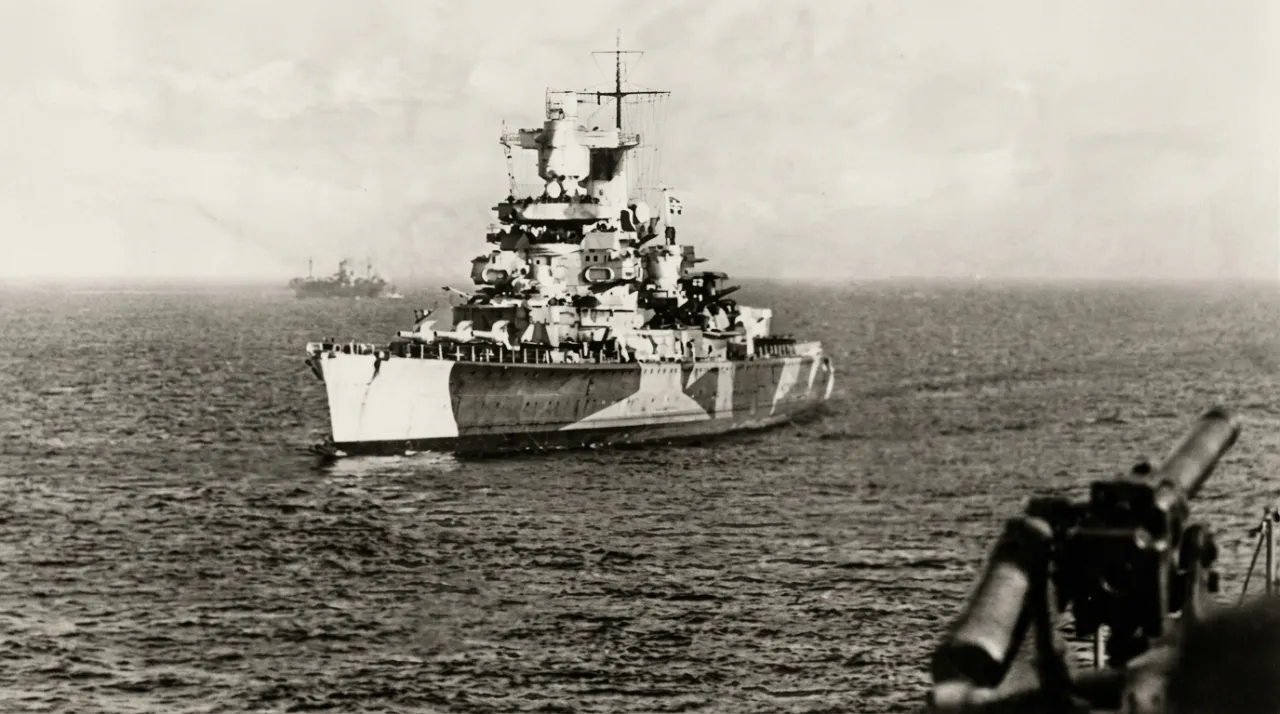
This one saw a bit more combat: between 1940 and 1942, the Admiral Scheer sank the British auxiliary cruiser Jervis Bay, the Soviet icebreaker Alexander Sibiryakov, and 15 transport ships.
"Admiral Graf Spee"
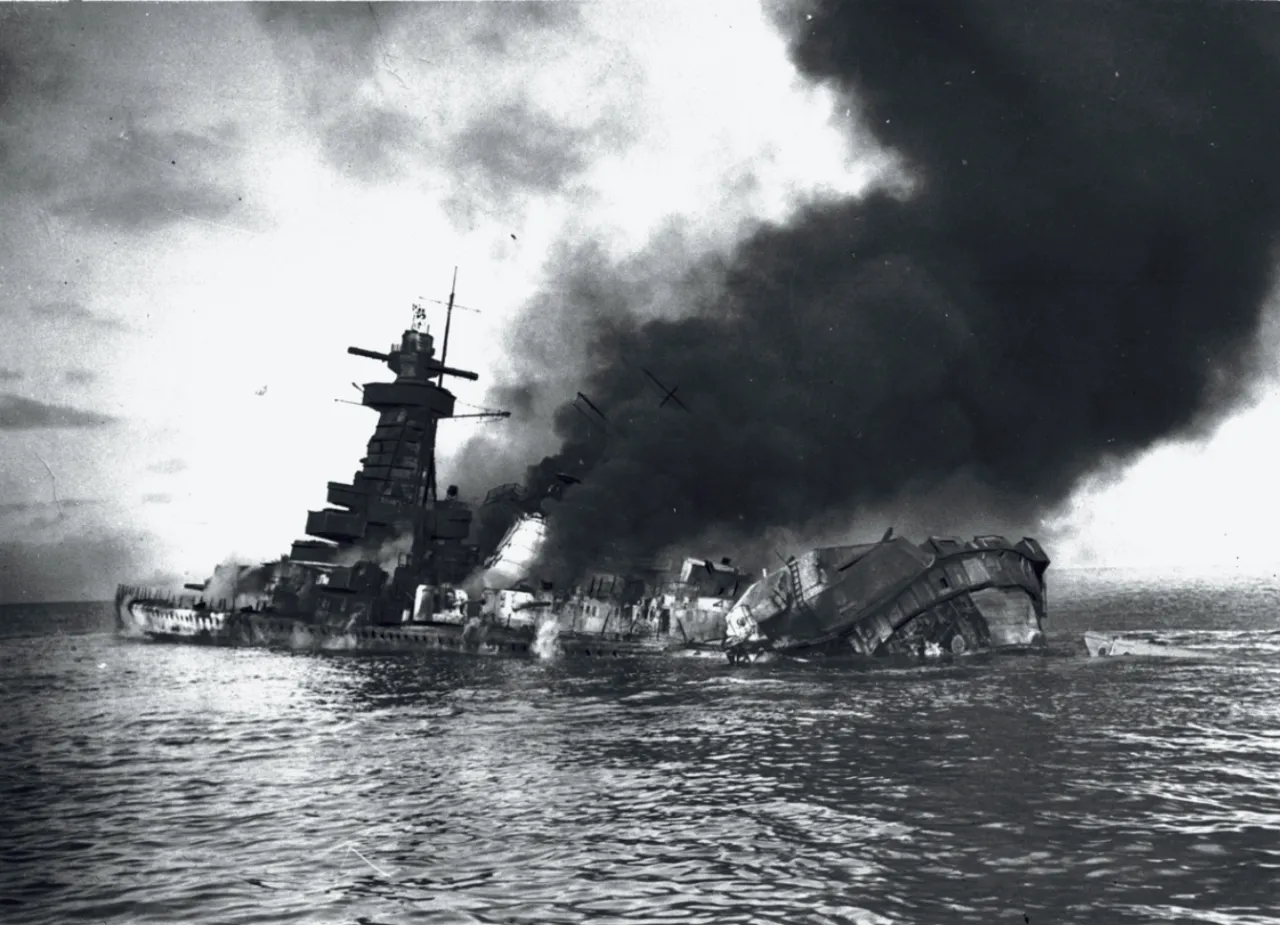
Before her destruction in Montevideo, the cruiser had sunk a total of six transports. Of course, in the battle against three British cruisers, the Graf Spee fared quite well, the heavy cruiser Exeter was thoroughly decimated by the Germans, and the Ajax also took a beating. Indeed, if not for the personal qualities of the cruiser's commander, Landsdorf, the outcome of the battle could have been entirely different.
But history knows no subjunctive mood, and so the three heavy cruisers, armed with 18 283mm and 24 150mm guns between them and fairly decent armor, never participated in a single major naval battle. For various reasons, including diesel engine failure, navigational errors that sent the Lützow flying who knows where, and so on.
1 auxiliary cruiser, that is, an ocean liner armed with old 152-mm guns, an icebreaker steamer with 2 76-mm guns and 15 unarmed transport ships.
Quite a feat for three super-heavy cruisers, indeed. It's comparable, one might say, to the success of the raider Atlantis, which sank and captured 22 ships with a combined displacement of over 100,000 tons. In other words, the raider, armed with six 150mm guns, proved more effective than three very heavy cruisers. It should be noted that Atlantis was engaged in precisely what the Deutschlands were built for—piracy and plunder. But the former liner accomplished this task far better.
These three designs are, without exaggeration, remarkable. Only the Kriegsmarine's greatest disgrace, the Tirpitz, can surpass them in terms of uselessness.
The most useless battleships
Royal Sovereign, aka Arkhangelsk. UK/USSR
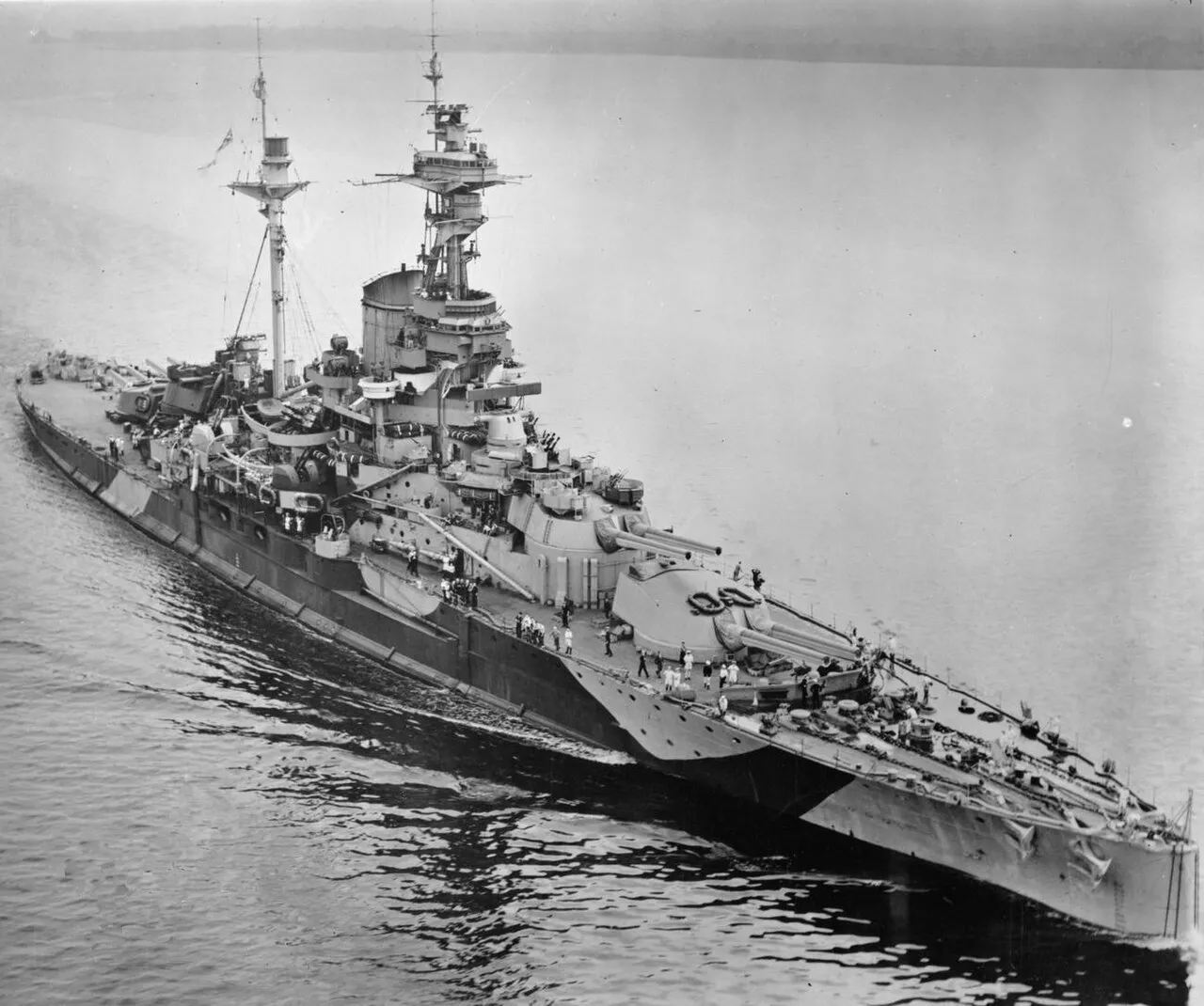
Perhaps this ship deserves the title "The slowest and most dismal trough of two wars." Its top speed of 21 knots meant it couldn't do anything. It couldn't catch the enemy, nor could it escape. Plus, its engines weren't of the best quality: it was their breakdowns that prevented the Royal Sovereign from participating in the Battle of Jutland.
With the outbreak of World War II, Royal Sovereign joined the Home Fleet and was later transferred to the Mediterranean Fleet. On July 18, 1940, she participated in the Battle of Punta Stilo. However, due to the ship's insufficient speed, Admiral Cunningham was unable to engage the Italian battleships Giulio Cesare and Conte di Cavour in a decisive engagement. The Italian battleships simply fled.
Although the main caliber guns were 381 mm, they were inferior in firing range to almost all battleships of the Second World War.
In 1940-1941, the Royal Sovereign escorted Atlantic convoys. In 1942, she was briefly assigned to the Eastern Fleet, based in Trincomalee, Ceylon, and then transferred to Kenya, as she was considered too obsolete to fight the Japanese fleet. And that, essentially, was the end of the Royal Sovereign's service.
From September 1942 to September 1943, due to the poor condition of her machinery, the battleship was sent to the United States, where she underwent a year-long overhaul. Following the overhaul, the Royal Sovereign served for one month in the Indian Ocean and was recalled to reserve.
In 1944, this miracle was given to the Soviet Union for the Northern Fleet.
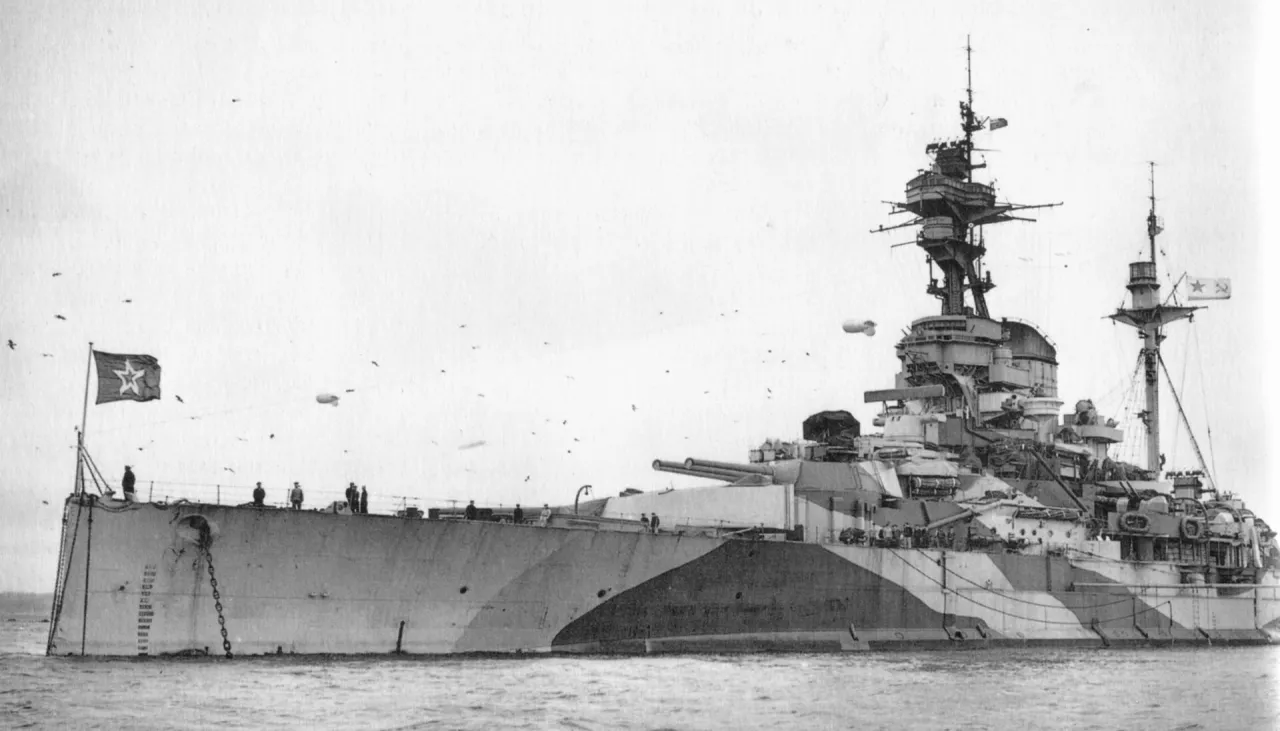
On August 17, Arkhangelsk and convoy JW-59 departed Scapa Flow in the Orkney Islands for Vaenga (now Severomorsk). Initially, the battleship and eight destroyers stayed with the convoy, which was subjected to several submarine attacks. On August 19, the battleship opened fire on the enemy for the first and only time, firing at the location where a submarine's periscope had appeared.
At dawn on August 24, having traveled 1880 miles, the battleship safely arrived in Vaenga, where it became the flagship of the squadron created from the transferred ships.
The battleship never left Kola Bay until the end of the war. The only time the Arkhangelsk's main guns fired a blank salvo was on Victory Day. September and December 1944 were spent mostly at anchor, and in November, the Arkhangelsk had 10-12 days at sea, mostly short excursions from its base within Kola Bay for combat training: anti-aircraft gunnery practice, radio-ranging exercises, and the like.
In 1945, the Arkhangelsk had 40 sailing days, in 1946 – 19 days, in 1947 – 21 days. In other words, the ship was practically at rest.
On January 15, 1949, the Arkhangelsk departed Vaenga and arrived at Rosyth Naval Base on February 4. Upon the ship's return, Royal Navy technicians conducted a thorough inspection of the ship's systems and, according to them, discovered that much of the equipment was unfit for further service. The main battery turrets had not rotated during its entire service in the Soviet Navy and were jammed in the mid-position. Due to its poor condition, the battleship was scrapped.
A battleship that has hardly fired a single shot in its entire life – what could be sadder?
Battleship Tirpitz. Germany
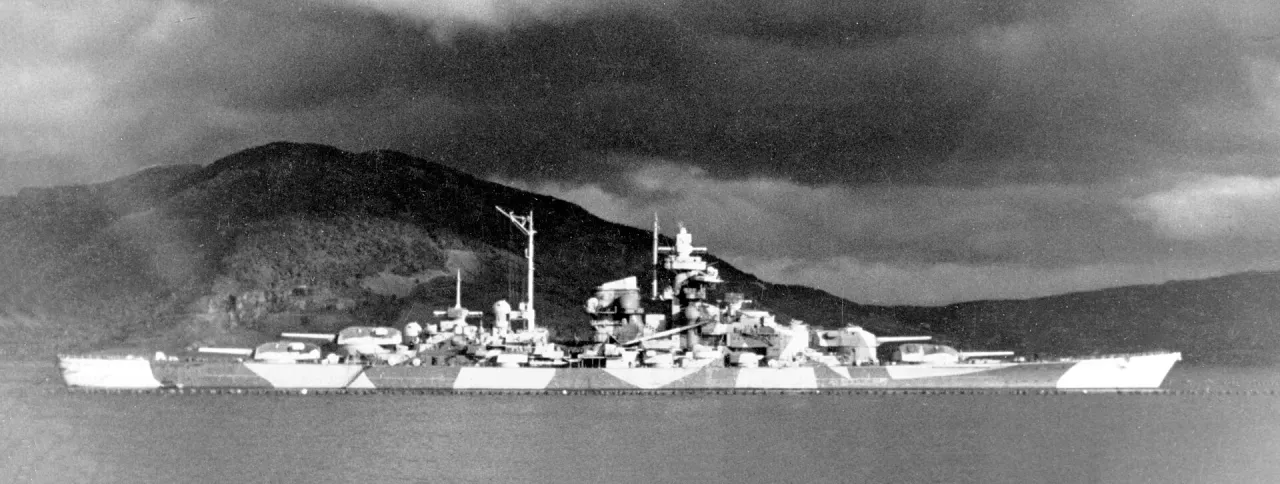
While the previous loser was a rather old ship, the same can't be said for the Tirpitz. After all, the battleship entered service with the Kriegsmarine in 1941 and... did nothing.
Yes, it's fair to say that the battleship fell victim to policies directly linked to the loss of her sister ship, the Bismarck. After the Bismarck, Hitler and Grand Admiral Raeder were extremely cautious about the capabilities of large surface ships without the support of aircraft carriers, which Germany was never able to build.
In January 1942, the Tirpitz was sent to Norwegian waters to hunt Arctic convoys to the USSR. There, in the fjords, she remained for virtually the entirety of World War II. Permission for combat missions was granted personally by Hitler, which often disrupted planned operations. The Führer… was very cautious.
The only operation in which the Tirpitz fired its main guns was Operation Sicily, the German capture of Spitsbergen. It was the only time the Tirpitz fired its main guns at anything other than aerial targets. However, it never fired a single shot at enemy ships.
Of course, this battleship did serve a certain purpose, distracting the British, who were determined to destroy it at all costs. This was accomplished after a dozen operations.
But the fact is: a perfectly good ship spent the war as a target for British bombers. With zero or near-zero value.
Battleships Yamato and Musashi. Japan
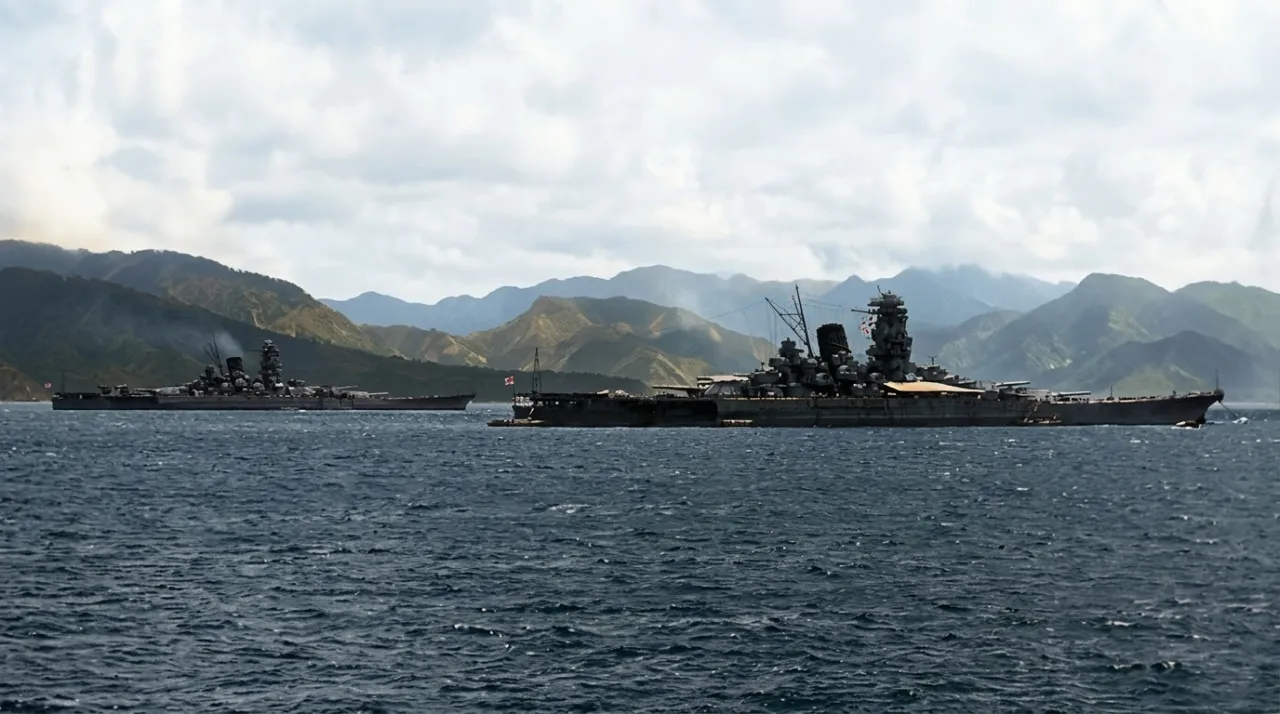
Japanese admirals, who considered battleships to be the navy's primary striking force, believed that ships of this type, if built in sufficient numbers, would provide the Imperial Navy with a decisive advantage in a projected general engagement with the US Pacific Fleet. Only Admiral Yamamoto Isoroku believed in the decisive role of aircraft carriers and the insignificant combat potential of battleships.
“These ships resemble calligraphic religious scrolls that old men hang in their homes. They have not proven their worth. This is only a matter of faith, not reality ... the battleships will be useful to Japan in a future war just like a samurai sword. ”
Admiral Yamamoto.
Admiral Yamamoto.
Yamato formally participated in the Battle of Midway Atoll on June 4-6, 1942, but had no fire contact with the enemy, as it was located 300 miles behind the Japanese aircraft carriers.
On May 28, 1942, Yamato transferred to Truk Island, where she spent about a year serving as the Combined Fleet's floating headquarters. On December 25, 1943, while north of Truk, she was hit by a torpedo from the American submarine Skate and took on approximately 3,000 tons of water through a hole. The ship's combat capability was seriously impaired by flooding in the aft main gun turret magazine. From January to April 1944, Yamato underwent repairs and modernization in Kure.
In June 1944, Yamato participated in the Battle of the Philippine Sea. The Japanese force was in the vanguard of its carriers. On June 19, Yamato opened fire in combat for the first time in its career, but it was later discovered that the battleship had fired on its own aircraft (fortunately, to no avail).
On March 29, 1943, Musashi left Truk Lagoon, evading American carrier-based aircraft, but was intercepted at sea by the US submarine Tunny and struck in the bow by a torpedo. The ship took on 3,000 tons of water, and 18 crew members were lost. The battleship underwent repairs in Kure until the end of April. From June 19-23, along with the Yamato, it participated in the Battle of the Philippine Sea, where it also achieved no results.
The Japanese command was saving its newest superbattleships for the anticipated decisive battle with the US Navy. In reality, the Pacific War devolved into a series of grueling operations and skirmishes, in which the Japanese navy's strength rapidly dwindled while its most powerful ships were moored at anchor far from active combat zones. As a result, Japanese sailors of the time developed a skepticism toward these ships, giving rise to a bitter joke about the "Hashiro fleet" (named after its home port): "The three biggest and most useless things in the world are the Egyptian pyramids, the Great Wall of China, and the battleship Yamato."
On October 22, 1944, the 1st Sabotage Force put to sea and the very next day was attacked by American submarines, which sank two heavy cruisers. On the morning of October 24, while the force was in the Sibuyan Sea, massive American carrier-based air raids began. The Musashi received the brunt of the American air strikes. In total, the Musashi sustained hits from 11 to 19 aerial torpedoes and 10 to 17 heavy bombs before capsizing and sinking.
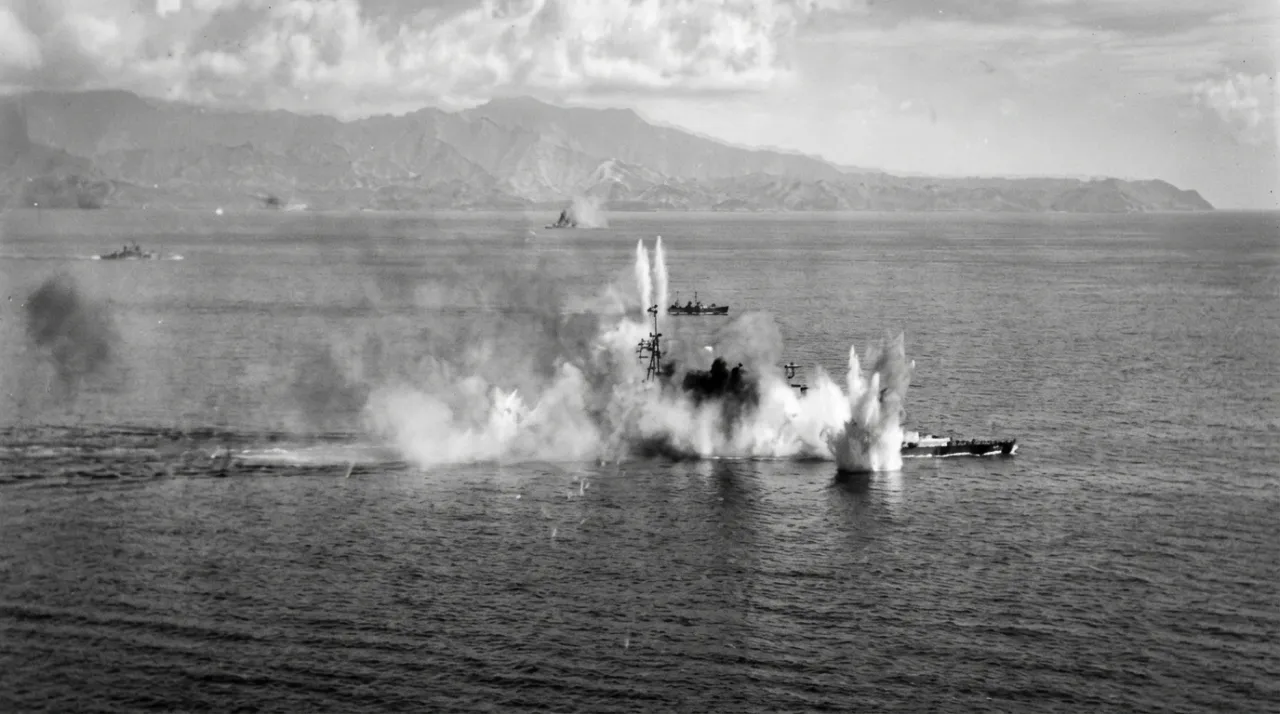
Yamato returned to the shores of Japan only on November 22, 1944, and was immediately sent for repairs and another modernization, which was completed in January 1945 and turned out to be its last.
On the morning of April 6, 1945, a squadron consisting of the Yamato, one light cruiser, and eight destroyers set out to sea. The ships were tasked with "attacking and destroying enemy fleets and supply vessels." If unable to return to base, the Yamato was ordered to run aground off the coast of Okinawa and support the island's defenders with artillery fire.
American reconnaissance aircraft spotted the Japanese force early in the morning of April 7. Beginning in the afternoon, Yamato and its escorts came under sustained attack by American carrier-based aircraft (227 aircraft participated in the raids). After two hours of desperate fighting, the battleship, having sustained up to 10 torpedo and 13 bomb hits, completely lost its propulsion and control. At 14:23 PM local time, a monstrous explosion rocked the forward main battery magazines, causing Yamato to rapidly sink.
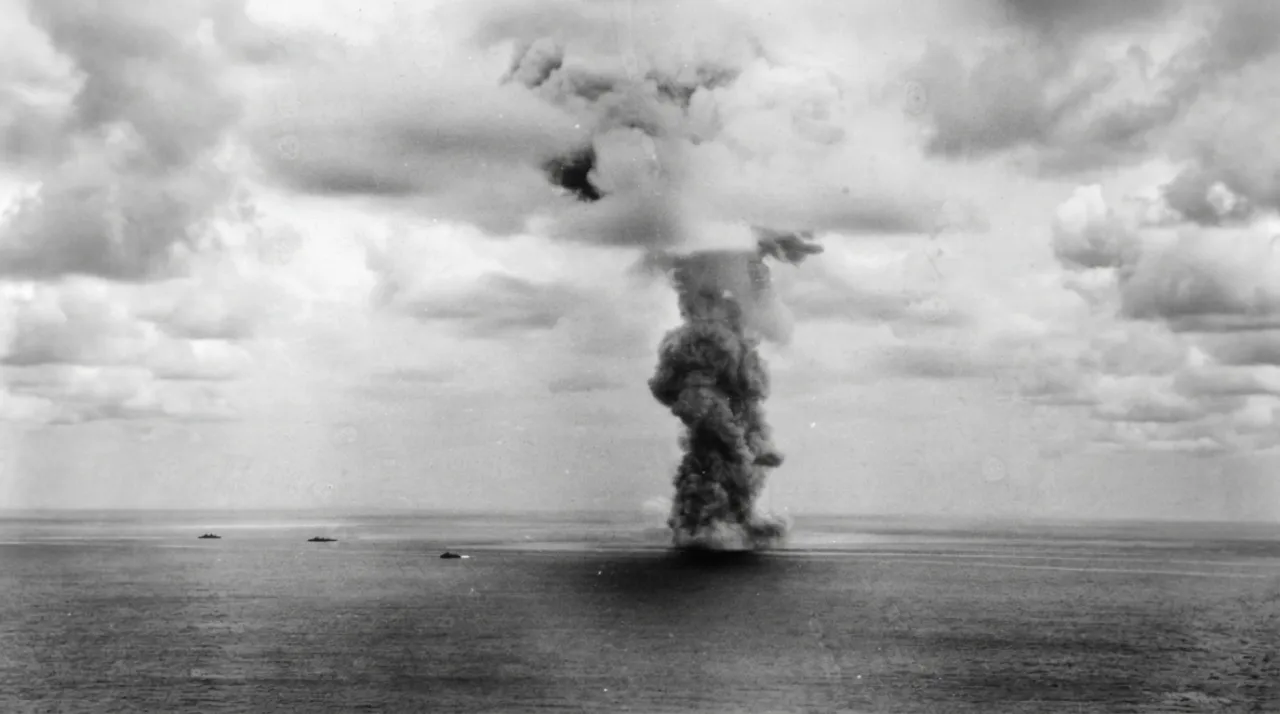
Only 269 sailors were rescued. 3061 crew members were killed. American losses in this battle amounted to only 10 aircraft and 12 pilots.
Overall, the fate of the Yamato and Musashi is similar to that of the Tirpitz – they were saved until the very end, and thus were ineffective. A pitiful fate…
The most useless aircraft carrier
Aircraft carrier Shinano. Japan
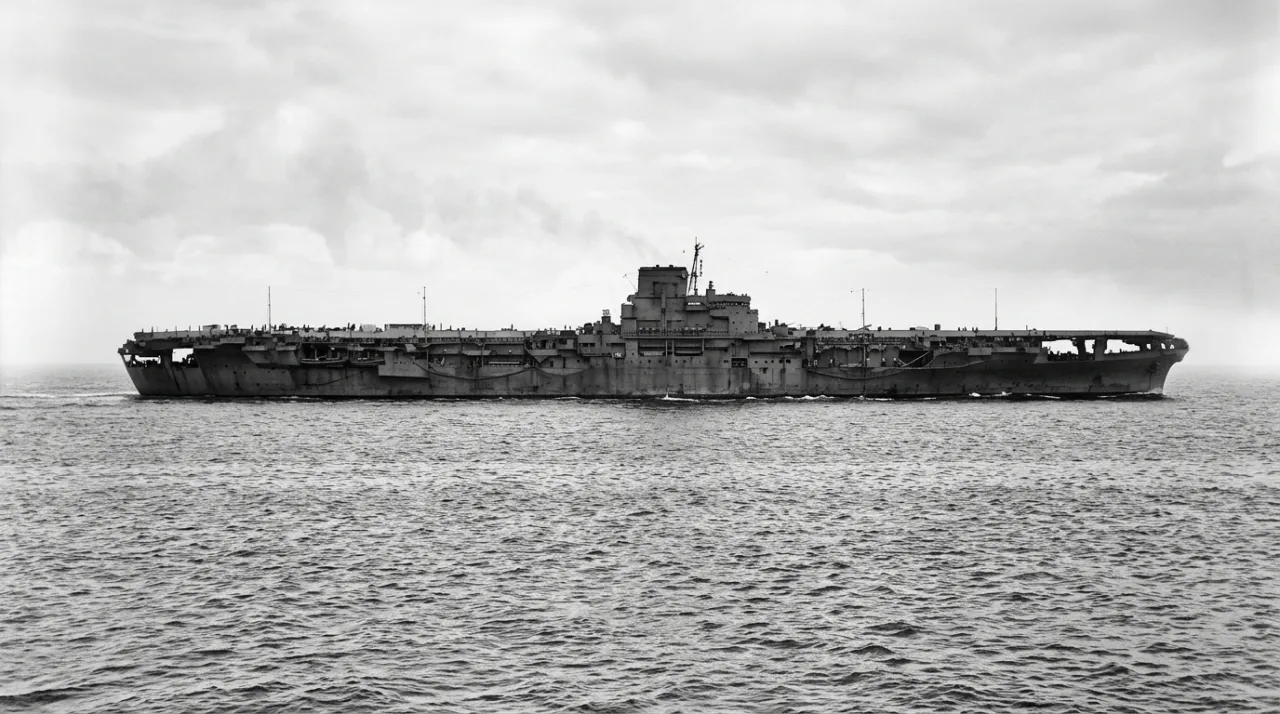
This is a classic example of what not to do in critical times. Shinano was intended to be one of three super-powerful Yamato-class battleships. Its conversion to an aircraft carrier began after the Battle of Midway, in which the Imperial Navy lost four of its most powerful carriers.
Moreover, Shinano, as a battleship, was built to a fairly decent standard. Much could no longer be changed; the armor was structurally integrated into the hull structure, so it could only be reduced by half. The initial design called for 18 aircraft, but the final design accommodated a full 42. By comparison, the Shokaku, half its size, carried 84 aircraft.
And the first, not even combat, patrol, but rather a voyage to Kure Base in the Inland Sea for final fitting-out, turned out to be the Shinano's last. And the efforts of the Shinano's captain, who played a significant role in the carrier's sinking, deserve special mention.
The American submarine Archerfish fired four torpedoes at the Shinano. Her sister ships, the Yamato and Musashi, sustained more damage, but the unfinished and untested ship proved too vulnerable to damage. The Shinano lacked all the necessary survivability equipment, including dewatering pumps.
The watertight bulkheads were not checked for leaks: they had leaks in places where cables and other communications passed through, and the seals of the pipelines and cables were not sealed.
The aircraft carrier's crew for the duration of the voyage was recruited from the crews of other ships and did not work well together, which could not help but affect the effectiveness of the ship's survivability.
Ultimately, 17 hours after setting out on her maiden voyage and seven hours after being torpedoed 65 miles off the nearest coast, the Shinano sank. Escort destroyers took on board 1080 of the Shinano's crew during the rescue operation, and 1435 were declared missing.
The largest aircraft carrier (until the nuclear-powered Enterprise arrived in 1960) also turned out to be the most useless.
This is how the review turned out.
Attentive readers, who I hope haven't yet become extinct like the dinosaurs, may ask: where are the destroyers? Well, they're not there. So it turns out that useless ships of this class couldn't be found. Of course, someone might have a different opinion; that's what comments are for. As the saying goes, go for it.
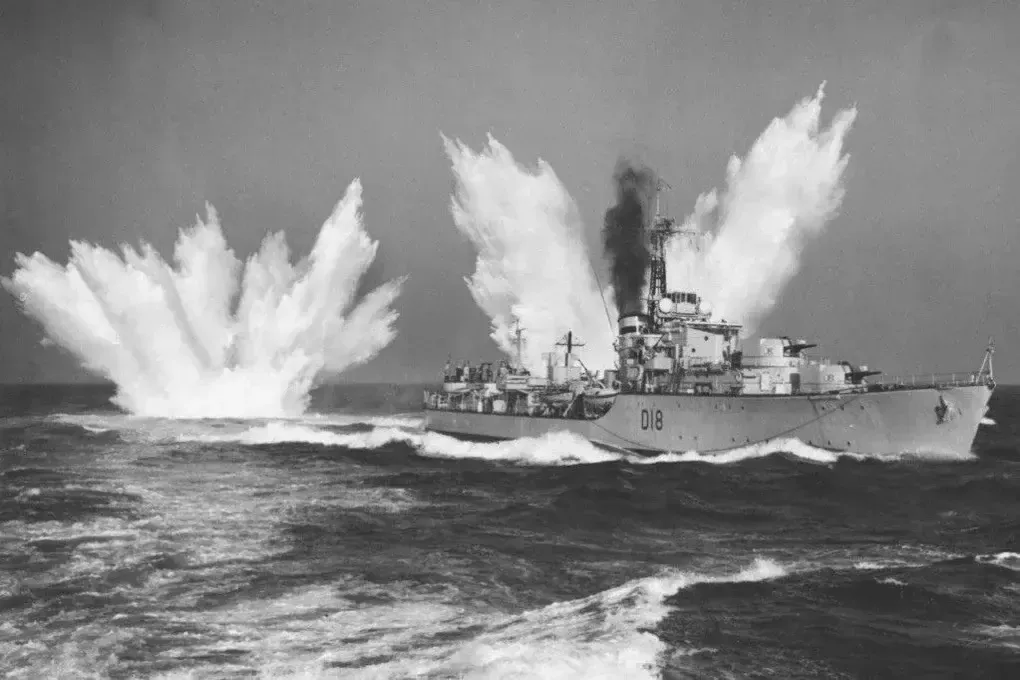
But in reality, destroyers simply could not have been useless in that war: they laid mines, chased submarines, escorted transports, landed troops, supported landings, shelled enemy coastal targets, carried out torpedo attacks, rescued the crews of sinking ships, fired artillery at enemy ships, and repelled attacks by enemy aircraft.
Some destroyers did this better than others. The worst ones sank to the bottom, while the best ones celebrated victory afloat. They were the all-rounders of that war. So, we'll talk about destroyers in the next article, about the most useful ships.
Information