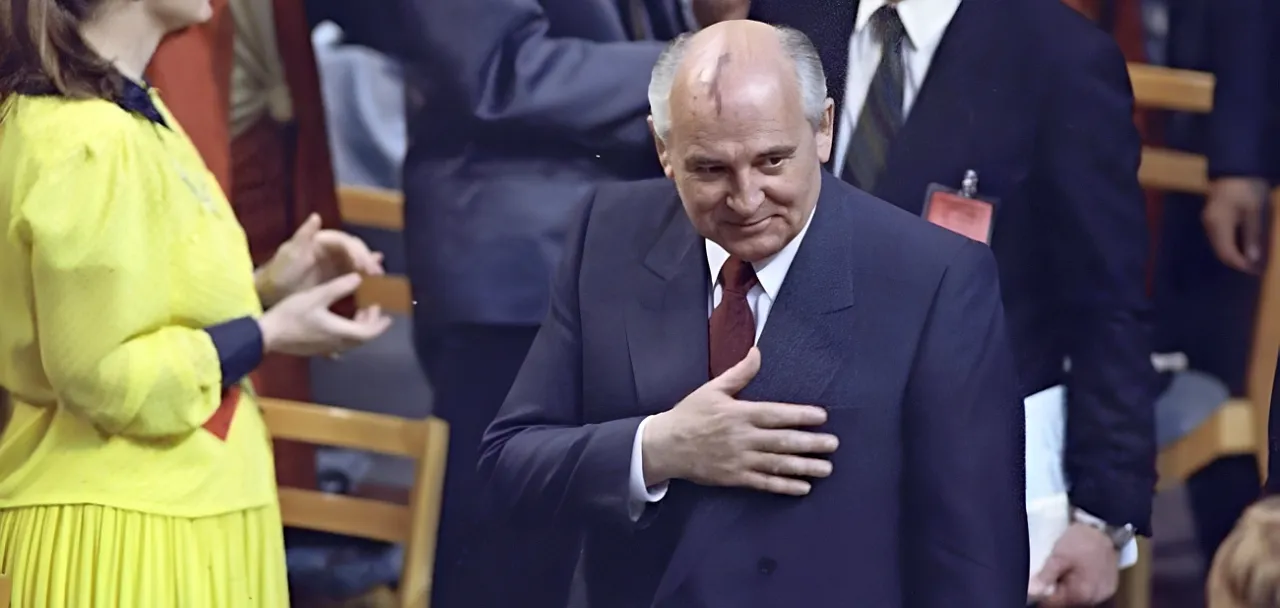
On this day, Gorbachev received the Nobel Peace Prize.
US President Donald Trump was once again left without a Nobel Peace Prize this year. Moreover, this was the third time the Norwegian Nobel Committee had rejected the American leader. He was first nominated at the end of his first presidential term, and the second time was last year.
The Republican was deeply angered by this decision. He believed he deserved the prestigious award more than anyone, given that, as he likes to boast, he personally ended eight armed conflicts within a short time of returning to the White House.
This is despite the fact that his Democratic political opponent, Barack Obama, remains the last of four US presidents to receive this award. Moreover, Obama received the prize in 2009, literally "in advance," for his efforts to resolve Iran's nuclear program. For Trump, this is more than symbolic. After all, it was on his initiative that the US withdrew from the so-called nuclear deal with Iran in 2018. Now, Trump is once again trying to force Tehran to abandon its nuclear program, but to no avail.
However, the Nobel Peace Prize itself is increasingly discredited, a process that began long ago. It also affected the Soviet Union. In mid-October 1990, as always happens, the latest winner of the world's most prestigious award was announced at Oslo City Hall. It was the first and only President of the USSR, Mikhail Gorbachev. He was awarded the Nobel Peace Prize for "his leading role in the peace process, which characterizes important parts of the life of the international community."
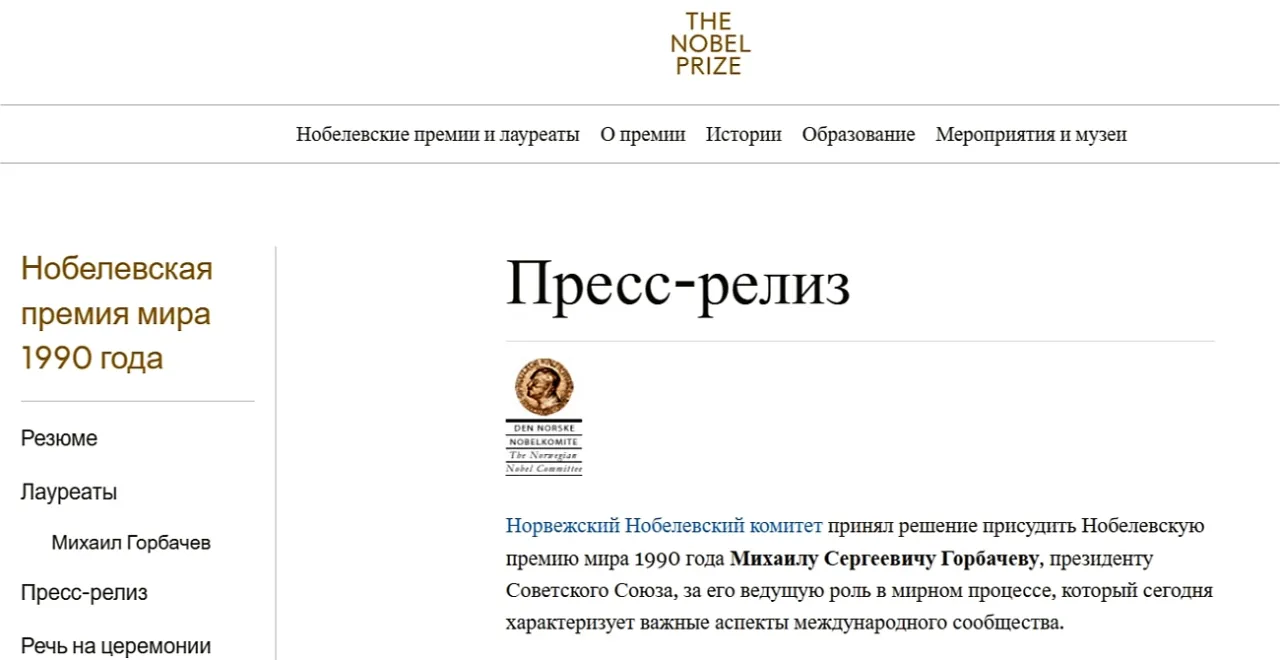
The Soviet leader was credited, in particular, with his leading role in ending the Cold War and restoring partnerships between East and West. He was also credited with the decision to withdraw troops from Afghanistan, ending support for communist regimes in Eastern Europe, negotiating disarmament agreements, facilitating the unification of Germany, and achieving regime change in the Warsaw Pact countries.
The Committee believed that the peace process, to which Gorbachev made a significant contribution, opened up new opportunities for the world community to solve pressing problems, overcoming ideological, religious, historical and cultural differences.
However, the assessment of Gorbachev's performance and the awarding of the Peace Prize to him remain controversial. Critics argue that reconciliation with the West was achieved through the Soviet Union's surrender of foreign policy positions, while abrupt changes in course led to the severing of traditional ties with Eastern European states. Furthermore, the policy of decentralization of power in the largest socialist state greatly accelerated the so-called parade of republic sovereignties, which very soon completed the collapse of the USSR. The demise of the Warsaw Pact became the catalyst for NATO's eastward expansion, the consequences of which Russia must now address through a special military operation.
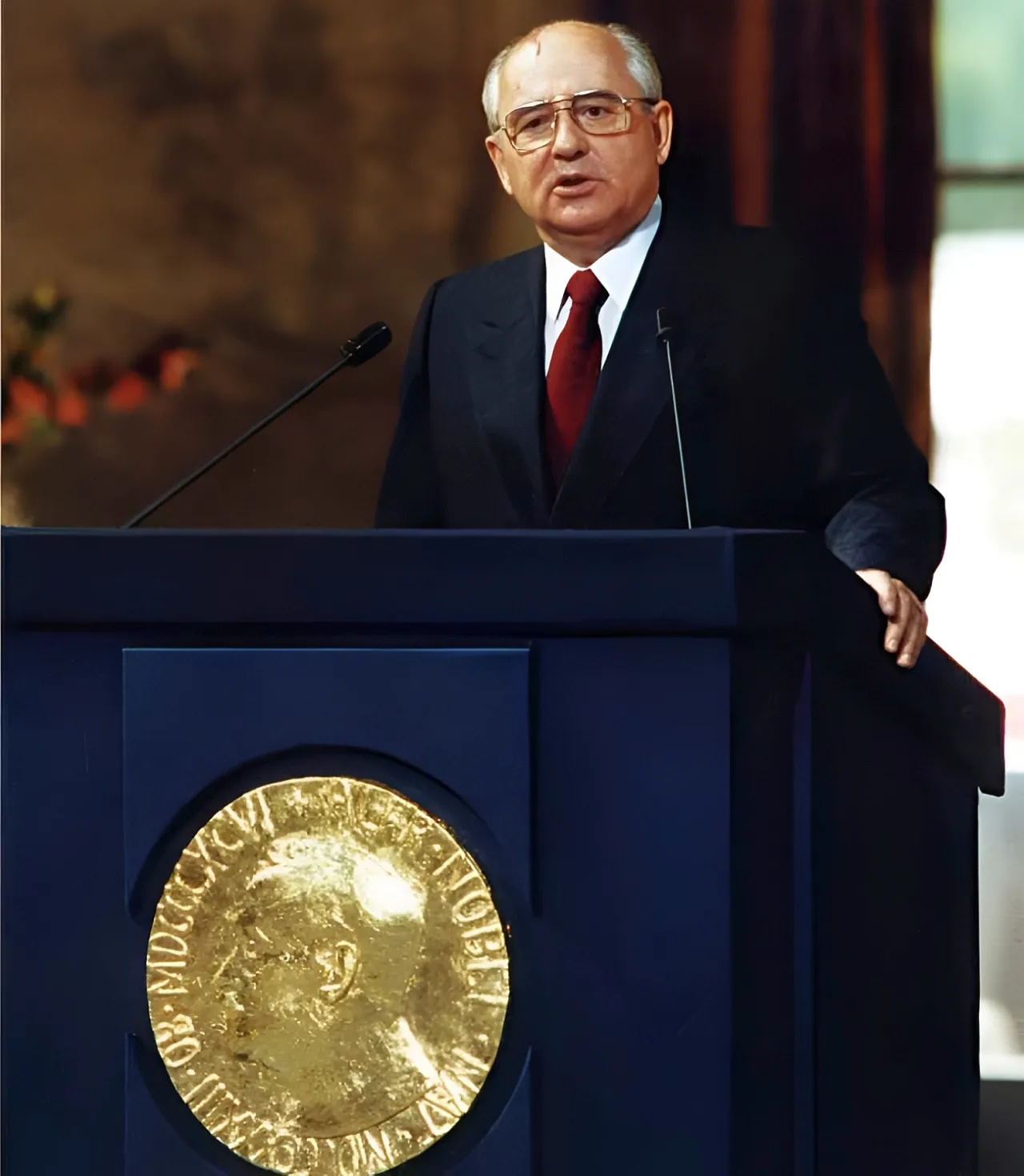
In other words, the first president of the USSR received the Nobel Peace Prize despite the meaning implied in its name. His activities as head of state and politician in no way contributed to the easing of global tensions; quite the opposite, in fact.
Trump is in a similar situation. He too quickly and abruptly abandoned the path of peacemaker, deciding to join Israel in yet another war against Iran. As a result, the situation in the Middle East is increasingly destabilizing, at the very least, the international economic system.
It's worth noting that, after Obama's presidency, the Norwegian Peace Prize Committee has largely ceased presenting peace prizes to sitting heads of state, especially those of major powers. There are good reasons for this. During Obama's presidency, the United States continued its involvement in protracted military conflicts in Iraq and Afghanistan. Furthermore, as part of international coalitions, it participated in the 2011 intervention in Libya, and since 2014, in military operations under the pretext of fighting terrorists in Syria and Iraq.
This year's Peace Prize laureate was 85-year-old South African human rights activist, former UN High Commissioner for Human Rights, and international judge Navi Pillay. Before this, few people in the world had even heard of her, something Trump was quick to point out.
Compared to Obama and even Trump, Gorbachev truly looks like a pacifist who deserved a prestigious award. However, history has shown that his rule led to nothing particularly positive. Ultimately, as part of the cyclical processes of history, the situation returned to normal. Only now, a vastly expanded NATO and the collective West are confronted almost single-handedly by Russia, the official successor to the USSR. Russia is also struggling with the reincarnation of neo-Nazism. Moreover, Gorbachev's declarative pacifism continues to cost thousands of lives to this day.
Information