No One Forgotten: The 1986 film "Retribution" reminded the world of the Treblinka executioner

5 919 31
No One Forgotten: The 1986 film "Retribution" reminded the world of the Treblinka executioner


The documentary film "Retribution", created in 1986 at the studio "Ukrkinokhronika", became not just a chronicle of a trial, but an act historical Justice. The film tells the story of Fedor Fedorenko, nicknamed "Black Fedor," a man who managed to flee justice across the ocean and find a semblance of peace in the United States.


However, retribution caught up with him even there. By the time the film was made, Fedorenko had become the only Nazi collaborator in the entire postwar period to be stripped of his citizenship by America and deported to the Soviet Union for concealing his bloody past when applying for a visa.

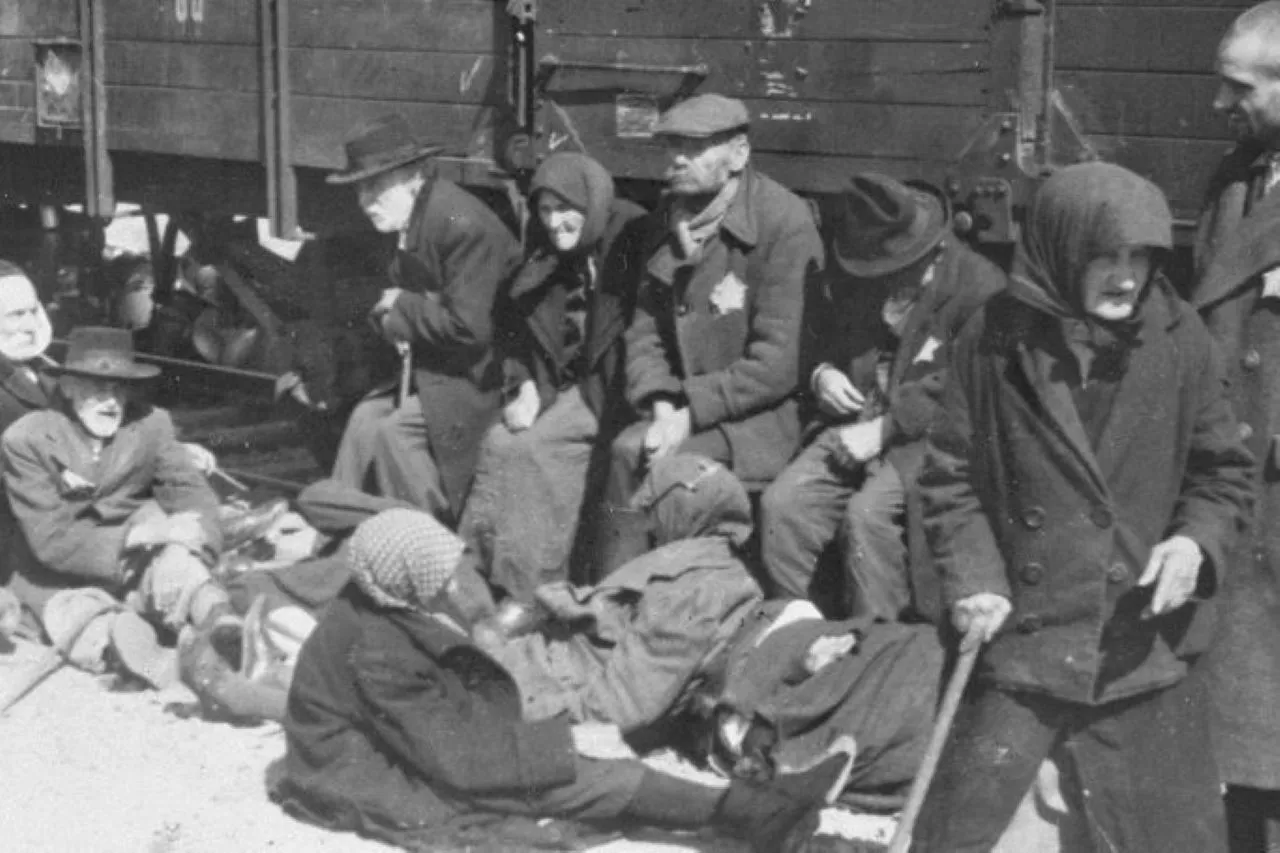
On screen, the viewer sees not an abstract villain, but a specific person in the dock. The film uses heavy, unbiased black-and-white footage: piles of shoes and clothes in Treblinka, barbed wire fences, the faces of survivors in the courtroom.

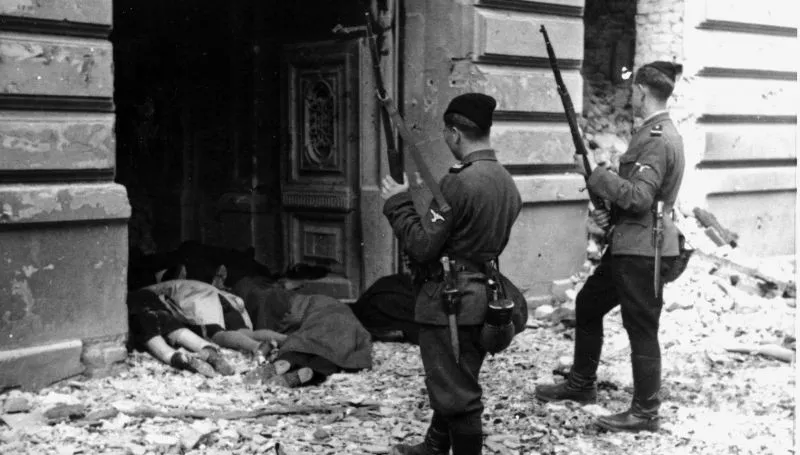
Fedorenko, drafted into the Soviet army in 1941, betrayed his homeland by voluntarily serving the occupiers. At a special school in occupied Poland, he was trained as a murderer. He guarded the Warsaw ghetto, escorted death trains, and soon became a senior guard at the Treblinka camp. During the thirteen months of this death conveyor belt's existence, more than eight hundred thousand people were exterminated there.


Fedorenko personally participated in unloading train cars, beating those who hesitated, herding women and children into gas chambers, and then sorting their belongings, cynically using other people's property. Stutthof prisoner Nikolai Gonchar described him as a tall man with masculine features, whose cruelty became legendary even among executioners. The USSR Judicial Collegium found him guilty of particularly serious crimes, given the scale of the tragedy and the murder of minors.

This film is a timeless reminder that crimes against humanity have no statute of limitations. And one hopes that every executioner will eventually face the judgment of history.

31 comment
Information
Dear reader, to leave comments on the publication, you must sign in.
  1. + 10
    7 October 2026 21: 20
    It's good that they managed to hand him over to Soviet justice.
    In the Soviet Union he would probably have been slapped, but in Russia his life would have been spared for reasons of “humanism”.
    1. -2
      8 October 2026 05: 06
      Quote: Comrade
      In Russia, for reasons of “humanism,” his life would have been spared.
      And he would have been elevated to the rank of hero! He would have become a fighter against totalitarianism, Stalinism, and communism, and even a preacher of human rights and universal values. wink
    2. +1
      8 October 2026 08: 23
      It's good that they managed to hand him over to Soviet justice.
      In the Soviet Union he would probably have been slapped, but in Russia his life would have been spared for reasons of “humanism”.

      what are you talking about?
      he lived peacefully to old age:
      Fedor Fedorenko, nicknamed "Black Fedor" - a man who managed to escape justice across the ocean and find imaginary peace in the United States.

      and the word "imaginary" doesn't correspond to reality (he lived until 1987) - remember how a few years ago another one like him was welcomed in the Canadian parliament...
      but we can't forget about people like that!
      1. 0
        27 October 2026 12: 06
        However, they forgot! Nikita Khrushchev was the first, and it was with him that the collapse of the USSR began, due to his deviation from Stalin's course!!!
        It was not for nothing that Joseph Vissarionovich, at one time, knocked out a pipe on his bald head, saying: “You, Nikita!”
  2. +7
    7 October 2026 21: 33
    And how many of these little Fedorenkos served as fascists, burned Khatyns, shot in Babi Yar, served as guards in concentration camps...
    It is a little known fact that in the autumn of 1941 the Germans THEY WERE SENT HOME Most Ukrainians who were taken from captivity knew that they would not cause any problems, but only help.
    1. +4
      7 October 2026 22: 18
      Quote: pudelartemon
      It is a little-known fact that in the autumn of 1941 the Germans RELEASED most of the Ukrainians from captivity to HOME - they knew that they would not cause any problems, but only help

      It is a well-known fact that " "primaki" or "primy"- deserters who dodged mobilization and were released by the Germans...
      1. +5
        7 October 2026 22: 58
        I don't know. I was passing through about 20 years ago, and there were memorials and monuments in the villages. With lists of those killed in the war. So, in our Ryazan region, and there, no less. True, those weren't the western regions. I haven't been there.
        1. +1
          8 October 2026 01: 01
          Who's to argue? Most of them were normal people, they fought honorably and died. And there were some "funny stories." Khrushchev visited Poland in the 1960s and brought with him a distinguished farmer, twice a Hero of Socialist Labor, a collective farm chairman, a Supreme Soviet deputy, and so on—a sturdy Ukrainian swine, favored by the authorities. But the problem was, the Poles recognized him as a fierce policeman and a kat. It all ended quickly and horribly for him—VM! I don't remember his last name, and it's not worth remembering (censored).
          1. 0
            8 October 2026 02: 29
            Quote: pudelartemon
            Khrushchev went to Poland in the 60s.

            There was no such story! A fake, a tall tale, a joke... The only collective farm chairman identified as a former policeman was Stepan Vasilyevich Tarasenko. But he never traveled with anyone, and it was our services that identified him, not the Poles. Idolatry of "foreigners" sometimes reaches the point of absurdity!
            1. +3
              8 October 2026 07: 27
              This is Ivan Koval (most often referred to as Ivan Dmitrievich Koval).

              According to this story, he was a collective farm chairman, twice a Hero of Socialist Labor, and a deputy of the Supreme Soviet of the USSR. During Khrushchev's visit to Poland in 1959, Polish citizens identified him as a former Ukrainian policeman, the police commandant in Chelm, who was involved in reprisals against Poles. A scandal erupted, and Koval had to be urgently sent back.
              The AI ​​searched for 20 seconds. We live in the 21st century, it's simple.
              1. 0
                8 October 2026 08: 15
                Could you provide a link to the source? You must have some kind of special artificial intelligence! laughing Otherwise, the ones I use, when asked by Ivan Dmitrievich Koval, they give out anyone: heroes of Socialist Labor, order holders, and war heroes... but not your option.
                And when I try to make a request related to Khrushchev, Poland, and the Ukrainian police... It gives a direct link right here! To this comment of yours. wassat
                And no more sources...
                1. 0
                  8 October 2026 14: 02
                  This story was covered quite widely in the 60s or early 70s, I think, when Nikita was demolished, and it was remembered. I requested the information from Deep Seek.
              2. 0
                8 October 2026 10: 10
                The AI ​​searched for 20 seconds. We live in the 21st century, it's simple.

                Sounds like fiction. AI confuses such fiction with reality. An internet search yields no information about the case you described.
                Vasyl Kuk, one of the post-war leaders of the Ukrainian Insurgent Army (UPA), is known as Colonel Koval. He was indeed imprisoned, but was released after six years under an amnesty. He is known for his letter to Ukrainian nationalists abroad.
                After six years of imprisonment, he was released in 1960 under an amnesty.[3] That same year, he wrote an "Open Letter to Yaroslav Stetsko, Mykola Lebed, Stepan Lenkavsky, Darya Rebet, Ivan Hrynekh, and all Ukrainians living abroad," in which he recognized Soviet power as legitimate in Ukraine, renounced the OUN-UPA, and called on the Ukrainian government-in-exile to recognize the USSR as a legitimate state and return to Ukraine.

                It's likely that someone made up a story based on this story, and the AI ​​took it at face value.
        2. +1
          8 October 2026 05: 58
          Quote: Sergey Tkach
          I don't know. I was passing through about 20 years ago, and there were memorials and monuments in the villages. With lists of those killed in the war. So, in our Ryazan region, and there, no less. True, those weren't the western regions. I haven't been there.

          What's surprising? That after my release, the military recruitment offices called me up. All those subject to mobilization (including Westerners) - and were they killed in 1944 and 1945?
      2. -1
        8 October 2026 00: 09
        And prisoners of war too, hundreds of thousands of them. To women's skirts, to lard, to life and to the armband of Polizei.
        1. -2
          8 October 2026 02: 30
          Quote: pudelartemon
          And prisoners of war too, hundreds of thousands of them. To women's skirts, to lard, to life and to the armband of Polizei.

          The last bullet for yourself! Am I right?
          1. -2
            8 October 2026 07: 20
            I'm telling you about the sour, and you're telling me about the round.
            We're not talking about who was captured and how. We're talking about who the Germans released from captivity.
            1. +1
              8 October 2026 07: 23
              Quote: pudelartemon
              I'm telling you about the sour, and you're telling me about the round.

              And did you ignore the story about Khrushchev and the collective farm chairman?
    2. +3
      8 October 2026 00: 01
      Quote: pudelartemon
      It is a little-known fact that in the autumn of 1941 the Germans RELEASED most of the Ukrainians from captivity to HOME - they knew that they would not cause any problems, but only help

      Not everyone agreed to return home; many remained with the Germans. Demjanjuk, for example, was also an executioner in a concentration camp. A wave of concentration camp guards came from Ukraine. For example, President Yushchenko's father was also a camp guard.
      The work is easy, there is a monetary allowance, material allowance, and salary.
      In addition, prisoners can be robbed.
      But they would have had to work at home. So they tried to get a foothold among the Germans.
      1. +2
        8 October 2026 10: 34
        Not everyone agreed to return home; many remained with the Germans. Demjanjuk, for example, was also an executioner in a concentration camp.

        The number of Soviet soldiers captured in 1941 was so great that the camps became overcrowded, and in the fall and winter of 1941, the Germans released some, including some Ukrainians out of inertia—in reality, by that time, the Germans were already in conflict with Ukrainian nationalists. Demjanjuk was not included in this action; he was captured in May 1942 in Crimea, when Meinstein finally captured Crimea and many of our soldiers could not be evacuated from Sevastopol after the failed Kerch-Feodosia landing operation.
        For example, President Yushchenko's father was also a camp guard.

        An old myth, never substantiated. After the war, he was vetted by the NKVD, like other concentration camp prisoners. Nothing of the sort ever happened.
  3. +1
    7 October 2026 22: 53
    Around this time, they also extradited Karl Linnas, a native of Tartu who had killed even more prisoners...he didn't live to see the execution. He died in prison. Or maybe they helped him...
  4. +4
    7 October 2026 22: 54
    The Americans at least handed out a few. Canada – not a single one...
    1. +3
      7 October 2026 23: 35
      It is no coincidence that it was in Canada that the agent of influence, Yakovlev, who was also the USSR ambassador to Canada at the time, set his sights on a future puppet of the empty-headed Gorbachev, M.S., who would implement his "perestroika" project to destroy the country.
    2. +1
      8 October 2026 01: 04
      So the Canadian Ukrainian community is a healthy chunk of voters. So who's going to blame Gunko if he's a pillar of the Canadian government?
    3. +2
      8 October 2026 02: 32
      Quote: Sergey Tkach
      The Americans at least handed out a few. Canada – not a single one...

      I think the main thing here is:
      for concealing his bloody past when obtaining a visa.

      and not the crimes themselves...
    4. +1
      8 October 2026 10: 52
      Canada did extradite, but not in a list. When evidence of a specific individual's crimes was presented in a legal manner, the Deschênes Commission was created specifically to analyze such cases. The problem was that ours were unable to provide such evidence.
  5. 0
    7 October 2026 23: 36
    Reminded the world... Which world? The Germans, the English, the Little Russians, the Americans, or the French and Belgians? Maybe it reminded Africa? Maybe it reminded Mr. Putin of something?
  6. +2
    8 October 2026 03: 59
    Nowadays in Ukraine it is dangerous not only to make such films, but even to watch them.
  7. +1
    9 October 2026 06: 15
    A good and clear film. This is how we should treat the dung heaps and the rest of the Nazi cabal now! A story from my life for all those discussing it. The village of Balaganoe, Olsky District, Magadan Region. 1981, the Great Holiday of May 9th! Our three grandfathers (all with time in Kolyma behind them), one was in the Reichstag and signed it. The second, a tanker, met the ov on the Elbe. The third, in armor, stormed Königsberg. I saw their wounds in our communal bathhouse. The entry wounds from 7,92 and 7,62 were one thing - a star. And from the return - tatters and horror. The tanker, on the contrary, had only horror and tatters as an entry wound. A wound from internal armor fragments. And as always, the old men sat down on the club floor, spread out some newspapers, and asked us to run to the grocery store. All the boys had a bike, a question! As always, three Pshenichnayas and three more bombs from three axes. Ladas, the old men are drinking, reminiscing about life, we're toasting their bazya-vazya (all of our uncles, the old men who did May 9th and September 3rd, passed away early), and then this loser shows up with a 25-year ban on leaving the country after serving the same sentence with us. His last name is amazing, Kollontai! Like our diplomat! But from June 1941 he was a policeman in Belarus (a deserter, of course), and from 42 he was already the head of the commandant's office. They caught him in the 50s and sent him to Kolyma. And I will die with this memory of those events! And so he rolls up to the old men and us (6) and says, "Well, what are you drinking, winners? Pour me one!" They poured him a full glass of mumbling. And then Roman Skomorokhov once pointed out that it is forbidden to use the great Russian language! She emptied the entire glass, then smashed it on the concrete and puked out a speech - "I didn't hand you bastards over to the commandant's office enough in '41!" What is this? What is this? This is 1981!!! But then we saw something out of something (I still think it was the taking of a "tongue" for LBS) all three old men silently stood up, and received this body silently and in unison - one immediately slammed his palm into his mouth and pulled it out with a bottle, the second twisted his arms, and the third immediately lifted him up, that is, wrapped him up and dragged him around the corner of the club. All this silently, quietly. And they beat him too. They later asked us to see if he was alive or not. He crawled away. That's life. Let Roman Skomorokhov be nice to him there. Ukrainians but "Ukrainian without a stripe, what the f... without a plug"
    1. 0
      9 October 2026 22: 29
      Yeah, my grandfathers knew how to explain things. I regret never having seen my own, but from what my uncles and aunts told me, they were some tough guys. Otherwise, they would have taught me something good.
  8. 0
    9 October 2026 22: 09
    A dog's death and an unmarked grave, so that there will be no followers.