On the development trends of US carrier-based aviation in light of the development of the newest F/A-XX
7 273 57
On the development trends of US carrier-based aviation in light of the development of the newest F/A-XX

Just recently, it was announced that the US Navy command is awarding Boeing a contract worth over $20 billion for the full-scale development of the F/A-XX carrier-based fighter. In light of this event, it would be very interesting to see how the carrier-based fighter has evolved and what it ultimately achieved. aviation the americans.

Let me make it clear right away that we will be talking exclusively about fighters and attack aircraft, since AWACS aircraft, EW, transport, and other aircraft have no direct bearing on the evolution of carrier-based fighters. It also wouldn't make much sense to begin the review from the beginning of the jet era, as the advent of powerful radars and long-range air-to-air missiles had a significant impact on the development of carrier-based aviation in general and in the United States in particular.

About the US Navy's carrier-based fighters and attack aircraft in the 70s and early 80s


Let's start with the emergence of the first 4th-generation fighter, the F-14 Tomcat. When developing this aircraft, the Americans wanted to achieve two things in one: on the one hand, the Tomcat was to serve as an anti-missile shield for American aircraft carriers, and on the other, an air superiority fighter. To fulfill the first mission, the aircraft needed high speed, a powerful radar, and guided missiles. missiles Long-range air-to-air missiles (LAAMs), and to accomplish the latter, maneuverability comparable to that of the most widely produced Soviet MiG-21 was required. Therefore, the Americans developed a heavy and complex fighter with a variable-sweep wing.


It must be said that while the F-14 Tomcat could theoretically be used against ground targets and for bombing strikes, it was not particularly well-suited for such a role. Therefore, the Tomcat should be considered a specialized air superiority and missile defense aircraft.

The composition of a typical American carrier air wing was determined in accordance with the above. Its core consisted of 24 F-14 Tomcat fighters and 24 A-6E Intruder attack aircraft, with this number subject to considerable variation. A-7 Corsairs could also be used in addition to the Intruders.

But these are nuances. The main point is that in the latter half of the 1970s and early 1980s, American aircraft carriers carried out their missions with specialized aircraft—air superiority fighters and attack aircraft. But in the 1980s, a shift away from this concept began.

There were two reasons for this. Firstly, the F-14 Tomcats didn't perform very well in maneuverable combat - according to their pilots, the aircraft lacked thrust. Therefore, fleet The desire arose for lighter, cheaper, yet more maneuverable fighters. Secondly, the level of scientific and technological progress made it possible to create a multirole fighter equally suitable for air combat and for attacking ground and sea targets.

Because the Navy, focusing on flight safety, desired a twin-engine fighter, the carrier-based version of the F-16 was abandoned. The Northrop prototype, which had lost the competition to create a lightweight fighter for the Air Force and did not become the Fighting Falcon, was used as the basis. Instead, the US Navy received a very capable all-rounder: the F/A-18 Hornet.
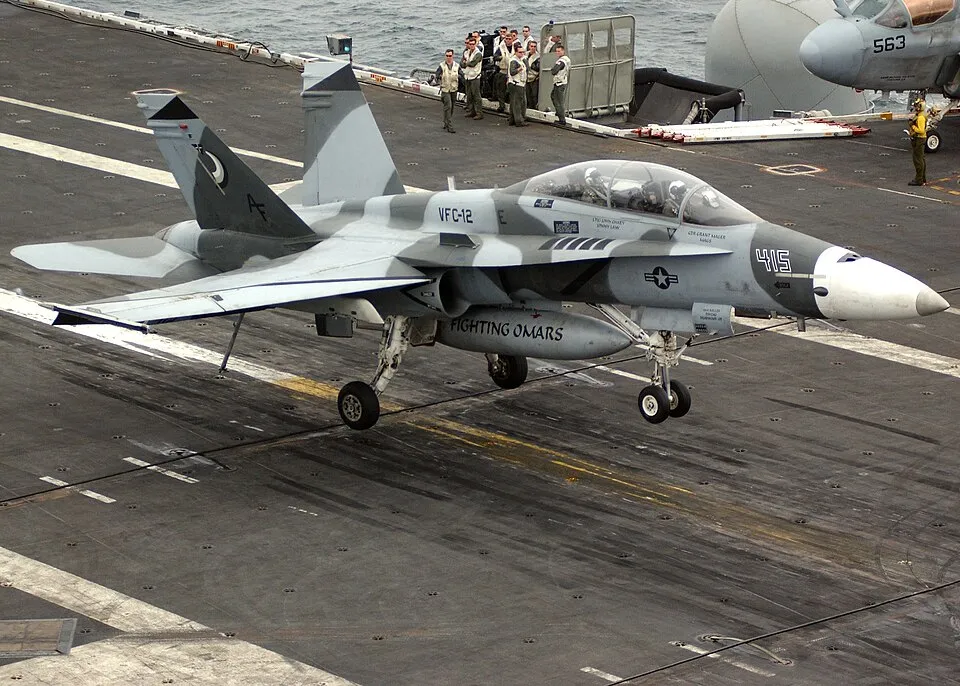

After the Hornets began entering service with the US Navy, the composition of US carrier air groups naturally changed. Now, its core consisted of 20 F-14 Tomcats, 20 F/A-18 Hornets, and 20 A-6E Intruders. Of course, this composition wasn't set in stone: for example, the aircraft carrier USS Theodore Roosevelt carried 20 F-14 Tomcats, 19 F/A-18 Hornets, and 18 A-6E Intruders during Desert Storm.

This mixed air group gave American admirals greater variability and flexibility in its use, because, depending on the evolving tactical situation, the F/A-18 Hornets could be used either to support the Tomcats in order to gain air superiority, or to reinforce the Intruder strike groups.

It would seem that by taking such a step, the Americans would be making a bid to create a single type of multirole fighter-attack aircraft for their carrier-based aviation. The benefit of such a solution would be that the air group would become even more tactically flexible, and the maintenance of one type of aircraft instead of two or three would, for obvious reasons, be significantly simplified. But the Americans rejected universality in favor of specialization.

About the promising generation of US carrier-based aviation that was never destined to take to the air


In 1983, the US Navy commissioned a strike aircraft to replace the A-6E Intruder. The focus was on stealth, inspired by the success of the F-117 Nighthawk program. The Navy wanted the same, only better—at a time when the Nighthawk was a single-seat aircraft with a maximum takeoff weight of 23 kg (815 lbs), and a distinctive, swooping silhouette.


The new A-12 Avenger II attack aircraft was designed as a two-seater, with a takeoff weight of 36,300 kg and a slightly more traditional geometry – a flying wing.


In parallel with the attack aircraft, the Americans were developing a new carrier-based fighter. It was created under the NATF program, which, in turn, was an offshoot of the ATF program, the culmination of which was the famous F-22 Raptor.


But it must be said that the carrier-based fighter was to be very different from the Raptor. It would have a crew of two instead of one, and under the NATF program, the fighter was to have variable-sweep wings. Essentially, when ordering this fighter, the US Navy wanted a replacement for the F-14 Tomcat.

These two programs demonstrate that, having "played around" with the multirole Hornet, the Navy had no desire to abandon specialized fighters and attack aircraft; in fact, it intended to prioritize them in the future. But these wishes of American sailors were crushed by the collapse of the USSR and the resulting cuts to US defense programs.

I wanted the best, and it turned out...


But it turned out as usual. The cost of the Avenger II and the NATF fighters was colossal, and the USSR's powerful military machine ceased to exist. This predetermined the Americans' abandonment of both programs: now they had to economize.

The natural form of such cost savings was the abandonment of the concept of specialized aircraft and the transition to a multirole aircraft capable of performing both fighter and attack roles. Initially, the Americans undertook such work as part of the development of the AX aircraft, later renamed the A/FX—it was still based on Raptor technology but was clearly intended to be even more distinct than the fighter under the NATF program. However, this program was also canceled—conceptually, it smoothly transitioned into the Joint Strike Fighter program, which culminated in the birth of the F-35 family in its A, B, and C variants.

Nevertheless, the Navy faced the need to gradually replace its aircraft fleet as early as the 90s, and promising programs were put on hold. Here, the US Navy took a completely reasonable and predictable step by funding and commencing mass procurement of an improved Hornet—the F/A-18E/F Super Hornet.
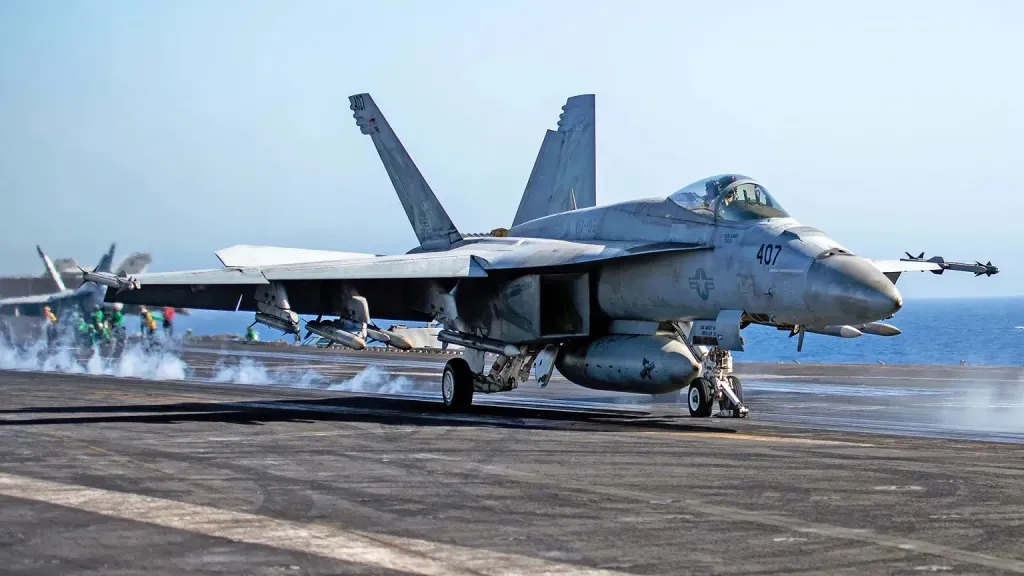

Accordingly, over time, the typical air group of an American aircraft carrier began to include 48 Hornets and Super Hornets with the possibility of strengthening up to 60 units.

It's clear that the F/A-18E/F Super Hornet is neither a top-tier fighter, nor a top-tier bomber, nor a top-tier attack aircraft. In each role, it was inferior to specialized aircraft. But the Americans rightly concluded that quantity in this case translates into quality: in the 90s and early 2000s, the Super Hornet was good enough for the US Navy to maintain absolute naval dominance. This was achieved not by the exceptional qualities of the aircraft itself, but by its large numbers, the training of its pilots, and the fact that the F/A-18E/F Super Hornet wasn't a "thing in itself" but rather an element of American air power.

That is, although the Super Hornets were not the best fighters or bombers, due to the US Navy's systematic, integrated approach, which used advanced communications and data transmission systems, AWACS aircraft, electronic warfare, etc., to support the operation of these aircraft, they could successfully solve the tasks of both gaining air superiority and destroying sea and land targets.

It would be quite appropriate to draw an analogy here with tanks Wehrmacht 1939-1941. On their own, they were very poorly armed and protected, and could in no way be considered the best in the world. But in combination with motorized infantry, the ability to combine tanks/field artillery/Anti-tank/dive bombers, excellent communications, and the training of officers and soldiers ensured the Wehrmacht's superiority over any army in the world. The Red Army managed to resist the Wehrmacht, and then surpass it, but this did not happen immediately and only when we were able to counter the systematically trained and equipped German ground forces with our own system.

The main force of US carrier-based aviation in the 21st century


The Super Hornets were supposed to gradually fade from the scene, handing over the reins of the seas to the F-35C. The latter was expected to be like the F/A-18E/F Super Hornet, only better—in every way.
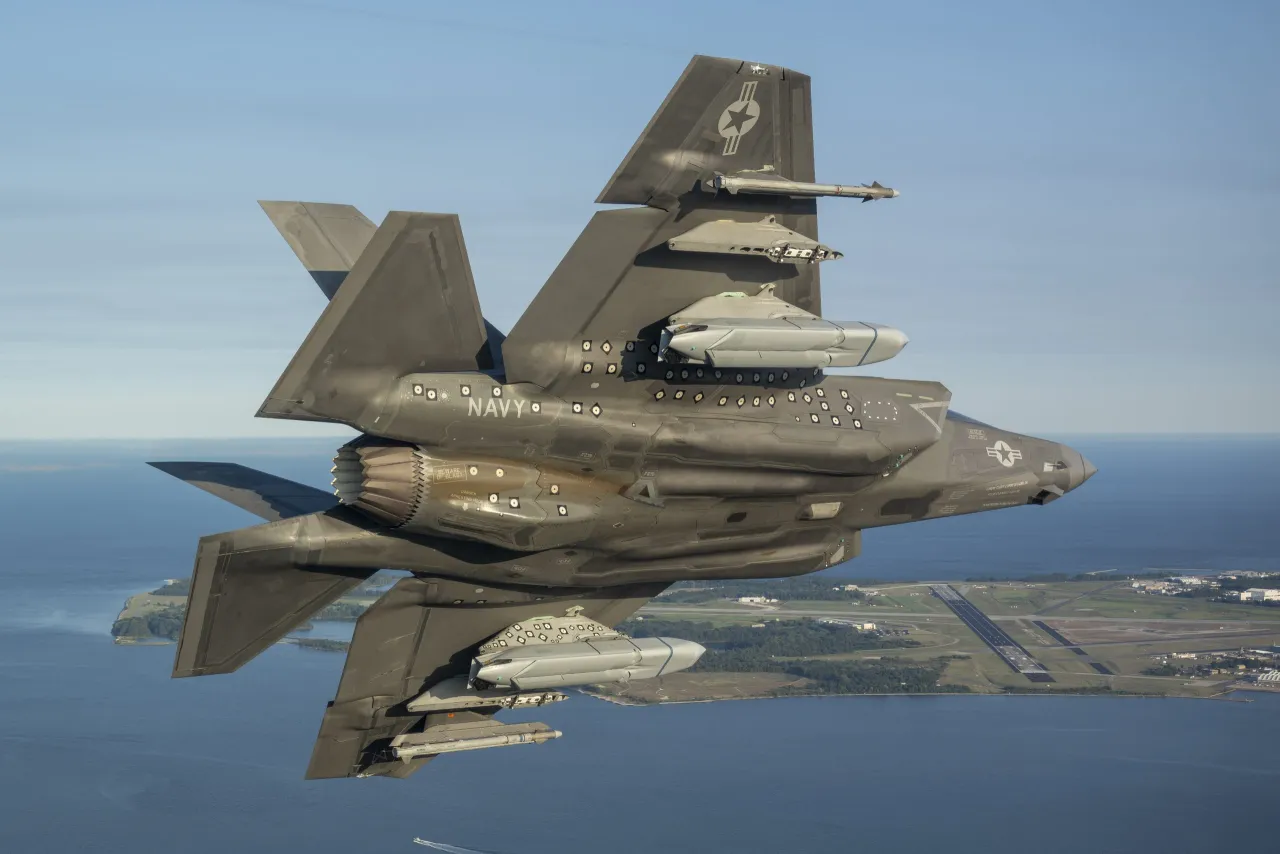

However, these plans were not destined to come to fruition. The Americans are unable to ensure that their existing F-35 fleet is ready to perform the missions they face. According to the Government Accountability Office, in fiscal year 2024, the F-35C readiness rate was only 22%, while the F-35A was 36,2%. This is a death sentence for an aircraft that entered production fifteen years ago; citing "teething problems" is long gone. In short, the US Air Force's plans to return to production of the latest F-16 variants may not be realized, but they weren't born out of nowhere.

On the other hand, we shouldn't go to the other extreme and declare the F-35 a complete failure. When it's finally coaxed into combat missions, it's a formidable stealth strike aircraft, packed with the latest avionics, and quite capable of holding its own in a dogfight. The F-35C certainly has a lot going for it, but for a number of reasons, it's not up to the task of replacing the Super Hornet.

The failure of the Joint Strike Fighter program left the U.S. Navy with the aging F/A-18E/F Super Hornet as its primary combat aircraft. But as noted above, the Super Hornet wasn't exactly a smash hit when it was first introduced, and the aircraft made its maiden flight in 1995, thirty-one years ago.

At the same time, the period of American absolute dominance in the oceans has come to an end, as China has entered the picture. Of course, the Chinese still have a long way to go compared to the Americans. While they have already surpassed the US Navy in terms of ship count, the Chinese navy remains significantly weaker in terms of quality. The US clearly has superiority in aircraft carriers and nuclear submarines, and this gap cannot be bridged by churning out frigates and destroyers.

But China has made tremendous strides in improving its naval capabilities—and shows no signs of slowing down. By building and operating submarines and aircraft carriers, the Chinese are gradually gaining the experience they need. Therefore, it's clear that in the coming decades, while China won't overtake the United States in naval power, it will at least significantly narrow the current gap.

The Pentagon is undoubtedly well aware of this, and that is why it is interesting to see how the American Navy plans to respond to these new challenges.

F/A-XX carrier-based fighter


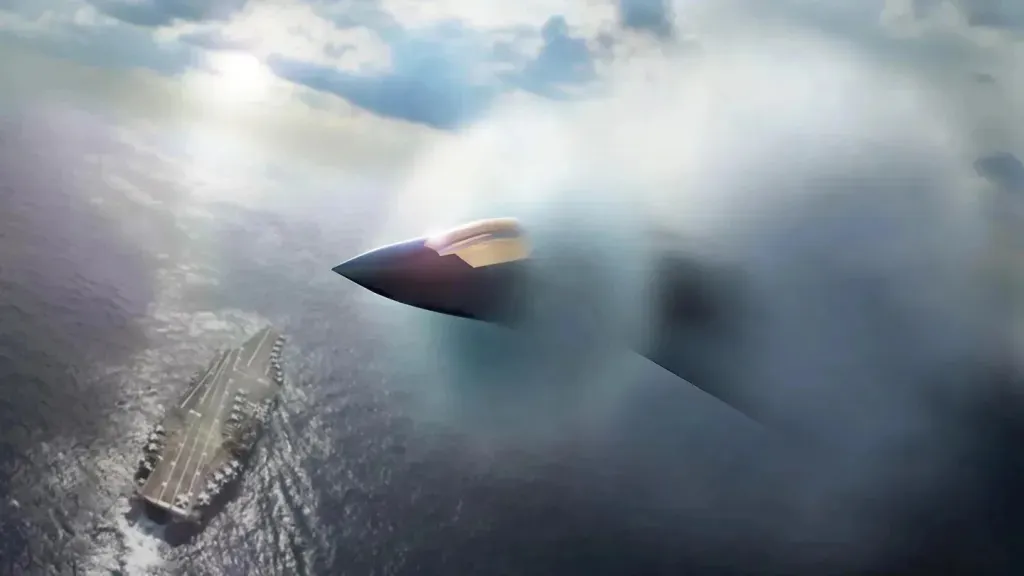
Very little is known about it. All the images are a couple of renders from Boeing, one of which I used as the opening image for this article. And here's the other.
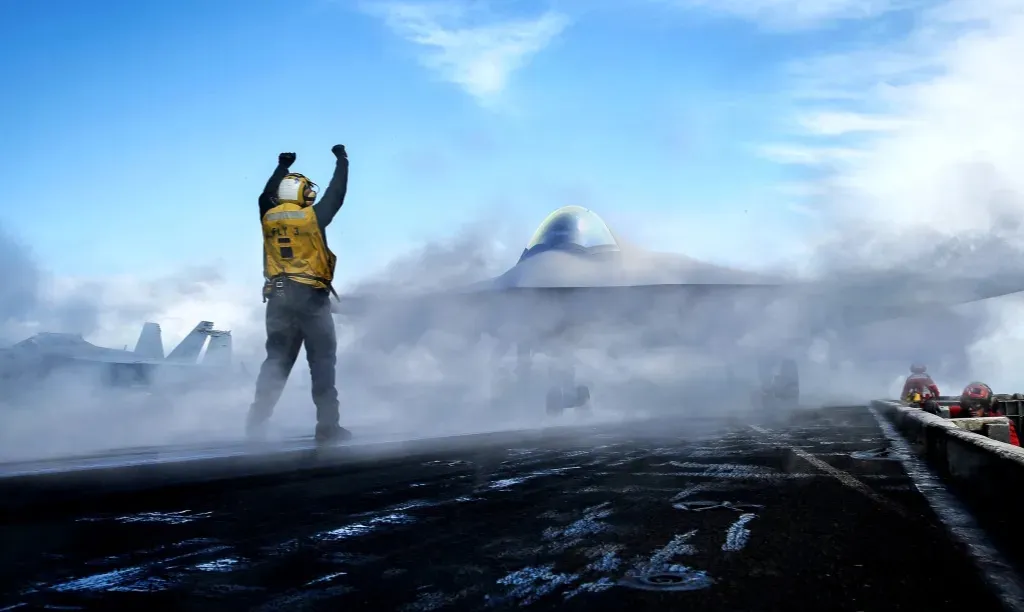

There is no doubt that the F/A-XX will draw on the developments of the fighter being developed under the NGAD program.


And, frankly speaking, all of this is completely insufficient to build even rough hypotheses about what this aircraft should become.

We know little from official reports. The Americans classify the F/A-XX as sixth-generation, but that, of course, doesn't tell us anything. This aircraft will have supersonic cruising speed, its design will incorporate advanced stealth technologies (who would have doubted it), it will be equipped with advanced network-centric capabilities, and its crew will be capable of operating unmanned aerial vehicles. It is expected that, in addition to destroying air, sea, and ground targets, the F/A-XX will be capable of providing close air support to friendly forces, performing reconnaissance missions, and conducting electronic warfare.

Overall, there seems to be nothing new, but there is one interesting nuance. The fact is that modern fighters are certainly multi-role, but that doesn't mean they are equally good at all functions. Therefore, the Americans distinguish between:

1. Air superiority fighters—aircraft designed primarily for air combat but also capable of engaging ground and/or naval targets. These include aircraft such as the F-22, F-15C/D, F-16, and, among our own, the Su-57, Su-35, Su-30, MiG-29, etc.

2. Strike fighters—aircraft designed primarily to destroy ground and sea targets, but also capable of aerial combat. These include the F-15E, F-35, F/A-18E/F, and, among our own, the Su-34.

So, they consider the F/A-XX a strike fighter. That is, it is primarily a strike aircraft, but also capable of effective air-to-air combat. And the fact that the Americans have placed their bets on this particular "subclass" of multirole carrier-based fighter explains how the US Navy views its main and current only rival—the Chinese Navy.

On the Chinese threat


Clearly, the Chinese navy's air component doesn't pose much of a concern to American admirals. China does have naval missile-carrying aircraft, but its newest models, the H-6K, are modernized Soviet Tu-16s.
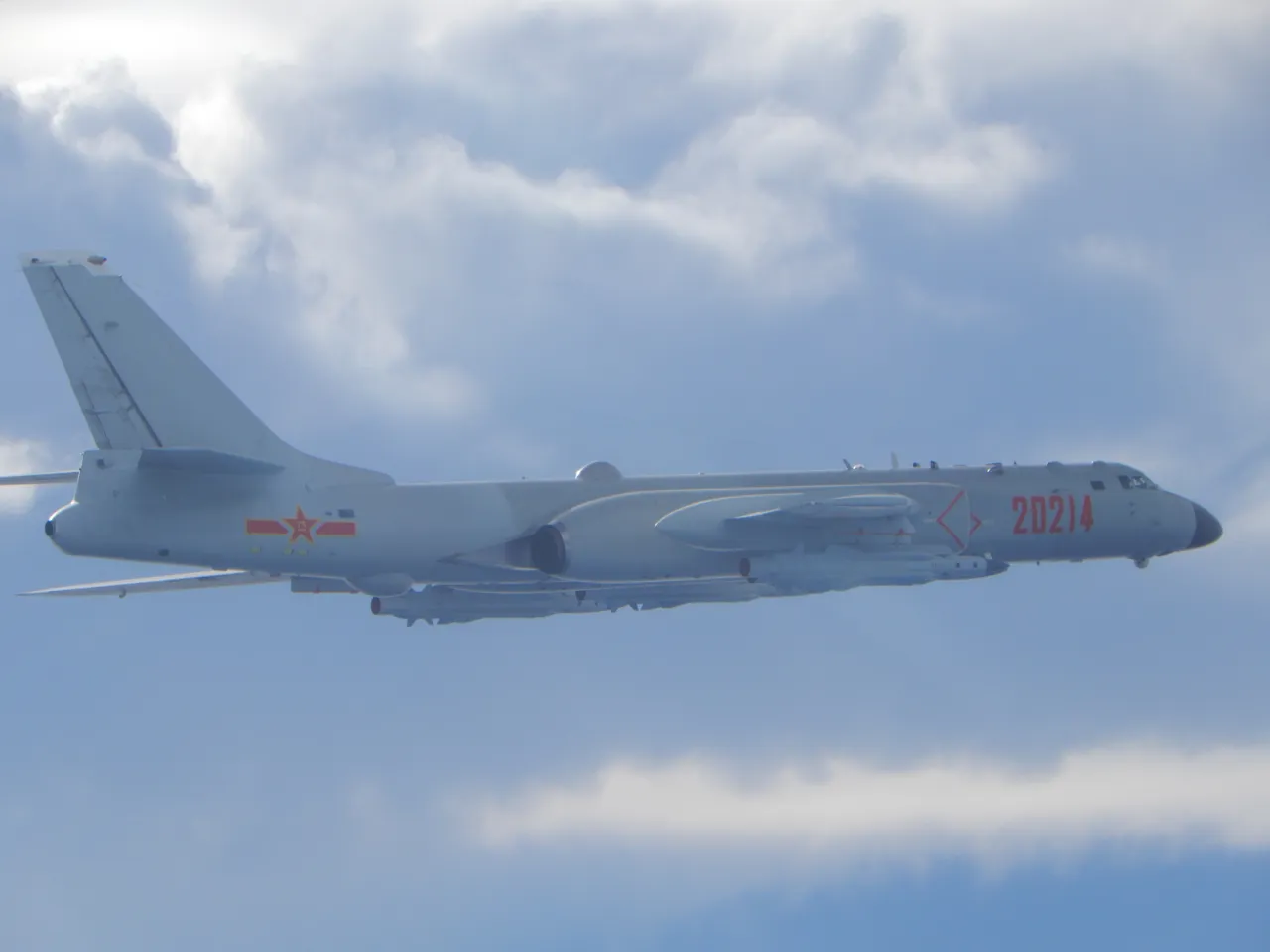

But even these aircraft are few in number, the Chinese Navy has 33, equivalent to an air regiment. This is quite unlike the Soviet armadas of naval missile carriers, organized into several air divisions.

The JH-7 and JH-7A attack aircraft went into production in 1992 and 2004, respectively.


But even at the time of their appearance, they could not be considered modern aircraft.

China's first carrier-based fighter, the Shenyang J-11, is a Su-27M-class aircraft and can already be considered hopelessly outdated. The subsequent Shenyang J-15, currently China's primary carrier-based fighter, is certainly better, but it's nowhere near the Su-35.
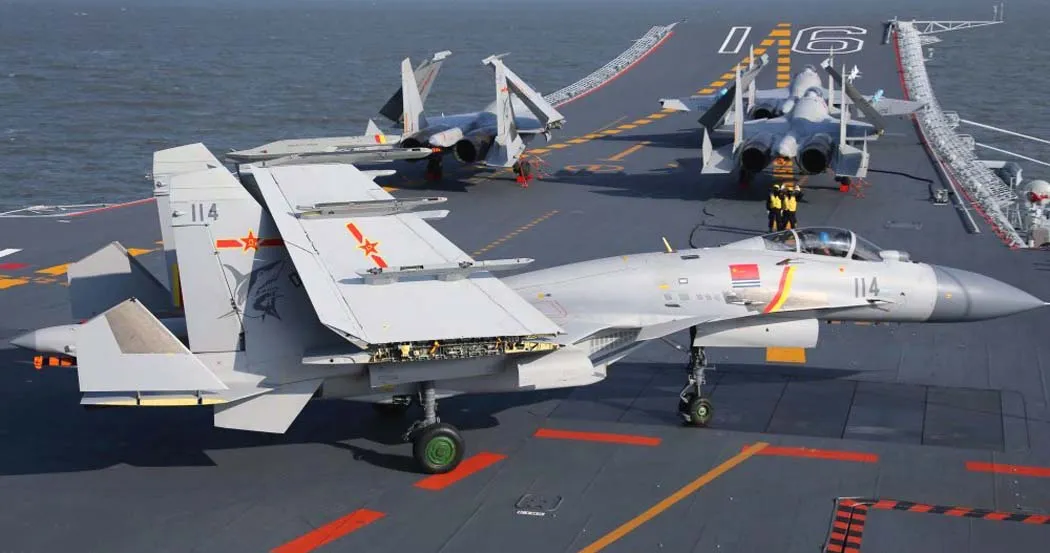

But China doesn’t have many of these aircraft – 120–130 units.

As for fifth-generation aircraft, China's position here also appears highly questionable. The Chengdu J-20 is a rather odd aircraft, bearing little resemblance to an air superiority fighter. It's very heavy, which is clearly visible even visually.
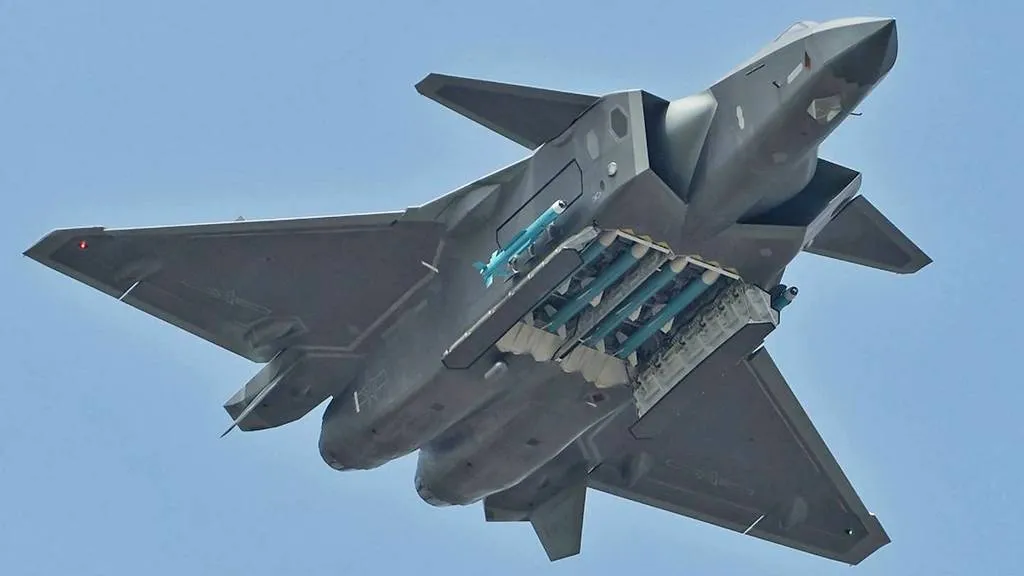

The J-20 may be a Chinese take on the interceptor concept - a stealthy, very long-range platform designed to engage airborne targets from afar using long-range air-to-air missiles.

As for the Shenyang J-35, it appears to be an attempt by the Chinese to replicate the American F-35.


And this does not mean that the Chinese will end up with a bad aircraft, but let's not forget that the US sees the F-35 as a strike aircraft, and not as an air superiority fighter.

Of course, China's naval aviation should never be underestimated. China's leadership is acting wisely, building it not as a collection of "unique" fighters, but as a system in which AWACS, electronic warfare, fighters, and attack aircraft operate in concert, reinforcing and complementing each other. Therefore, despite its shortcomings in materiel, China's naval aviation is strong and capable.

But the Americans created and nurtured their naval aviation system much longer than the Chinese; the US simply has more experience and more numbers, so, of course, China's naval aviation is no rival to the US.

Not a rival yet.

Don't need a Super Tomcat?


It's common knowledge that a general-purpose aircraft is inferior in effectiveness to a specialized aircraft—in the latter's area of ​​expertise, of course. And right up until the 90s, the Americans, preparing for an armed confrontation with the USSR, couldn't afford half measures: therefore, they developed specialized carrier-based air superiority fighters and attack aircraft. They used multirole aircraft merely as a useful supplement to specialized aircraft—nothing more.

Although I don’t have any clear confirmation, I can assume that when creating aircraft under the NATF and Avenger II programs, the Americans planned to completely abandon light multirole carrier-based fighters due to the fact that their newest fighters, which replaced the Tomcats, would have somewhat greater strike capabilities than the latter had.

The subsequent abandonment of specialization and the transition to multirole Hornets and Super Hornets was clearly driven by cost considerations rather than the tactical advantages of these aircraft. Even today, the Americans don't see Chinese naval aviation as a force that warrants the revival of specialized air superiority fighters. And they don't see it as such not only now, but also in the future.

The Americans clearly prioritize the strike capabilities of their carrier-based air wings. Accordingly, it can be assumed that in a hypothetical conflict between the US and China, American admirals would prioritize the destruction of Chinese naval groups and strikes against coastal targets using hit-and-run tactics, optimizing their air groups for such strikes. At the same time, they apparently underestimate the capabilities of Chinese naval aviation and believe that the limited capabilities of multirole fighters, primarily focused on strike missions, will be sufficient to combat it, both now and in the future.

Are the Americans right? Time will tell.

57 comments
Information
Dear reader, to leave comments on the publication, you must sign in.
  1. -7
    6 October 2026 06: 58
    According to the Government Accountability Office, the F-35C's readiness level in fiscal year 2024 was only 22%, while the F-35A's was 36,2%. This is a death sentence for an aircraft that entered production fifteen years ago; citing "teething problems" is no longer valid.

    Only the lazy don't kick "Tolstoy" (well, except for those who worship Starlink and SpaceX).
    So, aircraft carriers are only needed against underdeveloped states. They're no match for Russia, China, North Korea, and Iran. So the question arises: why do they need an air superiority aircraft?
    Well, they're just trying to steal government money. The US is the most corrupt country on the planet.
    1. +7
      6 October 2026 07: 23
      Quote: bya965
      And so, aircraft carriers are only needed against underdeveloped states.

      USSR, for example
    2. -12
      6 October 2026 07: 38
      Quote: bya965
      So, aircraft carriers are only needed against underdeveloped states.
      They are not needed at all. Just as the cavalry is not needed now. This is a consequence of inertial thinking - a concept that describes the pathological sluggishness of the thought processes of admirals, who are constantly one step behind the events taking placeI. P. Pavlov (physiologist, remember him?) introduced such a concept as dynamic stereotype...))
      1. +8
        6 October 2026 07: 48
        Quote: Luminman
        They are not needed at all.

        Yes, no one needs aviation. It's outdated and useless. laughing
        1. -10
          6 October 2026 08: 09
          Quote: Andrey from Chelyabinsk
          Yes, no one needs aviation. It's outdated and useless.
          In a sense, yes! Especially the assault and deck ones...
    3. 0
      6 October 2026 12: 19
      Everything would be tolerable if the author had even the slightest understanding of modern warfare. He presents a modern aircraft as a separate combat vehicle. He's probably drawing on experience, including that of the Air Defense Forces. Where that's true, of course. But the Air Defense Forces are being waged using the outdated, unmodern methods of yesterday... It's as if he's telling a children's story and is afraid to overload their young psyches.
  2. +9
    6 October 2026 07: 13
    Half the article is a review of the history of US carrier-based aviation development, the other half is an overview of how it's developed in China. But to the point:
    The F/A-XX carrier-based fighter. Very little is known about it.

    Excellent article. In quotation marks, of course.
    1. +8
      6 October 2026 07: 22
      Quote: sergey4791
      Half the article is an overview of the history of US carrier-based aviation development, the other half is an overview of how it's done in China. As for the substance of the article,

      Actually the article is called
      On the development trends of US carrier-based aviation in light of the development of the newest F/A-XX

      Perhaps you should have read the title of the article before criticizing it? Then you would have known it wasn't about the new carrier-based aircraft.
      1. +3
        6 October 2026 07: 40
        The word "trends" refers to an overview of current development directions. Why a retrospective over the past 50 years?
        The phrase "US carrier-based aviation" means US carrier-based aviation. Why the long description of the Chinese state of affairs here?
        1. + 10
          6 October 2026 07: 46
          Quote: sergey4791
          The word "trends" refers to an overview of current development directions. Why a retrospective over the past 50 years?

          A trend is a direction of development, a certain inclination or aspiration towards something, and it is not tied to a specific time. This is why, for example, there are scientific articles entitled
          "The Main Trends of the Historical and Cultural Development of Western European Society during the Renaissance"

          And yes, a trend in the present cannot be considered without a trend in the past.
          Quote: sergey4791
          The phrase "US carrier-based aviation" means US carrier-based aviation. Why the long description of the Chinese state of affairs here?

          Perhaps it is because Chinese naval aviation is today the main adversary of US carrier-based aviation?
  3. -9
    6 October 2026 07: 40
    Well, I don't know, the Tomcat was very close to the MiG-31 in performance, but it didn't have AESA, all your stealth, AI, it's all just hype. In aviation, the one with the strongest radar and good missiles wins. Here's an example: with our A-50U, they knocked out almost all of Bandershtat's fighters. We urgently need to stop building the Tu-16M, the USSR was building one a month, the D-30, and eliminating extra crew members and installing a refueling probe. The new avionics from the Tu-22M4 can be upgraded to strategic decision-making and AWACS.
    1. +4
      6 October 2026 09: 17
      "Close to the MIG-31"... Are you serious? ... so far no other aircraft complex has come close
      1. -9
        6 October 2026 09: 32
        You just don't know that the Fu-14 preceded the Fu-15, which flew two years earlier and was the most sophisticated and effective multi-mode fighter, and the Phoenix missiles 🐦‍🔥 for a long time had no analogues in the world, we were just lucky to create the Zaslon, which could control long-range missiles, and multi-mode capability due to the variable geometry wing was not available to the Fu-15, and my opinion is that it was necessary to build a long-range fighter based on the Su-24, it would have been more correct good
        1. +2
          6 October 2026 10: 57
          The word "luck" doesn't apply to aircraft manufacturing... these are projects that take years and a school of complex creation (aircraft engines, weapons, onboard systems)...
      2. +5
        6 October 2026 10: 10
        "Close to the MIG-31"... Are you serious?
        If we consider only the requirements for the weapons control system, they are similar—namely, autonomous air combat at long range using long-range air-to-air missiles, with the ability to simultaneously attack multiple targets! But as aerodynamic objects, they are completely different.
        1. +1
          6 October 2026 11: 00
          The complexes were created for completely different tasks... it's like a VAZ and a Mercedes... both can deliver from point A to point B... that's all the similarity
          1. +6
            6 October 2026 11: 08
            I don't see any differences in the radar's missions! The F-14 with the Zaslon could fully perform its functions, and the MiG-31 with the F-14's AWG-9 could do the same, but there would be certain issues with the simultaneous engagement of multiple targets. The basic principles are the same: destroying airborne targets at long ranges and simultaneously attacking multiple targets. The Zaslon for the MiG-31 was designed with the F-14's AWG-9 in mind.
            1. +3
              7 October 2026 11: 20
              Quote: Hexenmeister
              The F-14 with the Zaslon could fully perform its functions, the MiG-31 with the AWG-9 from the F-14 could roughly do the same, but certain problems would arise in terms of implementing the simultaneous firing of several targets.

              The F-14 – yes. But the MiG-31, IMHO, would have had some problems solving the problem of "how to turn an interceptor into a surrogate AWACS aircraft."
              1. +3
                7 October 2026 11: 52
                turn the interceptor into a ersatz AWACS aircraft
                Likewise, the Zaslon was never an AWACS aircraft. At best, it could be considered a source of tactical information useful for a group of aircraft operating within its radar's field of view.
          2. +4
            6 October 2026 11: 34
            Quote: silberwolf88
            The complexes were created for completely different tasks.

            The tasks are absolutely similar - combating cruise missiles, which was set for both the F-14 and the MiG-31.
            1. 0
              7 October 2026 04: 20
              Hello, Andrey. The missions were similar, but not identical. The F-14s didn't fly in formations and weren't tasked with covering a 1000-kilometer front. A MiG-31 flight, however, is tasked with covering a large area. That's why the 31 radar is slightly larger and more powerful. Plus, there's integration between them and ground-based systems. hi
              1. +2
                7 October 2026 09: 10
                That's why the 31 radar is a little larger and more powerful.
                As of 1981, the radar characteristics of the MiG-31 and F-14 were approximately the same!
              2. +4
                7 October 2026 11: 12
                Quote: jonht
                Hello, Andrey. The missions were similar, but not identical. The F-14s didn't fly in formations and weren't tasked with covering a 1000-kilometer front.

                The US Navy simply didn't have to go to such lengths to invent an AWACS based on fighter aircraft radars. smile
                The powerful phased array radar and group operation were added to the MiG-31 only because the USSR couldn't fit the Hawkeye and Prowler on their backs. These are different approaches to solving the same problem.
                1. +1
                  11 October 2026 22: 52
                  Quote: Alexey RA
                  The powerful phased array radar and group operation were added to the MiG-31 only because the USSR couldn't fit the Hawkeye and Prowler on their backs. These are different approaches to solving the same problem.

                  Actually, the USSR had the Liana, and then developed the A-50, of which 50 were built. The MiG-31s ​​were supposed to work in tandem and under the control of the A-50. Well, and the ability to operate autonomously, including operating in a "front" formation as part of a flight, providing a zone of visibility and control of up to 1000 km along the front. The bulk of bombers with cruise missiles were expected through the SP; they had to be intercepted over the Arctic, preventing a breakthrough of either the cruise missiles or their carriers. And it was impossible to create a continuous radar field there using ground-based radars. So, the A-50 and MiG-31 went primarily to the northern and far east directions. On the western and southern directions, a continuous radar field was created. Therefore, the MiG-31 and A-50 were planned to be deployed to the southern direction last of all. They didn’t have time.
                  Well, as for the USSR's carrier-based aviation, a series (then only the lead one) of nuclear-powered aircraft of the Ulyanovsk project was being built, which were to serve as the basis for the Yak-44, and heavy long-range interceptor fighters, and the Su-47 carrier-based bomber with a forward-swept wing and a unique and highly fuel-efficient Lebedev engine (based on the promising R-279V-300 and two worm-geared thrust fans on the sides... and a single flat nozzle. The Su-47 was supposed to become a carrier-based bomber with an internal weapons bay and a combat radius of 2000 km+. An ambitious, beautiful task... but for a United Great Sovereign Country. The Russian Federation has not yet become one.
                  But it will become .
                  1. +1
                    12 October 2026 06: 37
                    Regarding the MiG-31 unit deployed across a 1000-kilometer frontline, that sounds like marketing hype! What can they do? Track the movements of B-52s? Sure, they can. But if the B-52s were replaced with cruise missiles, then without knowing where they're coming from or how many are flying, you'd have to scramble a whole regiment. The reason for that is obvious: the cruise missile's detection range is much lower!
                    1. 0
                      12 October 2026 14: 05
                      Quote: Hexenmeister
                      Regarding the MiG-31 unit spread over 1000 kilometers of frontline, that sounds like marketing hype! What can they do?

                      This tactical maneuver was developed and practiced (for the threat period) while waiting for the troops to receive a sufficient number of A-50s (50 were ordered). It was also planned to order 100 Yak-44s for the Navy and Air Force. All of this was supposed to appear in the troops in the 90s. Only about 30 A-50s were built, but the Yak-44 never got a chance to take off.
                      1. 0
                        12 October 2026 15: 08
                        This tactical technique was worked out and practiced
                        Even if you use 4 A-50s instead of 4 MiG-31s, you still won’t be able to cover a 1000 km front along the KR
                        100 Yak-44
                        My opinion is that the appearance of operational Su-27s in 1985 can be considered "almost late," and it's better not to mention the Yak that "didn't appear" at all.
                      2. 0
                        13 October 2026 00: 19
                        Quote: Hexenmeister
                        Even if you use 4 A-50s instead of 4 MiG-31s, you still won’t be able to cover a 1000 km front along the KR

                        This was for patrolling the Arctic during periods of threat from cruise missile carriers. And in case of a shortage of A-50s. The US didn't have a VB cruise missile with a range greater than 2700 km, so there were well-known launch points for these cruise missiles. They were positioned in front of these points.
                        Quote: Hexenmeister
                        My opinion is that the appearance of operational Su-27s in 1985 can be considered "almost late."

                        Actually, the Poltava Air Force Division received its first operational Su-27s in 1984. The original Su-27 was somewhat inferior to the F-15, so the design was completely redesigned, resulting in a masterpiece of world aviation. They were built quickly, and the USSR had no pressing rearmament programs at the time. The fact that the traitors of the Central Committee and the KGB sold out our homeland for a pittance isn't the fault of the designers or the military. We planned to solve all these problems in the 90s. And the A-50 AWACS aircraft were built and refined since the first half of the 80s. Some of my classmates served their entire careers on them.
                        The Yak-44 was supposed to fly in the 90s. Its performance characteristics would have been superior to the Hawkeye, with a much higher thrust-to-weight ratio. Calculations showed that it could easily take off even from the Kuznetsov ski-jump. That's what the engines were designed for. Just like the An-70.
                        One shouldn't confuse scientific and technological progress with politics; in this regard, the USSR was on a dizzying rise at the turn of the 80s and 90s. There was no economic crisis in the USSR. There was a management crisis due to the sabotage of traitors. The only problem in the USSR (and this seems simply ridiculous today) was a shortage of consumer goods, artificially created by the top brass. This was easily solved by returning to the norms of Stalin's Mixed-Structure Economy, which is what K.U. Chernenko was preparing in his program. A return to producer cooperatives was his program; without the distortions of Gorbachevism, producer cooperatives would have inundated the country with consumer goods in a matter of years, just as they had under Comrade Stalin in the post-war years. And Western countries in the 90s would have plunged into another and extremely severe systemic financial and economic crisis on the level of the Great Depression. Only the collapse of the USSR saved them from such a fate. If decent and conscientious people had been at the top of power in the USSR, the USSR would have soared in the 90s, and the West would have collapsed. And the world would have been completely different. That's why it was decided to destroy the USSR from within, using traitors.
                        These lessons of history must be known, remembered, and conclusions drawn. The situation now is approximately the same.
                      3. 0
                        13 October 2026 09: 31
                        In fact, the Poltava Air Force division received its first operational Su-27s in 1984.
                        Where did the firewood come from? Yes, the first aircraft were delivered to units in 1984, but they were waiting for test results to make modifications.
                      4. 0
                        13 October 2026 10: 20
                        Quote: Hexenmeister
                        Otkel firewood?

                        A friend of mine was one of the aircraft mechanics on the very first Su-27s in the Poltava Division. He even flew two of them to Afghanistan as part of the maintenance crew.
                        I know that they had not yet been officially accepted into service at that time, but they had already begun to be sent to the troops for development.
                      5. 0
                        13 October 2026 12: 33
                        The very first Su-27s went to the Komsomolsky Regiment, which was stationed on the other side of the runway from the plant.
                      6. 0
                        13 October 2026 12: 36
                        Well, that's kind of natural. I'm talking about the Poltava division where my friend served his conscription. That was the first time I heard about such an aircraft from him. They already had the MiG-29, the MiG-25RB, and the Su-24M in service, but mostly the MiG-21.
              3. +1
                10 October 2026 12: 07
                The F-14, by the way, was created in conjunction with the E-2 Hawkeye, and did an excellent job with it.
  4. +4
    6 October 2026 08: 06
    Its newest models, the H-6K, are modernized Soviet Tu-16s.
    This aircraft's mission is to deliver a cruise missile to the launch site, preferably without entering the air defense zone. This aircraft is excellent at aerial photography and intelligence gathering. It can successfully serve as an electronic warfare aircraft, jamming enemy radar systems. It is also capable of anti-submarine warfare missions, carrying depth charges and anti-submarine missiles in addition to sonobuoys and magnetometers. It can also serve as a double tanker for fighters and attack aircraft operating at long distances from their bases. And in its current Chinese version, it is packed to the brim with the most advanced avionics and avionics.
  5. -1
    6 October 2026 11: 45
    As for 5th generation aircraft, China’s position here also looks very dubious.

    Why? We only have one operational Su-57 of the 5th (conditionally) generation, while China has
    J-20, J-31, J-35.
    1. +7
      6 October 2026 12: 11
      Quote: dragon772
      Why so?

      I explained the reasons in the article. The J-20 is a strange aircraft, bearing little resemblance to a multirole fighter, let alone a fifth-generation one. The J-31 and J-35 are more like carbon copies of the F-35.
      As you well understand, it's not enough to just produce an aircraft and assign it a generation; it also needs to be compliant. And I'm completely failing to see any compliance from the Chinese. And it seems the Americans agree with me on this issue.
      1. -1
        7 October 2026 08: 58
        But the PLAAF actively uses them. I'm really looking forward to seeing how they perform in real combat, against the F-22 and F-35.
        In terms of radar signature, the Su-57 doesn't match a fifth-generation fighter. They're changing the avionics and installing optical detection systems to get closer to the F-35.
  6. +1
    6 October 2026 12: 32
    Recently it became known that the US Navy command is awarding the Boeing company a contract worth more than 20 billion dollars for the full-scale development of the F/A-XX carrier-based fighter.

    I predicted this contract a couple of years ago. Back when Boeing planes started crashing due to a software error, with tons of casualties and stock prices dropping nearly 20%.
    The US won't let Boeing go under and voila!
  7. +2
    6 October 2026 15: 48
    The Super Hornets were supposed to gradually fade from the scene, handing over the reins of the seas to the F-35C. The latter was expected to be like the F/A-18E/F Super Hornet, only better in every way. However, these plans were not destined to come to fruition. The Americans cannot get their existing F-35 fleet ready to perform the missions they face.

    If the author had even the slightest understanding of the context of what he was writing about, he wouldn't have made such blunders; the urge to criticize the F-35 overrode common sense. However, before writing such a long text, he could have read that the F-35 should be replaced by the Hornet, aka the F/A-18C/D Hornet, and certainly not a superfighter.
    1. +3
      6 October 2026 16: 13
      Quote: IsDiG
      One could also read that the F-35 should be replaced by a simple Hornet, also known as the F/A-18C/D Hornet, and not a super one.

      It's possible. And you could also think a little and realize that the JSF program was designed for an aircraft whose prototype was selected in 2001 and which made its first flight (the F-35C) in 2010, a little over 15 years after the Super Hornet. And what with such a difference in age?
      1. The F-35C should be like the F/A-18E/F Super Hornet, only better – in every way.
      2. The Super Hornets were supposed to gradually leave the stage, handing over the reins of the seas to the F-35C.
      Yes, the F-35 was supposed to replace the regular Hornet, but after serving for some time, it was also supposed to retire the Super Hornet, replacing it in combat units.
      But that's if you think about it. And if, offended by the F-35, you run off to write an angry comment, then of course
      1. -1
        6 October 2026 16: 32
        Excellent), answering a question with your personal opinion is a skill)
        2. The Super Hornets were to be gradually phased out, handing over the reins of the seas to the F-35C.
        Where is this written, can you tell me?
        For example, the fact that no one should replace anyone is written here in the links below; it is written there in black and white who replaces and complements whom:

        https://www.esd.whs.mil/Portals/54/Documents/FOID/Reading%20Room/Selected_Acquisition_Reports/FY_2019_SARS/20-F-0568_DOC_32_F-35_SAR_Dec_2019_Full.pdf

        https://www.dote.osd.mil/Portals/97/pub/reports/FY2024/navy/2024fa18ef_ea18g.pdf
        1. +3
          6 October 2026 17: 25
          Quote: IsDiG
          Excellent), answering a question with your personal opinion is a skill)

          This isn't a "personal opinion"—it's an objective reality for aircraft with the same mission and a 15-year age gap. Objectively, the F-35 will continue to serve until the Super Hornets are retired.
          Although... Considering their quality, you might be right, and the Hornets will outlast the Penguins. I can't rule that out.
          Quote: IsDiG
          For example, no one should replace anyone.

          And I never wrote anywhere that the F-35 was created to replace the Super Hornets.
          1. -1
            6 October 2026 18: 01
            And I never wrote anywhere that the F-35 was created to replace the Super Hornets.


            At the same time, write the following yourself:

            Yes, the F-35 was supposed to replace the regular Hornet, but after serving for some time, it was also supposed to be retired and Super Hornet, replacing him in combat units

            So, decide whether this is a personal opinion or objective reality? If it is objective reality, please provide a link to where this reality has been discussed other than in your own words.
            1. +3
              6 October 2026 18: 25
              Sorry, but it feels like you are reading not what is written, but what you want to read.
              Yes, the F-35 was supposed to replace the regular Hornet, but after serving for some time, it was also supposed to retire the Super Hornet, replacing it in combat units.

              Do you think the Super Hornet will outlast the F-35 and continue to serve long after the F-35 is retired? That's your right. I think otherwise. And I'm a big fan of it. What evidence do you need to prove that previous-generation aircraft, built 15 years before the next model, will be retired before this latest model? You can look up the Super Hornet's service life and compare it to the F-35 if you like.
  8. 0
    7 October 2026 02: 28
    Americans are constantly at war. They have plenty of experience.
    But China...
    Can an army with no experience at all say anything to an army that is constantly at war?
    It's too early for China to join the club of the world's strongest armies, even if it had 100 destroyers.
    Let them show something in practice, otherwise everyone is a master at the training ground and in tank biathlon.
  9. exo
    +2
    8 October 2026 20: 04
    As far as I remember, all the problems with the F-14D had already been resolved. And multirole capabilities were achieved. Rather, it was the behind-the-scenes struggle that killed it. Now, the more interesting battle for deck space between drones and conventional aircraft is the one between them.
  10. 0
    10 October 2026 07: 01
    Good analysis, Andrey. Thank you.
  11. +1
    12 October 2026 04: 05
    Since the Americans are betting on strike aircraft, we, in theory, should be betting on "air superiority fighters", and even with greater optimization "for a fighter".
    1. -1
      17 October 2026 17: 54
      In fact, the Americans are really betting on MULTI-PURPOSE aircraft. That same F-35, so often criticized in the RuNet, had a win/loss record against 4th-generation aircraft (with all their advantages) on average, at several Red Flags. 20:1. Even though it was planned from the start:
      - as a typical drummer;
      - there are no electronic warfare stations on it;
      - it does not have any performance characteristics of high maneuverability, speed, rate of climb, or acceleration characteristics;
      - it does not even have the previously assumed six devices for ejecting air-to-air missiles; in addition to bombs, it usually carried only one AIM-120D in each of its weapons bays.
      ......................
      The F-22, which undoubtedly was initially and still remains the main fighter for gaining air superiority in the US Air Force, is also capable of carrying two 450 kg bombs to destroy enemy targets most covered by air defense systems, while the air defense is not sufficiently suppressed - along with cruise missiles, the F-22 is a means of suppressing such air defense.
      So the future of aviation lies not in specialization, but in the versatility of fighter aircraft...
      1. 0
        17 October 2026 19: 55
        Where do F-35s have a 20-to-1 victory rate? In Iraq? In Libya? That doesn't mean anything.
  12. 0
    17 October 2026 17: 42
    As I've said before on this forum, a carrier-based 6th-generation multirole fighter must have a number of conflicting characteristics:
    - large combat radius (assuming a solid fuel supply);
    - a considerable combat load (implying a solid fuel supply);
    - in accordance with the two points above - a sufficiently large take-off weight;
    - since this type of aircraft is based on an aircraft carrier - with a relatively low landing speed - this requires a significant wing area and advanced mechanization, and those same additional relatively small consoles in the front part of the fuselage that fold with the main wing are desirable;
    - and since this is, after all, a 6th generation aircraft, an integral part of its performance characteristics must be an extremely low RCS in the centimeter and small decimeter range.
    - and of course such an aircraft will require engines (necessarily two engines) with a variable bypass ratio - such engines have already been practically created;
    - since the Americans have 10 AUGs and they have no intention of reducing their number yet (hello to those who think that aircraft carriers are outdated!) - the aircraft should not have an astronomical price per unit...
  13. 0
    17 October 2026 18: 19
    Quote: Andrey from Chelyabinsk
    Quote: dragon772
    Why so?

    I outlined the reasons in the article. The J-20 is something strange and bears little resemblance to a multirole fighter, let alone a 5th generation one.

    - It perfectly matches the 5th generation multi-role fighter, the Americans (CIA) are evaluating its frontal EPR ~0.01 m², which is approximately 10 times smaller than the declared frontal EPR of the Su-57, corresponds to the performance characteristics of the J-20:
    Armaments

    Maximum weapon capacity: 11,000 kg
    Internal weapon bays
    PL-10 short-range AAM
    PL-12 medium-range AAM
    PL-15 long-range AAM
    PL-16 long-range AAM (In development, to be integrated)
    PL-21 very-long-range AAM (In development, to be integrated)
    LS-6/50 and LS6/100 small-diameter PGB (intended)[85]
    FT-7 small-diameter PGB (intended)[86]
    CS/BBM2 small-diameter PGB (intended) [citation needed]
    CM-506KG small-diameter PGB (intended) [citation needed]
    External hardpoints
    PL-15 long-range AAM
    PL-17 very-long-range AAM
    4× under-wing pylon capable of carrying drop tanks.
    J-31 - J-35 look more like a carbon copy of the F-35.

    - Is this a disadvantage?
    As you well understand, it is not enough to produce an airplane and assign it a generation; it also needs to correspond.

    - They comply, and so far they are the only serial ones in the world that comply.
    And I don’t see any correspondence with the Chinese.

    - It's completely in vain.
    And it seems that the Americans are in solidarity with me on this issue.

    - Absolutely not. This is precisely the main reason why they are rushing to release the 6th generation aircraft, because 500 J-20, of which 300 units with the new, very powerful WS-15 engines are extremely disliked by the Americans...
  14. -1
    17 October 2026 18: 28
    Quote: Hexenmeister
    That's why the 31 radar is a little larger and more powerful.
    As of 1981, the radar characteristics of the MiG-31 and F-14 were approximately the same!

    "Not even close. The Zaslon had practically zero resistance to interference, even against the Soviet SPS-171, -172, -173 electronic warfare systems installed on the Tu-95MS. A fragment of a radio exchange between a test pilot in a MiG-31 and a Tu-95MS that had activated these electronic warfare systems has become a textbook classic: "The target is 2 kilometers away, I can't see the target on the screen, I can use the cannon!" And all American strategic bombers are equipped with the most powerful electronic warfare systems...
  15. 0
    17 October 2026 18: 40
    Quote: ugol2
    Americans are constantly at war. They have plenty of experience.
    But China...
    Can an army with no experience at all say anything to an army that is constantly at war?

    - Any army in a developed country gains all its combat experience through exercises, primarily where a situation of any complexity can be simulated—and the means of objective control—whichever one has managed to create...
  16. 0
    17 October 2026 20: 17
    Quote: Evil Eye
    Where do F-35s have a 20-to-1 victory rate? In Iraq? In Libya? That doesn't mean anything.

    - At the annual Red Flag exercises. Very qualitatively equipped with objective control means. And these results speak volumes to the US Air Force command, to the entire US air force, as well as to all the foreign participants represented. And to all interested aviation enthusiasts around the world. They provide representative result... wink

    A representative result is a conclusion or indicator obtained from a limited group of data (sample) that accurately reflects the properties of the entire study group (population).
    The word representative comes from the French représentatif – demonstrative, representing.

    The main signs of representativeness

    • Proportionality: The composition of the group, based on key parameters (age, gender, geography, income, etc.), matches the composition of the entire population.
    • Transferability of findings: The obtained data can be safely applied to the entire mass of objects or people without distortion.
    • Minimum error: Deviations from the actual parameters of the entire population are within acceptable scientific or statistical limits.
  17. 0
    18 October 2026 04: 58
    Quote: BOCTOK 77
    Everything would be tolerable if the author had even the slightest understanding of modern warfare. He presents a modern aircraft as a separate combat vehicle. He's probably drawing on experience, including that of the Air Defense Forces. Where this is true, of course. But the Air Defense Forces are being waged using the outdated, unmodern methods of yesterday...

    But Israel's 12-day war against Iran was fought primarily with combat aircraft, just as the joint 35-day US-Israel war against Iran (its active phase, the war is not over) was fought in the same way. The Americans made extensive use of aircraft carriers as platforms for strike aircraft and intend to continue to do so. Which contradicts your opinion...
  18. 0
    19 October 2026 21: 13
    Quote: BOCTOK 77
    ...the author...presents a modern aircraft as a separate combat vehicle.

    A 5th-generation aircraft can be precisely such a weapon—without support from all its networks—if its command centers are destroyed by enemy nuclear strikes. Then the surviving squadron of 5th-generation aircraft can fight on its own, without assistance or support. wink