Estonians in the armed forces of the Russian Empire

AI generation
From the conscription of 1796 to the general's shoulder straps of 1917
From duties to conscription
Following the annexation of Estonia and Livonia to the Russian Empire following the Great Northern War of 1700–1721, the territory of modern-day Estonia became part of the Russian military system. However, for the Estonians themselves, the indigenous population of this territory, this initially meant only indirect obligations—housing Russian troops in their homes, providing transport and horses, and supplying food to Russian garrisons.
However, in 1796, Emperor Paul I extended conscription to the Baltic region, which included the territory inhabited by Estonians. The first Estonian recruits were taken into the Russian Imperial Army in 1797. From that time until the introduction of universal conscription in 1874, approximately 95–100 men from Estonia were drafted into military service.
Historians estimate that only about 20% returned home. Many died in battle, from disease, and from the harsh conditions of service. Those who survived, after retiring, often settled in various provinces throughout the empire, losing contact with their families.
Service as a social elevator
At the same time, it should be noted that for the Estonian peasant, deprived of political and economic rights in his homeland, where the Baltic Germans ruled everything, military service in the Tsarist army was one of the few social mobility opportunities. It opened the way to non-commissioned and occasionally even officer ranks, to education, and thus to increased social status.
19th-century wars and the militia
Estonian recruits took part in all the wars of the Russian Empire in the 19th century: the Napoleonic Wars, the Crimean War, and numerous Russo-Turkish wars.
Estonian and Livonian peasants participated in the war not only as recruits. In 1806, Alexander I planned to form an armed militia from the peasants of the Baltic region, but the German landowners resisted—they did not want to give weapon their serfs. Nevertheless, in 1812, the Livonian Cossack Regiment was formed from two thousand Latvian (and partly Estonian) peasants. In November 1812, a royal decree was issued to recruit 10 men from each of 500 souls from the Livonian and Estonian provinces—this was one of the largest recruitments in the entire history recruitment.
8th Estonian Infantry Regiment
Estonian peasant recruits were distributed among various regiments of the Russian army, not always according to territoriality. One of the few regiments with an "Estonian" name was the 8th Estonian Infantry Regiment, formed in 1811 in Reval from companies of the Reval Garrison Regiment, as well as the Pernov and Narva Garrison Battalions. These garrison units were stationed in Estonia, and some of their rank and file were composed of Estonians—peasants from the surrounding manors.
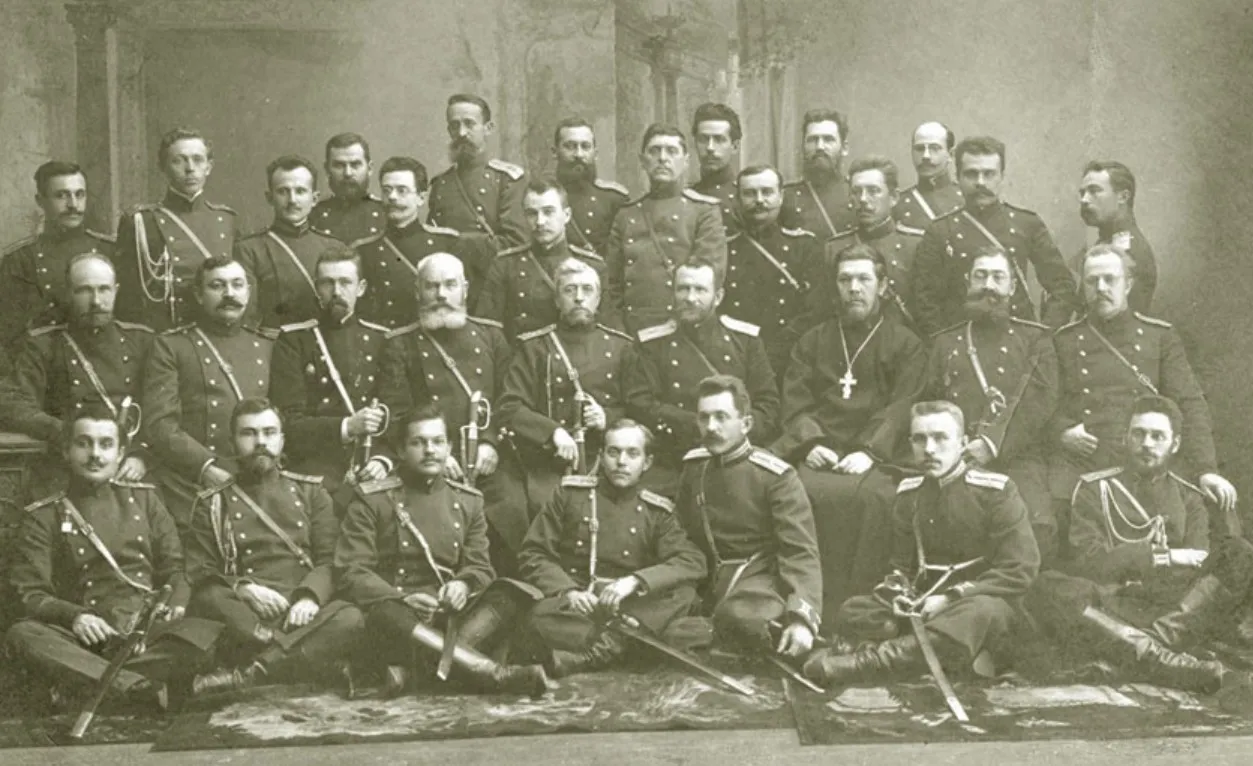
The 8th Estonian Infantry Regiment. Photo from the sammler.ru forum.
However, the regiment was not purely "Estonian"—it also included recruits from other provinces, and the officer corps consisted primarily of Baltic Germans (the regimental commander was Colonel Bogdan Gelfreich, an Estonian nobleman of German descent). In 1812, the 8th Estonian Regiment took part in the Patriotic War, and in 1813-1814 in the Foreign Campaigns.
The 8th Estonian Infantry Regiment (which included ethnic Estonians alongside Russians) took direct part in the fighting against the Polish rebels in 1830–1831. The regiment participated in the first battle of Wavre and in the major battle of Grochow (February 25, 1831), one of the bloodiest battles of the war.
Crimean War in the Baltic
In 1854–1855, the regiment was part of the Baltic Corps and participated in protecting the Baltic coast from possible Anglo-French landings. The only major episode of the Crimean War in the Baltic was the Battle of Bomarsund, an unfinished Russian fortress on the Åland Islands. Among the soldiers of the 10th Line Battalion and artillery The companies that defended this fortress included natives of Estonia and Livonia.
Defense of the Shipka Pass
Estonians left a special mark on the Russo-Turkish War of 1877–1878 – in the defense of the Shipka Pass in Bulgaria. 24 I Infantry Division, which held the defense at Shipka, was reinforced by mobilized reservists from the Estonian and northern Livonian provinces. From November 7 to December 19, 1877 alone, of the 192 killed in 95th Krasnoyarsk Regiment Sixty-four were Estonians—non-commissioned officers and privates. Many Estonian soldiers were awarded the Military Order's insignia—the St. George's Cross. Among them:
- Sergeant Major Alexander Thomson
- non-commissioned officers Ernest Streyman, Semyon Tobonaine
- Privates Wiltz Sommer, Johann Bartmer, Piotr Vahlep
- and others
In total, about 4000 ethnic Estonians fought in the ranks of the Russian army in that war.
1874 reform of the year
But let's go back a little into the past.
The 1874 reform replaced conscription with universal military service. Service was now extended to all men over 21, regardless of social class. Infantry service lasted 15 years: six years in active service and nine in the reserves. During peacetime, 1200–2200 recruits were conscripted annually from the territory of modern-day Estonia. Between 1875 and 1913, approximately 100,000 men were drafted. Among them, along with ethnic Estonians, were also Germans, Russians, and others living in the Baltics. Most of the conscripts were sent to serve in other provinces of Russia.
Junker schools and Estonian officers
The military reform of the 1860s opened cadet schools with simpler curricula and lower entry requirements. This gave a real boost to the development of an Estonian officer corps. Prior to this, only a few Estonians had served as officers in the Russian army. Between 1870 and 1914, cadet schools and military academies graduated approximately 260–300 career Estonian officers, plus approximately 150 reserve ensigns. The most popular educational institution was the Vilna Infantry Cadet School (at least 76 graduates), followed by the St. Petersburg Cadet School (52 graduates).
The highest Estonian officer of the empire
By 1914, 140 career officers of Estonian nationality served in the Imperial Army. Among them were at least 60 colonels and lieutenant colonels. Thirteen had higher military education (from the General Staff Academy). The highest-ranking ethnic Estonian in the Russian army was Genrikh Ivanovich Rautsmann.
He was born in 1852 in Märjamaa (Estonia Governorate) to the family of the manager of the Vaimõisa manor. He graduated from the Tallinn Gymnasium and the St. Petersburg School. horse riders Cavalry, the Tver Cavalry Cadet School, and the Cavalry Officer School (1886, with honors). He began his service in 1870 in the 1st Moscow Dragoon Regiment. He took part in the Russo-Turkish War of 1877–1878 as a junior squadron officer.
For over ten years, he taught horseback riding at the Cavalry Officers' School. Among his students was the future Marshal of Finland, Carl Gustaf Mannerheim. His rapid advancement was facilitated by the favor of Grand Duke Nicholas Nikolaevich the Elder, who was impressed by Rautsmann's skill as a horseman. From 1909, he was appointed General of Assignments to the Inspector of Cavalry. In 1913, Rautsmann became a lieutenant general.
World War I
With the outbreak of World War I, mobilization increased sharply. In the first year of the war alone, more than 35,500 men were conscripted from Estonia—approximately 7% of the male population. Over the entire period, "Great War" By 1917, approximately 300 people were conscripted into the Russian army from Estonian territory, 95 of whom never returned to their homeland.
During World War I, more than 2300 Estonians were commissioned as officers, bringing the total number of Estonian officers to approximately 3000. About 600 Estonians fought at the front as company or battalion commanders, and seven senior officers commanded regiments. About 30 Estonians graduated from the General Staff Academy or other higher military educational institutions.
For bravery and skillful leadership during World War I, 333 Estonian officers were awarded orders, including 47 with the Order of St. George. At least 120 Estonian officers (33 of them career officers) were killed or went missing in action.
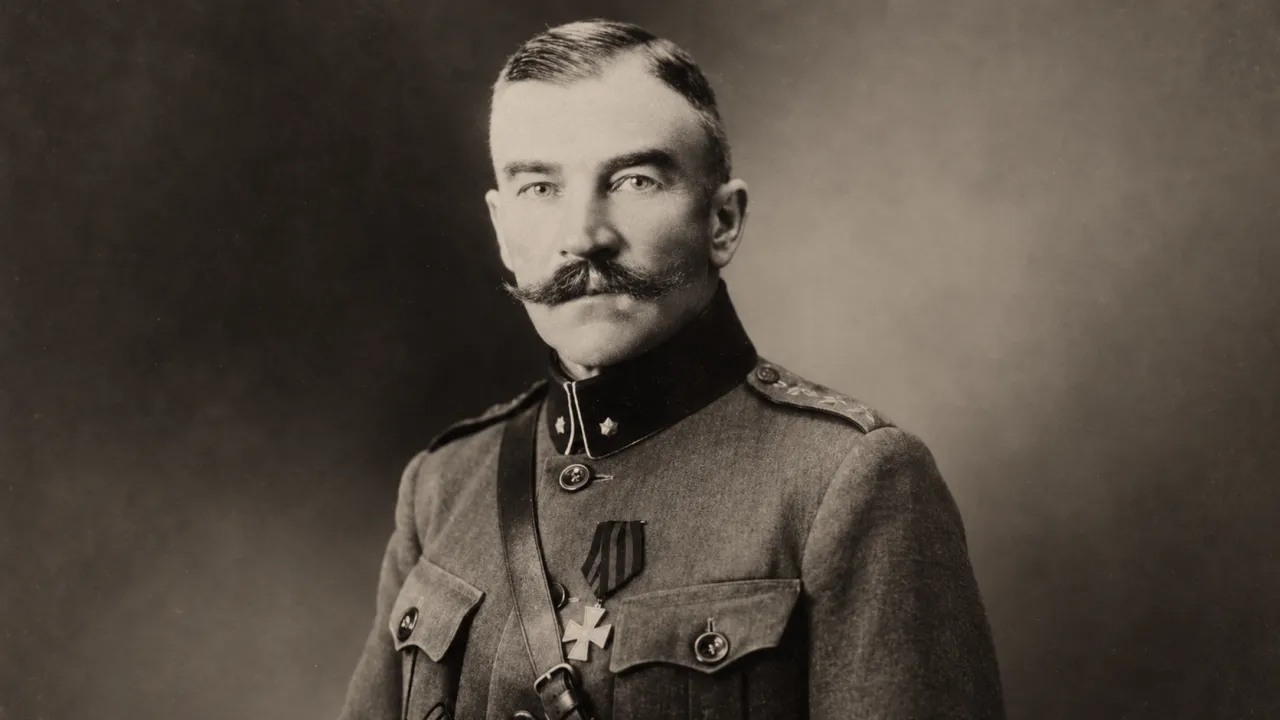
Alexander Alexandrovich Zilberg
The only Estonian general of World War I
One ethnic Estonian became a general during the First World War. This is - Alexander Alexandrovich ZilbergHe was born in Narva in 1869 to an Estonian Lutheran family. He graduated from the St. Petersburg Commercial School and enlisted as a volunteer in the Life Guards Semyonovsky Regiment (1890). He served in the guards, then in rifle units. During World War I, he commanded the 2nd Finnish Rifle Regiment, then the 4th Finnish Rifle Regiment. He was awarded the Order of St. George, 4th class, for the battles near the village of Kozlovka from March 27–30, 1915, when, under heavy fire, he repelled persistent enemy attacks. In April 1917, he was appointed brigade commander of the 1st Finnish Rifle Division. He was promoted to major general on July 22, 1917, for distinguished service in battle.
Information