Fering Pioneer Hybrid ATV Family

Pioneer X 4x4 all-terrain vehicle with machine gun armament and smoke grenade launchers
The British Army is seeking vehicles with innovative powertrains: these promise longer range, lower noise levels, and better power delivery for equipment. Industry is responding with new projects. One such project is the Pioneer family of all-terrain vehicles from London-based Fering Technologies, built on a common platform.
Project and program
Fering Technologies has been operating in London since 2019. It develops powertrains for automotive applications and wheeled platforms for their use.
In 2025, the company unveiled a military version of its all-terrain vehicle, called the Pioneer X. The vehicle was positioned as a multi-purpose vehicle for units requiring high mobility, cargo transportation, and the ability to operate away from developed infrastructure.
The project is based on a hybrid powertrain. It is expected to provide a long range, a quiet electric mode, and power for onboard equipment. All specifications below are based on Fering's data; independent test results have not yet been published.

Pioneer 4x4 Multi-Purpose Vehicle
The company proposes developing the original platform, creating vehicles for various purposes. Fering's materials mention a military version of the Pioneer X and multi-purpose variants with different configurations and cargo platforms. The exact composition of the family, its production status, and market launch dates should be verified with official company statements.
Interest in the project is also linked to the British Light Mobility Vehicle program. According to the published competition description, the customer requires a common base platform for several vehicle variants. Fering has announced that its bid has been submitted, but no winner has been selected. The hybrid powertrain is a special feature of Fering's proposal, not a mandatory requirement for the entire program.
General architecture
The Pioneer family is based on a modular design, encompassing components of the powertrain, cabin, and cargo area. Depending on its intended use, the vehicle is equipped with various body components, equipment, and payload.
The entire family shares a single hybrid powertrain with an internal combustion engine, generator, batteries, and wheel drive. This design reduces noise in electric mode and provides power for onboard equipment.

Pioneer 6x6 Truck
The Pioneer X has a listed curb weight of 1750 kg and a gross weight of 3500 kg. This leaves 1750 kg for the payload, including crew, weapons, ammunition, communications equipment, and other equipment.
The vehicle is air transportable. Actual air transportability depends on the specific configuration and type of aircraft; this is especially critical for armed vehicles.
Armament and declared capabilities
The military version of the Pioneer X is being considered as a transport for units requiring increased mobility. Fering's demonstration materials show variants with a 12,7mm M2 Browning and other small arms, as well as eight smoke grenade launchers. This equipment is for the demonstrator; the production configuration will depend on customer requirements.
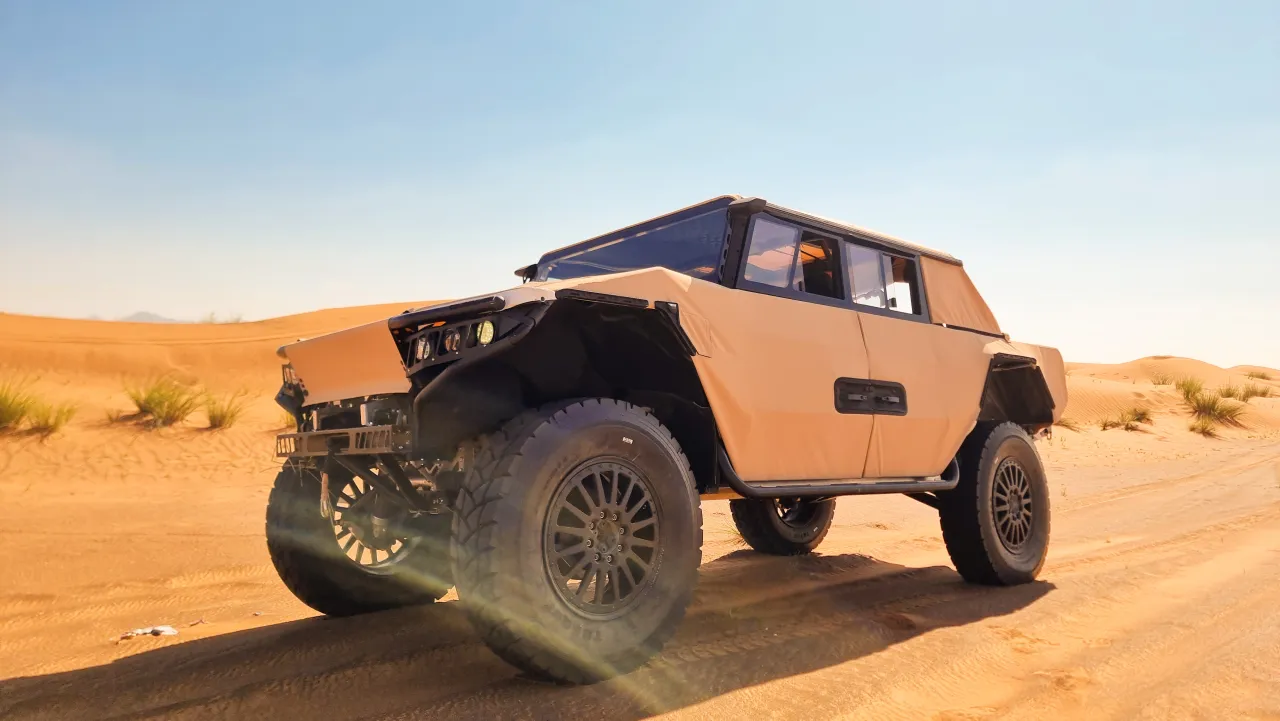
When evaluating this option, it's not just the armament that matters. The vehicle's true combat value depends on its detection, target acquisition, and communications capabilities, as well as the platform's stability during firing. Publicly available materials do not yet allow for a reliable assessment of these parameters.
Fering claims a range of up to 80 km on battery power alone and up to 7000 km in hybrid mode. This figure is only plausible as a guide for economical driving with ample fuel: off-road and under full load, the actual range will be several times shorter and will depend on the route, temperature, and fuel availability.
Multipurpose and cargo variants can expand the platform's range of applications. A third axle should increase cargo space and payload, but specific weights and capabilities of the three-axle version should be verified with the manufacturer's separate data.
Not just another buggy
The Pioneer X is weight-wise classified as a lightweight buggy, but it claims to be used for hauling vehicles twice or three times heavier. It's not a typical lightweight all-terrain vehicle or a direct replacement for heavy off-road platforms, but rather an attempt to fill a middle ground: combining low weight, a hybrid powertrain, a significant payload, and power for equipment.
The Polaris MRZR-X is closer to the Pioneer X in its hybrid design, quiet operation, and onboard equipment capability, but is in a lighter class. The FLYER 72 and Supacat HMT are closer in expeditionary role, payload, and weapons-carrying capacity, but they are heavier and more mature platforms with different operational logic. The Jankel Fox remains the benchmark for a more traditional approach to light military mobility.
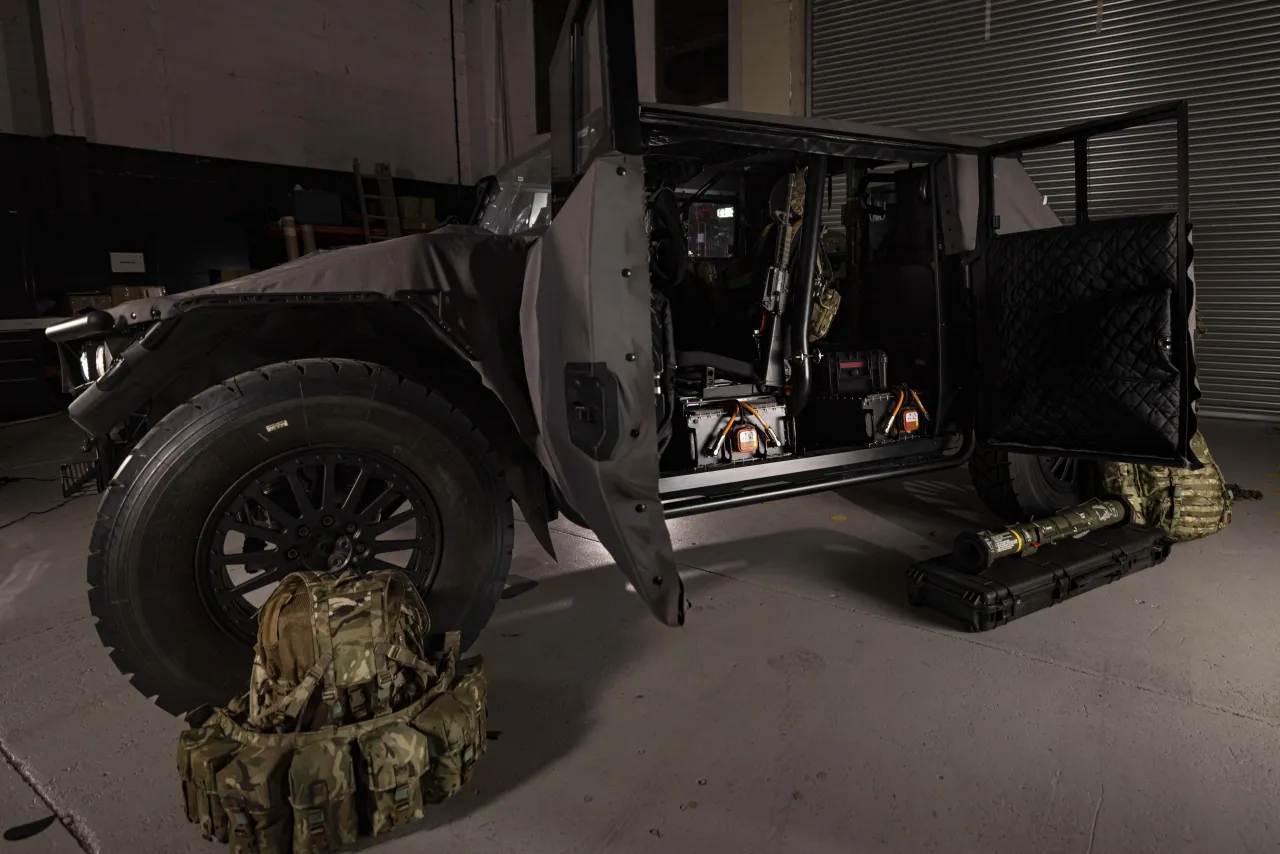
Against this backdrop, the Fering isn't offering a record for cross-country performance or armament, but rather an attempt to reduce a unit's dependence on refuelling and standalone generators. If the design proves effective off-road, the vehicle could prove useful in situations where march speed is more important than the ability to operate as a small group away from rear infrastructure.
Platform concept
The project's primary focus is a unified set of components for vehicles of various types. A common powertrain, electronics, suspension, and spare parts can simplify production, crew training, repairs, and procurement. This will only be realized if key components are truly preserved during the transition from a two-axle vehicle to a cargo or specialized version.
This approach also has a downside: the hybrid powertrain, batteries, generator, and power electronics increase the demands on technician training and field repairs.
The Pioneer X will only become a real competitor to more mature platforms after field tests confirm its range with a crew, weapons, and full load, as well as acceptable maintainability in the military.
Information