"Mugem" is "we can" in Turkish.
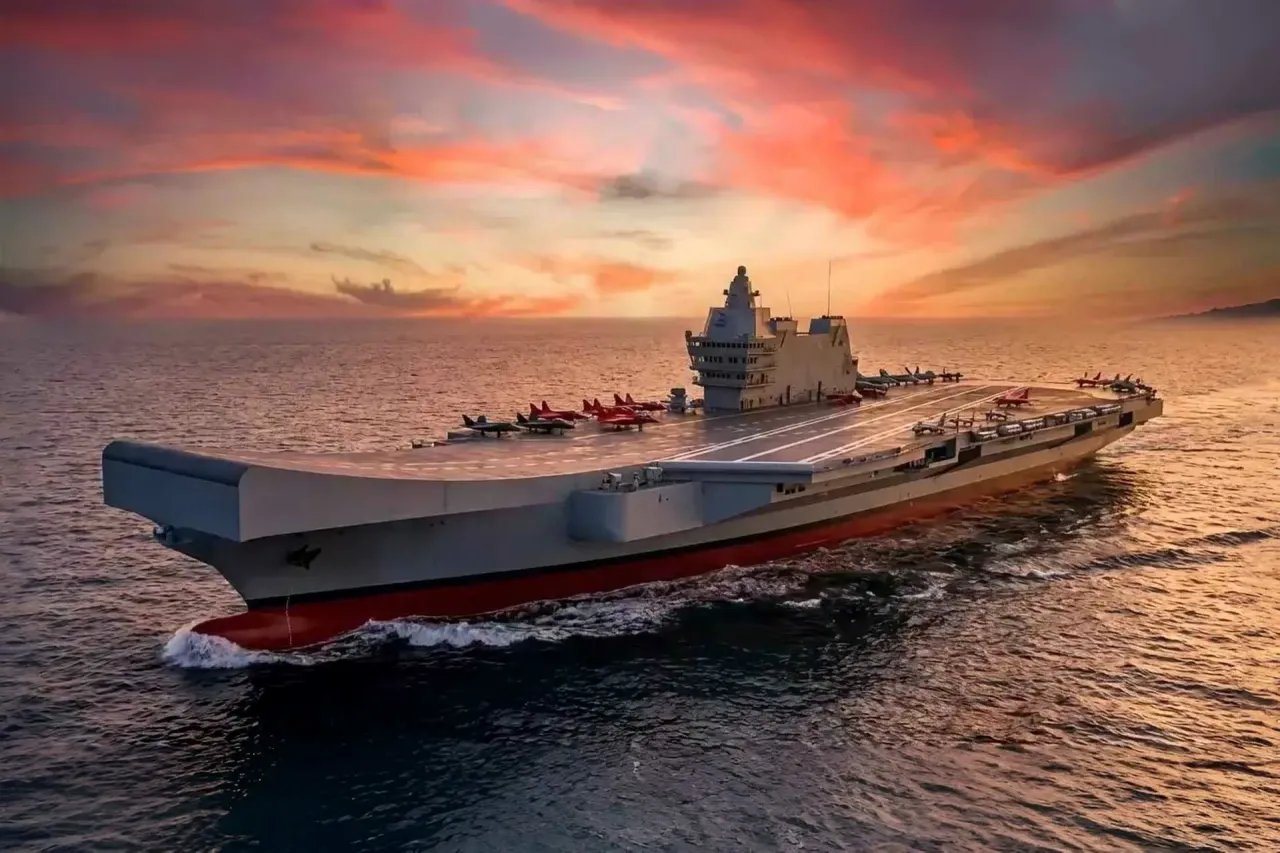
Turkish Navy Commander Admiral Ercument Tatlioglu confirmed on August 23, 2026, at the Teknofest Blue Homeland festival that Turkey will launch its first locally produced aircraft carrier, MUGEM (Milli Uçak Gemisi), on September 27, 2027.
The 60,000-ton STOBAR platform represents a shift toward multi-domain aircraft carrier architecture by integrating manned fighters with jet-powered unmanned combat aircraft and autonomous maritime systems. Construction of the 285-meter hull is ongoing at the Istanbul Naval Shipyard, with commissioning scheduled for 2032.

MUGEM is 285 meters long, 72 meters wide, has a draft of 10,1 meters, and displaces 60,000 tons. The vessel is equipped with a non-nuclear propulsion system, enabling it to reach speeds in excess of 26 knots and travel a range of 10,000 nautical miles.
The aircraft carrier is equipped with a 12-degree modular ski-jump and is capable of accommodating 52 aircraft. It is designed to accommodate both manned aircraft and Turkish-made unmanned aerial vehicles (UAVs): Hürjet, Bayraktar Kızılelma, Anka-3 and TB3, as well as integrated unmanned surface and underwater vehicles.

The set is, let's say, CONTROVERSIAL. If the drums Drones While they are of interest from the point of view of combat effectiveness, the Hürjet is nothing more than a training desk, and its value as a combat aircraft is more than questionable.
But the question of the 32 MIDLAS vertical launchers, which are part of the armament of this, so to speak, drone carrier, is becoming more interesting.

Roketsan produces MIDLAS in two main vertical configurations, as well as single-cell variants for flexible deployment, but we are not interested in the single-cell systems; we are more interested in the other ones.
Tactical version: designed for medium-range air defense and anti-ship missilesHeight (or depth, whichever is more convenient): 6,7 meters. Compatible missiles: Hisar-D, Atmaca, Siper Block 1-D.
Strike version: designed for long-range air defense and (most interestingly) ground attack. Height: 8,0 meters. Compatible missiles: Siper Block 2-D, Gezgin cruise missile.
The standard module consists of eight cells, each approximately 6 square meters in area. The system supports a "quad configuration," allowing up to 32 smaller missiles to be placed in an eight-cell module.
This means that a four-segment MIDLAS can carry 128 surface-to-air missiles, which is a pretty decent defensive complement. But the trick is different. The MIDLAS system is compatible with a wide range of Turkish missiles:
Hisar-D RF: Medium-range air defense missile (military version of Hisar-O+).
Siper Block 1-D: Long-range surface-to-air missile (range: 100+ km).
Siper Block 2-D: extended-range surface-to-air missile (150+ km).
Atmaca: anti-ship cruise missile.
Gezgin missile: a cruise missile for hitting ground targets.
Tyfun: A short-range ballistic missile (planned for launch on submarines or large surface combatants).
This means that MIDLAS launch cells can provide the ship not only with defense against air targets, but MUGEM can also quite easily strike both enemy ships and targets on the shore using missiles of the appropriate configuration.
Yes, does this remind you of anything?
That's right, Project 1143, a dead-end development of aircraft carriers, is still in service today as conventional aircraft carriers. But initially, the 12 Granit anti-ship missile launchers turned the carrier into a perfectly capable cruiser, capable of striking enemy ships without launching its air wing.

In adverse weather conditions, this was actually quite a good performance, as only a select few ships could carry the monstrous 10-meter-long, 7-ton Granit missiles (though the P-1000 Vulcan missiles on the 1164 Atlant-class missile systems were no worse). And if the ships of a potential enemy's formation had launched their own missiles, the Krechets had plenty of countermeasures: the Admiral Kuznetsov carried 256 Kortik anti-aircraft missiles and 192 Kinzhal anti-aircraft missiles.
Of course, the 128 missiles of the MUGEM do not look so impressive, but the Turkish fleet There are frigates and corvettes in sufficient numbers to provide air defense for the aircraft carrier. Furthermore, the Mediterranean and Black Seas, where Turkey's areas of interest are located, are within the Turkish coastal defense zone. aviation.
However, the essence of the application will be discussed below.
Overall, the Turkish military is positioning this ship as an aircraft carrier. The next question is what kind of aircraft and helicopters it will carry. Where to is a separate issue.
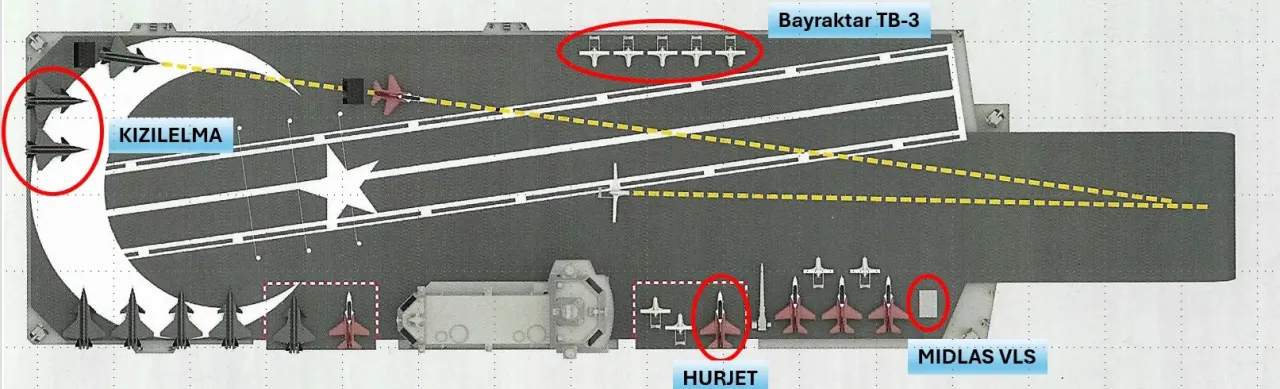
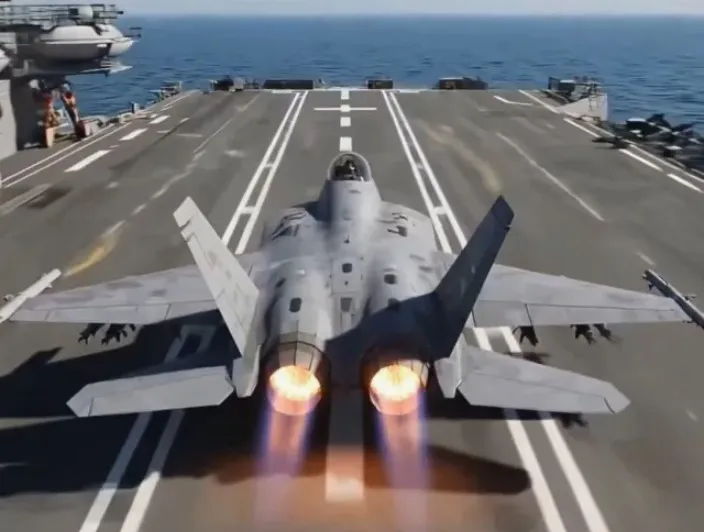
The planned MUGEM air wing will include a manned Hürjet carrier-based aircraft and three fixed-wing unmanned aircraft: the Kizilelma, Anka-3, and Bayraktar TB3. The total capacity will be 52 aircraft, with the ability to accommodate up to 52 Kizilelma aircraft in a single-type configuration.
It's worth noting that a carrier-based version of the Hürjet doesn't yet exist. Clearly, work is underway, and it's likely that a version will be developed; it's just a matter of time. However, the combat value of this aircraft is virtually zero. While it could theoretically provide the ability to train naval pilots, the benefits are limited: Turkey doesn't have its own proper carrier-based aircraft, and it's unclear when it will develop one (unless they develop the KAAN, but they're still a long way from a fully-fledged land-based version). Furthermore, it would require a different ship, one with larger hangars and a flight deck.
In general, in terms of the plane, everything is shaky and uncertain.
And the UAV situation isn't entirely clear either. Bayraktar's Kizilelma ("Red Apple") is an interesting concept; six prototypes have been built and are undergoing testing. Potentially, a vehicle capable of carrying a ton of payload at 750 km/h over a range of 900 km could be valuable to the armed forces.

However, this is really just the beginning, and the Turks have already encountered a hassle with engine replacements, leaving the question of what will happen next. Still, the craft is interesting, though it's a long way from being an airplane.
The Anka-3 has similar performance characteristics to the Kizilelma; in theory, it flies a little longer, but closer (700 km), and the payload is 1200 kg instead of 1000.

Meanwhile, Bayraktar's competitor, TAI, is trying to sell its own variant. And the device is also in testing, still a long way from production.
Bayraktar TB3, unlike the two previous models, is already in serial production.

It's not a jet-powered drone, so its performance characteristics are more modest: a speed of 250–300 km/h, a weapons load of less than 300 kg, and a range of approximately 2000 km. However, the aircraft has already demonstrated its capabilities in several NATO exercises.
This is the ship's armament. Now it's time to look at the ship itself.

MUGEM is a specialized STOBAR landing ship, not a modification of the TCG Anadolu amphibious assault ship. As noted above, the ship will be 285 meters long, with a maximum beam of 72 meters, a draft of 10,1 meters, and a displacement of approximately 60,000 tons, making it 55 meters longer and approximately 2,2 times heavier than the TCG Anadolu.
The ship is planned to accommodate up to 2500 people, compared to the previous crew size of approximately 800. This is due to the fact that aviation personnel, maintenance specialists, command staff, and other units will be on board.
MUGEM's propulsion and hydrodynamic requirements are driven by the 60,000-ton hull's requirement to withstand a maximum speed in excess of 26 knots while maintaining a range of 10,000 nautical miles at 14 knots. At 14 knots, 10,000 nautical miles equates to 714,3 hours of continuous cruising, or 30 days, before replenishment if the ship's rated range is fully utilized. The planned propulsion system would be four GE LM2500 gas turbines, each with a capacity of approximately 23 MW, for a total of approximately 92 MW, along with electric drive capabilities and a twin-shaft design with variable-pitch propellers.
The rationale behind the electrical design is more practical than aesthetic: gas turbines are efficient at high power but relatively inefficient at low speeds, so the PTI-PTO system allows for the power plant and power generation to be managed without relying on all four turbines. The hull design development included towing pool testing and computational fluid dynamics (CFD) analysis at 26 knots to study bow wave formation, drag, and water ingress onto the forward flight deck.
The optimization of the bow section has reduced fuel consumption by 1,5%, and the Turkish Naval Ship Design Authority is developing propellers using physical modeling, towing pool tests and numerical analysis, aiming to achieve an efficiency of at least 70%.
The ship is designed for unrestricted aviation use in sea state up to 6, which corresponds to significant wave heights of 4 to 6 meters. Initially, the aviation system will operate on the STOBAR (Short Take-Off But Arrested Recovery) principle; in its initial configuration, MUGEM will not use catapults.
Like the Chinese aircraft carrier Shandong and the Indian carrier Vikrant, the aircraft will accelerate using their own engines and use a 12-degree ramp in the bow to achieve the required takeoff trajectory, and will use arresting gear for landing.
The current deck configuration includes three runways and one landing area, while earlier configurations had two runways, and the total capacity increased from 50 to 52 aircraft.
The ramp is modular, allowing it to be dismantled if the Turkish program to develop its own catapult reaches operational status, and the Navy later converts the ship to use a catapult-assisted vertical takeoff and landing (CATOBAR). This would ease launch weight restrictions, as the catapult could provide external power for liftoff, rather than forcing each aircraft to gain the necessary speed solely through its own engines and ramp.
Until then, the aircraft's performance characteristics must be consistent with takeoff roll, acceleration distance, overdeck wind conditions, takeoff weight, and ski-jump geometry. There's a certain takeoff roll here, too: Kizilelma is the primary unmanned combat aircraft associated with the MUGEM project. According to statements from various sources, including the Turkish Minister of Defense, the carrier's deck, hangar, and control system can, if necessary, carry only Kizilelma and perform all possible combat missions with these aircraft.

The Anka-3 has a flying wing configuration, which requires a different deck layout and aerodynamic performance at low speeds compared to the Kizilelma. The Bayraktar TB3 is significantly smaller and was designed specifically for short-deck naval operations, making it suitable for missions where larger jets would take up excess hangar and deck space.

The Hürjet is the only family of manned fixed-wing aircraft currently included in the carrier plan. However, this is a naval variant, not the existing land-based trainer/light combat aircraft. However, if the Hürjet project is successful, the carrier's design will have to be redesigned to accommodate it.
To adapt to carrier conditions, an aircraft must withstand the stresses of arresting gear landings, repeated hard landings on deck, saltwater corrosion, and other low-speed approach conditions. The landing gear, arresting gear system, structural safety margin, and flight control logic must all meet the requirements of carrier operations. Therefore, the initial distribution across 30 hangars and 20 decks was more than just a capacity measure: it determined how many different aircraft could be protected and serviced within a hangar while maintaining sufficient deck space for takeoffs, landings, and aircraft movement.
Wake analysis and wind tunnel testing are directly related to this issue, as the island, flight deck, and bow of the ship distort the airflow during landing. These effects will vary depending on the aircraft type: the standard Hürjet, the Kizilelma with its different control layout, the flying wing Anka-3, and the much smaller TB3, although there are also rumors of a carrier-adapted version of the Kaan fighter.
Overall, this looks more like a test facility to address the problems of the Turkish Navy's carrier-based aviation, but it could actually provide invaluable information on the use of aircraft carriers.
MUGEM can also be used to control unmanned vehicles on and below the surface. The Turkish Navy already operates five types of unmanned surface vehicles, two types of kamikaze unmanned surface vehicles, and three types of unmanned underwater vehicles, creating a platform that could potentially be integrated into the carrier's command architecture. Aselsan's unmanned surface vehicles include the Albatros-K and Albatros-S for reconnaissance, surveillance, and swarm operations; the Marlin for reconnaissance, anti-ship and anti-submarine warfare, and electronic warfare; and the Tufan for high-speed autonomous missions.

In the underwater domain, the Kiliç 10 and Kiliç 200 offer autonomous strike capabilities, while the Deringöz is designed for underwater reconnaissance, surveillance, and mine countermeasures. Havelsan's Sancar can perform reconnaissance, surface warfare, and mine countermeasures and is already integrated with the Advent battle management system, while the Çaka and USV-12 meet hybrid multi-domain reconnaissance and littoral surveillance requirements. STM's Neta family is designed for reconnaissance, seabed mapping, and mine countermeasures underwater, while Yaktu is another high-speed unmanned underwater vehicle variant. Meteksan's Ulaq family includes modular configurations for reconnaissance, electronic warfare, and anti-ship missions, while the Ulaq Kama is focused on high-speed autonomous attacks. Dearsan's Salvo and MKE's Pirana offer additional capabilities, with the Pirana designed for kamikaze use.
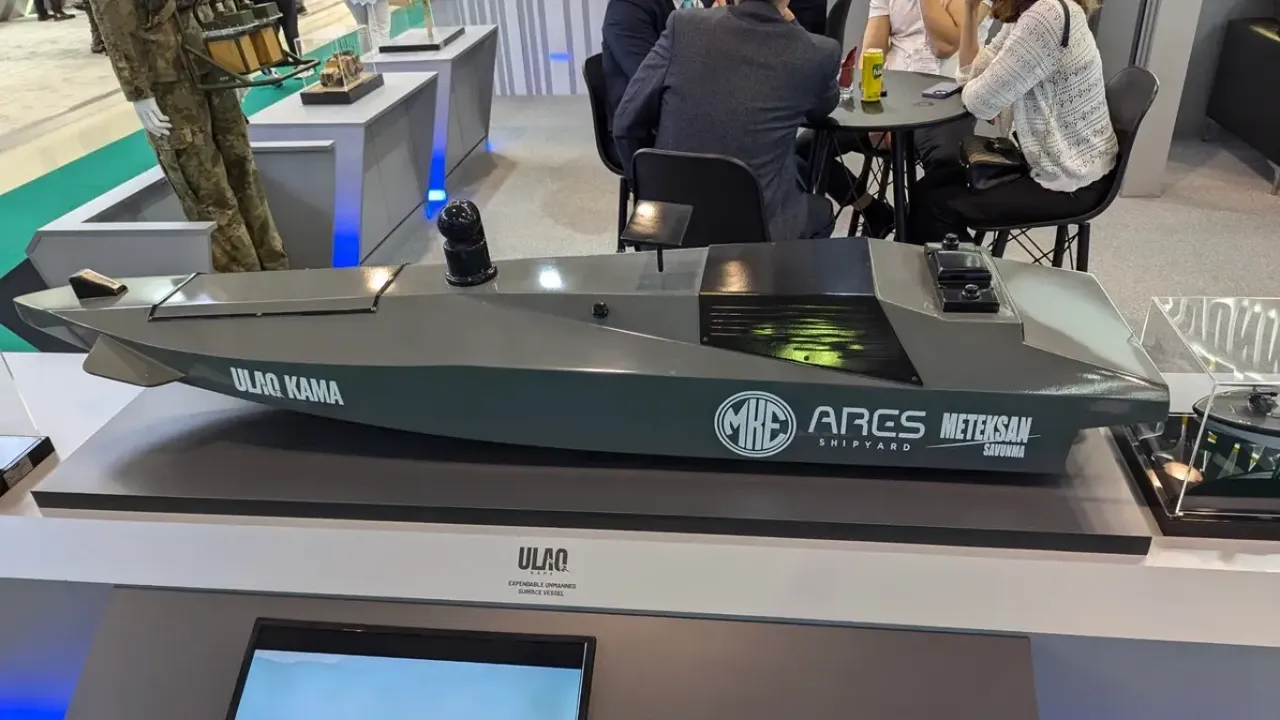

Thus, the dedicated areas for the deployment and reception of MUGEM surface and underwater vehicles are not simply storage spaces, but a link between the ship and a wider range of unmanned assets. The ADVENT command system is designed to provide a common command layer linking these vehicles to the aircraft carrier, manned and unmanned aerial vehicles, and other Turkish warships, enabling the transfer of sensor data and orders between air, surface, and underwater assets. This will significantly enhance the ship's combat capabilities.
Since the carrier's own defense system, as mentioned above, consists of 32 Midlas vertical launchers located in two 16-tube modules, as well as short-range missile and artillery systems designed to protect the ship within its outer defensive lines, the carrier's full security is ensured by escort ships. In the 2026 configuration, the four 25mm Gökdeniz and six 25mm Stop gun mounts used in the 2024 configuration are replaced by three short-range artillery systems, four remotely controlled combat posts, and two air defense missile systems.
Counting individual positions, the current configuration includes 32 VLS cells and nine independent firing positions for close-in or point defense. The sensor mast includes a long-range multi-function Çafrad radar, an LPI radar, an identification friend or foe system, electro-optical guidance, and high-frequency communications. Passive detection is provided by infrared tracking and electronic support systems, allowing target acquisition without relying solely on active radar transmission.
Electronic warfare capabilities include electronic reconnaissance and jamming capabilities, as well as a laser system, providing multiple countermeasure options in the radio frequency and electro-optical bands. Satellite communications utilize the X-, Ku-, and Ka-bands, providing three separate frequency bands for beyond-line-of-sight communications, and the Advent system integrates the carrier's own sensors, weapons, and unmanned systems into the wider naval network.
However, despite all this, 32 vertical launch cells are not enough for a 60,000-ton aircraft carrier to independently provide air defense over a large area during prolonged, high-intensity combat operations.
Thus, MUGEM armament is best thought of as an internal defensive line, while destroyers and frigates, particularly the future TF-2000 air defense destroyers, will be required to provide a larger supply of missiles, wider radar coverage, and additional communication channels around the carrier.
No less attention is paid to the internal organization of the ship.
The maximum number of people on board, 2500, also demonstrates the scale of the internal infrastructure required to operate an aircraft carrier. Previously cited figures of around 800 people referred primarily to the ship's crew, while the total number includes the air wing, support personnel, command staff, medical personnel, mission specialists, and other units. The medical personnel are particularly important: the medical equipment is planned at the Role 2 Enhanced level and will include two operating rooms, two clinics, a dental office, triage areas, intensive care, burn treatment, radiology, an isolation room, 30-bed wards, a laboratory, and a pharmacy.
This allows the aircraft carrier to perform surgical operations, stabilize trauma patients, and provide inpatient treatment at sea, rather than limiting itself to basic first aid and casualty accommodation. Ramps for vehicles and equipment are provided on the stern and starboard sides, providing additional logistical routes for cargo, vehicles, and mission equipment.
In August 2026, Minister Tatlioglu announced that 37 ships were already under construction for the Turkish Navy, and that construction of 10 more would begin within a month, bringing the total number of warships under construction in Turkish shipyards to 47. Turkish shipyards are also building 24 warships for foreign customers, bringing the total number of warships under construction to 71.
The fleet will include the MUGEM, followed by a national fast attack ship, a national mine countermeasure vessel, and the Kocatepe, the first TF-2000 air defense destroyer. The existing surface fleet includes the Ada-class corvettes—TCG Heybeliada, TCG Büyükada, TCG Burgazada, and TCG Kinaliada—while the Istanbul-class frigate program has already built the TCG İstanbul, with TCG İzmir and TCG İzmit under construction.

The Turkish Navy's submarine force is simultaneously transitioning to the Reis-class nuclear-powered attack submarines. The Piri Reis and Murat Reis have already been launched, and the Hizir Reis is preparing for commissioning. At the same time, naval weapons are being introduced: the Atmaca anti-ship missile has replaced the American Harpoon. According to Tatlioglu, approximately a month before his August 2026 announcement, a Turkish submarine launched an Atmaca at a target 190 km away. Additionally, the Turkish Navy has acquired the Akya heavy torpedo and the Malaman smart naval mine.
For MUGEM, these parallel programs have practical implications: an aircraft carrier needs destroyers for air defense, frigates and helicopters for anti-submarine warfare, submarines for underwater patrol, supply ships for autonomy, secure communications links for distributed operations, and its own weapons that can be replenished and maintained without relying entirely on foreign stockpiles.
Thus, the September 2027 launch marks the beginning of the transition from hull construction to systems integration, and its planned delivery in 2032 is tied to Turkey's larger effort to develop the escort ships, submarines, missiles, torpedoes, mines, and unmanned systems needed to make the 60,000-ton carrier fully operational in the navy.
However, the overall positivity should be slightly spoiled by looking at MUGEM from a different angle.
To evaluate the MUGEM in this way, two other well-known ships must be compared: the heavy cruiser Admiral Kuznetsov and the amphibious assault ship Mistral.
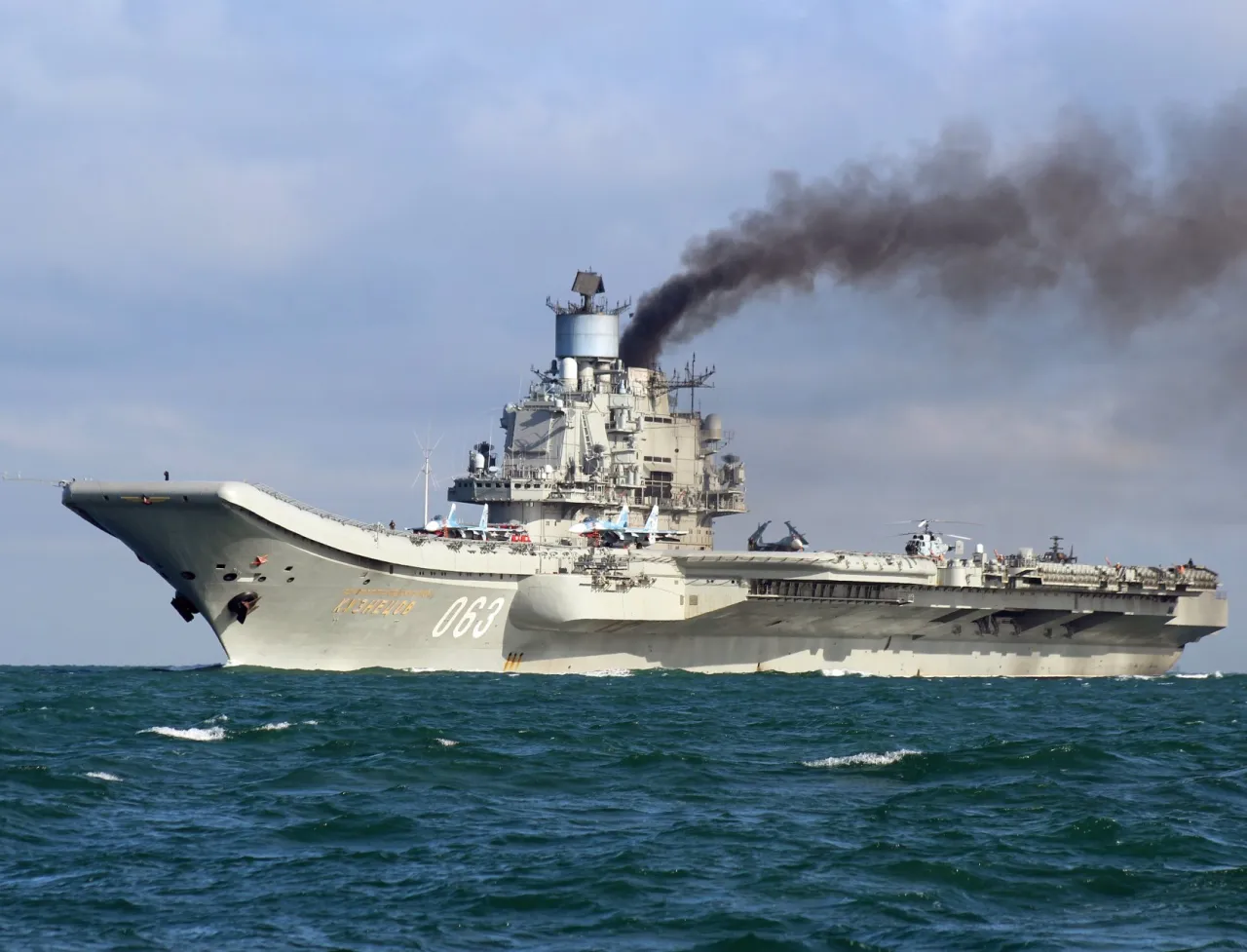

The first one is similar in displacement to MUGEM, but carries more efficient and numerous Defense, both missile and artilleryIn theory, it offers more powerful strike weapons, although the effectiveness of the Granit missiles is currently more than questionable. But most importantly, the Kuznetsov air group consists of standard aircraft and helicopters, comparable in numbers to the MUGEM air group.
This raises the question of effectiveness, doesn't it? Clearly, even with half the payload, as the Su-33 typically flew from the deck, it carries 3200 kg of weapons. That's three times more than any UAV. And this is with the same range, but at supersonic speed.
In other words, the MUGEM is three times less effective than the Admiral Kuznetsov, even if we ignore the fact that the Kuznetsov's strike armament has been inoperative for years. 450 air defense missiles and 5000 shells constituted a very capable defensive line, and the capabilities of the air group, even consisting of frankly outdated aircraft, were superior to an air wing of the most modern UAVs. In theory.
Then the next question arises: what was the same displacement as the Kuznetsov spent on?
And here's where we need to remember the Mistral, which is not only a landing ship but also a command center, a hospital, and so on. LDCs around the world are striving to become truly versatile—capable of delivering troops to the landing point, landing, providing cover fire, evacuating the wounded, and providing them with medical care.
Nothing is known about the ship's amphibious capabilities, but a crew of 2500, of which only 800 are directly involved in ship control, suggests that the 1700 people need to be occupied somehow. It's clear that some of these are pilots and air wing technicians, but the Kuznetsov, with its wing of normal aircraft, has a crew of around 2000. The Turkish ship has more.
This means that a certain number of specialists will be involved in the maintenance and management of marine drones, both surface and underwater. This suggests, first and foremost, that the number of such devices on board MUGEM will be quite substantial, given the sheer number of personnel required.
So what's the end result? A reconnaissance and strike platform with support and command and control capabilities. Both reconnaissance and strike functions will be provided by drones.
The Iranians attempted something similar with their ship, the Shahid Bagheri: a plethora of drones with virtually nothing else. During recent clashes with the US, the Shahid Bagheri failed to make a significant impact. Perhaps the time simply wasn't right.

As for MUGEM, there are questions about where such a ship could be used?
Turkey has only two water areas, the Black Sea and the Mediterranean, in which the country has various interests.
There are also tensions in relations with several countries, but the list is small, and judge for yourself how necessary an aircraft carrier is in potential conflicts.
Greece. "Cozy" relations between Turkey and Greece due to "incorrectly" demarcated borders have been going on for decades, but the last thing needed for a showdown in the Aegean Sea is a ship like MUGEM. Conventional air power is sufficient to keep the countries on their toes, as the distances between the Greek and Turkish coasts range from 60 to 200 km.
Cyprus. There are plenty of regular airfields there, making operations easier.
Kurdistan. Generally, Ankara's biggest problem is the Kurds. This automatically creates problems with both Iran and Iraq. But there's no sea there, meaning an aircraft carrier is unnecessary.
Israel. Yes, there has been, is, and will be tension here. The Turkish Navy has already tested Israel's maritime borders, and there have been various skirmishes between the two countries, but a drone carrier approaching Israel's shores would be very uncomfortable. German submarines and corvettes are not the most convenient adversaries, but the main problem is the Israeli Air Force. Of course, in recent years, Israeli pilots have been increasingly targeting residential buildings in Gaza without encountering resistance, but Turkish ships could also face challenges.
Shall we enter the Black Sea? Bulgaria and Romania are NATO allies. Georgia is not an adversary, and Ukraine is actually friendly. Russia? They don't seem to be enemies either. And then again, the distance from the Turkish coast to the Russian one is, on average, about 300 km.
Frankly speaking, I don’t see any targets for the Turkish navy’s drone unit.
The Mediterranean Sea and beyond? The Red Sea, for example... the Arabian Sea...
There are also no goals or objectives. Even NATO has practically none; the US has all the objectives, and as recent experience has shown, chasing its ships under Houthi missiles and spitting ammunition into the air is a poorly executed task, especially since no one will pay for it. And the Iranian mess has demonstrated that Iran is a real hydra, and for every head cut off, three grow back just as quickly.
And anyway, Turkey has no business quarreling with Iran: they share a border. They could adjust the launchers, and the missiles would fly the 800 km to Ankara much faster than they did to Tel Aviv or Jerusalem. And certainly with no less effect.
Overall, it seems that while MUGEM is being built, headquarters and offices are frantically searching for goals and objectives. And here we have another difficult question: why was it built?
The answer is simple: because they can. They can realize the exorbitant ambitions of both Erdogan and the entire military-industrial complex. The only question is how.
Türkiye has been demonstrating independence for a long time now, and doing so openly, causing minimal positivity on the part of NATO legislators in the area of sales weaponsThe ground forces are 80 percent armed with domestic systems, the navy and air force lag behind, but Ankara is doing everything possible to create its own universal combat helicopter and fighter-bomber.
So, the creation of MUGEM is a demonstration of capabilities. It certainly doesn't seem very serious, but nevertheless, after Turkey's Anadolu UDC, Ankara's "We can" statements will have to be taken, if not entirely seriously, then at least with a grain of salt.

Yes, a drone carrier with 52 UAVs and a displacement of 60,000 tons—that really makes you smile, considering the MUGEM has little use. However, we're not too quick to smile; we just need to consider the scope of what the Turks stand to gain from operating this drone carrier. And that's it:
- operations for the placement, storage, preparation and operation of aircraft on a ship;
- flight operations of deck-based aircraft;
- management, receipt and processing of information during reconnaissance and combat operations, etc.
That is, experience conducting operations not with aircraft, but with UAVs, which are more difficult to control than manned aircraft, especially in emergency situations. Considering that these UAVs are not much smaller than aircraft… And then, perhaps, Turkish aircraft will appear.
It's no secret that Erdogan wants to see Turkey not as a regional player, but as a strategic one, respected by everyone in the region. And, admittedly, he's succeeding. Turkey's army is truly considered the second-largest in NATO, no matter how unpleasant this may be for representatives of France, Germany, and the UK, and its navy is starting to catch up.
And if we remember that Turkey, while not near the Gulf, is not as far away as the European countries that tried to restore order there. And what the European enforcers failed to achieve, resulting in outright disgrace, Erdogan may succeed in achieving. In the long run.
Therefore, work on MUGEM is nothing more than a demonstration of Turkey’s capabilities in general and in the Middle East in particular.
The ship is proving to be more than controversial, but if it really is a technology demonstrator and a huge training ground, why not?
Information