85 years since the Battle of Moscow: Four battles on the way to the capital

On September 30, 1941, the German offensive began on the Bryansk sector of the front, and on October 2, the main forces of Army Group Center advanced on Vyazma. The Battle of Moscow, in its general periodization, lasted until April 20, 1942, but in the fall, its outcome was decided differently: where they would manage to take the line, where reserves would arrive, where Tanks turned off the road under fire artillery.
A major operation is marked on the map by wide arrows. In the combat log, it looks quite different: 11:00 AM, sortie; 18:00 PM, battle on the outskirts of the city; six hours of fire on a destroyed crossing; four hours of burning barriers; two December nights during which units relieve each other near Naro-Fominsk. These entries have no solemn tone. They record the everyday work of the defense: sortie, battle, retreat, and replacement at the firing position.
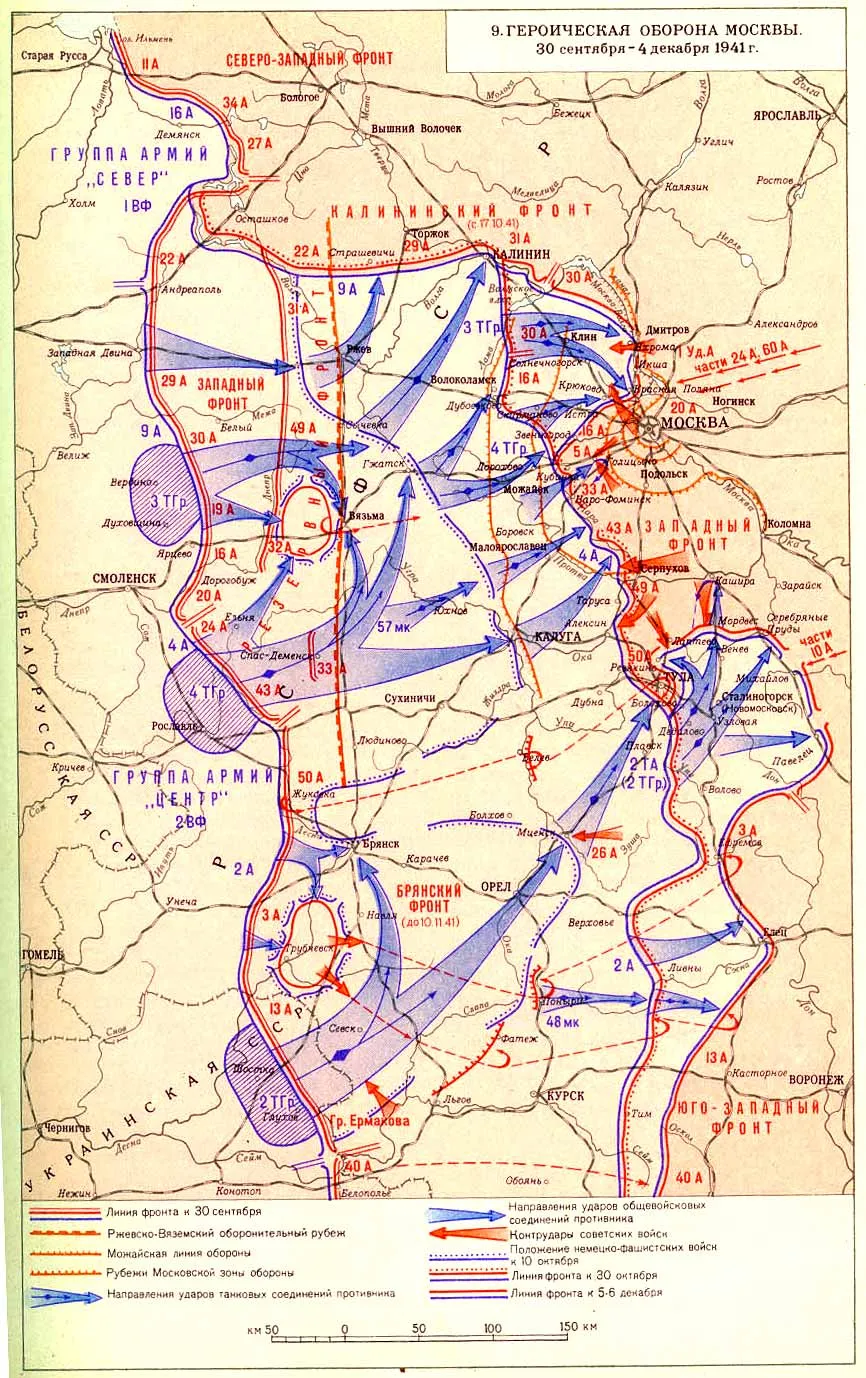
Oryol: Landing in a City We've Already Lost
Orel found itself in the path of the German advance in the first days of October. The advance units of Guderian's 2nd Panzer Group reached the city so quickly that a barrier had to be assembled from units transferred from other areas. One of these was the 201st Airborne Brigade of the 5th Airborne Corps.
On October 3, the brigade's 1st Battalion, commanded by Captain Ivan Surzhik, and a reconnaissance company departed for Orel at 11:00 AM. At 3:00 PM, the second echelon, carrying the 15rd Battalion and a communications company, headed for the Optukha airfield; another group was en route to the Mtsensk area. According to the 5th Airborne Corps' combat diary, a total of approximately 1000 men were deployed: approximately 500 each to the Orel and Optukha airfields, and 75 to Mtsensk. The units landed at different landing sites, and the front moved faster than information was received.
By 18:00 PM, Surzhik's battalion and a reconnaissance company held the southern outskirts of Orel. The commander of the Orel Military District reported that up to 40 tanks and up to two infantry battalions had entered the city. The paratroopers had no artillery or anti-tank weapons. At 19:00 PM, the group withdrew.
The hour of battle. According to a report from the regimental commissar of the 201st Brigade, Sergei Kireyev, on October 13, 634 men did not return from Orel. Several hundred of the thousands transferred—in a single hour, with no way to stop what they were sent against. Orel was lost that same day.
Yakhroma: An armored train that became a battery
By the end of November, Moscow was threatened on its northern flank. Army Group Center outflanked the Soviet lines on both sides, seeking to close the encirclement east of the city. Here, the 7th Panzer Division reached the Moscow-Volga Canal near Yakhroma. On the morning of November 28, the Germans captured the bridge and crossed to the east bank. By seven o'clock in the morning, they had consolidated their position.

Damaged Soviet armored train No. 73 (BEPO No. 73) of the 73rd regiment of the NKVD railway protection troops on the Svisloch-Tachanka section in the summer of 1941
NKVD armored train No. 73 set out for the Dmitrov-Yakhroma stretch. Its mission was to disrupt the crossing with fire. Senior Lieutenant Fyodor Malyshev commanded the train. The armored train carried four 76-mm guns, Maxim machine guns, Degtyarev machine guns, and an anti-aircraft platoon. This was a familiar set of weapons for railway warfare; the situation in which it had to be used was unusual.
The armored train was split into two parts. One section was commanded by Senior Lieutenant Alexander Zhukov, the other, with the armored locomotive, by Senior Lieutenant Timofey Skolyshev. The track had been destroyed in the battle, a freight train had derailed nearby, and the armored locomotive had been damaged. Maneuverability—the armored train's main advantage—was disappearing before our eyes.
Malyshev's report of November 28th described a six-hour battle. The commander requested instructions on how to use the armored train further, proposing to leave it near the damaged section as a stationary battery. This formula encapsulated the entire situation of the day: the train, designed to move along the front, was transformed into a firing point confined to a single section of track.
Later accounts of the battle preserved another detail. Dmitrov station engineer Alexei Doronin brought a working locomotive to the armored train, and switchwoman Maria Litnevskaya helped change the points. The train continued to operate, even though the railway itself was no longer a reliable route.
On November 29, the bridgehead on the eastern bank of the canal was eliminated by a counterattack by the 1st Shock Army. The bridge was later blown up. The armored train was sent to Yaroslavl for repairs. Left behind were a burnt-out locomotive, a destroyed railway line, and a report written when the outcome of the battle was still uncertain.

FOG - high-explosive flamethrower
Akulovo: A Fire That Wasn't Lighted
In early December 1941, German units broke through to Akulov in the Naro-Fominsk sector. The village was located near the Minsk Highway, one of the roads to Moscow. The 32nd Rifle Division of the 5th Army, along with artillery, sappers, and the 26th Separate High-Explosive Flamethrower Company, held the defense here.
FOG - high explosive flamethrower - was weapons Immobile. It was buried in the ground, camouflaged, connected to a demolition net, and waited for tanks and infantry to approach the required range. Such a flamethrower could not accompany an attack and could not change its location. It was designed for a single shot at a chosen point.
The shot failed. According to the 32nd Division headquarters documents, the barrages weren't saturated with fuel and lubricants—the flamethrowers weren't properly fueled. German sappers cut passages in the obstacles, and tanks and infantry passed through what should have been burning. By 15:00 PM, Akulovo was captured.
The battle lasted less than an hour. The 1st and 3rd Batteries of the 133rd Light Artillery Regiment fought to the last shell at the village; the Germans sent a sabotage group in Red Army uniforms into their rear, but the batteries did not retreat.
On December 8, the Western Front command summarized the initial results of the use of barriers on the 5th Army front: 15 bottle fields, containing up to 70 Molotov cocktails. This wasn't the ploy of a single village, but an attempt to systematically combine fire, mines, anti-tank guns, and infantry. A December 5 report from the 5th Army's chemical service reported that 27 houses had burned down while constructing barriers in Akulov—without the help of those who had hoped to hold the road with fire.
Yushkovo and Burtsevo: a counterattack from different parts
By December 2, the situation in the Naro-Fominsk sector remained dire. German units were attempting to break through to the Minsk Highway and the Nara River. Their stronghold in the Yushkovo and Petrovskoye area was the 478th Infantry Regiment of the 258th Infantry Division, along with its armored vehicles.
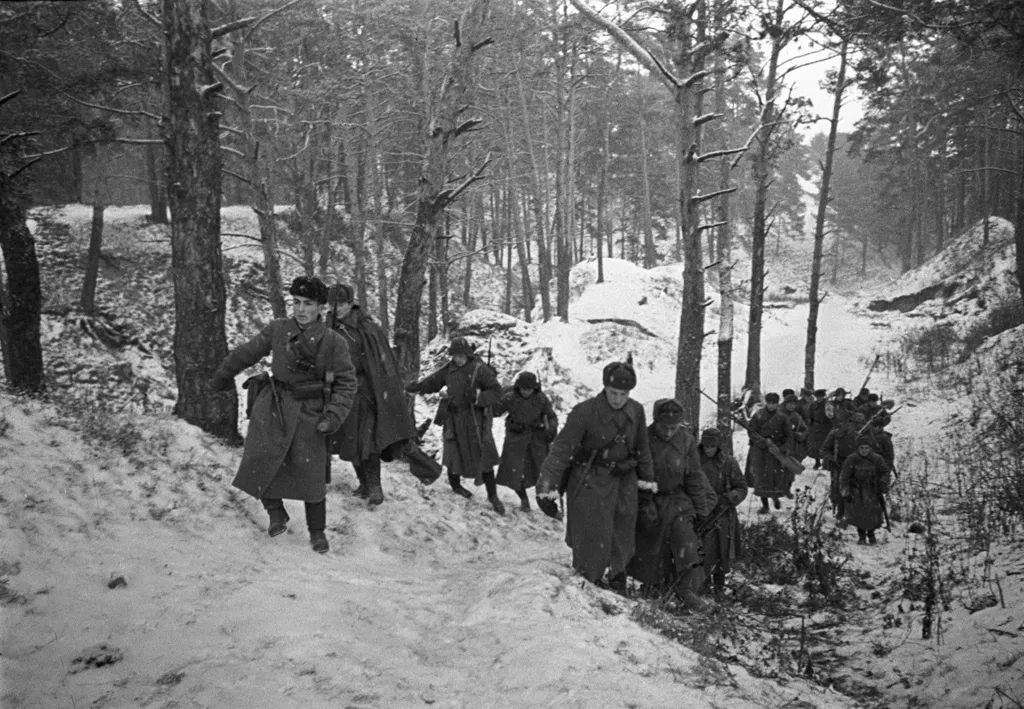
Soviet armor-piercing artillerymen take up a firing position near Zvenigorod, early December 1941.
The Soviet counterattack developed gradually. On December 2, the 20th Tank Brigade of the 5th Army was operating near Yushkovo. According to Western Front headquarters, five to six of the brigade's tanks engaged in this sector. This number seems small for a major battle, but such groups were used to plug gaps in December 1941: several vehicles, infantry, artillery, and then a new attack from a different location.
By order of the Western Front, command of the counterattack was entrusted to Mikhail Yefremov, commander of the 33rd Army. Colonel Mikhail Safir's group, the 136th and 140th Separate Tank Battalions, entered the Petrovskoye and Burtsev area. The fighting on December 2 and 3 took place in adjacent sectors, with the units relieving and supporting each other. By December 4–5, the German breakthrough had been eliminated.
The 136th Separate Tank Battalion had only just completed its formation by December 1. It consisted of 10 T-34s, 10 T-60s, nine British Valentines, and three Matildas. The British tanks arrived in Gorky on November 10, and the crews trained them at the front, at the beginning of winter.
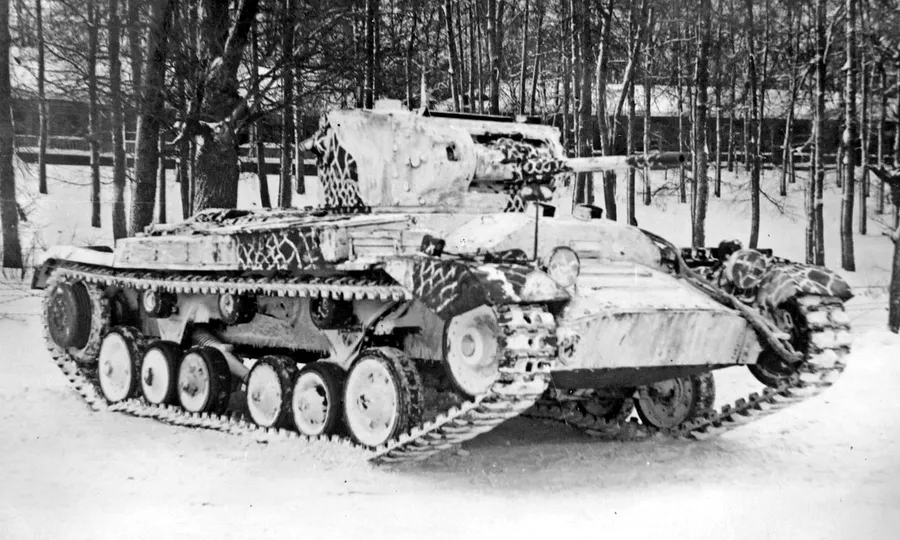
A Valentine in the characteristic camouflage of the winter of 1941-1942. From a distance, the white paint, applied in a mesh pattern over the base protective color, appeared gray and broke up the silhouette of the vehicle.
This fleet looked motley even by 1941 standards: Soviet T-34s and T-60s next to British vehicles, which required special maintenance, winter fuel, and crews who had to master unfamiliar equipment right on the front lines. The Valentine was renowned for its cross-country ability—according to a Soviet report, it could navigate through snow up to 80 cm deep, while the T-60s and T-40s sank in just 30–40 cm. The exact Valentines and Matildas that served Yushkov are not documented.
According to the 258th Division's report, the German side lost 170 killed, 577 wounded, and 148 missing in those battles. Over the course of two days, the regiment lost nearly nine hundred men and ceased to be the mainstay of the breakthrough.
The success of the counterattack was determined by its sequence. The tank brigade struck at Yushkovo, then the battalions of Safir's group joined in, and the infantry and artillery consolidated the result. In December 1941, troops often operated like this: with multiple strikes until the enemy lost the opportunity to exploit a breakthrough.
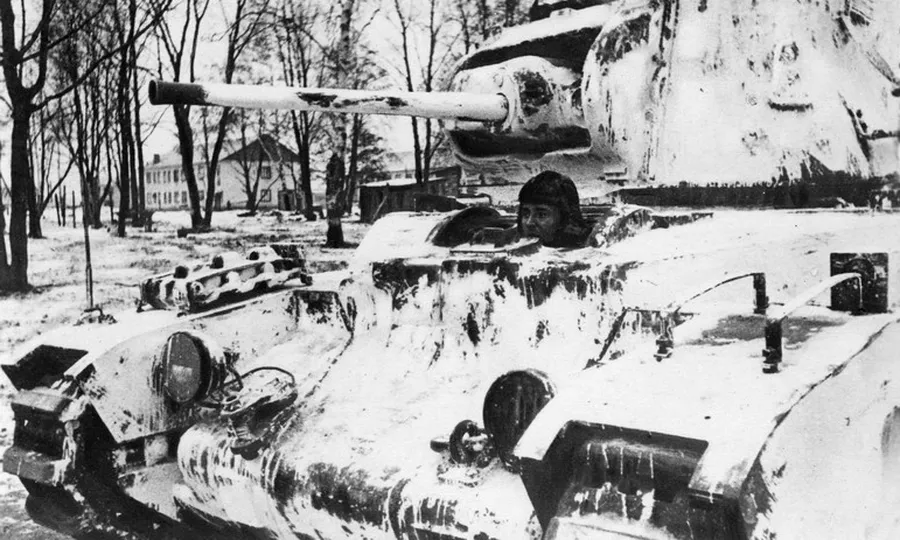
Matilda in winter camouflage
Four sites of one campaign
Orel, Yakhroma, Akulovo, and Yushkovo lie on different fronts. The first battle dates back to the October struggle on the Orel-Bryansk Front, the second to the northern approaches to Moscow, and the last two to the crisis near Naro-Fominsk in early December. They are connected not by a single operation in the narrow sense, nor by a single direct line of command.
In all four cases, Soviet troops delayed the enemy in localized areas. The time gained at Orel, the canal, the village, or on the way to the Minsk Highway could have given neighboring units the opportunity to take up positions, bring up guns, prepare a counterattack, or close a gap.
History The Battle of Moscow often begins with large names—Vyazma, Mozhaisk, Tula, Kalinin, Naro-Fominsk. Beyond them, small dots appear on the map: an airfield, a railway crossing, the northern edge of a village, a field between two villages. In combat documents, these dots don't look small. There, they are measured in hours, roads, shells, burning houses, and the order awaited after the battle.
Sources and Literature
- Babushkin A. V. Soviet flamethrowers in the battles near Kubinka // Military History Journal. 1968. No. 8. P. 111–114.
- Isaev A.V. Boilers of the 41st. M.: Yauza; Eksmo, 2005.
- Skryuchenkova I. Yu. Year 1941, year 1943 // Local history notes. Issue 13. Orel: Kartush, 2020. Pp. 21–31.
- Shaposhnikov B. M. (ed.). Battle for Moscow. Moscow operation of the Western Front from November 16, 1941 to January 31, 1942. Moscow: AST, 2006.
- Hill A. British 'Lend-Lease' Aid to the USSR and the Battle of Moscow in the Light of Recent Archival Releases // Lend-Lease and Arctic Convoys: From Regional Cooperation to Global Coalition / compiled and scientific ed. M. N. Suprun. Arkhangelsk: NArFU, 2021. pp. 48–75.
Makar Istomin
Information