Vitaly Ginzburg: The Idea, the Report, and the Work of a Large Machine
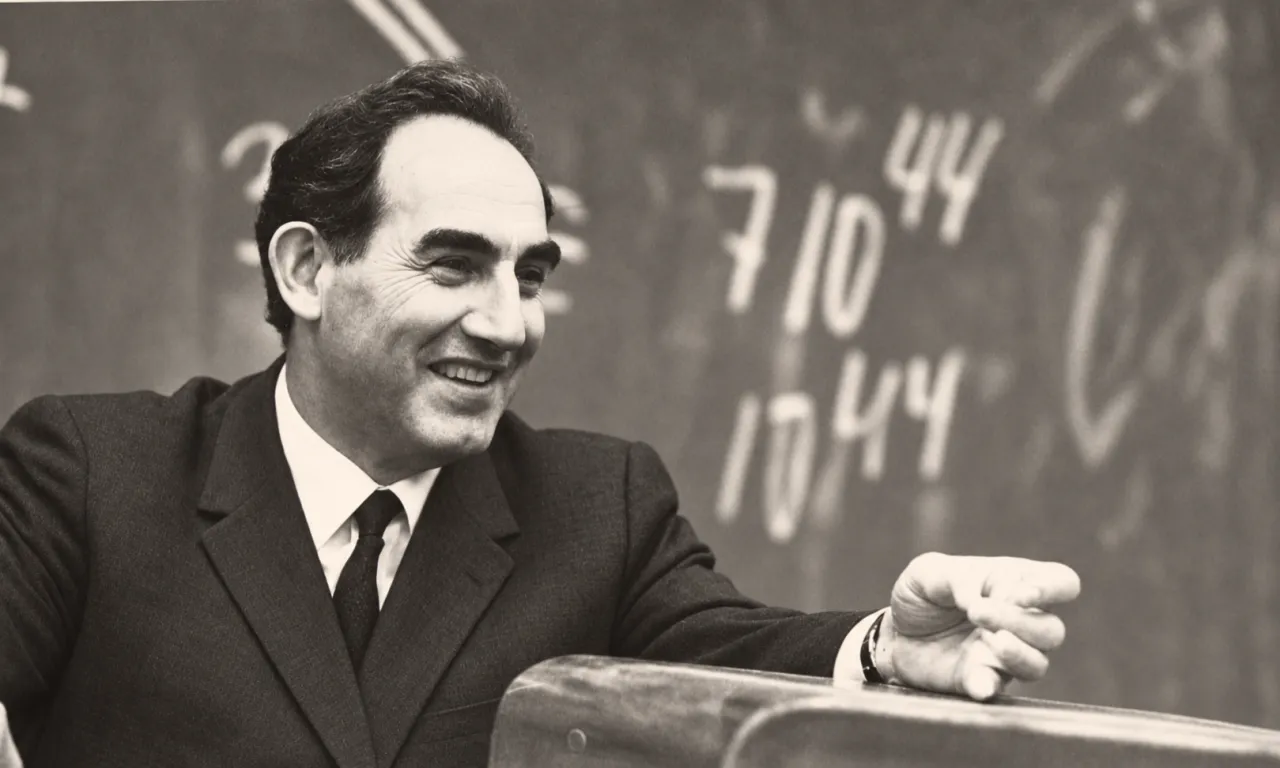
On the 110th anniversary of the birth of the theoretical physicist who proposed the fuel for the Soviet thermonuclear project—the "sloika"—and where one person's idea ends and another's work begins. On October 4, 2026, Vitaly Lazarevich Ginzburg would have turned 110 years old—according to the New Style, he was born in Moscow on October 4, 1916.
Kazan, 1942–1943: An antenna from a German aircraft
Small loop antennas with a layered ferromagnetic core were found on downed German aircraft. The oscillation laboratory at the Lebedev Physical Institute (FIAN), evacuated to Kazan, was asked to investigate the device and create a domestic equivalent. An obstacle arose immediately: the manufacturing technology for the ferrite used in the captured aircraft remained unknown. Nikolai Papaleksi proposed testing layered iron and permalloy cores. The theory for these was developed by Igor Tamm and Vitaly Ginzburg, the latter having just defended his doctoral dissertation. Under the supervision of Sergei Rytov, experimental work succeeded in producing a working prototype. In May 1943, the materials were handed over to military customers, and the prototype was sent for flight testing.
Whether the model was assigned to a combat unit or participated in combat is unclear from available documents. The trophy required theory; two physicists developed the theory, and then the work continued without them.
Summer 1948: A Government Assignment and a Closed Door
On June 10, 1948, a government decree instructed the Lebedev Physical Institute (FIAN) to create Tamm's group to develop a theory of deuterium combustion based on the instructions of Laboratory No. 2. In fact, the group verified and refined the calculations of Zeldovich's group. By July 15, the institute's director, Sergei Vavilov, sent Mikhail Pervukhin a plan for the group's work. This document has been preserved in the Archives of the President of the Russian Federation.
Sakharov recounted this in his memoirs: Tamm left two young colleagues after the seminar and informed them of a government assignment. Ginzburg is not mentioned in this scene—he joined the group separately, as a full member. The group was assigned a support role: to calculate for Zeldovich's group. The group's junior status didn't prevent them from doubting Zeldovich's calculations.
Sakharov took advantage of this freedom two months later, proposing a fundamentally different—layered—charge design. Ginzburg added what was missing for practical implementation.
Late 1948 – Early 1949: Three Reports and One Idea
Three dated documents stored in the VNIIEF archive document Ginzburg's exact proposal. The first two, dated November 25 and December 2, 1948, are devoted to deuterium detonation. The third, dated March 3, 1949, contains a section titled "Use of Li⁶D in 'Sloika'"—the first available text where the proposal is formulated directly and by name using a specific compound.
According to historian Gennady Gorelik's reconstruction, the first mention of lithium dates back to approximately November 20, 1948—meaning the idea could have arisen during work on the first report, although the full texts of the first two reports were not published publicly.
The idea was this. Sakharov's layered design required finding a thermonuclear fuel suitable for a practical device. Deuterium, in its gaseous or liquid state, required cryogenic containment and significant storage volumes, making the device difficult to implement. Lithium-6 deuteride (Li⁶D) is a solid under normal conditions, which can be processed and layered without specialized cooling equipment.
In the fall of 1948, Ginzburg saw the primary advantage as the additional energy release—that is, energy beyond that provided by deuterium itself. The detailed mechanism was formulated by March 1949: neutrons convert lithium-6 into tritium, which then reacts with deuterium. This chain provided the technological path from theoretical design to product.
Khariton sent a letter to the Lebedev Physical Institute (FIAN) with preliminary experimental data; the sheet was marked "For Cde. Sakharov's review" by Tamm and "Reviewed 7/V-49" in Sakharov's handwriting. Ginzburg was not shown the sheet; by that time, the necessary data had been published by an American journal. Physical Review. They showed that lithium-6 deuteride turned out to be an incomparably better thermonuclear explosive than was initially assumed.
In a later interview, Ginzburg linked the birth of the idea to reading this issue. Physical Review "in early 1949." But the paper by Egon Bretscher and Arthur French he was referring to was published on April 15, 1949—while his own reports on the detonation of deuterium are dated November–December 1948, and the March paper with the section on lithium-6 deuteride was dated in the spring of that same year. Apparently, two different events were conflated in his memory: the initial proposal and the moment when its full value became clear—from other people's experimental data.
1950–1953: The Big Machine at Work
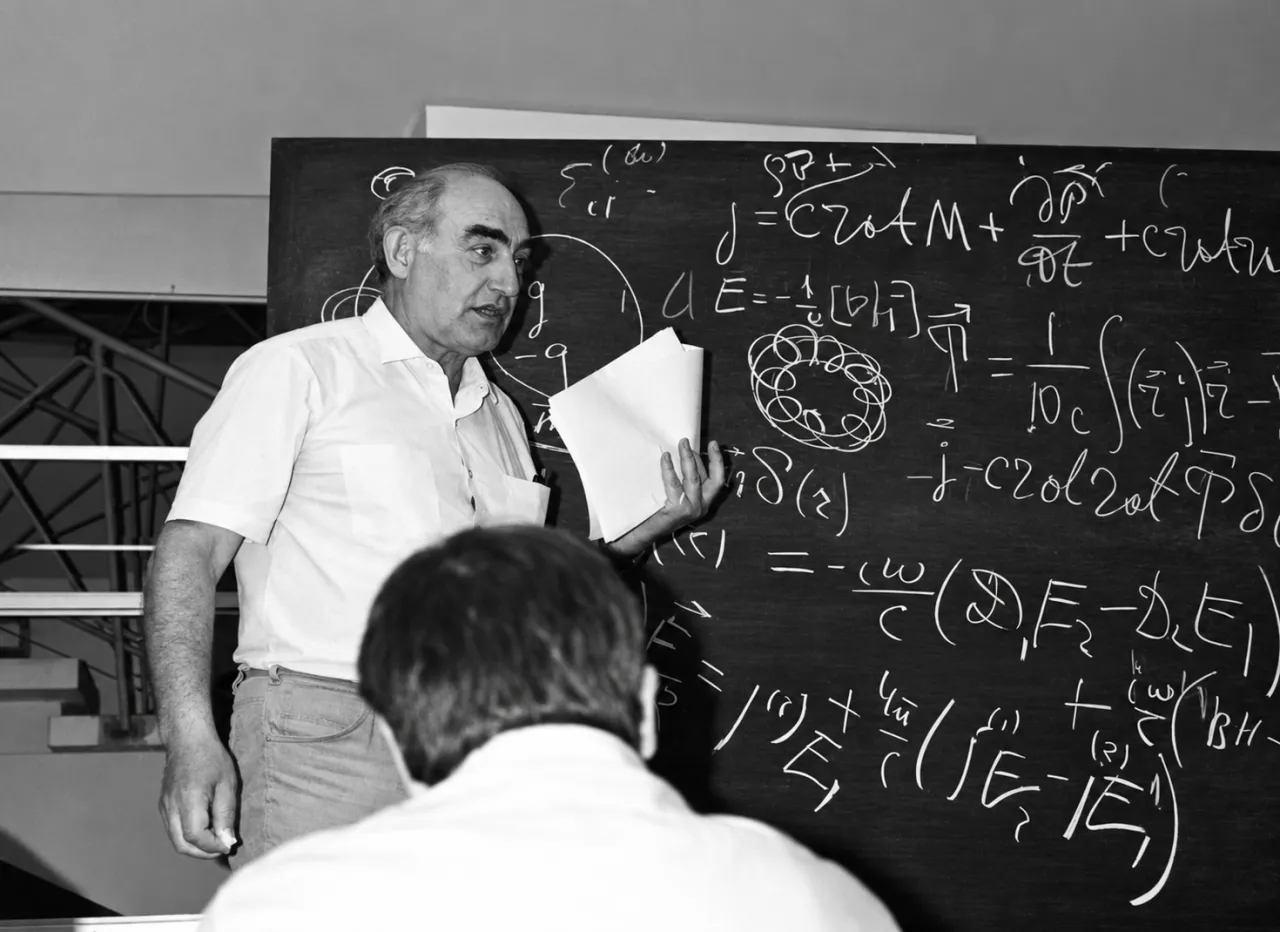
In 1950, Tamm and Sakharov transferred to a closed facility—KB-11 in Sarov, where Yuli Khariton oversaw the immediate development. Ginzburg remained in Moscow. In a 2003 interview, he suggested that his perceived political unreliability—due to his wife's exile—was the reason. No official document explaining the reason for the non-transfer has been found.
In Moscow, he led a small support team, received assignments, and received visiting colleagues from Sarov. Not transferring to Sarov did not mean he was removed from the project—nor did he become the chief designer of the product.
Between the report and the working charge lay a separate path. Zeldovich, the calculation teams, mathematicians, engineers, and component manufacturers solved problems that didn't follow automatically from the fuel concept itself. The charge used lithium-6 deuteride and pre-prepared tritium; the first Soviet charge without tritium, the RDS-27, was tested separately, later.
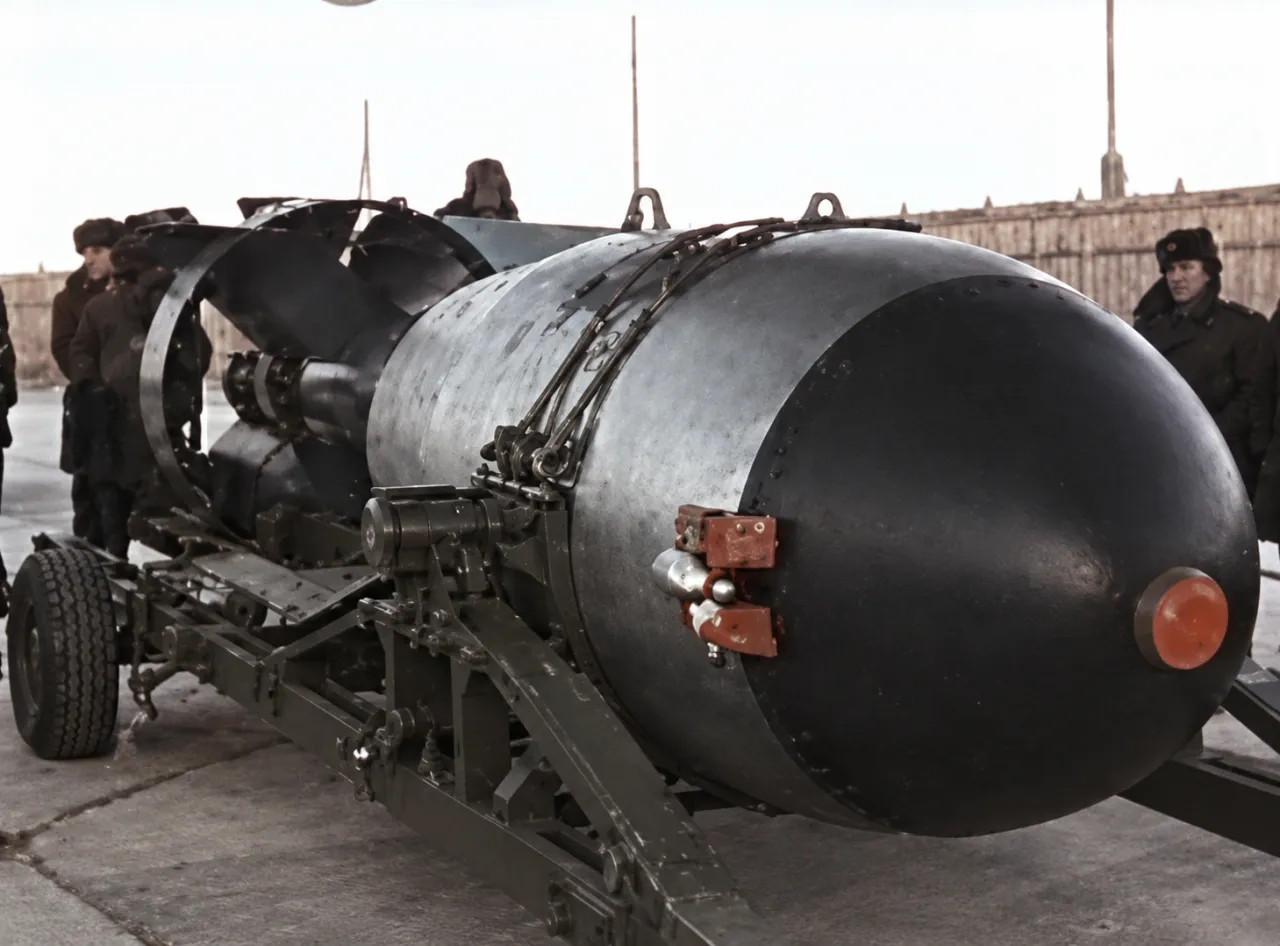
On August 12, 1953, at 7:30 AM, an RDS-6s detonated at the Semipalatinsk test site. The measured yield was approximately 400 kt. One observer recorded a flash seen from an airfield 65 km from the test site; this observer's name was not included in the printed reports. The test summary report was signed on September 9, 1953.
1955: RDS-37 examination
In 1955, Ginzburg joined Tamm's expert commission, which was tasked with reviewing a fundamentally different design: the two-stage RDS-37 charge, based on the concept of radiation impregnation. The authors of the new principle were Sakharov and Zeldovich; Khariton was the development manager at KB-11. The commission recommended conducting a field test, which took place on November 22, 1955.
In a letter from the project's leaders dated October 5, 1955, Ginzburg was named among the experts—while the new principle was attributed to Sakharov and Zeldovich, and the engineering implementation to the KB-11 team under Khariton. In a 2011 essay, he recalled the security strip during the approach to Sarov and a meeting with old colleagues Zuckerman and Altshuler. Regarding his own role, he added bluntly: "I was of no use to the commission." This is his own assessment, not a conclusion drawn from the documents.
Parallel line
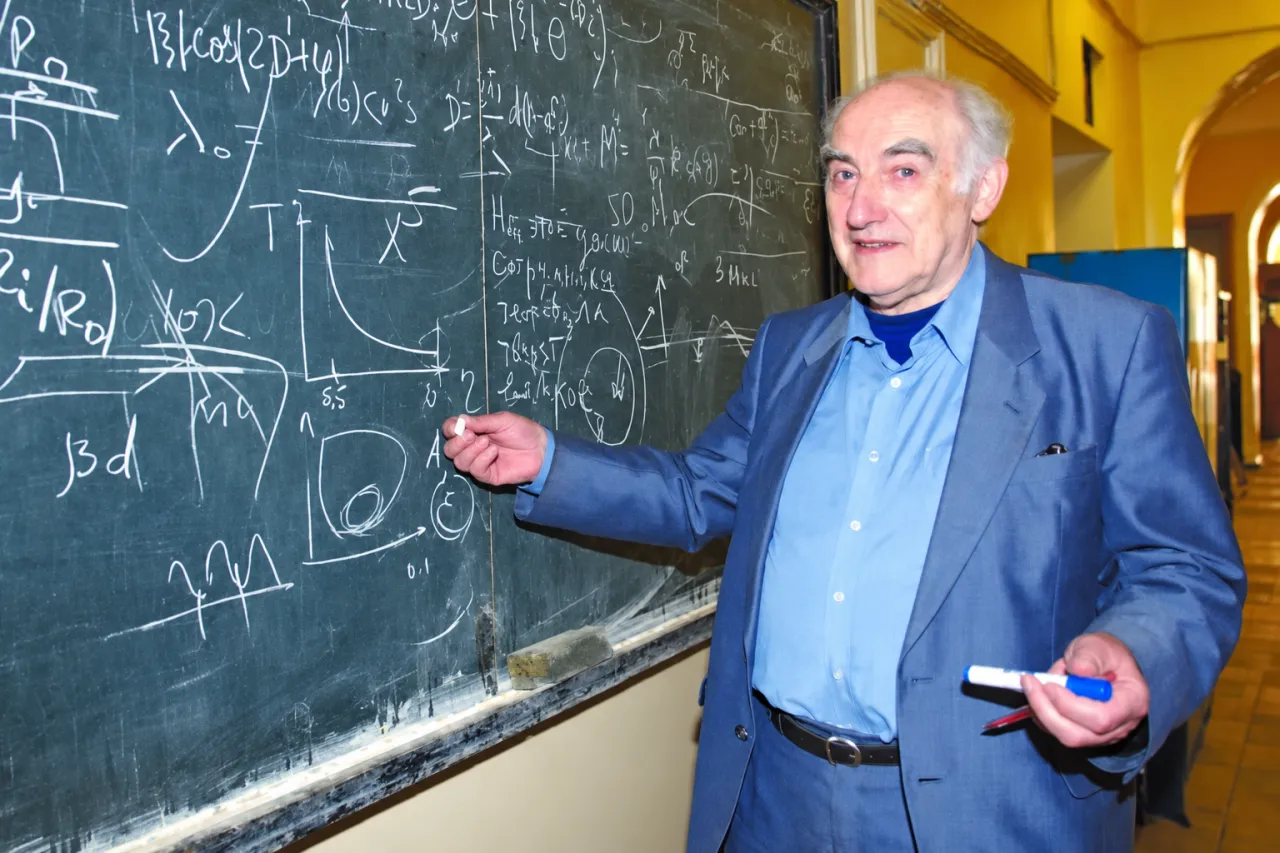
Ginzburg is remembered not only in connection with weaponsDuring the Kazan evacuation, unloading logs from barges with his colleagues and returning to the room where buckets of water froze in the mornings, he thought about superconductivity. The theory of superconductivity, developed jointly with Landau, became one of the works for which Ginzburg shared the 2003 Nobel Prize in Physics; the overall award recognized the three laureates' contributions to the theory of superconductors and superfluids. This award had no connection to weapons research.
The fuel concept—recorded in reports from late 1948 and expanded upon in a March 1949 document—was incorporated into the product tested in 1953 as one of its components. The trophy demanded a theory; the theory was developed, but the work continued without it.
Sources of
- G. Gorelik. “Lidochka Ginzburg” and other thermonuclear ideas // Science and Life. 2010. No. 3. P. 32–37.
- V. I. Ritus. V. L. Ginzburg and the Atomic Project // Advances in Physical Sciences. 2017. T. 187. pp. 444–449.
- The USSR Atomic Project: Documents and Materials. Vol. III, Book 1–2. Moscow; Sarov: Nauka, Fizmatlit, RFNC-VNIIEF, 2008–2009.
- V. L. Ginzburg. In Memory of Lev Altshuler // Extreme States of Lev Altshuler. Moscow: Fizmatlit, 2011. Pp. 150–154.
- I. A. Andryushin, A. K. Chernyshev, Yu. A. Yudin. Taming the Core. Sarov; Saransk, 2003.
Information