Why does China need so many submarines?
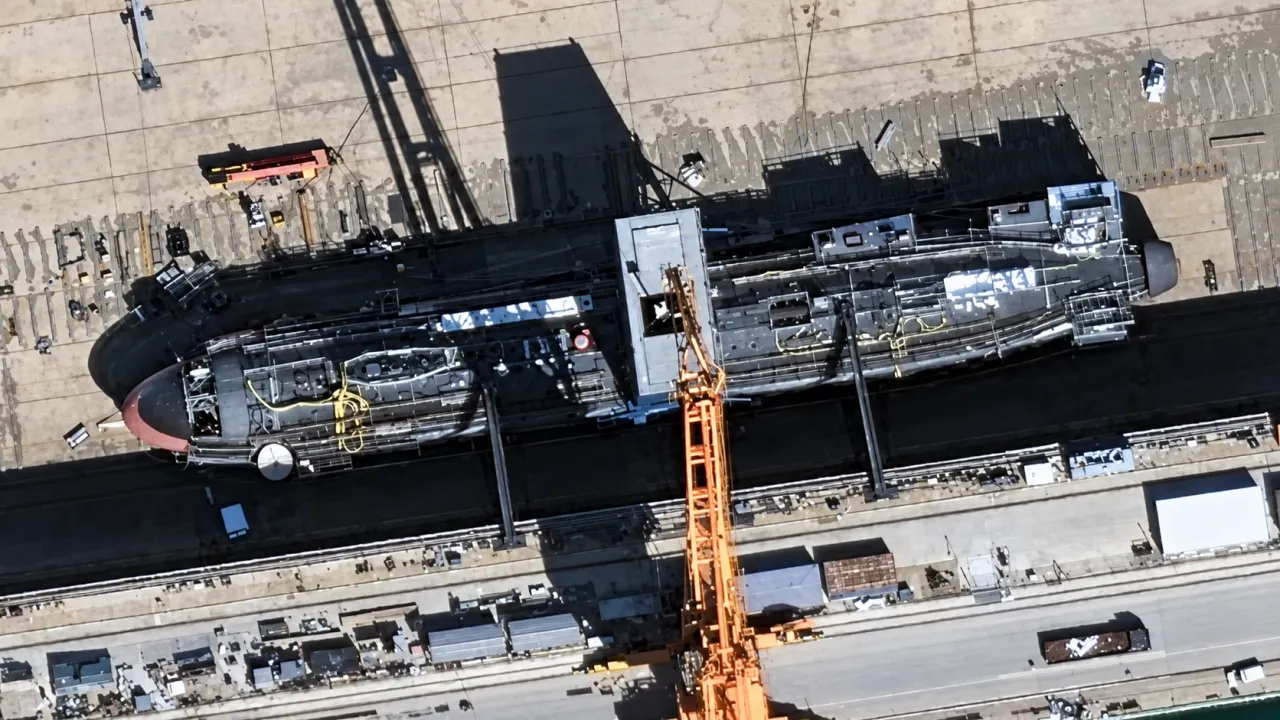
Recent satellite images of a shipyard in northeastern China offer new insights into the country's next-generation submarine development. The images, in particular, reveal a waterjet propulsion system and other features that are worth examining in what is commonly referred to as a new class of nuclear attack submarines, offering insight into the direction the PLA Navy is heading in its development.
Vantor released a new image of a submarine built at the Bohai Shipyard in Huludao, taken on September 18. Jane's reported on the submarine based on a separate Vantor image from September 1. The publication also referred to the submarine as a "Type 095"—a widely used, but unofficial, designation. The topic of Chinese nuclear submarines is a hot topic among American readers, so it's clear the submarine needed a name.
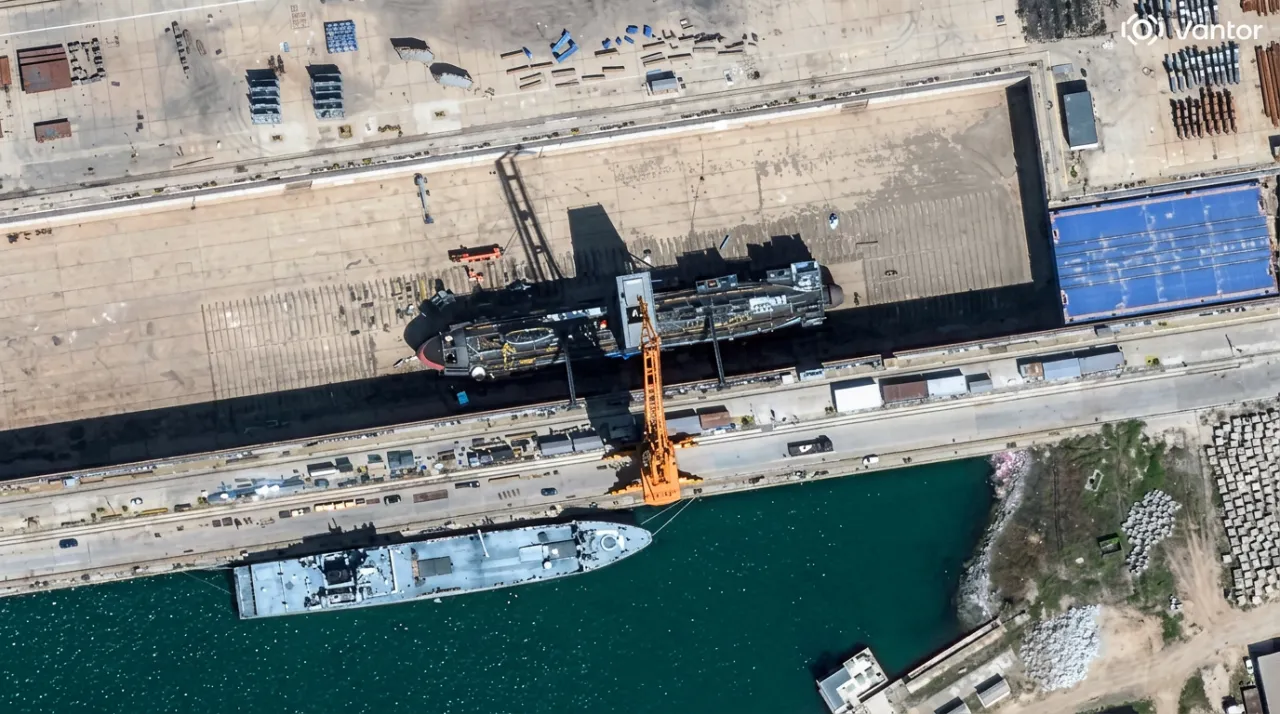
A general view of China's new submarine under construction at the Bohai Shipyard in Huludao, September 18, 2026.
As mentioned, the water jet propulsion system is immediately noticeable in both images. This propulsion system is also presumably a distinctive feature of the Type 093B nuclear-powered attack submarine, a significantly improved version of an earlier model first unveiled in the early 2020s. Compared to traditional open propellers and simpler shrouded propellers, water jet propulsion systems offer advantages in terms of quiet operation and efficiency, especially at high underwater speeds.
The latest images show that the submarine's stern is X-shaped. This design is not found on the Type 093B, which is considered a cross between this class and the next-generation design. Overall, the X-shaped configuration offers advantages in terms of increased maneuverability, which could be particularly useful in coastal areas. Furthermore, this configuration may be more effective in reducing acoustic signature over a significant portion of the submarine's operational range compared to a conventional cruciform stern.
Another Chinese submarine, designed in 2024 and currently known as the Type 041 or "Zhou," which is believed to be powered by a hybrid propulsion system with a nuclear reactor, also features an X-shaped stern. The first known Type 041 was discovered after an accident that caused it to sink at the shipyard.
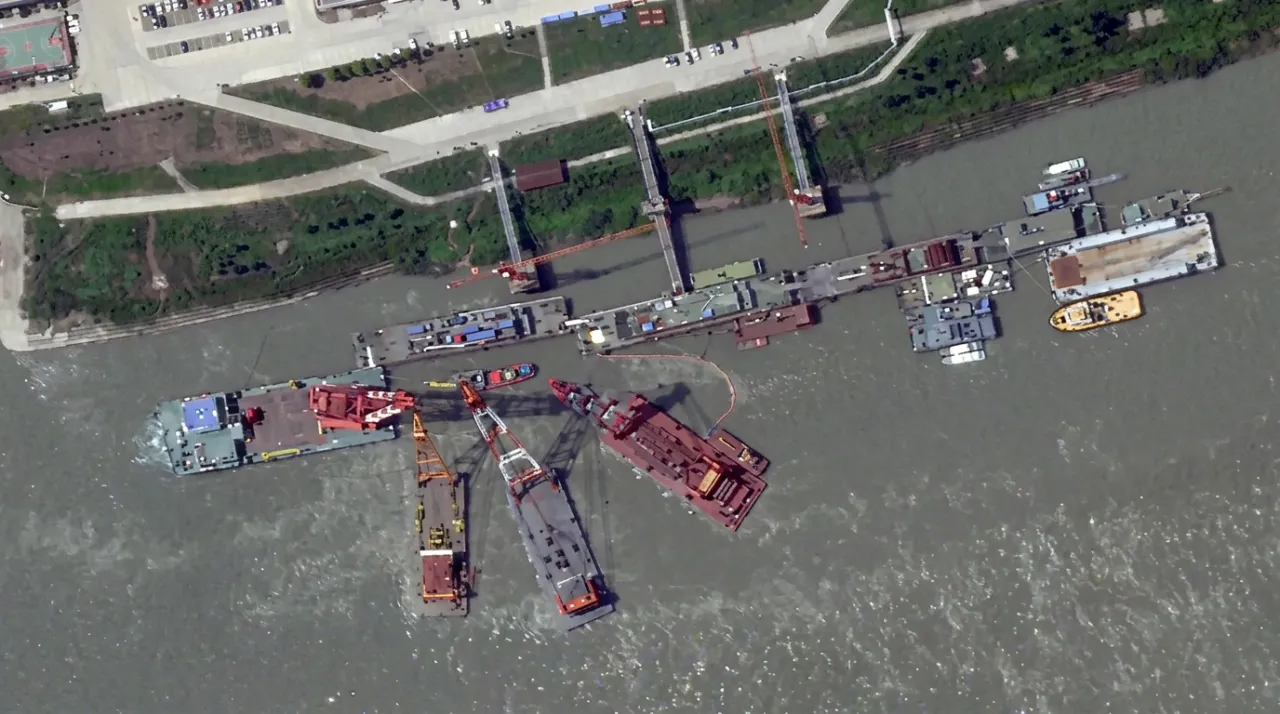
Cranes surround a Type 041 submarine after it sank at China's Wuchang shipyard in 2024.
The X-shaped stern is also characteristic of another new class of submarines that arrived at the JN (Jiangnan) shipyard in Shanghai earlier this year.
Initial reports suggested the design lacked a traditional sail. However, it has been confirmed that it does have a sail, but it is very small compared to the boat's overall dimensions. Shorter sails can provide high performance and other benefits, but they have their drawbacks.
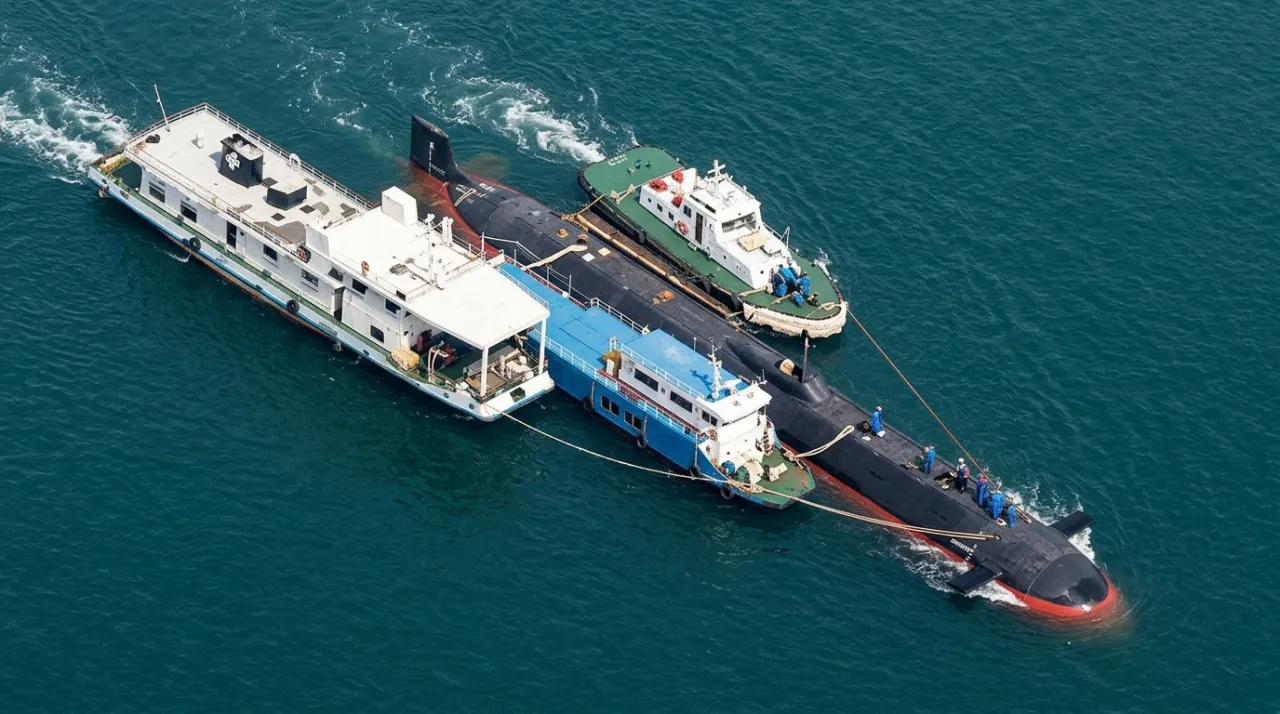
Some experts have concluded that such a boat could be unmanned, and the shorter retractable elements concealed by the sail are proof of this: the boat doesn't need optical periscopes or cameras, which must be raised as high as possible above the water to increase the viewing range. The antenna simply needs to be above the water's surface to receive the necessary information from the same satellites.
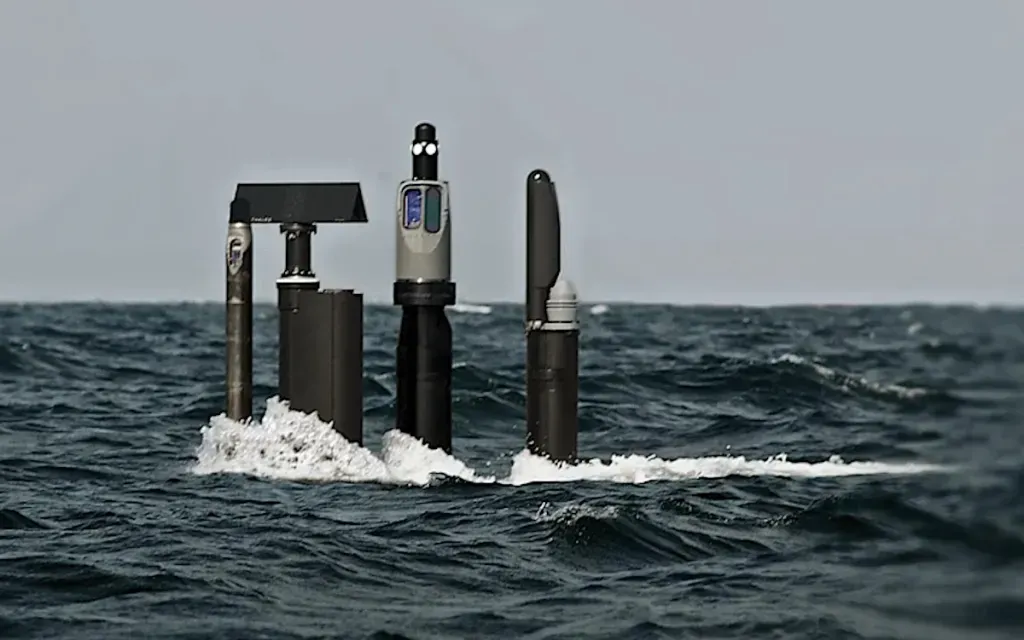
The image of the submarine obtained by Janes also clearly shows an open rectangular section at the stern. A September 18 image from Vantor shows a structure installed over this part of the submarine, concealing ongoing work.
The Type 095 is expected to be fitted with some sort of vertical launch system capable of accepting a variety of anti-ship and strike missiles. missiles, and possibly hypersonic ones as well. For this reason, the Type 095 is sometimes referred to as a guided missile submarine, or SSGN. The open platform visible in the September 1 image may be the mounting location for the vertical launch system. It may also provide access to the reactor compartment.
Interestingly, the September 18 image also shows at least two relatively large circular holes located next to each other on the submarine's bow, just ahead of the "sail." The purpose of these holes is not immediately clear. It's possible they could be used for vertical launch of munitions or other payloads, such as an unmanned vehicle.
By comparison, American Virginia-class nuclear attack submarines, starting with the Block III version, have two large-diameter launch tubes (VPTs), located one in front of the other in the bow, in front of the periscopes. Meanwhile, the openings on the Huludao submarine are located very close to the main sonar system, and they may also be related to this design feature.
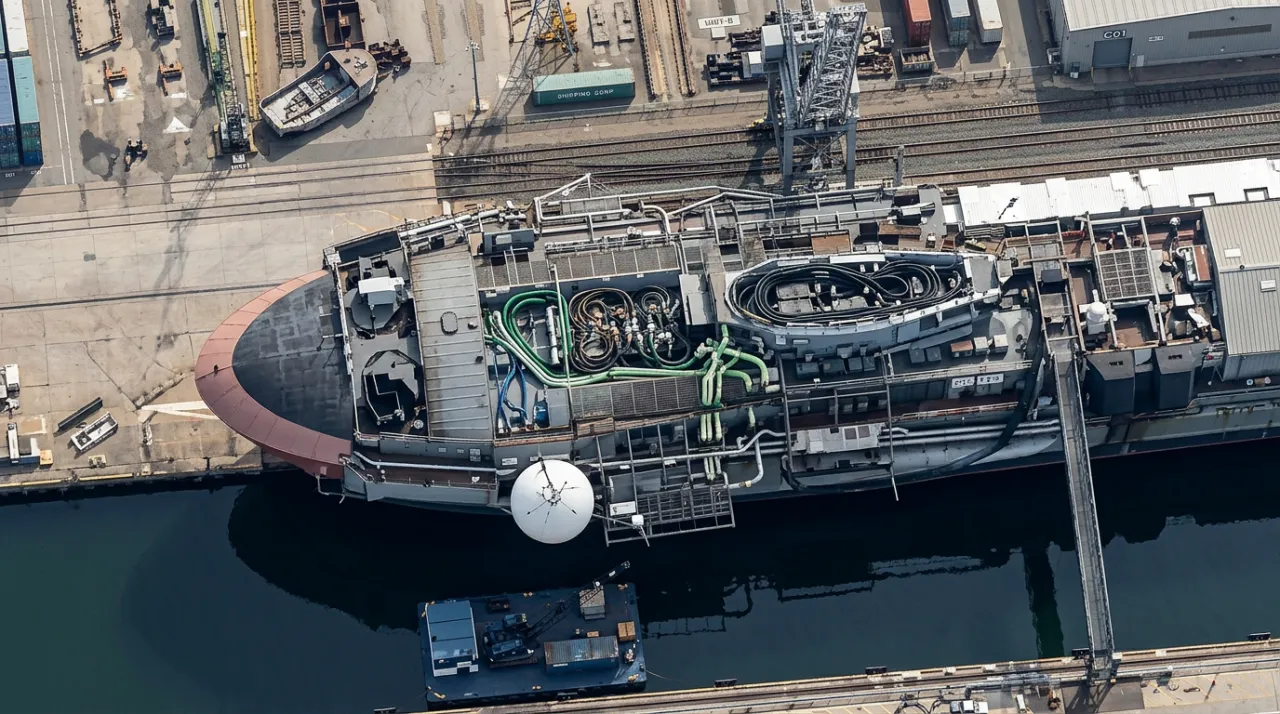
A close-up of the bow of a submarine under construction in Huludao, photographed September 18, 2026.
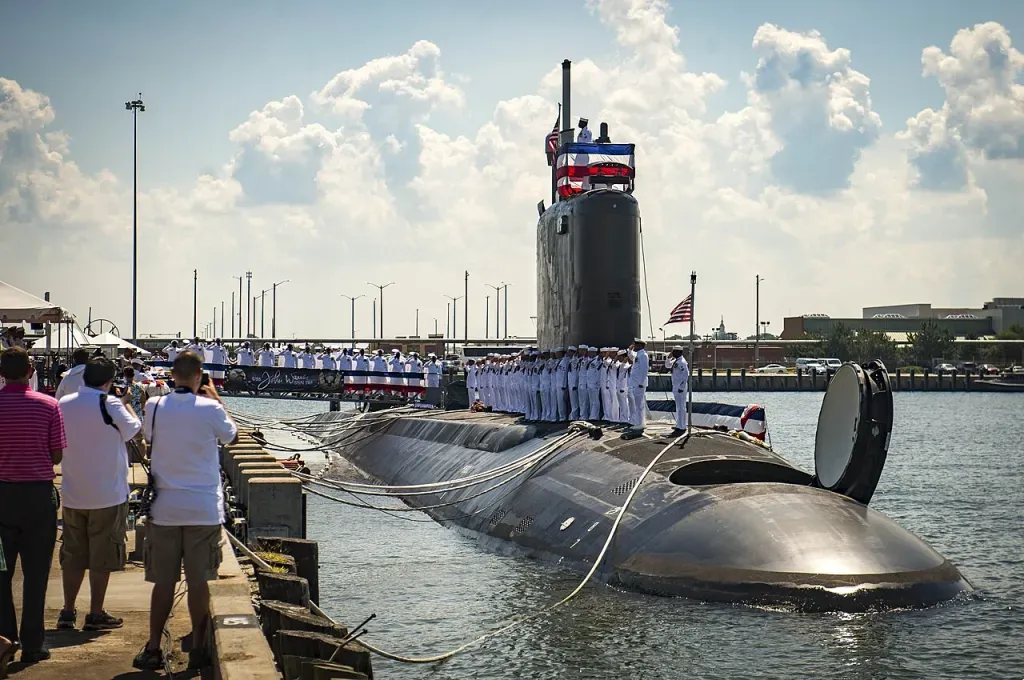
The Virginia-class Block III submarine USS John Warner during its commissioning ceremony with one of its two vertical launch tubes open.
"I think it's too early to draw conclusions about the configuration of the vertical launch system based on the publicly available images. I understand that people are assuming that the large rectangular space behind the conning tower is the vertical launch system, but I'm not sure that's the case, and I urge caution against jumping to conclusions. This space could also be associated with work on the reactor compartment," said Alex Luck, a naval analyst who closely follows submarine and naval developments. fleet China. "On the Type 093B, the vertical launcher was first covered with a tarpaulin after launching, and then the installed launchers became clearly visible during fitting-out. The process may be different on these new boats, but the different appearance during launching and fitting-out must be taken into account."
That some kind of vertical launch system will be installed on the Type 095 is clear and understandable; the only question is its exact location and, possibly, the model. That the Chinese are actively experimenting with submarine variants is beyond doubt. The only question is what stage their program is at.
Hence, an equally important question is what type of submarine is currently being built at the Bohai shipyard. Additional images from the Planet Labs archive indicate that the submarine is approximately 120 meters long. When the first specimen, believed to be a Type 095, appeared in Huludao in February, it was approximately 110 meters long. The "small sail" submarine discovered in Shanghai earlier this year is also approximately 120 meters long, according to available images, but appears narrower than the submarine presumably classified as a Type 095 in February.
One of the key questions is what's the difference between the submarine launched by Bohai in February and the two new hulls launched in late May and early June by Bohai and Jiangnan in Shanghai. Specifically, it's still very difficult to determine whether these two submarines are designed for different combat missions or whether this is a two-stage development process for a single final configuration of the new submarine. Both options are entirely plausible.
The question then arises: which submarine are we seeing in the new images—the one from February or a more recent version? Without precise and reliable measurements, without a minimum amount of data, and based solely on satellite imagery, we can only speculate online and nothing more.
"This September 1 image confirms my impression that the boat launched in February may have been a single example, not possessing all the characteristics of the notional Project 095A launched by Bohai and Jiangnan in late May. We have already seen both versions side by side at Bohai," Luck wrote after the Janes report was published.
However, the emergence in recent years of a large number of new, more modern submarines, apparently belonging to several different classes, is of great significance.
It's no secret that the People's Liberation Army Navy (PLAN) is working to significantly increase the size and capabilities of its submarine force, with the express goal of expanding its operational footprint, at least in the Pacific Ocean. In the past, US officials have publicly stated that the overall quality of China's new submarines is approaching the level of their American counterparts.
"The People's Liberation Army Navy is making a significant strategic transition from diesel-electric to all-nuclear powered ships, representing a fundamental departure from historical shipbuilding principles," U.S. Navy Rear Adm. Mike Brooks, head of the Office of Naval Intelligence, said in prepared remarks to the U.S.-China Economic and Security Review Commission in March.
Specifically, the Type 095, as well as the new Type 096 nuclear-powered ballistic missile submarine, are next-generation platforms scheduled to enter service between the late 2020s and 2030s. These submarines will be equipped with significantly improved nuclear reactors, sensors, integrated weapons, and noise reduction technologies, which has generally not generated optimism in the United States.
Submarine modernization efforts are just one aspect of the PLA Navy's broader efforts to expand its capabilities at and below the water. In recent years, Chinese shipyards have also been producing increasingly sophisticated aircraft carriers, amphibious assault ships, destroyers, frigates, and other vessels.
The pace of construction of new surface ships and submarines in China is also accelerating, creating a particularly significant and growing lag behind the US Navy. So far, this is only in quantitative terms, but as global experience shows, quantity often translates into quality.
The work in Huludao, as well as at shipyards in other parts of China, certainly already offers a fresh perspective on China's efforts to develop next-generation submarines. In fact, China's breakthrough in this area is not surprising. It's entirely logical. A country that, just 20-30 years ago, was copying even the most advanced Soviet technology, is now developing and building warships, aircraft, and nuclear submarines entirely independently.
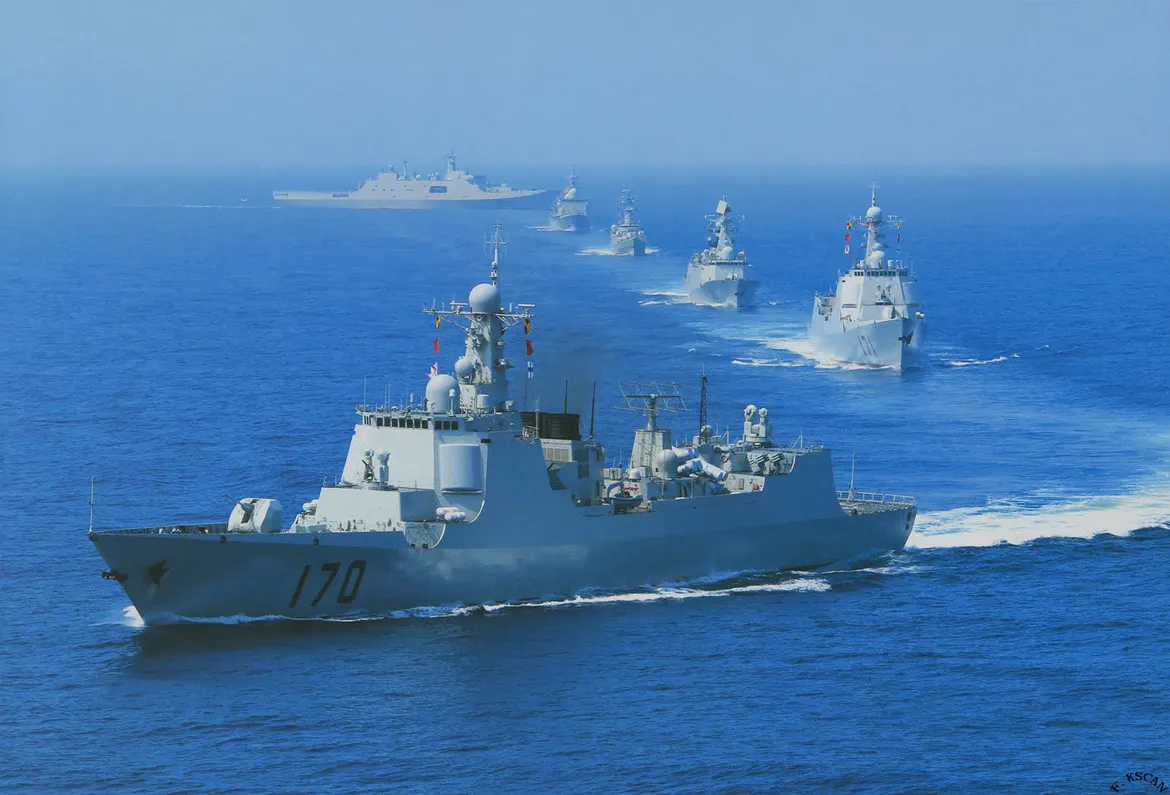
The only thing that would be really interesting to clarify is: are the boats in the pictures links in the same chain or are they parallel projects?
Today, the world's leading naval powers utilize a minimal number of submarine classes in their navies. One class is a general-purpose attack submarine (Los Angeles, Yasen, and Qin), and one is a strategic missile carrier (Borey, Ohio, and Triumphan). This is advantageous both economically and practically: it eliminates the confusion inherent in the Soviet submarine fleet, with its plethora of diverse boat models, which created problems with maintenance, operation, and personnel training.
It would be strange if China decided to operate multiple types of nuclear submarines simultaneously, but it's entirely possible that the images we saw depict experimental work on the development of new submarines. However, it would indeed be nice to have a little more information on which to draw some conclusions.
Information