The maintainability of the British Chieftain tank
Tank maintainability
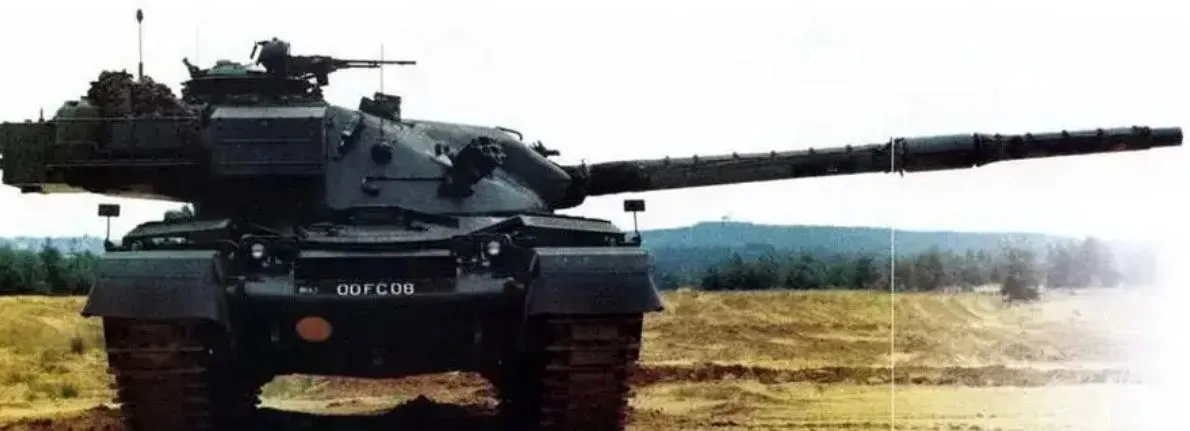
In many foreign countries tanks, including the British Chieftain Mk5P tank, utilize design and layout solutions for components and assemblies that facilitate operation and improve maintainability. These solutions include the following:
– integration of the engine, cooling and air cleaning systems into a single power unit;
– use of quick-release pipeline connections;
– the use of shut-off valves in the connected parts of pipelines, preventing the leakage of the pipeline contents during disconnection;
– rational use of fastener locking elements depending on the importance of the unit (fasteners of critical units must be locked), on the location in the machine (in hard-to-reach places the use of quick-release locks is not necessary) and on the need for repair work (with frequent dismantling and assembly, use self-locking nuts);
– use of self-locking nuts with a nylon sleeve;
– use of plug connectors without wire pins;
– use of hermetic rotating joints in the lines of cooling and lubrication systems;
– use of reusable clamps;
– use of soft rubber-fabric fuel tanks;
– the ability to replace the inner rim of the drive wheel of the tank’s chassis without dismantling the wheel itself;
– ensuring relatively small forces required to tighten bolts and nuts securing chassis components;
– the use of compounds such as anaerobic resins for sealing flange and threaded connections instead of sealing gaskets.
Let's look at examples of the use of the listed solutions in the design of the Chieftain Mk5P tank.
To ensure ease of repair and maintenance of components and assemblies located in the engine-transmission compartment, the roof above it is equipped with folding armored blinds, secured with a single latch for a group of blinds and therefore opening quickly.
The Chieftain Mk5P's main fuel tanks are housed in recesses in the rear of the hull and are easily removable. Being flexible, the tanks are easily installed and removed through small hatches. They are secured in their recesses using collet-style fasteners.
Thanks to this design, the time it takes to replace a fuel tank on the Chieftain Mk5P tank is significantly reduced: for one tank it is 1 hour, while the time it takes to replace a rack fuel tank on domestic serial tanks is more than 16 hours, and a forward fuel tank is about 32 hours.
Combining the main engine with the cooling and air cleaning systems into a single unit made it possible to reduce the number of external engine connections and thereby reduce the labor intensity of dismantling and assembly work.
Instead of connecting hoses with clamps, which are widely used in connecting pipelines with engines of domestic tanks, the connection of pipelines of the Chieftain Mk5P tank is carried out using union nuts or quick-release couplings (Fig. 1), which have shut-off valves that prevent the leakage of working fluids.

Fig. 1. Quick-release self-locking connection: a - in the connected state; b - when disconnected
The line between the cooling radiators and the engine uses special rotary joints, which allows the radiators to be rotated 90° from the horizontal position without dismantling, thereby ensuring accessibility for maintenance and repair.
The engine output shaft is connected to the main clutch of the transmission via an elastic coupling, which simplifies the procedure for performing alignment work.
In the Chieftain Mk5P's engine compartment, the engine powertrain, air cleaning, and cooling systems are mounted on three mounts. The two rear mounts are bolted to the tank's underbody with easily accessible bolts. The front mount is attached to the powertrain with four bolts and is not rigidly attached to the tank's hull, but rests freely on the engine bulkhead.
The connectors for all electrical wires going to and from the unit are located in one place (on the panel near the engine bulkhead), which provides good access to them and reduces the time needed to disconnect them.

Fig. 2. Tightening clamps for connections in the MTO
The Chieftain Mk5P tank uses quick-release couplings in addition to clamping clamps (Fig. 2), which are easier to install than similar domestically produced clamps. These clamps are more reliable, easier to install, and better suited for repeated use.
Thanks to these features, the Chieftain tank's engine block can be replaced in 4,5 hours.
When dismantling the transmission, the powertrain must first be removed. This is a drawback in the engine compartment layout. Otherwise, gearbox removal is very simple, as, firstly, its fasteners and connections are easily accessible and, secondly, it has few external connections (only eight).
To dismantle it, it is necessary to disconnect four plug-in connectors of the electrical wires supplying voltage to the electromagnets of the gear shift control system and four connections of the oil pipes, two of which are quick-release and two with union nuts.
The gearbox is mounted in the housing on four supports. It is bolted to three of the supports, and rests freely on the fourth. Rubber shock absorbers are installed under each gearbox support.
The use of an automatic centrifugal clutch in the design of the main clutch of the transmission allows for a reduction in the labor intensity of disassembly, assembly and adjustment work, since the main clutch does not have a separate drive or control element.
The design of the drive wheel is particularly interesting. The hub and crown wheels have grooves and mounting lugs that allow the inner crown wheel to be replaced without dismantling the drive wheel itself.
The advantage of the chassis design is the low effort required to tighten the bolts and nuts securing individual components, including the drive wheel hub and road wheel discs. The following features facilitate quick barrel replacement on the Chieftain Mk5P tank. The gun barrel is secured to the breech using a sector thread.
The barrel is prevented from rotating spontaneously by a stopper secured with a screw. To dismantle the gun barrel, separate the breech from the cradle and barrel and hang it in the fighting compartment; remove the outer cover of the turret embrasure seal; remove the ammunition rack from the turret niche; open the hatch cover on the rear of the turret; and roll the gun barrel out through the hatch.
Thus, when replacing the barrel on the Chieftain Mk5P tank, there is no need to dismantle the turret, as is customary with domestic serial tanks.
Bolting the fenders to the hull improves the tank's maintainability. This mounting method allows for easy replacement of the fenders, eliminating the need for welding.
It's worth noting the reduction in tank repair time due to the elimination of the need to cotter pin nuts and bolts of various fasteners with wire in the vast majority of cases. For example, all union nuts on plug connectors are not cotter pinned.
A distinctive feature of the Chieftain Mk5P tank is the use of anaerobic resins to seal flange joints, eliminating the need for sealants and gaskets. When replacing components with flanged joints, there is no need to cut new gaskets or remove remaining old gaskets and sealant from adjacent surfaces, reducing replacement time.
Positive solutions used in the design of the Chieftain Mk5P tank include the treatment of the outer surfaces of the tank hull with a special coating that prevents the feet of the crew and maintenance personnel from slipping.
Final World
A study of the Chieftain Mk5P tank revealed individual design solutions that could improve the tank's maintainability and could find application in domestic tank construction.
Source:
"Tank Repairability." E.N. Kosovtsov, Yu.B. Pak. "Questions of Defense Equipment," Series VI, Issue 6 (112)
Information