Kenworth and FAUN for Soviet Samotlor

6 226 23
Kenworth and FAUN for Soviet Samotlor
FAUN HZ 40.45/45 (6×6) “Koloss”


Domestic school


The Soviet Union was never a closed country. This was especially true in the technical sector—scientists and engineers constantly studied imported designs. Moreover, some industries received a significant technological boost in the post-war period. The design concepts of American Lend-Lease trucks continued to be looked up to by domestic equipment developers for a long time. NAMI regularly and meticulously dissected imported equipment of various classes, from compact cars to heavy dump trucks. Some were obtained through official foreign trade, while others, as is now fashionable to say, were obtained through gray import channels.


Some imported technical solutions found their way into Soviet technology in adapted form. Today, however, no one can say for sure where, what, and when these technologies were borrowed. As a result, the USSR developed a distinctive automotive culture that incorporated the best foreign developments and numerous homegrown innovations.

However, when it came time to develop the oil and gas fields of Western Siberia, primarily Samotlor, heavy equipment proved insufficient. This was especially true of pipe trucks. This unusual name is easily explained: main pipelines carry not just single pipes, but welded sections of several pipes up to 36–48 meters long, known in the professional slang of oil workers and construction workers as "plets." These units are also known by other names, such as a road train, a pipe truck, or, in the American vernacular, a pipe truck. But whatever the name, the problem of shortages remains. In the USSR, the entire arsenal of available vehicles was used to cope with the harsh conditions of Western Siberia.

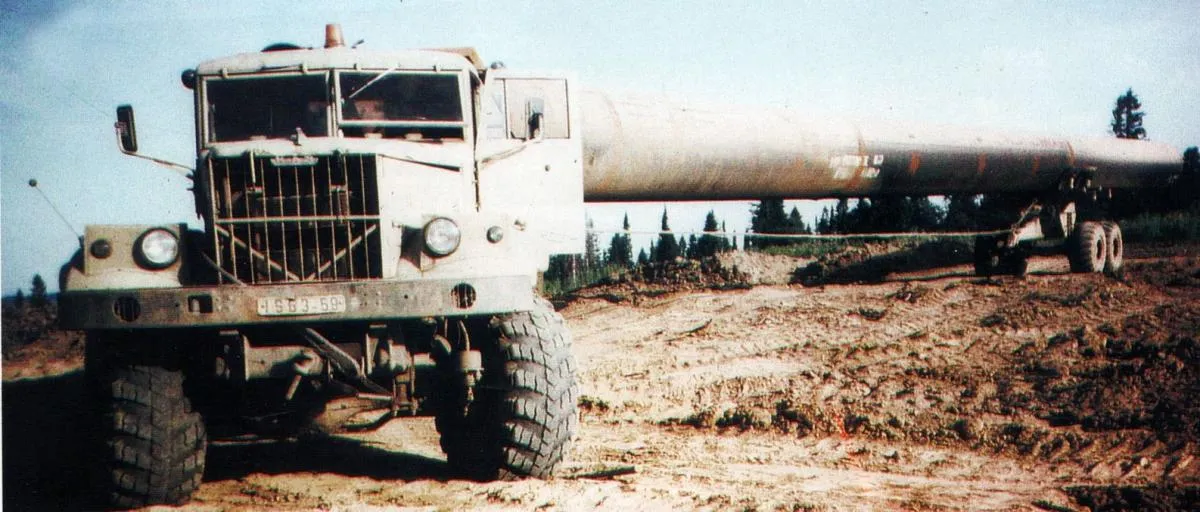
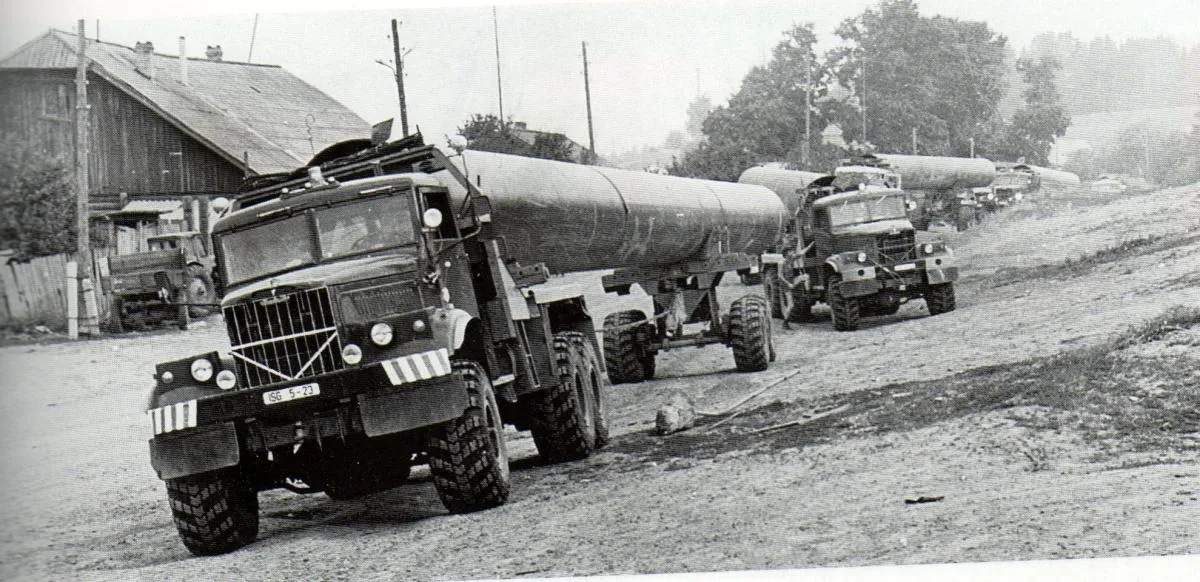
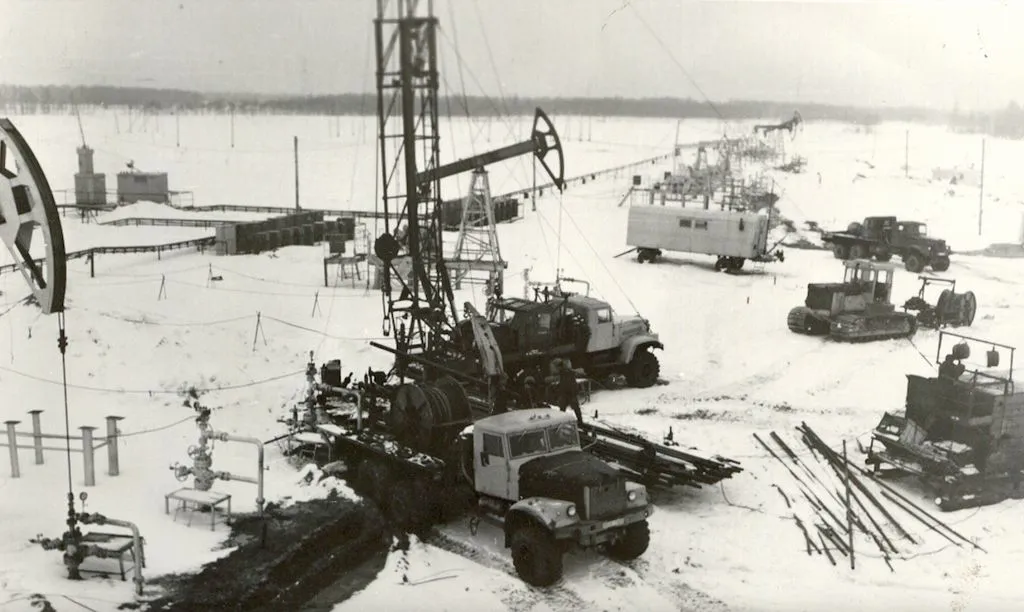


KrAZ-255L with a whip carrier

The famous "man-eating" KrAZ 255L trucks and the older KrAZ-214 were used—the PV-202 pipe-carrying truck was adapted for use as tractors. These Kremenchuk trucks were the primary supporters of oil and gas workers at the dawn of the mining era in the USSR. Typically, a truck carried a single 36-meter pipe, welded together from three 12-meter pipes.


KrAZ-214 with a PV-202 whip carrier

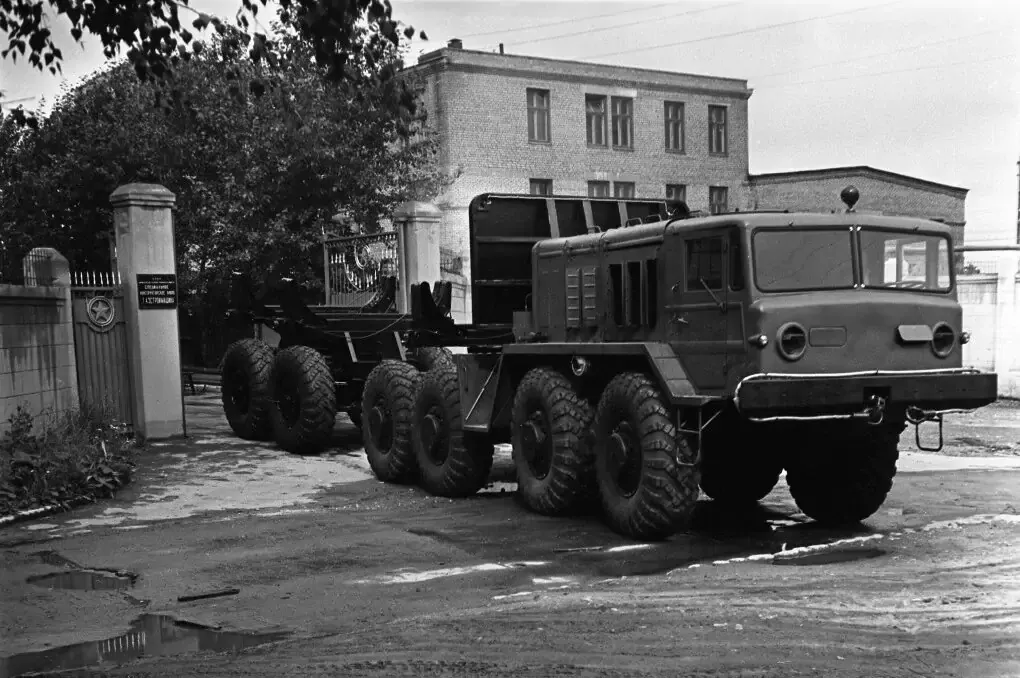
There were heavier vehicles, too. I'm talking about the MAZ-7910, designed in 1974 specifically for Western Siberian conditions and capable of hauling two 36-meter-long pipes. Before that, it served as a heavy-duty pipe carrier. artillery The MAZ-535 tractor, which was adapted at NAMI. In the mid-60s, ZiL's Special Design Bureau (SKB) attempted to adapt the famous twin-engine ZiL-135LB for the needs of the oil industry.


Experimental ZiL-135LB


Minsk-made machines have contributed greatly to the development of oil and gas fields in Western Siberia.

A rotating tube-type cone with a massive protective shield behind the cabin was mounted on the frame of the land-based missile carrier, with a two-axle trailer attached to the rear. Tests showed that the missile carrier, as a "trumpeter," had fantastic cross-country ability in deep snow and mud. However, the civilian version never went into production: the two engines consumed enormous amounts of fuel, the Bryansk-made manual transmission proved unreliable under such loads, and the Ministry of Defense required absolutely every chassis in this series produced. The situation with the Minsk-made vehicles wasn't much better—their service life was limited. tank The engine's performance was low, but its oil and fuel consumption were prohibitive. In 1976, the S. M. Kirov Mogilev Automobile Plant (MoAZ) built a prototype MoAZ-74111 pipe-carrying road train at the request of the USSR Ministry of Gas Industry. Nothing worthwhile came of it—a few vehicles were assembled in Mogilev and then stopped there.
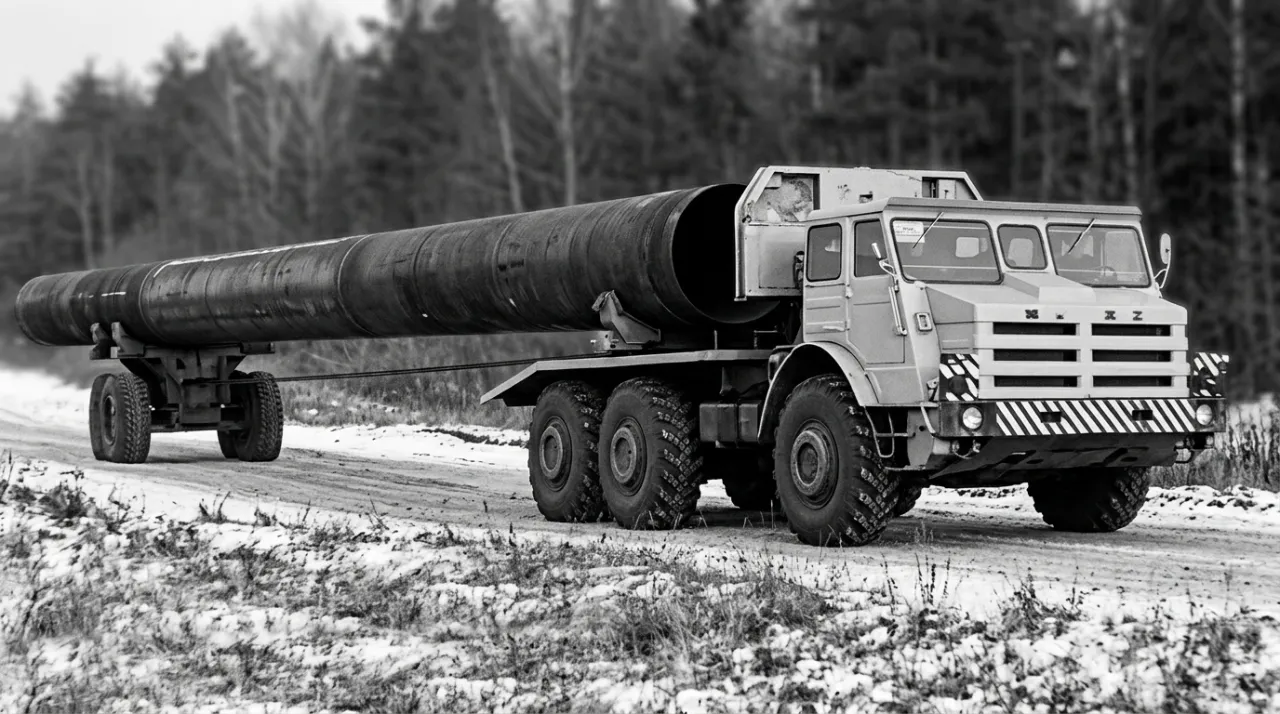

A restored photo of the experimental MoAZ-74111 pipe-carrying road train.

The fate of the example pictured is unique: it was initially tested as a multi-purpose flatbed truck, then converted into a wood-carrying vehicle. Later, in 1978, it was fitted with a fifth-wheel coupling from a MAZ-537G military tractor for towing heavy semi-trailers, and by 1980, this same prototype had been fully converted into a 30-ton quarry dump truck. To summarize, one conclusion suggests itself: equipment for developing the mineral resources of Western Siberia was in short supply in the 70s. In addition to wood-carrying vehicles, there was a shortage of heavy-duty tractors for low-deck trailers.

foreign technology


In the post-war years, the West German automobile manufacturer FAUN made a powerful technological leap, establishing itself among the top European automakers. The company abandoned competition in the high-volume, long-haul truck segment and focused on creating unique, custom-built engineering vehicles: quarry dump trucks, airport fire trucks, heavy-duty construction chassis, and land-based super-tractors.

The 1970s and 1980s were the company's golden age. It was then that FAUN became the primary supplier of heavy military tank carriers for the German Bundeswehr (the FAUN SLT 50 "Elefant" family of off-road tractors) and also entered the Soviet market. The main phase of contracts and the massive arrival of equipment at Siberian construction sites and oil fields occurred between 1977 and 1982. It was then, as part of the large-scale development of Western Siberia and the construction of strategic transcontinental gas pipelines (for example, the Urengoy-Pomary-Uzhgorod pipeline), that the USSR Ministry of Oil and Gas Construction, through its foreign trade agencies, concluded major contracts for the import of German heavy-duty vehicles.

In total, the Soviet Union imported 254 heavy-duty German trucks over the years of cooperation. In 1976–1977, three-axle FAUN HZ 32.25/40 (6×6) bonneted ballast tractors were purchased, which were used to transport tracked construction equipment on low-deck trailers and deliver heavy loads. By the early 80s, more powerful, monstrous cabover and bonneted pipe carriers began arriving in the Tyumen region, including the legendary FAUN HZ 40.45/45 (6×6) series with 450-hp Deutz engines.
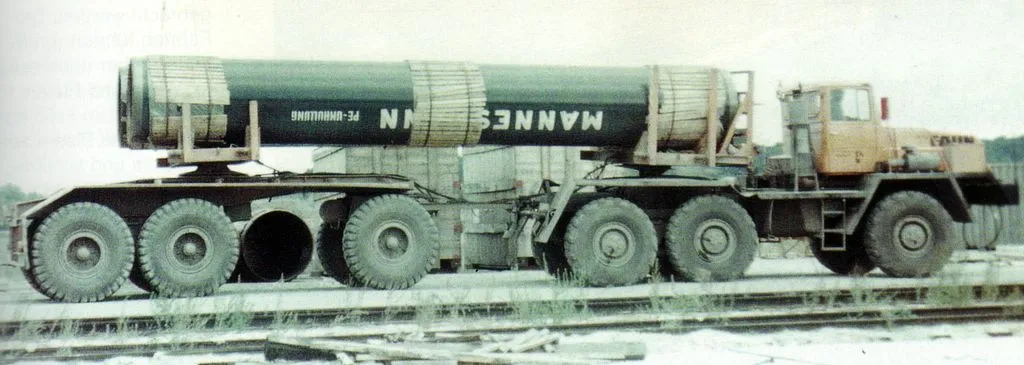
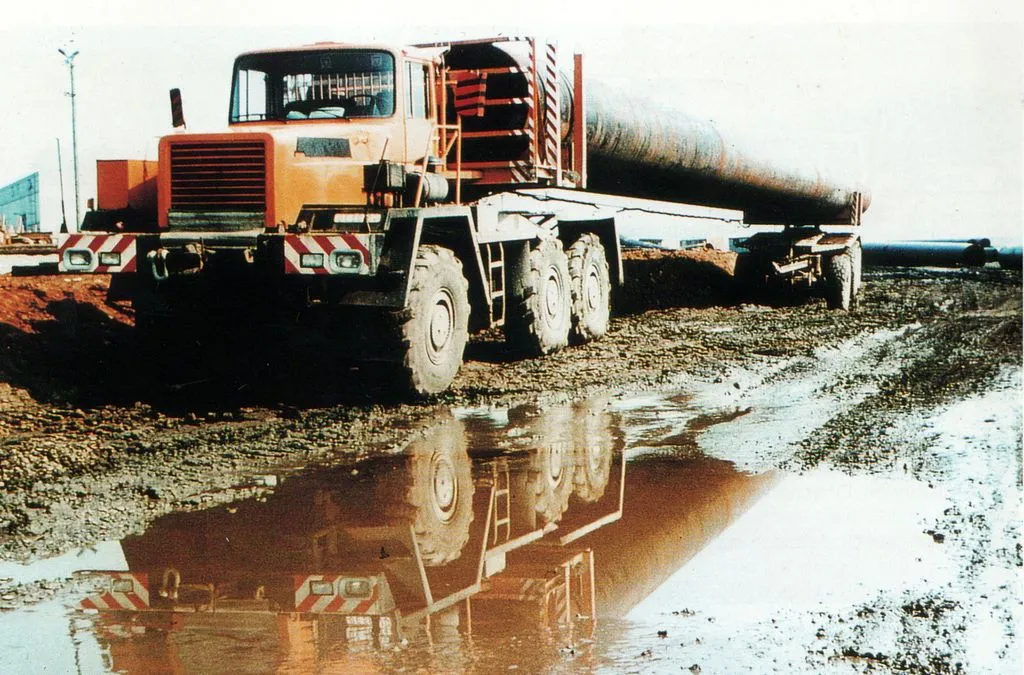
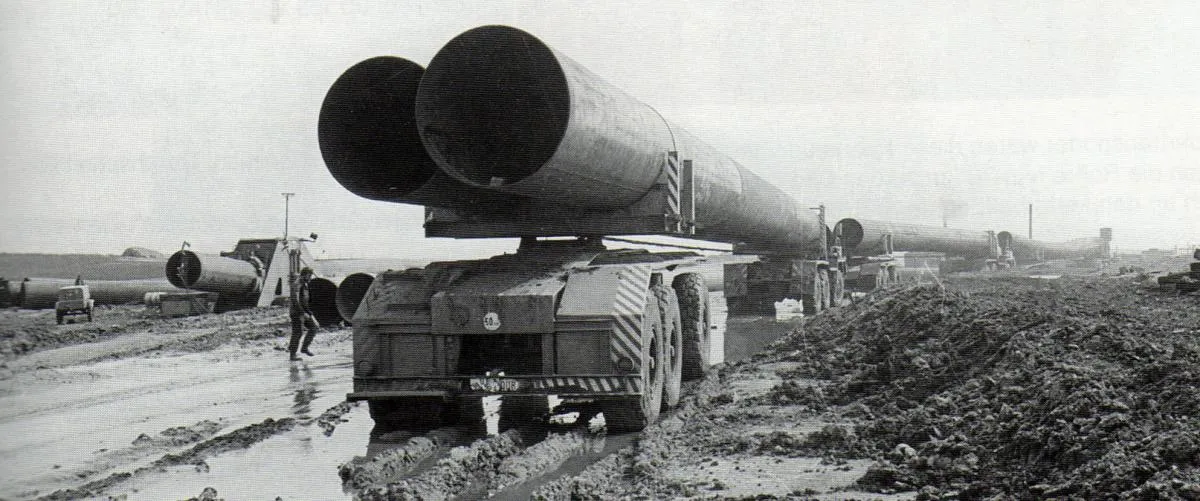
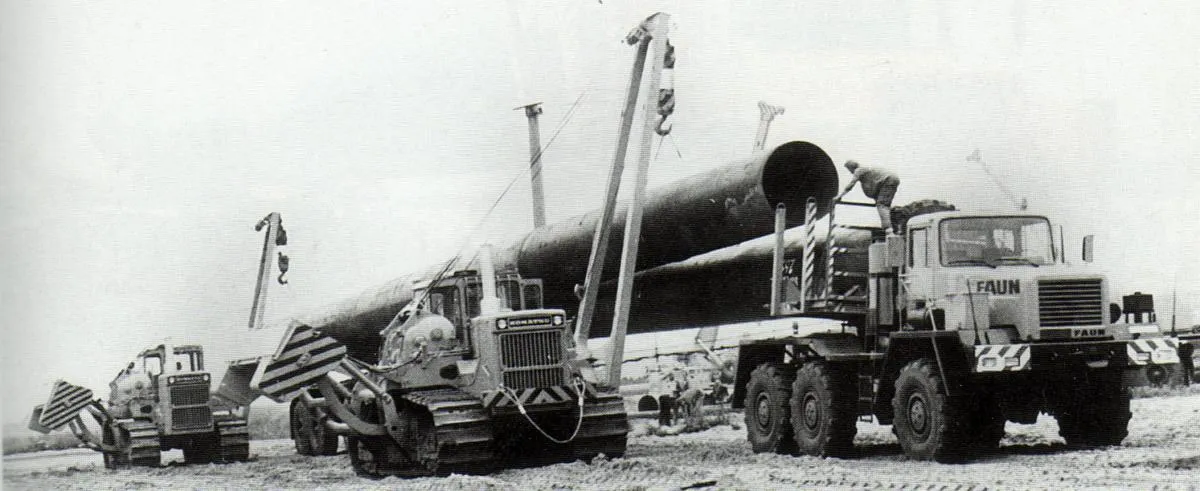
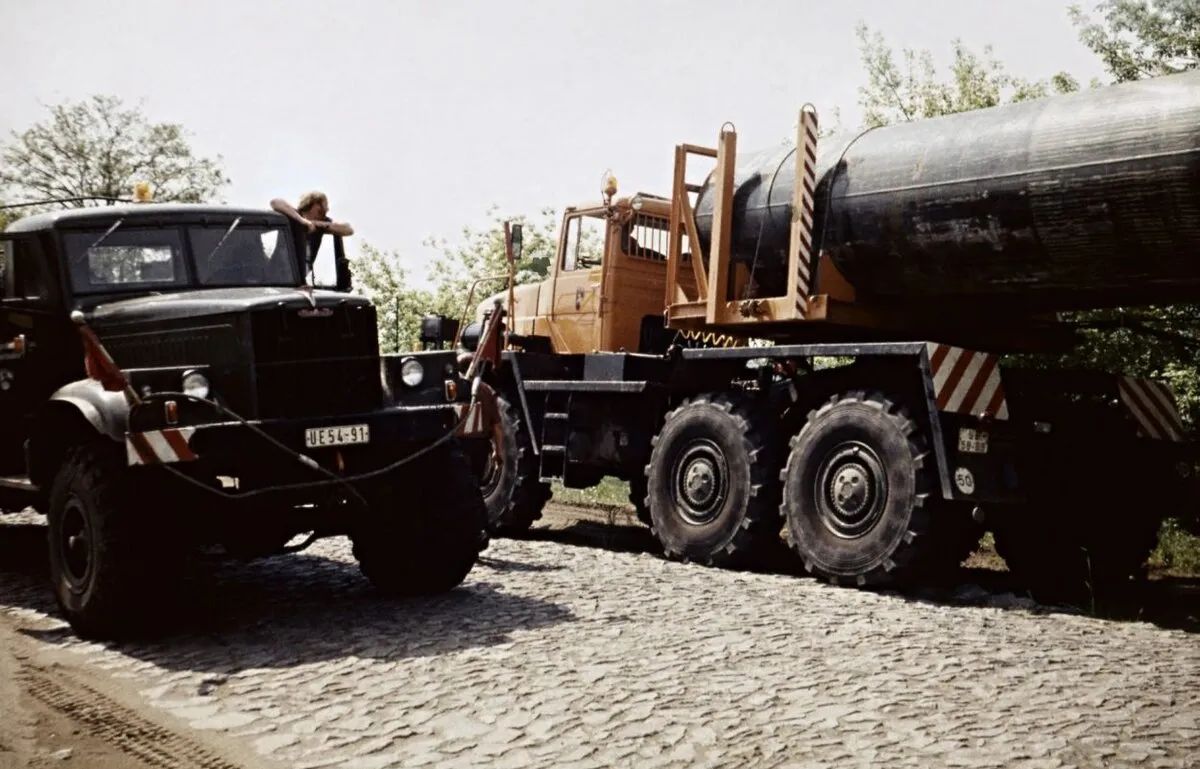


So, the first vehicle is the FAUN HZ 32.25/40 (6×6). The key technical feature and the key to this vehicle's incredible reliability in the Siberian oil fields of Tyumen and Samotlor was its powertrain—a V-shaped, 10-cylinder, air-cooled Klockner-Humboldt-Deutz (KHD) F10L413F diesel engine producing 320 horsepower. This same engine, but with a reduced number of cylinders, was installed in the legendary Magirus for the Baikal-Amur Mainline (BAM). Forced-air cooling of the powerplant was a key requirement of Soviet customers.

The engine was paired with a ZF multi-speed manual transmission, coupled with a specialized ZF WSK torque converter. This sophisticated hydromechanical transmission allowed a loaded road train with a gross vehicle weight of up to 100 tons to move smoothly in mud or on icy winter roads without interrupting power flow or risking burning clutch discs. All-wheel drive on all three axles with rigid differential locks and powerful axles with planetary wheel reduction gears provided the vehicle with excellent maneuverability.

In accordance with Soviet specifications, the vehicles were equipped with an exclusive "Northern Package" on the Lauf assembly line: the cabins were equipped with reinforced thermal insulation, double glazing, frost-resistant rubber components, and independent Webasto heaters. A special ballast box was mounted behind the spacious and comfortable cabin, where concrete or metal ballast was loaded to further support the rear drive bogie when towing trailers.


The second model from the German concern imported to the USSR was the FAUN HZ 40.45/45 (6×6) "Koloss." Engineers scaled the engine to 12 cylinders, achieving 455 hp at peak. The tractor was designed to tow heavy multi-axle lowboys and special pipe-carrying trailers, enabling it to move enormous 36-meter steel pipe strings and monolithic block-and-pump stations weighing up to 120–150 tons over completely off-road conditions. The "Koloss" was a rare bird in Siberia—only a couple of dozen units were sold to the Soviet Union.

In total, the contract to supply FAUN to the USSR Ministry of Oil and Gas Construction cost the USSR 100-115 million German marks, equivalent to approximately $240-270 million in 2026 dollars. This was a time of heavy spending on imported equipment. As a reminder, 10 Magirus vehicles for the Baikal-Amur Mainline cost 1,1 billion marks.
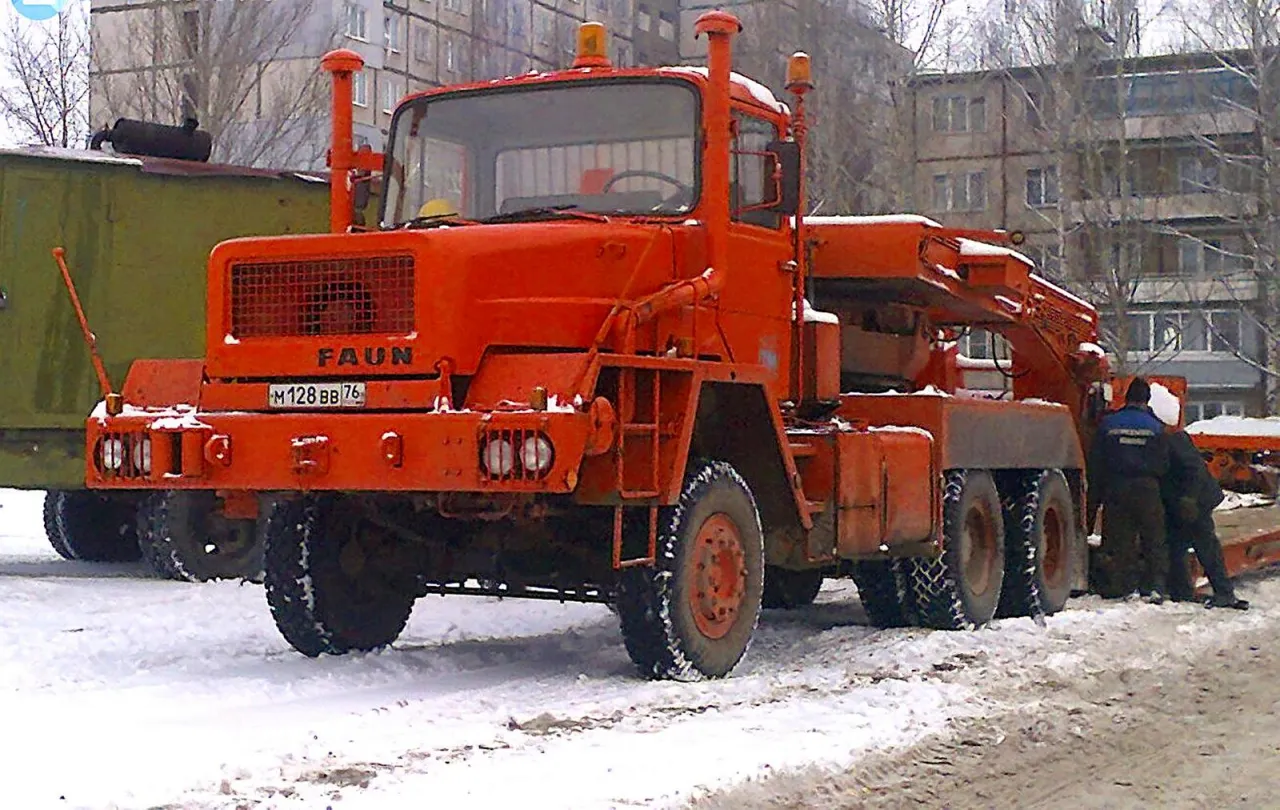
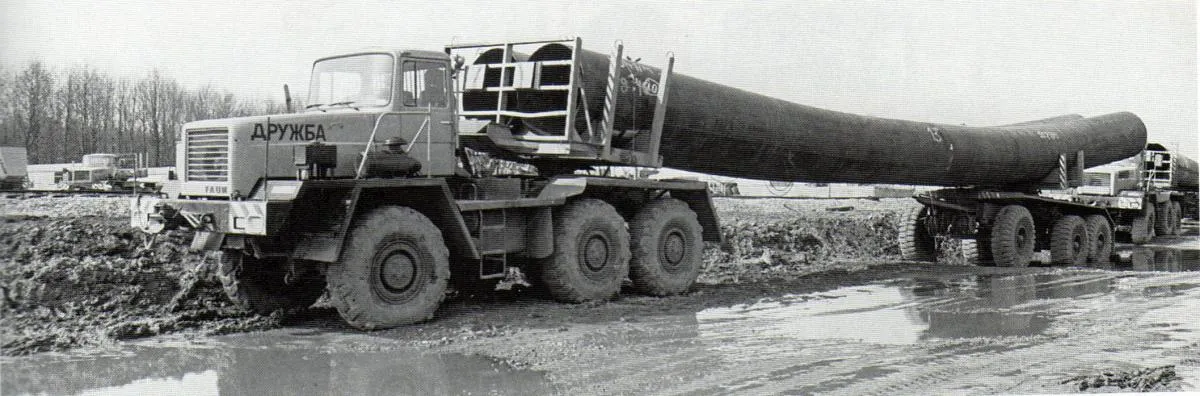
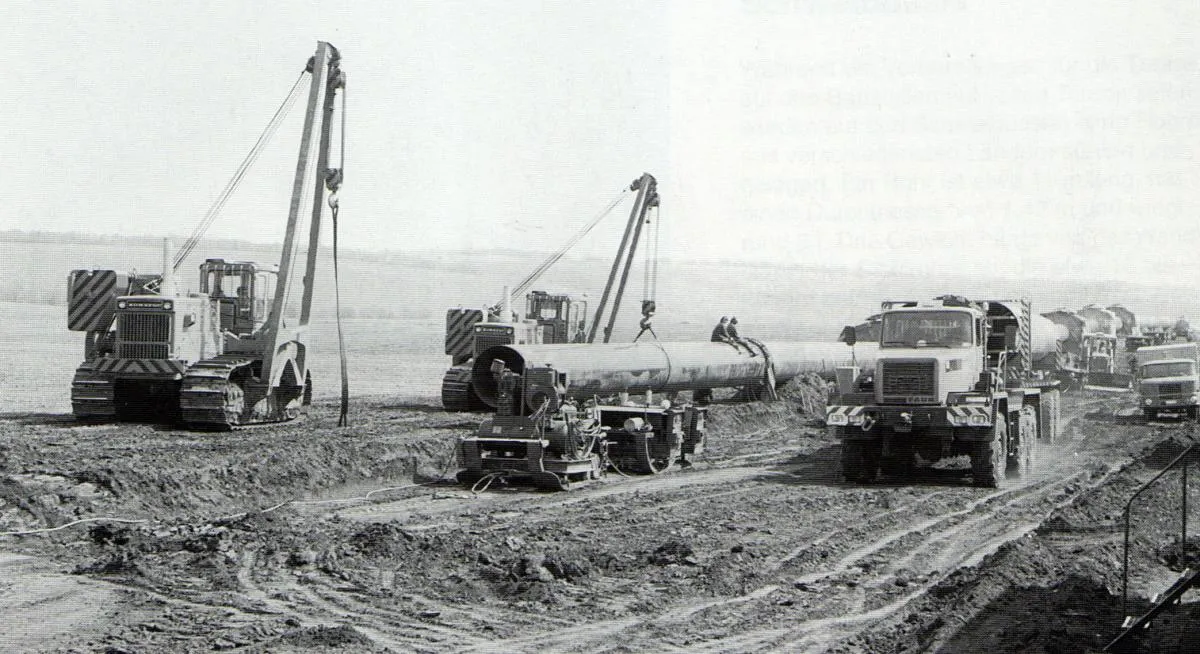
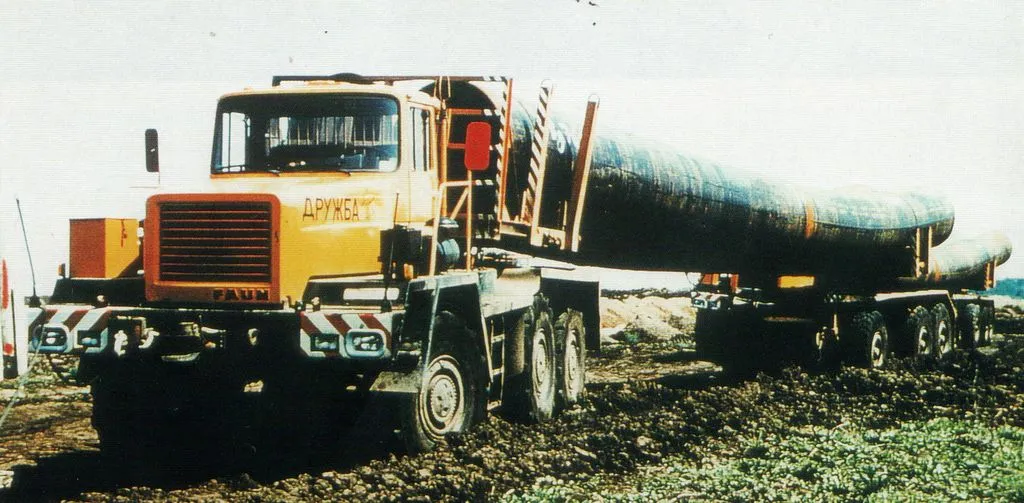
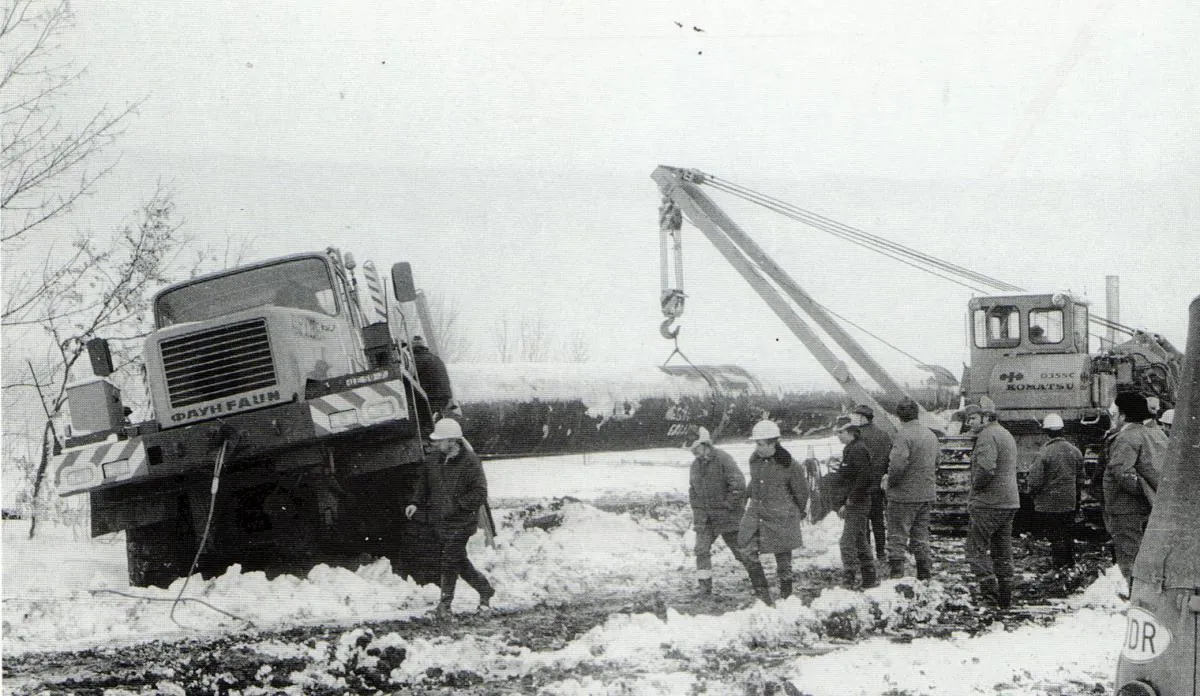


Without dwelling on the praise for the vehicles—it's clear that the FAUN was a cut above its domestic counterparts—let's look at the shortcomings of these heavy-duty trucks. The downside of the vehicle's main advantage—a reliable air-cooled Deutz diesel engine—was the incredibly loud, whistling roar of its giant fan. On Siberian winter roads, a loaded FAUN could be heard several kilometers away, exhausting the crew during hours-long journeys. Furthermore, the vehicle required the highest level of skill: the slightest error by the driver when selecting the operating mode of the complex ZF WSK torque converter on an icy incline could completely lock up and stop the 100-ton road train.

In the harsh conditions of Samotlor and Urengoy, despite the overall quality of assembly, rubber components, brake seals, and sensors would periodically fail. Since every penny-worth part and consumable was purchased in Germany, strictly with scarce foreign currency, via Moscow, a simple leaking seal or clogged filter could mean these rare and expensive vehicles would sit idle for months awaiting supplies.

Finally, the multi-cylinder power unit, in the harsh Siberian off-road conditions, had a colossal, almost unlimited appetite for diesel fuel, which meant that the standard fuel tanks were sometimes barely sufficient to cover the challenging route between bases. When towing heavy trailers in difficult road conditions, the fuel consumption of the smaller FAUN reached 150–160 liters per 100 km. The larger 455-horsepower engine was able to consume 180 liters per 100 km in cruising mode.



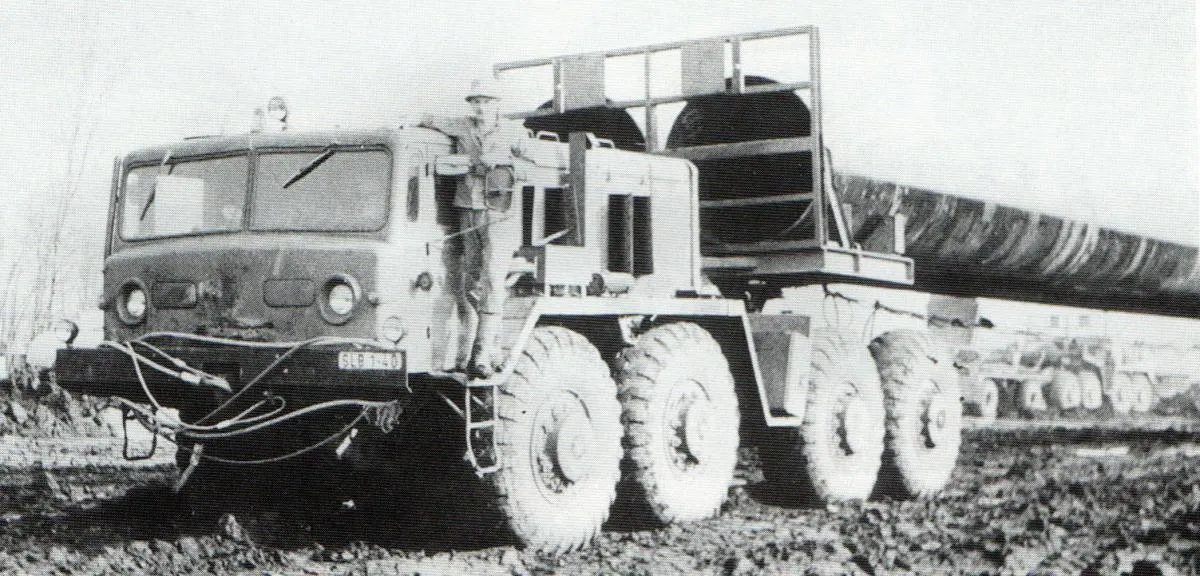
Restored archival photos clearly identifying an American Kenworth 953. The location was Glavtyumenneftegaz in Nizhnevartovsk. Late 70s - early 80s.

History The import of FAUN to the USSR is fairly well known in certain circles. The same cannot be said for the American Kenworth 953 trucks that ended up at Samotlor in the late 70s and early 80s. All this clearly smacked of a fake or an artificial intelligence hallucination. But no – there are at least two photographs of a gigantic Kenworth 953 truck in the Siberian oil fields. Apparently, the truck (or trucks) were registered to the Glavtyumenneftegaz motor transport office in Nizhnevartovsk.


Kenworth 953

The Kenworth 953 is an American super-heavy-duty truck, earning a reputation as one of the most rugged and massive conventional trucks in global automotive history. Produced by PACCAR from 1958 to 2005, this model was originally designed not for public roads, but as a highly specialized, high-tech chassis for extreme off-road use. The 953's primary battlefield was the vast sandy deserts of the Middle East and North Africa, where for decades it held the title of the premier heavy equipment hauler for the oil and gas industry.

The vehicle's technical design was driven by two primary objectives: transporting monolithic loads weighing up to 100-150 tons and avoiding sinking in quicksand. To achieve this, the truck was equipped with a colossally strong frame, massive Clark or Rockwell drive axles, and 6x6 all-wheel drive. To distribute the vehicle's enormous weight on unstable ground, the Kenworth 953 was equipped with gigantic, wide-profile, low-pressure single-wheel tires with a diameter of approximately two meters. Under the enormous hood were Cummins, Detroit Diesel, or Caterpillar industrial diesel engines with outputs ranging from 400 to 600 horsepower, paired with Allison semi-automatic or hydromechanical transmissions.

The overall width of this heavy-duty vehicle exceeded 3,5 meters, making it impossible to operate on regular asphalt roads without a special escort. The main buyers and operators of these vehicles were multinational corporations such as Saudi Arabia's Aramco. The Kenworth 953 was used to transport enormous, indivisible loads: entire drilling rig assemblies, heavy pipe strings, hydraulic fracturing pumping stations, and well plugging tanks. Drivers nicknamed these vehicles "desert kings" for their ability to tow multi-ton trailers across dunes in temperatures exceeding 50°C. How this giant ended up in Western Siberia, especially during Soviet times, remains a mystery.
23 comments
Information
Dear reader, to leave comments on the publication, you must sign in.
  1. osp
    +9
    29 September 2026 04: 58
    I read about the torque converter and it reminds me of the Kostroma EO-5111 mechanical dragline excavators.
    Among them was the BAM modification, which was designed for work in difficult conditions.
    So, there was a torque converter. And the ChTZ D160 diesel engine was installed on the Kostroma equipment.
    But these excavators didn't have hydraulics - they were completely mechanical.
    In the early 2000s, I accidentally managed to study the Kostroma machine inside and out.
    But this was a late modification of the EO-5111B.
    The BAM modification, if I'm not mistaken (I remember from books), is the EO-5111EKHL or, according to the old designation, the E-10011EKHL. Model 1980.
    It was a versatile excavator-crane, dragline, or pile driver. It had various booms and interchangeable attachments. Its lifting capacity was up to 16 tons, and its digging depth was also impressive—up to 10 meters and more.
    Everything there is mechanical - the track drive, the platform rotation and the working equipment.
    There are no hydraulic motors or hydraulic cylinders.
    But if memory serves, there was pneumatic control of some units.
    The on-board network was 24 volts.
    This is an exclusive excavator. We had three of these at our local organization, modification B.
    A couple went to scrap metal around 2005, and another was abandoned in a sand quarry.
    More recent modifications had a different cabin and designation, and in recent times they were made
    The Kostroma plant is no more.
    That's where I saw a hydraulic transformer for the first time.
  2. +7
    29 September 2026 05: 38
    The same engine, only with a reduced number of cylinders, was installed on the legendary Magirus for BAM.

    Klockner-Humboldt-Deutz engines came in a wide range of cylinder counts. I've personally encountered two-cylinder diesel generators and four-cylinder engines on railway cranes with a 20-ton lifting capacity.
    There was even a brochure for these engines somewhere, but unfortunately it hasn't survived.
    And most importantly, the entire piston system was interchangeable, whether it was a 2-cylinder or a 10-cylinder, it didn't matter. Pistons, cylinders, heads—everything was the same!
    good
    1. +2
      29 September 2026 08: 31
      There was even a brochure for these engines somewhere, but unfortunately it hasn't survived.
      And most importantly, the entire piston system was interchangeable, whether it was a 2-cylinder or a 10-cylinder, it didn't matter. Pistons, cylinders, heads—everything was the same!

      Yaroslavl also produced "its own" line: YaMZ-236, 238, 240...
      also the same cylinders, pistons, connecting rods, but the heads are common to the entire half-block...
      By the way, when the Yaroslavl team started designing the 740 diesel (KamAZ), they used individual heads for each cylinder...
      1. +2
        29 September 2026 08: 56
        Quote: Dedok
        We used individual heads for each cylinder...

        Replace one small head (1 cylinder), or one large one - the difference is huge!
        1. +3
          29 September 2026 09: 07
          Replace one small head (1 cylinder), or one large one - the difference is huge!

          Overall, it seems you're right, but the head itself isn't a separate element as it might seem...
          This includes the intake tract, the exhaust tract, and any components that interfere with access to it...
          so there is little difference in labor intensity...
          1. 0
            29 September 2026 09: 19
            Quote: Dedok
            There is little difference in labor intensity...
            Reply

            You may be right!
            I'm not even a driver! Unless you count categories A and B. laughing
  3. +2
    29 September 2026 06: 12
    Some citizens here argued that the USSR could have avoided selling oil to earn foreign currency and done everything itself. And the fall in oil prices had no impact on the economy. And if oil were to cost $20, would the Russian economy survive?
    1. +4
      29 September 2026 07: 56
      Quote: Panin (Michman)
      Some citizens here argued that the USSR could have avoided selling oil to earn foreign currency and done everything itself. And the fall in oil prices had no impact on the economy. And if oil were to cost $20, would the Russian economy survive?

      Let's get to the point!
      Demand creates supply.
      Cooperation between the USSR and West Germany in the 70s and 80s was mutually beneficial. The only thing is, we stopped there after building oil and gas pipelines. Germany went further.
      If the Soviet Union, after creating a hydrocarbon transportation system, began to massively build factories and plants for its processing, we would have received a double benefit.
      Regarding the suffering over $20 per barrel, the domestic market will only benefit.
      And the SVO will not refuse surplus labor from top managers of the oil industry.
      1. 0
        29 September 2026 16: 11
        Quote: Kote Pan Kokhanka
        Quote: Panin (Michman)
        Some citizens here argued that the USSR could have avoided selling oil to earn foreign currency and done everything itself. And the fall in oil prices had no impact on the economy. And if oil were to cost $20, would the Russian economy survive?

        Let's get to the point!
        Demand creates supply.
        Cooperation between the USSR and West Germany in the 70s and 80s was mutually beneficial. The only thing is, we stopped there after building oil and gas pipelines. Germany went further.
        If the Soviet Union, after creating a hydrocarbon transportation system, began to massively build factories and plants for its processing, we would have received a double benefit.
        Regarding the suffering over $20 per barrel, the domestic market will only benefit.
        And the SVO will not refuse surplus labor from top managers of the oil industry.

        I'm not sad about 20 dollars. I remind you that oil cost that much back then. And the US was still trying to lower it - good for them and bad for the USSR.
        The USSR needed currency.
        1. +2
          29 September 2026 21: 10
          Twenty dollars in 1970 is more than 170 today. And twenty dollars in 1980 is more than 80 today. Don't think oil was that cheap back then.
    2. -5
      29 September 2026 08: 42
      And if oil costs $20, will the Russian economy withstand it?

      And if it’s 200, will the Western economy withstand it?
      1. +1
        29 September 2026 21: 19
        In 2008, oil cost $147.5, which is 220-224 modern dollars.
  4. 0
    29 September 2026 08: 36
    The cabins received reinforced thermal insulation, double glazing, frost-resistant rubber products and autonomous Webasto heaters.

    Incidentally, when the Magirus trucks went into mass production, some shortcomings also emerged. First and foremost, the Continental tires couldn't withstand the severe frosts and had to be replaced with slightly larger domestic rubber. The springs were replaced, being assembled from KrAZ sheets. I don't recall any obvious problems with the seals and oil seals.
  5. +3
    29 September 2026 08: 44
    Reliable trucks, but every car has its drawbacks.
  6. -1
    29 September 2026 10: 50
    The newspapers then wrote about the “gas-pipelines” deal; it seems that cars were also included in it.
  7. +3
    29 September 2026 11: 04
    In the mid-60s, the ZiL Special Design Bureau (SKB) tried to adapt the famous twin-engine ZiL-135LB
    However, the author is persistent in his intention to write the ZIL model indexes incorrectly. Yes
    The sound of the air-cooled Deutz diesel engine became incredibly loud, whistling, and roaring from the giant fan. In the Siberian winter roads, a loaded FAUN could be heard for several kilometers.
    I think the author got it wrong here. A properly functioning fan shouldn't roar. Most likely, the problem is the increased noise inherent in all air-cooled engines, which is explained by the lack of a water jacket. And their ability to produce high-frequency noise (squealing) is especially unpleasant for the driver—remember the Zaporozhets?
    The slightest error by the driver when selecting the operating mode of the complex ZF WSK torque converter on an icy incline could completely block and stop the 100-ton road train.
    I didn't understand this point: a torque converter is essentially an automatic transmission; the driver has no control over its operation. Its only intervention is to switch the torque converter to hydraulic braking mode on downhill slopes.
    Finally, the multi-cylinder power unit in difficult Siberian off-road conditions was distinguished by a colossal, almost unlimited appetite Diesel fuel was used, which meant that the standard fuel tanks were sometimes barely sufficient to cover the difficult route between bases. When towing heavy trailers in difficult road conditions, the fuel consumption of the smaller FAUN reached 150–160 liters per 100 km.
    I will explain so that the author understands.
    X l/100 km is not the engine's fuel consumption, but the car's fuel consumption.
    And for such a car, in off-road conditions, this is quite low consumption.
    I came across the results of off-road tests of the GAZ-67B, the average consumption was 100 liters per 100 km.
    And this is a small passenger car, what do you expect from a huge truck?
    When comparing trucks, fuel consumption is taken not as l/100 km, but as l/per ton of cargo transported.

    Overall, the article is informative. Well done to the author! Yes
  8. +2
    29 September 2026 11: 08
    The MoAZ-7411 Ermak had a derated 320 hp V-2 diesel engine. There was a need for it, but there was no capacity for production.
  9. +2
    29 September 2026 11: 22
    The two-axle Magirus dump truck was equipped with the F8L413 engine, 8 cylinders, 232 hp. The three-axle truck was equipped with the F10L413, 10 cylinders, 290 hp. All of them were supplied to the USSR.
  10. +2
    29 September 2026 15: 51
    Quote: Lewww
    I didn't understand this point: a torque converter is essentially an automatic transmission; the driver has no control over its operation. Its only intervention is to switch the torque converter to hydraulic braking mode on downhill slopes.

    The K-702 (Kirovets) tractor uses the same transmission control scheme.
    The K-702 tractor's gearbox is a mechanical system with hydraulic control, allowing for variable speed, direction, and drawbar pull. Its key feature is the ability to shift gears within the selected mode without interrupting power flow, thanks to a torque converter.
    The K-701 has a classic manual transmission with hydraulic control, not a hydromechanical one.
    The DT-175 crawler tractor has a nearly identical gearbox layout, a torque converter, and a manual transmission, almost like the classic Volgograd DT-75 (Pochtar), only more powerful, with a different diesel engine... hi
    1. +3
      29 September 2026 17: 25
      This is understandable, but it is unclear how the driver can make a mistake when selecting the torque converter operating mode (as described in the article), if it operates automatically without driver intervention?
      1. 0
        30 September 2026 01: 50
        The torque converter (I have this thing with an automatic transmission lying in my basement; I recently had to replace it) certainly helps with starting under tension without burning the clutch like on a regular manual transmission, but it's probably due to an error in torque selection, the wrong speed for the road conditions (uphill/downhill), or the amount of cargo...
        1. +1
          30 September 2026 10: 57
          The torque converter has three operating modes, set by the control program without driver intervention. If the driver selects the wrong gear, the torque converter will overdrive, causing the vehicle's speed to drop. If the driver, instead of downshifting, simply increases engine speed, the torque converter oil temperature will rise, and overheating is theoretically possible unless the idle protection is installed.
  11. 0
    1 October 2026 05: 40
    Quote: Lewww
    The torque converter has three operating modes, set by the control program without driver intervention. If the driver selects the wrong gear, the torque converter will overdrive, causing the vehicle's speed to drop. If the driver, instead of downshifting, simply increases engine speed, the torque converter oil temperature will rise, and overheating is theoretically possible unless the idle protection is installed.

    In a classic automatic transmission with a torque converter, which replaces the clutch basket (mechanical) in a manual transmission, there is a transmission fluid temperature sensor, based on which the ECU either puts the automatic transmission into emergency mode (it will not start, or will not shift above 1st gear), or increases the fluid pressure in the cooling circuit to the radiator.
    The ECU is responsible for gear shifting in an automatic transmission.
    I don't know about working on a manual transmission with a torque converter; I'd have to ask someone who did it...

    My former headache, on the left is the torque converter (donut), on the right is the old automatic transmission, it needs to be overhauled, the housing needs to be welded.