Flavius Belisarius, the general who made Emperor Justinian I "the Great"

A supposed depiction of Belisarius in the church of San Vitale in Ravenna
This article will discuss Flavius Belisarius (Belisarius). The Byzantine historian Procopius of Caesarea gives him a truly brilliant characterization:
He was handsome and tall, and surpassed everyone in the nobility of his expression. And with everyone he was so gentle and approachable that he resembled a very poor and humble man. The love for him as a leader on the part of the warriors and farmers was irresistible. The fact is that he was more generous to his warriors than anyone else. If any of the warriors suffered any misfortune in a skirmish, being wounded, he would first of all assuage his suffering, the suffering caused by the wound, with large sums of money, and he allowed those who distinguished themselves in their exploits to wear bracelets and necklaces as honorary decorations; if a warrior lost a horse, a bow, or some other thing in battle, weapon, then he immediately received something else from Belisarius. The farmers loved him because he treated them with such care and concern that under his command they experienced no violence; on the contrary, all those in whose country he was with his army usually grew rich beyond measure, since everything they sold, he took from them at the price they asked. ... In all matters he was exceptionally insightful, but especially in difficult situations he knew better than anyone else how to find the most favorable way out. In the dangerous conditions of military operations, he combined energy with caution, great courage with prudence, and in operations undertaken against enemies, he was sometimes swift, sometimes slow, depending on what circumstances required. Besides all this, in the most difficult cases, he never lost hope of success and never gave in to panic; in good fortune, he did not boast or dissipate; Thus, no one ever saw Belisarius drunk... I think that no one dared to contradict his orders and did not at all consider it unworthy of themselves to carry out with all zeal what he ordered, respecting his high spiritual qualities and fearing his power... Thus, Belisarius, powerful, as has been said, both in his political significance and in his talent, always had in mind what could benefit the emperor, and what he decided, he always carried out independently.
However, Procopius was the article's subject's secretary and therefore perhaps somewhat idealizes his superior. But Belisarius did indeed become a very successful general of the empire and a reliable supporter of the throne of Emperor Justinian I the Great, sometimes called "the last Roman and the first Byzantine."
Origin and early life of Flavius Belisarius
The subject of this article was born in the colony of Germania Dacia (now the Bulgarian town of Sapareva Banya), which was located in the province of Moesia. According to the most widespread version, this happened in 505, although some cite 490. There is also no precise data on Belisarius's origins. Some researchers are inclined to believe he was a Slav, whose real name was Velichar, while others believe he may have been Germanic, Illyrian, or Thracian. Belisarius's parents did not hold high rank, and therefore it is not surprising that no information about his childhood or youth has survived. It is only known that the young provincial was known as a skilled archer (and remained so even in 537, when he struck down two noble warriors of the Goths besieging Rome with arrows), and he set out for Constantinople as soon as he "began to grow his first beard." In the capital, Belisarius found work as a spearman in the imperial guard, but soon became the bodyguard of the nephew of the ruling emperor Justin – Justinian.
The first war of the future commander
The subject of this article quickly rose to command, and in 526 we see him in the army fighting against the Persian forces of Shah Kavad I (of the Sassanid dynasty). Belisarius and another guardsman, Sita, were placed in charge of a separate detachment operating in the vicinity of Lake Van. The war was unsuccessful for the Byzantines, but Belisarius proved himself a brave and skilled commander. In 527, he was entrusted with the construction of a system of defensive fortifications on the border with Persia in Mesopotamia. Although Belisarius was no expert in fortification, he accomplished the task.
Meanwhile, Justinian came to power in Constantinople, and the military career of the article's hero received a new impetus.
Justinian the Great
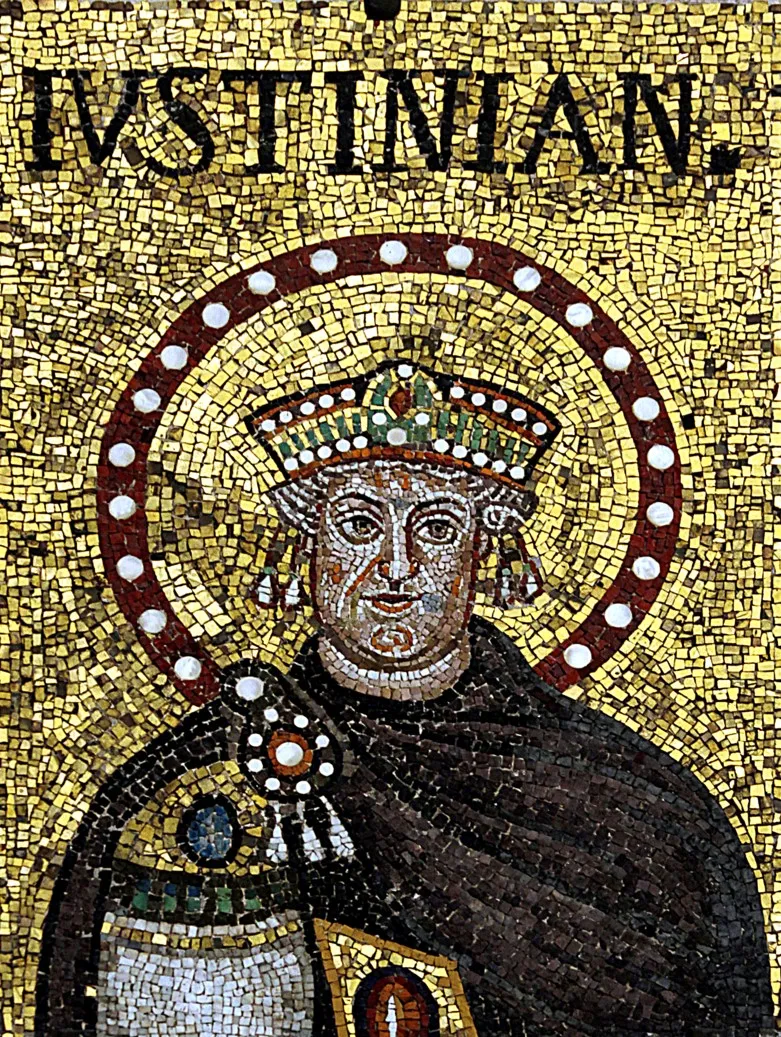
Supposed image of Justinian on the mosaic of the Church of Sant'Apollinare Nuovo, Ravenna
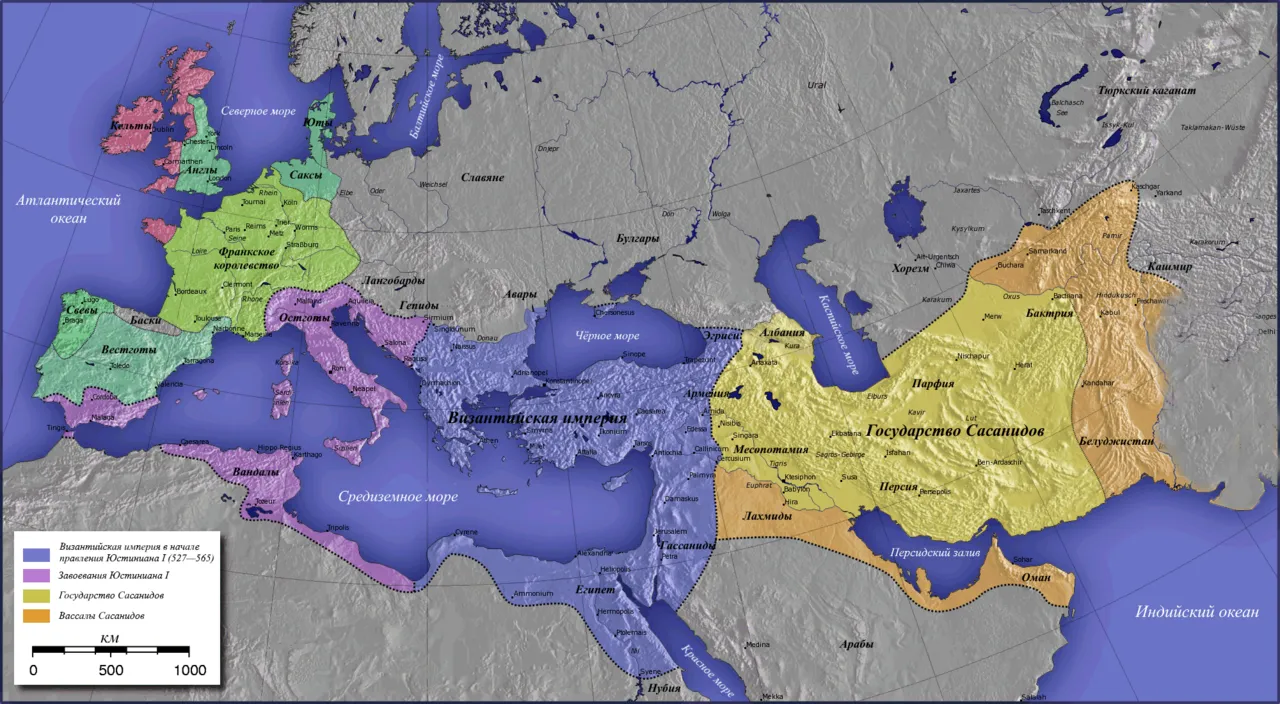
Expansion of the territory of Byzantium from the beginning of the reign of Justinian I
This emperor was born either in 482 or 483 in the territory of Illyria, and a monument to him can be seen in Skopje, the capital of Northern Macedonia.
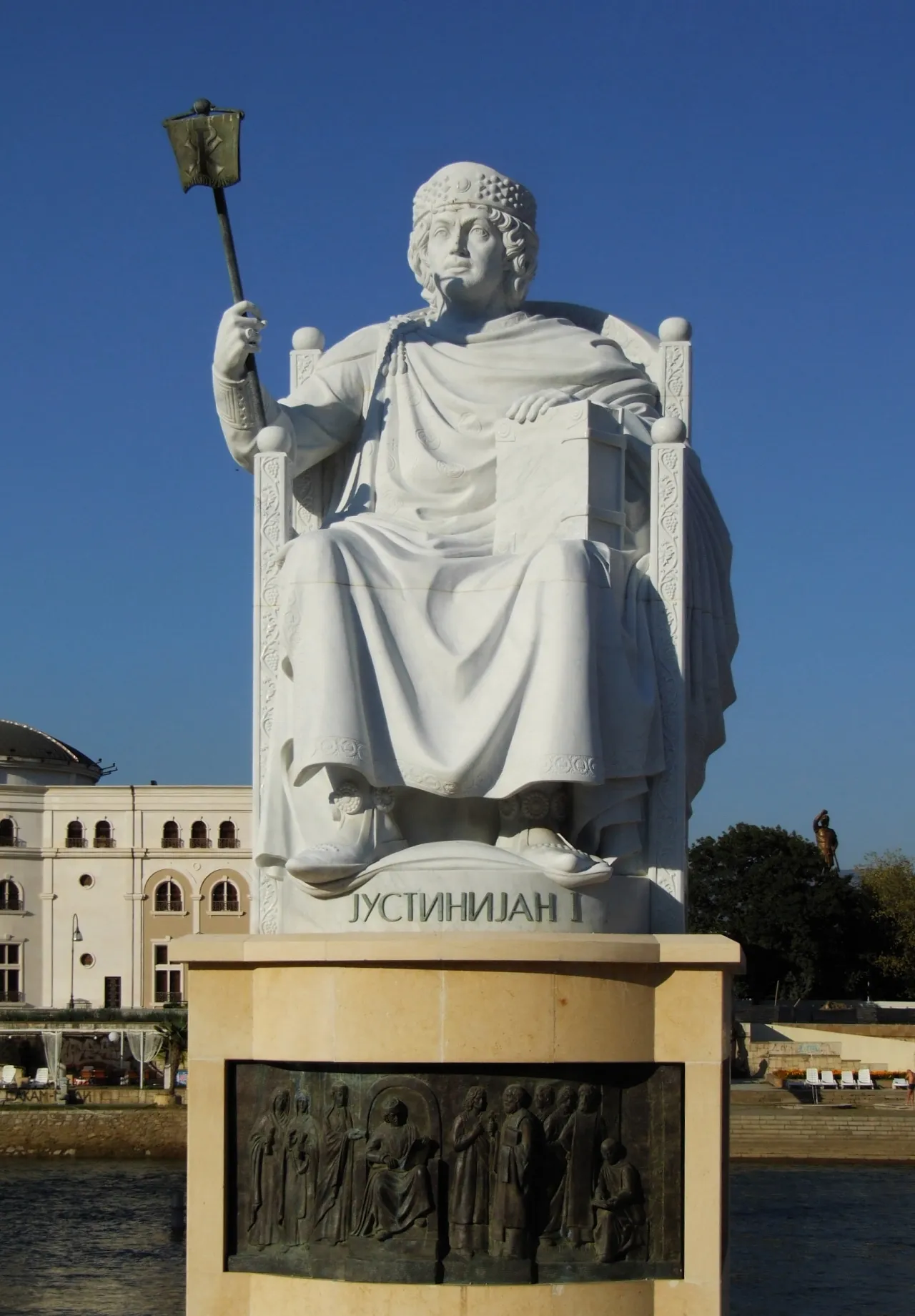
Most authors consider Justinian I to be Thracian, but some suggest he was of Slavic origin, as it is known that in his homeland he was known as Upravda. Some sources also mention him under the name Peter Savvaty.
Justinian's parents were peasants, but Procopius of Caesarea reports this:historical "anecdote" (in the original meaning of the word):
Justinian's mother told someone close to her that he was not born of her husband Savvaty or of any other man. Before she became pregnant with him, she was visited by a demon, invisible, but who left her with the impression that he had been with her and had intercourse with her, as a man would with a woman, and then vanished, as if in a dream.
It should be noted that other rulers, such as Alexander the Great and his successors Ptolemy and Seleucus, had previously also claimed descent from God, who “visited” their mother during her sleep.
The uncle of the future Great Emperor, Justin, had a distinguished career in the imperial capital, rising from a legionary to the head of the palace guard. It was he who summoned his nephew to the capital and, being childless, later adopted him, giving him a new name – Justinian. After the death of Emperor Anastasius I (July 518), Justin himself ascended the throne, appointing his nephew as head of his guard. And Justinian, as we recall, drew the young Belisarius into his orbit. In April 527, Justinian became Caesar – junior co-ruler with his adoptive father – and in August of that year, after his father's death, he became sole ruler of the Eastern Roman Empire.
What did one of Byzantium's most famous basileuses look like? Procopius of Caesarea reports that Justinian was a man of short stature, with very white skin, prone to obesity and early baldness.
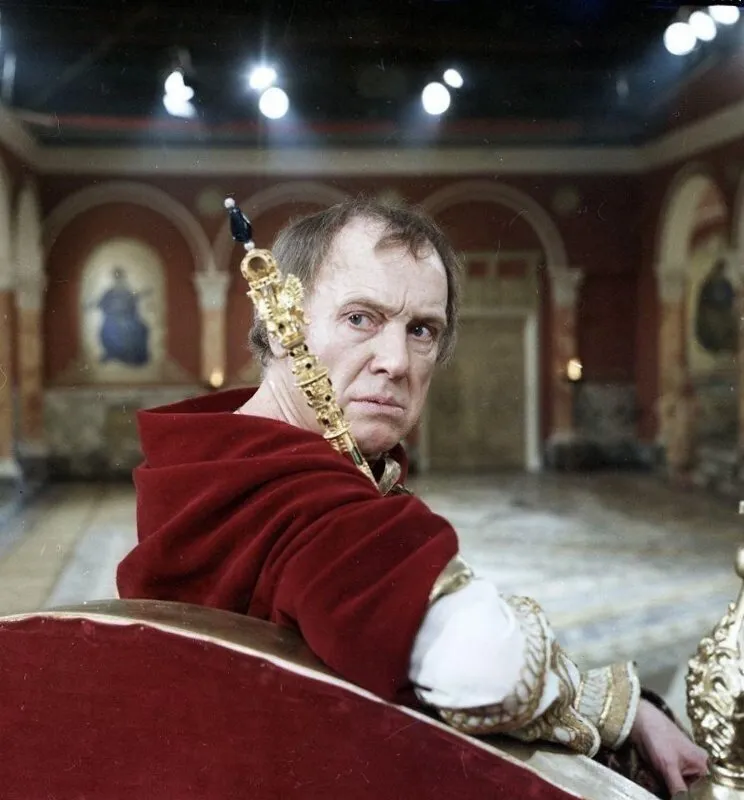
This is how Justinian (played by I. Smoktunovsky) was seen by viewers of the Soviet film “Rus’ Izbornaya” (Original Rus), 1985.
He slept very little, earning the nickname "The Sleepless Emperor." He was unpretentious in his eating habits and moderate in his wine consumption. At the end of his reign, he bore the name Caesar Flavius Justinianus of Alamannic, Gothic, Frankish, Germanic, Antean, Alanian, Vandal, and Africanus. He also gave himself the title "Isapostolos"—"equal to the apostles."
Let's return to the hero of the article.
Continuation of the military service of Flavius Belisarius
In 528, the Persians went on the offensive and routed the Romans in the Battle of Biddo. The fate of the Byzantine infantry was particularly tragic, as they either died on the battlefield or were captured. However, the hero of this article managed to lead the cavalry back to the fortress of Dara. The war was continued by the Master of Offices, Hermogenes, and Belisarius, who became Master of the East.
Let's clarify that the Magister Officii (literally, "overseer of offices") was one of the highest-ranking officials of the empire. He headed the chancery of the imperial palace, was effectively the minister of foreign affairs, defense industry, and transport, and was head of the palace guard and secret services. The Military Master of the East was the commander of the troops of the eastern Byzantine themes (provinces).
In July 530, Belisarius's 25-strong army defeated the 40-strong Persian general Peroz (Feruz) at the fortress of Dara. Before the battle, Belisarius ordered the digging of trenches and ditches to hamper the Persian cavalry. On the second day of the battle, Peroz even brought the "Immortals" guards into the fray. Theophylact Simocatta writes of this:
The horsemen began to put on helmets and armor ... Sitting on their horses in dense rows, they slowly moved with a proud step against the Romans.
But the Byzantine Hunnic cavalry broke the Persian guards' ranks and completely routed them. After this, the enemy infantry also fled, abandoning their shields. Up to 8 Persian soldiers were killed, and over 15 were captured. Belisarius' army crossed the border, but after an unsuccessful battle at Callinicum (modern-day Ar-Raqqa), which took place on April 19, 531, the Romans were forced to retreat to their own territory. Belisarius then entered the battle reluctantly, as the gathering of soldiers accused their commanders of cowardice. As a result, the Persians, having overturned the Roman right flank, advanced to the rear and pinned the other units to the river. Belisarius, it seems, chose to cross to the other bank of the Euphrates, abandoning his infantry, who nevertheless:
Having tightly closed their ranks in a small space, they kept close together the entire time and, firmly protecting themselves with their shields, struck the Persians with greater skill than they struck them. The barbarians, repeatedly driven back, attacked them again, hoping to disorganize and disrupt their ranks, but again retreated, having achieved no success. For the Persian horses, unable to bear the noise of the blows on their shields, reared and, along with their riders, fell into confusion.
The battle ended when darkness fell: the Persians retreated to their camp, and the Byzantine soldiers were able to cross the Euphrates. As a result, Belisarius was temporarily relieved of command, but he returned to his former position in the winter of 531-532.
Even after this victory, the new Shahanshah Khosrow I did not dare to continue the war and made peace with Byzantium.
Uprising "Nika"
Young Justinian is described as a very brave and decisive commander, but in January 532, he lost his courage, became distraught, and was on the verge of fleeing during the famous Constantinople revolt, known as the Nika Revolt. The rebellion was sparked by abuses by imperial officials and the persecution of the Monophysites, who had many supporters in Constantinople. The pretext was the denial of pardons to three members of the main Hippodrome parties—the Veneti ("Blues") and the Prasinians ("Greens"). These were eternally feuding "fanatical factions" who fervently cheered for "their own" during chariot races.
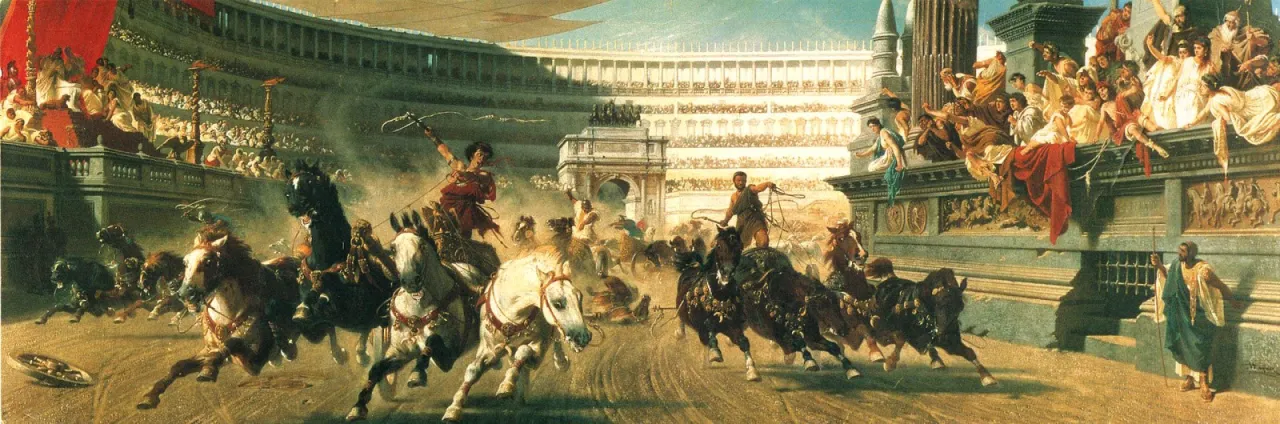
A. von Wagner. "Chariot Run"
Justinian, who sympathized with the Veneti, once ignored a complaint from a delegation of Prasini, who had begun insulting the emperor at a nearby race. The Veneti were only too happy to join the brawl, which soon engulfed the entire hippodrome. But Justinian suddenly decided to "score political points" by demonstrating his fairness and impartiality. On his orders, the ringleaders of both sides were arrested, and the court sentenced five to death by hanging. But three of them escaped the gallows, and, citing long-standing tradition and "God's will," the assembled crowd began demanding clemency.
The authorities' refusal led to new unrest, and the previously unthinkable occurred: both parties—the Veneti and the Prasini—came out against the emperor. The unrest quickly escalated into a full-scale rebellion, the slogan of which became "Nika" ("Conquer")—a cry used by the spectators to encourage "their" charioteers. The rebels were already demanding Justinian's abdication and that he cede his throne to Emperor Anastasius's nephews, Pompey and Hypatius. The entire central district of Constantinople was captured and virtually destroyed. Justinian prepared to flee (with the entire state treasury), but his wife, Theodora, prevented him from doing so.
"Holy Harlot"
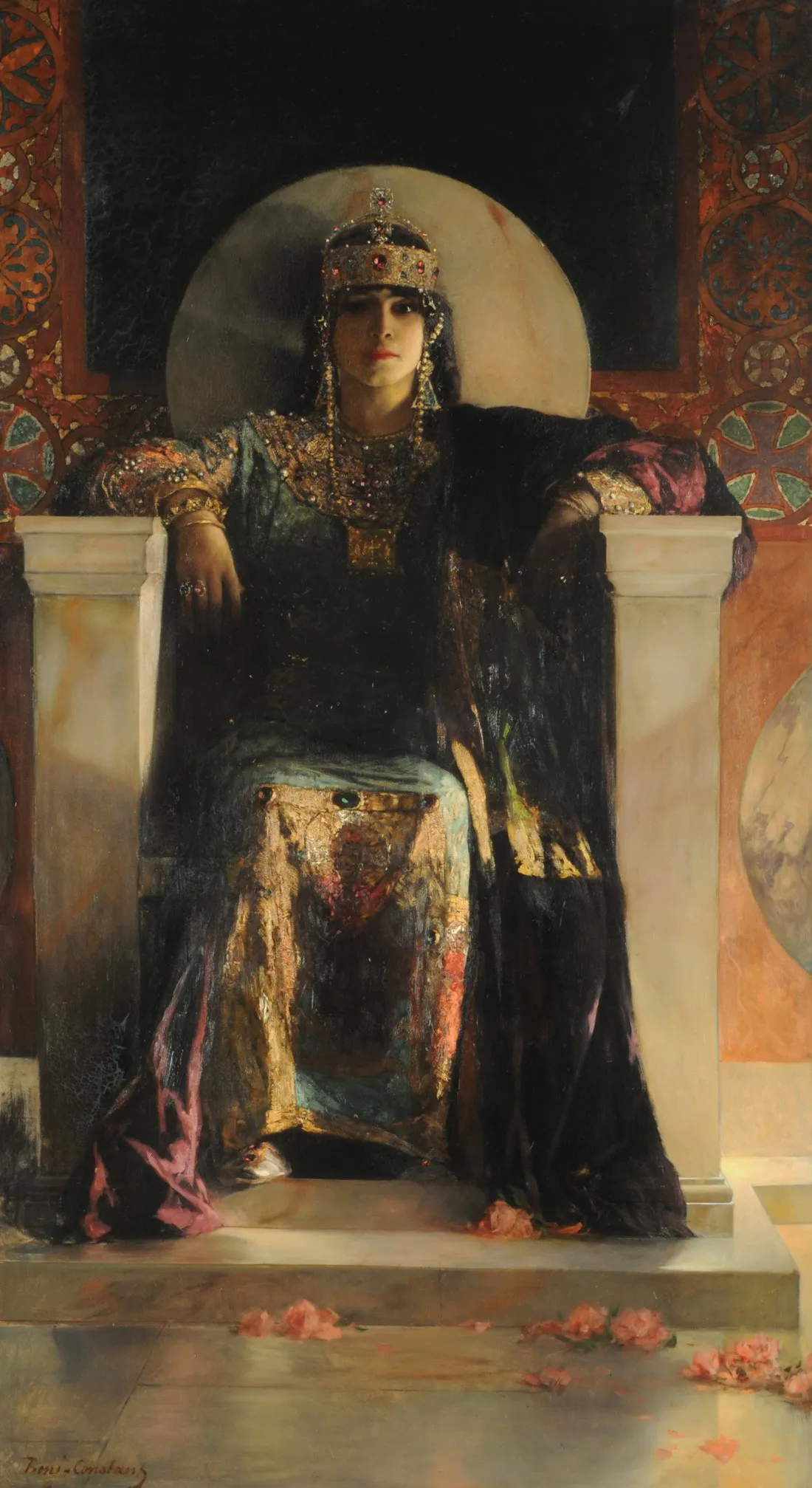
Theodora by Jean-Joseph Constant
Theodora was an extraordinary woman with an incredible destiny, beginning her life at the very bottom of Constantinople society. The future great empress was born in the year 500 to a family of circus performers on the island of Cyprus (in the city of Famagusta). It is known that Theodora's father was a bear trainer; Procopius even mentions his name, Acacius. The father died when Theodora was five years old, and the family, already poor, found itself on the brink of destitution. To survive, Theodora and her two sisters were forced from an early age to perform in the arena with their mother, even though these performances were overtly pornographic. But it must be acknowledged that the girls had little choice: earn a living through obscene acts in the circus or go straight to a port brothel. Procopius of Caesarea in his Secret History asserts that the eldest sister, Comito, was the main "star," while Theodora was merely:
A hetaera, the kind of woman who in ancient times was called "foot soldiers." For she was neither a flutist nor a harpist, nor had she even learned to dance, but merely sold her youthful beauty.
But he also reports that Theodora:
She was unusually graceful and witty, which is why everyone was delighted with her.
Procopius also gives a description of Theodora’s performances:
Often, in the theater, in full view of the entire crowd, she would remove her dress and appear naked in the midst of the assembly, wearing only a narrow strip over her groin and private parts—not because she was ashamed to show them to the crowd, but because no one was allowed to appear there completely naked without a covering. In this state, she would arch her back and lie on her back. The attendants assigned to this task would scatter barley grains on her private parts, and geese, specially prepared for this purpose, would pick them out with their beaks and eat them.
The same author speaks of the future empress's numerous pregnancies, which ended in miscarriages, as well as of two children she gave birth to before her marriage to Justinian. Her son, John, was allegedly raised by his father's family in Arabia, and her daughter later gave birth to a boy who became the husband of the article's subject, Belisarius.
John of Ephesus is generally more favorably disposed towards this woman, but he too, in his “Lives of the Eastern Saints,” calls her “Theodora from the brothel.”
Wife of Belisarius
Theodora's older friend and likely mentor, the aspiring "actress" was Antonina, another remarkable woman of the era, who was called "Theodora's right hand in exercising her influence and power." Antonina's father and grandfather were charioteers, and her mother (according to Procopius) was "one of the prostitutes attached to the theater." Procopius also reports that Antonina was "skilled in magic." She later married Belisarius, and the marriage was generally successful, although Antonina was approximately 12 years his senior, and Procopius reports her adultery (though he does not accuse Theodora, whom he hated, of infidelity to Justinian). The son of Theodora's daughter (whom she bore before meeting Justinian) married Antonina and Belisarius' daughter.
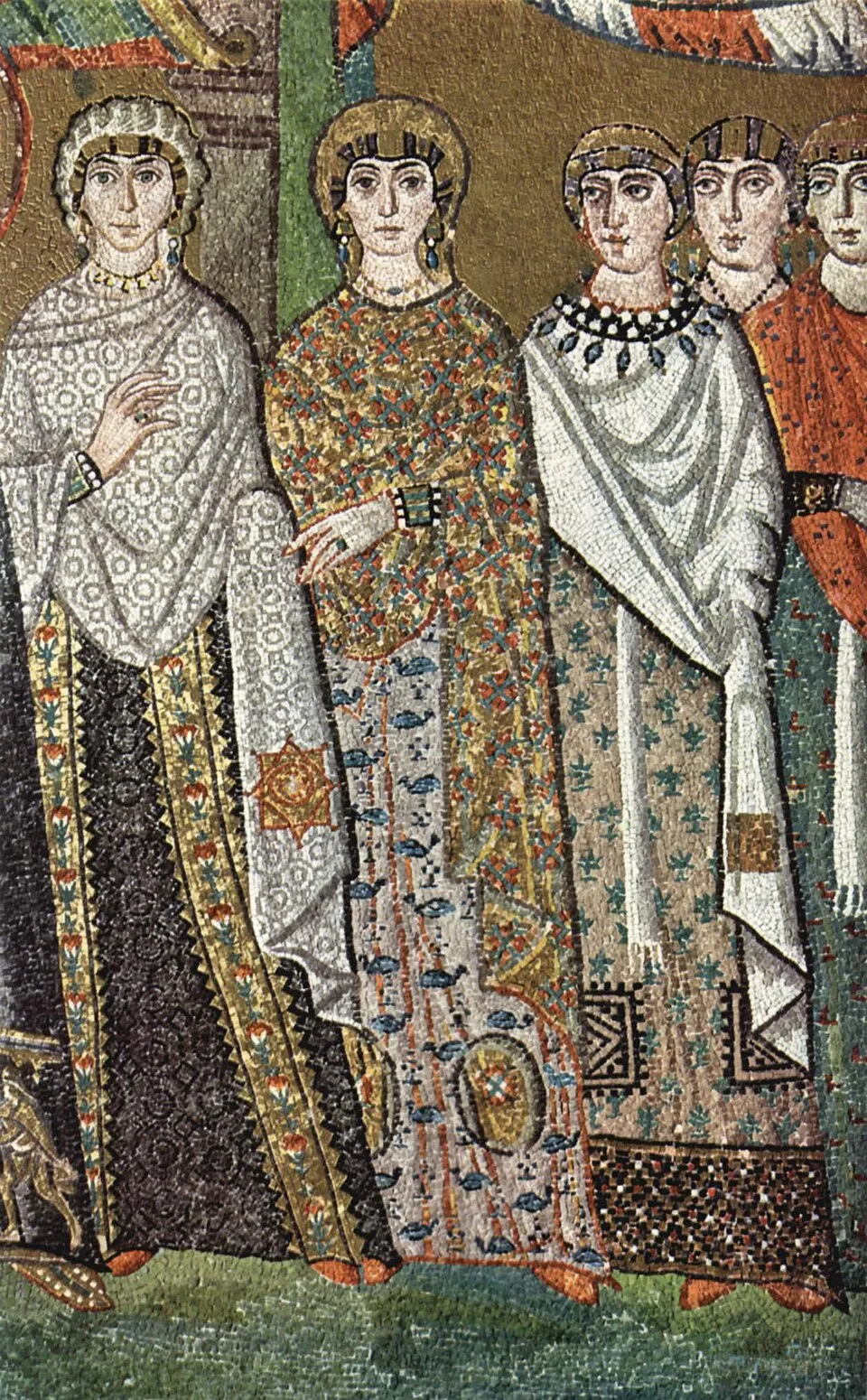
In this 6th-century mosaic (546-547) from the Basilica of San Vitale in Ravenna, we see the only portrait of Theodora painted during her lifetime, with Antonina and her daughter Ioannina standing next to her.
Through her friend, the empress exercised complete control over Belisarius, but Antonina also repeatedly interceded on her husband's behalf. And in 544, Theodora wrote to the disgraced Belisarius:
I forgive your crimes because of what your wife has done for me. Hope for the future through her, but know that we will hear how you behave with Antonina.
His wife accompanied Belisarius during the wars with the Vandals and Goths. Procopius, who openly disliked her, nevertheless reports that in 537 Antonina helped him in Naples "to organize fleet" However, many historians believe the opposite was true, and that it was Procopius who assisted Antonina. She also played a major role in the removal of Pope Silverius, who was accused of attempting to surrender Rome during the Goths' siege of the city in 537–538.
Transfiguration of Theodora
But let's return to Theodora, who was fortunate after all: her lover, Hecebolus, having been appointed Archon of the Pentapolis, took her away from Constantinople. He soon abandoned her, and Theodora settled in Alexandria. Here, she became imbued with the Monophysite teachings and met two patriarchs—Timothy IV of Alexandria and the canonized Severus of Antioch. The latter later called Theodora "the queen who honors Christ."
Returning to Constantinople, Theodora led a completely different lifestyle, earning her living by spinning yarn.
Thus, it can be argued that this woman was not at all depraved by nature and renounced her former depraved life at the first opportunity. Incidentally, legend connects the famous "weeping column" of Hagia Sophia (the "column of wishes") with Theodora, who wept beside it, repenting for the sins of her youth.
[i

The Weeping Column. Tourists are invited to make a wish by placing their finger in the column's circular opening.
The Weeping Column. Tourists are invited to make a wish by placing their finger in the column's circular opening.
But let's not get ahead of ourselves; not yet an empress, but no longer a porn actress, Theodora lived quietly in Constantinople, renting an apartment from an acquaintance from her former life—a certain actress named Macedonia. It was in her home that she met Justinian, who was 18 years her senior. The new Theodora made such an impression on Emperor Justin's nephew that he secured the rank of patrician for her, and in 525, he married her.
He so passionately desired to marry her that Constantine the Great's law, which prohibited marriages between noblemen and women of low birth, actresses, and the daughters of actresses, had to be amended. Now, an actress could be married with the emperor's personal permission, provided she abandoned her profession. For 21 years, Theodora served as Justinian's de facto co-ruler, even countermanding his orders, replacing them with her own. Local officials feared her more than they did the emperor. John of Ephesus, for example, cites the response of one imperial official to Justinian's envoy:
The fear of the queen is well known to me, so I did not dare to resist.
And Theodora herself wrote to the Persian Shah Khosrow:
The Emperor never decides anything without consulting me.
But Theodora and Justinian had no children; the emperor's nephew, known in history as Justin II, became the heir. His wife was the daughter of one of Theodora's sisters, Aelia Sophia.
The empress died of cancer in June 548 at the age of just 48. Justinian grieved greatly at his wife's death and even swore by her name.

Sculpture of Theodora's head, Castello Sforza, Milan
Justinian and Theodora were later canonized by the Orthodox Church; their feast day is celebrated on November 14 (27).

But the Catholic Church refused to canonize Justinian and Theodora, but Pope Silverius, who had been defrocked by Antonina, was canonized.
In the next article, we'll return to January 532, when Justinian, frightened by the Nika Revolt, was preparing to flee the capital. We'll also discuss Belisarius's defeat of the Vandal Empire.
Information