Royal Yacht Britannia 1953-1997

“Looking back over the past 44 years, we all remember with pride and gratitude this great vessel which served the country, the Royal Navy and my family with such distinction.
Britannia has provided us with excellent support throughout this time, playing a vital role in stories second half of our century. It is with deepest sadness that we must say goodbye! (From Queen Elizabeth II's farewell address on December 11, 1997, at the ship's decommissioning ceremony).
No one can know what was going on in the minds of the royal family members at these moments, but witnesses describe their state as follows:
The Queen's eyes seemed clouded with emotion. The Princess kept dabbing her eyes with her handkerchief, the Prince of Wales sank into utter sadness, and Prince Philip became petrified and just ground his teeth.
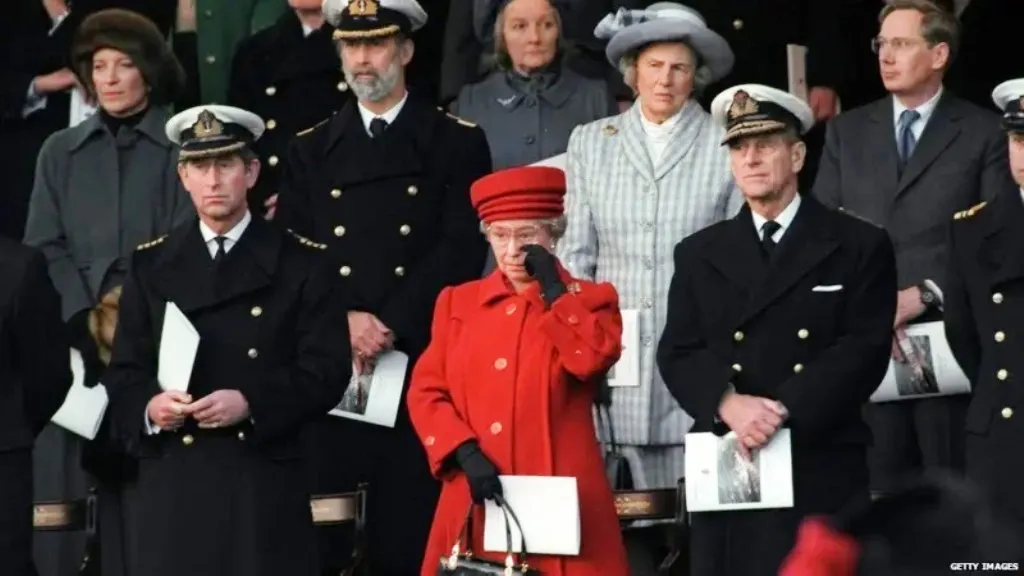
Farewell to the yacht "Britannia"
Several months earlier, the yacht had completed a farewell tour of Great Britain, circumnavigating the entire country. On the final day, to the sounds of the Royal Marines' Band, HMY Britannia slowly entered Portsmouth Harbor. As the Queen stepped down the gangway, at precisely 15:01 PM, all the ship's clocks stopped. They stood still forever, symbolizing the end of a glorious era.
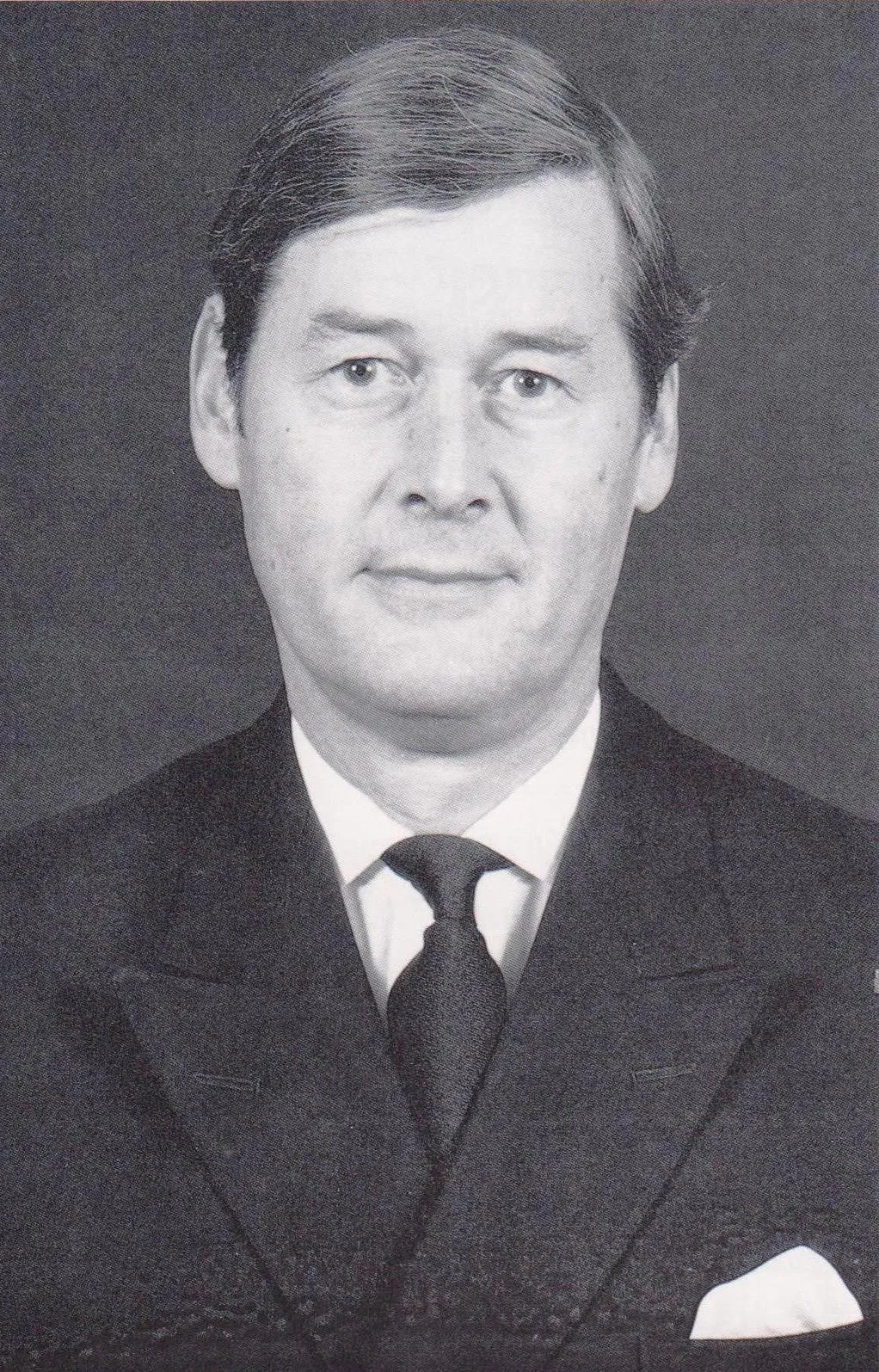
The last commander of HMY Britannia, Commodore Antony Morrow
The most moving moment of the ceremony was the lowering of the flags. To the sounds of a funeral march and the beating of drums, the Royal Standard of Elizabeth II, which had been flying above the mainmast, was slowly lowered. An officer carefully folded the flag and handed it to the Queen with outstretched arms. It was at this moment that Elizabeth II, Prince Philip, and their children burst into tears.
The Queen has always been reserved in her displays of emotion. She has only been seen crying three times in her life: at the memorial service for the victims of the World Trade Center terrorist attack in New York, at the 60th anniversary of the Canadian landings in Normandy, and when her beloved yacht, Britannia, was decommissioned.
For Elizabeth II, the Britannia was more than just a means of transportation or a symbol of grandeur. As she herself admitted, it was the only place in the world where she could truly escape the cares of state and simply be a mother, a wife, and a woman surrounded by her family.
The Britannia continues to live on, permanently moored in Edinburgh and now a museum open to the public.
The History of Royal Yachts
Britannia became the 83rd royal yacht, the first since the Restoration of the Stuart dynasty in 1660 being HMY Mary (1660–1675), a gift to King Charles II from the people of Amsterdam, where he was in exile.
The first purpose-built royal yacht with a steam engine was HMY Victoria & Albert (1843-1855), later known as Osborne (1855-1867). The vessel was named in honor of Queen Victoria, who reigned from 1837 to 1901 and during whose reign the British Empire reached the height of its power, and her husband, Prince Albert.
Queen Victoria received her "baptism at sea" on August 29, 1842, aboard the yacht HMY Royal George, which, accompanied by nine other ships and vessels, was sailing from Woolwich (a suburb of London) to Leith (the port of Edinburgh). The Queen suffered from seasickness throughout the three-day voyage.
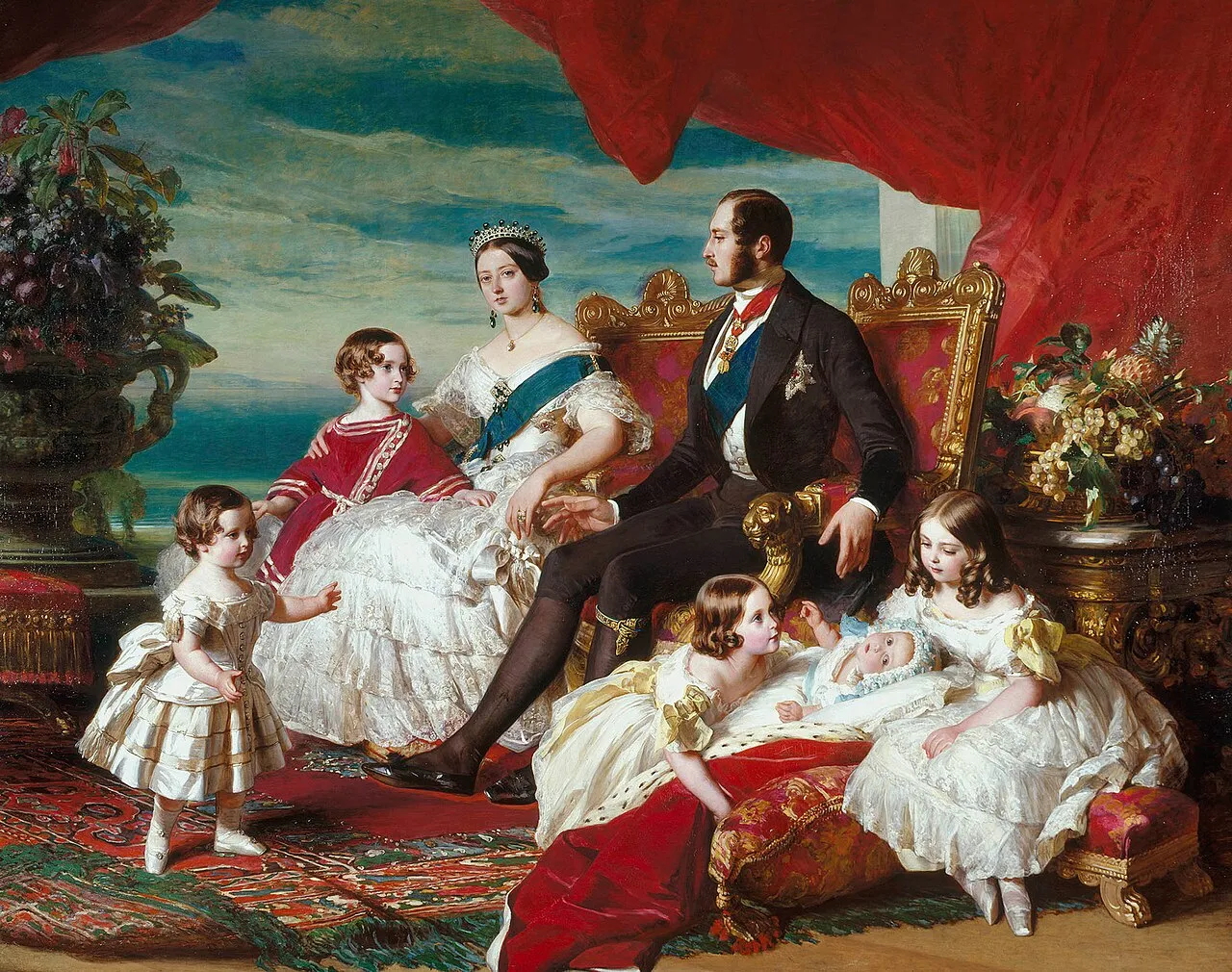
Queen Victoria and Prince Albert with their children
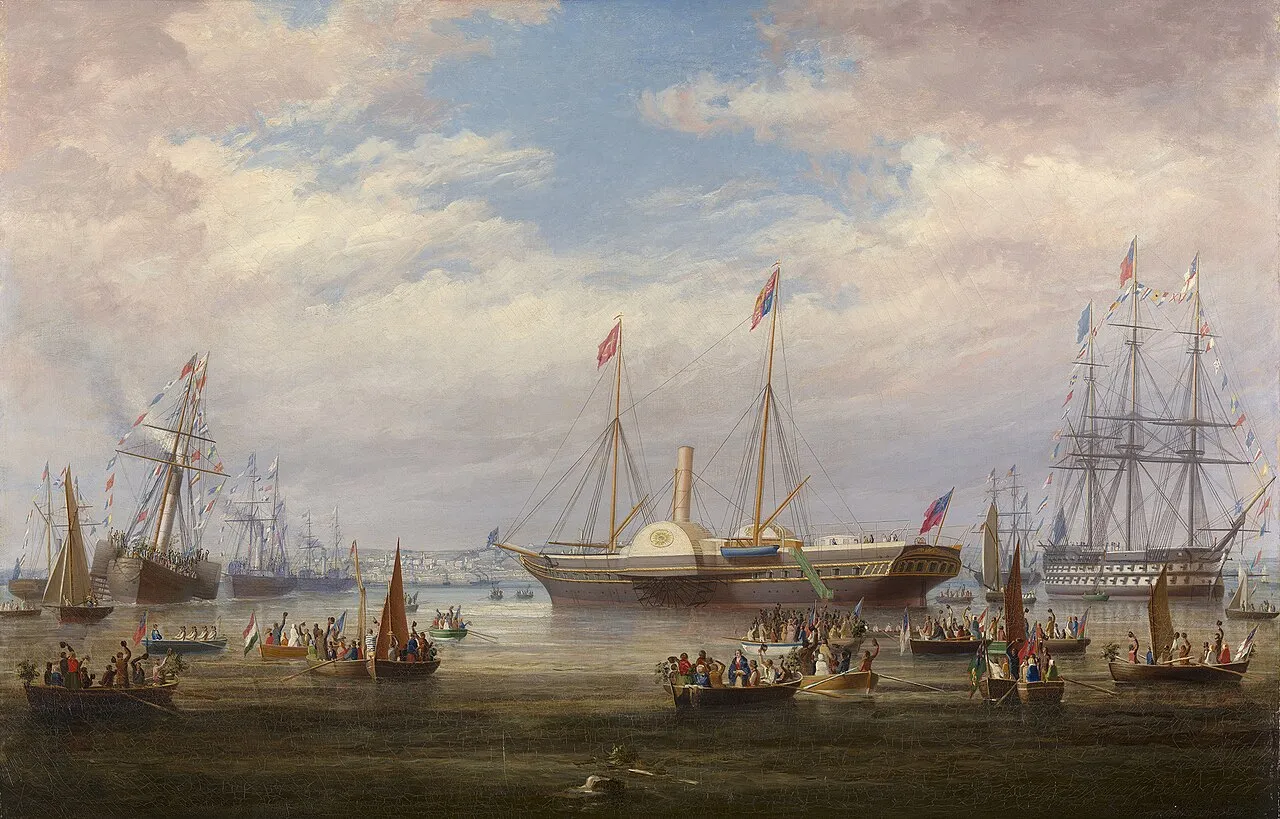
HMY Victoria & Albert arrives in Cork, Ireland, on 3 August 1849.
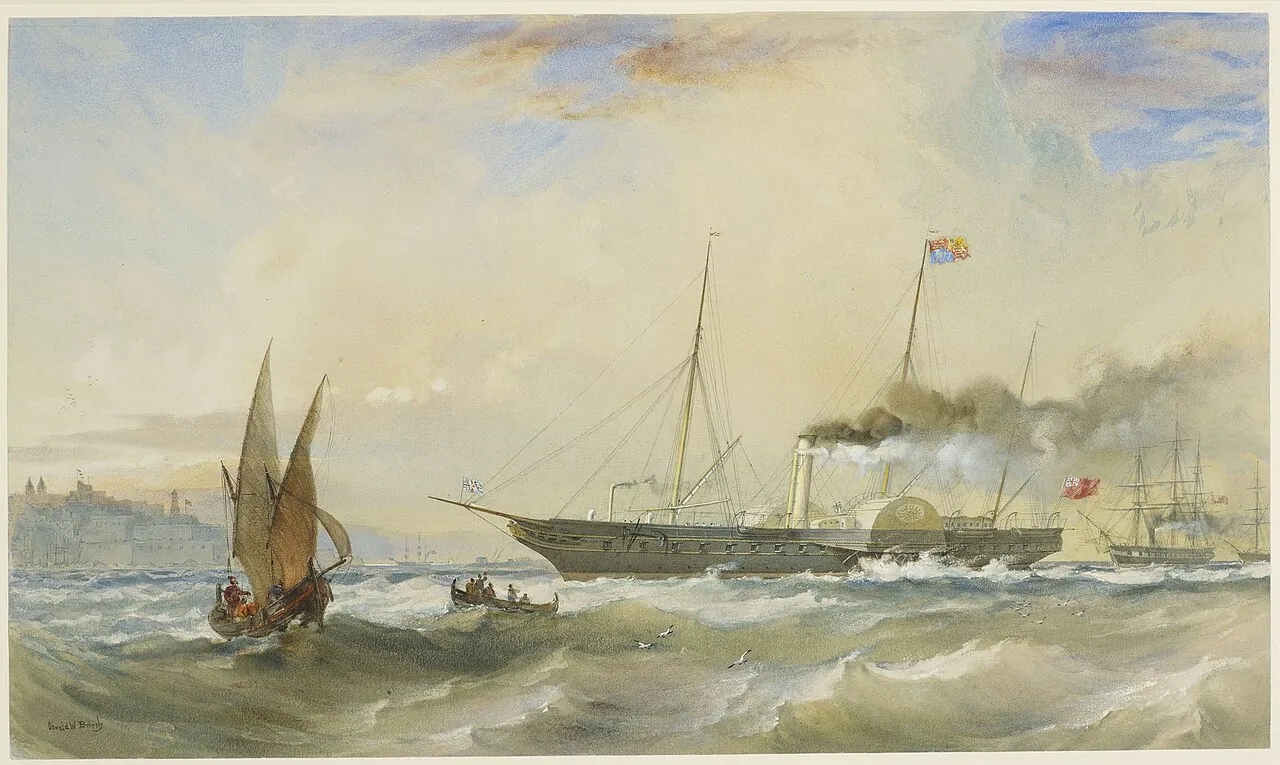
The Osborne, with the Prince of Wales on board, enters the port of Malta, 1862.
In 1855, a new royal yacht, bearing the same name as the previous one, entered service. With a displacement of 2430 tons and a steam engine producing 2400 indicated horsepower, the vessel could reach speeds of up to 15 knots. It served as the Queen's primary means of foreign diplomacy, review, and fleet and official trips for almost half a century.
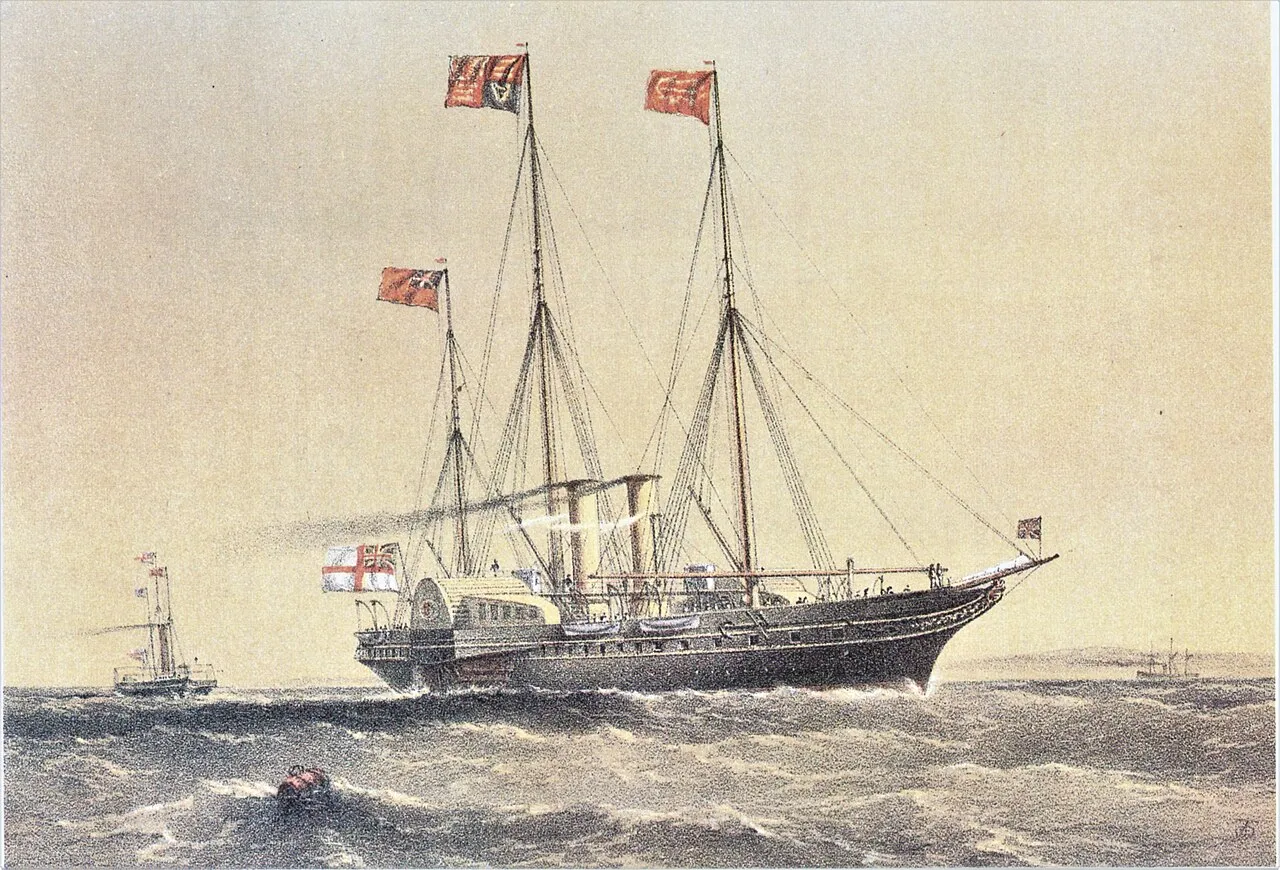
HMY Victoria & Albert II, 1855
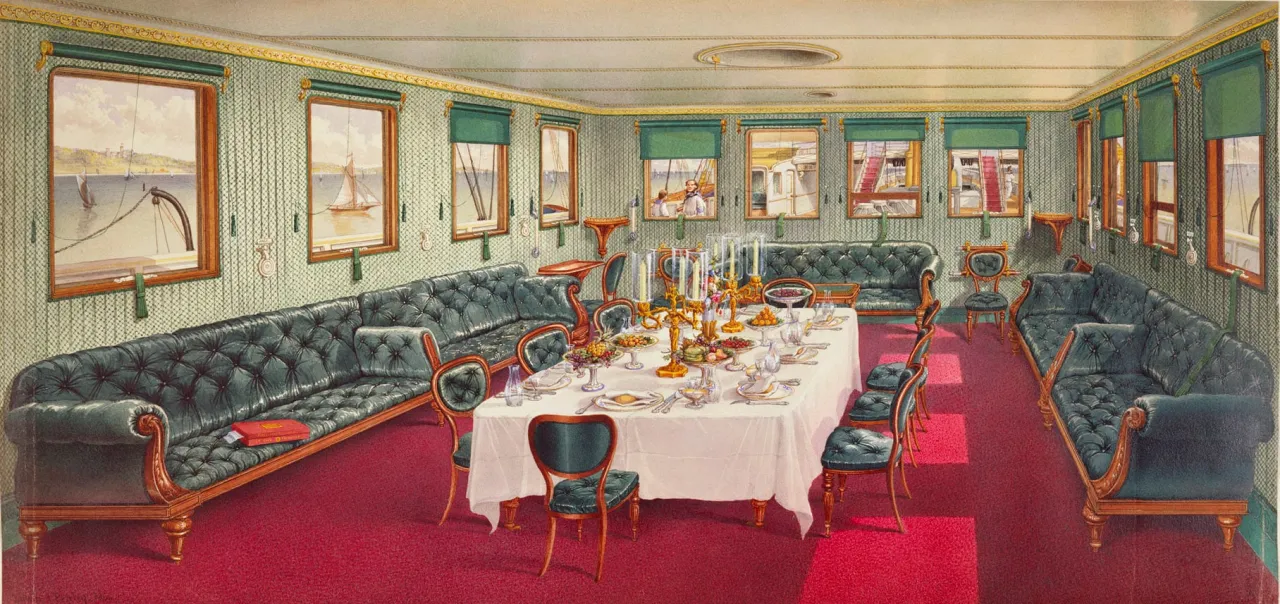
The dining room at HMY Victoria & Albert II
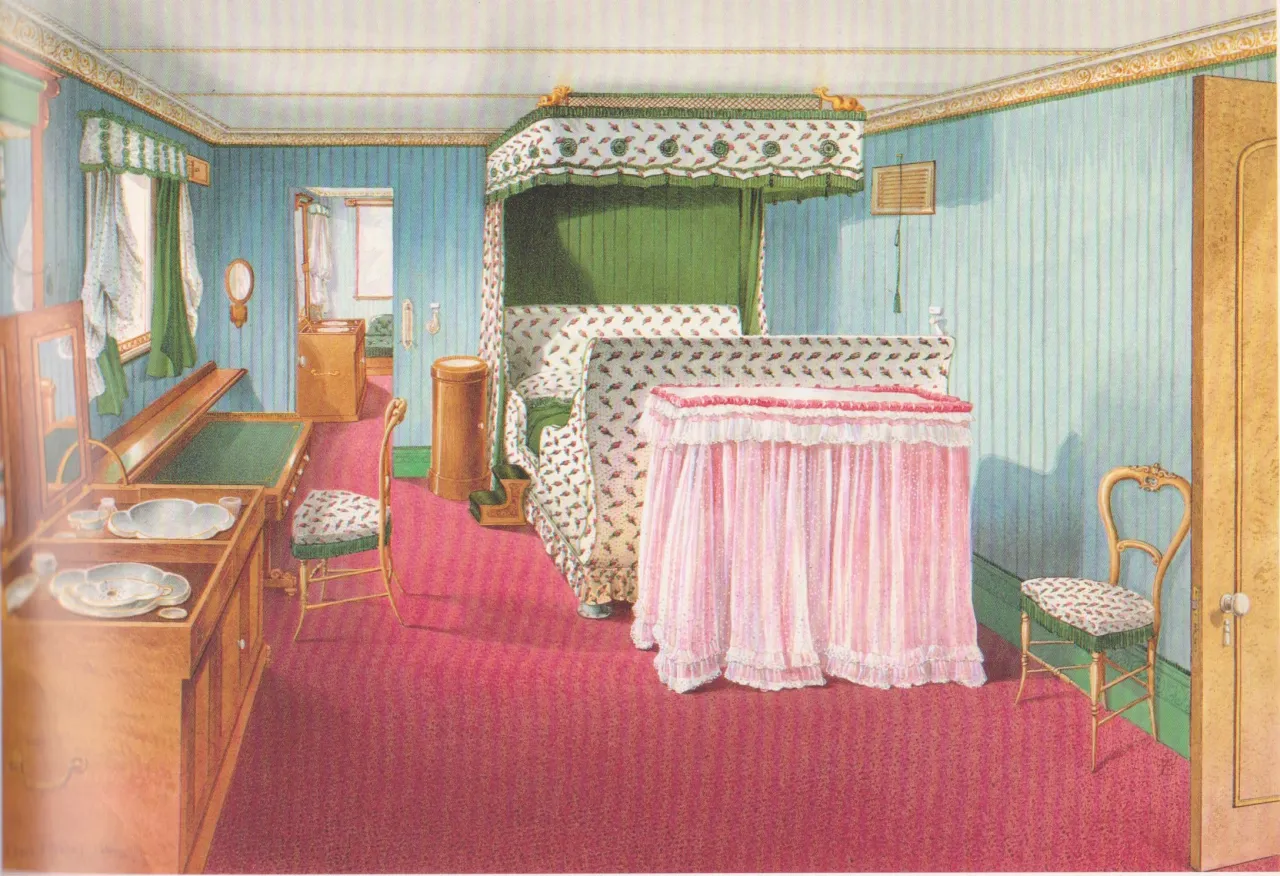
Queen Victoria's Bedroom, HMY Victoria & Albert II
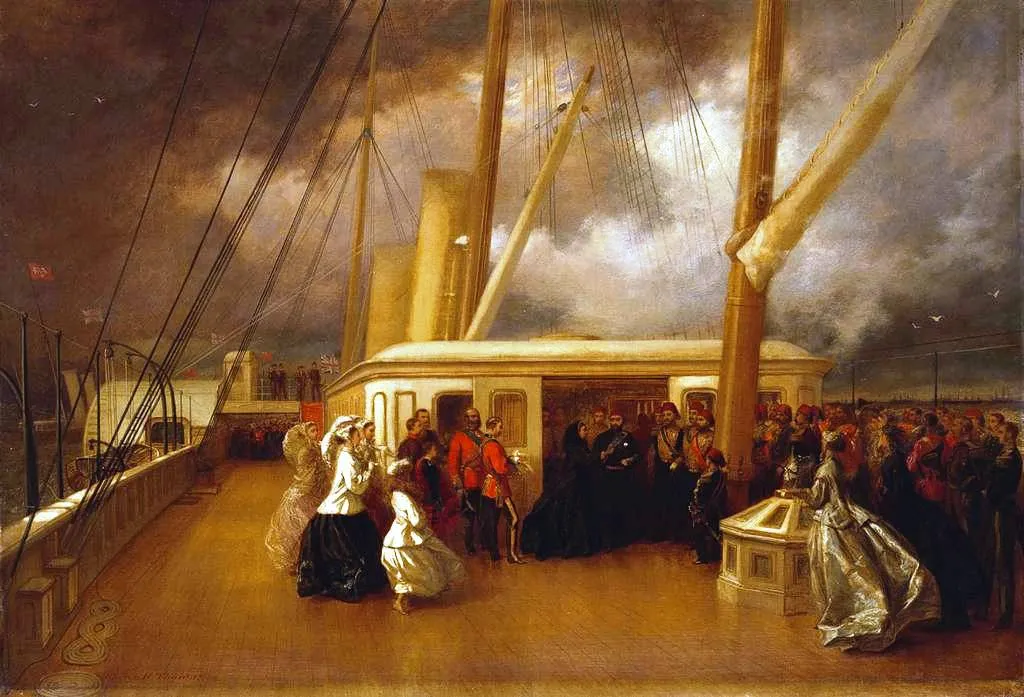
Queen Victoria and the Turkish Sultan Abdulaziz on board HMY Victoria & Albert II, 1867
Interestingly, her sister ship, "El Mahrousa," commissioned by the Egyptian Khedive Ismail Pasha in 1865, is still in service, albeit significantly modernized. The steam engine and paddle wheels were replaced with a steam turbine powering three propellers (1905). She is used as a training ship for the Egyptian Navy and as the presidential yacht.
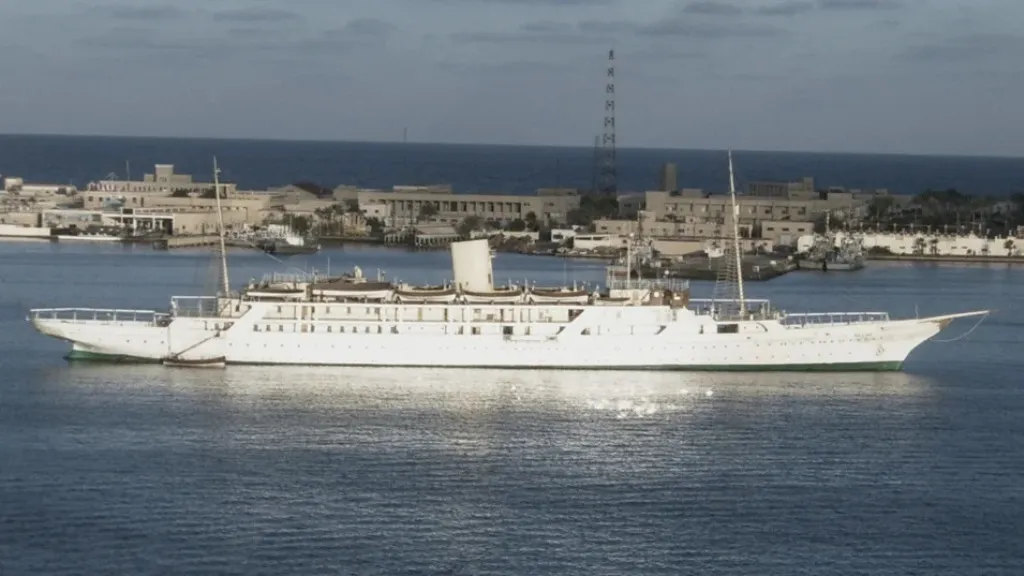
El Mahrousa, a modern look
In 1901, seven months after the death of Queen Victoria, HMY Victoria & Albert II was replaced by HMY Victoria & Albert III, and the old ship was scrapped in 1904.
HMY Victoria & Albert III was built to the designs of William White, the Royal Navy's Chief Constructor. Unlike her paddlewheel "namesakes," which featured fire-tube boilers and wooden hulls, she was a screw-driven vessel with a displacement of 4700 tons and a steel hull. Fifteen Belleville water-tube boilers supplied steam to two four-cylinder triple-expansion engines with a total output of 11000 horsepower, driving two screws. Her operating speed was 17 knots, and her maximum was 20. Her construction cost the Treasury £572,000, equivalent to £60,786,394 today. She had a crew of 336.
It should be noted that the royal yachts were owned and operated by the Royal Navy, and their crews were made up of naval sailors.
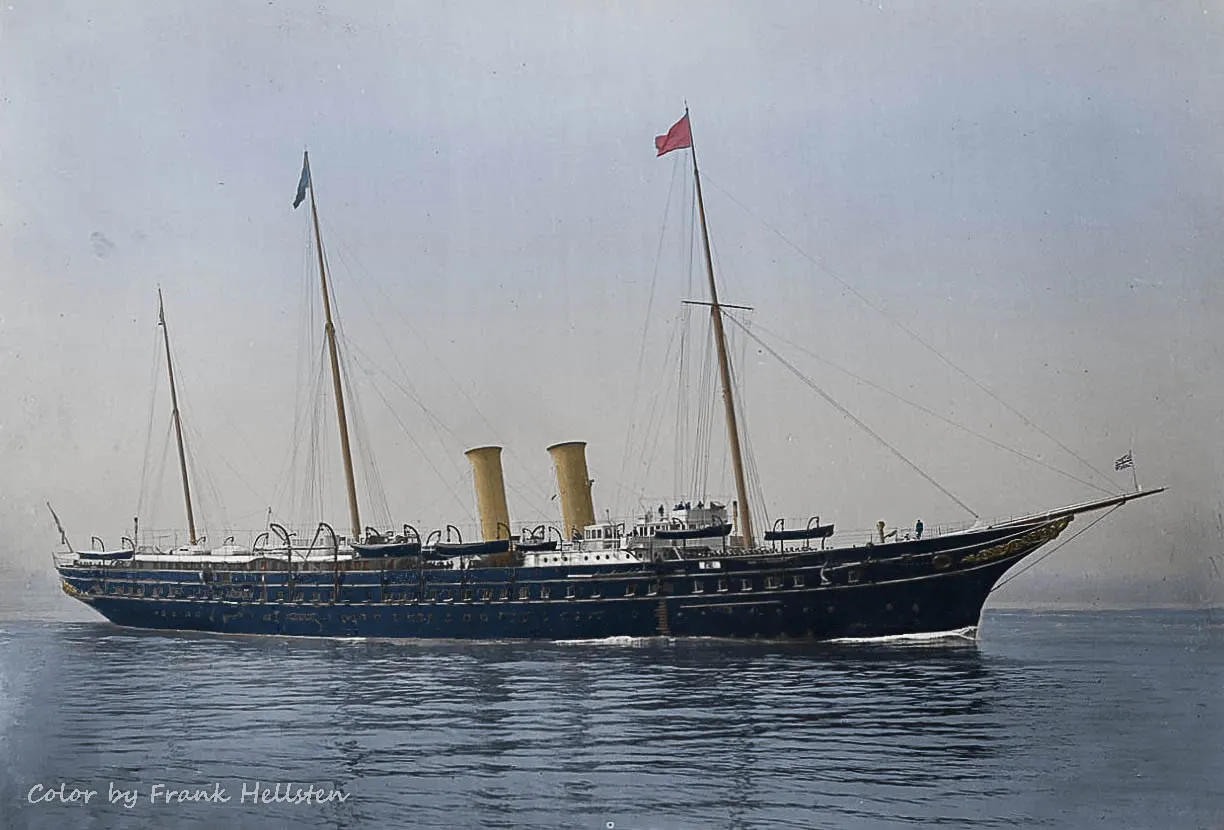
HMY Victoria & Albert III
Commissioned in 1901 under King Edward VII, the yacht served four monarchs (Edward VII, George V, Edward VIII, and George VI). In addition to her official duties, she served as a base for the royal family at regattas and large-scale fleet reviews (the last in 1937).
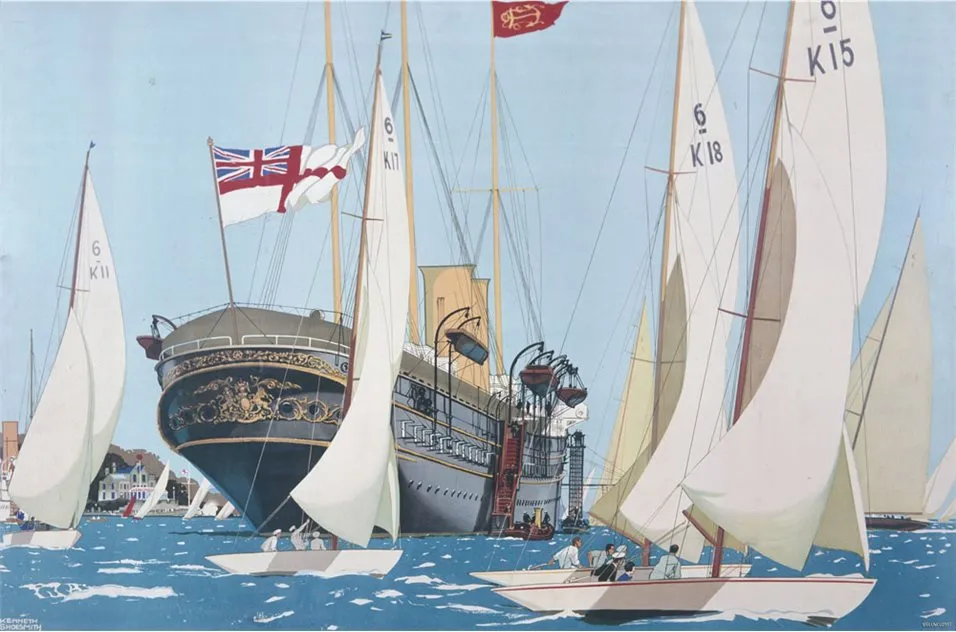
Regatta off Cowes, Isle of Wight
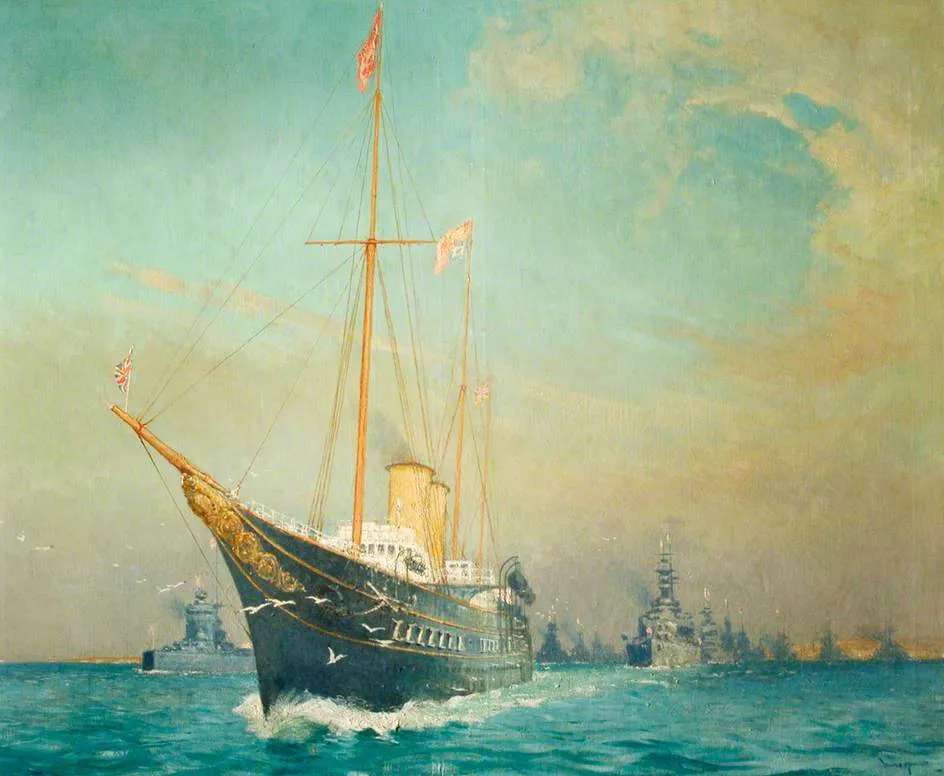
Fleet review
On May 27 (June 8), 1908, the royal yacht HMY Victoria & Albert III entered the port of Reval, carrying British King Edward VII and Queen Alexandra with their daughter Victoria. The yacht Shtandart also arrived, carrying Russian Emperor Nicholas II and his entourage. The monarchs exchanged visits, visiting both yachts.
From July 20 to 23 (Old Style), 1909, Nicholas II and Empress Alexandra, along with their children, visited Great Britain on the yacht Shtandart. Aboard HMY Victoria & Albert III, the two monarchs arrived in Cowes, where they were shown the might of the British fleet, comprising 24 battleships, 16 armored cruisers, 7 dreadnoughts, and other warships. The parade, in his own words, left a "deep impression" on the Tsar. "The English fleet stood in five lines over a total of 18 miles. There were 150 ships in total, including submarines and auxiliary vessels. We inspected the three middle columns of large ships," the Russian Emperor wrote in his diary on the evening of July 20.
Both of these events undoubtedly contributed to the rapprochement between the two countries on the eve of the First World War.
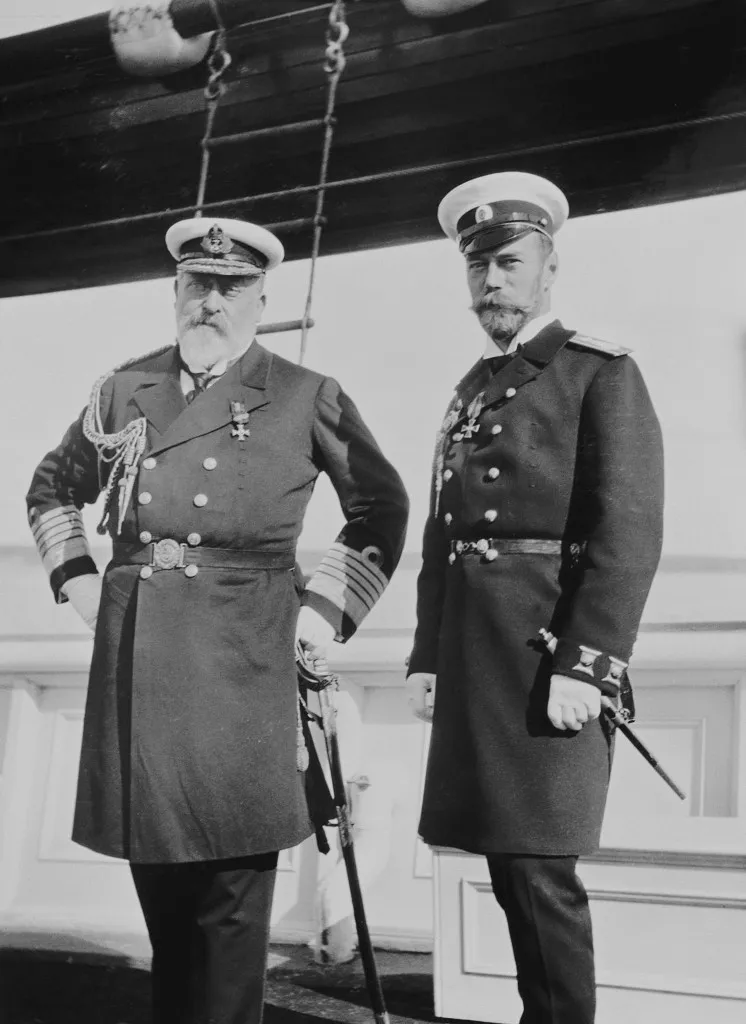
Emperor Nicholas II and his uncle, the British King Edward VII, on board the yacht HMY Victoria & Albert III in Reval, 1908.
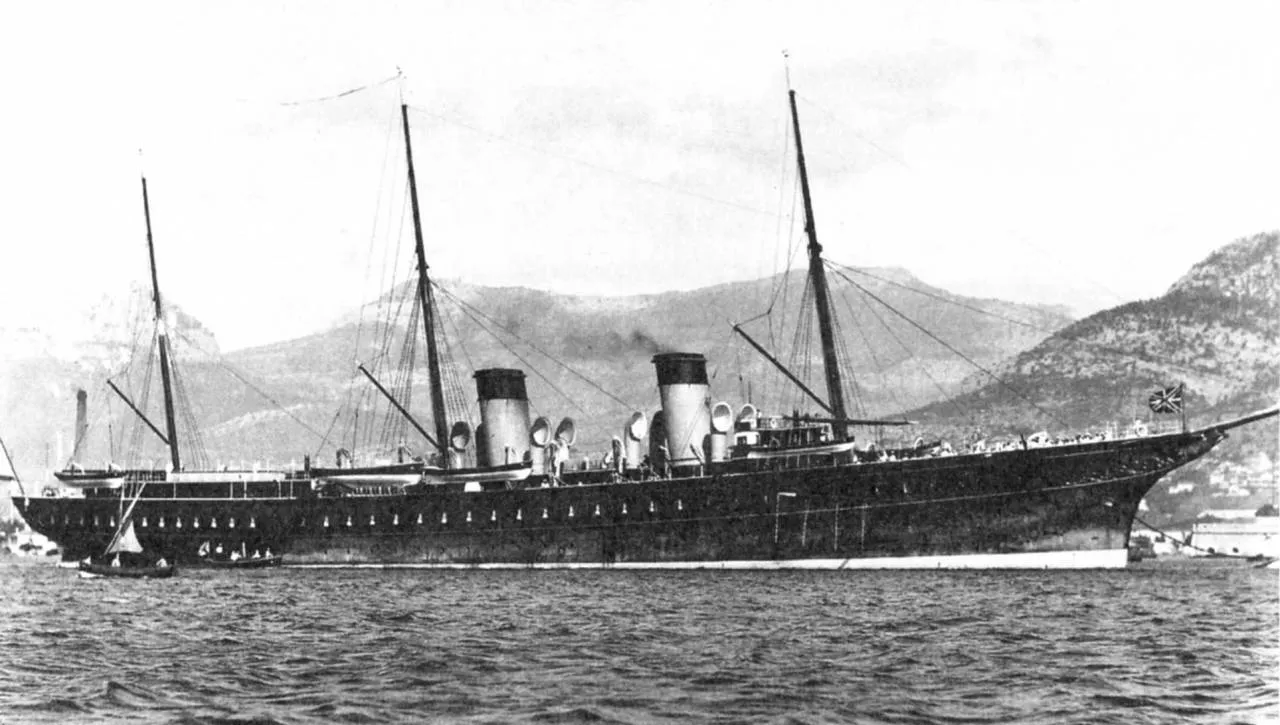
Russian imperial yacht "Shtandart"
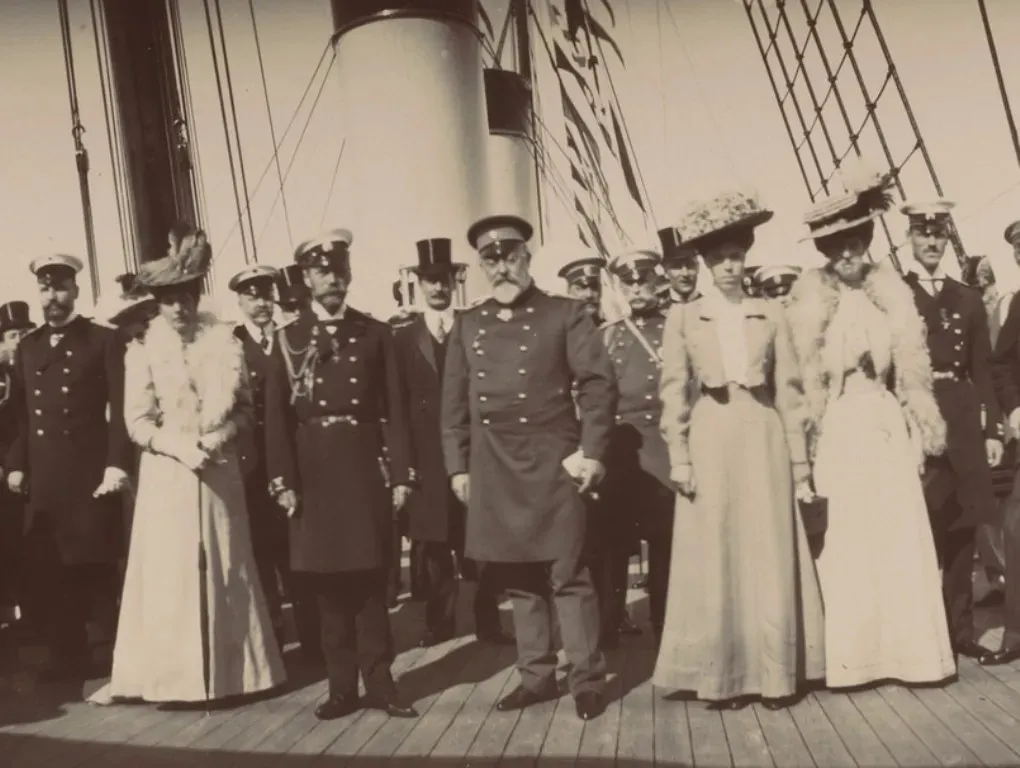
The monarchs of Russia and Great Britain on board the Shtandart, Reval, 1908.
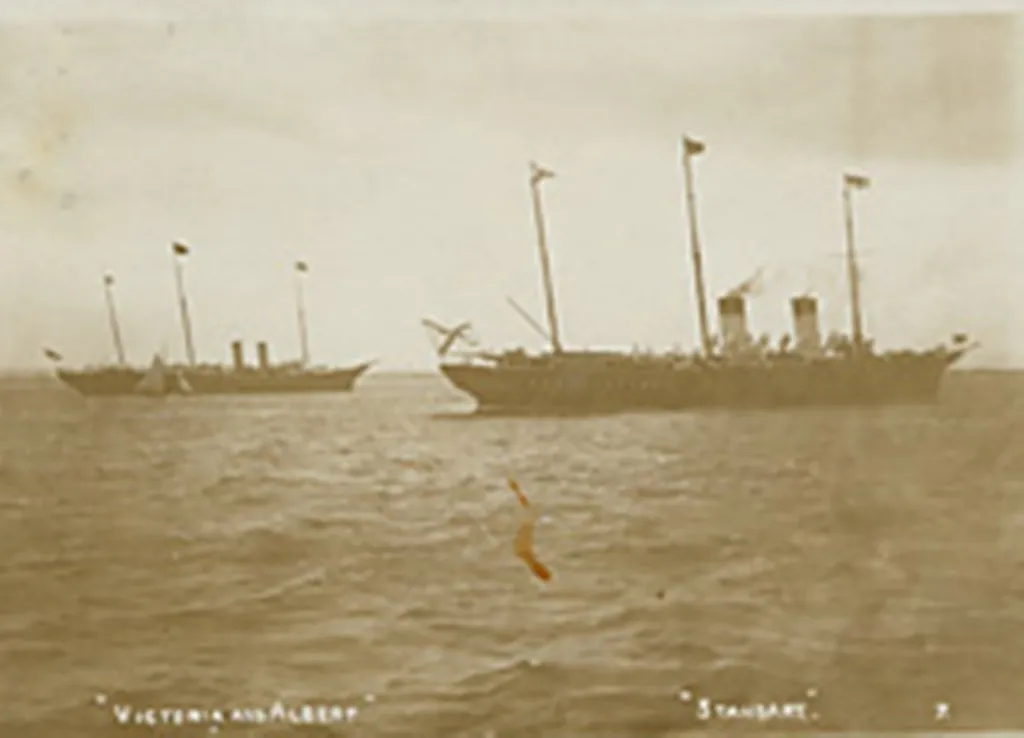
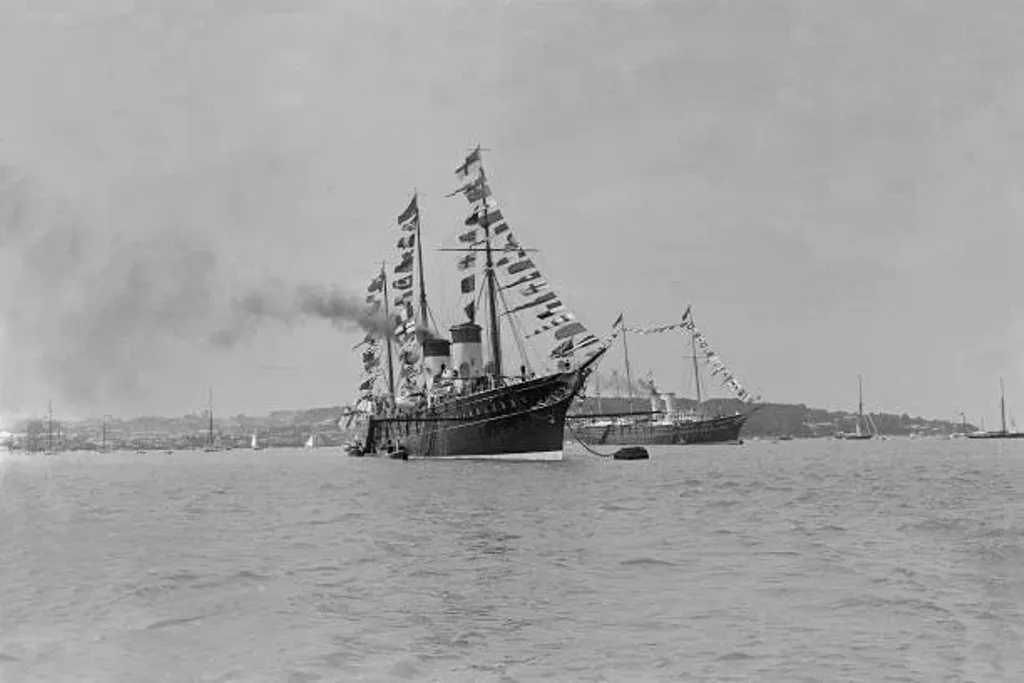
Standard and HMY Victoria & Albert III (background), Cowes, UK, 1909
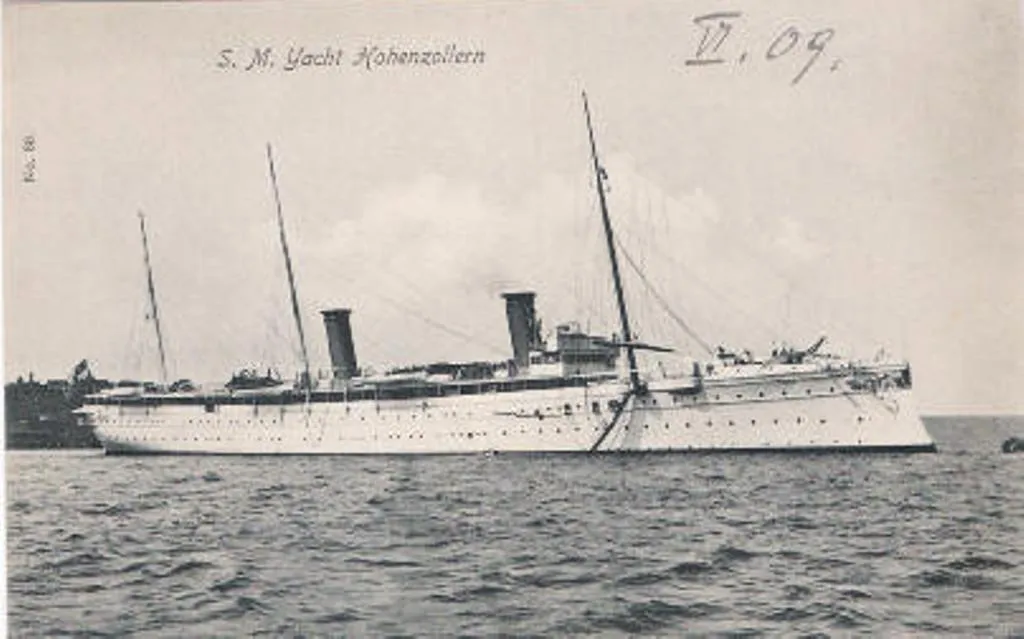
The "competitor" of the "Standart" and HMY Victoria & Albert III - the yacht of the German Kaiser Wilhelm II SMY Hohenzollern
In 1939, the yacht was decommissioned and, with the outbreak of World War II, was used as a floating barracks under the name HMS Excellent in Portsmouth. In 1954, she was finally scrapped, making way for the new yacht HMY Britannia.
Also worthy of mention is the small racing yacht HMY Britannia (1893-1936).
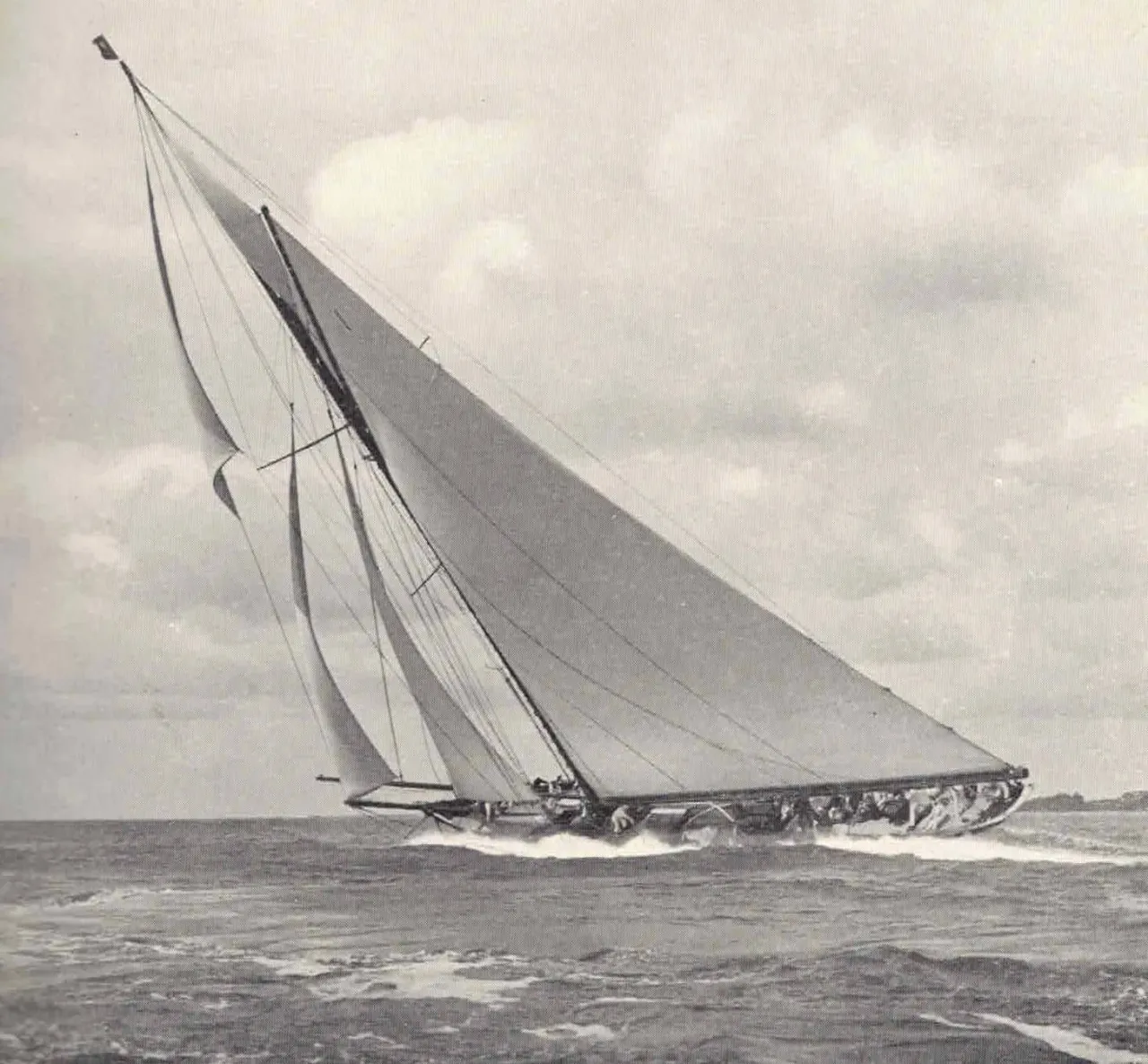
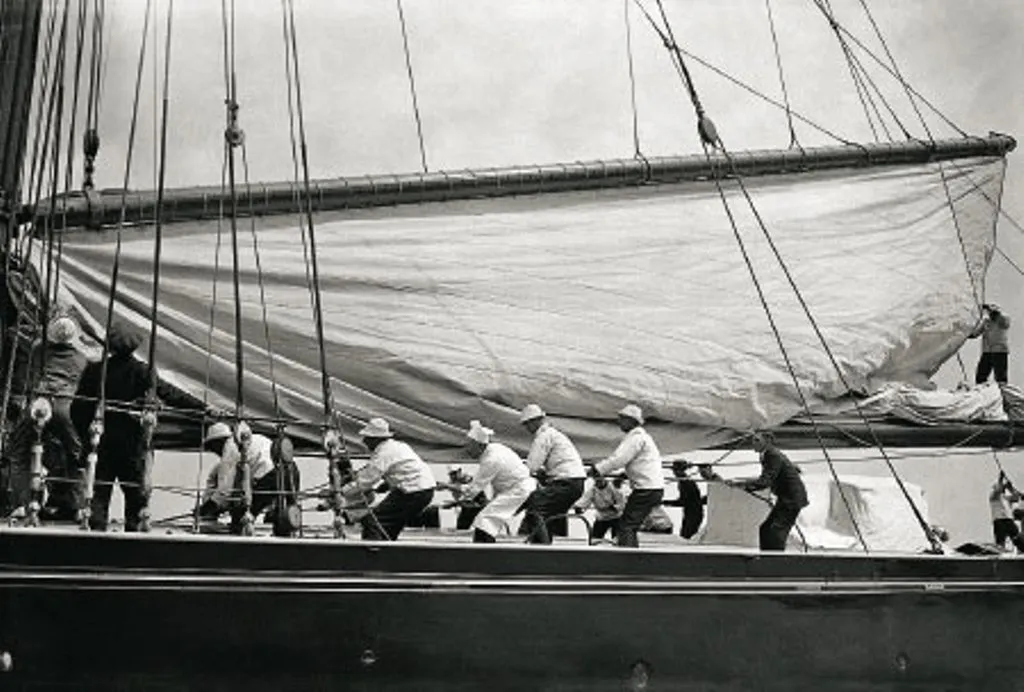
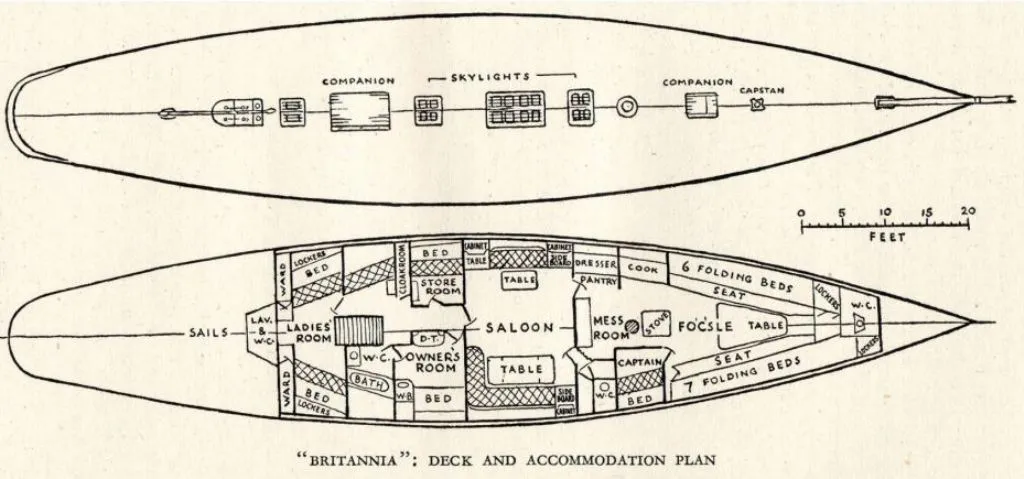
Racing yacht HMY Britannia (1893-1936)
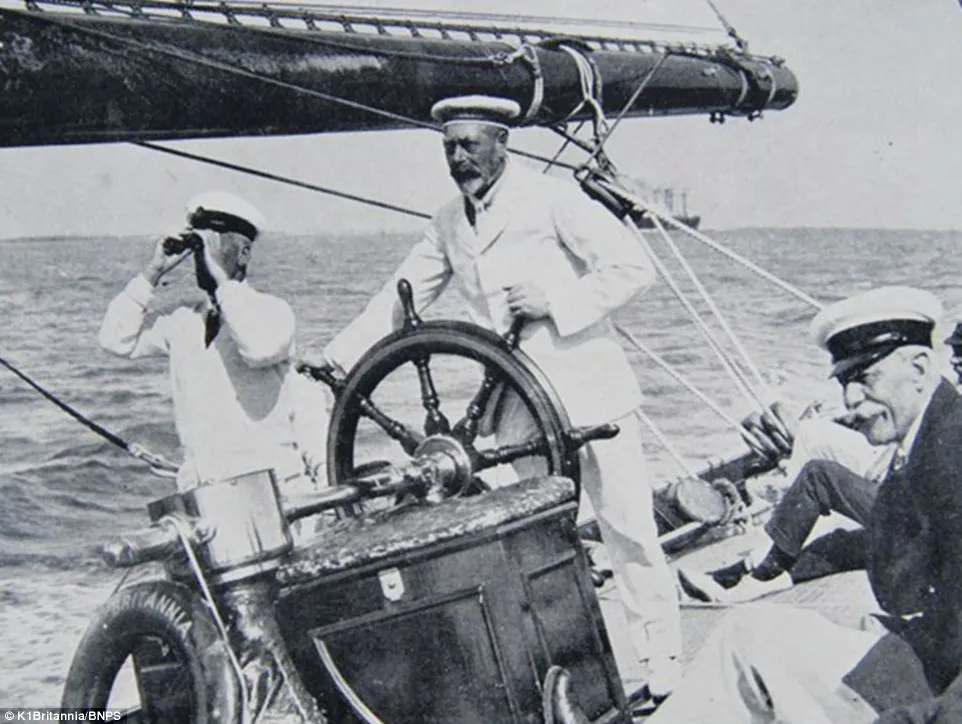
King George V at the helm of the yacht Britannia
In 1893, the sailing yacht Britannia was built for Queen Victoria's son and heir to the throne, Edward, Prince of Wales. Her design was by George Lennox Watson, one of the finest naval architects of her time. The yacht was 37 meters long, with a 50-meter larch mast, and a sail area of just over 950 square meters. For its time, it was an innovative design—a steel framing and wood planking. On April 20, 1893, the yacht was launched at D. & W. Henderson Yard. Britannia won her maiden race in the Thames Estuary with flying colors, beating many yachts considered the favorites.
She became one of the most famous racing yachts in history. By the end of her first season, she had already won 33 of 43 starts. By the end of her fifth season, the yacht's prize money exceeded not only her maintenance costs but even the £10 it cost the royal family to build her. Over her 40-plus-year career, the yacht competed in hundreds of races, earning 231 first-place finishes and 129 other prizes.
King George V died in January 1936, stipulating in his will that if none of his sons wished to sail the Britannia, the yacht should be scuttled. George V's fears were well founded—his son and heir, Edward VIII, was completely indifferent to yachts.
Escorted by two destroyers, she set out on her final voyage. At midnight on July 9, 1936, the yacht's crew, having taken measures to scuttle the vessel, transferred to one of the escort ships. Britannia sank south of the Isle of Wight, and the foreman of the shipyard that built her laid a simple flower garland on the water.
As it became clear that the Royal Yacht needed to be replaced, a Cabinet meeting in July 1938 decided to build a new yacht at a cost of £900,000, on the condition that in the event of war she could be used as a hospital ship.
In 1939, the developed design of the vessel was sent to leading shipbuilding companies in Britain, but the outbreak of World War II forced this plan to be postponed for the future.
The idea of building a yacht was only revived in 1951. In early 1952, the project was finally approved by the Navy, King George VI, and the future Queen Elizabeth II.
Seven firms competed for the yacht construction contract. The winner was the renowned Clydebank shipbuilder John Brown & Co., whose proposal best met the Admiralty's requirements, including the vessel's delivery schedule (late 1953 - early 1954). This shipyard is known, in particular, for building the famous liners Queen Elizabeth and Queen Mary, and later the Queen Elizabeth 2.
The contract for construction was signed on 6 February 1952, the day before the death of King George VI, and the vessel was laid down on 16 June.
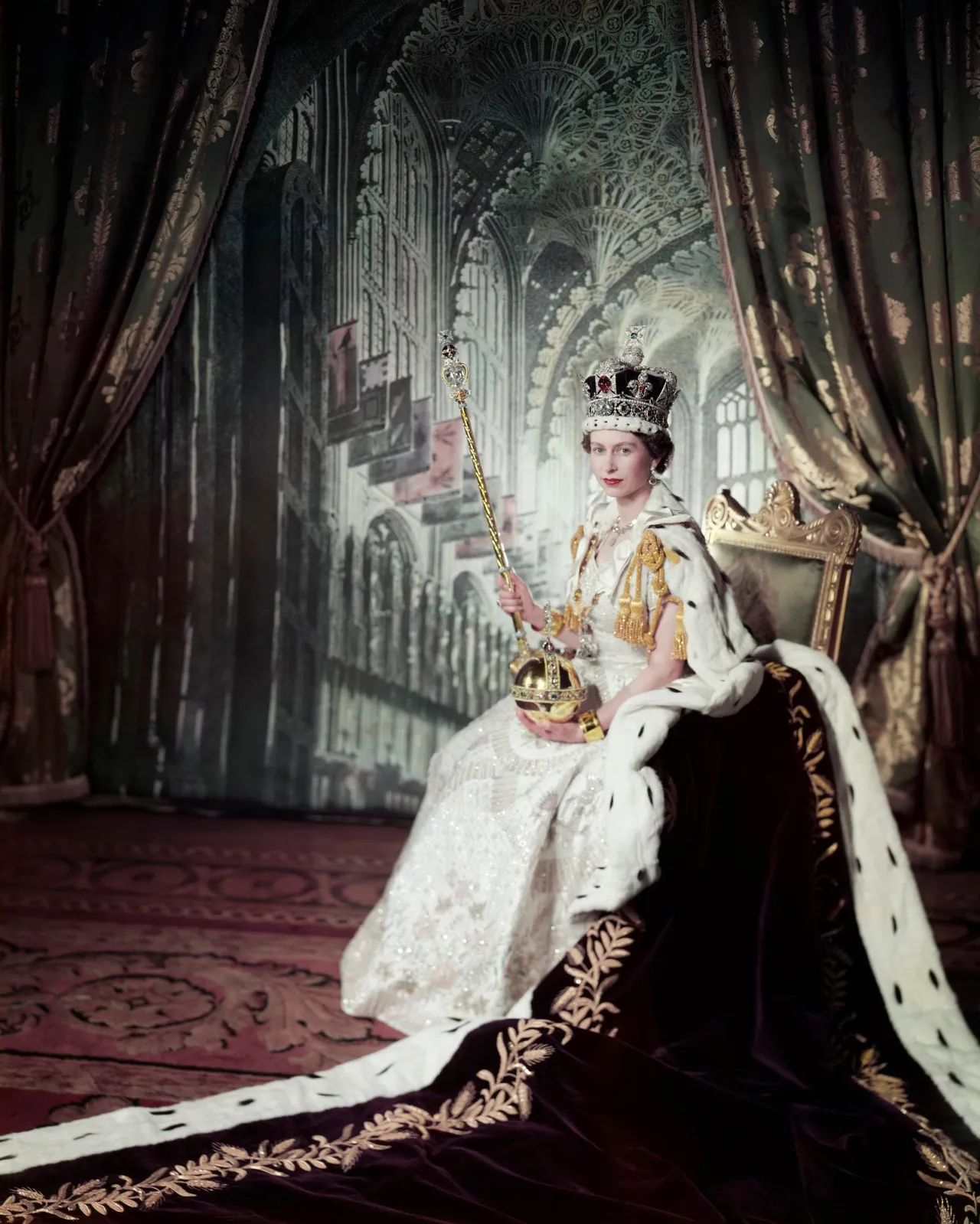
Queen Elizabeth II on her coronation day, 2 June 1953.
As the new royal yacht was still under construction, the frigate HMS Surprise was used as the royal yacht at the Coronation Spithead Review on 15 June 1953.
The ship's twin 4-inch forward gun mount was replaced with a special glass observation deck, from which the Queen could observe the event. All members of the ship's crew were subsequently awarded the Coronation Medal.
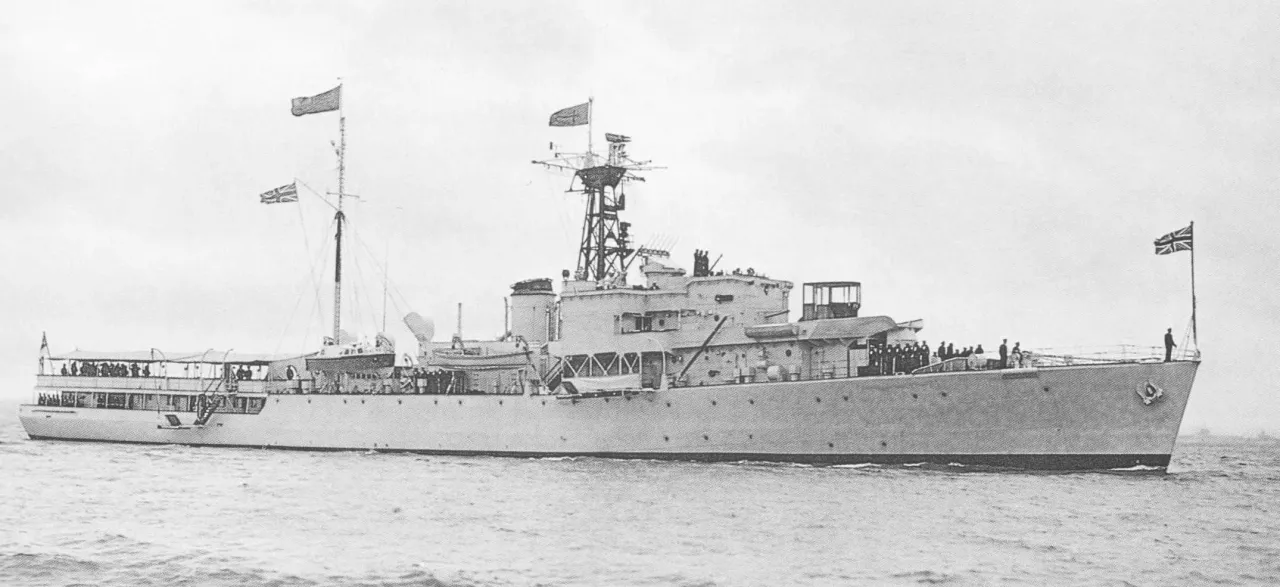
HMS Surprise - the royal yacht
The review was attended by 197 ships of the Royal Navy, 13 Commonwealth ships, and 16 foreign naval forces, as well as vessels from the British merchant and fishing fleets. The USSR was represented by the Project 68-bis cruiser Sverdlov (commanded by Captain 1st Rank O. I. Rudakov). Numerous stories and legends, mostly completely fantastical and implausible, exist about this voyage and the commander's contacts with the Queen.
Some of the authors of these fakes probably think this review is like the Queen watching a parking lot from a balcony. Alas, the cars parked (i.e., anchored) before the royal yacht even made its rounds, meaning the legendary and highly dubious story about the Queen's admiration for the Sverdlov's 12-minute double-anchoring—fertoing—can only be laughed at. Like so much else.
For greater reliability, I will refer to Spithead Review documentary about Coronation.
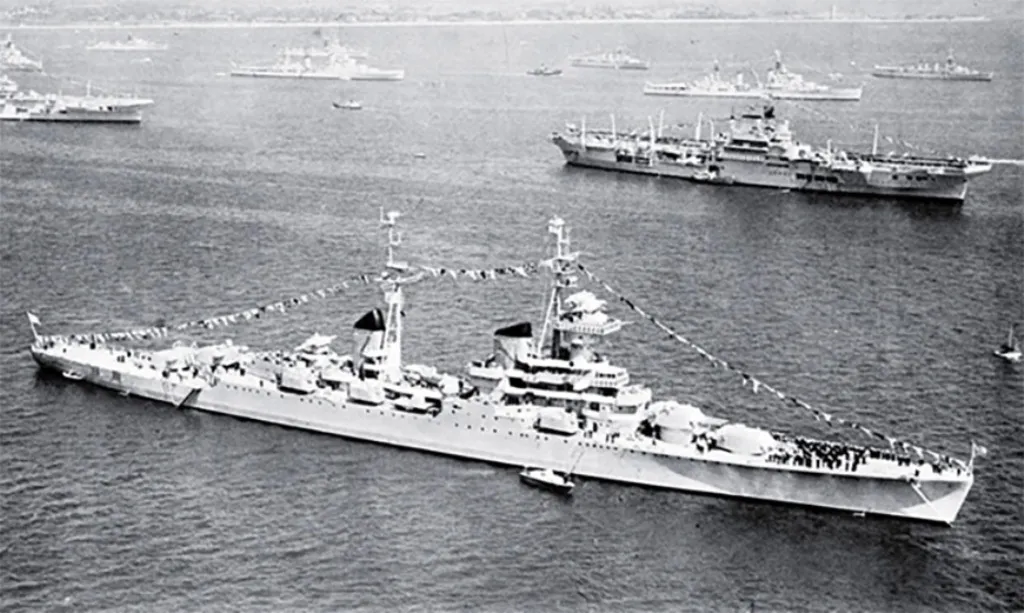
The cruiser Sverdlov at Spithead Roadstead, 1953
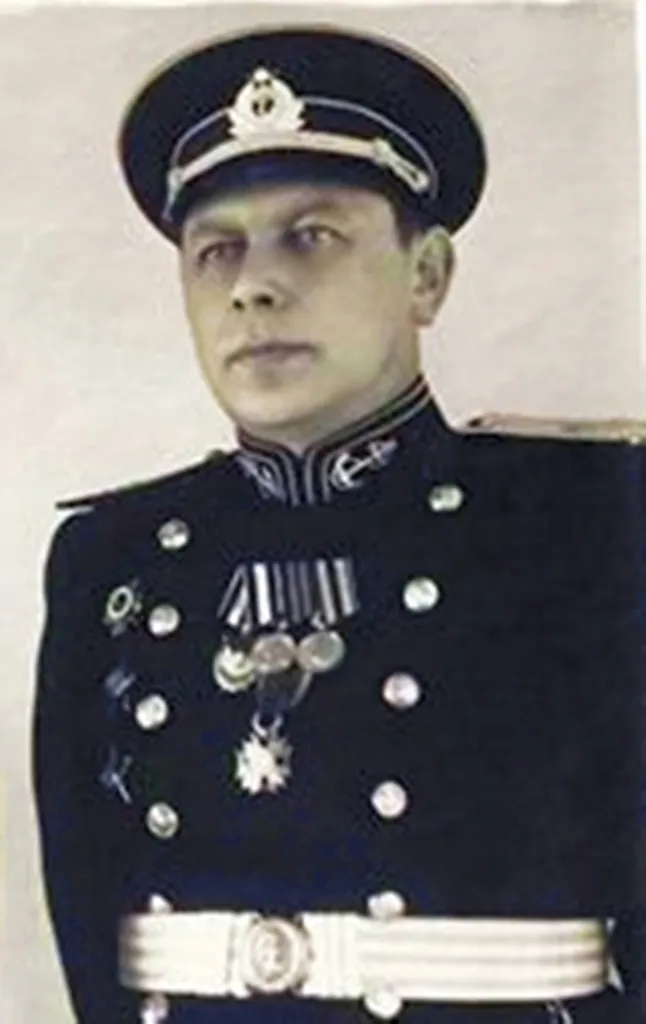
Olimpiy Ivanovich Rudakov
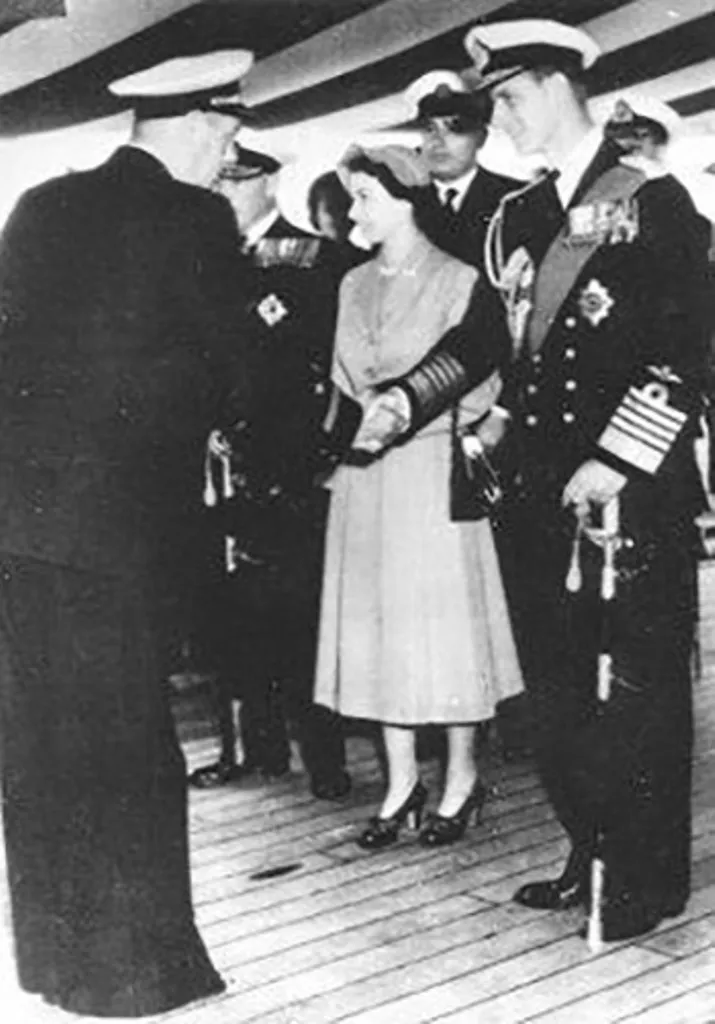
O.I. Rudakov (note the stunning flares) shakes hands with the Queen's husband, Prince Philip.
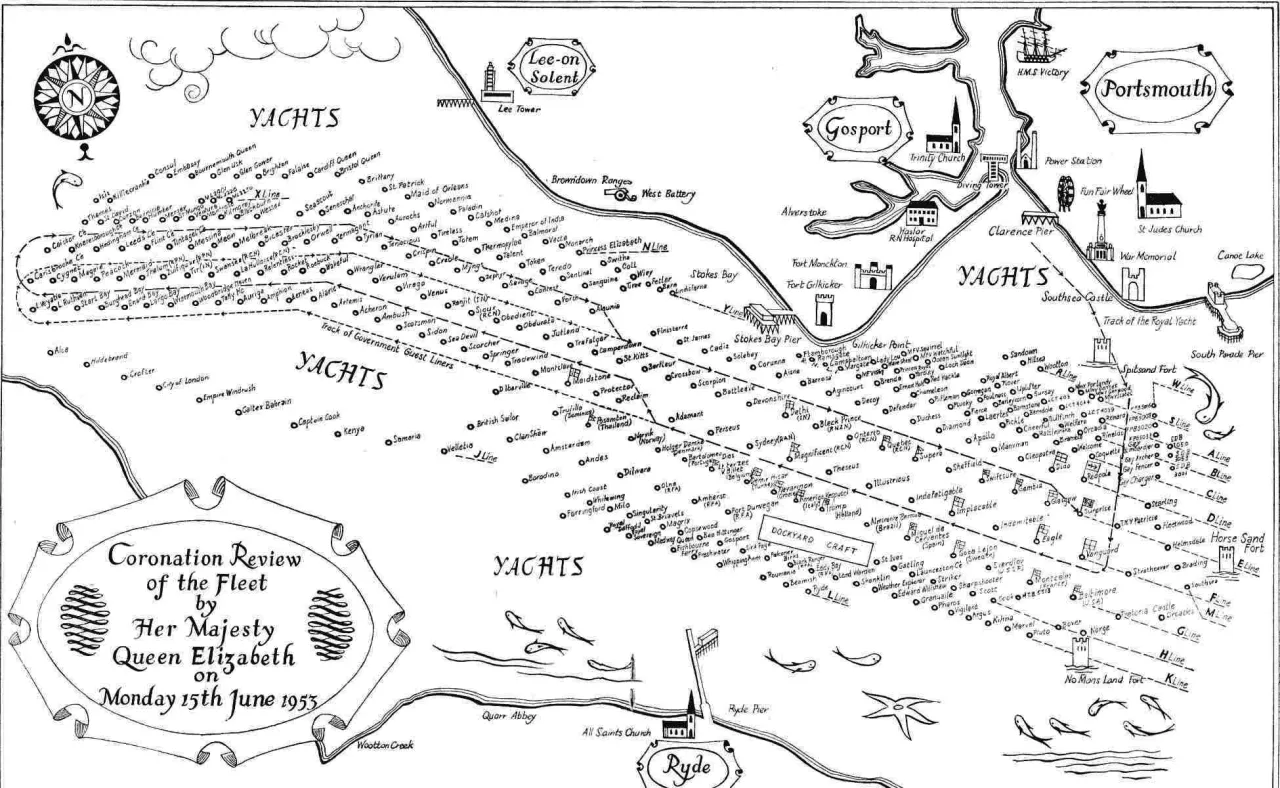
The arrangement of ships and vessels at the Coronation Fleet Review at Spithead Roads in 1953
That same year, when the Queen and her husband, Prince Philip, were scheduled to visit Commonwealth countries, they had to charter the passenger liner SS Gothic, which cost £40,000 per month. Additionally, repainting the ship white and returning it to its original livery after the charter ended cost a considerable amount.
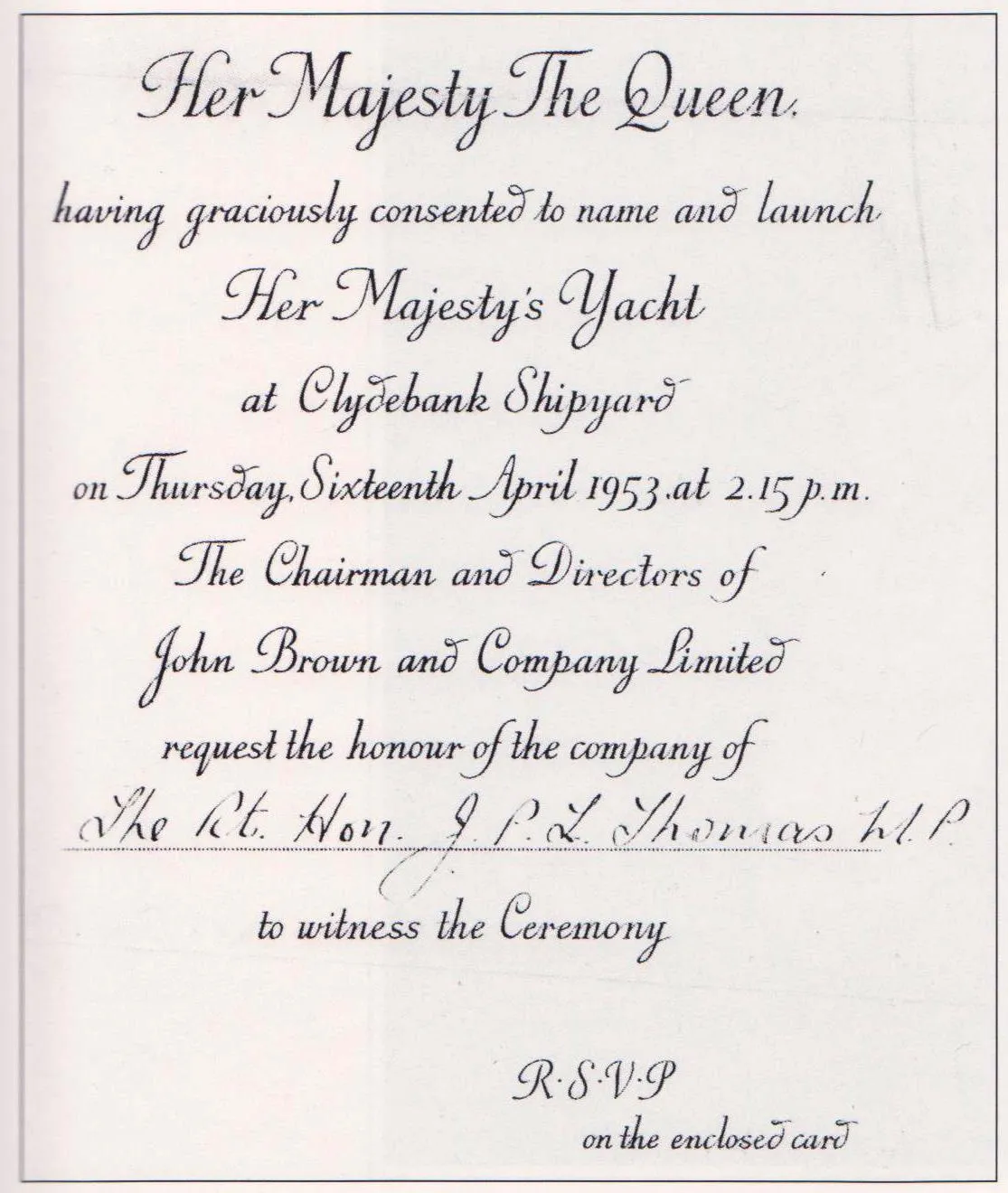
Invitation to the launching ceremony of the royal yacht
On April 16, 1953, Elizabeth personally participated in the launching ceremony of the new royal yacht. She was not yet Queen Elizabeth II—more than six weeks remained until her coronation. In the pouring rain, Elizabeth declared, "I christen this ship Britannia." Afterward, she smashed a bottle of cheap Australian wine over the side of the yacht instead of the traditional champagne. It was post-war, and the country was living on strict financial rations. The royal family was completely unwilling to be accused of luxury when everyone else was still living on ration cards.
After completion, the yacht entered service with the Navy on January 11, 1954.
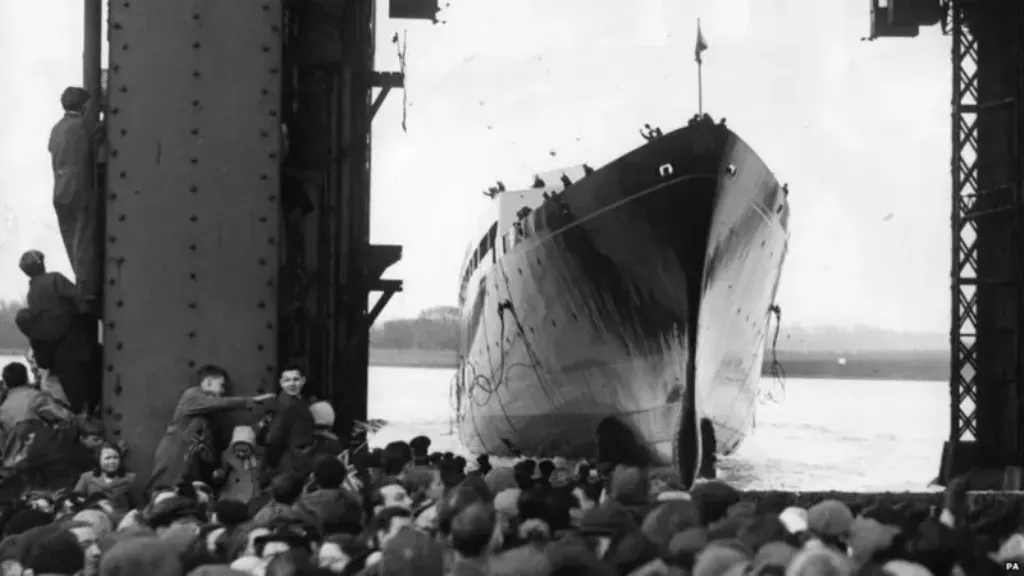
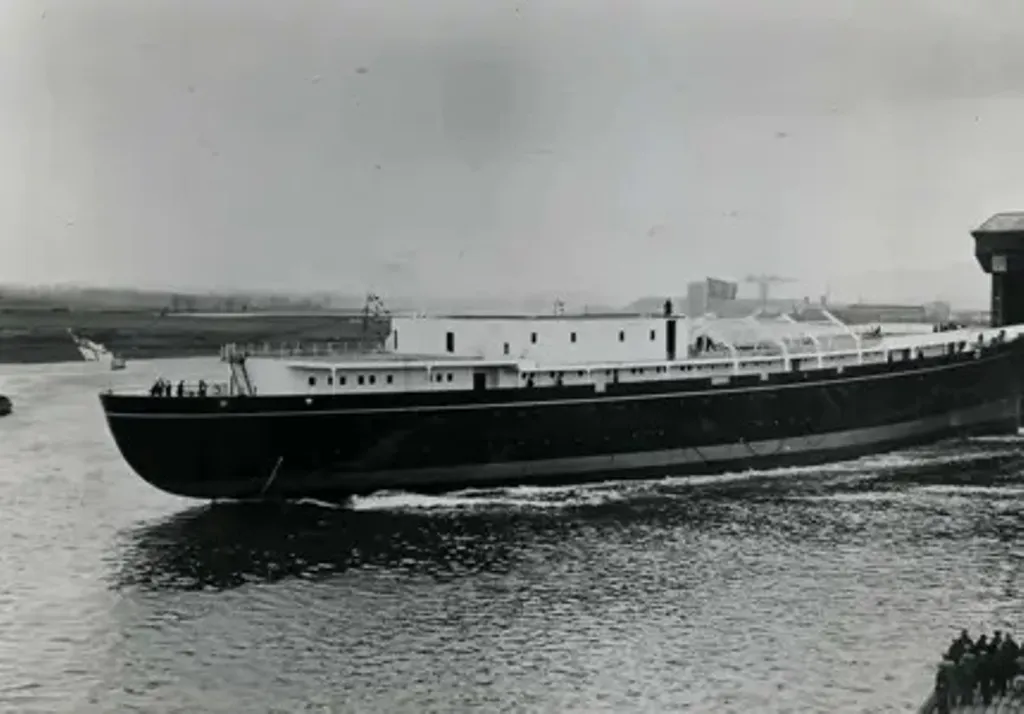
Launch of the Royal Yacht HMY Britannia
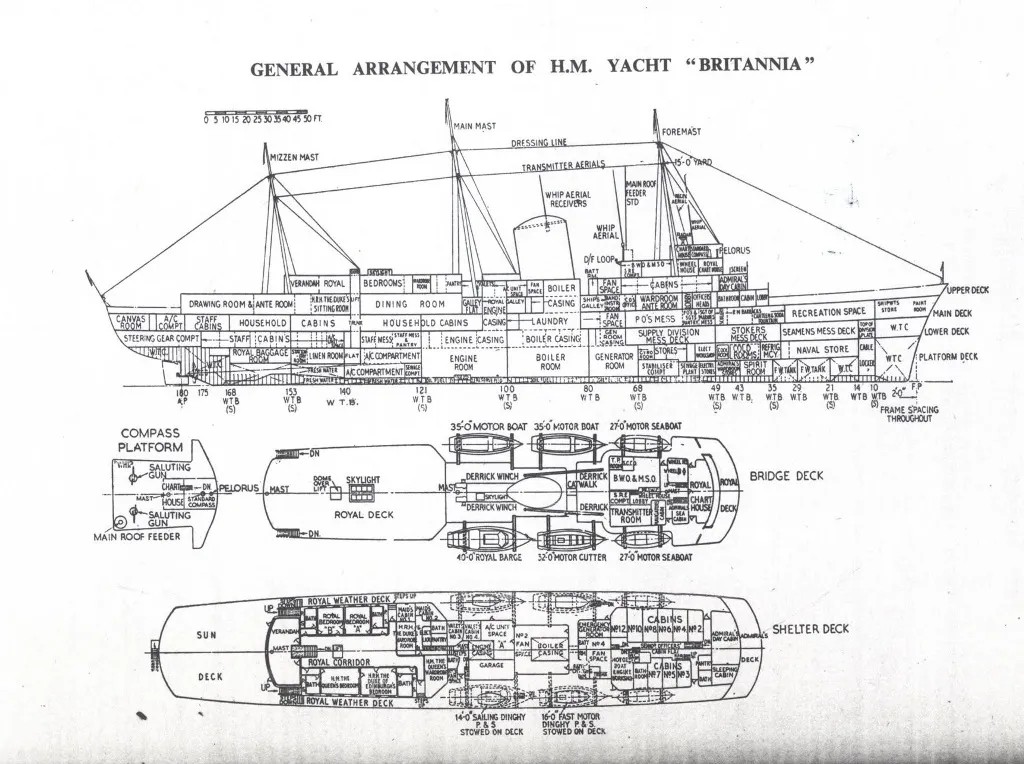
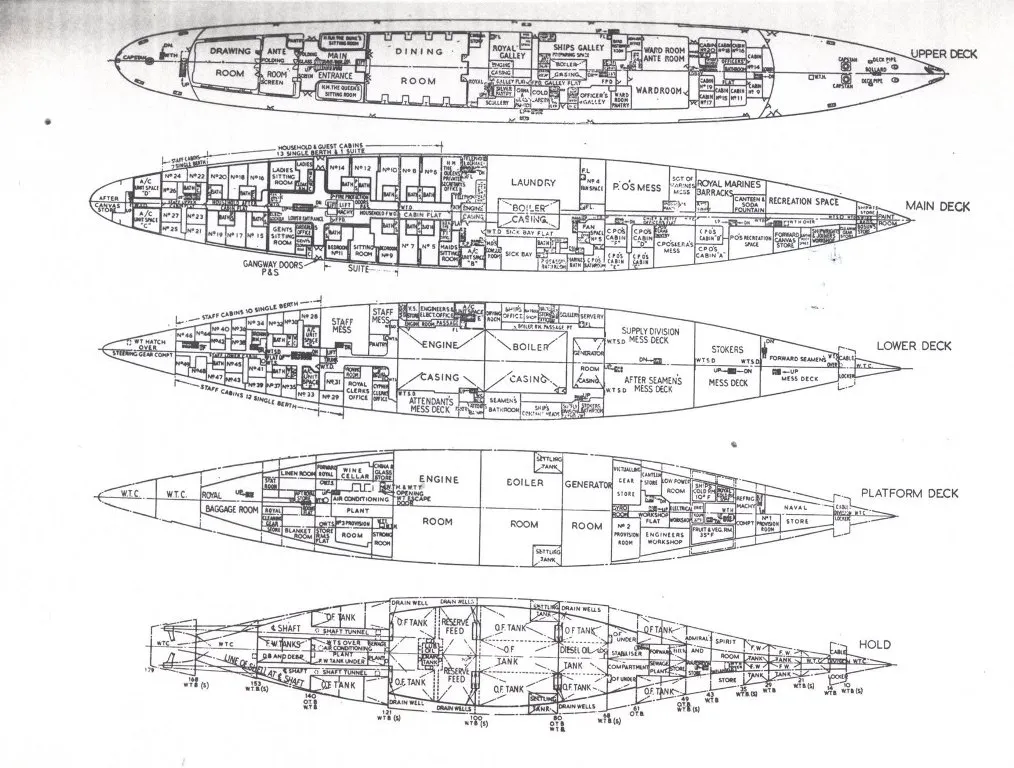
General location of HMY Britannia
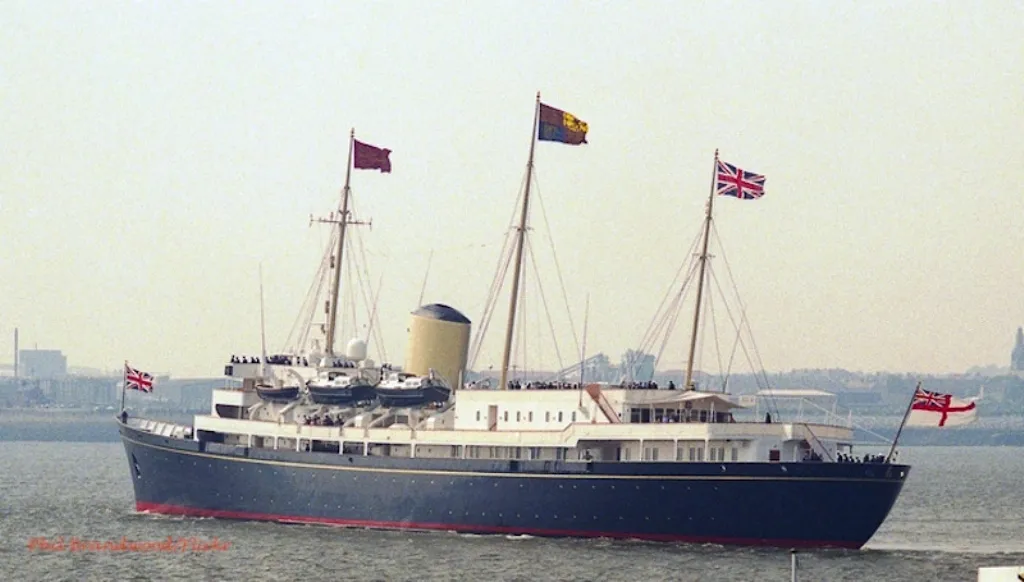
HMY Britannia underway under all flags
If the Queen was on board the yacht, then regardless of whether HMY Britannia was underway, at anchor or at berth, she flew five flags:
1. The jack (also known as the state flag - Union Jack or Union Flag) on the jack pole.
2. The flag of the Lord High Admiral of the United Kingdom (the title held by the Queen) on the foremast.
3. The Royal Standard on the mainmast.
4. The national flag on the mizzen mast.
5. The White Ensign on the stern flagpole.
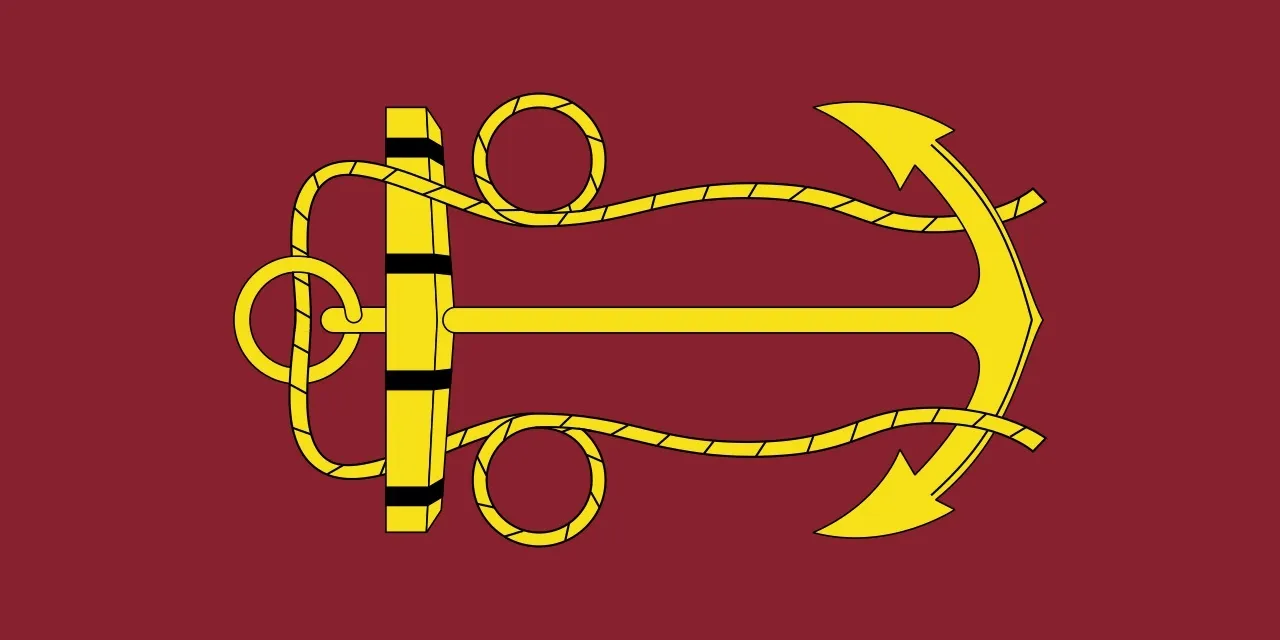
Flag of the Lord High Admiral of the United Kingdom
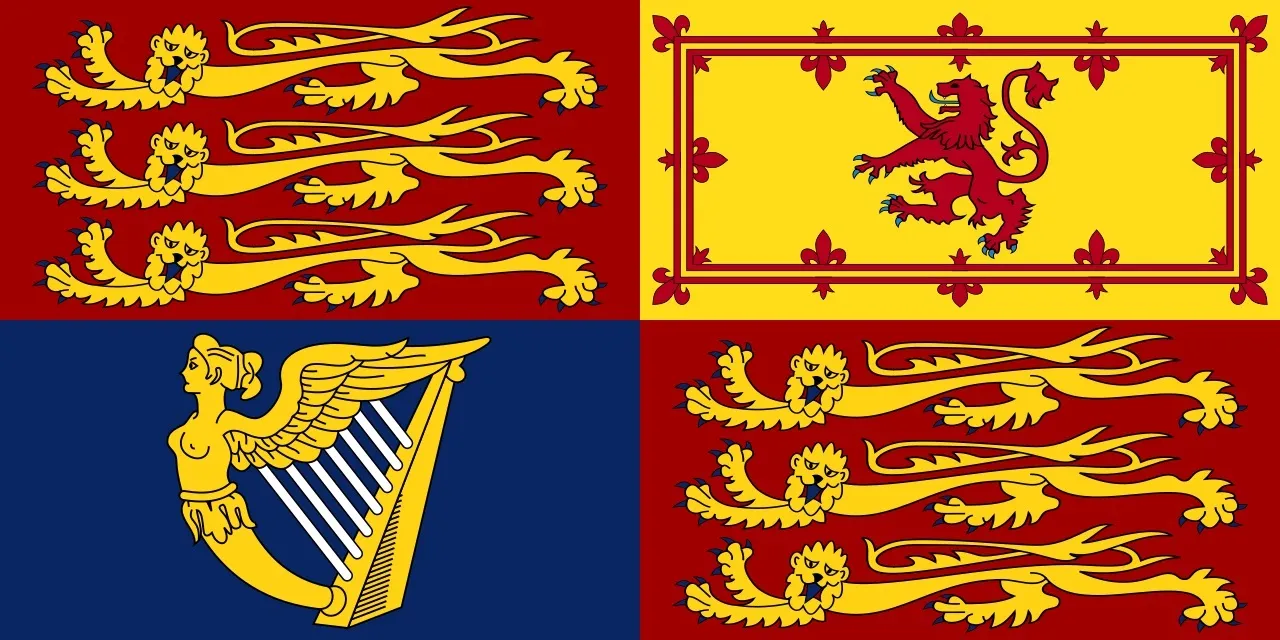
Royal Standard
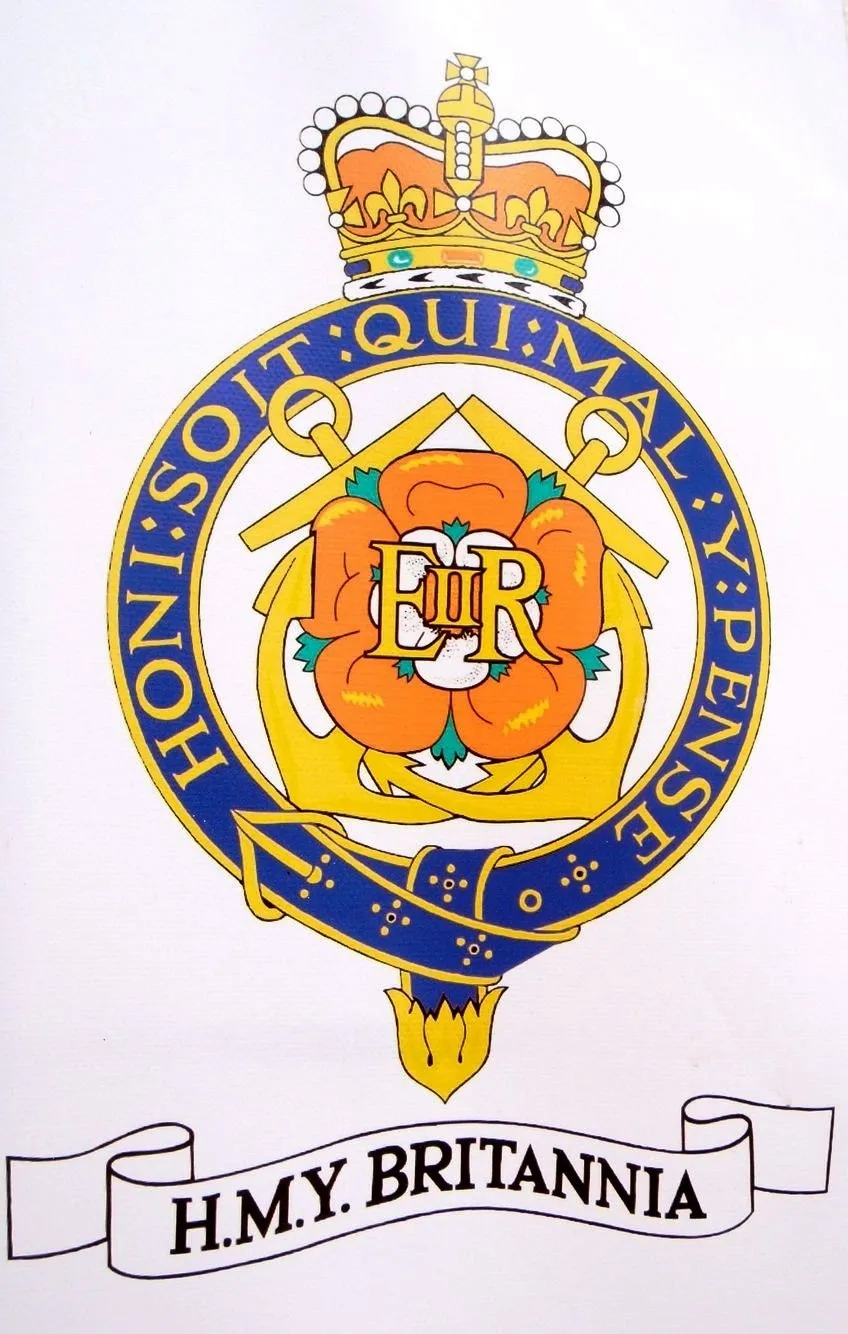
HMY Britannia emblem
Main technical characteristics of HMY Britannia
Full displacement, t — 4715
Tonnage, GT — 5862
Maximum length, m - 125,65
Maximum width, m - 16,76
Draft at full displacement, m - 5,20
Height of masts, m:
foremast - 40,54
mainmast - 42,44
mizzenmast - 36,22
to pass under bridges, the upper parts of the foremast and mainmast could collapse
Main engine power, hp — 2 x 6000
Sea trial speed (12000 hp, displacement 4320 t), knots - 22,75
Cruising range with normal fuel capacity (330 tons) and speed of 20/15 knots, miles - 2000/2400
Normal fresh water reserve, providing two days' needs with desalination plants not operating, t - 120
During long ocean voyages, the fuel supply could be increased to 490 tons, and water – to 195 tons.
At the same time, the cruising range increased to 3100 miles (20 knots) and 3560 (15 knots)
Armament: two 3-pounder (47 mm) Hotchkiss saluting guns
Number of passengers, people - up to 250
Crew size:
officers - 21
crew (yachtsmen) - 256
In addition, to ensure security, there was a platoon of marines on board, and, if necessary, a 26-member Royal Marines Band.
There was also a group of divers who regularly inspected the underwater part of the yacht.
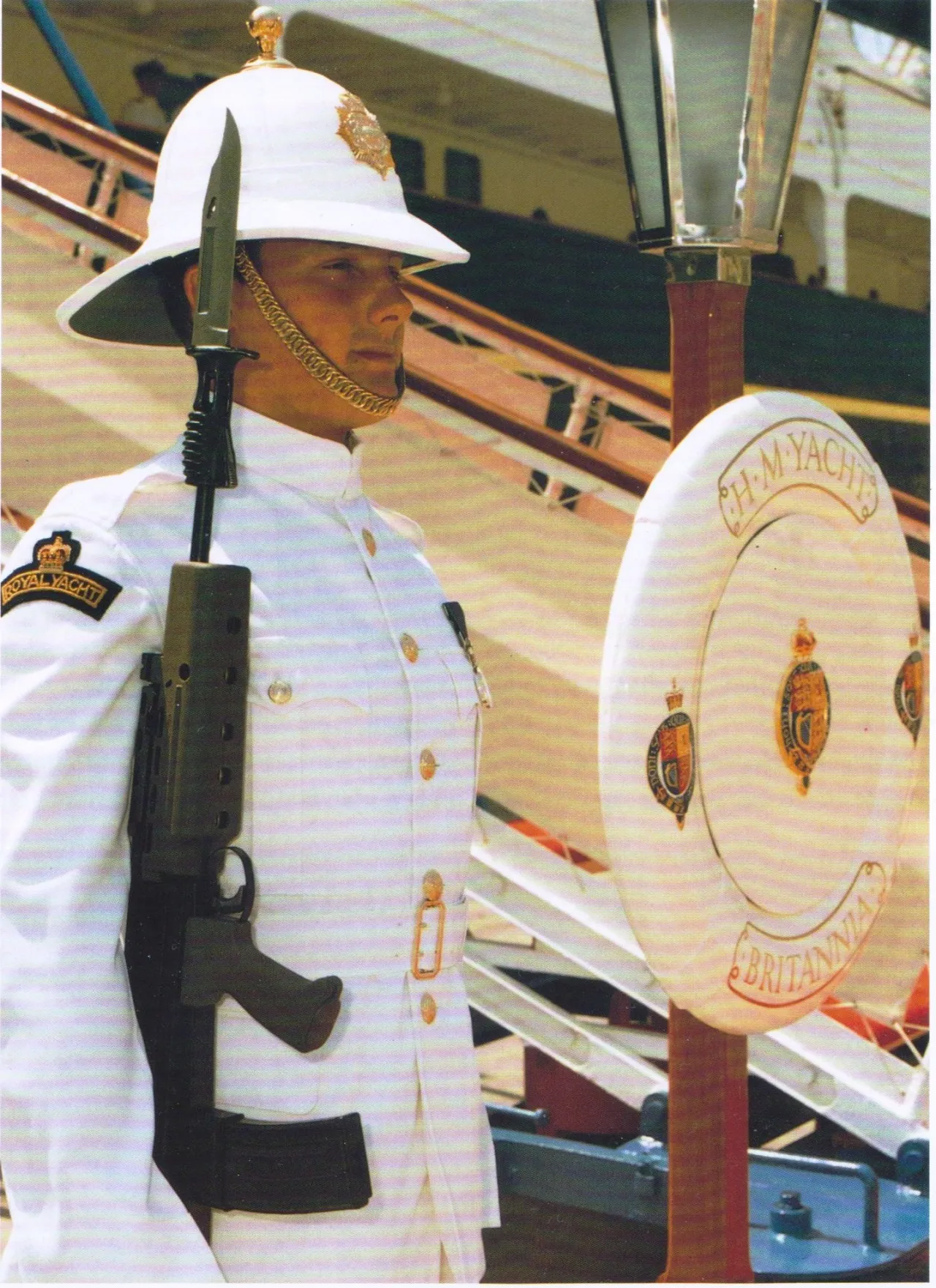
A Marine stands guard at the gangway
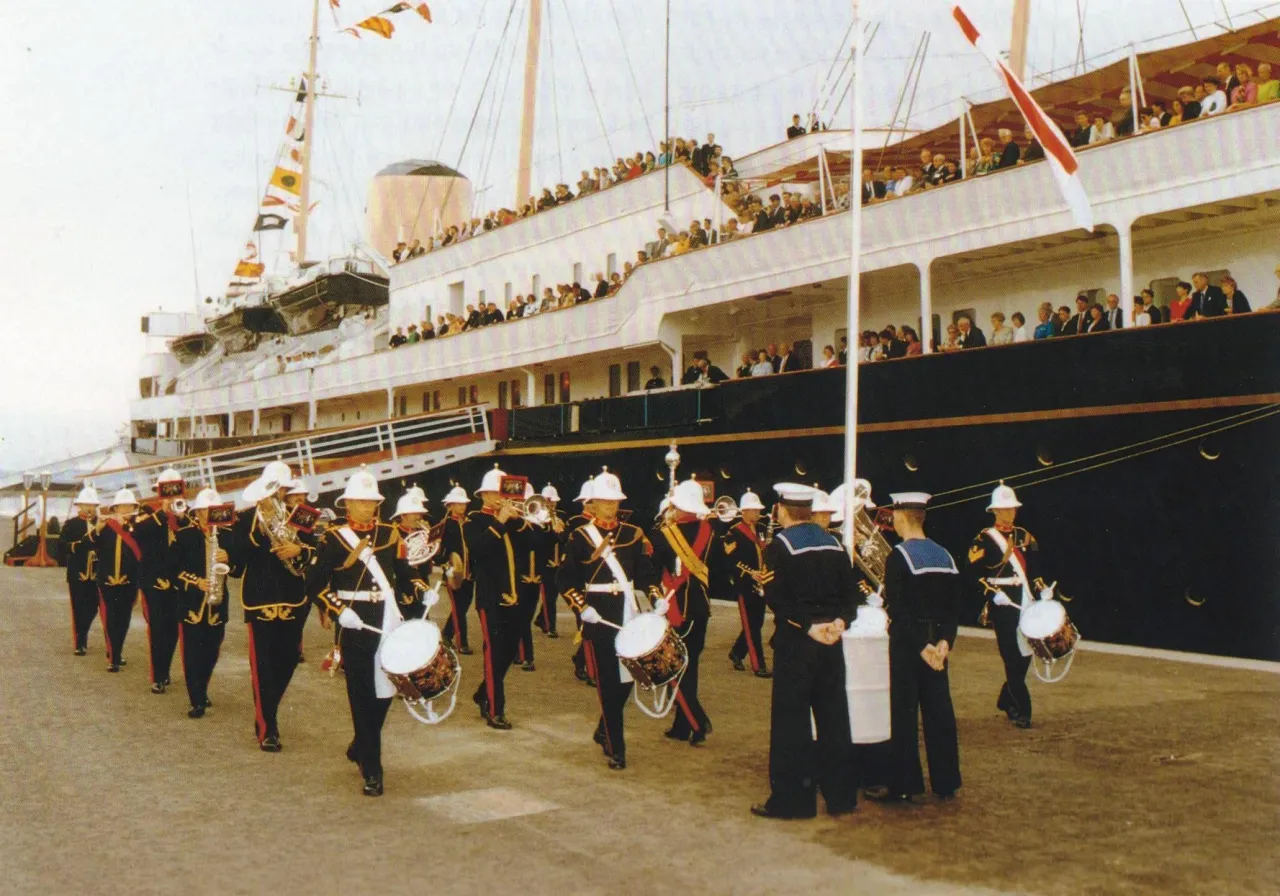
The Royal Marines Band performing Beat Retreat
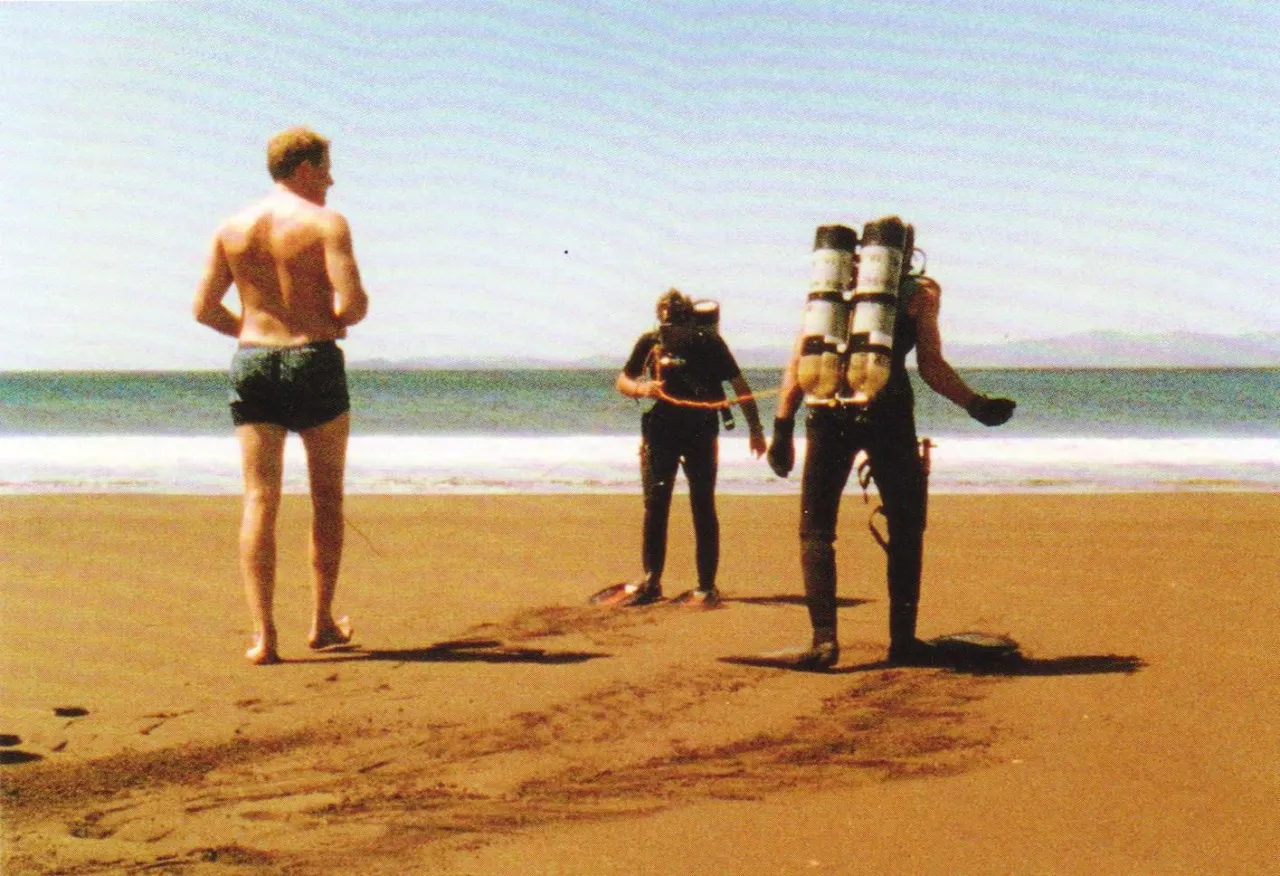
Divers
The yacht was built under the supervision of the classification society Lloyd's Register of Shipping and the British Admiralty and received the Lloyd's Register class ✠100A1.
This code means the following:
✠ — The Maltese Cross indicates that the vessel was built under the supervision of Lloyd's Register. The plans, materials, welding quality, etc., were inspected by Lloyd's Register specialists from the keel-laying stage until the vessel entered service.
100 - the vessel is fully suitable for unlimited navigation area;
A - the ship's hull is constructed of steel (or other approved material) in full compliance with Lloyd's Register rules and is maintained in excellent technical condition;
1 - the anchor, mooring and towing equipment are in full order, serviceable and efficient.
It's worth noting that the Britannia was one of the last large ships in the UK, and indeed in the world, to have a riveted hull, even though welding had already largely replaced riveting. Nevertheless, this old method continued to be used for quite some time to join critical structures (sheer girders, etc.).
To give the royal vessel an aesthetically pleasing appearance, a special coating was applied to the riveted steel sheets, completely leveling the sides and making them perfectly smooth. Welding was widely used in the assembly of less critical structures, such as internal bulkheads, tanks, and the superstructure. The upper part of the superstructure and the funnel are made of aluminum alloys.
HMY Britannia is a three-deck vessel with a midship superstructure, a clipper bow, and a cruising stern. She is transversely framing, with a double bottom running the entire length. Six main transverse watertight bulkheads extend to the upper deck, three of which are also fireproof. The aft sundeck is reinforced to accommodate a helicopter. All exposed decks are covered with 2-inch (approximately 51 mm) thick teak planking.
Since the ship was to be used both as a royal yacht and a hospital ship, where noise and vibration were highly undesirable, the diesel main propulsion plant was abandoned in favor of a steam turbine.
It consists of two main turbo-gear units (GTZ), developed by John Brown & Co. Ltd in collaboration with Parsons & Marine Engineering Research and Development Association (PAMETRADA), driving four-bladed propellers with a diameter of 3124 mm. Each GTZ consists of a high-pressure turbine (nominal speed 4910 rpm), a low-pressure turbine (3550 rpm), and a reverse turbine located in the low-pressure turbine casing. A single-stage gear reduction reduces the turbine speed to 285 rpm.
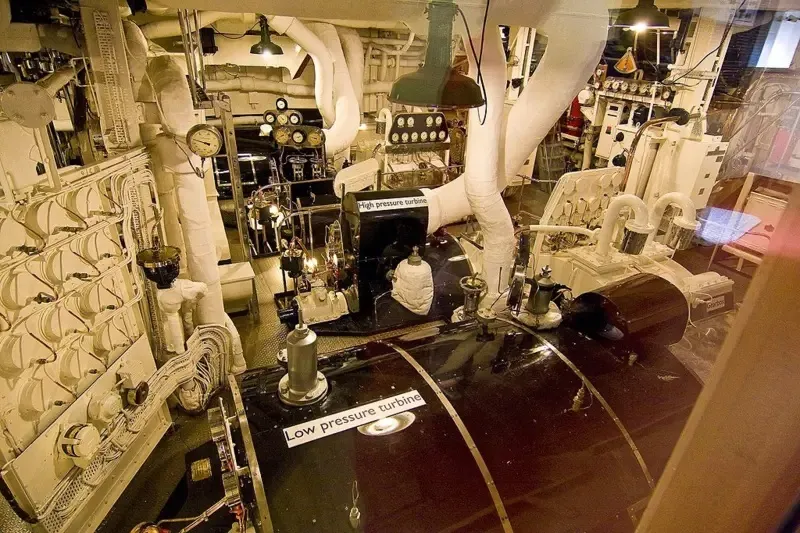
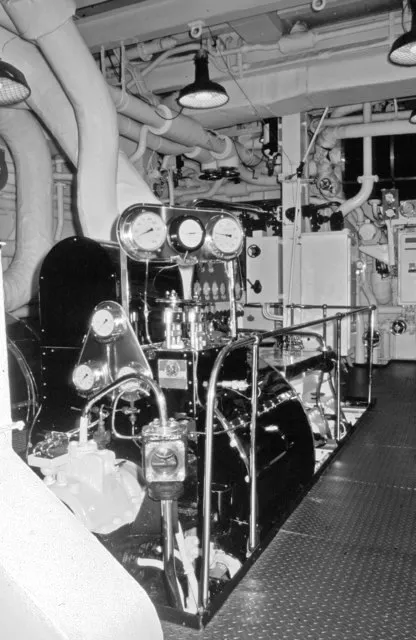
One of the GTZA
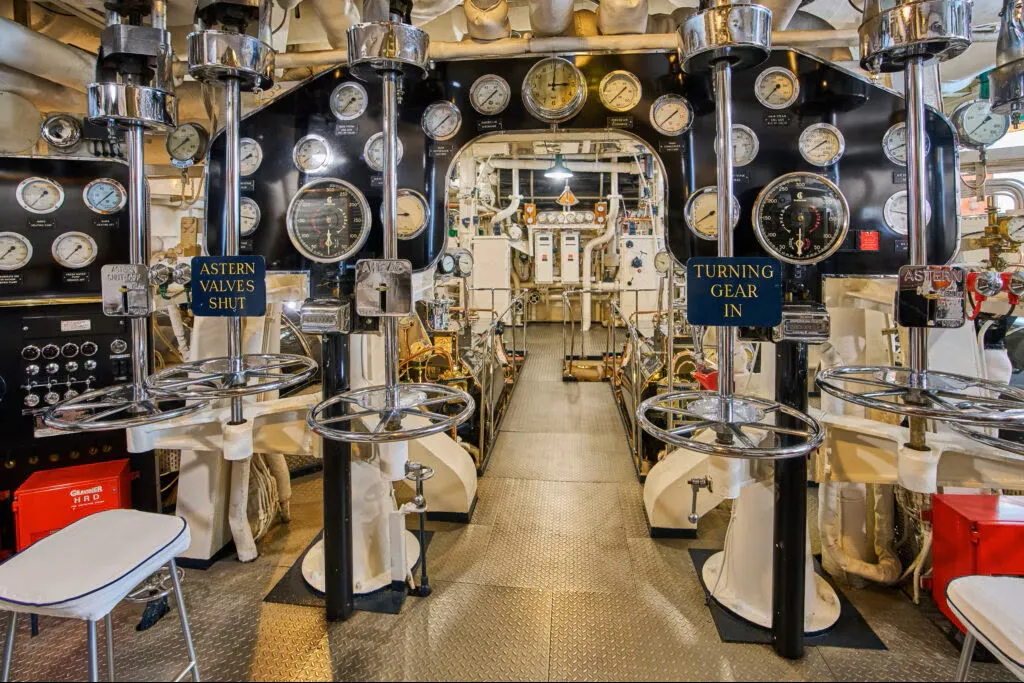
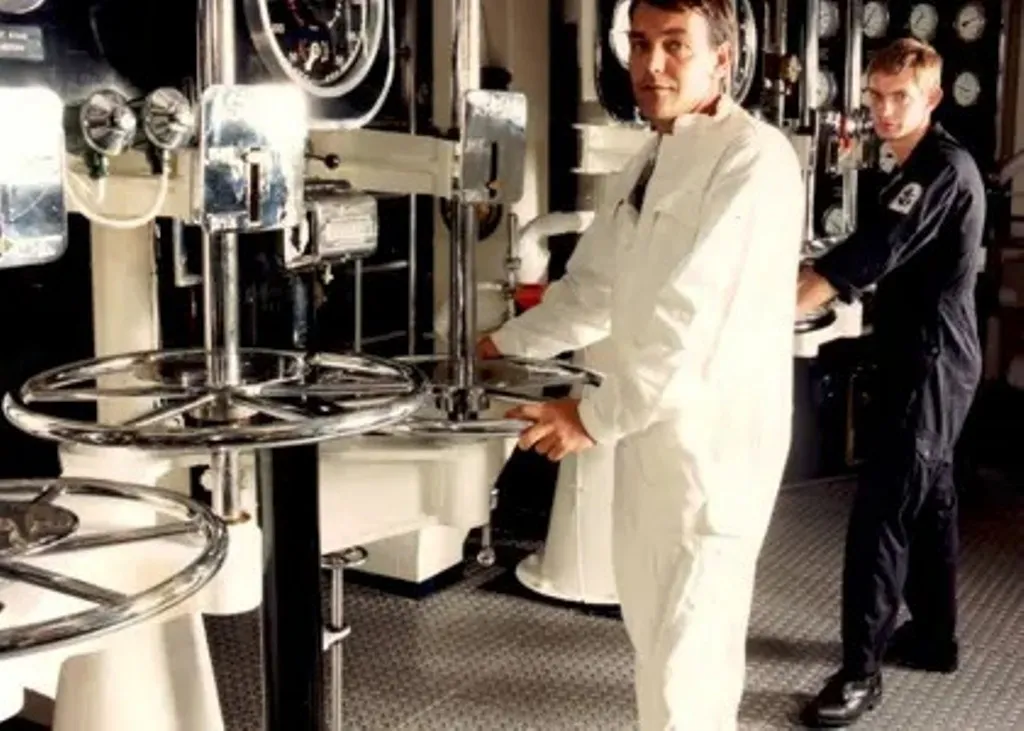
GTZA control post
Two main Foster Wheeler water-tube, double-drum boilers with a capacity of 34 tons per hour each generated superheated steam at a pressure of 300 psi (approximately 21 kg/cm²) and a temperature of 660°F (349°C). Initially, the boilers ran on fuel oil, but in 1983 they were upgraded to run on diesel fuel.
The boilers use a combined (or "balanced") draft, in which air is supplied to the firebox by a fan, and flue gases are removed by a smoke exhauster. In addition to improving fuel combustion, this prevents smoke and soot from reaching the deck, as flue gases are emitted far into the atmosphere at high speeds (up to 34 m/sec).
In addition, to supply the vessel with steam, there is an auxiliary boiler with a capacity of 9,1 tons/hour at the same steam parameters as the main ones.
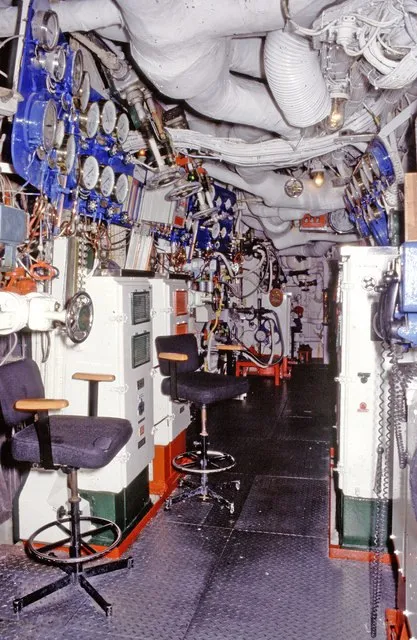
Boiler room
The ship's power plant consisted of three 500 kW turbogenerators, a 270 kW diesel generator, and a 60 kW emergency diesel generator. The generators produced 225 volt direct current (DC). The air conditioning units operated on alternating current (230 V, 50 Hz) through two engine converters. The demagnetization system was powered by a 225 volt grid. The estimated power consumption at sea was 730 kW, and in port, 250 kW.
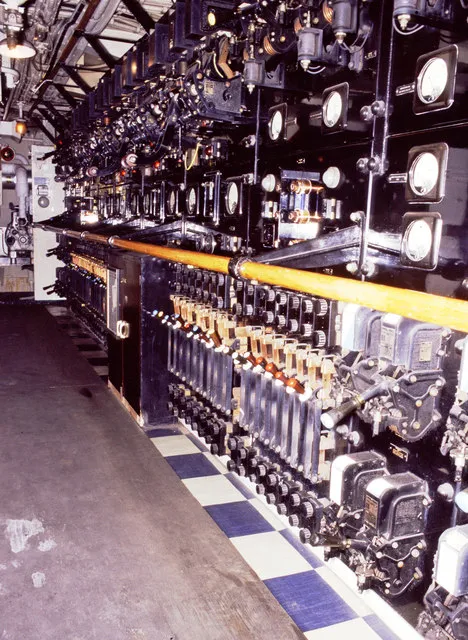
Main distribution board (MDB)
Two desalination plants with a capacity of 60 tons per day were used to replenish the fresh water supply, and another desalination plant (20 tons per day) was used to replenish the boiler water supply.
Operating all this equipment required a fairly large staff (80 people), with eight people on permanent duty in the engine and boiler rooms alone. But despite the cramped quarters and the dense machinery, the space was immaculately clean, with polished copper, stainless steel, chrome, and nickel-plated parts gleaming.
Queen Elizabeth II loved to take her guests on tours here. When American General Norman Schwarzkopf (who led the Multinational Force during the 1990-1991 Gulf War) visited the yacht's engine room in 1992, he said, "Okay, I've seen the museum exhibit. Now show me the real engine room!"
One former mechanical engineer proudly recalled a visit by American President Ronald Reagan. Upon seeing the engine room, the president expressed admiration, after which he allegedly asked the Queen if he could see the real engine room, as the one he saw was simply unrealistically sterile and therefore couldn't be real.
The yacht was equipped with a four-plunger electro-hydraulic steering gear with two variable-flow hydraulic pumps, an emergency hand pump and a hydraulic telemotor.
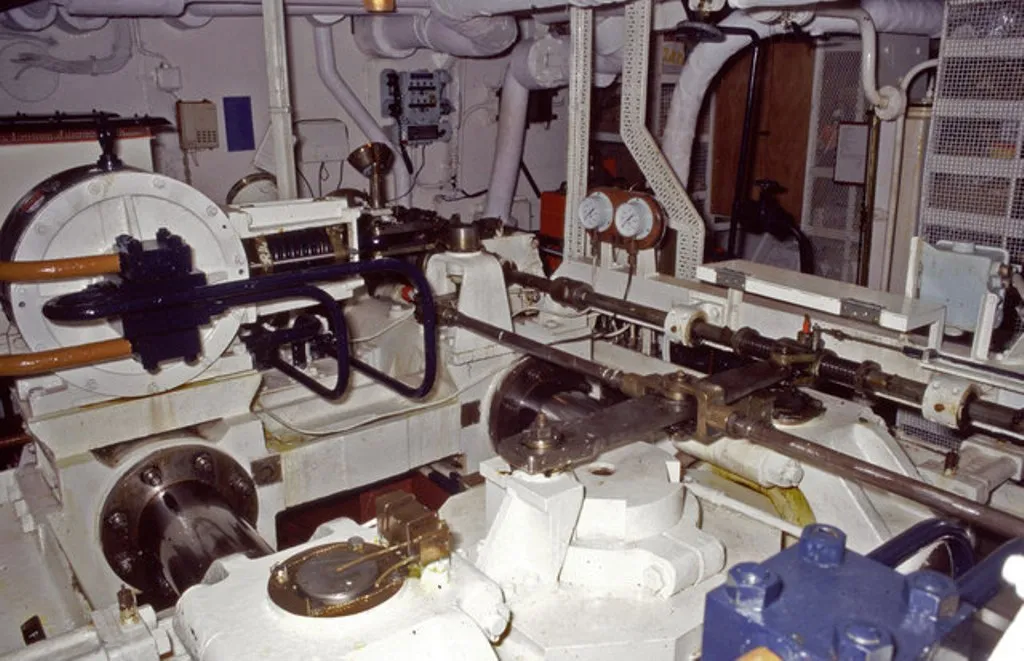
Steering machine
The yacht features a Denny-Brown anti-roll system with retractable active bilge rudders. At a speed of 17 knots, they reduced roll from 20 degrees to 6 degrees, allowing the Queen and members of the royal family to sleep, dine, and conduct business comfortably, even while navigating rough seas and oceans, without suffering from seasickness.
The air conditioning system served only the aft section of the yacht, where the royal family and their high-ranking guests resided and, in the event of mobilization, would have housed a hospital. A small, independent air conditioning unit served the radio and code rooms. The air conditioning system included two steam jet refrigeration units with a refrigeration capacity of 252,000 kcal/hour each.
The remaining rooms were served only by ventilation and heating systems, which, when sailing in areas with a hot and humid climate, was clearly insufficient, especially in the galleys and in the quarters of sailors and marines.
Three firefighting systems were used: water, foam (engine and boiler rooms), and an automatic sprinkler system for the aft compartments with its own pump. The fire and drainage systems were serviced by five fire and drainage pumps with a total capacity of 300 m³/hour.
For receiving fuel at sea, there was a RAS (replenishment at sea) system, which provided the ability to receive up to 250 tons/hour.
The Royal Yacht's lifeboat and rescue equipment consisted of:
- 40-foot Royal Barge
- Two 35-foot motorboats
- 32-foot motorboat
- Two 27-foot Jolly boats (in Russian maritime terms, a yawl or a four-oared yawl/dinghy)
- Two 16-foot high-speed motor dinghies
- Two 14-foot sailing dinghies
- 18 twenty-person inflatable life rafts
- Davits and winches for lowering and lifting boats and dinghies.
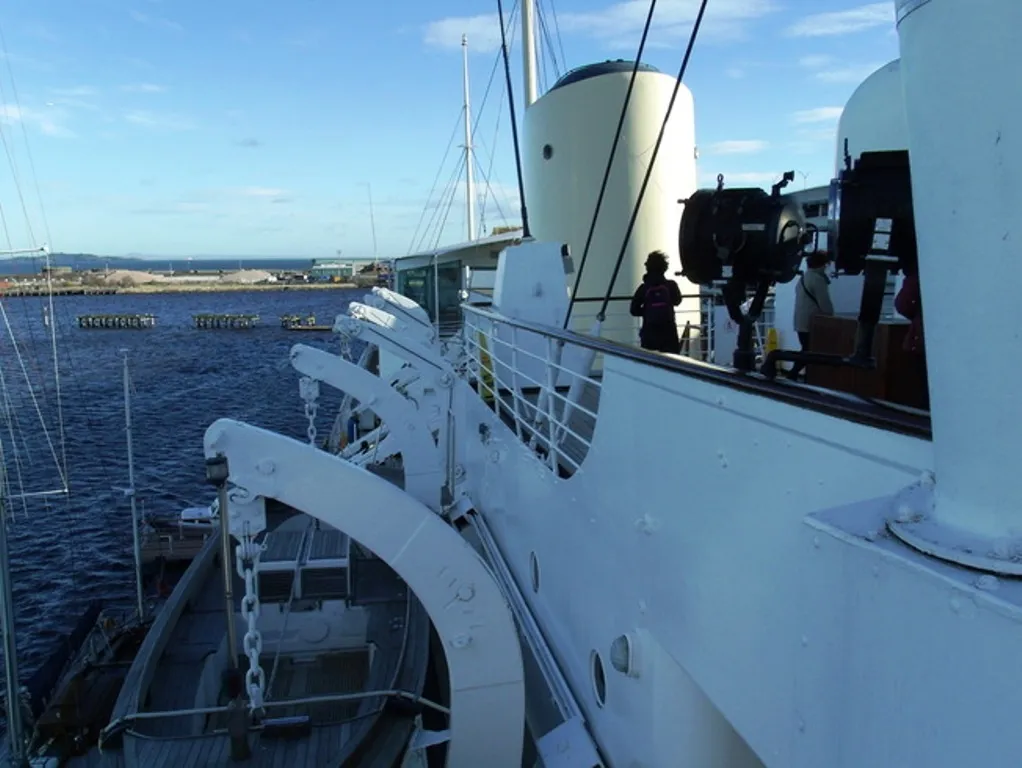
Davits
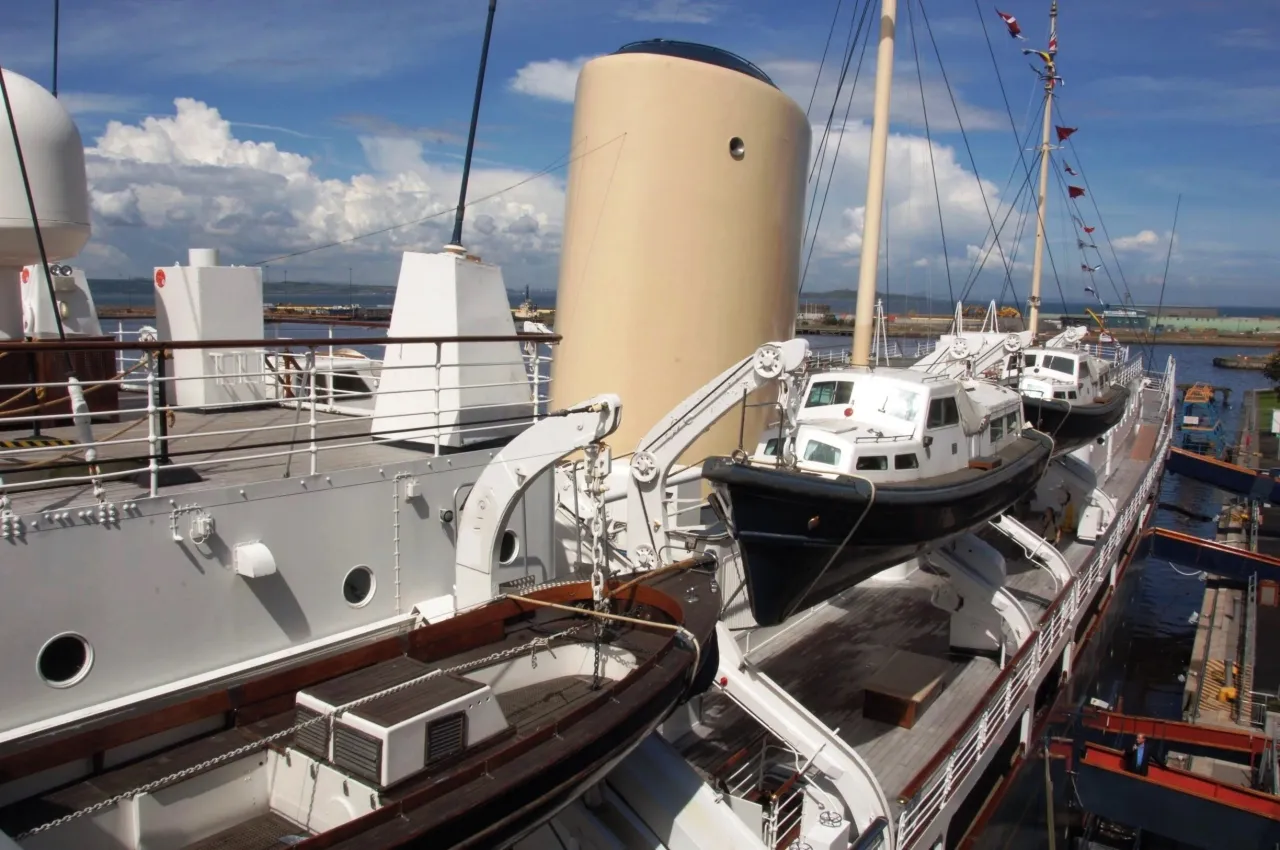
Boat and motorboats, left side
The royal cutter was built in 1938 and inherited by Britannia from its previous yacht, HMY Victoria & Albert III. The cutter is 12,5 meters long and has a draft of 0,9 meters. Powered by two 125-horsepower diesel engines, it reaches a speed of 20 knots.
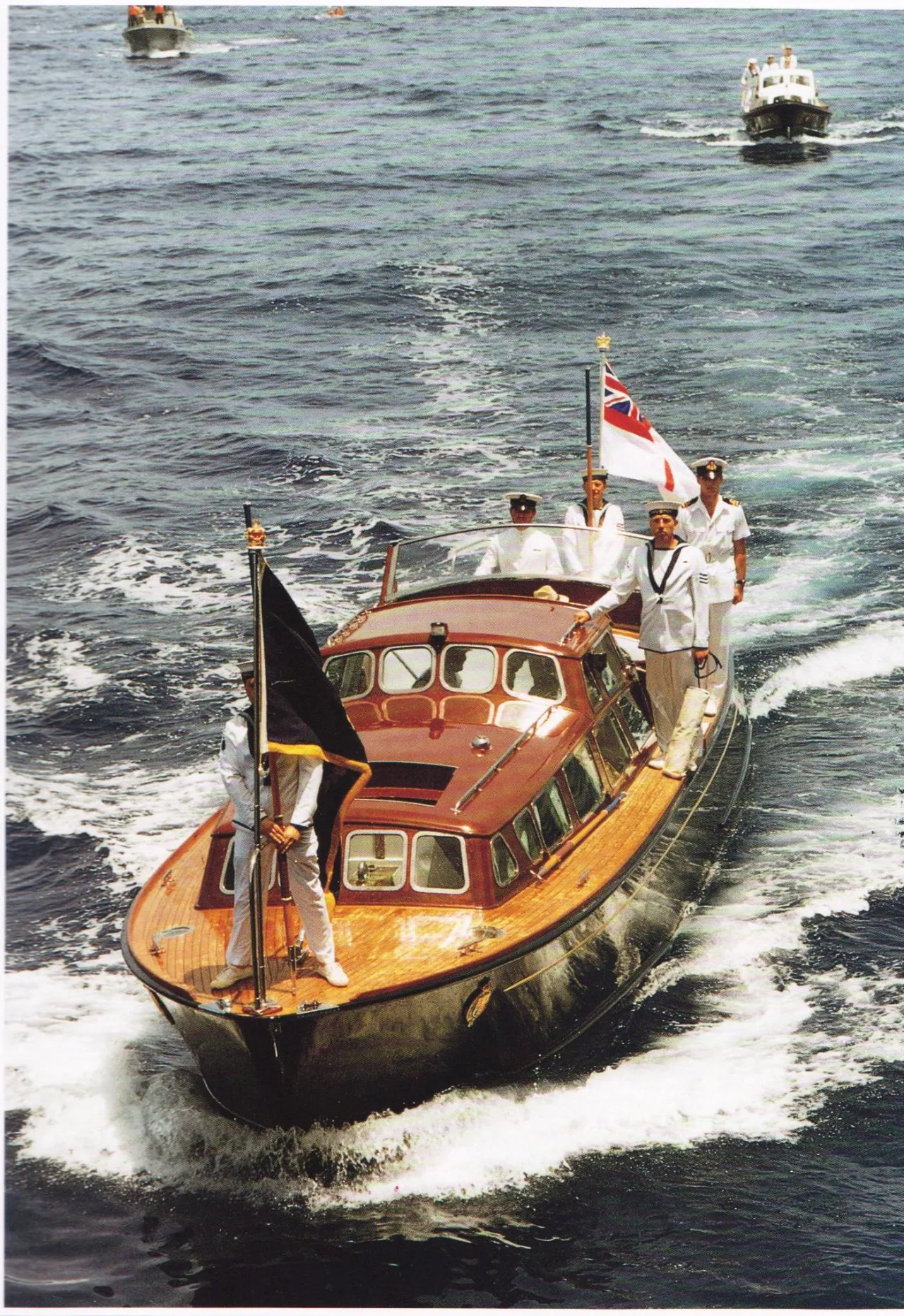
The Royal Barge, accompanied by the obligatory escort boat from the yacht
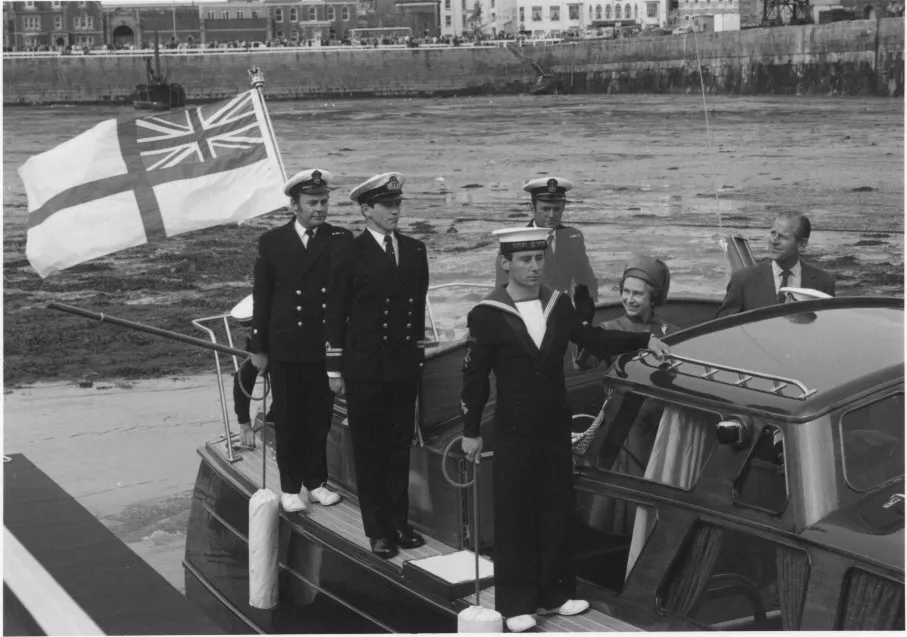
Queen Elizabeth II and Prince Philip aboard the royal boat
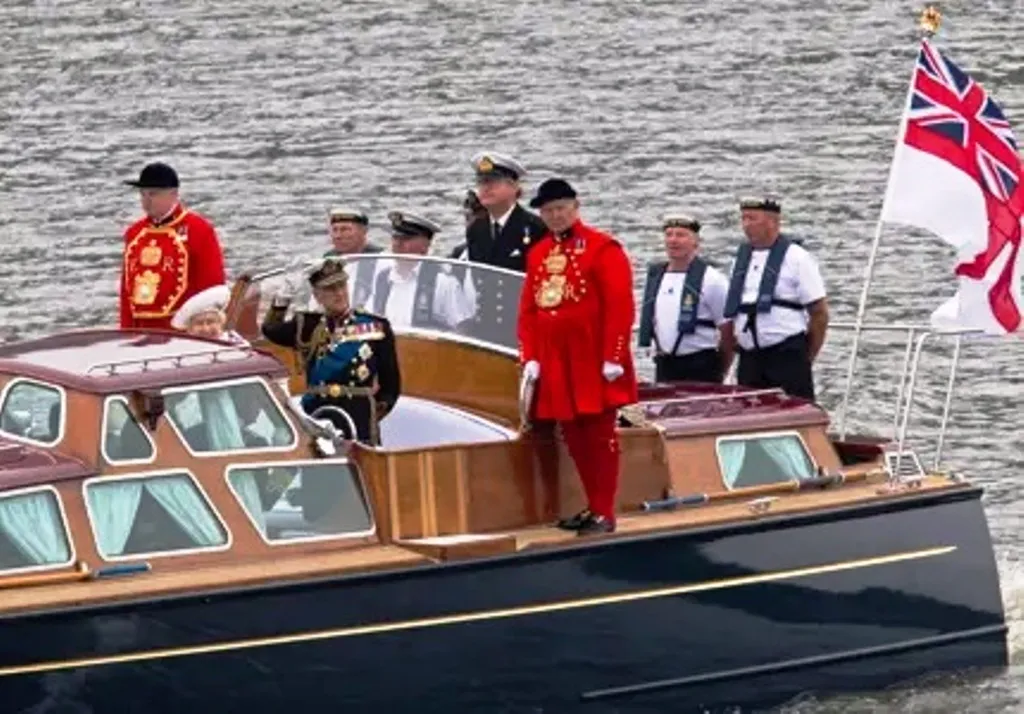
Queen Elizabeth II and Prince Philip on the royal boat, crewed by former yachtsmen, during the ceremonial procession on June 3, 2012.
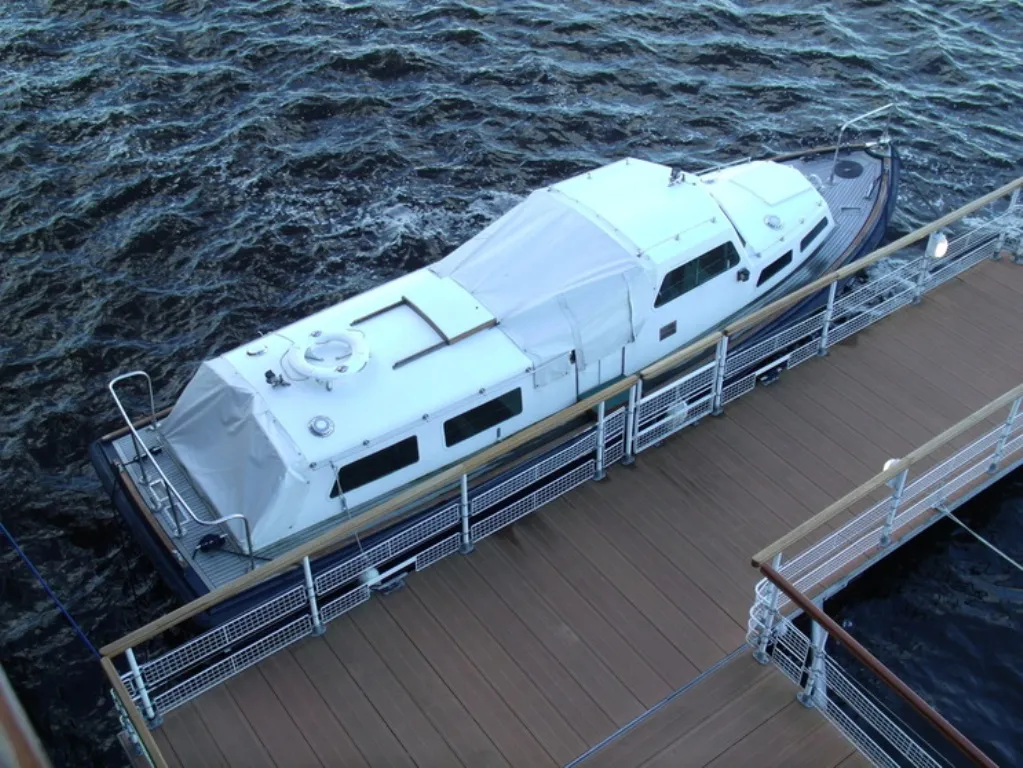
35-foot boat
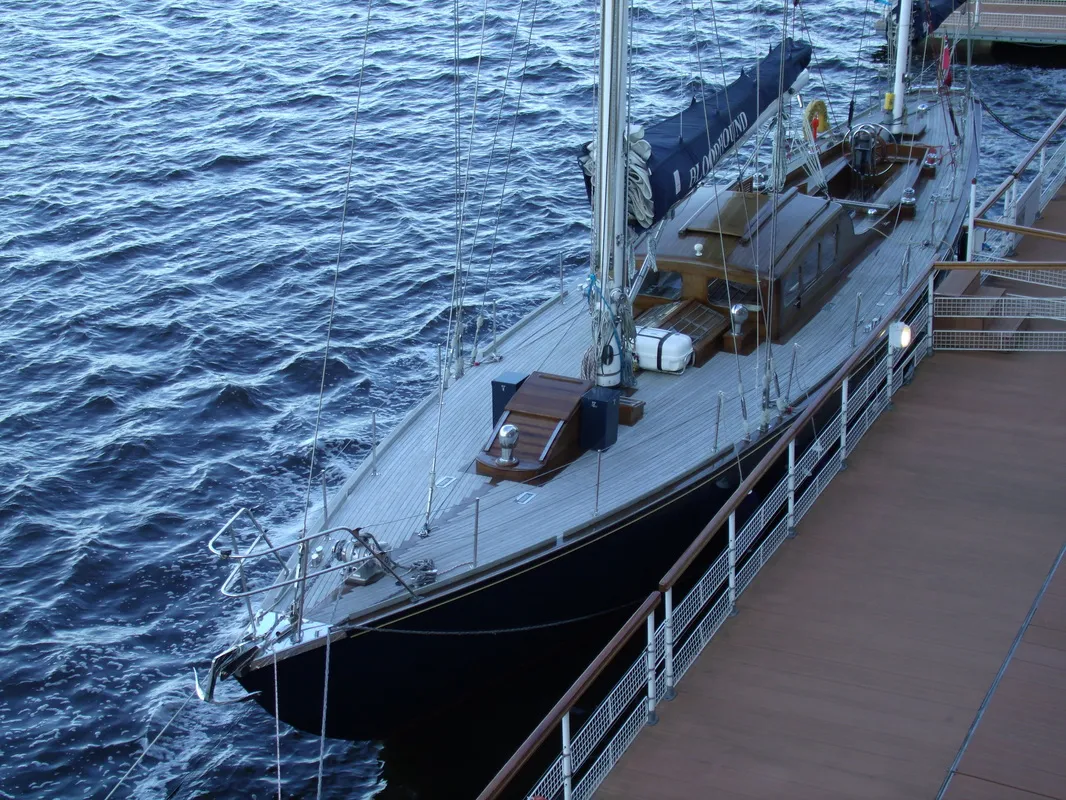
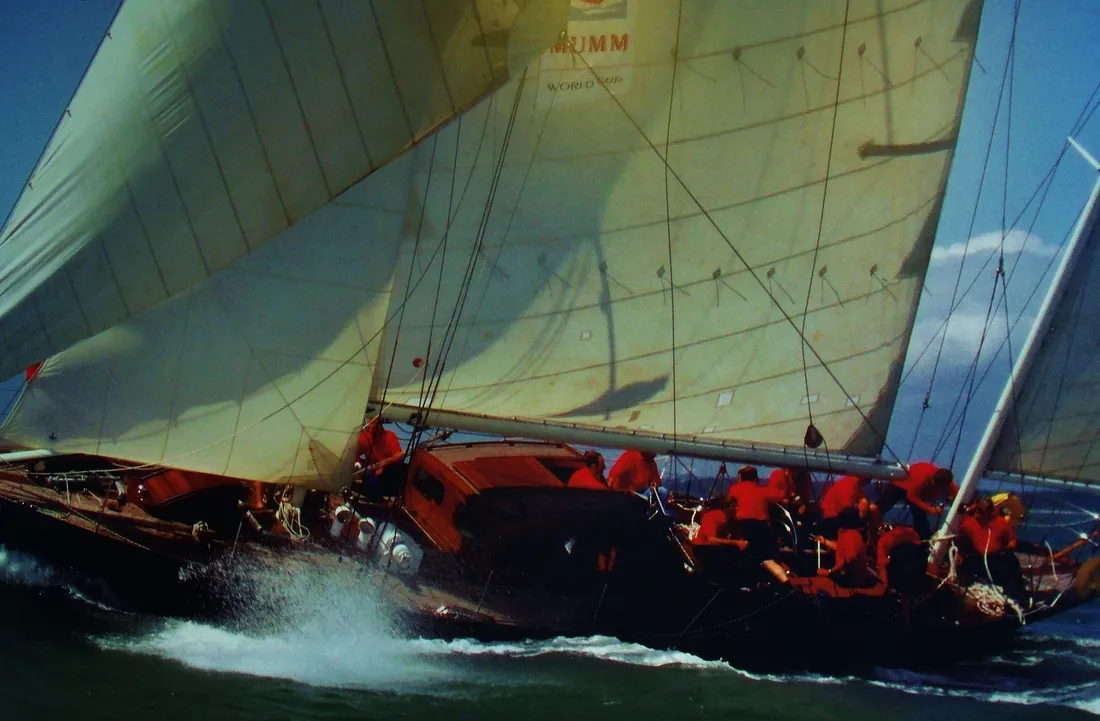
Prince Philip was an avid yachtsman and often took his racing yacht Bloodhound aboard the Britannia.
To be continued ...
Information