Spencer carbines: the first multi-shot rifle of the US Army and the Italian company Chiappa
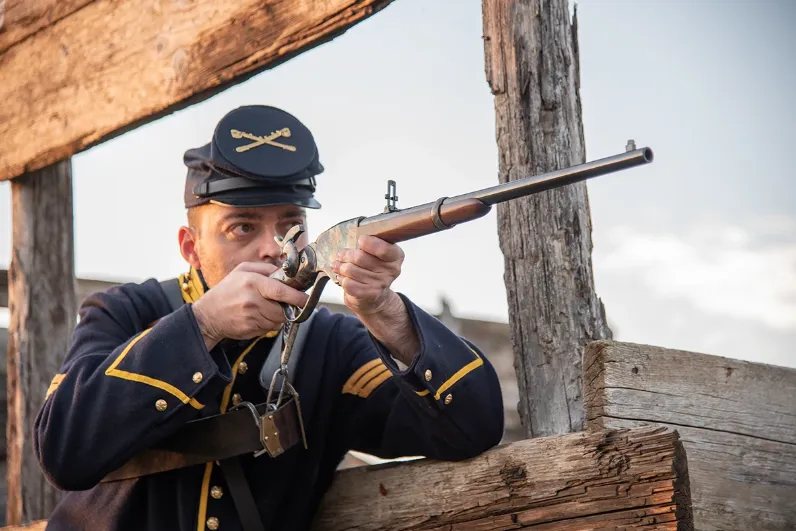
An American cavalryman with a Spencer carbine.
He fired once, and he fired twice,
And the bullet whistled through the bushes...
"The Ballad of East and West" by R. Kipling
And the bullet whistled through the bushes...
"The Ballad of East and West" by R. Kipling
stories about weapons. The American Civil War primarily utilized muzzle-loading, cap-and-bolt rifles, but advances in arms development had accelerated so rapidly that breech-loading rifles and the first practical repeating rifles were tested and perfected during the conflict. These included the Henry and Spencer rifles, introduced in 1860. Although the Winchester rifle was based on the Henry rifle, it was the Spencer that was adopted, despite its technical limitations.
And it so happened that the 1850s became a turning point in stories A field of gunsmithing that is often underestimated. Flintlock muzzleloaders, used in previous centuries, were still widespread, but by the end of the decade, the first breech-loading guns with cap ignition appeared. And it all started with cap ignition, which made breech-loading systems more practical. It didn't take long for copper caps to be simply lengthened, thickened, and then combined with gunpowder and a bullet to form a single unit. This approach was successfully tested in European Flobert cartridges.
Later, in 1857, Smith & Wesson put this idea into practice by developing the .22 Short cartridge for its No. 1 revolver. The company's line of cartridges was subsequently expanded to include larger rimfire cartridges and, eventually, firearms capable of using them.
Benjamin Tyler Henry used the ill-fated Volcanic pistol as a testbed for what would become the Henry repeating rifle, chambered for the .44 Henry cartridge and fed from a magazine beneath the barrel. But former Colt employee Christopher Spencer took a different approach. He improved on the Sharps rifle's drop-bolt design and created a lever-action rifle fed from a magazine in the buttstock.
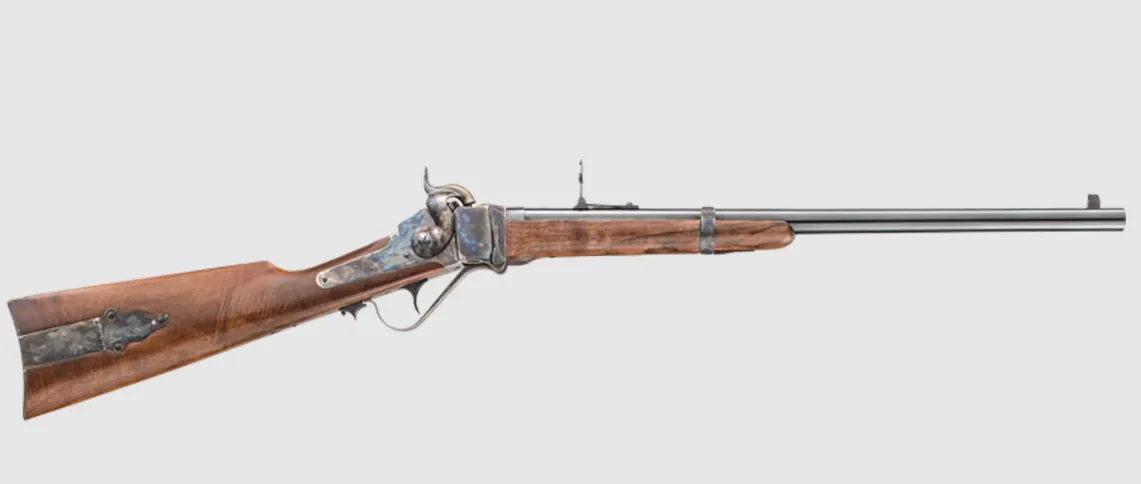
The Sharps carbine of 1859 is very similar in appearance to the Spencer...
In fact, the Spencer carbine was very similar in appearance to the Sharps carbine. The Spencer had the same side trigger and locking lever as the Sharps, but the operating principle was completely different. Instead of a rising and falling bolt, the Spencer used a round bolt that fed cartridges from a magazine in the buttstock into the barrel. The feeding mechanism was not connected to the hammer in any way, and it had to be cocked manually to fire.
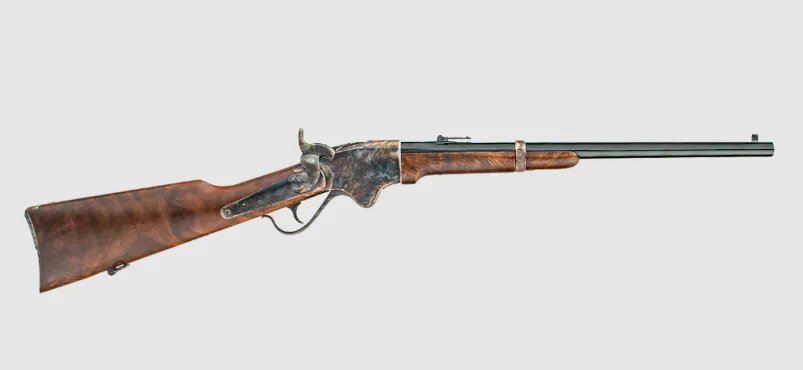
The Spencer carbine of 1860 is very similar in appearance to the Sharps, but its internals are completely different.
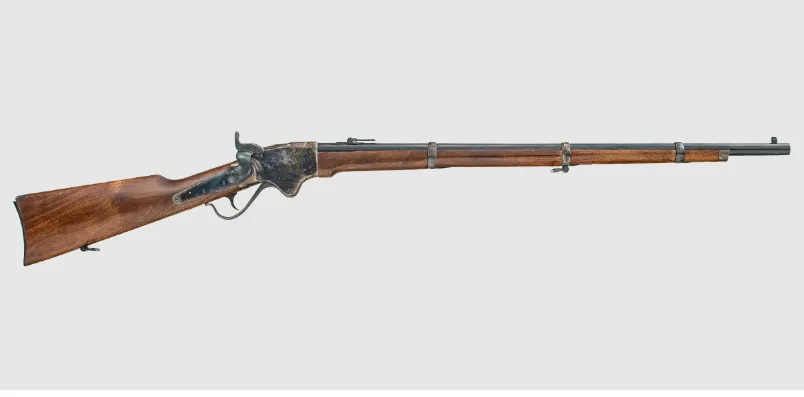
The Spencer rifle differed from the carbine only in the length of the barrel.
The Spencer rifle was produced with a 30-inch (762 mm) barrel or as a 22-inch (558 mm) cavalry carbine. It was originally chambered for the .56-56 rimfire cartridge, which was almost identical to the military .58-caliber rifled musket cartridge in use at the time.
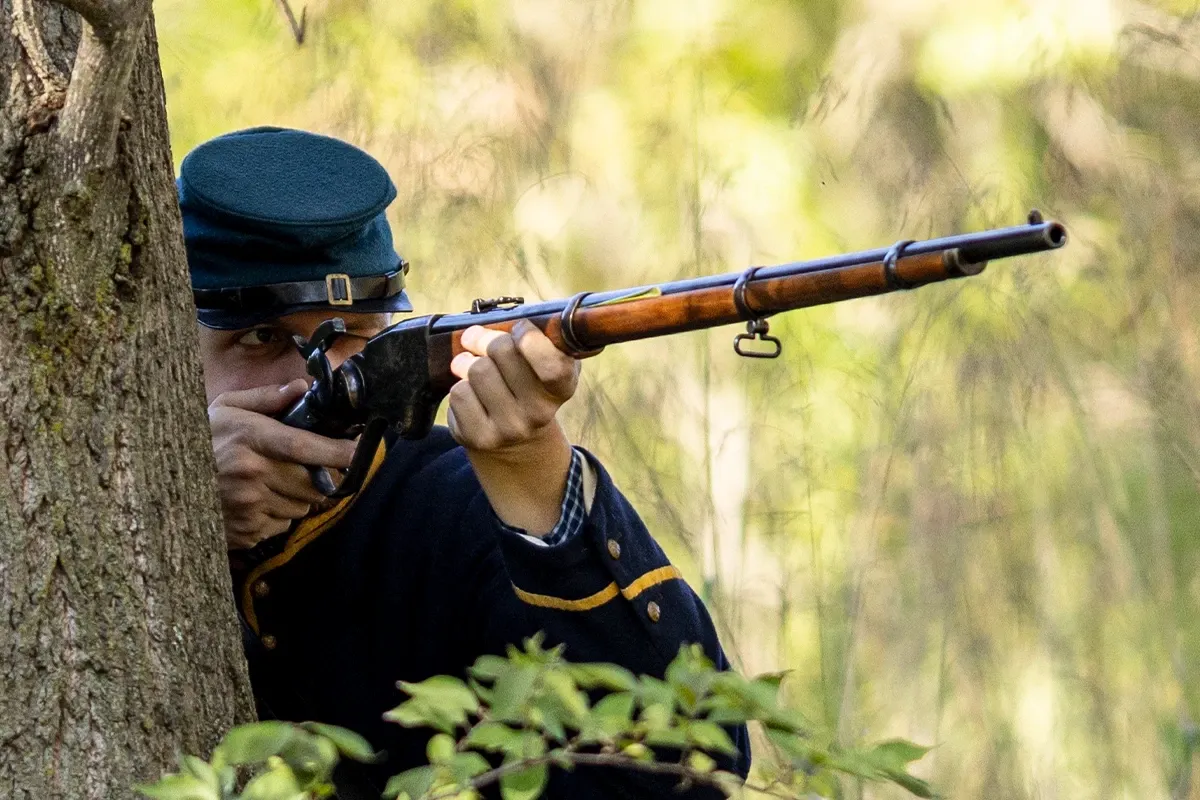
Shot at close range
Although the Spencer rifle was invented before the Civil War, artillery The US Army Corps under General James Wolfe Ripley refused to accept it. Ripley primarily considered the investment already made in new rifled muskets. But there were also other reasons related to training and logistical considerations regarding the introduction of a new weapons system in the face of a rapidly growing army. However, Spencer had influential friends, and eventually, in 1861, his company received its first contract with the Navy. fleetBut it wasn't until Ripley himself fired the carbine, and Christopher Spencer staged a demonstration with US President Abraham Lincoln, that the rifle was adopted for service in 1863.

A Union soldier with a Spencer rifle
Between 1860 and 1869, Spencer Arms produced over 200,000 rifles and carbines, the lion's share of which went to the Union Army. The 22-inch-barreled carbine was popular with cavalrymen, who used it as their primary longarm. It was later replaced by the Springfield Model 1873 carbine, a controversial development. However, despite the design's success and some limited sales abroad, improving the Spencer proved nearly impossible, and Spencer Arms went bankrupt in 1869. The rival Henry rifle, deemed too fragile for the military, became the Model 1866—and thus was born the iconic Winchester brand, which survives to this day.
And then, in our own time, the Italian company Chiappa Firearms entered the world arena and decided to produce all modern Spencer rifles and carbines. They are available in carbine or rifle configurations in a variety of calibers, including .44-40, .45 Schofield, .45 Colt, and .56-50.
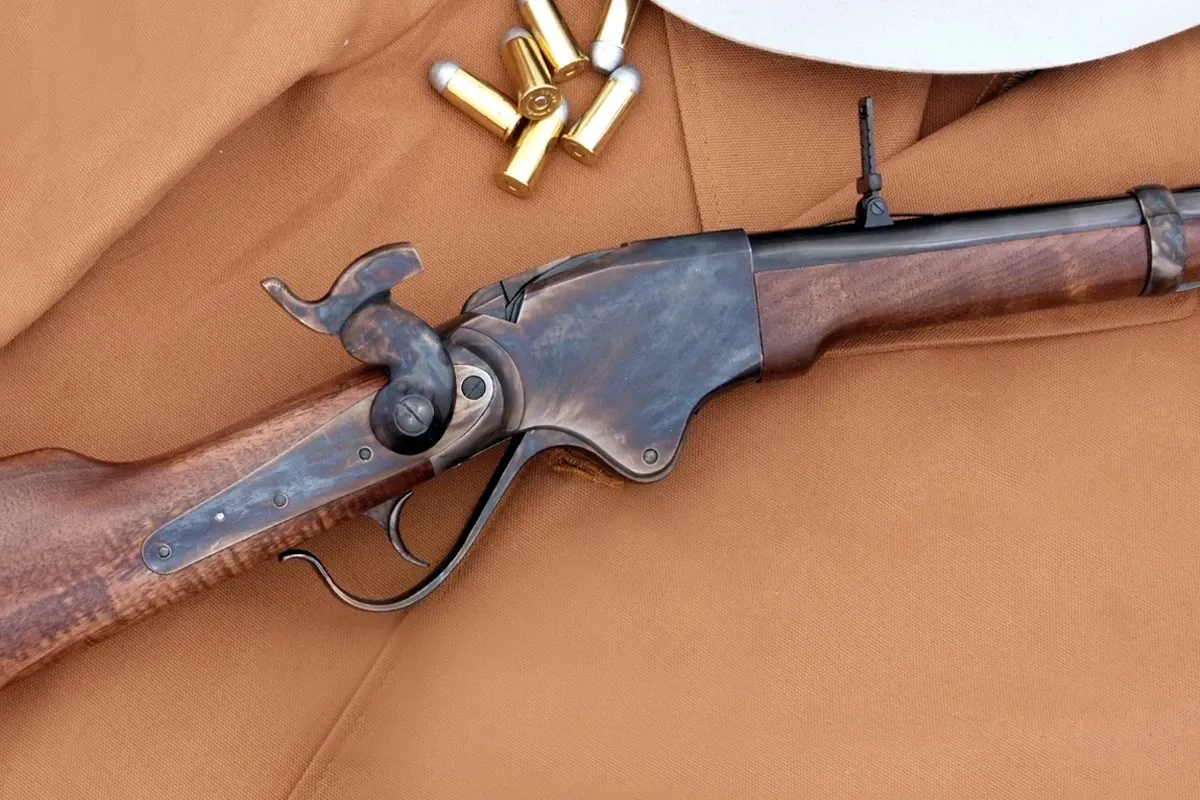
Receiver and cartridges
This Chiappa Firearms carbine features a solid walnut stock and forend, like the original models. It also features a solid receiver, bolt, and lever made of hardened steel. The 20-inch (508 mm) barrel is round and blued. The sights consist of a fixed front sight and a sliding V-notch with a 100-yard sighting bar, adjustable from 300 to 900 yards.
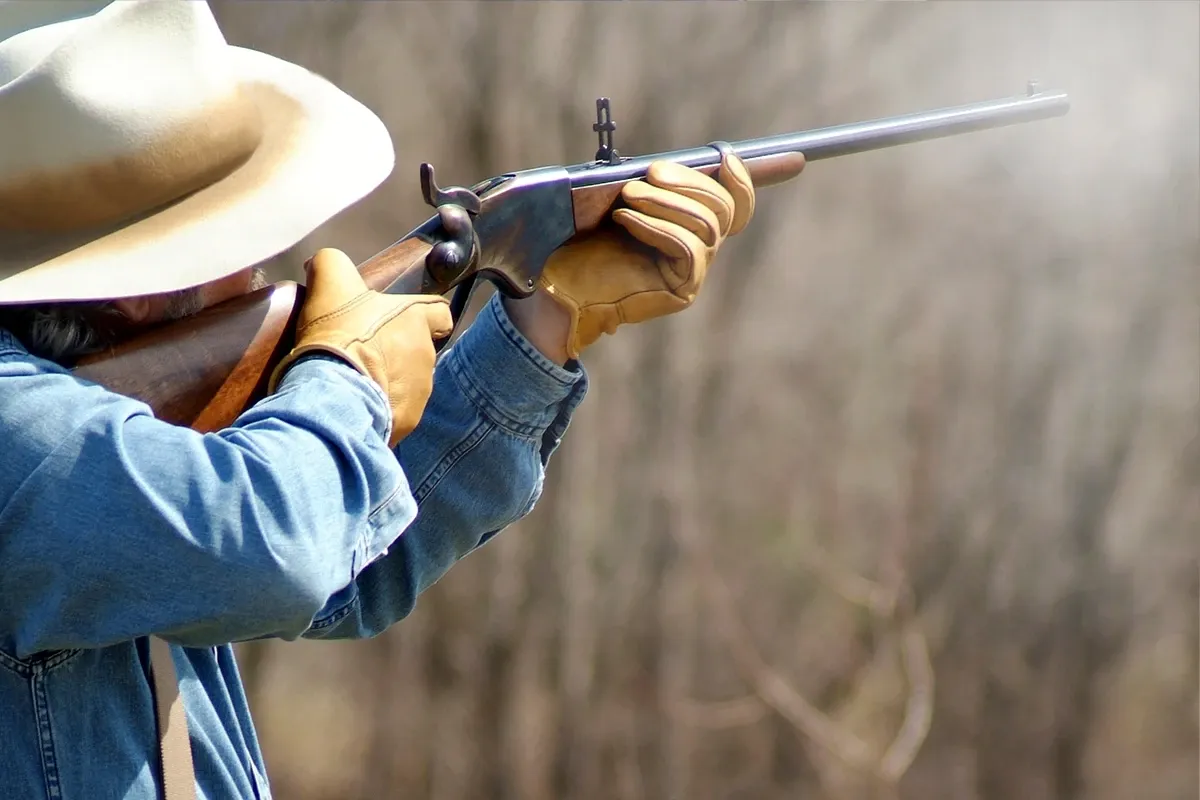
A very simple sight
The stock is also meticulously machined and finished, and holds a detachable seven-round magazine. Like any cavalry carbine of the period, the Chiappa Spencer features a single-point sling attachment (a ring on the brace) on the left side of the stock. A rear sling attachment is also included.
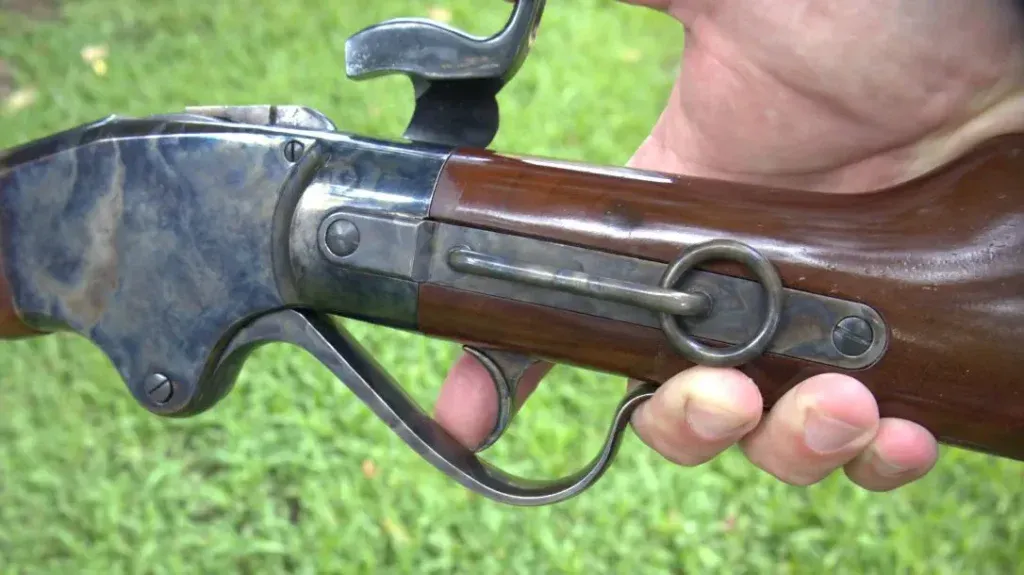
Cavalry carbine stock neck with sling ring
The overall length of the carbine is only 37 inches (939 mm), but it weighs 3,9 kg. It is noted that one of the most popular carbines is the one chambered for the .44-40 Winchester cartridge, a cartridge that became popular many years after the Spencer carbine was discontinued.
Modern Spencer repeating rifles are excellent, though their design was a dead end. The bizarre lever-action mechanism, disguised as a single-shot rifle, makes shooting awkward, albeit exciting. And while the Henry repeating rifle, which later became the Winchester, was clearly superior, shooting the Spencer demonstrates why it became the US Army's first repeating rifle and was beloved by so many.
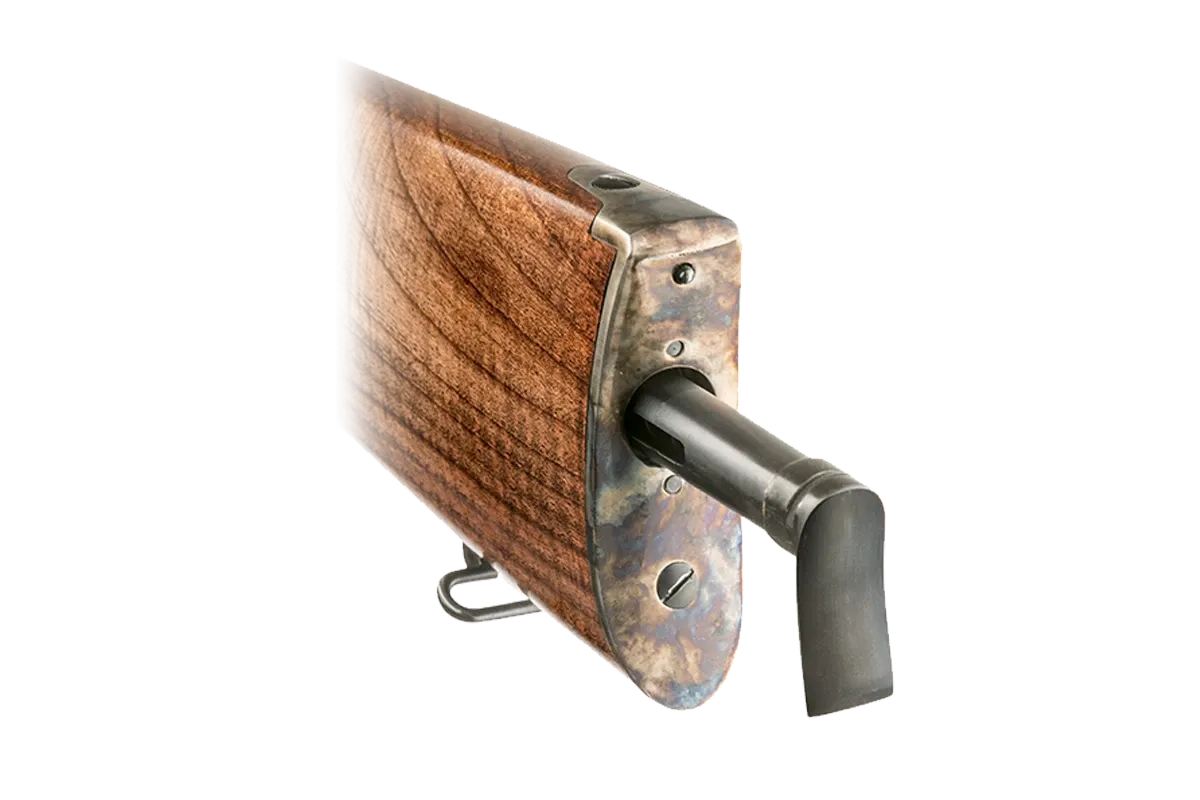
Magazine in the butt
The surprises began with the loading process, which was the Spencer rifle's main advantage. The magazine tube was protected from damage by the stock body and accessed through the butt plate. The magazine tube had to be rotated 45 degrees to the right. After that, it was easily removed from the stock. The cartridges were then dropped into the stock, tip down, after which the tube was inserted and rotated again, but in the opposite direction. The US Cavalry used hexagonal Blakesley magazines, in which the cartridges were stored in the tubes for quick reloading. But even without this convenience, seven rounds could be quickly inserted into the tube and the carbine was quickly loaded. Furthermore, this was less hassle than muzzleloading a Henry rifle or even a modern Winchester, equipped with the "Royal Innovation"—the side-loading system.
Although the Spencer was quick to load, it wasn't the best in accuracy. After reloading, the hammer had to be cocked manually, as the bolt was not connected to it. Therefore, shooters who used Henry and Winchester rifles but later picked up the Spencer sometimes forgot to cock the hammer before firing. Despite this drawback, the Spencer's rate of fire was superior to both rifled muskets and breech-loading single-shot rifles chambered for cartridges.
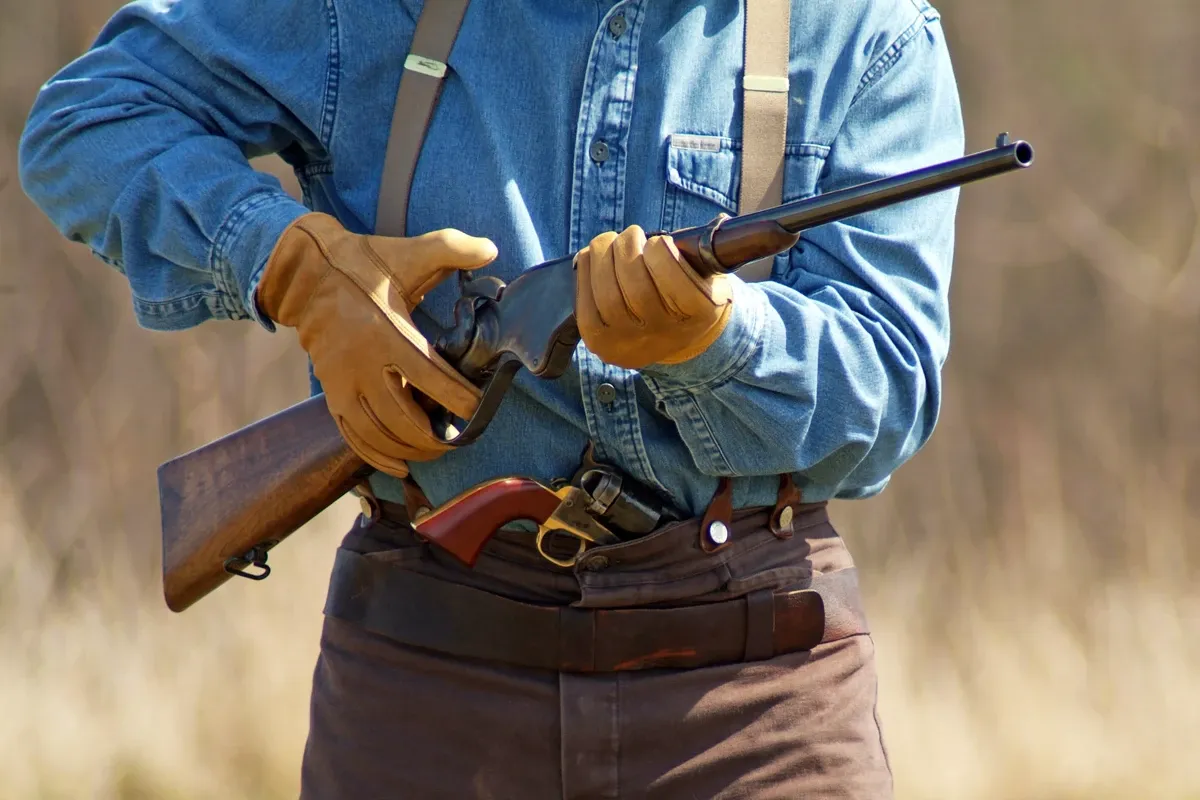
Before firing, the trigger was cocked with a finger
In defense of the Spencer, the wide V-shaped rear sight and front sight placement ensure excellent off-hand shooting, not at paper targets. Shooters noted that it is comfortable to hold, easy to handle, and that the barrel balance remains unaffected by the ammunition being stored in the rear rather than in a tube under the barrel. This was especially unimportant for cartridges such as the .44-40 and .56-50, intended for short-range shooting. At ranges up to 100 yards (90 m), the Spencer performs excellently in target shooting. Overall, shooters past and present have noted that the Spencer rifle feels good in the hand and shoots superbly.
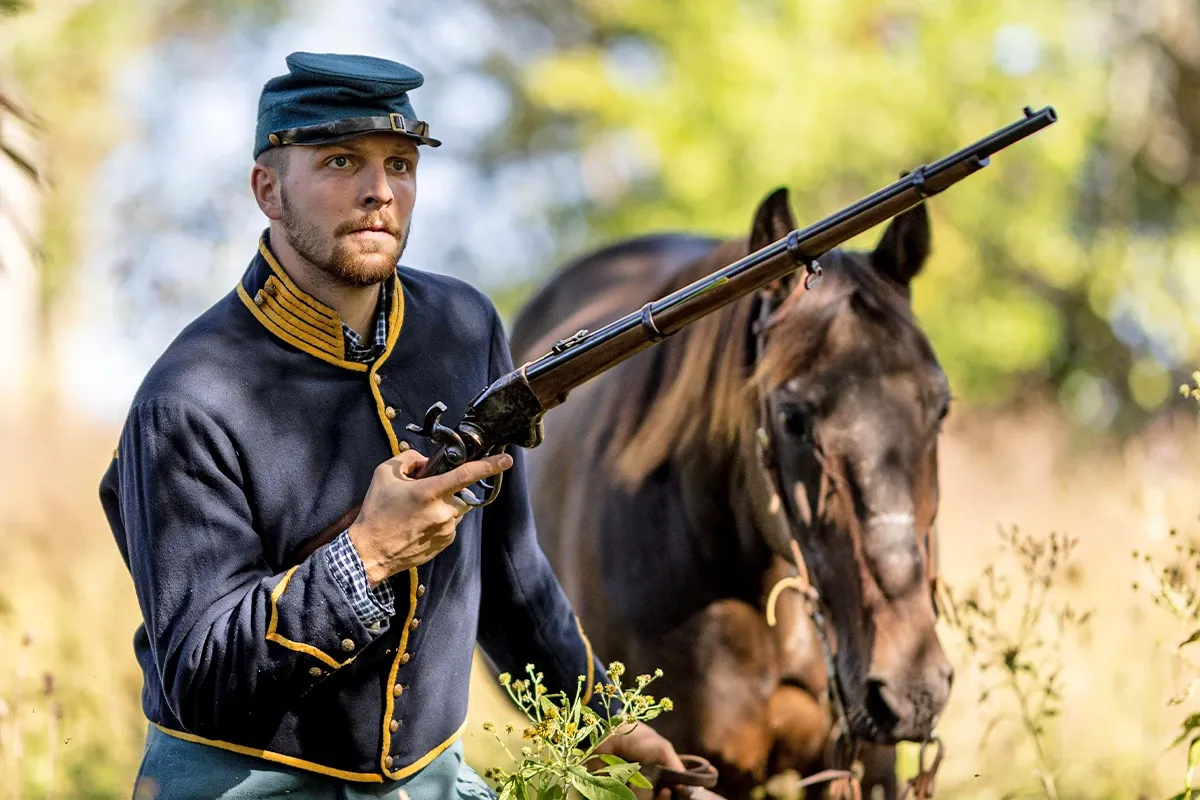
The rifle can be held with one hand...
The Spencer repeating rifle was an invention that marked a step forward in firearms. Today, the word "revolutionary" is so overused in marketing that it no longer attracts attention. But in the 19th century, it played a crucial role, setting the trend for the future. Incidentally, Christopher Spencer himself understood perfectly well that the repeating rifle was the weapon of the future, but he never fully thought it through. The Winchester, however, proved to be a step ahead of the Spencer, and that sealed the deal. Be that as it may, today this weapon is once again produced by Chiappa Firearms, allowing historical firearms enthusiasts to compare both the Winchester and the Spencer.
Now, a little about this company. Chiappa Firearms, also known as Armi Sport di Chiappa, is an Italian firearms manufacturer based in Brescia. It was founded in 1958 by Ezechiele Chiappa as Armi Sport. Total production is approximately 60,000 units per year. The company's US headquarters are located in Dayton, Ohio. We'll tell you about their other products another time...
P.S. All photos by Chiappa Firearms
Information