Project Delta, or a billion for Magirus-Deutz
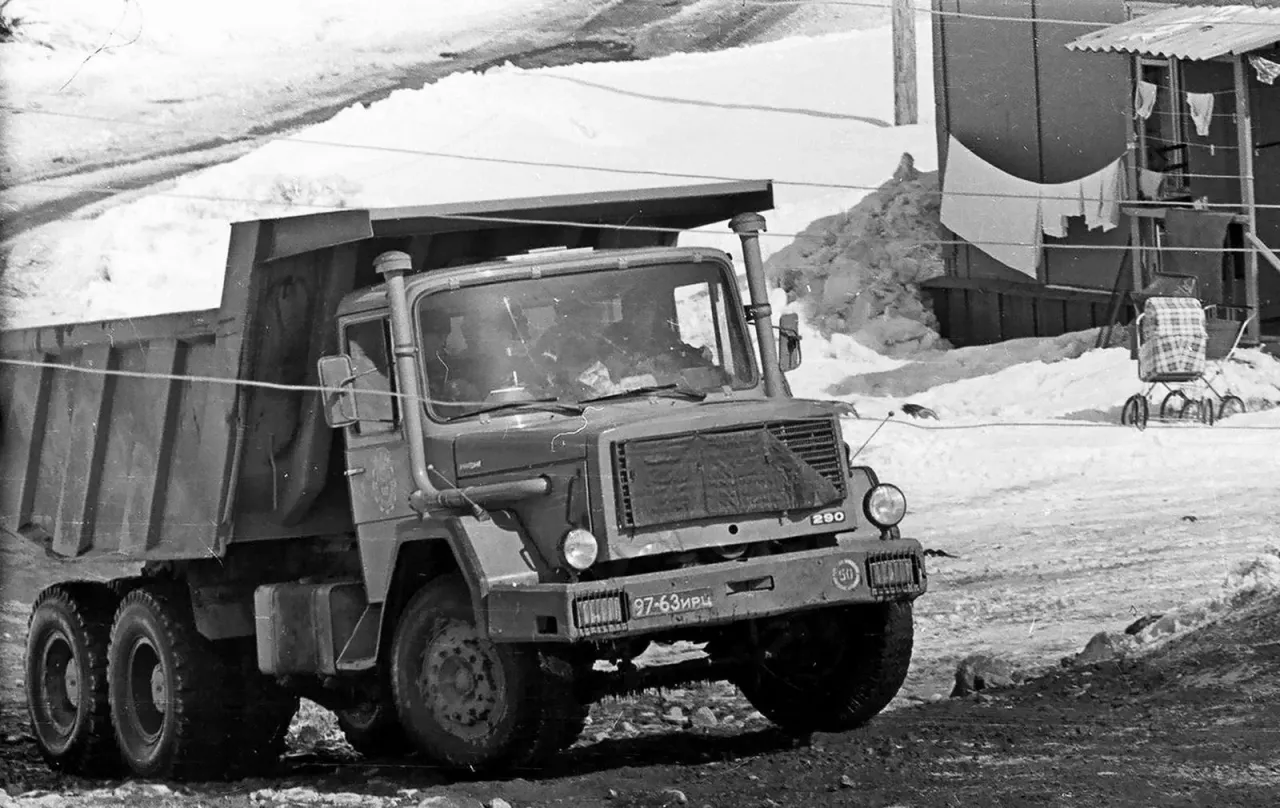
Difficult situation
The late 70s and 60s marked the beginning of large-scale socialist construction projects. Western Siberia's oil and gas provinces were being developed, and the Baikal-Amur Mainline was being built. Paradoxically, the country lacked the equipment adequate for the task. And the tasks were challenging. In Siberia and the Far East, drilling had to be done, digging through permafrost, and hauling pipes—all without paved roads and in severe frosts. The Soviet Union didn't have a particularly extensive selection of equipment for extreme conditions. Kremenchug produced the KrAZ-256BS dump trucks and KrAZ-257S flatbed trucks. The "C" in the index denoted a northern version, and the vehicle was indeed noticeably warmer. These KrAZs were said to be rated for temperatures down to -60°C.оS. But the inherent design flaws haven't disappeared.
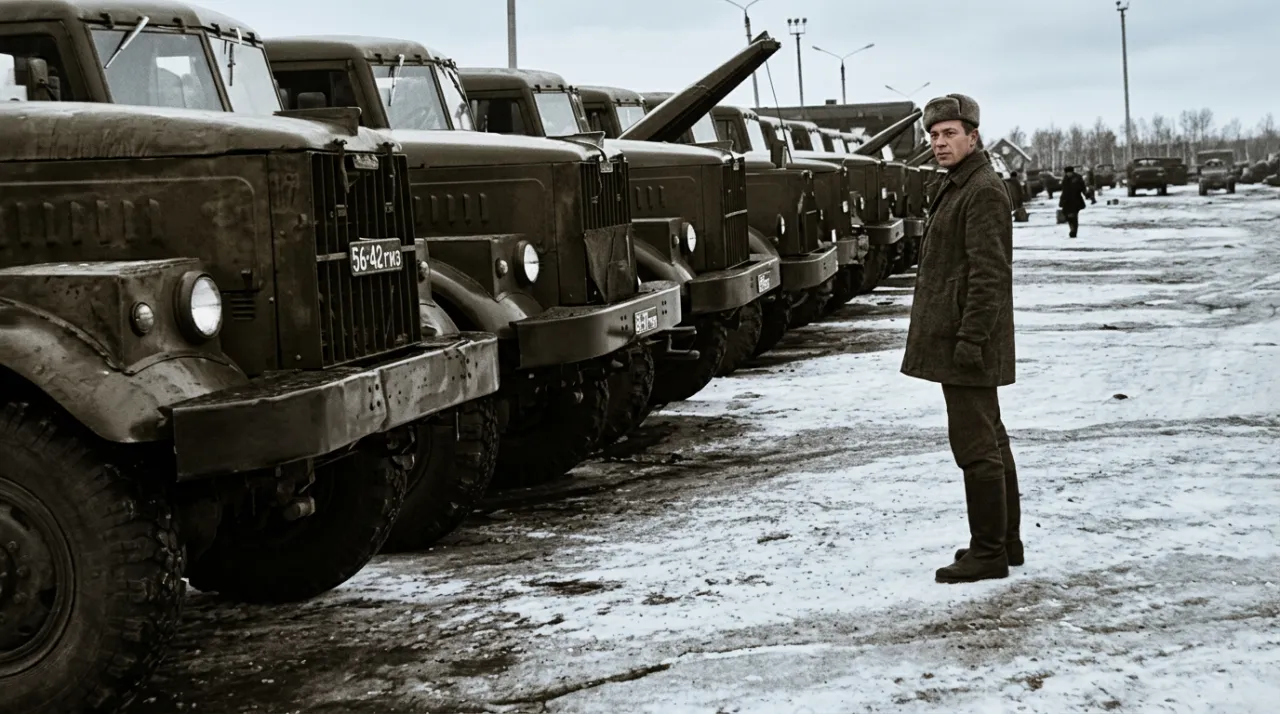
The steering was extremely heavy, the wooden cabin was downright uncomfortable, and the diesel's liquid cooling system required draining the water after each use. Antifreeze was only a rumor back then, but even its presence wouldn't have saved the situation. The quality of rubber seals, hoses, and gaskets in domestic vehicles was poor. The fluid ethylene glycol solution quickly found the slightest crack and simply leaked onto the ground. It was easier and cheaper for drivers to continue using free water daily. In short, the Kremenchug trucks of that time (and all other Soviet trucks) were vehicles for the strong of spirit and body. There was also the MAZ-500S, which participated in the development of Samotlor alongside the KrAZ trucks.
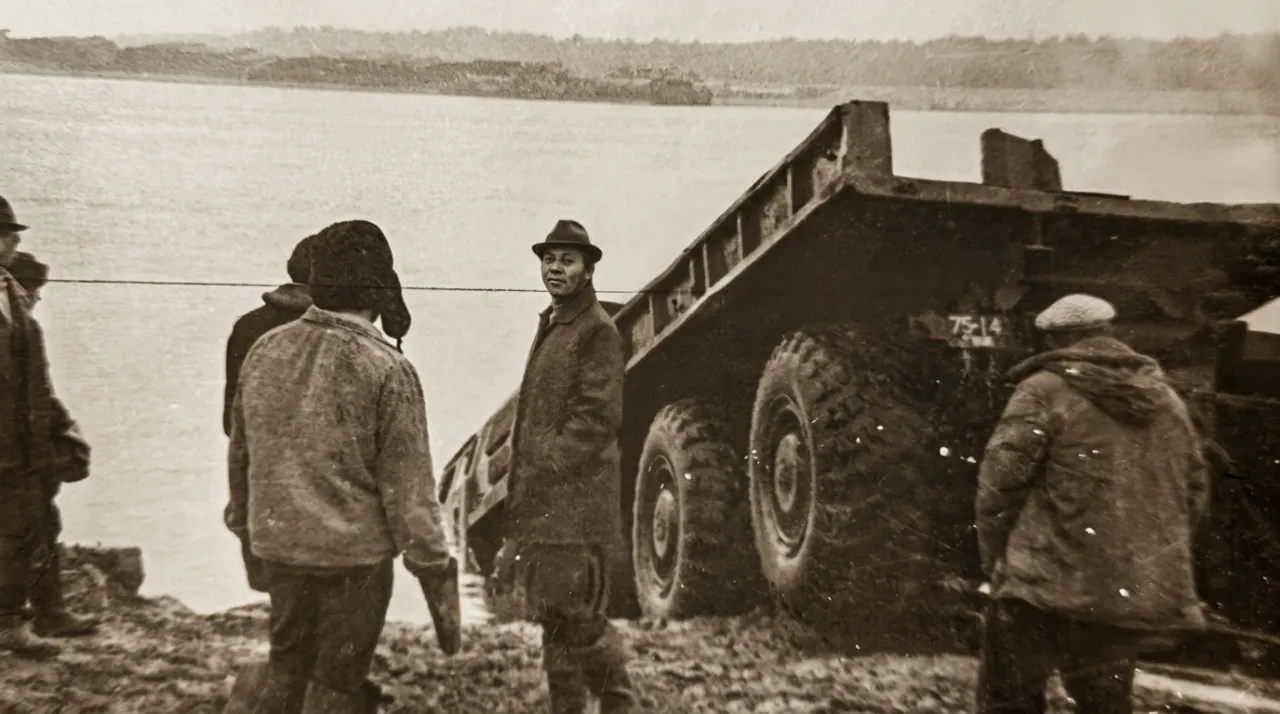
The heavy league featured four-axle MAZ-543s, used for towing anything that lighter vehicles couldn't handle. But the eight-wheeled truck was a military machine with a less-than-stellar lifespan (the engine was tank) and military ergonomics. To solve these problems, West German FAUN tractors and pipe carriers had to be purchased – 254 of these gigantic vehicles arrived in the country from the late 70s to 1989.
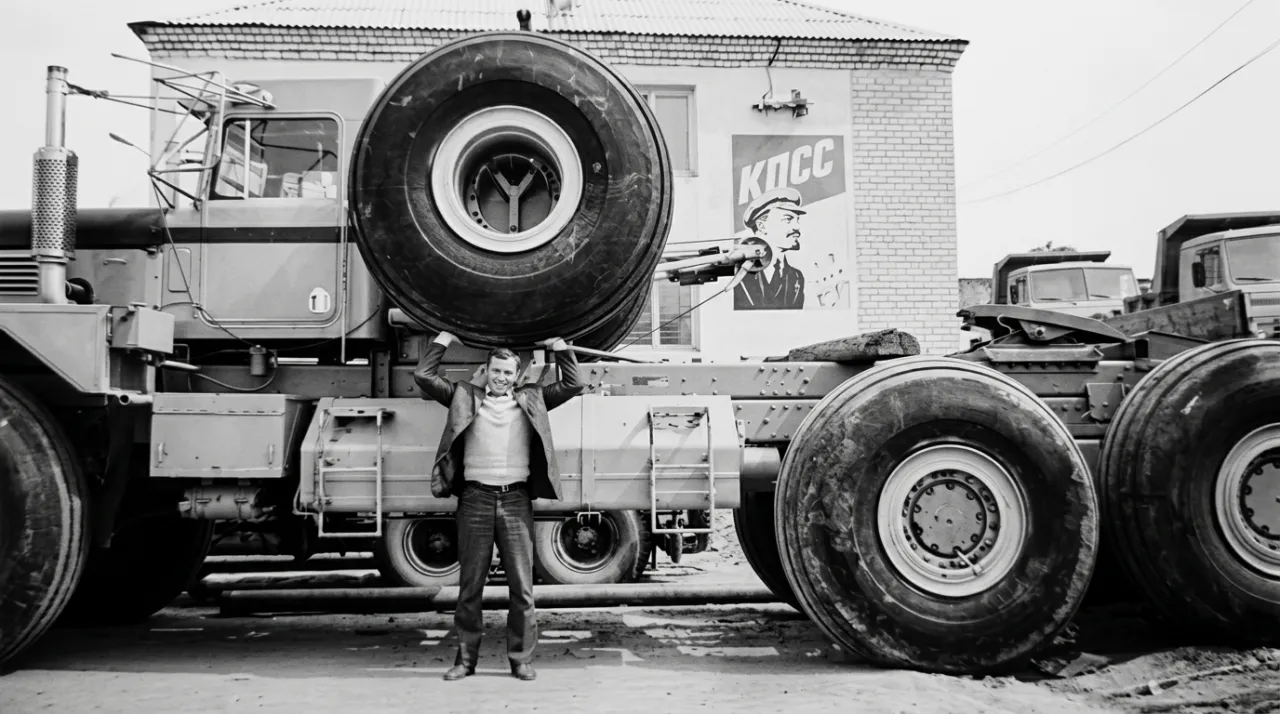
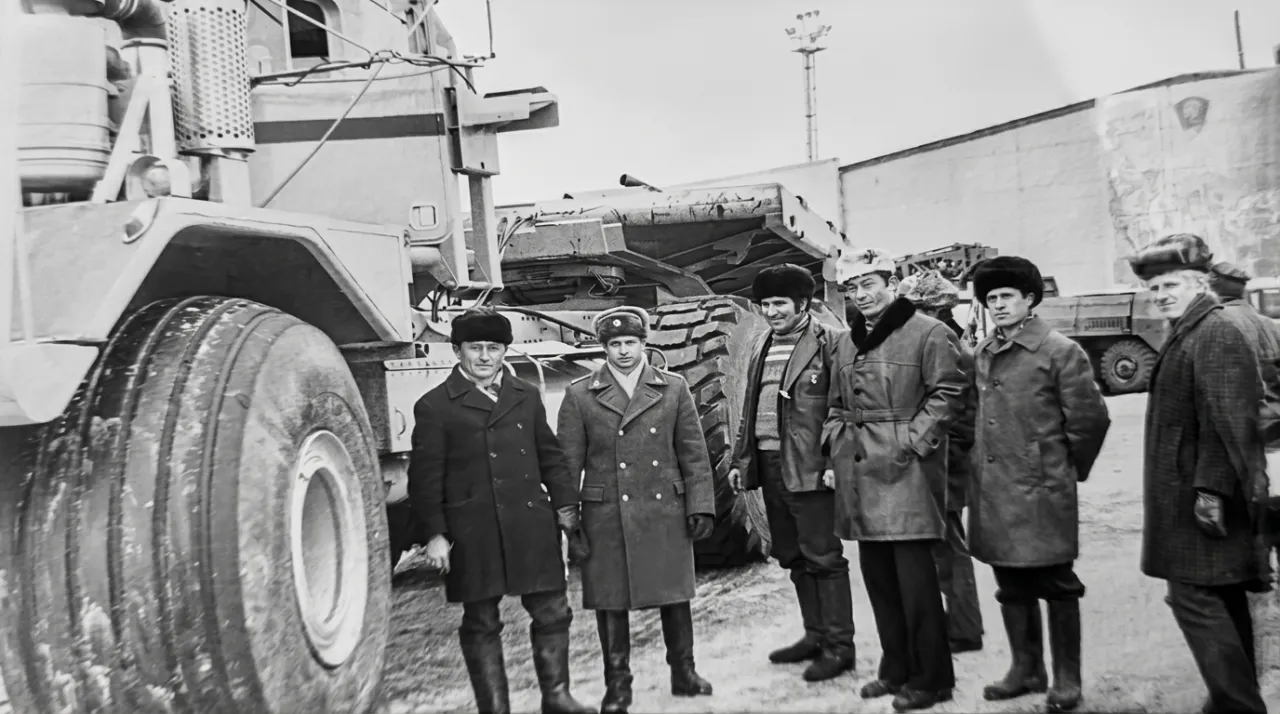
FAUN HS in Western Siberia
A typical Soviet KrAZ truck could only haul one heavy, large-diameter pipe, but the German FAUN HS, thanks to its enormous strength and size, could handle two such pipes, each 12 meters long, and transport them across completely impassable terrain directly to the laying site. The difference, as they say, was obvious. And FAUN was far from the only company supplying equipment for the development of the Soviet Union's riches. However, this is a slightly different matter. story.
The main culprit of the celebration for many years was the Baikal-Amur Mainline, built north of the Trans-Siberian Railway under truly extreme conditions. Fortunately, the Soviet leadership was well aware of the situation even before construction began in 1974. It was decided to purchase a large batch of rugged trucks (primarily dump trucks) abroad. Even if the domestic industry could offer a vehicle of the appropriate class and quality (which it did not), production capacity was insufficient to produce many trucks in a short period of time. This was one of the customer's primary requirements. As it turned out, only a relatively unknown company, Magirus-Deutz, could satisfy the customer.
Project Delta
The early 1970s were a period of détente. The Soviet Union sought to squeeze maximum benefit from this situation. Moreover, West German Chancellor Willy Brandt was pursuing a rapprochement with the USSR. It was during this time that Moscow signed a series of ambitious contracts with the West: the purchase of a Fiat plant for the construction of AvtoVAZ, a gas-to-pipeline agreement with West Germany, and the involvement of Western firms in the construction of KamAZ.
However, the choice of Magirus-Deutz as the main BAM truck was far from obvious at the time. The Czechoslovakian Tatra was clearly no worse and posed serious competition to the German vehicle. The plant's socialist origins and strong brand recognition in the USSR were also factors in its favor. The Tatra 148 was best suited for the conditions of the Far East, featuring, like the Magirus, an efficient air-cooled diesel engine. This was one of the key conditions of the contract – drivers wouldn't have to drain and refill the engine's cooling jacket every night and morning. The Tatra, with its famous backbone frame, was theoretically superior to the Magirus in terms of off-road capability and smoother ride. While a loaded, leaf-sprung Magirus would slip due to its diagonal axle suspension, the Tatra 148 continued to "plow" with all wheels, literally licking the terrain.
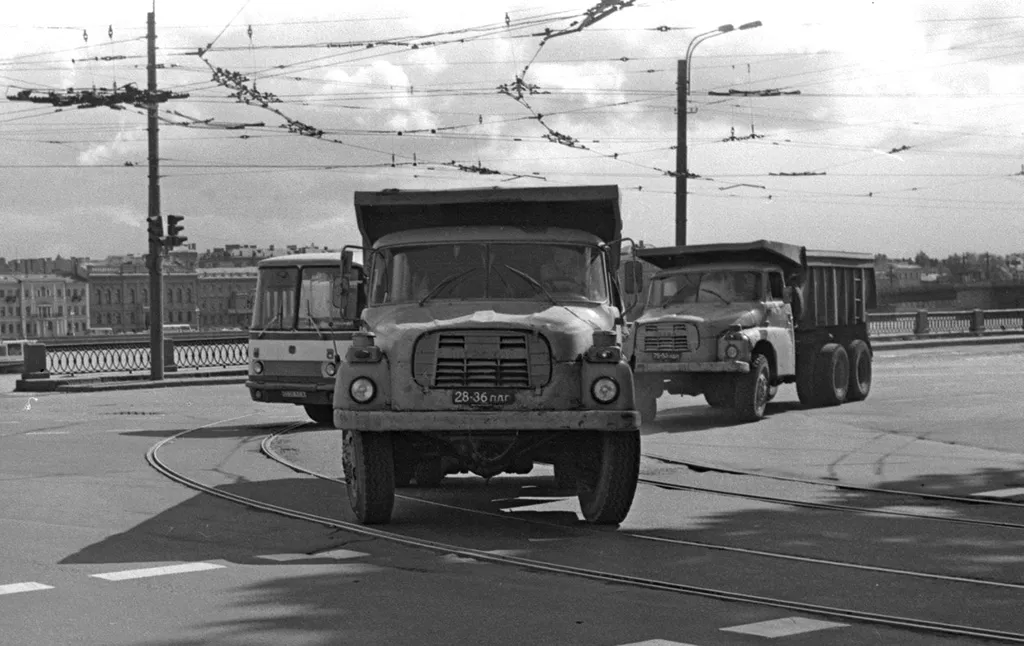
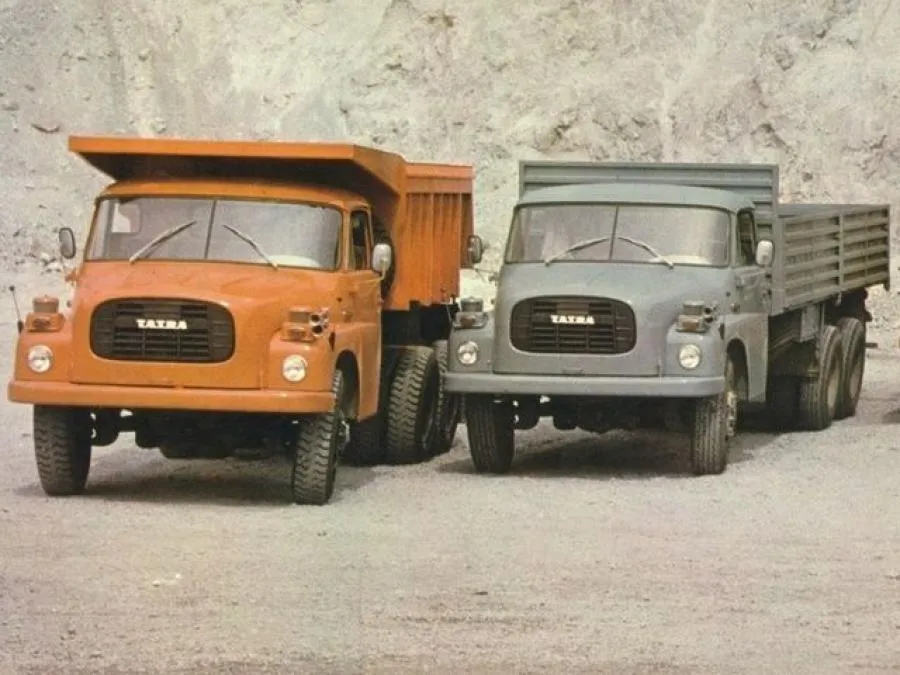
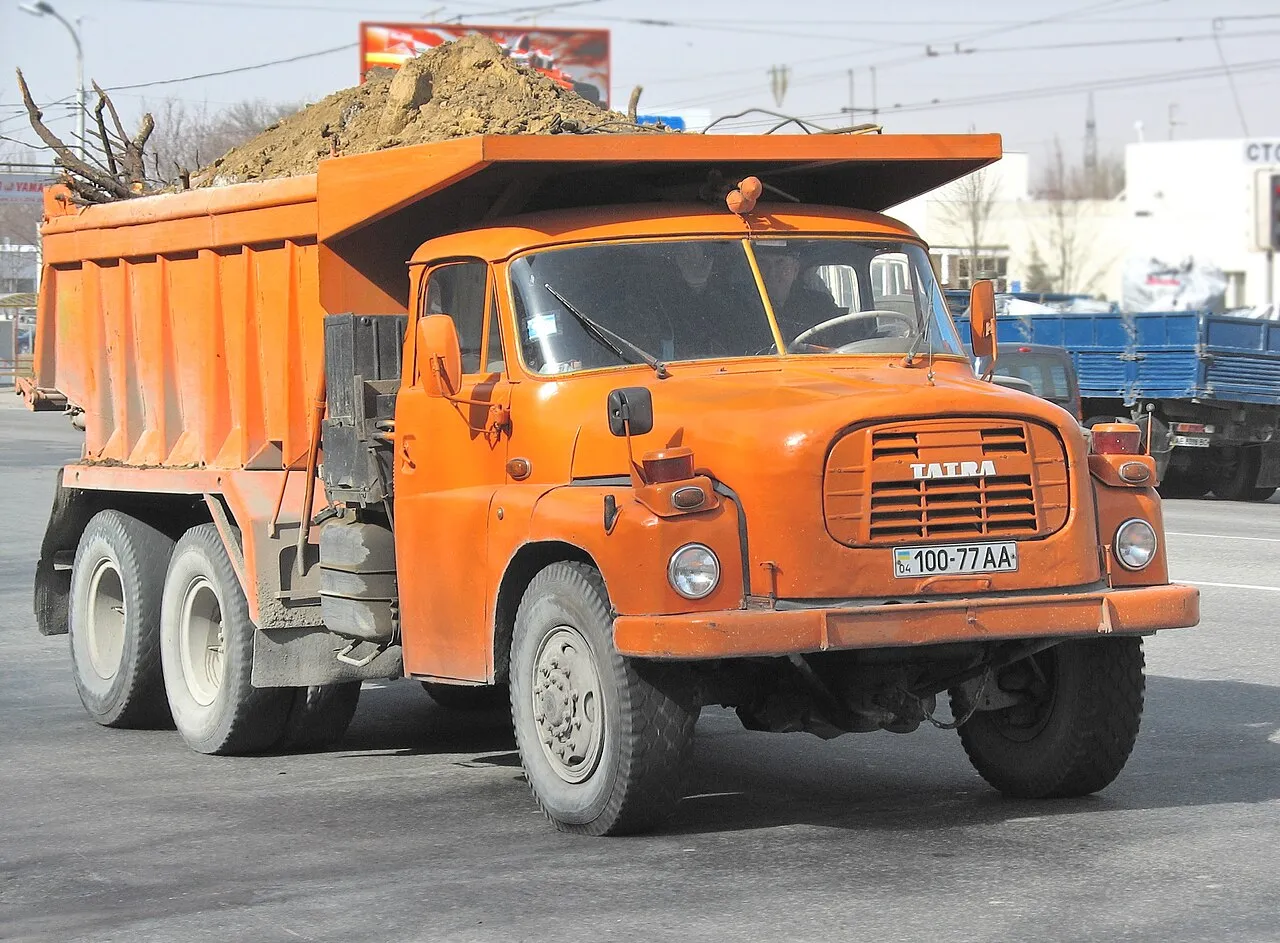
The Tatra 148 was popular in the USSR
But there were also shortcomings, clearly evident in comparison with the German machine. With 290 hp compared to the Czech 212 hp, the Magirus was the absolute king of long climbs and tough quarries. In the BAM mountains, in deep open-cast mines, and when towing trailers, the Magirus barely noticed the weight, while the Tatra 148 pushed its limits on steep slopes.
The Magirus's classic axles and straight, rigid, longitudinal frame were familiar to any Soviet mechanic. The Tatra's chassis, with its complex configuration of swinging half-shafts and torsion bars, required highly skilled mechanics. Furthermore, the Czech vehicle's rubber half-shaft boots were prone to cracking in Siberian frosts, allowing dirt to enter the transmission. But the main reason for choosing the Magirus was its volume and speed of production—the USSR was expected to receive just over 10 trucks within two years as part of Project Delta. Tatra was overwhelmed with contracts, and there was simply no spare capacity for production expansion.
For reference: the USSR didn't abandon the Tatra 148, and over the course of their cooperation, they purchased more than 26 trucks. Only on the Baikal-Amur Mainline (BAM) were they ever seen. The remaining competitors—the Japanese and Germans from Mercedes-Benz—were eliminated due to the lack of an air-cooled diesel engine in their lineup. Furthermore, Magirus-Deutz was, to put it mildly, in a precarious financial position before signing the contract with the Soviet Union. Its parent company, Klockner-Humboldt-Deutz AG (KHD), was suffering massive losses due to declining demand in the European truck market and the completion of major defense contracts for the Bundeswehr. The German manufacturer desperately needed cash to fill its empty production lines in Ulm, so it made extreme price concessions and tight delivery deadlines in order to win the Soviet tender against its more advantaged competitors.
The critical situation led KHD's management to completely divest its automotive business, selling it to Italy's Fiat. Just three months after signing the deal with the USSR, on January 1, 1975, Magirus-Deutz officially became part of the newly formed IVECO concern. The Soviet order, worth 1,1 billion marks, became a lifeline for the failing plant—it immediately provided 70% of the plant's export capacity and provided significant start-up capital for the brand's development under the IVECO umbrella.
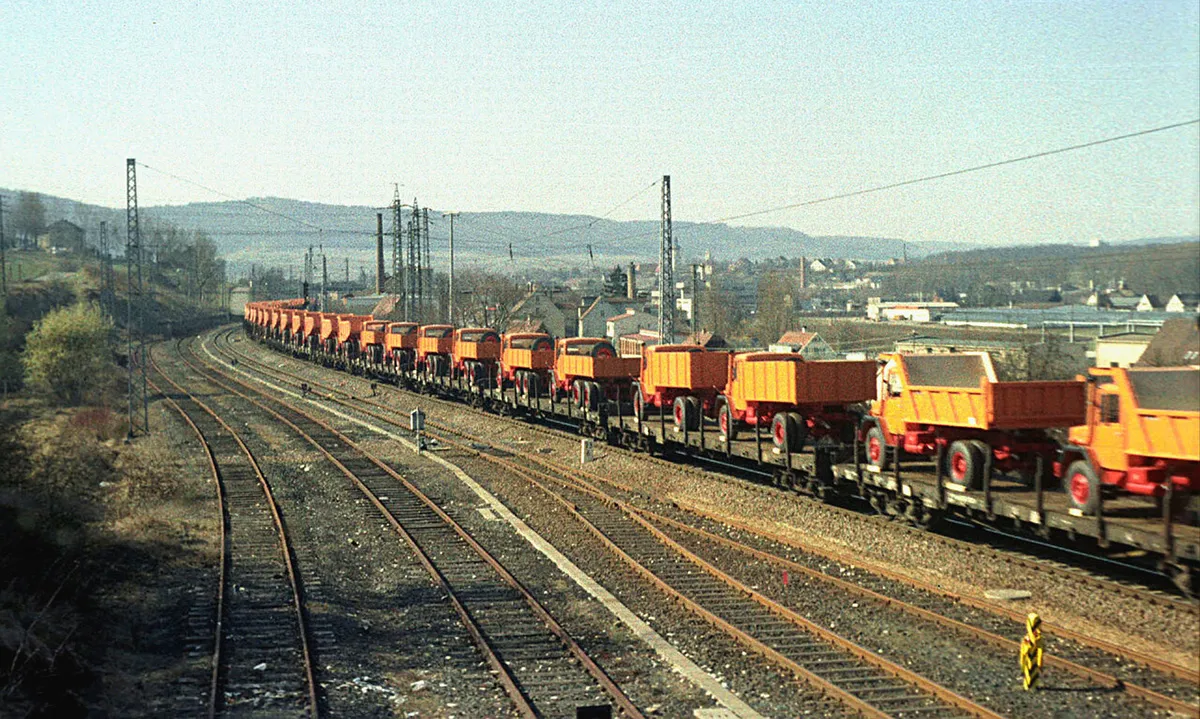
Magirus-Deutz goes to BAM
When the Delta contract was signed in 1974, the average price of a single Deutz F4L514 truck for the Soviet Union was approximately 110,000–125,000 German marks (converted at the official exchange rate of the State Bank of the USSR at the time—approximately 33,000–38,000 rubles per vehicle). Since the Soviet side was purchasing not just one model but an entire line of vehicles, the exact price depended on the model: two-axle Magirus 232 D 19 trucks were cheaper, while the powerful three-axle Magirus 290 D 26 dump trucks were more expensive.
To understand the true scale of this cost in 1974, it can be compared with prices of the time. One German Magirus cost the Soviet budget approximately four times more than the flagship domestic dump truck, the KrAZ-256B. If we go further and translate this cost into 2026 realities, the average price of a dump truck would be approximately 200,000 euros (approximately 19,2 million rubles), which is very close to the price of a new, modern, heavy-duty construction dump truck from a European brand in a top-of-the-line configuration.
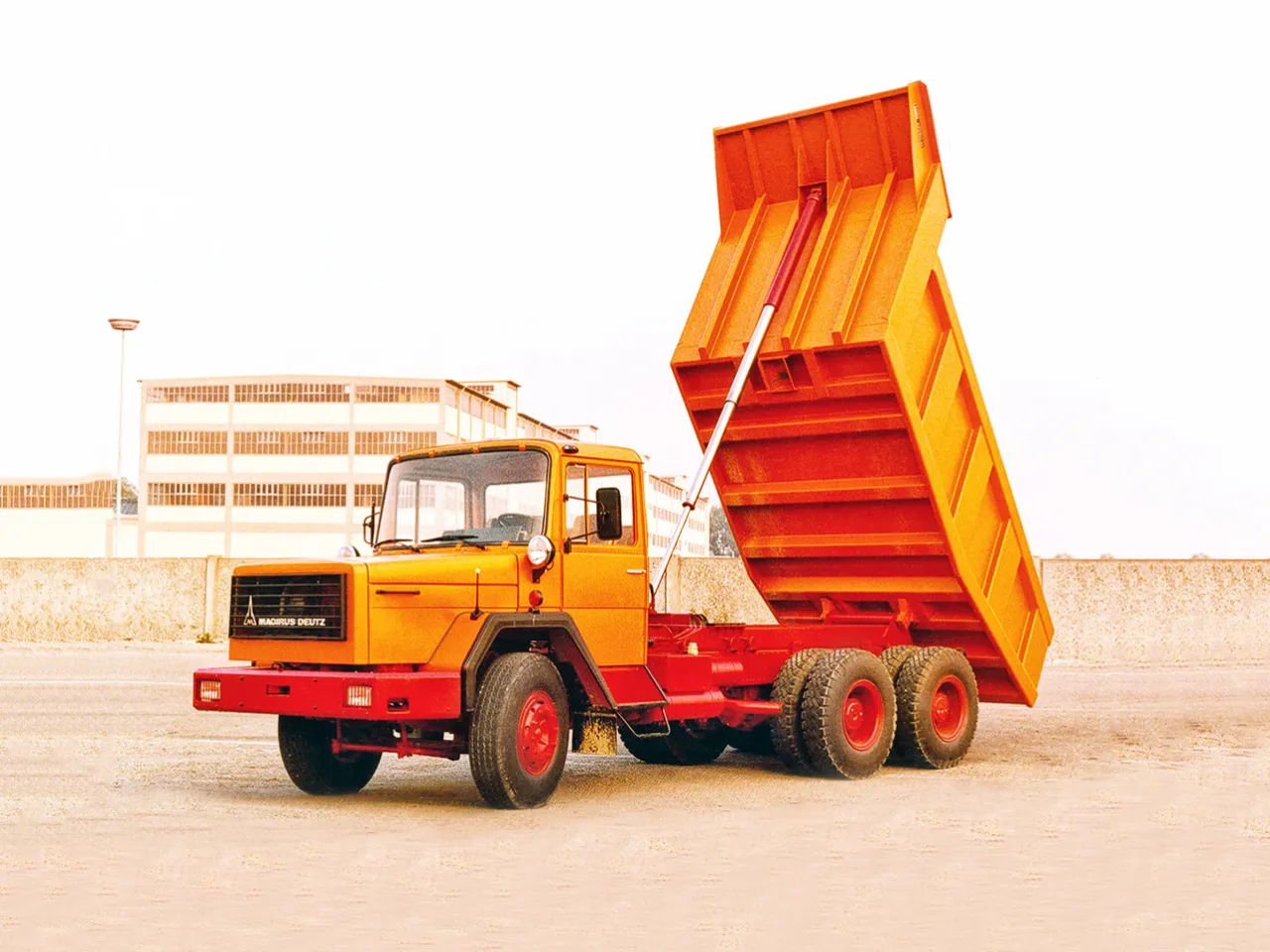
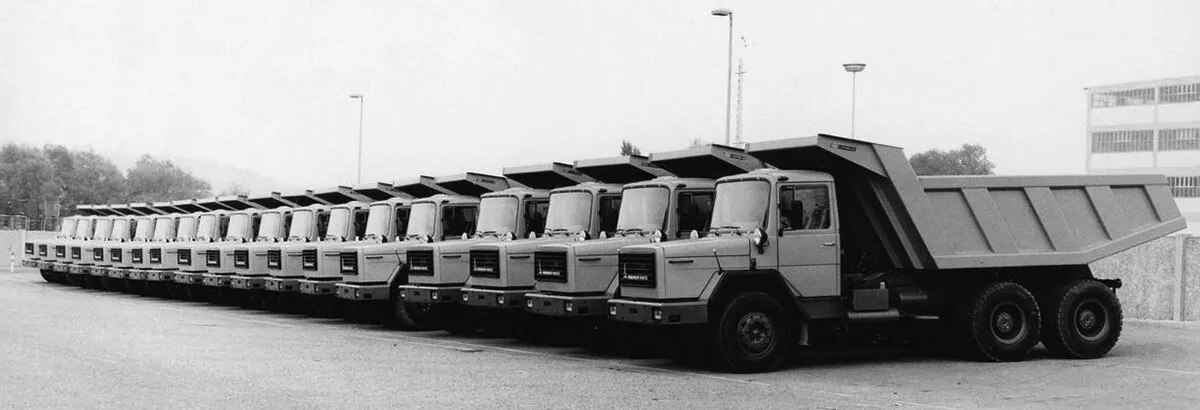
The Italian company IVECO shipped its last truck for the USSR from its Ulm-Donautal plant on November 19, 1976. In addition to the main contract, spare parts worth an additional 200 million marks were ordered in 1981–1982.
Diesel, born under Hitler
The most interesting exhibit at Magirus-Deutz was its air-cooled diesel engine. It wasn't just its forced-air design, but the development history behind it. The engine's roots go back to the four-cylinder Deutz F4L514, producing 65 hp. The Germans built it in 1944 specifically for the war with the USSR. The Wehrmacht suffered greatly from water freezing in radiators in the harsh Russian winters, and the new jacketless engine proved the perfect solution. Only 674 of these units were produced by the end of the war, but the concept had proven its viability. The engine became the basis for the Klöckner-Humboldt-Deutz modular concept, whereby two cylinders could be added to four cylinders as needed.
By the early 1970s, Deutz had developed its most advanced and iconic diesel engine family—the Deutz FL 413. It was with these engines that Magirus-Deutz trucks were delivered en masse to the USSR under the Delta contract in 1975. The letters in the index were deciphered simply: F—for automotive (Fahrzeug), L—for air-cooled (Luftgekühlt), the number 4 denoted the fourth generation, and 13—the piston stroke in centimeters. Two-axle Magirus trucks were equipped with the F8L413 V8, producing 232 hp. Heavy three-axle dump trucks were equipped with the F10L413, a 10-cylinder, 290 hp giant. Cooling was provided by a giant axial fan, driven by a fluid coupling. The airflow intensity was regulated automatically: the hotter the engine became, the faster the turbine spun.
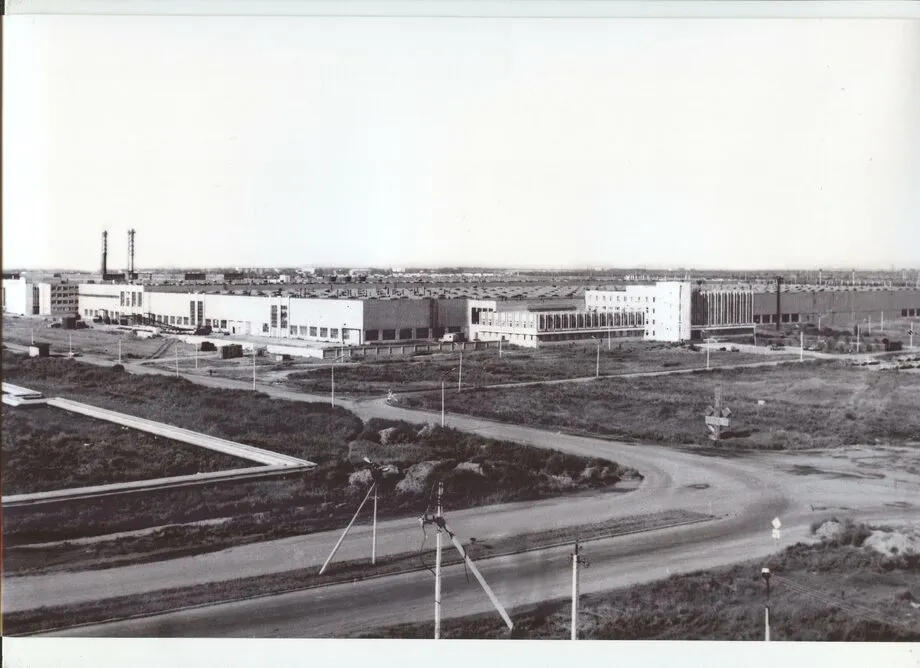
The Kostanay Motor Plant was supposed to produce licensed copies of the Magirus engine. But it didn't work out. It's now the Kostanay Diesel Plant of JSC AgromashHolding.
In 1982, the Soviet Union purchased a license for the engine and attempted to launch its production. A factory was even built in Kostanay for this purpose, but extensive preparations were made beforehand. As early as 1970, NAMI organized a test run of Ural-375 army trucks, secretly equipped with German Deutz F8L413 engines (the same ones that would later power the Magirus). The results astonished the military and engineers. It was decided to localize the German Deutz FL 413 engine family. The Soviet copy was designated the Ural-744. It was to be a V8 air-cooled diesel engine producing 234 hp, intended for the complete "dieselization" of the Ural Automobile Plant and LiAZ buses.
In December 1979, the USSR leadership issued an official decree authorizing the construction of this industrial giant. By 1980, an administrative directorate had been established in the Kazakh SSR, and by 1982, full-scale work was underway at the construction site. The new enterprise project was conceived as cyclopean in scale and technological complexity, as its primary objective was to completely free the Soviet truck industry from dependence on imports.
To ensure that the domestic equivalent of the German "air-powered" engine would match the original in reliability, the Soviet Union spared no expense. Petrodollars were used to purchase 23 automated production lines from West Germany. The production of the complex ribbed cylinders and heads, which required pinpoint precision and the use of cold-resistant cast iron, was entrusted to foreign technology: a state-of-the-art automated foundry complex from Japan and Italy was purchased for the workshops. The capacity of this industrial colossus was impressive—the first stage alone was expected to produce 20,000 Ural-744 engines annually, powering thousands of Soviet trucks and buses.
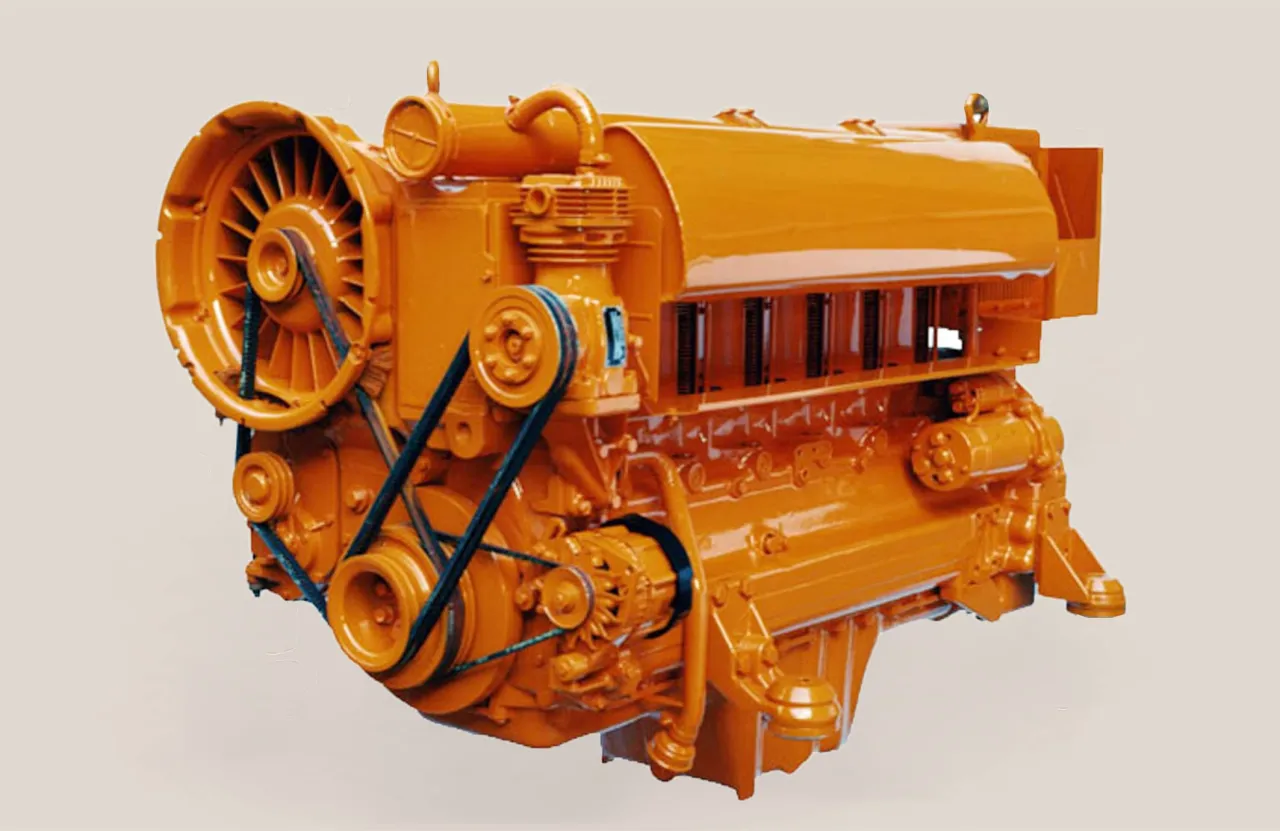
Deutz FL 413
However, the overall results of testing the first localized engines revealed critical reliability issues with the localized components, preventing the Soviet Deutz equivalent from becoming a full-fledged replacement for the Yaroslavl liquid-cooled engines. Due to the inconsistent quality of Soviet castings, the ribbed cylinder walls and pistons of domestic production had microscopic defects that led to localized overheating, increased engine oil consumption, and rapid burnout of the piston assembly under high loads in quarries.
The precision hydraulic clutch of the cooling fan drive proved a particular headache for engineers during testing: Soviet-era rubber components couldn't withstand extreme temperature fluctuations and deformed, causing oil to leak from the clutch, the fan to stop, and the engine to seize instantly. As a result, despite successfully overcoming the harsh Siberian climate, the Ural-744 demonstrated a service life before overhaul that was several times shorter than that of the original German FL 413 series prototypes, requiring the factory to make endless design modifications right up until the project's demise.
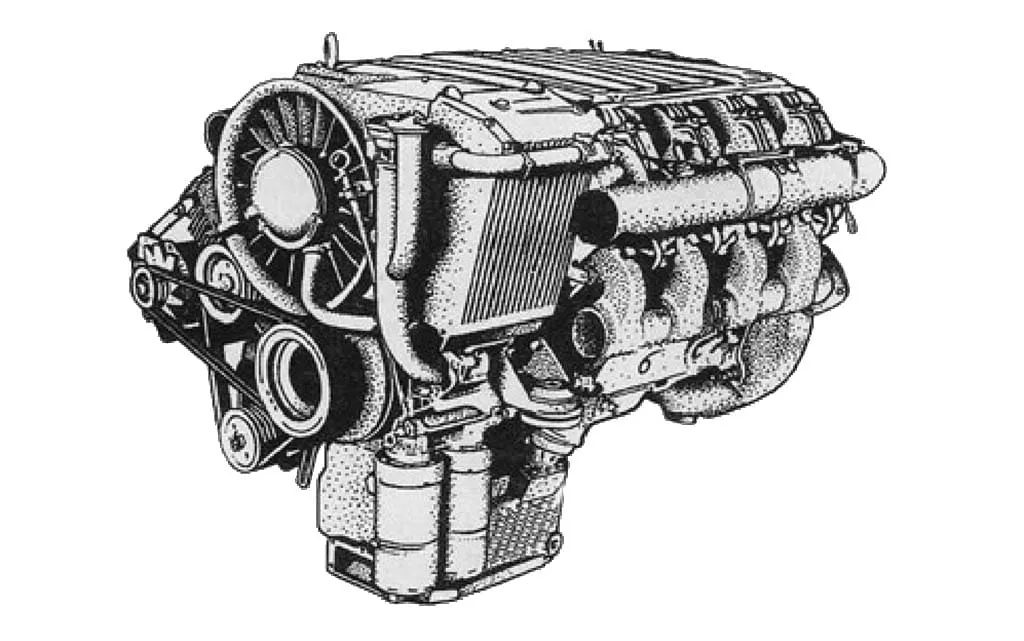
The USSR failed to localize the assembly of German diesel engines.
But let's return to Magirus-Deutz at the Baikal-Amur Mainline. To ensure full driver training, the Germans took over their training at the factory center in Ulm. The internship period was initially four weeks, later reduced to two. The trained instructors then traveled to the transport companies and mechanized columns that were to receive German equipment. In total, approximately 50,000 drivers and mechanics have passed through this system.
Being a Magirus driver was considered fortunate—and simultaneously generated a certain amount of class discord. Writer Yuri Nagibin described this situation in his short story "Vasya, Can You Feel It?":
These guys, first-class drivers, by the way, worked only for Magirus, knocked out up to six hundred a month, never helped anyone and did not seek help from others, kept themselves in a contemptuous and proud alienation within their narrow circle.
However, reality was more complex than literary images. The story of mechanized column No. 91 of the Bamstroymekhanizatsiya trust confirms this. A team of 120 drivers was dumping rock near Tynda. Nikolai Dmitrievich Talikin was their supervisor. They worked from 8 a.m. to 8 p.m., loading trucks beyond their rated capacity. Three out of four dropped out—not all could handle the load. But it was this column that earned the right to dump the "golden" 25 millionth cubic meter of soil. The foreman was awarded a tourist trip to Japan—he passed the trip on to the team's best driver, Viktor Kozlovsky.
The Magirus trucks were originally intended for the Baikal-Amur Mainline (BAM), but in reality, about a third of the vehicles were redeployed to other northern regions: the oil and gas fields of Siberia, the mines of the Kola Peninsula (Khibiny), and northern Kazakhstan. Wherever reliable equipment for extreme conditions was needed.
A variety of equipment was mounted on the Magirus chassis: Stetter concrete mixers and concrete pumps, Orenstein & Koppel excavator workshops, tractor units with semi-trailers, pipe trucks, municipal road vehicles and even... garbage trucks.
A little-known chapter in history is the use of German trucks by Soviet military railway workers. Construction of the eastern wing of the Baikal-Amur Mainline—from Tynda to Komsomolsk-on-Amur—was entrusted to the Main Directorate of Railway Troops. Between 1974 and 1989, two railway corps laid approximately 1600 km of main track—roughly a third of the entire length of the line. They worked, among other things, on Magirus trucks, which, strictly speaking, violated the restrictions of the Coordinating Committee for Export Controls (COCOM), which prohibited the supply of equipment to the USSR that could be used for military purposes.
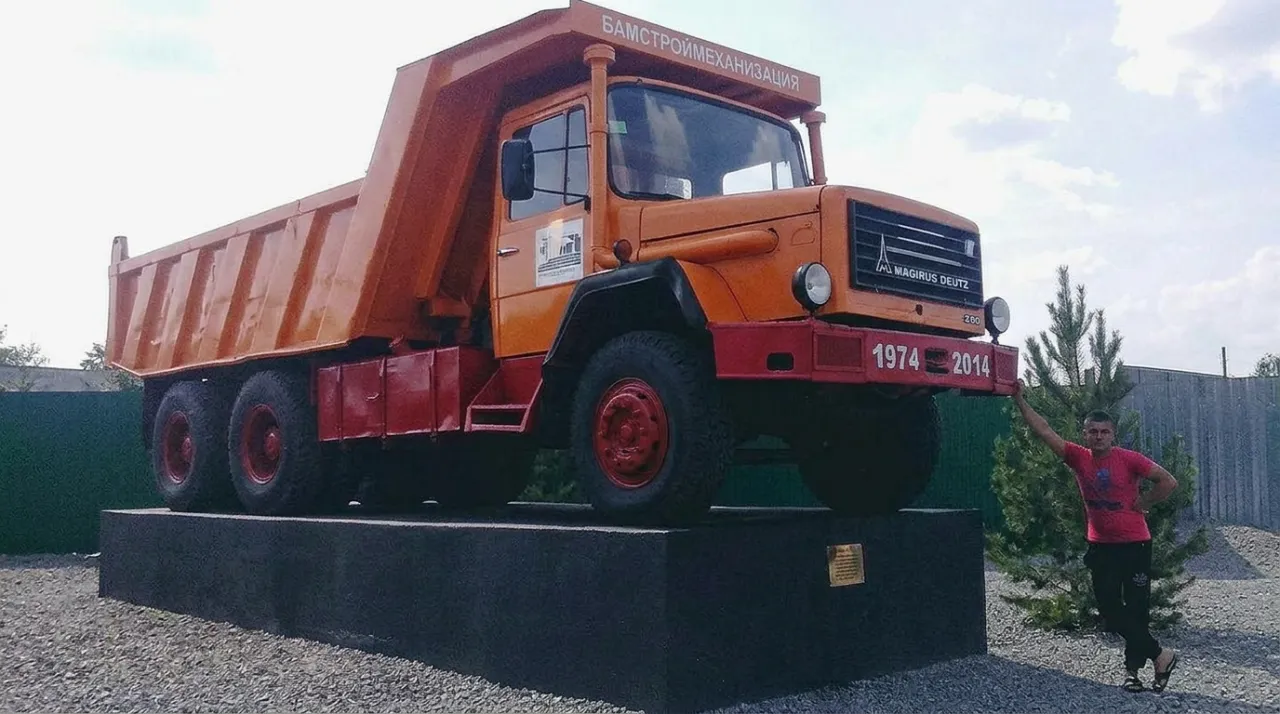
A true testament to the legendary dump truck was the monument unveiled on July 6, 2024, in the village of Nizhneangarsk in Buryatia. The unveiling was timed to coincide with the 50th anniversary of the construction of the Baikal-Amur Mainline, and this is a truly unique event – monuments to foreign technology are extremely rare in Russia. Besides the Magirus-Deutz, there is a Tatra-111 obelisk in the Magadan Region and several memorials around the country, including a Lend-Lease Studebaker US6. A worthy monument, indeed.
Information