Succession to the Throne After Peter the Great: Who Ruled Russia from 1725 to 1762
7 648 13
Succession to the Throne After Peter the Great: Who Ruled Russia from 1725 to 1762

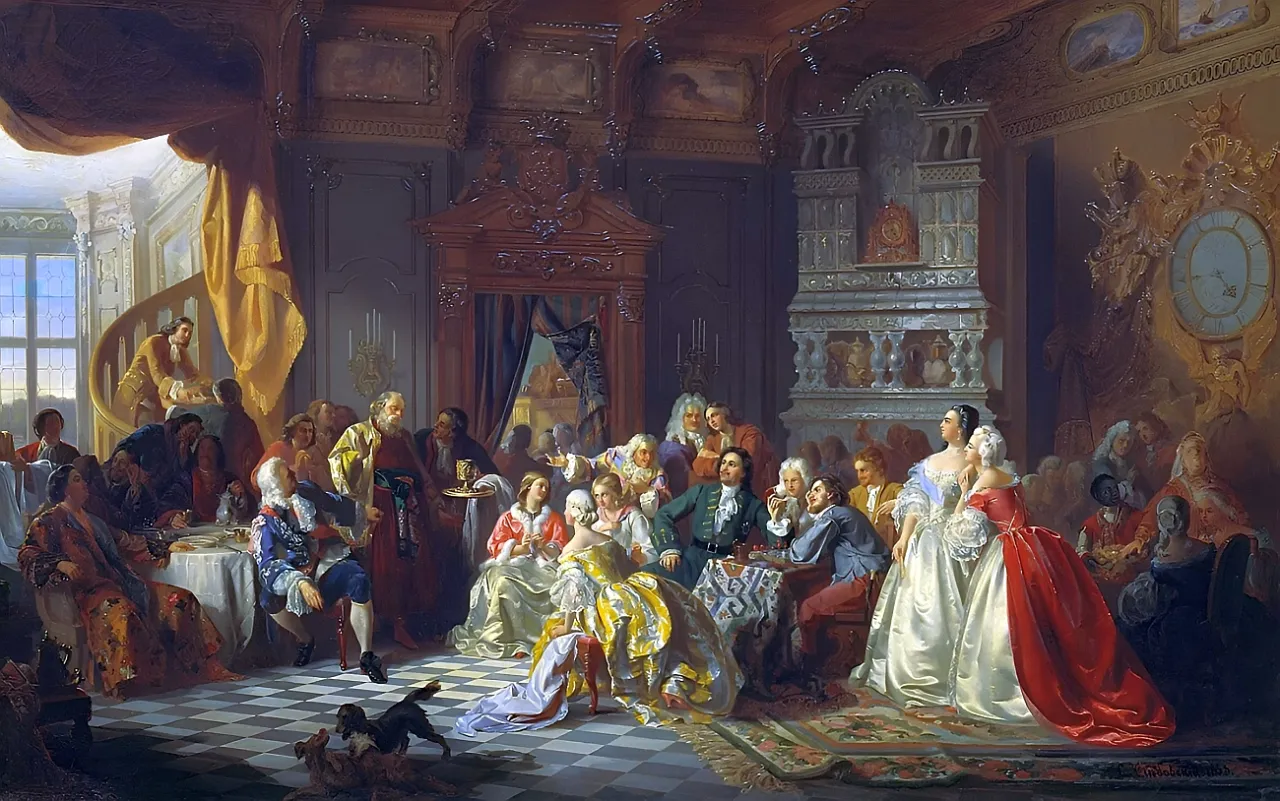
The first Russian emperor, Peter the Great, carried out a vast number of reforms, laying a new foundation for statehood that, in modified form, still exists in our country today. Among other things, on February 5 (16), 1722, then Emperor Peter I signed the "Charter of Succession to the Throne." This document abolished the ancient custom of passing the throne to direct descendants in the male line and provided for the appointment of the heir at the monarch's discretion.

However, Peter I made no arrangements regarding his successor until his death. It is believed that such documents were destroyed by the emperor's inner circle. After the Tsar's death, the Dowager Empress Catherine I confirmed Peter II as her heir.


After his coronation, he was betrothed to Maria, the daughter of His Serene Highness Prince Menshikov. Peter I's daughters, Anna and Elizabeth, were declared regents for the young emperor. But the succession arrangements proved treacherous. It was the decree of 1722 that laid the foundation for the palace coups that occurred one after another in the 18th century. The chaos in imperial power lasted until the accession of Catherine II.

Between the death of Peter I and the accession of Catherine II, six rulers reigned on the Russian throne, and along with them, their favorites emerged and disappeared from the political arena. Few of them were able to maintain their position of power after each palace coup. The guard created by Peter the Great often played a decisive role in the rise of the next autocrat.

Behind each candidate for the throne stood a group of influential dignitaries with their own agendas. With the death of Peter I, the thread that bound his entourage together disappeared. The ruling elite splintered into a multitude of what would now be called parties, each pursuing purely personal interests. In this situation, the pretender to the throne often became the spokesman for the mercantile aspirations and aspirations of a small group of supporters, helping them satisfy their personal interests rather than address state issues.

The era of palace coups became an important page in stories Russia. However, despite some political instability, it should not be viewed as a period of decline for the Russian state. Peter the Great laid such strong foundations for the country that political squabbles and power struggles among various factions could not destroy them.

The video lecture explains who actually ruled this vast country from 1725 (the year of Peter the Great's death) to 1762, when Catherine II ascended the throne, also as a result of a palace coup against her husband, Peter III, with the guards playing a decisive role.

13 comments
Information
Dear reader, to leave comments on the publication, you must sign in.
  1. -3
    22 September 2026 13: 39
    Things of bygone days...
    As the history of our country, these are archival documents, facts, let them remain there...
    This no longer has any impact on now and tomorrow...
    1. +2
      24 September 2026 17: 54
      Intrigue, theft, selfishness, egoism at the top. Everything is the same, Victor.
      1. +1
        24 September 2026 18: 10
        It's always like this around power... nothing changes anywhere...
        1. +2
          24 September 2026 18: 18
          I've always wondered how crimes were investigated back then. Of course, there was the interrogation-torture method, which compensated for scientific research.
          1. +1
            24 September 2026 18: 21
            Every crime leaves traces... obvious, hidden, carefully concealed... the job of investigators is to sort all this out and find the criminals...
            The main thing does not change, the methods of investigation are transformed... soldier
            1. +1
              12 October 2026 21: 36
              Quote: rocket757
              Every crime leaves traces... obvious, hidden, carefully concealed... the job of investigators is to sort all this out and find the criminals...
              The main thing does not change, the methods of investigation are transformed... soldier

              I'd like to clarify a little.
              Methods, means and forces used in the investigation
              I say this as a doctor.
          2. +1
            Today, 09: 18
            There's only one answer, and it's enshrined in the Russian folk wisdom, "There's no truth in the legs." Truth only appears in a thief's throat when his legs are hanging on the rack. And it's truly true...
  2. 0
    22 September 2026 14: 02
    There were plenty of screw-ups back then, too. The abolition of the patriarchate, the torture and murder of his own son (to say nothing of others), this law abolishing the transfer of power from father to son. The mass importation of Westerners into Russia, the ingraining of their customs into our lives, the shaving of beards, and so on.
    1. +4
      22 September 2026 14: 22
      Quote: Ignatius555
      The mass importation of Westerners into Russia, the ingraining of their customs into our lives, beard shaving, etc.

      The mass importation of Easterners into Russia, the ingraining of their customs into our lives, beards, etc.
  3. 0
    23 September 2026 10: 50
    Stalin laid such powerful foundations that no political squabbles can yet destroy Russia. However, modern temporary leaders may succeed in doing so in the near future.
    1. 0
      4 October 2026 22: 04
      The destruction of the country began after Stalin's death. It almost succeeded, but the risk of destruction remained.
  4. 0
    25 September 2026 15: 38
    The role of personality in history is greatly exaggerated.
    Interestingly, the era of palace coups was accompanied by growth in GDP, while the accession of Catherine the Great led to its decline, followed by prolonged stagnation until 1880.
  5. 0
    12 October 2026 21: 34
    Quote: Reptiloid
    I've always wondered how crimes were investigated back then. Of course, there was the interrogation-torture method, which compensated for scientific research.

    The rack and the hot iron really do compensate for scientific research in the fields of forensic science, criminology and psychology
    Cheap and angry