Babi Yar: Who was shooting?
24 129 48
Babi Yar: Who was shooting?


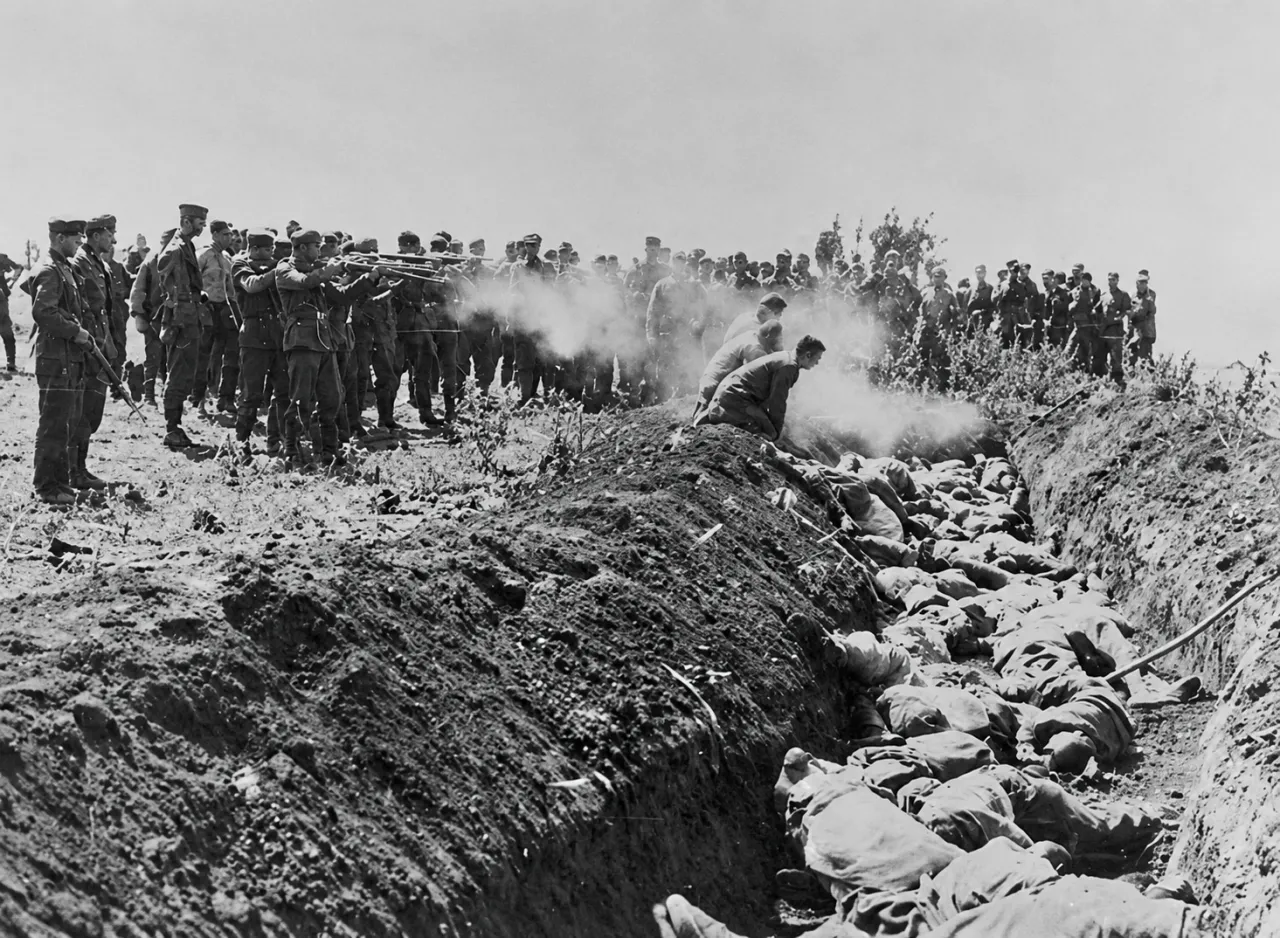
On the 85th anniversary of the massacre of September 29–30, 1941, this isn't a retelling of the plot, but rather a difficult question: who exactly carried it out? The answer is more complex than the two usual theories.

A line that names the performers


Let's start with one line. On October 7, 1941, operational report No. 106 on the situation in the USSR was sent to Berlin—and it contains a phrase that makes it worth delving into the official language of the murderers: "In cooperation with the group headquarters and two teams of the police regiment 'South,' Sonderkommando 4a executed 33,771 Jews on September 29 and 30." This document would later pass through Nuremberg under the number NO-3140.

The perpetrators have already been named here. Not "Germans in general," not "Nazis" as an impersonal force—specific structures: the Sonderkommando, the Einsatzgruppe headquarters, two police battalions. The usual conversation about Babi Yar usually yields different answers—and we'll explore them below. We'll return to this line at the end.

Two familiar answers


There are essentially two common theories about who shot at Babi Yar, and both did not arise out of nowhere.

The first: the SS did it. The basis is solid—the central executive body was indeed the SS and the Security Police, and the murderers' document lists it as the primary one. The second version is more resonant in the post-Soviet and Ukrainian debate: the main role was played by Ukrainian nationalists, specifically the Bukovinian and Kyiv Kurens, associated with the OUN. The basis here is also real: local auxiliary police existed during the occupation, and collaboration in Ukraine is well documented.

Both versions are convenient because they answer the question with a single word. The problem is that the documents provide a more detailed picture.

Core: about a hundred shooters


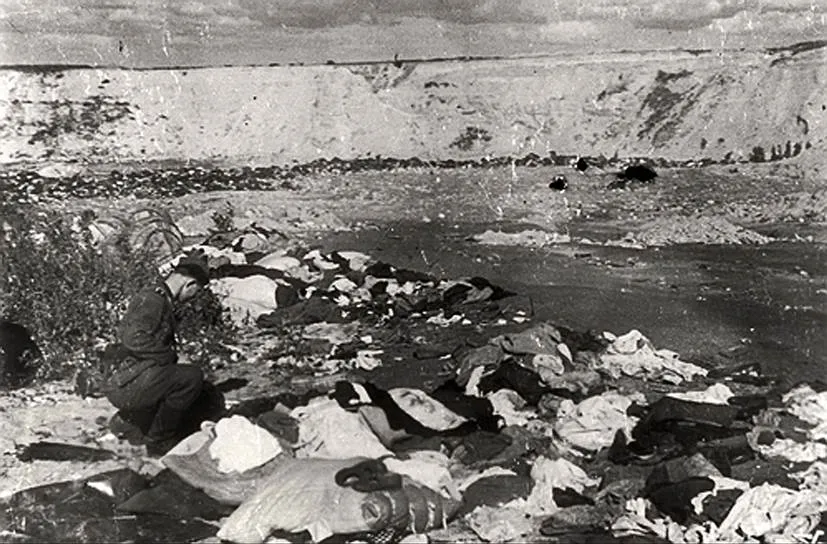
The actual killing was carried out by a small group. The first to fire were men from Sonderkommando 4a, commanded by Paul Blobel, and from the headquarters of Einsatzgruppe C. The second group consisted of two battalions of Police Regiment "South," subordinated to the Supreme SS and Police Leader Friedrich Jeckeln: Reserve Police Battalion 45 from Aussig (now Ústí nad Labem), commanded by Martin Besser, and Police Battalion 303 from Bremen, commanded by Heinrich Hannibal. Karel Berkhoff shows that these battalions weren't limited to cordons—their men also formed part of the firing squads.

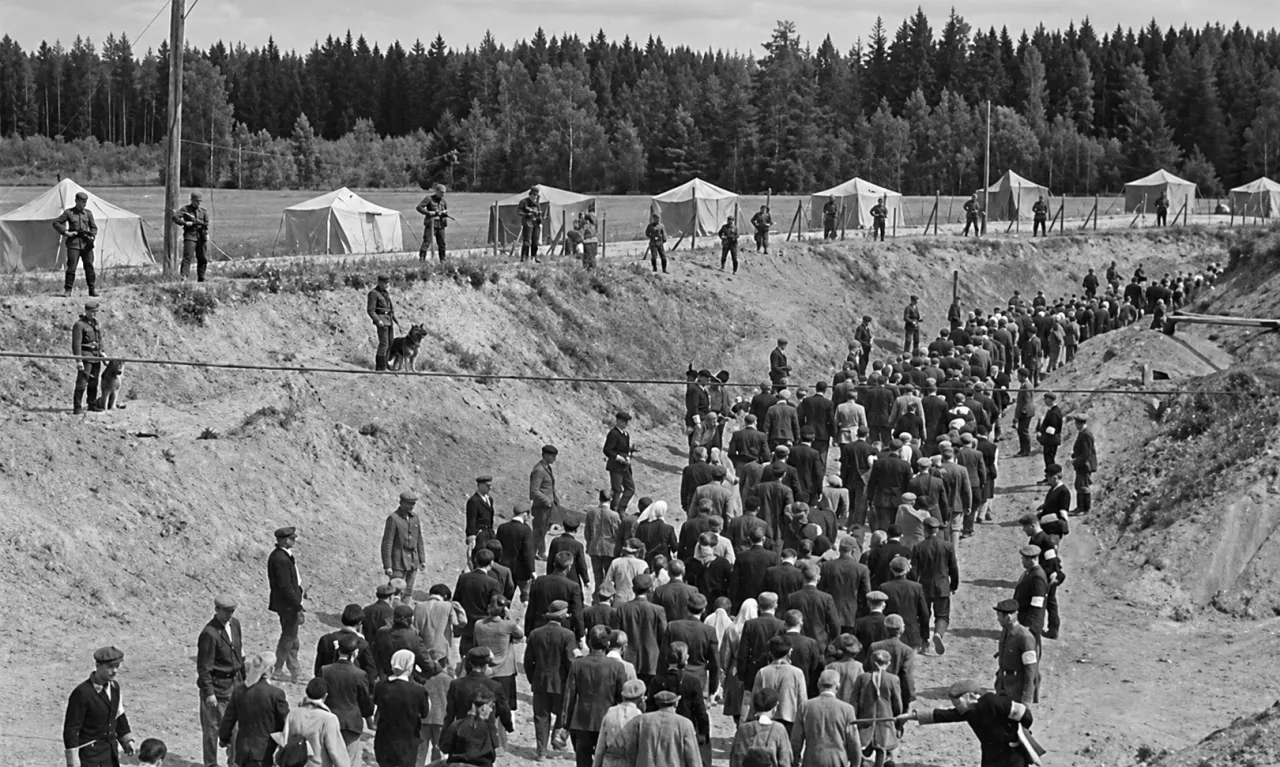
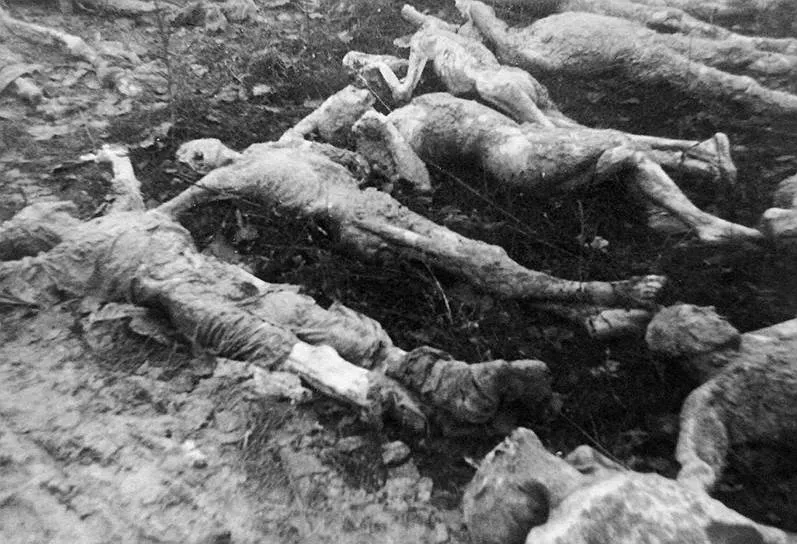
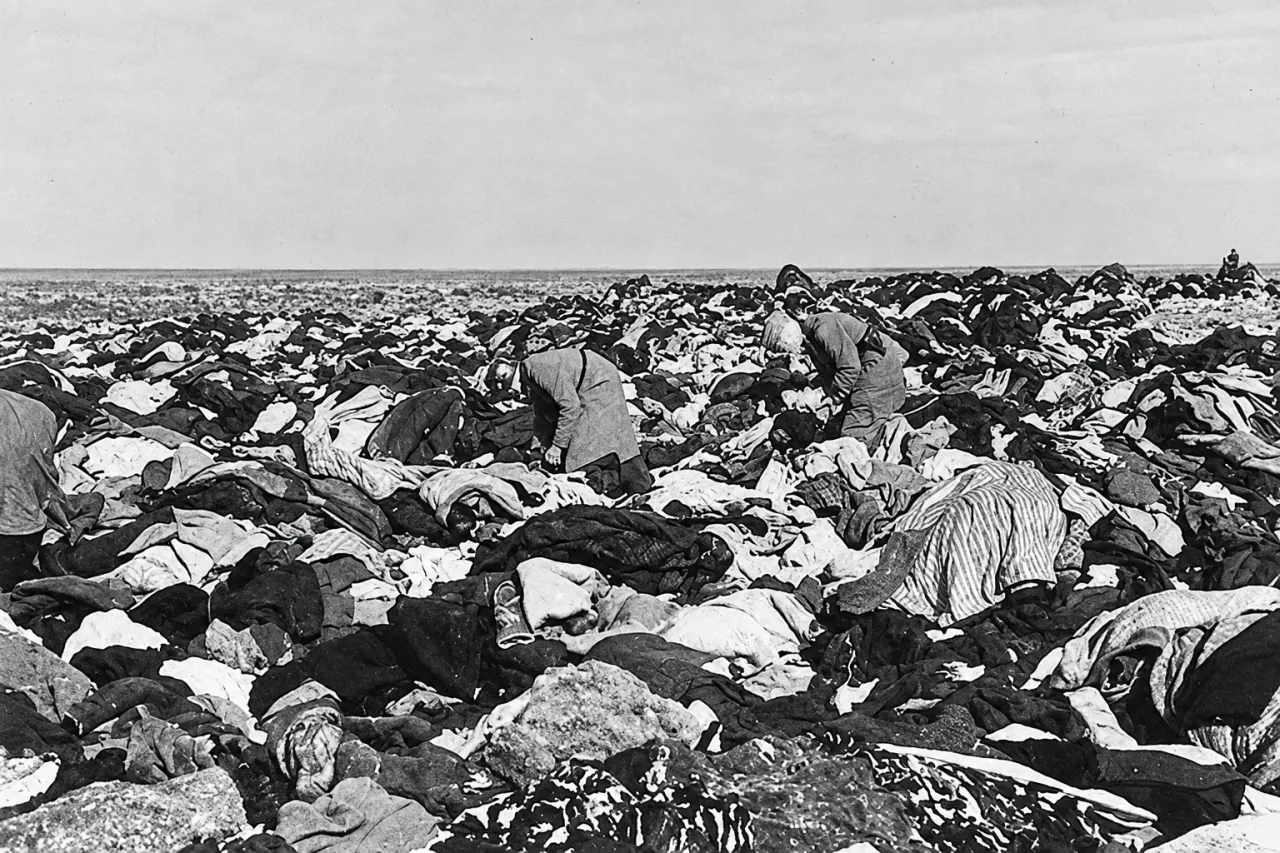
Only about a hundred riflemen—that's Berkhoff's estimate—and 33,771 killed in two days. This ratio is explained by organization, not arithmetic: cordons, confiscation of belongings, stripping, and the continuous supply of people to the ravine in small groups over two days.

The Wehrmacht: Not a Bystander


This is where the "it was purely an SS operation" theory breaks down. Formally, the actual shooters were part of the SS and the Security Police—and the usual answer stops there. But an operation of such pace would have been impossible without the army.

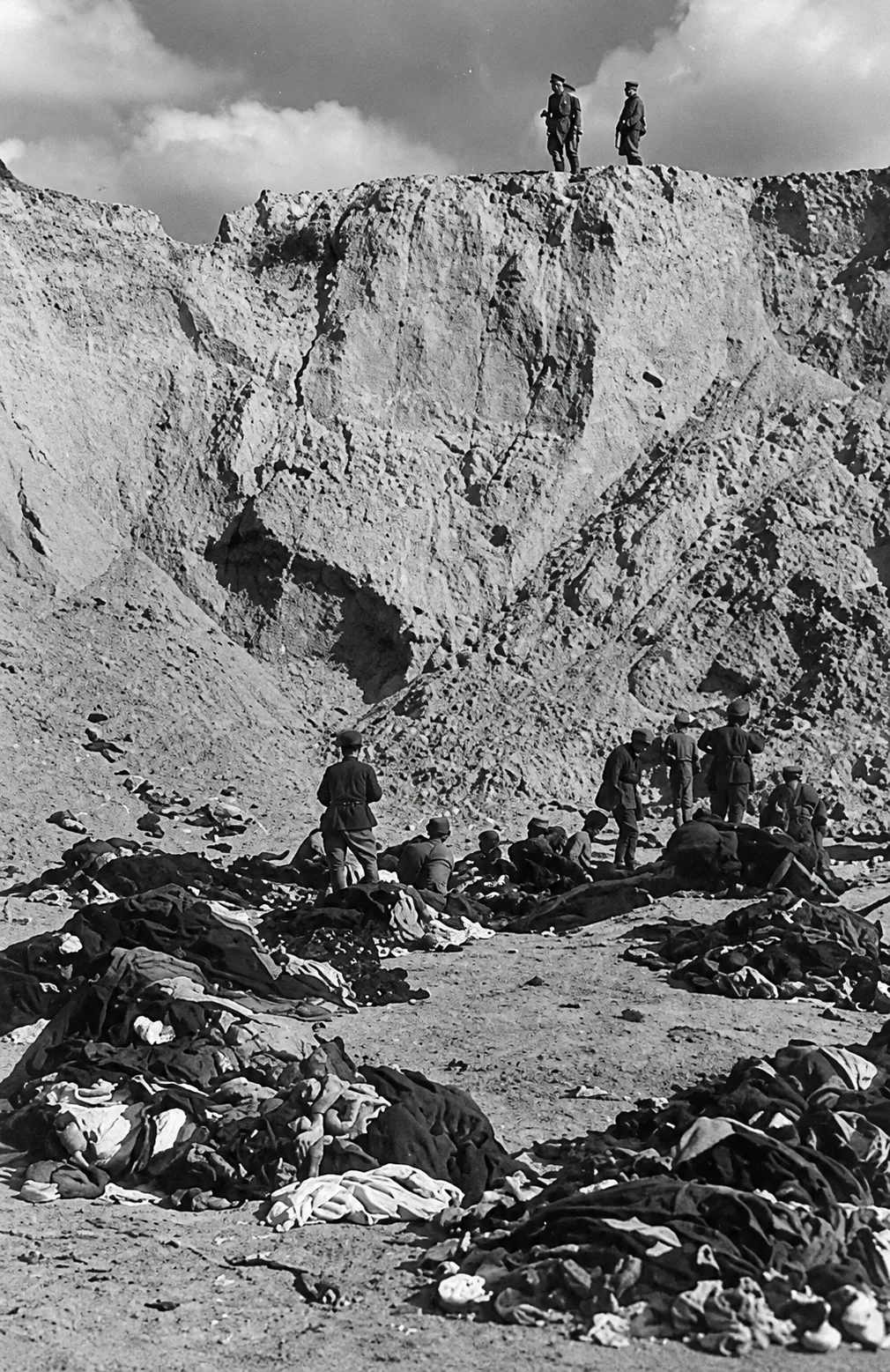
The army printed the summons: approximately two thousand notices were produced by Military Propaganda Company 637 (according to Berkhoff). Ammunition was provided by army structures. The Wehrmacht provided field gendarmerie to cordon off the area; after the main operation, Engineer Battalion 113 blew up the slopes above the graves. On September 26, Kyiv's military commandant, Kurt Eberhard, met with Blobel, Einsatzgruppe C commander Otto Rasch, and Jeckeln. Berkhoff explicitly writes that such a swift massacre would have been unthinkable without the close cooperation of the 6th Army command; the Wehrmacht's role in preparing the massacre is explored in Alexander Kruglov's work on German documents on Babi Yar, and the question of "who was responsible for Babi Yar" has been explored by the German historian Hartmut Rüss.
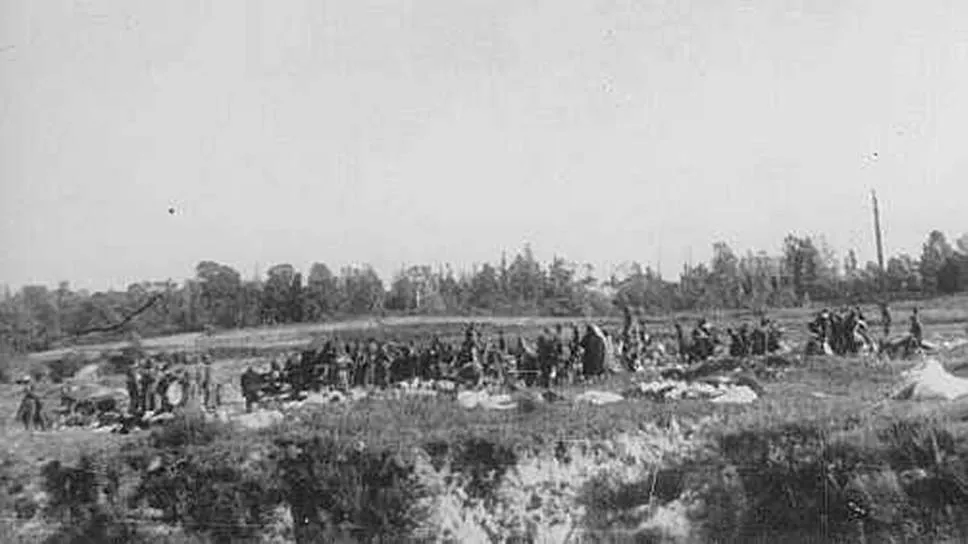

The Wehrmacht participated in decision-making, supply, security, and engineering support. This wasn't the same role as a firing squad, but without this support, it couldn't have acted with such speed. It's fair to speak not of an isolated SS action, but of a coordinated operation, in which the punitive apparatus and the army performed different but interdependent functions.

Local Helpers: What's Proven and What's Not


Having established the role of German structures, let us turn to the most controversial question: what exactly did the locals do – and who were they.

This is confirmed by sources. Auxiliary police posted notices to report to the detainees and participated in cordons and escorts. Ukrainian-speaking officers were in charge at the site where people were forced to undress.

A few months later, the same occupiers began killing OUN members and auxiliary police officers suspected of disloyal nationalism; in February 1942, Kyiv Mayor Volodymyr Bagaziy was assassinated, and the bodies were often taken to the same Yar—including those the regime had previously used.

Why isn't there a single-name answer?


The temptation remains to name a single individual who gave the order. The sources don't provide one. No signed order from 6th Army commander Walther von Reichenau to "kill all Kyiv Jews" has been found—Berckhoff specifically notes this as a fundamental limitation of the source base.

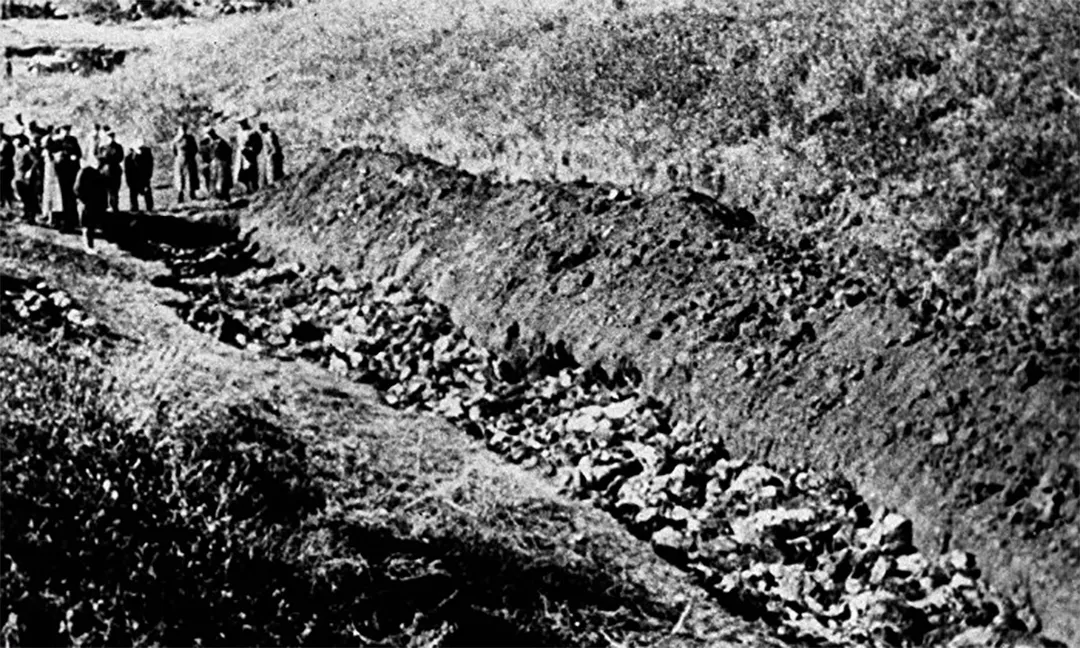
However, the personal responsibility of the perpetrators is known from post-war trials. In 1968, a court in Darmstadt convicted eight former members of Sonderkommando 4a, including Kuno Callsen and August Hefner, of complicity in murder, including 33,771 people at Babi Yar. In 1971, in Regensburg, of the three veterans of Battalion 45 brought to trial, one was found fit to stand trial—Engelbert Kreuzer, the former commander of the 2nd Company; he received a seven-year sentence for forming a firing squad, commanding it at the ravine, and firing himself. The commanding heights cannot be summed up by a single name—the court named the perpetrator by name.

So who did this?


Report No. 106's initial title is no accident: it sets a standard for precision. The murderers' document names the perpetrators—Sonderkommando 4a, Einsatzgruppe C headquarters, and two police battalions. Further analysis doesn't refute this line, but rather expands on it: behind it stand the army logistics that made the operation possible, the local police who participated in the cordons, and the absence of a single signed order, which doesn't absolve responsibility but merely distributes it among those who negotiated the meetings, supplied ammunition, and personally commanded the firing squads.

"SS men" and "kureni"—both familiar answers strike a single, correct note and present it as the entire score. A precise picture is inconvenient because it cannot be reduced to a single culprit: the state, composed of many components, was committing murder, and each component performed its part routinely and according to instructions.


Literature
  • Kruglov A. I. The Babi Yar Tragedy in German Documents. — Dnepropetrovsk: Tkuma Center; Lira, 2011.
  • Berkhoff K.⁠ C. “The Corpses in the Ravine Were Women, Men, and Children”: Written Testimonies from 1941 on the Babi Yar Massacre // Holocaust and Genocide Studies. 2015. Vol. 29, no. 2. P. 251–274.
  • Berkhoff K.⁠ C. Babi Yar // Mass Violence and Resistance Research Network, Sciences Po. 2015 (May 27).
  • Rüß H. Wer war verantwortlich für das Massaker von Babij Jar? // Militärgeschichtliche Mitteilungen. 1998. Bd. 57, H. 2. S. 483–508.
  • Operational Situation Report USSR No. 106 (October 7, 1941), Nuremberg Trials document NO-3140.
48 comments
Information
Dear reader, to leave comments on the publication, you must sign in.
  1. + 21
    29 September 2026 05: 05
    Given the professional power of the KGB during the Brezhnev era, it would be naive to think that this agency didn't figure out who executed people at Babi Yar. They could have figured it out under Khrushchev, too. And even under Stalin, immediately after the war. But the notorious dogma about fraternal peoples in the USSR prevented this! Perhaps it only prevented the USSR from publishing this information to the people. It was precisely this dogma about fraternal peoples that ultimately destroyed the USSR.
    And it all started back then, when we were all lied to in Soviet schools about Alexander Nevsky supposedly defeating the Germans of the Teutonic Order at Lake Peipus. But that's not true. Alexander Nevsky defeated the troops of the Livonian Order at the Battle on the Ice, which was a division of the Teutonic Order. And Livonia was the Latvian and Estonian SSRs that were part of the USSR. That's how they lied to us, that from ancient times, those who entered the USSR were not enemies of the Russian people. And when they entered the USSR, having become Soviet people, they loved each other, especially Russians, so much that such Soviet people could not commit mass atrocities. That's how the secrets about the post-war Baltic forest brothers were hidden, that's how the atrocities of Bandera's followers in Belarusian and Russian villages were hidden, and of course, that's how they hid the truth about the murderers at Babi Yar. Incidentally, no one knew anything about the Russians from Vlasov's army either.
    They didn't explain it thoroughly and in detail back then. Do you think that today's Vlasovites and Bandera supporters don't exist in Russia itself? Not at all. But they're being kept silent about them, just as they remained silent after WWII about the real murderers at Babi Yar...
    1. + 19
      29 September 2026 08: 30
      Maybe it was an unknown person who burned Khatyn?
      In Soviet times, we were told vaguely that the Germans were bad. But it turns out the Ukrainians were "good."
    2. + 18
      29 September 2026 08: 32
      Quote: north 2
      Given the professional power that the KGB of the USSR had during the Brezhnev era, it would be naive to think that this agency did not figure out who shot people at Babi Yar.

      Moreover, Jeckeln was captured by Soviet troops on May 2, 1945. Naturally, he told a lot about Babi Yar and his other "terrors." He was tried in Riga in an open trial and hanged there, like a mangy dog, with his fellow prisoners.
      Quote: north 2
      That's how the secrets about the post-war Baltic forest brothers were hidden, that's how the atrocities of Bandera's followers in Belarusian and Russian villages were hidden, and of course, that's how they hid the truth about the murderers at Babi Yar. Incidentally, no one knew anything about the Russians from Vlasov's army either.
      then they didn't explain it thoroughly and in detail

      Nobody hid anything, it would be correct to say - they didn't advertise it muchThere were films about traitors that aired on TV, such as "Nobody Wanted to Die" by the Lithuanian Film Studio, "Forest Violets" by Tallinnfilm about the so-called "forest brothers," "I Remember Everything, Richard" by the Riga Film Studio in 1966 about the Latvian SS, and of course the series "The Long Road in the Dunes," about the Balts, "Thoughts about Kovpak," "The Troubled Month of September," about Banderites, and so on down the list. So, the topic of traitors in the USSR wasn't a closely guarded secret; it was known. Frontline soldiers were still alive then, and they often mentioned it in conversations. After serving in Narva, Estonian SSR, I worked there, and there were former soldiers there, some of whom had served ten years there and stayed until their Soviet pensions...yes, the Soviet regime was merciful. It's just that since perestroika, all of them and their actions have been rehabilitated as fighters against Bolshevism. And yet, there are still plenty of traitors; the events of August 91 are a prime example. Like many of those in power, they suddenly defected, as they say, changing their colors.
    3. +7
      29 September 2026 08: 53
      This is not true. Alexander Nevsky defeated the Livonian Order, a division of the Teutonic Order, at the Battle on the Ice. Livonia refers to the Latvian and Estonian SSRs that were part of the USSR.

      So what? All the medals were awarded to Germans. What does the Estonian SSR have to do with it? The local Finns meant nothing there.
    4. +4
      29 September 2026 12: 19
      Yes, the KGB of the USSR was a powerful organization, BUT unfortunately not all-powerful, even if we put aside ideological dogmas and so on, there is not a single similar structure that is one hundred percent all-powerful and powerful.
    5. +3
      29 September 2026 18: 35
      This is how the secrets of the Baltic post-war forest brothers were hidden.

      There wasn't much to hide there, really. As of January 1, 1946, there were 428 people in hiding places in Estonia, and 750 in Latvia. The largest number of Lithuanians, around 15,000, were hiding in the forests.
    6. +9
      29 September 2026 19: 34
      Quote: north 2
      Alexander Nevsky defeated the Livonian Order, a division of the Teutonic Order, at the Battle on the Ice. Livonia was the Latvian and Estonian SSRs that were part of the USSR.

      Are you saying that the knights of the Livonian Order were native Latvians and Estonians? That's fantastic. laughing
      1. +2
        30 September 2026 11: 37
        Quote: Krasnoyarsk
        Are you saying that the knights of the Livonian Order were native Latvians and Estonians?

        Generator shafts can now be attached to the Grand Masters and Landmasters. smile
      2. -1
        1 October 2026 23: 03
        In those days, Estonian, Latvian, and Finnish knights lived in dugouts and huts on chicken legs, which bore little resemblance to knights' castles. But that's just a taste of what it's like to be unaccustomed to them.
    7. 0
      1 October 2026 22: 56
      In a country where archives on the liberation of cities and episodes of the Great Patriotic War are classified, one cannot expect objectivity and truth, except in limited doses.
  2. The comment was deleted.
  3. The comment was deleted.
  4. The comment was deleted.
  5. The comment was deleted.
  6. +8
    29 September 2026 07: 43
    Alexander Nevsky defeated the Livonian Order, a division of the Teutonic Order, at the Battle on the Ice. Livonia was the Latvian and Estonian SSRs that were part of the USSR. So they lied to us that from ancient times, those who entered the USSR were not enemies of the Russian people.

    Ah! It all started so well, and now, please! Cock-a-doodle-doo! Have mercy on the owl, don't drag it onto the globe. It's unpleasant for it! At this rate, you'll soon agree that Riga is a Latvian city.
  7. + 15
    29 September 2026 07: 44
    I have always been interested in Israel's attitude toward this tragedy. Judging by the official, non-condemnatory rhetoric of Israeli officials and local Ukrainian rabbis, they have no questions about Ukraine and its modern ideology.
    If Jews, both Ukrainian and Israeli, are indifferent to their people's tragedy at Babi Yar, then what can we expect from other nations?
    1. +3
      29 September 2026 08: 56
      Quote from: mad-max78
      Judging by the official non-condemnatory rhetoric of Israeli officials and local Ukrainian rabbis, they have no questions for Ukraine.

      And even Israeli citizens are fighting on the side of Ukraine against Russia.
      It's not our business to figure out that 33,771 Jews died at Babi Yar; let Israel and Ukraine sort that out. But that's not in sight yet.
      1. + 11
        29 September 2026 09: 12
        Quote: carpenter
        It is not our business to figure out that 33,771 Jews died in Babi Yar; let Israel and Ukraine figure that out.

        There weren't 33 dead, there were over 771 buried there. The article simply hinders the proper coverage of this tragedy. In Kyiv, Jews were the second most numerous after Russians, and Ukrainians were third. This data is found in the 1937 edition of the Soviet Encyclopedia of the Letter K. It includes Jews, Russians, Poles, and Ukrainians.
    2. +6
      29 September 2026 13: 40
      Quote from: mad-max78
      I have always been interested in Israel's attitude toward this tragedy. Judging by the official, non-condemnatory rhetoric of Israeli officials and local Ukrainian rabbis, they have no questions about Ukraine and its modern ideology.

      Israel's hands are now covered in blood, not just up to the elbows, but even up to the shoulders. What's more, the Holocaust was long ago legitimized, Israel has dutifully profited from it, and continues to do so (sounds crazy, right? But otherwise, Israel wouldn't be Israel). The deed is done, so why raise waves of righteous indignation? Even the UN wouldn't believe this cheap political show these days.
    3. +2
      29 September 2026 16: 02
      mad-max78
      +5
      Today, 07: 44
      New
      I have always been interested in Israel's attitude toward this tragedy. Judging by the official, non-condemnatory rhetoric of Israeli officials and local Ukrainian rabbis, they have no questions about Ukraine and its modern ideology.
      If Jews, both Ukrainian and Israeli, are indifferent to their people's tragedy at Babi Yar, then what can we expect from other nations?
      Yury Mukhin wrote that during World War II, the Jewish leadership was closely connected to the top brass of the Third Reich, and they had joint plans for building a future Jewish state. Those who agreed to move were declared devout Jews, while those who refused were subject to disposal in death camps like Auschwitz. Soviet Jews, uninfected by the Zionist virus and already comfortable in the USSR, were completely outlawed, so as not to confuse those hesitant Jews who had not yet decided where to go: whether to build the Promised Land practically from scratch, surrounded by hostile Arab countries, or to build socialism in the USSR. Something like that...
  8. + 12
    29 September 2026 07: 50
    On topic, too many people want to present the entire bloody epic of Hitlerism as some random episode in European history.
    Will not work!
    No matter who directly committed the atrocities, no matter who got dirty servicing the conveyor belt of murders, there is only one conclusion.
    EUROPE killed people!
    Incidentally, this is far from the first time. The cities slaughtered during the Thirty Years' War (in Magdeburg alone, over 20) are evidence of this.
    The basis, the essence of the so-called "European civilization" is robbery and cannibalism!
    1. + 11
      29 September 2026 08: 10
      The essence of the so-called "European civilization" is robbery and cannibalism!

      Let me add to your point. The essence of Western civilization is anti-humanity.
      The Nazi regime created a vast network of camps (Dachau, Sachsenhausen, Buchenwald, Auschwitz, and others). And businesses—industrial concerns, quarries, construction companies—needed labor. As a result, a system emerged: the SS supplied free or cheap labor from the camps, and the companies shared a portion of the profits with the authorities. Sometimes, companies built their own small branches or auxiliary facilities right next to their production facilities.
      examples:
      The DEST company (which mined marble and granite in Austria) built and maintained the Mauthausen concentration camp at its own expense. It served the quarries, where prisoners of war and politically suspect citizens were sent. The regime was extremely brutal, and over time, the camp expanded, acquiring dozens of branches.
      In 1940, the chemical company IG Farben decided to build the Buna-Werke plant (for the production of synthetic rubber and fuel) near Auschwitz, Poland. This required a huge labor force. Initially, prisoners were taken from the main Auschwitz camp, but this was inconvenient. IG Farben then built its own small camp nearby—Monowitz (sometimes called Auschwitz III). It opened in 1943 and was directly connected to the plant.
      In general, the logic was this: as long as a person could work and generate profit (even at the cost of inhumane conditions), he was not immediately destroyed; he was exploited until exhaustion, and then replaced with a new prisoner.

      hi
      1. +4
        29 September 2026 11: 43
        Reading descriptions of the very end of the war (VO had a series of articles about the situation in the countries allied with Germany), what strikes you most is that in a situation of complete chaos, when the copper basin shining with its steep sides overhead was already touching your hats, the first thing the Europeans did, after occupying Hungary and Romania, was start killing people.
        Even with the transportation system in disarray and shortages of everything, there were always enough train cars and locomotives to transport victims to the death camps. They weren't available for transporting ammunition, evacuating their wounded, or even carrying away plunder.
        For murder!
        They say that the behavior of both an individual and a society in a critical situation reveals the very essence of a person and society.
        So, the essence of European society and the European as an individual is murder!
        1. +3
          29 September 2026 11: 53
          So, the essence of European society and the European as an individual is murder!
          They were the first to figure out how to kill people through physical labor and how to profitably dispose of the human remains of a tortured person!
        2. +6
          29 September 2026 17: 19
          having occupied Hungary and Romania
          What do you mean by "occupation"? Romania and Hungary were already thoroughly fascist and quite "European." And they themselves sent Jews and all the "untetmenschen," as they called them, to Germany. In Hungary, the remaining Jews were later drowned in the Danube. Incidentally, there's a monument with human shoes on the Danube pavement. They were even worse than the German fascists.
    2. + 10
      29 September 2026 09: 31
      Quote: Grossvater
      On topic, too many people want to present the entire bloody epic of Hitlerism as some random episode in European history.

      This is not a random episode; our people experienced this first-hand, and the Holocaust pales in comparison.
      My grandmother's brother, in the village of Basino in the Smolensk region, had his wife, sister, and two daughters shot by the Germans. His eldest son died in 1941, and his youngest died of wounds near Berlin. He himself went through the entire war and is buried next to his women.
      Germans have cruelty and sadism at the genetic level.
    3. +3
      29 September 2026 13: 43
      Quote: Grossvater
      EUROPE killed people!

      And who were the main sponsors of this? That's right, the Zionists.
  9. + 10
    29 September 2026 08: 45
    Plan "Ost" in action.
    The leaflets distributed by the Nazis stated "liberation from the Bolsheviks," but in reality they wanted to liberate the population, leaving 10-15 percent as slaves.
    And all links of the state machine participated in this, from the Nazi supreme ideologists and generals like Reichenau, to ordinary officers and soldiers, and even "peaceful Germans" in whose farms Russian slaves worked and who willingly helped to catch escaped prisoners of concentration camps.
    And practically, almost no one thought this was abnormal or inhumane - that is the tradition.
    And the ability to use collaborators, Vlasovites, Banderites, Ustasha, and other such Aizsargs—well, that's the skill—let them do the dirty and dangerous work if they want, but they will never be masters. Once the need for them ceased, all other nationalists would be liquidated, except for the "true nation."
    So, in my opinion, attempts to find specific culprits, personally or collectively, are leading us in the wrong direction.
    The German nation decided to exterminate the Slavs, failed, and so it was time to hang its head on the guillotine. Moreover, state-based unifying entities should have been permanently banned. Only folklore and educational reservations, similar to the Native American settlements in the United States.
  10. +3
    29 September 2026 08: 51
    Babi Yar: Who was shooting?

    There's "Zhestyana Gorka" in the Novgorod region, there was a camp there, if I'm not mistaken, they executed people, by Baltic special forces...
  11. + 19
    29 September 2026 09: 00
    What a fog the author has created! Babi Yar is a tragedy that has been thoroughly researched and has a powerful documentary and evidence base. Why these so-called riddles in this presentation? I'm afraid to even think about it, but it seems the author is trying to "exonerate" Ukrainian nationalists from this crime, and everything else is just window dressing. So what if they heard Ukrainian speech? It doesn't mean anything. The author would do well to familiarize himself with the findings of the USSR Extraordinary State Commission on Nazi crimes. Instead, he cited the mutterings of the Banderite historian Nakhmanovich as "evidence" and completely "forgot" about the other side. It smacks of manipulation and provocation.
    1. +4
      29 September 2026 11: 10
      Quote: oleg Pesotsky
      He cited the inarticulate mumblings of the Bandera-supporting historian Nakhmanovich as "evidence" and completely "forgot" about the other side. It smacks of manipulation and provocation.

      good
  12. +6
    29 September 2026 10: 23
    Quote: oleg Pesotsky
    It seems that the author is trying to "whitewash" Ukrainian nationalists for this crime,

    There is such a thing!
  13. +8
    29 September 2026 11: 43
    It feels like only the SS are to blame, the Wehrmacht was standing nearby, and the local nationalists are generally sweethearts and they also suffered.
    Judging by the style of presentation of the material, it seems that the same author is writing under different pseudonyms, or the authors are using the same GPT to process the text.
    1. +1
      29 September 2026 15: 20
      Quote: Jager
      , the Wehrmacht stood nearby, and .
      - quite the opposite, the author insists several times that it was the Wehrmacht that made mass extermination possible - with logistics, supplies, assistance, and by hiding the mass grave sites by blowing up the ravine walls.
  14. -8
    29 September 2026 12: 19
    I feel sorry for people.
    and the rest from the discussions...
    Everyone was killing the Mgogli. It's just that some did it with greater ordung, and others with lesser ordung.

    Whites, Reds, Germans, NKVD, Gestapo, Francoists, Americans, Vietnamese, Turks, Armenians.....

    And then they blame it all on others (“a beam in the eye”), or justify it with reasons (“they were all bad” Schwartz).
    So now “300 people with one bomb” or “2 million 400 thousand people killed” are perceived simply as statistics or a change of seasons.
    Killed? Killed. Were the elections over? Over. Elected? Elected. Did they raise prices? Raised them. Has the cold weather arrived? It's coming...
    Unchangeable. Habitual. Everyday.
  15. +2
    29 September 2026 12: 21
    Ukrainians made their mark at Babi Yar, Khatyn, and Volyn—they were everywhere. Now they're writing a new page—in Donbas. It would have been possible, by stepping a little on the fraternal peoples' shield, to secure international recognition of the criminality of Ukrainian forces after the war. On par with the SS or SD in Germany. Then Poland and Israel would have supported us, and I think the Americans wouldn't have objected either. But it didn't happen. The All-Union Communist Party wouldn't have found the strength. But it had to. Such a hydra couldn't be let loose. But it survived, quietly in the USSR, and in Canada (2 million), and now its leader rules the world's most important people.
    1. 0
      30 September 2026 16: 54
      The allies themselves then actively cultivated these same nationalists.
  16. + 15
    29 September 2026 13: 12
    Babi Yar: Who shot...
    ...September 29–30, 1941, 33,771 Jews

    On October 1, 2, 8 and 11, 1941, mass executions of the Jewish population continued, resulting in the death of more than 17,000 more people.

    By the way, why the emphasis only on Jews!?
    Between 100,000 and 150,000 people (according to some estimates, up to 200,000) were shot in the Babi Yar ravine in Kyiv during the years of German occupation (1941–1943).
    Soviet prisoners of war were shot there – tens of thousands of Red Army soldiers and commanders, including prisoners from the nearby Syrets concentration camp.
    Soviet underground fighters, partisans and communists were systematically exterminated by the Nazi regime.
    In the ravine, they shot Kyiv Karaites, hostages, vagrants, curfew violators, and also Dynamo Kyiv football players.
    Several gypsy camps were destroyed (according to various sources, up to several thousand people).
    The first executions (even before the mass extermination of Jews) began with the murder of patients at the Pavlov Psychiatric Hospital in Kiev.
    1. -1
      1 October 2026 01: 26
      Quote: Roman_Vasilevich
      By the way, why the emphasis only on Jews!?


      The rest of the author's works apparently don't count.
      What's the point of being petty when God's chosen people have suffered? It's not up to them or their affairs...
    2. +3
      2 October 2026 12: 30
      In 43, before the Red Army's advance, the Nazis actively dug up and burned bodies, ground up bones, and covered up their tracks...
  17. +4
    29 September 2026 16: 04
    I don't understand something? Are we justifying the OUN? Are they supposedly on the edge? It's not me, and it's not my house?
  18. + 10
    29 September 2026 16: 22
    The article left me with mixed feelings. The emphasis on the murder of Jewish citizens... but during the years of occupation, thousands of people of other nationalities were executed there, not just Jews. The Wehrmacht... and the siege of Leningrad... it wasn't the SS that carried it out, but the Wehrmacht, and hundreds and thousands of mass executions carried out by Wehrmacht soldiers... so there's no need to single out anyone in particular... everyone is covered in blood up to their elbows and above: the SS, the Wehrmacht, collaborators of all stripes, and others.
  19. +8
    29 September 2026 18: 39
    Hello from Argentina
    I would very much like the author to caption the photo, stating where, by whom, when, or what is known.
    I recently saw a video from Spain about the "atrocities of the Chekas", which was illustrated with the same photos as in the article.
    Thanks in advance.
    1. +2
      30 September 2026 11: 40
      Quote: stroybat ZABVO
      Hello from Argentina

      Greetings from Argentina under the article about the affairs of the Third Reich it looks intriguing... wink
  20. 0
    29 September 2026 18: 44
    Babi Yar has been a construction waste dump since December 2, 1952. Rumor has it that an attempt to include Babi Yar in the indictment at the Nuremberg Trials was rejected by the Jewish American judges Bernis and Marcus. So I'm wondering, is everything in this case clean?
    1. +8
      30 September 2026 03: 17
      Quote: Pomoryanin
      by American Jewish judges Bernis and Marcus.


      The American judges in the main trial were Francis Biddle and John Parker. Neither was Jewish.
      Bernays was the organizing lawyer, and Marcus was the head of the war crimes unit. They couldn't dismiss any of the indictments because they weren't members of the Tribunal.
      1. -2
        1 October 2026 19: 49
        I don't argue. I read a small book last century called "The Truth About Babi Yar," in which these citizens were referred to as judges. The author could have been mistaken; the internet was in its infancy back then, and information was scarce.
  21. +1
    29 September 2026 21: 11
    One gets the impression that the author decided to diminish the guilt of Ukrainian nationalists.
  22. +2
    30 September 2026 10: 58
    Lyova Sobin, did the author of this opus think he could excuse the OUN's involvement in this crime?
    Like, yes, there were some people there who spoke Ukrainian, but they were just waiting for a tram...
  23. +3
    30 September 2026 11: 33
    Only about a hundred shooters—that's Berkhoff's estimate—and 33,771 killed in two days. This ratio is explained by organization, not arithmetic: cordons, confiscation of belongings, stripping, a continuous supply of people to the ravine in small batches over two days. It was the conveyor belt that killed, not the masses of performers.

    Order must be in everything.
    Even the looting of Wehrmacht soldiers was suppressed by orders only because the plundering of occupied territories had to be carried out in an organized manner, and “personal initiative” would disrupt the plans.
    It's important to clearly establish the division of functions: the Wehrmacht was involved in decision-making, supply, security, and engineering support—this is not the same role as the firing squad, but without this support, the firing squad itself could not have acted with such speed.

    The Wehrmacht is responsible for many other things besides complicity in punitive actions. Those prisoner-of-war camps—the Dulags and Stalags, which later became death camps—were his domain.
  24. +1
    3 October 2026 08: 57
    Author, are you a provocateur? Following your logic, the Belarusian Khatyn was burned by non-humans in German uniforms who spoke Ukrainian. But we won't name their nation because they were commanded by Germans.
  25. 0
    4 October 2026 15: 59
    Quote: Unknown
    Quote: north 2
    Given the professional power that the KGB of the USSR had during the Brezhnev era, it would be naive to think that this agency did not figure out who shot people at Babi Yar.

    Moreover, Jeckeln was captured by Soviet troops on May 2, 1945. Naturally, he told a lot about Babi Yar and his other "terrors." He was tried in Riga in an open trial and hanged there, like a mangy dog, with his fellow prisoners.
    Quote: north 2
    That's how the secrets about the post-war Baltic forest brothers were hidden, that's how the atrocities of Bandera's followers in Belarusian and Russian villages were hidden, and of course, that's how they hid the truth about the murderers at Babi Yar. Incidentally, no one knew anything about the Russians from Vlasov's army either.
    then they didn't explain it thoroughly and in detail

    Nobody hid anything, it would be correct to say - they didn't advertise it muchThere were films about traitors that aired on TV, such as "Nobody Wanted to Die" by the Lithuanian Film Studio, "Forest Violets" by Tallinnfilm about the so-called "forest brothers," "I Remember Everything, Richard" by the Riga Film Studio in 1966 about the Latvian SS, and of course the series "The Long Road in the Dunes," about the Balts, "Thoughts about Kovpak," "The Troubled Month of September," about Banderites, and so on down the list. So, the topic of traitors in the USSR wasn't a closely guarded secret; it was known. Frontline soldiers were still alive then, and they often mentioned it in conversations. After serving in Narva, Estonian SSR, I worked there, and there were former soldiers there, some of whom had served ten years there and stayed until their Soviet pensions...yes, the Soviet regime was merciful. It's just that since perestroika, all of them and their actions have been rehabilitated as fighters against Bolshevism. And yet, there are still plenty of traitors; the events of August 91 are a prime example. Like many of those in power, they suddenly defected, as they say, changing their colors.

    Hi. By the way, there weren't that many Soviet films about Banderovites.
    You've listed almost everything.
    (Operation Ursa Major state borders ordered to be destroyed)
    The activities of this fraternity were little covered.