Welcome to 1992: F-16 instead of F-35!
14 503 54
Welcome to 1992: F-16 instead of F-35!

Just recently we talked about the pressing issue of the shortage of aircraft in the US armed forces, and here is a continuation stories, and something that makes your hair stand on end on this side of the world, and it’s hard to even imagine what’s going on there, in the West.

Lockheed Martin and the US Air Force are once again discussing… new F-16 fighter jets. This decision was made because the fighter fleet is simultaneously aging, shrinking, requiring increasingly high maintenance costs, and must perform an increasing number of missions. We've written about this, and this whole mess is happening at a time when the Air Force is currently investing heavily in the F-15EX, another fourth-generation fighter, which it hasn't purchased for many years after betting on stealth fighters in the 2000s.


But the F-15EX is a different story: the plane is truly powerful and can definitely do without all this stealth. It's not a ninja assassin striking out of nowhere; it's a brute with a huge club, capable of smashing anyone's head in, regardless of generation.

So while the fifth generation is struggling with teething problems and (most importantly, in my humble opinion) high operating costs, fourth generation aircraft are ready to go into battle as is, regardless of the numbers.
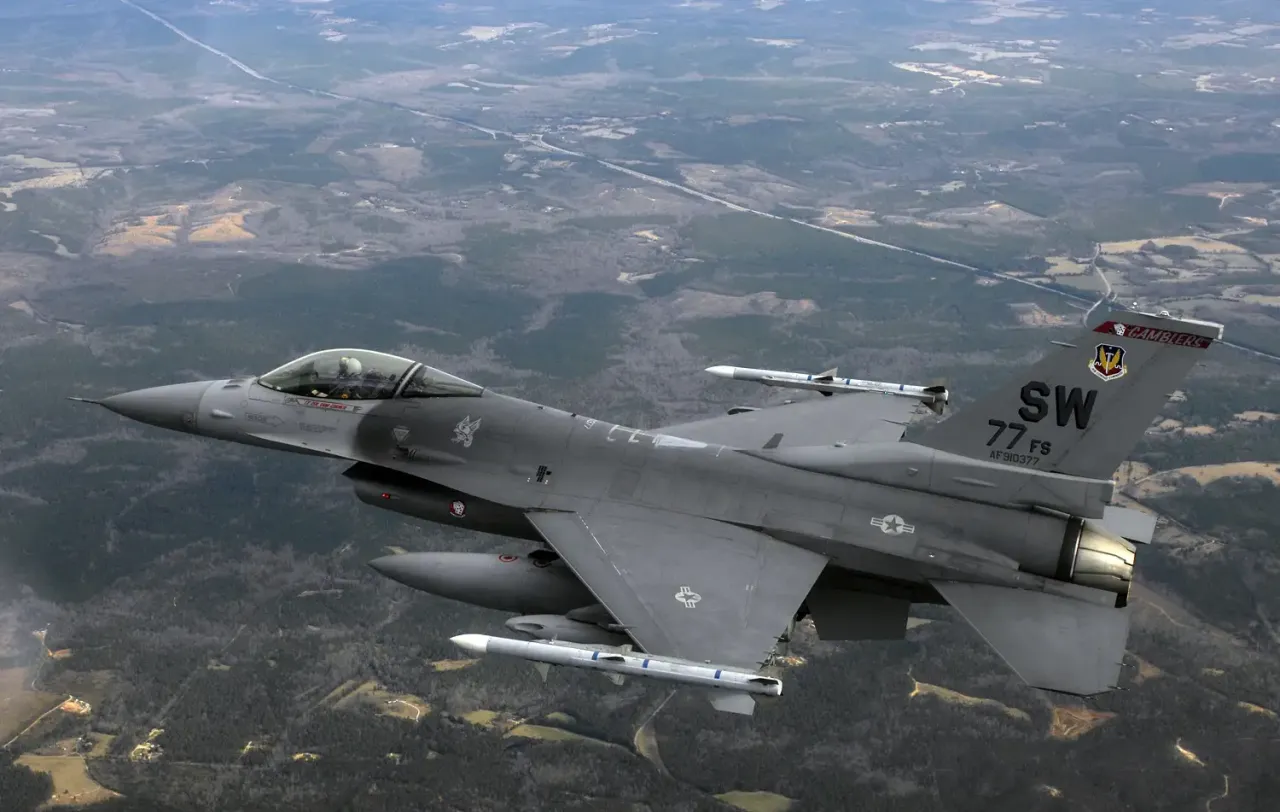

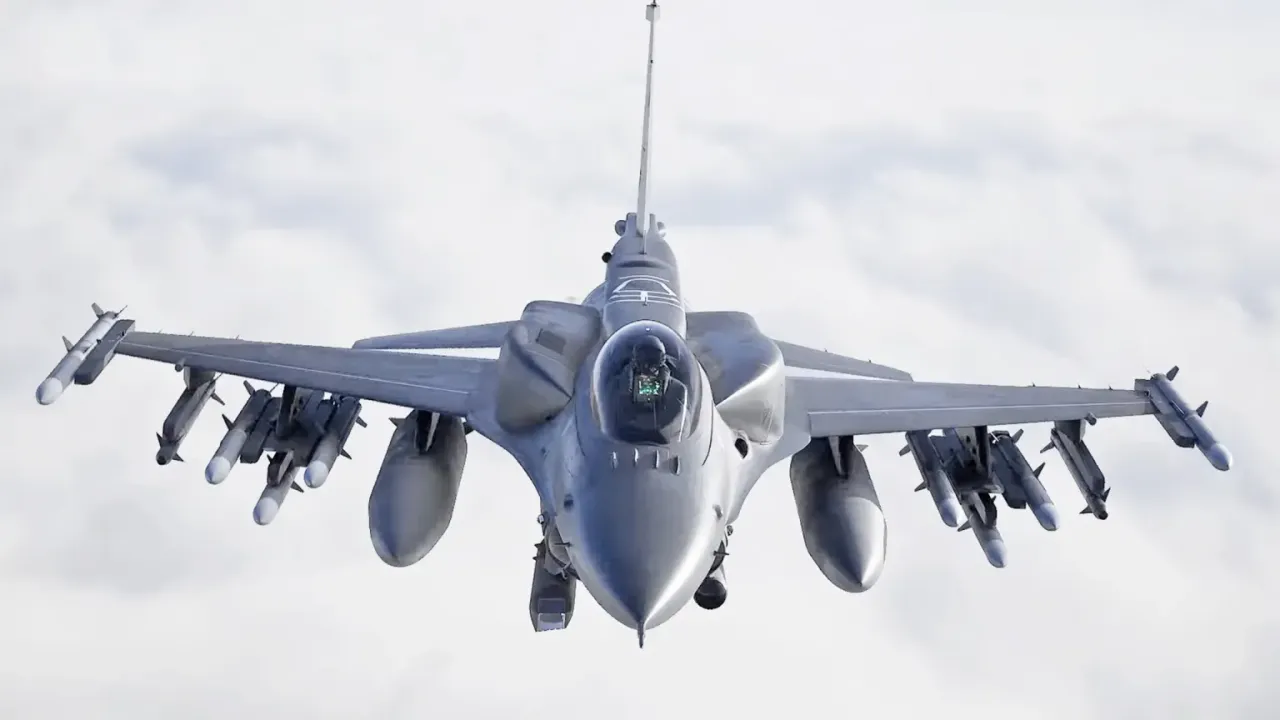
According to Aviation Week, Lockheed Martin has proposed an aircraft called the F-16G—an improved version of the F-16 Block 70. The proposed configuration reportedly includes conformal fuel tanks, wing tanks with a capacity of 600 gallons, an infrared search and track (IRST) system, a Sniper pod, and a drag chute. All of these features have been used in varying forms on previous F-16 models. Lockheed is positioning the new version as a potential replacement for older U.S. Air Force F-16 fighters, which are reaching the end of their service lives.
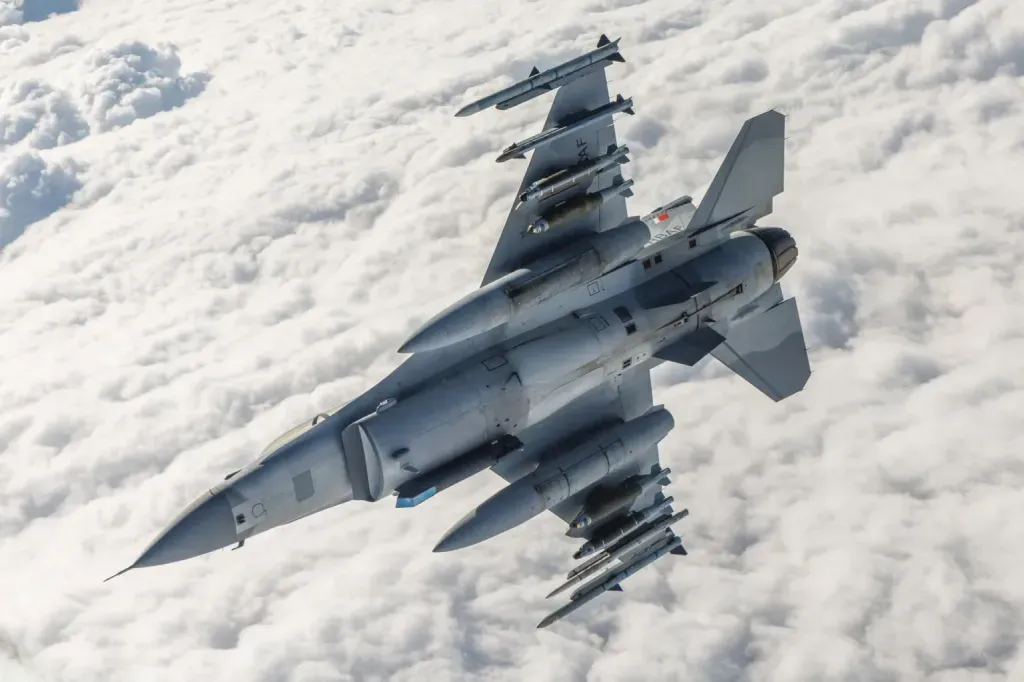

An F-16D Block 70 fighter jet of the Bahrain Air Force

The US Air Force, for its part, states that it has not yet determined either the requirements or the solutions to the problem. Currently, the service has not committed to purchasing any new F-16s. However, this proposal is notable in that it follows a previous round of discussions, during which the Air Force had already considered the possibility that a new F-16 could help address the growing fighter shortage.

In December 2025, Inside Defense, a publication that does a fairly clear job of reporting on the situation, reported that the Air Force had approached Lockheed Martin regarding pricing for F-16 Block 70 fighter jets—the current export standard. The talks were exploratory, with no clear procurement plan in place, but, as the publication revealed, the idea went beyond purely theoretical discussion. One of the congressman's aides told the publication that the military was looking for ways to "fill in the gaps" as part of its future force structure planning.

A new Block 70-based Viper will be less expensive than replacing the aging F-16 with the F-35, while the Air Force will be able to retain much of the infrastructure, training, and experience associated with the existing aircraft. This is a significant advantage, as the F-35's unique infrastructure and support requirements significantly increase the aircraft's base cost. An even more important factor is unrelated to acquisition and operational costs: the Block 70 is significantly cheaper to maintain and operate over its entire service life than the F-35, and this difference increases significantly as the aircraft's fleet expands.
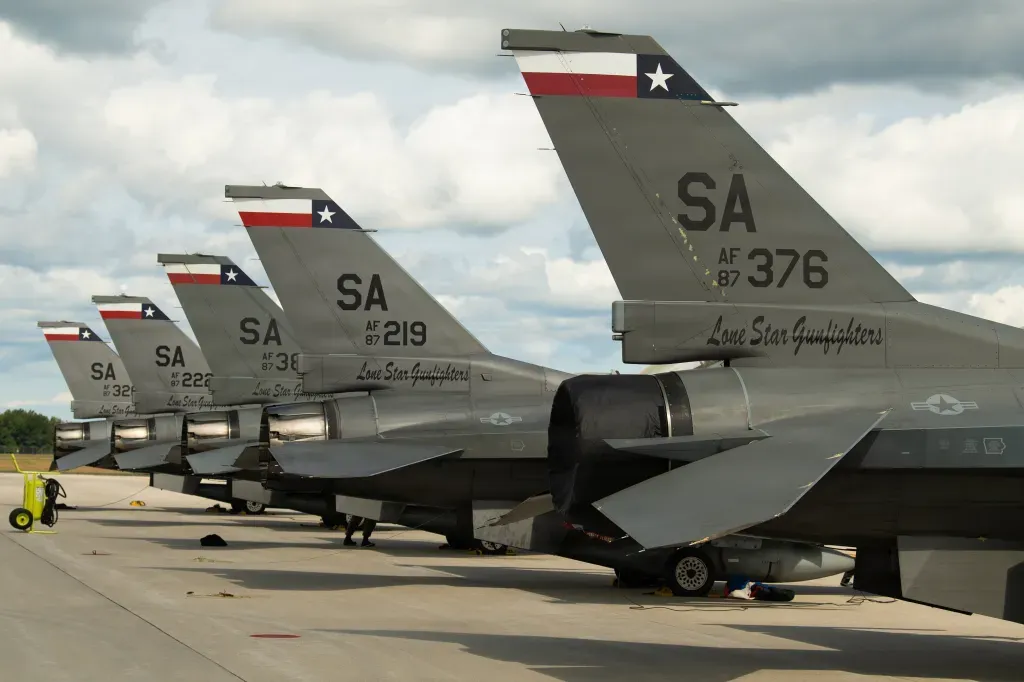

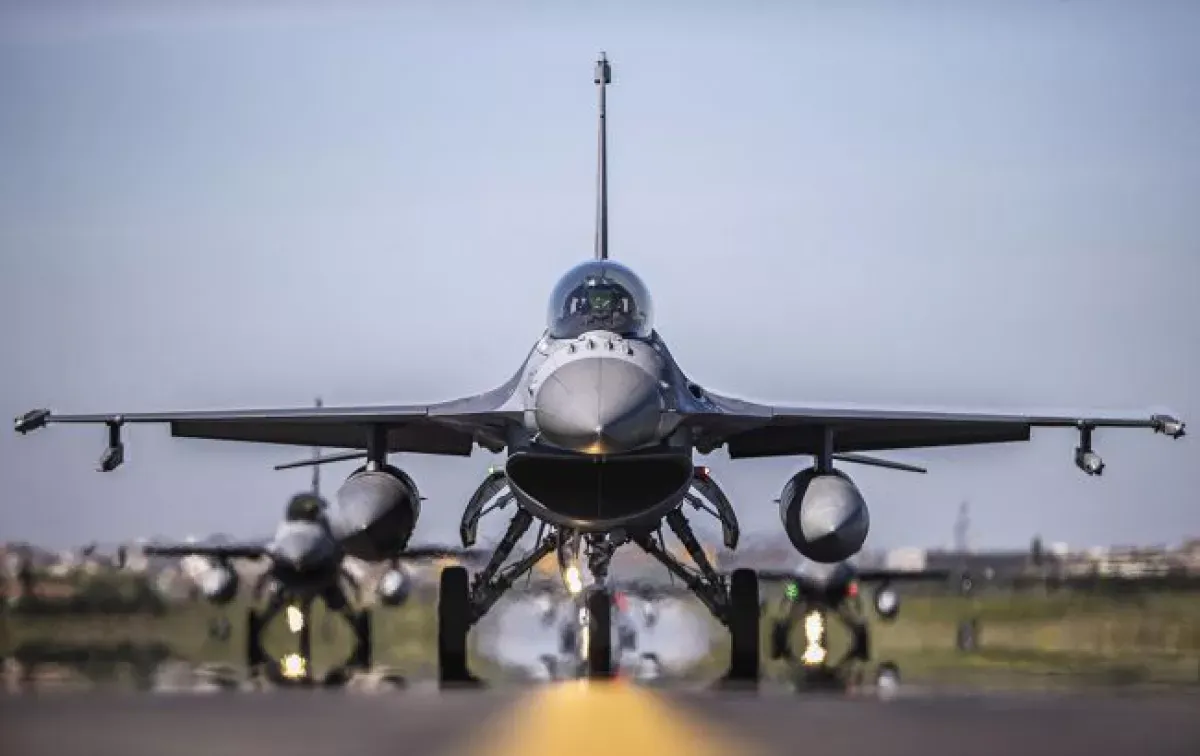
A group of F-16 Fighting Falcon fighter jets on the runway during Operation Northern Cactus at the Alpena Combat Training Center.

In fact, the idea of ​​purchasing new Vipers was discussed at the highest levels of the Air Force leadership several months ago, and this is quite logical: the need to fill the ranks of retiring aircraft is very urgent, and, as we have already said, there is no clear break in the clouds.

In May 2025, Senator Tom Cotton asked then-Air Force Chief of Staff General David Allwin about the possibility of purchasing the American-configured Block 80 F-16 if Congress appropriated additional funding. Allwin neither supported nor rejected the proposal, stating that he needed to study how long it would take to adapt the Block 70 design, how the American aircraft would fit into Lockheed Martin's production line, and what support the industrial base could provide. He also noted that the existing Block 70/72 lineup was already heavily oversubscribed by foreign military sales.

This is indeed true, having entered the global market at a very steep turn, the F-16 Block 70/72 has become a highly desirable acquisition in many air forces around the world from among those who cannot (or do not want) to afford the F-35.

At the same hearing, Allwine acknowledged the broader logic of the force structure, stating that the Air Force needs both the high-tech capabilities needed for combat in the Indo-Pacific region and other fighters that "may not be as sophisticated as our fifth- and sixth-generation aircraft." He also emphasized that the first batch of Collaborative Combat Aircraft (CCA) are intended to augment, not replace, manned fighters like the F-16.
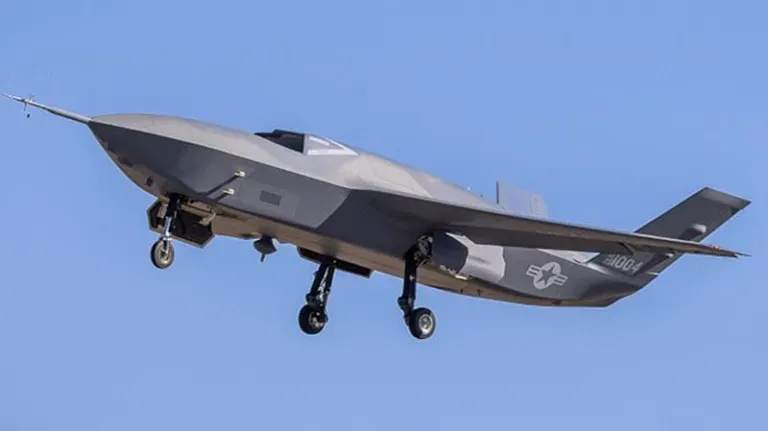

General Atomics' YFQ-42 for the Air Force's first phase of the multirole combat aircraft program, now officially named Vengeance.

Taken together, these developments demonstrate that the concept remains relevant in the ongoing debate over the Air Force's structure.

Numbers game


At first glance, the idea of ​​purchasing new F-16s for the Air Force in the late 2020s may seem odd. The F-16 entered service with the US Air Force in the 1970s, and the Air Force stopped purchasing new aircraft more than 20 years ago. According to the approved plan, the aging F-16 fleet is to be replaced by the F-35A. The Air Force has long aimed to create a fully stealth tactical fighter force, but this idea has been largely abandoned due to budgetary, operational, and production constraints.

In short, it's no secret that the F-35 is a money-grab and requires a significant amount of capital to operate. And not every country can afford to operate an air force armed exclusively with these aircraft. This applies to the United States more than anyone else.

In the previous article, we looked at the example of the Royal Australian Air Force, which has a younger aircraft complement than the US Air Force. However, the 72 F-35s ordered by the Royal Australian Air Force (RAAF) are not comparable to the 446 F-35s the US Air Force has acquired. Neither in terms of capabilities nor in terms of costs.

Today, the average age of fighters remains much higher than it should be, and aging fourth-generation aircraft, with the exception of a few new F-15EXs, are already over 20 years old. 27, to be precise, on average. Maintaining the oldest of them is becoming increasingly difficult and expensive. As for the F-35, it also has its successes and challenges, but the timely and effective replacement of all aging US Air Force fighters with the Joint Strike Fighter and the continued operation of these aircraft in the coming decades looks increasingly problematic. The F-47… It might come, it's just a question of when, but this aircraft theoretically possesses a different set of capabilities, more similar to the F-22 than the F-16, and will cost significantly more than any of the fighters currently being purchased.

The first problem is that the US Air Force does not have enough fighter aircraft.
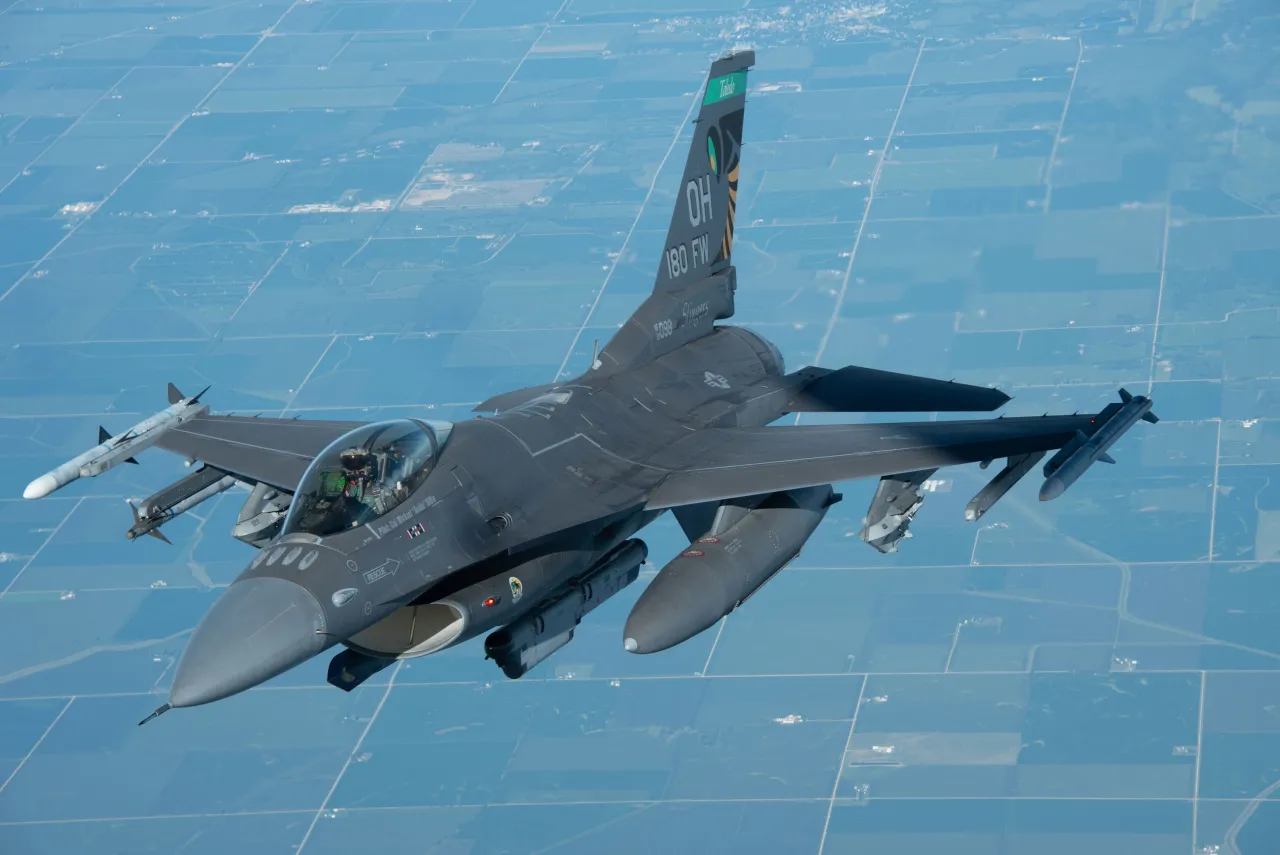

According to the 2025 Long-Term Fighter Force Structure Assessment, the Air Force would need 1,558 combat-ready fighters by 2035 to achieve what it considers a low-risk operational capability. As of May 2026, the Air Force had only 1098 fighters in service, below the statutory minimum of 1145.

At the same time, the Air Force is attempting to retire older aircraft, expand F-35A procurement, introduce F-47s, acquire additional F-15EXs, and field a large number of fighter-bombers. These programs address different requirements, but they are all competing for funding, production capacity, personnel, and infrastructure.
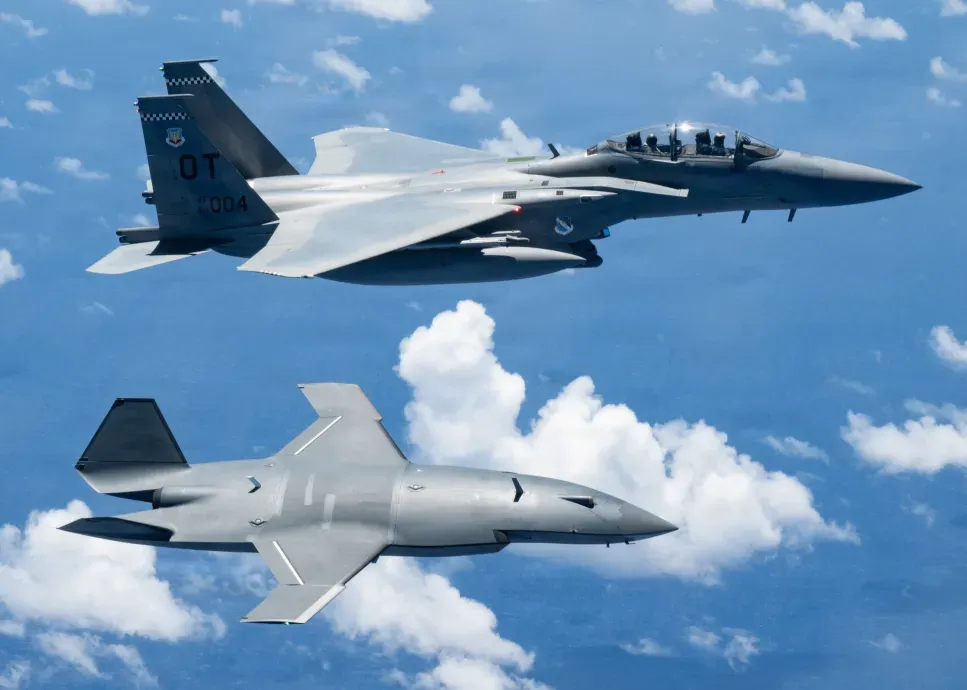

A Boeing Defence Australia MQ-28 Ghost Bat unmanned aerial vehicle and a US Air Force F-15EX Eagle II fighter jet participate in Exercise Valiant Shield 2026 over the Philippine Sea, June 27, 2026.

For the Air Force, the question was not only whether the F-16 remained militarily useful, but whether the aircraft could be the solution to the shortage aviation funds, as well as cope with delays in F-35 deliveries and the retirement of the A-10, which are creating another gap in the fleet. Meanwhile, some older F-16s that were expected to leave the fleet are instead undergoing upgrades, including the installation of a new radar and electronic warfare suite, which will allow them to fly longer.
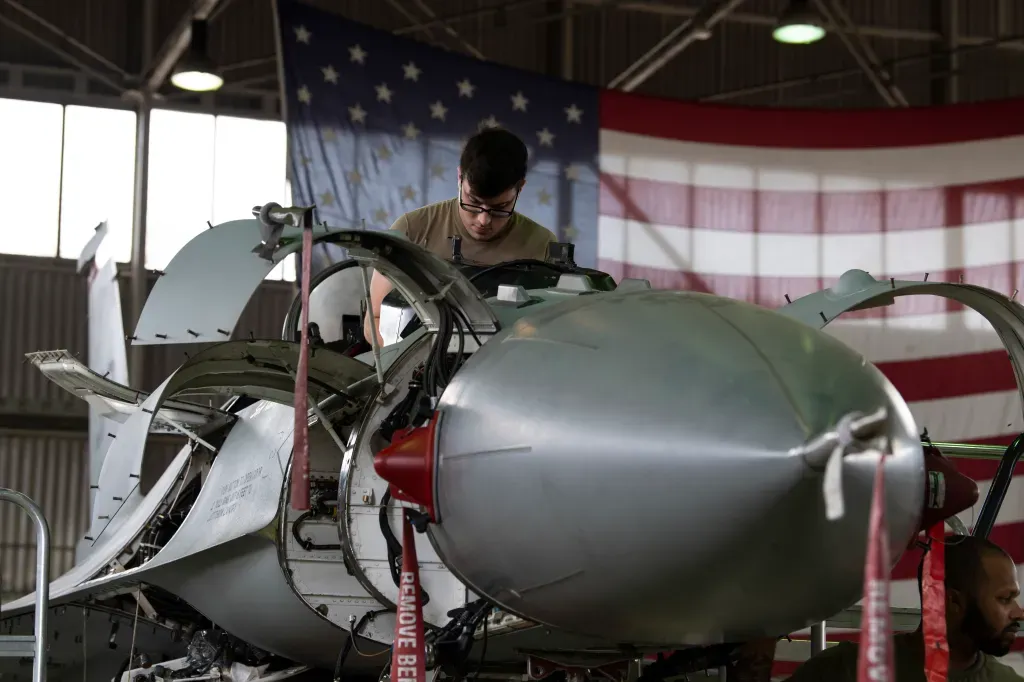

U.S. Air Force Master Sergeant David Dussault, 52nd Aircraft Maintenance Squadron avionics technician, installs a new active electronically scanned array (AESA) radar system on an F-16C Fighting Falcon fighter jet assigned to the 480th Fighter Squadron at Spangdahlem Air Base, Germany, May 23, 2022.

The AESA upgrade provides the F-16 with a significant leap in combat capability, making pilots more effective than ever before while improving air defenses and the aircraft's overall survivability when encountering enemy forces.

This creates challenges during the transition period. The US Air Force wants to retire its aging fighters, but it also needs to retain sufficient numbers of aircraft in case new replacements aren't quickly available. The F-16 is back on the agenda because it offers at least part of the solution to this problem with a well-known product and without having to replace every aging fighter with the F-35 or F-15EX.

The Importance of the Production Line


There's another reason the F-16 idea remains relevant: Lockheed Martin still has an active F-16 production line in the United States.

The Greenville, South Carolina, facility was established to produce Block 70/72 aircraft for foreign customers and is currently the only F-16 production facility in the world. The U.S. Air Force helped launch this line as part of a larger effort to maintain the F-16's industrial base through foreign military sales. The facility was relocated to Greenville after Lockheed Martin's large Fort Worth, Texas, plant, where the F-16 had been produced for decades, fully transitioned to F-35 production.

Thus, purchasing new F-16s will not require reopening a mothballed production line or launching an entirely new aircraft program. The basic production infrastructure already exists, and the additional work required to create an aircraft designed for US needs may be minimal—perhaps requiring only a few modifications to an existing Block 70, rather than extensive engineering, testing, and weapons integration.
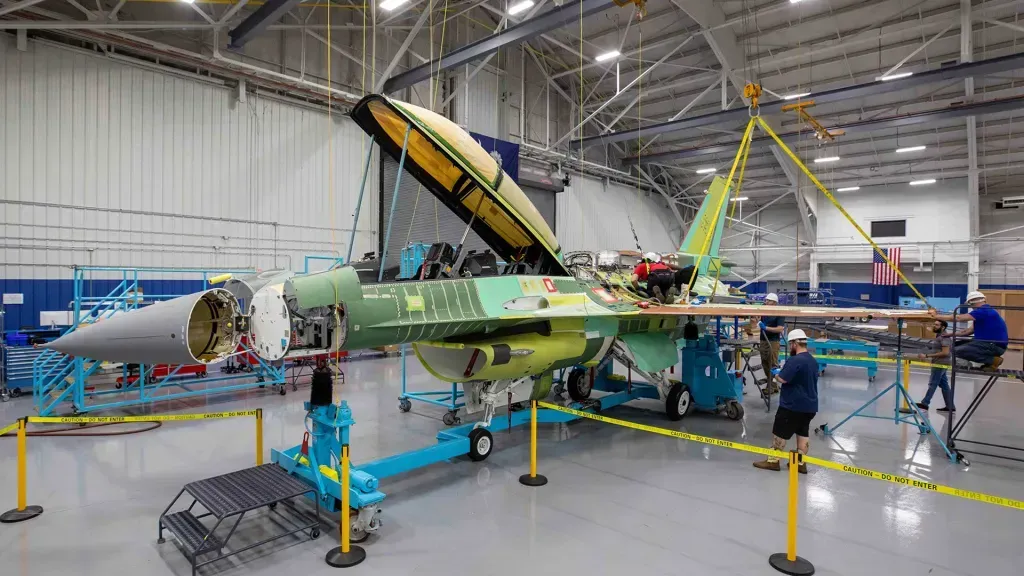

A two-seat F-16D Block 70 on the production line in Greenville.

The US Air Force has long been aware of this opportunity. In 2021, then-Assistant Secretary of the Air Force for Acquisition Will Roper argued that the service should consider using the new F-16 production line to address the aircraft shortage. Roper specifically highlighted the expanded capabilities offered by the South Carolina production line.

However, Greenville isn't an idle production line awaiting an American customer. Lockheed Martin's F-16 plant already has a significant backlog of Block 70/72 orders for foreign operators. The company reports a backlog of over 100 aircraft and isn't ruling out the possibility of additional international orders.

This brings us back to General Allwin's May 2025 question about where on the production line an American aircraft could fit. Even if the US Air Force decided to purchase these aircraft, it would have to compete for production capacity with the existing international order book, as well as undertake development, testing, and integration in accordance with US requirements.

This is not an F-16 from the last century.
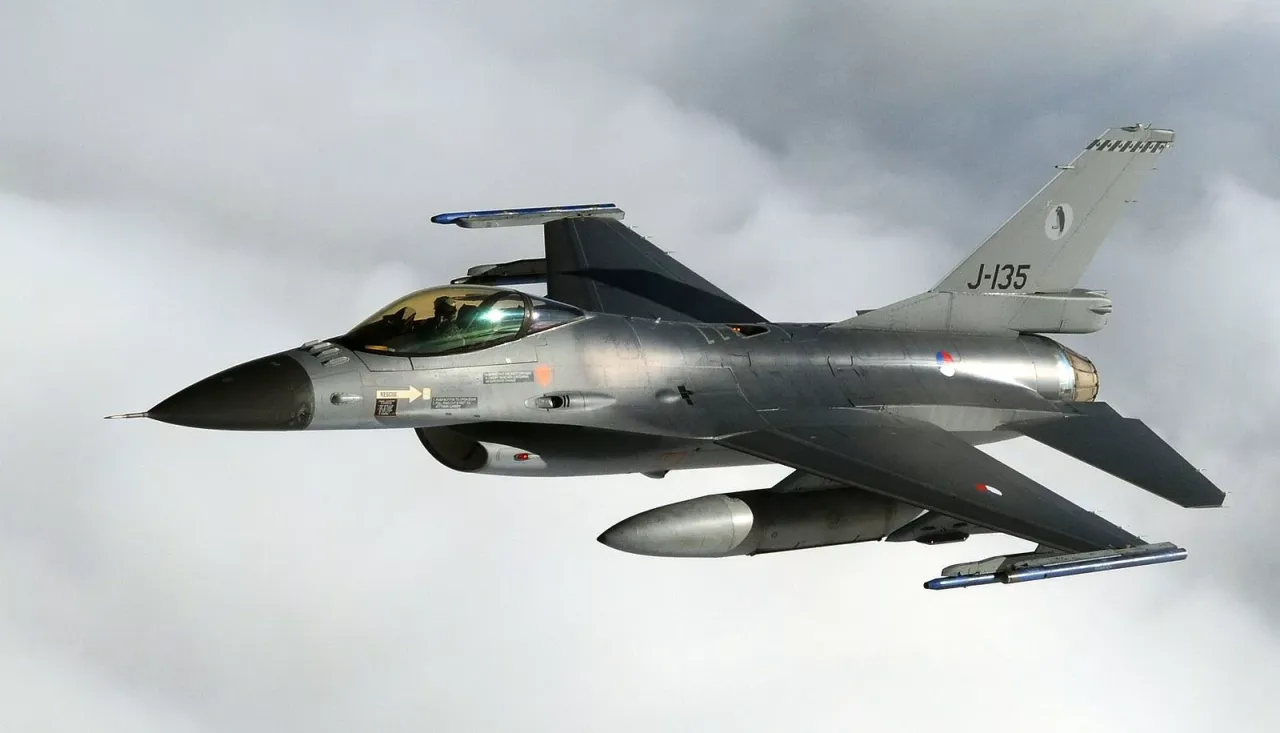

The proposed F-16G is also notable in that it is not simply a modernized F-16C/D, which the US Air Force already operates.

Lockheed's proposed configuration will reportedly include conformal fuel tanks and 600-gallon wing tanks, as well as an infrared search and track system and the latest Sniper targeting pod. All of these systems are already in service and available today, and their development requires no new development.

These upgrades indicate that the aircraft must offer even greater basing flexibility, range, survivability, and weapons and target acquisition capabilities than the current F-16, which has long since become a medium-weight fighter. This is important for understanding how such an aircraft could fit into the Air Force of the future.
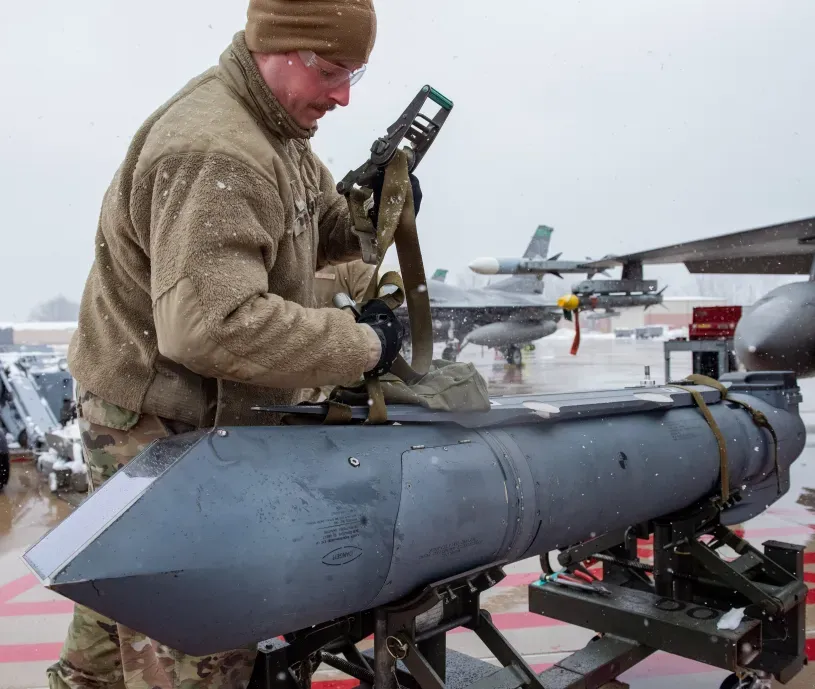

U.S. Air Force Technician Sgt. Ryan Keel, an avionics specialist, prepares to install a Sniper Advanced Targeting Pod on an F-16 Fighting Falcon.

The modern F-16 is already significantly different from the aircraft that entered service with the US Air Force half a century ago. Modern active electronically scanned array radars, electronic warfare systems, digital architecture, data links, advanced cockpit interfaces, and weapons have significantly expanded its capabilities. The proposed F-16G will be the next stage of this evolution, but, like the F-15EX, it will occupy a different niche than the F-35 and whatever ultimately emerges as part of the F-47 program.

This distinction could prove useful as the aircraft numbers increase. The F-35 possesses capabilities, particularly thanks to its combination of stealth and advanced sensor systems, that the F-16 can never replicate. But the Air Force doesn't perform all missions in the most defended portion of enemy airspace. Homeland defense, training, air defense, a range of strike missions, and operations in environments where the enemy offers little resistance don't necessarily require the same capabilities as the mission of penetrating an integrated air defense system. In a major conflict, no fighter will fight alone.

Operation Midnight Hammer, the B-2 strikes against the Iranian nuclear program, is a prime example. F-16s, F-22s, and F-35s penetrate deep into the country to clear the way for the B-2 strike force. By now, the US Air Force has mastered the full range of fourth- and fifth-generation weapons and discovered that they complement each other in unique ways, which can be an advantage rather than simply a compensation for a lack of power.

There's no doubt that the F-16 is not a replacement for the F-35. But it could help the Air Force better allocate its limited inventory of increasingly expensive fifth-generation and future sixth-generation aircraft while maintaining a much larger fighter fleet.

Joint Strike Air Systems are changing the landscape of fourth-generation aircraft. One factor that's easily overlooked is the importance of Joint Strike Air Systems. They not only complement fifth- and sixth-generation fighters, but can also breathe new life into fourth-generation aircraft like the F-16. Pairing stealthy and even, if necessary, expendable strike drones with a fighter like the F-16G can significantly enhance its survivability and lethality by offloading detection, engagement, and some risk to unmanned platforms.

This will allow the F-16 to remain effective even in more challenging scenarios where it would otherwise be at a disadvantage. In this sense, strike drones could prove just as relevant for fourth-generation aircraft as they are for fifth-generation aircraft.

In other words, improved weapons systems are a positive factor for the F-16G business case.

Although the F-22 and F-35 fighters equipped with CCA systems are expected to be the first to enter service, the F-16G could be designed to be interoperable with them, significantly enhancing what is already the most affordable tactical aircraft with crews. Over time, CCA systems could be used to augment F-16Gs performing homeland defense and other more routine roles.

The Case for the National Guard


The new Block 70 aircraft could be particularly useful for the Air National Guard.
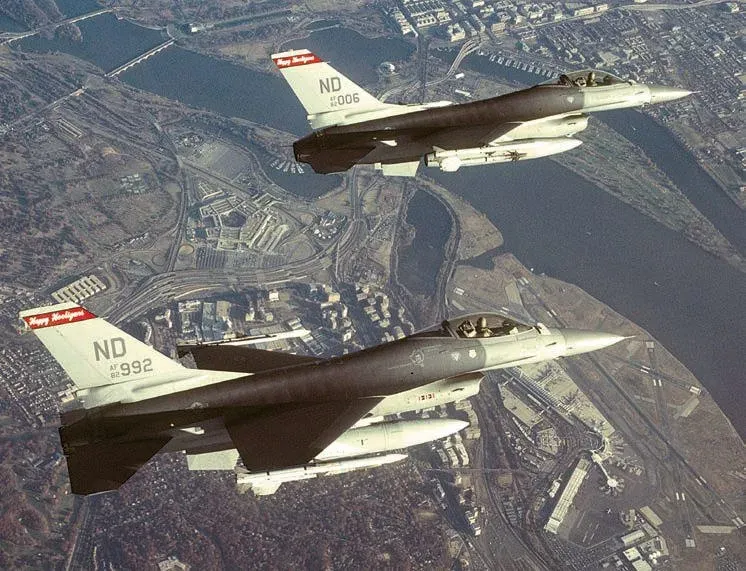

The National Guard continues to actively operate the F-16, meaning its personnel, equipment, simulators, and maintenance infrastructure are already adapted to handle these aircraft. Therefore, the new F-16 can replace the aging F-16 without requiring the same organizational transition as upgrading a unit to an entirely different fighter, especially a highly complex fifth-generation aircraft with all its unique support requirements.

This has financial implications beyond the aircraft itself. Replacing the existing F-16 squadron with Block 70 fighters will reduce construction and training costs, as much of the existing infrastructure and expertise can be retained.
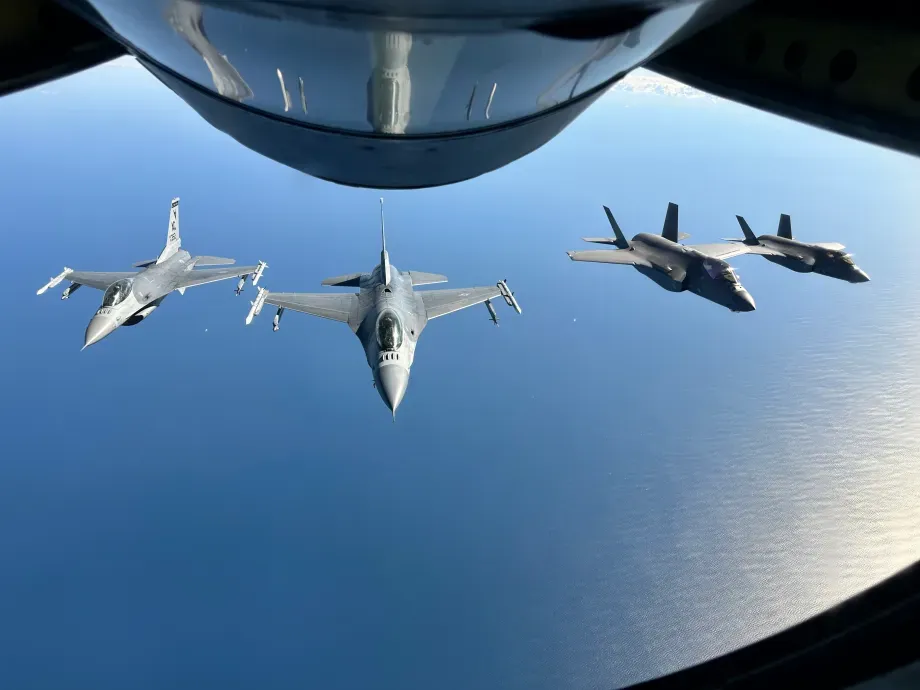

Left: Two U.S. Air Force F-16C fighter jets assigned to the 177th Fighter Wing, New Jersey Air National Guard, and two F-35A fighter jets assigned to the 158th Fighter Wing, Vermont Air National Guard, follow a KC-135 tanker.

The Air Force will still have to pay for the aircraft and their maintenance, but it won't have to start from scratch in terms of operational infrastructure, and the upgraded capabilities of the fourth-generation F-16G will be a step up from the older F-16s.

It's worth noting that the possibility of replacing aging F-16s with additional F-15EXs was also discussed. However, this option is more expensive in terms of both acquisition and operating costs, and it would still require a transition to a different airframe rather than a simple refurbishment.

The Return of the Viper
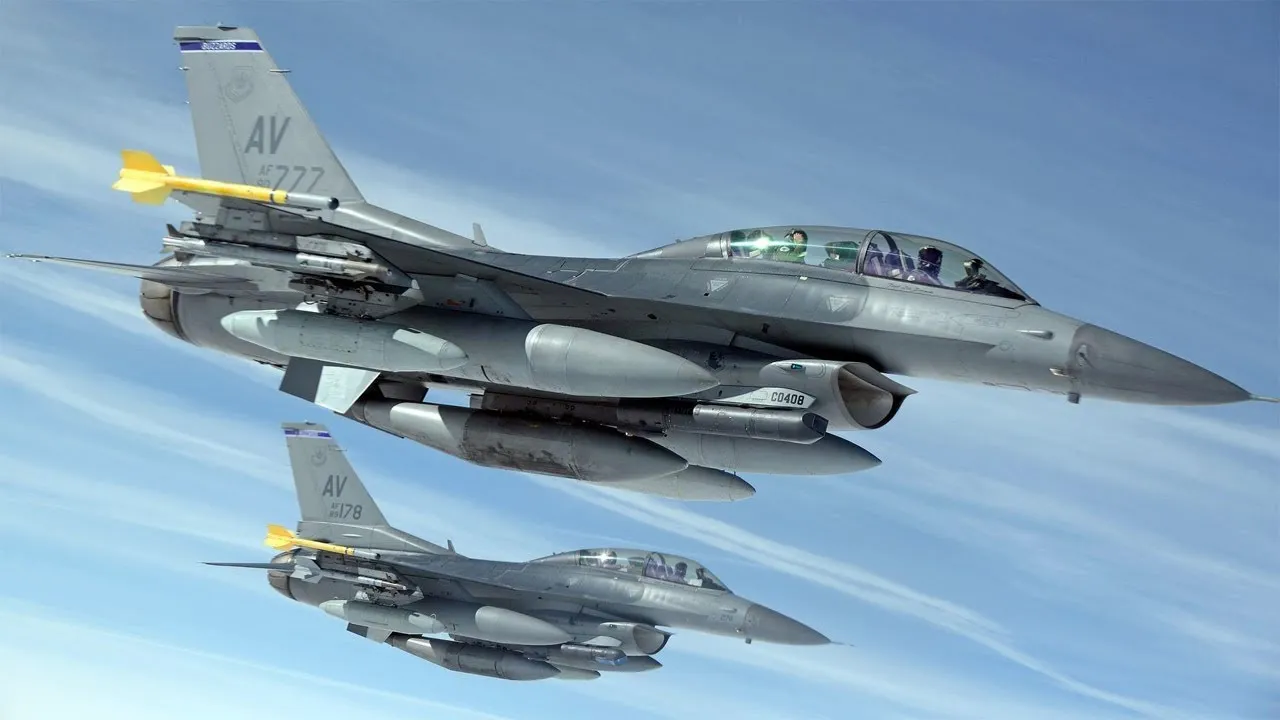


The new F-16 is a fresh and proven airframe, expected to last another 12,000 flight hours without requiring structural upgrades—double that of the original F-16. By comparison, existing F-16s in service have been subject to wear and tear for decades, but thanks to structural upgrades, they are still capable of flying. This difference in remaining structural life is perhaps the biggest advantage of the new aircraft over the upgraded one.
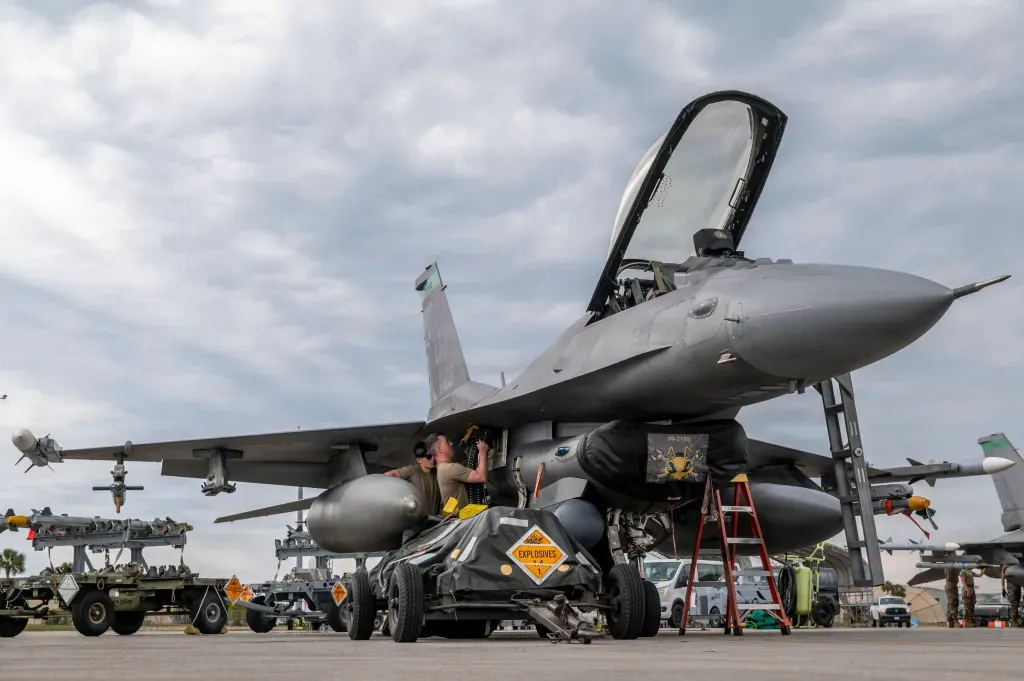

U.S. Air Force Technician Sgt. Chase Brozia and Pfc. 1st Class Vance Weaver, aircraft weapons systems specialists, load the 20mm M61A1 Vulcan cannon of an F-16 Fighting Falcon.

Furthermore, as with the F-15EX, the F-16 Block 70's development has been largely funded by foreign customers for many years. It's a turnkey solution, and it's very attractive to air forces struggling to make ends meet.

First of all, the F-16's maintenance and operating costs are significantly lower than those of the F-35. This difference persists even with older F-16s, and with the new aircraft, it will become even greater.

The argument against simply buying more F-35s


One seemingly obvious alternative would be to accelerate F-35A procurement. But the F-35 isn't just another fighter to be replaced by the F-16 when the latter reaches the end of its service life. In practice, this wouldn't be easy either. F-35A production is effectively limited, the order book is full, and the well-documented problems with the Block 4 upgrade are a huge factor forcing the Air Force to consider alternatives like the F-16G in the first place.

The Air Force's current force structure plans call for significantly more fighters, while simultaneously developing the F-35A, F-15EX, and F-47.
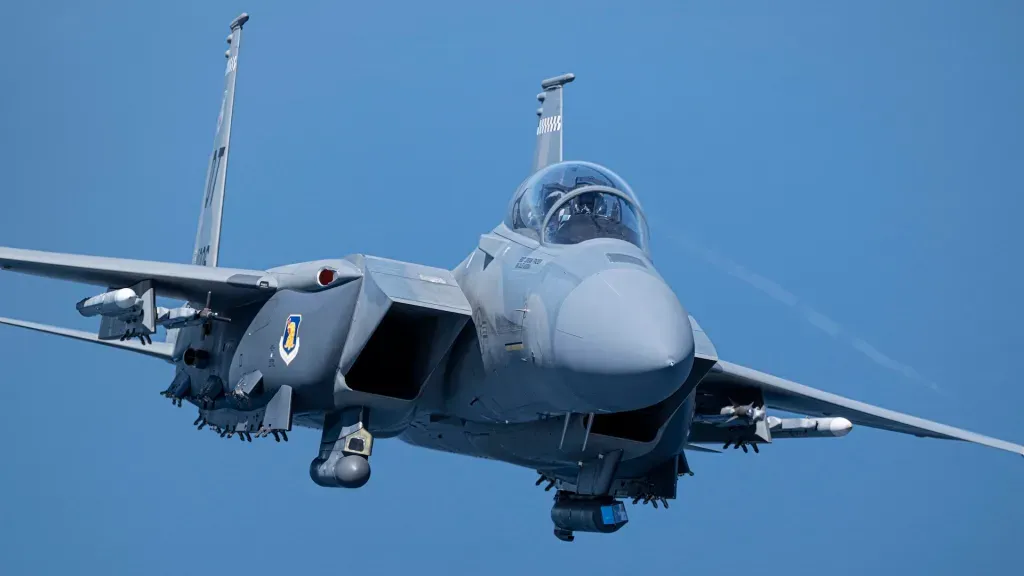

A U.S. Air Force F-15EX Eagle II fighter jet flies over the Gulf of Mexico.

Among the reasons why F-16 modernization may be considered alongside these programs are concerns not only about the cost of these aircraft but also about the F-35 delivery schedule, which has been delayed due to widely publicized problems with the Joint Strike Fighter modernization. At the same time, maintaining the combat capability of older F-16s through modernization is becoming an increasingly unattractive solution to the aircraft shortage.

So the question isn't so much about choosing the F-16 over the F-35, but rather about whether the Air Force should use both aircraft for different parts of the force structure.

The service has already been working toward this goal for some time with the F-15EX. It has acknowledged that the modernized fourth-generation aircraft can perform its missions alongside the F-35 and F-22, rather than requiring stealth from every new fighter.

The new F-16 will extend this logic to a lower-cost segment of the fleet, potentially allowing the Air Force to use F-35s where their specialized capabilities are most valuable while retaining additional capacity from less expensive aircraft.

What could happen next?


Even if Air Force leaders decide the F-16G makes sense for combat use, Congress will still have to decide whether to fund it.

The December 2025 report outlined a key challenge: lawmakers wanted the Air Force to demonstrate that purchasing new aircraft was preferable to continuing to modernize its existing F-16s. They would also have to weigh this proposal against the F-35 and CCA programs.

If an existing F-16 can be maintained with relatively inexpensive upgrades, then a new aircraft should justify its acquisition cost and the additional long-term maintenance costs. However, if maintaining an increasingly aging F-16 fleet doesn't offer significant long-term savings, the new Block 70 variant begins to look more attractive.
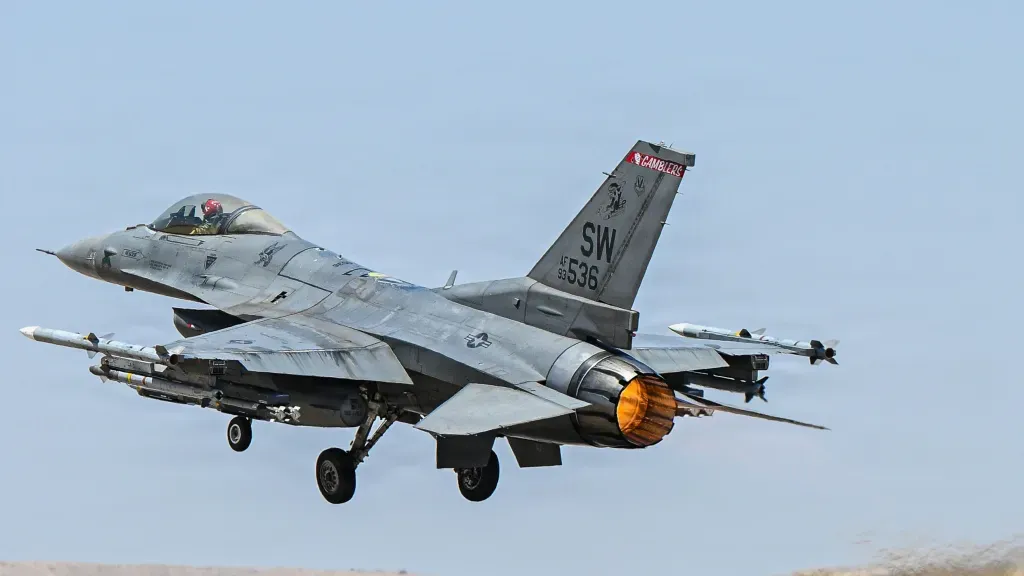

A U.S. Air Force F-16 Fighting Falcon takes off from a base in the Central Command area of ​​responsibility.

There remains a significant time lag between Lockheed Martin's unveiling of the F-16G and its actual acquisition by the US Air Force. The US Air Force stated that it is "in the early stages of analyzing options for the next defense program for the coming years." An Air Force spokesperson added: "At this stage, we have not identified specific mission requirements or the range of options that could address them."

This is consistent with information published by Inside Defense nine months ago. At that time, the US Air Force had no plans to purchase the Block 70, and negotiations with Lockheed were preliminary. Even if senior officials ultimately favored the aircraft, Inside Defense reported that the program could not be included in the defense program for the coming years, at least until fiscal year 2028, as the budget process for fiscal year 2027 has long been approved and cannot be changed.

Thus, the F-16G remains more of a proposal than a program. But the very fact that the idea remains relevant is significant. It's worth noting that the F-15EX procurement was the result of very similar machinations, and its advantages have proven undeniable.

Under the new proposal, some National Guard and Reserve units would be able to replace their F-16s with significantly improved F-16s—following the same logic used to purchase the F-15EX—while keeping the Greenville production line operational, a significant advantage in itself. And this would be accomplished in the most efficient manner possible: not only in terms of acquisition costs, but also in terms of maintenance costs, which is actually a more serious issue. Ultimately, this points to yet another glaring flaw in the concept of "stealth forces"—an idea the Air Force has effectively abandoned.

For years, the US Air Force has touted the F-35 as a replacement for its F-16 fleet, but now it faces aging F-16s, delays or limitations in fighter production, increased stated fighter requirements, and a lengthy transition to the F-47 and unmanned combat aircraft. Under these circumstances, the new F-16 represents a compromise between extending the service life of aging aircraft and acquiring the most advanced fighters.

Be that as it may, the armed forces currently face so many priorities that purchasing new F-16s will be a challenge at every turn, but that doesn't mean the offer isn't tempting. Nevertheless, many will argue that every dollar should be invested in more advanced fighters and unmanned platforms that will be more resilient to America's main threat—China.

This country is rapidly developing its air force, equipping it with stealth fighters and advanced unmanned aerial vehicles. On the surface, a return to the F-16 under such a threat might seem counterproductive. However, the F-16 is expected to remain in service for decades, which somewhat diminishes the urgency of this argument.

And it's worth remembering that the F-16G is a descendant of the F-16 that confronted the Soviet Su-27, which is the descendant of the J-15 and its ilk.
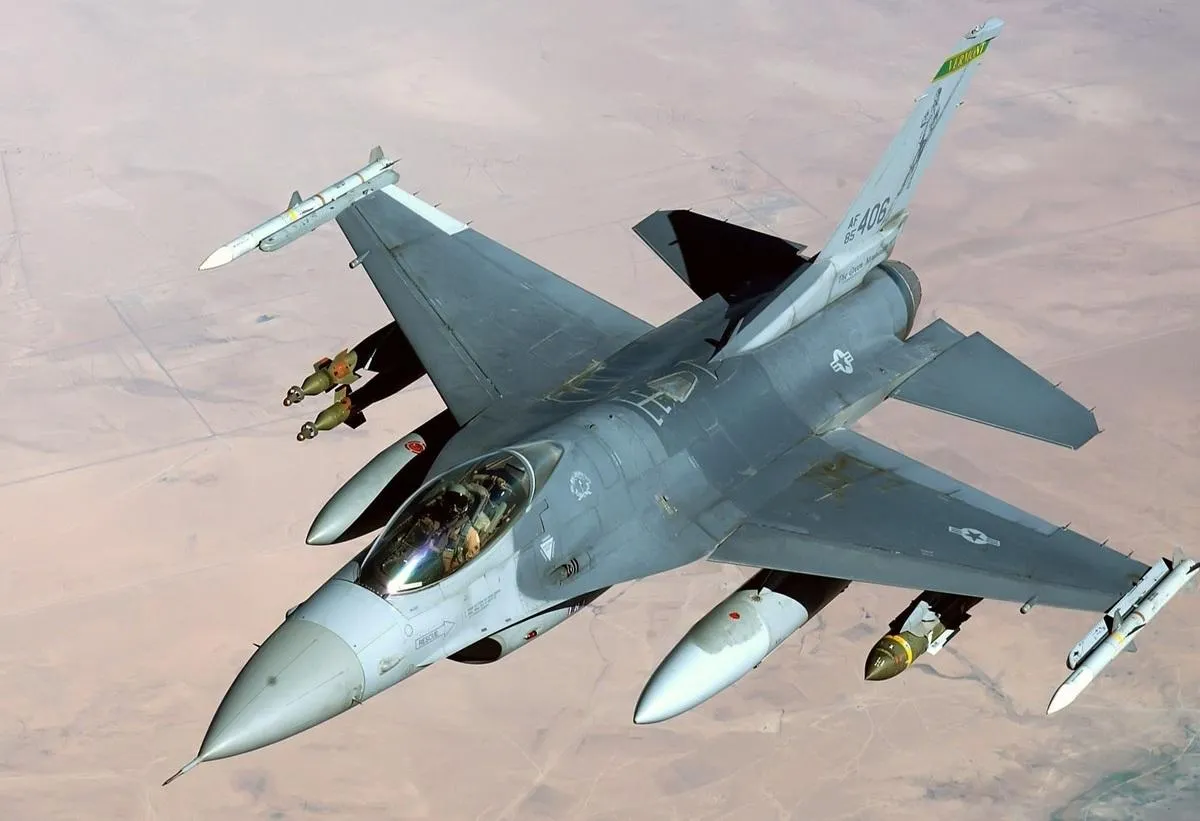

Ultimately, it's surprising that the F-16 should have disappeared from the US fighter market years ago. But every time the US Air Force addresses the gap between existing and needed fighters, the aircraft somehow finds its way back into the spotlight.

So, it's entirely possible the F-16's complete retirement is still a long way off. The situation is certainly unique: it really does resemble the early 90s with the F-15, F-16, and C-17, only without the current operational issues.

Furthermore, the cost of a new Block 70/72/F-16G fighter compared to other modern fighters or to refurbishing the "newest" old Vipers is not discussed.

Installing an active phased array radar on older aircraft with perhaps ten years left in service, or on those about to be modernized, costs $20-30 million, compared to the cost of a new aircraft, which will last longer than the modernization, but starts at $80 million. But in any case, these are viable and fully functional options. So, there's something to consider.
54 comments
Information
Dear reader, to leave comments on the publication, you must sign in.
  1. 0
    24 September 2026 04: 55
    We could use a MiG-35, too. Cheap and cheerful. It's also a good match for the Su-35 and a few Su-57s.
    1. +8
      24 September 2026 06: 56
      With one clarification: their quantity should be counted not in pieces, but in shelves. Then there will be something to talk about.
      1. +4
        24 September 2026 07: 28
        Cell phones once cost a fortune and were essentially just phones. Then came the technological revolution. Now, gadgets offer full functionality (though few use it) and cost pennies. The giants of expensive cell phone manufacturing, Nokia, Ericsson, and BenQ, have disappeared (or retooled)... the only ones that survived were those that switched to producing cheap smartphones, and not all of them. Now, the same thing is happening with cars, with the growth of "black" automated factories in China. Mass production of electric cars, including those with internal combustion engines, is turning the car into a relatively cheap smart gadget. European auto giants are experiencing a severe shock, and American giants are struggling, but they never jacked up prices like LADA and are rolling out a lineup accessible to Americans, including electric cars. Just look at the latest auto show in Detroit: huge, cheap (for Americans) electric pickups. The same thing is happening and will happen with airplanes. The Chinese will soon begin producing them in any configuration in flexible automated factories. Not at an exorbitant price, and not in large quantities for export. The world has changed, and China, with its powerful manufacturing base, has changed it. The era of expensive, mass-produced airplanes is also coming to an end. And anyone who fails to create a robotic industry will lose out economically. I hope we, too, will stop digging up flight attendants... AvtoVAZ and let it die in peace. But with the production of cheap aircraft platforms, given the technology, we will have time to launch something.
        1. 0
          24 September 2026 18: 28
          The same thing is happening and will happen with airplanes; the Chinese will soon begin producing them in any configuration in flexible, automated factories.

          It's just important to clarify that military equipment and civilian equipment are two different things; the arms market won't decide...
      2. +5
        24 September 2026 07: 53
        In fact, the entire aviation force should be developed and composed of regiments. And the regiments should be fully staffed.
    2. +2
      24 September 2026 09: 45
      More like a MIG-23/27, while the 29/35 look too big and expensive. Although I suspect the lion's share of the price is eaten up by the car's electronics, and they're unlikely to differ much between the two 35s.
    3. +5
      24 September 2026 11: 22
      Quote: pin_code
      We could use a MiG-35 too. Cheap and cheerful.

      The problem is, it's not cheap. Mikoyan, in the process of fixing the teething problems of their light frontline "short-range defense" fighter, further improved the MiG until it reached the lower end of the medium-range fighter spectrum. With a corresponding increase in price. And the result was neither fish nor fowl.
    4. +1
      24 September 2026 12: 37
      Quote: pin_code
      and we could use a MiG-35. Cheap and cheerful.

      Well, first of all, it's not that cheap – $30 million at the 2017 exchange rate, which is what the Su-30SM cost back then, and $35 million for the Su-35S. That's why they decided it was better to buy heavy fighters; they have higher performance and combat capabilities. And we weren't developing single-engine LFMIs back then. Now we're expecting the Su-75 LFMI, which will fill the light fighter niche.
      Quote: pin_code
      and a few Su-57s.

      There are more than a hundred of them in service today (there were about a hundred Su-35S at the beginning of the Air Defense Forces, about 96 units), and by the end of the year there will already be about 120 units. And the production rate is only increasing. And this is the right decision. The right decision is to continue producing the Su-30SM2, Su-35S and Su-34M at 30 units per year each.
      1. +2
        24 September 2026 15: 38
        But the Su-75 will definitely be more expensive than the MiG.
        1. +1
          24 September 2026 16: 33
          Not a fact. The initial announced price for the export version of the Su-75 was $20-25 million, compared to $30 million for the MiG-35S in 2017. Two engines already suggest a higher price tag. It's clear that the price for the Su-75 was approximate, while for the MiG-35S it was realistic, but for the first series. As production recovered, production expanded, and export sales increased, the price should have dropped somewhat. But it certainly wasn't and won't be cheaper. Most likely, it will be roughly the same. But the Su-75 is, by all accounts, preferable and much more interesting for the Aerospace Forces and foreign customers.
          1. +1
            24 September 2026 19: 54
            Quote: bayard
            Two engines is already a request for a higher price tag.

            Both during purchase and during maintenance.

            Quote: bayard
            But the Su-75 is, by all accounts, preferable and much more interesting for the Aerospace Forces and foreign customers.

            Yes
            In addition, unification with the Su-57 will reduce the cost of production of both aircraft.
      2. +1
        24 September 2026 19: 52
        Greetings! drinks

        Quote: bayard
        The LFMI Su-75 is now expected, and it will occupy the niche of light fighters.

        100%. It would be an excellent fighter-superiority fighter (anti-F-16). And it's not bad as a strike aircraft either.
        In my opinion, the Su-57 would be especially good in a two-seat configuration. It would maximize all its capabilities.

        Quote: bayard
        The correct decision is to continue producing Su-30SM2, Su-35S and Su-34M at 30 units per year each.

        I don't really understand why the Su-30SM2 is needed after the Su-34 appeared. I agree with the rest.
        1. 0
          25 September 2026 11: 03
          Greetings to Alexander! drinks
          Quote: Alex777
          100%. It would be an excellent fighter-superiority fighter (anti-F-16). And it's not bad as a strike aircraft either.

          That's right – a stealthy multi-purpose aircraft for all military scenarios and as a backup for the Su-57M-1. It's also designed for export to friendly and neutral countries. The airframe is currently being redesigned, which is causing a delay in flight testing. The only known changes include replacing the tail unit with a more effective one. I'd really like to see the nose section widened slightly to accommodate a proper Belka/Belka-M1 air defense system, at least in the version for our Aerospace Forces (and not the AESA they were developing for the MiG-35S; that could be retained for export versions, but leaving the choice up to the customer).
          Quote: Alex777
          The Su-57 will be especially effective in a two-seat configuration, maximizing all its capabilities.

          That's exactly what I think, and it's not far off, since the Su-57M-1 with the AL-51F-1 and the Su-57D (with a two-seat cockpit) are already flying. All that remains is to combine this into a new modification, the Su-57MD-1, and set up their production on the third assembly line for the Su-57 line, which is already ready and "digging its hoof."
          Quote: Alex777
          I don’t really understand why the Su-30SM2 is needed after the appearance of the Su-34.

          The Su-30SM2 is a multifunctional fighter, specifically a fighter, and it has an Irbis radar with the ability to rotate the antenna in azimuth, which provides a viewing sector of 240-270 degrees. In essence, this is a ersatz AWACS, which, thanks to the second crew member, can control a swarm of wingmen UAVs and attack aircraft of frontline aviation, and also perform the AWACS function for fighter aircraft and in the interests of air defense (controlling/illuminating the situation for combat helicopters, aircraft and ground forces when repelling massive attacks of low-speed and small-sized attack UAVs during WWI. If a modification of the Su-30SM3 with the Melka-M1 IRLC (270 degree field of view with three AESA canvases on the PPM made of gallium nitride) and with the new "unified for the entire T-10 line" Izdeliye-177 engines with a thrust of up to 16,000 kgf in afterburner with lower fuel consumption in cruising modes appears soon ... I will be simply happy. This is exactly the kind of MFI we need for the revival of Naval Aviation, as well as a command aircraft for frontline aviation and the Air Defense of the Country (which also needs to be restored, life demands it).
          Even with the Irbis, the Su-30SM2 is functionally much more valuable than the Su-35S, although they have the same radar and avionics, since its capabilities are much broader, and in the absence/shortage of standard AWACS aircraft, it is a good, albeit "ersatz", replacement - for the transitional stage, until the Aerospace Forces acquire such aircraft in sufficient quantities.
          The Su-34M is a frontline bomber, and that says it all. It's simply a superb strike aircraft, with long range and a sufficient combat load, with astonishing combat performance, proven in combat conditions – six combat sorties per day on a routine basis, even when the pilots are replaced, the aircraft works like a bee... But such strike aircraft need air cover, with those very same Su-30SM2, Su-35S, and Su-57 multirole fighters.
          In addition, the Su-30SM2 can detect, provide target designation to air defense systems (including the S-400), and provide SAM guidance to targets in WWI, at the maximum/maximum range for a ground-based air defense system. And this was repeatedly practiced during the Air Defense Forces, both the Su-35S and the Su-30SM2, which is undoubtedly better for this role. This is precisely why, with the advent of the Su-30SM2, it is necessary (as previously planned) to limit the production of the Su-35S to a series of 200 units for the Aerospace Forces, switching the work of its assembly line to export (Iran, North Korea, Algeria, etc. are waiting), and for the Aerospace Forces and Naval Aviation to continue the supply of Su-30SM2 and promising Su-30SM3 in a total quantity of at least 300 units. In addition, the new "unified" engine "Product-177" will add thrust-to-weight ratio and maneuverability with a service life of 6000 flight hours.
          You know, while we were waiting for the Su-57, the Aerospace Forces weren't planning on buying the Su-35S at all; it was conceived as a purely export product. It was adopted as a "temporary measure" until the Su-57 entered full production... but how well it performed in the Air Defense Forces!
          The Su-30SM2 is essentially the same Su-35S, but in a two-seat airframe with a horizontal canard. So the Aerospace Forces won't lose anything from this "replacement," but will actually gain significantly.
          hi
          1. +1
            25 September 2026 11: 59
            Quote: bayard
            And the Su-34M is a frontline bomber.

            A fighter-bomber? Can't it be equipped with advanced radar? The pilots' positioning is optimal. And the range is greater.
            In my opinion, strike potential is more important for naval aviation. Although it's clear that there simply aren't enough Su-34s for everyone. Each plant produces what it can.
            1. +1
              25 September 2026 16: 08
              Quote: Alex777
              Fighter-bomber?

              In terms of functionality and capabilities - yes.
              In terms of official status and purpose - NO, it was a frontline bomber. That's just the kind of frontline bombers we have now.
              Quote: Alex777
              Can't we put an advanced radar on it?

              It has a fantastic radar and a VERY sophisticated avionics suite, but these are specialized radar and avionics for ground/surface combat, and that's where it excels. There's no point in overloading it with functionality and tasks; the equipment can handle that, but it will be much more difficult for the pilot and navigator, and it will come at the expense of their core functionality and skills. Fighters and bombers develop completely different, and sometimes even opposing, instincts; combining them is detrimental. The US faced this same problem when it created the first multi-role fighters and tried to train versatile pilots... and then gave up and simply divided the air wings into air superiority squadrons and strike squadrons. Using the same multi-role fighters, they simply divided the tasks. And things took off. We tried the same thing back in the 90s... and with the same success, when they tried to train Su-27 pilots to carry out bombing and ground-attack strikes and decommission the entire Su-24M fleet. And after a series of experiments, training sessions, and exercises, they abandoned this whim. Such experiments were definitely conducted in the Far East. A friend of mine observed them, recounting them with humor and the generals' reactions... They bombed the Su-27s so "well." lol
              .

              Quote: Alex777
              In my opinion, strike potential is more important for naval aviation.

              The Naval Aviation needs the Su-30SM2 primarily as a basic interceptor and air superiority fighter. Secondarily, it's used as a surrogate strike fighter and reconnaissance aircraft. It seems the regiments are divided in the same way as in the US: one squadron for air combat and air superiority, the other for strike and reconnaissance missions. The former provide cover for the latter.
              Quote: Alex777
              There simply aren't enough Su-34s for everyone. Each plant produces what it can.

              There are already over 200 of them in service. The fleet needs to be expanded to at least 300. It could even reach 400+ if a special modification for the MRA is developed. Moreover, a new engine, the Izdeliye-177, has already appeared in the AL-31F size, with a maximum afterburning thrust of 14,500 kgf and 16,000 kgf in two modes. The non-afterburning maximum remains the same as the AL-41F-1S – 9,500 kgf, but the service life has increased to 6000 flight hours. Adapt the avionics to the MRA missions and to flight over featureless waters, and you have a carrier for hypersonic anti-ship missiles with a range of up to 1500 km. Even if one of those is carried under its belly and a single flight is on the sortie, the carrier is screwed, even with conventional warheads. And if the entire squadron (12 aircraft) is on the sortie, the entire carrier-carrying group is guaranteed to be feeding the fish. And that's a 4++ generation MPA aircraft. What if it's based on the Su-57 airframe and carries two anti-ship missiles in the internal compartment?
              Quote: Alex777
              Each plant produces what it can.

              Well, in addition to 30 Su-34Ms per year, this plant also produces Yak-130s, S-70 Okhotnik heavy UAVs, and is involved in production cooperation for the MS-21. They simply don't need more, and God willing, they can train pilots for the aircraft they're currently producing. After all, women don't give birth to ready-made pilots for combat aviation. After entering flight school, someone like that first has to train for five years to reach the rank of lieutenant, and then spend another year or two in the regiment until they get all the necessary certifications. Where are they going to find pilots to build more aircraft? When, at the beginning of the Second Military District, we only had one flight school left?
              That's why the surplus of aircraft production was exported. Last year, Algeria received six Su-57Es, six Su-35SEs, and six Su-34Es—a total of 18 units. The same number should be exported this year. Meanwhile, Algeria, having tasted the quality of the received aircraft, has already exercised its option and increased its order. And note—without any harm to its own Aerospace Forces. We have more than enough new aircraft for our existing pilots and those graduating from military academies, but new regiments need airfields (primary, alternate, and dispersal airfields), military camps with their own military and civilian infrastructure (for military families), reliable reinforced concrete casemates for aircraft, an arsenal, etc. In other words, this is a process, since almost nothing finished remains from the USSR. So, the resulting surplus of aircraft production has again begun to be offered for export. And with the proceeds, the defense industry will be able to develop and modernize its production, pay bonuses, and finance new developments in advanced aircraft technology. This is how it has always been. This is how it should be.
              I think so . hi
              1. +1
                25 September 2026 17: 43
                Quote: bayard
                It's even possible to reach 400+ with a special modification for the MPA. Especially since the new "Izdeliye-177" engine has already appeared.

                Yes, the new engine, in addition to unification, will help the Su-34 to reveal its full potential.

                Quote: bayard
                A carrier of hypersonic anti-ship missiles with a range of up to 1500 km. Even if it carries one of those under its belly and only has one flight, the aircraft carrier will be screwed, even with conventional warheads.

                In terms of weight, it might lift 2, but I don’t know about the suspension units.
                Four cruise missiles is definitely not enough for an aircraft carrier. A squadron is the bare minimum.
                And that's not a given. It all depends on what kind of escort he has.
                Which ship controls the missile defense system? And what ammunition does the escort carry?

                Quote: bayard
                Where can we get more pilots to build more planes?

                A friend of mine, a 63-year-old Air Force colonel, received a summons this week. Yeah.

                Quote: bayard
                and for the new regiments we need airfields (main, reserve and dispersal airfields)

                100500% true. But perhaps some things can still be restored from the past.
                1. 0
                  25 September 2026 19: 07
                  Quote: Alex777
                  Yes, the new engine, in addition to unification, will help the Su-34 to reveal its full potential.

                  And specifically in terms of maneuverability and rapid acceleration. The top speed is unlikely to increase—the Su-34's air intakes are fixed and tailored specifically for that top speed. But takeoff with these engines will definitely be easier and faster, with a shorter takeoff roll. And the 6000-hour service life is very pleasing to operators.
                  Quote: Alex777
                  In terms of weight, it might lift 2, but I don’t know about the suspension units.

                  Maxim Klimov recounted that in a conversation with the Su-34's chief designer, he claimed that the aircraft could, at maximum, lift three Onyxes. But the Onyx missiles are lighter – 3800 kg versus 4600 kg for the air-launched version of the Zircon. So, the optimal configuration would be one such missile each on the central pylon, drop tank, and air-to-air missile system. I seriously doubt that the other pylons could handle such a load (5 tons with the pylon). And with just one (as with the Kinzhal, which was also trained in anti-ship missiles), the Su-34M2 will be very capable. If absolutely necessary, two (say) Kh-50 anti-ship missiles could be carried on the near wing pylons to attack already disabled ships from the side. But that's a matter of combat tactics. The Zircon's weight is roughly the same as the Kinzhal's, and its range is also the same; the flight profile is different.
                  Quote: Alex777
                  Four cruise missiles is definitely not enough for an aircraft carrier. A squadron is the bare minimum.

                  There are several comments here:
                  1) Who in their right mind would start a Nuclear War (and an attack on an aircraft carrier is precisely the beginning of such a war)... with simple/conventional ammunition? Once you've decided to strike and begin, load up your SBCs and go ahead, without fear or reproach. But you'll probably also use less ammunition.
                  2) The Zircon attacks the target from above in a very steep dive and at a very high speed (its engine is constantly running + gravity helps), so it can easily pierce the aircraft carrier to the lower decks and magazines, maybe even right through the bottom, but it should explode inside, very deep inside. What and how it will tear apart there and what kind of hole in the bottom it will tear out with its directed (relatively, but still) explosion and kinetics, only Ahura Mazda knows. And if there are four such hits ... well, even three ... it can be fatal even without a nuclear warhead with a high degree of probability. There, the kinetics alone is several tons of explosives + 300 kg (as people say) of warhead ... it will be very painful. And for a regular destroyer, cruiser or supply ship, and one Zircon at such an angle and at such a speed - more than enough. He can even tear it in half, because there is a lot of nonsense at such a speed.
                  3) A full squadron may not always be ready for takeoff at the home airfield. But a standby flight, fully equipped and with its crews on standby, is required to be. So, I didn't just blurt out the "even one flight" lineup lightly. And preparing a flight from scratch for a combat mission takes far less time; the rest will arrive shortly afterward to finish off the remaining ones. If the first strike knocks out the aircraft carrier, the AWACS aircraft are also knocked out; carrier-based fighters won't scramble from their airborne alert to the "long-range interception line" along with the Hawkeyes. Therefore, an emergency sortie of the standby flight and a concentrated attack on the aircraft carrier, ignoring the escort, is a perfectly viable option for a given combat situation. And if there's time to prepare and launch a full squadron of these MRA aircraft, then it's a given—at least four missiles attack the aircraft, the rest provide escort. A second squadron of the MRA regiment scrambles after a certain amount of time to finish off what's left above water. Perhaps even with a different armament—for further reconnaissance and finishing off the survivors.
                  Quote: Alex777
                  It all depends on what kind of escort accompanies him.

                  Any anti-ship missile they have will be ineffective against the Zircon. Besides, their SAMs don't have warheads; they're designed for direct kinetic strikes, while the Zircon is a complex target; it maneuvers on approach and doesn't follow a ballistic trajectory, which is what American SAMs are designed for. So, even if they manage to intercept one or two missiles from a squadron's salvo with their bare hands, they can consider themselves lucky... but they won't know it. For now, in this "sword and shield" standoff, our "sword" is killing their air defenses like a bull kills a sheep. So, the MPA needs to be revived, and exactly as I've written before.
                  Quote: Alex777
                  A friend of mine, a 63-year-old Air Force colonel, received a summons this week. Yeah.

                  Well, he's definitely not fit for flight work. But taking command of a newly formed air regiment—easily. Or even for a staff or management position (developing new airbases, inspecting airfields under construction... But who knows—the Army is growing.
                  I was recently told that soldiers/contract soldiers whose contracts are expiring are strongly advised to sign a new one for... 5 years. So that's how it is.
                  Quote: Alex777
                  Quote: bayard
                  and for the new regiments we need airfields (main, reserve and dispersal airfields)
                  100500% true. But perhaps some things can still be restored from the past.

                  At airfields abandoned 20-30 years ago, everything needs to be done anew - the runway needs to be repaved, all the buildings and structures need to be rebuilt, because without heating, they've long been ruins. But of course, it's easier to set up on the site of the old airfield, but not much cheaper. hi
  2. +5
    24 September 2026 06: 41
    Why not? The aircraft is proven, has been cured of its teething problems, and is relatively inexpensive, which is important. Get it and use it right now. Stealth isn't always necessary for current missions, and the integration of new networking schemes and AI can be implemented on this platform.
  3. +2
    24 September 2026 06: 59
    All well and good, of course, but having so many different aircraft in service, with incompatible spare parts and maintenance, inevitably puts considerable strain on army logistics. Plus there's the issue of pilots. And if you add naval aviation to the mix...
    1. 0
      24 September 2026 07: 57
      So what's the big deal? Add the MiG-35? It's already well-known and understandable, even from the MiG-29 and its variations.
    2. +2
      24 September 2026 12: 55
      Quote: paul3390
      This is all well and good, of course, but having so many different aircraft in service that are incompatible in terms of spare parts and maintenance inevitably puts considerable strain on army logistics.

      The F-16G is certainly not at risk. Retraining pilots and aircraft technicians from earlier F-16 models will be no problem, and the maintenance infrastructure won't require any significant changes. Furthermore, production of these aircraft has not been interrupted, and all manufacturing cooperation is in good shape. True, production lines will have to be expanded to accommodate this, but this is scaling up production, not creating a new product from scratch; it's simpler and cheaper. In principle, the US could decide to order up to 500 Super Vipers with new avionics and radar, along with an updated air defense system, thereby solving the problem of rearming the Air National Guard and the US Army Air Forces.
      They really need to urgently address the issue of reducing the size of the Air Force's combat aviation. Previously, they were cutting up to 12 squadrons a year due to wear and tear without replacing them. Now, the situation is pressing—numbers, it turns out, matter. They could go the route of a planned replacement of old Falcons with new Super Vipers, simply transferring pilots to the new aircraft. And only new/restored (previously reduced) squadrons would be equipped with Lightnings. That would be logical.
      And the author went a bit overboard with the price – 80 million is the export price; it would be cheaper for our own Air Force. Even the F-35A currently costs about the same in procurement.
      Quote: paul3390
      And if we add to this the naval aviation...

      Their naval aviation always used their own, original aircraft. Even the navalized version of the Phantom had its own unique features. And why worry about their problems? The more problems they have, the better off we are. Our combat aviation today is almost exclusively composed of heavy multirole fighters, which is a clear advantage over light aircraft. We'll improve the strength of our aviation and achieve functional parity.
      1. +1
        24 September 2026 20: 00
        Quote: bayard
        Their naval aviation always had its own, original aircraft.

        Yes, the gringo navy won't skimp on the F-35, despite all the rumors...

        Quote: bayard
        We will increase the number of our aviation and we will have functional parity.

        And I agree here. This is the most important thing. Our country is very big.
        1. 0
          25 September 2026 11: 47
          Quote: Alex777
          The Gringo Navy won't skimp on the F-35, despite all the rumors...

          The F-35's main problem hasn't gone away: low reliability and high maintenance costs. These problems are only getting worse over time. Currently, only about 40% of the Lightning fleet is combat-ready and operational... that's a very low number, and that's a problem. You can't fight much with such unreliable and temperamental aircraft. That's why the US is cutting back on Lightning purchases, but increasing orders for the F-15EX, the latest F-18 variants, and even talking about resuming purchases of the new F-16G Block 80/82 modification. I think the Air Force and Navy will quietly cut back on Lightning purchases, but without any scandals, so as not to harm the export of these aircraft. All their hopes are now pinned on the F-47... but this one will be a large, twin-engine fighter with a long range, ammo, and a hefty price tag. The entire F-22 and F-15 fleet can't be replaced with these... problem... Meanwhile, China is simply gushing with prototypes of "6th-generation fighters," churning out the J-20 and J-35 series, demonstrating entire lines of stealthy heavy UAVs... The US clearly needs a "breather" - time to reassemble, to reboot the economy, to rearm the Army and Navy... And the current reality doesn't give them that time. And then there's the British messing things up, the Europeans are hysterical and raging like a pack of rabid lapdogs...
          Meanwhile, we have three assembly lines churning out 4++ heavy fighters, and three new lines accelerating Su-57 production, each with a capacity of 30 aircraft per year (up to 180 heavy fighters in total). Meanwhile, the MiG-35S assembly line, with a capacity of 44-45 aircraft per year, is idle (a shame, I would have launched it long ago). The S-70 Okhotnik is entering production, and for Su-75 production, we'll have to build new assembly lines, and I think at least three or four, since three modifications are envisaged: single-seat, two-seat, and unmanned. Optimally, of course, four lines—two for single-seat aircraft and one each for the two-seat and unmanned modifications, since a lot of them will be needed both for our own production and for export. hi
          1. +1
            25 September 2026 11: 55
            Quote: bayard
            The F-35's main problem hasn't gone away – low reliability.

            The United States has now taken up this problem. The high cost, yes, hasn't gone away.

            Quote: bayard
            They're putting all their hopes on the F-47 now... but this one will be a big, twin-engine, long-range fighter.

            The F-47 is a replacement for the F-22. It has no connection with the F-35.

            Quote: bayard
            And the English are also making a mess, the Europeans are hysterical and going crazy like a pack of mad lapdogs...

            In my opinion, the transformation of Europe into a colony of the United States is going according to plan.

            Quote: bayard
            They are accelerating the production of the Su-57, with each line producing 30 aircraft per year (up to 180 heavy fighters in total)

            If so, then I can only be glad. good

            Quote: bayard
            and to produce the Su-75, new assembly lines will have to be built

            I hope that new taxes are not being introduced without reason and that the lines will be in place.
            Personally, I've long understood the meaning of the pension reform. Even though I was affected by it myself.
            1. 0
              25 September 2026 14: 48
              Quote: Alex777
              Quote: bayard
              The F-35's main problem hasn't gone away – low reliability.
              The United States has now taken up this problem.

              Actually, I've heard and read the opposite – the new modification and the new engine for the Molniya didn't work, and the number of serviceable/combat-ready Molniyas here and now has dropped from 50-60% previously to 40%. And over 1000 of them have already been built. Can you imagine the burden on operators and what would happen if such aircraft had to be used in a high-intensity war? They've been scratching their heads over this.
              Quote: Alex777
              The F-47 is a replacement for the F-22. It has no connection with the F-35.

              But they'll need far more of these fighters than the current Predator fleet. And that plane hasn't even flown yet... they're facing a real crisis with the rearmament of the Army and Navy. Moreover, all the problems are converging at a single "point in time," like a Perfect Storm. They're essentially experiencing a collapse in the combat readiness of the Armed Forces as a whole. Whatever it is, it's a crisis or a systemic complex of problems. It even becomes a bit... sad.
              Quote: Alex777
              The transformation of Europe into a colony of the United States is going according to plan.

              She's digging in her heels, bristling, strutting, even trying to get Canada into the EU... Trump will never forgive them for the latter. The answer for such intentions will be extremely harsh. But the partition of England is already on their island... That's already funny.
              Quote: Alex777
              Quote: bayard
              They are accelerating the production of the Su-57, with each line producing 30 aircraft per year (up to 180 heavy fighters in total)
              If so, then I can only be glad.

              And these are just the heavy fighters. We still have an assembly line that produces 45 MiG-35Ss a year, which is either idle or not. UAC stated back at the beginning of the Second World War that there were at least two foreign customers for the MiG-35S, but since then there's been zero information about it. When we launch the assembly lines for light fighters, when the S-70 Okhotnik and the Yak-130M enter full production as a light UAV interceptor... things will get really good.
              Quote: Alex777
              I hope that new taxes are not being introduced without reason.

              It would be better to ban the operation and presence of such a foreign agent as the "Central Bank of the Russian Federation" in Russia, amending the Constitution accordingly. Even the very concept of a "key interest rate" would be banned, and all banking activities except those carried out by state-owned banks would be prohibited. In other words, if a state monopoly on banking were introduced, not only would taxes not have to be raised and the retirement age mocked, but taxes would actually be reduced. First and foremost, a gradual reduction (over a maximum of 3-5 years) and subsequent abolition and prohibition, along with the inclusion of such brutality as VAT in the Constitution, are necessary. This turnover tax must be abolished and banned forever.
              Affordable and affordable credit for businesses, reasonable limits on consumer loans for the population (to prevent over-indebtedness and bankruptcy of individuals), public investment in infrastructure, transport, and roads, the development and creation of comfortable conditions in Southern and Eastern Siberia and the Far East, investment in industries with the highest degree of processing, a shift away from resource exports and toward trade in finished goods and products. Conditionally: crude oil for export – NO, refined products, including motor fuels and oils – YES. The same goes for gas processing – only pure methane for export, all the "cream" from the gas should be separated and processed. But that's already about the economy of peacetime. In the meantime, the war is on – "Everything for the Front, everything for Victory!"
              By the way, we already have our own lithographs, and the creation of a fully closed circuit of our own electronic and microelectronic industries is nearing completion. Everything is based on our own technologies and equipment. The auto and aviation industries also promise to please... Machine tool manufacturing is progressing again. This is good. It's a shame we didn't start sooner. hi
              1. 0
                25 September 2026 15: 15
                Quote: bayard
                The number of serviceable/combat-ready "Molniyas" here and now has decreased from 50-60% before to 40% now

                I heard the exact opposite in the summer. That they'd reached combat readiness at around 60%.

                Quote: bayard
                But far more such fighters will be needed than the current fleet of Predators.

                The F-22 is a pure superiority fighter. A wonder weapon.
                I don’t really understand what tasks the F-47 is currently being tasked with.
                Therefore, I cannot estimate how many of them are many and how many are few?

                Quote: bayard
                We still have an assembly line that produces 45 MiG-35S aircraft a year that is idle... or NOT idle...

                I'm still naively waiting for the VVT. I haven't lost hope yet.

                Quote: bayard
                The Yak-130M as a light UAV interceptor...

                I don’t even know how many of them will be needed and where to get so many pilots.
                I believe this problem needs to be addressed somehow differently. UAVs and cruise missiles together.

                Quote: bayard
                By the way, we already have our own lithographers.

                Yes, I remember this joke from the USSR:
                ...long live our microchips, the largest microchips in the world!

                There was another joke about the fastest watch...
                1. +1
                  25 September 2026 17: 22
                  Quote: Alex777
                  I heard the exact opposite in the summer. That they'd reached combat readiness at around 60%.

                  A new review was recently released, and not everything is so rosy with this Lightning. It's no wonder the US has significantly cut back on its purchases of these aircraft. Perhaps they'll improve the combat readiness of their fleet, but for now, things are looking a bit sour. In any case, relying on the Lightning as a primary fighter is reckless. However, retaining its stealthy strike role and handing over fighter missions to the F-15EX and the prospective F-47 is perfectly reasonable and prudent. The same goes for making up for the slump in overall fighter numbers by purchasing new F-16Gs.
                  Quote: Alex777
                  I don’t really understand what tasks the F-47 is currently being tasked with.

                  They haven't even shown it as a full-size mockup yet, so it's hard to judge, but most likely the emphasis will be on air superiority and long-range capabilities. They're developing new BD air-to-air missiles with a range of up to 400 km+ specifically for it, and therefore the radar will be appropriate, roughly in the parameters of the Belka-M1 (520 km for targets with an RCS of 20 square meters). They'll certainly come up with strike missions for it too, but that will most likely be secondary. The first priority is a FIGHTER. They simply don't have a modern 5th or 5+ generation fighter right now. I won't even mention the 6th generation; no one knows about that yet. If it's just a stealthy glider without vertical stabilizers, then request maybe that's how it is.

                  Quote: Alex777
                  I can't estimate how many of them are many and how many are few?

                  I think, based on the overall needs of the US Air Force, 400 to 500 of these would be needed—the optimum. And certainly no less than 300—the bare minimum. And then it's up to finances and production capabilities to decide.
                  Quote: Alex777
                  I'm still naively waiting for the VVT. I haven't lost hope yet.

                  The main goal and requirement is to obtain a high-quality and reliable R-579V-300 engine. If it turns out as planned, with the thrust parameters it offers, it could be used to build a very good VTOL aircraft. The stated afterburning thrust of 23,000 kgf and the maximum non-afterburning thrust of 14,000 kgf are very high standards and have the potential for a truly remarkable VTOL aircraft, with the performance characteristics of a typical modern multi-plane. I was expecting this aircraft, and continue to expect it, to arrive closer to 2030 (first unveiling, start of flight testing), unless everything is completely classified, which would also be useful.
                  But we have problems with its carriers. They could (should?) have been two UDCs under construction in Kerch, laid down in 2020. But for obvious reasons, their construction is most likely... put on hold. And nothing is clear with the Kuznetsov yet. It seems they decided to stop/cancel the modernization, but at the same time, they are not picking it apart like needles. And we need such ships not here (Black Sea Fleet, Northern Fleet), but in the Pacific Ocean, where there is normal access to the sea-ocean. Now, if only Scandinavia could return to its native harbor... then the Northern Fleet could turn its attention.
                  Quote: Alex777
                  Quote: bayard
                  The Yak-130M as a light UAV interceptor...
                  I don’t even know how many of them will be needed and where to get so many pilots.

                  Well, it's a combat trainer, and a subsonic/near-sonic one at that. It's unlikely to be used for maneuverable dogfights when hunting low-speed, unmaneuverable targets (120-500 km/h). So, you can safely recruit retired pilots or those removed from flight duty due to length of service/flight time. They won't be reaching the stratosphere, and chasing soft targets in a combat trainer is a joy. So, a couple hundred such pilots could easily be recruited/attracted. They'll most likely be guided by the same Su-30SM2 and Su-57, and they'll simply hunt like partridges. At least, that's how I envision their work being organized. Along with combat helicopters, which are quite successful in shooting down these ash-like creatures with the help of cannons with projectiles of controlled detonation, the "Whirlwinds" have been modified and, apparently, guided RVV MD based on the RS-8 have also appeared (this information is still in doubt for me).
                  And the standard fighter aircraft have worked, are working and must work on cruise missiles, because high-speed targets in WWI are their priority targets and the missile defense forces are not sorry for them.
                  Quote: Alex777
                  Quote: bayard
                  By the way, we already have our own lithographers.
                  Yes, I remember this joke from the USSR:

                  Even in the USSR, things weren't nearly as funny as the joke made them out to be, and the lag wasn't critical. It's just that the application was military, and after releasing a batch for the Ministry of Defense with a surplus, the production line was shut down. The developers were already proposing a new design with "smaller nanometers" and a new topology, but the government and ministry said, "Where's that? This line hasn't yet paid for itself!" When they suggested launching the existing series for civilian use, launching production of personal computers, video games, and other equipment based on these microcircuits, the answer was, "No, it's classified." This is from a conversation my friend had with the developers, the management of one such research institute. A decision was made later, but time was lost, and the promising component base for the defense industry was lagging behind and was no longer relevant. If they had introduced a rule that a new series of microcircuits would have a secrecy status for 3-5 years, and then would have been released into wide civilian production, we would have had a completely different picture in the 80s.
                  Quote: Alex777
                  There was another joke about the fastest watch...

                  But this one somehow missed it, although the idea is clear - "The Magic of Jokes" has a simple algorithm.
                  hi
                  1. +1
                    25 September 2026 18: 12
                    Quote: bayard
                    If they don't keep everything completely secret, that would also be useful.

                    It's already been classified. Just as they announced it would happen, they kept it quiet. Tightly.

                    Quote: bayard
                    And nothing's clear about the Kuznetsov yet. They've apparently decided to stop/cancel the modernization, but at the same time, they're not picking it apart.

                    I'm no naval commander, but I don't think we need it with the MiG-29K. The Air Force should have the best aircraft, not just any aircraft. It's a very expensive ship. The Indians eventually realized this, too.
                    His fate may return if a competitive aircraft appears.

                    Quote: bayard
                    If only Scandinavia could be returned to its Homeland...

                    We don't need her. She'll drown soon. Along with Britain.
                    Those who drown, by the way, are the ones who are most in favor of 404. Funny.

                    Quote: bayard
                    Well, it's a combat missile, and subsonic at that. When hunting low-speed, low-maneuverability targets (120-500 km/h)

                    There is no point in making such a fuss just for UAVs.
                    It'll be like 404 with MTF. We made rocket-propelled Geranis and that's it.
                    The value will appear if the "garden" can be intercepted by the CR.
                    Otherwise, it's a waste of money and resources. The country is big. I think so.

                    Quote: bayard
                    They will most likely be guided by the same Su-30SM2 and Su-57

                    We need a mass-produced AWACS based on a civilian aircraft with a fixed antenna. It should be able to hover for hours, and track both UAVs and cruise missiles.
                    Air defense must be restored as a branch of the military.
                    Destroying the life of the most expensive fighter jets with a drone is incredibly savage.

                    Quote: bayard
                    but the Government and the Ministry said, “Where to? This line hasn’t paid for itself yet!”

                    You'll laugh, but after my assignment, I worked at a defense plant with 24.000 employees. One of the topics was introducing microprocessors into tank gun guidance systems. Before us, everything was done "by hand."

                    Quote: bayard
                    But this one somehow missed it

                    Besides the microchips and the clock, there was something else. I can't remember, I couldn't find it online.
                    1. 0
                      25 September 2026 21: 02
                      Quote: Alex777
                      It's already been classified. Just as they announced it would happen, they kept it quiet. Tightly.

                      And that's right, this is a complex topic, both technically and in terms of its practicality for the average person. If it works out, it would be quite something, but that's for the long term and for the future Navy, which is still to be built. However, for ground warfare, using it from bombed-out airfields, with short taxi runs and vertical takeoffs from unpredictable locations, would also be interesting, but for the old, Soviet era. Now we need to beef up our regular fleet, build at least 300 Su-57s and launch the Su-75 LFMI into production, because heavy aircraft aren't the only option.
                      Quote: Alex777
                      I'm no naval commander, but I don't think we need it with the MiG-29K. The Air Force should have the best aircraft, not just any aircraft.

                      Well, there was an option to order a MiG-35K regimental kit for it, or even just upgrade the MiG-29K to the MiG-35S level, since both are based on the same airframe. New 9000 kgf afterburning engines with a service life of 4000 flight hours, new avionics, a new active electronically scanned array (AESA) radar, possibly even using the Belka-M1 anti-aircraft gun or just a Belka-M1 with a reduced radar cross-section (its EPR range of 20 square meters could be almost like that of the Irbis), a new air defense system, including even the R-37M (these missiles were integrated into the MiG-35S air defense system). What else do we need to be happy? 4++ and no stealth? But it's quite sufficient for providing air defense of a water area. For now. And then the Su-75K might come in handy. With its AL-51F-1 engine producing 17,500 kgf of thrust with afterburner, it's perfectly capable of taking off from a ski-jump. So much for a "second-stage" air wing. But how much more confident our Northern Fleet would be guarding the "bastion." After all, the "Kuz" is equipped with up to 12 anti-submarine helicopters, so it's not just air defense, but also anti-submarine warfare (ASW) for a very wide area of ​​responsibility. It also increases the fleet's combat resilience. And it's also capable of launching fairly heavy reconnaissance UAVs. And of course, the MiG-29K and MiG-35K are quite capable of carrying out strikes on enemy ships using carrier-based aircraft (Kh-35 and Kh-69). We'll see if they'll bring the old one back into service, because we need a smoking room. And we don't have another aircraft carrier anyway. And it's unknown whether the UDC in Kerch will be completed - the war is on.
                      Quote: Alex777
                      Quote: bayard
                      If only Scandinavia could be returned to its Homeland...
                      We don't need her. She'll drown soon. Along with Britain.

                      That's good, that's right. But after it sinks and the sea waves subside, the ashes of Europe cool, it's just time to return to our Motherland. Such is its geography that it must be ours. Then the exit to the Atlantic will be free. Set up a couple of bases in the Danish Straits to control the outrages of European savages, and there will be order. The correct Russian Order.
                      Quote: Alex777
                      There is no point in making such a fuss just for UAVs.

                      What do you mean, "against some"? When there are 1000 of them flying at us per day, and at the peak during the elections, as many as 1500 flew. You can't stockpile any SAMs for such a flock, and how are you going to detect and shoot them down? How many MTFs do you need to deploy so that "not even a mouse gets through"? Besides, I indicated a speed range of 120-500 km/h. The latter speed is precisely if they also install turbojet engines on their UAVs. The Yak-130M can still reach speeds of up to 1000 km/h. What else can you intercept them with? Helicopters? Well, only the slowest propeller-driven ones are suitable, and even then, they have limitations - not every helicopter in the flock can keep up with them. But the Yak-130, with its superior speed, can easily maneuver and catch every UAV in the flock. And a helicopter certainly can't keep up with jet drones. The Yak-130M, on the other hand, can easily. Surely the Su-30SM2 isn't going to chase them? The Yak-130M is far more efficient here.
                      Quote: Alex777
                      The value will appear if the "garden" can be intercepted by the CR.

                      Cruise missiles can be intercepted by normal fighters. The Yak-130M can, in principle, but its speed is only 150-200 km/h higher than that of cruise missiles, so this is only an option.
                      But finding another role for it besides air defense is easy enough. The Su-25 already has that role—carrying cruise missiles and UAVs like the "Banderol" and similar aircraft (quite a few have already been invented, each cheaper and better than the other). The Yak-130M could also perform that role when not in air defense mode, and would eventually replace the Su-25 in this role, as its resources are limited.
                      Quote: Alex777
                      A mass-produced AWACS based on a civilian aircraft with a fixed antenna is needed.

                      It's needed. Maybe that's why the A-100 program was shut down as unpromising and irrational. It could be based on the Tu-214 and either the SSZh-100 or even the Il-114 – as a light tactical AWACS. But we still have to wait for them, and that's not a year.
                      How to get out of this situation?
                      That's the way to go - with the Su-30SM2 and even the Su-57. The Algerians, by the way, also want to use the Su-57E for this purpose.
                      Quote: Alex777
                      Destroying the life of the most expensive fighter jets with a drone is incredibly savage.

                      There's no other solution to the problem. Until there are new AWACS aircraft in sufficient quantities, this is the only way to go. The damage from these drones and missiles flying overhead is many times more expensive.

                      Quote: Alex777
                      Air defense must be restored as a branch of the military.

                      But this is truly necessary. Or organize the entire work of the Aerospace Forces around the air defense formation command posts, where the RIC will provide radar and electronic reconnaissance, communications, and coordination with all air traffic participants, its own base and carrier-based aircraft, all command posts in combat interaction mode, all branches of the armed forces in its area of ​​responsibility and control, with the Central Command Post and the Satellite Group Headquarters—the full range of information and control, and right there, at the combined command post (CCP), the center for making operational and operational-strategic decisions. I can't imagine any other command post that could be used to collect and competently consolidate the full range of information and control. I served at such a command post as part of the RIC when the Air Defense was merged with the Air Force, and then with the "cosmonauts"... there is no other way to consolidate control of all this than at the Air Defense Central Command Post and at the command posts of the air defense formations. request I haven't seen it and don't see it. Then there won't be a need to divide fighter aviation into air defense and air force aviation again. And aviation control will be much more complete, more reliable, and more competent. Moreover, the task of preventing "friendly fire" will be better solved—when everything is decided and controlled at a single command post. Incidentally, this has always been considered a very serious task.
                      But the main thing is complete control and management.
                      Quote: Alex777
                      Besides the microchips and the clock, there was something else. I can't remember, I couldn't find it online.

                      Well, there were also ELEPHANTS - Russia is the Homeland of Elephants, and Soviet elephants are the fastest in the world!
                      And this (about their homeland) is absolutely true! Because only we have words like "LEAN" (have you seen elephants sleep or rest leaning against a tree or wall?), "LONYATS'YA" (to leisurely wander back and forth while eating vegetation or for a stroll). And how many bones of these elephants have been dug up all over our country... And indeed, they are the largest in the world. They probably ran the fastest too. bully hi
                      1. 0
                        26 September 2026 00: 41
                        Quote: bayard
                        If it works out, it would be really nice.

                        So it is.

                        Quote: bayard
                        The Su-75K might be just the ticket. With its AL-51F-1 engine producing 17,500 kgf of thrust with afterburner, it's perfectly capable of taking off from a ski-jump.

                        When it comes, there will be something to talk about.
                        I don't know, is the second stage engine ready?

                        Quote: bayard
                        And it is unknown whether the UDC in Kerch will be completed

                        They'll finish building it. It's not that big of a problem.
                        And the size of these UDCs hints at air-to-air craft and anti-submarine warfare helicopters.
                        They are building exactly two of them: in the Northern Fleet and in the Pacific Fleet, as far as I understand.

                        Quote: bayard
                        SSD-100, or even Il-114

                        Yes, there must be something like that, not big and massive.
                        But it is unclear how the plans to sell both types of aircraft to the Indians will affect them.
                      2. 0
                        26 September 2026 01: 28
                        Quote: Alex777
                        I don't know, is the second stage engine ready?

                        This is it (the AL-51F-1). It's already installed on the Su-57M-1, along with its all-aspect rotating "flat" nozzles. It looks like the engine really is a success.
                        The "Product 177" engine (I don't even know what index it was/will be assigned) is called "intermediate" and "unified" for the entire T-10 line of gliders. This is the one with afterburner thrust up to 16,000 kgf, non-afterburner thrust up to 9,500 kgf, and a service life of 6000 hours.
                        Quote: Alex777
                        Quote: bayard
                        And it is unknown whether the UDC in Kerch will be completed
                        They'll finish building it. It's not that big of a problem.

                        The problem is that Crimea is being bombed, and while the hull can be formed under these circumstances, launching, fitting-out, and conducting the full range of trials and refinements are hardly possible or practical. It's one thing to be damaged on the slipway, quite another to sink at the fitting-out quay or during sea trials. The war will last who knows how long, although it could all be resolved quickly and noisily. So it's better to wait and avoid unnecessary problems. And after the war, such ships could be built simultaneously in Kerch, St. Petersburg (where icebreakers are currently being built), and at the Zvezda shipyard in Bolshoy Kamen in the Far East.
                        Quote: Alex777
                        But it is unclear how the plans to sell both types of aircraft to the Indians will affect them.

                        They will have a positive impact - we are selling licenses to the Indians to assemble them in India with the right to partial localization. So the money will come to us immediately, and they will build them themselves. From our kits, but this is only a plus, because it increases the serial production of components, which will positively affect their quality and price, and the budget and manufacturers will receive good money, the developers - money for the development of new projects that are already in the plans. This is a license for hundreds of aircraft! And the supply of all components for them! And without loading our own assembly lines, which will saturate the domestic market and supply for export. After all, besides the Indians, we also have Iran at a low start - with its application for 300 MS-21-310 and 140 SSZh-100. We are also planning to build the An-140 together with Iran, for which we both have a license. The An-140 was ordered from the Antonov Design Bureau of the Russian Ministry of Defense, and the entire development was fully paid for. So we not only have a license, but also ownership. They even managed to assemble two of them in the Far East, but then came the Maidan in 2014. Now that the Ilyushin Design Bureau has failed with the Il-112 and there's no other alternative, it's time to return to the source and the Russian Ministry of Defense's specifications. We have all the technical documentation for the An-140, we manufacture the engines, and all the components. We'll set up production here and help Iran by supplying all the missing and most critical components. We need a replacement for the An-24 and An-26 like air, and we needed it yesterday.
                        I don't know if it's possible to make a good AWACS aircraft based on the Il-114, since it would require lifting the "board on its back." But the Tu-214 could be equipped with an onboard active phased array radar (AESA) screen like the Tu-214R, which is clearly preferable. But when and where to build and equip these AWACS aircraft... Armavir is clearly not suitable – too close to the front. It needs to be somewhere in Siberia, or at least in Kazan. But somewhere in Irkutsk would definitely be better.
                      3. 0
                        26 September 2026 15: 06
                        Quote: bayard
                        Armavir is clearly not suitable - it's too close to the front.

                        We need to manage in the coming year.
                      4. -1
                        26 September 2026 19: 19
                        If it's needed quickly, then radar systems on tethered balloons, patrol airships for internal air defense lines. If work has been underway for several years and the first Tu-214s will be used to equip such AWACS aircraft... maybe they will appear soon. Well, if not... the Su-57s, with their decimeter-wide AESA panels in the wingtips, will stand guard. But two-seat models are needed.
                      5. +1
                        26 September 2026 19: 26
                        Quote: bayard
                        The Su-57s will stand guard with their decimeter-wide active electronically scanned arrays on their wingtips. But two-seat models are needed.

                        This is only to cover Moscow, and 2-3 more centers.
                        It's impossible to build continuous lines of defense for the country using them. It's expensive.
                      6. -1
                        26 September 2026 20: 03
                        Yes, that's clear. For constant/uninterrupted monitoring—creating a continuous radar field during WWI—we need echelons of tethered AWACS balloons; only they can provide a continuous radar field. This is entirely feasible with the existing technical base. We know how to make such balloons and airships; we have helium in abundance, and we have our own developed anti-aircraft missile system for gallium nitride-based active phased array antennas. The most important thing for ensuring air defense is information support/radar coverage for the entire assigned theater of operations. This cannot be achieved by ground-based means; keeping such a large number of AWACS aircraft in the air continuously is practically impossible. The solution is echelons of tethered AWACS balloons and loitering AWACS airships. All of this is available and, according to some leaks, is already being used in test mode. We need scaling and a comprehensive, systemic approach to reviving the country's air defense—as was the case in the USSR.
                        And the use of combat fighters as a substitute air defense system is a substitute solution in an emergency.
                      7. 0
                        26 September 2026 20: 36
                        Quote: bayard
                        echelons of tethered AWACS balloons

                        What's the price and lifespan? It seems like a hassle to me.
                        Nobody does this, even though the idea is there. It's not without reason.
                      8. +1
                        26 September 2026 20: 42
                        Quote: bayard
                        And the use of combat fighters as a substitute air defense system is a substitute solution in an emergency.

                        I completely agree with you on this one. A ersatz is a ersatz.
                        That's why I said that Moscow, St. Petersburg, and Nizhny Novgorod will be covered.
                        There are no fighter jets or pilots in the entire country.
                        We will solve the enemies’ plans to screw us over if we block and
                        UAVs and cruise missiles. Otherwise, harmful illusions about the possibility of neutralizing Russian nuclear weapons with conventional means will persist. Until we put an end to their dream, they won't stop.
                      9. -1
                        26 September 2026 21: 48
                        Quote: Alex777
                        What's the price and lifespan? It seems like a hassle to me.

                        Any major undertaking is a hassle. But a tethered balloon can remain on duty at altitude for days, while an AWACS aircraft can remain on duty for hours. A tethered balloon is cheaper to purchase and operate, but requires specific (but not overly complex) infrastructure and maintenance staff. It's sufficient to assign each tethered balloon site the status of a radar company, or even a platoon. A company can be defined as two tethered balloons for rotating duty and arched hangars/garages for their storage and maintenance.
                        Expensive ?
                        Do you think ground-based radar units are cheaper? The range of such units during WWI was 20-35 km, while an AWACS aerostat, depending on its radar capabilities and duty altitude, ranges from 200 to 400 km. Draw a circle and see the radar coverage area of ​​one such aerostat. If powered by a cable (cable-rope), such a aerostat could remain on duty for days on end. If a company has two such aerostats, organizing shift duty is easy.
                        Quote: Alex777
                        There are no fighter jets or pilots in the entire country.

                        Therefore, the Yak-130M is the optimal solution for UAV interceptors in the current situation. And in frontline areas, they also serve as carriers for the Banderol strike UAV and similar aircraft.
                        Quote: Alex777
                        Until we close their dream, they will not stop.

                        England and Western Europe must be closed off radically and completely. Then the war in the Northern Black Sea region will also end.
                      10. +1
                        27 September 2026 13: 45
                        Quote: bayard
                        England and Western Europe must be closed off radically and completely. Then the war in the Northern Black Sea region will also end.

                        Yes
  4. +9
    24 September 2026 08: 15
    After reading the words "F-35 is a grave for money," I immediately went to look up the author of the article, and my instincts were right: it was Roman Skoromohov, who clearly has F-35 syndrome; any mention of this aircraft causes severe allergic reactions in him.
  5. 0
    24 September 2026 08: 17
    The F-16 is already a proven workhorse, so it’s not surprising that the Pentagon wants to modify it.
    Look at the B-52, over 70 years, it has had so many modifications, and it is still in service, despite the fact that there are already B-1B, B-2, B-21.
  6. +1
    24 September 2026 08: 18
    A little more time will pass, and the 16th will become a drone, and having a large number of gliders will only be a plus. Then robots will start making these gliders so cheap. China has been going down this path for a long time: the MiG-21 is a drone, and the modernization turned it into the J-17, only the Chinese don't have an engine.
  7. +1
    24 September 2026 08: 26
    The F-35 isn't for war; it's a tribute to the Americans. It's a sophisticated gadget with thousands of features, but not all of them are so simple. But for war, you need a workhorse, one that's cheap and reliable.
  8. -6
    24 September 2026 08: 27
    We have a wonderful, overgrown MiG-35 that can't displace the Su-35. Well, our top brass is on trend and wants to build the Su-75 to smash everyone. The USSR was pursuing a deep modernization of the MiG-23MLD, but the top brass made the expensive decision to build an unnecessary MiG-29, which could easily replace the Yak-141M with a larger wing. I read that its performance characteristics were an order of magnitude better than the MiG-29, and now this aircraft is being built by the Pindos under the Fu-35 brand...
  9. -4
    24 September 2026 09: 33
    Essentially, what's long been clear has happened. The high cost of aviation prevents the Air Force from expanding its strength. The US has become overly invested in stealth aircraft and has sunk vast sums into drones, which has resulted in a shortage of aircraft. The situation with the Aerospace Forces is similar. The Air Defense Forces (ADF) demonstrates that the air force is incapable of providing significant support to the ground forces. In this regard, it would be useful to begin preparations for the production of the MiG-35 and expand the pilot training system.
  10. +3
    24 September 2026 10: 29
    What an article, I'm tired of reading it, it's a whirlpool of words all swirling around. How can everything just keep pouring from empty to empty?
    1. 0
      24 September 2026 10: 55
      The article is very repetitive. For the sake of decency, they could have converted the gallons to liters.
    2. +1
      24 September 2026 11: 07
      It was written by an AI, you can tell right away. Yeah, it's really hard to beat :(
  11. +1
    24 September 2026 11: 23
    So China is buying the J-10, despite having new-generation aircraft. So what? The largest air forces understand the need for a mass-produced light aircraft, one that's already been industrially developed. Some are boasting about the several dozen new-generation aircraft they have for their reduced air forces and are already trying to push them for export. Others, however, prefer to maintain the strength of their air forces.
  12. 0
    24 September 2026 12: 54
    Just recently we discussed the pressing issue of the shortage of aircraft in the US armed forces,

    The author is rooting for the Americans. He couldn't care less about Russia. Moreover, he's discussing how to strengthen the enemy.
  13. AVP
    -1
    24 September 2026 13: 45
    Yeah, yeah, Lockheed's being passed over for the F-47 and F/A-XX cuts. Where's the food supposed to be? Why not launch another round of the mega-cuts to sell the F-16?
  14. vBR
    -2
    24 September 2026 21: 37
    There are a lot of smart alecks here who are terribly worried about "logistics" and other far-fetched problems. We desperately need 200-400 MiG-35s to fend off cruise missiles, which will soon be as plentiful as fleas. The MiG-35's production is idle, which is the main issue: the KPA physically cannot produce all the aircraft it needs. Plus, we need to develop a lighter unmanned fighter jet than the Su-75 using the RD-33. Plus, we need to build up and at least restore MiG's human resources and expertise.
  15. 0
    30 September 2026 10: 03
    The mattresses seem to know something and are preparing for a large-scale war, taking into account the USSR's experience of churning out simple weapons on a conveyor belt like sausages.
  16. 0
    21 October 2026 02: 07
    Quote: bayard
    ...First of all, a FIGHTER. They simply don't have a modern 5th- or 5th-generation fighter right now.

    - Who doesn't, the Americans? Unlike whom?
    I won't say anything about the 6th generation, no one knows about it yet.

    - Have the Chinese really already overtaken the Americans on the way to the 6th generation?! smile