Inside the cruiser!
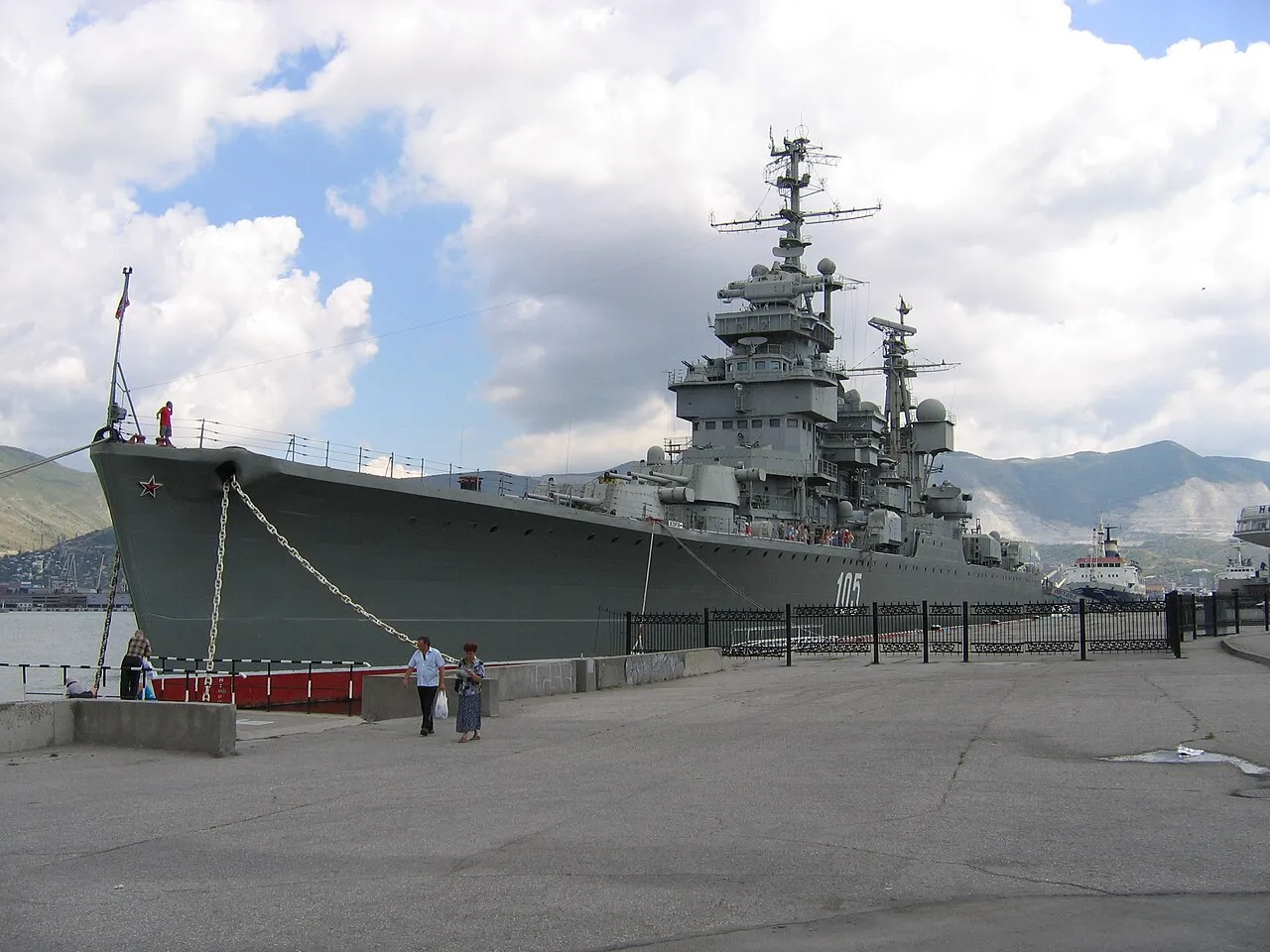
Mikhail Kutuzov in 2005
The course to the deserted shore,
The heart of the ship beats.
I remember my beloved
At the obedient helm.
Full speed ahead, we're flying like an arrow!
Cheerful, strong, robust,
Ready to fight for the country
Komsomol sailors!
We have fought bravely many times,
Accepting the challenge to fight
And they returned victorious
To the quiet harbor, home
FLOW, SONG, IN THE SPACE. Song from the film "The Seven Brave" (1936).
Music by V. Pushkov, Words by A. Apsolon
Museum ships. So, last time we visited the cruiser Mikhail Kutuzov and saw what's up there, so to speak. Inside, we only explored the turrets and underneath them. Today, our journey takes us "inside" the ship. We'll explore its living quarters, peek into the wardroom, the galley (how could it be without one?!), and, most interestingly, visit its "heart"—the powerful propulsion system.
But first, let's remember once again that the Mikhail Kutuzov is currently based in the port of Novorossiysk and is a museum ship. The ship is impressively large, appearing like a giant even against the backdrop of the mountains. The distance between the highest and lowest points of the ship—the masthead and the keel—is 59 meters. Both anchors, weighing 7 tons each, are submerged and therefore invisible. But even the anchor chains themselves, weighing 30 tons each, are quite impressive. Since we didn't get to see them last time, we'll begin our photo gallery with them today.
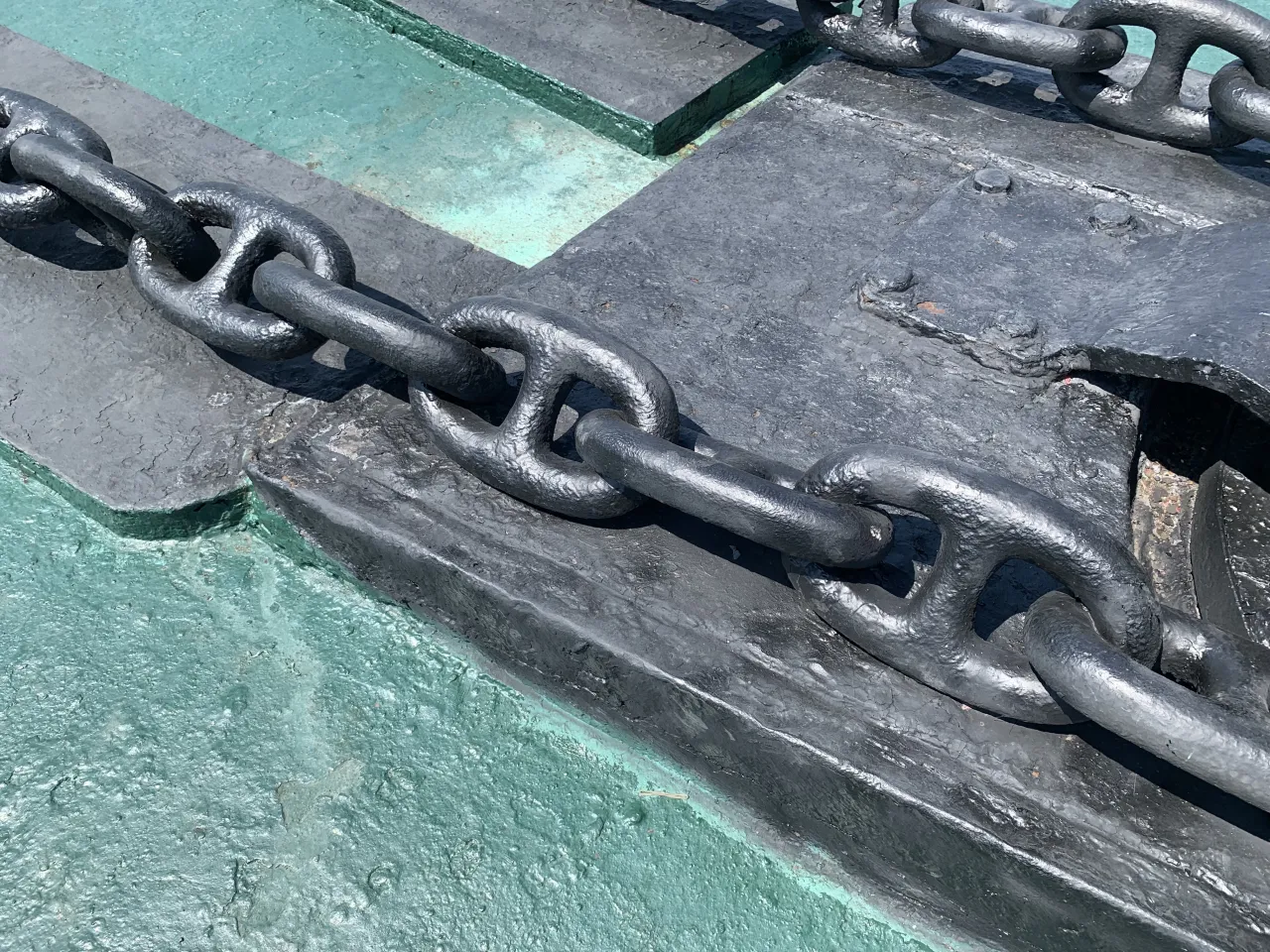
The anchor chain. It must have been incredibly strong if it could hold a ship like the Mikhail Kutuzov…
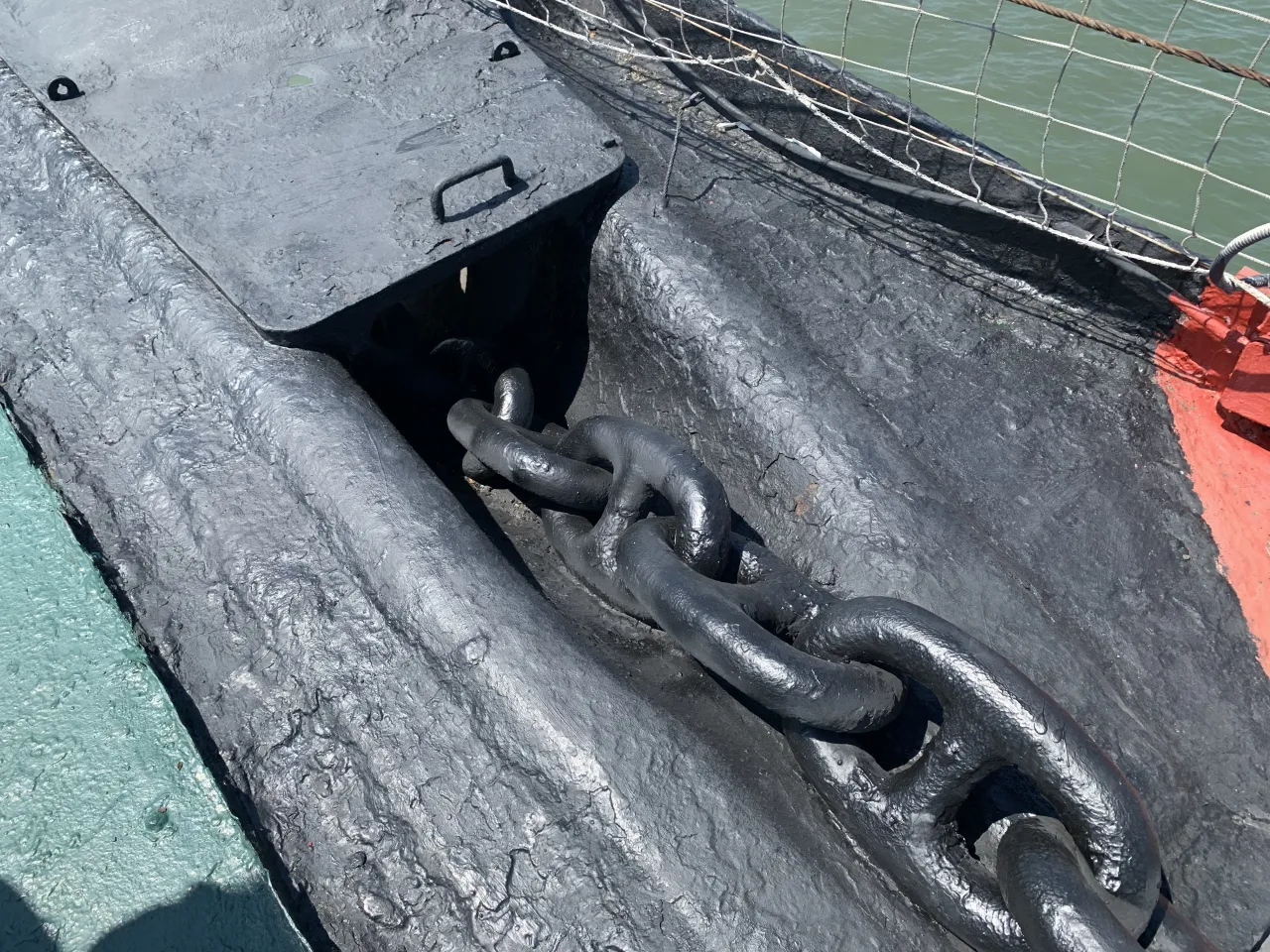
The anchor hawse. As Nikolai, the "old sea dog" who showed me around the ship, told me, a specially assigned sailor wielding a fire hose had to spray water on this area when the anchor was raised. And in the summer, everything was fine! But what was it like in the winter, in the freezing cold and the icy wind, especially on the icy deck?
Last time, one of our VO readers lamented that the deck planking on both the poop and forecastle was missing. Well, nothing lasts forever. It's good that we at least have this monument!
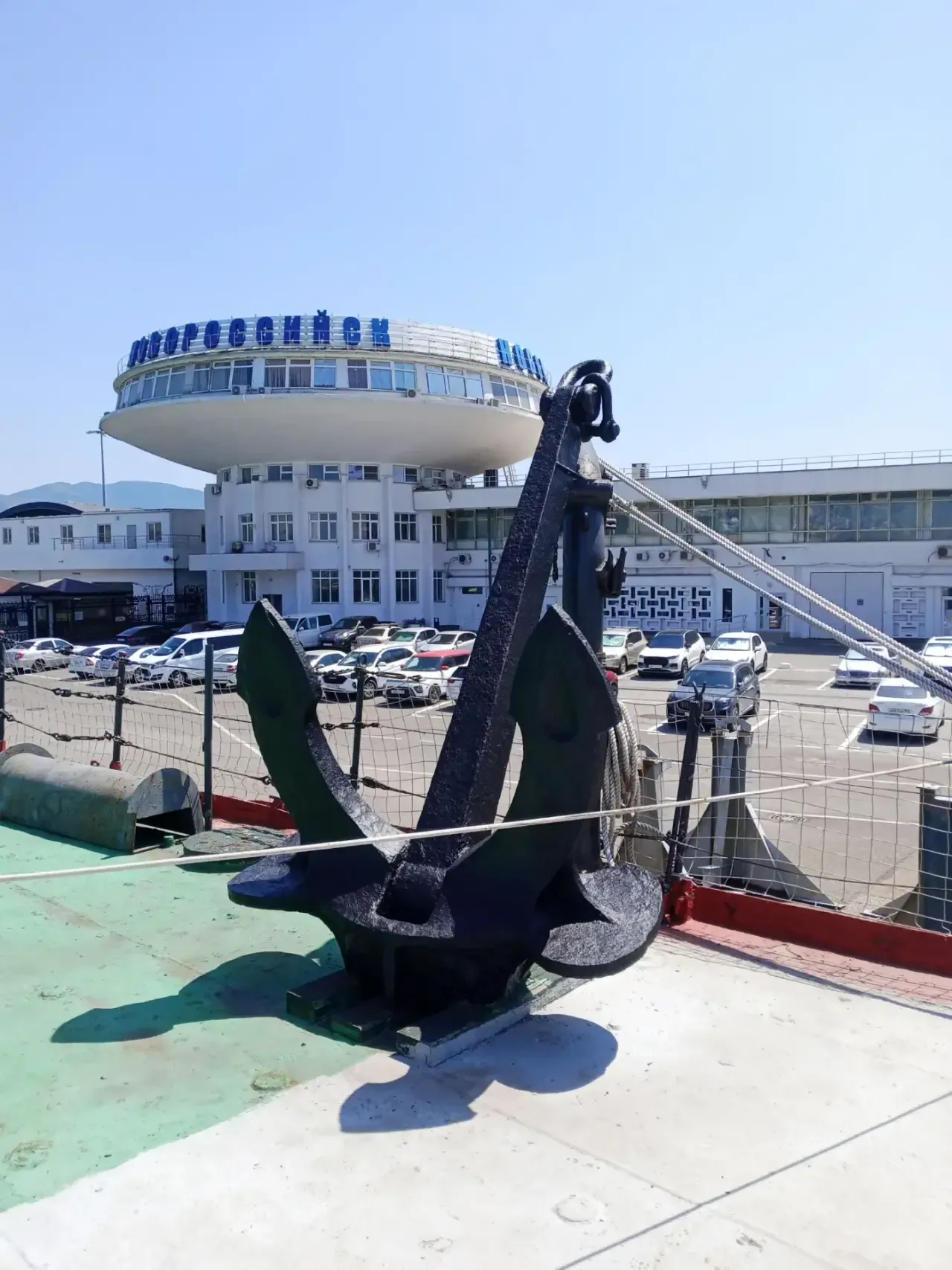
Ship's anchor!!!
Let's start with the fact that the ship had 2500 rooms, including 72 cabins, 38 crew quarters, and even four libraries. Tours were usually taken to the officers' mess hall, which served as a dining room, as well as a meeting room and a space for various celebrations. The cruiser had two of these: one for officers and one for midshipmen. The custom was to address each other by their first names and patronymics, without regard for rank. Only the 72 officers and four or five orderlies on duty, manning the buffet, were allowed into this abode of naval tradition.
I immediately imagined how difficult it would have been for me if I'd ended up in that group as an officer: due to some peculiarity of my brain, I can't remember first and middle names. Years can pass before I even remember anyone. I don't even remember the names of my department colleagues, even though I've worked with them for many years. And here... 72 people!
By the way, smoking here was allowed without the ship's commander's permission, but only from 18:00 PM to 22:00 PM. It's interesting that the tradition of having a wardroom for officers on a ship came to us from the English sailing fleetOfficers came to meals in their everyday uniforms, but for Sunday dinners they had to wear their dress uniforms. Each officer had his own seat, and no one else could sit there. This was considered very bad manners. Arriving later than the senior assistant was also unacceptable. In Sobolev's "Major Repairs" (Book 1), one such lateness has a very serious justification!
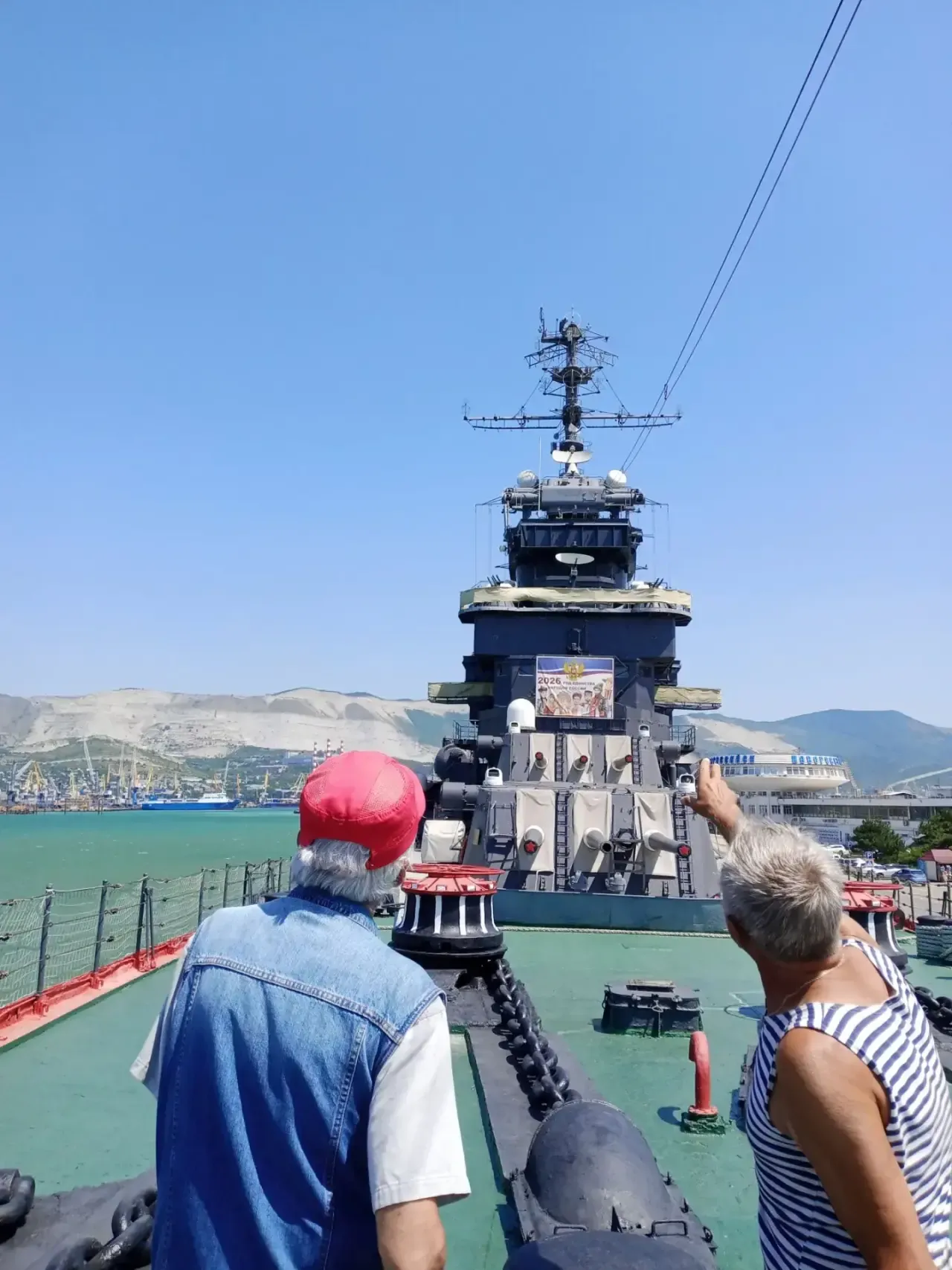
The previous article failed to mention that during the last modernization, the Mikhail Kutuzov was equipped with eight 30mm AK-230 anti-aircraft guns with automatic radar guidance—one of the first Soviet high-rate-of-fire anti-aircraft guns. Four were located on the platform above the bridge, and four on the platform behind the first funnel. The guns boasted high speed and aiming angles, as well as a truly insane rate of fire—1000 rounds per minute. Even one such gun was enough to literally shred any enemy boat or aircraft.
Again, the tablecloths were placed slightly damp to prevent the dishes from shifting during the seas. Specially commissioned sets were used for meals: one formal and a couple of everyday ones. Of course, on our ship, it wasn't Wedgwood or Royal Worcestershire, but it was still very high quality. I'd really like to see it, especially since porcelain is my weakness, but what's not there, is not there. Incidentally, food was served from a special buffet, which today serves as a souvenir stand. Another interesting fact: the flagship's wardroom and bedroom (he had the privilege of dining separately from everyone else in his cabin) were lined with ordinary 10mm-thick steel. But the buffet was protected by armor… 130mm thick!
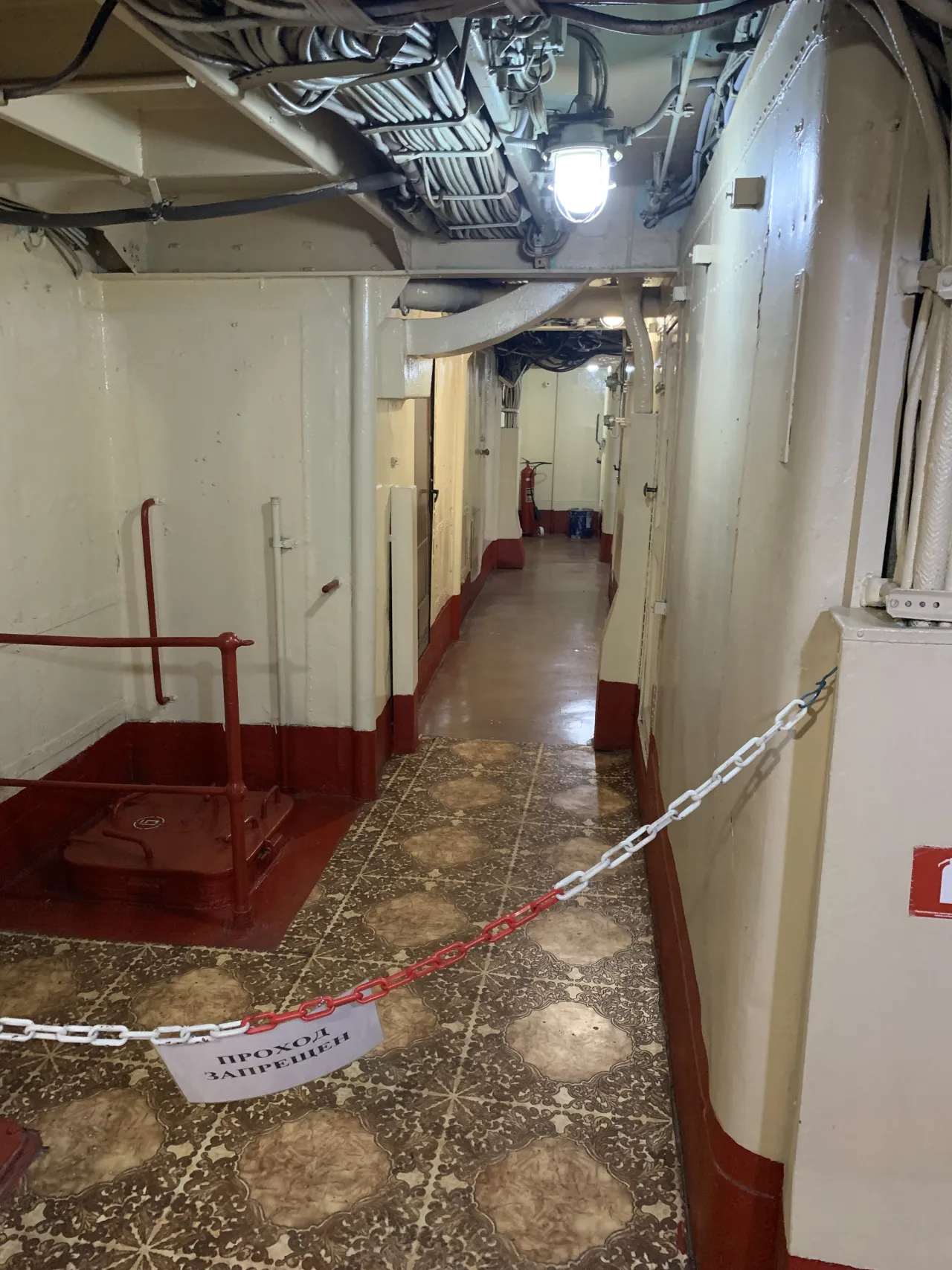
We go down... And there are corridors like these
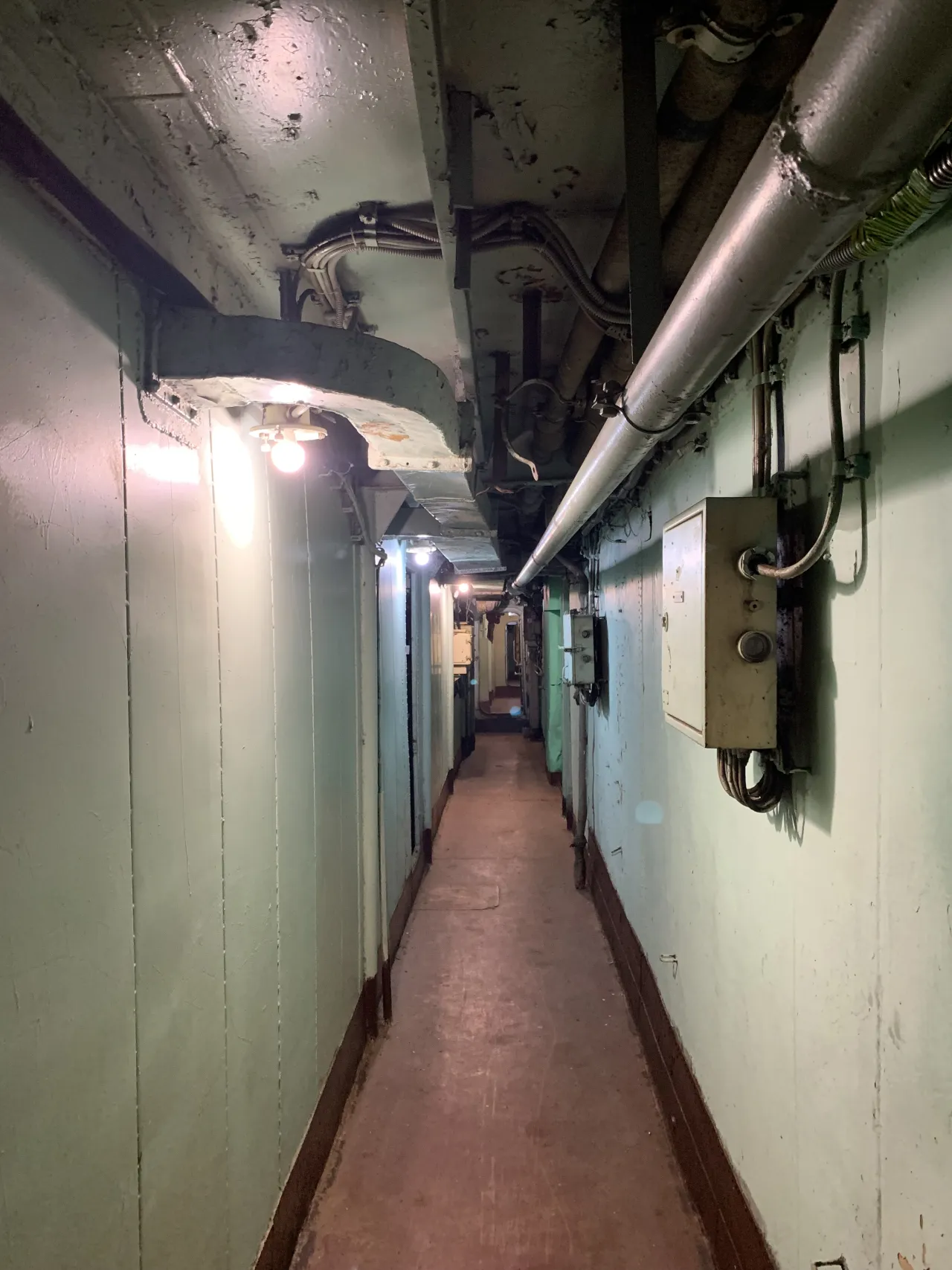
And such... And there are pipes and cables running everywhere
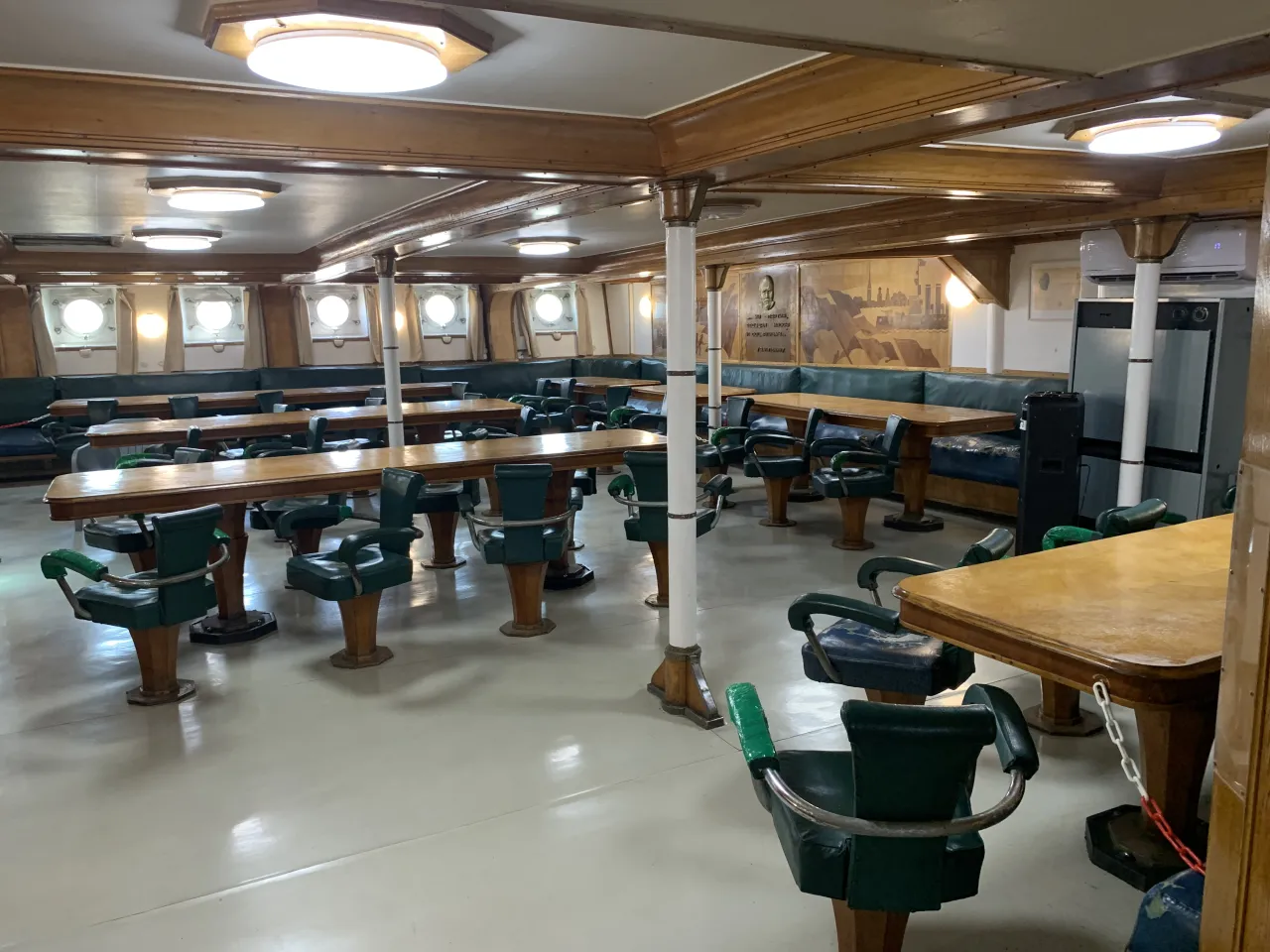
Cabin company
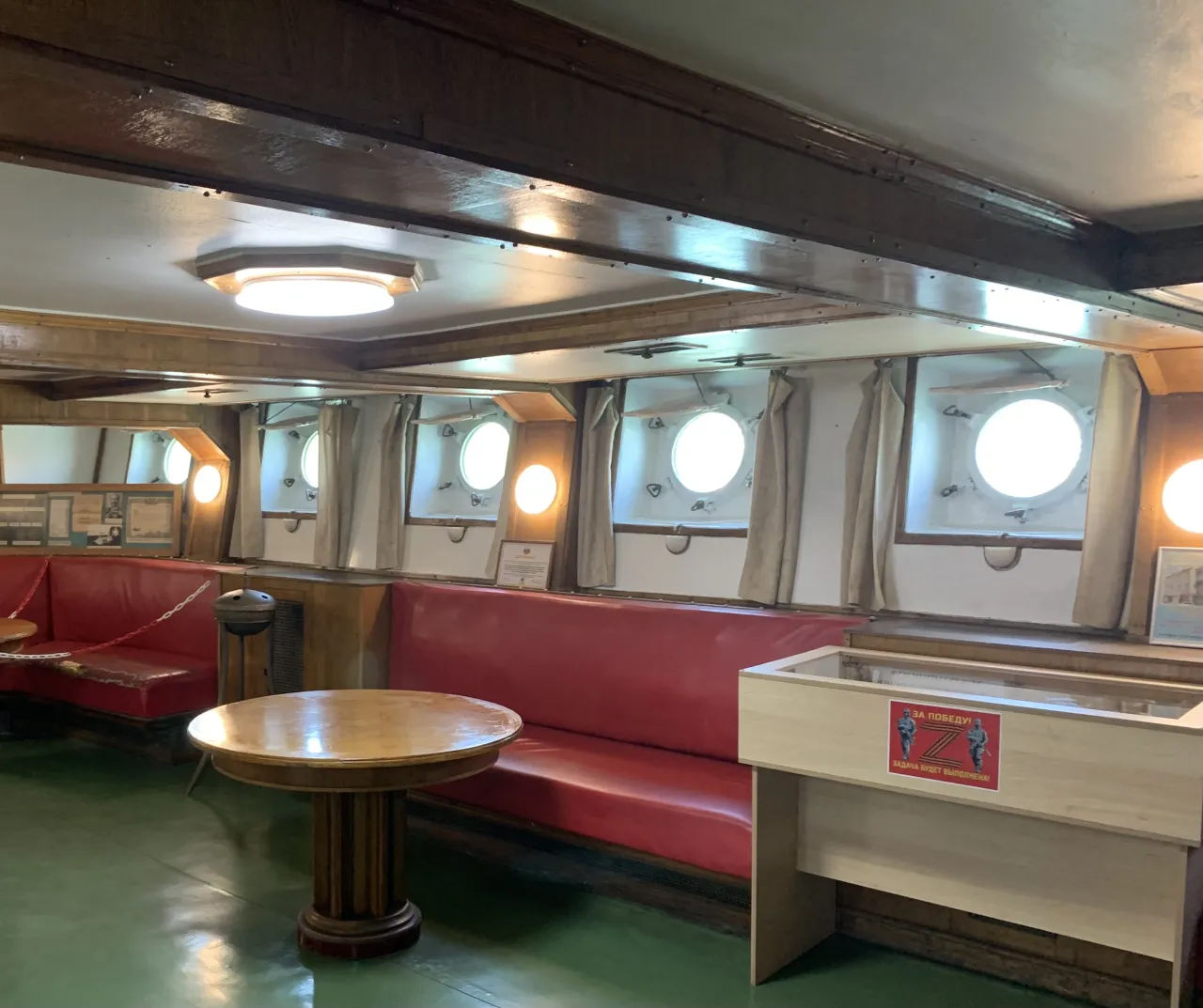
In addition to the wardroom, the officers also had their own lounge for cultural recreation. It contained a chess table, a piano, leather sofas, large tables, and shelves filled with books.
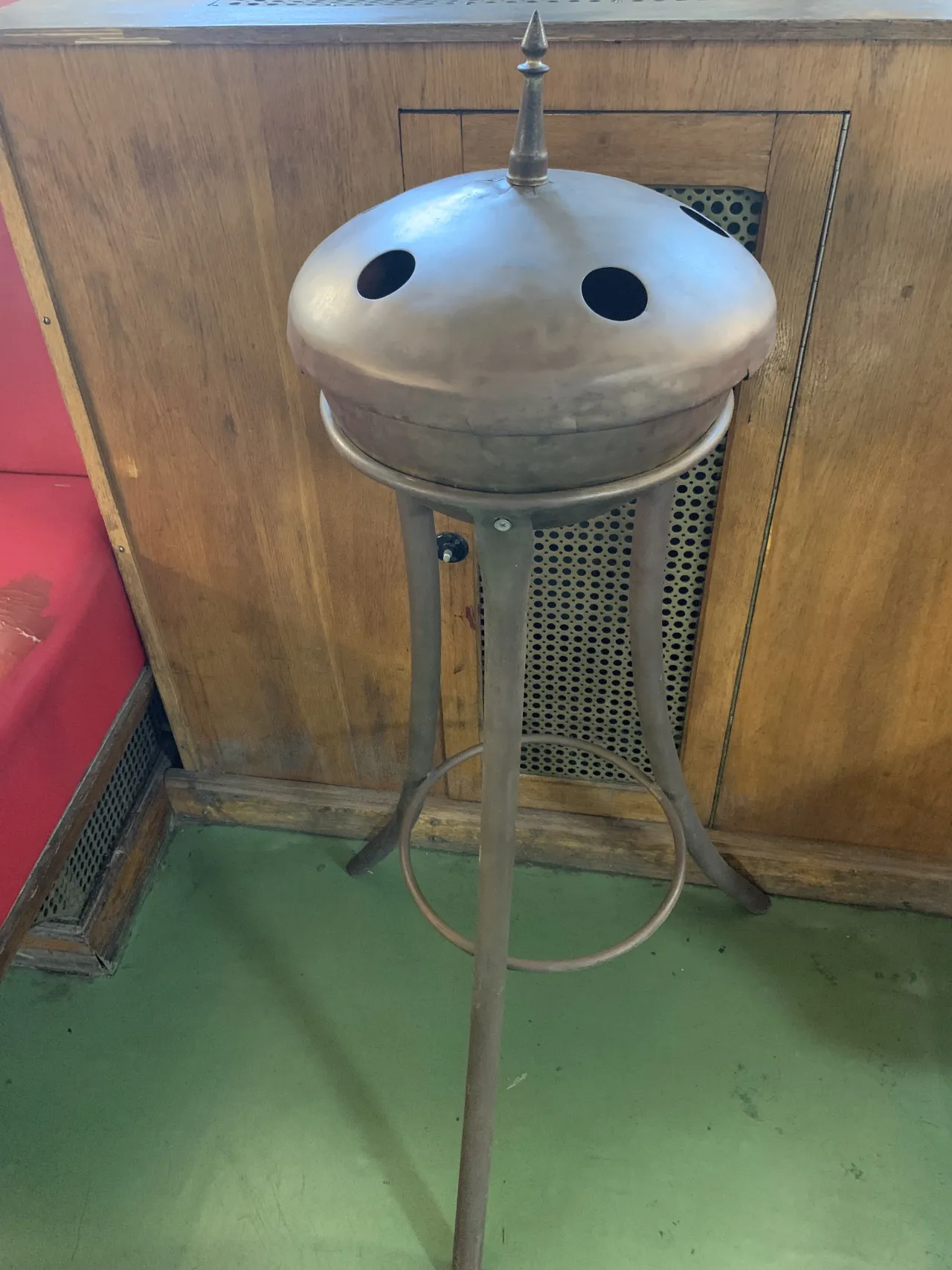
The ashtray still remains “from those times”…
A popular Soviet song goes, "My sailor's quarters are dear to me..." However, when I peered into the open quarters, it didn't seem "dear" at all. The crew quarters were located on the first and second continuous decks, and there were only 38 of them, accommodating between 20 and 80 people. They had bunks in three tiers. Even a storage locker, lined with a mattress, was used as a bunk. It was the least prestigious place in the navy, usually reserved for new recruits. It immediately reminded me of prison, where everyone lies differently in their cells. I imagined this quarters filled with people rubbing their asses against each other, and I thought it would be very difficult for a sociopath like me.
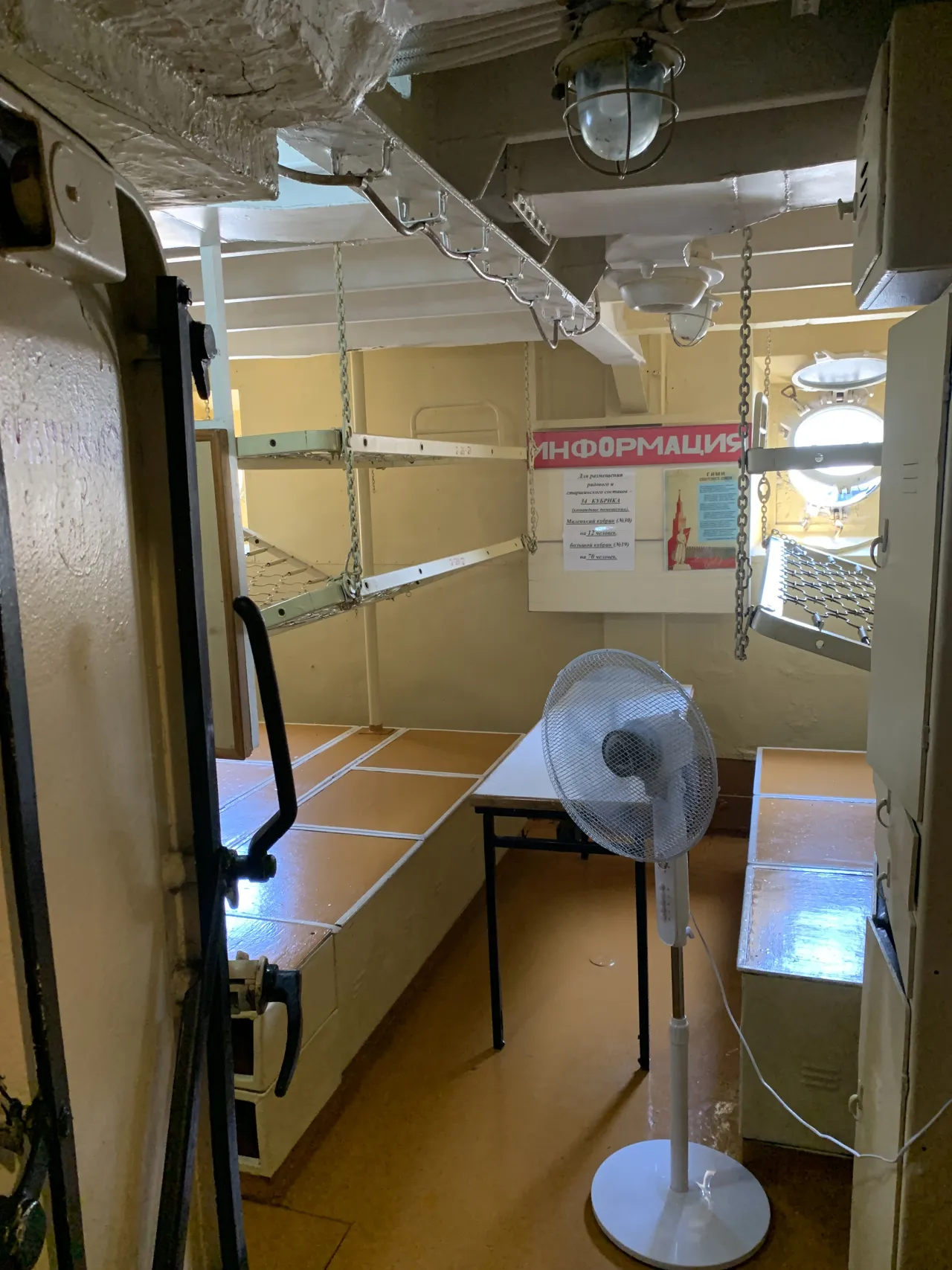
The cabin in the photograph could still be called elite: it housed only 27 sailors and had portholes, something similar cabins one or two decks below could not boast.
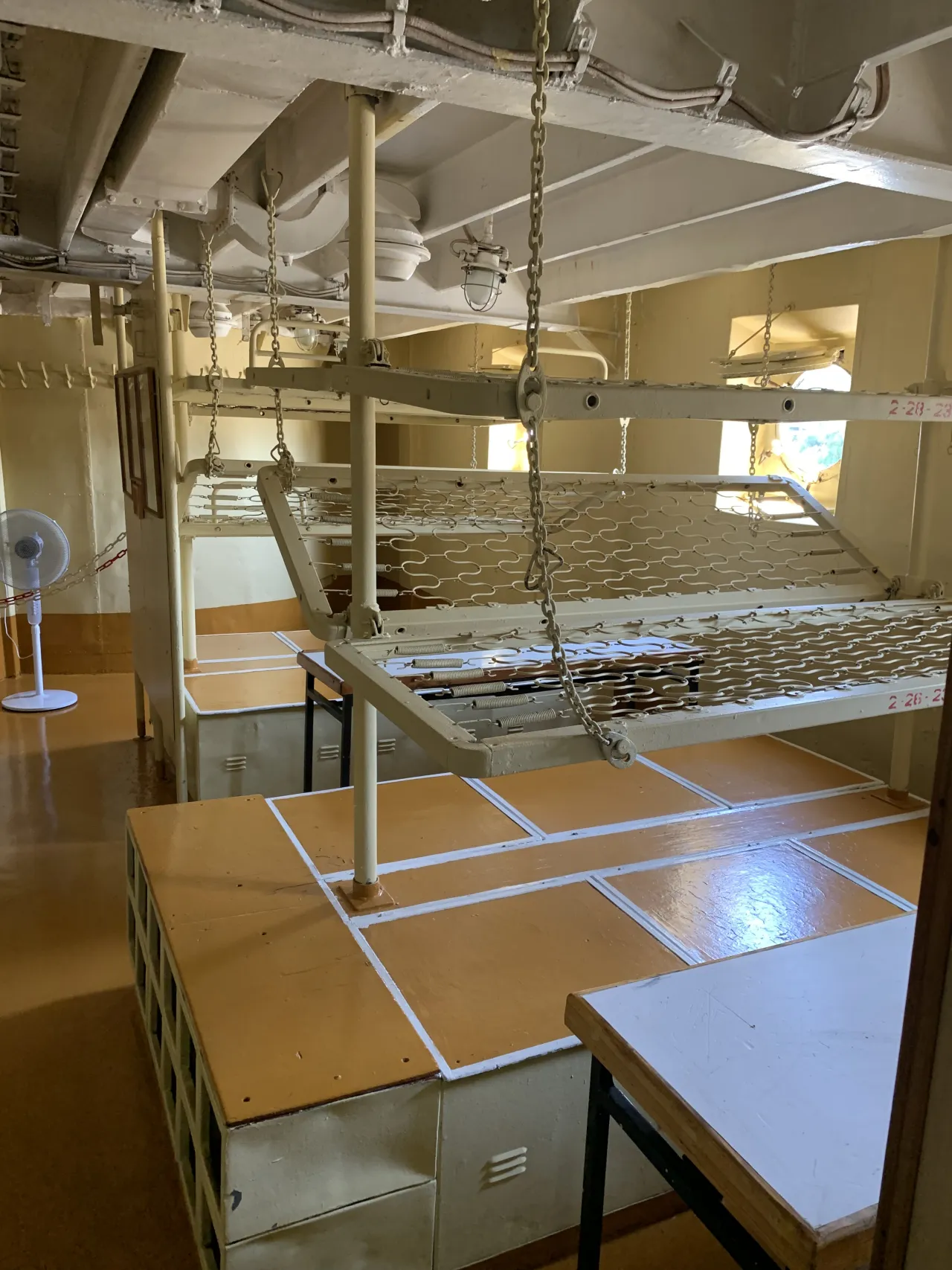
It's a bit cramped, needless to say...
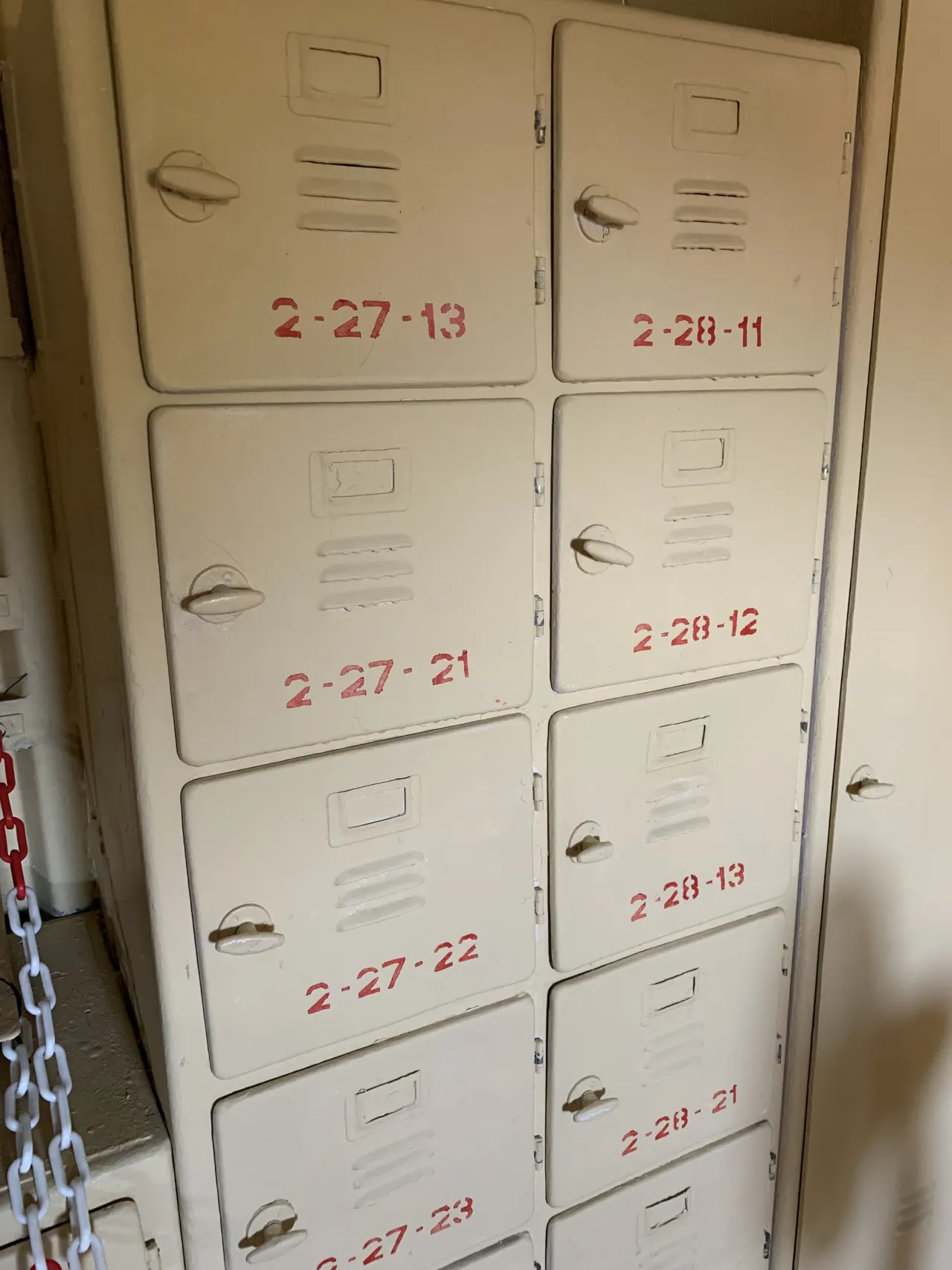
Cabinets with compartments for sailors' personal belongings
Once a day, between 7:30 and 8:00, the ship was ordered to fill with fresh water. Those who failed to do so were left without tea for the entire day. Only officers and warrant officers were entitled to leave. Enlisted sailors could only receive it for specific merits, and it often happened that during their three years of service, many were unable to take a single vacation; their only real assignment was service.
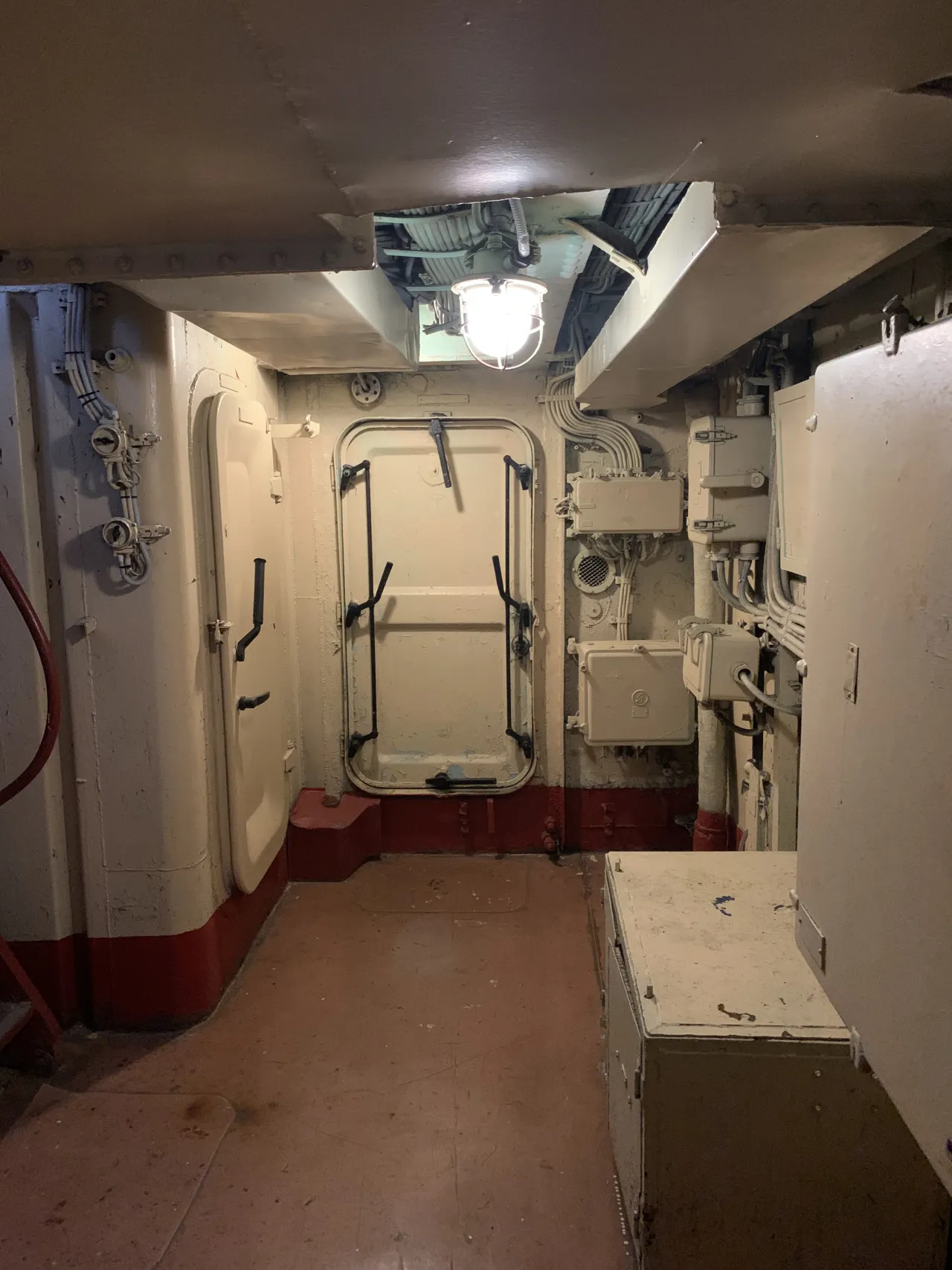
Entrance to the operating room
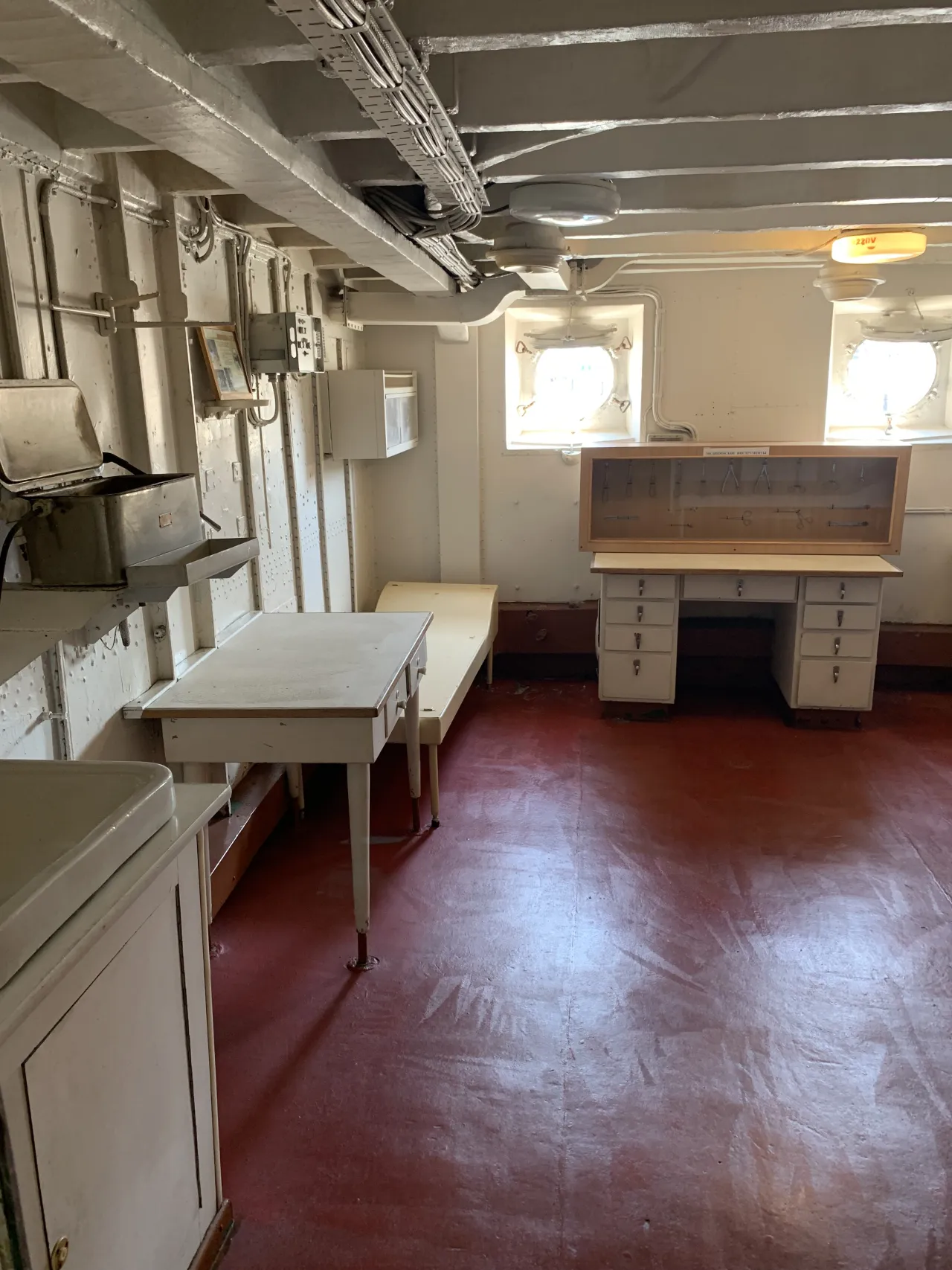
Some kind of medical facility
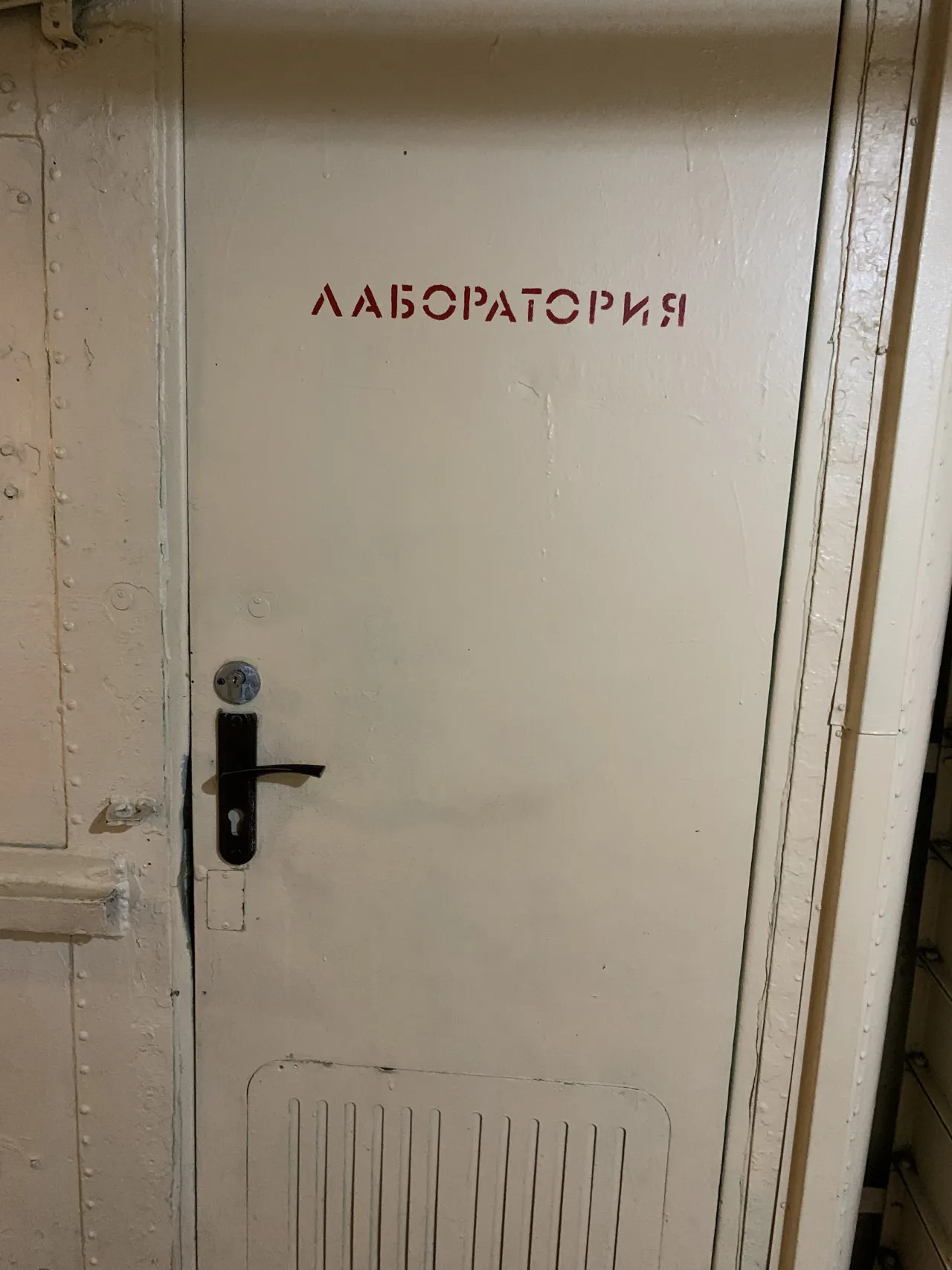
Laboratory for conducting tests
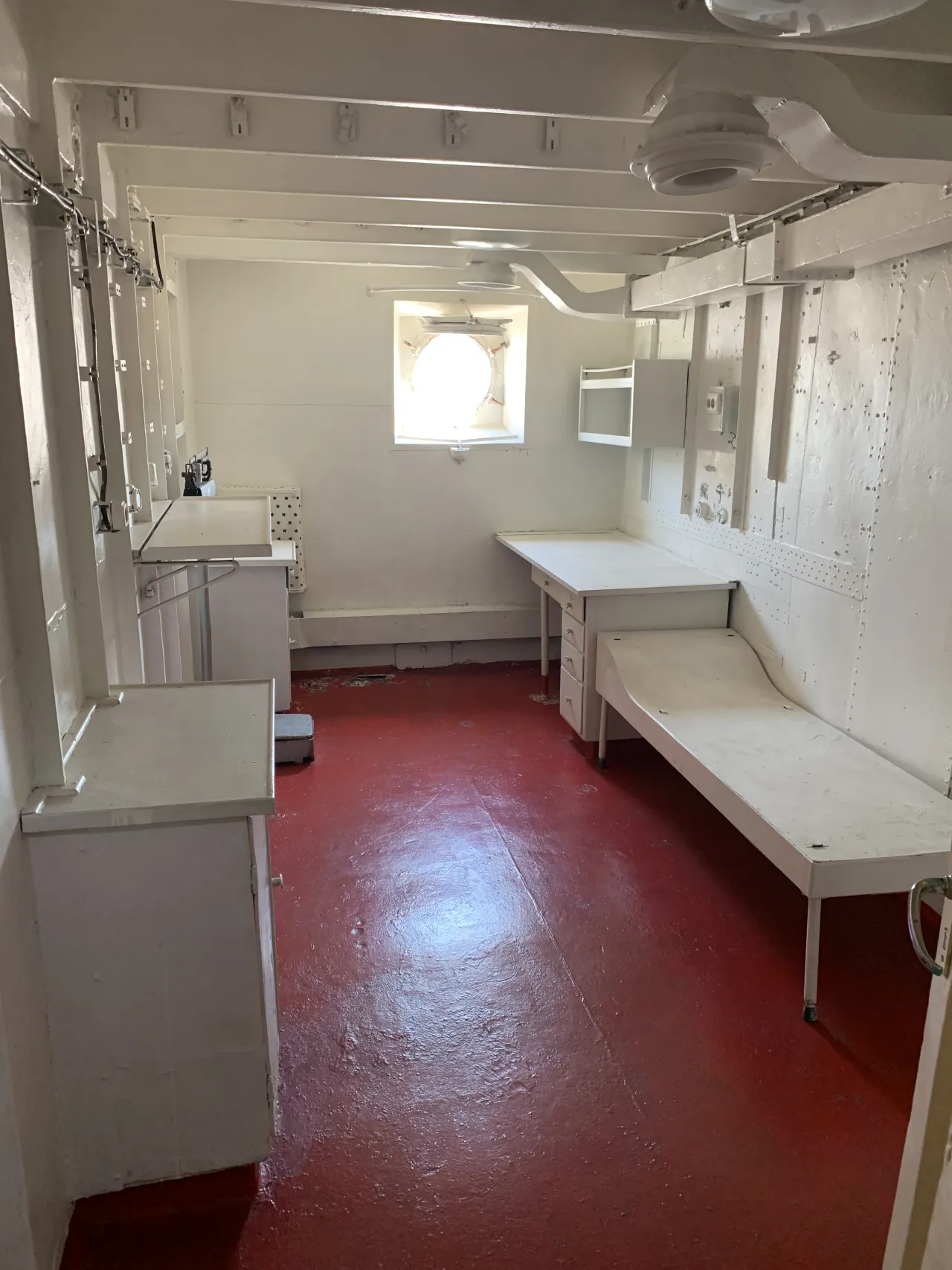
Therapist's office
The ship had a well-equipped medical unit. It had its own operating room, a post-operative room, a 24-person infirmary, a pharmacy, an X-ray room, an isolation room for six patients, and separate offices for the ship's three specialist doctors: a general practitioner, a surgeon, and a dentist. Surgeries such as appendectomy were performed right on board. Fortunately, the need for more complex surgeries never arose on board—the cruiser Mikhail Kutuzov was also famous for the fact that throughout its entire career, it never suffered a single fatal medical incident.
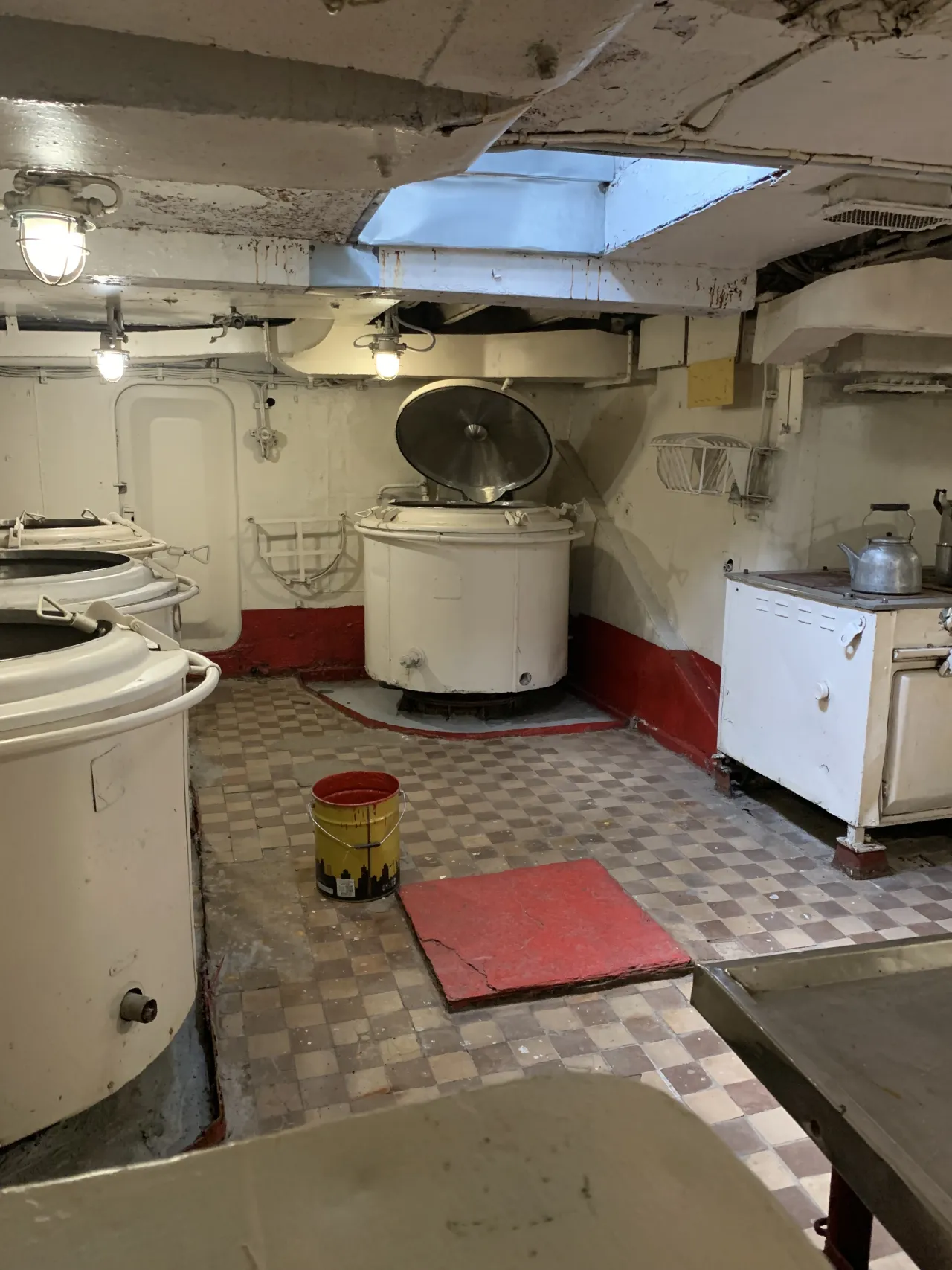
The galley. It's just huge... And very functional, if you look at it.
The ship had two galleys. Food had to be prepared four times a day: for breakfast, lunch, dinner, and evening tea. The menu for the crew was fairly traditional: soup, borscht, mashed potatoes, cutlets, and compote. Officers were entitled to extra rations with each meal: sausage, cheese, biscuits, and jam. Orderlies might have snuck a few slices of sausage or biscuits for tea, but that's just my best guess based on my experience.
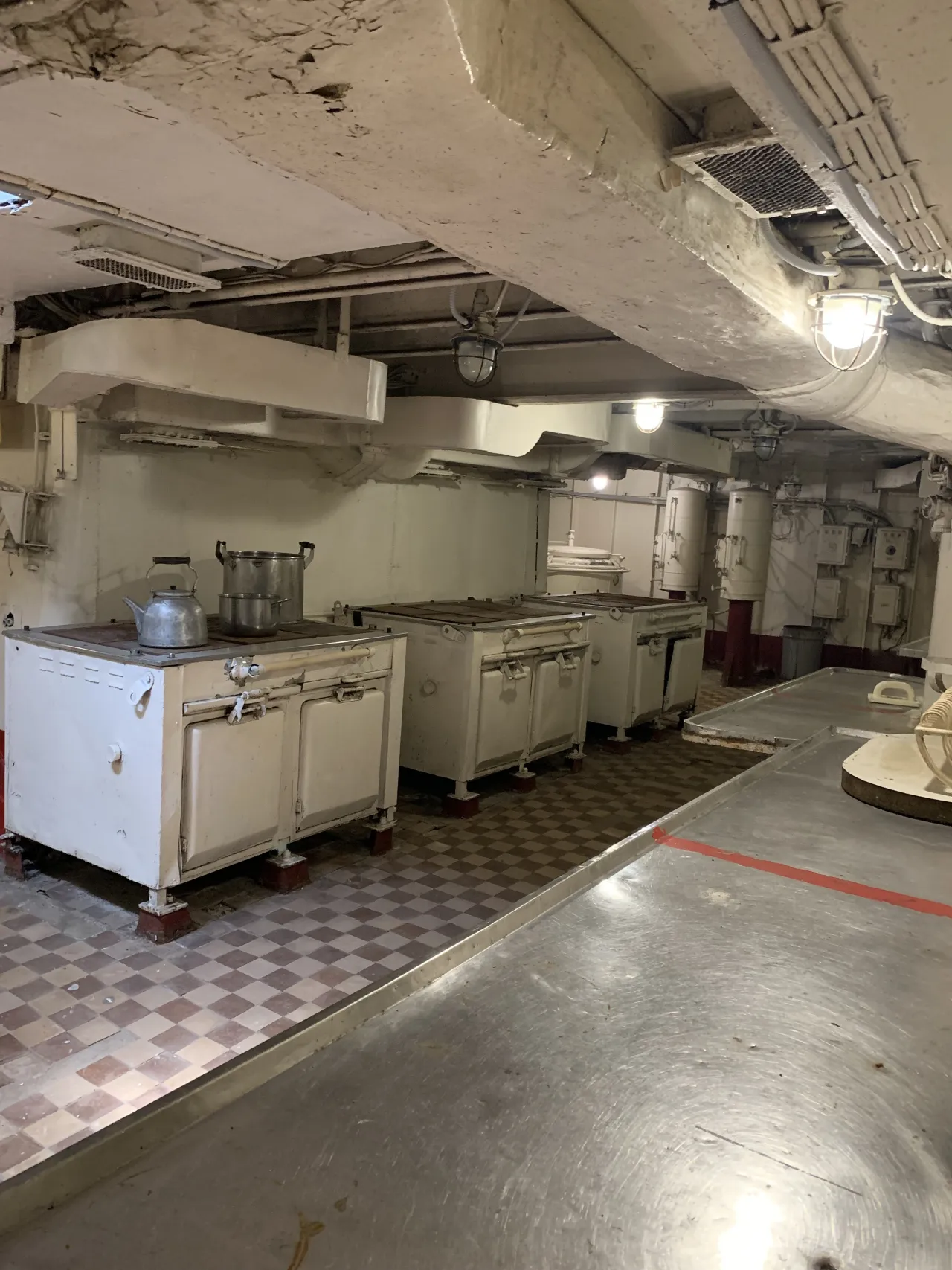
Galley. Continuing the inspection. One can imagine how many sailors were assigned to duty daily just to peel potatoes!
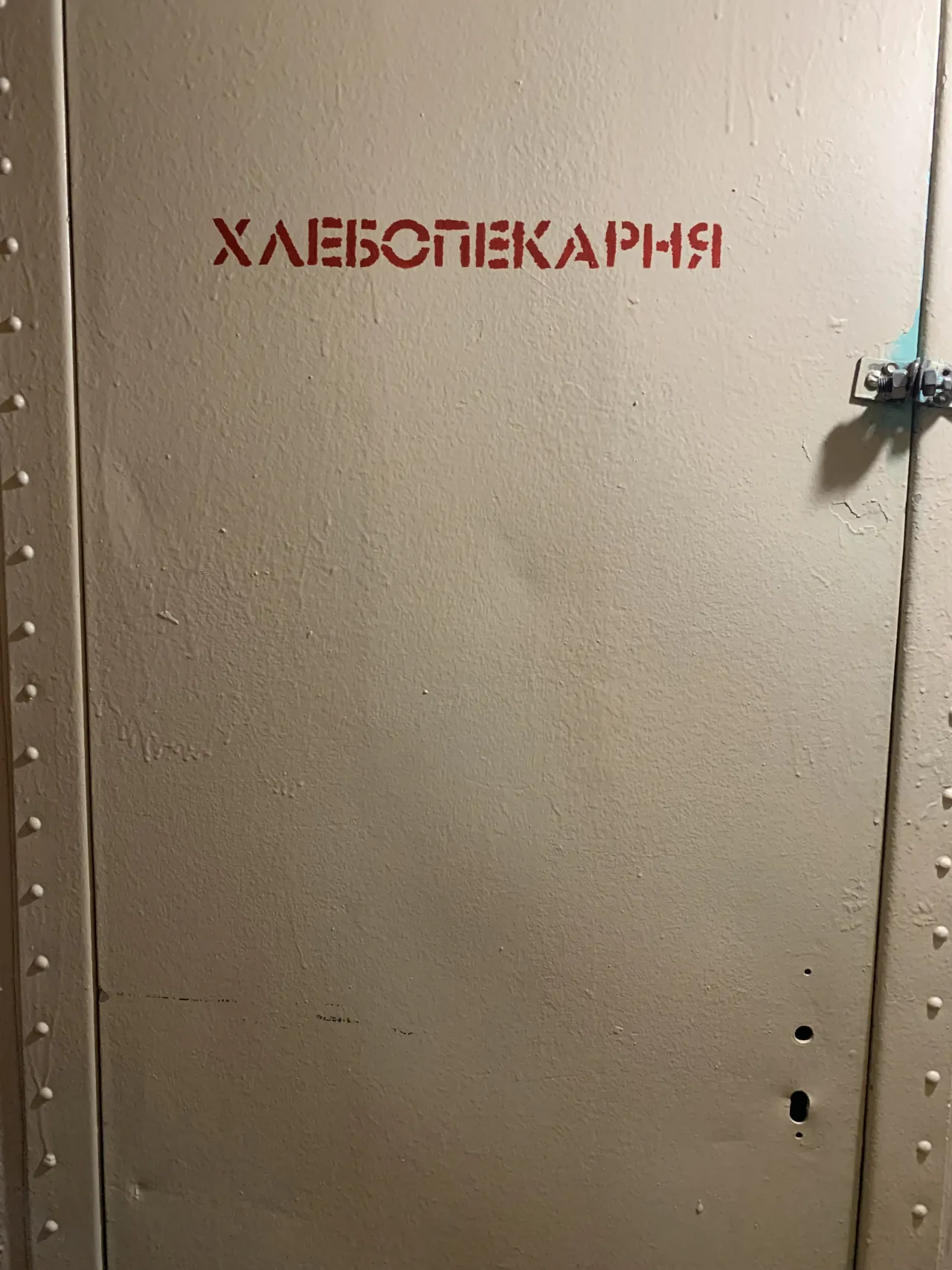
The door to the bakery. Again, how much bread she baked every day—it was enough to kill you…
Interestingly, post-war Soviet ships, until the 60s, had no mess halls—sailors ate directly in their quarters using a "tank" system. A "tank man" was assigned to a crew of 6-8 men. Upon command, he would go to the galley deck and receive a tank containing the first and second courses, as well as a kettle. He would carry this to the quarters, where folding tables ("tanks") were already set up in the passageways. It was at these tables that the sailors, sitting on the lockers, would eat.
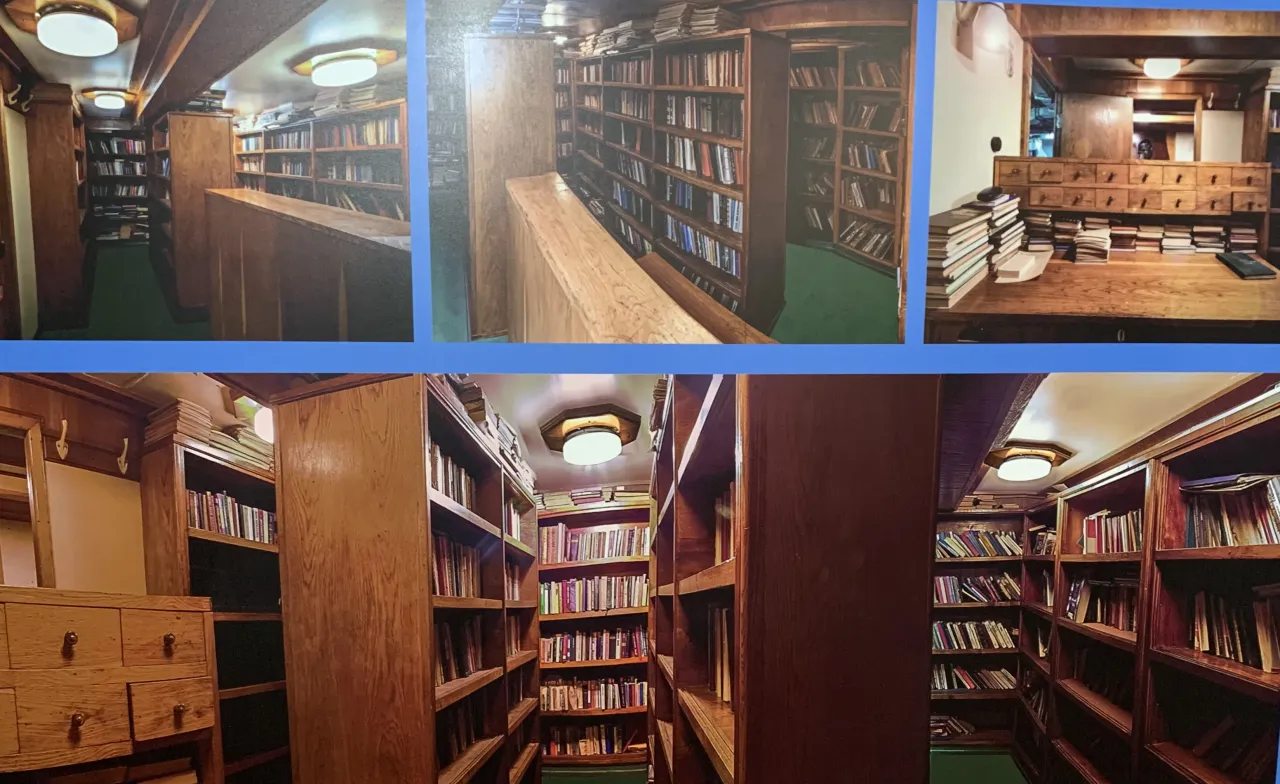
Photographs of the library. This is what it looked like in those distant times.
In addition to the library, the cruiser also had its own printing press, reading room, bath and laundry facilities, club, and even... a shoe repair shop. Overall, the onboard equipment allowed for all types of repair work to be carried out right at sea, without entering port: electric welding, machining, electrical installation, gas cutting, and more.
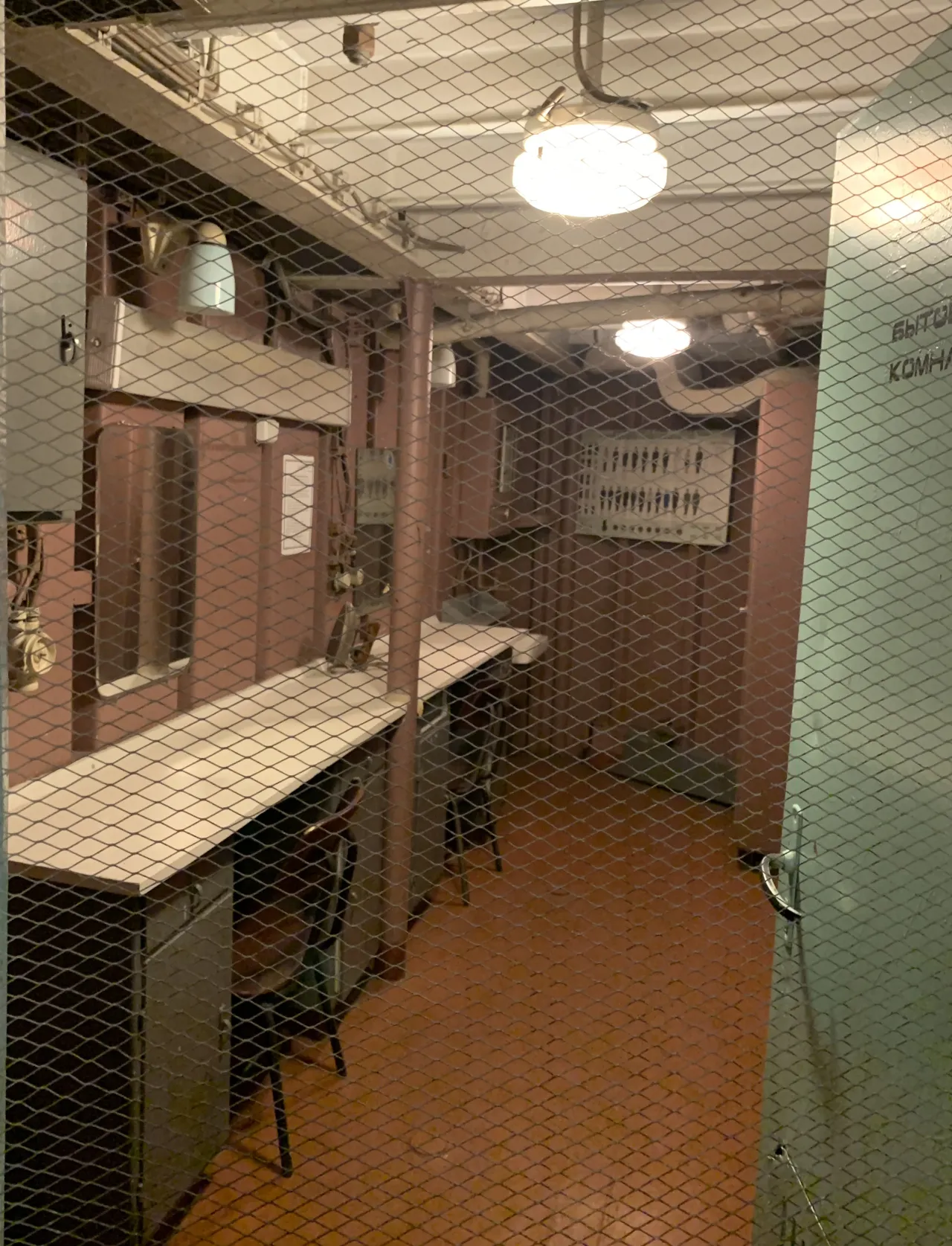
And this is the shed where you could tidy yourself up.
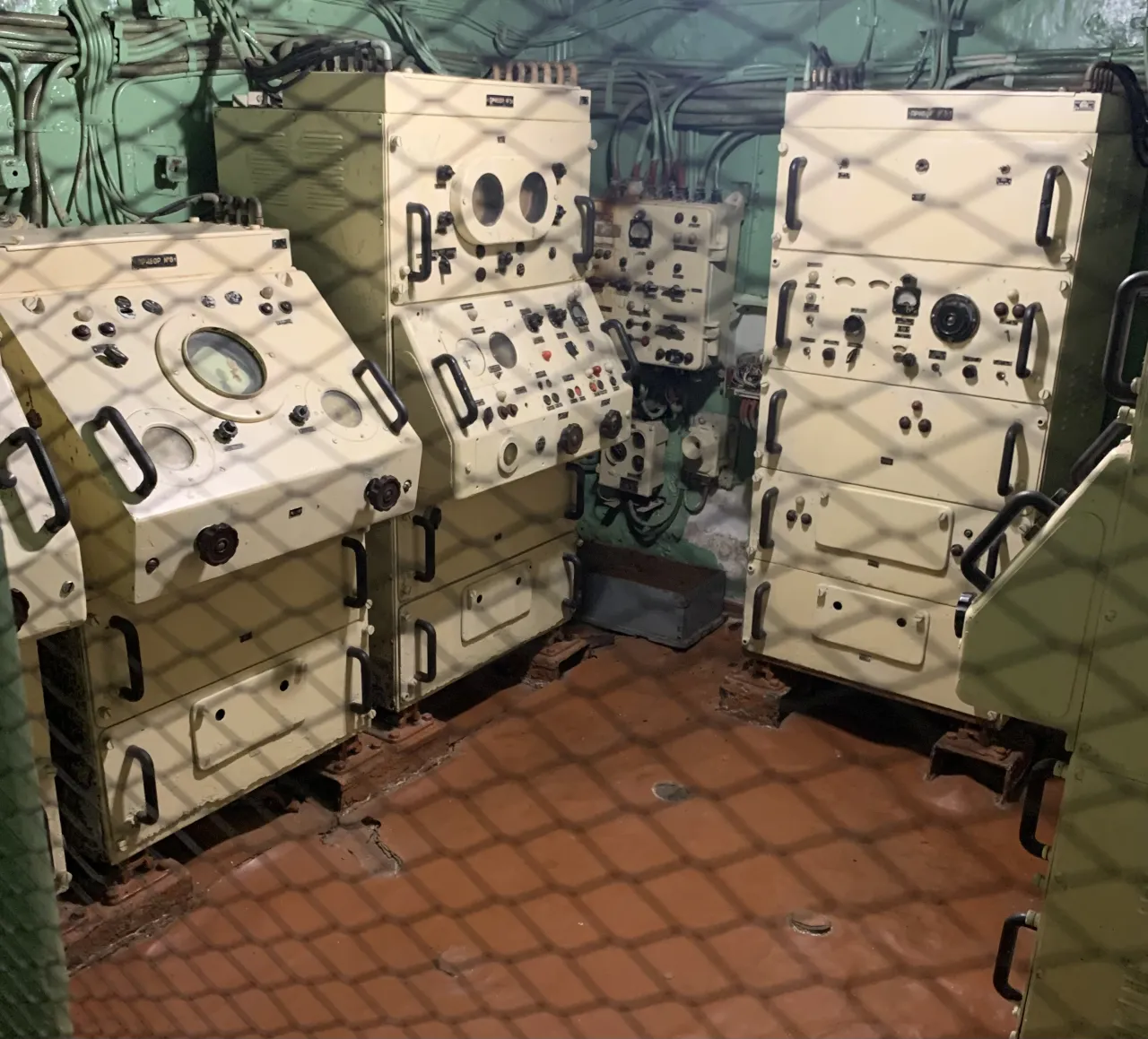
Well, these are the electronic devices of that time. Today, one such "box" could easily replace a tablet as thick as a matchbox!
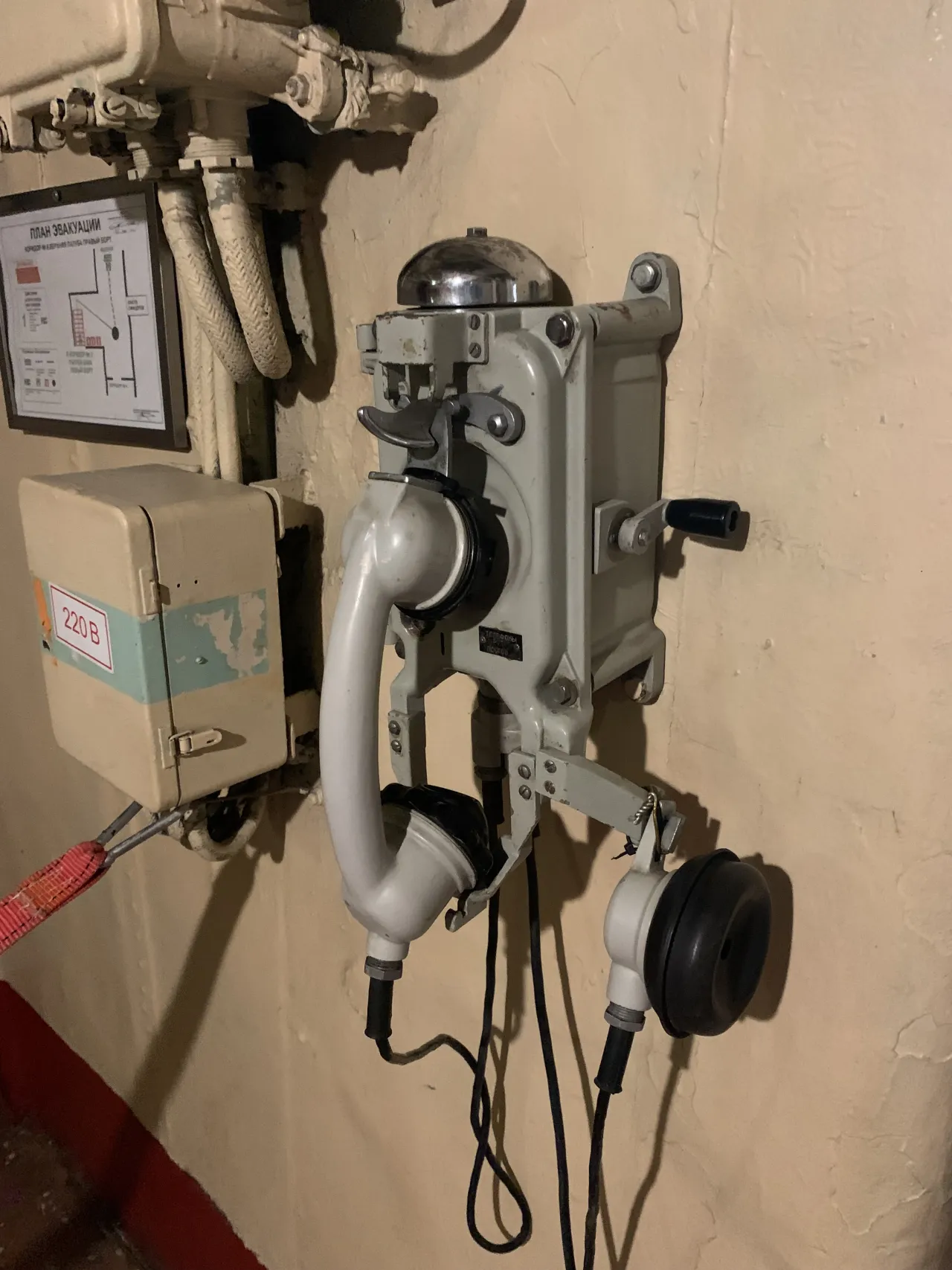
Ship's telephone
I really wanted to visit the engine room of this ship. And I finally got to do it. The experience was… stunning, there's no other way to put it…
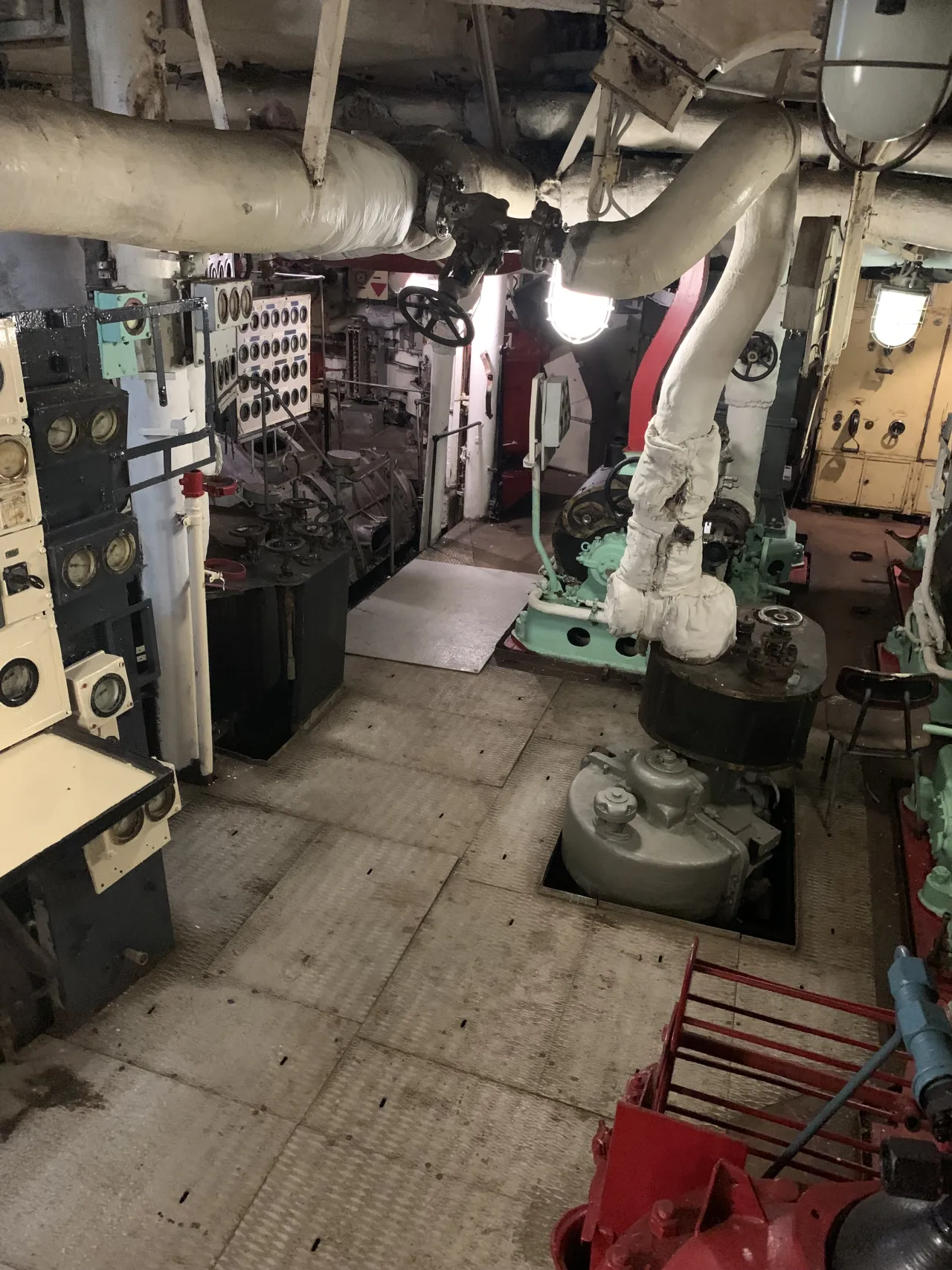
Inside the engine room. Why was such a curved pipe needed?
Well, the information about the main propulsion plant of the Project 68-bis cruisers is as follows: in general, it is similar to the same plant of the Chapayev-class cruisers (Project 68-K). It has two autonomous echelons, located in eight compartments. The design weight is 1911 tons. The steam boilers were six vertical water-tube boilers of the triangular type KV-68 with natural circulation (one in each boiler room). There was a forced air supply system to the boiler rooms. The steam capacity of each boiler at full speed was 115,000 kg/h, the working steam pressure was 25 kgf/cm², the superheated steam temperature was 370°±20°C, the evaporating heating surface was 1107 m², the specific gravity was 17,4 kg/hp.
The two main turbo-gear units (TZA) were of the TV-7 type, with a rated power of 55,000 hp each, and a combined maximum design power of 118,100–128,000 hp (118,100–128,000 hp) at full forward speed and 25,270 hp (25,200–27,000 hp) at full astern. Each turbo-gear unit drove one shaft line, with the shaft line length on the starboard side being 84,9 meters, and on the port side from the aft engine room — 43,7 meters. The shafts, with a diameter of 0,5 m, in turn, drove two brass propellers, with a diameter of 4,58 meters and a mass of 16,4 tons each, with a rotation speed of 315 rpm.
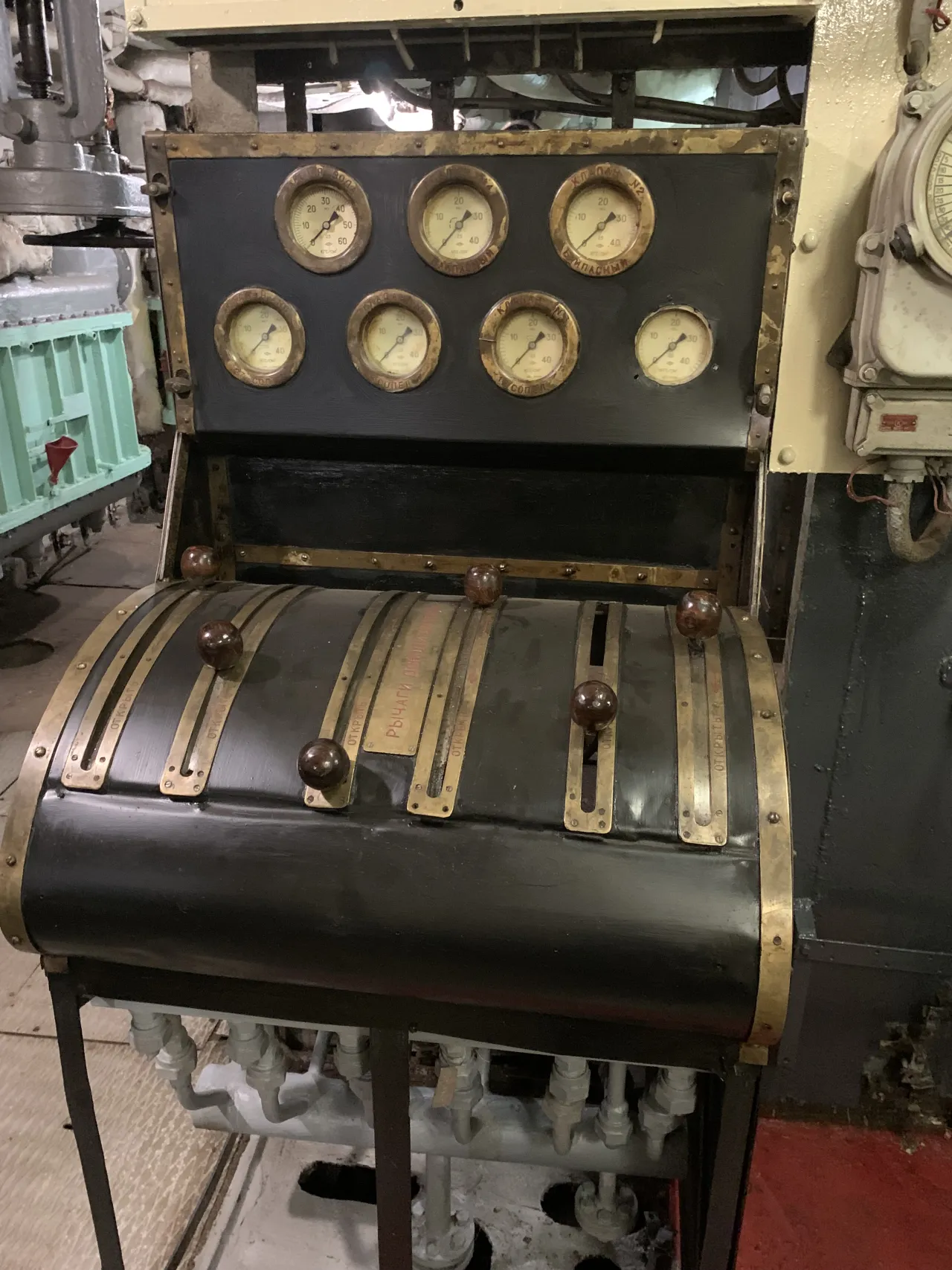
Control and management devices
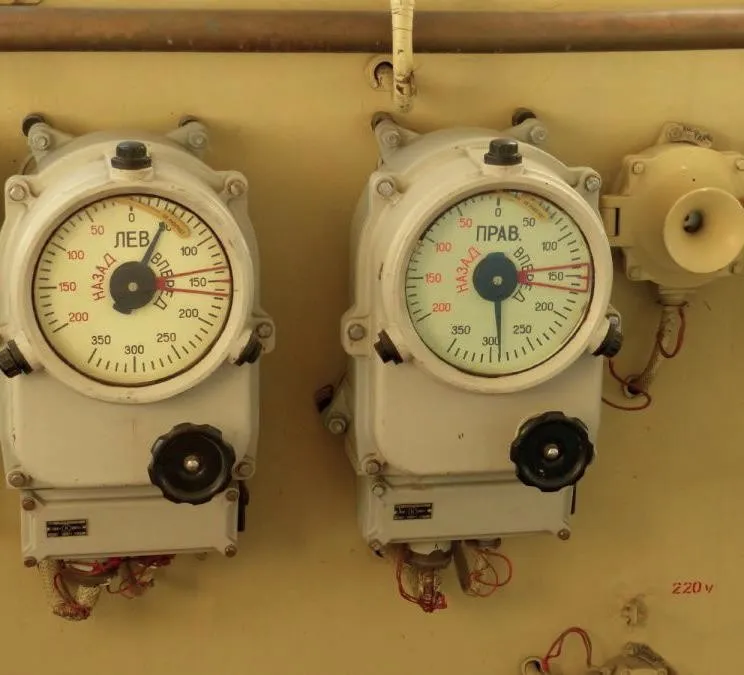
Tachometers of the main engines, left and right
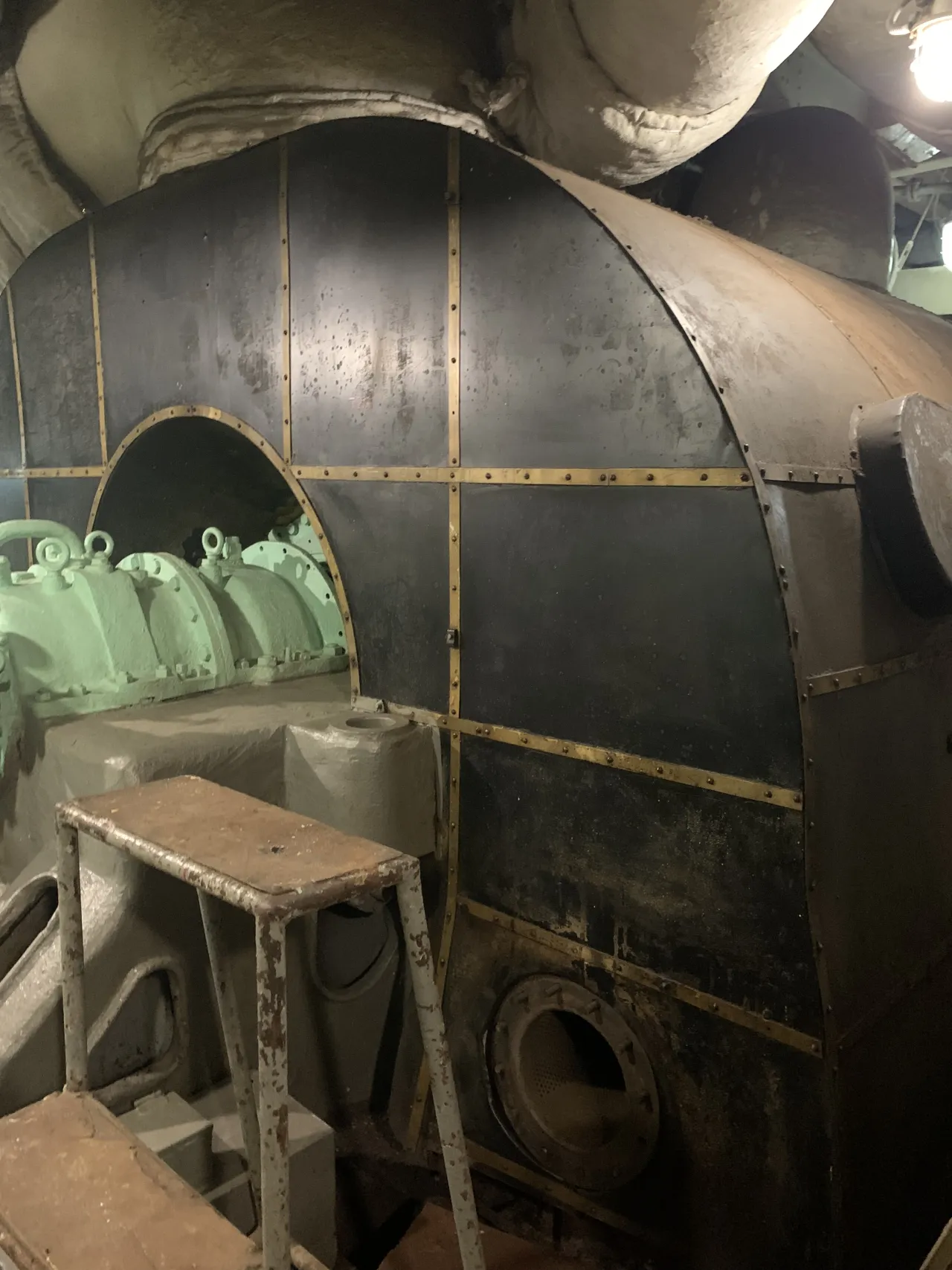
Turbine casing
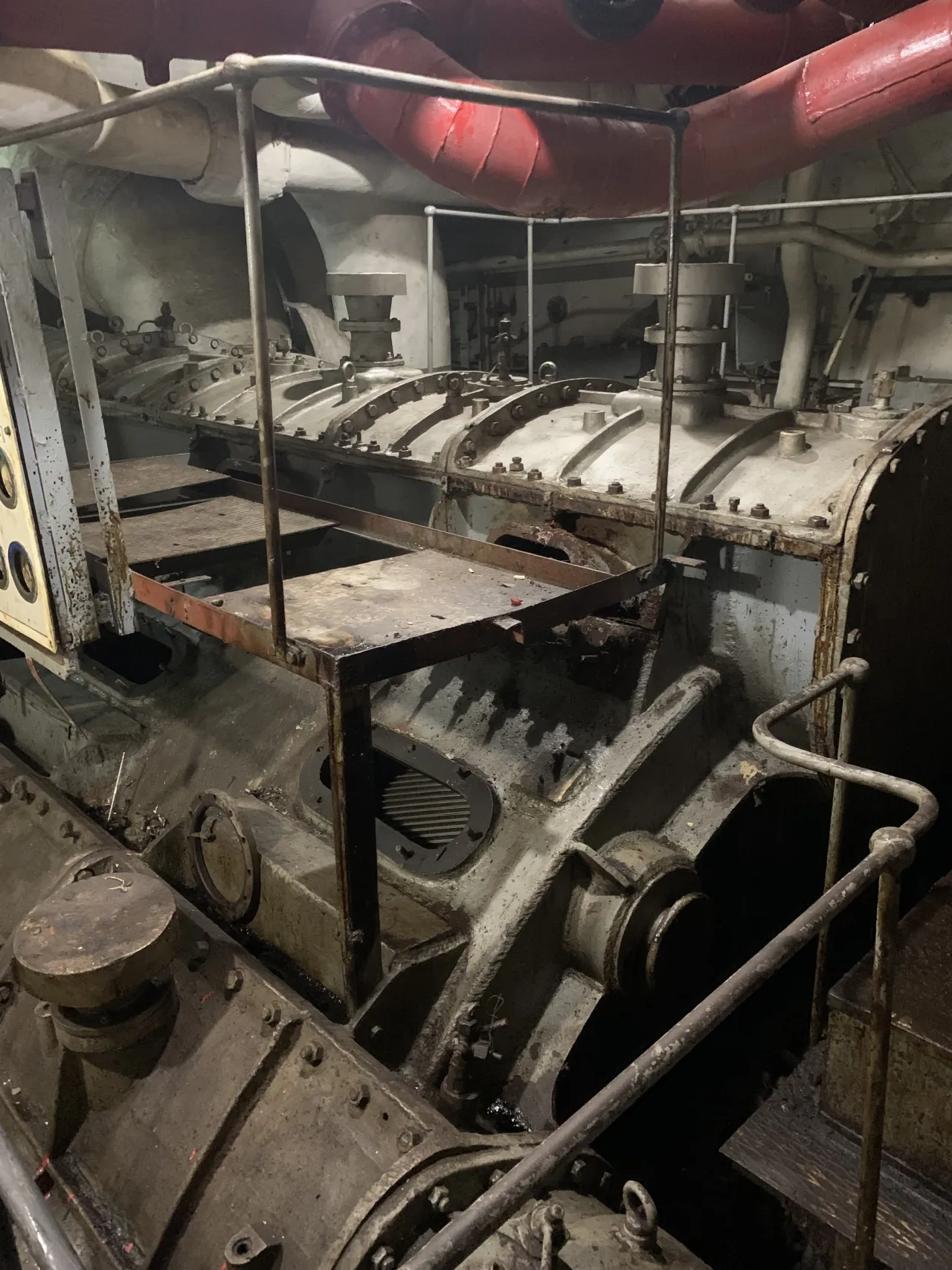
The mechanisms are simply monstrously powerful!
It's worth noting that the KV-68 boilers were already outdated at the time the cruiser was built, primarily due to their heavy weight and poor steam performance. Therefore, after the Project 68-bis cruisers, they were no longer installed on our ships.
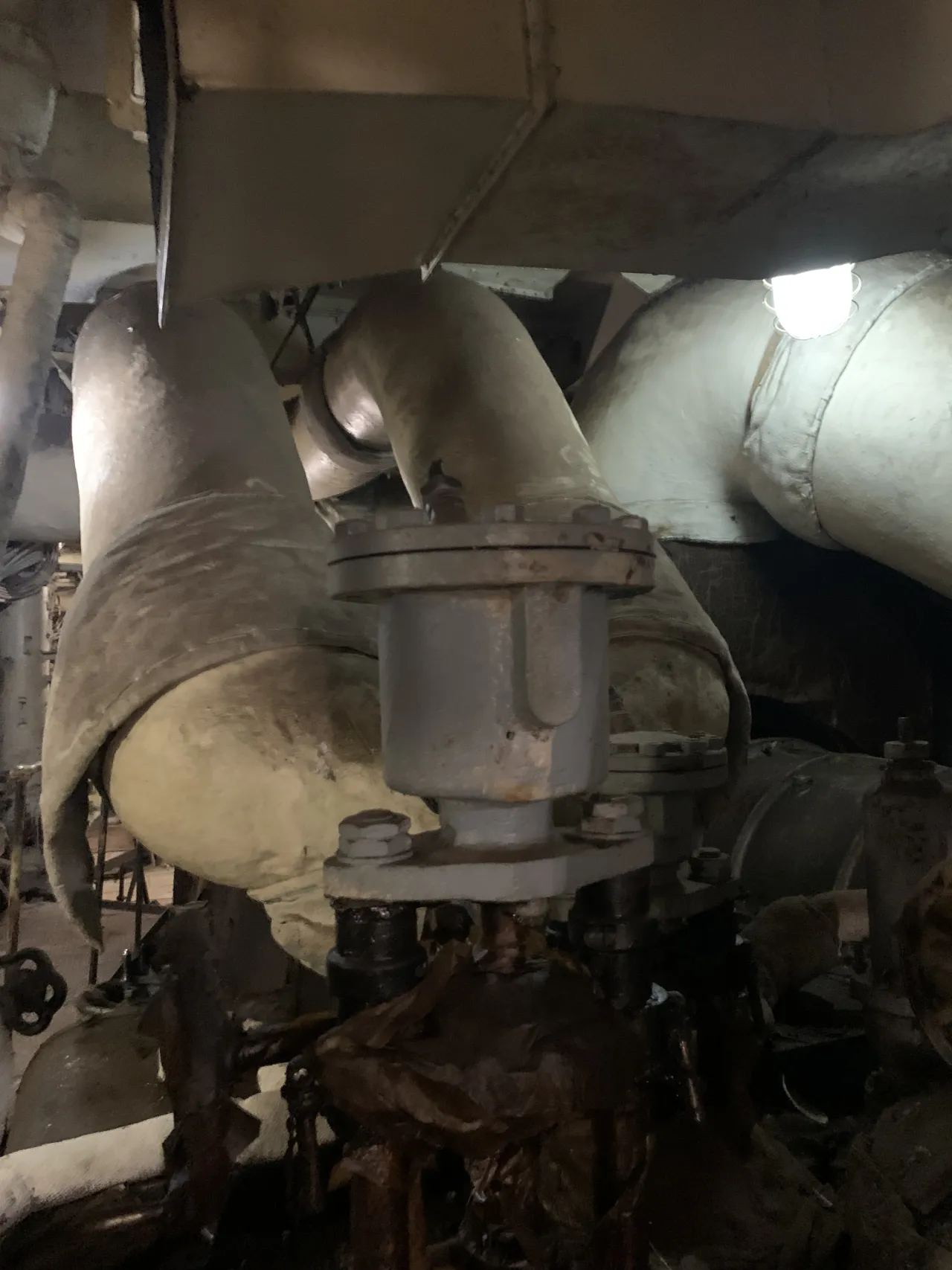
The steam pipes were coated with asbestos, and yet the heat in the engine room sometimes rose to 70 degrees…
At that time, TV-7 turbine generators were manufactured by the Kharkiv Turbogenerator Plant (KhTGZ). These were fairly advanced devices for the time, featuring adjustable inlet guide vanes, which reduced fatigue stress in the turbine blades.
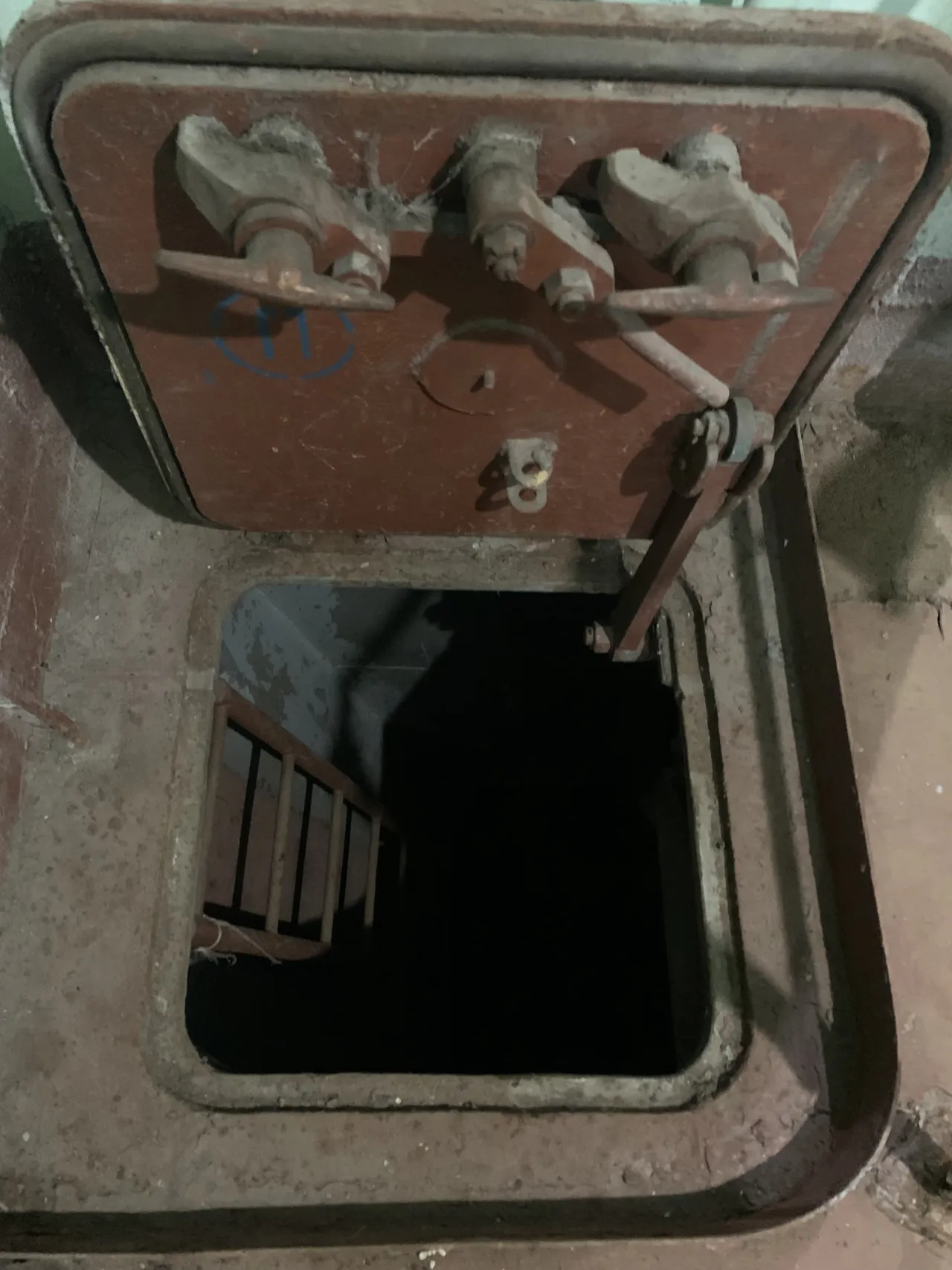
A hatch leading somewhere really deep down. But I didn't go there, and besides, it was downright cold.
There were also two auxiliary steam boilers of the KVS-68-bis type, with a steam capacity of 10,5 tons per hour, for heating and the crew's domestic needs while moored. Electricity was generated by five TD-6 turbogenerators and four DG-300 diesel generators, each with a capacity of 300 kW.
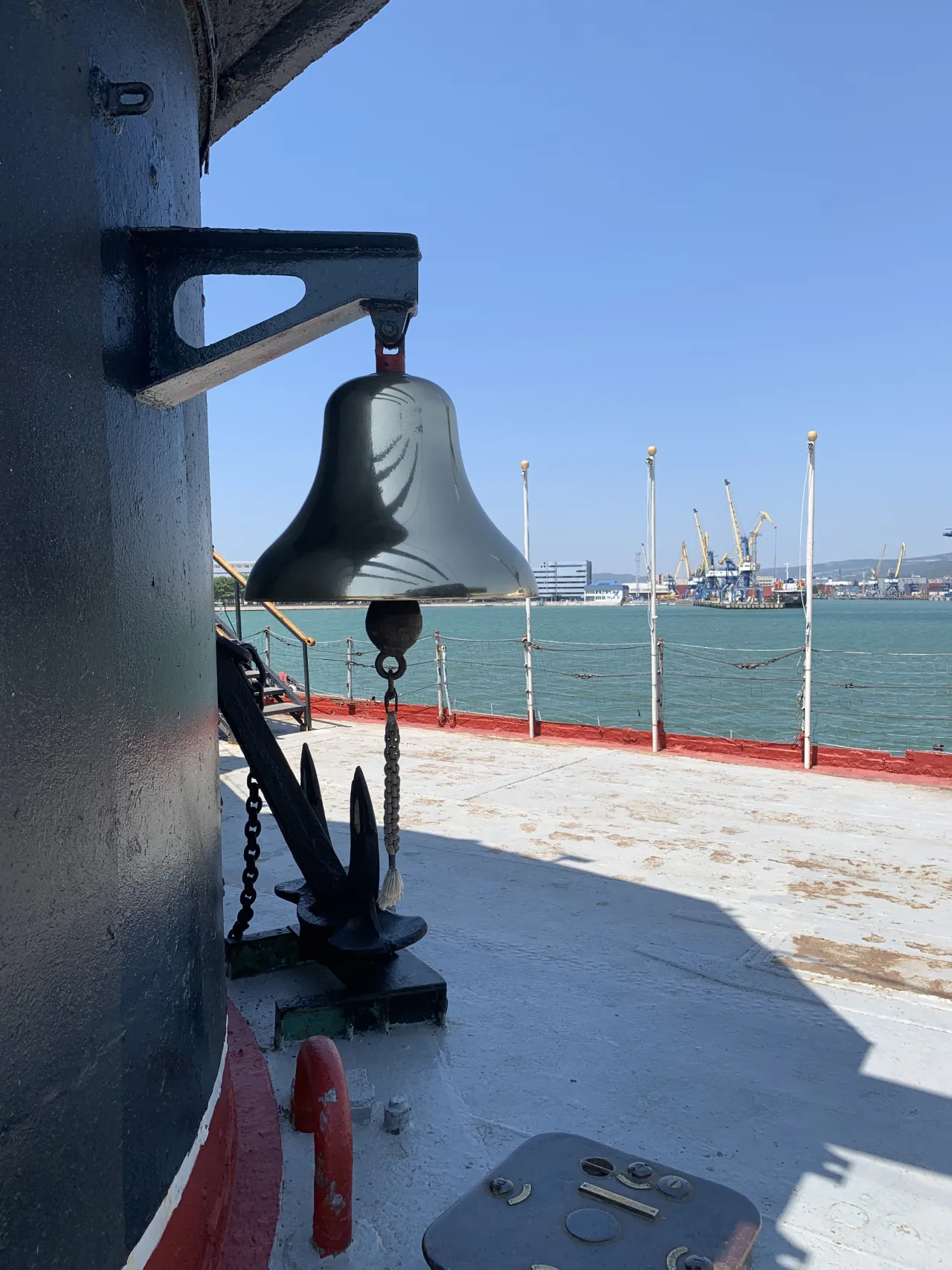
And this is the well-known ship's bell - the rynda...
The cruiser's fuel reserves totaled 3800 tons (fuel oil), 95 tons (drinking water), and 420 tons (boiler water). The cruiser's water and food reserves allowed it to endure for up to 30 days. There were no limitations on its seaworthiness.
To be continued ...
Information