The Condor Legion and the Struggle for Air Superiority in the Skies of Spain
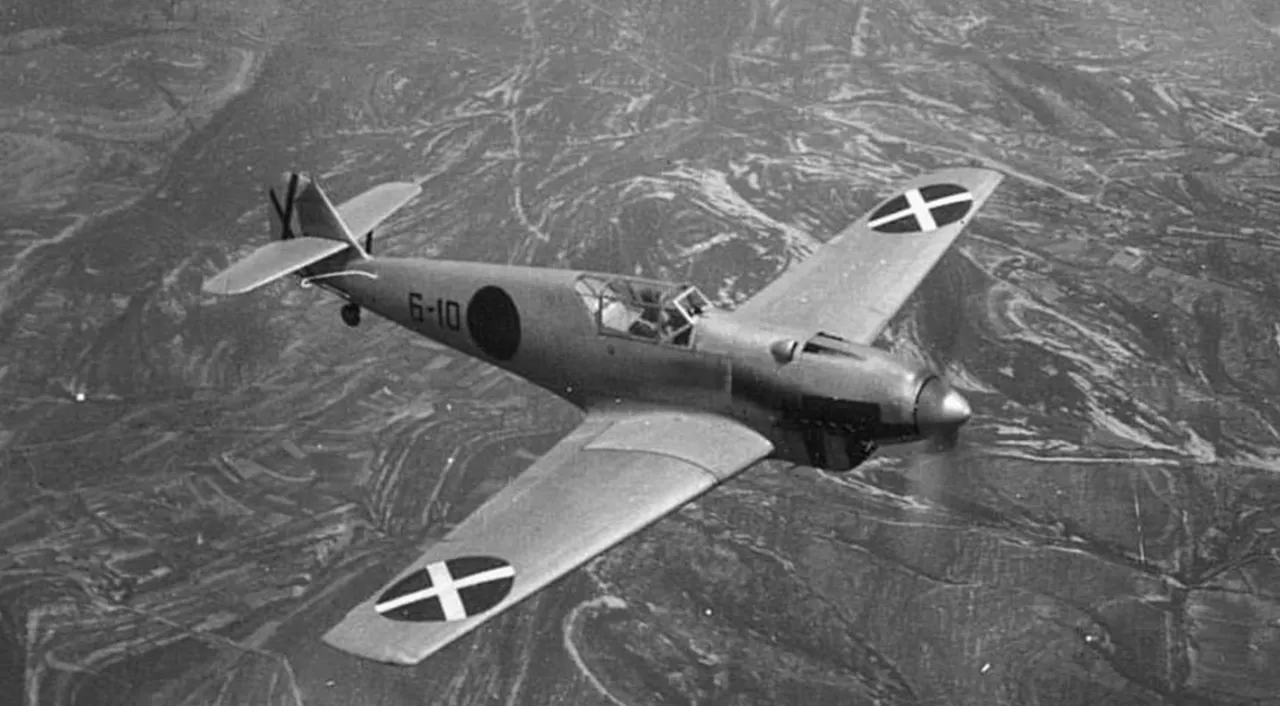
The Condor Legion played a significant, though not decisive, role in Francisco Franco's victory in the Spanish Civil War—it significantly increased Franco's military capabilities and contributed to their air superiority. However, the popular metaphor that the Germans "practiced the Blitzkrieg" in Spain isn't entirely accurate—in 1936, the Wehrmacht didn't yet have a unified doctrine that could simply be "tested in Spain."
When speaking about the Condor Legion, historians often view it simultaneously as a military force, as a means of German intervention, and as a testing ground for the development of German military aviationIt's hard to deny that Spain became a kind of combat laboratory for the Luftwaffe: German crews gained experience in real warfare, tested new aircraft, and perfected their air force techniques. However, for the Luftwaffe, Spain was not so much a "testing ground" for the established blitzkrieg doctrine and dive-bombing tactics of the Junkers Ju 87 Stuka, but rather a school for the combat use of aviation in general.
As historian Christopher Locksley rightly notes, the Spanish experience significantly changed German air doctrine, particularly fighter tactics and air superiority [2]. The Germans were given the opportunity not only to test aircraft but also to explore tactical concepts in real conflict. However, the experience was mixed: different types of operations yielded different results. Locksley believes that the most significant "revolution" occurred in the area of air superiority tactics—fighter tactics.
The Spanish skies gave the Germans the opportunity to encounter modern enemy fighters, primarily the Soviet I-15 and I-16, and to practically revise pre-war notions of how fighters should operate. This led to a shift away from older, dense formations toward more flexible formations such as the Rotte (a pair of two aircraft) and Schwarm (a flight of two pairs)—the later famous German "quadron" system. In other words, Spain gave the Luftwaffe not just "air combat experience" but contributed to a change in the very tactics of air combat.
Locksley concludes that the Spanish experience had a profound influence on the combat doctrine with which Germany entered World War II in 1939. The most significant change, however, was in fighter tactics and air superiority.
American historian James Corum, for his part, characterizes Spain as a crucial school for the development of German close air support. In his book, "The Condor Legion, 1936–1939: The Luftwaffe's Use of Blitzkrieg in the Spanish Civil War," he notes that the Condor significantly increased the Nationalists' military capabilities and played a key role in a number of operations [1]. Despite the book's pretentious title, Corum does not claim that the Germans invented blitzkrieg in Spain; his thesis is that the war in Spain was a crucial stage in the Luftwaffe's development.
The author of these lines will examine the above-mentioned work by Corum, which is more of a compact operational-military analysis than a fundamental monograph, in this material.
The emergence of the Condor Legion
Corum begins with the political and social polarization of Spain. By 1936, the country was effectively split into two opposing camps: on one side were conservatives, monarchists, Catholics, landowners, the petty bourgeoisie, and the rapidly growing Falange; on the other, a broad coalition of socialists, radical socialists, anarchists, communists, and other leftist forces, supported by trade unions and the poor peasantry.
Following the suppression of the attempted right-wing coup of 1932, political polarization continued to deepen. In the summer of 1936, a group of rebel generals led by Emilio Mola, José Sanjurjo, and Francisco Franco began plotting an uprising. The assassination of monarchist opposition leader José Calvo Sotelo on July 13 accelerated the plot against the Second Republic. A military mutiny began on July 16–17.
The Nationalist uprising was led by a small group of generals. General José Sanjurjo, who had led an attempted right-wing coup in 1932, was imprisoned and later amnestied by the government. He lived in exile in Portugal and was the highest-ranking conspirator. Another high-ranking officer was General Emilio Mola, a veteran of the North African wars who served as governor-general and commandant of Pamplona in Navarre. Mola had developed close ties with the major monarchist movement in northern Spain. The third most senior leader of the Nationalist junta was General Francisco Franco.
Initially, the rebels planned to carry out a quick coup d'état by seizing Spain's two most populous cities, Madrid and Barcelona, relying primarily on the army. However, this plan failed. A significant portion of the country, including Madrid, Barcelona, and the main industrial areas, remained under the control of the Republic. Meanwhile, the rebels captured significant territories in the north, Seville and Cádiz in the south, and, most importantly, Spanish Morocco. Here, the Army of Africa, a roughly 35-strong force composed of Moroccan volunteers, units of the Spanish Legion, and seasoned veterans of the colonial wars, was stationed. Corum rightly considered this force to be Spain's most capable military force.
The problem was that the Army of Africa was in Morocco, while the Republic controlled the sea and blockaded the Strait of Gibraltar. For this reason, Franco decided to airlift troops. To achieve these goals, he turned to Germany and Italy for assistance. German businessmen Adolf Langenheim and Johannes Bernhardt played a key role in the contacts between Franco and Hitler. They met with Hitler on July 25–26, 1936, convincing him to support Franco's forces. Shortly after the meeting, Hitler instructed Göring to organize the aid, and General Helmut Wilberg created a special staff—Special Staff W—to lead the operation.
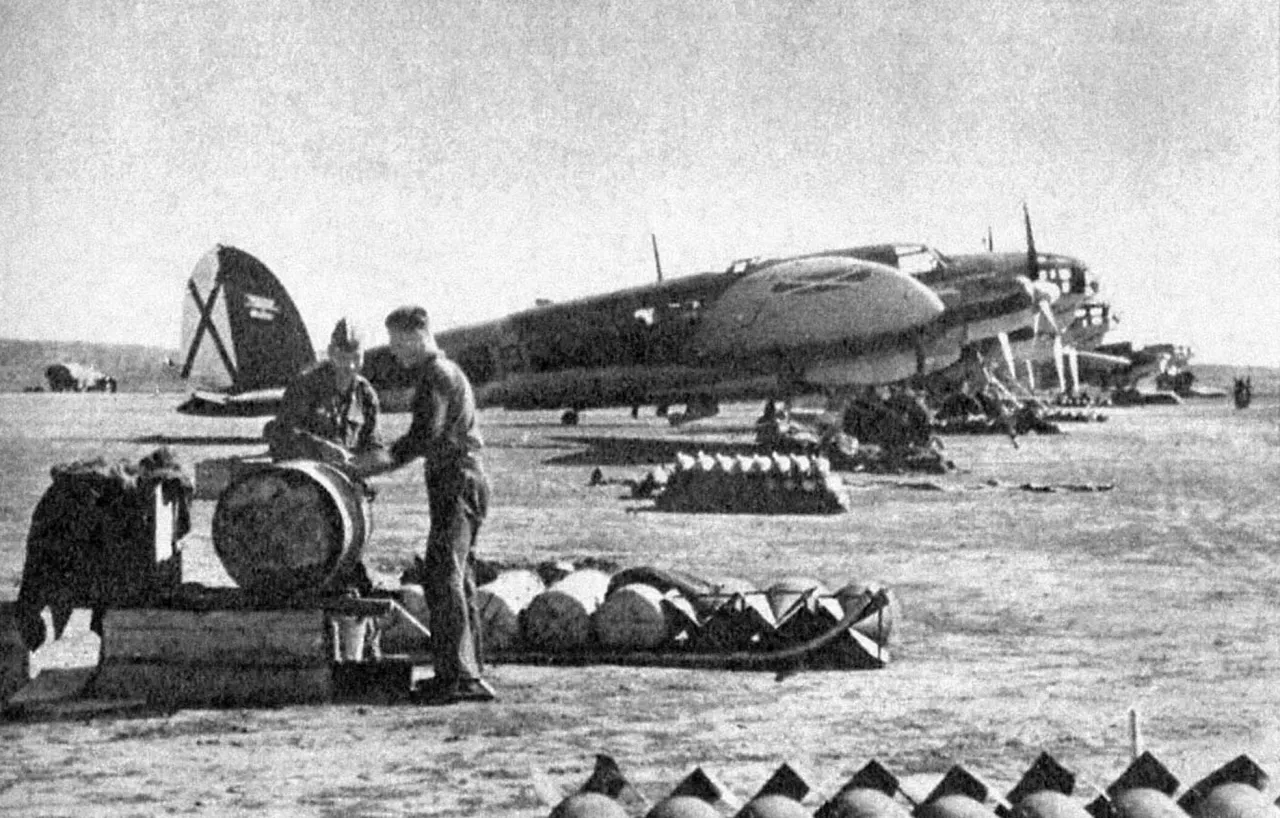
Initially, the Germans had no plans to participate in combat operations—in the first days of the German intervention in Spain, they had no more than 20 Ju 52 aircraft and six Heinkel He 51 fighters at their disposal, which landed in Cadiz on August 6. But the mission quickly changed. By the end of July, German Ju 52s began transporting troops from Tetouan to Seville. An aircraft designed for approximately 17 passengers could carry up to 40 Moroccan soldiers. From July 27 to October, German aircraft transported more than 13,000 troops and approximately 270 tons of weapons and equipment. Corum considers this operation the first major airborne transport operation of its kind in stories.
Gradually, the Germans transitioned from military transport operations to direct combat. A major turning point in the conflict occurred in August 1936, when Major von Scheele authorized a German bomber strike on the battleship Jaime I. The Republican superiority fleet In the straits between Africa and mainland Spain, the Nationalists faced serious difficulties: the anti-aircraft batteries of the Jaime I fired at German transport planes flying over the ship, forcing them to gain higher altitude, and also bombed and blockaded Cadiz, the only major port in southern Spain under Nationalist control.
Disabling the Jaime I was intended to be the first step toward the Nationalists' control of the sea lanes. Von Scheele ordered the conversion of two Ju 52s into bombers, using equipment delivered with the first shipment. Receiving intelligence on August 12 that the Jaime I was in Málaga Bay, von Scheele ordered a strike against the ship the following day using two converted Ju 52s. The aircraft were to be flown by Captains von Moro and Henke. Von Moro's aircraft failed to spot the Jaime I due to low clouds, while Henke's Ju 52 hit the battleship, causing heavy damage and disabling it. This operation helped the Nationalists consolidate their position in southern Spain.
After this, the Germans began flying combat sorties in support of Nationalist columns advancing on Madrid. In August and September, they carried out small-scale attacks on airfields and ground targets, escorted bombers, and supported the advance of Yagüe's troops.
By October 1936, the German contingent in Spain had grown to approximately 600 men, as Spain was seen as an ideal testing ground for Luftwaffe aircraft. Twenty Heinkel He 46 reconnaissance and bombing aircraft appeared in Spain; two He 70s, intended for use as light bombers and reconnaissance aircraft; two He 60 naval floatplanes; one He 50 dive bomber; and two Henschel Hs 123 dive bombers. Four 88mm guns and 28 20mm anti-aircraft guns were also delivered to protect German airfields.
After the establishment of Franco's Nationalist government on October 1, Germany officially recognized it. German intervention largely played into Franco's hands, as Germany's initial support was not directed toward the Nationalist state—such a state did not yet exist at the time—but toward Franco personally. General Emilio Mola, who, unlike Franco, had failed to take the initiative and send representatives to Germany and Italy, was sidelined by political maneuvering from his role in the Nationalist uprising.
When the Germans received intelligence that the USSR had begun large-scale aid to the Republic, Berlin decided to increase the German presence but not to send large ground forces to Spain. Colonel Walter Warlimont, dispatched to Spain by the Wehrmacht headquarters in late August, opposed sending a large military contingent to Spain, as the deployment of significant ground forces would disrupt Germany's rearmament program and push Germany into open confrontation with other European powers—a confrontation that Hitler sought to avoid in 1936.
Instead, Warlimont proposed increasing the contingent already in Spain to an air task force of over 100 aircraft and 5000 troops. This is how the Condor Legion was born.
Corum emphasizes the dual purpose of the Condor: on the one hand, it was supposed to help Franco's forces, but at the same time, it was supposed to be a testing ground for aircraft, tanks, communications equipment, ammunition, and operational doctrine. General Hugo Sperrle assumed command of the legion in November 1936, and Wolfram von Richthofen became its chief of staff. The former was primarily responsible for strategic coordination with Franco, the latter for operational planning and the day-to-day conduct of the air war.
Why was German aviation so effective?
Corum makes a conclusion that is crucial for the entire book: the success of the Condor Legion in Spain cannot be explained solely by the technical superiority of individual aircraft. Its foundation lay in the Luftwaffe's pre-established organizational, personnel, and doctrinal base.
By the start of the Spanish Civil War, the Luftwaffe had officially existed for only 15 months: the German leadership announced the creation of a new branch of the armed forces to the world in May 1935. Under the conditions imposed on Germany after World War I, it was prohibited from having an air force, tanks, or modern weapons; its army was limited to 100,000 troops and 4000 officers.
At the same time, one of the most important lessons of World War I was the realization that modern warfare is impossible without a fully-fledged air force. By 1918, Germany, like all leading military powers, possessed a significant air force capable of performing a wide range of combat missions, including strategic bombing, air superiority, and close support of ground forces.
The restrictions imposed by the Treaty of Versailles prompted the German military leadership to create a secret air force headquarters and a training system so that after the supposedly inevitable abandonment of the hated treaty and Germany's ability to resume rearmament, it would already have a solid basis for building an air force.
In 1935, the Luftwaffe published its aerial warfare doctrine, developed under the direction of General Walter Wever, who sought to instill a unified understanding among all Luftwaffe personnel regarding the nature and methods of air combat. German Luftwaffe Doctrine No. 16, "Luftkriegführung" ("Air Warfare"), was the result of the development of German military-theoretical views on the use of aviation, which had been developing since the 1920s.
According to this doctrine, aviation was to perform both strategic and operational missions. The sequence of actions envisioned: first, gaining air superiority by striking enemy airfields; then, attacks on communications, transport, and supply lines in the operational depths; and finally, direct support of ground forces. During an offensive, aviation was to concentrate at the decisive point and closely cooperate with the army. For this purpose, liaison officers, joint staffs, and regular army-air force exercises were created. Corum believes that in 1936, the Luftwaffe was ahead of most other air forces in this regard.
Under these circumstances, the Spanish Civil War was perceived by the Luftwaffe high command as an opportunity to test the fundamental tenets of military doctrine, organizational principles, and new aviation technology in real combat conditions. By 1936, the Luftwaffe's first-generation aircraft were rapidly being supplanted by second-generation aircraft, developed as part of the Air Force development and rearmament program adopted in 1934. It was this generation that included some of the most successful combat aircraft, which subsequently saw widespread use during World War II.
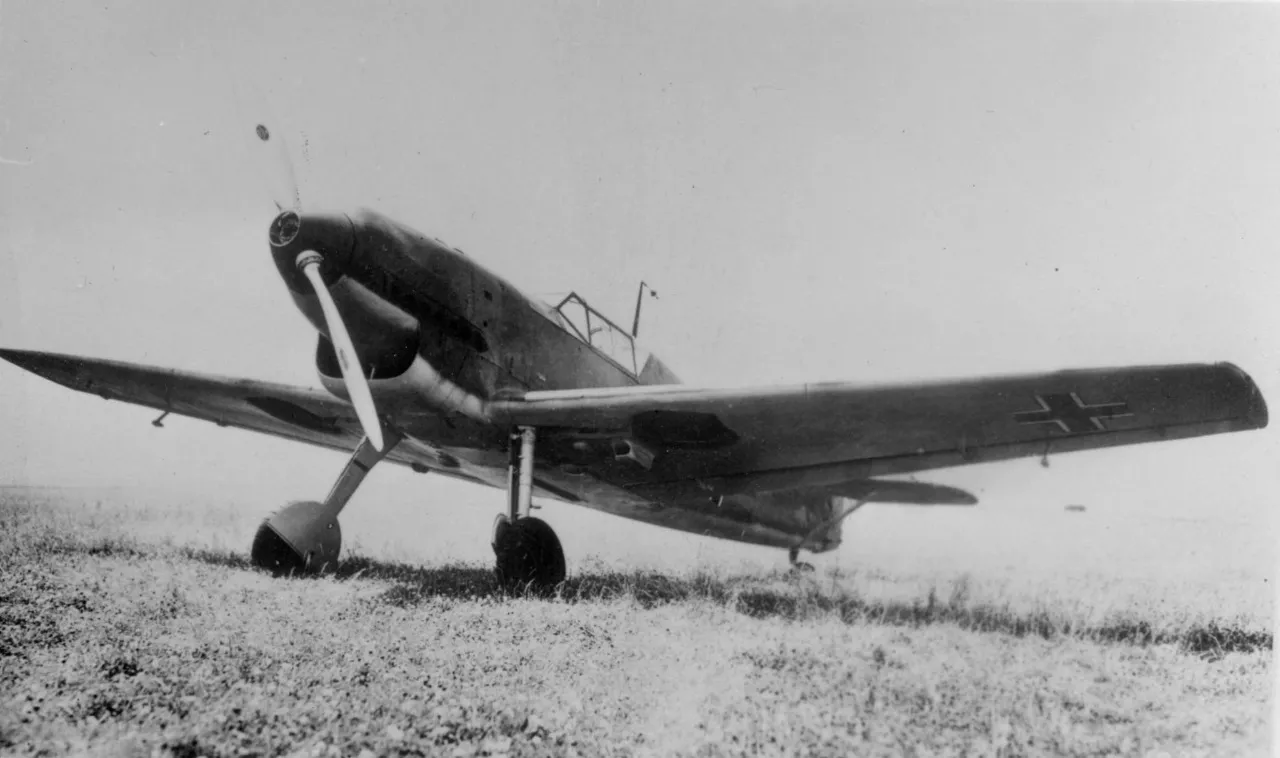
One of the most significant achievements of the new German aviation industry was the Messerschmitt Bf 109 fighter, which first took to the air in 1935. In terms of its technical characteristics and combat capabilities, this aircraft represented a quantum leap in the development of fighter aircraft. Its all-metal construction, retractable landing gear, powerful armament, and excellent flight characteristics gave the Bf 109 significant advantages over previous generations of fighters. The aircraft was highly maneuverable, possessed effective firepower, and maintained its high combat performance even at high altitudes.
The Luftwaffe's second-generation aircraft also included the Heinkel He 111 bomber, which had a cruising speed of over 250 mph (around 400 km/h), could carry over 1500 kg of bombs, and could operate at high altitudes. Its performance represented a quantum leap over the relatively primitive Ju 52 transport aircraft, which had been converted for bombing missions and formed the backbone of most Luftwaffe bomber squadrons in its early years.
Other combat aircraft also entered service, including the Ju 87 Stuka dive bomber, which would play a major role in World War II. The Dornier Do 17 could be used either as a long-range, high-altitude reconnaissance aircraft or as a high-speed light bomber. It proved highly successful in both roles.
Meanwhile, the Luftwaffe's technical development occurred during the war itself. Initially, the main fighter of the Condor Legion was the Heinkel He 51B. This fighter of the early 1930s, based on the Heinkel He 49 of the late 1920s, featured elegant fuselage lines. However, its 550-horsepower BMW engine was already outdated, and its armament consisted of only two 7,92 mm MG 17 machine guns firing rifle cartridges.
At the very beginning of the war, the Republic enjoyed an advantage in aircraft, both quantitatively and qualitatively, thanks to assistance from the Soviet Union. Corum notes that the Soviet I-15 and I-16 (colloquially known as the "Donkey") were superior to the best German and Italian fighters and ensured the Republicans air superiority from approximately the fall of 1936 to the spring of 1937. Corum notes that the I-15 was roughly equal to the Italian Fiat CR.32 and superior to the He 51 in performance. Corum also calls the I-16 one of the most advanced fighters of the mid-1930s.
The old Heinkel He 51 proved inferior to the Soviet I-15 and I-16 and was so ineffective as a fighter that it was converted into a close air support aircraft. The irony was that it was precisely in this role that the He 51 proved quite useful.
In other words, even after the formation of the Condor Legion, the Republicans retained air superiority on the Madrid Front in the winter of 1936–1937. The situation changed when the Germans began using the new Messerschmitt Bf 109 fighter. During the Brunete Offensive in the summer of 1937, when the Bf 109 first encountered I-15s and I-16s, Corum wrote of the Bf 109's decisive superiority in aerial combat. Its appearance enabled the Nationalists to regain air superiority over the combat zone.
That is, the Republicans were not hopelessly inferior technically, as some historians claim: in late 1936 and early 1937, Soviet technology even provided them with significant, and on some fronts, decisive, air superiority. However, the Germans used the war in Spain as a laboratory for organizational and tactical improvements to the Luftwaffe and quickly offset the Republicans' initial technical advantage.
Corum considers the organization of communications and logistics equally important. The communications battalion allowed for the establishment of forward command posts linked by telephone and radio to airfields and ground headquarters. An effective fuel and ammunition supply system allowed the Condor Legion, despite its relatively small size, to carry out up to four or more combat sorties per day during the most intense periods of operations.
Conclusion
Overall, Corum's work is built around a fairly clear idea: The significance of the Condor Legion lay not so much in the scale of German participation, but in the quality of its organization, equipment, training, and interaction between aviation and ground forces.
The German contingent was relatively small and never constituted an independent army. But it possessed several systemic advantages: a trained officer corps and staffs; a unified doctrine of air-ground cooperation; modern communications and command and control systems; effective logistics and maintenance; the ability to concentrate air power in a decisive sector; a combination of air superiority, battlefield isolation, and close infantry support; and constant experimentation with new equipment and tactics.
In doing so, Corum effectively charts the evolution of German aerial warfare: from the improvised Ju 52 and obsolete He 51 in 1936 to the Bf 109, He 111, Do 17, and Ju 87, to a sophisticated reconnaissance, communications, and close air support system by 1938. He therefore presents the Spanish War not simply as an episode of foreign intervention, but as a practical laboratory for the Luftwaffe, where organizational decisions and tactics were tested that would later find application in World War II.
References
[1] James S. Corum. Legion Condor 1936–39: The Luftwaffe develops Blitzkrieg in the Spanish Civil War. Published by Osprey Publishing, 2020.
[2] Christopher C. Locksley, “Condor over Spain: The Civil War, Combat Experience and the Development of Luftwaffe Airpower Doctrine,” Civil Wars, vol. 2, no. 1 (1999), pp. 69–99.
Information