Cavalry General Seydlitz: The Peak of His Career and the Last Years of His Life
4 262 64
Cavalry General Seydlitz: The Peak of His Career and the Last Years of His Life
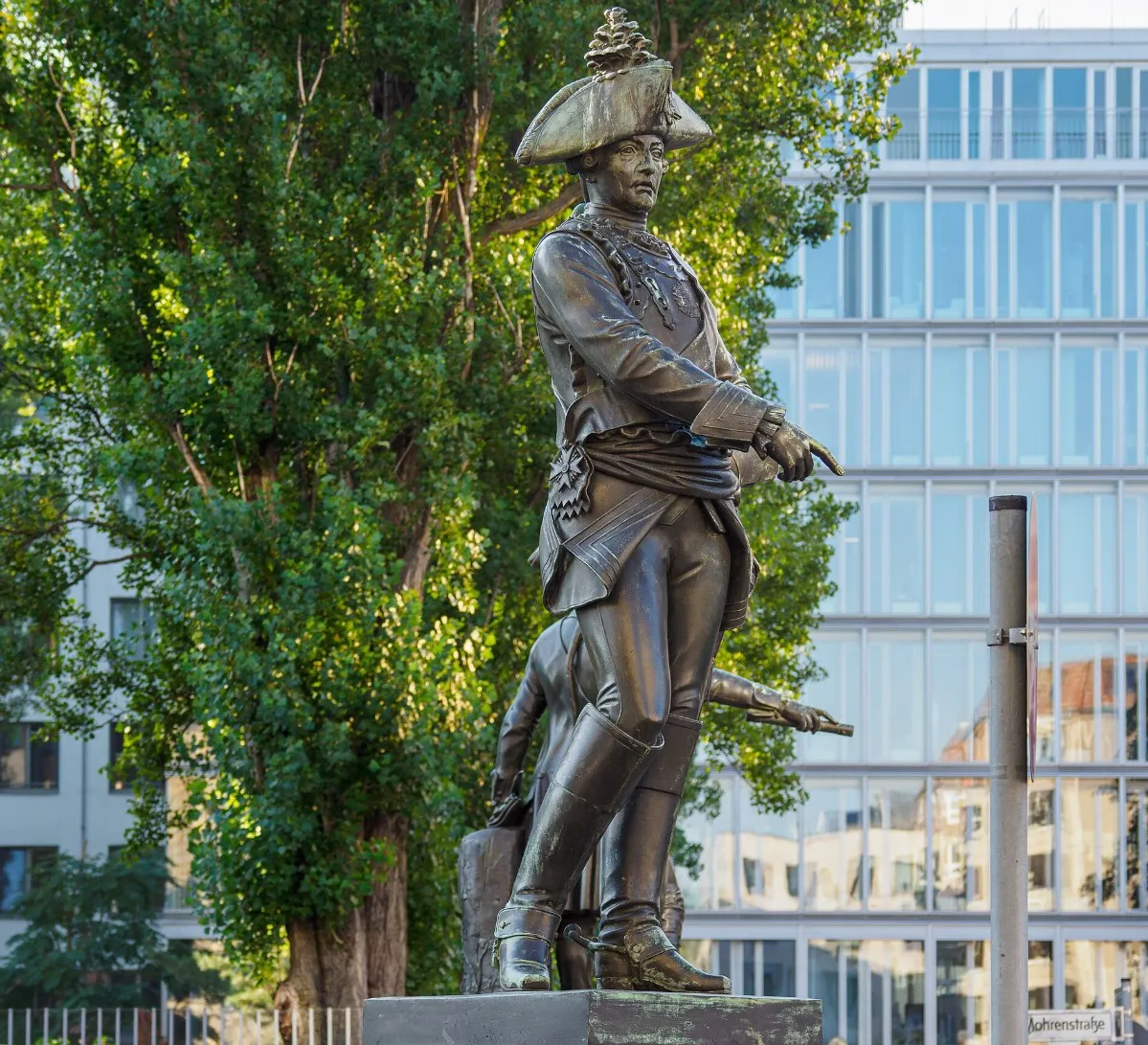
Seydlitz Monument in Berlin


В previous article We discussed the origins and early life of the famous Prussian cavalry general Friedrich Wilhelm von Seydlitz, the beginning of his military career, and his participation in the Seven Years' War. We concluded this article with a story about the Battle of Zorndorf. Today, we will continue and conclude the story.


1759 Campaign


This campaign was so successful for the British that in Great Britain, 1759 is often referred to as "the great year." The British defeated the French in the naval battles of Lagos and Quiberon Bay. In alliance with Prussia and Hanover, they routed Marshal Contad's French army at Minden. But the most significant victories were achieved by the Russian forces of Field Marshal Pyotr Saltykov. In July, at the Battle of Palzig (Kay), they routed General Wedel's corps, and then, in August, Saltykov and the Austrian General Laudon defeated Frederick himself in the monumental Battle of Kunersdorf.
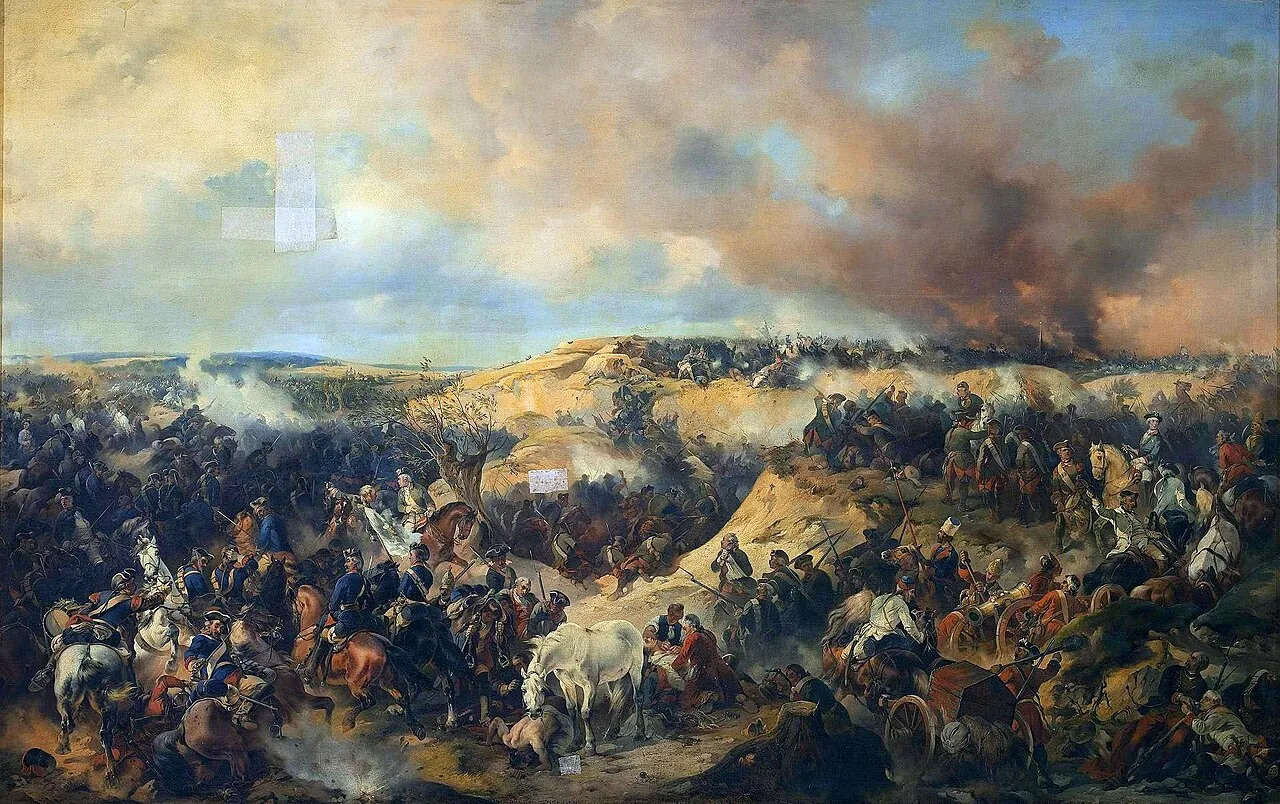

The Battle of Kunersdorf as painted by A. Kotzebue

After artillery After shelling Russian positions, the Prussians managed to capture the village (along with its batteries) and the Mühlberg hill, significantly pushing back the allied left flank, and even capturing 5 soldiers—Frederick could already consider himself victorious. He even sent news of his victory to Berlin. However, the Prussian king decided to continue the battle—a terrible mistake. The exhausted Prussian infantry was unable to take the Grosser Spiez (Spitzberg) hill, defended by Pyotr Rumyantsev's soldiers, and the Prussian cavalry was unable to operate effectively due to the terrain. The cuirassiers of Prince Eugen of Württemberg (who was wounded in battle) and the "White Hussars" of General Puttkammer (who was mortally wounded) were driven back.

Seydlitz was forced to retreat under artillery fire. The king ordered the wounded hero of this article to advance again on the Russian positions. This attack was stopped by regiments of the Kyiv and Novotroitsk cuirassiers, the Arkhangelsk and Ryazan horse grenadiers, and the Tobolsk dragoons. Two squadrons of Austrian hussars also took part in the battle. The Russian infantry recaptured Mühlberg.

A bullet struck the king, and Friedrich was saved from death by the snuffbox in his breast pocket. Two horses fell beneath him, and he didn't even have time to mount another—it was killed as soon as it was brought to him. Friedrich took a desperate step, throwing his Life Cuirassiers into battle. They were routed by a detachment of Chuguev Cossacks, and their commander was captured. The allied forces counterattacked and routed the Prussians, who fled to the river; many died in the crush at the bridges or drowned. Friedrich sought death, and Captain Karl Prittwitz literally forced him to leave the battlefield.

In the morning, the Prussian king had 48 soldiers and officers; after the battle, only about 3 remained in the ranks; the rest were killed or simply fled in all directions. It's worth noting that Seydlitz's cavalrymen were among the Prussians who retreated in order.
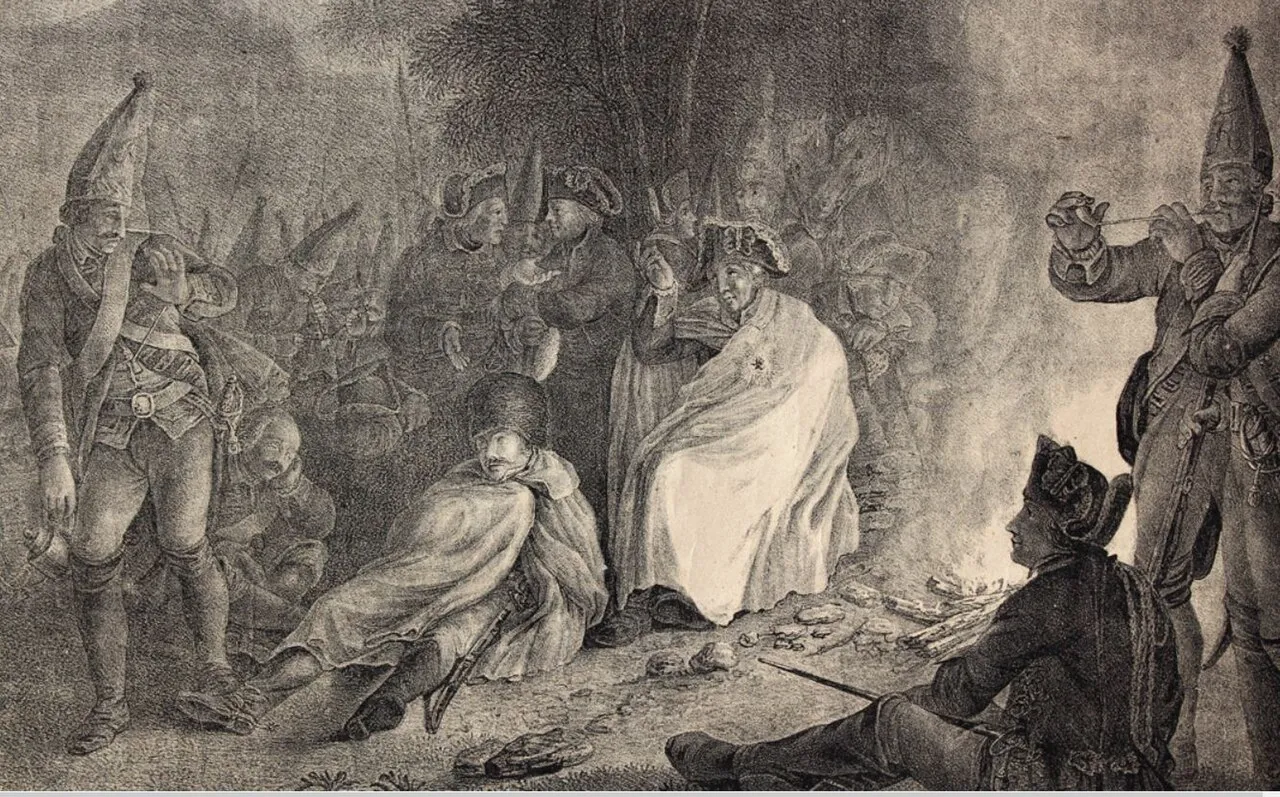

Friedrich II with his grenadiers after the Battle of Kunerdorf. Lithograph by an unknown artist, circa 1830.

Saltykov sent the Prussian king's hat, found on the battlefield, to St. Petersburg; it can now be seen in the Suvorov Memorial Museum.

However, the Allies subsequently behaved so passively that German historians refer to the "Miracle of the House of Brandenburg." Frederick managed to rally his scattered soldiers and, at the head of a 30-strong army, take up positions near Berlin. The opportunity to defeat Prussia that year was missed.

1760 Campaign


That year, the Austrians first routed a Prussian corps at Landeshut, but then suffered defeat at Liegnitz (August 15). Russian and Austrian troops, led by Zakhar Grigoryevich Chernyshev and Franz Maurice Lassie (the son of a distinguished Russian commander), conducted another raid on Berlin. The Russian vanguard units were led by the German adventurer Gottlob Kurt Heinrich von Totleben, whose subordinates included Yemelyan Pugachev. According to legend, it was Totleben who pointed out to the future leader of the civil war his resemblance to the heir to the throne, Peter Fyodorovich.

The Berlin commandant was prepared to surrender the city without a fight, but he was thwarted by two generals—Knobloch and Seydlitz—who were there for treatment. An attempt to storm the city failed; during the battle at the Gallen Gate, the hat of future Field Marshal A. Prozorovsky was shot through.

Totleben remained inactive for four days. On September 26, the main allied forces approached Berlin, and Russian cavalry drove back the 14-strong Prussian detachment under Prince Eugen of Württemberg. Chernyshev assumed overall command of the allied forces, but Berlin Commandant von Rochow secretly signed a capitulation with Totleben, who offered the enemy more than lenient terms and ignored orders to destroy the arsenal, the main provisions depot, and the cloth factory where uniforms for the Prussian army were made.

Eight months later, Totleben was charged with treason—a charge confirmed half a century later by Prussian archival documents. In 1763, Totleben was sentenced to death, but Catherine II, who had ascended the throne the year before, pardoned him and even ordered that he be paid his full general's salary for the entire period of his imprisonment, and that the seizure of his real estate and bank accounts in Gdansk and Hamburg be lifted. If this surprises you, remember that it was Frederick II who recommended the impoverished Princess Sophie Augusta Frederica of Anhalt-Zerbst as a bride for the heir to the Russian throne. And a letter preserved in the archives, which she sent to Frederick from Moscow on the eve of her wedding to Elizabeth Petrovna's nephew, also appears:

Rest assured that I will consider my reign glorious for myself only when I have the opportunity to convince you of my gratitude and devotion.

As the wife of the heir to the throne, she maintained a secret correspondence with Frederick for many years. And then it was Catherine II (not Peter III) who unconditionally withdrew the victorious Russian army, led by Pyotr Rumyantsev, from Prussia and Königsberg. Less than a month after the coup (August 5, 1762), the last Russian governor of East Prussia received orders from her to begin the transfer of the province to Frederick II. Upon learning of this, Rumyantsev immediately resigned.

The temporary capture of Berlin in 1760 is traditionally overestimated. It wasn't an attempt at conquest, but a raid aimed at extracting a contribution, and it had no impact on the course of the war.

That year, Russian and Swedish forces unsuccessfully besieged Kolberg, and Field Marshal Daun's Austrian army, attempting to drive the Prussians out of Saxony, suffered defeat at Torgau—the last major battle of the Seven Years' War. In this battle, Frederick II was shell-shocked and Daun was wounded, leaving both commanders unable to command their troops. The "father of the Prussian hussars," Hans Joachim von Zieten, distinguished himself by unexpectedly capturing the Austrian main battery, turning it toward the enemy—earning him the nickname "Zieten-aus-dem-Busch" ("Zieten from the bushes").
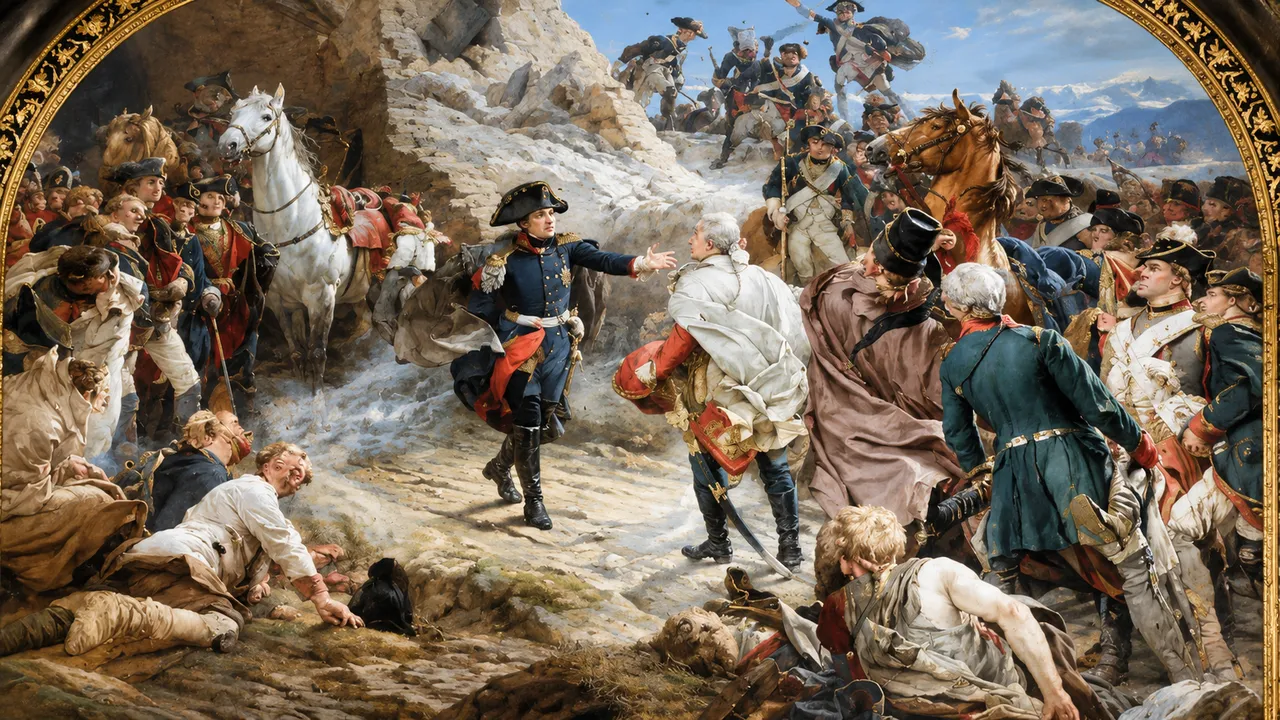

Peter Jansen. Meeting of Frederick II with von Ziethen after the Battle of Torgau. Mural in the Hall of the Generals in the German historical museum in Berlin

In Westphalia on July 31, 1760, at Warburg, the troops of Prussia, Britain and Hanover defeated the French army of Count de Muy.

1761 Campaign


In Pomerania that year, Pyotr Rumyantsev's Russian army finally managed to occupy Kolberg. The French managed to win at Grunberg, but then the combined forces of Marshals Soubise and de Broglie suffered defeat at Vellinghausen (July 15-16, 1761).

On December 25, 1761 (January 5, 1762), Peter III ascended the Russian throne. He concluded a treaty with Frederick, according to which Russia would return East Prussia, but only after Peter's hereditary possessions of Schleswig and Dithmarschen were returned to Russia. To reconquer them, Frederick pledged to provide an army of 20 men—15 infantry and 5 cavalry—to assist Russia.

Negotiations with Denmark were scheduled for July 1762. If they failed, Russia and Prussia were to begin military action against the Danes, and no one doubted their success. But even after this, Peter retained the right, at his own discretion, to halt the withdrawal of Russian troops from Prussia in the event of "continued unrest in Europe." This meant that the "Western Group of Forces" could remain in Prussia for many years, perhaps even decades. Furthermore, Frederick II pledged to support candidates favorable to Russia for the thrones of the Polish-Lithuanian Commonwealth and the still-independent Courland.

It's worth noting that no one in Europe intended to recognize Russia's rights to the Kingdom of Prussia. Louis XV, King of France, Russia's ally, declared:

An alliance with Russia is necessary to more easily act against Russia... From within Russia itself, and to the detriment of Russia.

And for centuries, France invariably sided with Russia's enemies, provoking wars with Turkey and Sweden and supporting anti-Russian rebellions in Poland. Support from Britain, Sweden, and Austria was unthinkable. Recall how difficult it was for Russia to retain any territory from the defeated Islamic Turkey—the Europeans simply twisted its arm, forcing it to revise existing peace treaties. Yet Russia wanted to at least seize the "Wild Field"—the empty lands of the future Novorossiya, which had to be settled by serfs from the central Russian provinces, as well as Bulgarian, Greek, Serbian, and Armenian settlers (and so on).

Prussia, meanwhile, was a well-established European territory inhabited by Lutheran Germans. These lands were separated from Russia by the traditionally hostile Polish-Lithuanian Commonwealth and the Duchy of Courland, whose status had not yet been fully determined. The land route to East Prussia could be cut off at any moment. Maritime supplies depended on the traditionally hostile England and the openly hostile Sweden, whose elite constantly dreamed of revenge for past defeats and sought not just a pretext, but the slightest opportunity to start a new war. Only recently, in 1743, had the hattarnas ryska krig—the "Russian War of Hats"—unleashed by the Swedes ended. (The "Hats" were the war party opposing the "Nightcaps" party.)

In 1788, the Swedes attacked Russia during our country's latest war with Turkey. Another Russo-Swedish War would begin in 1808. During World Wars I and II, "neutral" Sweden actively supplied Germany with raw materials—from steel to chocolate—while the modern Swedes finally "threw off their masks" and joined the anti-Russian North Atlantic Alliance.

Holstein, Stormarn, and Schleswig and Dithmarschen, temporarily occupied by Denmark, were the legal and universally recognized possessions of the Russian Emperor Peter III. Unlike the relatively poor and backward (by European standards) East Prussia, these were very wealthy and economically developed regions with a unique geographical position allowing them to control both the North and Baltic Seas.
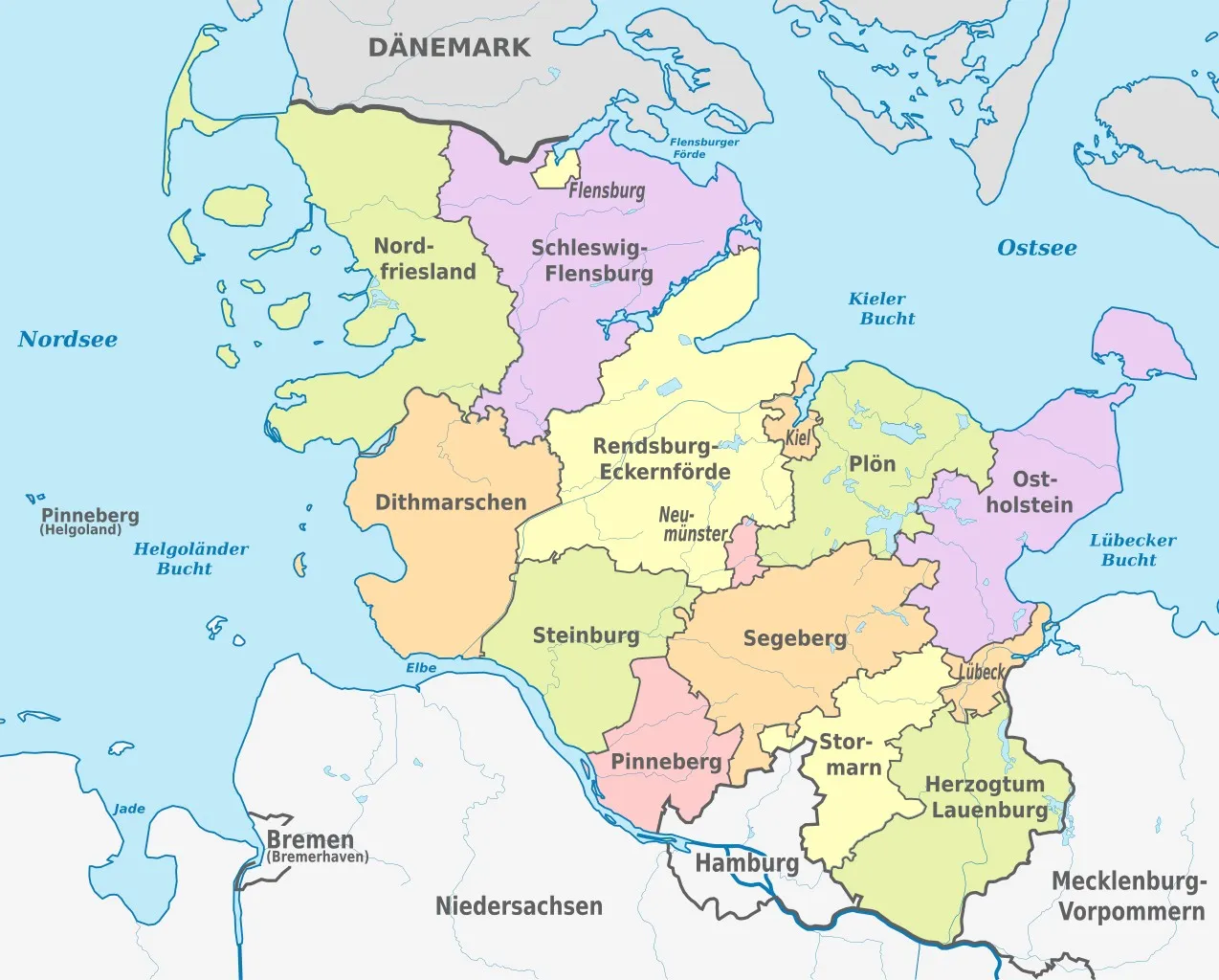

A powerful Russian naval base on the territory of this duchy radically changed the balance of power in Northern Europe.

During the Seven Years' War, the men of virtually every Prussian family fought against our country in the army of Frederick the Great, and it was difficult to count on the loyalty of their relatives. The population of Holstein-Gottorp was loyal to its duke—the Russian Grand Duke, and later to Emperor Peter Feodorovich; thousands of his young subjects volunteered to serve in his Gatchina troops. Figuratively speaking, by concluding a treaty with Frederick, Peter III was trading a rusk for a rich honey bun.

Not only were Russian troops not withdrawn from Prussia by Peter III, but they were constantly reinforced. A squadron from Reval arrived in Königsberg, and the Kronstadt squadron was ordered to prepare for a campaign. However, the emperor made a mistake by deciding to send the completely disorganized St. Petersburg guard regiments to war with Denmark. This was exploited by conspirators who orchestrated a coup using the well-known formula described by the Saxon envoy Petzold after Elizabeth Petrovna's accession to power:

All Russians admit that anything can be done if you have at your disposal a certain number of grenadiers, a cellar of vodka and a few sacks of gold.

Catherine had a "bag of gold"—the English envoy had given her 100 rubles through the English merchant Felten. She also had a "cellar of vodka"—more than 35 buckets had been purchased in advance. And on June 26, 1762, the Orlov brothers began getting the soldiers of the capital's garrison drunk, and on the 28th, when the soldiers had reached the "right condition," they began spreading rumors of the death of Peter III, who allegedly died in Oranienbaum after falling from a horse. They even staged a funeral for the emperor. Claude Carloman Rulier, secretary of the French embassy in Russia, wrote about it:

Suddenly, word spread that the Emperor had arrived. The crowd, urged on silently, parted, crowded together, and in profound silence made way for the procession, which slowly made its way through its midst. It was a magnificent funeral, carried along the main streets, and no one knew whose burial it was. Soldiers, dressed as Cossacks, carried torches in mourning; and while the people's attention remained focused on the spot, the ceremony disappeared from view... Barely twenty people, even in the palace, understood the event as it had happened. The people and soldiers, not knowing whether the Emperor was alive or not, and constantly shouting "Hurrah!"... thought they were proclaiming the young Grand Duke Emperor and giving his mother the regency.

The drunken riot of the capital's garrison was accompanied by widespread looting—of private apartments, houses, and taverns. Foreigners living in St. Petersburg suffered particularly. Later, the damage from the looting of taverns alone was estimated at over 100 rubles. Since these were state-owned establishments, it had to be compensated from the Russian treasury. There was no talk of any compensation to private individuals.

Frederick II told Count Segur about Peter's abdication:

He allowed himself to be dethroned like a child being sent to bed.

But he was not at all upset, because Catherine II cancelled the unfavorable treaty he had concluded with the murdered Peter III, and withdrew her troops from East Prussia without any conditions—such was the price for Frederick II’s many years of patronage and his recognition of Catherine’s non-existent rights to be called Empress of Russia.

Meanwhile, the Prussians drove the Austrians out of Silesia, defeating them at the battles of Burkersdorf and Freiburg. In the latter battle, Seydlitz served as a corps commander. Prince Ferdinand of Brunswick inflicted two defeats on the French in Westphalia and Hesse. Both sides were exhausted, and the Seven Years' War ended in 1763. As usual, the biggest winner was Great Britain, which retained most of the captured French colonies (Canada, some Caribbean islands, eastern Louisiana, and lands in India), took Florida from the Spanish, ceding Manila and Cuba to them, and established its dominance at sea—it was after the Seven Years' War that the British colonial empire was effectively established.

Incidentally, France also lost western Louisiana, which went to Spain but was regained in 1800, and then Napoleon sold it to the Americans. Prussia retained Silesia, and Frederick II became revered as the greatest military leader of the era. Austria and France lost. Russia "played a draw," and historians still don't understand why Elizabeth dragged our country into a foreign war against a state with which Russia didn't even share a border. Look at the map:
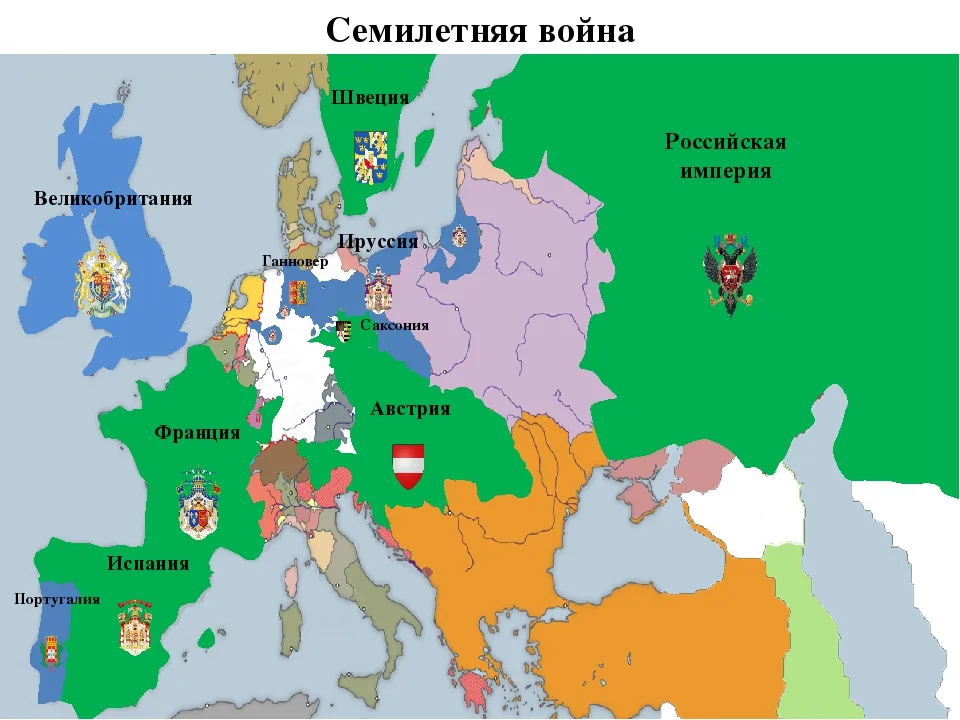

Frederick II also sought an alliance with our country and wrote:

Of all Prussia's neighbors, the Russian Empire deserves special attention... The future rulers of Prussia must also seek the friendship of these barbarians.

Having read the memoirs of Minich's former adjutant, Christopher Manstein, he personally deleted from them all the passages that could even cause damage to Russian honor.

And what about Seydlitz? He continued his service, becoming a cavalry general and chief inspector of cavalry units in Silesia, where the kingdom's finest cavalry regiments were then stationed.

An unsuccessful marriage and the end of the life of a famous general


In 1761, Seydlitz married Susanna Johanna Albertina von Hacke, the youngest daughter of the commandant of the Prussian capital. The marriage produced one daughter. His wife, known for her flighty nature, was unfaithful to her frequently absent husband, and eventually infected him with syphilis, which doctors had not yet learned to treat at the time. He gradually declined; the stroke the general suffered at the age of 52 was apparently a complication of chronic syphilis. Friedrich Wilhelm von Seydlitz-Kurzbach died in the city of Ohlau (Oława) on November 8, 1773. After this territory was annexed by Poland, Seydlitz's mausoleum on his family estate was destroyed.

In Berlin, you can see a monument to the hero of this article, a photograph of which is posted at the beginning of this article. Furthermore, in the German Empire, a German battlecruiser was named after him (in Germany itself, cruisers of this class were called "large cruisers").
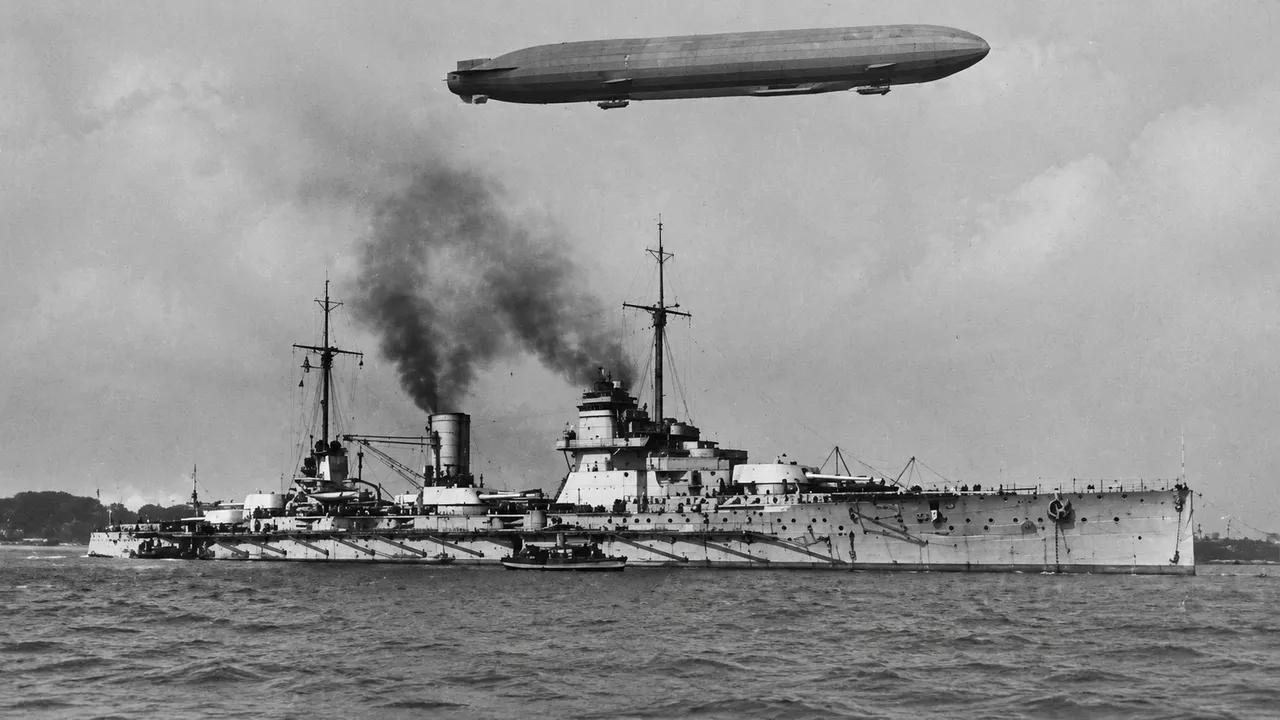

The battlecruiser Seydlitz in a photograph taken between 1913 and 1916.

As we recall, the famous general had no male descendants; his title and family lands were inherited by distant relatives. One of these descendants, Walter von Seydlitz-Kurzbach, was an active participant in both world wars, receiving his first general's rank on December 1, 1939. During the Great Patriotic War, he distinguished himself during the operation to relieve the 2nd Army Corps, which occupied the so-called "Demyansk Salient." During the Battle of Stalingrad, he commanded the 51st Corps, which was part of F. Paulus's 6th Army.
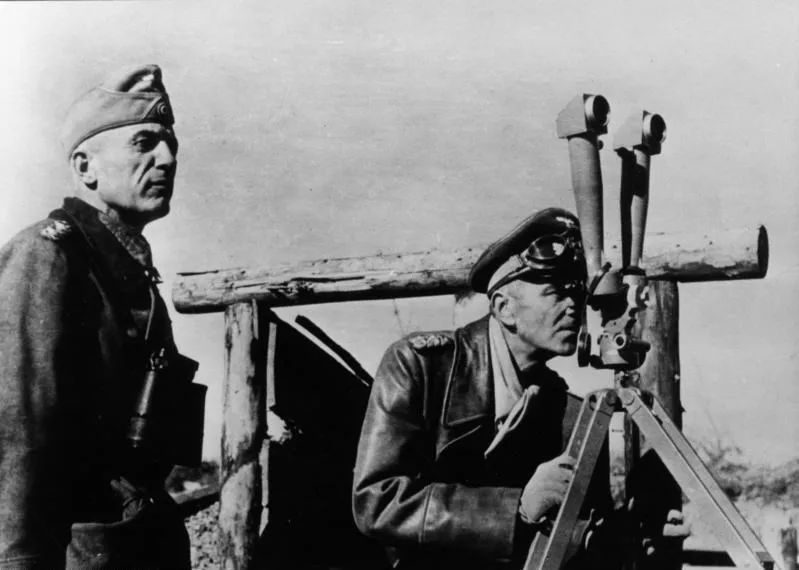

Walter Seydlitz (standing) and Friedrich Paulus, photographed in 1942.

After being captured, he became chairman of the Union of German Officers, which was part of the National Committee for a Free Germany. During the Soviet Korsun-Shevchenko Offensive, he personally appealed to German soldiers to end their resistance. In the Third Reich, he was sentenced to death in absentia—a sentence that was only overturned in 1956. After the war, he consulted on the film crew for the movie "The Battle of Stalingrad," but was later convicted of war crimes. In October 1955, he was allowed to leave for West Germany. Before leaving, he wrote a letter of gratitude to K. Voroshilov, Chairman of the Presidium of the Supreme Soviet of the USSR, which included the following:

Tomorrow, as I leave the territory of the Soviet Union, I feel a deep need to express my heartfelt gratitude to the Supreme Soviet of the USSR for all the good things I have experienced and learned here during my more than 12-year stay.

He died in 1975 at the age of 87.
64 comments
Information
Dear reader, to leave comments on the publication, you must sign in.
  1. +2
    24 September 2026 08: 01
    The first part was more informative. As I understood it, the purpose of these articles was to highlight the life and achievements of Seydlitz specifically. In the first part, the author accomplished his goal, but in the second, he devolved into a description and discussion of the political situation in Europe at the time, only occasionally mentioning our hero. Had he stated from the outset that he would be discussing political events, there would have been no questions, but the article was billed as being specifically about the Prussian general, his life, and his fate.
    1. +2
      24 September 2026 09: 55
      Quote: oleg Pesotsky
      In the second one I slipped into a description and discussion of the political situation in Europe in those years.

      This is his usual style)))
    2. +2
      24 September 2026 10: 32
      Every historical figure should be considered only in the context of the historical events that were contemporary to him.
      And I cannot say that the objectives and results of the Seven Years' War are well known to us, rather the opposite.
      So, showing the context is the right decision, which greatly expands the scope of the article.
      1. +2
        24 September 2026 13: 32
        And I cannot say that the objectives and results of the Seven Years' War are well known to us, rather the opposite.
        Everything is known and described in great detail, but the issue is that the topic is of little interest to the general public.
        1. -2
          24 September 2026 14: 07
          Quote: Sergey Valov
          Everything is known and described in great detail, but the issue is that the topic is of little interest to the general public.


          You're right. Academic historiography has dissected the Seven Years' War (1756–1763) literally day by day—there are archives, memoirs, and detailed analyses of battles like Gross-Jägersdorf, Zorndorf, and Kunersdorf. But in popular culture, it truly gets lost in the background, say, of the Great Northern War or 1812.

          And it is precisely because of this “invisibility” that those very retellings appear, where facts are mixed with speculation (like about “staged funerals” or “getting drunk for the sake of the oath”) - and since the general public is not very familiar with the topic, such versions easily take hold.
          1. VLR
            +2
            25 September 2026 06: 53
            Speaking of the staged funeral of Peter the Great, "which never happened," here's what Gavriil Derzhavin, who served in the Preobrazhensky Regiment, wrote. He wasn't aware of the plot, but, like many others, he and his company, unaware of it, arrived at the Winter Palace. This is the strange scene the future poet and dignitary saw:
            “Suddenly, a strange procession entered the jubilant crowd, before having managed to walk along the main streets of the capital. Soldiers in mourning clothes carried lighted torches, a coffin covered with black cloth seemed to flutter between them. The procession went slowly, in complete silence, disappearing so but all of a sudden, as it appeared, no one could comprehend anything - but rumors crept in like a loop: they say the emperor died. "

            Rullier writes about the same thing.
            1. VLR
              +2
              25 September 2026 07: 03
              Derzhavin, by the way, very vividly describes the looting of one of the taverns (after all, there were no lootings of those either, right?), and is not at all embarrassed by his personal involvement.
              There's a huge amount of evidence of drunken soldiers robbing civilians (especially foreigners) of their personal belongings. This was left by both the gamblers and some officers who tried to stop these atrocities.
              Incidentally, Princess Dashkova, an active participant in the conspiracy, was also robbed by drunken soldiers. She, of course, wrote that she "voluntarily parted with the cash." But the circumstances described are such that it becomes clear: "voluntarily-compulsorily."
              1. VLR
                +2
                25 September 2026 07: 34
                In her memoirs, E. Dashkova writes about the guardsmen who broke into a cellar in Peterhof and scooped up Hungarian wine with their shakos. She paints a very rosy picture: supposedly, she admonished the soldiers, who poured out the wine and started drinking water. But for some reason, she not only had to give them all her money, but even turned out her pockets to show that she had no more. She also promised that "upon their return to the city, they would be given vodka at the treasury's expense and all the taverns would be open for free." But the soldiers no longer needed permits to consume alcohol for free.
                "Cease your attacks; there will be robberies tonight."
              2. VLR
                +2
                25 September 2026 08: 31
                Sorry for the typos, I don't always notice when my phone tries to "edit" it.
                In general, very useful comments, thank you all very much, including the "critics".
                The following articles are about Belisarius.
              3. 0
                25 September 2026 08: 45
                Quote: VlR
                there were no defeats of them either, right?


                Why wasn't there? There were, and no one in the comments denied it. So, why you even bothered with this question is unclear.
              4. 0
                25 September 2026 10: 17
                Quote: VlR
                Derzhavin, by the way, describes it very vividly pillaging one of the taverns (after all, there were no lootings of them either, right?), and is not at all embarrassed by his personal involvement.


                Author, I checked your information against Derzhavin's "Notes." You've managed to distort the facts here, too. Derzhavin doesn't write specifically about plundering, much less about his personal involvement in it. The word "plunder" doesn't appear in his words.
                "The taverns, cellars, and inns for the soldiers were opened: a feast was in full swing; the soldiers and their wives, in frantic delight and joy, carried tubs of wine, vodka, beer, mead, champagne, and all sorts of other expensive wines and poured everything together without any discrimination into tubs and barrels, whatever happened to be available." (c)
                This looks like a scene of plunder, but you've already drawn your own conclusions, not Derzhavin's. And in the text, Derzhavin clearly states: taverns, cellars, and inns. dissolved for soldiers.
            2. 0
              25 September 2026 08: 43
              Quote: VlR
              This is what Gavriil Derzhavin, who served in the Preobrazhensky Regiment, wrote. He was unaware of the conspiracy, but, like many others, he and his company, unaware of it, arrived at the Winter Palace.


              This text with torches and a coffin is indeed circulating online under the signature "Derzhavin," but it's an edited version. Derzhavin's original "Notes" about the day of the coup and the following days contain many details: how the company rushed to the Winter Palace, how the empress led the regiments into Peterhof on a white horse, how pickets with loaded cannons were then stationed on all the bridges, but there's no mention of the funeral procession. not in the textYou cited as evidence a bastard quote attributed to Derzhavin, but not actually his. It's a fictional adaptation of Rulière's version. As for Claude Carloman Rulière himself, he's been caught outright lying many times. And what can you expect from the author of "History and jokes Revolution in Russia in 1762." Check the sources for authenticity.
        2. 0
          24 September 2026 17: 05
          Quote: Sergey Valov
          of little interest to the general public.


          Moreover, I'm sure that few of the history enthusiasts on this site even know what Saltykov, the hero of that war, looks like. Suvorov has been seen in portraits, Kutuzov has been seen, but Saltykov is a problem.
          1. +1
            24 September 2026 17: 41
            and there is a problem with Saltykov.
            it is so. And they completely forgot about the hero of the article. request
            1. +1
              24 September 2026 17: 46
              Quote: Sergey Valov
              it is so. And they completely forgot about the hero of the article.


              There is nothing significant to add to the author’s article about Seidlitz himself, hence the silence on this matter.
  2. 0
    24 September 2026 09: 43
    A very good article, thanks to the author! Special thanks for the position on restoring historical justice regarding Tsar Peter III.
  3. +6
    24 September 2026 11: 13
    Too much high politics and too little Seydlitz
  4. -1
    24 September 2026 12: 03
    Life has shown that it is East Prussia that is really worth holding, not Schleswig-Holstein :)
    The article, of course, is mostly not about Seidlitz, and for me the valuable fact - thanks for it - is this:
    ...the German adventurer Gottlob Kurt Heinrich von Totleben, whose subordinates included Yemelyan Pugachev. According to legend, it was Totleben who pointed out to the future leader of the civil war his resemblance to the heir to the throne, Peter Fyodorovich.... Eight months later, Totleben was charged with treason—and half a century later, this charge was confirmed by documents from the Prussian archives.
    There's an opinion that the Pugachev rebellion was inspired from abroad; Voltaire, for example, wrote about this to Catherine the Great. This topic hasn't received much publicity here; everything is explained away as "elemental events," while the Cossack officers and elders are portrayed as complete fools... As if, during the Time of Troubles, the supporters of the impostors believed that the Tsarevich Dmitrys were behind it all...
    And the quote from Louis XV is appropriate (if it is true), but for us, every “element” is a “conspiracy theory.”
    It's unclear what's wrong with Russia's alliance with Prussia. Under this treaty, Prussia sided with Russia when the Ottoman Empire declared war on it. In the event of an attack on their ally, both parties agreed to provide a corps of 10,000 soldiers to assist them or pay a sum of 40,000 thalers per year. Frederick paid the sum. Solovyov, for example, wrote about this. Catherine didn't know that the army and navy were Russia's only allies—be lenient with her...
  5. 0
    24 September 2026 13: 25
    Eight months later, Totleben was charged with treason.

    From the capture of Berlin (September 1760) to the presentation of the charges (June 1761) 9 months, not 8. A small thing, of course, but still.

    Totleben was charged with treason, and half a century later this charge was confirmed by documents from the Prussian archives.

    The documents confirmed not so much a betrayal, but rather Totleben's own version: the information he conveyed to Friedrich was "incomplete, incorrect, or outdated" at the time of sending. So the archives rather confirmed that Totleben misinformed Prussians, and not an honest spy.

    ordered the payment of the general's full salary for the entire period of imprisonment

    According to the decree of April 11, 1763, Totleben was paid his full salary. two months before the arrest. The author clearly exaggerated Catherine's generosity.

    She sent it to Friedrich from Moscow on the eve of the wedding

    Catherine's letter to Friedrich from Moscow is dated July 21 1744 year. The wedding took place 21 August 1745 year - that is, through 13 months, and not "on the eve".

    It was Catherine II (and not Peter III) who, without any conditions, led the victorious Russian army out of Prussia and Königsberg

    The decision on peace and the return of territories was made by Peter III, and not Catherine. Catherine only after the coup confirmed the Treaty of St. Petersburg, already concluded by Peter on April 24, 1762. Yes, physically the troops left under Catherine, but The initiative and decision were Peter III's.

    the victorious Russian army, led by Pyotr Rumyantsev.

    The commander-in-chief of the Russian army at that time was Field Marshal P.S. Saltykov, not Rumyantsev. Peter III reappointed Saltykov was appointed commander-in-chief in January 1762, immediately after his accession to the throne. Rumyantsev commanded a corps stationed in the Kolberg and Stettin area. Saltykov also organized the withdrawal of troops from East Prussia in August 1762.

    Rumyantsev, having learned about this, immediately resigned.

    Rumyantsev's resignation was not connected with the transfer of East PrussiaHe submitted his resignation after the coup because he remained loyal to Peter III and was in no hurry to swear allegiance to Catherine until he was convinced of the death of the deposed emperor. This was political, and not a territorial solution.

    Schleswig and Dithmarschen were the legal and universally recognized possession of the Russian Emperor Peter III.

    Schleswig was not a "universally recognized" possession of Peter III. It belonged to Denmark at the time. And by the Treaty of Frederiksborg in 1720, Sweden guaranteed the transfer of Schleswig to Denmark. This was disputed territory, and not “universally recognized possession.”

    poor and backward (by European standards) East Prussia

    East Prussia in the mid-18th century was developed provinceKönigsberg had a population of 40,000, a developed trade sector (around 2,000 ships per year—on par with St. Petersburg!), the Albertina University, grain exports, amber mining, and crafts. The Russian administration in 1758–1762 discovered a "fertile country" with developed agriculture and trade. Holstein-Gottorp was a small duchy—much more modest in economic potential. In an effort to whitewash Peter, the author turned everything upside down.

    Thousands of his young subjects went to serve in his Gatchina troops absolutely voluntarily.

    1) "Gatchina" is incorrect. Holstein troops were stationed in Oranienbaum, not Gatchina. Gatchina is associated with Paul I, not Peter III.
    2) "Absolutely voluntary" – these were regular soldiers sent from the duchy by order, not volunteers. Peter III supported them at his own expense, but recruitment was forced.

    Rumors began to spread about the death of Peter III, who allegedly died in Oranienbaum as a result of a fall from a horse.

    The conspirators spread rumors about Catherine - that she had been arrested or that she had been killed (this is what caused the unrest among the soldiers on the eve of the coup).

    The damage from the destruction of the taverns alone was estimated at more than 100 thousand rubles.

    According to Igor Zimin (research based on archival documents), the treasury paid the tax farmers 77,133 rubles for the destroyed taverns.

    these were state-owned institutions

    The taverns were "tax farmed"—that is, leased to private contractors (tax farmers), who paid the treasury a fixed fee and suffered losses themselves. Compensation was paid specifically to the tax farmers, not because the establishments were "state-owned." The difference is significant: the private entrepreneurs who leased the right to sell alcohol suffered.

    There was no talk of any compensation to individuals.

    Schumacher describes the looting of foreigners, but the sources provide no direct indication that compensation to individuals was ruled out. Catherine actively "paid off" those involved in the coup, but the issue of compensation for the victims of the pogroms is not addressed in the sources—this doesn't mean it didn't happen, and it doesn't mean it did. The assertion is too categorical.

    Conclusion. The article is based on real events, but it inverts the cause-and-effect relationships—it attributes Peter III's initiative to Catherine, confuses Rumyantsev's political resignation with the reaction to the transfer of Prussia, and exaggerates the "secret" nature of the correspondence. It seems like a deliberate attempt to portray Catherine as a "traitor" and Peter III as uninvolved. Inaccuracies and distortions run throughout the article. It's surprising that, in his desire to denigrate Catherine, the author restrained himself from climbing into her bed. But overall, it's an interesting read.
    1. 0
      24 September 2026 14: 20
      There are some discrepancies in the dates and other minor inaccuracies, as well as discrepancies with your assessments of certain circumstances, but there's nothing wrong with turning everything upside down. Your assessments are also highly questionable, for example, regarding East Prussia and Schleswig-Holstein. Schleswig-Holstein was a key trading hub in Northern Europe thanks to its ports such as Kiel. The culmination of the region's economic importance in the 18th century was the construction of the Eider Canal (Schleswig-Holsteinischer Canal). Built by order of the Danish King Christian VII, immediately after Catherine II ceded Holstein to Denmark, it became the world's first artificial waterway capable of transporting seagoing vessels between the North and Baltic Seas. The canal fundamentally changed the logistics of Northern Europe, allowing the direct transport of grain, timber, hemp, and iron from Russia and Sweden to England and France, bypassing the Danish Straits and Swedish customs. Besides being a transit region, Schleswig-Holstein itself possessed rich marcher lands. The region was a major supplier of agricultural products (primarily meat and dairy products, as well as grain) to the markets of neighboring free cities (such as Hamburg) and the states of the Holy Roman Empire. None of this can be said of East Prussia.
      1. 0
        24 September 2026 14: 44
        Quote: denis.76
        bypassing the Danish Straits and Swedish customs

        The Eiderkanal allowed for bypassing the Skagerrak, the long and dangerous route around Jutland. But it didn't bypass the Danish straits—the canal was built by Denmark and ran through Danish territory. When they talk about Swedish customs, I don't even understand what they're talking about. The Sound duties (for passage through the Øresund Strait) were collected by Denmark, not Sweden. Sweden didn't levy such customs duties on transit vessels.
        Quote: denis.76
        The canal has radically changed the logistics of Northern Europe.

        The canal accommodated vessels up to 140 tons in displacement and a draft of 2,7 meters—small sailing vessels. In its heyday, 4-5 vessels passed through, but the bulk of this tonnage still bypassed Skagen and went through the Skagerrak. The canal was useful, but it didn't revolutionize logistics—it wasn't until the Kiel Canal in 1895 that the situation truly changed.

        Quote: denis.76
        None of this can be said about East Prussia.

        But I'll still try to say it. The port of Königsberg handled about 2,000 ships a year (mid-18th century) – on par with St. Petersburg. The port of Pillau handled larger vessels and served as a naval base. Königsberg was called the "Russian port" – three-quarters of its seaborne exports were goods of Russian origin: grain, flax, hemp, timber, and hemp. Grain exports from Königsberg exceeded 3 million sheffels (120,000 tons) – a huge figure for the time. Königsberg merchants traded with Holland, England, Hamburg, Lübeck, Scandinavia, Russia, and Poland – the same markets as Holstein. East Prussia – "a fertile country, growing all kinds of grain" – had developed livestock farming and breeding farms.
        Königsberg, in essence, fulfilled the same role of transit hub for Russia that you attribute exclusively to Schleswig-Holstein, and it did so in reality, not hypothetically.
        1. +1
          24 September 2026 15: 36
          You're getting bogged down in minutiae again; you have no arguments to support the article's thesis. Königsberg wasn't a major port because it had very shallow waters, and this problem was only solved in 1890 with the construction of a shipping canal.
          1. 0
            24 September 2026 15: 49
            Quote: denis.76
            You are again going into small details; you have no arguments for the essence of the article’s theses.


            I didn't actually intend to refute the article, but as the saying goes: the devil is in the details. It's in the little details that the biggest pitfalls, mistakes, and unpleasant surprises lurk.

            Quote: denis.76
            Königsberg was not a major port because it was very shallow.


            So, knowing about the shallow waters, you decided that Königsberg can be considered a minor port based on this? And the volumes of cargo passing through the port don't bother you? Well, yes, large ships with deep drafts had to partially unload in Pillau, reach Königsberg with a reduced draft (up to 4 meters), and then load the rest back. This complicated and increased the cost of logistics, but didn't block the port. So your conclusions are fundamentally flawed.
            1. 0
              24 September 2026 15: 53
              I didn't actually intend to refute the article, but as the saying goes: the devil is in the details. It's in the little details that the biggest pitfalls, mistakes, and unpleasant surprises lurk.

              Then why write that?
              Conclusion: The article is based on real events, but it reverses the cause-and-effect relationships.
              1. 0
                24 September 2026 15: 57
                Quote: denis.76
                Then why write that?


                This means you read what you read, but didn't understand it. For example, Peter the Great signed the treaty ceding East Prussia, but Catherine, who executed it, is somehow to blame. This is cause and effect.
                1. +1
                  24 September 2026 16: 04
                  No, no, here's the most interesting point. Why didn't Catherine, who overthrew and murdered her husband and legitimate emperor because he allegedly ended the war and made peace with Prussia to the detriment of the Motherland—literally, in her manifesto, "by concluding a new peace, she has already been given into complete enslavement to her own villains"—break that peace and continue the war? She had the opportunity; Rumyantsev's corps, ready and prepared, stood in Pomerania, 65 strong.
                  1. 0
                    24 September 2026 16: 09
                    Quote: denis.76
                    killed her husband


                    Did Catherine kill her husband? Actually, she wasn't even around during the murder. Her husband was killed by others. So don't blame Catherine for things she didn't do.

                    Quote: denis.76
                    did not break this peace and continue the war?


                    The war's primary goal—the exhaustion and weakening of Prussia—had been achieved. By 1762, Frederick II was on the brink of collapse: his army had shrunk to 60,000, his treasury was empty, and he was contemplating suicide. Continuing the war for territorial gains made no sense. It was pure politics.
                    1. 0
                      24 September 2026 16: 11
                      Back then, no one killed anyone, so are the bullets to blame? And no one is held accountable for organizing the crime? And what's with the quotes at the end? No Arguments?
                      1. 0
                        24 September 2026 16: 15
                        Quote: denis.76
                        the bullets are to blame


                        What bullets? Unofficially, the gun belt is to blame, but officially, the Tsar's "hemorrhoidal colic" tormented him to death.
                      2. 0
                        24 September 2026 16: 16
                        Decided to mock the murdered emperor? That's not Christian and somehow immoral.
                      3. -2
                        24 September 2026 16: 18
                        Where am I making fun of you? I've given both the official and unofficial versions.
                    2. 0
                      24 September 2026 16: 19
                      Then why, because of the end of the war, did Peter III overthrow and kill him?
                      1. +1
                        24 September 2026 16: 21
                        Was Peter III overthrown and killed because the war ended? I thought there was a more mundane reason. A seizure of power, for example.
                      2. 0
                        24 September 2026 16: 24
                        The fact that the accusations against Peter III were false was part of the author's article, but you essentially wrote that the author was wrong about this.
                      3. +1
                        24 September 2026 16: 31
                        Where the author was wrong, inaccurate, exaggerated, embellished, drew incorrect conclusions, minimized, etc., I already wrote about it in the very first post on this topic and see no point in repeating it. And please don't exaggerate what's happening; there isn't a single word "lie" in my comments.
                      4. ANB
                        +4
                        25 September 2026 01: 15
                        Colleagues, enough of the cursing. We've reached the point of downvoting each other.
                        I gave you both a thumbs up because your argument is almost as interesting as the article itself.
                        Although all this has already been discussed on VO.
                      5. ANB
                        +3
                        25 September 2026 01: 11
                        There's a more mundane reason there. A seizure of power, for example.

                        Even more down to earth.
                        Peter expressed a desire to divorce Catherine.
                      6. 0
                        25 September 2026 09: 11
                        This premise that Peter III allegedly abused his wife, publicly calling her a fool and wanting a divorce, leaving the poor woman with no choice but to overthrow and kill him, is quite popular, but completely false. Catherine was not such an innocent and suffering person; she had a criminal affair with Orlov, with whom she had an illegitimate child, Prince Bobrinsky. Under the laws of the time, this crime was called lèse-majesté of the reigning monarch. For the same act, Queen Caroline Matilda of Denmark was divorced from the king in 1772, stripped of all her rights, and exiled from the country, and her lover, Dr. Struensee, was publicly executed. It's worth recalling how Peter the Great punished his wives for such pranks. His first wife Evdokia Lopukhina's lover, Colonel Grigory Glebov, was impaled in 1718, and Evdokia Lopukhina was forced to watch him die. Catherine I's lover, Chamberlain Willim Mons, was also publicly executed in 1724 in Catherine's presence. Peter III, however, simply wanted a divorce from Catherine.
                      7. ANB
                        +2
                        25 September 2026 09: 54
                        Peter III simply wanted to divorce Catherine.

                        You have described the details correctly.
                        1. Catherine was afraid of punishment by law.
                        2. Even if Peter had simply divorced, what would Catherine have become?
                        So I won't even argue with you.
                        Well, and a fortunate moment in the form of the Orlovs, attempts to bring the guard to the meridian, a sharp change in policy, an attempt to curtail the rights of the nobility.
                        Pavel flew in almost the same way.
                      8. 0
                        25 September 2026 10: 39
                        I truly see no rational reason for the overthrow of Peter III. Everything Catherine's supporters subsequently claimed was lies and fabrications. I suspect three factors conspired: large sums of money from a foreign power, presumably Denmark; the audacity of a small group of conspirators led by Catherine; and the cowardice and conformism of the majority. The result was a mass oath-breaking, and given that the oath was taken before God, this likely had a karmic impact on the future fate of the dynasty, the nobility, the people, and the state.
                  2. 0
                    24 September 2026 22: 23
                    Quote: denis.76
                    There were opportunities, Rumyantsev’s ready corps in Pomerania stood at 65 thousand bayonets.


                    By the way, you might also want to find out where Chernyshev’s corps was at that time.
                    1. ANB
                      +4
                      25 September 2026 01: 14
                      Colleagues, enough of the cursing. We've reached the point of downvoting each other.
                      I gave you both a thumbs up because your argument is almost as interesting as the article itself.
                      Although all this has already been discussed on VO.
                      1. -1
                        25 September 2026 08: 54
                        Quote: ANB
                        We got to the point of downvoting each other.


                        Well, if the author himself went down the drain, then God himself ordered the rest to do the same. wink
      2. +2
        24 September 2026 14: 52
        Quote: denis.76
        an artificial waterway capable of passing sea vessels

        Do not tell tales.
        The Aiderkanal could be used by vessels with a displacement of no more than 140 tons and a draft of 2.7 meters.
        But that's not all.
        The fact that Peter had hereditary rights to Holstein does not mean that these rights would be easy to exercise. Because
        a) As colleague Zodiac quite rightly noted, Denmark had even more rights to them.
        b) The Holy Roman Empire of the German Nation had no less rights to Holstein.
        Because of this, they fought repeatedly. And we were the only thing missing from this den! stop
        As for East Prussia, the tales that no one would recognize this acquisition are entirely on Ryzhov’s conscience!
        The fact is that the Duchy of Prussia was never part of the Holy Roman Empire! This province was a vassal of the Polish-Lithuanian Commonwealth after the Reformation, and it only became relatively independent in 1657, when it was already annexed by Brandenburg under the terms of a union. And there are no other claimants to it!
        Further, the author writes that in Prussia, you see, Germans and Lutherans live... I apologize terribly, but who is in Holstein then? Orthodox Slavs?
        Or here's another gem. Prussia is far from Russia and it can't be supplied by sea... I'm embarrassed to ask, is Holstein really closer?
        1. 0
          24 September 2026 15: 18
          Quote: Senior Sailor
          And who is in Holstein then? Orthodox Slavs?


          Of course. And the true Slav from those parts was Karl Peter Ulrich (Peter III's birth name). laughing
          1. +3
            24 September 2026 16: 41
            Quote: Zodiac
            Of course. And a true Slav from those parts is Karl Peter Ulrich.
            This territory (southern Jutland) and the surrounding islands were once inhabited by the Obodrite Slavs in the early Middle Ages. And if there had been a desire to annex these lands, a justifiable pretext would always have been found. This is precisely what Comrade Stalin did when he annexed what is now the Kaliningrad Oblast, justifying Soviet claims to these lands by claiming that Slavs had once lived there. That is, any territorial disputes are resolved by the question of which direction to dig...))
            1. +3
              24 September 2026 16: 48
              I agree. Slavs lived throughout Germany. Archaeology, toponyms, and written sources attest to the presence of Slavic tribes in those territories. Yes, over time, they merged with the Germanic tribes and were absorbed into them. So, when Pikul wrote, "Berlin in ancient times was a Slavic village on the banks of the Spree," he wasn't entirely wrong.
              1. +5
                24 September 2026 16: 52
                Quote: Zodiac
                Pikul, when he wrote "Berlin in ancient times was a Slavic village on the banks of the Spree," was not so wrong.
                Pikul is a great inventor! But archeology and medieval chroniclers confirm this. And even great experts in racial theory—Hitler and Rosenberg—considered most Saxons to be Germanized Slavs...
                1. +1
                  24 September 2026 16: 53
                  Quote: Luminman
                  But archeology and medieval chroniclers speak of this.


                  Actually, that's what I wrote about.
          2. +1
            24 September 2026 16: 53
            Well, according to one version, Rurik was from Jutland.
            1. -1
              24 September 2026 16: 55
              This is a Norman theory, and the evidence is completely lacking. It's a hypothesis based on a coincidence of name and convenient "holes" in biographies, not on reliable sources.
        2. +1
          24 September 2026 15: 27
          The tonnage indicated was quite suitable for the bulk of merchant ships then engaged in coastal trade in Northern Europe. Peter III's hereditary rights were recognized by everyone, including Denmark; otherwise, the territorial exchange under the Treaty of Tsarskoye Selo of 1773 would not have occurred. I will not comment on Prussia, except to note that, according to all historical sources, Elizabeth Petrovna wanted to exchange it from Poland for Courland after the war's conclusion.
          1. -1
            24 September 2026 15: 38
            Quote: denis.76
            The specified tonnage was quite suitable at that time for the bulk of merchant ships that were then engaged in coastal trade in Northern Europe.


            If only in terms of the number of ships. There's no tonnage flow. The bulk of cargo (grain, timber, hemp, iron) was transported by larger vessels—flutes and barges carrying 200–400 tons—which were not permitted to pass through the canal.
            1. 0
              24 September 2026 15: 40
              If the canal were not economically viable, the Danes would not have built it, and it increases the strategic importance of the territory in any case.
              1. 0
                24 September 2026 15: 53
                Has anyone refuted the economic or strategic benefits? They simply refuted your claim that "the Canal fundamentally changed the logistics of Northern Europe."
        3. +4
          24 September 2026 16: 29
          Quote: Senior Sailor
          a) As colleague Zodiac quite rightly noted, Denmark had even more rights to them.
          b) The Holy Roman Empire of the German Nation had no less rights to Holstein
          This part of southern Jutland is as disputed a territory as Alsace-Lorraine and Karabakh are today. For a millennium, kings, historians, and nationalists of all stripes have been battling over this land. Originally created by the Franks as the Danish March, governed by Frankish margraves and designed to protect the Frankish Empire from Viking raids, it became a land that repeatedly changed hands, to the point that the population has lost track of whether they are Germans or Danes. (religion, surnames and dialect - all the same!)And when these unfortunate lands were annexed by Prussia, the population was given the right to choose their own nationality. Those who considered themselves Germans became subjects of the Prussian king, and those who considered themselves Danes became subjects of the Danish king...
        4. VLR
          +1
          25 September 2026 13: 54
          Prussia is far from Russia and it is impossible to supply it by sea... I am embarrassed to ask, is Holstein really closer?

          Further on, at least there's a population loyal to Russia, recognizing Peter III as its rightful duke. And in Prussia—as the article pointed out—the men of every family are fighting on Frederick's side—husbands, sons, brothers. Can one count on the loyalty and sympathy of the Prussians? No, they're keeping their noses in the air and awaiting the return of "their own," whom they will welcome as family, both literally and figuratively. The analogy with today's Kaliningrad Oblast isn't entirely appropriate either. The Soviet authorities expelled the Germans from that territory. Did Elizabeth intend to do the same? And did she have the means to do so? And what about repopulating Prussia (as was done in the USSR)?
          Unfortunately, today's Kaliningrad Oblast is in the same position as Prussia was in 1758-1762 – surrounded by hostile states whose armies outnumber Russian forces in this region. In fact, this region is literally under fire. But Russia inherited nuclear weapons from the USSR – for this reason alone, this region is not yet completely isolated from the mainland. Elizabeth had no nuclear weapons, nor any other "wunderwaffe." If the international situation had worsened, both sea and land communications with Prussia would have been cut off, the troop concentration would have been isolated, and the local population, with outside support, would have begun to sabotage all government orders and even shoot our soldiers in the back. In Holstein, at least, this would not have happened. It would have been possible to build a powerful naval base, which would have been continuously supplied with all the necessary supplies to the local population (for a good fee); moreover, the base garrison would have included Holstein units, and good hereditary sailors (including officers) would have served on the ships, who would not have had to be trained from scratch, like Russian recruits from villages located a thousand miles from any sea.
          1. +1
            25 September 2026 14: 17
            Quote: VlR
            And in Prussia—as the article pointed out—every family had men fighting on Frederick's side—husbands, sons, brothers. Could one count on the loyalty and sympathy of the Prussians?

            Are you talking about those same Prussians who happily swore allegiance to Elizabeth?
            Not least because they were fed up with Frederick the Great and his endless wars.
            Quote: VlR
            The population, with outside support, would have begun to sabotage all government orders and even shoot our soldiers in the back. At least in Holstein, this wouldn't have happened.

            Colleague, both of these are just your fantasies. Don't pass them off as facts.
            The Soviet authorities expelled the Germans from this territory. Did Elizabeth intend to do this? And did she have the opportunity to do so?
            Of course, I didn't intend to. Our authorities didn't act like that.
            But, frankly, I don’t see any difference between whom to Russify, the descendants of the Germanized Frisians or the Prussians.
            Quote: VlR
            It would have been possible to build a powerful naval base, which would have been continuously supplied with all the necessary supplies to the local population (for a good fee); moreover, the base garrison would have included Holstein units, and good hereditary sailors (including officers) would have served on the ships, who would not have had to be trained from scratch, like Russian recruits from villages located a thousand miles from any sea.

            You've just listed, down to the last comma, everything that was done in Finland...
            It turned out, frankly, so-so. Although, for a while, the Finns were actually relatively loyal.
            Colleague, you and I are talking about different things.
            You are trying to prove that the annexation of Holstein is full of advantages, while ignoring any disadvantages.
            I point out that the shortcomings are the same in both cases. But in response, I invariably run into the sacramental - "You don't understand this other thing!"
          2. +1
            25 September 2026 14: 25
            After Russia's victory over Denmark, Schleswig-Goldstein was supposed to be defended by the army of this duchy. Peter III formed it in Russia—the famous Holstein regiments. In Russia, Peter III formed a core of officers and NCOs from four musketeer, two hussar, two dragoon, and three cuirassier regiments. They were supposed to be fully manned in their homeland. The idea that this was an attempt to replace the Russian Guard is a lie; they were not supposed to remain in Russia. And understandably, since these were cadred units, they were unable to compete with full-fledged Russian Guard regiments. The Holstein regiments, instead of the authorized strength of 15,000, had only 1,500 men at the time of the coup.
            1. +2
              25 September 2026 14: 54
              Quote: denis.76
              4 musketeer, 2 hussar, 2 dragoon and 3 cuirassier regiments.


              Add: 2 grenadier battalions, 1 artillery battalion, 1 garrison regiment.
    2. 0
      24 September 2026 14: 29
      Quote: Zodiac
      The article is based on real events, but reverses the cause-and-effect relationships

      PPKS!
  6. +1
    25 September 2026 16: 55
    In the morning, the Prussian king had 48 thousand soldiers and officers; after the battle, only about 3 thousand remained in the ranks; the rest were killed or simply fled in different directions.
    The devil, as always, is in the details. Without disputing the thesis of Frederick's defeat at Kunersdorf, it's necessary to take into account the following: the losses of the Prussians and allies were practically equal – 17,000 and 15,000, respectively. The almost complete loss of artillery – 172 guns – was catastrophic for the Prussians. However, not 3,000, but 10,000 soldiers remained under their banners. Moreover, Frederick had two more armies – approximately 70,000 men.
    Two squadrons of Austrian hussars also took part in the battle
    - There were approximately 18,000 Austrians at Kunersdorf, and Austrian hussars did indeed take part in this attack.
    However, the allies subsequently behaved so passively
    Allied losses amounted to 25% of their personnel, and there was no one to pursue the enemy.
    Having thrown the Life Cuirassiers into battle, they were defeated by a detachment of Chuguev Cossacks
    not a detachment, but a full-fledged Chuguev Cossack Regiment, and the Life Guards Cuirassiers had only 2 squadrons.
    1. +2
      26 September 2026 10: 00
      Quote: Sergey Valov
      the full-blooded Chuguev Cossack Regiment, and the Life Guards Cuirassiers had only 2 squadrons

      Moreover, the Chuguevsky Regiment is the future 11th Uhlan Regiment. At the time described, it had five companies, three of which weresettled Cossacks" and two Kalmyk. Formally, both of them are, of course, irregulars, but they are serious guys.
  7. 0
    25 September 2026 17: 22
    Austrian army of Field Marshal Daun

    Before you giggle, you have to remind yourself that Down Syndrome was described LATER.
    An alliance with Russia is necessary to more easily act against Russia... From within Russia itself, and to the detriment of Russia.

    We will not forget, we will not forgive?