Panic in the US Congress: Not enough planes!
10 592 38
Panic in the US Congress: Not enough planes!

It's been said many times that fighting with numbers is a complete distraction for the enemy. War is fought with real pieces of equipment, and this applies to every country in the world without exception, and if we're talking about the United States, then it's a real free-for-all.

If you look at the numbers, it's the same fleet The United States is a terror on the waves. Eleven aircraft carriers and 1000 aircraft on them make one believe the United States is capable of deploying an air shield of 11 floating airfields at a considerable distance from its territory and, if not completely neutralizing the enemy's threats, then at least significantly weakening them.
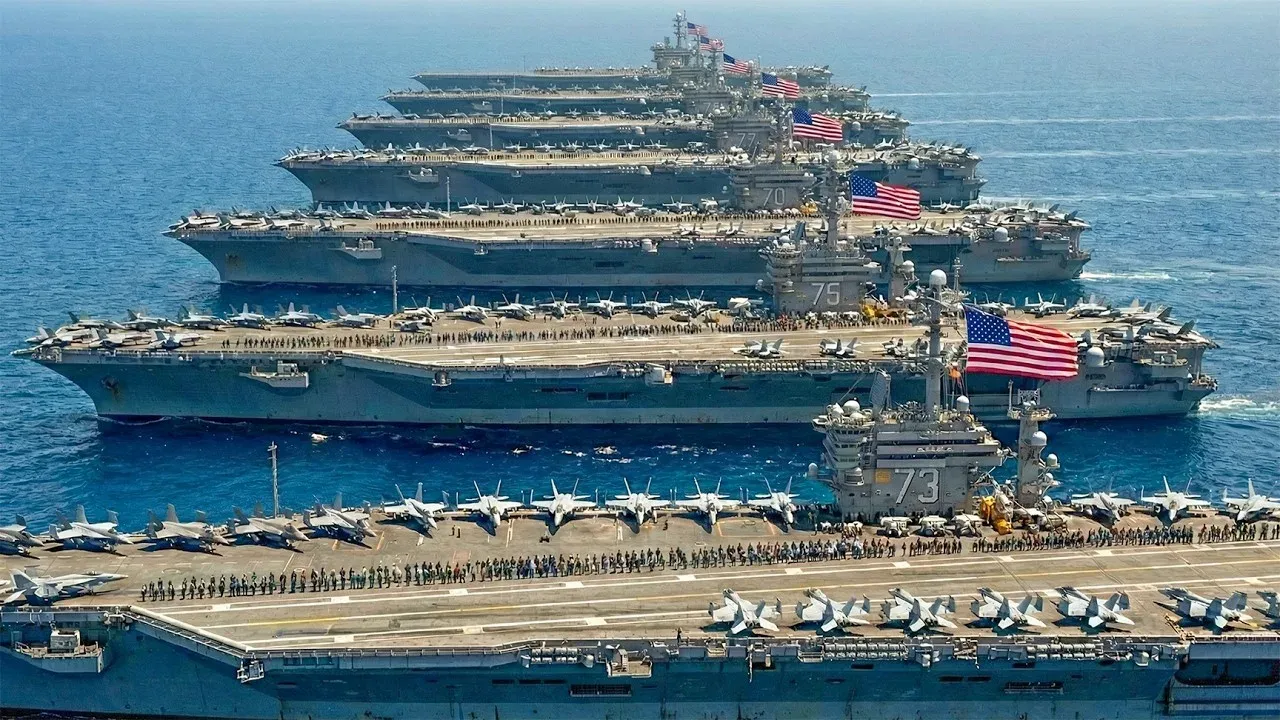


But if we look at the reality of today, the maximum the great American fleet can field is three, or at most four, aircraft carriers. The rest are permanently under repair, lasting months without the slightest sign of progress. That's why Lincoln set a record for combat service. Not because of the fierce courage of her crew, but simply because there was no one to replace them.

Roughly the same thing is happening in the Air Force. Conventional, naval, marine, and national guard. So what if the Americans have 150 F-22 Raptors? Nothing. If they're used at all, it's on the farthest edges of the most basic operations. Or if they need to shoot down a bubble over their own territory. The important thing is to show that the Raptors exist, and the enormous expense of maintaining them is justified. Nothing more, because deploying these cripples into normal combat against modern Russian and Chinese fighters—that wouldn't even occur to any US general, since the myth of a super-aircraft would crumble faster than downing the Raptors.

And so it is in many ways, and Congress, which is essentially responsible for the country's security, doesn't particularly hide it. That is, members of Congress aren't whispering behind closed doors; they're shouting out loud.

And now it’s worth figuring out why they do this.

It turns out to be interesting: despite the fact that the US has a simply titanic number of fighters, they complain that this is not enough, and in general their current number is less than the officially approved minimum, and the average age of the aircraft is at 27 years, and these concerns are quite reasonable.

As the neighbors would say, it was a complete betrayal without the slightest sign of victory, but in reality, everything is even more interesting than it seems at first glance.

The United States has an officially approved minimum number of fighter aircraft mandated by Congress for its air force. This applies not only to aircraft but also to ships. tanks, air defense systems, and so on. Despite the general chaos in the military (which is normal for any country), America has order in terms of standards and regulations. There are standards, but who says they must be followed?

So, everything is in accordance, and the current fighter fleet has been below the established minimum for several years now.
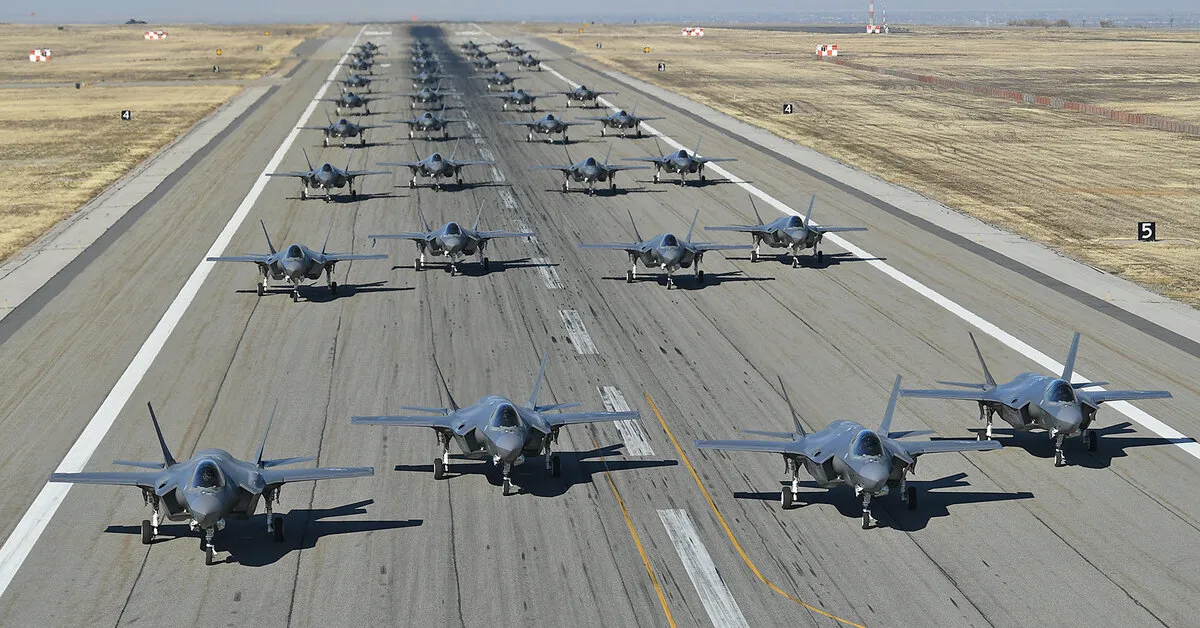

Thus, as of now, the US Armed Forces have 1098 fighter aircraft of various types (excluding the 15% reserve aircraft). Meanwhile, the minimum number approved by Congress is 1145 aircraft (also excluding the 15% reserve aircraft), which is 47 units short of the established standard.

It doesn't seem like much. What are 47 planes compared to the thousand-plus available? On the other hand, that's two air regiments...

Furthermore, the aircraft shortage is compounded by the average age of this fleet, which currently stands at 27,4 years. This is an extremely high figure, twice the average for the US Navy fleet and three times the equivalent figure for the Royal Australian Air Force, a country not known for its advanced air power.

The advanced average age of US Air Force fighters suggests that a number of them may already be reaching the end of their airframe lifespan. This, in turn, means that these aircraft must either undergo airframe lifespan extension programs, which is likely a temporary solution, or be replaced with newer, more modern platforms.

The Air Force's high average age is also driven by the fact that it has a certain number of older aircraft that Congress refuses to allow to be retired, in the name of those same "defense capability" figures. Meanwhile, funds that could be used to purchase new aircraft are being spent on servicing these flying antiques, literally.

And this creates a vicious cycle: decommissioning an aircraft and ordering a new one is impossible because building a new one requires time and money, and the gap between decommissioning the old one and commissioning the new one will worsen the statistics. And naturally, no one will go to all the trouble for just one aircraft, much less build it with their own money.

All of this clearly doesn't contribute to expanding the US Air Force's fighter fleet to even the minimum authorized level; it only hinders this process. And this is actually more important than it might seem, because according to politicians, the threat from Russia and China is constantly growing, and in recent years, it has been exponentially increasing. So how can we counter it?
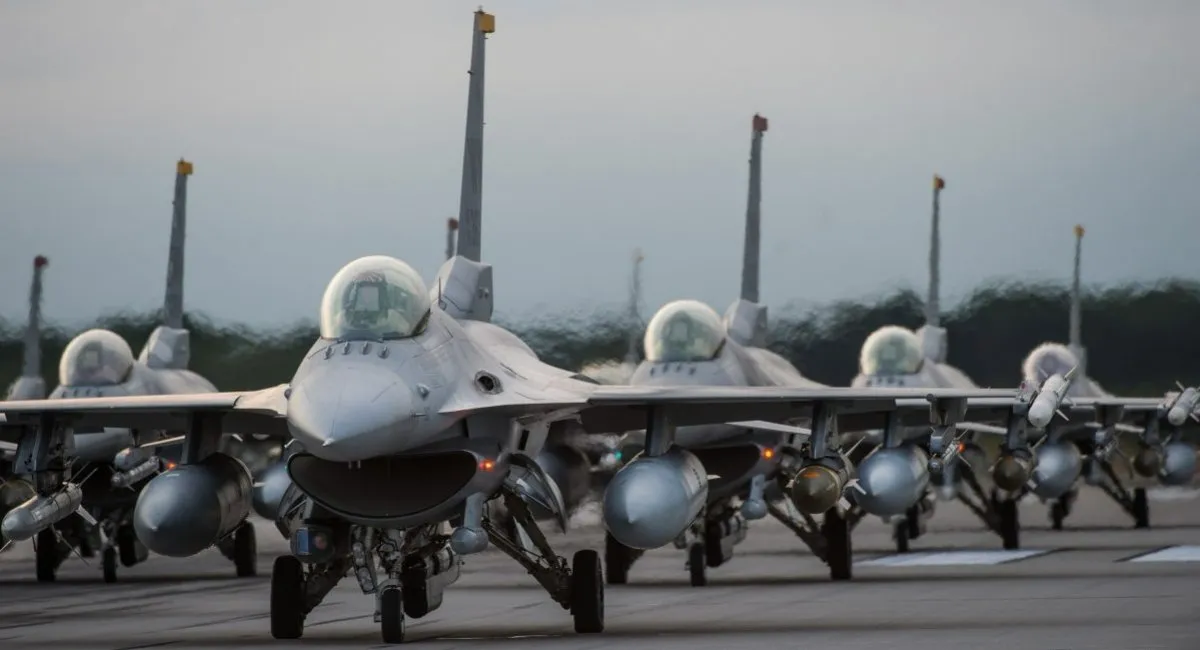

With the likelihood of military action between the US and China growing, the Chinese are rapidly expanding and modernizing their armed forces, including developing and increasing their fleet of fighter jets and other types of aircraft.

Therefore, Congress says, it's critically important for the United States to keep its Air Force in top condition. That's why the Americans want to have 1369 fighter jets in their Air Force by 2030 and 1558 by 2035 (both figures include reserve aircraft not involved in combat operations).
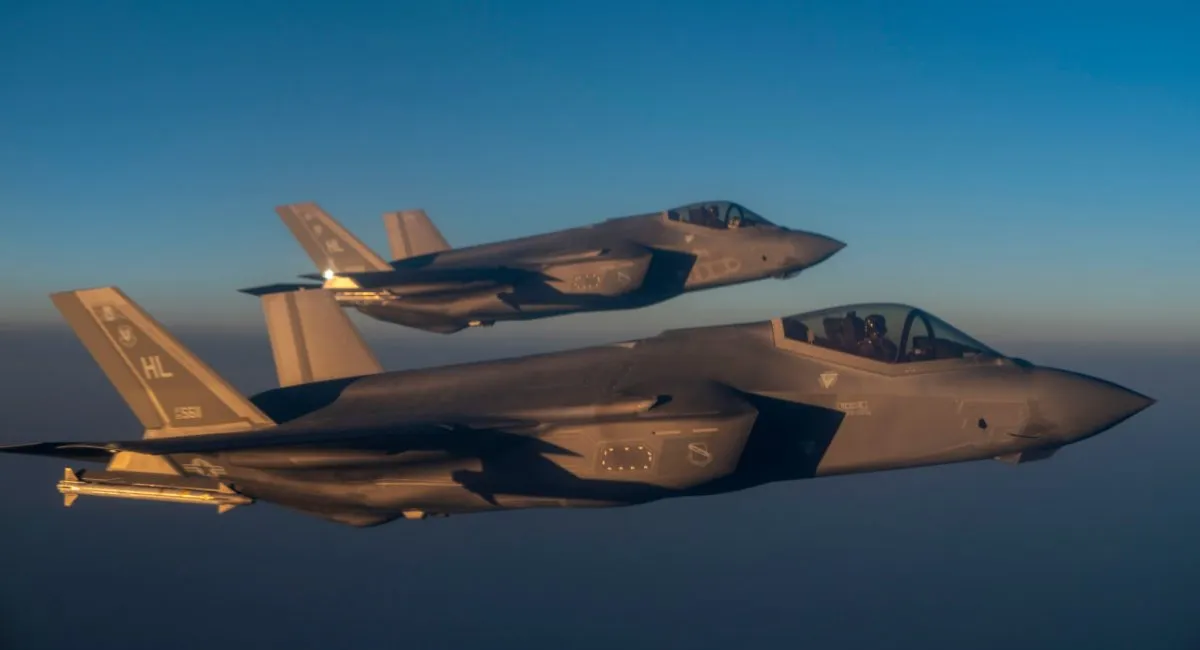

F-35A fighters

To achieve this goal, Congress wants to purchase up to 100 F-35A fighters and up to 24 F-15EX fighters per year! However, such plans could face challenges due to funding shortages and limited production capacity. It's even awkward to mention the personnel factor; it's the same all over the world.

A new report from the Congressional Research Service highlights the growing gap between the U.S. Air Force's current fighter fleet, its statutory structure, and its much larger planned fleet.

The US Air Force has not currently achieved the minimum fighter capability aviation, established by Congress, despite the fact that the conflict between the Air Force (to retire old aircraft and order new ones) and Congress (not to retire them because there will be no replacements) will become increasingly acute over the next decade. This issue was the subject of a new Congressional Research Service (CRS) report, "Air Force Fighter Structure: Assumptions and Issues for Congress," published on September 4, 2026.

The report mentions a target of 1558 aircraft by 2035. This figure is actually taken from the Air Force's Long-Term Fighter Force (DAF) Structure Report, which was submitted to Congress in October 2025.
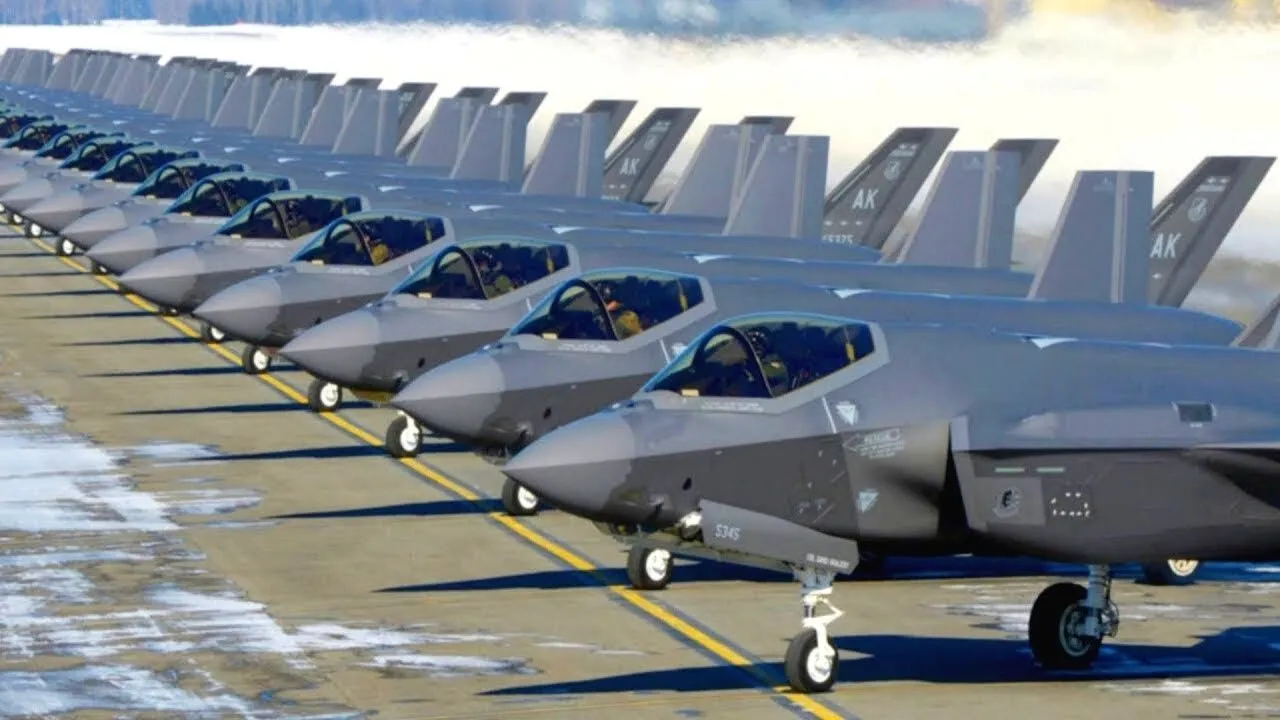

CRS provides a detailed assessment of the plan nearly a year after its release, examining whether the Air Force can actually achieve the proposed force structure and what Congress might need to do to support or change it.

The Air Force's strength is already below the legal minimum.

Under 10 U.S. Code § 9062, the Air Force is required to maintain a primary mission inventory (PMAI) of at least 1145 fighter aircraft. However, on May 5, 2026, Secretary of the Air Force Troy Meinke notified Congress that the service possessed 1098 fighter aircraft, 47 aircraft short of the statutory requirement.

It's probably worth clarifying here what the US Code is.

This is a consolidated codification of all federal legislation in the United States, published by the Legislative Office of the House of Representatives. It includes provisions of the Constitution and numerous other statutes.

This discrepancy becomes even more intriguing when compared with an October 2025 Air Force report, which proposed a different method for counting aircraft. In response, the service proposed introducing a Combat-Coded Total Aircraft Inventory (CC TAI), which would include reserve aircraft and aircraft in the loss reserve.
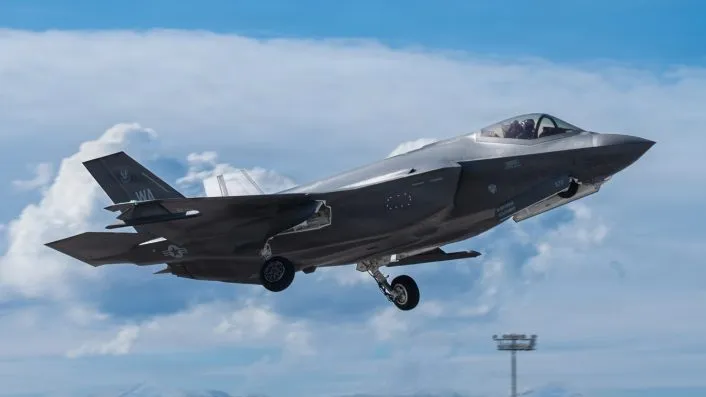

A U.S. Air Force F-35A Lightning II fighter assigned to the 6th Weapons Squadron takes off for a mission during Exercise Red Flag-Nellis 26-1.

The service claimed that the PMAI undercounted approximately 15% of aircraft assigned to combat units. It should be noted that the Congressional requirement for 1145 aircraft remains based on PMAI data.

According to the CC TAI report, there will be 1271 fighter jets in service in FY2026, while the PMAI reports 1098. According to the report, the US Air Force will need 1304 fighter jets in FY2030 and 1146 in FY2035.

According to an analysis conducted by the Air Force in 2025, it will need 1558 combat-ready fighters by 2035 to achieve what it considers a low-risk operational posture. An interim target of 1369 fighters by 2030 was also set. These figures refer to the CC TAI, the service reports.
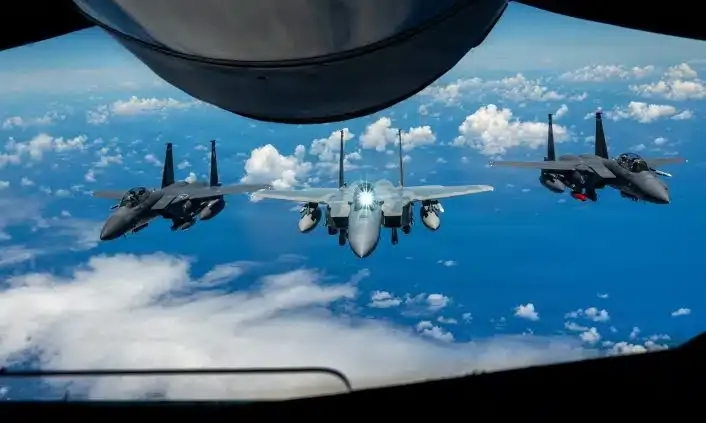

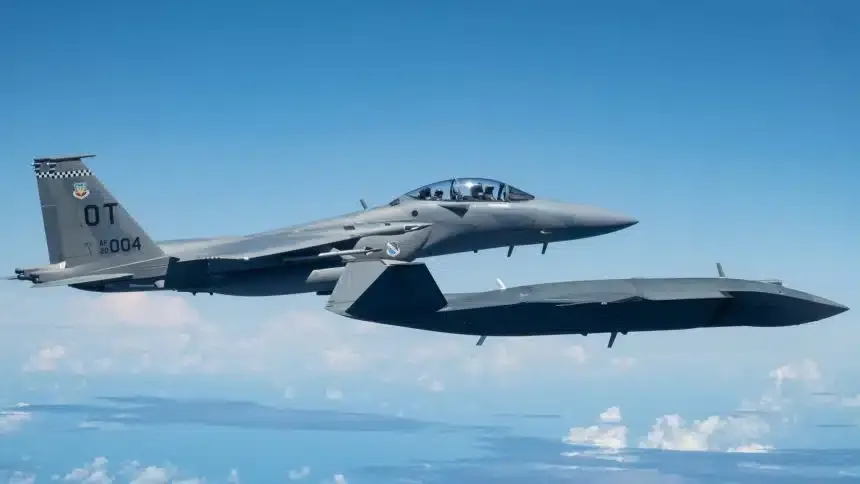
U.S. Air Force F-15EX Eagle II and F-15E Strike Eagle fighter jets fly in formation after refueling from a KC-135 Stratotanker over the Pacific Ocean, June 29, 2026.

The US Air Force plans to continue retiring aging aircraft while simultaneously increasing procurement of new ones to achieve its goal. The Air Force's 2025 report indicates a potential maximum procurement rate of approximately 100 F-35A fighters and 24 F-15EX fighters per year by 2030. But potential doesn't mean actual. That's clear.

A report from the Center for Strategic and International Studies reiterates these figures, but adds an important caveat: achieving the desired number of aircraft will require both sufficient funding and production capacity. However, the military is projected to lack the authority to increase production rates. This is the prerogative of Congress.

The F-35A is expected to remain the Air Force's primary tactical fighter, while the F-15EX will serve additional roles, focusing on range and the ability to carry large amounts of weapons. Furthermore, these two aircraft occupy very different positions in the future armed forces.

The F-35 is a fifth-generation stealth fighter focused on survivability, sensors, and network integration, while the F-15EX is a larger, non-stealth platform capable of carrying significant ordnance. Together, they are expected to provide the necessary force to ensure security until the Air Force receives significant numbers of next-generation F-47 fighters or the F-35/F-15. The F-47 situation is far from certain, especially since the United States has been demonstrating to the world in recent years how spectacularly its military projects are failing one after another.
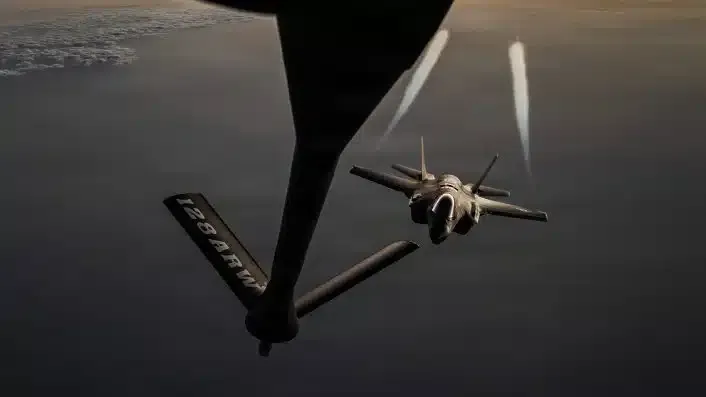

A U.S. Air Force KC-135 Stratotanker refueling a U.S. Air Force F-35A Lightning II during Operation Furious Wind.

Airplanes are also getting older
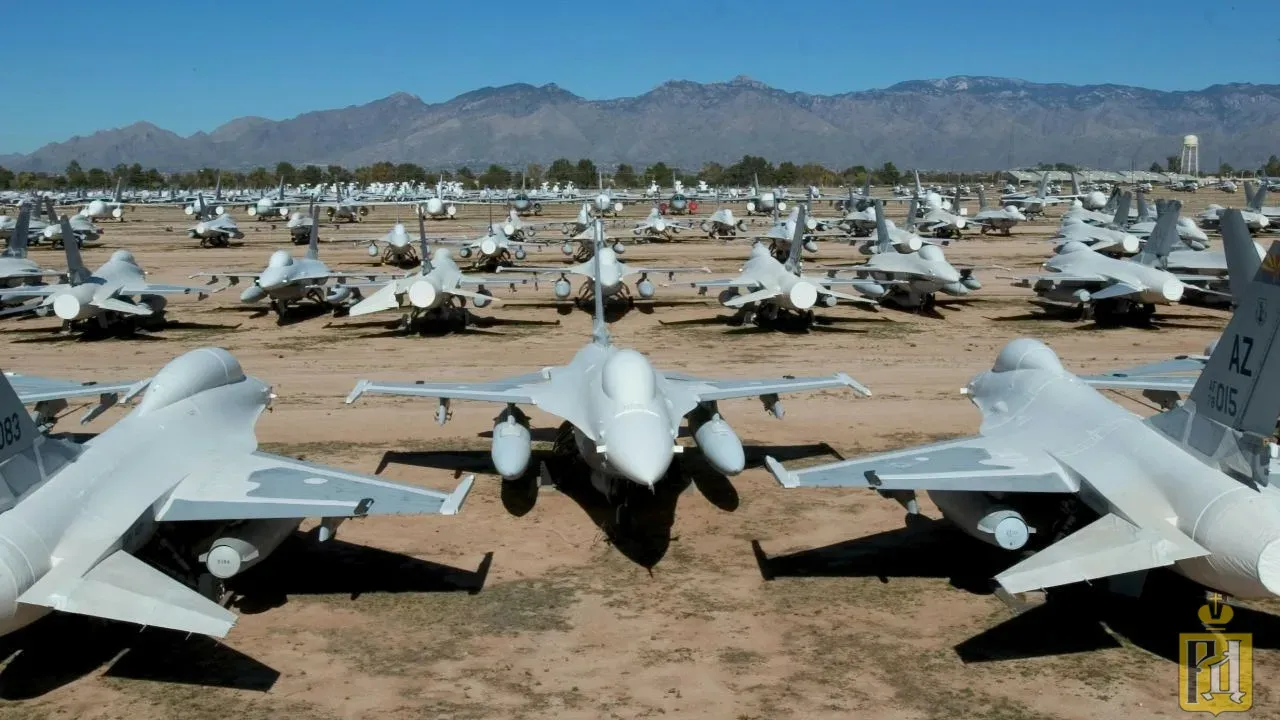


The problem isn't limited to procurement, as the Air Force operates a severely deteriorated fleet, with an average aircraft age of approximately 27,4 years. Notably, the report also notes that the US Air Force has the oldest fighter fleet of any military service and many partner nations. According to the authors, it is twice as old as the US Navy's fighter fleet and three times as old as the Royal Australian Air Force's fighter fleet, which were referenced above.

This has obvious consequences, as servicing older aircraft becomes increasingly expensive and complex, while parts shortages and maintenance issues can reduce the number of aircraft actually fit for service. The report also notes that there is a "near-perfect correlation" between the increasing age of the fighter fleet and the declining aircraft serviceability rate.

Thus, the Air Force's modernization plan relies heavily on retiring legacy aircraft like the F-15C/D and A-10C, as well as the oldest F-15E and F-16C/D fighters, and increasing procurement of F-15EX and F-35A fighters. However, Congress has repeatedly interfered with fighter retirement plans, as lawmakers fear the Air Force will lose its combat capability before the new aircraft arrive.

For example, current legislation limits the retirement of the F-22 and F-15E, and Congress has also imposed restrictions on the retirement of the A-10. Commanders will have to minimize disruptions to operational readiness while restoring the fleet's combat capability.
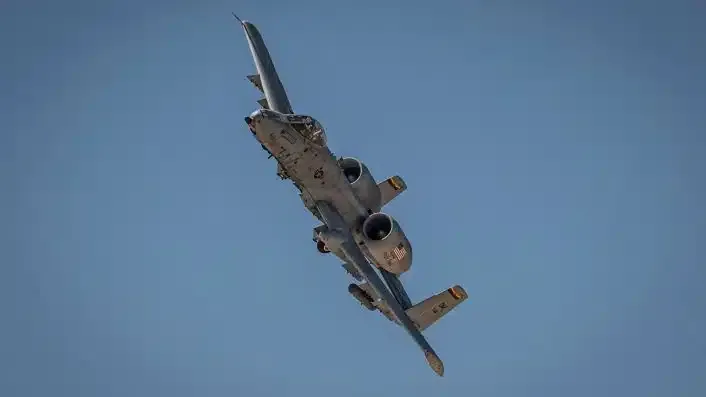

On July 29, 2026, the A-10C Thunderbolt II took off for the last time at Davis-Monthan Air Force Base, Arizona.

The future of fighter-bombers in general is rather uncertain. The future armed forces will ultimately be based on the F-47, a sixth-generation fighter being developed under the Next Generation Air Superiority program. This aircraft is expected to possess capabilities superior to those of the F-35 and F-15EX, especially in high-intensity, peer-to-peer combat.

If, let us repeat ourselves, everything goes as planned.

However, the F-47 isn't an immediate solution to the US Air Force's fighter jet shortage. The Air Force must continue to operate its existing fleet while the new aircraft undergoes development, testing, and, ultimately, preparation for serial production.

The Air Force's fighter procurement plan also raises the question of how to account for Collaborative Combat Aircraft (CCA) in the new fighter force structure. In fact, as mentioned earlier, the 1558 fighter procurement goal applies to manned aircraft, and CCAs are not included in this category. And as we previously reported, the US Air Force plans to acquire a full 1,000 CCAs by 2035.

The Air Force's 2025 Vision report explicitly identifies unmanned aerial vehicles as a means of augmenting, rather than replacing, manned fighters. This approach remains unchanged in the latest report from the Center for Strategic and International Studies, although it does note that unmanned aerial vehicles allow for an increase in the overall size of the armed forces within a given budget.

The situation is, frankly, challenging. The Air Force needs new aircraft to replace the old ones, and Congress needs combat-ready aircraft in sufficient quantities to ensure safety. Between these two demands lies a vast gap in the time required to produce 100 or more aircraft. How Congress and the Air Force will navigate this dilemma is a major question, and aircraft manufacturers will play a significant role in resolving it.

Overall, it's certainly too early to panic; minus 47 aircraft isn't that much, but nevertheless, more and more will be added to this figure every year, and the question is what figure Congress will break down on.

Americans have a wonderful saying: "You can't make a fried egg without breaking a few eggs." This means that achieving a goal often requires overcoming difficulties and taking risks. Who will have to take more risks—the military, using old aircraft, or Congress, risking being left without fighter jets altogether—is the most interesting question for Americans.
38 comments
Information
Dear reader, to leave comments on the publication, you must sign in.
  1. + 12
    22 September 2026 05: 34
    This isn't panic, but rather a simple attempt to whip up hysteria to boost profits for the US aircraft manufacturing giants. In short, it's a cry of "Give us your money!"
  2. +4
    22 September 2026 06: 53
    Throw in hats.
    The Air Force has 1000 aircraft, the Navy - 400. That's already a decent amount.
  3. -1
    22 September 2026 06: 55
    The article fails to mention another extremely pressing question: do they have trained pilots for this entire armada? Judging by the cries from the citadel of democracy, they're having some trouble with that...
  4. +5
    22 September 2026 08: 29
    The important thing here is to demonstrate that the Raptors exist, and the enormous costs of maintaining them are justified. Nothing more, because deploying these cripples into a proper fight against modern Russian and Chinese fighters would never occur to any US general, as the myth of a super-aircraft would collapse faster than the Raptors shot down.

    I wouldn't immediately write off the F-22 and the fact that they will be dropping like flies.
  5. +8
    22 September 2026 08: 48
    The article mentions betrayal, but in essence the content of the above is a far-fetched victory.
  6. +5
    22 September 2026 10: 09
    There is such an old joke.

    High school students come to school after summer and share their summer impressions.
    Masha and Vovochka are at the back of the class.
    Masha
    - Damn, I got pregnant this summer from someone I don't know, now I have to have an abortion, where will I get the money?
    Vovochka
    - I caught a nasty illness this summer, I need treatment, and now they're asking for money, I can't figure out what to do?
    The teacher
    - What are you chatting about in class?! Vovochka, how much is seven times eight?!
    Vovochka
    - Fifty-six, Maryivanna. I wish I had your worries...

    I remembered a joke when I read that the Americans have 1200 fighters, taking into account their reserves, but they are still 45 short :((....
    1. +1
      24 September 2026 19: 05
      Quote from solar
      when I read that the Americans have 1200 fighters, including reserves, but they are still 45 short

      Everyone has their own problems. Their problem isn't so much that 47 fighters are missing, but that the old fleet and aircraft need to be retired, but Congress won't allow it, and new ones are being built/delivered slowly. That's why the other thread says the US intends to resume purchasing the new F-16G Block 80/82 modification, precisely to address the issue of saturating the Air Force with new aircraft.
      As for "compared to us"... even I'm curious. There are no exact figures, but you can estimate them based on previous figures, production rates, their dynamics, and the impact on military aircraft exports. The figures will be approximate, but the range from the truth is small.
      - Su-57 - about 120 by the end of this year.
      The combined fleet of Su-30SM/SM2, Su-34/34M, and Su-35S aircraft by the end of the year will be approximately 500 units. However, it may be slightly less due to export deliveries last year and this year.
      - Soviet-built Su-27SM3 - about 200, maybe a little more.
      - MiG-29 and MiG-35S about 50, together with carrier-based ones about 80.
      - At the beginning of the Air Defense Forces there were at least 200 Su-24M units, but due to losses and planned write-offs, today there are about 100+.
      - At the beginning of the Air Defense Forces there were about 200 Su-25s, today there are 150-160.
      Total: 970-1000 combat fighters at the end of this year.
      By the end of next year, up to 150 more heavy fighters will be added. More precisely, that's how many will be produced, and taking into account exports, the number of units in the armed forces will increase to 120.
      So, we're roughly reaching parity in the number of combat base aviation (ground-based), but the US also has carrier-based and Marine Corps base aviation. So, there's still room for improvement, but there's certainly no reason to tear your hair out in despair and self-flagellation.
      For the VKS, it is optimal to achieve approximately the following numerical indicators:
      - Su-35S - 200 pcs.
      - Su-30SM2 - up to 300 units, because they are also needed for Naval Aviation.
      - Su-34M - up to 300 units. minimum
      - Su-57 - at least 300 units.
      - Prospective Su-75 (not counting unmanned versions) - about 500 units.
      - Yak-130M as a light UAV interceptor and light strike carrier of strike cruise missiles and drones (as the Su-25 is already in operation) - about 200 units.
      In just about 10-15 years and after the complete rearmament of the Aerospace Forces, it is desirable to have 1600 combat aircraft.
      This shouldn't be considered an exaggerated "wish list" compared to the US Air Force's; they also have around 800 fighters in their naval carrier-based aviation. And NATO isn't going anywhere yet. Neither are our other neighbors, both quiet and not so quiet. I hope we'll reach these figures by 2040. If we live that long, of course. Which is my sincere wish for everyone.
      1. -1
        24 September 2026 20: 23
        If you have Su-24 and Su-25 combat fighters, then of course...
        1. 0
          25 September 2026 11: 52
          We're talking about combat aircraft, not fighters. The Su-34 is also a frontline bomber. The article mentions the A-10, but the US Air Force operates purely attack variants of the F-15.
          The Su-24M is a dying breed; they are being replaced by the Su-34M. The Su-25 will serve until its service life is completely exhausted, and new work has already been found for it—it now carries and launches the new Banderol-class cruise missiles and drones and their sisters.
          1. 0
            25 September 2026 13: 01
            Total: 970 - 1000 combat fighters by the end of this year.

            hi
            1. 0
              25 September 2026 16: 20
              Well, that's just a typo. I've already listed the approximate numbers of each type by position.
              Moreover, I probably significantly underestimated the number of Su-27SM3s; there may be 50-70 more aircraft.
              These were just "thoughts out loud" to compare and assess each other's potential. And we don't look nearly as weak as we once did. A couple more years of this kind of work and we'll be quite on par with the US fighter fleet, with comparable aircraft quality and our superiority in air defense. hi
              1. 0
                25 September 2026 17: 15
                A couple more years of this kind of work and we will have parity with the US fighter fleet.

                Unless, of course, our entire fleet is airworthy and not in storage. The Americans have a lot of equipment in storage. And they won't just sit on their butts for a couple of years :((...
                1. +1
                  25 September 2026 17: 40
                  Our conditions for such storage are unsuitable – the climate. Tanks are somehow stored, but even light armored vehicles and motor vehicles are really bad. What can we even say about aircraft? And if we store them in covered and heated hangars… who's going to pay for all that?
                  So yes, they have plenty of aircraft at their dry, high-altitude storage bases, and a significant portion of them can be returned to service at any time. This is either impossible or difficult for us. And that's a significant advantage for them.
                  Somewhere in Kandahar... what Similar storage bases could be set up there. But I'm afraid the natives would dismantle them within the first year and steal them for their own personal and, of course, essential needs. They'd have to be guarded by dogs, and dogs need to be fed. request Only expenses.
                  Quote from solar
                  The Americans have a lot of equipment in storage.

                  There are plenty, but this isn't modern equipment—it's from yesterday and the day before yesterday. It can certainly be used to replace losses and damage, but the quality will suffer. We also have MiG-29s in storage that are fit for return to service, a fair number of MiG-31s ​​have been modernized and returned to service, and there are some T-10 airframes in storage, but that's out of desperation. More often than not, we simply pull them out of storage and, after repairs and/or modernization, export them.
                  Quote from solar
                  and they won't sit on their butts for a couple of years

                  Well, judging by their plans, they're planning to tighten up their fleet a bit, but not by much, and it's not a given that they'll succeed. They're having to write off some fighters simply due to wear and tear and the dangers of operating them, and their replacement with new aircraft isn't keeping up with the rate of write-offs. It was precisely to reverse this trend that they decided to purchase an expanded series of F-15EXs and want to resume F-16G purchases. But that won't happen so quickly with the latter; it will take time to get going and adjust their export plans. Our fleet, on the other hand, is noticeably newer, and if we don't have any major write-offs of older aircraft for another two or three years, we could even match them in numbers. This isn't an end in itself or a competition; it's just that the dynamics could develop. The main thing is to solve our own problems systematically, in a planned, comprehensive manner.
  7. +4
    22 September 2026 10: 36
    I wish there was an article like this about our Air Force. The average age of the fleet... Transport and naval aviation are worse, fighter aviation is better.
    1. +1
      23 September 2026 13: 21
      I wish there was an article like this about our Air Force.
      There won't be such an article. This topic is closed here. wink I looked at the Su-34, Alice found that only 212 of them were produced in all time. So I think the maximum was 20 per year... I looked at the IL-2 production during the war - it turned out to be up to 400 machines per month? request (4500 per year) I understand that the SU-34 and IL-2 are like comparing a spaceship and a felt boot, but it seems to me that even for 50 units per year, Stalin would personally come and shoot them...
      1. +1
        25 September 2026 13: 05
        Quote: tehnix
        I understand that the SU-34 and the IL-2 are like comparing a spaceship and a felt boot, but I think even for 50 units a year, Stalin would have personally come and shot them...

        I don’t think that the Father of Nations would be so categorical; everything is known through comparison.
        Quote: tehnix
        Alice found that only 212 of them were ever produced.

        You think that's not enough? Considering combat and other losses, there are at least 200 such aircraft in service, which is equivalent to eight air regiments and a tail.
        Quote: tehnix
        I think a maximum of 20 pieces per year.

        Last year and this year - 30 units each (maximum production capacity of the assembly line). The year before last, it seemed like there were 24 units. But in 2022 there were only 8 units per year - the output was deliberately reduced (at the peak after the start of production, 18 units were produced per year) just before the Second World War. After the start of the Second World War, all combat aircraft production lines were brought to 100% productivity within 3 years - 30 aircraft per year. Since last year (based on the results), our annual output of heavy fighters/frontline bombers is: Su-30SM2 - 30 units, Su-34M - 30 units, Su-35S - 30 units. But 3 (three!) new assembly lines with the same productivity were built for the production of the Su-57. The first has already reached full production capacity, the second will probably do so this year, if not, next year. The third completed component delivery last year and should now also begin assembly. In another 2-3 years, all three lines will be producing 30 aircraft per year, which, for all heavy fighters, will total 180 aircraft per year. Find where in the world there are more. In China, three (3) assembly lines for the J-20 have been built and are operating, with exactly the same capacity: 3 x 30 = 90 aircraft per year.
        This year, approximately 140-150 heavy fighters will be delivered to customers. Find someone with more. Compare this with the production of combat fighters in Europe (and they only produce light fighters, which are definitely no match for our heavy fighters). Compare this with the annual fighter production in the US (they only produce heavy fighters, the F-15EX, the Lightning, and the F-16 and F-18, respectively), but even compare it with the total production.
        In the US Air Force there are about 1150 combat fighters of all types + attack aircraft in service with an average age of 27,4 years?
        We have at least 1000 fighters and fighter-bombers in our Aerospace Forces. In service. And the number is growing at a rate of 100-120 aircraft per year, the rate of deliveries is increasing, but the average age of the fleet is significantly younger than that of the United States. Of the operational aircraft of Soviet origin, only the Su-25 (150-160 units), Su-24M (there were about 200 units, now I think about 100 units remain in service - they are replacing them with Su-34M), Su-27SM3 (about 200 units). While the Su-34, Su-30SM/SM2 and Su-35S in total are about 500 units, the Su-57 will be about 120 units by the end of the year.
        In terms of the number of combat aircraft in the Aerospace Forces, we could be equal with the US by the end of next year. But they still have about 800 carrier-based and naval fighters. So we definitely still have some room for improvement.
        And this despite the fact that in Long-Range/Strategic Aviation, we also have approximate parity with the US. Which they are so eager to disrupt by returning some B-52s to service and building 100-120 B-21s. But for now, it's approximate parity.
        So look at it from this comparative point of view.
        Quote: tehnix
        I looked at the IL-2 production during the war - it turned out to be up to 400 aircraft per month?? (4500 per year)

        How many attack UAVs and cruise missiles of various types did we produce during WWII? In terms of the number of cruise missiles of various types produced per year, perhaps even the rest of the world can't keep up. And certainly not all of NATO combined. As well as in the number of SAMs produced per year. As well as in the number of operational missiles of the Iskander-M and Iskander-1000 class. Have you noticed the frequency of combat use of the Zircon gas protection system and the number of such missiles in a single salvo? And which of our opponents has anything similar?
        Look how Trump bowed to Xi Jinping. Why? Because the hegemon collapsed, lost the war to Iran miserably!!! He attacked together with Israel and lost miserably! Europe is simply dirt under its feet. The British may still be making a mess, but now it's mostly for themselves. In less than five years of war, Russia managed to develop a full-fledged Ground Army (before the Central Military District, our Ground Forces numbered only 280,000, half of which were conscripts), increase the number of combat aviation to approximate parity with the United States, deploy 12 missile brigades with Iskander-M and Iskander-K missiles into 12 missile divisions (with six missile regiments each), which now include Iskander-1000, Zircon, and Kalibr intermediate-range missiles on unpaved TPUs. In terms of shell production, we (along with North Korea) are an order of magnitude superior not only to all of NATO, but also to the entire coalition of 52 willing parties. Do you really think Comrade Stalin would be ashamed of such results during the war?
        Have we been fighting for a long time?
        The USSR also fought not since 1941, but since 1939, when WWII began. Everything becomes clear in comparison.
        Quote: tehnix
        Stalin would have come personally to execute...

        Or maybe, having looked at everything carefully, as only he could... he would have said, lighting his pipe: "But these blockheads are doing something right."
        But in this war, we don't have allies like the USA and the British Empire (they're now our enemies), no all-conquering ideology that could unite the Soviet people against fascism. We don't even have a sovereign financial system like Stalin's, and the aforementioned Nabiullina is wreaking havoc on the country, the people, and the economy even worse than that same Englishwoman. And even under these conditions, they somehow managed to grind down and smear the efforts and efforts of the entire "Coalition of Those Wishing" for our death and our resources... Trump and Israel couldn't defeat Iran alone, they lost utterly, while against us, 52 willing and used people... the result was completely different. They drove into Russia like a bulldozer on the Rock... and, digging in, they crumbled into cogs... And Russia stands and grows. It's far from over, but even a blind man can already see where this is all heading.
        1. 0
          25 September 2026 17: 21
          I don’t think that the Father of Nations would be so categorical; everything is known through comparison.

          Alexey Shakhurin. People's Commissar of the Aviation Industry of the USSR (1940-1946), Colonel General of the Aviation Engineering Service, Hero of Socialist Labor (1941). Member of the Central Committee of the All-Union Communist Party (Bolsheviks) (1939-1946).
          On May 10-11, 1946, the Military Collegium of the Supreme Court of the USSR, chaired by V. V. Ulrikh, sentenced him to 7 years in prison on charges of “abuse of power” and “production of substandard, poor-quality and incomplete products”[7][b][c].
          In the verdict, A. I. Shakhurin was accused of the following: "for a long period of time, he produced aircraft and engines with significant design and production defects and, in collusion with the Air Force command, supplied them to the Air Force, as a result of which a large number of accidents and disasters occurred in aviation units, pilots died, and a large accumulation of defective aircraft that could not be used in battles with the Germans..."
          1. 0
            25 September 2026 18: 15
            This is a well-known case. Then the young commander-in-chief of the Air Force also suffered.
            1. 0
              25 September 2026 18: 40
              Then the young commander-in-chief of the Air Force also suffered.

              First Chief Marshal of Aviation Novikov. He was imprisoned.
              Air Marshal Khudyakov. In the photo in Yalta, he stands behind Stalin. Treason. He was executed.
              Repin, Colonel General. From May 1942 to April 1946, he was Chief Engineer of the Soviet Air Force, simultaneously serving as Deputy Commander and a member of the Military Council of the Air Force. From September 1942, he simultaneously served as Chief of the Main Directorate of the Red Army's Aviation Engineering Service and, from 1944, as Chief of the State Red Banner Research Institute of the Air Force. He was imprisoned.
              Shimanov, Colonel General of Aviation. From March 1943 until the end of the Great Patriotic War, he was a member of the Military Council of the Air Force and simultaneously head of the Aviation Department of the Central Committee of the All-Union Communist Party (Bolsheviks). He was imprisoned.
              Seleznev, Lieutenant General. During the war, he served as deputy chief, then chief, of the Air Force's Main Directorate of Orders. He was imprisoned.
              Grigoryan. During the war, he was head of the Department of Aircraft Engine Manufacturing of the Personnel Directorate of the Central Committee of the All-Union Communist Party (Bolsheviks). He was imprisoned.
              In general, a significant part of the leadership of the Air Force and the aviation industry, those who forged the Victory in the rear and in the army, were imprisoned or shot immediately after the war.
              In the photo: Yalta, 1945. Third from the right is Khudyakov. In that same year, 1945, he was arrested and then executed. His family was sent into exile.
              1. +1
                25 September 2026 23: 08
                The case of the defective aircraft delivery was a high-profile one, revealing much, including the role of this defect in the deaths of many Soviet pilots during the war and even after the war during scheduled training flights, which exposed this brutal forgery. Not only Stalin, but the Soviet government (at that time) did not forgive such actions. All those involved, those involved, and those who failed to report them faced just and severe punishment. This was then rightly considered treason. There is no point in justifying the villains; they got what they deserved, and their services do not cover their crime. This is an example of how a Sovereign State should judge and punish its enemies, saboteurs, embezzlers, and accomplices of the Enemy. For such activity was de facto aiding the Enemy. This is an example and a lesson to us on how things should be.
                Quote from solar
                A significant part of the leadership of the Air Force and the aviation industry, those who forged the Victory in the rear and in the army, were imprisoned or shot immediately after the war.

                This didn't cause any significant damage to our post-war aviation. Let's recall how, as early as 1950, our MiG-15s surprised pilots from the "coalition of the willing" in the skies over Korea. Let's recall the years in which the Tu-4 (our copy of the B-29), Tu-16, Tu-95, M-4, and MiG-15 were developed and launched into production. Identifying and exemplarily punishing villains in high positions always brings only benefit and improves the quality of public administration.
                1. 0
                  25 September 2026 23: 18
                  For the entire war, we literally had no idea what the quality of the aircraft was, or what the objective reasons were. These people were kept in high positions and constantly promoted, given marshal ranks, these were the very people who ensured Victory, and then suddenly, as soon as the war was over, their eyes were opened. Don't you find it funny? Seeing a traitor to the Motherland right behind Comrade Stalin looked especially odd.
                  1. +1
                    25 September 2026 23: 58
                    Quote from solar
                    In fact, throughout the entire war they didn't know what the quality of the planes was.

                    Obviously, they didn't know. At least not about the scale of the defects and fraud. These guys were even involved in falsifications - they conspired to sign acceptance certificates for more aircraft than they actually delivered to the customer. This also came to light soon after the war, and the reason for the investigation was... the unusually luxurious life of the Minister of Aviation Industry... luxurious beyond his means. They began the investigation even before reports appeared that, despite the fact that the war was over, our pilots continued to die during training and scheduled flights. This also prompted an investigation. Well, some of this gang were also friends with the British and, as it turned out, leaked information to them, which they had no right to do. And they continued to do this after the war, when we ceased to be allies and Churchill's "Unthinkable" plan had already become known - to go to war with us immediately after the end of the war with Japan.
                    Quote from solar
                    These people ensured the Victory

                    These people were among many who worked for victory, but unlike the others, they did their job poorly, with defects, leading to the deaths of pilots, which were written off as combat losses. This is sabotage, sabotage, and embezzlement of public funds on an especially large scale. Do you think they should have been awarded for this? They'd already received awards for their falsifications and inflated reports by that time. Or should we "understand and forgive" them? Seriously? Like Chubais and a whole bunch of deputy prime ministers (and others) with Israeli passports? smile
                    Comrade Stalin certainly did not suffer from such softness and indifference.
                    Quote from solar
                    Suddenly my eyes opened as soon as the war ended.

                    And now counterintelligence and investigative agencies have time to deal with economic crimes. After all, they fought in the war, caught spies and saboteurs, trained their own intelligence officers and saboteurs, and went behind enemy lines themselves... And these ghouls stole government money, ruined Soviet pilots, leaked information to the British, and covered for each other.
                    Quote from solar
                    The traitor to the Motherland looked especially strange right behind Comrade Stalin’s back.

                    Have you forgotten how close to Comrade Stalin stood such figures as Yagoda, Yezhov, Bukharin, Tukhachevsky, who were Trotsky, Zinoviev and other agents of the International in the service of the Rothschilds and MI6?
                    1. 0
                      26 September 2026 00: 00
                      Obviously they didn't know.

                      Comrade Beria wasn't shot immediately? It was his job to provide Comrade Stalin with objective information about the state of affairs...
                      1. +1
                        26 September 2026 00: 46
                        During the war, Beria supervised:
                        - the evacuation of all Soviet industry beyond the Urals,
                        - the aviation and tank industry (mainly in the context of assistance in organizing production, supplying necessary/missing equipment, i.e. organizational issues that the ministers themselves could not resolve),
                        - supervised political and technical intelligence,
                        - supervised intelligence on the atomic bomb, building an excellent intelligence network and gathering information on the progress of work on the Manhattan Project,
                        - at the end of and after the war, he oversaw missile programs, the program to create Moscow's first air defense system - the Berkut S-25 air defense system, the Soviet Nuclear Program, the program to create a thermonuclear bomb, the program to rebuild Soviet cities after the war, the new Soviet energy program, the construction of Moscow's skyscrapers... well, and during the war, he also managed to command the Caucasian Front, which itself created the units at hand, stopped the Germans, did not let them reach the Baku oil, saved the Black Sea Fleet driven into the "eastern corner", and after the culmination of the Battle of Stalingrad and the beginning of the Soviet offensive, he also transferred his front to the offensive. After the liberation of Kuban was completed, the front was disbanded and Beria again took up his previous range of tasks. In the USSR, no one was more capable than Beria. It is unlikely that anyone managed even 10%. He was a phenomenal organizer and leader.
                        Quote from solar
                        Comrade Beria wasn't shot immediately?

                        Comrade Beria was never held accountable for this (economic crimes) either during the war or after. Counterintelligence, SMERSH, and the MGB—they weren't under his purview or control at the time. But I'm sure that, having received materials about such serious and heinous crimes, he certainly didn't dissuade the judicial authorities from showing leniency. Didn't you know that the USSR had a court and an institution of lawyers? That Soviet courts issued an order of magnitude more acquittals than the courts of modern Russia? In percentage terms.
                        Quote from solar
                        It was his job to provide Comrade Stalin with objective information about the state of affairs...

                        The country was at war during the war, and if the commissars, NKVD, and SMERSH officers didn't uncover these crimes, they were likely complicit themselves, meaning they also suffered the punishment they deserved. It's been a while since I read these materials, but it seems those who were supposed to keep an eye on things were also in on it. During the war, there was no time for such shenanigans; the very existence of the USSR/Russia was at stake. Stalin suffered three heart attacks during the war. I myself suffered a heart attack, also during the war, and I know what it's like, but he led the country and won the war. The price was extremely high, both for the people and for Stalin himself, but we won.
                        But after the Victory, they began to deal with those who interfered with this victory. Including saboteurs, thieves, and saboteurs like those you mentioned.
        2. 0
          26 September 2026 19: 28
          We produce heavy fighters/frontline bombers: Su-30SM2 - 30 units, Su-34M - 30 units, Su-35S - 30 units. But for the production of the Su-57
          Well, you've really mixed everything together: planes, missiles, and even drones.
          I was only talking about the Su-34 as a frontline bomber. Everything else is various fighters (and here I wonder why they need such a variety?), which, as I understand it, are incapable of carrying the required bomb load. And it's the bombers that make the difference on the ground at the front, and you need a lot of them because they get shot down, they wear out, and so on. Footage of our bombing raids shows three to seven explosions and that's it. Watch movies about World War II, how Junkers and American bombers razed cities – that's what a bombing raid should be like, to give the enemy nothing to cling to. We need to demolish those high-rises and forested areas so that the attack aircraft don't die there.
          Therefore, in my opinion, 200 SU-34 is catastrophically few...
          1. +1
            26 September 2026 20: 56
            Quote: tehnix
            I spoke only about the SU-34 as a frontline bomber.

            A good frontline bomber, today perhaps the best of the 4++ family in the world.
            Quote: tehnix
            Everything else is various types of fighters (and here I have a question: why do we need such a variety of them?),

            These are all modifications of the T-10 (Su-27) airframe. The Su-35S is a further development of the Su-27, a single-seat multi-role fighter with a very powerful radar and a wide range of avionics.
            The Su-30SM/SM2 is a two-seat glider with a horizontal canard. It can be used as a group command aircraft. The second crew member makes it ideal for reconnaissance missions, using long-range BD missiles, and performing precision strikes against ground targets. It features a tandem cockpit. The Su-30SM2 has the same radar, avionics, and engines as the Su-35S. Think of it as a two-seat version of the Su-35S.
            The Su-34M is a frontline bomber with a highly advanced avionics suite, an increased combat radius (up to 2000 km), a fully armored cockpit (a "titanium alloy armor bath" with a thickness and protection rating superior to that of the Su-25), and critical fuselage areas. Its exceptional performance characteristics easily support six combat sorties per day, proven in combat.
            Su-57 is a fifth-generation multipurpose fighter jet. Su-57M-1 is a 5++ generation multipurpose fighter jet.
            The Su-30SM2 is mainly used by the regiments of the Naval Aviation Base - two-seater aircraft are preferable for flights over the sea.
            Quote: tehnix
            As I understand it, they are not capable of carrying the required bomb load.

            You don't understand anything. The maximum bomb load for all these aircraft (Su-30SM2/35S/34M) is 8000 kg. For the Su-34M, the "maximum" load, with a slight underfueling and a combat radius of about 500 km, is 12,000 kg. This has been confirmed by combat use in Syria.
            For the Su-57, the maximum combat load with external pylon suspension is 12,000 kg.
            Is this really "not enough"?
            Quote: tehnix
            Watch a movie about World War II, how Junkers and American bombers destroyed cities.

            Junkers bombers, especially Ju-87s, carried two 100-kg bombs. But in extreme cases, they could even lift a single 1000-kg bomb. And it wasn't they who destroyed cities, but classic bombers, in massive raids carried out by air divisions and armies. The Americans and British were better at this. If you were so impressed by the newsreels of devastated WWII cities, then look at what the liberated cities of Donbas have been reduced to.
            Quote: tehnix
            The footage of our bombings shows 3-7 explosions and that's it.

            This is from one aircraft against one target. Do you really think that 4-5 FAB-500s with UMPK missiles are not enough for one strike? Do you know how many such strikes are carried out per day?
            Quote: tehnix
            It is the bombers who make the weather on the ground at the front.

            They're still making it. Just like barrel artillery (God of War), MLRS, OTRK, and attack UAVs, which have essentially become a new branch of the military. War (especially with a coalition of 52 who want you dead) is always hard work, a strain on both intellectual and labor resources, as well as "agitation and propaganda," which the USSR was very good at during WWII, while the Russian Federation is a country without ideology. There were an order of magnitude more Upper Lars attack aircraft in it than were called up for "partial mobilization" (300,000 people).
            Quote: tehnix
            This is what a bombing should be like

            Just demolish cities with peaceful Russian populations?
            Right?
            Or is it better to attack targets - reconnoitered targets and with high precision?
            Do you even have any idea who we're fighting and what we're fighting with? The enemy's counter-attack potential and the quality of its propaganda?
            And then our smart guys here are indignant, "Why are we negotiating with Turkey?" And they don't even mention how Stalin made peace with Japan on the eve of WWII and how he steadfastly observed the neutrality/non-aggression treaty. We live in the real world, not a fairy tale. Diplomacy is always the art of the possible, and war is a continuation of diplomacy by military means. So war is also a military art within the limits of available resources. We are currently increasing our resources.
            Quote: tehnix
            In my opinion, 200 SU-34 is catastrophically few...

            Downright catastrophic?
            And when the SVO began, there were just over a hundred of them.
            There were only a few Su-57s in service, but by the end of this year there were already about 120 units.
            There were less than a hundred Su-35S in 2022, but now the number is approaching two hundred.
            At the beginning of 2022, the Russian Armed Forces had 12 Iskander-equipped missile brigades, but now they have 12 missile divisions not only with Iskander-M and Iskander-K missiles, but also with Tsirkon, Kalibr, and Iskander-1000 missiles. They didn't have any IRBMs in service, but now they have Oreshnik and Iskander-1000 missiles in commercial quantities. Stop wringing your hands; wars aren't won by moaning.
            1. 0
              27 September 2026 07: 41
              The Su-30-34-35's bombing capability is possible... but the 30 and 35 are positioned in the press primarily as air superiority fighters (which is the key task). Theoretically, even more of them are needed than the Su-34.
              The footage of our bombings shows 3-7 explosions and that's it.

              This is from one aircraft against one target. Do you really think that 4-5 FAB-500s with UMPK missiles are not enough for one strike? Do you know how many such strikes are carried out per day?
              Judging by the fact that even in Vovchansk, after several years of shelling, the walls are still standing, it's not much (I'm guessing there's a rubble field there). A friend (on the commuter train) went to Mariupol. He says to demolish a 5-story building with four entrances, you need at least three bags of hail. Otherwise, they'd have to take it down floor by floor by hand.... Nonsense!
              Just demolish cities with peaceful Russian populations?
              Where are the civilians there, especially the Russian ones? After the Nazis? Do you really believe that?
              And when the SVO began, there were just over a hundred of them.
              And in 2000 they didn't exist at all.... laughing If a car is good, you have to make a lot of them—200 units isn't enough! That's a lot in Syria, but in Russia it's unnoticeable. And the idea that we're so cool is just complacency. No.
              1. +1
                27 September 2026 11: 39
                Quote: tehnix
                Theoretically, we need even more of them than the SU-34.

                There are already more of them. While there are just over 200 Su-34s in service, there are at least 300 Su-30SM/SM2 and Su-35S in total. All aircraft are in production, with the production rate since last year being 30 aircraft per year for each type.

                Quote: tehnix
                Even in Volchansk, after several years of shelling, the walls are still standing

                I'll surprise you even more: in Horoshima, after the nuclear strike, even at the epicenter, some vertical walls remained standing. Capital buildings, if they are capital buildings, are quite strong. Look at the footage of German cities after the Allied air forces bombed them.
                Quote: tehnix
                An acquaintance of mine (on the commuter train) was visiting Mariupol.

                He probably enlightened you with great wisdom?
                My friend commanded the first assault group during the assault on Mariupol, the one that actually launched the assault – 22 men. They entered the city through open, fire-blasted space, dashing from cover to cover, and until they entered the buildings and began clearing them house by house, there wasn't a single casualty, not even a wounded one – experience (eight years of war in Donbas, reconnaissance). Losses came during the fighting in the city. Everyone else had already entered after them, including with equipment. And they cleared so many buildings… in one 9-story building, they killed over 60 Ukrainian Armed Forces soldiers. They continued advancing ahead of the wedge until they met Struna's group (marines, entering the city from the other side), and then they advanced together until Struna, then my friend, were wounded. Struna is now a Hero of Russia, became a Duma deputy, after being wounded he commanded the Yunarmiya, at the last parade he sat next to Putin on the podium, you probably saw him, he’s a handsome guy.
                Quote: tehnix
                He says that to demolish a 5-story building with 4 entrances, at least 3 packages of harad are needed.

                Don't listen to the ravings of an amateur (at least in artillery). The Grad is an area-effect missile, it has a wide dispersion pattern, and its caliber isn't suitable for destroying capital buildings. Only one or two shells from the entire package might hit a single such building.
                Quote: tehnix
                Otherwise, it had to be taken floor by floor by hand....

                That's how they take it, nothing happens without cleaning.
                Quote: tehnix
                Where is the civilian population there, especially the Russian one?

                Everywhere! After the capture of a settlement, our soldiers evacuate its remains to the rear, sometimes carrying the elderly and wounded in their arms. Under fire. Many of us have relatives and friends in enemy-occupied territory, and they are waiting.
                Quote: tehnix
                After the Nazis?

                The Nazis should be eliminated and the population should be freed. We lived in the same state with them until 2014, and Novorossiya wasn't just Donbass, it was the entire Left Bank and the entire Northern Black Sea region. Kyiv was an exclusively Russian-speaking and Russian-speaking city before the coup, and certainly before the collapse of the USSR. And it still largely remains that way. Even their secret services and officials speak exclusively Russian in everyday life, even off-camera. And before the coup (Maidan), the Nazis were completely marginal. Now the situation is worse - too much blood has been shed. But we shed far more blood with the Germans, and in the post-war period, the GDR became our most reliable ally. From 2014-2015, we had a lot of volunteers from Germany fighting, even officers. And Americans, and French, Italians, Spaniards, Chileans, not to mention the Serbs. Even the son of the commander-in-chief of the Ugandan Air Force. Volunteers. Not for money or hype - anti-fascists.

                Quote: tehnix
                Do you really believe that?

                I just know it. Since the spring of 2014, I've been with "Russian Spring" and in Donbass. I'm writing from Donetsk.
                Quote: tehnix
                If the car is good, then you need to make a lot - 200 pieces is not enough!

                The Aerospace Forces never intended to purchase the Su-35S; they were waiting for the Su-57. Procurement began due to delays in the refinement and preparation of the 57th for production. Now the Su-57 is already being produced on three production lines and has even been exported. So, Su-35S procurement is already being reduced, refocusing it on export. Iran, Algeria (already receiving them), and a number of other countries are waiting for them. Meanwhile, the Su-57 is being deployed in our new regiments and to replace the Su-27SM3. Moreover, the Aerospace Forces and Naval Aviation are receiving the two-seat Su-30SM2, which better utilizes the capabilities of the Irbis and the R-37M RVV BD, and is more versatile. I think they won't purchase more than 200 Su-35S, and within a year or two, procurement will be completely curtailed. Meanwhile, Su-57 procurement is expanding. That's the right thing to do.
                Quote: tehnix
                this is not enough!

                Our number of fighters and attack aircraft is already almost the same as the US Air Force; we'll probably reach parity in a couple of years. It's not enough to just build and purchase aircraft; we also need to train pilots, which takes longer and is more expensive. That's five years of flight school and another year or two in the regiment until a young pilot gets all the certifications. At the start of the Second Military Operation, we had only one flight school left in the country. That's why fighters have export potential, because we can't train pilots for all the aircraft we produce.
                Quote: tehnix
                And the fact that we are so cool

                Our pilots are truly awesome. Perhaps the coolest today, with the most combat experience of all the air forces in the world. Some of them have up to 1000, and even up to 1500 combat sorties. Even for WWII, that's a lot, VERY much. I knew the family of a Hero of the Soviet Union, an ace pilot, an attack aircraft pilot on an Il-2 - 288 combat sorties, 8 enemy aircraft shot down in combat (and that was in an attack aircraft). Look how many combat sorties Kozhedub, Pokryshkin, Pepeliaev (a hero of the Korean War) have. Today, we have not only the best combat fighters and frontline bombers in their class, but also the most experienced and skillful combat pilots. No other army in the world has such experience. As of today.
                And we will increase our numbers; the industry is only just picking up the pace of production of combat aircraft.
                1. 0
                  27 September 2026 18: 52
                  I'm glad you're optimistic! It eases my skepticism a bit, but...
                  The production rate since last year is 30 aircraft per year of each type
                  One production line produces 30/12 = 2,5 aircraft per month. That's 0,6 aircraft per week! ! ! 1 aircraft every 2 weeks!!! What are they doing?... As our technologist would say: "...are they gnawed out of a solid piece of metal with their teeth?"... How many do you think they would shoot down per week if the Ukrainian Armed Forces acquired even just Patriots in sufficient numbers, even without fighters? I believe a pilot should be able to abandon a plane that is being hit by a missile and quickly transfer to another one. Airplanes are simply expendable in war, nothing more.
                  Currently, the Su-57 is being produced on three production lines and has even been exported.
                  Perhaps an amateur, ...but it’s not clear - Are our airfields bursting with Su-57s?
                  Our number of fighters and attack aircraft is almost the same as in the US Air Force.
                  What do I care... about the US... From my perspective, this is how I see it: 1-2 bombers a week against active enemy air defenses, they'll get lost! That means we need to produce 30-60 aircraft per month... Am I wrong? It's not that they need that many now, but they need to be able to do so if necessary, and I don't see that yet from the tone of the press reports. We have 2,5 aircraft per month - hurray, that's all.
                  China, for example, produced 60 J-16s in 2020 without any war in peacetime, and something tells me that this is not the limit...
                  In the F-35 plan, "Congress may authorize the U.S. military to make a 'block purchase' of 477 aircraft over three years,"... that's more than 150 aircraft (well, they'll definitely make 100) per year. They're currently retiring the F-16s and replacing them with F-35s, as I understand it.
                  1. +1
                    27 September 2026 20: 34
                    Quote: tehnix
                    One line produces 30/12=2,5 aircraft per month.

                    This is ONE. How many of them do we have? Just for the production of heavy fighters?
                    Six !
                    At least one more assembly line assembles the heavy supersonic S-70 Okhotnik UAV, which is already cautiously classified as sixth-generation. To put this into perspective, the capacity of its internal weapons bays is the same as that of the Su-57. There's no point juggling numbers and manipulating concepts. And I've only written about heavy fighters. We have the light Su-75 in three variants coming soon. And there's at least one assembly line for the MiG-35S, capable of producing 45 aircraft per year.
                    Quote: tehnix
                    As our technologist would say: "...they gnaw them out of a solid piece of metal with their teeth?"...

                    What do you and your technologist know about complex production?
                    Do you know how many Molodets ICBMs the USSR produced per year at the peak of its prosperity and power?
                    No more than 20 pcs.
                    Do you know the production cycle for assembling a modern fighter jet? Here, in China, in the USA?
                    At least a year – from laying the foundation on the slipway to delivery to the customer. But that's just the assembly. This assumes all components and assemblies are in place. The production of these, when the cooperative enterprises are fully operational, also requires, on average, at least a year. That's why both our and China's standard assembly lines produce 30 aircraft per year. If we need more, we build several assembly lines, but the technical process is not subject to change. This is VERY complex and delicate technology. More complex than ballistic and space missiles. Much more so. A single engine for a modern fighter is one to two orders of magnitude more complex than the most advanced liquid-propellant rocket engine for a space launch vehicle. You simply don't understand what you're talking about. Modern aircraft manufacturing is the Premier League of technologically advanced nations.
                    And if you're looking for quantity and mass production, look at the rate of attack UAV production in Russia. This is a consumable and essentially a disposable munition.
                    Quote: tehnix
                    How many do you think they will shoot down per week if the Ukrainian Armed Forces acquire even just Patriots in sufficient numbers?

                    They already had a sufficient number of S-300, Patriot, and many other SAM systems. You simply cannot imagine HOW many Soviet- and NATO-made SAM systems were destroyed by our Aerospace Forces during this conflict. For example, just consider this: the SAM systems of the Army Air Defense of the three best Soviet military districts + the SAM systems of three air defense armies + a significant portion of the Western Group of Forces' air defense systems withdrawn from Germany and the Warsaw Pact countries, + all/most of the Soviet-made air defense systems purchased through intermediaries around the world, + the overwhelming majority of serviceable air defense systems of the former Warsaw Pact countries, + a significant share of decommissioned but serviceable SAM systems from NATO countries during the Cold War, + supplies from NATO countries and the "coalition of those wishing" SAM systems from their own armies and new production.
                    And now THEY ARE EMPTY!
                    And the arsenals of the Ukrainian Armed Forces for missile defense are EMPTY.
                    And who grinded it all down for 4,5 years?
                    Who is this Wizard?
                    Aerospace Forces of the Russian Federation.
                    Thus, modestly and without fanfare, all the aforementioned air defense assets were disposed of on used territory. What remained for the Ukrainian Armed Forces were mere "tears." The fountain of abundance of NATO supplies dried up. That's it—the arsenals were emptied to a critically low level of minimum defensive capability for a period of active combat operations ranging from a few days to two or three weeks (depending on how and when the war is fought).
                    Our air defense remains in good shape, and only a third of the strike weapons produced are used in the Central Military District. The remaining supplies are used to replenish arsenals. For NATO and other villains. If we strike now, even conventionally, they will exhaust all their resources in a couple of weeks. Or even faster. But they will be able to repel no more than a third of our most basic weapons.
                    This is reality.
                    And they weren't just plucked from thin air or dropped out of the sky. They were created through hard work and careful long-term planning for a conflict with NATO.
                    Quote: tehnix
                    I believe that a pilot should boldly abandon the vehicle that a missile is flying at and quickly transfer to another one.

                    No. Our pilots, even in the Su-34, were quite successful in diverting and dampening the energy of the Patriot's anti-aircraft missiles, emerging unscathed. This was when they came under fire from ambushes. And sometimes they even managed to fire anti-aircraft missiles at the anti-aircraft missile system itself and hit it. You'll read about it later in books. After the war.
                    Quote: tehnix
                    Perhaps an amateur, ...but it’s not clear - Are our airfields bursting with Su-57s?

                    By the end of this year, we will have five full regimental sets of two-squadron fighters (that's what regiments are now). That's at least 120 Su-57s alone. A year from now, that number will be around 180.
                    Quote: tehnix
                    What do I care... about the USA... I see it from my bench

                    You should hold your bench, otherwise you'll gallop off into a saber attack. The US Air Force is undoubtedly the most powerful in the world today. Who else can you compare it to?
                    If you're not too lazy, Google it and count the composition of Euro-NATO air forces—not just the junk, but the truly serviceable and combat-ready ones. They only have LIGHT and medium fighters. There are simply no heavy ones. Our combat fighter fleet, on the other hand, is overwhelmingly made up of HEAVY fighters. This is also very significant.
                    Well, our air defense is nothing like theirs. It's a shame to even compare. Although we have enough problems too. That is, in terms of air defense, and the quality of the Air Force (with perhaps quantitative parity), and the quantity/quality/range of medium-range strike weapons and operational-tactical ones... we have a head, if not multiple, advantage over Euro-NATO. Despite all their current foam and bubbles. It's their nerves.
                    Quote: tehnix
                    1-2 bombers per week with active enemy air defense

                    What enemy? The Ukrainian Armed Forces? NATO? What will remain of NATO after our massive preemptive strike?
                    Glass and ash. And the Western European coastline washed away for a hundred or two kilometers. There will be no one left to be a hero after this.
                    Quote: tehnix
                    China, for example, produced 60 J-16s in 2020 without any war.

                    request On two assembly lines. What a sight.
                    They assemble the J-20 on three production lines, just like our Su-57. Each line produces 30 aircraft a year. But our plane is better.
                    Quote: tehnix
                    In the F-35 plan, "Congress could authorize the U.S. military to make a 'block purchase' of 477 aircraft over three years."

                    Or maybe they won't allow it. Why buy so many of them if at least half of their fleet is not combat-ready at any given time. And these are NEW planes.
                    Quote: tehnix
                    (Well, they'll definitely make 100 pieces

                    Last year we delivered 126 heavy fighters.
                    This is expected to be around 140 .
                    Heavy ones!
                    And the Lightning is a "medium" fighter. And it's single-engine. Count the engines here and there. wink
                    Quote: tehnix
                    They are now removing the F-16 and replacing it with the F-35.

                    The thing is, they're replacing old ones with new ones, and we're deploying new air regiments. Our Aerospace Forces are growing, while until recently they were irrevocably decommissioning up to 144 fighters a year. They were downsizing, we're growing. China is growing.
  8. +3
    22 September 2026 10: 55
    The United States has more than 4000 combat aircraft in storage that could be put into service.
  9. +2
    22 September 2026 13: 15
    Nothing unusual. The aviation lobby is pedaling, earning its keep. The US has an F-35 program, over a thousand units for export, but the price tag is soaring, so this theater is charging.
  10. 0
    22 September 2026 13: 23
    "globalmilitary.net: In 2026, the US Air Force had 12,866 military aircraft in service, including 2956 combat aircraft (fighters and attack aircraft)." (c)
    It depends on how you count it; statistics are a thing. How many are in reserve, how many are under repair, which are assigned to the National Guard, which to the Marine Corps, which are army, which are carrier-based, and so on and so forth.
  11. +2
    22 September 2026 21: 53
    In general, everything is bad for them, but everything is fine for us, I guess.
    On a neighboring website, they also write that there is a shortage of not only airplanes, but also pilots for the existing airplanes!

    Congress is panicking, the Pentagon is terrified, Trump is worried, the Martians are panicking, etc.
  12. 0
    23 September 2026 13: 54
    What a boast. Why publish something like this?
  13. 0
    19 October 2026 10: 08
    Panic in the US Congress: Not enough planes!

    Here in Russia everything is different, and of course there is enough of everything.
  14. 0
    19 October 2026 20: 34
    Airplanes... yes... that's good. But for some unknown reason, they forget about airfields. In the USA, there are more than 14,000 (Fourteen thousand, Karl!!!). In Saudi Arabia, there are more than 200... And in the largest country in the world, Russia, there are currently 271... We look at a map and see with our own eyes how an airplane taking off from the European part of the country for the Far East, in the event of a malfunction, has problems landing at an alternate airfield. The reason is that there simply aren't any. They are very far from each other. And we talk about our victories and the bad Americans... I'm not even talking about the Aerospace Forces (Air Force) bases. Where is the development of aviation infrastructure? It is not visible... with our leaders...
  15. 0
    21 October 2026 20: 54
    So what if the Americans have 150 F-22 Raptors? Nothing. If they're used at all, it's on the farthest edges of the most basic operations. Or if they need to shoot down a bubble over their own territory. The important thing here is to show that the Raptors exist, and the enormous expense of maintaining them is justified. Nothing more, because Sending these cripples into normal combat against modern Russian and Chinese fighters—that would never occur to any general in the US, since the myth of a super-plane would collapse faster than the downed Raptors.

    - I would really like to understand why Roman Skomorokhov considers the entire US military-political leadership to be imbeciles, idiots, cretins - because they do everything completely differently from how he imagines?!
    Why is China's military-political leadership so desperately trying to follow the US Air Force in its military development?! Trying to "catch up and surpass" the US Air Force, instead of following Roman Skomorokhov's wise advice and pursuing a completely different path—for example, perfecting the super-maneuverability so beloved by all Russian military aviation experts? Understanding that stealth is a figment of the imagination, and that only true super-maneuverability can bring victory to a modern fighter in an air battle?!
    I would especially like to hear from Roman Skoomorokhov: What Russian fighter will "rip apart the American F-22 like a dog!"