Why did the variable-sweep wing survive on large aircraft?
12 832 91
Why did the variable-sweep wing survive on large aircraft?


Tu-22M and Tu-160 – from the experimental Project 145 to the Tu-160M
Variable-sweep wings are usually considered a compromise: they were resorted to when thrust or computing resources were insufficient. The logic is clear: powerful turbofan engines and digital control systems were developed, and the concept should have become obsolete. But the Tu-160 still flies. And the Tu-160M ​​program continues.


It's not a matter of conservatism or procurement inertia, although both factors are present. It's a matter of the task itself. For an aircraft with a long range, a supersonic section, and internal cargo compartments, a variable-sweep wing is one of the few ways to combine a fully loaded takeoff, a sprint, and a fuel-efficient cruise on the return leg. It's precisely this combination of conditions that makes the design work.

Almost Not a Tu-22: How Project 145 Came to Be


On August 30, 1969, an aircraft that barely appeared under its current name in public documents of the time took to the air. Its factory designation was "145." According to the description of the Tupolev Design Bureau Museum exhibit, the first design proposal generally followed the Tu-22's layout; as development progressed, the aircraft diverged so much from these concepts that the serial Tu-22M is no longer a major modification, but an aircraft with a different layout.
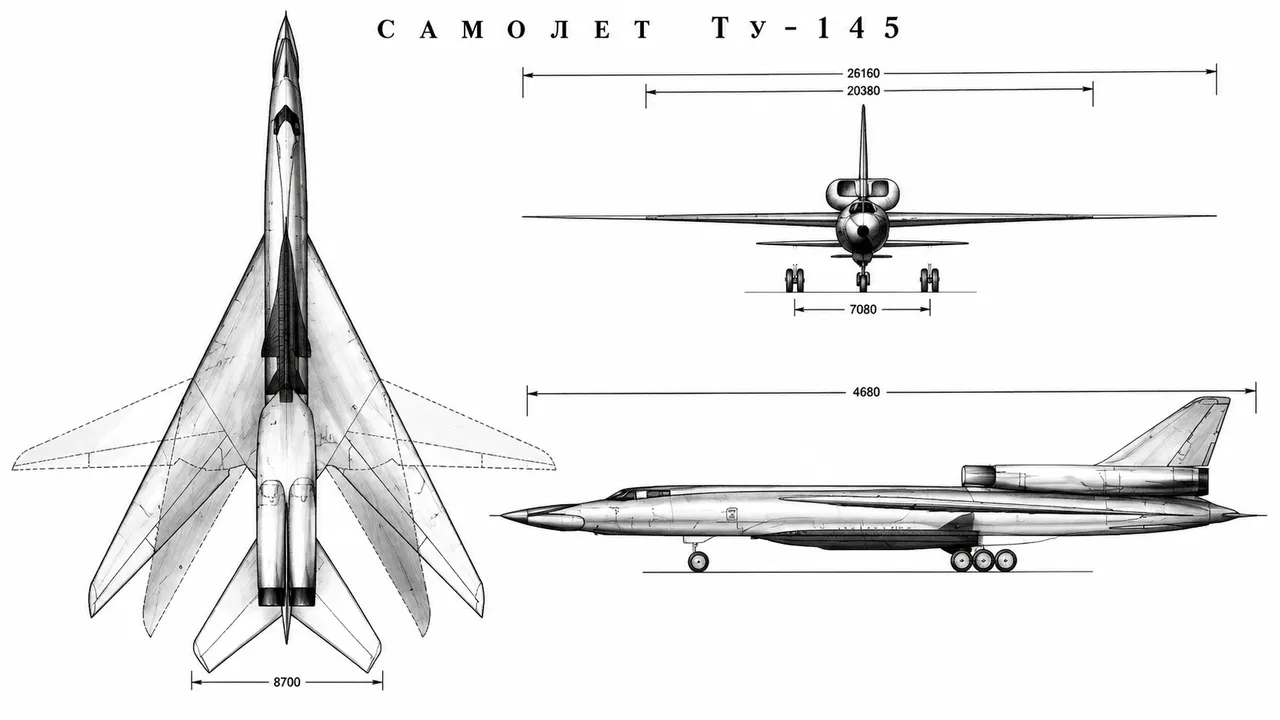

The Tu-22 was a long-range supersonic bomber with a fixed swept wing and two tail engines. Operation proved challenging: its handling characteristics required extensive training, and upgrades were scarce. The Tupolev Design Bureau's task—a long-range missile carrier capable of operating in any weather at high speed and carrying a payload—required a fundamentally different aircraft.

The Tu-22 and Tu-22M retained the role of a long-range missile-carrying bomber, some of the ground infrastructure, and the organizational continuity of the program. The aerodynamic design, wing, engine placement, air intakes, landing gear, and a significant portion of the fuselage were all redesigned or started from scratch. The term "Tu-22 with variable wings" does not describe the continuity of the airframe, but merely the recognizable silhouette and the general name of the program.

The Kazan plant was to master the variable-sweep wing for the first time. According to Vladimir Buznitsky's memoirs, published by Respublika Tatarstan in 2020, when launching production, it was necessary to incorporate the experience of Su-17 production in Komsomolsk-on-Amur. Transferring production experience is not borrowing the design, but it demonstrates how new the task was for the plant.

The journey from the "145" to the production Tu-22M3 took nearly a decade: the M0–M3 modifications successively refined the design, aerodynamics, and instrumentation, without changing the basic variable-sweep wing configuration. The Tu-22M3's maiden flight took place on June 20, 1977, according to the official UAC report. Manufacturer: Kazan aviation a plant that would later produce the Tu-160.

Mechanics: What a variable-sweep wing offers and what it costs


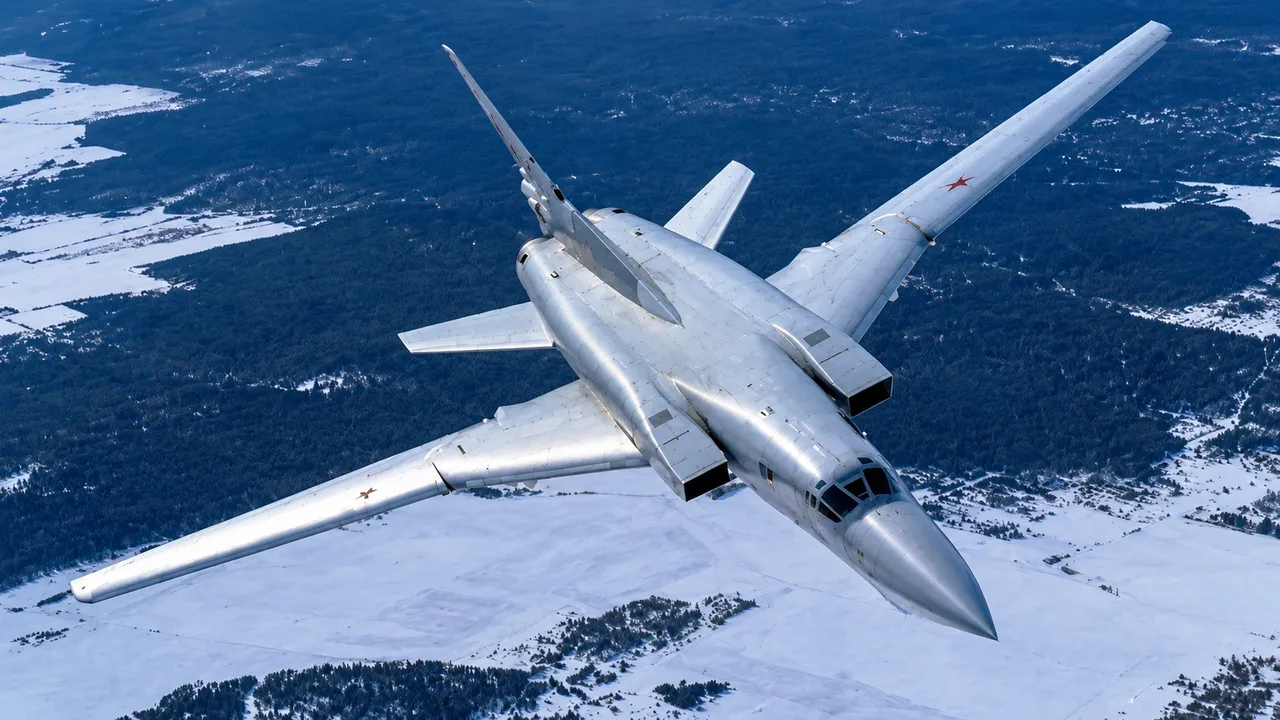
What does changing the sweep angle achieve? A small sweep angle increases the effective wingspan and lift during takeoff and low speeds, while a large sweep angle reduces wave drag at high speeds. At the same time, the position of the aerodynamic focus, longitudinal stability, and the effectiveness of the high-lift devices change.

The price for this comes in the form of weight and complexity. The rotating wing panels require powerful hinges and actuators, and the airframe requires a reinforced center section: all of this is designed to withstand the heavy loads associated with sweep changes in flight. This cost depends on the calculated loads and the specific design. There's no single rule that says it automatically pays for itself on a heavy aircraft—and there's also no data to compare the Tu-22M3 and Tu-160 with hypothetical fixed-wing aircraft.

But the heavy carrier's task itself is structured differently, and this is more important than weight proportions.

On a light tactical aircraft with external hardpoints, a variable-sweep wing creates a separate problem: the pylon on the rotating console either has to be deployed synchronously with the wing, or it narrows the available sweep range. As a result, the MiG-23 carried its main armament under the fixed wing and fuselage. The Tu-160 avoids this problem by design: weapon — in the internal cargo compartments, the pods are free. Internal placement alone doesn't eliminate restrictions on operating modes and loading, but it does eliminate the need to coordinate the pod's rotation with the pylon mounted on it. The Tu-22M3 is more complex: in addition to internal, it also allows for external pod options, and the issue of coordination returns.

The operational envelope is a separate issue. One possible profile: takeoff with maximum payload, route on a fuel-efficient cruiser, low-altitude breakthrough, and, if necessary, acceleration to high supersonic speed, with a significantly easier return. The standard combat profile isn't described in open sources—it's an illustrative diagram, not a document. But it's precisely this spread, from low-speed takeoff to supersonic breakthrough, that's the reason the diagram was included in the design. At a low angle, the Tu-22M3's wingspan is 34,28 meters, according to UAC data; switching to a high sweepback changes not the fine-tuning, but the aerodynamic envelope itself.

"Product 70": Tu-160 and the Price of Scale


A new competition for a promising strategic bomber was announced in the early 1970s; full-scale work began in the middle of the decade. The requirements were compiled into a list, each point contradicting the next: intercontinental range and long rocket load, supersonic section at final and acceptable takeoff distance, the ability to operate from existing airfields.

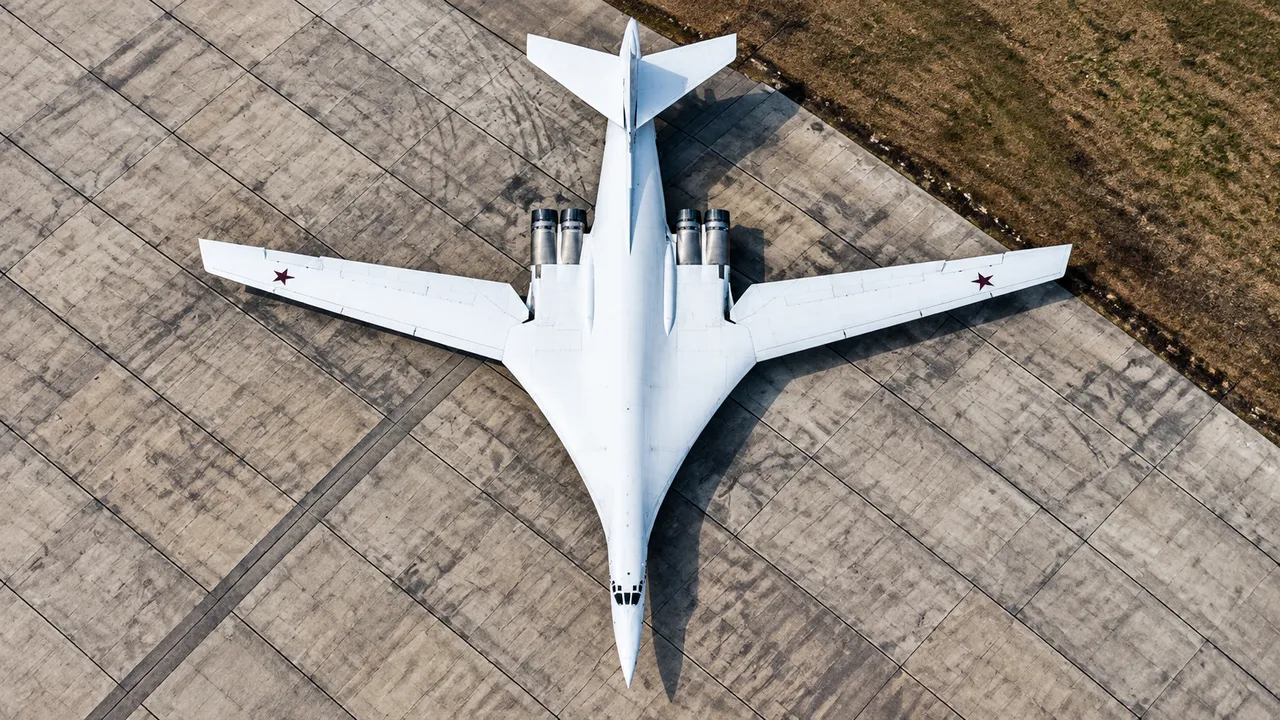
The first flight took place on December 18, 1981. The aircraft received the factory designation "Product 70"; in open sources, it is known as the Tu-160.

Wing geometry: at minimum sweep, the Tu-160's wingspan reaches 55,7 meters, and at maximum, 35,6 meters. According to UAC, the angles vary between 25 and 60 degrees along the quarter-chord line; other sources cite different ranges, and this remains an open question. Four NK-32 engines are mounted in pairs in ventral nacelles; two internal cargo compartments accommodate cruise missiles on drum-type launchers.

This scale has a production cost. The Tu-160's central power unit is a titanium beam weighing approximately six tons, welded together from several parts. Both wing sections and landing gear hinges are attached to it, so it's not the pure weight of the yaw mechanism, but a functioning element of the airframe. Production of this beam ceased in the post-Soviet years. The electron beam welding and vacuum annealing section for titanium structures was restored and modernized; PAO Tupolev announced its launch in May 2017. This isn't just a scrap of paper: the design has been in use for half a century, and its maintenance requires dedicated production infrastructure.

It is this layout—internal compartments plus a variable-sweep wing—that makes the Tu-160 unlike most of its contemporaries. The American B-1B has the same layout and the same four engines with internal compartments. However, the B-1B has significantly different priorities: the official US Air Force report lists its maximum Mach number as 1,2 versus 2,2 for the original B-1A. The lower speed limit was intentional—redesigned air intakes reduced radar signature. Supersonic speed was not abandoned: 1,2 is supersonic, but speed was no longer the primary consideration. Both programs independently arrived at a similar basic architecture with a similar set of requirements: high takeoff weight, internal weapons placement, and a wide range of flight modes. Two different design bureaus came up with the same answer for a similar set of tasks—this doesn't prove the optimal design, but it also doesn't seem coincidental. But the B-1B's shift toward stealth shows something else: it's not the design itself that matters, but a shifting set of priorities.
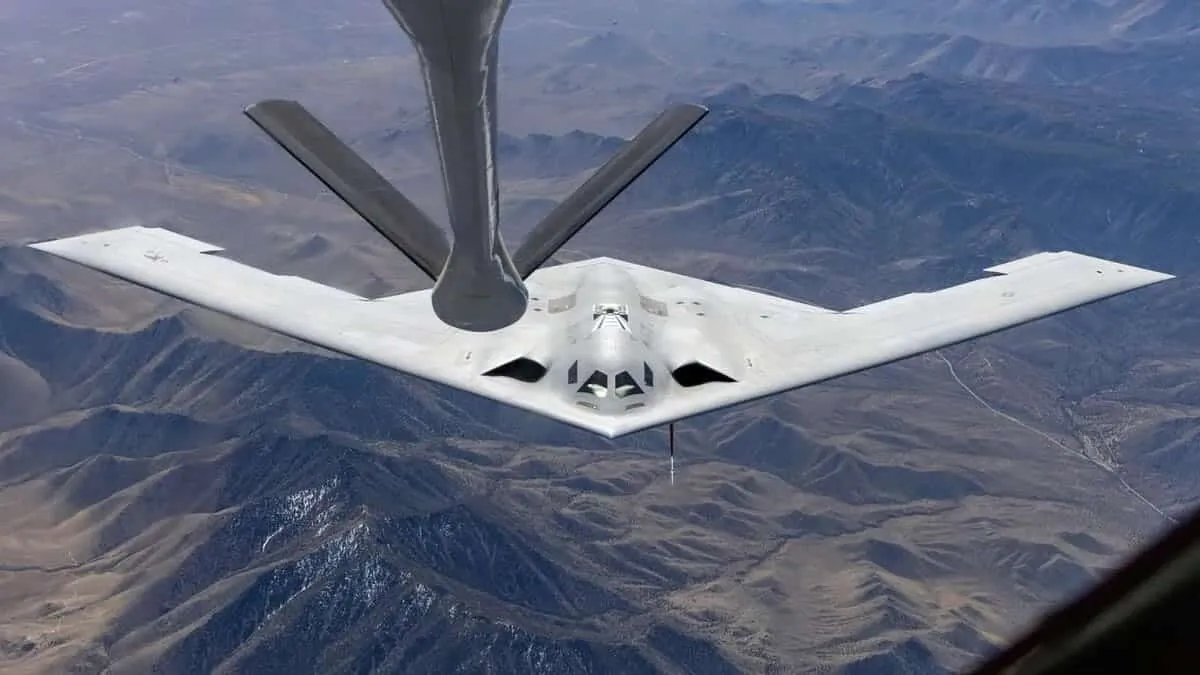

The next-generation American bomber, the B-21 Raider, is built using a fixed-geometry flying wing design. The developer emphasizes stealth, long range, and the ability to penetrate sophisticated air defense systems. Defense; there is no data in the public domain explaining the choice of this particular aerodynamic design. It remains to be noted as an engineering assumption: the flexible joint between the rotating and fixed parts of the wing creates variable gaps and non-uniform radar angles, which is poorly combined with stealth. In this prioritization, supersonic performance has faded into the background—however, there is insufficient public data on the B-21 to attribute the change in concept to a single reason.
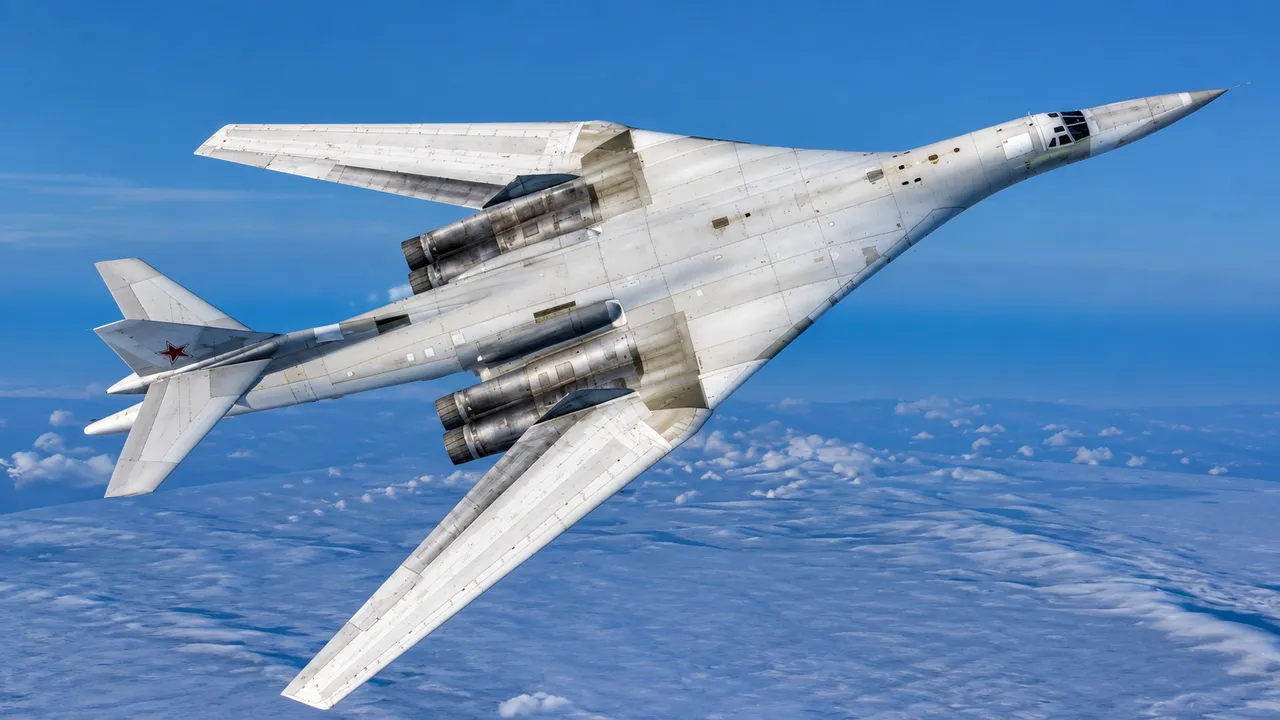

Tu-160M: Why continue


On January 12, 2022, the Tu-160M ​​took to the skies in Kazan. Rostec presented it as the first newly manufactured aircraft under resumed production, not as a modernized version of a Soviet-era aircraft. This is an official statement; it is not backed by an independent analysis of the origin of each component.

On December 17, 2025, at the final board meeting, the Russian Minister of Defense announced the transfer of two more Tu-160Ms to the Aerospace Forces. Open sources do not allow us to differentiate between new airframes and heavily modernized Soviet-era aircraft; the actual month of transfer is not specified.

Why the program is being continued should be analyzed not as a list of ready-made motives, but as several independent circumstances.

The first is the design itself. For an aircraft with internal cargo compartments, a wide range of flight modes, and a takeoff weight estimated at over 270 tons, the design remains viable, although not necessarily optimal from scratch. This doesn't mean it would be chosen for a new aircraft with a different set of requirements. A separate question is how relevant these requirements are in today's air defense environment, where stealth is increasingly replacing high-speed breakthroughs. There is no data on the Tu-160's effectiveness in these conditions.

Second, the conditions for replication. Complete design documentation, restored infrastructure at the Kazan plant, including the titanium beam production facility, trained personnel, and the existing weapons system. These are all arguments in favor of continuation, but they have nothing to do with the merits of the wing design itself. There is no full, publicly available cost estimate for the program, so there is no basis for comparing its cost with alternatives. If the same task had been set from scratch, without the legacy design and without deadline pressure, the choice of aerodynamics might have been different.

Third, the timeline. The PAK DA program is ongoing; public descriptions link it to a subsonic stealth design that does not include a variable-sweep wing. The confirmed fact is the program's ongoing development, not its technical design, much less its dates. Meanwhile, construction continues on the Tu-160M—the youngest of Russia's heavy missile carriers still in production.
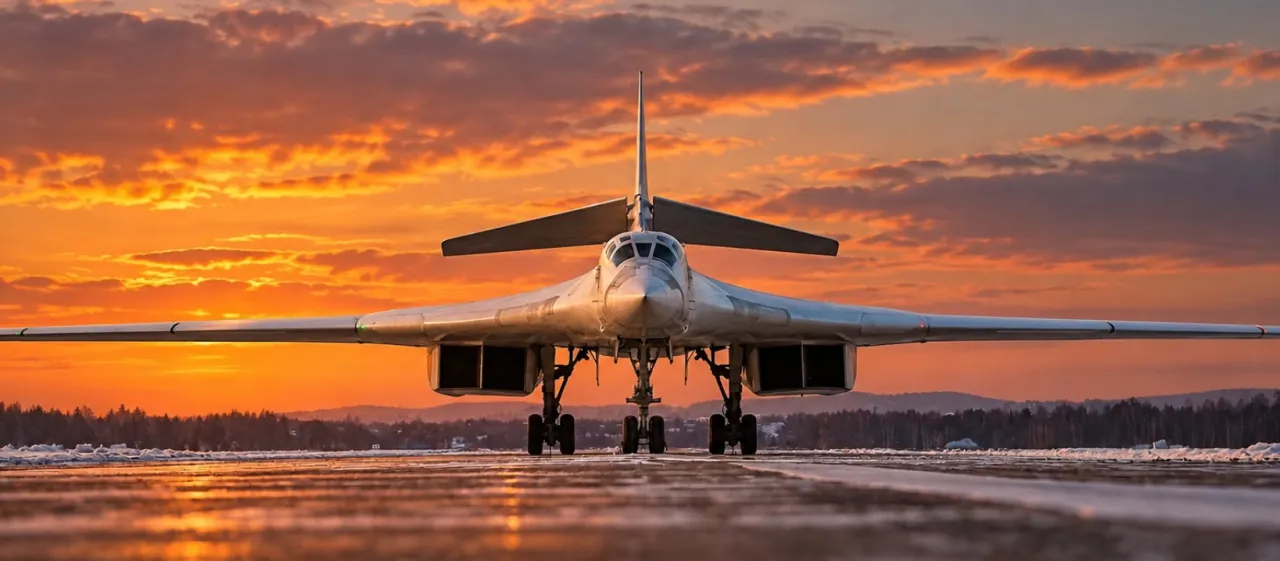

As for the design itself: the variable-sweep wing, as seen on the Tu-22M or F-14, is not returning to new designs. One area of ​​current research is changing the wing's profile and camber without rotating the rigid outer panels; this is a different way to adjust the geometry to the flight mode. The goal is the same, the implementation is different.

So why didn't they abandon the variable-sweep wing? Because where long range, internal suspension, and several fundamentally different operating modes converged, the design proved viable—not proven optimal, but viable enough to make it into production. Publicly available data provides no evidence that this is the only correct path. Fifty years after the first flight of the "145," the consoles are still being rebuilt in Kazan.
91 comment
Information
Dear reader, to leave comments on the publication, you must sign in.
  1. + 11
    22 September 2026 07: 34
    Why the rotary wing survived

    What rotary-wing aircraft were designed in the 21st century? The last rotary-wing aircraft, the Tu-160, was designed in the late 1970s. 50 years ago.
    1. The comment was deleted.
    2. +8
      22 September 2026 10: 34
      Quote: Stas157
      What kind of rotary-wing aircraft were designed in the 21st century?
      None. At the end of the 20th century too. wink
      1. +5
        24 September 2026 16: 26
        Quote: Schneeberg
        At the end of the 20th century too

        If the USSR had not collapsed untimely in 1991, Tu-160 construction would have continued until the end of the century. Moreover, the Tu-22M4 design (with NK-32) was already ready, and its launch was only delayed by the limited production of NK-32 engines. Tu-22M4 production was planned to begin in the first half of the 90s. So, under the normal course of history, the production of heavy aircraft with variable-sweep wings would have continued into the early 21st century. But it is likely that the history of the variable-sweep wing would have ended with these machines. It was planned to build 100 Tu-160s and up to 200 Tu-22M4s. So, they would have been built until the mid- to late 00s. And they would still be serving to this day.
        In the 90s, 00s, and 10s, nothing was built, not because it was "outdated" or "not needed," but because the colony had no need for strategic aviation. The top brass of the Central Committee and the KGB capitulated to the Enemy, appropriated all the assets of the Public Property, paid Tribute to the Enemy, and plunged the People into depression, archaism, and the savagery of obscurantism. The dream of their "philosopher" Dugin is for the entire people to dance in bast shoes, glorify the "master," and not dream of the stars.
  2. +2
    22 September 2026 08: 30
    The IGC is a thing of the past. It is no longer required in aerial combat.
    1. +4
      22 September 2026 10: 14
      Quote: dragon772
      IGC is a thing of the past. It is no longer required in...
      ...in aviation: advances in aerodynamics, complex wing planforms, and a simple chassis eliminate the need to carry excess weight. The second fuel tank on the 23rd weighs over a ton.
      The Lancer, aka the B-1b, can only be called a supersonic aircraft with a stretch: it doesn’t reach supersonic speeds with a load, it doesn’t.
      But if you look at the article in Flight International from '89, I think, when the Americans were given the opportunity to closely examine the 160th, there were lines like this: Even if the 160th isn't equipped with the same advanced electronic warfare as the B-1, at a cruising speed of 2,2, it will penetrate Western air defenses like a knife through butter. Intercepting the 160th is a highly complex task and will require enormous resources.I think the resumption of production is driven solely by the need to quickly obtain the aircraft. Of course, a different machine is needed…
      1. +4
        22 September 2026 20: 06
        Quote: Pete Mitchell
        Even if the 160th isn't equipped with the B-1's advanced electronic warfare, at a cruising speed of 2,2, it will penetrate Western air defenses like a knife through butter. Intercepting the 160th is a highly complex task and will require enormous resources.

        Since the late 80s, air defense has made some (to put it mildly) strides forward...
        1. +1
          23 September 2026 01: 40
          Quote from: AllX_VahhaB
          Since the late 80s, air defense has made some (to put it mildly) strides forward...
          Without a doubt... but geography remains: intercepting a 160th at cruising speed is a far from trivial task. Destroying any target is possible, but sometimes it's very expensive, purely from a financial standpoint... And experience shows that accountants are not the least important people in war. that in history we are looking for a darkness of examplesThe sons of Israel, after counting the losses from their latest victory, developed a great tactic... for example
      2. 0
        23 September 2026 08: 56
        Is intercepting a Tu-160 a challenging task? Given NATO's air power and comprehensive radar coverage, it has almost no chance of penetrating deep into the defenses.
        1. +1
          23 September 2026 09: 20
          Quote: dragon772
          He has almost no chance of breaking through deep into the defense.
          Ask yourself, what mission will they assign him in the event of a major disaster? What anti-aircraft missiles will he use? Then figure out where the interception point would need to be to prevent the mission from being completed... and what forces would need to be deployed to ensure the specified probability.
          1. +1
            24 September 2026 08: 57
            The Tu-160 and any non-stealth bomber are a prime target for air defense and interceptors.
            The times when one bomber could fly stealthily and deliver a bomb to the enemy's head are gone.
            1. 0
              24 September 2026 10: 12
              The times when one bomber could fly stealthily and deliver a bomb to the enemy's head are gone.
              didn't pass - Iraq, Iran, Yugoslavia...
              1. +1
                25 September 2026 08: 28
                Where there was no strong air defense, NATO aircraft flew as they pleased.
            2. 0
              24 September 2026 15: 43
              Quote: dragon772
              The Tu-160 and any non-stealth bomber are a prime target for air defense and interceptors.
              The times when one bomber could fly stealthily and deliver a bomb to the enemy's head are gone.

              Do you think the Tu-160 will penetrate enemy air defenses on its own? Don't you think the air defense systems themselves and the fighters themselves are just as big a target for the fighter escorts of the strike group?
              1. 0
                25 September 2026 08: 32
                The bombers will be visible on radar screens (air defense and interceptors) from 300 km away, and all missiles and surface-to-air missiles will be directed at them first. And it will be extremely difficult for escort fighters to shoot them down.
                1. 0
                  25 September 2026 12: 27
                  Exactly, only the bombers will break through after the air defenses have been suppressed. Those with anti-radar anti-aircraft guns and air-to-air missiles will go ahead. Or do you think the entire breakout force will march in a confused mob? By the time the bombers reach the air defense detection line, the air defenses will already be destroyed and suppressed. The radar screens will already be destroyed or without power.
        2. +4
          23 September 2026 09: 35
          there is no chance to break through the defense
          What does "break through the defense" mean? Where does "inside the defense" mean? The Tu-160 is designed to launch cruise missiles, so its job is to reach the launch line and launch. The launch line depends on the target __cpLocation and the cruise missile's range. So, we need to determine the targets and the cruise missile's performance characteristics before we can talk about chances.
          1. +1
            24 September 2026 09: 05
            Defense of NATO countries. Who else?
            That's the point: the Tu-160 is already "guided" by satellites during takeoff, and the AWACS track and guide the fighters.
            It's easier to use land-based cruise missiles; they have a longer range and there's no need to risk missile carriers.
            1. 0
              24 September 2026 10: 09
              Defense of NATO countries
              - Against European NATO countries, strategic missiles are completely unnecessary, and cruise missiles are also not optimal; IRBMs are more reasonable here. But against the US and Canada (also NATO countries, by the way), cruise missiles with strategic missiles are just right, in addition to ICBMs.
              Who else?
              Remember the recent Syria. And who knows where else.
            2. 0
              24 September 2026 11: 30
              Quote: dragon772
              The Tu-160 is already "guided" by satellites during takeoff, and AWACS track and guide fighters.
              Let's figure out who the 160s will go against under heavy fire? In what direction and with what cruise missiles. Yes, satellites will track the movement... and they'll probably raise AWACS. Where should we deploy forces and resources to ensure interception, how many... And where is our shortest distance to the States...
              This is a very complex task. As an example, consider intercepting an AWACS—it's simpler than pre-launch strategizing, but it's still a full-scale aerial battle.
              1. 0
                25 September 2026 08: 31
                Don't forget, for example, Operation "Spider Web" - there are containers with FPV drones near the airfield, they will burn all the strategists on the runway and there will be simply nothing to strike with.
                1. 0
                  25 September 2026 12: 10
                  You are touching on a broader aspect of the BD, and the questions here are not about aviation...
                  1. 0
                    29 September 2026 08: 55
                    Directly, yes, but even without that, all bombers will be escorted from takeoff. And with that, the element of surprise is immediately lost.
                    1. 0
                      30 September 2026 01: 01
                      The question is still the same: - where the interception line should be placed to prevent the mission from being completed... and what forces should be deployed to ensure the given probability.
                      1. 0
                        30 September 2026 10: 12
                        I'm afraid it will be more banal: a massive cruise missile attack on an airfield to destroy all the missile carriers, that's all.
                      2. 0
                        30 September 2026 10: 21
                        Another question: their satellites, aka reconnaissance, aren't sleeping either. A mass deployment of cruise missile carriers won't go unnoticed and unanswered, even their preparations for takeoff...
                      3. 0
                        30 September 2026 18: 52
                        And so on. For example, in the West, there's only one patrol zone over the Baltic Sea that's considered potentially safe for AWACS. The situation probably changed after the Danes got into... well, that's where the linear distance to the borders remains. Kaliningrad is a big obstacle there. lol But 160 with KRs won’t go there, it’s unnecessary…
                      4. 0
                        1 October 2026 23: 37
                        Engels (the only airfield where the Tu-160 is based) could be destroyed by Tomahawks launched from a ship in the Mediterranean. Aerial support wouldn't even be necessary.
                      5. 0
                        2 October 2026 00: 15
                        In your reasoning, you rely on the intelligence capabilities of your opponents, and then immediately ignore the intelligence capabilities of the Russian Armed Forces... it all works both ways.
                      6. 0
                        2 October 2026 00: 31
                        Our opponents in Europe have no strategists. A submarine can launch a missile from anywhere, and it's foolish to argue that this is much more difficult to track, while every Strategist launch is known in advance, even in Ukraine.
                      7. 0
                        2 October 2026 01: 09
                        Waldenberg, Tonopah, Guam, the bases in Essex, and so on are being destroyed in the same way... With all the fuss, there'll be no one to intercept the 160th heading north into the launch zone. If we assume Engels or Olenya are destroyed, then the consequences are mutual. And the Europeans will be wiped out without any strategists...
                      8. 0
                        2 October 2026 23: 19
                        That's why the West doesn't say that it's necessary to build 60 new strategists.
                      9. 0
                        3 October 2026 02: 09
                        I'm terribly sorry: in the West, they don't talk about it... where exactly? Where such goals aren't even mentioned. And where such goals exist, they're working on it intensively, and not for the red money...
                      10. +1
                        5 October 2026 17: 24
                        It looked smooth on paper, but they forgot about the ravines.

                        If intelligence missed the concentration and attack on Kursk, then the scenario could very well be repeated here.
                      11. 0
                        5 October 2026 18: 20
                        Quote: dragon772
                        If intelligence missed the concentration and attack on Kursk
                        I agree with you, but this is a much broader question... There are many questions about the work on Znamenskaya Street, but there's one thorny issue: what is Victory in today's reality? And the answer is far from simple. Good day...
                      12. +1
                        6 October 2026 11: 50
                        Everyone sees it in their own way, but judging by current realities, there is a “fixed deal” in the air.
                      13. 0
                        6 October 2026 11: 58
                        Here's where you can argue: who's the 'fixed' deal? Now comes the interesting part: can the Supreme Commander-in-Chief risk a fixed match with the weaklings who, with their statements, constantly ceded his choice? It seems to me that with their brainless statements, they have so narrowed his, aka Supreme Commander-in-Chief's, freedom of maneuver that he can't agree—he doesn't work for them. He, thank God, doesn't live momentary the interests of the country. And thank God, he doesn't succumb to public pressure: there won't be an instant victory...
                        It simply won’t happen, but there is a prospect…
                      14. 0
                        7 October 2026 08: 56
                        You don't have to look far; just read the Minsk agreements, which Kiev rejected. What does it say?
                        https://cdn.osce.org/sites/default/files/f/documents/5/b/140221.pdf
                        Essentially, it's a deal with certain conditions. The situation at the BLS is different now, and the conditions will be different, but neither Kyiv nor Odessa have been captured, meaning there will be a peace agreement (not to be confused with a treaty) and a freeze on the conflict, as happened in Karabakh, for example, in 1994.
            3. 0
              25 September 2026 14: 51
              and AWACs are not a big target, right?
              1. 0
                29 September 2026 09: 02
                Any aircraft with a high RCS (Radar Cross Section) is an easy target for air defense.
                1. 0
                  30 September 2026 00: 57
                  You're wrong about intercepting the AWACS—destroying it requires serious planning. We figured out how to take it down back in school—an entire battle involving a couple dozen aircraft... and it won't get anywhere near air defense zones.
                  1. 0
                    30 September 2026 10: 00
                    I understand that the AWACS will provide cover, but the RVD DD can easily get it.
                    For the seeker, such targets are always easily captured.
                    1. 0
                      30 September 2026 10: 24
                      It's covered by a fighter wing, and it will defend itself using all available resources—that's the concept of deployment. Besides, it's quite well-equipped itself.
                      Missiles that can outpace the E-3, or even the E-2, haven't yet been developed. Getting within range is a real battle.
        3. 0
          23 September 2026 13: 43
          The Kalibr ground-based launcher covers all of Europe without all the 70s nonsense of breaking through defenses under the cover of a fighter squadron... as stated in the concept for attacking Europe.
          It's practically impossible for us to even penetrate Slavyansk's air defenses right now, judging by the progress of this war. And here, people in Tu-160s want to enter NATO airspace... and most importantly, it's unclear why, given that the Kalibr itself now flies 6,000 km, while in the 1980s, its missiles flew 2,000 km and couldn't reach England.
  3. +3
    22 September 2026 08: 51
    The Tu-22 and Tu-160 were designed half a century ago to launch cruise missiles somewhere far from home territory. Today, when even the smaller MGG-31 is easily tracked not only on the ground but also in the air, launching missiles from an aircraft is only possible where there is no enemy air defense, that is, in the skies above home territory, and it does not matter whether the sweep of the wings or the carrier changes or not. Incidentally, launching cruise missiles from ground launchers is orders of magnitude simpler and cheaper than building aircraft for them, training crews, etc.
    1. +1
      22 September 2026 20: 10
      Quote: agond
      By the way, launching cruise missiles from ground-based launchers is much easier and cheaper than building aircraft for them, training crews, etc.

      If you need to achieve hypersonic speeds, and at a certain range... then not even every carrier will do!
    2. 0
      1 October 2026 23: 41
      They were based in Lviv and Kyiv... how far away...
      The Tu-160 was designed for strikes against Europe, using the concept of a rapid air defense penetration under fighter cover. Because older cruise missiles couldn't reach even the westernmost countries of Europe, this no longer makes sense.
  4. +1
    22 September 2026 10: 12
    This design survives because the newer design was only created in hardware in the US. In other countries (including the US), contemporaries like the Tu-16, Tu-95, and B-52 are in widespread use; the next generation, the B-1B and Tu-160, have only been mastered by the US and the USSR. When changing generations, as with fighters, the integrated layout rules, but stealth or not is another matter.
    1. +3
      22 September 2026 10: 17
      The topic is fascinating; it's a fascinating read; people have drank a lot and earned academic degrees. The article doesn't acknowledge TsAGI's role as the brains and trendsetter in aircraft configurations. As for which is cheaper—ground-based launchers or aircraft—is a philosophical question. It depends on the conditions. Aircraft like the Tu-160M ​​and Tu-22M3 allow for a rapid strike from deep within friendly territory, anywhere in the world. A ground-based launcher must be transported by land or by air. So, one doesn't cancel out the other. For an aircraft, the lower and faster, the better. It all comes down to the engine: if there's an engine, there's an aircraft; if there's no engine, there's no aircraft. Variable-sweep wings are a compromise based on technological capabilities. That's why the idea of ​​deploying strike weapons in space is being discussed—this, incidentally, also applies to ground-based launchers: they'll take them out immediately, before they can even say "meow." Aircraft on alert in the air are harder to destroy. Everything is dynamic, everything is evolving. Regarding aircraft stealth: yes, in my opinion, it's analogous to the carbon footprint and global warming. Only aviation got around to it earlier. If you can destroy an air defense radar, then why bother? If you can't, then let's do it outside the air defense zone.
      1. +1
        22 September 2026 10: 24
        Air defense concepts and capabilities change faster than aircraft can be developed.
        The newest one, the B-21, is said to be capable of operating in enemy air defense zones. Whether this is true, I don't know. But the capabilities of air defense systems and their missiles are growing faster than those of aircraft. The air defense system is a case in point.
  5. -1
    22 September 2026 11: 32
    But aren't bombs with UMPK a development of variable-sweep wings? The Tu-144 also had small folding wings near the cockpit for takeoff and landing. Perhaps they'll return to this design, making a biplane-like structure with some wings with a large sweep, and others straight with additional lift for low-speed loitering and fuel efficiency, as well as for takeoff and landing. The problem is the reduction in design bureaus, design staff, technologists, and production facilities.
    1. +2
      22 September 2026 13: 50
      You're confusing heat with numbers. Wings aren't the point. A bomb with a UMPK is precisely what renders all the fancy terrain-following flights pointless. A Su-24, Su-34, MiG-21, MiG-31, and Yak-130 can drop such a bomb with equal success.
  6. +3
    22 September 2026 11: 37
    Quote: DWG1905
    As for which is cheaper—ground-based launchers or aircraft—that's a philosophical question. It depends on the conditions.

    No, this is not a philosophical question, it is purely practical, if you do not have your head in the clouds, but think more down to earth. For example, imagine that an installation with 6 cruise missiles, approximately the same as the Tu-160, was placed on an ordinary railway platform. This means that two such platforms are equivalent to one strategic missile, and a railway train is equivalent to an entire airbase of strategic missiles, and combat readiness can be achieved within 5 minutes of combat readiness 24 hours a day, 365 days a year, unlike an airplane, which needs many hours and even days to prepare for takeoff. There is also the weather, and many, many other things, and most importantly, an airplane parked is not a train en route; you can’t hide it from a satellite.
    1. +4
      22 September 2026 13: 32
      Have you ever seen mobile Topol missiles on the highway? Me neither. Primarily for safety reasons. Are you suggesting transporting ready-to-launch missiles on regular railways? Aren't you sorry for the population of your own country? And where would you transport them so the missiles could reach the enemy? In the most densely populated areas of the country? There are no railways in Chukotka and Kamchatka. The Canadians and Mexicans wouldn't allow our trains like that to pass through. Incidentally, you can't just install a launcher on a railway platform; the missiles would quickly wear out, requiring very expensive measures to ensure the system's reliable operation. Against Europe, it's much more cost-effective to use mobile, wheeled medium-range missiles. The history of the late USSR has convincingly demonstrated this.
      This is so offhand.
      1. 0
        22 September 2026 16: 21
        Quote: Sergey Valov
        Are you proposing to transport ready-to-launch missiles via regular railways? Aren't you sorry for the people of your own country?

        It's not even a matter of public safety. The BZhRK's deployment on civilian tracks is a giveaway. Rail traffic is controlled by an automated control system, and a new train will be included in it as well. And all it takes is a person with access to this automated control system at the track level to detect and escort a new train arriving at a station near a known base.
        It's the same as forcing a Tu-160 (or SSBN) to patrol civilian routes with their transponders on.
        Quote: Sergey Valov
        And where should it be transported so that the missile can reach the enemy?

        In the same place as conventional silos or ground-launched missile systems. With a range of over 10,000 km, there's no need to get too close to the enemy.
        1. 0
          22 September 2026 17: 15
          BZhRK exit

          But we're not talking about him; with the BZhDRK everything is still much more complicated than with the KR on railway traction.
          With a range of over 10,000 km
          - cruise missiles?
    2. +5
      22 September 2026 16: 54
      A missile launched from an aircraft already has the same speed and altitude as an aircraft. This means the launch range will be significantly greater, all other dimensions being equal. And an aircraft is a high-speed and maneuverable platform. This wouldn't work on land.
  7. +2
    22 September 2026 15: 31
    Excellent article, thank you! It's always interesting to read about such engineering compromises. I was particularly struck by the idea that it's not a matter of conservatism, but rather the unique combination of range, internal suspension, and a wide range of flight modes. It turns out that the variable-sweep design isn't a thing of the past, but a deliberate choice for a specific mission where there is currently no alternative. And it's especially encouraging that the Tu-160M ​​program is alive and well.
  8. 0
    22 September 2026 16: 02
    Project 145 pp 184..187
    Duffy P., Kandalov A. D 21 A.N. Tupolev. The Man and His Aircraft. (Russian edition). - M.: Moscow, rabochy, 1999. - 264 p.: ill.
    https://dropmefiles.com/oilOr The link is valid for 7 days
  9. +7
    22 September 2026 16: 02
    It became clear in the mid- to late 70s that this was a dead-end solution. The Americans had settled down after the F14/F111/B1b. Huge excess weight, fewer hardpoints, and speed that (as it turned out) no one needed.
    Recently, they decided to resume production of the Tu-160, not because life was good, but because the PAK DA project stalled.
    And, by the way, the cruising speed of the Tu-160 is subsonic and not much higher than that of the Tu-95.
    1. 0
      22 September 2026 16: 56
      Yes, that's true. "Resumed" is a bit of a stretch. And yet, yes, they did say that. Where are the planes? Is one of the spare parts? Account for the money spent...
      1. 0
        23 September 2026 10: 43
        Aircraft of the 900 series are new.
        Built from scratch. Some have already been transferred to the Aerospace Forces. The next aircraft is in production.
        The 800 series aircraft were completed from the stock.
    2. 0
      28 September 2026 11: 32
      The Tu-160 is good, but the A-50U is more necessary...
  10. +3
    22 September 2026 16: 22
    Internal placement in itself does not eliminate restrictions on modes and loading, but it does remove the need for coordination rotation of the console with the pylon on itThe Tu-22M3 is more complex: along with the internal, it also allows external suspension options, and there the issue of coordination is returned.

    Author, could you tell me more about the Tu-22M2/3's external suspension on rotating pylons?
  11. 0
    22 September 2026 17: 17
    Quote: Sergey Valov
    Have you ever seen mobile Topol vehicles on the highway? Neither have I. Primarily for safety reasons.

    I haven't seen a yeti, but you can see a lot from the windows of cars and buses driving along the Teikovo-Nerl highway in the Ivanovo region.
    By the way, the Topol is large, the turning radius is also large and it is impossible to simply leave the road, let alone turn around. In this regard, an automobile-based launcher for cruise missiles would be much more compact.
    It would probably be right to place Poplar somewhere in a deserted place.
    1. -1
      22 September 2026 18: 01
      you can see a lot
      - I agree, you can see a lot, but the likelihood of seeing a Topol is extremely low, because they don’t travel alone, and the security guards won’t let you get within range of a grenade launcher.
      A vehicle-mounted cruise missile launcher would be much more compact.
      Of course it's more compact, but the flight range of cruise missiles and ICBMs differs significantly.
      It would probably be right to place Poplar somewhere in a deserted place.
      You can't argue with this thesis, because they installed it 500 meters from the Moscow-St. Petersburg highway.
      1. +1
        22 September 2026 20: 57
        Regarding cruise missiles on a railway platform. Interestingly, the developer of the PS-90A engines has banned their transportation by rail. Bearings wear out. Cruise missile engines are, of course, simpler and have a short lifespan—the key word being short lifespan. How long will it take for the CM balls to break the track? It's a minor detail, but there are a lot of them. And how much propellant is needed for the booster? Besides, all modern cruise missiles (i.e., those developed in the 60s-80s for other purposes) are designed for special warheads; a standard warhead weighs a maximum of 500. Range is, well, 1000-1500 km. Expensive and ineffective. Speed ​​is terrible. As a temporary measure, of course, it's possible to overload American satellite and Ukrainian intelligence services; let the bastards suffer. If all the R&D on detonation combustion engines were successful, then aircraft and cruise missiles would gain a new quality.
  12. -1
    22 September 2026 20: 49
    The multi-mode issue is closed; it's a tragedy for Russian aviation. The MiG-23MLD is a light, inexpensive, single-engine fighter that can't be replaced by any Su-75. am
    1. 0
      28 September 2026 11: 37
      In the late 80s, the Air Force's phase-out of single-engine aircraft meant the elimination of several thousand combat aircraft...
      There is not only the MiG-23, but also the Su-17, etc., etc. ....
  13. +2
    22 September 2026 21: 26
    The Tu-160's center section consists of two half-beams. Each half-beam is welded together using an ELU from two spars and an upper and lower panel. The panels and spars, in turn, are also welded together using an ELU from sections.
    That is, the center section consists of almost 50 sections.
    1. 0
      22 September 2026 22: 01
      I saw this welding machine in the mid-80s; it was the size of a small cottage.
      1. +1
        23 September 2026 10: 38
        It will be larger in size
  14. +2
    23 September 2026 03: 42
    "Why is the program being continued?" The only answer is simple: they simply can't come up with anything new. Scientific and technological capabilities are incomparable with those of the past, so they endlessly replicate Soviet developments. The remnants of the socialist economy—all these state-owned research institutes and other government-owned factories—are uncompetitive as employers in a market economy. They can no longer attract the best minds, and the number and quality of minds themselves (talented engineers) in the country has drastically diminished. What remains are mostly idle slobs in government offices with nowhere else to go.
    So, there won't be any PAK-DA in the foreseeable future; there's no one to develop it. There's the 50-year-old Tu-160, but even that's questionable—land-based missile launchers are vastly superior, given the current situation.
  15. 0
    23 September 2026 06: 15
    Large aircraft survived because Russia has no alternative yet. Judging by the state of the art, all new bombers don't have variable sweep, and the B1B will be retired before the B52. Because the service life of a variable sweep wing is shorter than that of a simple wing, so once money is found for strategic aircraft, the era of such aircraft will end for long-range aircraft, but they'll still fly for another 20 years.
  16. +1
    23 September 2026 13: 33
    Why do we need strategists now if cruise missiles can fly 6,000 km on their own?

    In the USSR, strategists intended to use the Tu-160s against Europe due to the insufficient range of their missiles, so they were based in Ukraine and the South. Currently, the enormous Tu-160s can only be deployed at Engels, which is under the Mediterranean Fleet's crosshairs, and in the event of war, the Tu-160s wouldn't have time to take off. Even this war has clearly demonstrated this.

    The Tu-22 isn't that big, and it can be used at almost any of the dozens of airfields—that's its advantage. Another advantage is the ability to carry large missiles on the pylons. Its disadvantage is a single internal drum, not two like the Tu-160. But in my opinion, the Tu-22's advantages outweigh its disadvantages.

    How can we use the Tu-160 now? The Engels missile is practically useless – launching 500kg warhead missiles at Ukraine? That's not rational – it's easier to launch Kalibr missiles at Europe from ground-based launchers. Without the huge machines, airfields, and hassle of tracking.

    Launch nuclear missiles at America? From where? Through the North? They'll shoot them down over Greenland. Through the Pacific? There's no airfield in the East—it's not finished.

    The Tu-22 is more versatile - it can be used at dozens of airfields, and it can be used against Europe and against the US Navy's aircraft carrier groups in the Pacific Ocean - which is what it was originally intended for.

    I think Russia shouldn't be churning out dozens of Tu-160s, but rather developing a new aircraft between the MiG-31 and Tu-22 sizes, capable of carrying six X101s in a drum and Kinzhals on pylons. And most importantly, it could be based anywhere. Obviously, it would need to fly on two Tu-160 engines.
    1. 0
      23 September 2026 15: 23
      Currently, only Engels can accommodate the huge Tu-160s.
      There are many airfields in Russia capable of handling this aircraft. https://ru.wikipedia.org/wiki/Спиок_военные_аэродромов_России?ysclid=mue2atap86892565111
      a new aircraft between the MiG-31 and Tu-22
      And what will its range and payload be? The strategic bombers' dimensions are such for a reason.
      1. +1
        23 September 2026 20: 37
        No, only Engels. The rest are a compromise. There are some in Murmansk, but it's not the same. That's a major drawback of the Tu-160.

        The dimensions need to be slightly smaller than the Tu-22. There's no need to cram two drums of six missiles into a huge aircraft. A single drum, like the Tu-22, and wing pylons, like the Tu-22, are sufficient.
        But the Tu-22 was designed to attack with huge 12-meter Kh-22 anti-aircraft carrier missiles, which simply do not fit inside the hull of either the Tu-22 or the Tu-160, so they are mounted on the external pylons of the Tu-22.

        Now I think it would be a good idea to place 6 pieces of X101 inside the drum, and leave 3 fasteners for the pylons for the Kinzhal and Fab3000 with UMPK + again, you can attach the Betab 5000 to the central suspension, for example.

        The internal drum significantly reduces the aircraft's versatility, much like on the 5th generation, although both the F-35 and Su-57 have additional pylons for external loadouts, while the Tu-160 is confined to its internal bays. This is a disadvantage!

        If we were to make a new aircraft without sweepbacks and apply the MiG-31 approaches to the airframe strength, then I think the size of the new Tu-22 could be reduced a bit.

        Personally, I need a new MiG-31, as even its old airframe can carry six FAB-1500 bombs. It's a good, robust aircraft. If we take the principles and approaches of the MiG-31 and Tu-22 with two Tu-160 engines, I think we could get a decent carrier for Kinzhal, X-101, and Kab-3000 bombs in a relatively compact airframe that could operate at virtually any airfield. I think this is more rational than the new Stealth Kambala, and especially than the huge and expensive Tu-160 with its complex operational history.
        1. 0
          23 September 2026 22: 16
          No, only Engels. The rest are a compromise.

          The airfield at the Kazan aircraft plant, Zhukovsky, those are the places where I saw them, but I haven’t been everywhere…
          1. 0
            24 September 2026 15: 56
            That's not it... Kazan's is, you could say, a factory one, not a military one.
            The Tu-160 requires a long runway, paved at that, whereas we mostly have slabs and the like. I won't even mention the specifics of the Tu-160 itself. It lacks the versatility of the Tu-22 and Tu-95.
            1. 0
              24 September 2026 16: 22
              Kazan is a factory, not a military one.
              This is the factory one. Everything is ready for testing, and especially for operating this type of aircraft. It's perfectly usable if necessary.
              1. 0
                26 September 2026 02: 21
                I think we need to build two new permanent airfields - one in the North, maybe in Olenya.
                The second one is in the Far East, maybe where they abandoned it in the 80s.

                We need to push Strategi further back; Engels is dangerously vulnerable to attack. The Tu-160 can fly far and fast—there's no point in keeping it at Engels.
        2. 0
          28 September 2026 11: 43
          Somewhere on VO it slipped into an article that the Kinzhal (air-launched Iskander) and Kh-32 were discontinued in favor of the Iskander and Tsirkon missiles.
          1. 0
            28 September 2026 22: 34
            Somehow I doubt that anyone would remove the newest Dagger from service.
            The Kh32 was made from old Kh22s, replacing the harmful rocket fuel with new fuel, upgrading it, and so on. The Kh32/22 is a good, powerful missile, but only the Tu-22 can carry it on external pods, as it's over 12 meters long.
  17. 0
    23 September 2026 20: 24
    Quote: Totor5
    I think Russia should not churn out dozens of Tu-160s, but should instead develop a new aircraft between the MiG-31 and Tu-22 sizes, which could carry six X-101s... Tu-160s

    If we can somehow remove the wing boom from the Su-57's bomb bay (it divides it into two parts), then a fairly large missile will fit in it.
    1. 0
      23 September 2026 22: 07
      They never managed to mount the Kinzhal on the Su-34, let alone the 57. Although, of course, it's needed there. The MiG-31 is too small a carrier for the Kinzhal. And the Tu-22 or the new Tu-22 could carry at least three of them, considering that it can now carry the much larger Kh-22 on external hardpoints. The Tu-160, however, can't because it has no external hardpoints.

      The Knizhal is smaller than the Kh22, and an aircraft capable of carrying three Knizhals could be smaller than the Tu-22. This requires work and testing. But in my opinion, a versatile mid-sized aircraft that can carry six Kh101s in a drum or three Knizhals on pylons, take off from any airfield, and doesn't require a mega-sized hangar is far more practical than the 40 more Tu-160s that are being talked about, which can essentially only launch 12 Kh101s from a single base in the country. Meanwhile, these same Kh101s can launch both the Tu-22 and Tu-95, but they can take off from anywhere, and launching missiles from homeland essentially renders the Tu-160's super-speed unnecessary. And if the goal is to only launch non-nuclear missiles with 500 kg warheads, then I personally question why the Tu-160 is even needed. I'd probably deploy them in the North to attack America, while conventional missiles like the ground-based Kalibr and the Tu-22 would be sufficient for Europe. I'd deploy the Tu-22s in the East to attack Japan and American aircraft carriers.
      The Tu-95 is still suitable for everything—from launching the Kh-101 to patrol missions. Even if it's uncomfortable for the crew.
    2. 0
      24 September 2026 15: 59
      The dagger doesn't look small on the MiG-31, let alone the Su-57, especially in the internal compartment. And even less so on the X-101.
  18. 0
    25 September 2026 08: 27
    Quote: Sergey Valov
    Against European NATO countries, strategic missiles are completely unnecessary, and cruise missiles are also not optimal; IRBMs are more reasonable here. But against the US and Canada (also NATO countries, by the way), cruise missiles with strategic missiles are just right, in addition to ICBMs.

    Let's see, our strategists were deployed in the SAR, during the liberation of Mariupol, in Georgia (in 2008, unsuccessfully, shot down by a Buk supplied from Ukraine).
  19. Eug
    +1
    27 September 2026 20: 04
    It can be written much shorter -
    1) the "large" ones have a smaller range and value of vertical overload and the rotation mechanism does not jam
    2) there is a place where a very serious "payload" can be placed
  20. 0
    28 September 2026 21: 01
    Quote: Eugene_4
    Aircraft of the 900 series are new.
    Built from scratch. Some have already been transferred to the Aerospace Forces. The next aircraft is in production.
    The 800 series aircraft were completed from the stock.

    What "series" are you talking about? Where are these "series" coming from? Or have you been reading the reports "upstairs" from the UAC overnight? They could even draw up the 1750th series. Paper will do.
  21. 0
    28 September 2026 21: 02
    Quote: Totor5
    They never managed to mount the Kinzhal on the Su-34, let alone the 57. Although, of course, it's needed there. The MiG-31 is too small a carrier for the Kinzhal. And the Tu-22 or the new Tu-22 could carry at least three of them, considering that it can now carry the much larger Kh-22 on external hardpoints. The Tu-160, however, can't because it has no external hardpoints.

    The Knizhal is smaller than the Kh22, and an aircraft capable of carrying three Knizhals could be smaller than the Tu-22. This requires work and testing. But in my opinion, a versatile mid-sized aircraft that can carry six Kh101s in a drum or three Knizhals on pylons, take off from any airfield, and doesn't require a mega-sized hangar is far more practical than the 40 more Tu-160s that are being talked about, which can essentially only launch 12 Kh101s from a single base in the country. Meanwhile, these same Kh101s can launch both the Tu-22 and Tu-95, but they can take off from anywhere, and launching missiles from homeland essentially renders the Tu-160's super-speed unnecessary. And if the goal is to only launch non-nuclear missiles with 500 kg warheads, then I personally question why the Tu-160 is even needed. I'd probably deploy them in the North to attack America, while conventional missiles like the ground-based Kalibr and the Tu-22 would be sufficient for Europe. I'd deploy the Tu-22s in the East to attack Japan and American aircraft carriers.
    The Tu-95 is still suitable for everything—from launching the Kh-101 to patrol missions. Even if it's uncomfortable for the crew.

    Drill a hole in the chase for a new star :)
  22. +1
    29 September 2026 09: 01
    Quote: faridg7
    By the time the bombers reach the air defense detection line, the air defenses will already be destroyed or suppressed. The radar screens will already be destroyed or without power.

    It's a fresh idea, but hard to believe. This is possible in conditions of weak air defense, as was the case in Iraq, Serbia, and Libya.
    But in Iran, only the F-35 and B-2 stealth fighters are operating successfully. And in Yemen, the Saudis lost F-15s, even though the Houthis have virtually no air defense.
  23. 0
    17 October 2026 18: 47
    It no longer survives: neither the B-2 nor the B-21 has such a wing... And there never will be...