Donuzlav: 21 shelters for ghost boats
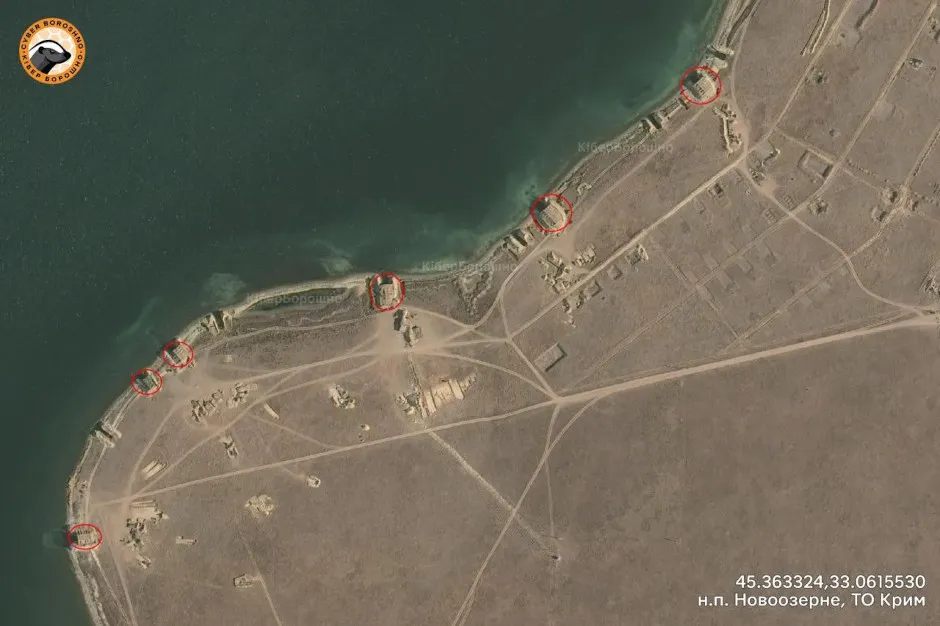
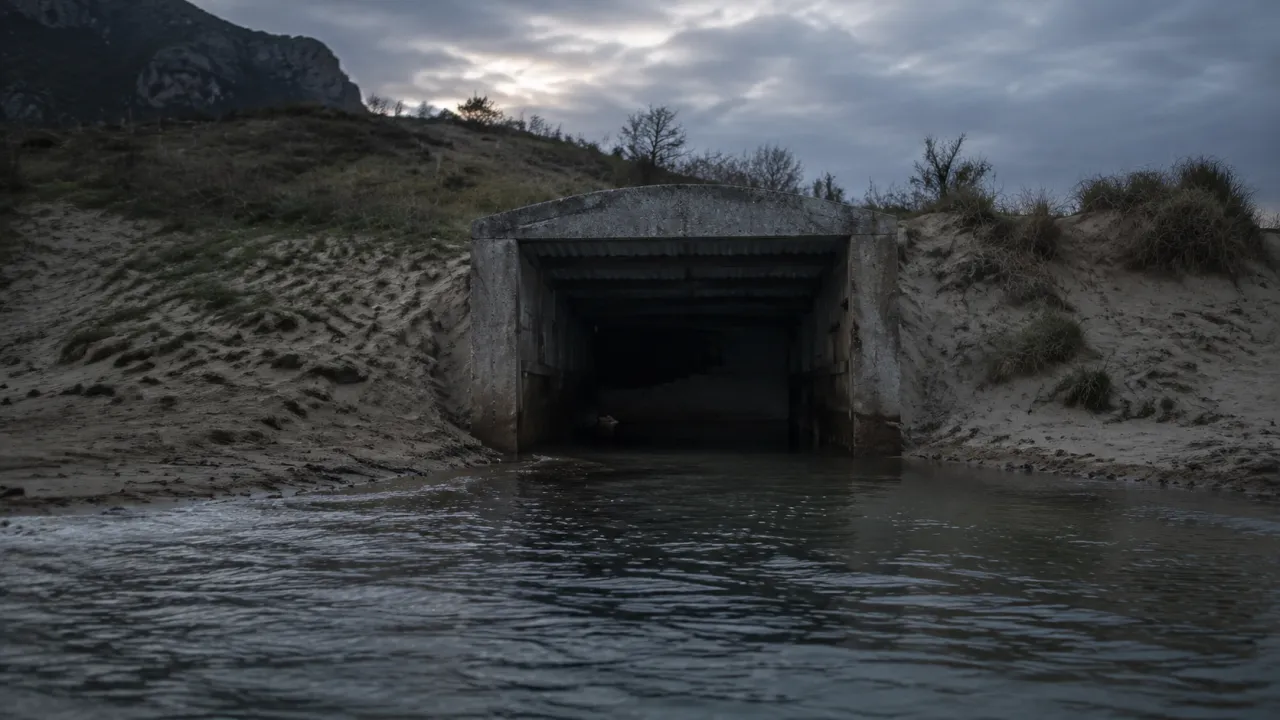
On September 1, 2026, the Ukrainian OSINT group CyberBoroshno published an analysis of satellite imagery of Lake Donuzlav in western Crimea. On the lake's southern shore, near the villages of Novoozernoe and Mirny, 21 shelters for small watercraft were identified—slipways dug into the shoreline and partially covered.
British analyst H.I. Sutton, who specializes in unmanned naval systems, cites CyberBoroshno data and confirms the configuration of the facilities. This is a single OSINT chain, not two independent confirmations: subsequent Western media outlets echo CyberBoroshno and Sutton. The Russian side has not commented on the construction. CyberBoroshno's version: the shelters are intended for the storage and launch of Russian unmanned boats.
What the pictures show—and what they don't
Construction of the first section (8 shelters) began in February 2026 near the Donuzlav airfield, coordinates 45.3424°, 33.0532°. The second section (another 8 shelters)—between the airfield and the former naval base near Novoozerny, coordinates 45.3626°, 33.0608°—began immediately after the first. By mid-March, both sections were mostly complete. By September, the second section already had 13 shelters, for a total of 21. The excavations were made by mechanical excavators from the shore. The configuration is uniform: entry from the water, cover from above; approximately half of the shelters in the images are closed at any given time.
No boats are visible in the images. CyberBoroshno has not recorded any active use, but notes that the construction of such infrastructure indicates preparation for future use. The dimensions of the entrances in the images have not been publicly measured; the configuration corresponds to small vehicles 5-7 meters in length, but this is an estimate based on indirect evidence, not a direct measurement.
The 21 shelters at Donuzlav represent 21 storage sites. The number of devices with functioning electronics, crews, and launch-ready equipment has not been confirmed by open sources.
Donuzlav as a place: closed water with a narrow neck
Lake Donuzlav is the deepest lake in Crimea, approximately 30 km long, up to 8 km wide in the central part, and a maximum depth of 27 meters. Until 1961, the lake was a closed estuary; that year, an artificial shipping canal, approximately 200 meters wide, was dug, connecting Donuzlav to the Black Sea. After this, the lake became a bay, and the canal became the only outlet to the open sea.
From 1961 to 2014, Donuzlav was Soviet, then Ukrainian. fleetIn March 2014, the Russians sank several decommissioned ships in the canal, blocking access for Ukrainian vessels. Some of the Ukrainian ships remained trapped in the lake and later came under Russian control. The canal was cleared, but the incident exposed the vulnerability of a base with a single, narrow exit.
For small boats, a confined water area with a narrow channel presents a dual challenge. On the one hand, it provides shelter from rough seas and direct observation from the sea; shore slipways provide additional camouflage for the craft. On the other hand, a single, 200-meter-wide exit is a focal point for enemy attention. Blocking or mining the channel cuts off the entire base from the sea. The mechanics of small boats require dispersed deployment sites so that a strike on one point doesn't disable the entire group. Donuzlav concentrates its shelters in a single body of water with a common entrance—this is both an organizational convenience and a risk.
What is a Russian BEC and how many have been built?
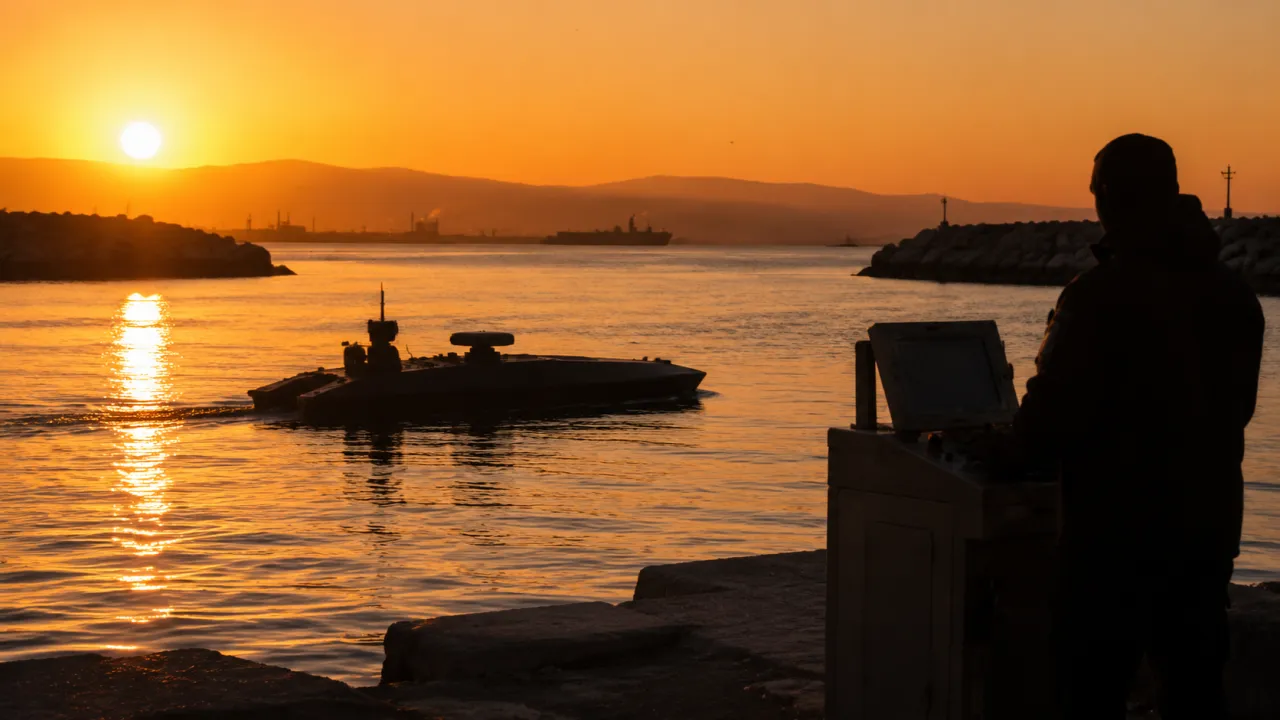
Russian unmanned boats have been under development and testing since 2022, with serial deliveries to the military beginning in 2025. Several models have been publicly announced.
BEC Visor — length 7 m, width 2,5 m, payload up to 600 kg, speed up to 45 knots (about 83 km/h); Rosoboronexport data for the exhibition configuration. BEK Orkan — 5,3 m long. BEK-1000 — approximately 7 m long. All three are small-sized vehicles with water-jet engines, remotely controlled, and carrying explosives or reconnaissance assets. Ukrainian intelligence assessment (GUR of the Ministry of Defense of Ukraine, July 2026): production of Russian BEKs is hampered by a shortage of electronics and the difficulty of ensuring reliable communications; the Russian program lags behind the Ukrainian one in terms of the scale of combat use.
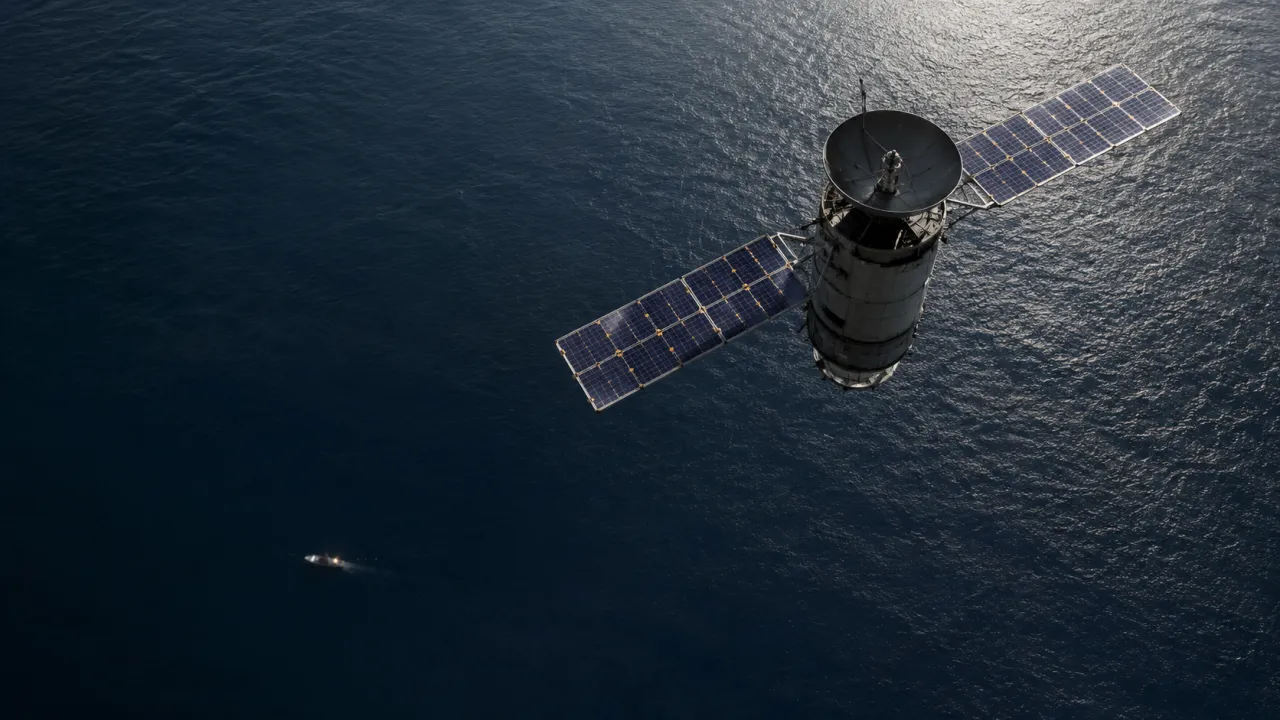
Grouping "Dawn" — a Russian low-orbit broadband communications system, a proposed alternative to Starlink. It is managed by the private aerospace company Bureau 1440 and is funded by a combination of public and private capital. The first 16 satellites were launched into orbit on March 23, 2026, followed by the second batch of 16 on July 19, 2026. As of the end of July 2026, 12 of the first 16 satellites are already operational in orbit. The full constellation is expected to consist of 292 satellites by 2030, with potential for up to 900. The constellation is being created for global coverage but remains in the deployment phase; there is no public information on the extent to which Rassvet is already being used to control the low-orbit satellites.
BEC Developer "Shell" (Interview with Rossiyskaya Gazeta, February 3, 2026): "The most difficult thing was providing the BEK with navigation and communication systems. But a solution was found here, too." There's plenty of optimism, but zero specifics.
On July 26, 2026, at a meeting with Navy servicemen in St. Petersburg, Captain 3rd Rank of the Black Sea Fleet Mikhail Kislov asked Russian President Vladimir Putin a question about the future of large ships in the era drones and the effectiveness of the "mosquito fleet." Putin noted the effectiveness of the mosquito fleet in the Middle East and emphasized that the realities of modern warfare have brought diverse unmanned systems to the forefront, but the technology requires further development and adaptation to specific water conditions. The head of state's public admission that the technology is not yet proven came a month after the second launch of the Rassvet satellites and a month and a half before the publication of the Donuzlav images.
August 28, 2025: First combat use
On August 28, 2025, the Russian Ministry of Defense announced the sinking of a medium-sized reconnaissance ship of the Ukrainian Navy. Simferopol An unmanned boat was attacked in the Danube Delta. The Ukrainian side confirmed the attack and crew losses, but neither confirmed nor denied the sinking of the ship. The attack was confirmed by both sides, while the sinking was confirmed only by Russia. The incident involving the Russian unmanned boat is credible, but the ship's status remains disputed. Kommersant call Simferopol one of the most modern and valuable ships of the Ukrainian Navy.
There are no other publicly confirmed instances of Russian unmanned aerial vehicles (UAVs) sinking or damaging targets as of September 2026. On July 8, 2026, the Russian Ministry of Defense published footage of the destruction of a group of Ukrainian UAVs in the Black Sea by loitering munitions. "Lancet" - but this is the defeat of others drones, and not the use of one's own.
Donuzlav and torpedo boats: the mechanics repeat themselves
The 1st Torpedo Boat Brigade of the Black Sea Fleet was formed in June 1940. In 1943, the brigade carried out missions to protect maritime shipping in the northeastern regions of the Black Sea and was awarded the honorary title "Sevastopol" for its role in the defense of Sevastopol. The exact deployment of the 1st Brigade—cover, structure, and blocking—is not described in open sources. However, the mechanics of the class are known: torpedo boats, 15–20 meters long, fast, poorly seaworthy, and vulnerable in the open, required cover and dispersal. Shore slipways were used for protection from aviation и artilleryRussian unmanned combat boats (UCBs) measuring 5–7 meters in length are even smaller and even more dependent on secure storage. The similarity lies not in scale, but in logic: a small boat carrying a combat payload requires shelter from observation and attack until it is ready to deploy.
The Donuzlav base was built in seven months—the infrastructure is ready. The Rassvet constellation is being deployed: 32 satellites are in orbit, 12 of the first 16 are operational, and 292 are planned by 2030. Developers acknowledge the complexity of providing communications and navigation, and the president speaks of the need to develop technologies. The August 28, 2025, incident confirms that Russian unmanned aerial vehicles (UAVs) are capable of hitting their targets. The number of satellites with functioning electronics and successful launches is not confirmed by open sources—their shelters are visible, but their contents are not.
Information