Geranium Evolution: Speed vs. Range
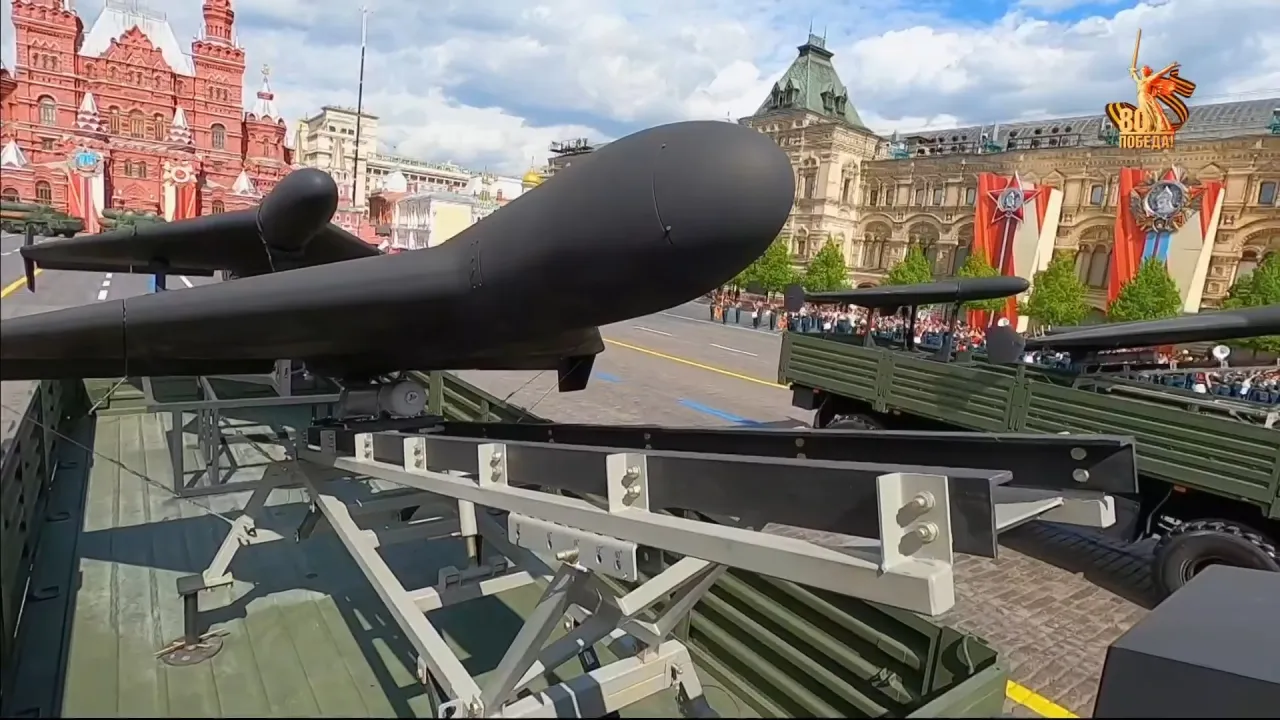
The Geran-2 UAV at the parade. Photo: Russian Ministry of Defense
Over the past few years, the Russian army has been actively using the Geran series of attack unmanned aerial vehicles. The line currently includes several models with different performance characteristics and combat capabilities. They differ in the type of propulsion system and corresponding flight parameters.
From model to model
The Russian system includes the Geran-1, a variant of the Iranian Shahed-131, and the Geran-2, a variant of the Shahed-136. The first Iranian-delivered systems entered service in 2022; Russian assembly and localized production in Alabuga began in 2023. The first combat use was recorded on September 13, 2022, after which the intensity of use generally increased, although there were significant fluctuations in certain periods.
The Geran-1 (Shahed-131) has a shorter range and warhead than the Geran-2. The Geran-2 received the primary focus in the line's further development, becoming the basis for subsequent modifications.
According to Western sources, the first series of Geranium-2s were equipped with an Iranian-made MADO MD550 engine—a copy of the German Limbach L550E. Later, reports emerged of Russian equivalents. In all cases, the engines were two-stroke, air-cooled, four-cylinder, flat-six, gasoline-powered, producing 50 hp.
The Geranium-2, powered by an MD550 engine, has a cruising speed of approximately 170–180 km/h and can accelerate to 200–220 km/h in a dive. Its range, according to various estimates, ranges from 1 to 2,5 km, depending on its configuration and flight profile.
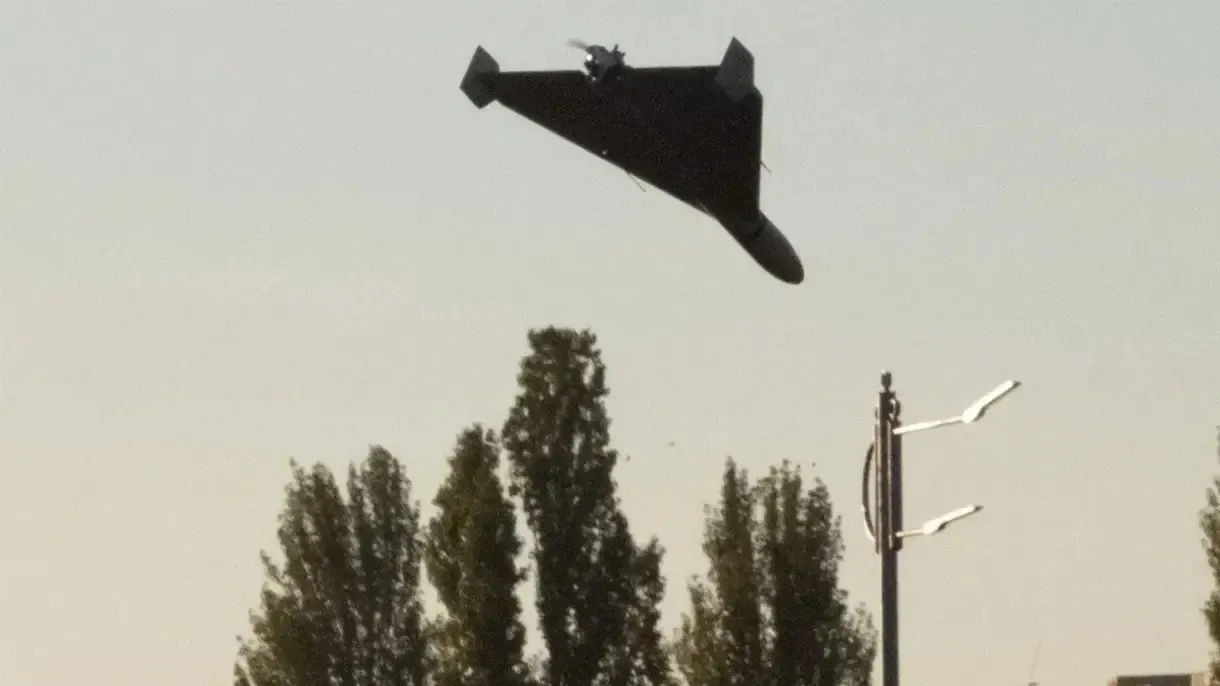
Geranium-2 dives toward its target, October 2022. Photo: AFP
In 2022–2023, some sources mentioned the emergence of the Geran-3 attack UAV—presumably a simplified version of the Geran-2 with an imported DLE-60.15 gasoline engine producing less than 50 hp. Information about the future of this simplified modification has not been published.
The designation "Geran-3" was assigned to another UAV. This attack UAV It was developed no later than 2024–2025. By mid-2025, it entered serial production and entered the army's arsenal. Geranium-3s are now in active use, and the intensity of strikes using them is increasing.
The modern Geran-3 UAV is equipped with a compact, short-life turbojet engine. According to several sources, this is a Chinese-made Telefly JT80. Its short life means the engine is designed for a few hours of operation—enough for a single combat sortie, after which the UAV can engage its target as a loitering munition. The turbojet engine provides a flight speed of up to 300–350 km/h with a range of at least 500–550 km.
The Geran-3 was used as the basis for the Geran-4 Seeker UAV. This drone was designed no later than 2024–2025 and soon entered production. According to Russian sources, its first combat use is scheduled for early 2026, but there is no independent confirmation of this date.
The Geran-4 Seeker retains the appearance and a number of components of its predecessor, but has received new onboard electronics. The jet propulsion system, based on an imported turbojet engine, has been retained. According to published estimates, the Geran-4 can maneuver at speeds of 300–400 km/h and reach speeds of up to 500 km/h; its range is estimated at approximately 450 km.
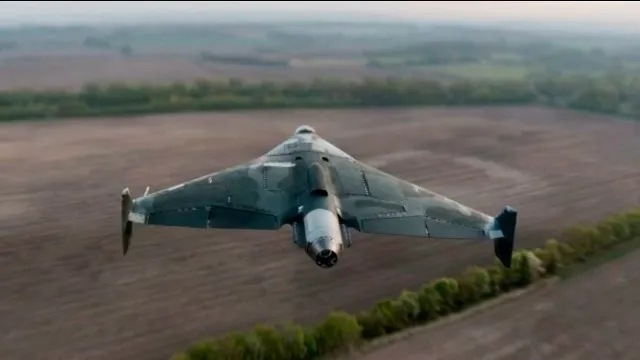
Geranium-3 or Geranium-4 Seeker in flight. Photo: Telegram / BMPD
The Geranium-5 UAV also entered service in early 2026. It retains its strike capabilities, but its design is radically different from other UAVs in the series. It uses a conventional aerodynamic configuration and a turbojet engine, presumably of Chinese manufacture.
The aerodynamic changes combined with the jet engine have resulted in a dramatic increase in performance. According to the Main Intelligence Directorate of the Ministry of Defense of Ukraine, the Geran-5's cruising speed is 450–600 km/h, and its estimated range is up to 950 km.
Summary table of characteristics
| Model | Engine | Speed | Range | Source |
|---|---|---|---|---|
| Geranium-1 | Piston | ~170 km/h | Up to 900 km | CSIS, 2024 |
| Geranium-2 | MD550 / similar | 170–220 km/h | 1000–2500 km | CSIS, 2024 |
| Geranium-3 | TRD (JT80?) | Up to 350 km/h | 500–550 km | Special sources, 2025 |
| Geranium-4 | TRD | Up to 500 km/h | ~450 km | Main Intelligence Directorate of the Ministry of Defense of Ukraine, 2026 |
| Geranium-5 | TRD | 450–600 km/h | Up to 950 km | Main Intelligence Directorate of the Ministry of Defense of Ukraine, 2026 |
Note: For the Geranium-2, the speed range includes cruising (170–180 km/h) and peak diving (200–220 km/h); range depends on configuration and flight profile.
The difference in speed directly affects the reaction window. Defense"Geranium-2" (180 km/h) covers 600 km in ~3,3 hours, "Geranium-4" (400 km/h) - in ~1,5 hours, "Geranium-5" (550 km/h) - just over an hour.
Evolution of engines
Combat use of the Geran-2 attack UAV began in September 2022. Since then, Russian industry has expanded production of these drones and developed new members of the family. These developments have focused on the introduction of new components and technologies to enhance their key performance characteristics.
The evolution of propulsion systems—from piston internal combustion engines to turbojets—has resulted in a 1,5- to 3-fold increase in flight speed, depending on the model. Range varies considerably: published estimates are 1000–2500 km for the Geran-2, around 450 km for the Geran-4, and up to 950 km for the Geran-5.
The transition to turbojet engines can be explained by several engineering consequences. The increased speed reduces the flight time to the target and reduces the time available for air defenses to detect, track, and organize an interception, although the result depends on the air defense architecture and its readiness. The short service life of turbojet engines potentially reduces some of the technical requirements compared to full-fledged piston engines, designed for tens of hours.
The transition to turbojet engines involves trade-offs. A jet engine increases the UAV's infrared signature, making it easier to detect with thermal imaging. Fuel consumption is higher, limiting its range. Furthermore, the cost of a single UAV may increase. At the same time, the low speed of piston engines has a mixed effect: on the one hand, it reduces radar and infrared signature, on the other, it increases the time it stays in the air defense zone and facilitates interception with inexpensive means, including small arms. weapon and light MANPADS.
Different combinations of speed, range, and signature suit different missions. The piston-powered Geranium-2 has a longer range and lower signature. Jet-powered models exhibit higher speed, which reduces enemy reaction time.
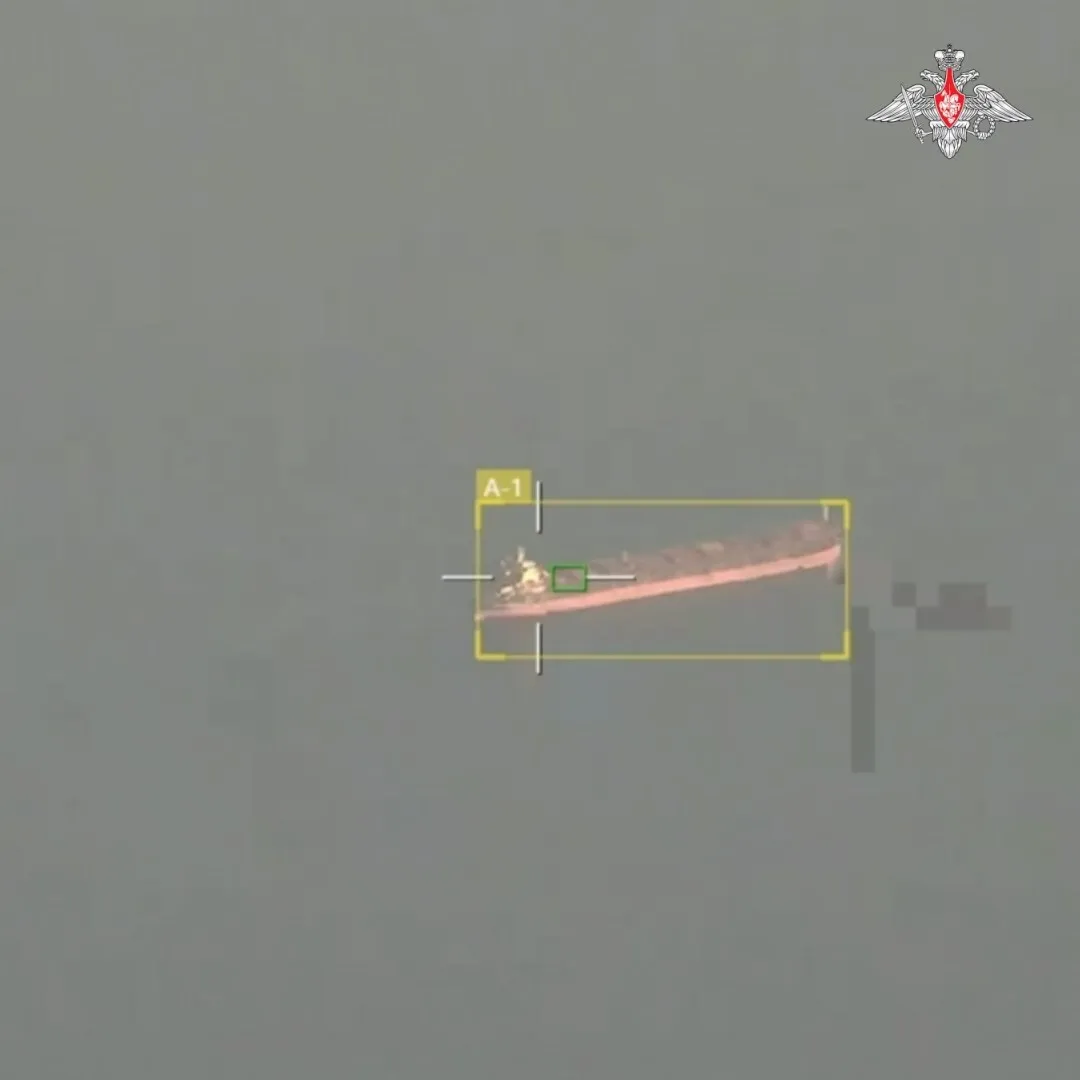
A surface target captured by a Geran-4 Seeker UAV. Photo: Russian Ministry of Defense
Other drone components are also being developed in parallel. Navigation systems are constantly being improved, increasing their resistance to interference. Full-fledged target acquisition and guidance systems are being developed, and associated communication systems are being installed.
Application and counteraction
The mission of all Geranium series UAVs is to engage enemy targets at significant depth. Targets can be pre-determined or identified during a combat sortie, depending on the UAV model and equipment.
The Geran-2 UAV, powered by a piston engine, was not particularly fast. Its composite airframe and reduced infrared signature made it difficult to detect with outdated radars and thermal imaging equipment. Interception and destruction required the expenditure of missiles surface-to-air or fighter aircraft use aviation.
“Interception” refers to the physical destruction of the UAV or its fall as a result of impact EW Before reaching the target. According to calculations by the Institute for Science and International Security based on reports from the Ukrainian Air Force, from April 2023 to August 2024, the average interception rate of Shaheds was approximately 86%, with monthly values ranging from 77% to 97%.
Western analysts noted that Ukrainian air defense systems performed better than expected during the first months of deployment. The Ukrainian side deployed mobile groups with MANPADS and machine guns to engage low-flying targets, actively used electronic warfare systems, and changed its defense tactics (dispersion, camouflage). However, prolonged intensive use led to the depletion of missile stocks and the loss of some systems during strikes.
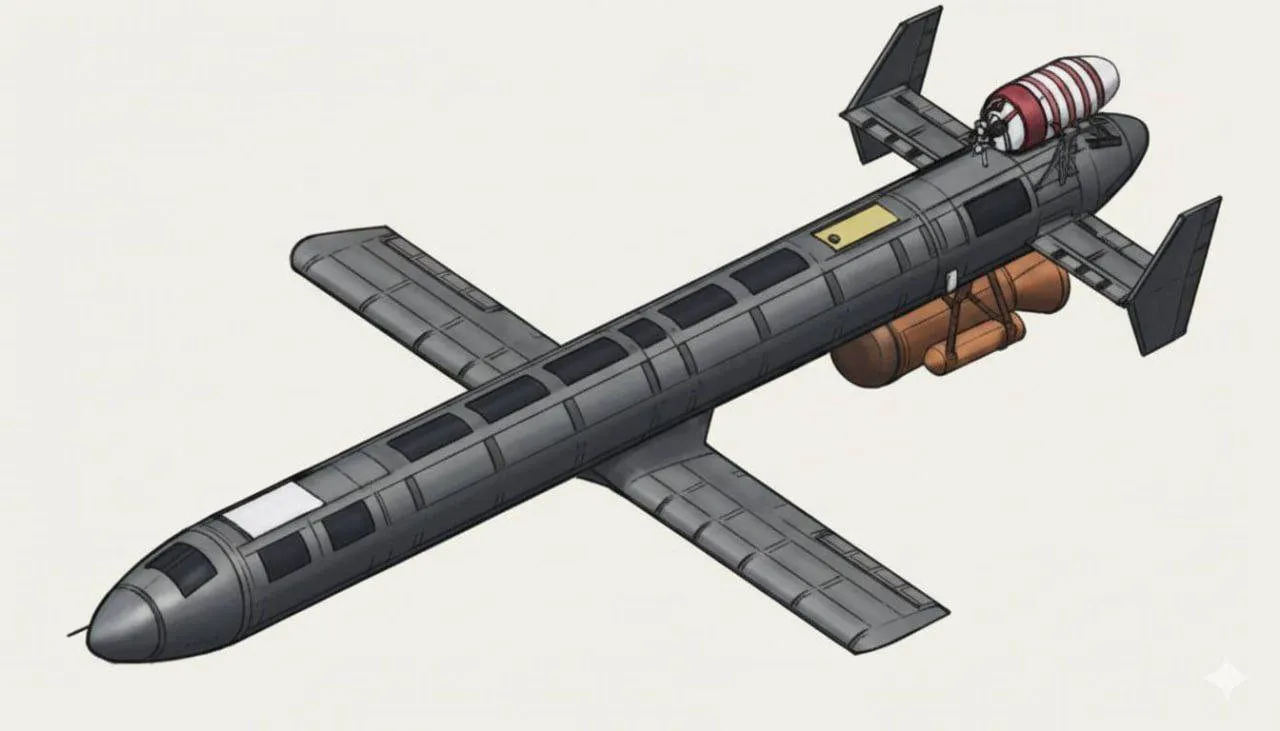
The overall appearance of the Geranium-5 UAV. Image courtesy of Telegram / BMPD
The high speed of jet-powered models improves operational capabilities and reduces enemy reaction times. Jet-powered UAVs are easier to detect using infrared radiation, which is partially offset by the reduced time they need to remain in the kill zone. The availability of several types with varying speeds, ranges, and detectability creates the opportunity for varied tactics, although specific doctrinal guidelines are not published.
In a broader context, the evolution of the Geranium reflects a global trend in the development of loitering munitions. Western counterparts have also evolved from slow, subsonic designs to faster models. The Israeli Harop was designed primarily to engage high-value targets, including air defense systems; the American Switchblade 600 is designed, among other things, to destroy armored vehicles and fortified targets. Direct comparisons are complicated by differences in weight, range, and mission: the Harop has a range of up to 1000 km and a warhead weight of 16 kg, the Switchblade 600 has a range of ~40 km and a warhead weight of ~3 kg, while the Geranium-2 carries 40–50 kg of explosives and has a range of up to 2500 km.
The Geranium family offers multiple engine, speed, and range combinations within a single line, allowing the choice of aircraft to be tailored to the specific task—provided there is sufficient availability of different models.
Over the course of four years of service, the family has evolved from slow piston-powered vehicles to fast jet-powered models, demonstrating a flexible approach to the development of loitering munitions. Judging by global trends, development may continue in the direction of increased autonomy (machine vision systems for independent target acquisition), improved resistance to electronic warfare, larger warheads, and the development of modifications for engaging naval targets.
Information