Ceremonial transporter for the emir
Part I. A Mysterious Photo in an Old Magazine
I was once visiting a friend in Damascus and noticed a bookcase in the dining room filled with thick, green-bound volumes with ornate Arabic script. It turned out that when my friend's family lived in Kuwait, his father had started subscribing to Al-Arabi, a popular Arab magazine, in the late 50s. Being a meticulous man, he didn't throw away the issues he'd read, but rather stacked them and once a year gave them to a bookbinder, who bound them into a single volume. So, yours truly, with plenty of free time, decided to leaf through these annual issues, which chronicled various episodes in Arab life over several decades.
And then, it was as if I'd stepped not just into the last century, but into another dimension. So unusual did the images of that long-gone era, captured in the photographs included in the publication, seem to me from today's perspective. A multitude of cars I'd never seen before, paired with the most beautiful landscapes, sat comfortably on the magazine's slightly yellowed pages.
It seemed to me that these were not images of scenes from ordinary life in the middle of the last century, but illustrations of some kind of Eastern fairy tales, so great did the visual gap between that era and the present seem to me.
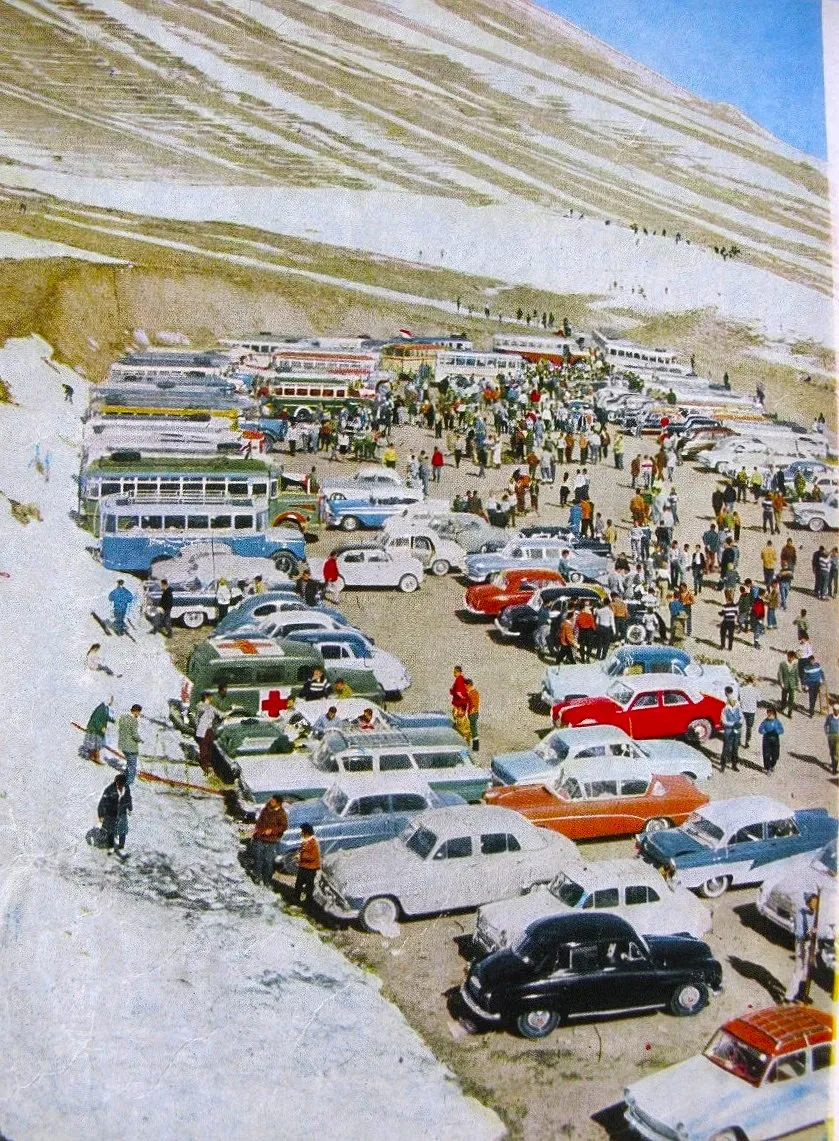
The slopes of the Anti-Lebanon mountain range. People came on a weekend to escape the sweltering summer heat.
And then, in one of the early 60s issues, I discovered a short article reporting that the Supreme Commander-in-Chief, the Emir (King) of Kuwait, His Highness Abdullah al-Salem al-Sabah, accompanied by his distinguished guest, King Faisal bin Abdulaziz of Saudi Arabia, had recently reviewed a parade of his troops. Below was a photograph depicting two imposing men, dressed in snow-white abayas, riding upright in the back of a pickup truck, surrounded by drilled soldiers standing at attention.
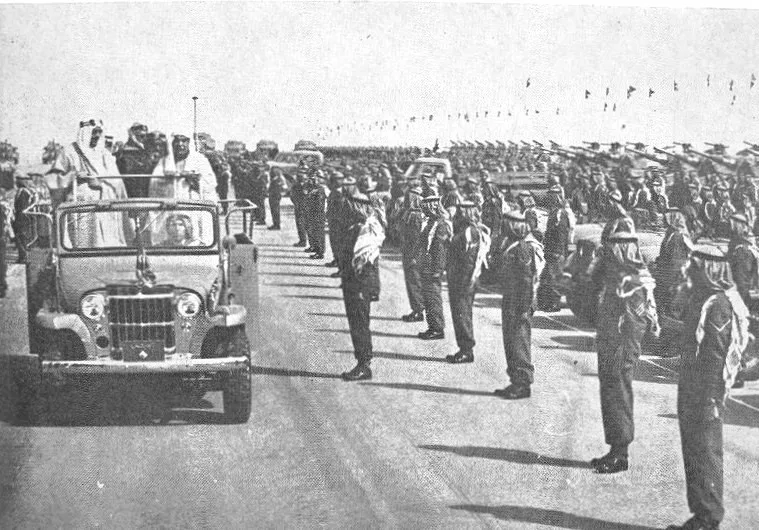
I became curious: what kind of car was it that such respected people rode in?
I have to admit (albeit awkwardly) that I'm not much of an expert on early '60s pickup trucks. Sure, I'd seen the old Defender and the legendary Toyota 40 in the Middle East, but this was clearly a different vehicle. The more I looked at this truck, the more I liked it. I was particularly curious about the large round hole under the right headlight, reminiscent of a shell hole. The stubby body with its protruding sides and grab handles also looked like a strange, alien object; it just didn't fit with the wedge-shaped hood.
The first all-wheel drive pickups of the late 40s
When I got home, the first thing I did was turn on my electronic suitcase, where I keep pictures of prehistoric 4x4 monsters in one of the folders, and to my shame I discovered that the black-and-white photo from Al Arabi magazine depicted a Jeep Willis Pickup familiar to every American child.
Here it is necessary to recall a little-studied history the birth of pickup trucks with a 4x4 wheel arrangement, which is still waiting for its explorer.
After the end of World War II, the United States accumulated a huge number of Jeeps, produced during the war by Willys Overland Motors and Ford—a total of over 600,000 units. Some were sent to US military allies, but still, far too many remained in the American military after the war. The army's size was significantly reduced in the postwar years, with many soldiers leaving for civilian life, and tens of thousands of Jeeps were demobilized along with them. Former soldiers who became farmers were well aware of the ruggedness and excellent cross-country ability of these vehicles, eagerly buying them from the army and adapting them to peaceful village life. Jeeps proved indispensable transportation in rural areas, where, as in our own times, roads were not very good.
However, they were a bit small, and the maximum load capacity of about 250 kg (including the driver’s weight) was clearly insufficient for agriculture.
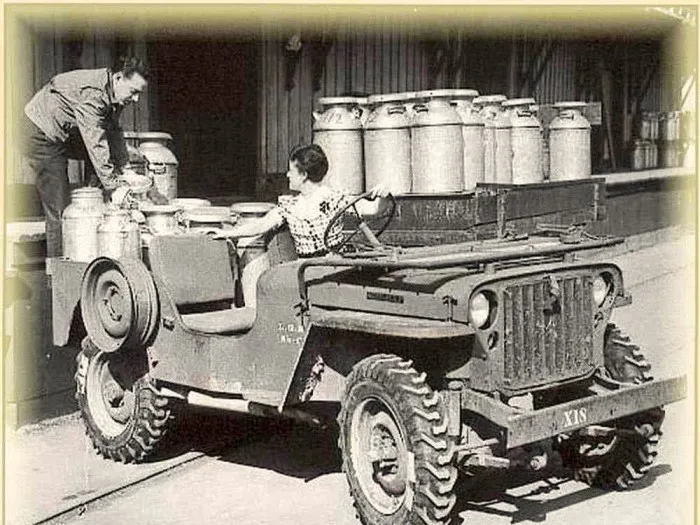
Farmers clearly needed a larger vehicle, but simple in design, strong and unpretentious like a jeep, and most importantly, with the same good cross-country ability.
This need was recognized by the management of Willys Overland Motors, which was struggling to survive in the immediate postwar years. In 1947, its engineers developed and launched production of small open-bed, two-seater vehicles with a payload capacity of approximately 1 ton specifically for local farmers. At the time, these vehicles weren't yet called pickups, but were instead referred to by the generic term "TRUCK." They were advertised under the name "Jeep."
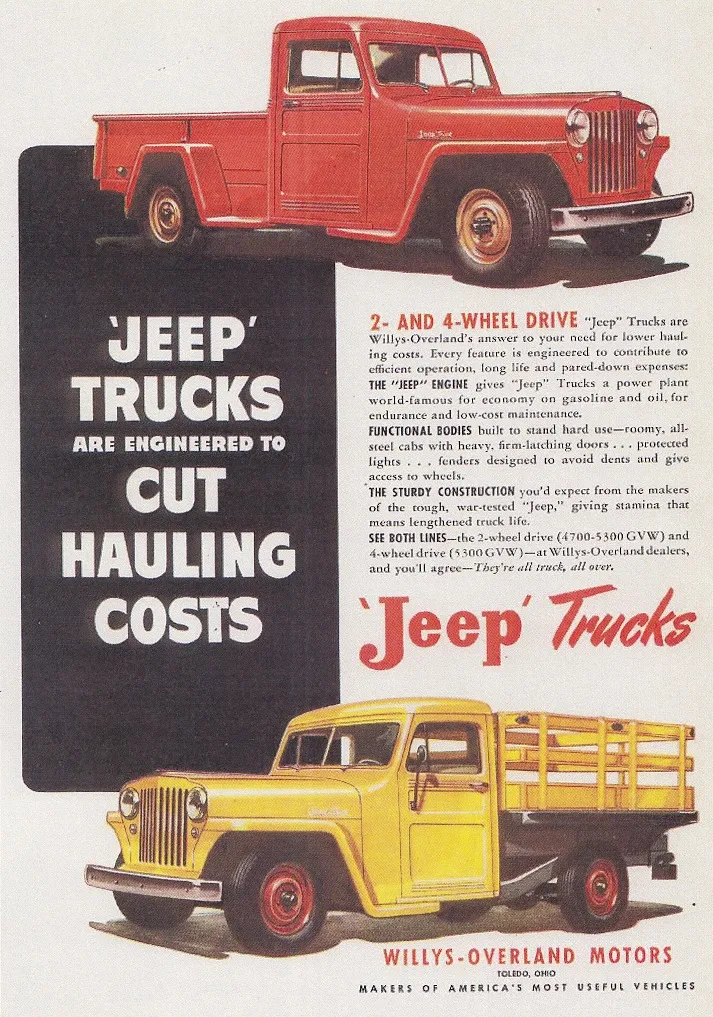
The vehicles were based on a modernized all-wheel-drive "CJ" (civilian jeep) chassis, essentially an extended version of the Willys MB chassis. The pickup's wheelbase was 2997 mm. Therefore, their reliability and ease of maintenance were no worse than those of the old Willys. In the early 50s, the company carried out a minor upgrade, which resulted in the fenders and front hood becoming more pointed, and the protective grille in front of the radiator, instead of the previous slots, was replaced with vertical bars and three chromed horizontal strips.
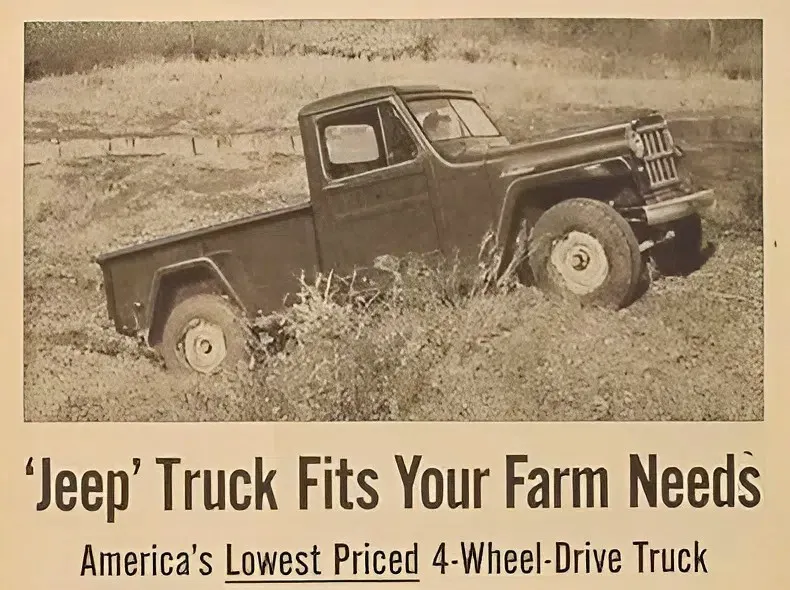
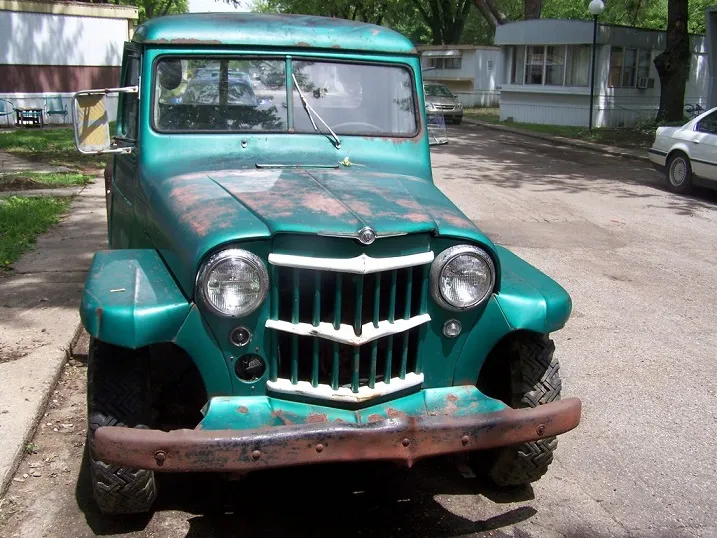
The emir's ceremonial car closely resembled this model.
Indeed, the resemblance was obvious, or rather, on the face—the front of the car. The hood, pointed fenders, and protective radiator grille, which Americans call a "grill," were identical. There was even a round hole of unknown purpose under the headlight.
But upon closer inspection, I discovered that the pickup truck in the photo from the Arabic magazine is significantly different from the Jeep. The bed of the Emir's vehicle is significantly wider and pales in comparison to the Jeep's ridiculously wide bed.
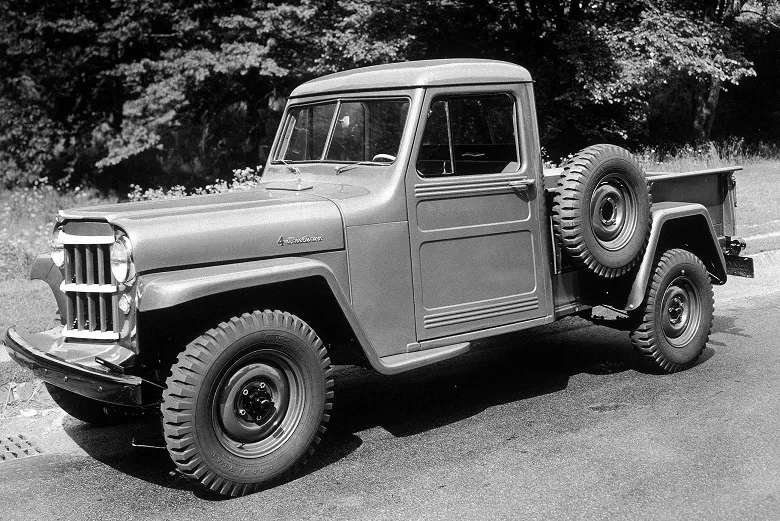
4WD 1-Ton Jeep Pickup, 1954
Furthermore, the Emir's car has windshield wiper arms located at the top of the windshield frame, while the Jeep has them below the frame. The Jeep has an all-metal cabin with a metal roof, while the unknown "parade" vehicle in the photo has an open top.
Those who research automobile history know that sometimes cars are as similar as two peas in a pod, yet produced by different companies and on different continents. And sometimes the only differences are mere details, such as the presence of air vents or, sometimes, the number of studs on a wheel hub.
But here the only similarity was in the shape of the hood, fenders and grille, while the rest of the body elements of the cars were different.
Trying to find the answer, I sifted through numerous auto catalogs, but I still couldn't find a definitive answer to the question that was tormenting me. My research reached a narrow, dark dead end.
Well, basically, one could have assumed that some handy Kuwaiti handyman working in a royal garage took a standard jeep pickup, removed its original bed, and bolted in its place a freshly welded, massive square box with handrails. Then, driven by the spiritual urge to create without looking back, he grabbed a grinder and, by God, cut off the cab's metal roof, completely unnecessary in the hot desert, which only hindered the driver's nighttime admiration of the beautiful eastern stars. And, to complete the creative process, he applied the finishing touch that turns a good painting into a true masterpiece: he moved the windshield wiper arms from their original location to the top of the windshield frame.
Theoretically, a car mechanic could do such a modernization, but the question is: why???
Wouldn't it have been easier for the emir to take one of the stylish American open cars that he loved to drive through the desert during falconry, and go and receive the parade in it?
For example, this:
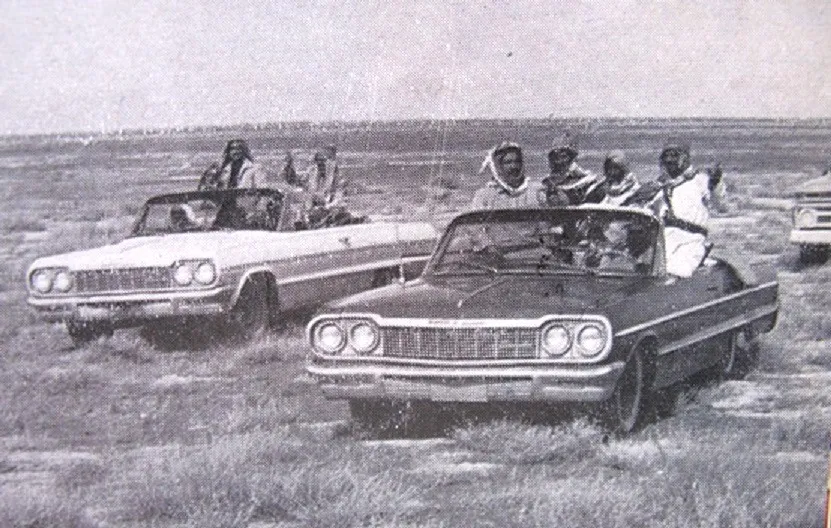
Something didn’t add up here; the Emir’s car was clearly a production model, but which company manufactured it?
The answer to the question that was tormenting me was suggested by one of the authorities of the domestic forum of car modelers.
Продолжение следует ...
Information