Why the Red Army and Wehrmacht Comparison Doesn't Add Up
On July 29, 1941, the State Defense Committee ordered that the partisan's average salary at his previous place of work be retained. In March 1942, the German commander received the right to recommend the soldier for a special sleeve insignia. танк, destroyed in close combat. The two countries counted their combat contributions, but translated them into different amounts.
The six previous articles in this series began with Soviet orders. A medic was promised a commendation, a sniper a higher salary, a bonus for destroyed or rescued equipment, and the money already accrued could be cash, deposited, or transferred to family. Now the most striking formula remains: the USSR bought results with rubles, while Germany reciprocated with a badge, leave, and military honor.
This comparison is convenient. It reduces two cumbersome systems to a single contrast and is supported by authentic documents. Soviet piece payments existed. German individual performance badges also existed. The error begins when separate norms are transformed into two complete national philosophies.
This common version has no single author or text. It's pieced together from popular retellings, where orders are quoted selectively, without dates or qualifications. Therefore, one has to argue not with a specific article, but with the very thought process: since Soviet documents referred to rubles, and German ones to signs, that's how the two armies were distinguished.
The strong version is based on real orders
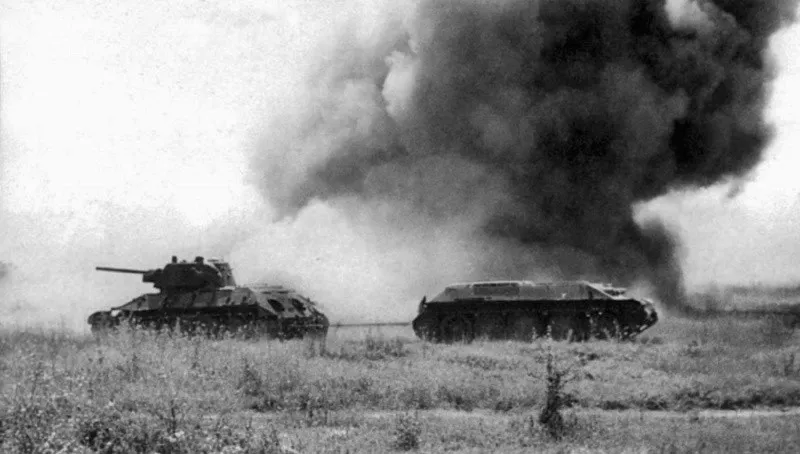
Soviet material provides a rich monetary invoice. A fighter pilot was paid 1000 rubles for shooting down an aircraft. For evacuating a heavy tank from enemy territory or a neutral zone, he was entitled to 5000 rubles, which the unit commander distributed among the crew and the evacuation group. For a tank personally destroyed using individual equipment, a 1943 order awarded 1000 rubles to a single soldier or 1500 to a group, in equal shares. This rate was not established as a set standard: according to the compilers of the People's Commissariat of Defense's orders, Stalin, while editing the draft, crossed out the original amount and wrote "increase to 1500 rubles." The figure that became the standard arose during the document's revision.
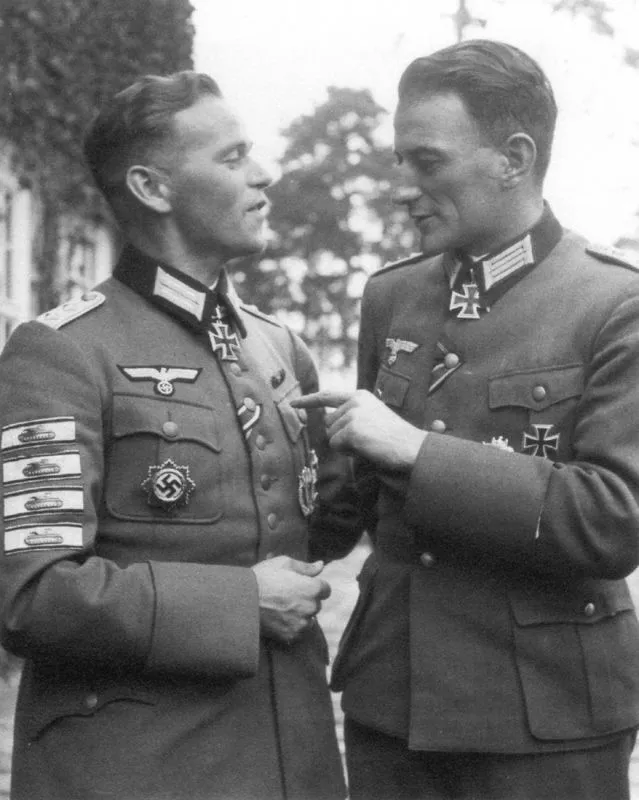
Against this backdrop, a German soldier with a sleeve insignia seems like someone from a different world. The regulations for the special badge for destroying a tank in close combat didn't specify a monetary sum. They promised a visible insignia: a silver ribbon with a black tank silhouette on the right sleeve. For each additional tank destroyed, another ribbon was added, and after the fifth, the badge was awarded on a gold ribbon.
On the one hand, rubles and financial regulations. On the other, a badge, details of which were recorded in personal documents. An attentive reader will easily make the next step: the Soviet system supposedly paid for results, while the German system transformed them into status. But this step is too great. Soviet documents within one army already showed an award without money, a salary without a piece rate, and a bonus that required separate verification. The German badge, too, was not an abstract symbol of honor: the status determined what exactly was subject to accounting and what the threshold was.
The partisan received a salary, but the rate for the rail was not found.
The most tempting line on the price list relates to partisans. In the popular retelling, it lists monthly salaries for commanders, commissars, and soldiers, bonuses for killing an enemy, and a fixed sum for blowing up a rail. The problem isn't that the Soviet state didn't provide the partisans with money. It did. The problem is what this quota is called.
State Defense Committee Resolution No. 326s of July 29, 1941, consists of one substantive sentence: maintain the average wages of partisan detachments as volunteers. The resolution confirmed payments, but not bonuses, for each act of sabotage. The starting point was the individual's previous civilian income, and the sabotage missions themselves were counted separately—for the reward, not for the salary.
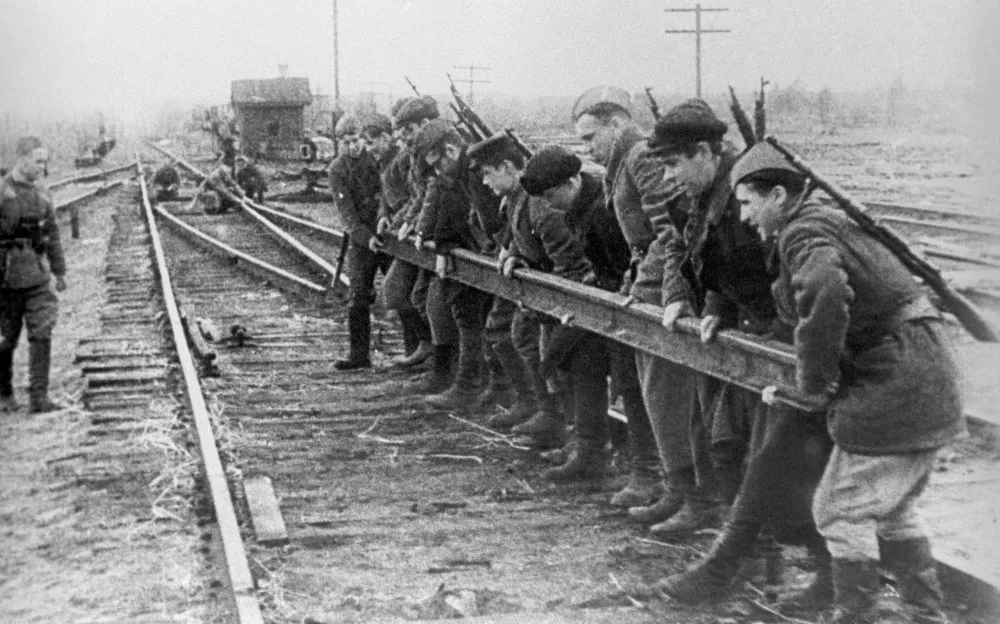
This distinction was easily lost because rails were counted. Order No. 0042 of the Chief of the Central Headquarters of the Partisan Movement, dated July 14, 1943, required that broken rails be recorded for each partisan, detachment, and brigade. The order proposed linking this indicator to awards. In a previous article, we already discussed why rails were a convenient reporting unit and a weak measure of transport results. Another distinction is important here: recording for awards does not yet create a monetary rate.
The State Defense Committee (GKO) maintained the average salary for the individual. The Central Railroad Directorate (TsShPD) counted damaged rails and proposed rewarding those who excelled with awards. To convert this into a formula of "so many rubles per rail," a separate document detailing the amount, recipient, and payment method is needed. No such document exists among the available documents.
The fact that such a document hasn't yet been found doesn't mean that no unit or headquarters ever used special payments. The archives haven't been exhausted. But this leads to a more specific conclusion: the fixed rate can't be attributed to Resolution No. 326s or deduced from the very fact of rail inventory.
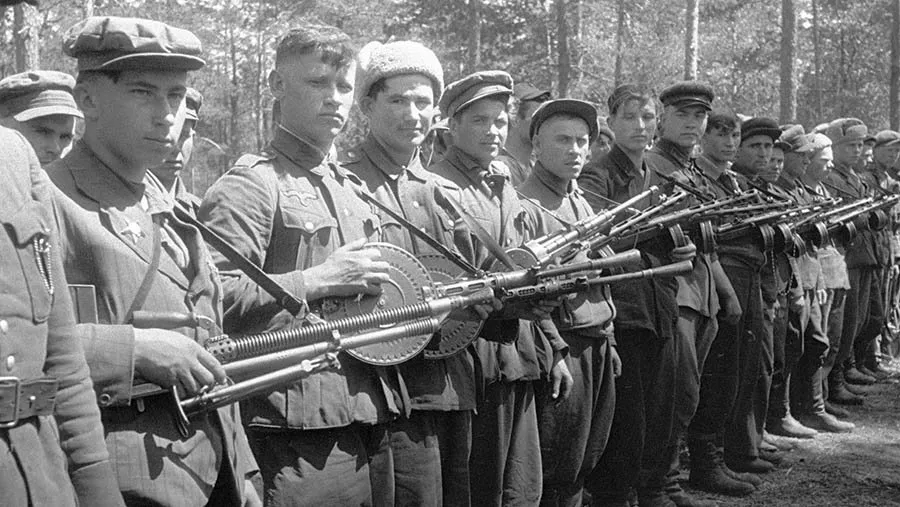
Researcher N. Z. Kunts writes about how the state settled accounts with people emerging from the forest: in the fall of 1943, people responsible for financial settlements appeared within the operational groups of the Belarusian Headquarters of the Partisan Movement. They met partisans leaving for the Soviet rear and paid them on the spot (NARB, f. 1450, op. 1, d. 66). But here, too, we are talking about payment of accumulated allowances, not debts for each rail.
The German tank also had to go through the order
The German regulations of March 9, 1942, precisely defined what results counted. The badge was awarded to a soldier who, beginning on June 22, 1941, destroyed or disabled an enemy tank or other armored vehicle. Only close combat with the use of a hand-held anti-tank weapon was considered. weapons or other close-combat weapons. Examples include an anti-tank rifle, a rifle grenade, and a bundle of charges.
A badge was awarded for each vehicle credited to one or more soldiers who played a decisive role. So, here too, the subject of the award wasn't simply a vehicle destroyed in the field. It was necessary to identify the group of people whose participation was considered decisive, and to separate the close combat of an individual soldier from the results of a tank gun crew. aviation or other weapons system.
The unit commander submitted a written recommendation to the battalion commander or another commander of equal rank. The award was formalized by order. The date was entered into the individual's personal documents, and the recipient was issued a certified copy. The award itself was requested through the division from army command.
This chain is a documented human action, not a discourse on German character. The commander wrote a recommendation, a superior officer made a decision, a clerk entered it into personal documents, and a token was delivered along the supply chain. Material results only became status after passing through several ranks.
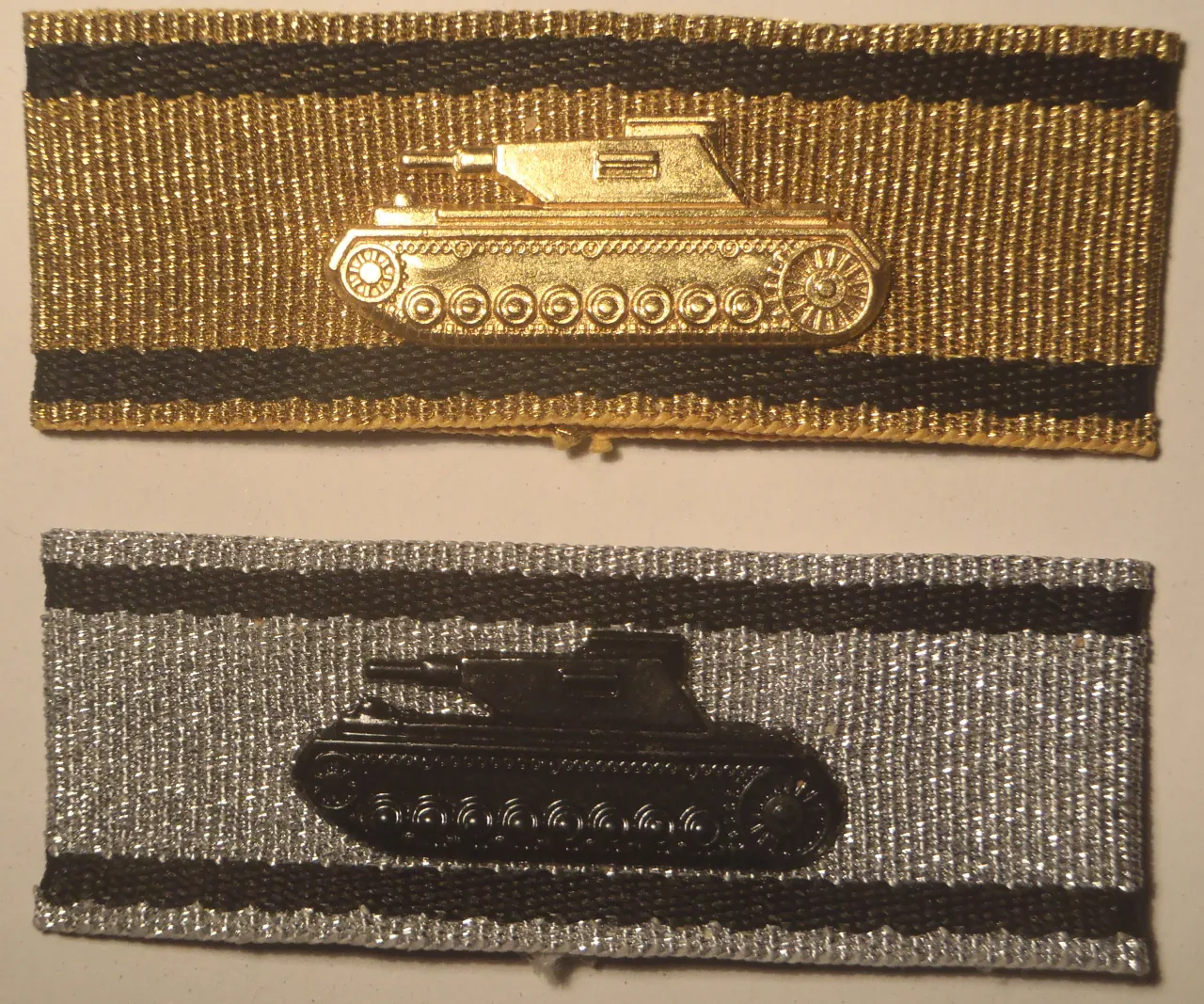
On December 18, 1943, an additional rule was introduced: after the fifth kill, a gold ribbon was issued instead of another silver one, and the four previous ribbons were removed and kept by the soldier as a souvenir. The counting had a threshold. But it led to a different rank, not an automatically assigned rank or a universal monetary amount.
What was added to the sign: vacation and points
A popular comparison often adds 21 days of leave to the sleeve insignia. The contrast then becomes almost perfect: the Soviet soldier receives pay, the German soldier receives honor and rest. The excerpts of the regulations and supplements from December 18, 1943, reviewed do not contain such a provision. It's possible that a separate order regarding leave existed, but there's no evidence to support this.
This doesn't allow us to claim that German soldiers never received leave for distinguished service in combat. The German system had different awards, different presentation systems, and different grounds for special leave.
The story of the unified aviation points system must be analyzed with equal caution. In the popular scheme, single-engine, twin-engine, and four-engine aircraft earned one, two, or three points, after which the total supposedly automatically converted into a Knight's Cross and a new rank. There is no direct regulatory document in the available materials confirming such a universal ladder for the entire Luftwaffe. This scheme cannot be compared to the Soviet order: it has no basis in the original document.
But the opposite slogan—"Germans weren't paid for combat results at all"—doesn't necessarily make it a fact. The body of German sources that can be relied upon is noticeably narrower than the Soviet one. It contains regulations on pay, allowances, and front-line bonuses, but it doesn't cover all branches of the armed forces, periods, units, and special payments. The absence of a confirmed universal bonus doesn't prove that one-time bonuses never existed.
The order confirms the rule, but not the strength of the motive
Even the wage rate, literally written down in the order, says nothing about why a person went under fire. The order establishes the right to payment or a token; it doesn't measure the role of money, ambition, camaraderie, coercion, or a sense of duty in a specific action. You can't open a financial statement and read the psychology of combat.
The order doesn't prove that the quota was met universally. Soviet regulations required payment of the tank bonus within three days of the unit order. German regulations required written submissions and records in personnel files. To determine how regularly the quotas were met, orders from specific units, rejected submissions, payroll records, and personnel files are needed. These requirements show how the procedure was supposed to proceed, but not how many people completed it.
Therefore, the comparison must remain symmetrical in terms of the level of evidence. A Soviet regulation is compared with a German regulation, a payment case with a payment case, and award practice with award practice. Juxtaposing a Soviet table from an order with a later German retelling without reference to the primary document predetermines a winner in the dispute over sources.
We need to compare operations, not armies.
Seven articles showed that the calculation of results—for a destroyed tank, a downed aircraft, or a wounded soldier carried out—passed through four stages: the action was determined, the result was confirmed, the form of reward was determined, and the individual's right was documented. Salary worked differently: it was a condition of service, not a reward for a specific incident.
A medic kept track of the number of wounded carried out with weapons, and this count led to a recommendation for a state award. The state increased a sniper's salary based on his specialty and rank, but the documents did not establish a universal rate for each enemy killed. Monetary standards were in effect for destroyed tanks, aircraft, and ships; a report, order, and command decision stood between the claim and the payment. A partisan retained his civilian salary, and rails were counted for the award, but a fixed rate for each rail has not been confirmed. A German tank destroyer received a sleeve insignia—a personal, credited achievement, documented; a Soviet sleeve insignia denoted affiliation with a special unit, not an individual tank destroyed.
What emerges are not two opposing worlds, but several methods of state accounting. Both the USSR and Germany used salaries, official status, awards, badges, and promotions. Direct bonuses for a given unit of performance are also clearly visible in Soviet documents. This is sufficient to indicate a difference in the documents themselves. It is not sufficient to deduce from it a permanent distinction between cash and honorary armies.
At the beginning of the series, Stalin's price list looked like a long table of prices. After a literal reading of the orders, it became a map of inconsistent transactions. A number could lead to an order, a salary, a bonus, an entry in a personnel file, or simply to the next inspection. The state rewarded equally measurable actions differently; similarly named rewards were documented in different forms.
The Red Army did pay money for a series of verified results. The German Army did turn individual results into visible status symbols. But the line wasn't drawn between the ruble and honor. It was drawn between action and the administrative process by which the state decided what to count, who to believe, and how to respond.
Literature
- State Defense Committee of the USSR. Resolution No. 326s on the financial provision of partisan detachments. July 29, 1941. RGASPI. F. 644. Op. 1. D. 5.
- People's Commissariat of Defense of the USSR. Orders No. 281 and No. 0299. August 1941. // Russian Archive: The Great Patriotic War. T. 13 (2–2). M.: TERRA, 1997.
- People's Commissariat of Defense of the USSR. Order No. 0357 on the evacuation of armored vehicles. May 7, 1942. // Russian Archive: The Great Patriotic War. Vol. 13 (2–2). Moscow: TERRA, 1997.
- State Defense Committee of the USSR. Resolution No. 1744ss on snipers. May 13, 1942; announced by order of the NKO No. 0387 of May 17, 1942. // Ibid.
- People's Commissariat of Defense of the USSR. Orders No. 0528 and No. 0387 on bonuses for the destruction of tanks. 1942–1943. // Russian Archive: The Great Patriotic War. Vol. 13 (2–2) and Vol. 13 (2–3). Moscow: TERRA, 1997.
- Order of the Central Headquarters of the Partisan Movement No. 0042, signed by P.K. Ponomarenko. July 14, 1943. (The publication's imprint is incomplete.)
- Merkblatt 15/5 "Orden und Ehrenzeichen." Regulations on a special badge for the destruction of a tank in close combat. March 9, 1942; additional announcement December 18, 1943. (Edition and pages unconfirmed.)
- Kunz, N. Z., "Guerrilla Warfare and Financial Support." Research Center for National Security Problems, 2019. (The exact publication details have not been confirmed.)
Information