New is well forgotten old in Japanese style
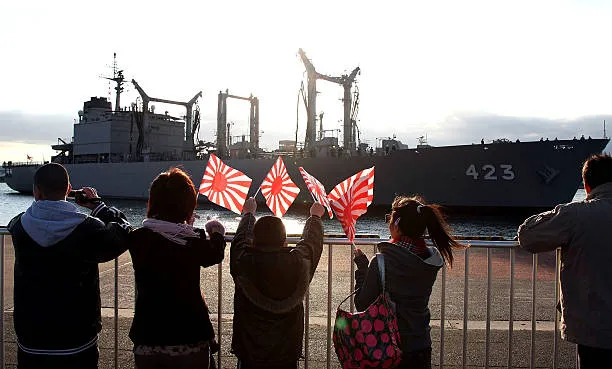
I have already noted more than once how much the Japanese, even after decades, idolize their fleetContinuity of ship names, educational programs that recount events at sea, and numerous clubs devoted to naval themes—all of this exists in Japan. Consequently, serving in the navy, which the Japanese themselves stubbornly refused to recognize as a "maritime self-defense force" for all these years, is prestigious and honorable.
And the Japanese navy, for what it is, doesn't exactly qualify as a "self-defense force." With such a force, pardon the expression, it could easily cause problems for most of its neighbors, with the exception of China.
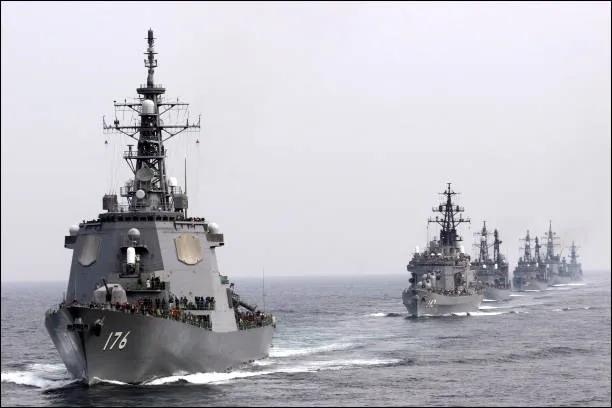
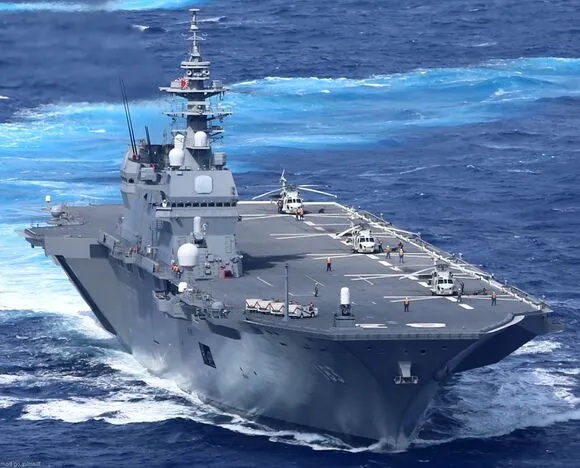
Four "destroyer-helicopter carriers," each capable of carrying 12 F-35Bs... And speaking of the Izumo, where have you ever seen a 27,000-ton destroyer? Or a helicopter carrier capable of launching and receiving aircraft, even specialized ones?
More than 30 destroyers, of which only 8 are recognized missile destroyers, and the rest of the Mk.41 UVPs are exclusively for defensive missiles? Well, yes, of course.
But the Japanese have always had a double or triple bottom. It's enough to recall the stunt they pulled just before the war, converting light cruisers into heavy ones.
Before the war, in the mid-1930s, Japan built four Mogami-class light cruisers: Mogami, Suzuya, Mikuma, and Kumano. These cruisers caused quite a stir and drove the British Lords of the Admiralty into hysterics: each cruiser was armed with 15 155mm guns, while the British colonial cruisers of the Danae, Emerald, and Leander classes carried six to eight 152mm guns. An encounter between two such cruisers and the Mogami in the Pacific or Indian Oceans was certainly not a good one.
The British, followed by the Americans, rushed to build light cruisers with larger displacement and more powerful armament. The race was very intense, but that's a subject for another discussion.
Finally, pleased to see the US and Great Britain urgently building new classes of ships, the Japanese docked all four cruisers in 1939-40 and replaced their turrets. The result was four heavy cruisers armed with ten 203mm guns.
So, a light cruiser that can be converted into a heavy cruiser in four months of hard work (the Japanese couldn't do it any other way) is perfectly acceptable. A landing helicopter carrier that can carry short takeoff and vertical landing aircraft instead of landing troops is also very Japanese.
But we have another very interesting example from stories Japanese Imperial Navy, which is most directly related to today's narrative.
So, let's get acquainted: one of the four heavy cruisers of the Takao class of the Japanese Imperial Navy, the Maya.
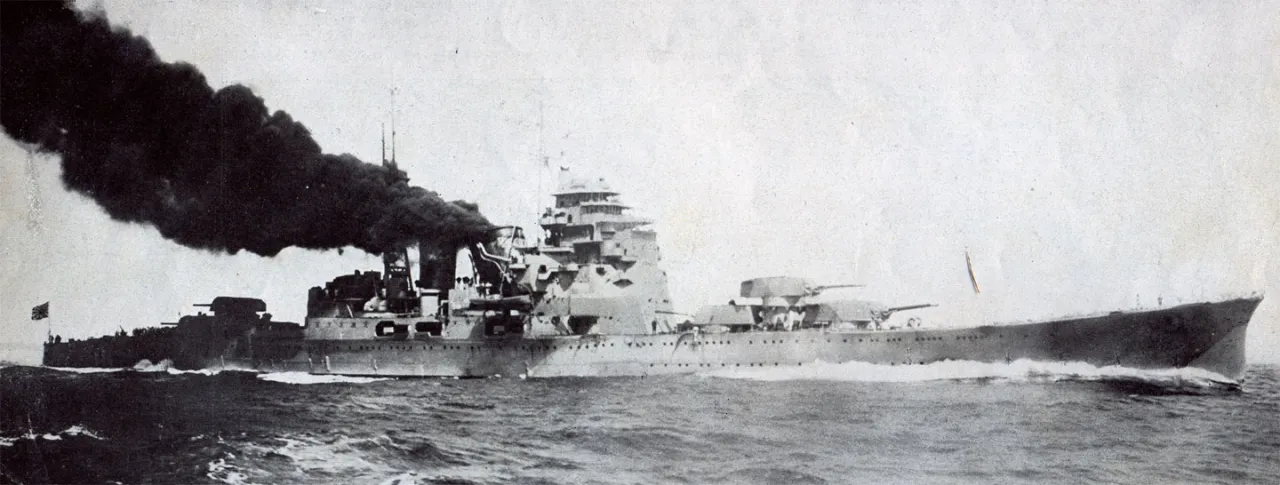
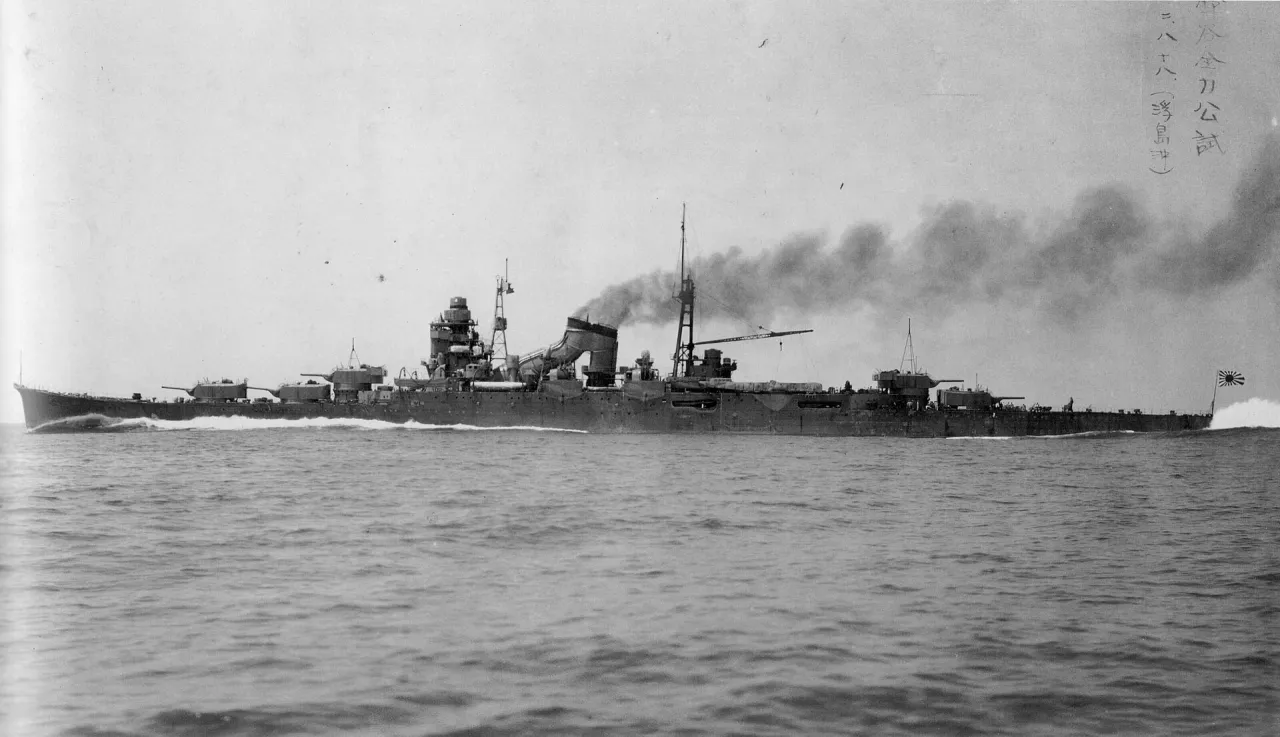
She entered service with the Imperial Navy in the early 30s, and everything would have been fine, she would have served like all the other sister ships and would have died with honor, but it turned out that Maya was very radically redesigned.
By 1943 it became clear that the American deck aviation – a very formidable adversary, and the Japanese fleet suffered enormous losses precisely because of its actions. The anti-aircraft armament of this class of cruisers was not just weak. Ten years after the ships were built, it simply did not meet any requirements. Four dual-purpose 120mm guns, two single Type B 40mm anti-aircraft guns, and two 7,7mm machine guns. This weak armament was explained by the fact that the main battery was also planned for use against aircraft, but ten 203mm guns with a rate of fire of four rounds per minute is very poor.
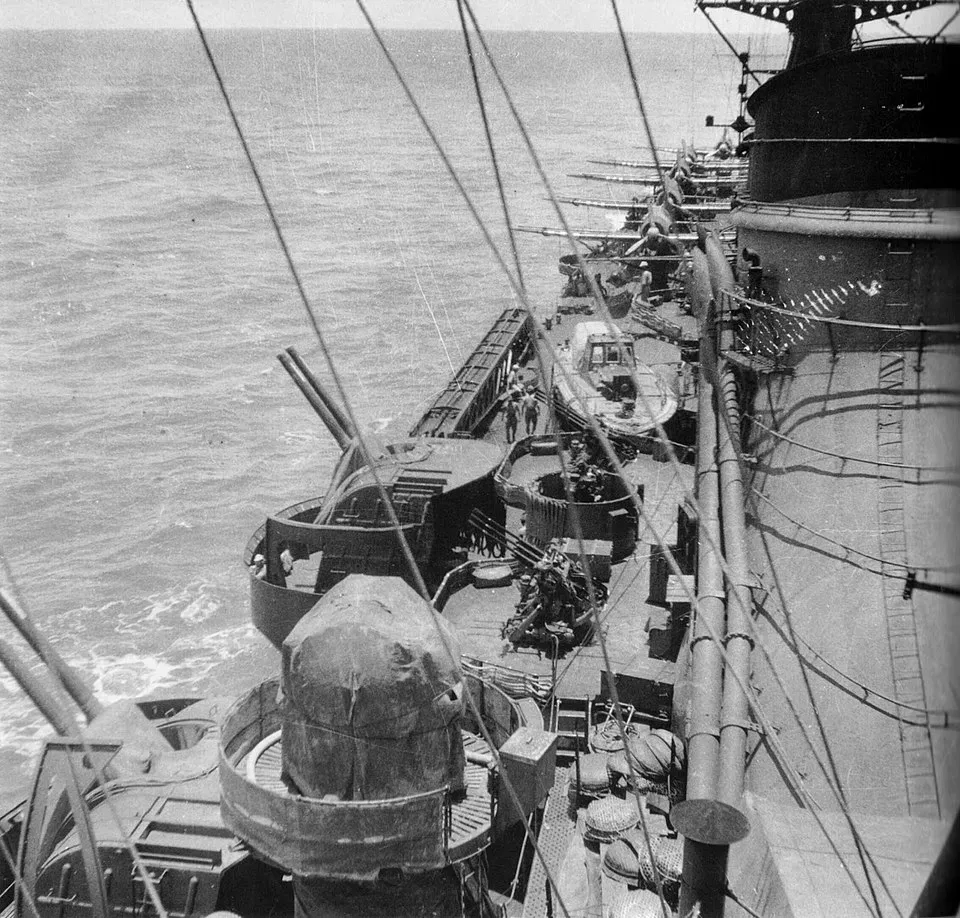
Maya in 1943
And in 1943, a decision was made to convert the Maya into a cruiser. DefenseFollowing modifications in 1943-44, the cruiser received new Type 21 and Type 22 radars and a new Type 94 SUAZO. From December 5, 1943, to April 9, 1944, the following work was performed in Yokosuka:
- instead of the damaged turret of main battery No. 3, two twin 127-mm anti-aircraft guns “type 89” were installed;
- instead of four 120-mm anti-aircraft guns "type 10", four twin 127-mm anti-aircraft guns "type 89" were installed.
- instead of 8 twin guns, 13 triple and 9 single 25-mm automatic anti-aircraft guns "type 96" were installed, as well as 36 single 13,2-mm machine guns "type 93";
- the torpedo tubes were dismantled and replaced with four quadruple 13,2 mm Type 92 anti-aircraft machine guns;
- two SUAZO "type 91" were replaced by two new "type 94";
- a Type 22 radar was installed to detect surface targets.
To compensate for the weight of the installed anti-aircraft guns, in addition to turret No. 3, all four twin-tube torpedo tubes and the hangar for seaplanes were removed, and the size of the air group was reduced, leaving two seaplanes instead of three.
As a result, the Maya's weapons kit looked like this:
127mm barrels – 12
25mm barrels – 66
13,2 mm barrels - 36.
In the summer of 1944, eighteen additional single 25-mm Type 96 automatic anti-aircraft guns and an additional Type 13 radar were installed.
That is, by 1944, Japanese admirals had a clear understanding of the direction they needed to take to effectively counter air power. True, Japan lacked the capacity to arm all its ships with air defenses in the same way the Americans had, whose destroyers were a formidable force. For example, in 1945, in addition to five 127mm dual-purpose guns, the Fletcher-class destroyers carried two quadruple and three twin 40mm Bofors mounts and four twin and three single 20mm Oerlikon mounts.
Total:
- 5 barrels 127 mm;
- 14 barrels 40 mm;
- 11 barrels 20 mm.
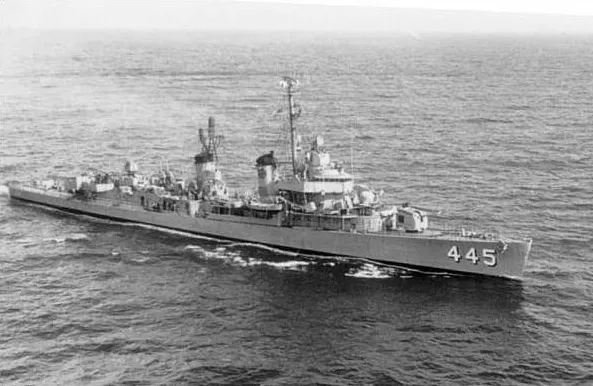
Not an air defense cruiser, of course, but there were more than a hundred such destroyers in the American fleet.
And so history repeats itself: the Japanese Navy is rapidly completing construction of its new anti-aircraft cruiser. The Navy plans to build and receive two such ships, one each for the Northern and Southern Sectors. The Japan Maritime Self-Defense Force is divided into four escort flotillas, with one cruiser expected to be assigned to Flotillas 1 and 4 (Yokosuka and Maizuru), and the other to Flotillas 2 and 3 (Sasebo and Kure).
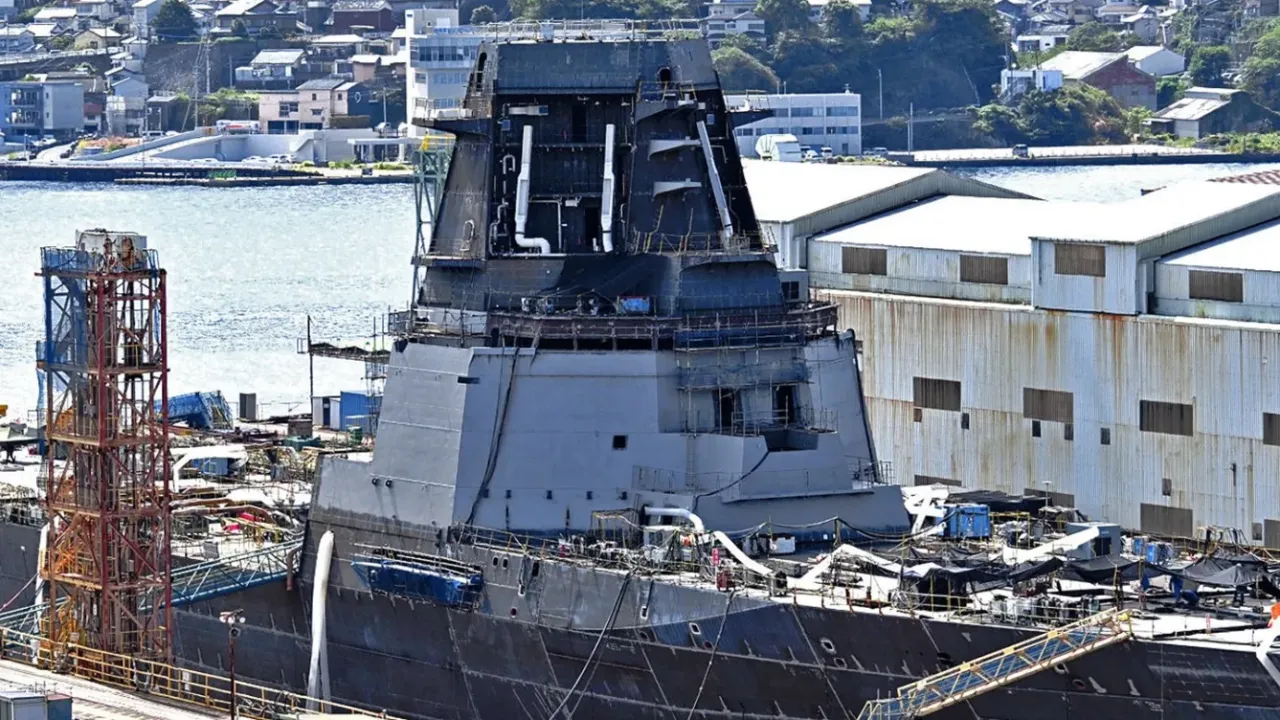
But that's a matter for the future, and for now, the first of Japan's two new Aegis System Equipped Vessels (ASEVs) continues to take shape. A massive main mast was recently installed, giving the ship a rather impressive silhouette. Four very large fixed antenna arrays for the ship's powerful AN/SPY-7(V)1 radar will eventually be integrated into this design. The ship's stated primary mission is missile defense, but Japanese authorities plan to equip it with additional anti-missile capabilities in the future. drones, anti-ship and ground attacks. Tomahawk cruise missiles are also planned for addition to the ship's arsenal: they're not greedy, they're thrifty and provident, as one cartoon character used to say.
The ASEV combat ships (interim name, classification will also be made later) will have a length of about 190 meters, a width at the widest point of the hull of about 25 meters and a standard displacement of 12,000 tons.
By comparison, Japan's largest surface combatants, the Maya-class destroyers, are just over 170 meters long, about 22 meters wide, and have a standard displacement of about 8200 tons.
It's worth noting that the size of new destroyers optimized for air defense has been trending upward in recent years, worldwide. This, in turn, has blurred the line between destroyers and ships historically classified as cruisers in some cases. The most striking example is the Chinese Type 055 destroyer, with a displacement of 13,000 tons, and the Soviet/Russian Project 1164 Atlant guided missile cruiser, with a displacement of 11,500 tons.
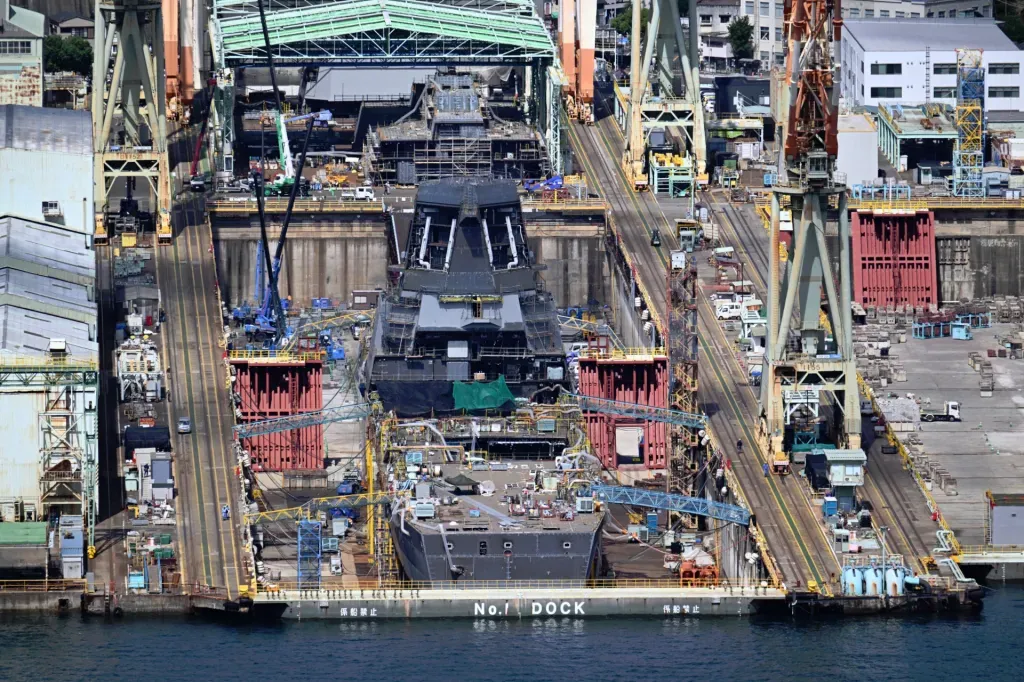
The first ASEV ship under construction in Nagasaki, seen from the stern. This photo was taken in early August.
The first ASEV ship was laid down at the Mitsubishi Heavy Industries (MHI) shipyard in Nagasaki in July 2025. The second ship was laid down in February of this year at the Japan Marine United Isogo shipyard in Yokohama, near Tokyo. The Japanese Ministry of Defense currently aims to commission the first of these ships by March 2028. The second ship is expected to enter service in the 2028 fiscal cycle, which runs through 2029.
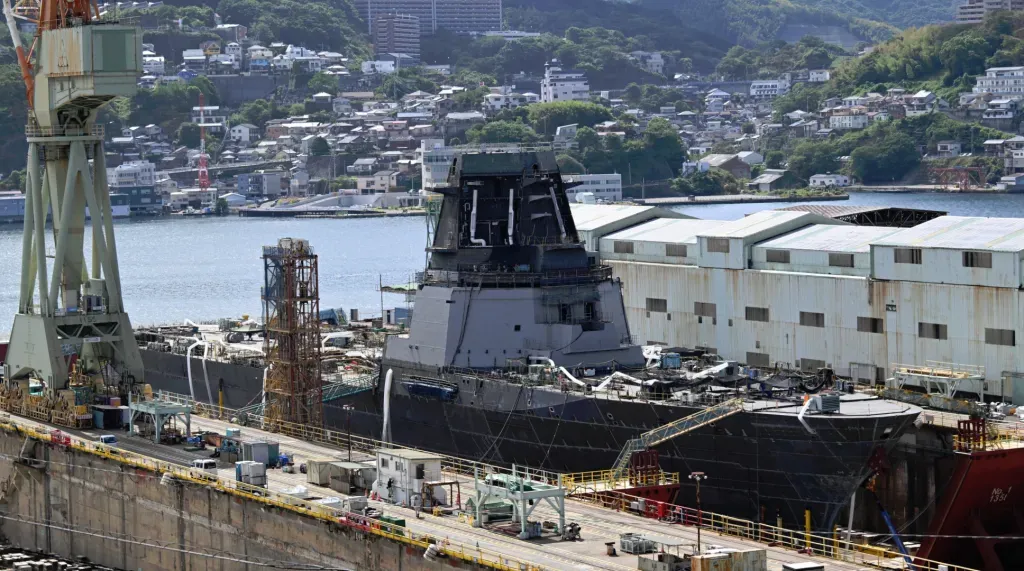
Another view of the first ASEV complex under construction in Nagasaki
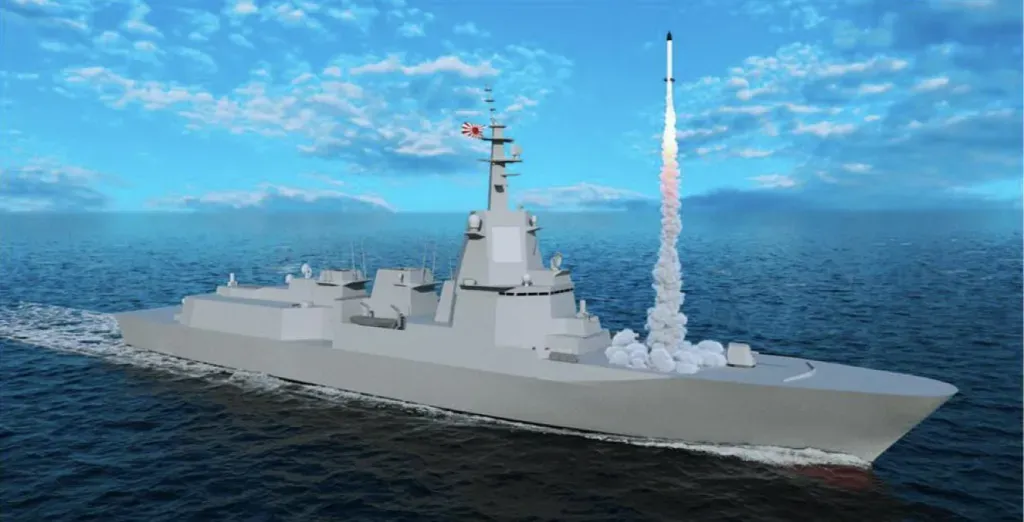
A rendering of what the completed ASEV ship is expected to look like.
This year alone, significant progress has been made on the first ship's construction. Particular attention in recent weeks has been drawn to the installation of the main mast atop the main superstructure, as shown in the photographs at the beginning of this article.
The particularly large size of the ASEV integrated mast is due to the size of the Lockheed Martin AN/SPY-7(V)1 active electronically scanned array (AESA) radar. Each of the radar's four rectangular antenna arrays is reportedly nearly 4,3 meters tall. This would place them in the same size category as the antenna arrays for the Raytheon AN/SPY-6(V)1 Air and Missile Defense Radar (AMDR—another large radar optimized for missile defense) deployed on the U.S. Navy's Arleigh Burke-class Flight III destroyers. However, the photographs we have available raise the question of whether the AN/SPY-7(V)1 antenna arrays are larger than previously thought.
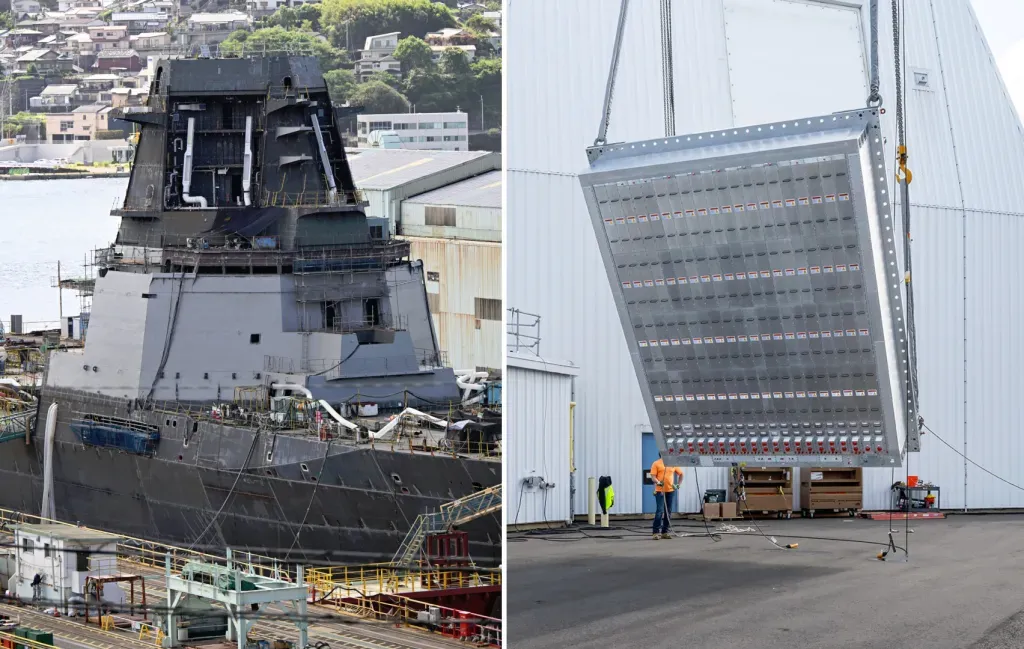
A close-up of the main superstructure and integrated mast of the first ASEV station under construction in Nagasaki on the left, and an image of the AN/SPY-7(V)1 antenna array on the right.
The mast's size and location ensure the central, elevated position of the large AN/SPY-7(V)1 antenna arrays, providing unobstructed visibility to the horizon. In addition to missile defense, this over-the-horizon visibility will be essential for tracking and destroying low-flying drones and cruise missiles that could be aimed at the ship itself.
The Japanese Ministry of Defense believes that the AN/SPY-7(V)1 has five times the tracking capability of the SPY-1 and is effective against flat-flying ballistic missiles and the simultaneous launch of multiple ballistic missiles.
The AN/SPY-1 passive phased array (PPAA) radar was the first radar paired with the Aegis combat information and command system, and both were first introduced in the 1970s. Variants of the SPY-1 remain in use on various U.S. and other Aegis-equipped warships, including the Japanese destroyers Kongō, Atago, and Maya.
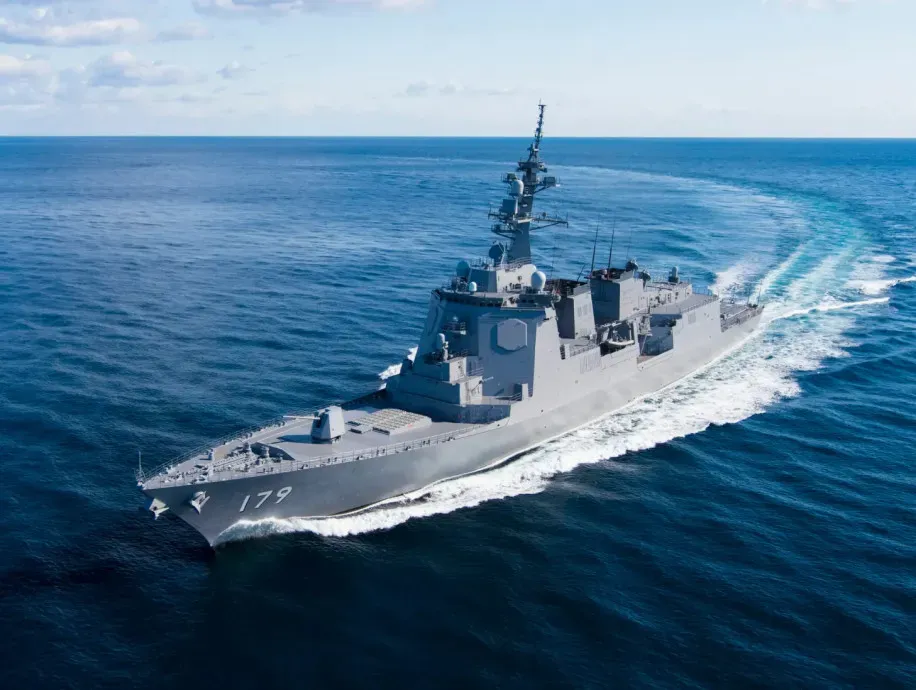
The first-in-class destroyer JS Maya
The AN/SPY-7(V)1 is also a modification of the American fixed ground-based Long Range Discrimination Radar (LRDR) in Alaska. Japan initially planned to use the AN/SPY-7(V)1 on land as part of the Aegis Ashore missile defense system. However, these plans were subsequently cancelled, and the ASEV took over.
Versions of the AN/SPY-7 with much smaller antennas are being installed on the new F110 Bonifac-class frigates for the Spanish Navy and on the River-class destroyers under construction for the Royal Canadian Navy. The use of the AN/SPY-7(V)1 on the ASEV could influence decisions on new radars for other future and existing Japanese warships. According to a recent report in Naval News, Raytheon is also offering versions of its increasingly popular AN/SPY-6 family for use on the successor ships to the Kongō-class, the Maya-class destroyers.
Regarding the ASEV, as noted, the AN/SPY-7(V)1 plays a key role in fulfilling the ship's stated primary mission of missile defense. As its name suggests, the ship will also be equipped with the Aegis combat system. According to the latest annual report from the Japanese Ministry of Defense, the ship will be capable of "remotely engaging and directing weapons against anti-aircraft targets tracked by other ships" using its "Cooperative Engagement Capability" (CEC).
In terms of armament, when the anti-missile ships become operational, their primary armament is expected to be various variants of the Standard Missile SM-3 and SM-6 missiles.
The SM-3 family is designed to intercept ballistic missiles in their mid-flight trajectories, when they are outside the Earth's atmosphere. The SM-3 has a proven ability to destroy satellites. The SM-6 is a multi-mission missile, originally designed as an anti-aircraft missile. It can be used to destroy re-entering ballistic missiles in the terminal phase of their flight, and also theoretically has some capability to destroy hypersonic missiles. weaponThe SM-6 can be used in surface-to-surface mode, including against ships.
Japan is also partnering with the United States in developing a new Glide Phase Interceptor (GPI), which is being developed specifically to intercept unmanned but highly maneuverable hypersonic glide vehicles.
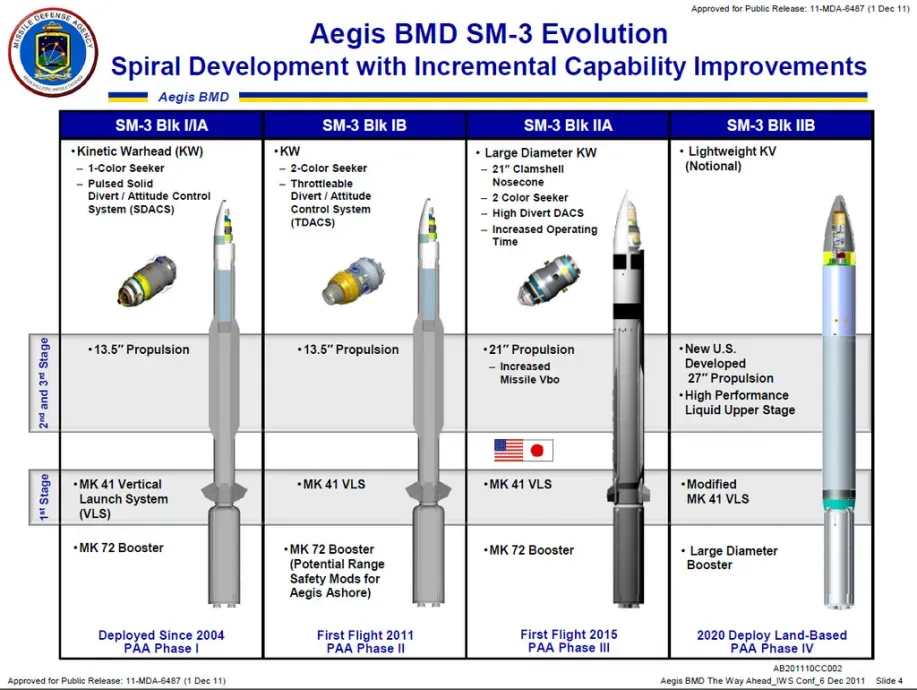
An information slide detailing the various SM-3 variants in existence
Work on the improved Block IIB variant shown here was discontinued in 2013.
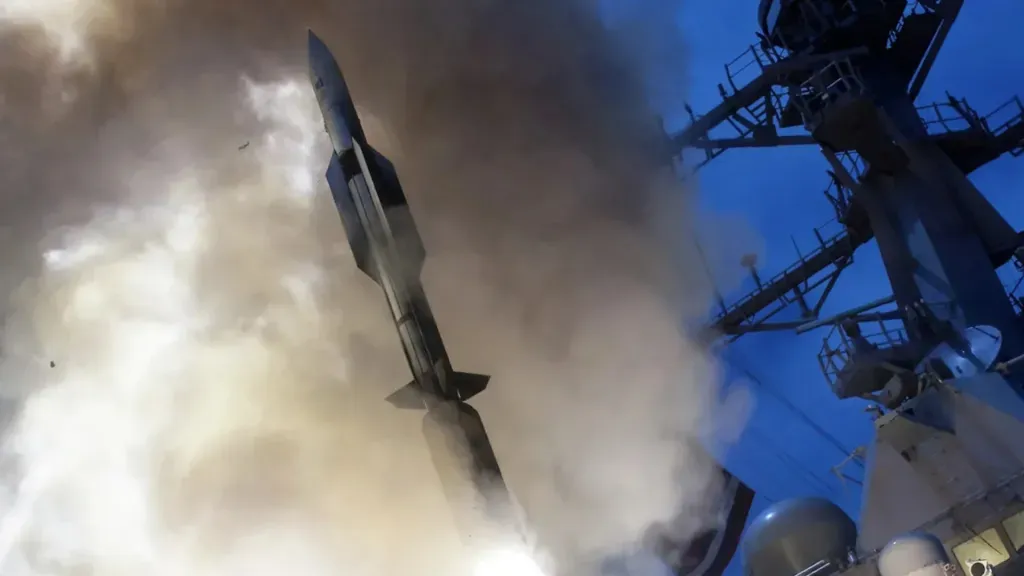
An SM-6 missile launched from a US warship
The SM-3, SM-6, and future hypersonic anti-ship missiles will be loaded into one of two Vertical Launch Systems (VLS) onboard the ASEV: one in the bow and one in the stern. Each ship will have a total of 128 VLS cells.
By comparison, the Japanese Maya-class destroyers and the US Navy's Arleigh Burke-class destroyers, built to the Flight IIA and Flight III designs, each have 96 vertical launch cells. Each of the US Ticonderoga-class cruisers has 122 vertical launch cells, and the future Trump-class battleships will have 128.
It's important to add here: on the now-defunct Ticonderoga-class cruisers and, perhaps, the Trump-class battleships built in the future. This is an important clarification, as the Ticonderoga-class cruisers will definitely be decommissioned and removed from service, but whether the Trump-class battleships will be built is a question mark.
At the time of writing, Japanese authorities have not explicitly stated plans to arm the anti-missile helicopter carriers with other missiles once they enter service. But this is largely unnecessary: any vertical launch system capable of accommodating SM-3 and SM-6 missiles should also be capable of launching other weapons, including the SM-2 and the shorter-range, upgraded Sea Sparrow missiles (ESSM), which the ship can use for closer-range air and missile defense, as well as for ship-specific protection.
Renders and ASEV models show that the ship is also armed with a 127mm naval gun in the forward turret, as well as two Phalanx Close-In Weapons Systems (CIWS) and other air defense capabilities.
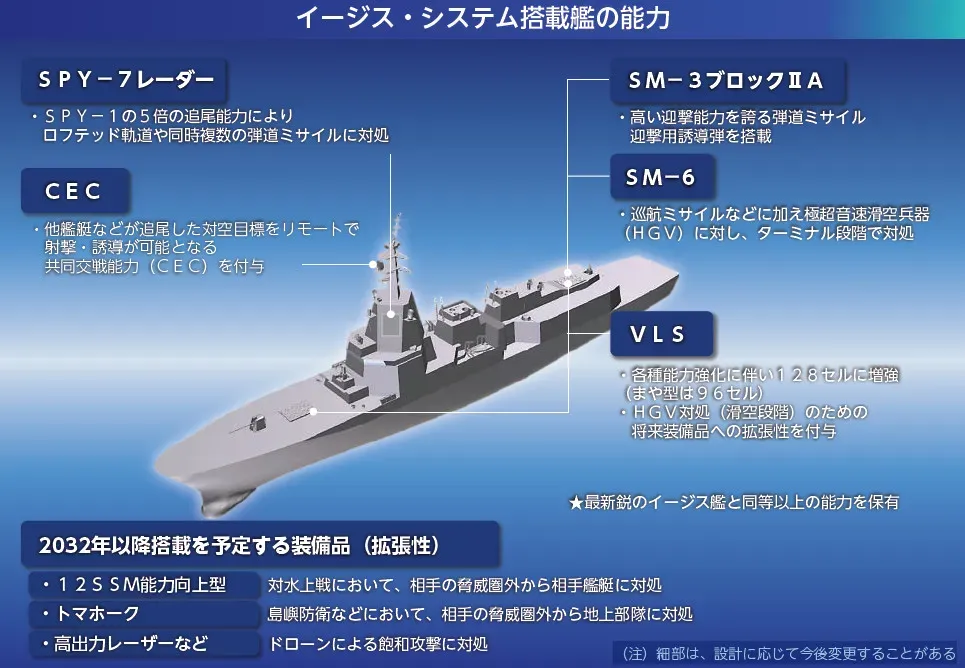
A Japanese-language illustration from a 2026 Japanese Ministry of Defense official document discussing the planned characteristics of anti-missile ships.
As mentioned, although missile defense is a priority for anti-missile ships, plans are already underway to significantly expand their capabilities to engage other ships and land targets. According to the latest official document from the Japanese Ministry of Defense, by 2032, these ships will be armed with Tomahawk cruise missiles and a new version of the Type 12 anti-ship cruise missile with an extended range.
Japanese authorities ultimately want littoral ships to be able to repel waves of enemy drones. In the future, the ships are planned to be equipped with high-energy laser-guided weapons to help counter these threats. Given the ships' size and other characteristics, they may also be equipped with powerful microwave emitters and other equipment.
Together with the SM-3, SM-6 and other weapons systems, the ships will be an important addition to the air and missile defense system around Japan's main islands and outlying areas.
Long-range drones, capable of striking in only one direction, are another growing factor, and the ongoing conflict in Ukraine and fighting in the Middle East in recent years demonstrate how real a threat they pose.
With the addition of Tomahawk missiles, Japanese destroyers, like other Japanese warships, will gain the additional capability to launch retaliatory strikes against targets on land (and possibly at sea) at a range of at least 1600 kilometers in any direction. As part of its broader deterrence strategy, the Japan Self-Defense Forces are developing new land-based long-range strike capabilities, including hypersonic missiles.
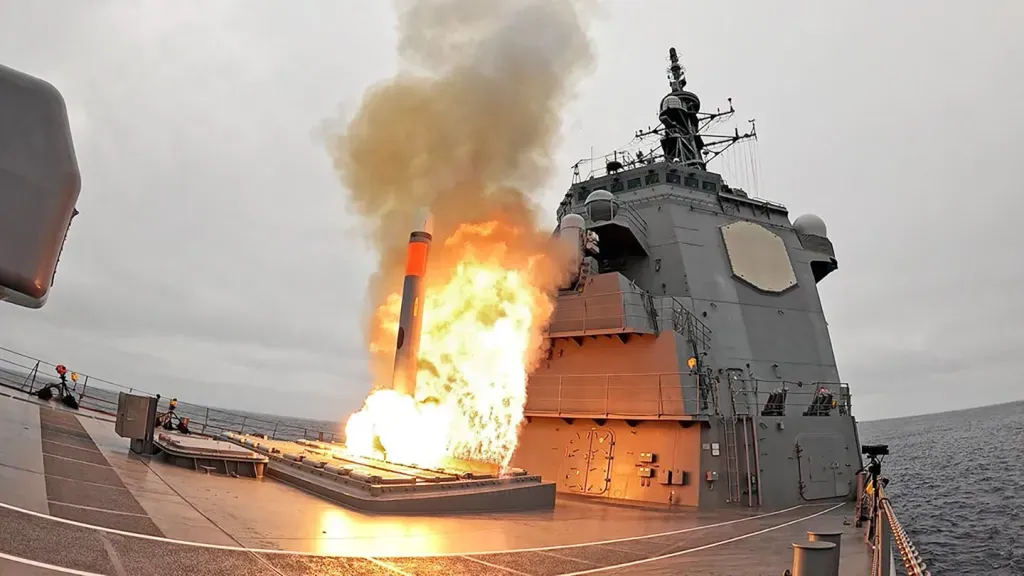
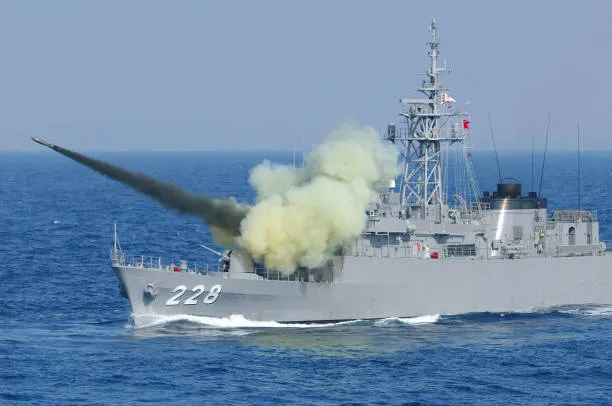
The Kongō-class destroyer Chokai launches a Tomahawk cruise missile during tests earlier this year. This marked the first-ever Tomahawk launch from a Japanese warship.
It's worth noting that, according to current plans, Japan will acquire only two littoral combat ships, which will be expensive but limited in number and will need to be used very judiciously to achieve maximum effect. Furthermore, they will become priority targets in any future conflict. Clearly, for an adversary to effectively employ both manned and unmanned systems, it will be necessary to neutralize all possible countermeasures.
So, air defense cruisers will definitely become priority targets, and they will need to be... protected? That sounds very ambiguous: protecting ships designed specifically to defend against air threats.
Overall, Japanese admirals have plenty to ponder. The country is also expanding its naval capabilities in other areas, focusing on operations on the high seas. This includes expanding the capabilities of its light aircraft carriers by upgrading the existing Izumo-class ships.
Overall, Japan is confidently repeating many aspects of its past, and perhaps this time it will be more successful than 110 years ago: Japan is once again in the Entente, the US, Britain, France, and Germany are allies again, Russia is definitely irrelevant, but China is screwing things up. And North Korea is constantly throwing things across the sea.
But given how strong the openly revanchist sentiment is in Japan itself, and how ridiculous their pacifist Constitution is, I'm absolutely certain that we'll once again see a rise in militarism in Japan, comparable to what we saw in the 20s and 30s. And today, there's absolutely no one to stop this process.
History tends to repeat itself, doesn't it?
Information