The blade is wavy like a snake
5 768 44
The blade is wavy like a snake
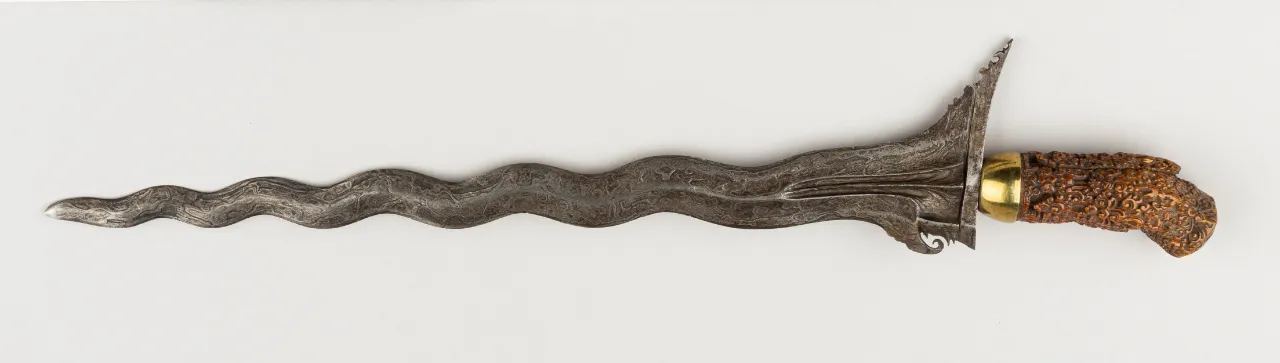
A kris from the Royal Armoury in Stockholm. This kris originates from West Java, likely dating to the late 17th century. It has a blade with 13 waves, and the pamor features a "scattered rice grains" pattern, which arose by chance. Just below its ganja, one can discern the trunk and mouth of the elephant god Ganesha.


And he will judge between many nations, and will rebuke many people in far countries; and they will beat their swords into ploughshares, and their spears into pruning hooks. Nation will not lift up sword against nation, neither will they learn war any more.


Book of the prophet Micah 4:3


History cold weapons. Our story about swords and daggers will undoubtedly sooner or later touch on a wide variety of examples. Long and short, straight and curved, and even the most incredible and bizarre shapes, they are an indelible part of human history. Some examples have sunk into oblivion, others have found their way into museums and the hands of reenactors, so that the same khopesh or Carolingian sword can be easily purchased today. However, among them, there are also those that survive to this day, despite their origins in time immemorial.

Most often, these are examples of ancient national weapons that have become either part of the costume of an indigenous nation or people, or nothing more than a spiritual symbol of a people or country. Many examples come to mind, but today our story will focus on perhaps the most unique of these weapons—the Malay kris. The example whose photographs we'll be illustrating this article is located in Sweden—at the Livrustkammaren Museum, or the Armory in Stockholm.
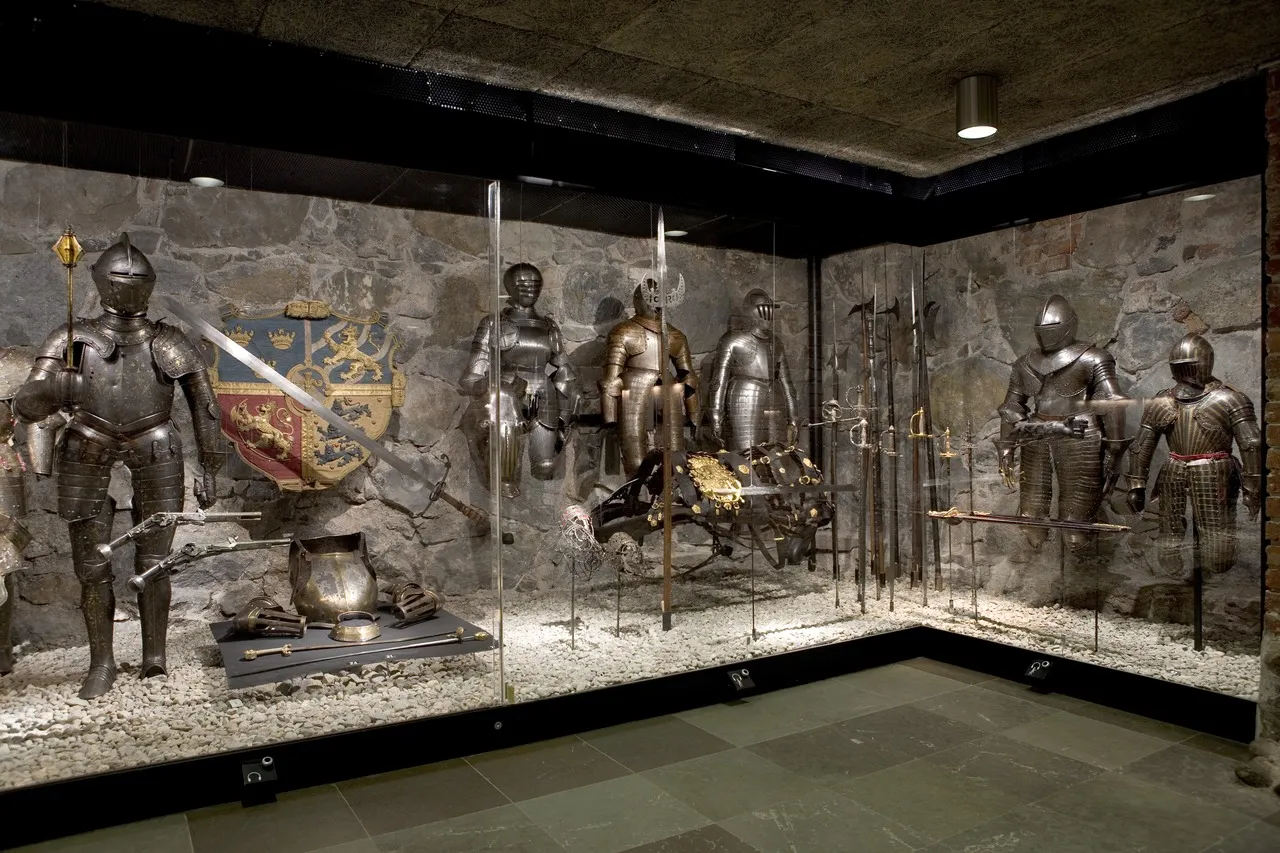

There's a lot of interesting stuff here for us, and someday we'll definitely get to know its exhibits in more detail...

We'll start with the kris stored here. It's especially beautiful, and there's a wealth of information available about it. If we consult Wikipedia, we'll learn that the kris is an ancient weapon and a complex cultural phenomenon of the peoples of the Malay Archipelago (Malaysia and Indonesia, as well as the southern regions of Thailand, Brunei, and the southern Philippines, where it's known as "kalis").

The main difference between the kris and other bladed weapons is the asymmetrical shape of its blade, which is often wavy, although variations do exist. Moreover, in the culture of the peoples of the Malay Archipelago, the kris is much more than just a weapon hanging from your belt. Since ancient times, it has been ascribed magical properties: for example, the ability to fly, warn its owner of danger, and kill their enemies from a distance.

The blade's shape is no coincidence. It is associated with the mythical naga snake: a straight blade symbolizes a naga at rest, while a wavy blade symbolizes one in motion. There's even a dedicated local science—krisology—that studies krises, their history, manufacturing techniques, associated beliefs, and magical properties. Clearly, since all this is so serious, the kris's role in local culture has been and remains very significant. Incidentally, the kris, like the Nepalese kukri, was never drawn from its sheath without a reason, and certainly not pointed at anyone with its naked tip. And during ritual dances with naked krises, when this happened unintentionally, dancers were required to periodically touch the tip to the ground to remove negative energy from the blade, which could harm those watching.
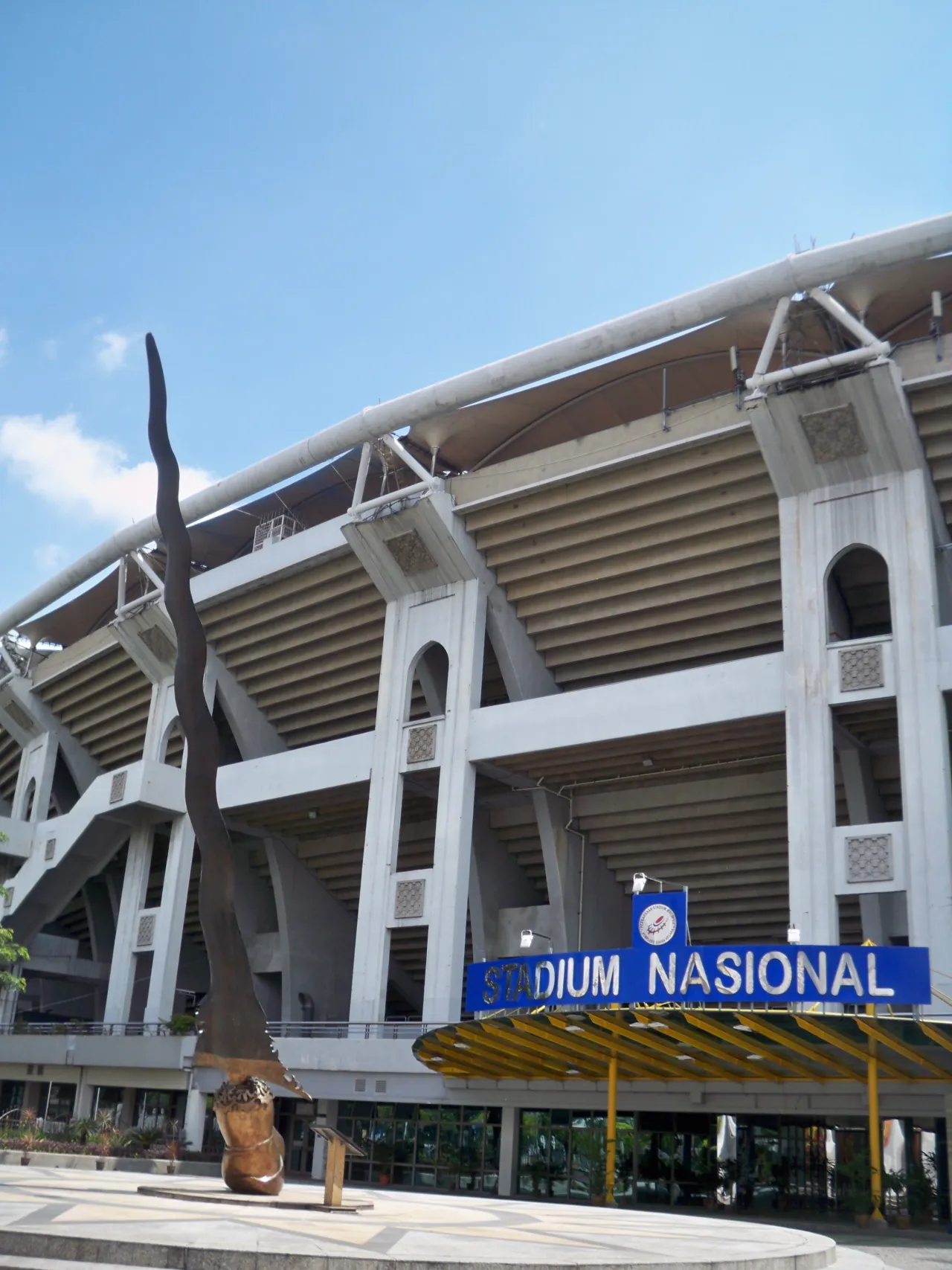

The importance of the kris in Malay culture is illustrated by its sculpture at the entrance to the Malaysian National Stadium in Kuala Lumpur.

Regarding its design features, the truly unique feature of the kris is its protective plate (ganja), which, for some reason, had to be forged separately from the blade and then mounted on its tang. The whole thing was then forged together, so that it appeared to be one piece, although in fact the blade and ganja are two separate components. The reason for this is unclear, but it likely had ritualistic reasons. One may be to trap the soul of the kris within the blade, preventing it from passing through the handle and on to the wielder. Another reason is that ganja represents the feminine force (yoni), which, according to Hindu tradition, must balance the masculine force in the blade (lingam) to achieve harmony. Incidentally, when viewed from above, the ganja of the kris has the shape of a vulva.
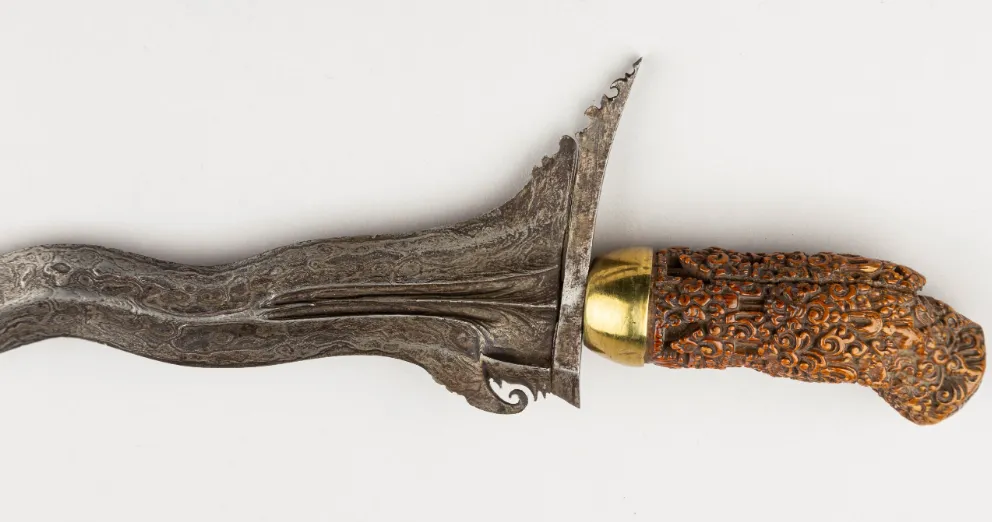

Ganja and carved wooden handle

The phallic blade is considered the lingam of the god Shiva. Therefore, for the Javanese, the kris blade represents the very essence of masculinity. But its metaphysical energy is considered feminine. According to the Javanese view, these forces are not necessarily antagonistic, but the more contradictory forces a blade can absorb, the better. Such a blade will be stronger. Thus, the kris is primarily concerned with its dualistic symbolism—lingam-yoni. And the Malays believe this. And why not? They probably know better, since the kris has endured in their culture for so long. Incidentally, women could also wear the kris. But their kris were smaller and had an even number of waves on the blade.
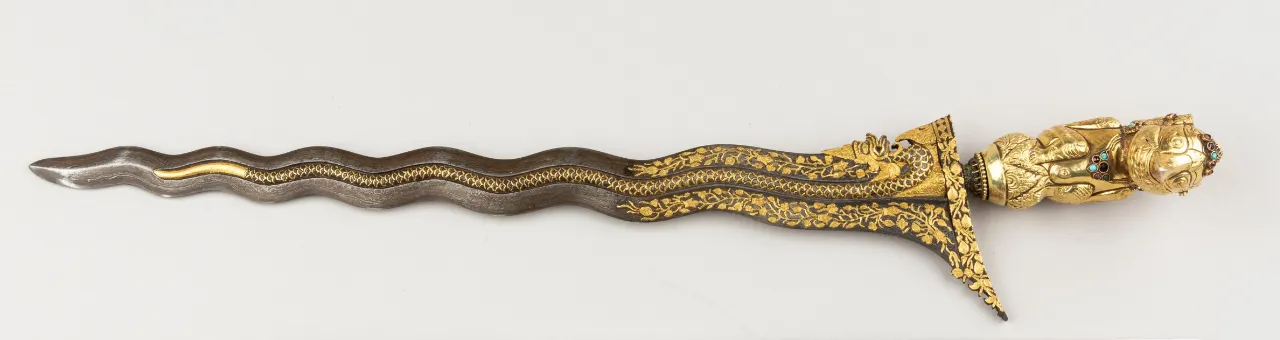

A kris from northeast Java, probably from the late 18th century, with a gilded naga along the blade. It has 13 waves, and its pamor represents "scattered grains of rice," which is believed to bring wealth to its owner.

Incidentally, the kris handle was attached to the blade's heel in such a way that it could rotate. This didn't affect the effectiveness of the thrust. True, this often caused kris to break during duels. However, almost any blacksmith could repair a broken kris using readily available parts!

The kris blade is either straight or has an odd number of curves. Odd curves are considered masculine, and even curves are feminine. Most often, the number of curves was odd—7 or 13. Even traditional Javanese Hindu-Buddhist temples have an odd number of roofs. The more curves on a kris or temple roof, the higher the status of its owner or founding family.

Besides Shiva and Naga, the elephant god Ganesha is often depicted on the blade. He is depicted as a stylized trunk on a ganja. Ganesha is both the son of Shiva and the deity who overcomes all obstacles. The combination of different shapes and the number of curves on the blade is tailored to the owner's individuality. It is considered dangerous to have a kris that doesn't suit their personality, for example, one with more curves than they can mentally manage. This means that when considering the blade of the kris, one must also consider whether one can handle the energy of its curves. And indeed!
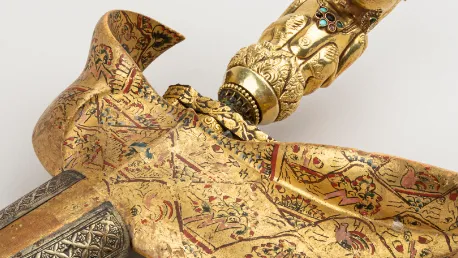

Both the handle and the scabbard of this kris were very richly decorated!

The kris blade is made of iron and nickel. The blacksmith folds and forges these strips in several stages to create various patterns (pamor). When the blade is etched with arsenic and citrus juice, the silvery nickel begins to stand out against the black iron, and its color becomes distinct. A pamor can be crafted by the smith according to a predetermined pattern or appear randomly during the forging process. If a randomly created pamor resembles a face, a seated human figure, or an Arabic letter (many Malays are Muslim and revere the Quran and Arabic script!), this is considered a sign of the blade's great power. However, pamors are usually chosen based on the owner's personality and needs. There are different pamors, believed to be specifically designed for increasing popularity, accumulating wealth, protecting against natural disasters, and so on. A person may have more than one kris, and all of them will act as talismans if the patterns on their blades are correspondingly different.
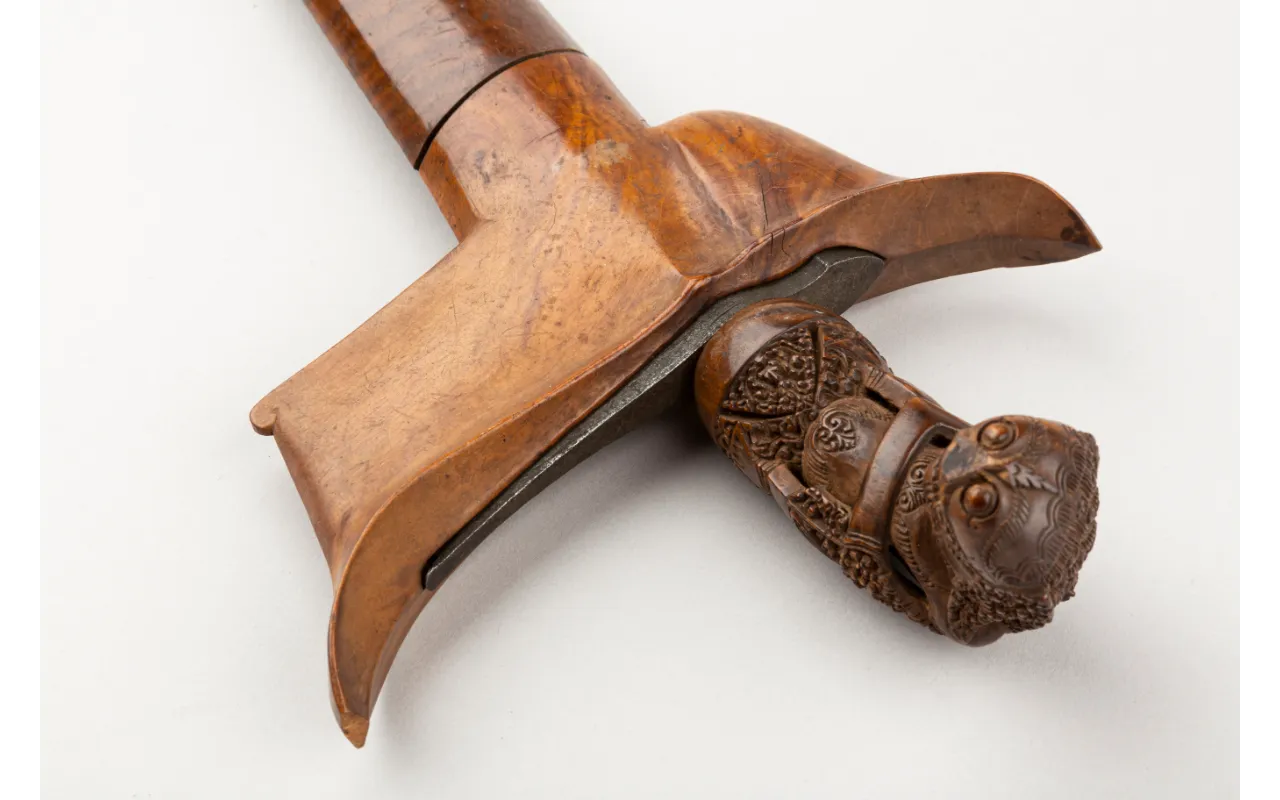

The scabbard of a simpler kris. Very elegant in appearance, isn't it?

The top of the kris's scabbard is shaped like a ship. It's difficult to explain why this is so, but it's clear that all the blade components, including the ganja, should ideally fit into the scabbard. These are usually very simple, but feature beautiful grain patterns in the wood and are carefully polished. The scabbard could also have a metal covering (pendok) around it, with a raised floral or geometric pattern.

In general, the kris can be seen as a ritual weapon. It's a kind of portable temple, always with you or nearby, with which you can achieve success in life. And while in the past it was at least used as a weapon, today its symbolic and ritual aspects predominate.
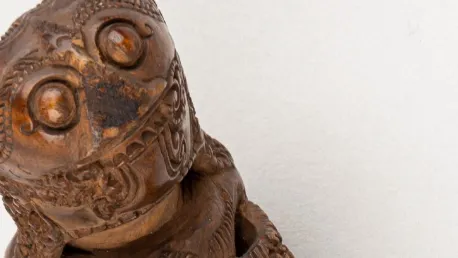

A carved kris handle. It could be either smooth or depict an animal or deity.

At the same time, in the past, kris were used in combat, and a single person could wield several at once. This meant that a fight could be fought with two kris at once. The thrust was considered the primary form of striking, and its consequences were extremely severe, given the "saw-like" effect of the wavy blade.

Traditionally, the kris blade is considered soulless and dangerous to those who don't know how to handle it and honor it. The kris itself is the blade. The handle and sheath are merely its "clothing." Therefore, wearing "old clothes" is frowned upon and considered disrespectful to the kris. Therefore, they are regularly replaced with newer ones. The krises that once came into the Livrustkammaren collection have been preserved in their original condition. Thus, they provide valuable information about what krises generally looked like in the 16th and 18th centuries.
44 comments
Information
Dear reader, to leave comments on the publication, you must sign in.
  1. +5
    6 September 2026 04: 11
    Thank you, Vyacheslav Olegovich! I've been imagining it since Stanyukovich's book "Around the World on the Korshun." And now I can admire it.
  2. +5
    6 September 2026 06: 10
    It's a so-so weapon. It looks extremely awkward, unlike, say, the kukri.
    1. +3
      6 September 2026 09: 35
      Greetings to all hi Roma, compared to the Yemeni Jambiya (I have one), is simply a model of convenience and ergonomics! wink
      Vyacheslav, excellent article! good Since we're talking about national weapons, maybe you could write about Jambiya? It's a fantastic topic, with countless examples of national weapons! Looking forward to more...
      1. +2
        6 September 2026 09: 43
        Yemeni Jambia
        Hi Aleksey!
        You could have attached a photo...
        1. +6
          6 September 2026 09: 48
          Greetings Anton hi by special order, I took a photo right now.
          1. +2
            6 September 2026 09: 56
            by special order, I took a photo right now.
            Excellent thank you!
            1. +3
              6 September 2026 10: 08
              Yes please wink
              I'd been thinking about getting a Kris for my collection, but I couldn't find a decent example. I did, however, acquire a gorgeous pair of Katars. When my son comes home from his walk, I'll take a picture of them in his hands—they're very interesting blades!
              1. +3
                6 September 2026 12: 24
                Well, as far as I remember, you have a pretty good collection of cold steel: from a personalized brass knuckle to a French sabre.
          2. +4
            6 September 2026 10: 07
            Quote: Hunter 2
            Then I'll have to go to work.

            Can I use your photo in one of my future articles? Just send it to me by email. I'll send you the address in a private message...
            1. +4
              6 September 2026 10: 10
              Yes, please, write how to photograph it (what angle - rotation), I will take it and send it! Yes
          3. +2
            6 September 2026 13: 33
            I like it! ......
      2. +3
        6 September 2026 10: 09
        Quote: Hunter 2
        Since you started writing about national weapons, maybe you could write about Jambiya?

        I had a series of articles here called "Kill with Something More Beautiful." But it's been a while, and I doubt the photos from them survived. And I don't think I wrote a separate article about jambiya. And yes, it's an interesting topic, and I have plans...
    2. +1
      6 September 2026 11: 38
      Quote: novel xnumx
      It's a so-so weapon. It looks extremely awkward, unlike, say, the kukri.

      I like the Sika among similar ones. It has a smooth curve, not a jagged one. The Kukri, KPM, is too heavy, unbalanced.
      1. 0
        6 September 2026 13: 37
        The blade balances well, making it ideal for slashing blows. It's a bit heavy—but we're talking about weapons, after all, where strength comes from heaviness, especially when it comes to low-grade steels.
  3. +4
    6 September 2026 06: 58
    The weapon is more of a status symbol than a combat weapon. Its closest association is with Swedish ceremonial swords.
    Thank you, Vyacheslav Olegovich!
    1. +5
      6 September 2026 07: 28
      It can leave lacerations. Moreover, it was often treated with poison.
      1. +3
        6 September 2026 07: 34
        The jutte is also theoretically a dagger.
        1. +5
          6 September 2026 08: 17
          What a wonderful group of experts I have gathered here. And this very morning!
          1. +2
            6 September 2026 08: 23
            And already in the morning!
            Then I'll have to go to work. crying
          2. +2
            6 September 2026 08: 24
            Let's give each other compliments
            1. +3
              6 September 2026 10: 05
              Quote from Korsar4
              Let's give each other compliments

              Good word and nice to the cat.
  4. +3
    6 September 2026 09: 25
    The kris blade is made of iron and nickel. The blacksmith folds and forges the strips in several stages.
    A knowledgeable person suggested that nickel is not something to be produced in a forge, since the main method of production is electrolysis.
    1. +2
      6 September 2026 09: 56
      Hello Anton.
      I agree, the statement is rather odd. Nickel was discovered in Europe in the mid-18th century. Its widespread use began when steel was first welded. Chromium-nickel steels are heat-resistant, stainless, particularly strong, corrosion-resistant, and chemically resistant. Food and medical applications are often found on 10/18 stainless steel. But as a layer in forge welding, it's questionable. Naturally, nickel as a coating is widely used in electrochemistry—galvanic coatings are also widely used in electrical engineering and batteries.
      But not to the crystals. Perhaps these are modern techniques for achieving better decorativeness.
      1. 0
        6 September 2026 09: 59
        Hi Vladimir!
        Perhaps it was meant to be cupronickel.
        1. +2
          6 September 2026 10: 21
          No. It has an interesting story. A meteorite. With a high nickel content. It was stored for over 100 years. And they used it.
          1. +2
            6 September 2026 10: 27
            Well, now it's clear where nickel comes from. Meteorite iron contains up to 30% of it.
      2. +1
        6 September 2026 10: 12
        Quote: balabol
        Hello Anton.
        I agree, the statement is rather odd. Nickel was discovered in Europe in the mid-18th century. Its widespread use began when steel was first welded. Chromium-nickel steels are heat-resistant, stainless, particularly strong, corrosion-resistant, and chemically resistant. Food and medical applications are often found on 10/18 stainless steel. But as a layer in forge welding, it's questionable. Naturally, nickel as a coating is widely used in electrochemistry—galvanic coatings are also widely used in electrical engineering and batteries.
        But not to the crystals. Perhaps these are modern techniques for achieving better decorativeness.

        HERE'S WHAT WIKIPEDIA SAYS ABOUT THIS: The bar from which the blacksmith forges the blade of the future dagger consists of several layers of metal, which differ from each other in the content of carbon and various impurities (most often nickel).
        1. +1
          6 September 2026 10: 18
          The block from which the blacksmith forges the blade of the future dagger consists of several layers of metal
          In general, it’s a regular batch welding by forging, like the “Carolingians”.
        2. +2
          6 September 2026 11: 35
          The devil is in the details. High alloying levels radically alter the properties of steel. That is, not pure nickel, but iron with a higher nickel or carbon content, which, during batch welding, improves both the product's characteristics and the distinctive pattern. I suspect the percentage of additives is small. Otherwise, it wouldn't have to be revealed by etching. On antique pieces, with proper care—polishing and oiling—the pattern from batch processing is barely noticeable to the naked eye. At the Tsarskoye Selo Arsenal, I allowed myself to doubt the originality of one of the items on display. The antique dagger, in my opinion, wasn't made using Damascus steel technology. But the people there were nice, and the museum is quiet, not crowded. They showed me how to look at it in reflected light, explained, and explained. My point is that to clearly reveal the pattern, the piece needs to be etched.
    2. +1
      6 September 2026 10: 13
      Quote: 3x3zsave
      and nickel.

      Yes, nickel was included as an impurity, as Wikipedia reports.
  5. +2
    6 September 2026 10: 49
    There are many interesting things here for us, and one day we will definitely get acquainted with its exhibits.

    a real feast for the eyes... we won't refuse!

    The article is excellent and informative. To be honest, I'm not very familiar with all this exotic stuff, so it's all the more useful :)
  6. +3
    6 September 2026 10: 51
    I wouldn't want to deal with sharpening this blade...
    Basically, that's my personal perception. Not a professional's.
    It's a non-functional show-off. And the rotating handle was downright puzzling.
    The weapon is beautiful and formidable, especially in appearance. But I wouldn't choose it for a real fight. It's a complete failure in terms of fencing and durability. The only advantage is that it can cause nasty wounds.
    Thanks for the photo.
    My intuition suggests that its historical significance is determined primarily by its dangerous appearance, unusualness, and ostentatious cost, rather than by any actual combat achievements.
    1. +2
      6 September 2026 11: 18
      I wouldn't call European flamberges "non-functional show-offs."
      1. +1
        6 September 2026 12: 38
        Well, yes, the wounds were terrible. It's not for nothing, according to rumors, that such swordsmen were executed on the spot.
        Historical trace?
        A breakthrough in technology?
        Changes in fencing technique?
        Could it become a mass weapon?
        So, the historical trace is created more due to a certain sadistic bias. That is, a purely external effect. Nothing more.
        1. +4
          6 September 2026 16: 47
          Quote: Aleksandr Bezfamilnuy
          Well, yes, the wounds were terrible. It's not for nothing, according to rumors, that such swordsmen were executed on the spot.
          Historical trace?
          A breakthrough in technology?
          Changes in fencing technique?
          Could it become a mass weapon?

          Let's take it in order:
          - the wounds from stabbing blows are terrible, but this was not the goal, only a consequence, the flamberge, as a sword (which is what it was) was primarily for delivering chopping blows
          - Improvements in metallurgy technology made the classic sword ineffective for its primary use - cutting; the flamberge was the answer - an "improved" sword, more effective at cutting steel.
          - the fencing technique remained the same, since the "area of ​​application" did not change
          - was quite common during the 30-year war, condottieri who preferred "all the best" ordered it... real mass production (for everyone-everyone-everyone) was limited due to the high cost and high qualifications of the gunsmith
          - to the historical trace - fell out of use practically along with the ordinary sword and plate equipment as firearms spread, but left an heir - the "wavy" rapier, effective for "special" tasks, but also quite expensive, requiring the task to be balanced with the cost :)

          Quote: Aleksandr Bezfamilnuy
          That is, a purely external effect. Nothing more.

          In view of the above, not at all, it was the pinnacle of the sword's evolution as a response to the pinnacle of the evolution of plate armor and retired along with it
          1. +1
            6 September 2026 17: 49
            was the pinnacle of sword evolution
            The infantry sword, yes, but the cavalry sword evolved into the 20th century. The last officially adopted cavalry blade was the "Patton saber" (yes, that same one!), in 1916, if I'm not mistaken.
            1. +1
              6 September 2026 19: 12
              Quote: 3x3zsave
              Infantry sword - yes, but the cavalry sword evolved until the 20th century.

              Technically, you're right, I'll just clarify that I meant the late Middle Ages, a "knight with a sword," on foot or on the same armored horse... and from the evolution you mentioned, I'll always remember how, as a teenager, I swung my grandfather's Austrian broadsword from World War I :)
          2. 0
            6 September 2026 18: 05
            There's logic to your assertions. During slashing strikes, this serrated edge/shape ensured that the narrow tip and the remaining edges of the blade made contact with the armor at a certain angle. In theory, this should improve penetration.
            I'm not a practitioner in this field. Purely intuitively, as an engineer and DIY enthusiast, I doubt the actual effect was significant. For leather armor, perhaps. For steel, unlikely.
            But here the so-called “public opinion” (in my experience, very susceptible to mythology) could play a role.
            I won't argue. I've never had to swing a wavy sword, much less cut anything.
            1. +1
              6 September 2026 19: 45
              Quote: Aleksandr Bezfamilnuy
              There was no need to swing the wavy sword

              Usually it was "wavy" (even sometimes "spread" like saw teeth) for about 2/3 of its length, leaving the front third/quarter straight for stabbing, and it was here that the "wavy" part, with a deep "prick," caused those very "terrible" wounds... the wound was not "smooth and clean," but "ragged," and in the absence of antibiotics, it practically guaranteed infection and inflammation.
              1. ANB
                0
                6 September 2026 23: 33
                The wound was not "smooth and clean," but "ragged," and in the absence of antibiotics, infection and inflammation were practically guaranteed.

                A puncture wound, even if it is "smooth and clean", is still very problematic to treat.
                Nobody disinfected the blade before use.
                1. +1
                  6 September 2026 23: 54
                  Quote: ANB
                  A puncture wound, even if it's "smooth and clean," is still very problematic.

                  Of course... but a torn one is a direct route to the cemetery
                  P.S. there were sometimes masters where they weren't all burned, with antibiotic substitutes like mold or cobwebs, but in such situations things were even worse
      2. +1
        6 September 2026 17: 10
        Quote: 3x3zsave
        I wouldn't call European flamberges "non-functional show-offs."

        You are absolutely right, the flamberge was a very functional weapon.
      3. +1
        7 September 2026 10: 58
        I wouldn't call European flamberges "non-functional show-offs."

        The flamberge provides a longer blade length in a given size. And the angle change реза.
        This is a piercing weapon. Cutting with a rotating handle is a bit of a bummer.
  7. -1
    20 September 2026 23: 18
    By the way, the handle of the kris was attached to the heel of the blade in such a way that it could rotate.

    The thing is, the blade is mounted to the handle using a tang. The tang is secured in the handle with resin. Over time, the resin dries out, crumbles, and the blade can... rotate in the handle. This is especially true for museum and collector's items, as they only store the krises there, but don't use them, meaning they don't refill the resin. And that's where the story about the "cool feature of krises"—the rotating blade—comes from.