Another very modern submachine gun
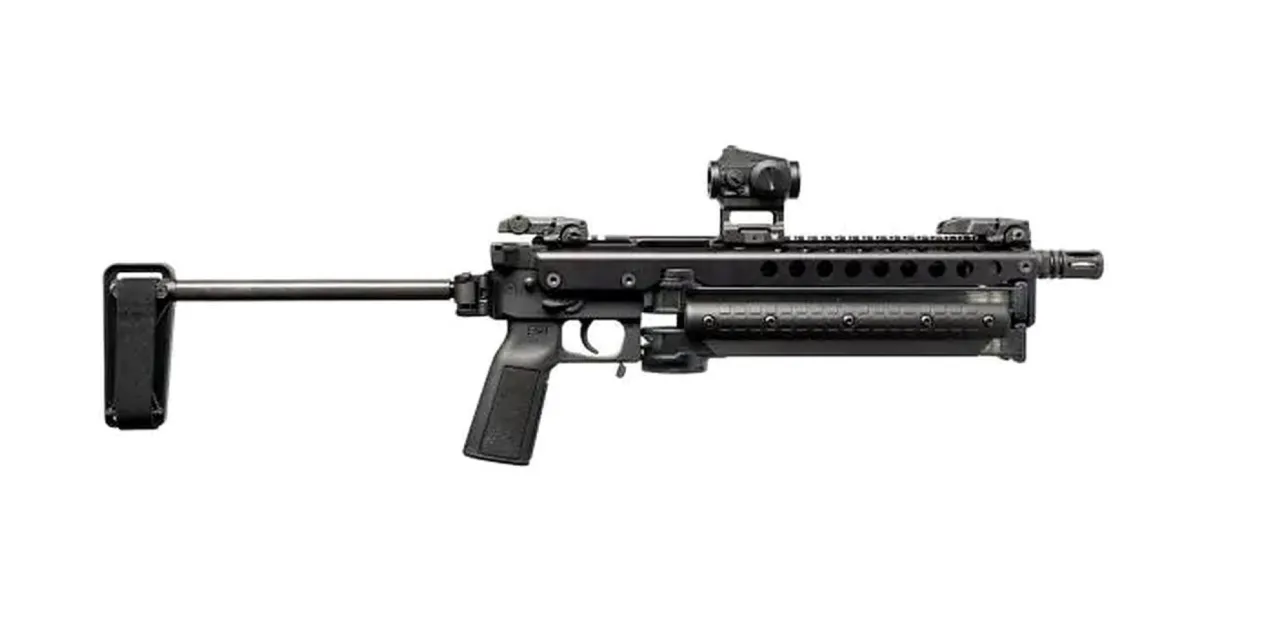
KelTec's 50-round KR50 pistol with a red dot sight and a dual magazine with a total capacity of 100 rounds.
"And he who sat on the throne said, 'Behold, I make all things new.' And he said to me, 'Write! For these words are true and faithful.'"
Revelation of John the Evangelist, 21: 5
Revelation of John the Evangelist, 21: 5
stories about weapons. Different types of firearms develop and improve at different rates. For example, there was a period of rapid improvement in bolt-action rifles. The same thing then happened with automatic rifles, and while this process has slowed down, it's still ongoing, and generally quite successfully. For example, the US Army has decided to once again rearm with a new 6.8x51mm caliber automatic rifle.
With submachine guns, it was like this: at first, after the first prototypes appeared, there was little interest, then a sharp surge, spurred by the experiences of World War II. Then came another period when new submachine guns began to appear only occasionally, and their design contained nothing revolutionary. Well, perhaps the British and Czechs invented a submachine gun with a magazine in the pistol grip, and the Israelis came up with their famous Uzi. So what was the next design breakthrough in this field?
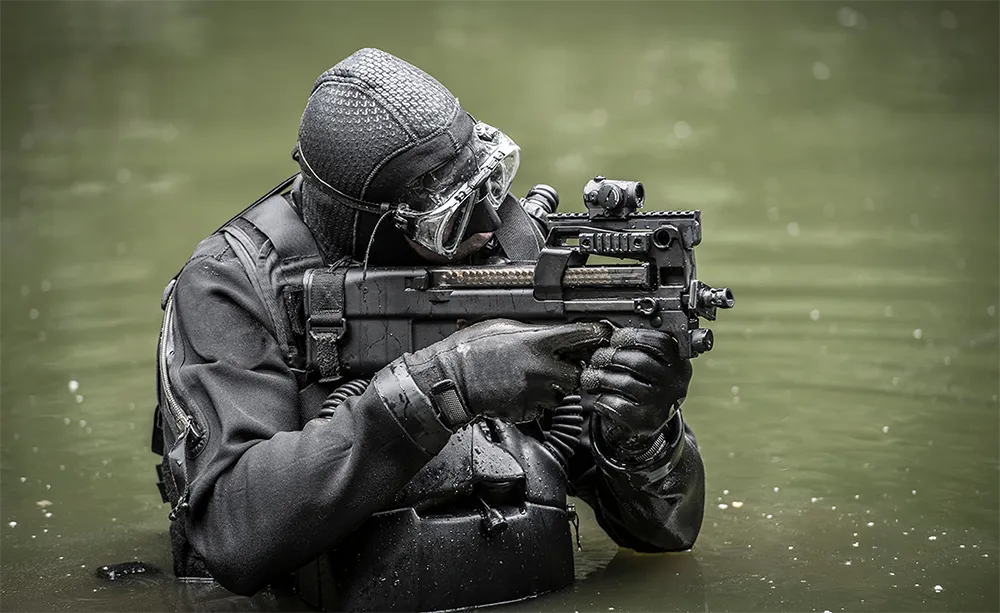
A submarine commando with a P90. The transparent plastic magazine and the arrangement of the cartridges inside are clearly visible.
It's worth noting that in the 80s, NATO countries began investing heavily in weapons development, seeking technological and military superiority over the Warsaw Pact countries. It was during this time that advanced weapons systems such as the Apache attack helicopter emerged and became widely deployed. танк M1 Abrams, Steyr AUG assault rifle, experimental H&K G11 assault rifle with caseless cartridges, night vision devices, laser and collimator sights, and also… new and very modern submachine guns.
But it wasn't just the "confrontation with the Soviets" that prompted the emergence of the latter. A significant increase in the terrorist threat was a major problem. It turned out that the submachine gun was the weapon of choice for firefights in confined spaces and urban areas. The powerful assault rifle cartridge simply had significant stopping power and range, meaning that a weapon chambered for it could injure or kill innocent people during a shootout with criminals. The 9x19mm pistol cartridge, however, had significantly less muzzle energy and, consequently, less effective range, so the risk of collateral damage from its use was incomparably lower.
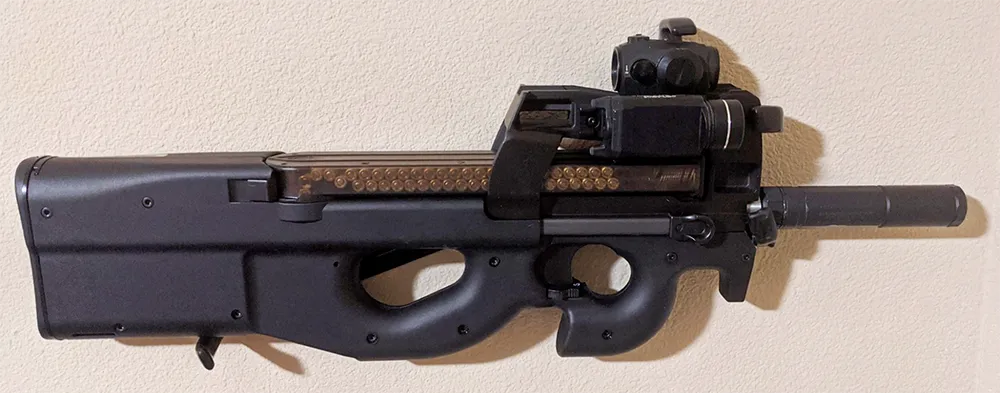
Look at him, he's a beauty! He smells of "futurism" a mile away!
This is precisely why police special forces and counterterrorism groups abroad began adopting the H&K MP5 9x19mm submachine gun. This weapon is prized worldwide for its high reliability, but the problem is: due to the widespread use of body armor, including among criminals, the combat effectiveness of its pistol cartridge has plummeted.
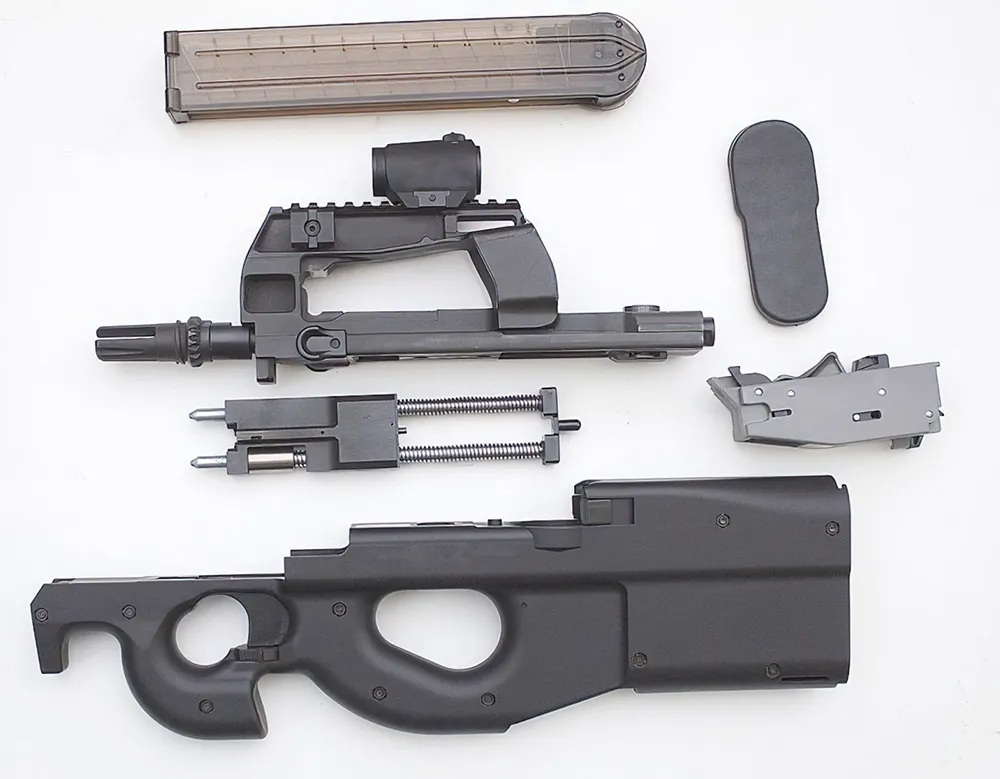
And this is the P90 disassembled.
However, work on developing new ammunition continued, and it soon became clear that, at a high rate of fire, small-caliber pointed bullets striking close to one another on the metal of a bulletproof vest would cause instant deformation of its crystalline structure. This lasts for a fraction of a second, but a second bullet striking close to the first could penetrate it! This meant that in this case, a submachine gun with a high rate of fire, a high-capacity magazine, and… a caliber of approximately 5,56–5,7 mm would be needed.
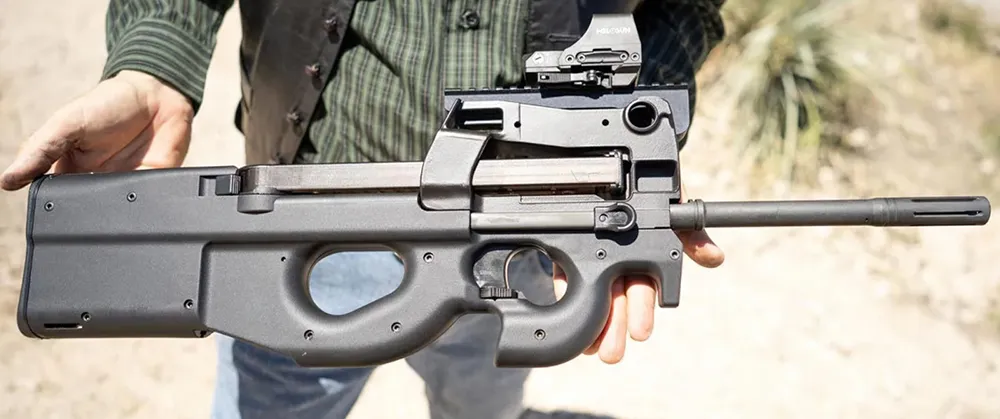
The civilian FN PS90 carbine with an open collimator sight "Holosun"
The renowned Belgian company Fabrique Nationale d'Herstal has risen to the challenge of the times and begun developing the completely futuristic FN P90 submachine gun chambered for the new 5,7×28mm cartridge. The new submachine gun fits well into the niche of the so-called personal defense weapon (PDW). This term has come to be used in Western countries to describe lightweight, compact weapons designed for certain special categories of military personnel—combat vehicle crews, artillery gun crews, radio operators, radar operators—in short, anyone whose job description doesn't require an assault rifle but who might, on occasion, require firepower significantly greater than that of a pistol.
It's worth noting that the new pistol not only featured a completely futuristic design, but also a fundamentally new feeding system, with the magazine positioned above and alongside the barrel! They most likely borrowed this system from the German G11K2 rifle, which had a caseless magazine positioned exactly like this, with three magazines mounted on top. One, so to speak, was the "combat" magazine, and two more were spares!
Initially, the magazine was supposed to hold 50 rounds. However, after trials in the Bundeswehr, its capacity was reduced to 45 rounds. Two additional spare magazines on either side of the barrel allowed for a total of 135 rounds and very fast reloading of the rifle. The cartridges in the magazine were vertical, with the bullets facing down. Therefore, it was necessary to install a rotating chamber on the rifle. It rotated 90 degrees, aligning its chamber with the barrel axis, after which the cartridge was in the firing line. This design had to be durable, reliable, and fast-acting.
And now the Belgians have followed suit. However, since their cartridges were fired from conventional shells, they positioned them horizontally above the barrel in the magazine. However, in this case, the rotating mechanism had to be mounted on the magazine itself. And it had to be extremely fast, matching the rate of fire of the new submachine gun! But everything was done in such a way that… the Belgians succeeded!
Performance characteristics of the P90 submachine gun
The operating principle of the automatic system is based on the recoil of a free bolt with firing from the rear sear with the bolt closed.
Manufacturer: Fabrique Nationale d'Herstal (Belgium)
Years of production - from 1990 to the present
Weight - 2,78/3,1 kg empty/loaded
Total length - 500 mm
Barrel length - 256,5 mm
Cartridge - 5,7×28 mm (SS190)
Rate of fire: 900–1000 rounds/min (depending on bullet weight option)
Initial bullet speed - 715 m / s
Effective firing range is up to 200 meters
Type of ammunition - box magazine 50 rounds
The sight is a collimator.
The new submachine gun boasted numerous advantages. Among them were: light weight and compact dimensions; comfortable shooting with both left and right hands; ease of assembly, disassembly, and maintenance; a longer effective range compared to submachine guns chambered for 9mm and .45 ACP cartridges; and low recoil, allowing for excellent weapon control. The new submachine gun also offered a high density of fire, a large magazine capacity, and excellent bullet penetration.
It turned out it had its drawbacks, too. The most noticeable was the bullet's weak stopping power; the awkward and rather time-consuming magazine changes due to its length and location; and the high cost—the civilian version of the PS 90 in the US costs $1900 and up. Meanwhile, a 9x19mm-chambered Saiga-9 can be purchased for $900. It would seem impossible to improve such a submachine gun, but really...
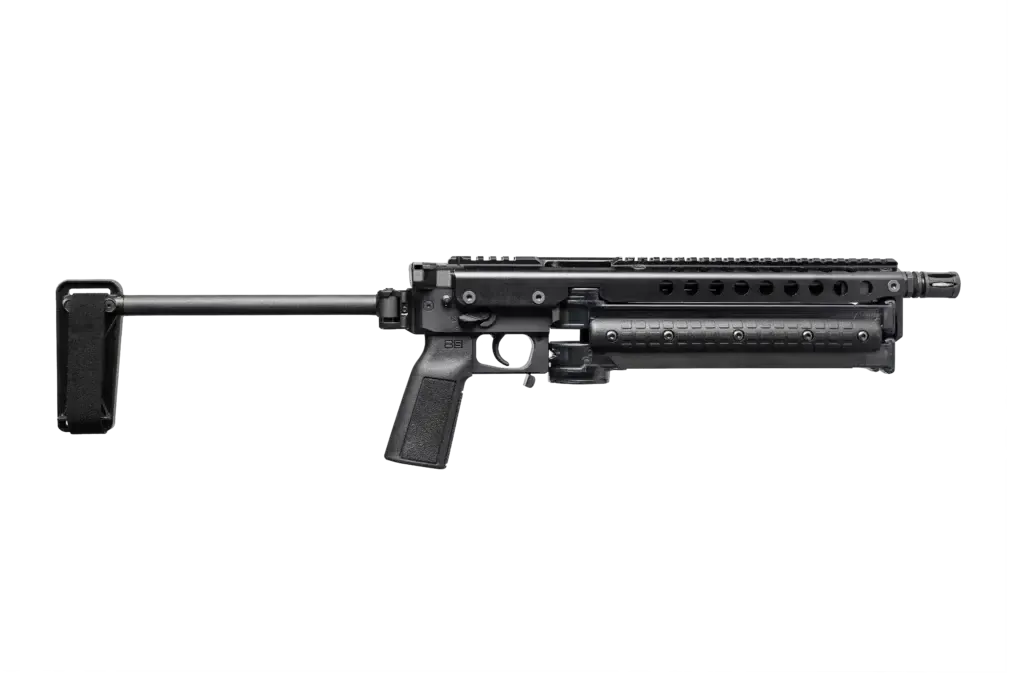
KP50 in its cheapest configuration (approx. $899)
However, on the opposite side of the Atlantic, there were people who managed to do just that! This is the latest development from KelTec—the KP50 semi-automatic carbine. The company was founded by George Kellgren in Cocoa, Florida, back in 1991 and has since been churning out one unusual development after another.
The KP50 model is one such example. True, this weapon cannot fire fully automatic due to US regulations. But it boasts incredible capacity in a compact frame with improved ergonomics. The Belgian version inserts the magazine from the top, which is generally not very convenient. The American design uses a lower, under-barrel magazine location with a secure locking mechanism. Moreover, the magazine has not one, but two magazine wells, connected by a Jungle Clip, which attaches it to the weapon.
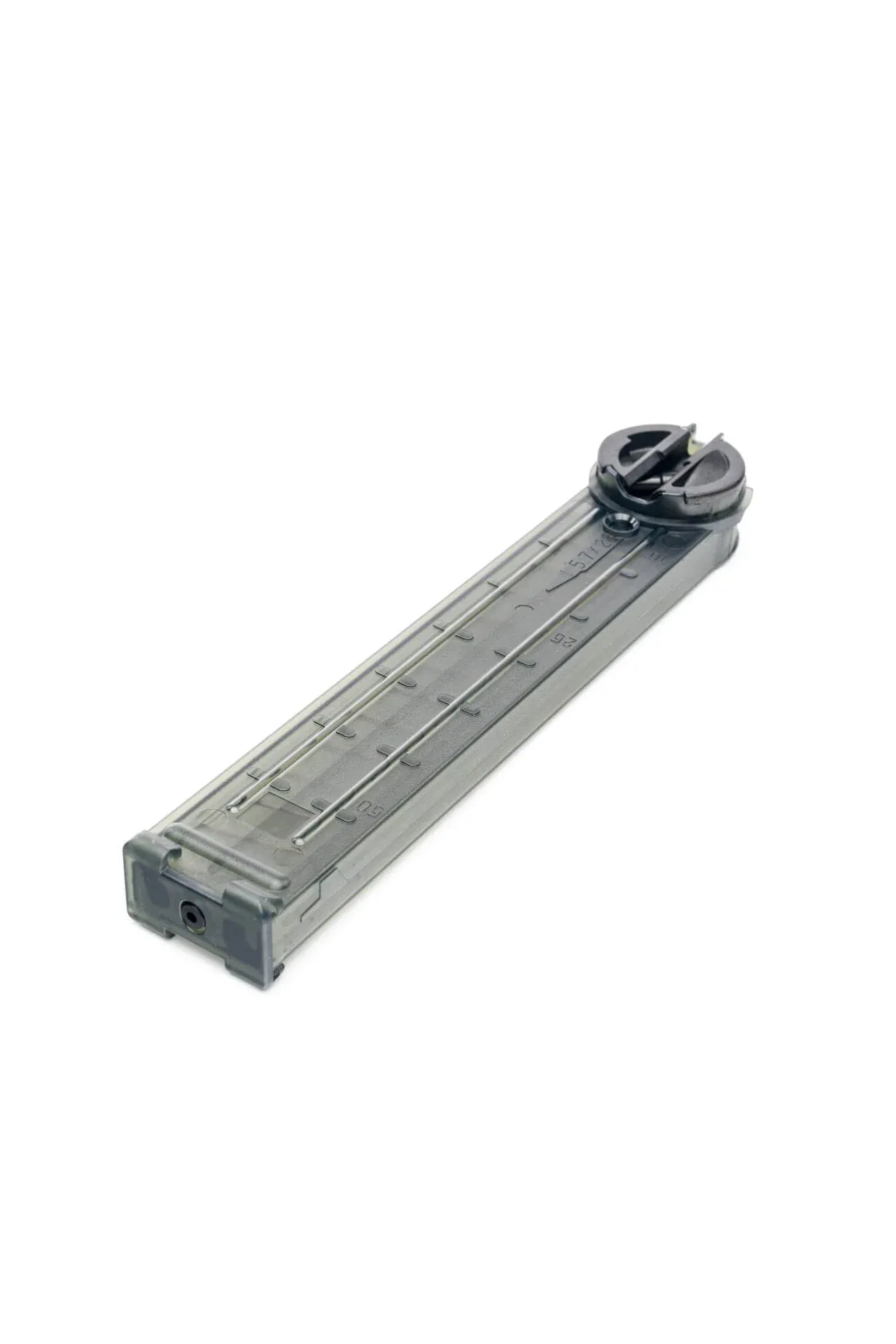
Shop for KP50
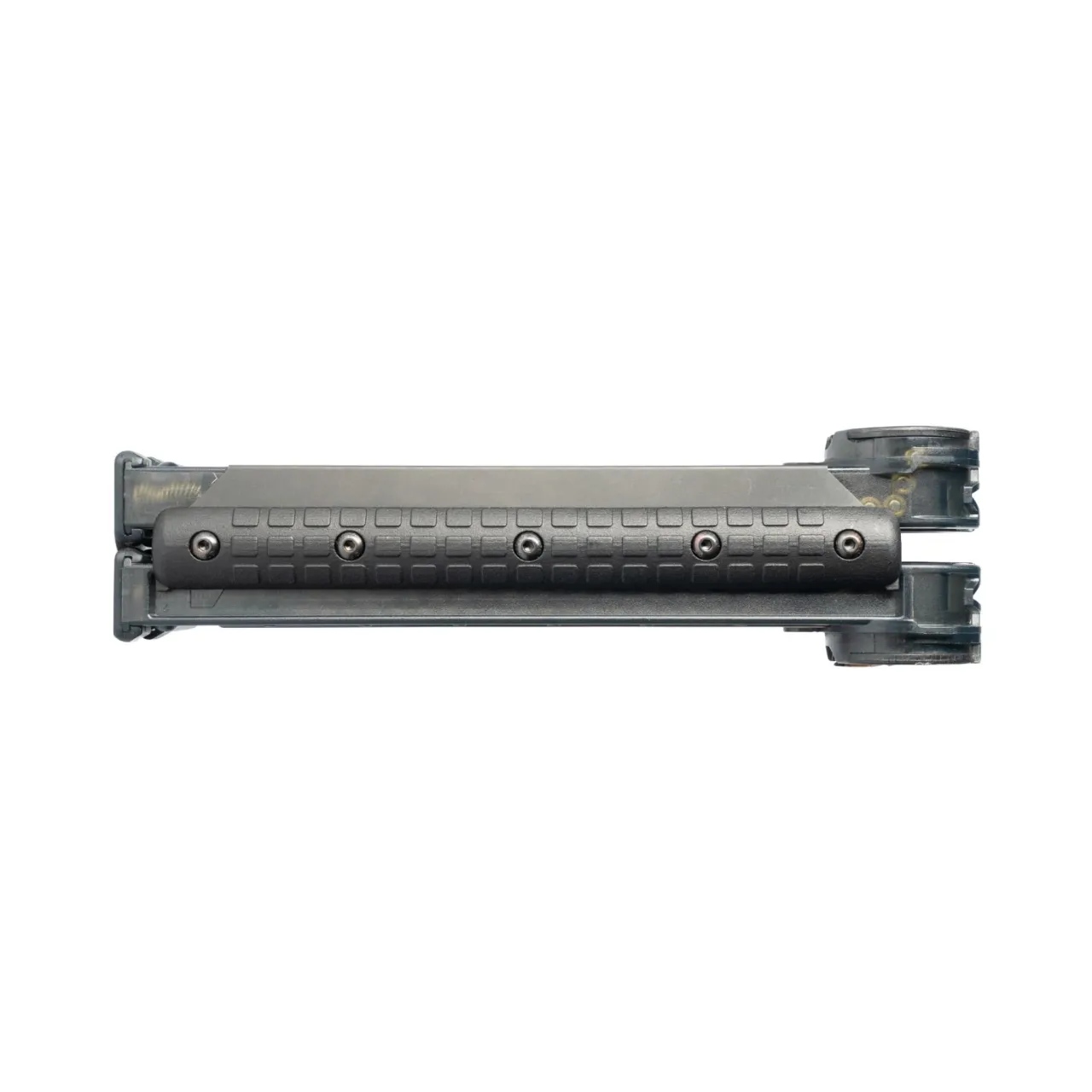
Double magazine with Jungle Clip
This design significantly speeds up reloading while maintaining the impressive standard 50-round capacity. To make changing even easier, the designers developed the Jungle Clip. This device securely fastens two standard magazines together with the magazine wells facing opposite directions. When the first magazine is empty, the shooter simply flips the magazine over and inserts the second magazine, giving a total of 100 rounds ready for action. Simply empty one magazine, flip it 180 degrees, and reinsert it. The result is the highest capacity in the most compact package.
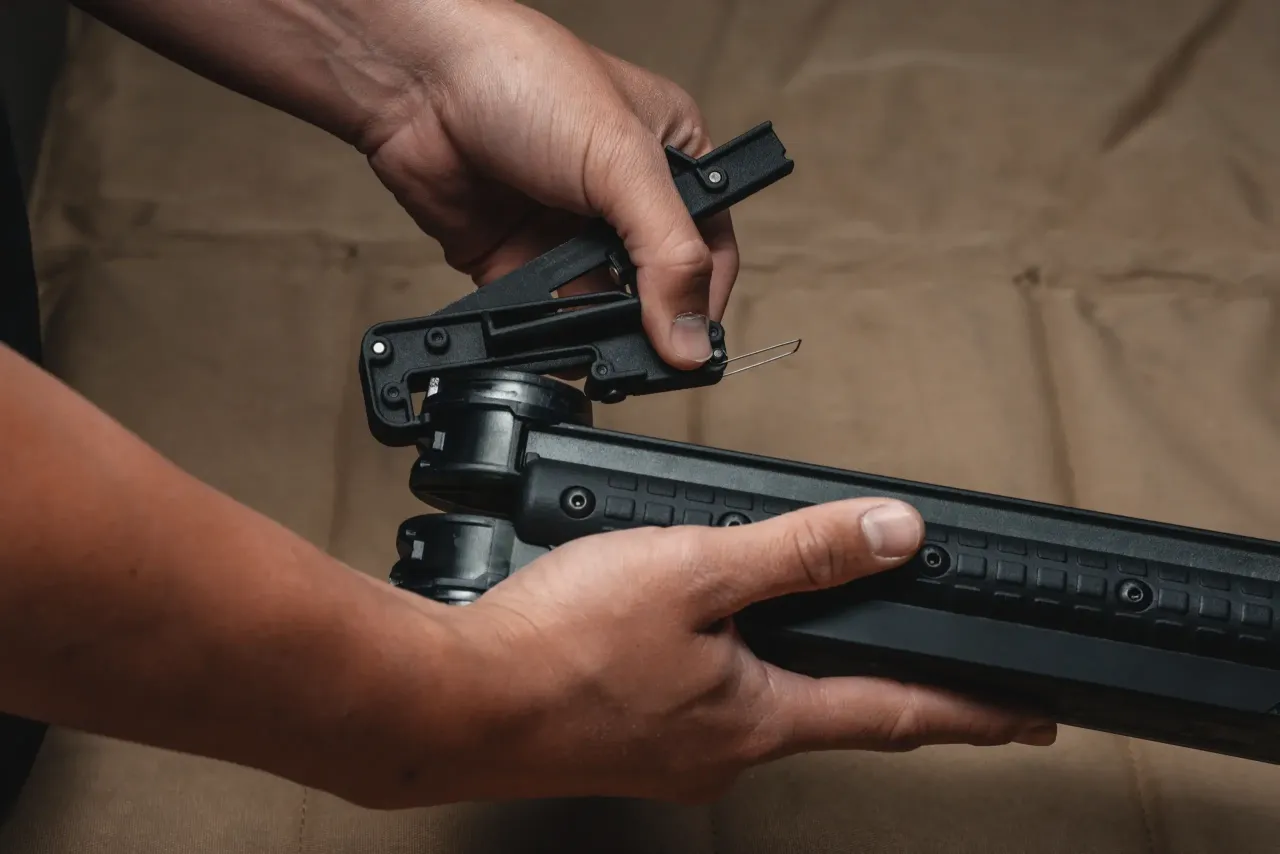
"Speedloader" is the P90's quick-loading mechanism for magazines.
This KelTec device is specifically designed for the quick and easy loading of 50-round magazines compatible with the FN P90, which are also used in the KP50 pistol, which also fires a 5,7x28mm caliber. Clearly, this loading aid reduces hand fatigue and significantly reduces magazine loading time.
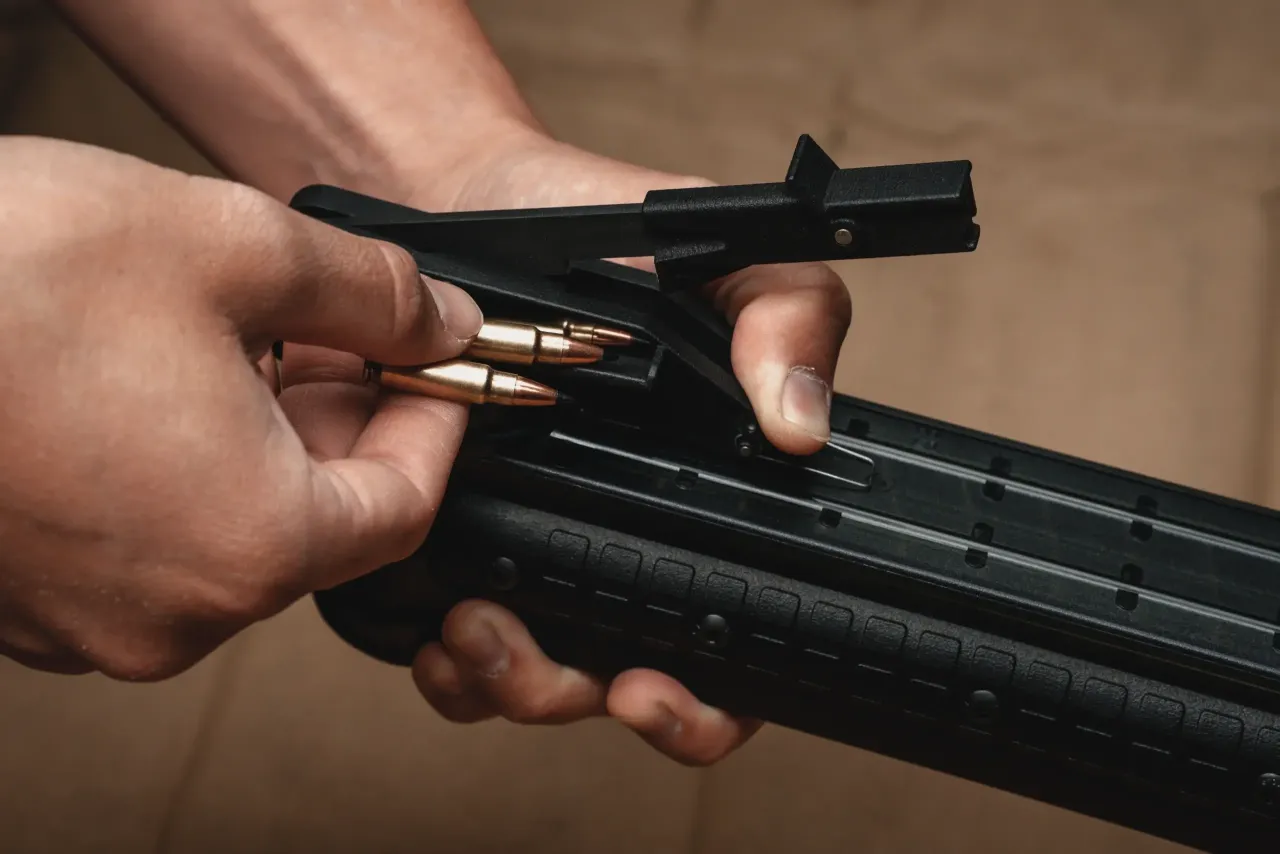
Working with the charging accelerator
It features a Picatinny rail and a side-folding stock (KP50) or a side-folding forend (MP50). The B5 Systems grip provides a proven and comfortable grip. At least, that's what the company's advertising claims!
Performance characteristics of the KR50 pistol
Caliber: 5,7×28 mm
Weight without magazine: 1,45 kg
Loaded weight (single magazine) - 1,95 kg
Weight of the equipped ("jungle version") - 2,9 kg
Magazine capacity: 50
Overall length (folded) - 472 mm
Barrel length - 244 mm
Height - 165 mm
Width - 64 mm
Trigger pull force: 2,9 kg
Overall, the weapon is quite interesting.
Information