Investigator instead of a receiver
4 932 25
Investigator instead of a receiver


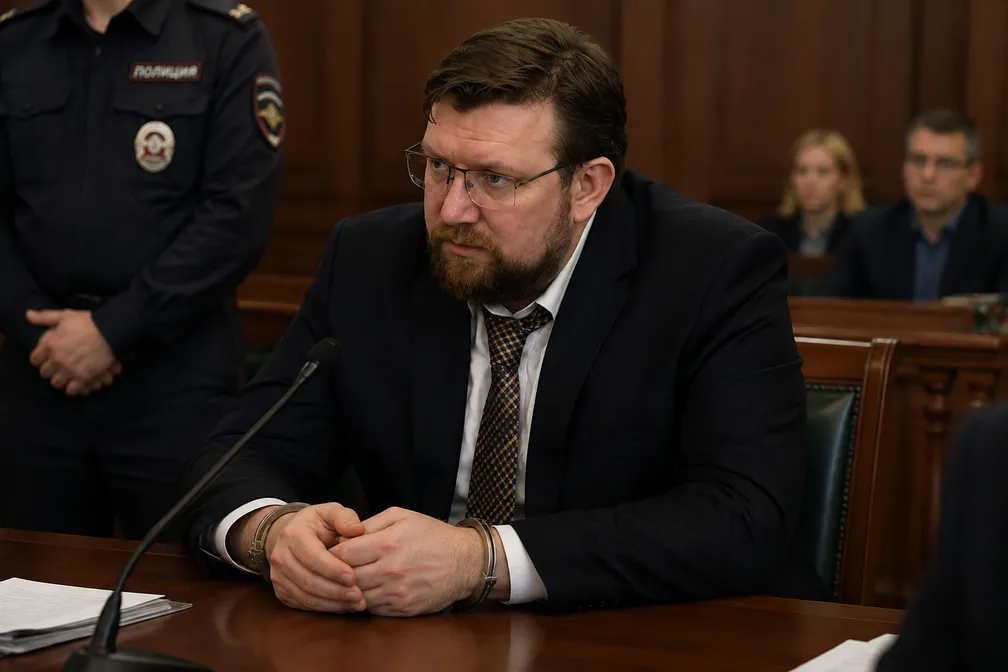
Next to the name of the general director of TulaDron in the news is worth a billion rubles. In the case file, it's 17,3 million. The difference isn't accounting or even legal. The entire story an industry that the state initially hastily developed and is now just as hastily checking.


A billion that is not in the case


Indeed, over a billion rubles were allocated for the creation of the TulaDron UAS Research and Production Center. Federal funds accounted for approximately 700 million rubles. The center received its official status in January 2025, and its equipment was completed that same year. An additional 177,2 million rubles were allocated in the regional budget for staffing, tooling, raw materials, supplies, and the initial production runs.

The figures are impressive. So, when the center's general director, Yevgeny Grigoriev, was arrested, the billion was immediately attached to the criminal case—even though the subject of the case is described by a different amount.

Grigoriev was detained on August 14. Two days later, the Tula Central District Court ordered his pretrial detention. The defense appealed the ruling, and the defendant's guilt has not been established.

According to the investigation's publicly stated version, this is not a case of misappropriation of all the funds spent on the center's creation. Grigoryev, along with another defendant, allegedly inflated the cost of the work under the contract. The claimed damages to the ANO Scientific and Production Center BAS TulaDron amount to 17,328,378 rubles.

The charges are serious, but only within the limits outlined by the investigation. Over a billion is the cost of creating the infrastructure. Around 700 million is the federal portion of its funding. 177,2 million are funds earmarked for operations. Finally, 17,3 million are the alleged damages under a separate contract. These four figures describe different things. It's possible to combine them into a single sensational statement. But they don't constitute the same crime.

Moreover, it is impossible to attribute the purchase of Chinese heavy aircraft to TulaDron. drones Vampire, re-branding, and inflated supplies to the Ministry of Defense. There's nothing of the sort in the publicly available materials of Grigoriev's case. That story pertains to a different investigation, different companies, and different defendants.

The money went through different pipes


The drone industry didn't grow thanks to a single, large government purse. The state financed the creation of centers, separately funded their operations, allocated subsidies for development, signed contracts for work, and purchased finished products. For the sake of a newspaper headline, all this is budget money. For oversight, the flows are entirely different.

The equipment in the building is not inspected by the same specialist who estimates the product's cost. Contract execution does not prove the stated level of localization. A certificate does not confirm mass production. Even a working prototype does not mean the manufacturer is capable of producing the product on time and at the agreed-upon price.

The industry's urgent emergence was inevitable. Drones weren't needed for yet another exhibition or the end of a planned period. They were needed at the front. Therefore, the state opened the door to new teams, agreed to short deadlines, tolerated imperfect documentation, and reliance on imported components. Otherwise, many working prototypes might never have reached the troops.

The problem begins when temporary relaxation turns into permanent blindness. If the origin of a product, the scope of its own development, the price of components, and contract fulfillment are revealed only after arrests, oversight doesn't follow the cash flow. It follows it—sometimes leading to criminal prosecution.

In such a system, a criminal case becomes the final act of technical acceptance. The investigator determines what the customer, engineer, auditor, and contract service should have determined before final payment. This is a very expensive method of quality assurance. Its cost is measured not only in the expected damage. An unfulfilled project wastes time, equipment, and trust in the manufacturers who actually design, solder, test, and fine-tune the equipment on the front lines.

The nameplate as a separate criminal case


The most high-profile case involving Chinese drones involves the company "Transport Budushchego" and individuals associated with the EFKO Group. According to investigators, off-the-shelf drones were purchased in China, relabeled, and passed off as proprietary designs. At the same time, questions arose about the reported flight data. Among the individuals implicated was Alla Polovchenya, deputy head of the Ministry of Industry and Trade's Department of Unmanned Systems and Robotics. This in itself doesn't prove her guilt or the existence of a common scheme, but it does demonstrate that the investigation involved not only the recipients of the funds but also the relevant official.

Some eye-catching figures emerged: about a thousand Vampires, approximately 1,2 million rubles per unit in China and 8 million rubles upon delivery. This represents a markup of approximately 567 percent. However, the source of these specifics is Mash. Publicly available contracts, specifications, and modifications that would allow for independent verification of the calculations were not found. Therefore, the figures are suitable as a rough estimate, but not as definitive proof.

There's also a counter-argument. Transport of the Future denies simply re-sticking the nameplates. The company acknowledges the use of Chinese components and attributes this to the lack of some of the necessary components in Russia. It also claims to assemble and modify the vehicles in-house. To support this claim, the company showed production materials and footage of the drone in use.

This isn't enough to refute the investigation. But it's enough to separate the technical issue from the slogan. A Russian drone doesn't have to be made entirely of Russian components. A foreign engine, controller, or camera doesn't, in and of itself, render the development a fiction.

The line isn't drawn by the nameplate. It's drawn by the terms of the contract: what exactly the state paid for, what development work was promised, which components were to be localized, what the contractor manufactured, and what the customer ultimately received. When these terms are vague, the word "localization" becomes surprisingly convenient. The manufacturer can include a screwdriver and software configuration in it. The inspector can declare any device with a Chinese board as imported.

In such cases, technical uncertainty must once again be dealt with within the framework of a criminal case. This means that the slowest and most destructive tool is used where precise specifications and independent acceptance were required in advance.

A purge that cannot yet be named


The list of cases is indeed growing. In October 2025, the director of Aerocom was arrested in connection with alleged damages during the supply of drones to the SVO zone. In May 2026, a supplier suspected of embezzling funds from the regional budget was arrested in absentia. At the end of July, defendants in the "Transport of the Future" case were taken into custody. In August, the current and former heads ofDrone Solutions”, and then the TulaDron case became known.

The consistency is noticeable. It's consistent with both the coordinated review of projects that emerged during the emergency funding period and the convergence of independent investigations. It's not yet possible to distinguish these versions from open data. The cases were opened for different incidents, the alleged mechanisms are inconsistent, and in the case of Drone Solutions, no details have been disclosed at all.

There's no clear denominator. A few criminal cases say nothing about the proportion of problematic manufacturers without data on the number of companies inspected, contracts, and actual deliveries. Individual defendants should be dealt with in court. For the industry as a whole, it's a system of oversight, not a calculus of arrests.

This is where the danger of another extreme arises. After a period of almost unconditional trust, it's easy to shift to almost unconditional prohibition. Demand from a small team the full set of procedures of a large corporation, a long-standing production history, and perfect localization before the first contract. Formally, the rules will become stricter. In reality, the road will be open only to those with sufficient administrative resources to get the documents through all the authorities before the product itself reaches testing.

This doesn't mean that manufacturers vetted by the front should be exempt from oversight. On the contrary, oversight should be more focused. Rapid testing and approval of working equipment is one aspect. Verification of price, the origin of key components, the scope of in-house development, and the fulfillment of obligations is another. These shouldn't interfere with each other, but both must be completed before the presentation becomes a paid product.

Therefore, it's more accurate to call what's happening not a purge, but a post-financing audit. An investigator can analyze an incident that has already occurred and estimate the estimated damages. But they can't replace the client, the engineer, and the auditor.

A billion and 17,3 million aren't just two different sums. Between them lies an entire, unassembled control system: from the decision to invest to the review of a specific contract. The price of this gap is the loss of resources, time, and trust in those who actually deliver results. The industry isn't being cleansed by the number of plantings. It's being cleansed by rules that prevent paid presentations from pretending to be working products and that don't prevent working products from reaching the front lines.
25 comments
Information
Dear reader, to leave comments on the publication, you must sign in.
  1. +6
    26 August 2026 04: 26
    They should have done a better job of checking Chubais back then, before he fled the country unhindered with the stolen money. And there was much more stolen.
    1. +5
      26 August 2026 05: 01
      From the very beginning of the drone procurement, there have been numerous reports about the discrepancy between the Ministry of Defense's procurement prices and global averages (for similar products). The issue of re-sticking the nameplates has also been repeatedly mentioned, and law enforcement has finally caught on. What's striking is the complete lack of morality among these "dealers." I simply can't call them human beings. When some die for their country, nothing stops others from lining their pockets with stolen money. What kind of society have we built?
      What I can say in conclusion is that I hope the punishment will not be just for show, but will be as severe as possible and in line with wartime.
      P.S. You'll now be attaching Chubais to every news story, whether it's appropriate or not, he's a convenient figure after all...
      1. +4
        26 August 2026 10: 06
        Any theft or sabotage during military operations should be considered treason and punishable by the death penalty, not a pat on the head and a 1-2 year prison sentence, followed by parole.
    2. +3
      26 August 2026 06: 58
      Some argue that, in order to deflect the tide of high-profile investigations and arrests in the Ministry of Defense, investigative and law enforcement agencies should focus their work on businesses, thereby mitigating public backlash against corruption scandals in law enforcement agencies.
      Let's hope the investigation and court cases will show, or not show, the triumph of justice and the severity of the punishment.
  2. +4
    26 August 2026 04: 39
    All military orders must be overseen by an army representative who is responsible for any defective goods...only then will this barrier protect against various crooks...without his qualified assessment, not a single product should be delivered to the units.
    1. -1
      27 August 2026 02: 31
      Quote: The same LYOKHA
      All military orders must be supervised by an army representative who is responsible for any defective goods.

      During the Vietnam War, the USSR began producing anti-aircraft missiles. The technology was new, and military acceptance testing was simply afraid to use it. The chief engineer and chief technologist also didn't really know how to test welds for leaks. Moreover, the adoption of the new technology and its shipment to Vietnam was delayed precisely by fear of reprisals for producing defective products. The solution, however, wasn't found in the management structures of the Ministry of Defense or the relevant ministry, but by a random carpenter who had defected to this plant from the Academic Institute of Problems of Physical Sciences to earn a fortune. In the late USSR, there was a breakthrough scientific discovery: artificial blood. Work was stalled due to the inability to pay biochemists for adjustments to the technological equipment. Scientists simply began paying for the work in alcohol and by transferring funds from the bonuses of other less valuable employees working on the project. The FSB and the prosecutor's office hounded the creator of this research to the point of suicide with investigations, trying to determine the legality of distributing bonuses and issuing a couple of barrels of alcohol.
  3. +9
    26 August 2026 05: 12
    And the gentlemen from the State, who, in exchange for kickbacks, distribute funds to who-knows-where businessmen and "brilliant designers" of labels for Chinese drones, remain completely transparent, honest, and incorruptible. So what? Is this a normal operating system, successfully established within the State and bearing fruit? Or has the hallmark of our high-ranking officials—"they've fallen in love with us again"—become a trend and a sign of outstanding skill, beyond the reach of prosecution?
    1. -1
      27 August 2026 02: 51
      Quote: AlexSam
      Well, it’s a normal working scheme that has successfully taken root in the State and is bearing fruit.

      I'm describing a typical, working system from the Vietnam War after the Tet operation. Vietnam urgently needed anti-aircraft missiles. Their production, or rather, increasing production volumes, was problematic. But several teams from different factories tasked with preparing the missiles for transport were assembled at the missile base. Instead of a paint crew, a female supervisor from the painting group arrived with a dozen canisters of alcohol. Painting work was at the end of the cycle. The woman walked around the shop floor and met the workers from the various teams. All the main work had been completed, and the painting process was about to begin. Lady: "Boys, if you'd like a drink before heading back to your region, I'll give you a canister of alcohol for a chord that can be made in four hours per team." All the teams join forces to paint the rockets before the train heads home. The rockets are painted in two hours. "Boys, I'll pay you two more canisters of alcohol for the same chord." An hour and a half later. "Boys, two more canisters of alcohol for half a chord." As a result, the rockets are painted, the DRV armored units are protected from air raids, and during Operation Ho Chi Minh, they enter Saigon behind the underground fighters on mopeds with lilac capes slung over their shoulders. In theory, the Prosecutor General's Office and the KGB of the USSR should have prevented the alcohol scam and disrupted Operation Ho Chi Minh.
  4. +1
    26 August 2026 05: 35
    Anyone who thinks Elon Musk immediately secured government support is deeply mistaken. Initially, his ideas were supported by businesses. Only when they became profitable for the state did they gain recognition. Businesses are obliged to understand scientific ideas. If we have a market economy, they must see their own benefit in science. This is the foundation of all today's successes.
    1. +1
      26 August 2026 13: 38
      Quote: Nikolay Malyugin
      Businesses must understand scientific ideas

      Our business, unlike theirs, is still a child with all its ills. It takes generations.
  5. +5
    26 August 2026 06: 25
    Investigator instead of a receiver

    The court will give him five years, tops. He'll serve two and be released on parole. After three, his conviction will be expunged, and then it all starts over again. This state is devouring itself.
    1. +3
      26 August 2026 06: 51
      Quote: Idle_piston
      He'll serve two sentences and be released on parole.

      He won't even have to serve time. He'll sign a contract with the Air Defense Forces, serve six months to a year in the rear as a "highly valuable UAV specialist," receive a veteran's certificate and even a medal at the end of his contract, and that's it, as clean as a pie in the eyes of the law. How many such "businessmen," heads of private and public organizations, have gotten away with serving time this way?
  6. + 10
    26 August 2026 07: 04
    The article is about nothing. The author has no knowledge whatsoever.
    A billion and 17,3 million aren't just two different amounts. Between them lies an entire, unassembled control system: from the decision to invest to the review of a specific contract. The cost of this gap is the loss of resources, time, and trust in those who actually deliver results.

    Author! What loss of funds? Do you even understand how capitalism works?
    The foundation of capitalism is lies, theft, and robbery. It's simply bribes, legalized bribes—lobbying, kickbacks, corruption, and so on. It's never been any different, anywhere, and never will be.
    Capitalism is about the love of money, not about love for the Motherland!
    What these drone "manufacturers" were doing is called normal capitalist relations. It's when some people either steal a little or outright rob others. That's all.
    Never under capitalism will there be the order the author so covets. Because everything that happens comes from management, with management's permission, or by direct order from management. It's just that the former can "appropriate" more money than the latter. And when the latter bites off too large a piece of the "pie," the former punishes them. But here, too, punishment varies...
    The report is finished.
  7. +2
    26 August 2026 07: 55
    Impressive figures also emerged: about a thousand Vampires, approximately 1,2 million rubles per device in China and 8 million upon delivery. This results in a markup of approximately 567 percent. However, the source of these specifics is Mash. No open contracts, specifications, or modifications that would allow for independent verification of the calculation were found.Therefore, the numbers are suitable as a scale, but not as ready-made proof.

    What did Karl Marx write?
    "Give it 10%, and capital will agree to any use; at 20% it becomes animated; at 50% it will positively break its head; at 100% it will trample on all human laws; at 300% there is no crime it would not risk, even under threat of the gallows."
    and you indicated 567%....
    author, and you write about
    Open contracts, specifications and composition of modifications, pallowing independent verification of the calculation, not found.

    I won't even comment on such a concept in our country as "inflating the price"
    1. +1
      26 August 2026 11: 57
      What did Karl Marx write?
      Marx aptly repeated Dunning's words. This does not diminish the phrase's meaning or value in his teaching.
      1. 0
        26 August 2026 14: 03
        Marx successfully repeated this after Dunning.

        Well, we didn't teach Dunning...
        1. 0
          26 August 2026 15: 07
          We, too, were enlightened by a teacher who taught us extra about the history of the CPSU. He showed us a 1950 edition of "Capital" with this footnote.
  8. 0
    26 August 2026 08: 11
    The drone industry didn't grow thanks to one big government wallet.
    Cause gave birth to effect. Here, "Unmanned Systems Troops" is new branch of the military "in the structure of the Russian Armed Forces (AF), created in November 2025 specifically to conduct combat operations using unmanned systems of various profiles and purposes." A new branch of the armed forces, what's new? Could it be separate from the Air Force, which would then be "pilot systems troops," or from missile troops, guided systems of the same ATGMs? Why did they create new headquarters and positions, instead of including UAV companies in the organizational structure of all regiments and brigades, creating such "unmanned troops" with an unclear structure, and, even more unclear, their interaction with units located on LBS... As the saying goes, - "After all, if the stars are lit, it means that someone needs it?"Apparently, it must be, since it turned out to be such a profitable business and found a response from enterprising businessmen of all levels.
  9. RMT
    +1
    26 August 2026 15: 57
    Alla Polovchenya is the Deputy Head of the Unmanned Systems and Robotics Department at the Ministry of Industry and Trade. She was born in 1990. She received her higher education from the Moscow State University of Economics, Statistics, and Informatics, where she studied accounting, analysis, and audit.
    As a student, she worked as a project coordinator at ProfMedia Business Solutions, then as an account manager at Impro Group, and then as development director at Monte Carlo. At 25, she took up a position as a leading specialist in subsidies and inter-budget transfers for the constituent entities of the Russian Federation at the Russian Ministry of Sport.
    She was invited to the Russian Ministry of Industry and Trade in 2024 after participating in the Leaders of Russia competition.
    Suspected of violating Part 4 of Article 160 of the Criminal Code of the Russian Federation (Misappropriation or embezzlement on an especially large scale).
    In almost ten years you haven't learned your responsibilities?
    1. +1
      27 August 2026 07: 33
      She was invited to the Russian Ministry of Industry and Trade in 2024 after participating in the Leaders of Russia competition.
      Suspected of violating Part 4 of Article 160 of the Criminal Code of the Russian Federation (Misappropriation or embezzlement on an especially large scale).
      In almost ten years you haven't learned your responsibilities?

      And what were her responsibilities? Do you know?
      Usually people like that are hired precisely so that they can be blamed for everything...
      and it seems to them that they have achieved "such a place" with their own heads...
      1. RMT
        0
        27 August 2026 13: 34
        I studied accounting, analysis, and auditing. I worked in this field, first at the Ministry of Sport, and later at the Ministry of Industry and Trade.
        Ten years and I'm deputy head of the department, a great career. Maybe it's just self-confidence, or something else.
  10. 0
    26 August 2026 20: 27
    Quote: The same Lech
    All military orders must be overseen by an army representative who is responsible for any defective goods...only then will this barrier protect against various crooks...without his qualified assessment, not a single product should be delivered to the units.


    Why should the customer's representative be held accountable?
    Just answer. Reprimand, demotion, deprivation of part of the salary. In the late USSR, weren't the usual administrative, career, and economic levers in place?
    There were no "grabbing capitalists" back then. But there were thanks, bonuses, and promotions.
    A personal opinion from personal experience in the late USSR...
    If your wiring harness was "requested by the customer's representative," either it's not working properly, or the requirements have changed.
    Things are different now. But if "do it as best you can, I'll explain everything to everyone, there won't be any problems, that's how it's supposed to be, and quickly, I need a report," is that talking about capitalists or disorganizers?
  11. +1
    26 August 2026 20: 35
    Quote: RMT
    Alla Polovchenya is the Deputy Head of the Unmanned Systems and Robotics Department at the Ministry of Industry and Trade. She was born in 1990. She received her higher education from the Moscow State University of Economics, Statistics, and Informatics, where she studied accounting, analysis, and audit.
    As a student, she worked as a project coordinator at ProfMedia Business Solutions, then as an account manager at Impro Group, and then as development director at Monte Carlo. At 25, she took up a position as a leading specialist in subsidies and inter-budget transfers for the constituent entities of the Russian Federation at the Russian Ministry of Sport.
    She was invited to the Russian Ministry of Industry and Trade in 2024 after participating in the Leaders of Russia competition.
    Suspected of violating Part 4 of Article 160 of the Criminal Code of the Russian Federation (Misappropriation or embezzlement on an especially large scale).
    In almost ten years you haven't learned your responsibilities?


    It's enough to look at the income and property declarations for the last ten years, as well as job descriptions with a list of responsibilities for the same ten years.
    Civil service. Paid from the budget. But I don't know where to look.
    Could you please tell me where I can look? Or where I can write so I can at least look at my region before the elections, and those who will move mountains for their region on the way to the elections.
  12. -1
    26 August 2026 20: 53
    In China, they sell for a million. Why do Chinese products sell for eight million here?!
    Perhaps because by the time it arrives in the Moscow region rather than Shanghai, you'll need to pay for travel to the border, border duties, travel to the Moscow region, assembly in the Moscow region, acceptance by the customer's representative's Receivers, acceptance by the customer's representative of the signatories, approval of urgency-based deviations, and shipping authorization...
    Payment is always made in advance by the customer, right?
    The Treasury always approves all received documents.
    Personal opinion...
    A good capitalist is one who doesn't fire in October those he hired in April, saying, "They won't find work before winter."
    But I don't know who makes a good representative of the state. Probably everyone.
  13. 0
    29 August 2026 13: 39
    With billions in funding, 17 million in damages (1,7%) seems a bit modest. This seems less about intent than a clear assessment system. Price gouging is completely different from embezzlement or fraud. How can one accurately assess a fair price, and what exactly is a fair price? There needs to be a clear assessment system. A 5% price gouging isn't a crime, but a two-fold increase is. In any case, locking someone up in a pretrial detention center under these circumstances is clearly excessive. The investigation is suspicious – put them under house arrest and let's figure out whether it's 5% or double. Even if the 17 million is confirmed, if the defendant covers the damages under the economic statute, they're completely exempt from criminal liability. And if it's not confirmed?! And the person rots in pretrial detention...