The US is developing a cheap hypersonic missile for the HIMARS.
Check the final copy and evaluate the author's voice.
The Pentagon plans to develop and field various missile systems with hypersonic warheads. One such system is currently being developed by the Castelion Corporation. The primary goal of its project, codenamed Blackbeard, is to simplify the design and reduce the cost of the finished missile. The developers have now finalized the general concept of the future munition and unveiled a mockup.
Castelion was founded in late 2022 by three former SpaceX executives and has been focused from the outset on low-cost, mass-produced hypersonics. weaponsThe Blackbeard land-based missile project (named after the famous pirate Edward Teach, who operated in the early 18th century) was formalized in 2023. The Pentagon is the customer, and the Rapid Capabilities and Critical Technologies Office (RCCTO) is overseeing the project.
To date, Castelion has developed and tested several prototype missiles and other products. These have validated the necessary technologies and gained the necessary experience. These developments have formed the basis for a full-fledged hypersonic missile project.
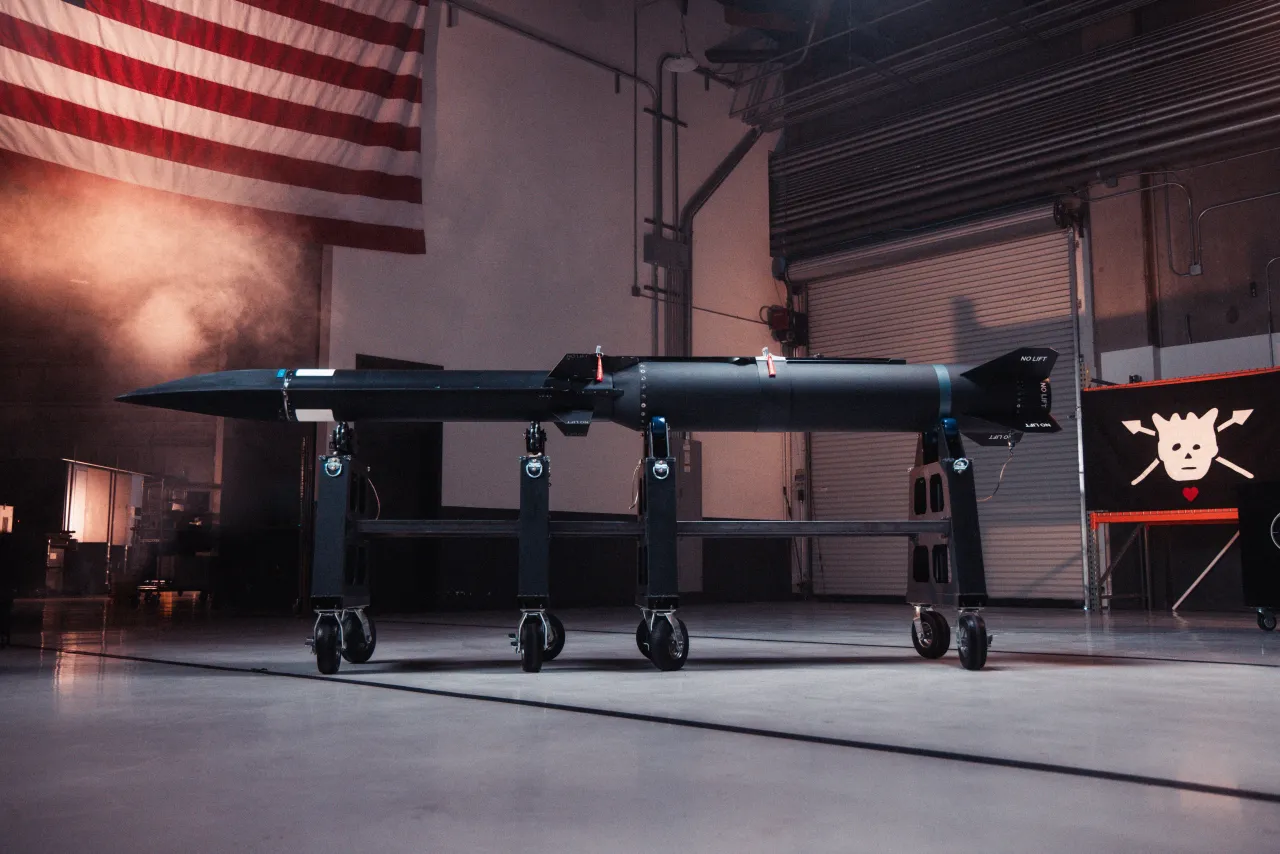
On August 20, 2026, Castelion unveiled a full-scale mockup of the future missile for the first time—a photograph of the assembled missile on a transport trolley was published in open sources. An important disclaimer here: Castelion itself does not disclose the Blackbeard's specifications, so all figures cited below—range, speed, warhead weight, and dimensions—are reconstructions based on photographs and press estimates, not confirmed data from the developer.
By August 2026, Blackbeard remains in the development and integration testing phase, but the program has already moved into pre-production preparations. Thus, the missile is not yet a fully operational, production-ready system, but has already moved beyond a purely experimental project.
Early operational deployment is expected to begin in 2027. aviation Blackbeard variant on F/A-18E/F Super Hornet aircraft; in parallel, testing and integration of the ground-based version with Army launch platforms will continue.

One of the technology demonstrator rockets used in the early stages of Blackbeard's development.
Castelion is already preparing for the production phase. In Sandoval County, New Mexico (Rio Rancho area near Albuquerque), the corporation is building a facility codenamed Project Ranger—a 1000-acre campus (approximately 405 hectares). The facility will house the production of solid-fuel motors, static testing, and final assembly of Blackbeard components. According to the company, the project is investing over $100 million and will create approximately 300 jobs. A full schedule for reaching design production has not yet been disclosed.
The Blackbeard Ground Launch project began in 2023 at the request of the US Department of Defense. The agency awarded Castelion a contract and funding, with additional funding provided subsequently. The scale of the support extended far beyond the scope of a startup experiment, but its components are worth distinguishing.
In August 2026, Castelion raised $1 billion in Series C funding, its third round of venture capital funding ($800 million in equity and a $250 million credit facility); according to business press reports, the round valued the company at approximately $13 billion.
A separate category is government contracts: the US Army's draft budget for fiscal year 2026 included $25 million for Blackbeard Ground Launch, while the Navy allocated approximately $105 million for integrating the missile with the F/A-18. The company did not disclose the exact value of individual military contracts.
By 2025–2026, the project has become multi-platform. In addition to ground-based launch, an air-launched version is being developed—launched from the F/A-18E/F Super Hornet fighter jet as part of the Navy program; use in the interests of fleetThis significantly expands the scope of "tactical hypersonics" compared to purely land-based weapons.
If the project is successful, the Pentagon expects to obtain a relatively inexpensive land-based hypersonic weapon, the effectiveness of which is still a stated goal of the program, not a proven result. In the early stages of development, the possibility of integrating the advanced missile into the M270 MLRS and M142 HIMARS systems was mentioned.
On May 13, 2026, the Defense Department and Castelion signed a framework production agreement. According to the official announcement, following the completion of testing and validation, the department intends to conclude a two-year, multi-year contract for the production of at least 500 missiles per year, and ultimately seek Congressional approval for a procurement program of over 12 missiles over five years. This is a stated plan, not an already signed contract for the entire batch: 500 missiles per year is the target upon successful completion of testing, not the current production volume.
The first step in implementing this agreement was the Navy's June 16, 2026, contract for 50 Blackbeard pre-production early operational configuration missiles and an equal number of transport and storage containers, valued at $23,4 million. This is not yet the start of a full-scale production run, but it does indicate the program's transition from demonstrators to production.
The financial aspects of the production program are not yet disclosed: the cost of a single rocket and the entire production run remains unknown. It's possible that at this stage, the customer and contractor themselves cannot disclose it—the full economics of the project will only become clear after development is complete.
The first photograph of the Blackbeard product, even if only a mockup, allows us to understand the project's key design decisions. Sources of information vary in reliability: there are officially disclosed data, conclusions based on the photograph, and assessments from third-party publications.
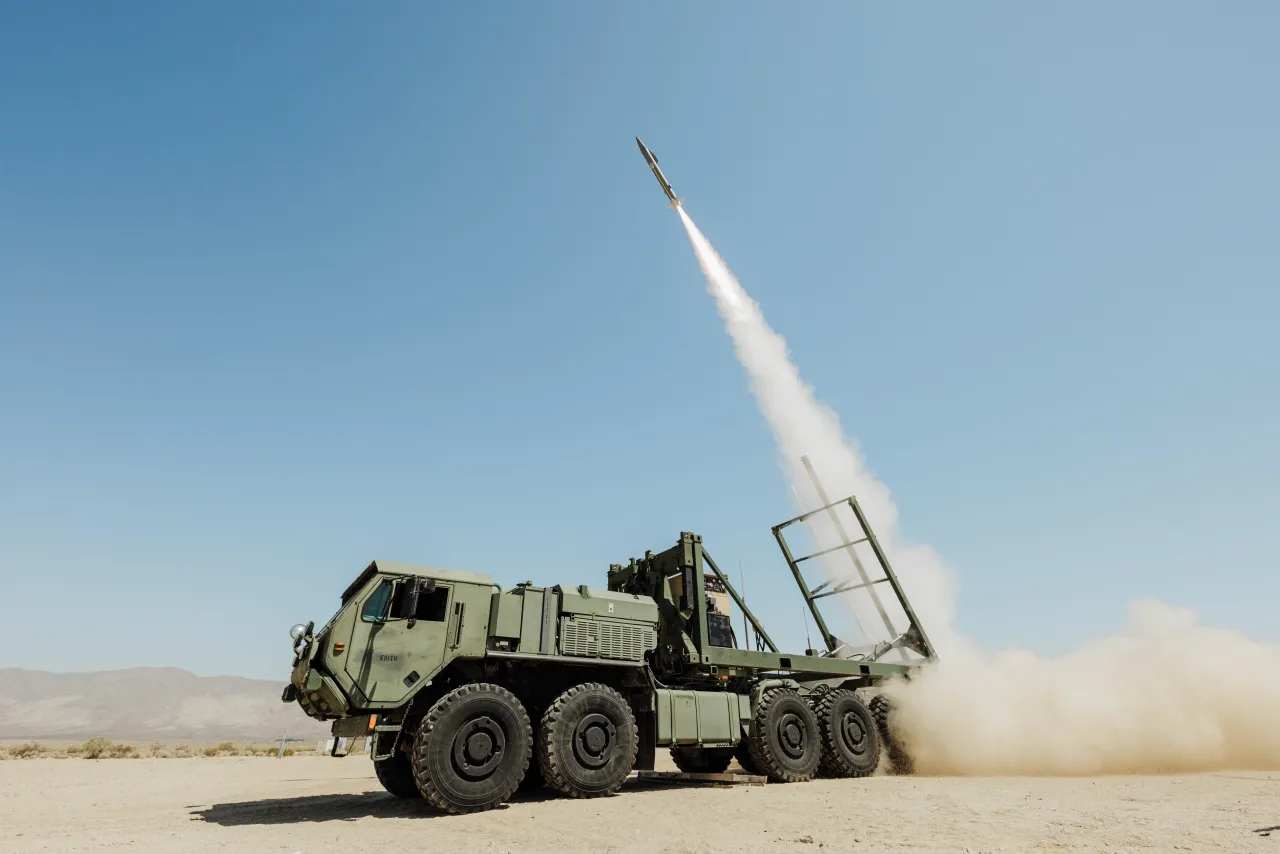
Launch of the experimental product
The missile is built using a two-stage design. The stages differ fundamentally in design, giving the assembled product a distinctive appearance. Integration with HIMARS and M270 imposes weight and size restrictions on the ground-based version, but the model shown may primarily refer to the airborne version.
The first stage has a cylindrical body with an X-shaped tail. Almost the entire volume of the stage is dedicated to the solid propellant charge. It likely contains control instruments for maneuvering during the boost phase of the trajectory.
The second part of the rocket is the hypersonic glide vehicle. This is a fully-fledged aircraft with distinctive body contours and X-shaped aerodynamic surfaces. It accounts for approximately half the length of the assembled rocket; its maximum diameter does not exceed the span of the first stage's fins. The company does not comment on its connection to other American hypersonic programs.
The missile is guided, but the hardware and guidance system are classified. It likely uses an autopilot with navigation instruments—satellite and/or inertial. Whether it has a homing head remains an open question.
The warhead type and weight are not disclosed. Some publications cite an estimate of around 43 kg, but its origin is unclear—it's not even known whether this refers to the entire warhead, the payload, or the charge. Therefore, it's premature to assess the missile's ability to destroy hardened targets. At hypersonic speeds, the kinetic energy of the glide vehicle may also contribute to the kill.
Blackbeard uses a boost-glide flight profile: the first stage accelerates the vehicle, lifts it, and places it on the calculated trajectory, after which the unpowered gliding unit separates and continues flight in the atmosphere, maneuvering in altitude and course.
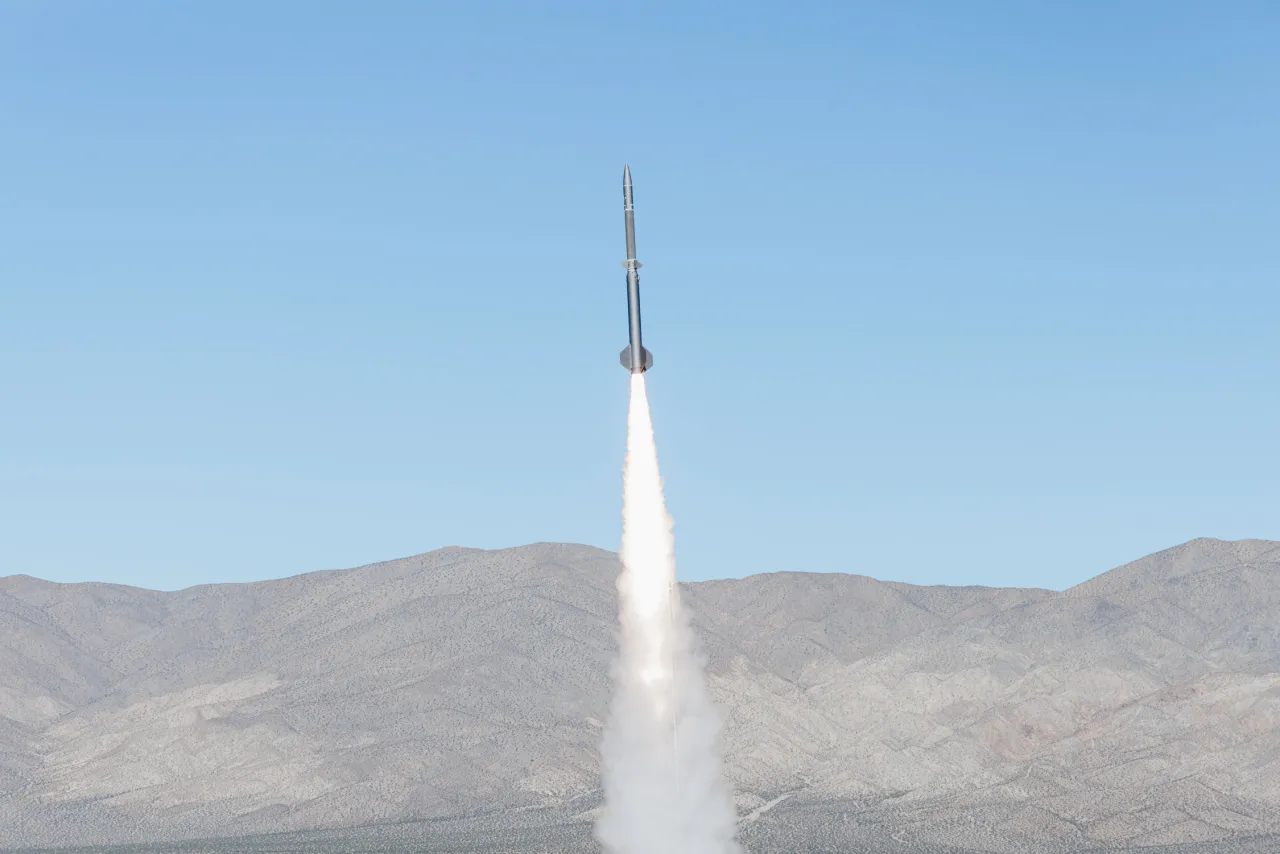
During such a flight, the glide vehicle's speed must exceed Mach 5 to meet hypersonic weapon requirements. According to public estimates, the launch range could approach 500 miles (800 km).
The United States has long been actively pursuing hypersonics. A number of such systems are in various stages of development and testing, but most have not yet reached full-scale production. The Army's LRHW/Dark Eagle program is the closest: by 2026, the Army began equipping the first unit, despite the system's previous history of testing delays. Against this backdrop of expensive and stalled programs, the Pentagon's reliance on the low-cost, high-volume Castelion approach becomes clear.
The Blackbeard project stands out for two key ideas. The first is the adaptation of hypersonic weapons to the relatively compact mobile launchers of the MLRS/HIMARS family. The second is the simplification and cost reduction of the missile and hypersonic warhead.
The company keeps specific cost-cutting solutions secret, but the general logic is evident in Castelion's team composition and production philosophy. Founded by SpaceX alumni, the company has applied familiar principles to the defense industry: vertical integration (in-house engine and guidance systems instead of expensive co-branding), a focus on "commercial" unit costs, and an emphasis on frequent flight tests alongside ground refinement. It is through this approach that the company promises cost reductions—according to its own statements, several times lower than those of other advanced hypersonic missiles; independent confirmation is yet to be provided.
Castelion has now conducted extensive theoretical research and practical testing, and is developing a fully functional munition based on the data collected. The public demonstration of the prototype outlined the chosen design, although it does not yet confirm the design's completeness.
It's clear why the Pentagon commissioned and supports Project Blackbeard. If Castelion proves its stated performance and cost, the use of existing launch platforms could reduce the scope and cost of development—though not eliminate them entirely, as integration still requires a container, software, fire control systems, and certification testing. For now, however, this economic benefit remains a program goal, not a proven outcome.
Castelion's latest announcements are generally optimistic: the corporation promises to complete development and launch production in the foreseeable future. How successful Blackbeard will actually be and whether current plans can be met will become clear in a year or a year and a half.
The Pentagon plans to develop and field various missile systems with hypersonic warheads. One such system is currently being developed by the Castelion Corporation. The primary goal of its project, codenamed Blackbeard, is to simplify the design and reduce the cost of the finished missile. The developers have now finalized the general concept of the future munition and unveiled a mockup.
Latest news
Castelion was founded in late 2022 by three former SpaceX executives and has been focused from the outset on low-cost, mass-produced hypersonics. weaponsThe Blackbeard land-based missile project (named after the famous pirate Edward Teach, who operated in the early 18th century) was formalized in 2023. The Pentagon is the customer, and the Rapid Capabilities and Critical Technologies Office (RCCTO) is overseeing the project.
To date, Castelion has developed and tested several prototype missiles and other products. These have validated the necessary technologies and gained the necessary experience. These developments have formed the basis for a full-fledged hypersonic missile project.
On August 20, 2026, Castelion unveiled a full-scale mockup of the future missile for the first time—a photograph of the assembled missile on a transport trolley was published in open sources. An important disclaimer here: Castelion itself does not disclose the Blackbeard's specifications, so all figures cited below—range, speed, warhead weight, and dimensions—are reconstructions based on photographs and press estimates, not confirmed data from the developer.
By August 2026, Blackbeard remains in the development and integration testing phase, but the program has already moved into pre-production preparations. Thus, the missile is not yet a fully operational, production-ready system, but has already moved beyond a purely experimental project.
Early operational deployment is expected to begin in 2027. aviation Blackbeard variant on F/A-18E/F Super Hornet aircraft; in parallel, testing and integration of the ground-based version with Army launch platforms will continue.
One of the technology demonstrator rockets used in the early stages of Blackbeard's development.
Castelion is already preparing for the production phase. In Sandoval County, New Mexico (Rio Rancho area near Albuquerque), the corporation is building a facility codenamed Project Ranger—a 1000-acre campus (approximately 405 hectares). The facility will house the production of solid-fuel motors, static testing, and final assembly of Blackbeard components. According to the company, the project is investing over $100 million and will create approximately 300 jobs. A full schedule for reaching design production has not yet been disclosed.
Commissioned by the Pentagon
The Blackbeard Ground Launch project began in 2023 at the request of the US Department of Defense. The agency awarded Castelion a contract and funding, with additional funding provided subsequently. The scale of the support extended far beyond the scope of a startup experiment, but its components are worth distinguishing.
In August 2026, Castelion raised $1 billion in Series C funding, its third round of venture capital funding ($800 million in equity and a $250 million credit facility); according to business press reports, the round valued the company at approximately $13 billion.
A separate category is government contracts: the US Army's draft budget for fiscal year 2026 included $25 million for Blackbeard Ground Launch, while the Navy allocated approximately $105 million for integrating the missile with the F/A-18. The company did not disclose the exact value of individual military contracts.
By 2025–2026, the project has become multi-platform. In addition to ground-based launch, an air-launched version is being developed—launched from the F/A-18E/F Super Hornet fighter jet as part of the Navy program; use in the interests of fleetThis significantly expands the scope of "tactical hypersonics" compared to purely land-based weapons.
If the project is successful, the Pentagon expects to obtain a relatively inexpensive land-based hypersonic weapon, the effectiveness of which is still a stated goal of the program, not a proven result. In the early stages of development, the possibility of integrating the advanced missile into the M270 MLRS and M142 HIMARS systems was mentioned.
On May 13, 2026, the Defense Department and Castelion signed a framework production agreement. According to the official announcement, following the completion of testing and validation, the department intends to conclude a two-year, multi-year contract for the production of at least 500 missiles per year, and ultimately seek Congressional approval for a procurement program of over 12 missiles over five years. This is a stated plan, not an already signed contract for the entire batch: 500 missiles per year is the target upon successful completion of testing, not the current production volume.
The first step in implementing this agreement was the Navy's June 16, 2026, contract for 50 Blackbeard pre-production early operational configuration missiles and an equal number of transport and storage containers, valued at $23,4 million. This is not yet the start of a full-scale production run, but it does indicate the program's transition from demonstrators to production.
The financial aspects of the production program are not yet disclosed: the cost of a single rocket and the entire production run remains unknown. It's possible that at this stage, the customer and contractor themselves cannot disclose it—the full economics of the project will only become clear after development is complete.
Features and technologies
The first photograph of the Blackbeard product, even if only a mockup, allows us to understand the project's key design decisions. Sources of information vary in reliability: there are officially disclosed data, conclusions based on the photograph, and assessments from third-party publications.
Launch of the experimental product
The missile is built using a two-stage design. The stages differ fundamentally in design, giving the assembled product a distinctive appearance. Integration with HIMARS and M270 imposes weight and size restrictions on the ground-based version, but the model shown may primarily refer to the airborne version.
The first stage has a cylindrical body with an X-shaped tail. Almost the entire volume of the stage is dedicated to the solid propellant charge. It likely contains control instruments for maneuvering during the boost phase of the trajectory.
The second part of the rocket is the hypersonic glide vehicle. This is a fully-fledged aircraft with distinctive body contours and X-shaped aerodynamic surfaces. It accounts for approximately half the length of the assembled rocket; its maximum diameter does not exceed the span of the first stage's fins. The company does not comment on its connection to other American hypersonic programs.
The missile is guided, but the hardware and guidance system are classified. It likely uses an autopilot with navigation instruments—satellite and/or inertial. Whether it has a homing head remains an open question.
The warhead type and weight are not disclosed. Some publications cite an estimate of around 43 kg, but its origin is unclear—it's not even known whether this refers to the entire warhead, the payload, or the charge. Therefore, it's premature to assess the missile's ability to destroy hardened targets. At hypersonic speeds, the kinetic energy of the glide vehicle may also contribute to the kill.
Blackbeard uses a boost-glide flight profile: the first stage accelerates the vehicle, lifts it, and places it on the calculated trajectory, after which the unpowered gliding unit separates and continues flight in the atmosphere, maneuvering in altitude and course.
During such a flight, the glide vehicle's speed must exceed Mach 5 to meet hypersonic weapon requirements. According to public estimates, the launch range could approach 500 miles (800 km).
Simple and inexpensive
The United States has long been actively pursuing hypersonics. A number of such systems are in various stages of development and testing, but most have not yet reached full-scale production. The Army's LRHW/Dark Eagle program is the closest: by 2026, the Army began equipping the first unit, despite the system's previous history of testing delays. Against this backdrop of expensive and stalled programs, the Pentagon's reliance on the low-cost, high-volume Castelion approach becomes clear.
The Blackbeard project stands out for two key ideas. The first is the adaptation of hypersonic weapons to the relatively compact mobile launchers of the MLRS/HIMARS family. The second is the simplification and cost reduction of the missile and hypersonic warhead.
The company keeps specific cost-cutting solutions secret, but the general logic is evident in Castelion's team composition and production philosophy. Founded by SpaceX alumni, the company has applied familiar principles to the defense industry: vertical integration (in-house engine and guidance systems instead of expensive co-branding), a focus on "commercial" unit costs, and an emphasis on frequent flight tests alongside ground refinement. It is through this approach that the company promises cost reductions—according to its own statements, several times lower than those of other advanced hypersonic missiles; independent confirmation is yet to be provided.
Castelion has now conducted extensive theoretical research and practical testing, and is developing a fully functional munition based on the data collected. The public demonstration of the prototype outlined the chosen design, although it does not yet confirm the design's completeness.
It's clear why the Pentagon commissioned and supports Project Blackbeard. If Castelion proves its stated performance and cost, the use of existing launch platforms could reduce the scope and cost of development—though not eliminate them entirely, as integration still requires a container, software, fire control systems, and certification testing. For now, however, this economic benefit remains a program goal, not a proven outcome.
Castelion's latest announcements are generally optimistic: the corporation promises to complete development and launch production in the foreseeable future. How successful Blackbeard will actually be and whether current plans can be met will become clear in a year or a year and a half.
Information