Notches on blades. Iron comes to Europe.
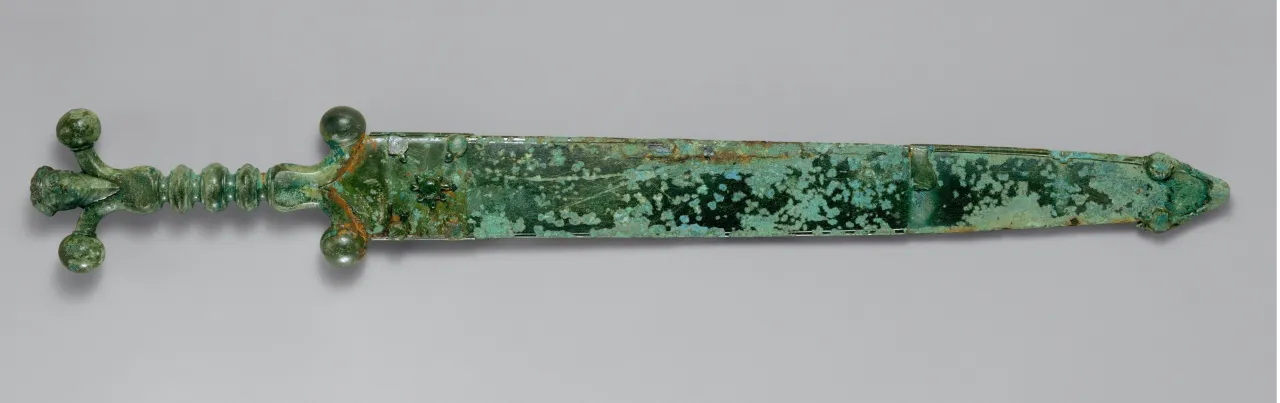
Celtic iron sword with a bronze hilt and a bronze scabbard permanently attached to the blade, 60 BC. Metropolitan Museum of Art, New York
Evil, miserable iron,
You, you filthy piece of trash,
Steel with terrible power! ...
You weren't great, after all,
Neither great nor insignificant,
How I pulled you out of the swamp,
Dragged from the black soil,
Delivered straight to the forge,
Ilmarinen threw himself towards the furnace.
Kalevala. Karelian-Finnish national epic
History weapons. Thus, by the end of the Late Bronze Age, swords with leaf-shaped blades cast integrally with the hilt became dominant. They could be used for both cutting and thrusting, and no longer required much training. Thus, the transition from the rapier to the sword reflected a technological adaptation designed to simplify fencing and increase the weapon's effectiveness.
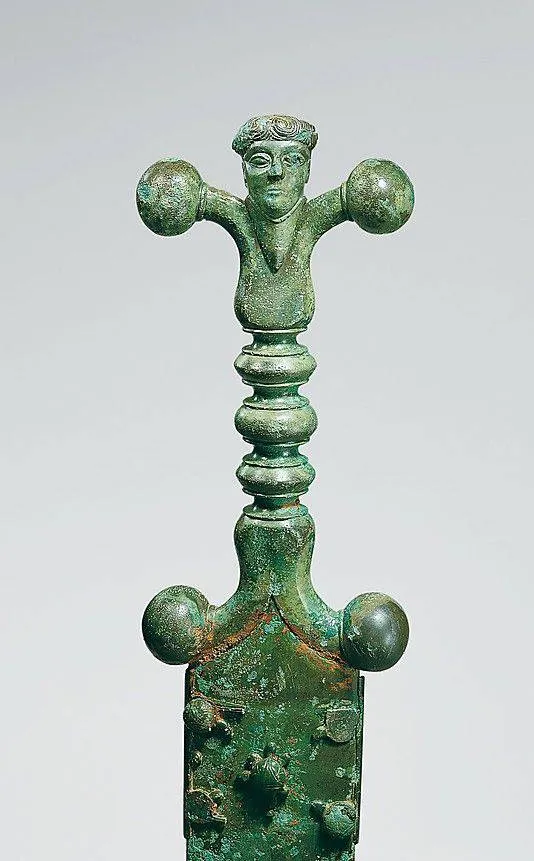
Celtic sword hilt with scabbard. Metropolitan Museum of Art, New York
Leaf-shaped swords were used throughout Europe until around 900 BC, after which they became exclusively designed for slashing. This innovation emerged towards the end of the Bronze Age and the beginning of the Early Iron Age. In particular, long bronze swords with a rounded tip have been found in England. Ewart Oakeshott believed these were the swords of horsemen and charioteers. Because only with such a sword could they reach their infantry opponents. And then came the Iron Age!

A Hallstatt horseman's sword (replica by Neil Burridge), late Bronze Age. Length: 825 cm. Weight: 1 kg. Photo by Neil Burridge.
In Europe, the Iron Age can rightly be called "Celtic" (c. 700-0 BC). And not just any Celtic. At this time, the Hallstatt culture spread across central Europe. It was characterized by two types of swords. The longer type was made of both bronze and iron, while the shorter one was usually made only of iron. The blade was leaf-shaped, narrow, and actually quite long, despite being called a short sword. The edges of the blade were defined by a ridge or ridges that merged into a ridge at the tip.
These swords continued to emphasize the slashing blow, which began to develop at the end of the Late Bronze Age. Generally, there were two types of swords: short for infantry and long for horsemen. Moreover, short swords were not at all typical of areas with traditional equestrian cultures, such as the Black Sea steppe corridor and ancient Persia. The Sarmatians, who arrived in the Black Sea steppes, had long swords, about a meter long, with virtually no crossguard, but with a massive stone pommel made of semiprecious stones such as agate or chalcedony. Such swords were awkward for fencing, but quite suitable for slashing a fallen man. It's understandable why the Scythians, with their short akinakes, were no match for them, even though the Sarmatians' main advantage lay not in their swords, but in their bows*.
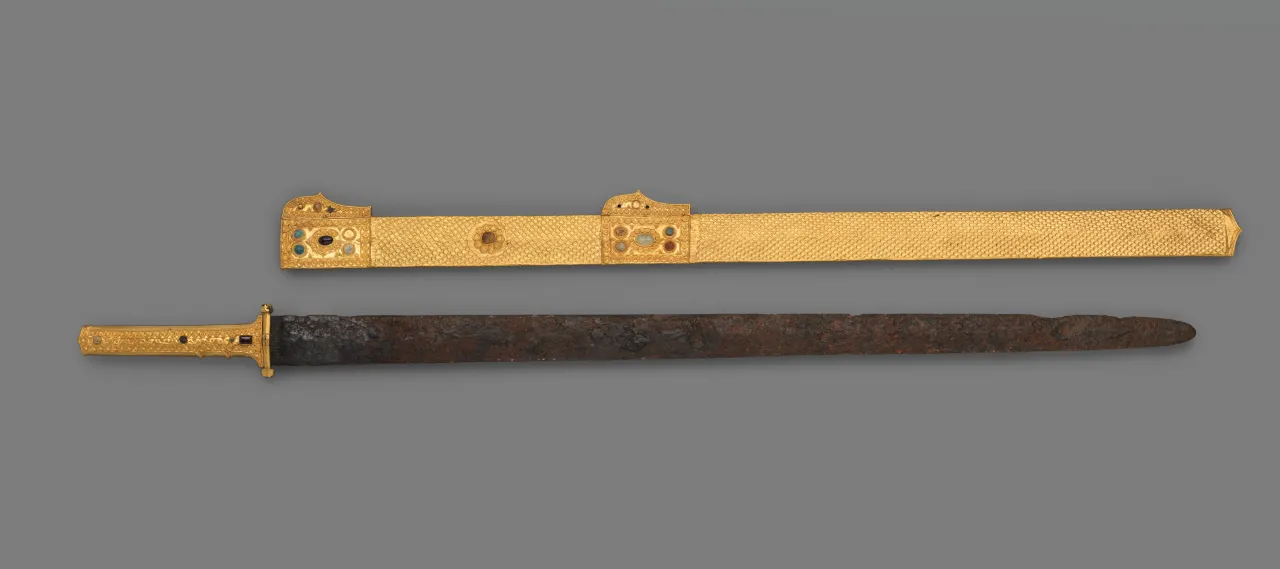
An iron sword from the Sassanid era. The kings of the Sassanid Empire (224–651 CE) are almost always depicted with a sword slung from their belt—a motif consistent with the image of a victor in battle. This iron sword, in a gold-plated wooden scabbard, is a magnificent example of the weapon the Sassanids adopted from the Huns, who roamed Europe and Asia in the sixth and seventh centuries, shortly before the Islamic era. It has a long, narrow hilt with two finger rests, and the scabbard features a pair of U-shaped protrusions, which originally held two straps of unequal lengths. These straps secured the sword to the warrior's belt so it could be easily drawn even while mounted. The sword itself is inlaid with garnets and glass, and its surface is decorated with a pattern of overlapping feathers. The fact that a similar pattern can be seen on the helmet of a Sassanid warrior has led scholars to speculate that it may be a symbol of the Zoroastrian god of victory, Verethragna. Several other swords of this type are known, some inlaid with gold, others with silver. Circa 7th century CE, Iran. Material: blade, iron; scabbard and hilt: gilded wood, garnets, guard – gilded bronze. Dimensions: 8 × 103 × 2,4 cm. Metropolitan Museum of Art, New York.
Iron swords of the early Iron Age had one of two structural features. The first type were swords with blades hardened by cold forging, while the second were swords with a "multilayered" structure consisting of layers of varying carbon content. The second type was the direct predecessor of the beautiful "pattern welded" swords that appeared during the La Tène period.** The use of this complex forging method was necessitated by the difficulties associated with adding carbon to iron to produce steel.
The La Tène period lasted from approximately 500 BCE to 0 BCE and is divided into three phases. But what's most important for us is the La Tène swords. The La Tène sword was long, with straight, almost parallel blades tapering to a rounded point. Ewart Oakeshott considered it "the true ancestor of medieval knightly weapons." The shape of these swords was very different from their predecessors. One reason for this may be that early Hallstatt swords, although many were made of iron, were still fashioned after bronze swords and, accordingly, were subject to the limitations of that material. Apparently, people didn't immediately realize that iron could be used to make a long, thin, and flat blade without thickening it in the middle for strength.
Since Ewart Oakeshott believed that "it is difficult to do anything with a sword on a chariot except strike the enemy," it is safe to assume that this is how these swords were used. The fact that the La Tène blades have a rounded tip supports this view.
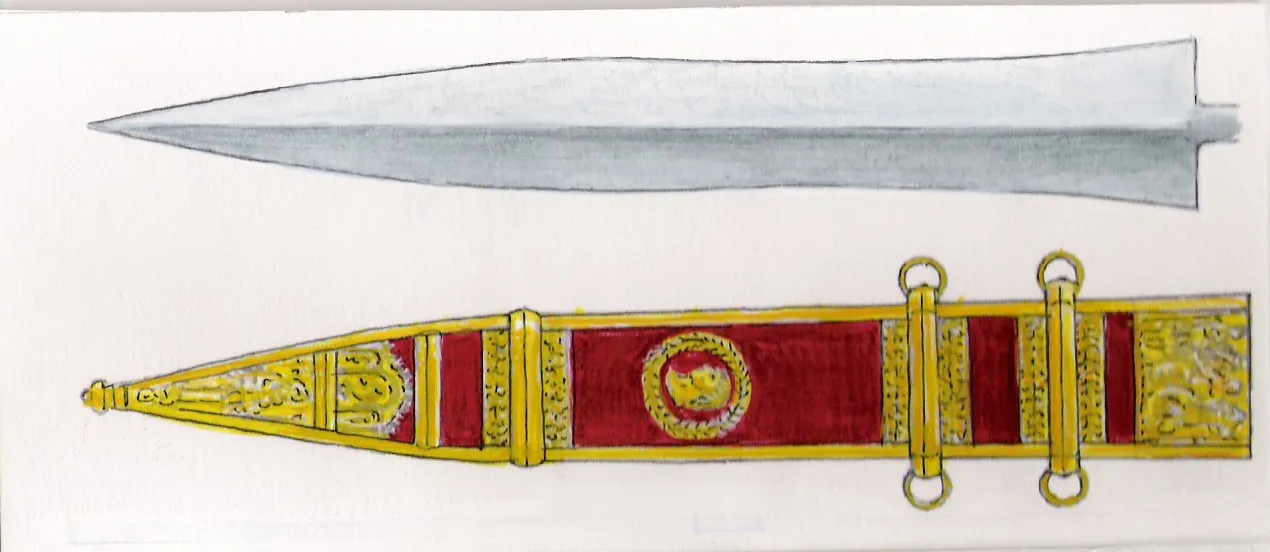
An early gladius. Drawing by A. Sheps based on a find in Pompeii.
In southern Europe, in the lands of Ancient Rome, the spatha and gladius became the main types of swords. The gladius is perhaps the best known of the two. It was a short, double-edged sword with a sharp, sturdy point. It had a wide blade and was used primarily for thrusting. The spatha was longer and lacked the sharp point of the gladius. Such long swords were typically carried by auxiliaries. They are likely the ancestor of, or at least somewhat influenced, the development of the Anglo-Saxon single-edged longsword, sometimes called by the same name.
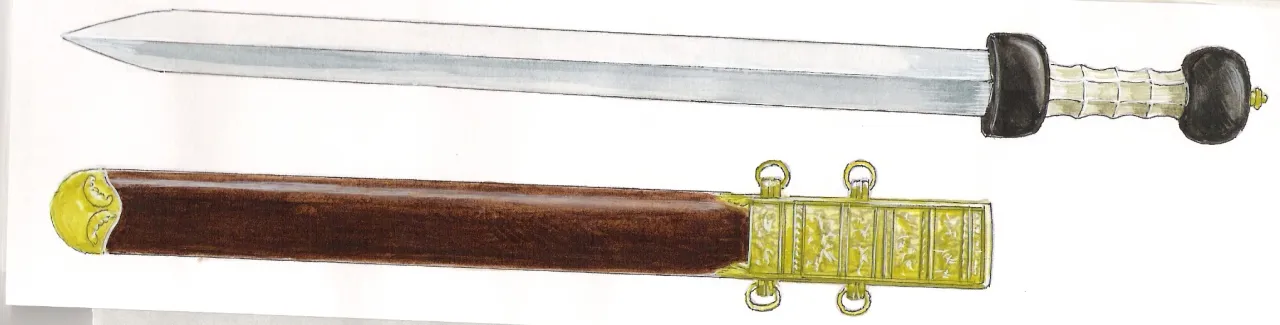
The Roman spatha – the first “universal sword.” Fig. A. Shepsa
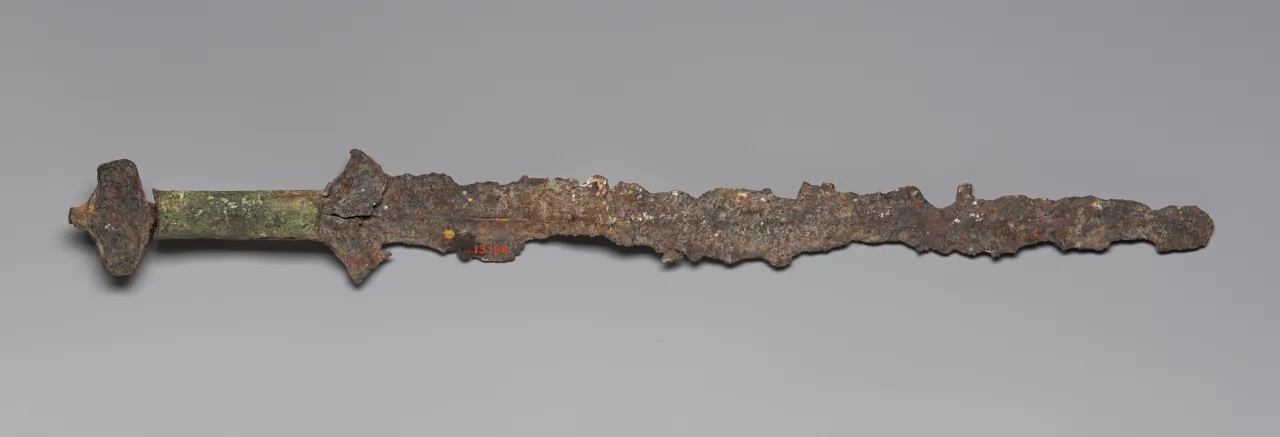
An iron sword with a bronze hilt. Gaul. Circa 2nd century BC – 1st century AD. Materials: bronze, iron. Length: 43,8 cm. Clearly, no nicks would be visible on such a blade, even if they were there. Metropolitan Museum of Art, New York
Roman swords were typically made using spot welding, a process that continued into later Saxon times. This process involved adding layers of low-carbon steel to a medium-carbon steel core, welding twisted, carburized iron strips to both sides, and then welding medium-carbon steel cutting edges to the narrow sides. The result was not only a stronger blade but also a very beautiful one, with the twisting of the strips creating distinct patterns on the blade. Despite its attractive appearance, the patterned welding is primarily a byproduct of the manufacturing process, not an intended effect, although it could have been useful for visual confirmation of the blade's quality!
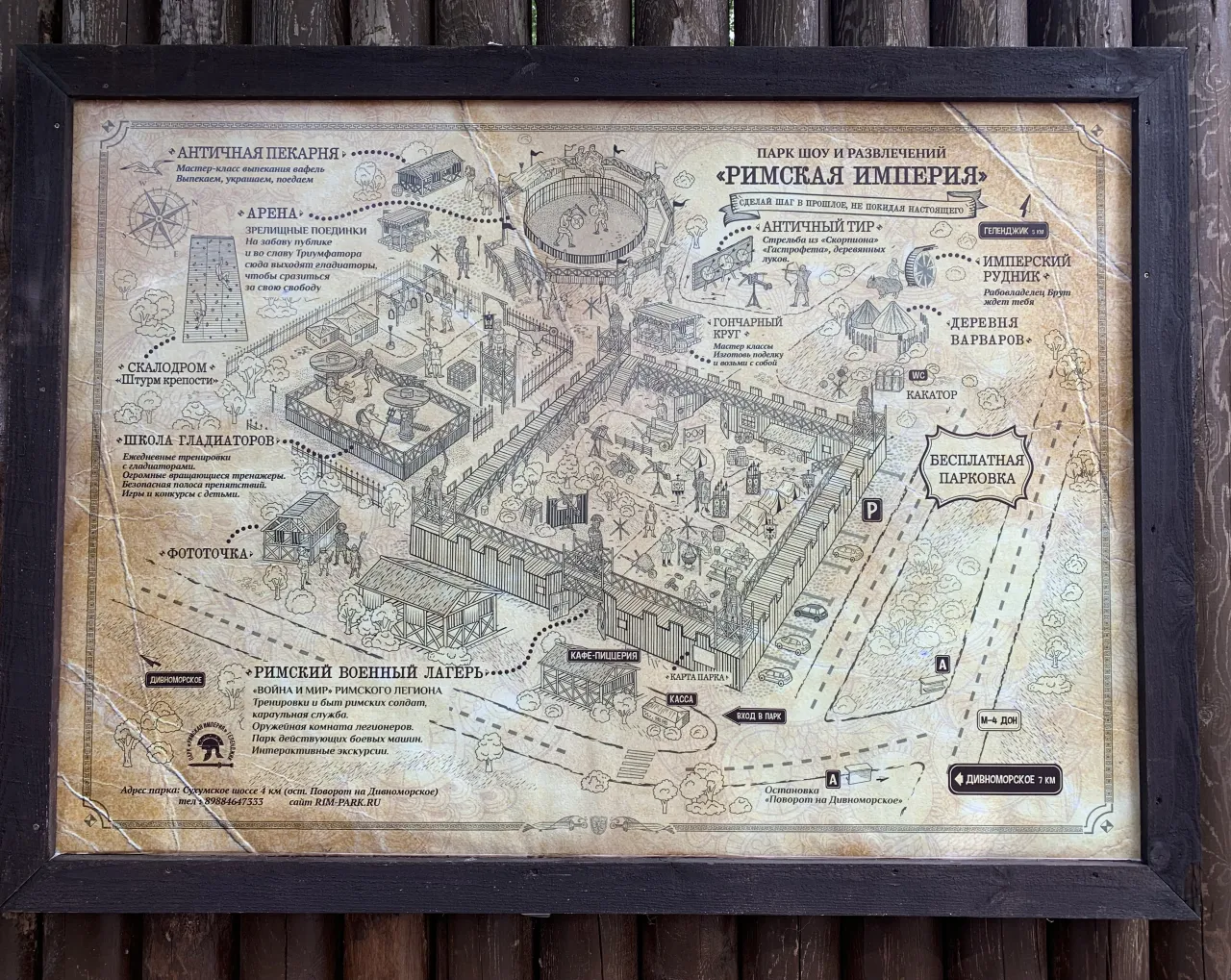
Not long ago, during a seaside vacation, I happened to end up here... Everything is clearly marked on this map.
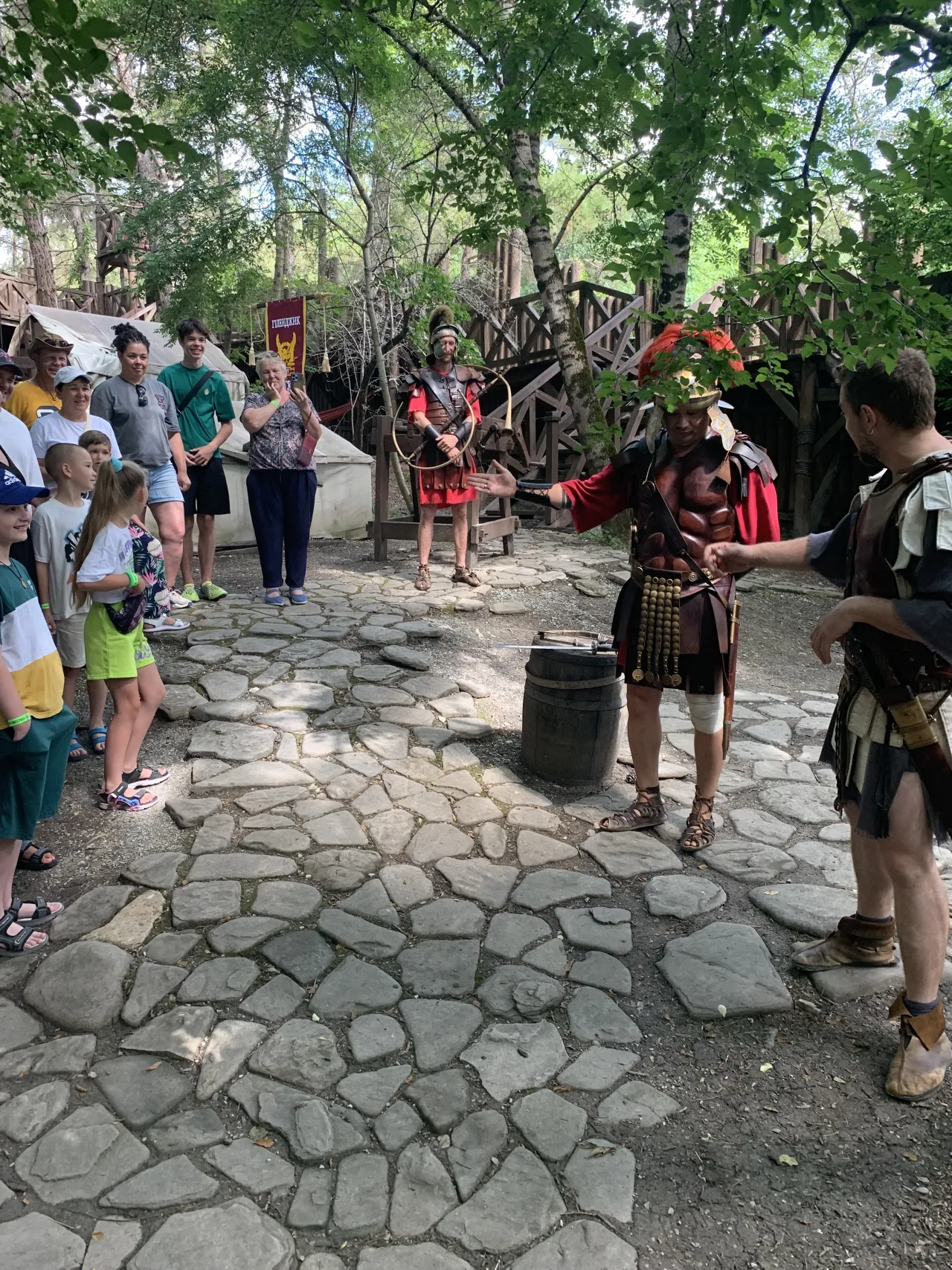
And in this amusement park called "Roman Empire," you can get to know the warriors of Ancient Rome in great detail... By the way, the reconstruction of the armor and everything else was very high-quality, and the animators themselves played with soul, which was very nice!
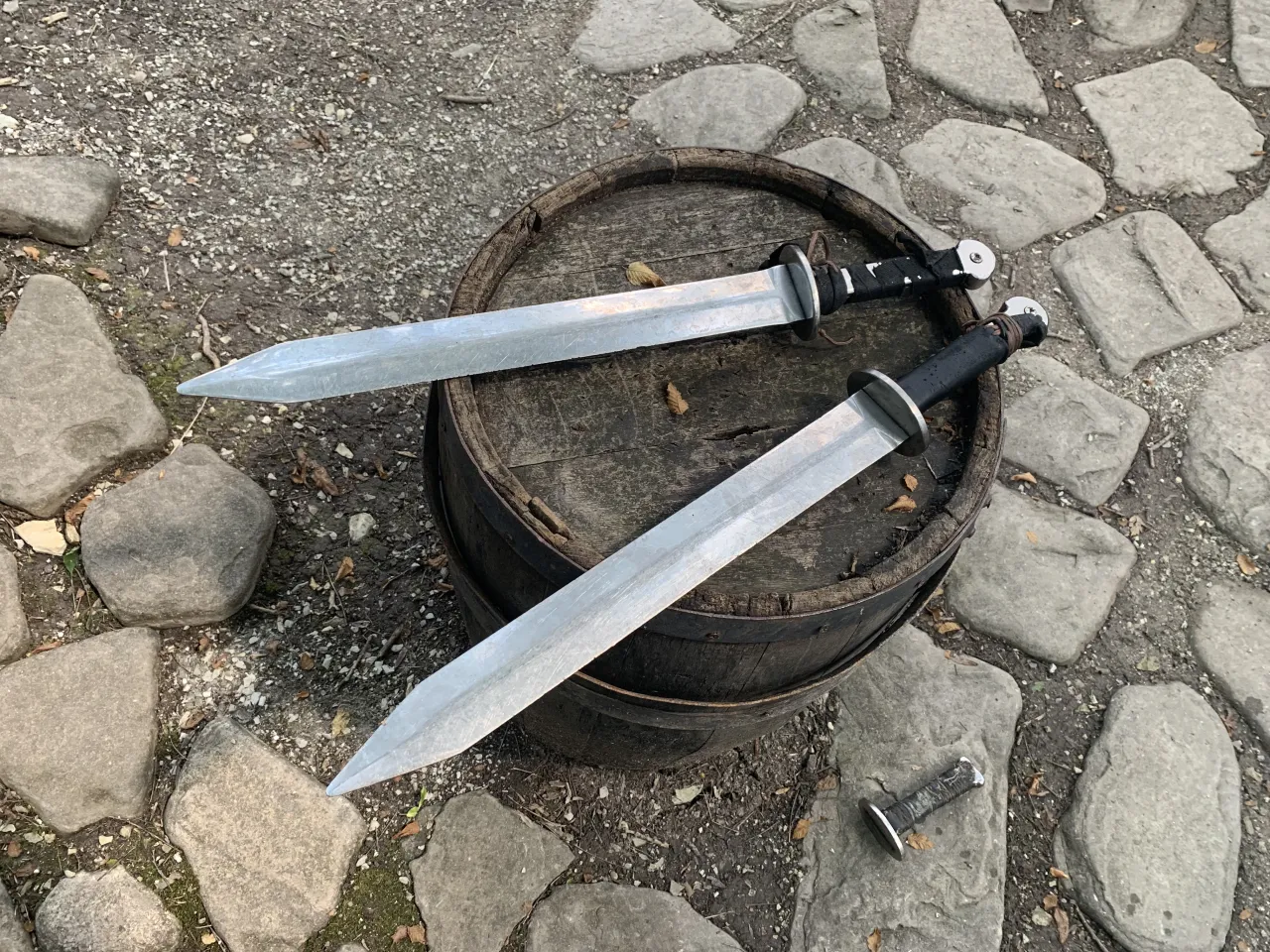
Very well-made Roman sword blades. The hilts, admittedly, aren't quite right, but in this case, they didn't need to be particularly accurate!
Why did Roman swords suddenly become so dramatically shorter? It all stems from the training of their legionnaires, who won not through individual combat prowess, as the Germans and Gauls aspired to, but through skillful teamwork. Armed with heavy scutum shields weighing nearly eight kilograms and equally heavy pilum javelins, Roman soldiers would advance on the enemy, closely packed, and then, at close range, hurl their javelins. Such a fearsome projectile, according to ancient authors, could pierce not only a shield, but sometimes two warriors standing one behind the other at once. In other words, the front rank of the enemy was mown down immediately, after which the wounded lying on the ground simply had to be finished off by plunging a long-bladed sword into them.
Then, a second line of legionaries would take the place of the first, and the pilum-throwing would be repeated. Then, a third would take the place of the second... And when all the pilum were exhausted, the legionaries would rush the enemy at full speed and simply knock them down with blows from their heavy shields. Those who fell would be stabbed to death, or those standing would be struck with gladiuses from under their shields, aiming, for example, at the legs. And while the same Gaul swung his longsword (incidentally, not always of good quality) at the Roman, the latter would have plenty of time to simply stab him anywhere, just to inflict a wound that would cause blood loss. In other words, there was no fencing with gladii, so there simply couldn't be any notches on their blades from sword-on-sword strikes.

For the first time in my life, I held an exact replica of a Roman pilum. It was impressive! I don't think I could throw it more than five meters. I wouldn't have the strength. But even then, its sheer weight would pierce any shield! And what if I practiced regularly?
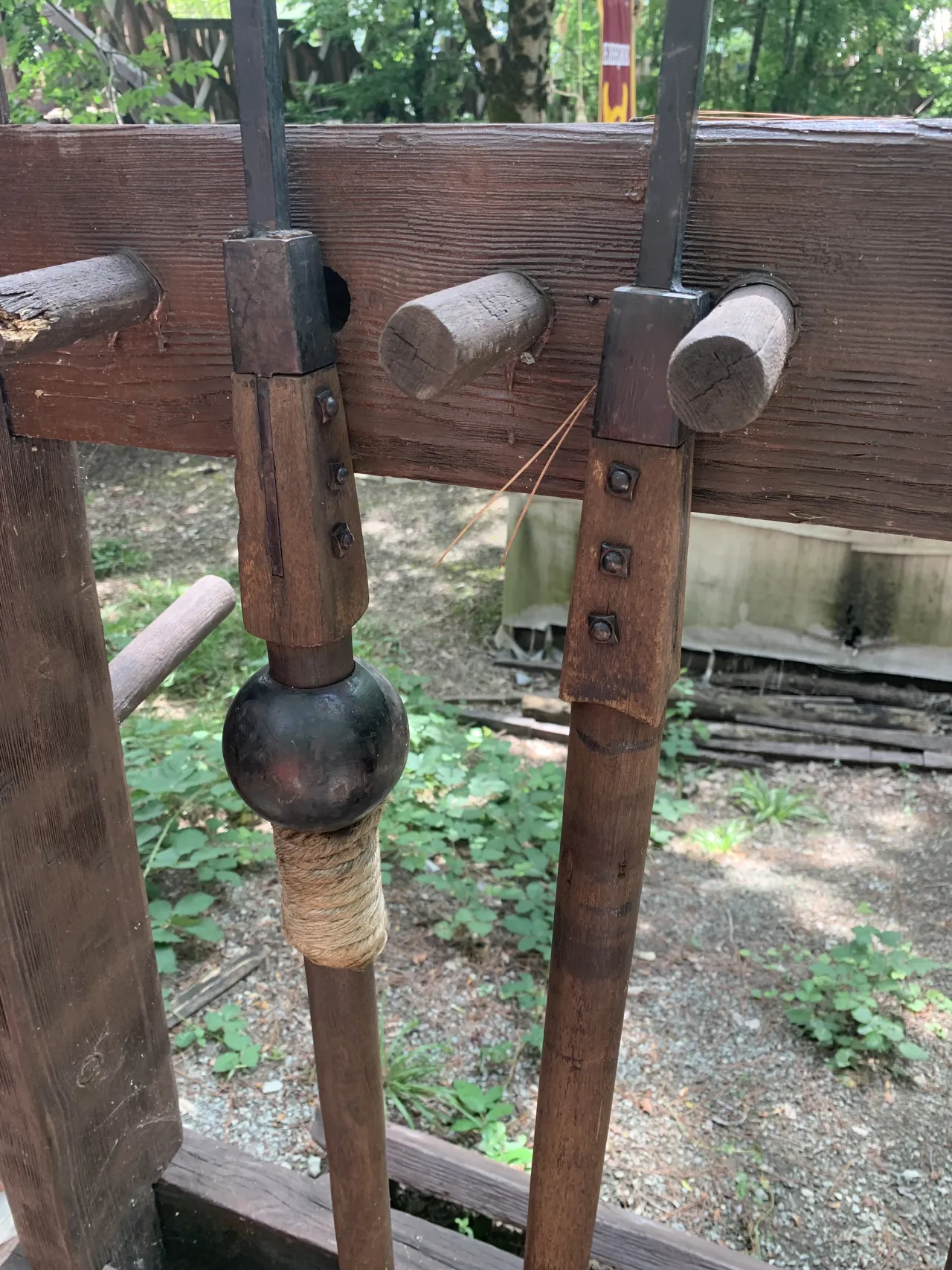
This weight gave it heft. There were pila without weights and even with two such balls. They were probably especially armor-piercing!
And look at the Greek Spartans, for example? They began, like all other Greeks, with "full" copper armor: a helmet with a mask, a cuirass, "pipes" on the forearms and thighs, greaves, and even used metal "finger guards" to protect the forefoot. But by 480 BC, they had abandoned all this "metal," retaining only the helmet and bell-shaped cuirass. Then, even this seemed excessive, and of all their armor, they retained only the conical pilos helmet and shield, making do with a blood-red tunic instead of a cuirass. At the same time, the length of their swords decreased. So, while the xiphos of the Messenian Wars could both cut and thrust, by the Battle of Mantinea, their swords had become dramatically shorter. And there is historical evidence that this is so. Plutarch wrote about this, citing the story of King Agesilaus, who was once asked why the Lacedaemonians' swords were so short. "Because we fight close to the enemy," he replied. The shortened sword forced the Lacedaemonian warrior to deliver thrusts aimed at the groin and lower abdomen, areas that would immediately incapacitate the enemy.
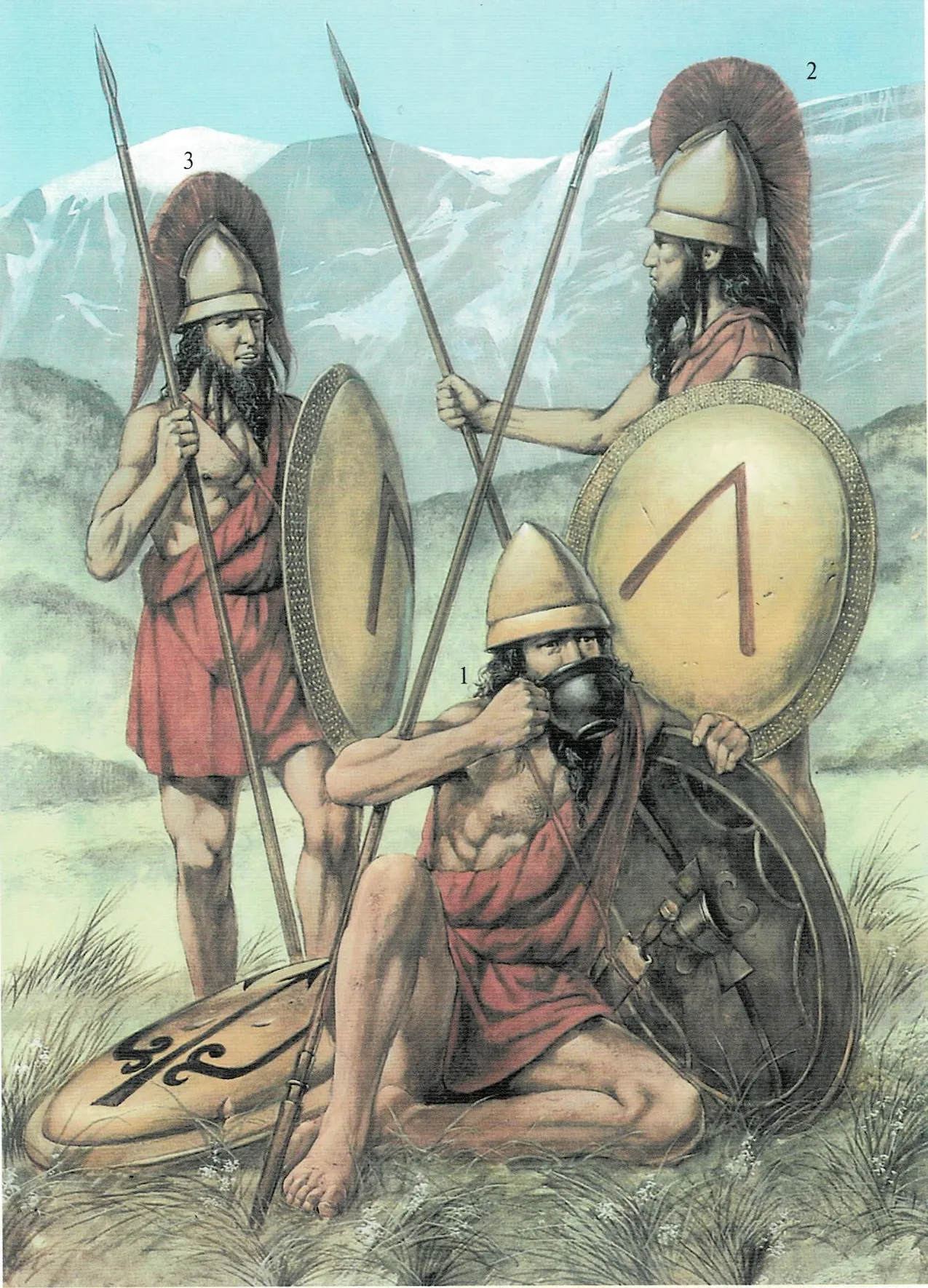
Spartan warriors at the First Battle of Mantinea, 418 BC. Author: R. Hook
*The Scythian bow, when compared to modern weapons, can be classified as a pistol. The Sarmatian bow, however, is a rifle or heavy gun. The Scythians fired numerous arrows with bullet-shaped, three-bladed tips, most likely poisoned, and tried to eliminate horsemen, but spared their horses, as they were valuable prey. The Sarmatians fired from a distance. Their arrows had large tips that could hit both horsemen and their horses. And hitting a horse from a distance is easier than hitting a horseman. As a result, the battlefield was littered with dismounted warriors, whom the Sarmatians finished off with their long swords.
**An Iron Age archaeological culture that existed from approximately the 5th to 1st century BC. It is usually associated with Celtic tribes (Gauls, Britons, and others), but other peoples also contributed to its development, including Iberians, Ligurians, Illyrians, and Thracians. The culture was named after the village of La Tène in Switzerland, near Neuchâtel. It was there in 1857 that a rich hoard of artifacts was discovered, which became the benchmark for defining the entire culture. The La Tène culture replaced the Hallstatt culture and marked the next stage of its development in the western regions of its distribution. Over time, it spread widely: its monuments are found in Central and Western Europe (France, Switzerland, Spain), the Balkans, Asia Minor, Britain and Ireland, as well as in Transcarpathia and Right-Bank Ukraine.
To be continued ...
Information