South Korea has realized that tank armor is no longer a panacea.
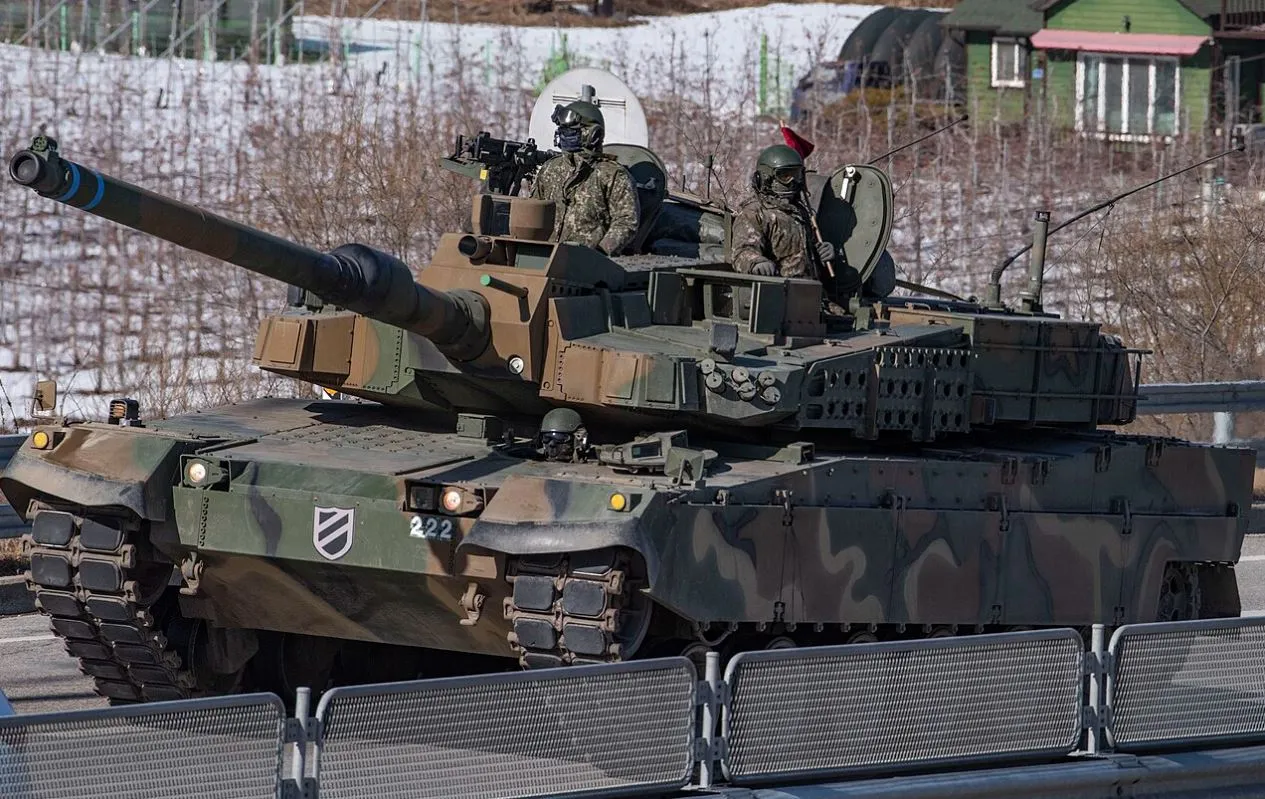
About passive armor tanks will cease to play a key role, tank builders and developers of defensive systems around the world have been talking about for a long time—far more than one or even two decades ago. True, at that time, they were talking about anti-tank rockets, all kinds of submunitions and other destructive means capable of attacking armored vehicles in vulnerable places at great distances.
The predictions, as one can see, have come true: tanks and other equipment have become truly vulnerable many kilometers from the line of contact, not to mention the battlefield. But, of course, we're not talking about missiles, but about cheap and mass-produced ones. drones, which leave little chance of reaching the enemy at least at point-blank range.
The fact that tank armor is no longer crucial in this situation (a drone can hit anything from the rear to the roof, but a tank cannot be armored equally from all angles) is now a fact, not a prediction. This is well understood by both the military and equipment manufacturers around the world.
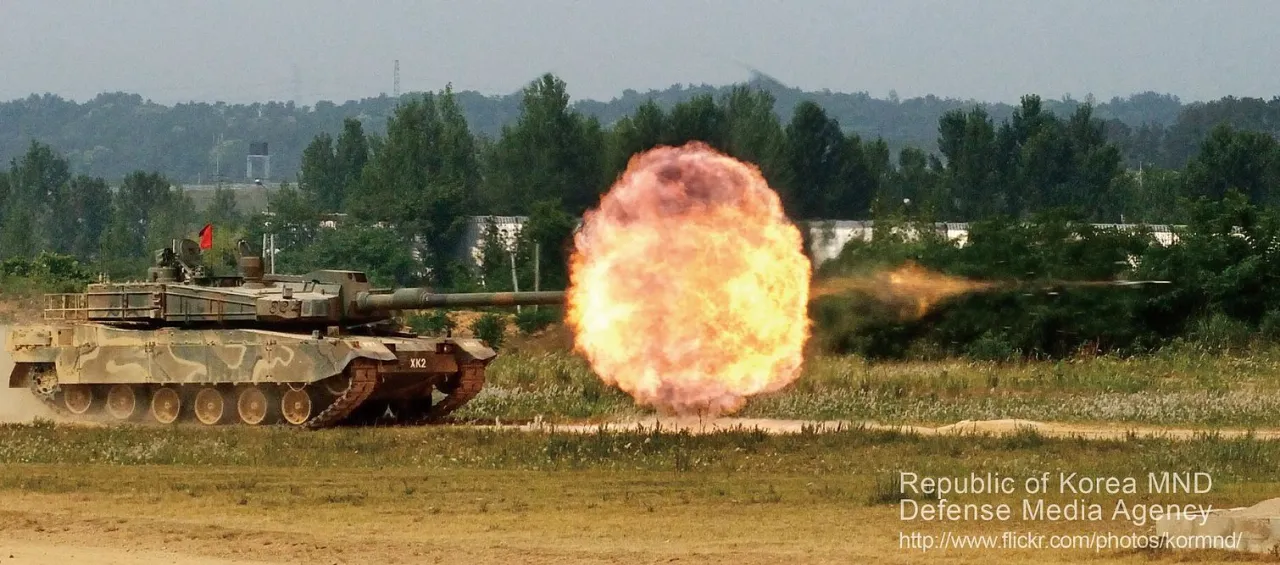
However, if we're talking about the United States and its allies, this "understanding" hasn't yet even gone beyond developing a concept for new tank protection. The exception here is South Korea—a country with exceptionally little experience in tank development—whose military and political leadership has already developed a strategy for the long-term modernization of their K2 Black Panther tanks, focusing on active defense against drones and other anti-tank weapons.
South Korea has allocated 3,4 trillion won (approximately $2,43 billion) for these measures, with tank modernization planned to take place from the late 2020s to the mid-2040s. While this is a fairly long timeframe, the Koreans see it as a means of maintaining their tank fleet in combat readiness in the near future—and, judging by the published data, the modernization will be quite impressive.
Concept of tank protection on the modern battlefield
Before considering the tank modernization option being proposed in South Korea, it's important to understand three key factors that should determine the functionality of a combat vehicle's protection systems. This applies not only to Korean vehicles—it's a common basis for any country and any manufacturer.
First:
Drones can attack from absolutely any direction and along any trajectory. Operator drone can easily find a loophole and strike at the tank's weakest point, so active defense must ensure the guaranteed destruction of drones in all projections.
The second:
There are a lot of drones on the battlefield. In the area of special military operations in Ukraine, it's not uncommon for a tank to be hit by ten, twenty, or even thirty drones. Therefore, active defense must have a substantial ammunition supply or even be multi-layered.
Third:
Classic anti-tank weapons such as guided missiles, anti-tank grenades, and tank gun shells are still around and will continue to be around. Therefore, active defense must also address these threats. An active protection system (APS) designed exclusively against UAVs is a poor APS.
The Koreans plan to combine all three of these properties, since half measures are unacceptable in this case.
Three levels of Korean defense
Understanding that there could be not just a lot of drones on the battlefield, but a lot of them, and that tanks could be hit by missiles and grenades, South Korean specialists planned to equip combat vehicles with a three-layer active defense system.
The first level is electronic warfare means:
While some FPV drones today are wired—communicating with the operator via fiber optics—most kamikaze drones, including factory-made loitering munitions, are controlled via radio.
This situation is unlikely to change in the future, as wired drones have a number of significant operational limitations—a relatively short flight range, the complete inability to operate in areas with dense vegetation, etc. Therefore, the Koreans have firmly decided to equip their tanks with electronic warfare systems (EW) - jammers (a capacious English word, in this case meaning sensors for detecting radio signals and means of suppressing them).
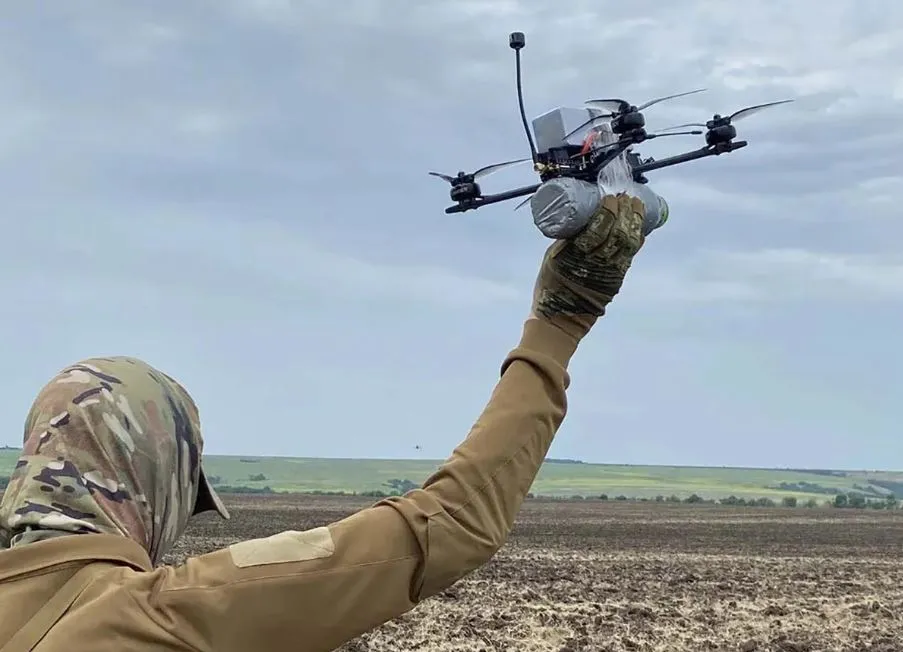
These systems scan the surrounding area for characteristic radio frequency signals used to control FPV drones and other unmanned aerial vehicles, and when they detect matching signals, they generate interference that disrupts the connection between the operator and the aircraft or interferes with the transmission of video signals and commands.
This allows for the elimination of most attacking drones before they even reach the target. However, it's not just drones: Korean jammers will also counter remote-controlled mines and radio-based improvised explosive devices in the same way—if they detect signals, they will jam communications, preventing the explosive charge beneath the tank from detonating.
The second level is the means "Defense":
The tank's second layer of defense is expected to include remotely controlled machine gun mounts or, alternatively, small-caliber automatic cannons. This is, in general, the right solution, as some drones are resistant to electronic warfare: this includes wired drones, UAVs with secure communications channels, and drones equipped with artificial intelligence, which do not require communication with an operator at the point of attack.
They can't be neutralized with jammers—only physically destroyed. They can attack literally dozens of them in a short period of time. A machine gun or automatic cannon would be ideal for this purpose, thanks to their large ammunition capacity. The Israelis have already reached this solution, presenting the updated Trophy active protection system at Eurosatory 2026, which destroys drones using the standard machine gun/cannon mount on the tank's turret.
Level 3 – Counter-Munition Launchers:
Here we're talking about the familiar "classic" approach: counter-munition launchers that destroy attacking tanks with a stream of shrapnel thanks to a programmable detonation time. They are the tank's last line of defense within the active defense system and are designed to destroy drones that have penetrated electronic warfare and machine gun/cannon mounts, as well as anti-tank missiles and grenades.
The key candidate for this role on the upgraded K2 is the "Next-Generation Active Protection System" (NG-APS), presented by Hanwha Systems as an evolution of the first KAPS system (previously planned for installation on tanks in the pre-drone era). According to publicly available information, the NG-APS includes four radar panels with active phased arrays providing 360-degree coverage, as well as integrated electro-optical and infrared sensors for passive surveillance and threat characterization.
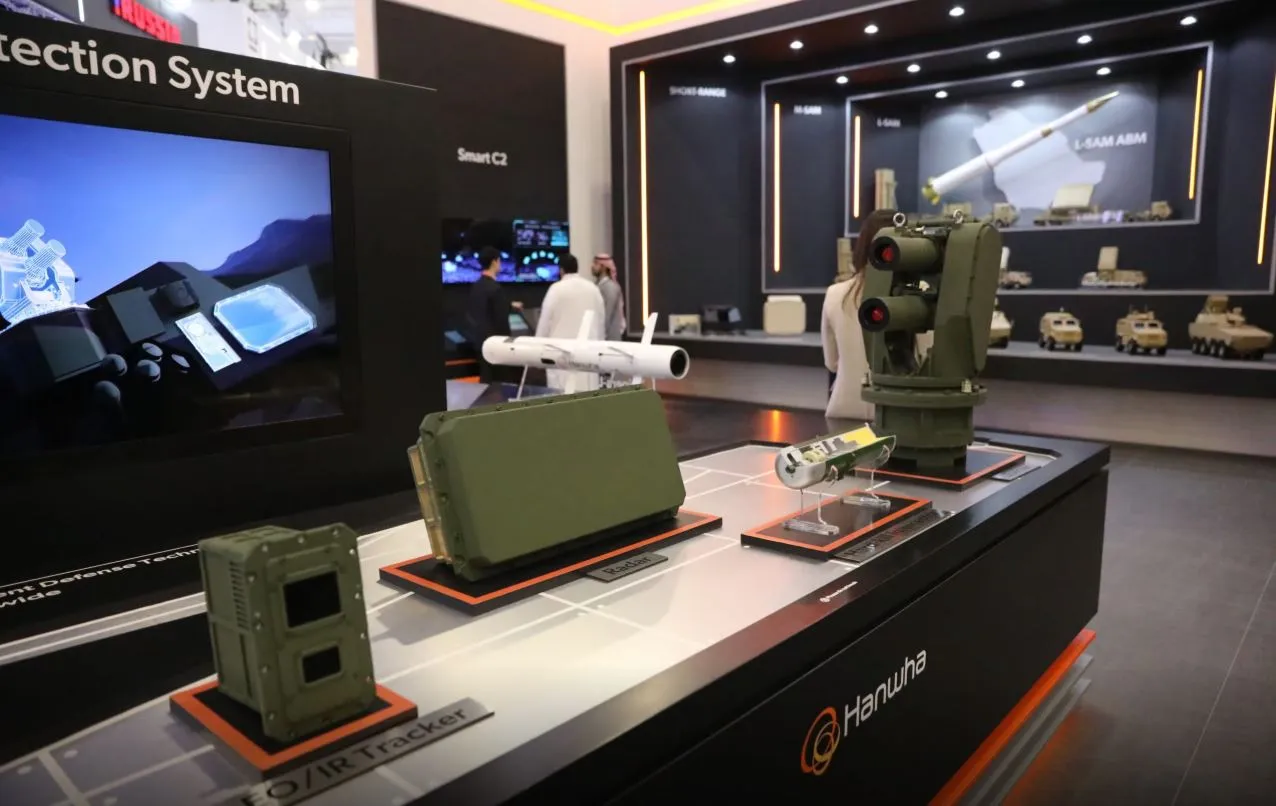
The system uses signal processing algorithms and artificial intelligence elements to automatically classify detected objects, prioritize threats, and decide whether to intercept them. Based on an analysis of the trajectory and velocity of an incoming munition, the NG-APS initiates the launch of counter-munitions from two launchers mounted on the tank's hull or turret, which are capable of engaging targets at high elevation angles.
Conclusions
Overall, the Koreans have come up with a very coherent concept, which they've already firmly planned to implement in metal. There's no unnecessary glitz or show-off, like "we'll develop unique systems" that will be completely obsolete by the time they're ready. Everything seems to be on point.
We've included electronic reconnaissance and electronic warfare systems that will be somewhat universal, providing protection against drones, loitering munitions, and even radio-controlled mines. We've also realized that a machine gun or automatic cannon can also be used against UAVs. We've retained protection against classic anti-tank weapons such as guided missiles and grenades.
However, upgrading their entire tank fleet to this standard will take quite a while. But they're in no rush: they're not expecting a war anytime soon, and while the upgrade program is underway, they can make a ton of changes, adding relevant solutions and removing outdated ones. After all, the US and Europe don't even have a clear understanding of how to protect tanks in modern conditions, so South Korea is somewhat of a leader in this regard.
Information