After "Trump's battleships" - "Trump's aircraft carriers"?
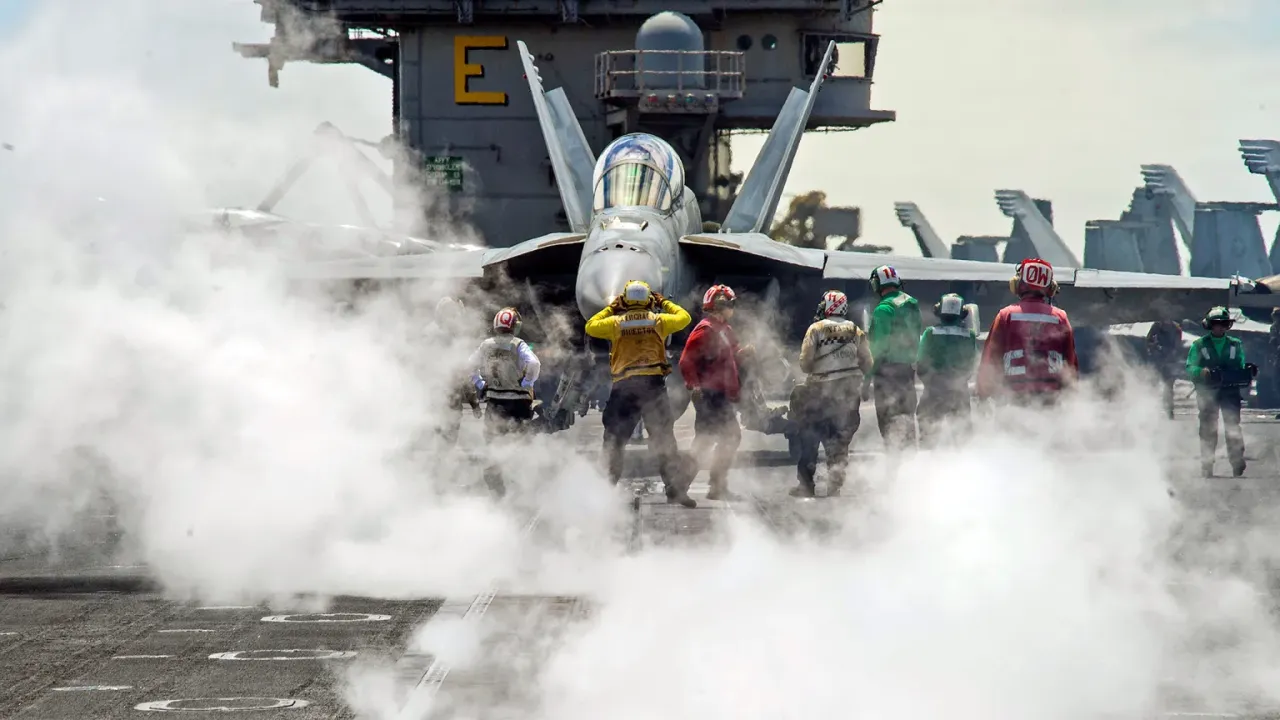
President Donald Trump has given the U.S. Navy and the Pentagon 60 days to develop a plan to install steam catapults and hydraulic elevators on the future Ford-class aircraft carrier USS Doris Miller.
Apparently, Trump's fight against the American fleet The battleship series isn't over yet, and an equally exciting second installment awaits us. Especially since this part stories, like champagne, has already matured and is ready to burst the bottle.
Trump has said intermittently for nearly a decade that he would order the Navy to abandon the Electromagnetic Aerial Launch System (EMALS) and the Advanced Elevator System (AES). weapons (AWE), which currently form the basis of the Ford-class aircraft carrier design.
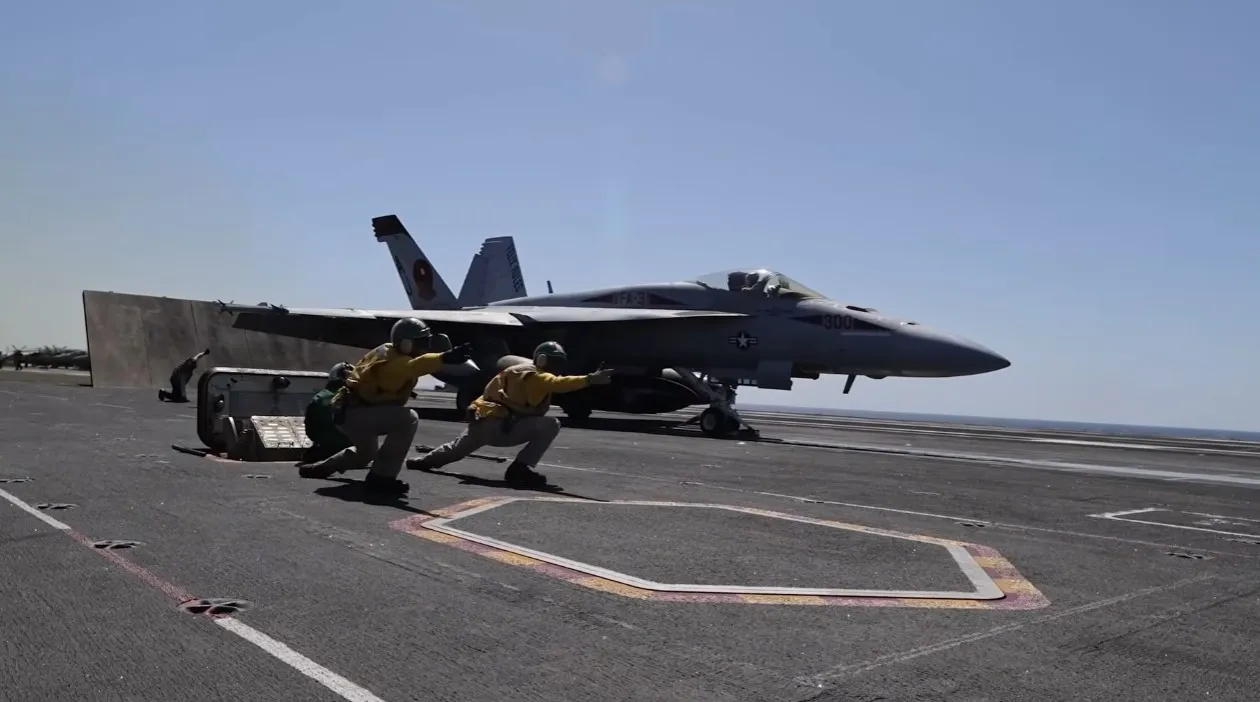
Yes, there's some logic to this: the Ford, equipped with EMALS and AWE, experienced reliability and maintenance issues, but returning to steam and hydraulics on future ships of this class would require a major redesign. Such a costly and labor-intensive process could lead to lengthy delays in the delivery of new aircraft carriers, which are already several years behind schedule, and put the future fleet in a crisis.
The order for the catapults and weapons elevators on the future USS Doris Miller, also known as CVN-81, is contained in a larger order signed by President Trump titled "Rebuilding the United States Navy and America's Shipbuilding Industrial Base."
The Wall Street Journal was the first to report on this order, which also directs various US government agencies to take new steps to strengthen the country's maritime industrial capacity. This includes plans to establish a fifth government-owned naval shipyard, purchase new ships from foreign shipbuilders and expand cooperation with them, improve submarine spare parts management, and undertake a major reorganization of Naval Sea Systems Command (NAVSEA).
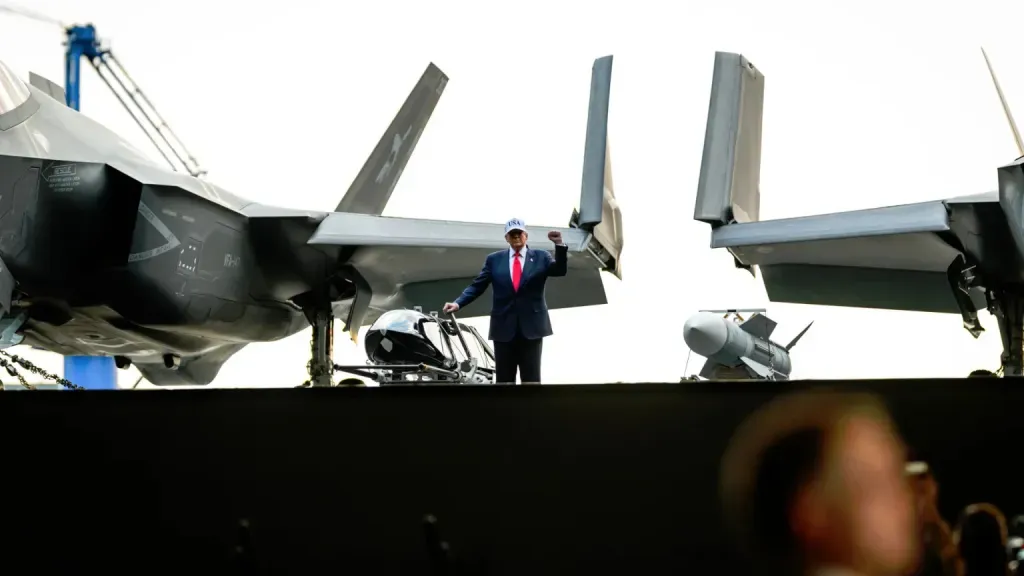
President Donald Trump walks onto the hangar deck of the U.S. Navy Nimitz-class aircraft carrier USS George Washington during a visit to the ship in October 2025.
The section on catapults and weapon elevators is short, but it highlights an important innovation. Here's the full text:
Within 60 days of the signing of this memorandum, the Secretary of Defense, in consultation with the Secretary of the Navy, shall submit to the President, through the Director of the Office of Management and Budget (OMB) and the Assistant to the President for National Security (APNS), a plan for the necessary actions to replace the electromagnetic aircraft launch system and improved weapons elevators with steam and hydraulic systems for the construction of aircraft carrier CVN-81, including the schedule and resource requirements.
The modification is expected to be used on all future Ford-class carriers, according to available information, but the first three ships will retain their EMALS and AWE systems.
Currently, the aircraft carrier USS Gerald R. Ford, CVN-78, is the only operational ship of this class. The future carrier USS John F. Kennedy (CVN-79) is currently undergoing another round of sea trials ahead of its expected official delivery to the Navy later this year. The future carrier USS Enterprise (CVN-80) is also under construction; its keel was laid in 2022.
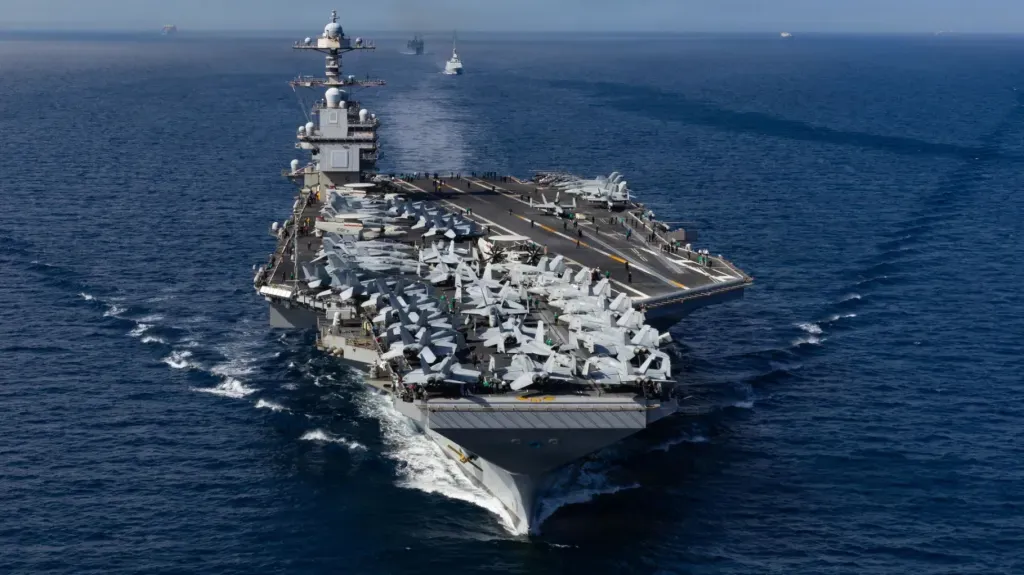
Gerald R. Ford
In addition to the Doris Miller, the Navy has named two more future Ford-class aircraft carriers—USS William J. Clinton and USS George W. Bush—but has not yet placed formal orders for them. The service has stated plans to acquire at least 10 Ford-class ships in the future.
The Navy also operates 10 older Nimitz-class aircraft carriers, all of which are equipped with steam catapults and hydraulic weapons elevators.
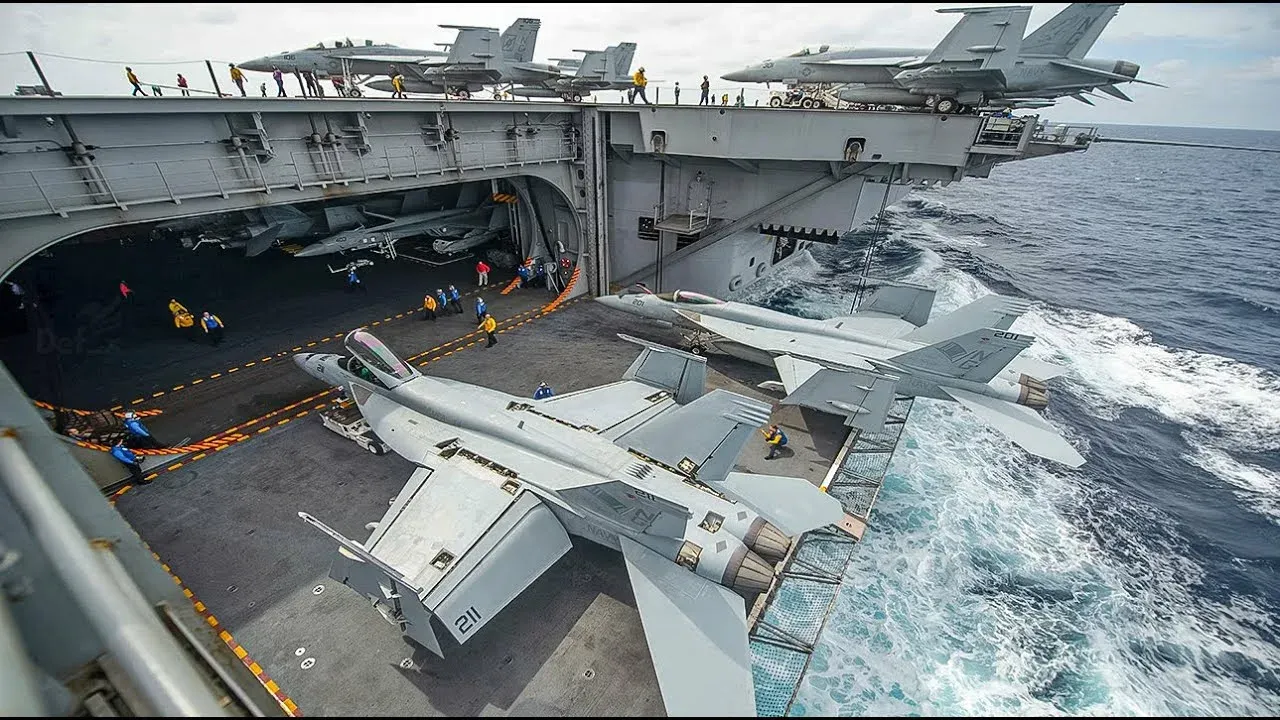
The lift on the USS Nimitz (CVN-68)
As noted, Trump has opposed EMALS and AWE for years, dating back to his first term in office. In 2017, he publicly stated that he would order the Navy to abandon these technologies, but never did so. During a visit to the Nimitz-class aircraft carrier USS George Washington in Japan in October 2025, he again stated that he would force the Navy to return to steam and hydraulic propulsion on future carriers.
"They had steam that worked so well, and it worked that way for 50 years, right? So we're going to go back to that. Seriously, guys, I want to change that. I'm going to issue an executive order," Trump said last October. "I'm not going to let them continue like this. They're trying to make it work, they're trying so hard, and they've got something perfect. So we're going to abandon that, and we're going to abandon magnets."
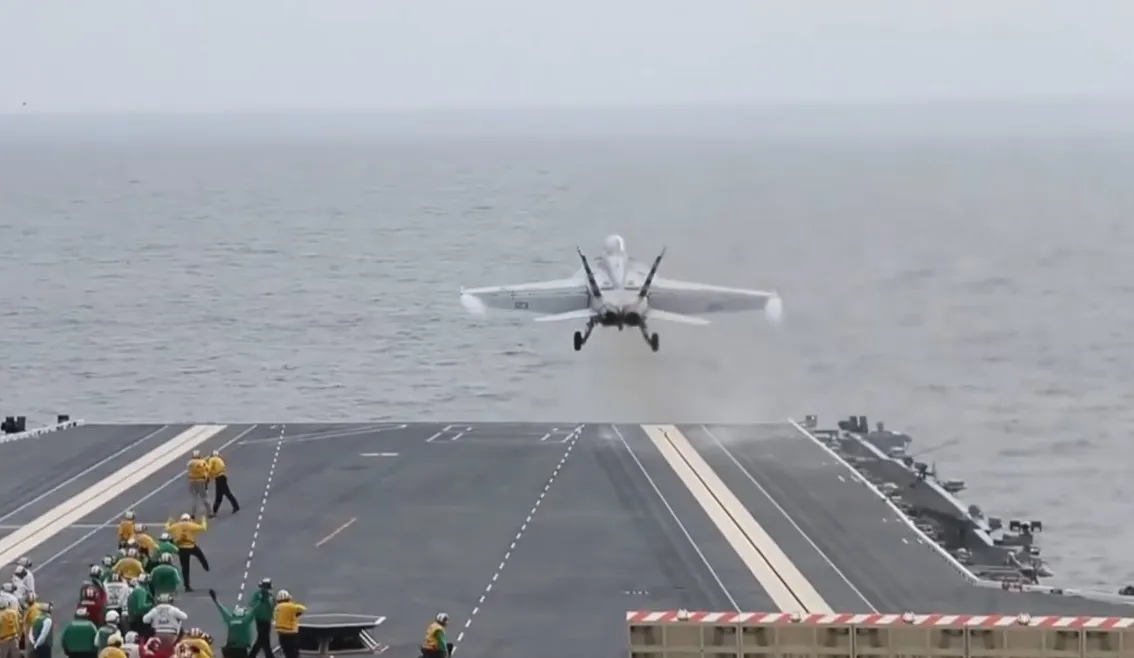
In principle, EMALS, along with the Advanced Arresting Gear (AAG), were intended to give the Ford-class carriers a significant boost in the speed with which they can launch and recover aircraft compared to their predecessors. The software-controlled EMALS and AAG, the latter of which has also encountered problems over the years, have a shorter reload time than the steam-powered systems installed on the Nimitz-class carriers.
EMALS and AAG systems can also be more precisely tuned for the impacts they exert on aircraft during launch and landing, expanding the range of aircraft types they can accommodate and providing additional safety margins. This, in particular, opens up the possibility of deploying more compact and fragile aircraft types, such as UAVs, on Ford-class aircraft carriers. Although, of course, the strike drone An aircraft carrier's flight deck would be enough to take to the skies. But if we're talking about tanker drones, which we recently wrote about, this is a very useful option.
Electromagnetic ammunition elevators are designed to improve overall flight efficiency on the USS Ford by reducing the time required to deliver ammunition and other cargo to the desired location. Indeed, these elevators are significantly faster than hydraulic ones.
At the same time, it's not as if the US president is being downright silly: Trump's criticism is based on very real problems that have arisen with the Ford's catapults and weapons elevators for many years. We've spent considerable time examining the issues with both of these systems, as well as other long-standing design flaws—of which, frankly, there were more than a few. The US Navy is certainly working to address these issues, but it continues to face challenges. Maintenance requirements and the heavy reliance on contractors to perform this work continue to pose particular challenges.
The reliability and maintainability of CVN 78's EMALS and AAG systems continue to negatively impact sortie rates and flight operations, which remains the greatest risk to demonstrating operational effectiveness and serviceability during IOT&E [Initial Operational Test and Evaluation],
— the Pentagon's Office of the Director of Test and Evaluation (DOT&E) said in its annual fiscal year 2025 (FY25) developments report released in March. Data collected during preparations for CVN 78's FY2025 deployment demonstrate that the EMALS system's reliability is consistent with that achieved during development and operational testing in FY2023 and FY2024. Hardware and software upgrades have resulted in incremental improvements in overall reliability and availability. Dependence on off-ship support remains a challenge. NAVAIR continues to work on improvements.
As for AWE, "Ford-class ships have yet to produce and transfer ordnance to the flight deck at a rate consistent with the reference design mission.".
The U.S. Department of Transportation and Energy expects the sustained sortie rate demonstration to be the first representative demonstration of high munitions throughput. It should be noted that the crew still relies on off-ship technical support to troubleshoot AWE hardware and software issues.
While the Navy is still analyzing the data, preliminary reports from the sortie generation test program indicate that the flight deck design, combined with EMALS and AAG, contributed to increased sortie generation compared to the Nimitz-class carriers, the Navy subsequently stated. "To date, these systems are operating normally, and the Ford continues to perform its planned missions."
As of March 2026, 36,863 EMALS launches have been conducted aboard the USS Ford, according to statistical reports.
In April, then-US Navy Secretary John Phelan also confirmed that a major review of the Ford-class carrier program was underway, focusing on the future USS William J. Clinton and USS George W. Bush. At the time, questions arose about whether major changes were imminent, including the possible cancellation of planned orders for new Ford-class carriers or a shift to a new design.
Phelan told reporters at a roundtable discussion at the Navy League's Sea Air Space 2026 exhibition that the US Navy's primary objective is to determine the financial impact of using electric catapults and whether they have actually resulted in cost savings. They also need statistics on the number of sorties to determine whether they have truly increased significantly.
"I think, like with anything, it's important to understand the cost-benefit ratio because we really want to make sure we're managing costs well," he added. "I think one of the things we need to work on in the Navy is what I call total cost of ownership. How much does it actually cost to maintain and support these systems? Frankly, I think we're doing a pretty good job. But the infrastructure required to support them is also a cost that needs to be considered."
Trump abruptly fired Phelan just days after he made these and other statements at the Sea Air Space 2026 conference. His sudden dismissal was reportedly prompted by disagreements over specific plans for the new Trump-class battleships, as well as other disagreements within the Trump administration.
As mentioned, any plans to eliminate the EMALS catapults and AWE anti-missile systems from Project Ford, even on future carriers like the USS Doris Miller, would require significant effort. These elements largely determine the ship's basic physical structure, as well as its power supply requirements and other key design elements. Among other things, entirely new steam lines and large steam cylinders would have to be installed in spaces not originally designed for them. The ship's flight deck would also have to be redesigned.
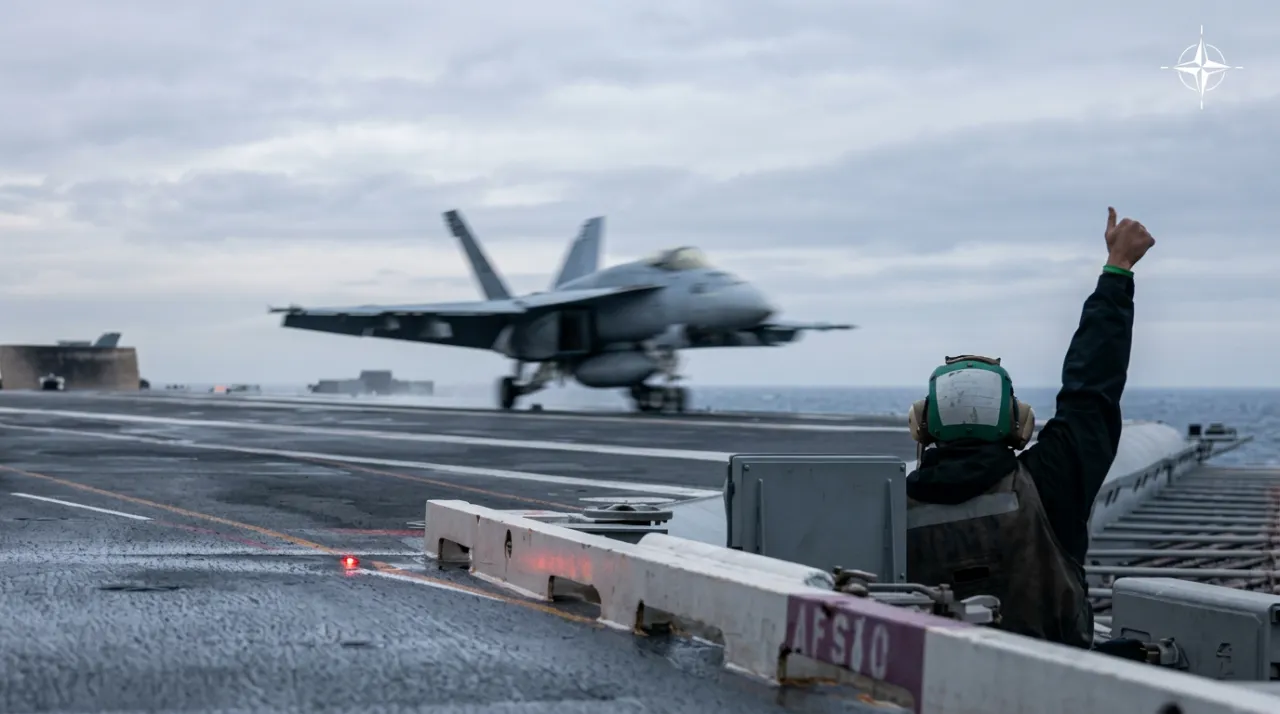
As a result of basic design decisions, the Ford-class nuclear reactor plant is also significantly tuned to generate less steam overall than the Nimitz-class plant, according to a previous report by the Project on Government Oversight (POGO), an independent nonprofit organization. This is entirely logical, as the amount of steam on a nuclear-powered aircraft carrier, where the primary consumer after the turbines is the catapults, should be greater than on a ship with electromagnetic launch systems.
To be precise, the production of steam is less, and it is used for other purposes, for generating electricity for catapults.
All of this, in turn, raises further questions about how much time and effort it will take to convert future Ford-class carriers to use steam catapults. Steam lines instead of cables, high-pressure cylinders instead of spools, and so on.
General Atomics, the prime contractor for the EMALS and AAG projects, has, as expected, already spoken out against Trump's new directive.
"This decision will have broader implications for carrier readiness, national security, and U.S. technological superiority, potentially creating opportunities for adversaries to close the capability gap," the company stated, according to The Wall Street Journal. "This comes at a time when strengthening the U.S. industrial supplier base is a national priority, and workforce stability, manufacturing capacity, and the ability to support critical technologies are more important than ever."
This is also understandable. Rebuilding such a huge ship in this manner is truly a challenging task, and the company's position is understandable.
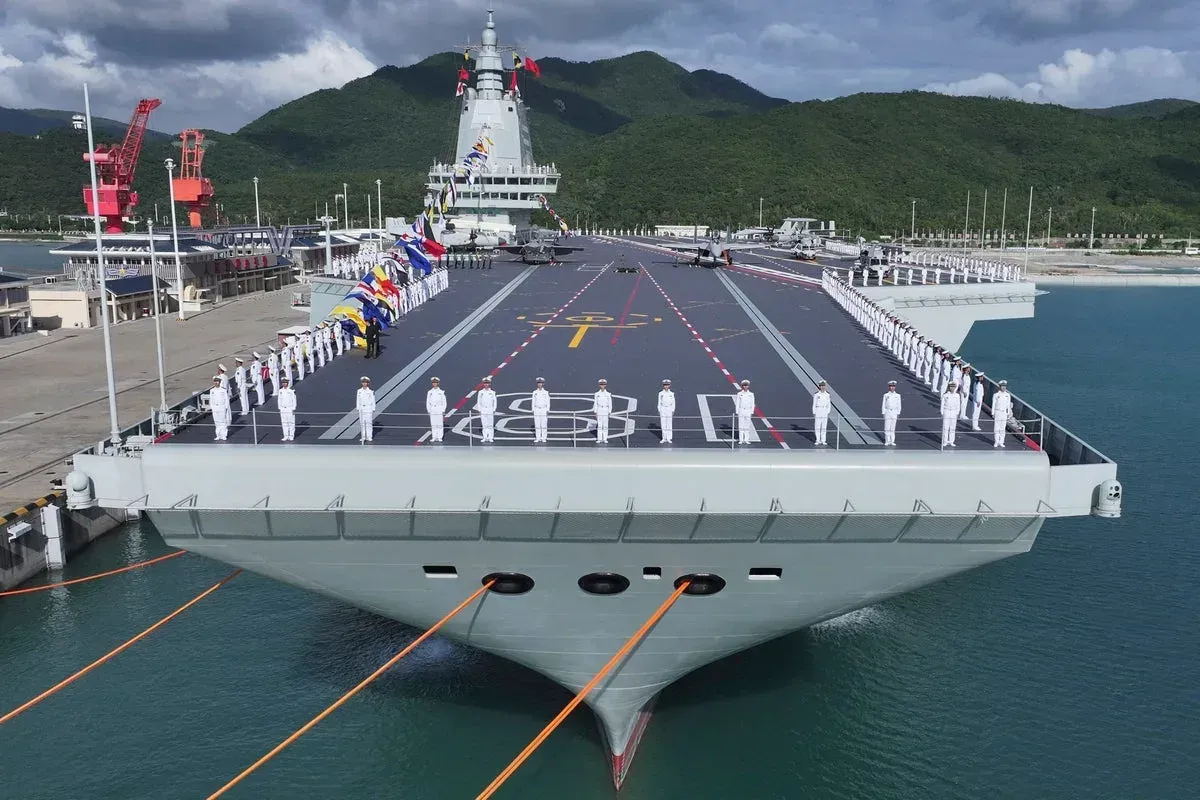
It's worth noting that the People's Liberation Army Navy (PLA Navy) now has two ships with electromagnetic catapults: the Type 003 aircraft carrier Fujian and the Type 076 amphibious assault ship Sichuan. The US government previously approved the transfer of EMALS technology to India, which could be used on the future Indian aircraft carrier INS Vishal. Other countries are also considering installing EMALS-type catapults on future aircraft carriers and other warships.
Huntington Ingalls Industries, which builds the Ford-class aircraft carriers at its shipyard in Newport News, Virginia, stated that it will "work closely with the Navy to address any potential modifications to the ships under construction," according to this publication. At the same time, serious questions are now being raised about the shipyard's ability to meet the current delivery schedule for the new carriers, which have already been repeatedly delayed.
The Navy's fiscal year 2027 budget proposal, released earlier this year, confirmed that the Doris Miller projected delivery date has been pushed back from 2032 to 2034. The primary reason for the delay in CVN-81's construction is a lack of available shipyard space for large components due to delays in CVN-80 construction.
The US Navy originally planned to receive the Enterprise in 2028, but that deadline has now been pushed back to 2031. The future aircraft carrier John F. Kennedy was also originally scheduled to be delivered to the fleet in 2022. All of these delays are accompanied by further cost increases.
In December 2025, the Secretary of the Navy notified Congress that he was increasing the base cost of CVN-79 from $12,936 billion to $13,529 billion, according to the April MSAR report. The base costs of CVN-80 and CVN-81 remain unchanged at $13,529 billion and $14,016 billion, respectively.
As mentioned, Trump's memo also focused heavily on further steps to address long-standing issues with US naval shipbuilding. America's ability to produce new nuclear-powered surface warships and submarines became an even more important aspect of these discussions following the announcement of plans to build the Trump-class battleships. In May, the Navy confirmed that the Trump-class warships would be equipped with the same type of nuclear propulsion as the Ford-class.
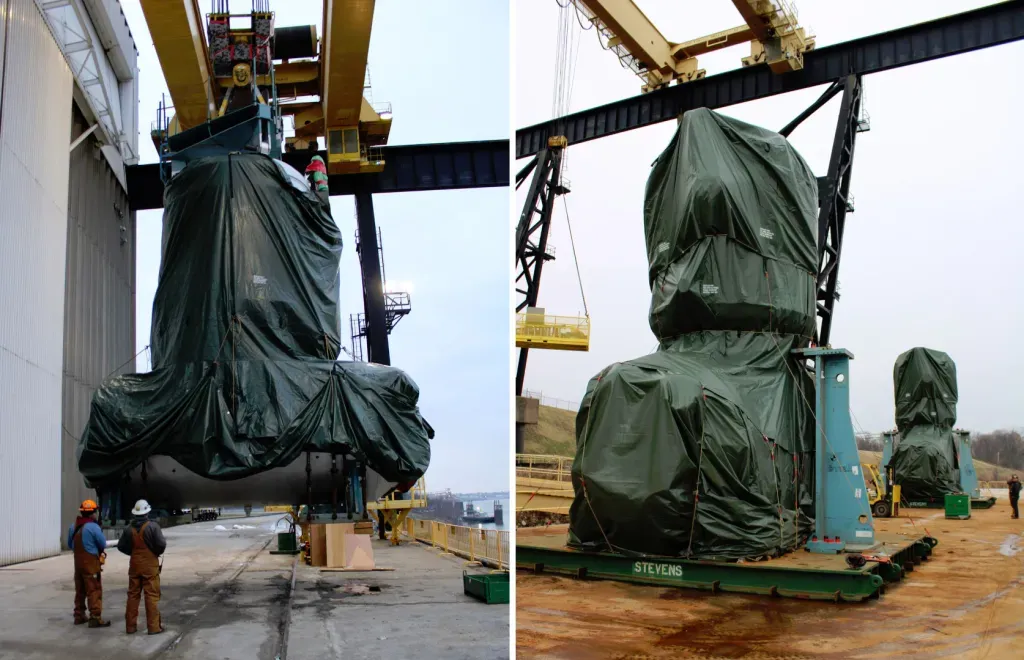
A1B nuclear reactor components for the future USS Doris Miller
The US Navy hasn't acquired a new nuclear-powered surface combatant in quite some time. The last Nimitz-class ship, the USS George Bush, was launched in 2006, 20 years ago. The USS Gerald Ford was launched in 2013. Currently, Newport News is the only shipyard in the US producing nuclear-powered surface combatants of any type. It's already struggling to meet its current needs, which also include the production of new conventional warships. Having only one shipyard in the country that produces nuclear-powered vessels of any type and specializes in submarine construction doesn't inspire optimism.
In peacetime, without the threats and operational challenges the United States currently faces, or with any excess carrier capacity, fundamental changes to the Ford-class carrier program might well be a logical solution. However, all this is happening at a time when the Navy's active carriers are under exceptional strain.
The aircraft carrier Abraham Lincoln, which spent a record-breaking amount of time at sea in the Middle East, has become a symbol of growing concerns about combat readiness amid reports of a sharp decline in morale and deteriorating mental health among its crew. The Navy is now preparing to replace the Lincoln, but it turns out this isn't as easy as it first appeared.
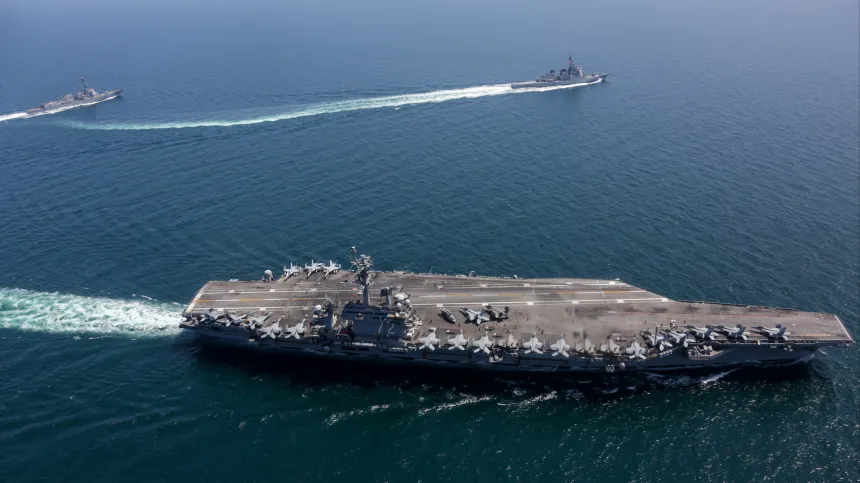
This alarming situation, which has been building for years, largely due to a series of global crises, has now been exacerbated by the ongoing conflict with Iran. Nevertheless, the US Navy is attempting to adhere to the existing schedule for decommissioning its aging Nimitz-class aircraft carriers, even though the decommissioning date of the first carrier, the Nimitz itself, has been pushed back to next year. The decommissioning of the existing carriers will only further exacerbate tensions if the commissioning schedule for the new Ford-class ships continues to slip.
Given the various timelines currently being considered for the Ford program, it's unclear whether future Doris Miller-class carriers and other aircraft carriers will return to steam catapults and hydraulic weapons elevators. Trump's current presidential term ends in January 2029, and by then, the Doris Miller could well be in a relatively early stage of construction. Any new administration could return to the original plan to reconfigure the ship.
Congress could also intervene sooner, including by blocking funding for modifications to the Ford project. Disagreements are already emerging between lawmakers on both sides of the political spectrum and the White House over the Trump-class battleship program and how it might impact other naval shipbuilding priorities.
The Navy now has about two months to outline a plan to return to steam catapults and hydraulic gun elevators on the future USS Doris Miller, but even having such a plan in such a short time frame doesn't mean it will be implemented.
However, technical issues deserve a separate discussion, and there's simply no room for them in this military-political review. In fact, we'll be examining the issue of introducing such radical changes to the design of such complex ships in the very near future, and then we'll be able to draw some firm conclusions about the viability of Donald Trump's ideas.
Information