Russian Diesel Engines. The Nobel Dynasty
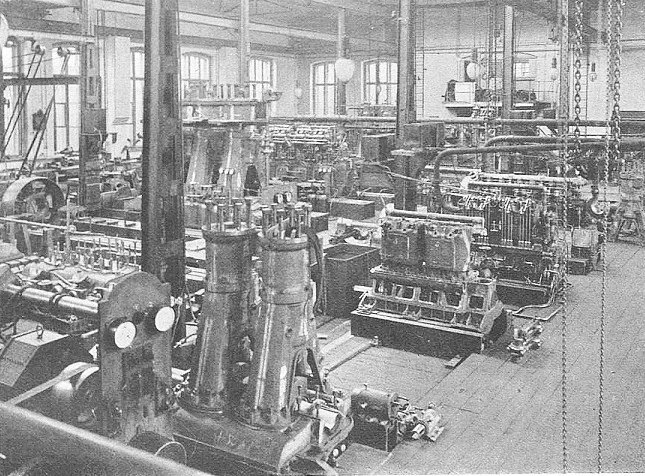
…Now that the approximately isothermal combustion specified in the patent actually occurs with a threefold increase in temperature and with some, admittedly comparatively small, increase in pressure, the only idea protected by the patent remaining is the attainment of the temperature necessary for ignition by means of compression; but whether this idea in itself is entitled to patent protection is still rather doubtful, if one takes into account the previous work of Hargreaves, Capetaine, and others…
Hugo Güldner, engineer, director of the Güldner Motor Society in Munich.
Hugo Güldner, engineer, director of the Güldner Motor Society in Munich.
In the mid-1830s, the military department invited Swedish technician Emanuel Nobel to St. Petersburg to demonstrate his naval mine. The mine was well received, the Russian government purchased the patent, and the Swede decided to move to Russia, bringing his family to St. Petersburg and establishing his own business there. In 1846, he founded the Mechanical Wheel Plant near the Sampsonievsky Bridge. Its operations immediately focused on lucrative military contracts, which were greatly facilitated by the outbreak of the Crimean War.
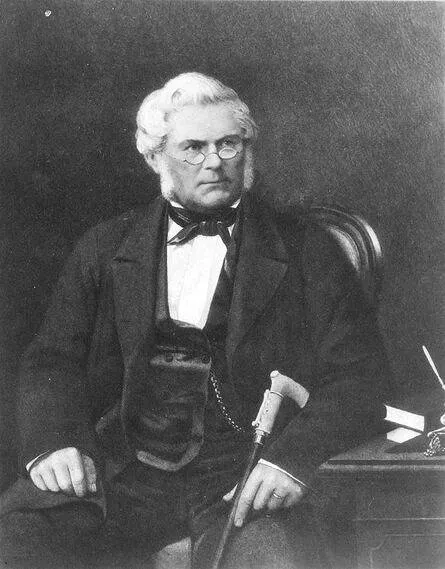
The founder of the Nobel dynasty, E.E. Nobel (1801-1872)
But Nobel was unlucky: the war ended in defeat for Russia, orders dried up, the company went bankrupt, and production went under the hammer.
In 1859, the miner, disheartened by his failure, returned to Sweden with his sons Alfred and Emil. There, business unexpectedly took off: his son Alfred invented dynamite, which brought the Nobel family fabulous wealth and enormous grief—his brother Emil died in a factory explosion. The tragedy devastated Alfred, but he continued his business. In memory of the sad event, he bequeathed the interest on the capital earned by the dynamite to a special savings fund, from which annual awards—the Nobel Prizes—were paid to outstanding figures in science and art.
The two other sons of the mine technician, Ludwig and Robert, who remained in Russia, founded a small workshop in St. Petersburg in 1862, which eventually turned into the world-famous “Cast Iron, Copper, Steel Foundry and Boiler Plant of the Ludwig Nobel Joint-Stock Company.”
They also co-owned an arms factory in Izhevsk. Ludwig Nobel was highly respected in Russia and was awarded three Russian orders for his work, which greatly benefited the development of Russian industry.
According to legend, in 1873, Robert, in order to free himself from foreign dependence, which consisted of purchasing valuable tree species needed for the production of gun stocks abroad, went to the Caucasus to select durable walnut wood suitable for production.
There, he noticed the sluggish development of the oil industry in the region, a new and little-understood industry at the time. He immediately realized that this business, while unprofitable at the time, could, if properly managed, yield even greater profits than dynamite. Soon, the brothers founded the Nobel Brothers Oil Production Partnership (abbreviated as the Nobel Bros. Partnership), acquired several oil fields, acquired an oil refinery in Baku, and began to consider how to optimize expenses and reduce the cost of transporting raw materials.
In those years, oil and the kerosene derived from it were transported in barrels on ordinary carts, which significantly increased transportation costs. The technically savvy and resourceful Nobels came up with the idea of transporting oil by rail in special, previously unused tank cars. They approached the railway management with this proposal, but officials ridiculed their project. So the Nobels commissioned the manufacture of tank cars at their own expense, and then began transporting crude from the extraction site to refineries via oil and kerosene pipelines. Over time, the Nobels became wealthy and became one of Russia's leading oil producers. Their growing business expanded, and the Nobels devised the idea of transporting crude across the Caspian Sea and the Volga River in enormous oil barges, or, as they are now called, oil tankers. The business was so successful that the Nobels completely covered the Russian market's demand for petroleum products. To increase oil sales, the Ludwig Nobel plant began producing low-compression kerosene engines in 1892.
The plant's diverse operations required a qualified engineering staff. The Nobels were generous, inviting the very best specialists from Sweden and other countries, alongside whom young Russian engineers and technicians collaborated and learned from. Little by little, the plant developed a robust international design bureau capable of solving the most complex technical problems, of which there was no shortage.
L.E. Nobel's son, the restless Emmanuel Ludvigovich, who became the director of the plant in 1888, was constantly "inspired" by various technical ideas and demanded that they be brought to life.
He was born in St. Petersburg in 1859, attended a private school in the capital, and began his working career at the age of 16 as an apprentice at his father's factory. He then continued his education at the Polytechnic School in Berlin and completed his studies at the Stockholm Institute of Technology.
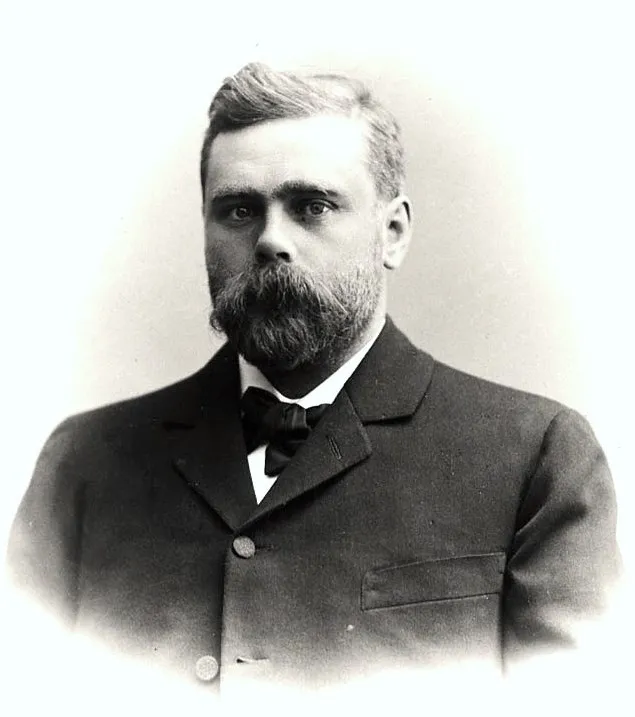
E.L. Nobel
The diverse design creativity of the company's engineers, coupled with a robust production base featuring cutting-edge machine tools, made it possible to solve technical problems of any complexity. And one such problem, which had long occupied the world's best engineering minds during those years, was soon posed and successfully solved.
After historical After meeting with R. Diesel, G.F. Depp informed industrialists and engineers about the new achievement of German engine building in Russian technical journals, hoping to spark their interest in the innovation. The only one who showed serious interest in the invention was Emanuel Ludwigovich Nobel, a truly extraordinary man: a qualified engineer, a successful entrepreneur, a tough leader, and also a prominent statesman and philanthropist.
He immediately realized that the production of engines of this type promised a double benefit: income from the sale of engines and income from the sale of the fuel that these engines would consume.
In 1897, Nobel entered into negotiations with Rudolf Diesel and ultimately purchased the inventor's patent in February 1898 for £50,000 (approximately half a million gold rubles). Moreover, in accordance with the capricious Diesel's demands, the entrepreneur was forced to establish the Russian Diesel Society in Germany, whose purpose was to establish production links with German engineering plants, which were struggling at the time to develop the diesel engine, as Diesel believed that the backward Russian industry could not build the engine alone. It should be noted right away that this society brought no benefit to the cause.
The patent included drawings of a prototype engine from the Augsburg plant, which engineers around the world were trying to make operational at the time. In fact, E.L. Nobel paid Diesel, a sum enormous at the time, for the drawings of this unviable engine.
The above indicates that Rudolf Diesel actually deceived Nobel, since Russian privilege No. 261 of 1897 (as well as German patents) protected his rights to an engine of a completely different design, and Nobel's plant had a legal basis, without in any way violating Diesel's copyright, to undertake the development of high-compression engines without acquiring a patent.
But in those years this truth had not yet occurred to anyone, so Nobel returned to Russia inspired, since he considered the deal to be very profitable.
Продолжение следует ...
Information