And there is something in all this besides fuel!

20 782 58
And there is something in all this besides fuel!

The USS Theodore Roosevelt (CVN-71) has become the US Navy's first fully operational and deployable aircraft carrier capable of carrying the MQ-25, according to Pentagon documents released August 11.

This achievement provides the U.S. Navy with the first carrier with the command architecture necessary to integrate unmanned aerial vehicles into air operations, expanding the range and combat power of future carrier battle groups.


In fact, this is a very serious step, radically changing the use of deck aviation in the future. But let's go in order.


The Carrier Unmanned Air Warfare Center provides the command and control infrastructure necessary to support the MQ-25 and future joint manned and unmanned air operations. The USS Ronald Reagan (CVN-76) is expected to achieve the same level of readiness by the end of August. This marks the Navy's transition from carrier-based unmanned aircraft testing to the development of fleet, which can increase endurance, operational flexibility, and the ability to project force over greater distances than before.

So, the aircraft carrier USS Theodore Roosevelt (CVN-71) has become the first US Navy carrier capable of carrying MQ-25 unmanned aerial vehicles. However, this doesn't mean flights will begin tomorrow; things are much more complicated than that.


This achievement goes far beyond installing a drone control center. The US Navy now has the first deployable aircraft carrier equipped with the command architecture necessary to integrate drones into future air operations. More broadly, this demonstrates that the US Navy is beginning to transform the carrier from a platform focused almost entirely on manned aircraft into a command center for mixed manned and unmanned air operations.

It should be clarified here: "Theodore Roosevelt" is the first fully A combat-ready and deployable ship with a control center for MQ-25 unmanned aerial vehicles.


In 2024, the USS George Bush (CVN-77) established the first unmanned aerial vehicle (UAV) test center, where the service installed and tested the systems needed to control future MQ-25 missions. The USS Roosevelt became the first carrier to bring this architecture to a combat-ready level. The second will be the USS Ronald Reagan, whose unmanned aerial systems suite is expected to be combat-ready by the end of August 2026.


This sequence of actions demonstrates that the US Navy is moving beyond isolated experiments and beginning to implement a repeatable naval standard for unmanned aircraft.

From an experimental control station to the architecture of unmanned aircraft


At the center of this transformation is the Unmanned Aircraft Carrier Control System, or UMCS, including the U.S. Navy's MD-5E ground control station.


The carrier's unmanned aerial vehicle control system (UAVC) provides a shipboard environment in which UAV operators can operate them, and the UMCS links this control system to networks and systems operating both on and offshore. This ensures the highest level of information transfer and control, enabling more effective UAV deployment.

The Pentagon views the acquisition of MQ-25 and UMCS aircraft as synchronized but separate processes. This separation is strategically significant: the US Navy is building unmanned aircraft as an ecosystem, not around a single aircraft, which is quite logical and aims to develop future systems that can be effectively integrated into existing systems.

The MQ-25 may be the first platform to utilize this architecture in a real-world environment, but the command and control layer could potentially remain unchanged as new unmanned aircraft emerge. The US Navy previously conducted tests involving the aircraft carrier Abraham Lincoln, during which MQ-25 network traffic was transmitted via satellite communications and a tactical global network, supporting the idea that the carrier is becoming part of a distributed digital command network, rather than simply a physical base for an unmanned tanker.


The program's sequencing reveals another important aspect of the Navy's strategy: the shipboard command infrastructure will be ready for deployment several years before the MQ-25 reaches operational capability. The MQ-25A prototype, representing the fleet, completed its maiden flight on April 25, 2026, and Milestone C was approved in May, allowing the program to enter production and begin deployment.

Nevertheless, the Pentagon projects the MQ-25's first carrier flight in February 2027, initial operational capability in February 2029, and full-scale production even later. However, rushing the process is completely inappropriate; in fact, "shifts to the right" could push these deadlines even further.

The Navy is preparing aircraft carriers, networks, command posts, and personnel for UAV deployment in advance, without waiting for the vehicles to arrive. This approach could reduce the lead time. drones and their full use within the fleet, since the digital infrastructure and operating environment required for the use of the Stingray are already being created on board aircraft carriers.

Expanding the operational range of aircraft carriers and returning fighters to combat missions
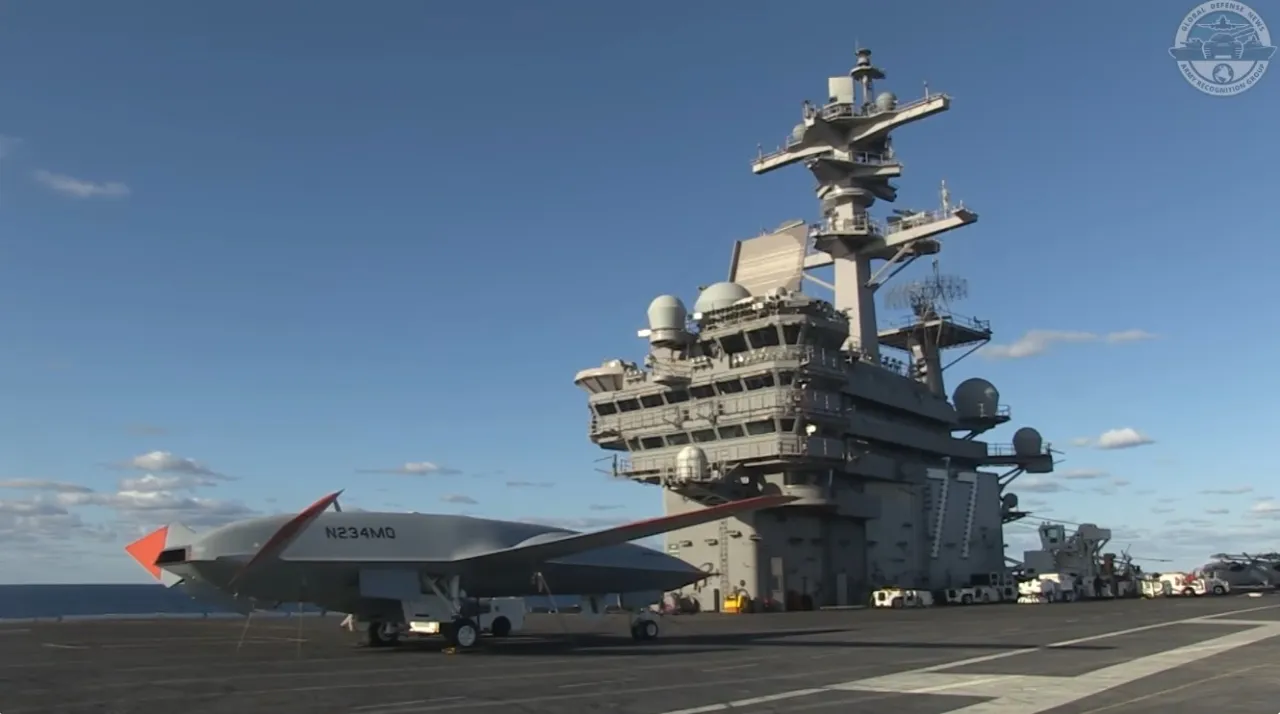


Indeed, what is all this for? To implement a reimagined concept of "loyal followers."

It is no secret today that the increase in the flight range of anti-ship cruise and ballistic missiles missiles has significantly pushed carrier forces away from the shores of countries possessing such weapons. Well, let's be honest: away from the borders of China, against which the US is developing military strategies.

Today, the PLA possesses weapons that force aircraft carriers to stay away from China's shores to the point where aircraft no longer have sufficient combat radius. And the main questions currently revolve around ensuring that carrier-based aircraft can return to their ships after completing a combat mission.

The first practical result will be achieved through aerial refueling. According to Pentagon requirements, the MQ-25 must deliver at least 6350 kg of fuel up to 500 nautical miles from an aircraft carrier, with a maximum target of 7250 kg.


This capability is intended to significantly reduce the workload of F/A-18E/F Super Hornets in a "back-to-back" configuration, serving as tankers. Each Super Hornet deployed to refuel other aircraft is temporarily unavailable for strike missions, fleet air defense, naval attack escort, and other combat missions, as it is fully loaded with fuel for other aircraft. Effective, but not efficient. A combat aircraft shouldn't act as a tanker; it's simply inefficient.

Therefore, the MQ-25 should be viewed not simply as an additional tanker, but as a means of reinforcing the carrier's existing air wing. By assuming some of the refueling duties, the unmanned aerial vehicle could effectively return the Super Hornets to their primary combat missions, while reducing the number of flight hours associated with refueling for the already severely depleted fighter fleet.


Over a prolonged campaign, this can impact the number of sorties flown, the number of available fighters, and the rate of airframe deterioration. This effect is particularly significant because the Navy doesn't need to add another fully equipped fighter squadron to restore some of this combat capability. They can free up aircraft already onboard the carrier for support missions that require fighters but don't directly increase strike or defensive firepower.

Indeed, unmanned refueling could improve fighter jet effectiveness, mission flexibility, and the ability of carrier battle groups to operate across a wider theater of operations. This is especially relevant in a context where adversaries employ long-range anti-ship missiles, persistent maritime surveillance networks, and increasingly sophisticated anti-access systems.

The MQ-25 doesn't make the carrier invulnerable to such threats, and aerial refueling alone doesn't solve the problem of long-range strikes. However, it does provide greater operational flexibility and decision-making space. Carrier commanders can more freely deploy tankers, expand combat air patrol zones, route fighters, and determine how far away from potential threats the carrier itself should be.

The main advantage lies not simply in increased range, but in greater freedom to plan and conduct air operations over a much larger area. In a large-scale naval conflict, such flexibility could make carrier groups less predictable by increasing the number of possible launch sites.

This impact extends beyond strike fighters. MQ-25 testing has already demonstrated aerial refueling capabilities with the F/A-18E/F, F-35C, and E-2D Advanced Hawkeye. E-2D refueling could be particularly important, as the Hawkeye is one of the carrier air wing's primary platforms for surveillance, command, and control. The E-2D's long endurance means the carrier can potentially obtain critical information about events beyond its sensor range for longer.


In distributed naval operations, increasing the endurance of the aircraft coordinating combat operations can be just as important as increasing the range of the aircraft carrying weapons. This has an important side effect: the MQ-25 can help extend not only the range of the carrier air wing but also the operational life of the onboard network that detects threats, manages fighter aircraft, and distributes tactical information among units.

Building a Command Core for a Future Unmanned Carrier Air Wing


The broader transformation could extend far beyond the MQ-25. The U.S. Navy has repeatedly touted the MQ-25 Stingray as a pioneer in the broader integration of manned and unmanned aircraft, and the UAWC and UMCS architecture provides the foundation for supporting additional unmanned aircraft in the future, including joint combat aircraft.

This potential has already been demonstrated beyond the MQ-25 program. In November 2024, the Navy used UMCS to control the General Atomics MQ-20 Avenger prototype while the aircraft was operating in California, and Navy personnel used the flight control architecture from Maryland.

The importance of this demonstration lies not so much in the MQ-20 itself, but in what it demonstrated about the command and control system: that the command architecture, rather than any individual unmanned aircraft connected to it, may ultimately possess sustainable capabilities. If the UMCS can serve as a common interface for various unmanned platforms, then the UAWC onboard an aircraft carrier could become a flexible operational layer capable of supporting aircraft with a wide variety of missions throughout the ship's service life.


This is where the Theodore Roosevelt phase becomes strategically important. The carrier isn't simply acquiring the infrastructure for a single type of unmanned aircraft. It's becoming an operational node in a broader command architecture that will eventually allow manned fighters, command and control aircraft, unmanned tankers, and future autonomous combat platforms to operate within a single air wing. Thus, the long-term transition isn't simply about replacing manned aircraft with drones, but rather about creating a distributed air wing in which various platforms perform target acquisition, refueling, strike, electronic warfare, and combat support missions, coordinating their actions within a common digital system.

The U.S. Navy ultimately intends to enable both Nimitz-class and Ford-class carriers to support operations using the MQ-25.

If this architecture becomes standard across the entire carrier fleet, aircraft and operators will be able to move more frequently between ships built around a single unmanned aircraft system. Thus, what began as a Stingray capability on the Theodore Roosevelt could become the foundation for operating a much larger generation of carrier-based unmanned aircraft.

At the fleet level, this could gradually change the approach to generating naval combat power, allowing future carrier task forces to distribute tasks and risks across a larger number of manned and unmanned platforms, rather than concentrating the most complex tasks solely on expensive manned aircraft.

Thus, the USS Theodore Roosevelt represents more of a transition point than the final destination for the MQ-25 program. Stingray squadrons are still several years away from achieving initial operational capability, and the presence of the MQ-25 Survival Center doesn't mean the carrier is already deploying combat-ready MQ-25s. What has changed is the carrier itself: for the first time, the US Navy has a deployable carrier with the operational command and control infrastructure necessary to support the first generation of carrier-based unmanned aerial vehicles.


The deeper implication is that the future power of American aircraft carriers will increasingly be determined not only by how many aircraft can be launched from their decks, but also by how effectively a carrier can command and support networked forces of manned and unmanned aircraft in an increasingly remote and contested maritime theater.

Theodore Roosevelt isn't just the first carrier to reach a new milestone in MQ-25 capability: it offers a glimpse into how the U.S. Navy intends to transform carrier battle groups in an era when aircraft can change faster than the digital command architecture that controls them.


The logic is very sound: since the US doesn't want to abandon the very strategy of aircraft carriers and carrier strike groups, it makes sense to maximize their effectiveness, including through the integration of unmanned systems. Considering the US Navy operates only two types of aircraft carriers, this isn't that difficult; it's just a matter of time.

Of course, there's a chance the entire program will cost a bit more money and take a bit longer, but who in the US ever feared that? And yet, despite the failure of many military programs, much is being implemented. It once seemed like science fiction, but today a strategic reconnaissance UAV takes off in Italy, flies over the Black Sea, and is controlled from the US. It's routine...

Tomorrow may well bring tactical air strike groups consisting of combat aircraft and drones carrying not only fuel but also additional missiles or missile pods. EW, working in the interests of the group.

With systematic and consistent work, anything is possible. And it's entirely possible that the Americans will succeed in this, given enough time.

But there it’s a completely different world...
58 comments
Information
Dear reader, to leave comments on the publication, you must sign in.
  1. -7
    14 August 2026 03: 39
    Why does the refueling vehicle have to be unmanned?
    1. + 14
      14 August 2026 04: 25
      It takes up less space on an aircraft carrier, where air wing capacity is limited. More aircraft can be deployed in an operation. It's not a big deal to lose a drone if all the fuel needs to be used—it can be sent one-way. It extends the reach of the arm.
      1. 0
        15 August 2026 15: 07
        Have you seen the dimensions of this drone relative to the Hornet? What space savings are you talking about?
    2. +6
      14 August 2026 06: 47
      Quote from: AllX_VahhaB
      Why does the refueling vehicle have to be unmanned?

      In addition to the above, a UAV is more suitable as a tanker. Refueling with a hose-cone requires skill on the part of the person being refueled, not the operator (as with a boom-neck, where the operator controls the boom). The tanker only needs to fly steadily. The UAV's small size doesn't create significant turbulence behind it, and the cone moves less, interfering with docking.
      1. 0
        15 August 2026 09: 11
        Quote: Puncher
        When refueling with a hose-cone, the skill of the person being refueled, not the refueler (as with a boom-neck, where the operator controls the boom), is required. The tanker only needs to fly steadily.

        Generally speaking, yes, but this increases the demands on the average pilot, and carrier-based pilots aren't average. So, a UAV isn't "more suitable" for this reason at all. It's more about the takeoff weight-to-fuel ratio.

        Quote: Puncher
        The small size of the UAV does not create any significant turbulence behind it, and the cone wobbles less, interfering with docking.

        In general, the MQ is larger than the Hornet.
    3. +5
      14 August 2026 08: 12
      Quote from: AllX_VahhaB
      Why does the refueling vehicle have to be unmanned?

      Because soon the bombers will be unmanned, and the tanker will be able to refuel itself and move to the required area to keep the wing in the air for a longer time than a human can.
  2. +4
    14 August 2026 04: 18
    Today, the PLA has weapons that force aircraft carriers to stay away from China's shores to the point that aircraft no longer have sufficient combat radius.
    This clearly characterizes aircraft carriers as instruments of naval warfare. To put it briefly, consider the Iranian attacks on an American aircraft carrier, which, after the drone attack, quickly retreated to a safe distance from the Iranian coast. There were also British and French aircraft carriers, racing toward the Iranian coast at full speed, but after this attack, they lost their warlike fervor and disappeared somewhere discreetly in the ocean. laughing
    1. +2
      15 August 2026 01: 24
      There were also English and French aircraft carriers, rushing at full speed to the shores of Iran, but after this attack, they lost their warlike fervor and were modestly lost somewhere in the ocean.

      You may laugh, of course, but it wasn't this attack that scared the British, nor the French. The British "couldn't" equip this aircraft carrier for a whole month because of trade unions. They were rushing not to combat but to divide the spoils; since there was no spoils in sight, there were no aircraft carriers.
  3. -6
    14 August 2026 04: 59
    The USS Theodore Roosevelt (CVN-71) has become the US Navy's first fully operational and deployable aircraft carrier capable of carrying the MQ-25, according to Pentagon documents released August 11.

    This achievement provides the U.S. Navy with the first carrier with the command architecture necessary to integrate unmanned aerial vehicles into air operations, expanding the range and combat power of future carrier battle groups.

    It's all clear, informative, innovative, and provides tactical and strategic advantages...

    And what is the situation with galleys, latrines, laundries and food supplies (colpits)?
  4. -3
    14 August 2026 05: 54
    7 tons of fuel... and how much can the F18 refuel this drone - just one piece?
    So how many of these drones should there be on the ship then, considering that they themselves are not small?

    Of course, you could use a drone for longer-range strikes, but how much can it carry? It's not a jet-powered drone, which means it's much easier to shoot down. It's much easier and cheaper to launch a kamikaze-like missile like the Geranium at a single target.

    The UAV's range is good for reconnaissance and strike missions in free-hunting mode. But this range is achieved by a fuel-efficient propeller engine—it's what allows it to circle silently for 24 hours, rotating operators at the base. This works against countries like Afghanistan, but is unlikely to work against Russia or China, or even Iran, if it strengthens its air defenses.

    Its presence certainly isn't a big deal, but even Iran's weapons forced the Americans to retreat 2000 kilometers from Iran's shores, even though they usually bombed countries with carrier-based aircraft from 500 kilometers away. This has thrown them for a loop in this war. This looks like an attempt to rectify the situation, but I think it will only work against backward Third World countries... which, of course, could be helped with long-range air support in the event of a war, just as the Anglo-Saxons helped Odessa.
    1. +7
      14 August 2026 06: 53
      Quote: Totor5
      7 tons of fuel... and how much can the F18 refuel this drone - just one piece?

      You're somewhat misunderstanding the role of the tanker on an aircraft carrier. When the Super Hornet takes off with a maximum ASP load, this is accomplished by reducing the fuel volume, and once in the air, the tanker refills the aircraft to the required level. When the Super Hornet is waiting for landing, the tanker also refills it to ensure it has enough fuel to wait its turn. In both cases, we're not talking about fully filling all the tanks.
      1. -3
        14 August 2026 10: 45
        I understand the principle, but I don't see how this could fundamentally impact the war in Iran. And how does this drone fundamentally benefit from a refueling tanker if it doesn't leave the safe zone? Because it can circle the carrier longer, and that's it?
        1. +2
          14 August 2026 11: 52
          Because it's much cheaper and the pilot won't be harmed if an enemy missile hits him.
          1. -1
            14 August 2026 20: 54
            So, in this way, it is better for the enemy to hit an aircraft carrier directly than a drone circling above it.

            Again, it is possible to make a propeller-driven refueling tanker just like a drone.
            1. +1
              14 August 2026 22: 50
              The drone is closer to the aircraft carrier; it's flying somewhere between the shore and the carrier, about 500 kilometers away. An aircraft carrier is harder to hit—it has air defense and electronic warfare, while a regular tanker would probably be destroyed even by a MANPADS.
              1. 0
                15 August 2026 13: 38
                So, the aircraft carrier is currently 2000 km from Iran and is afraid to come any closer. To refuel the F-18, this drone would have to approach much closer than it could circle the carrier. And given that the drone itself only holds 7 tons of fuel, how long could it circle while also refueling the F-18, which has a nearly identical tank? And again, how many of them would be forced to circle during massive American-style attacks?
                If we're going to make a refueling drone, it probably shouldn't carry 7 tons.

                Strike capabilities were also mentioned, but how much can this drone carry, given its vulnerability to air defense systems and its price, which is clearly many times higher than kamikaze drones like the Geranium?
                1. +1
                  15 August 2026 14: 00
                  On the return flight, the drone refueled the plane without any bombs or other equipment; it didn't need much to return. As far as I remember, one drone refueled four planes and added 600 km to its range.
                  Quote: Totor5
                  despite its vulnerability to air defense systems

                  Vulnerability to air defense—that's our problem; we don't know what to do with enemy air defenses. But in a war with the US, air defenses become vulnerable—it turns out they're being hit from 200 kilometers away, and there's nothing we can do about it.
                  1. -1
                    15 August 2026 19: 21
                    So the F18 won't fly 2,000 km one way and the same return. And it still has to fly over land, not just drop bombs off the coast. It'll have to refuel twice.
                    1. 0
                      15 August 2026 19: 28
                      It won't fly the full 2000 km. It'll fly 1200, launch jet-powered glide bombs with a range of 500 km, and then refuel on the way back. And an aircraft carrier would be difficult to find in a major war. Right now, Iran and the US are hit or miss, but in a major conflict, the few Russian and Chinese satellites would be shot down by Aegis missiles. And that's it—it won't be possible to obtain precise coordinates in real time; the AUG's electronic warfare clogs the airwaves.
                      1. 0
                        15 August 2026 23: 47
                        You won't have enough jet bombs; these are mostly 50-100 km long bombs converted from regular ones.

                        In a major war, the Americans would be left without communications in an instant, and for them that would be death.
                      2. 0
                        15 August 2026 23: 52
                        Quote: Totor5
                        You won't have enough jet bombs; these are mostly 50-100 km long bombs converted from regular ones.

                        They're working on it. They won't suddenly start a war—nobody's going to fly off to bomb Pearl Harbor. They'll make enough bombs and start a war. They're sending those to the Ukropiteks now.
                        Quote: Totor5
                        In a major war, the Americans would be left without communications in an instant, and for them that would be death.

                        They have a conveyor belt for producing communications satellites; even if you magically destroy ten thousand satellites, and no one raises their orbit by 50 km, they will launch several hundred new ones in a couple of weeks; I am sure they have reserves.
                      3. 0
                        16 August 2026 03: 52
                        Who's going to let them launch it? World War III would disrupt electronic supplies, and in the event of a nuclear strike, it's unlikely anyone would care about such trivial matters as the mass launch of communications satellites, especially since the Cosmodromes would definitely be hit.
                      4. 0
                        16 August 2026 14: 47
                        Quote: Totor5
                        Who will let them launch it?

                        And who's going to stop them? Who gave a damn about Cuba, where all the American spaceports are covered with geraniums?
                        Quote: Totor5
                        3 World War II will disrupt electronics supplies

                        So they're working on exporting critical technologies, and what's stopping them from having a stockpile of satellites, say, ten in orbit and one in storage? And the rockets are reusable.
                        Quote: Totor5
                        In the event of a nuclear strike, it is unlikely that anyone would be concerned about such trifles as the mass launch of communications satellites, especially since the Cosmodromes will definitely be attacked

                        What if China explodes? There are hordes of Chinese in the US, they've already settled in. And the Americans will just go and smash the Three Gorges in response, washing away more people than live in Russia.
                      5. 0
                        17 August 2026 00: 22
                        Now there are missiles that can fly from the South of America, which is not covered at all.

                        The Cuban base definitely needs to be reopened, but Cuba has to really want it. The lack of fuel helps to realize this.
                      6. 0
                        17 August 2026 00: 29
                        Quote: Totor5
                        Now there are missiles that can fly from the South of America, which is not covered at all.

                        China doesn't have those, and it won't hit the US with a nuclear weapon unless they switch to nuclear weapons. Intercontinental missiles like Iran's won't accomplish much; they're too expensive with TNT. And from Cuba, the US could be literally inundated with conventional munitions, turning the entire south of the country into an ecological disaster zone, and it won't be a cancer valley like it is now, but cancer states.
                        Quote: Totor5
                        The Cuban base definitely needs to be reopened, but Cuba has to really want it. The lack of fuel helps to realize this.

                        Someone has to offer this to Cuba. But who's even afraid to transport a tanker of fuel—what if the Americans take it away, or worse, get angry? It's much easier to shrug and say they've got the wrong allies again, and that the Americans are all dreaming of Trump planting nuclear weapons on their soil.
                      7. 0
                        17 August 2026 09: 08
                        Do you think anyone would tolerate Cuba (which bombards the American South with conventional bombs) striking the United States? No – they would be wiped out with nuclear weapons.

                        In general, no one would have allowed these mountains of weapons to be stationed in Cuba. They would have invaded it much sooner. Cuba isn't as big as Iran and isn't so far away that the US military couldn't resolve the issue.
                      8. 0
                        17 August 2026 11: 49
                        Do you think anyone would tolerate Cuba (which bombards the American South with conventional bombs) striking the United States? No – they would be wiped out with nuclear weapons.
                        Cuba would have started attacking when the war broke out in a bunch of places. And razing the jungle to the ground is a real challenge; hundreds of thousands of Yankees would have died there.
                        In general, no one would have allowed these mountains of weapons to be placed in Cuba.
                        The USSR armed Cuba well; by the 1980s, it had an army larger than that of, say, Brazil, and had considerable combat experience.
                        They would have invaded there much sooner. Cuba isn't as big as Iran and isn't so far away that the US military couldn't resolve the issue.
                        Why didn't you invade? There was everything there except nuclear weapons.
                      9. 0
                        18 August 2026 17: 54
                        Well, the USSR didn't let them invade. And now there's neither the USSR nor the base. It's unlikely the jungle would stop America, given Cuba's isolation from the rest of the world.
                      10. 0
                        18 August 2026 18: 40
                        The US will stop potential major losses. In the early 90s, they would have pressed them and washed their hands in blood. But now everything there is very outdated. The DPRK was also afraid to bomb, Clinton rejected the plan, but they didn't sit idly by, and now bombing them is much more dangerous.
                      11. 0
                        18 August 2026 23: 10
                        What's the point of bombing Korea? They'll help them; they're not an island. Meanwhile, North Korea could literally pound Seoul with cannon fire. South Korea isn't prepared to do that, and neither is America.
                        But Cuba is a different matter. It's isolated, it's next to the US, no one will help it. Cuba is not that kind of coat at all.
                      12. 0
                        18 August 2026 23: 23
                        The UN votes almost unanimously for Cuba; Cuba has made its mark; no one has ever called North Korea the Peninsula of Freedom. The Americans were lambasted by the entire Security Council for Grenada. Cuba is an island that had 150 fighter jets at the end of the USSR (and how many does Russia have today?), including fresh MiG-29s, three 641 submarines, missile boats, 300,000 fighters with combat experience from Angola, Ethiopia, and other countries, and even more militias. And Cuba is an island, not Iraq, where it's easy to get to and where the Iraqi army is in full view. There, you can maneuver under the trees and wage a strong guerrilla war, preventing an airborne assault. It's hard to hide tanks and artillery in the desert, but in Cuba, you'll hardly find artillery and tanks. Of course, the Americans would have won in the end, but it would have been something closer to Vietnam. Castro was good at propaganda and no one ever talked about his palaces, unlike the wealth of Hussein and others.
                      13. 0
                        19 August 2026 10: 21
                        Cuba is small, and cutting it off from any American supplies is very easy. Then there will be Tomahawk strikes and bombings, a humanitarian catastrophe, and so on. And most importantly, they have nowhere to run. So what if someone is in the jungle? They pose no threat to American territory. Not all revolutionaries in Cuba are communists—a new pro-American government will be established in the cities, but anyone can find it in the jungle. Classic Latin American.
                      14. 0
                        19 August 2026 10: 46
                        The classic Latin American conflict ended with the Bay of Pigs, and the Americans didn't count on such nonsense again. While the Americans were blockading, Cuban planes and torpedo boats would attack the blockaders.
                        Quote: Totor5
                        In Cuba, not all revolutionaries are communists.

                        The communists have nowhere to run, and when there's nowhere to retreat, the fight is fiercer. Why didn't the Americans win before the crisis?
  5. +5
    14 August 2026 07: 44
    It feels like this article wasn't written by a human being, certainly not by a Russian.
    1. +1
      14 August 2026 16: 20
      It looks like a quick compilation of several news reports on the same topic from the internet. Machine translation and a lot of repetition.
  6. +6
    14 August 2026 07: 54
    So much for artificial intelligence, i.e., the art of intelligence. It's like spreading an article around or rambling on to fill the void. It's pure philosophy.
    1. +7
      14 August 2026 08: 17
      So spread the article all over the plate
      I didn't even read past the first quarter.
  7. BAI
    +4
    14 August 2026 08: 08
    I lost count of how many times the author used the words "infrastructure" and "architecture." Is he talking about ships or urban development?
  8. -5
    14 August 2026 08: 58
    There's too much praise for the MQ-25. Yes, it's unmanned and increases the range of manned carrier-based aircraft. But on the other hand, it's an easy target, for example, for the DD-1000 air defense missile system.
    In the 2005 film "Stealth," there's a scene where lightning struck a UAV, and it activated autonomous combat operations control. Simply put, it set the combat mission and carried it out. This included an attempt to refuel from an air tanker-airship, when its access was blocked. It figured out how to fire a cone and refuel without access. Yes, it's sci-fi, but the UAV itself, based on all the data, calculated attacks on various targets and carried them out.
    1. -2
      14 August 2026 20: 57
      This is what they downvote here without going into details.
  9. +2
    14 August 2026 09: 23
    The author smeared semolina porridge across his plate. The paragraphs tell us the same thing over and over again. Not up to par!
    Do you get paid for the number of characters, or do Ryabov's laurels haunt you?
    As Lenin said: "Better less, but better."
  10. -2
    14 August 2026 10: 09
    during which network traffic MQ-25 was transmitted through satellite communications and tactical global network,

    I read this - it's like a curse word... in our conditions
  11. +3
    14 August 2026 10: 31

    Indeed, unmanned refueling could improve fighter jet effectiveness, mission flexibility, and the ability of carrier battle groups to operate over a wider theater of operations.
    I'd like to add several advantages of unmanned tankers: 1) there's no need for a pilot. The training and development of a highly skilled pilot continues for many years after graduating from flight school; 2) aerial refueling is a complex and dangerous operation, even in peacetime; 3) work is underway to add new capabilities to the MQ-25 tanker (reconnaissance, electronic warfare, and the ability to equip it with air-to-surface missiles).
  12. +3
    14 August 2026 11: 18
    The text is difficult to read. Russian speakers don't write or speak like that. It also feels like a translation of a foreign article.
  13. +2
    14 August 2026 15: 31
    Meanwhile, the much-vaunted C70 sits quietly smoking away behind a fence in Novosibirsk. The budget has been fully utilized.
  14. -3
    14 August 2026 16: 25
    Therefore, the MQ-25 should be viewed not simply as an additional tanker, but as a means of reinforcing the carrier's existing air wing. By assuming some of the refueling duties, the unmanned aerial vehicle could effectively return the Super Hornets to their primary combat missions, while reducing the number of flight hours associated with refueling for the already severely depleted fighter fleet.

    The problem is that the specialized MQ-25 tanker requires space and volume to operate, which it takes away from the Hornets.
    While the Hornets, when not needed, can also perform the tasks of conventional IBAs, which is what they are.
    1. +1
      15 August 2026 16: 23
      Why is it necessary for Hornets, and not for example Sea Hawks or Growlers, Greyhounds?
      An aircraft carrier is an aircraft carrier because it can combine and modify its air group composition.
      1. 0
        17 August 2026 12: 04
        Quote: Sanguinius
        Why is it necessary for Hornets, and not for example Sea Hawks or Growlers, Greyhounds?

        You might also suggest cutting the Hawkeyes in favor of refuellers. smile
        It's like a tumbler of a tree stump. The complement of support vehicles is calculated based on the existing number of strike vehicles. If we cut back on Growlers, we lose air defense and electronic warfare coverage. We cut back. Greyhounds Ospreys - minus emergency supplies.
        1. 0
          19 August 2026 09: 56
          The complement of support vehicles is calculated based on the existing number of strike aircraft. Cutting back on Growlers means losing air defense and electronic warfare coverage.

          It depends on what you take as an example in terms of the composition of the US aircraft carrier air wing.
          In your opinion, what is the optimal composition of the carrier's air wing at the moment? I think there's no point in guessing, since the air wing's composition is determined by the aircraft carrier's upcoming missions. So, with the addition of a specialized carrier-based tanker, the carrier's air group will only increase in the number of aircraft on board, just as it did when the carriers were armed with fighter-bombers, fighter-pilots, attack aircraft, anti-submarine aircraft, electronic warfare aircraft, airborne early warning and control aircraft, military transport aircraft, and helicopters.
          Here's an infographic showing the composition of the US Air Force and carrier-based aviation at the start of the war with Iran in the spring... The air group of the Gerald R. Ford aircraft carrier consisted of 65 aircraft, considering that an aircraft carrier's air group has 15 helicopters. So, with the addition of tankers, the strike potential won't decrease; the air group on the carrier will simply increase.
          1. 0
            19 August 2026 10: 54
            Quote: Sanguinius
            So, with the advent of a specialized deck tanker, the composition of the AVMA air group will only increase in terms of the number of aircraft on board, as in the times when the AVMA was armed with fighter-bombers, fighter-pilots, attack aircraft, anti-submarine aircraft, electronic warfare, AWACS, military-technical support aircraft, and helicopters.

            Do you think they'll go back to the days of "big wings" and replace the Viking squadron with a squadron of UAV tankers? what
            Then the fifth strike squadron could be brought back - for example, by increasing the number of deck-based marine VMFAs.
  15. bar
    0
    14 August 2026 18: 20
    The expression "long-range power projection" sounds overly pompous in the context of the US's squabbles with Iran.
  16. -1
    14 August 2026 18: 44
    Using a UAV as a tanker is a good idea, but it can only carry fuel for one Hornet. Therefore, to launch a group of 24 Hornets—the maximum number of aircraft without significantly losing combat radius—you'd need to launch 24 UAV tankers, which is impossible due to lack of space. The only mission where this is justified is refueling the E-3D flying radar. Otherwise, they're experimenting because they don't fully understand whether UAVs will be effective.
    1. +1
      15 August 2026 22: 54
      Quote: alberigo
      but this is impossible due to lack of space

      Unless the mini-tanker drones are flown from another tanker, directly from the ship carrying the fuel. Then the restrictions will be relaxed.
      New classes of vessels may also emerge, such as a twin-hulled catamaran/tanker. One hull stores fuel, while the other serves as a hangar and UAV flight deck.
      1. 0
        16 August 2026 13: 32
        It's unlikely that a catamaran will replace the conventional displacement hull. Its hull strength is not ideal, which is precisely why it has always been, and will always be, exotic.
        1. +1
          16 August 2026 14: 06
          Catamarans and trimarans are much more fire-resistant. The hull containing the fuel tanks burns away, while the complex and expensive systems in the adjacent hull remain intact. And repairs are easy, as the fuel tank is simply a collection of tanks. You can even cut it off and weld in a new, prefabricated one.
    2. +1
      16 August 2026 00: 27
      Using a drone as a tanker is a good idea, but it only carries enough fuel for one Hornet.

      The MQ-25 carries 6800 kg of fuel, which is enough for 4-6 refuelings. No one in their right mind would put all the fuel into just one Super Hornet, especially since it doesn't fit that much.
      1. +1
        16 August 2026 13: 33
        Hornet can carry up to 7 tons.
  17. -2
    16 August 2026 07: 48
    Lots of speculation and judgment. But all that's needed is to destroy an aircraft carrier!!! And most importantly, there's something to do it with. There's no resolve.