212CD - NATO is building a non-nuclear fleet for its northern flank.
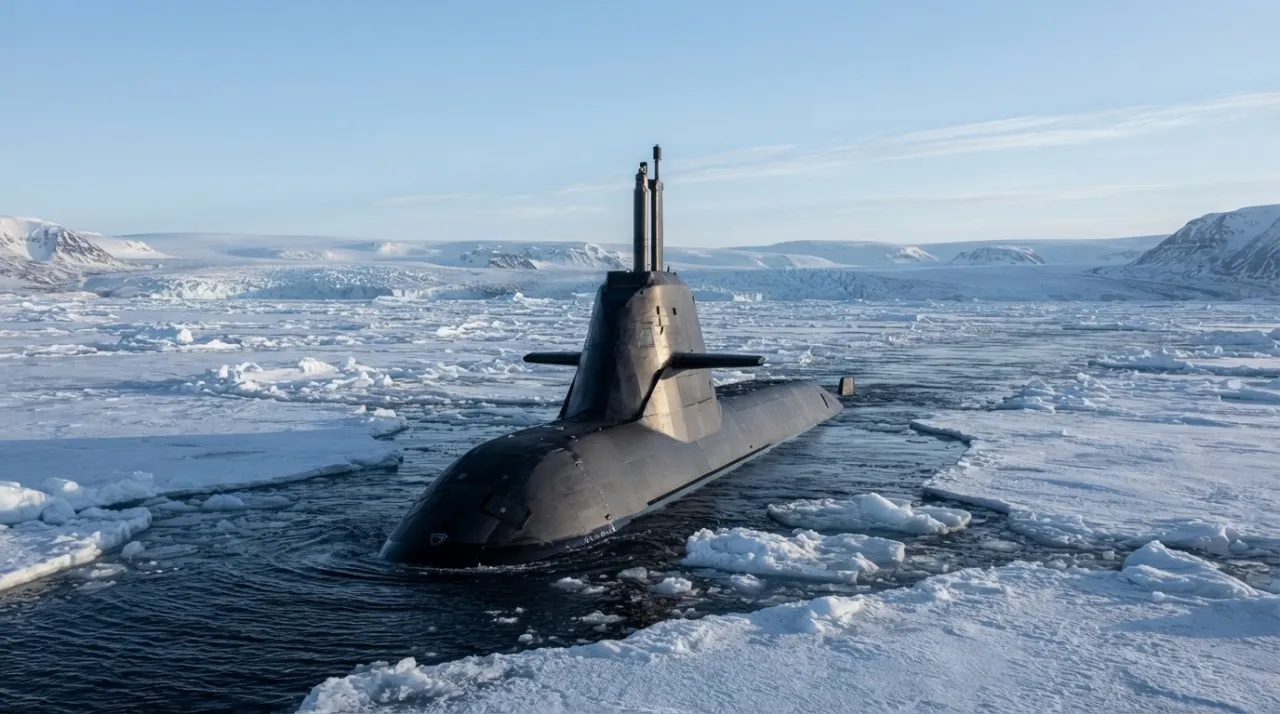
Three NATO countries are building the same type of submarine. Germany and Norway have ordered a total of twelve Project 212CD submarines (six each). fleet), and in July 2026, Canada joined the program, announcing its intention to purchase up to twelve more of these submarines. The German-Norwegian portion is estimated to cost approximately twenty billion euros, while the Canadian portion will cost over sixty billion Canadian dollars for procurement alone. The theater of operations is the Arctic, the North Atlantic, and the approaches to our northern flank. Let's examine what this submarine is, its real value, and where the program's weaknesses lie.
One boat for three fleets
In the spring of 2026, during an exercise in northern Norway, the leaders of Germany and Norway invited Canada to join their submarine project. By July, Ottawa had made its choice: not the South Korean Hanwha Ocean and its proposal, but the German-Norwegian 212CD. Thus, one type of combat submarine becomes the backbone of three navies at once—two European and one North American.
The project is based on the Common Design concept: a unified hull design, common systems, common logistics, and crew training for several countries. Germany and Norway agreed on common requirements back in 2016. In 2021, a consortium led by ThyssenKrupp Marine Systems (tkMS) was awarded a contract for six boats, and in December 2024, the Germans added four more, bringing the total to twelve. The electronics and combat systems are being developed by Germany's Atlas Elektronik and Norway's Kongsberg.
Unification here is about money, not hardware. Developing a next-generation non-nuclear submarine is expensive, and the three participants share the costs, slip space, and, most importantly, operational compatibility: common torpedoes, a common combat system, and common communications standards. Crews are trained using the same curriculum and can potentially replace one another.
And what about us? While NATO is mass-producing a single-designed aircraft for three countries, the Project 677 Lada has produced a handful of hulls for the Navy in fifteen years, and the long-awaited air-independent system remains on the test bench. We've traded the mass production and standardization that the enemy seeks through cooperation for the protracted refinement of a single project.

What's inside: Air-independent installation and diamond-shaped housing
The main reason the 212CD is built is its ability to remain submerged for long periods. A conventional diesel-electric boat must periodically raise its snorkel (a retractable tube for underwater air intake) and run the diesel engine to recharge the batteries, and a running diesel engine creates noise and exposes its camouflage. An air-independent propulsion system (AIP) eliminates this need: the boat operates underwater using chemical energy, requiring no air.
The 212CD uses hydrogen fuel cells, the same ones tested on its predecessor, the 212A, but improved. The hydrogen is stored not in pressurized cylinders, but in metal hydrides: the gas is bound in a solid material and released when heated. This is safer and more compact. Combined with a cryogenic liquid oxygen tank, this allows the submarine to cruise submerged for weeks at low speed. A conventional diesel-electric boat without AIP lasts only a few days, so "weeks" is a huge leap for it. But a nuclear-powered vessel doesn't surface for months; it's kept submerged only by its food supply, and the 212CD is nowhere near that level.
Stealth is enhanced by its shape. The diamond-shaped hull disperses the enemy's active sonar signal, while sound-absorbing coatings and decoupling of the mechanisms from the hull dampen its own noise. Armament consists of six 533-mm torpedo tubes (tubes from which torpedoes and missiles). They fire heavy torpedoes and underwater-launched anti-ship missiles. The most interesting feature is the IDAS system: it allows the submarine to engage aerial targets from underwater, primarily anti-submarine helicopters, which previously hunted the submarine with near impunity. The roles are reversed—now the hunter is also in the crosshairs. The ORCCA combat information and control system manages all of this: it combines hydroacoustic, optical, and communications data into a single picture and provides target designation. arms.
A significant caveat: not a single 212CD has yet been commissioned. All that's listed is the design, the display, and the tkMS promotional materials. The first hull for Norway is promised for 2029, and for Germany, for 2032. Until then, the boat's "specifications" remain on paper and in modeling.

The GIUK (Greenland-Iceland-UK) corridor is a strategically important sea passage in the North Atlantic between Greenland, Iceland and the United Kingdom.
GIUK: old front line
To understand why NATO needs a quiet, non-nuclear submarine in northern waters, let's recall the line designated on military maps as the GIUK gap—the Greenland-Iceland-United Kingdom line. Through this gap, Northern Fleet submarines exit the northern seas into the open Atlantic. Whoever controls this passage monitors the submarines' exit into the ocean.
The idea isn't new. During the Cold War, NATO deployed a fixed underwater hydrophone system called SOSUS—bottom microphones that picked up the noise of our boats—across the border and kept watch along the anti-submarine line. aviation and submarines. The objective was exactly the same: detect Northern Fleet submarines as they exited and track them in the Atlantic. We responded by reducing the noise levels of our new designs and by adopting a bastion concept: we kept the missile carriers in protected areas near our shores, under the cover of the fleet, without breaking through the line of fire.
The line remains the same, the routes the same, the goal the same—intercept at the exit. The analogy breaks down further. Back then, the hunter was primarily a nuclear submarine on long-range patrol, and the barrier itself was stationary. Now, the 212CD is being offered as a mobile, inexpensive, and extremely quiet element: a guard post that can remain stationary for weeks along a likely route, listening and transmitting data to aircraft and surface ships. The barrier is becoming a networked system, and a quiet, non-nuclear submarine in shallow northern waters is more suitable for this role than a large nuclear vessel.
Non-nuclear vs. Nuclear: A Fair Size of Opportunities
It's easy to inflate the image of the 212CD as an "Arctic wonderboat." A comparison to a nuclear submarine, in terms of the parameters crucial in high latitudes, is sobering.
- Autonomy under water: 212CD weeks (limited by AIP and battery reserves), nuclear submarine months (limited by provisions reserves).
- Under the ice: The 212CD is designed for maneuvering under first-year ice and for short periods, while the nuclear submarine operates under multi-year ice for long periods.
- Theater: 212CD has a regional (Arctic, North Atlantic) theater, while the nuclear submarine has a global theater.
- Surfacing for energy: 212CD periodically requires diesel power, a nuclear submarine does not.
The conclusion from this is not in favor of the "wonder weapon." The 212CD doesn't replace a nuclear submarine and doesn't aspire to deep-sea operations under ice. Its strength lies elsewhere: its stealth in shallow waters, its quiet operation, and its relative affordability allow it to saturate the necessary areas with platforms that are constantly deployed along the routes. For our Northern Fleet, this isn't a new, formidable adversary, but rather an increase in the number of "eyes" on the Atlantic and Barents Sea exits.
We have our own logic, too. Russia is deploying the Harmony underwater sensor system in the Barents Sea: a bottom-dwelling network of hydroacoustic sensors to monitor enemy submarines and provide cover for its strategic forces. It's the same network approach, only from a stationary perspective. The northern underwater space is turning into a competition not between individual submarines, but between surveillance systems.

Where the program might stumble
The program's scale conceals its main risks. The German-Norwegian portion costs approximately twenty billion euros, including maintenance. The Canadian portion costs over sixty billion Canadian dollars for procurement alone, and with operational costs, according to the Stimson Center, two to three times that amount. Converted at the current exchange rate, this amounts to roughly forty billion euros for procurement and a hundred billion or more, taking into account the entire life cycle—meaning Canada alone is spending several times more on the program than the German-Norwegian order. For Ottawa, this is the largest defense order in its history. stories: decades of high spending that will inevitably cause internal disputes.
The deadlines are tight. tkMS sets Canada's target for the first four boats by 2034, shifting the slipways originally allocated to German and Norwegian hulls. The entire fleet is scheduled for delivery by 2038. Any delays with the lead hulls will ripple through the entire supply chain of the three fleets.
There's also the risk of being "first in class." The 212CD is larger and heavier than the 212A, essentially a new design, not an upgrade. Early production hulls typically reveal hidden defects and require fine-tuning, and Canada is scheduled to receive some of the first boats—and bear the lion's share of the "teething problems."
And separately, there are the Arctic promises. The submarine is persistently described as "optimized for the High North" and capable of operating under ice. There's no way to verify this yet: not a single 212CD has ever sailed under ice, because not a single 212CD is yet operational. The Arctic status is the same as the other specifications—for now, it's just a line in the presentation. In Canada itself, experts are already debating whether relying on an expensive conventional fleet will turn out to be a "bad investment" if the situation or technology changes.
Finale
The 212CD isn't an icebreaker or a miracle weapon, but rather NATO's attempt to cheaply and mass-produce a nuclear-powered platform to cover its northern flank, sharing the burden among three navies. The program won't gain real traction until the late 2030s, and for now, it's just a collection of contracts, schedules, and paper promises. There's no need to panic—there's no miracle boat here. But there's no way to brush it off: the enemy is already putting the Lada into production, and we're still working on finishing the Lada.
Information