A 15,000-kilometer rocket: why the number doesn't add up with the stage arithmetic
15 395 26
A 15,000-kilometer rocket: why the number doesn't add up with the stage arithmetic


The number 15,000 didn't originate in a design bureau. It was announced from the pulpit: an Iranian cleric promised during his Friday sermon missiles, capable of reaching the United States, and the video fragment was distributed throughout news Feeds with headlines like "Not nuke, but 15,000 km" aren't covered. There's not a single reference to a test, a drawing, or even the name of the system in these stories. And that's worth remembering, because a rocket's range isn't determined verbally. It's determined by its mass, thrust, and number of stages. Let's start with those.


Scud and its descendants: where is the real upper limit?


Iran's missile arsenal grew out of the Soviet Scud, or rather, its export versions. The first indigenous missiles, Shahab-1 и Shahab-2, were direct derivatives of the Scud with a range of 300–500 km. Then the line branched out: on the one hand, solid-fuel Fateh-110 и Zolfaghar at 300–1000 km, on the other hand, liquid-fueled medium-range missiles Shahab-3, Ghadr и Emad, confidently covering 1300–1800 km.

The upper limit today is around 2000 km. This is confirmed by specialized centers like Iran Watch and a review by the Council on Foreign Relations (CFR): the longest-range Iranian missiles have a range of approximately 2000 km, "possibly a little further." This range covers the entire Middle East and part of Europe, but does not reach the United States, even theoretically.

Interestingly, Iran itself announced the 2000 km limit, publicly for the first time, in 2015. This isn't a physical limit, but a political decision: a signal that European capitals aren't on the target list. Technically, some systems can breach this ceiling. Missiles of the family Khorramshahr, according to a widespread assessment, dating back to North Korean Musudan (aka BM-25), with a lightweight warhead, are estimated to have a range of 2000–3000 km, remaining single-stage and liquid-fueled. This means that exceeding the declared range is possible, but there are no confirmed tests at such ranges in open sources. There are design figures and stated plans, but these are not the same thing.
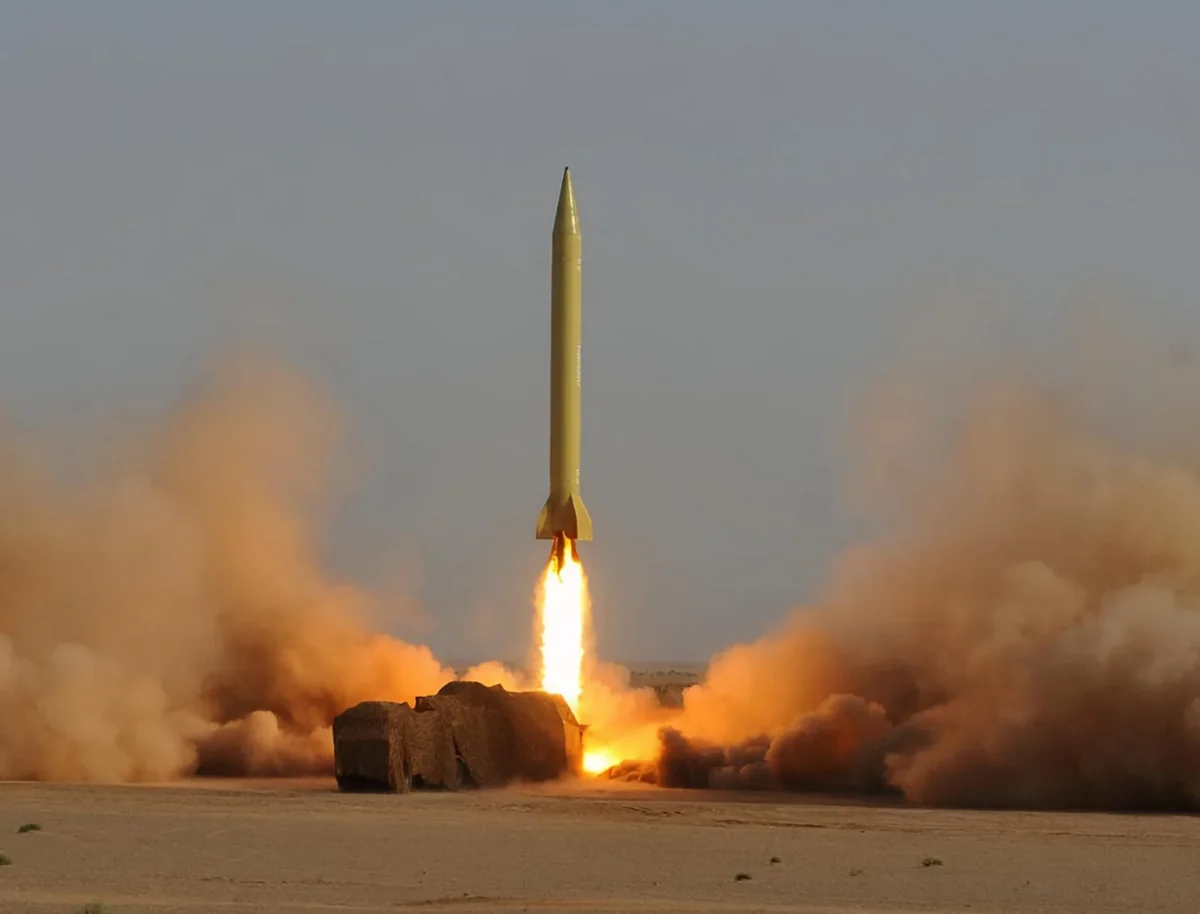

The launch of an Iranian Shahab-3 medium-range ballistic missile during military exercises in the desert.

A space launch vehicle is not a combat missile.


This is where the main twist in the story arises. Iran has a space program, and a space launch vehicle and an intercontinental missile are indeed related—but distantly related: the technologies overlap, the goals diverge, and the differences outweigh the similarities.

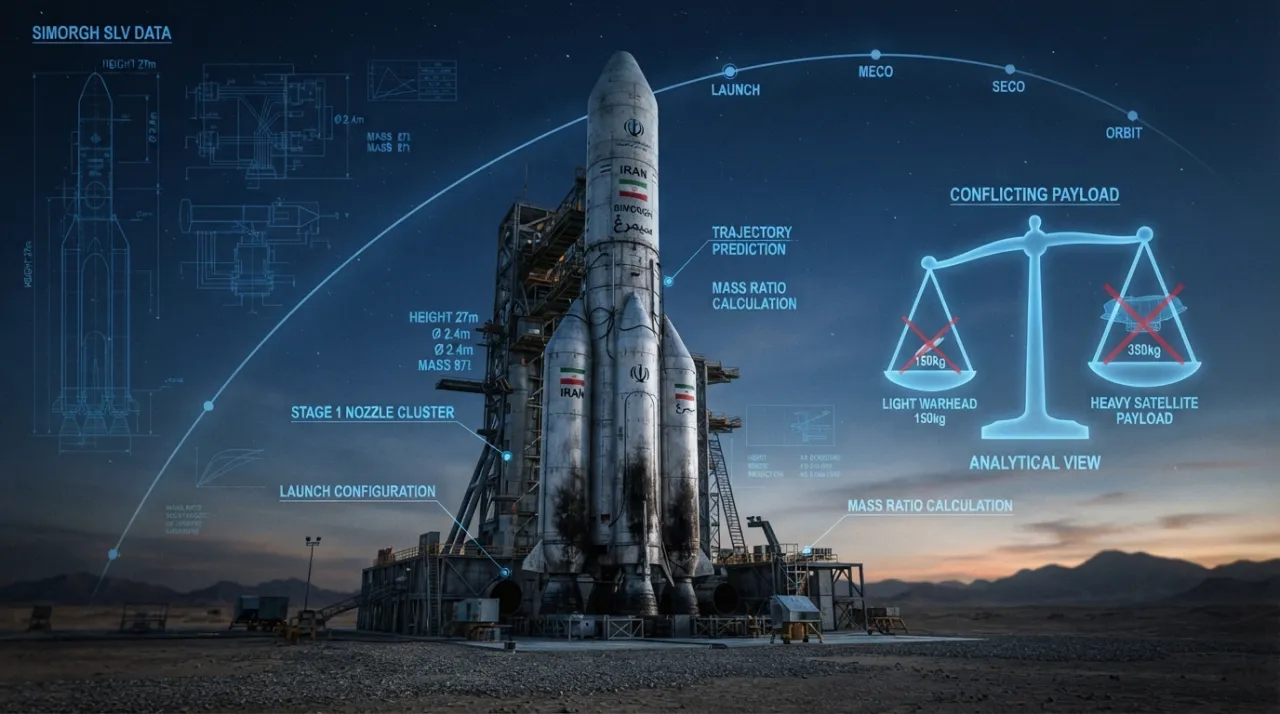
The flagship of the Iranian carriers is Simorgh, a two-stage liquid-fueled rocket approximately 27 meters long and with a launch weight of 70–87 tons. It's as tall as a nine-story building, and its first stage is assembled on a cluster of engines. Shahab-3, that is, on the same technological basis as medium-range combat missiles. It launches a satellite weighing approximately 250 kg into an orbit at an altitude of approximately 500 km—and that, by and large, is where its ambitions end. Next to it is a hybrid Qased with a liquid first stage and solid upper stages, three-stage solid propellant Qaem-100 and already outdated Sapphire, which, in suborbital mode, according to estimates, could throw the cargo approximately 2100 km.

For years, American intelligence agencies have been calling the space program a "shortcut to ICBMs," and technically they're right: multistage launch vehicles and intercontinental missiles use overlapping technologies. Powerful engines, stage separation, thrust control, and inertial guidance are all being tested in space launches. According to CSIS, Simorgh In ballistic mode, it could reach approximately 4000 km with a 1000 kg warhead—twice as far as Iran's current medium-range missiles.

But here's where the path ends. The launch vehicle's job is to propel the payload into space and leave it in orbit. A missile's job is to launch the warhead along a ballistic arc and return it to its target thousands of kilometers away. These are different engineering challenges, and they are solved differently. A launch vehicle designed for satellite launch is not a complete ICBM, but at best a test bed for its individual components.
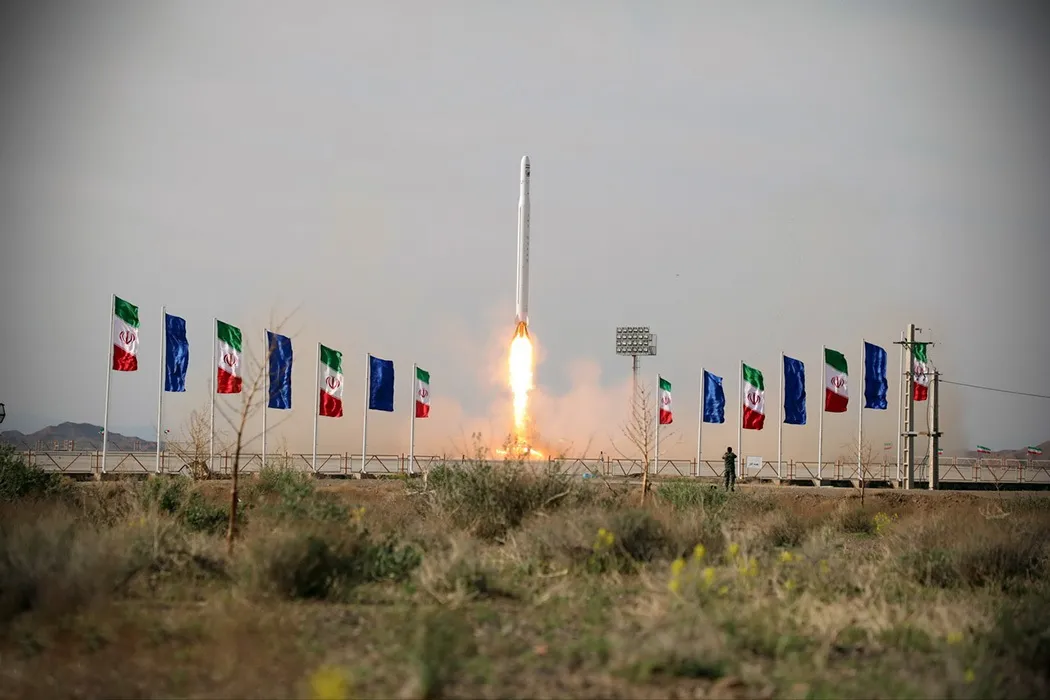

Historical The launch of Iran's first military orbital launch vehicle, Qased, which successfully launched Iran's first small military satellite, Noor-1, into low Earth orbit on April 22, 2020. The launch was carried out by forces of the Islamic Revolutionary Guard Corps (IRGC) from a desert area in Semnan Province.

The Arithmetic of Steps: Where Does Distance Come From?


Now, back to that very figure. The range of a ballistic missile is a compromise between the payload mass and the design's energy efficiency. The heavier the warhead, the shorter the flight; lighten the payload, and the range increases, but not indefinitely.

The mechanism here is clear. A rocket is largely a fuel tank, and it's not the absolute mass of the fuel that matters, but its ratio to what the rocket is carrying: the mass of the empty structure and the payload. Remove half a ton of warhead from the top, and the same amount of fuel accelerates the significantly lighter vehicle to a higher speed, and therefore further along the arc. This mass ratio is the basis of Tsiolkovsky's classic formula, and it also explains why lightening the payload so dramatically lengthens the flight. But the gain has a ceiling: the rocket's design, engines, and fuel load are set, and lightening the warhead won't push it beyond those limits.

Let's see how this looks in numbers. Simorgh In the ballistic version, the relationship is as follows: with a 1000 kg payload, the range is about 4000 km. To reach the lower limit of the intercontinental range, that is, beyond 5500 km, the payload would have to be reduced to approximately 100 kg. And even with such a reduction, this design almost certainly won't be able to cover more than 10,000 km—the distance separating Iran from the continental United States. It's worth noting: this is a CSIS model estimate, not the result of a measured launch. Simorgh No one has launched it in a combat configuration, and the figures are calculated. But they give the correct order of magnitude.

And here comes the second weight—the warhead itself. The 100 kilograms to which the payload would have to be compressed for range is an unattainable figure: a nuclear warhead weighs around 500 kg, maybe more. It's worth clarifying this upfront, as an obvious objection is that mature nuclear powers have long had lightweight warheads—the US or Russia pack warheads of hundreds of kilograms, or even less. But this isn't a matter of physics, like "a bomb weighs so much," but a level of technology achieved through decades of work and hundreds of tests, including full-scale nuclear explosions. Iran hasn't gone down this path: there's no confirmed combat-ready warhead, much less a miniaturized one, in the public domain. Therefore, 500 kg isn't the ceiling for a nuclear power, but a starting point for a country with no testing experience. Everyone's first warheads were heavy and bulky—both the US's in 1945 and North Korea's more recently; compact "hundreds of kilograms" aren't achieved overnight. So 500 kg is the estimated threshold specifically for the Iranian case, below which miniaturization has so far been difficult to achieve without extensive refinement.

A separate question is why an ICBM needs to be nuclear-armed? Technically, a missile can carry conventional explosives. But the economics of this argument don't hold up: an ICBM is the most expensive and complex delivery vehicle in existence, and wasting it on a conventional warhead when there are far cheaper options (cruise missiles, aviation, ground smuggling), is devoid of military significance. The value of a nuclear ICBM lies in its enormous range, which compensates for its poor accuracy. Without this, the entire system loses its reason for existence.

And what about 15,000 km? That's farther than the shortest arc across the pole from Tehran to any point in the United States, and by a considerable margin. Such a range doesn't derive from any Iranian design—either existing or planned: neither the mass of the stages, nor the thrust of the existing engines, nor the design-to-launch ratio—provide it. A number can be said, but it can't be derived from arithmetic. That's the only difference between a claim and a product.
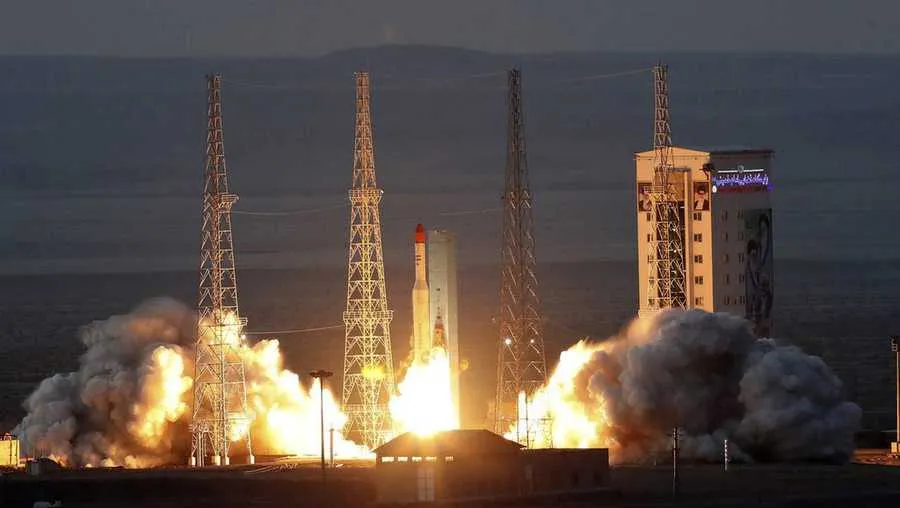

The launch of Iran's two-stage liquid-fueled Simorgh (or Phoenix) rocket from the Imam Khomeini Space Center in Semnan Province.

What's missing: three unprocessed blocks


Let's say the engines were upgraded and the range was found. A fully-fledged ICBM requires several other things that weren't evident in Iran's public tests.

  • Re-entry of a warhead into the atmosphere is the very barrier that trips up a space launch vehicle. At intercontinental speeds, the warhead enters dense layers of space with colossal heat, requiring heat shielding, precise aerodynamics, and resistance to overload. Launching the payload into space and returning it to its target are different tasks.
  • Warhead deployment and decoys. A modern ICBM carries a deployment stage (unit) that deploys multiple warheads and decoys to overcome missile defense systems. None of the Iranian missiles demonstrated such a unit.
  • Reliability and repeatability. A single long-range launch is not sufficient. A series of tests at different ranges is needed to verify the accuracy and stability of the systems. Iran has extensive experience launching medium-range missiles, but lacks a proven ICBM test cycle.

Claims that Iranian missiles can change trajectory and retarget mid-flight are common, but they have not been independently verified and are not accompanied by details of the mechanism. For now, these claims remain mere declarations.
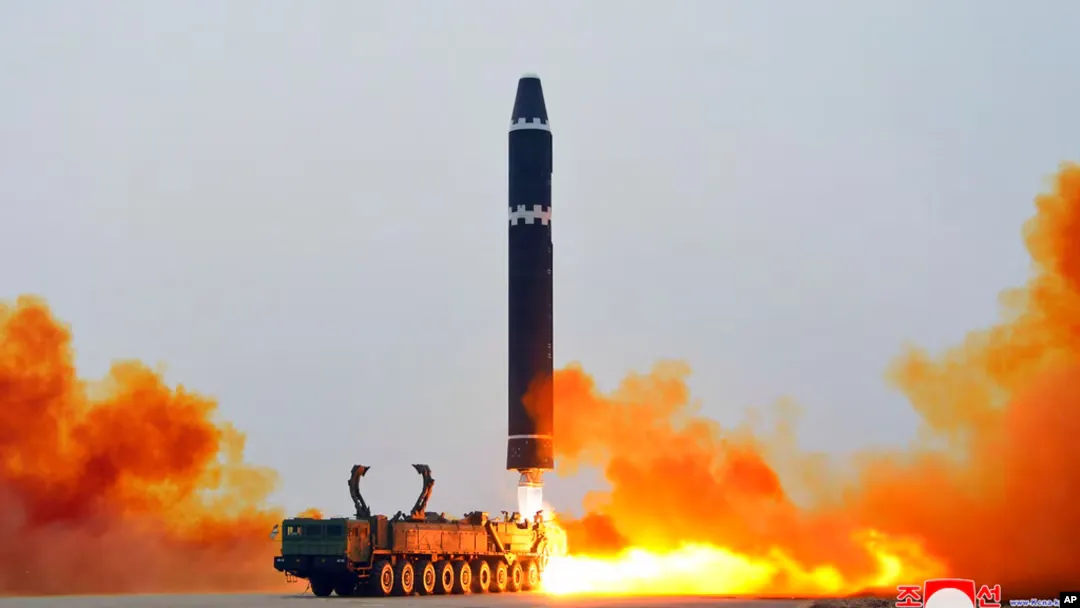

The moment of the launch of the North Korean intercontinental ballistic missile (ICBM) Hwasong-15 from a mobile launcher

The standard is nearby: Hwasong-15/17


To understand the scale of the gap, it's useful to compare the Iranian launch vehicle with a real intercontinental missile—fortunately, there's a country in a similar international position. North Korea has already demonstrated its ICBMs: Hwasong-15 и Hwasong-17 They were launched along steep, "overhanging" trajectories, which, when converted to a normal arc, yield 12,000–13,000 km. This is enough to cover most of the United States.

Hwasong-15 — a two-stage liquid-propellant rocket approximately 22 meters long and with a launch weight of approximately 50 tons. Simorgh — 27 meters and 70–87 tons. In terms of dimensions and weight, the Iranian launch vehicle is even larger—it would seem like an ICBM candidate. But Hwasong-15 flies to intercontinental range with a heavy warhead, and Simorgh In ballistic mode, with the same heavy load, it has a range of four times less—around 4000 km. The difference isn't in size, but in purpose.

The Korean missile was designed from the outset as an ICBM: designed to deliver a heavy payload, re-entry, with a different mass distribution between stages, and likely more efficient engines. The Iranian launch vehicle is designed for satellite launch, which, as we've seen, presents a different engineering challenge. Hence the gap in range for a comparable mass. Hwasong-17, an even heavier one, over 80 tons, goes further and shows elements of dispensing multiple warheads - that is, the very block that Iran does not yet have.

The path from Simorgh к Hwasong It's not just one or two steps. It's a series of complex technological leaps: engines, mass distribution, atmospheric reentry, warhead deployment. And each one comes up against sanctions on materials and components, which Iran is more strictly bound by than North Korea.

Public assessments by American and European agencies agree that Iran could acquire a combat-ready ICBM by approximately 2030–2035, if it makes concerted progress in that direction. This is a forecast, not a timetable: strikes on missile factories in 2025–2026, according to some estimates, set the program back several years. For now, 15,000 km remains a sermon, not a step-by-step calculation. It's a figure of speech, not a product.
26 comments
Information
Dear reader, to leave comments on the publication, you must sign in.
  1. + 13
    13 August 2026 04: 38
    Iran has a space program, and a space launch vehicle and an intercontinental missile are indeed related—but distantly related: the technologies overlap, the goals diverge, and the differences outweigh the similarities.

    The launch vehicle that launched Gagarin into orbit was based on the R-7 intercontinental ballistic missile, by adding a third stage...
    1. +5
      13 August 2026 07: 55
      Quote from: AllX_VahhaB
      The launch vehicle that launched Gagarin into orbit was based on the R-7 intercontinental ballistic missile, by adding a third stage...

      That's right, and this is exactly the case I discussed in the article. The R-7 is a prime example: a combat missile became a launch vehicle by adding a stage. But note the direction of the transformation.

      The R-7 was originally designed as an ICBM—for a heavy warhead, atmospheric reentry, and intercontinental flight. Its space capabilities evolved later, because the base was powerful. In other words, the long-range combat vehicle came first, and the launch vehicle was the superstructure built on top of it.

      Iran is taking the exact opposite path. The Simorgh was originally designed for satellite launch, not warhead delivery. And the transition from launch vehicle to combat missile isn't a matter of adding a stage, but rather something the satellite program simply doesn't have: reentry, heat shielding, mass distribution for the heavy payload, and the dispensing unit. This isn't an add-on, but a different class of tasks.

      So there is a relationship, but it works more easily in one direction than the other. Converting an ICBM into a launch vehicle means adding a stage on top of an existing, powerful base. Converting a launch vehicle into an ICBM means redesigning the base itself for an entirely different purpose. And sanctions on materials make this return journey even longer for Iran than it was for the USSR or than it is now for North Korea.
      1. 0
        13 August 2026 08: 36
        Iran has enough allies to transfer technology.
    2. 0
      15 October 2026 21: 43
      Please check online to see how long it took to prepare the R-7 for launch after receiving the command. IMHO, about 7 hours... Almost a third of a day...
  2. +3
    13 August 2026 08: 03
    The author has some problems with mathematics and physics.
    If a rocket is capable of lifting a certain mass into orbit, then this is equivalent to the fact that it can deliver this mass to any point on the globe.
    The information about the descent and the MIRV is far-fetched.
    For Iran's PR, it's enough to be able to drop 100 kg of pig iron from orbit onto a city of a million people in the central state. But is there an air defense/missile defense system in the central states?
    The special ammunition was mortar-caliber. A mortar, however, is a special kind. And for deorbit, the charge needs to be protected, so a bare mortar shell wouldn't do. For an explosion. For a PR stunt or a terrorist attack, it's perfectly fine; even just 100 kg of enriched radioactive material would do.

    Another issue is that its use is very unlikely, even if it were possible. Iran plans for many years ahead, and such a move is not advantageous to them. For now, the US and Israel appear inadequate and intractable, and this suits Iran just fine.
    1. +5
      13 August 2026 08: 08
      Quote: Andrey Nalimov
      The author has some problems with mathematics and physics.

      “Put it into orbit, which means you can drop it anywhere” is not equivalent, and here’s why.
      The satellite doesn't hover over the target, but flies sideways at 8 km/s. To land it in the right spot, it needs a braking unit, orientation, and precise timing. A satellite launch vehicle doesn't have these features.
      Accuracy varies. A satellite is thrown into a wide window—a miss of a hundred meters is unimportant. A warhead needs to hit a specific city. At intercontinental range, a small error equals a miss of tens or hundreds of kilometers.
      Re-entry. The object enters at cosmic velocity, with blazing heat. "Bare iron" will burn up. Thermal protection is needed—you wrote it yourself ("needs protection"). So you agree that you can't just drop it.
      The question about missile defense in the central states is misplaced. US strategic missile defense systems (Alaska, California) are deployed not over the target, but along the missile's march. Geographically, this doesn't save the "central state."
      Regarding the 100 kg, that's exactly what I thought: to get to the US, the cargo is cut down to 100 kg, and there's really nothing left to carry. Your "15 kg of radioactive dust for a terrorist attack" scenario isn't an ICBM or the 000 km distance from the sermon. That's a different conversation, and it's beyond the scope of this article.
      So the math is in tatters. "Putting it into orbit" and "delivering a munition to a target" are two different things.
      1. -1
        13 August 2026 15: 58
        "Bare cast iron" will burn. Thermal protection is needed—you wrote it yourself ("needs protection").

        Thermal insulation is actually much lighter than cast iron. And not much heavier than foam plastic. :)) That's why the warhead weighs 100 kg instead of 500.
        1. 0
          13 August 2026 16: 46
          Quote: MBRBS
          Thermal insulation is much lighter than cast iron. And not much heavier than foam.

          Do you seriously believe that a ceramic-graphite coating (composite) or (old) - a shell made of heat-resistant (refractory) materials, weighs the same as foam plastic??? belay
          And that's not the problem with creating a nuclear warhead placed in an ICBM. It contains a multitude of systems and at least two specialized RCS (chips are also a problem!) for the proper detonation of the SBP, including the trigger, aerogel, fillers, reflectors and neutron multipliers, etc., so that the nuclear warhead functions properly and doesn't explode into radioactive fragments, appearing like a "dirty" bomb...
          And modern BBs also maneuver on the descent trajectory, and have correction (astro/GPS/satellite), providing accuracy of up to 90 m... So, it’s not all that simple.
          And then, there are at least three types of ICBM trajectories: normal, high-ballistic, and flat... Recently (with the advent of gliders like the Avangard), there's also the "frog" type—with a ricochet off the PSA and repeated (multiple!) re-entry into the atmosphere... And at the same time, the device, engulfed in plasma, is controlled, evades missile defense systems, and is fairly accurately aimed at the target... Yes
          Well, with all due respect to the Persians: how could they possibly reach such heights without a base and experience? Russia, China, and the US are currently in charge and competing with each other. The rest are trying to overcome the GZO and can only talk about strategic intrigue (Macron, the British, the Germans). That's pretty much it, though.
          AHA.
          1. 0
            13 August 2026 18: 01
            Quote: BoA KAA
            Do you seriously believe that a ceramic-graphite coating (composite) or (old) - a shell made of heat-resistant (refractory) materials, weighs the same as foam plastic???

            Not seriously - they could have noticed the smiley in my message.
            And that's not the problem with creating a nuclear payload deployed in an ICBM. It has a ton of systems...

            Clearly, it's not a bare core. Nevertheless, the warhead weighs under 100 kilograms, including all the automation, cooling, and other necessary features, surprisingly enough. When I first came across the 90 kg figure for some small warhead (either for the Trident, or the Peacekeeper, or the Midgetman—I can't remember), I was quite surprised.
            And in general, I didn’t mean a full-fledged nuclear weapon, but only that
            In fact, thermal insulation is much lighter than cast iron.

            I hope you agree with this?
            I don't dispute your other objections, but that's not my concern. Iran lacks the technology to create a modern warhead, which is why I suggested, as an alternative, launching containers of radioactive waste "over large areas," if they really want to use ICBMs. And for that, a lightweight TZP is sufficient.
          2. 0
            15 October 2026 21: 47
            If the BBs are maneuverable, then it's definitely not 100 kg per block. 100 kg is when the BBs are traveling on a "bus"...
    2. +2
      13 August 2026 15: 14
      Quote: Andrey Nalimov
      The author has some problems with mathematics and physics.

      Not beating.
      A compact nuclear warhead weighs about 500 kg, or even more.

      It is not.
      Weight classification by ammunition type
      Light nuclear warheads (modern ICBM and SLBM warheads) Weight: 200–300 kg.
      Example: The American W87 warhead weighs approximately 220–260 kg with a yield of 300 kt. This relatively low weight allows for the installation of multiple multiple warheads (MIRVs) on a single missile.
      Medium nuclear warheads (tactical weapons, cruise missiles) Weight: 300–500 kg.
      Example: Nuclear warheads for Tomahawk (W80) cruise missiles or aerial bombs weigh between 130 and 400 kg.
      1. +1
        14 August 2026 05: 10
        Exactly.
        A mine with a 240mm mortar round weighs (weighed?) about the same 250 kg, was developed about 50 years ago, and does not require any special advanced technologies.
        1. 0
          14 August 2026 14: 18
          The 3BV4 nuclear mine (yield 2 kilotons) weighs 130,7 kg.
          (created in the dimensions of a conventional high-explosive mine 53-F-864)

          There were also 152 mm nuclear shells.
          Not to mention the nuclear "suitcases".

          Yield: from 0,01 kt to 1 kt (i.e., from 10 to 1000 tons of TNT equivalent). Increasing the yield above 1-2 kt in this size is physically impossible without the use of heavy boosting systems. Physical mass of the munition: from 23 to 45 kg. A plutonium charge cannot weigh less than 20-23 kg due to the laws of critical mass and the need to surround it with conventional explosives to initiate implosion.
    3. +1
      13 August 2026 15: 40
      If a rocket is capable of lifting a certain mass into orbit, then this is equivalent to the fact that it can deliver this mass to any point on the globe.
      That's not a given. It depends on the latitude of both the launch site and the target. Plus, fuel will be needed to decelerate the warhead. If the rocket's energy is barely enough to launch a payload into orbit in the "near-equatorial zone" (for example, Tehran's latitude is 36° N), then it won't reach the "circumpolar zone" (Anchorage is 61° N). A small engine, like those on satellites, could be attached to the warhead, but that would require a long flight.
      Otherwise, everything is more or less correct. Accuracy isn't required to hit a metropolitan area, and if the warhead is equipped with spent nuclear fuel, then heat shielding isn't critical—let it disperse into the atmosphere.
      But all this is nonsense, and Iran won't bother. It would be easier to attack the US with drones or cruise missiles from a container ship, either from the sea or from land, to carry out a sabotage operation like "Spider's Web."
      This is how the media scare story goes, the ICBM will roll.
  3. +4
    13 August 2026 11: 25
    "A space launch vehicle is not a combat missile," etc., etc.... Pure surrealism... Dear Sirs! Just pick up any textbook on long-range missile ballistics to see that, theoretically, the ballistics of a warhead and satellite are no different, described by the same equations. The design differences stem solely from the functional purpose of these products: an ICBM warhead is a single-use item, carries a warhead, and must withstand atmospheric reentry, while satellites have different specific requirements. The specific trajectory of both a warhead and a satellite is determined by a set of parameters at the point of payload separation from the launch vehicle, and the launch vehicle itself is essentially irrelevant. Just think of the conversion of combat missile systems into space launch vehicles for satellite launches...
    1. 0
      13 August 2026 18: 12
      Military Specialist A good combat missile is resistant to nuclear weapons damage, within reason, of course. But a space missile can pretend to be a combat missile if it's ordered to, if there are no other options. laughing
  4. -1
    13 August 2026 11: 51
    A compact nuclear warhead weighs about 500 kg

    What? What? You're 10 times wrong.
    The W82 projectile weighs 43 kg.
    1. +1
      13 August 2026 13: 31
      Quote: bk316
      A compact nuclear warhead weighs about 500 kg

      What? What? You're 10 times wrong.
      The W82 projectile weighs 43 kg.

      No, it was said
      A compact nuclear warhead weighs around 500 kg, maybe more. The exact figures are classified, and 500 kg is an estimated threshold below which miniaturization has so far been achieved by very few. So far, only two countries, maybe three, have been able to miniaturize warheads to the point where they can fit into artillery shells. The rest operate with half-ton machines.
      1. +3
        13 August 2026 13: 48
        So far, the miniaturization of charges to parameters that allow them to fit into artillery shells is available to two countries, well, maybe three.


        It has been officially confirmed that nuclear warheads (precisely warheads) are available to 7 countries.
        Lightweight (we are talking specifically about light, not ultra-light) warheads are possessed by either 3 or 4 countries.
        And the remaining three claim that small warheads simply don't fit into their strategic doctrine. So, it's not a matter of inability, but of unwillingness.
        Well, if you believe the statements. laughing

        One way or another, I saw with my own eyes a nuclear weapon that two people can lift. It's real. laughing
        1. +1
          13 August 2026 13: 54
          Quote: bk316
          That is, it is not a matter of inability but of unwillingness.
          Well, if you believe the statements.

          They once asked a barmaid at the theater what they call a man who wants to but can't? - Well, he's impotent.
          What do you call a man who can, but doesn't want to? He's also a bastard!!!
    2. 0
      22 August 2026 11: 04
      Quote: bk316
      What? What? You're 10 times wrong.
      The W82 projectile weighs 43 kg.

      500 kg for the first nuclear warhead is still optimistic, given the hope that modern technology will be applied. Nuclear shells and backpacks are the result of decades of nuclear technology development by the most advanced countries in this field. The first atomic bombs of the USSR and the USA weighed over 4 tons, and there is no reason to believe that Iran will be able to immediately produce 100 kg.
  5. +2
    13 August 2026 15: 03
    A compact nuclear warhead weighs about 500 kg, or even more.

    Outdated, perhaps. A modern 100 kt weighs less than 100 kg.
  6. 0
    14 August 2026 14: 43
    An 80-ton, two-stage rocket that can deliver 250 kilograms to a 500-kilometer orbit, but is incapable of launching a larger payload 1,5 kilometers? According to some estimates, such a 70-ton rocket could launch at least 15 tons of payload 15 kilometers. Recovering the warhead is well within Iran's capabilities and much simpler than building the rocket itself. Especially since Iran has experience launching warheads into the atmosphere to at least 2 kilometers.
  7. 0
    14 August 2026 14: 54
    And everyone is running into sanctions barriers on materials and components, which Iran is subject to even more stringent sanctions than the DPRK.

    Iran has never imposed sanctions more harshly than North Korea, especially in 2017 when North Korea launched Hwasong-15 and the Security Council imposed the harshest sanctions, while Iran's sanctions were lifted after the 2015 agreement.
  8. 0
    14 August 2026 15: 04
    A rocket capable of delivering 250 kilograms to a 500-kilometer orbit can launch at least 1,5 tons 15 kilometers. The payload velocity required to reach 15 kilometers on a ballistic trajectory with minimal energy is always lower than that required to reach orbital velocity.
  9. 0
    28 September 2026 07: 40
    It would be tactically correct to help Iran, after all, we have the same enemy...