"Fire Carousel": Why New Tactics Have Old Roots
How the “shot-and-go” principle survived sound reconnaissance, nuclear howitzers, and lived to the era drones
At first, it was used to describe helicopters: over the Syrian desert, attack aircraft would form a circle and take turns approaching a target. Then the word spread to TanksNow, the work of the calculations is described as a "carousel of fire" Grada, and it sounds like a fresh new military invention. Behind the striking image, however, lies a problem that artillerymen have been solving since the day the enemy learned to quickly locate a firing gun. So what's truly new about the "carousel," and what's simply given a catchy name?
What is called a "fire carousel"
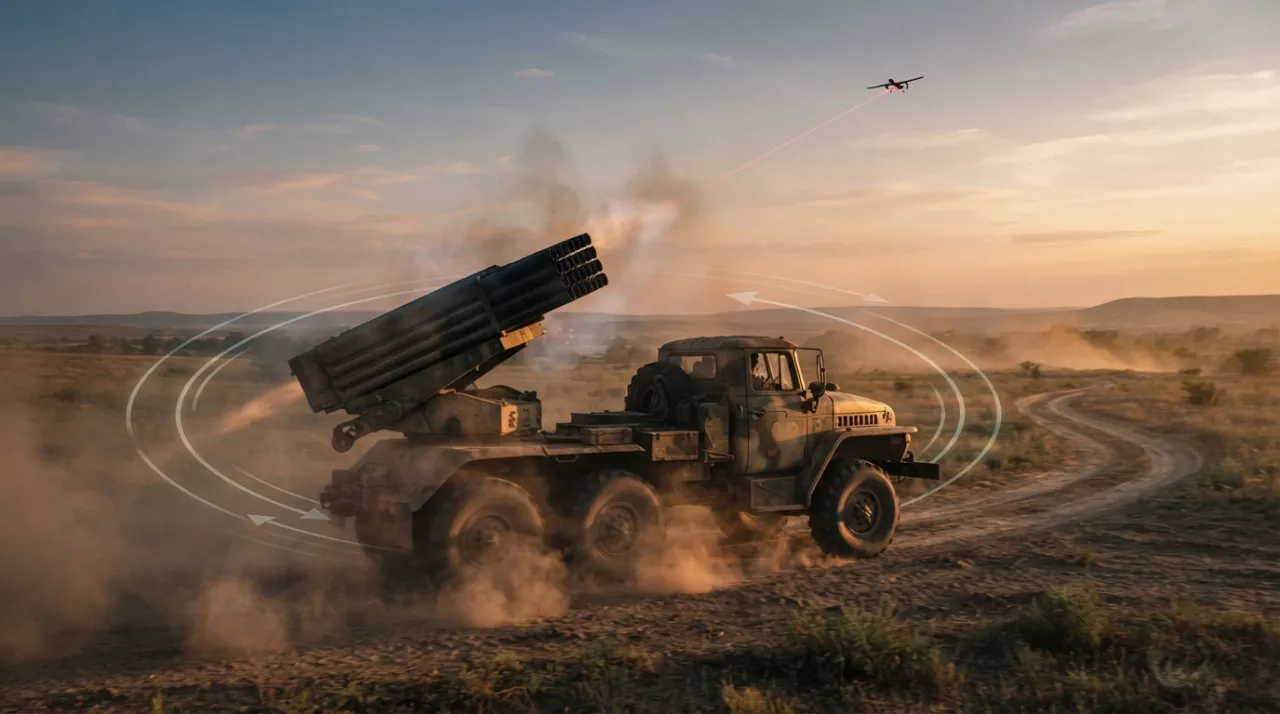
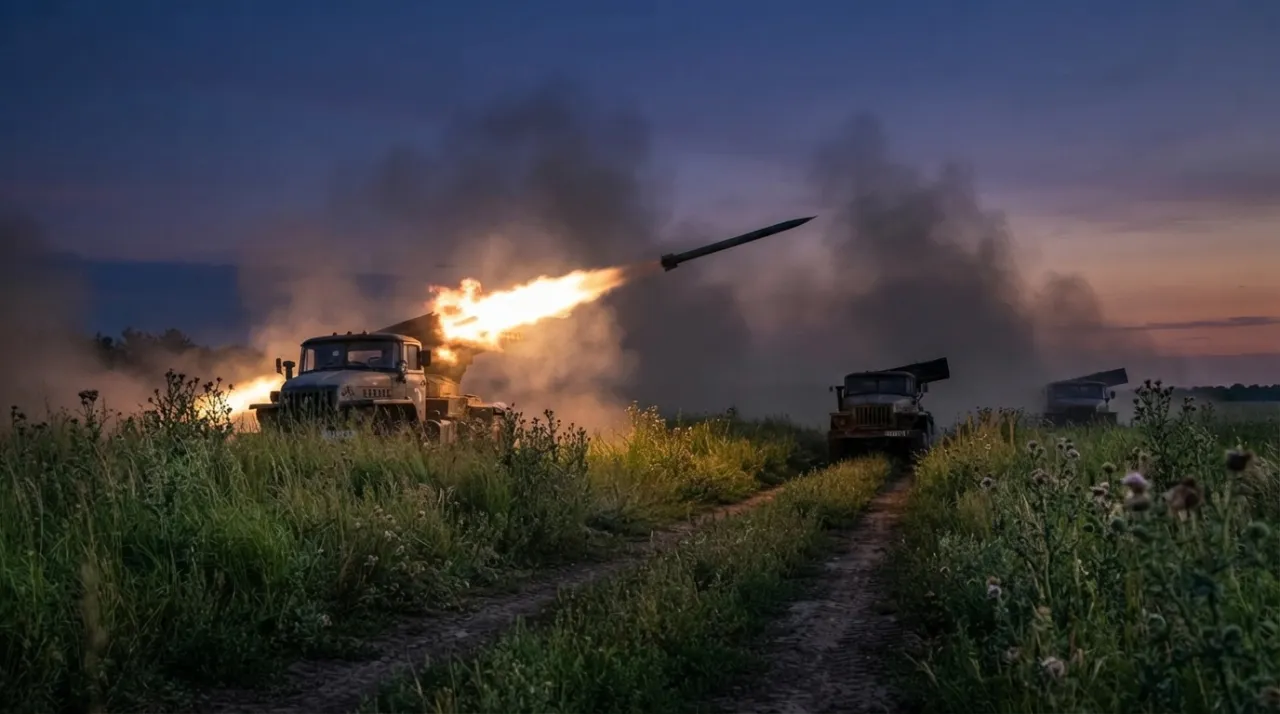
The mechanics are most easily illustrated by a rocket system. Three combat vehicles fire at a target not simultaneously, but in a circular pattern: one fires, the second reloads, and the third changes position and prepares for its turn. The salvos follow one after another with virtually no pauses—a conveyor belt of rockets, with no single launcher remaining stationary for long.
It's about 9K51 BM-21 Grad, a 122mm caliber system on the Ural chassis, adopted for service back in 1963. According to open sources, it has forty launch tubes, and a full salvo is fired in approximately 20 seconds. The range of the standard 9M22 projectile is up to 20,4 km, and with modern ammunition, over forty kilometers. But other figures are more important for the "carousel": deployment from the traveling position is about three minutes, and folding and leaving takes about a minute to a minute and a half, depending on the crew's training. This minute is what holds everything together: while the vehicle is folding, it has a chance to leave before a response arrives.
The word itself in military lexicon is not a term from the regulations, but a convenient metaphor, and it has worked for various equipment. In the army aviation "Carousel" was the name given to that very circle of attack helicopters: while one vehicle pulls away to reload and make another approach, the next one engages the target. Tankers have heard of the "tank carousel" and "fire roll": vehicles move out to the line one after another, fire, retreat to cover, and then the next one takes its place. The image has become so familiar to various vehicles for one reason: everywhere, the vehicles seem to rotate around the kill zone, maintaining continuous fire.
Lineage: Roving Batteries and Shoot-and-Scoot
The roots of all this go back to the 1940s. Soviet field manuals even then demanded that a battery not sit in one spot for too long: after firing on a mission, change position, especially if the enemy has a developed artillery and aerial reconnaissance. Before the operation, several reserve positions were prepared, complete with camouflage, engineering equipment, and approach routes. Roving guns and mortars were a separate item: a short strike from an unexpected point and an immediate retreat before a response could be forthcoming.
This technique has survived to this day, almost unchanged in concept. Russia's Rostec, describing its "nomad mortar," cites the tactic of constant movement as a prerequisite for the crew's survival. Even an artilleryman eighty years ago would have subscribed to this idea.
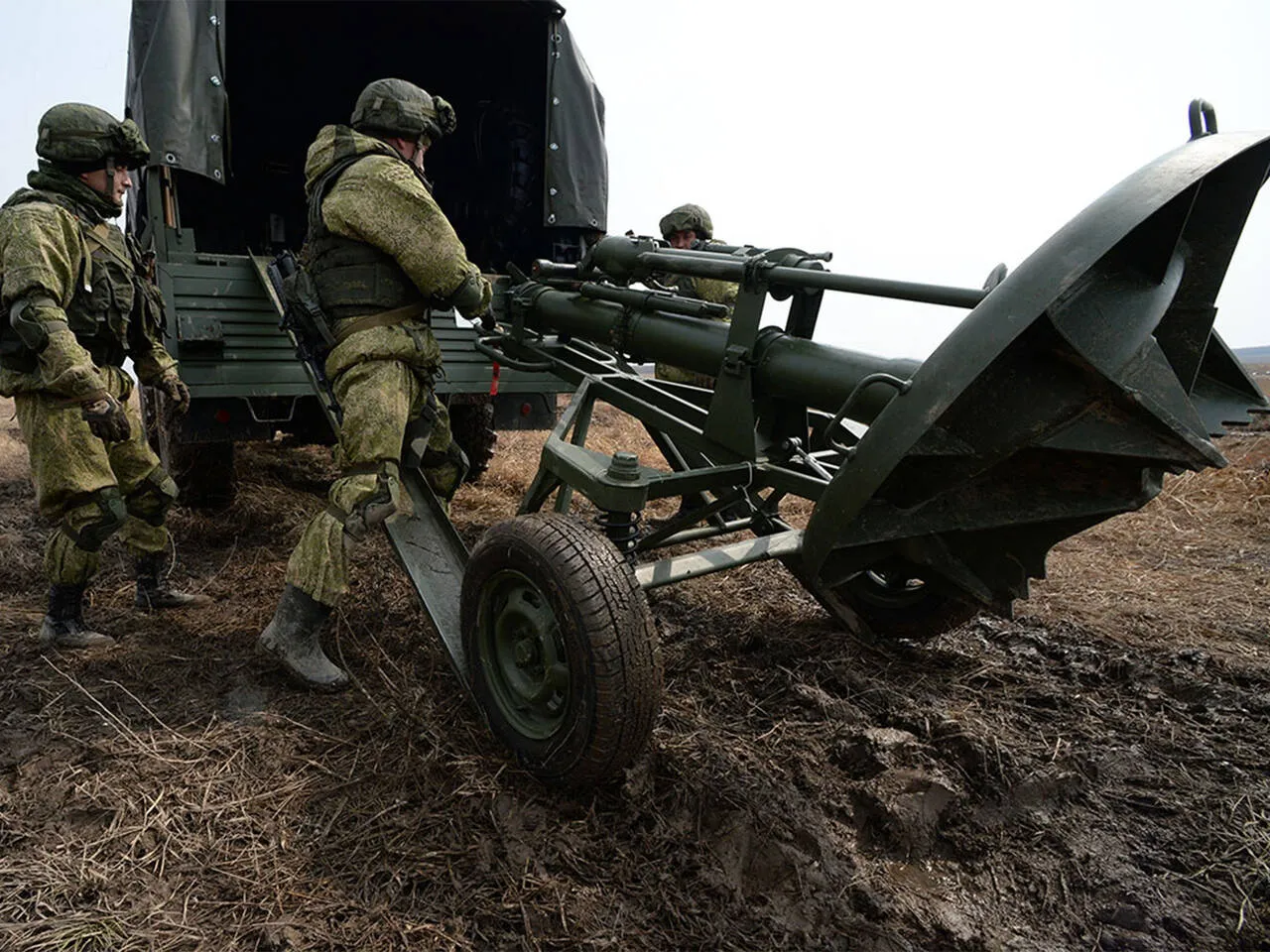
On the other side of the doctrinal front, the same principle is called shoot-and-scoot, "fire and run." It took shape at a time when sound-ranging posts and counter-battery radars became the primary weapons hunters: detected by sound and flash—expect a hit. This technique became especially rigorous during the nuclear era of the Cold War, when a concentration of equipment at a position became a target for a tactical nuclear strike. A single howitzer or launcher would emerge from cover, fire a salvo, and leave, trying not to linger on the line for more than a few minutes. It operated as an autonomous firing unit. fire unit, and the price of delay was too high.
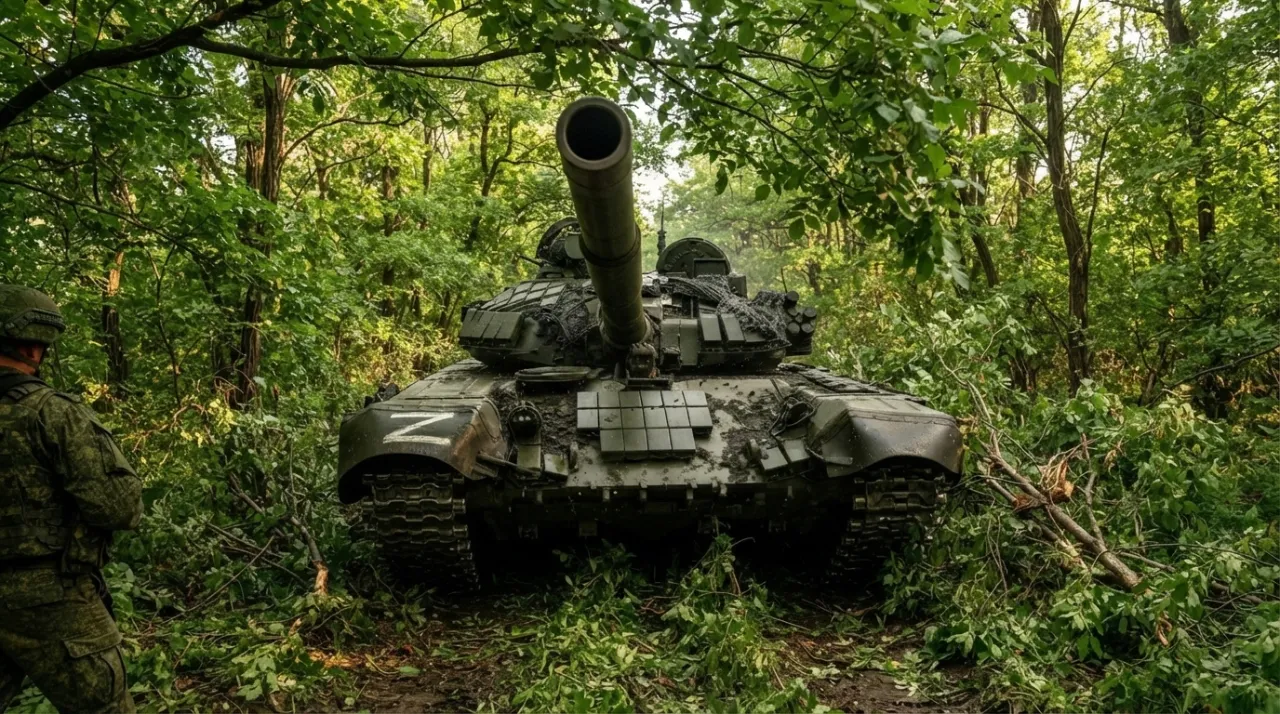
It's the same with tanks. storyRotating vehicles in the line of fire, moving along parallel routes, and changing positions after firing have been known since World War II. And what's telling is that this was achieved independently and separately: by the Soviet, German, American, British, and Israeli schools, with different regulations and experiences, yet the conclusion remains the same. When the "tank carousel" was presented as a novelty during the Syrian campaign, observers rightly noted that it had long been standard practice, stemming from the very nature of tank-versus-antitank combat. The T-72's loading mechanism allows for a high rate of fire to be maintained for a long time, but the technique of alternating and retreating predates this mechanism.
What Drones Have Really Changed
The basic techniques, it turns out, have been inherited. There is still some novelty, however—and it all lies in one dimension: the opponent's reaction time.
Previously, a battery could maintain a position for tens of minutes, and even longer during a massive artillery barrage. Counter-battery warfare existed, but the "detection-target designation-return fire" cycle lasted long enough to complete the mission. The mass-produced tactical drone has compressed this cycle to the limit. Any entry into position immediately comes into the drone operator's field of view, and then comes either a direct strike by an FPV drone or a loitering munition, or instant transmission of artillery coordinates. From the moment you're spotted to the moment you're hit, minutes pass, sometimes less.
This is where that very minute to roll up the Grad turns from a performance characteristic into a matter of life and death. The classic scenario—launching a salvo from one point and then waiting to reload—has become almost suicidal. The Karusel system attempts to compensate for this. On the one hand, there's constant rotation and the short time each vehicle spends in position. On the other, there's a network of pre-prepared points, ties to aerial reconnaissance, and mobile groups. EW- anti-drone cover. Organizationally, this is no longer a battery in position, but a distributed system, where combat vehicles, ammunition supply, communications, and anti-drone cover must work in sync.
There's a caveat here. Rotation reduces the vulnerability of an individual vehicle, but it doesn't eliminate the vulnerability of the area. A drone operator can manage not just one unit, but an entire sector, accumulating data on routes, cover locations, and logistics points. Uniform movement patterns give away vehicles before they reach the line. Open analyses detailing where rotation actually saved the crew and where it didn't are few, and this in itself is telling: while there are plenty of grandiose claims about "avoiding counter-battery fire," verifiable survivability figures are almost nonexistent. So, in the drone era, mobility is more a buoy than a lifesaver: it's essential, but relying on it alone is futile.
There's also a purely technical limitation of the Grad itself. It's an area-warfare system: its primary purpose is to cover a salvo of a good ten hectares, not to hit a single target. The exact size depends on the munition and range, but the nature remains the same. Attempts to transform the multiple launch system into a tool for sustained, flexible, and "aimed" fire run into the unguided 122mm shell, which isn't suited for pinpoint fire. The Karusel adds maneuverability to the system, but doesn't change its ballistic nature.
The designers' response: where is this driving the technology?
When survival is impossible without tactics, they are built into the machine's design. And here we see how the imperative to "get out, strike, and disappear in a minute" rewrites the very nature of the system.
The first area is time. The faster the system deploys, aims, and folds, the less visible it becomes. What was once done manually—measurements, spinning flywheels, checking tables—is now handled by electronics: firing data is calculated automatically based on incoming coordinates, satellite navigation maintains the location, and a digital fire control system eliminates those extra minutes that no longer exist. A domestic step in this direction is... "Tornado-G", a modernization of the Grad with automated guidance and navigation; according to open data, the vehicle enters and exits firing mode more quickly, which is required for "carousel" logic.
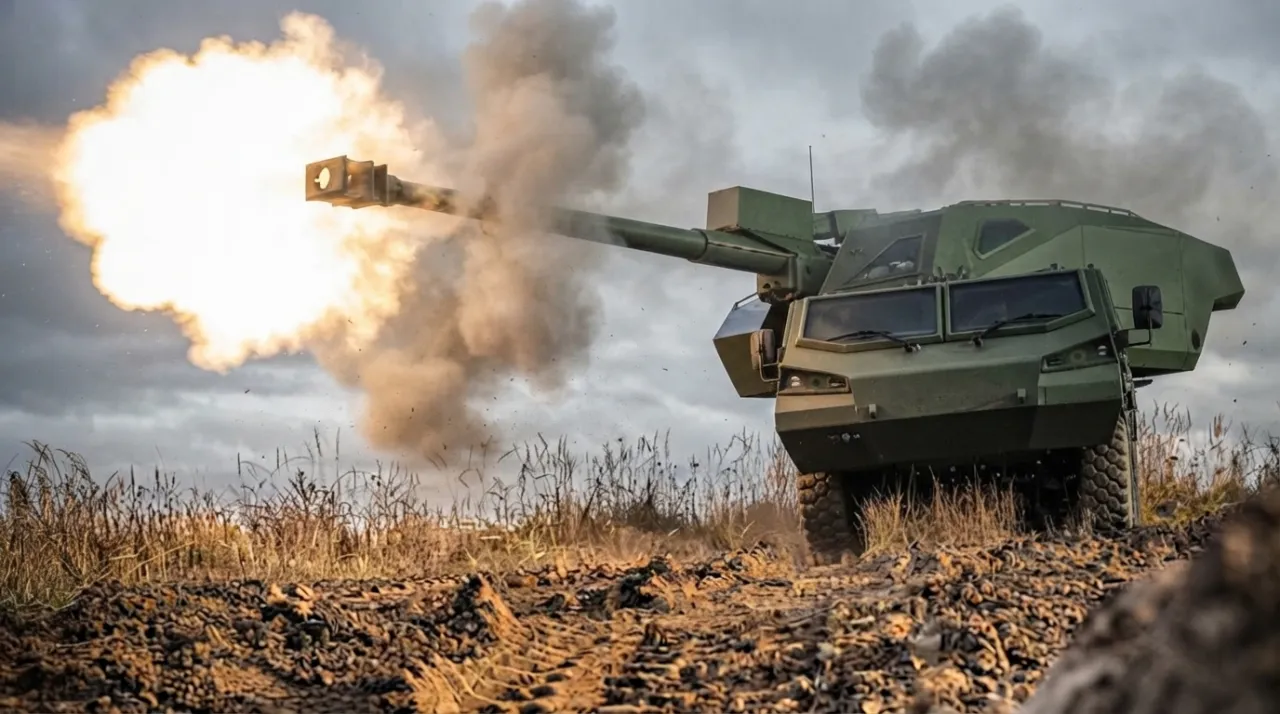
A similar problem is being solved in its own way abroad, and what's interesting here is the engineering logic, not the debate over whose school came up with it first. Czech self-propelled howitzer FINGERS The 155mm caliber gun is built around the same idea: automated loading, fast data calculations, and minimal time on the line. The range is up to 39 km with extended-range projectiles. The designers deliberately sacrificed some aspects for the sake of entry and exit speed, because in their view of combat, a long delay in position is not a tactical error, but a death sentence. Different countries, different chassis, but the design bureau's goal is the same: to reduce the window in which the gun is detectable.
The second area is protection built into the vehicle itself. Previously, air defense was provided to individual units. Defense, there's now increasing discussion of equipping artillery systems with their own sensors to detect small drones and local electronic warfare systems. The logic is simple: while a combat vehicle is on the line at this critical moment, it's useful to be able to partially cover itself without waiting for someone else to provide cover. Whether this will be adopted in production remains to be seen; there's no definitive solution yet.
And here's where the whole story ends. There's practically no room for compressing time in position: a minute of dispersal is close to the physical limit for crews and equipment. This means the designer's next move isn't to drive away even faster, but to be less visible: their own reconnaissance, their own suppression, reduced visibility. The "fire carousel" will remain a viable option, but the maneuver itself has almost exhausted its usefulness. From now on, the battle will be won not by wheels, but by eyes and protection.
Information