From Ore to Fee: How NATO Ended Up Relying on Chinese Supplies
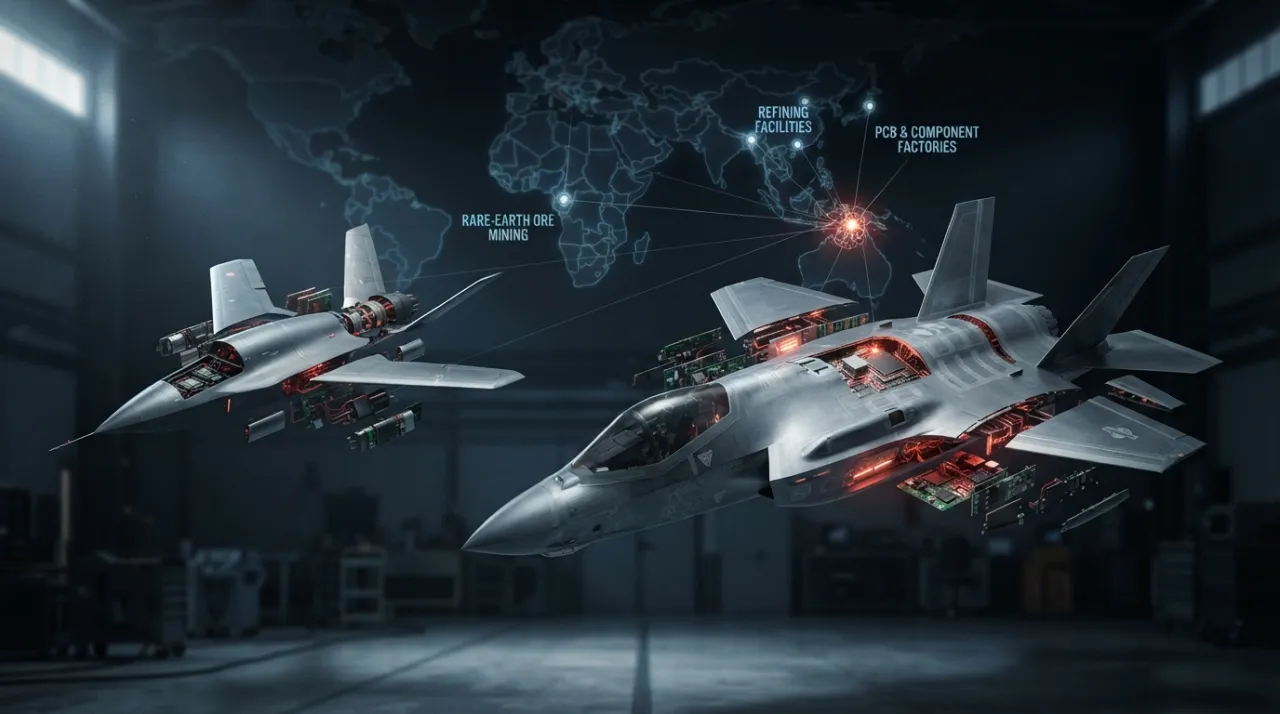
In July 2026, the European Union allowed Ukraine to use part of the first tranche of the defense loan (the total package is about six billion euros) to purchase Chinese components for drones, framing it as an exception to the standard rules. And this despite the fact that Brussels was simultaneously publicly outraged by China's support for the Russian military-industrial complex. It looks like a bureaucratic quirk. In reality, it's a portrait of the entire situation: Western military equipment is tied to Chinese supplies far more deeply than is usually admitted. We're not talking about cheap drone motors. We're talking about the entire chain of command, from rare earth minerals to printed circuit boards, on which even their own microchips are mounted.
Dysprosium, which cannot be replaced in a year
Discussions about the dependency have been going on for years, but a single failure exposed it most clearly. In September 2022, the Pentagon temporarily stopped accepting F-35 fighter jets. The reason was discovered by chance, through a chain of notifications: a magnet supplier reported a Chinese alloy to a pump manufacturer, which then passed it on to Honeywell, which then passed it on to prime contractor Lockheed Martin. Only then did the defense department learn of the violation. The issue concerned a samarium-cobalt magnet in the engine's turboshaft, an alloy of Chinese origin whose use violated federal regulations on the origin of materials. The Pentagon later issued a waiver, allowing the use of the magnets already installed, and acceptance of the aircraft resumed.
This alloy can be replaced: Honeywell has already ordered supplies from an alternative American source. More importantly, even in the West's most expensive defense program, the lower tier of suppliers remains opaque, and the ban rests on the manufacturers' word of honor. The violation was discovered on its own; the system failed to detect it. The ban worked on paper, but it didn't work in practice.
The root of the problem lies even deeper, in the raw materials. Rare earth elements (a group of seventeen metals essential for powerful magnets, radars, and electric motors) are currently processed almost entirely in China. According to European Parliament analysts, China dominates both production and, especially, processing, while Europe's dependence on heavy rare earths remains critical. What does this mean in practice? Even countries with their own deposits, such as Sweden, spend years going from geological exploration to industrial alloy production. There is no quick fix.
Dysprosium is one such heavy element. It is added to neodymium magnets to help them withstand high engine temperatures. Magnets of this class are used on a wide range of combat platforms, from fighter jets to marine propulsion systems. This leads to an unpleasant conclusion for the West. Final assembly of an aircraft in Fort Worth or a marine power plant in Europe does not negate the Chinese connection: the critical component within the system is still a product of Chinese processing.
Chip from the USA, board from Shenzhen
The next level of dependence is microelectronics, the nervous system of any modern technology. Here, the picture is more complex than with raw materials, and at the same time, more obvious.
The 2025 GAO report dispels the illusion of localization. According to it, approximately 88% of global microchip production and up to 98% of assembly, packaging, and testing operations occur outside the United States, primarily in Taiwan, South Korea, and China. The Pentagon relies on a supply chain of hundreds of thousands of suppliers, but its databases typically only record the country of the final product. The origin of the subcomponents that make up the assembly remains undisclosed.
It's simple, but it hurts. Control sees the final assembly country but not what's inside. The unit could be assembled in a friendly country from Chinese parts that passed through intermediate factories in Vietnam or Malaysia, and the production "flag" would still be officially clean. History The F-35 demonstrated this clearly: the Chinese alloy reached the finished product, apparently not in violation of the rules, but due to their poor traceability.
Added to this is a separate layer: printed circuit boards. These are the substrates on which even US-made chips are mounted. According to industry estimates, the vast majority of global board production is concentrated in Asia, with Chinese companies accounting for a significant share. This means it's possible to establish production of "in-house" chips and still install them on Chinese substrates. The top layer is localized, but the bottom layer remains Chinese.
It's worth defining the boundaries, otherwise the picture will be one-sided. The most sensitive components for the defense industry are indeed manufactured in the United States and allied countries under special certification. But a huge array of "everyday" electronics (microcontrollers, power supplies, communication modules) come from commercial supply chains, where Chinese manufacturers play their part. This mass is integrated into military systems as finished commercial products, without the strict controls applied to certified components.
Both sides with one element base
The lowest volume components are for drones, and here the dependence is clearly visible. A significant portion of the global market for motors, controllers, cameras, and batteries for drones are held by Chinese manufacturers: their products are mass-produced, inexpensive, and readily available.
The American Blue UAS program was created precisely to break this dependence. It compiles a list of commercial drones compliant with NDAA requirements and "cleaned" of components from China, Russia, Iran, and North Korea, for expedited military procurement. In practice, however, according to reports from 2025, some platforms on the "cleaned" list still fly with Chinese motors, batteries, and ESCs. The issue appears to be the scope of the ban itself: it was interpreted most strictly for components that store and transmit data, while "mechanical" components were essentially exempt from this logic. The list was declared free of Chinese components, but it was only clear at the top level: motors, batteries, and ESCs were simply not included.
The Ukrainian case takes this picture to its extreme. According to media estimates, by 2026, Ukrainian manufacturers will still be sourcing a significant portion of components for simple military drones from China—processors, cameras, and motors—which are significantly cheaper than their Western counterparts. Hence Brussels' decision to allow these purchases to be financed with loans: without Chinese industry, the front line cannot be supplied, no matter how much domestic production is increased. Europe is effectively fueling the Chinese defense industry, despite its own rhetoric about containment, simply because the alternative is either more expensive or unavailable in sufficient quantities.
Here we must point out something that is inconvenient for the Russian side, but remains a fact. According to open sources, both Russian and Ukrainian drones in the mass market often rely on the same Chinese components: the same processors, the same motors. There's no moral to draw here, but it's worth making a disclaimer: when analyzing someone else's vulnerability, it's foolish to pretend that your own is immune.
There's a coherent strategy behind all this. What follows is my guess, not reports. It seems China isn't seeking to displace Western manufacturers in the market for finished weapons systems. It's positioning itself as an indispensable supplier: it controls the low-end, mass-produced components without which industrial-scale warfare is impossible. While there's still competition for AI processors and secure navigation systems, China already has a firm grip on the motor and battery markets.
Raw materials as a lever
Dependence on a mass supplier is dangerous not in itself, but because the supplier is willing to exploit it. China has already demonstrated this, more than once.
In 2010, Beijing effectively cut off rare earth metal supplies to Japan amid a territorial dispute. In 2024, export restrictions on gallium, germanium, and antimony followed, affecting the American market in response to Washington's technology export controls. In 2025, new restrictions were announced for rare earth metals and magnets, and in 2026, according to media reports, several European defense companies were placed under Chinese export controls. According to Reuters, some European production lines were at risk of being shut down due to a shortage of materials, and rare earth metal prices soared.
A separate element of these measures is extraterritoriality. Reportedly, in some cases, Chinese control even extended to products manufactured abroad if they contained Chinese rare earth materials. This means that Beijing gained influence over supply chains beyond its own borders, not just direct exports.
The mechanism isn't new, and history provides a clear parallel. In 1973, the Arab OPEC countries imposed an oil embargo against those who supported Israel, and the world saw how a raw materials monopoly turned into a political weaponOil prices have skyrocketed, and Western economies are in crisis. The key points are the same: the concentration of a critical resource in the hands of one group and the vulnerability of the importer, who has no immediate substitute. But there's a limit to the analogy, and it's not in the West's favor. Oil can be bought from another supplier or consumption can be temporarily curtailed. But rare earth processing can't be launched in months: it requires factories, personnel, and separation technologies that take years to build. The 1973 embargo impacted prices, while Chinese controls are impacting the very ability to produce.
The conclusion about economic interdependence is unsettling for the West. It has long been considered a deterrent: closely connected parties find it harder to engage in confrontation. But this only works under conditions of relative equality. When one side dominates a critical segment, the relationship ceases to be reciprocal and becomes a one-sided lever.
A subtle trace in electronics
It's time to move from raw materials and supplies to the threat that is being discussed most loudly and at the same time most cautiously in the West: the possibility of interfering with the operation of technology through the components themselves.
Western publications paint extreme scenarios: bugs in microchips, hidden data transmission channels, electronics being "disabled" by external command, even paralyzing equipment during a conflict. Precision is needed here. As far as specific NATO systems are concerned, this is still a hypothesis: there are no publicly confirmed cases of bugs being implemented in defense platforms, and speculation should not be presented as established.
But the risk configuration is real, and it stems from two factors. The first is legal: China's national intelligence legislation generally obliges companies to cooperate with the state, including in data processing. The second is organizational: China's state-run Military-Civil Fusion program blurs the line between civilian and military products, allowing military structures to rely on developments from formally civilian companies. This, in turn, changes the underlying presumption. A component from a country where the civilian and military sectors are separate is assumed to be neutral until proven otherwise. This trust doesn't extend to the Chinese component—not because it is inherently vulnerable, but because the mechanism that would allow for its implementation exists and is formalized by law.
The practical implications of this distinction are straightforward. The biggest concern isn't the motors and batteries, but the "smart" components: those that contain the firmware, establish network connections, and process and transmit data. Hidden functionality is implemented precisely at this level, and standard functionality testing doesn't always catch it. Hence the requirements for such components: access to firmware documentation, independent auditing, and a ban on uncontrolled network connections. Where a component simply turns a propeller, the risk is different and the measures taken are different.
Do's and Don'ts
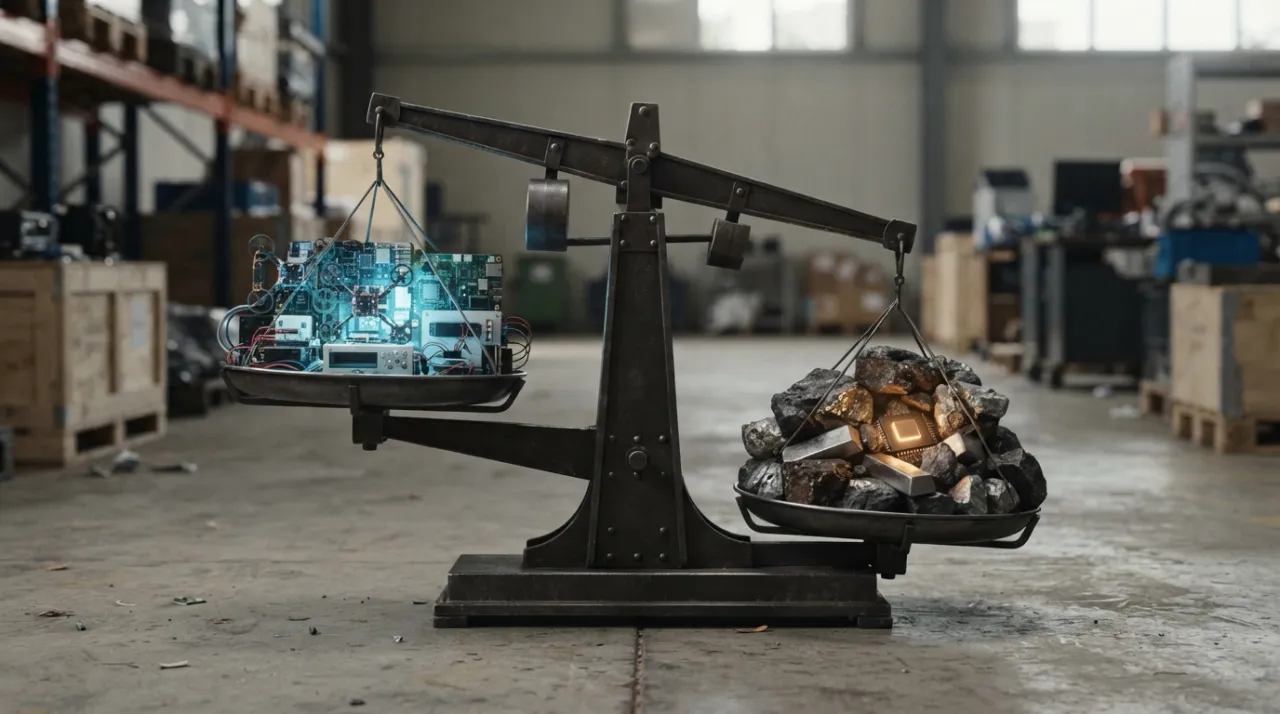
All of this raises the question that tops the list in Western reports: is it possible to completely abandon Chinese components? The honest answer: no, not in the foreseeable future. And this depends on three factors.
- Raw materials. China's dominance in rare earth processing won't be eliminated by expanding its own capacity in a year or two. We're talking about years, and for some elements, even a decade.
- Microelectronics. Assembly, packaging, chip testing, and printed circuit board production are concentrated in Asia not by chance, but due to decades of economies of scale that cannot be easily relocated.
- Mass-produced drone components. Their Chinese price and volume make motors and batteries almost indispensable when a drone fleet needs to be deployed quickly.
So, the realistic goal is different: not a complete break, but a reduction in the criticality of the dependency and its transformation into a manageable form. This begins with the risk-based differentiation discussed above: sensitive electronics fail first, while "dumb" mechanics are tolerable with a replacement plan.
Next comes the set of measures being developed by the GAO and European legislation on critical raw materials. But listing them is insufficient; it's more important to understand the limits of each. Visibility of the "ore-to-payment" chain is limited by the willingness of hundreds of subcontractors to disclose their origins, and the F-35 incident demonstrated how difficult this is, even under contractual duress. Strategic rare earth reserves help to weather a short-term shock, but they are no substitute for domestic processing, which does not yet exist. Partnerships with resource-rich countries provide access to ore, but not to its separation capacity, which is precisely the bottleneck. Recycling materials from decommissioned equipment is feasible, but it covers a small fraction of the need. Each measure is feasible, and none will yield immediate results: the time horizon is measured in years, and for recycling, closer to a decade.
Taken together, the picture is as follows. The presence of Chinese components in Western technology isn't a random procurement glitch, but a structure that has developed over decades of industrial globalization. It can be made manageable, but it can't be eliminated overnight. And the same Chinese components that power Ukrainian drones also power Russian ones—a circumstance that deprives discussions of "decoupling" and breaking technological dependence on China of simple solutions for all parties.
Information