The first of the latest generation of Los Angeles cars is on its way to making history!
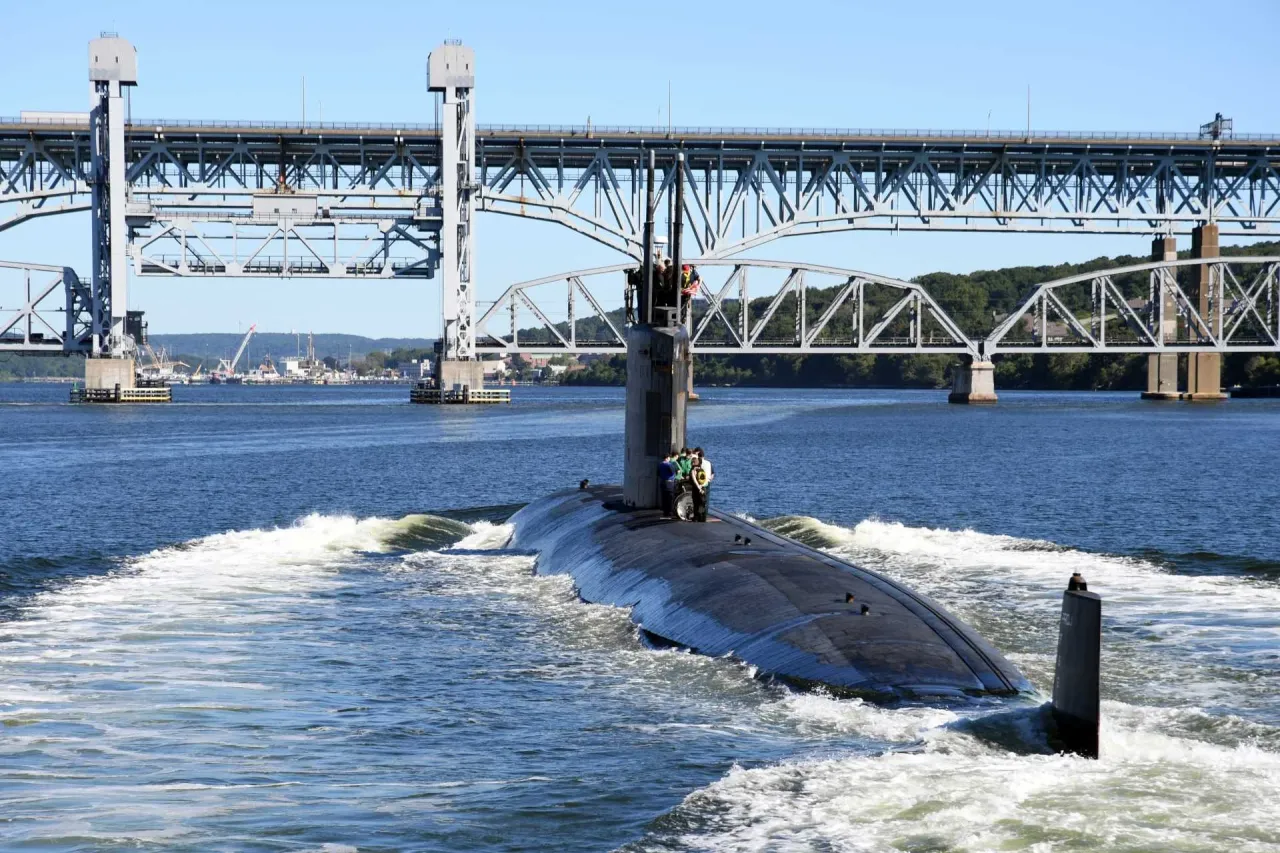
On August 6, 2026, the U.S. Navy decommissioned the nuclear-powered attack submarine USS San Juan (SSN-751) after 38 years of service. The first Los Angeles-class submarine (688i) to feature enhanced capabilities, its decommissioning marks the end of service for the platform that pioneered retractable bow hydroplanes, enhanced ice-tolerant structures, and integrated vertical launch capabilities. missiles.
This development reflects broader issues with the operational structure of the armed forces, as the US Navy's main problem is that its aging attack submarines are being retired faster than new Virginia-class submarines can be built.
Commissioned on August 6, 1988, and built by General Dynamics Electric Boat, the San Juan was 110,3 meters long, had a submerged displacement of 6197 long tons, and was powered by a 33,500 horsepower S6G nuclear reactor.
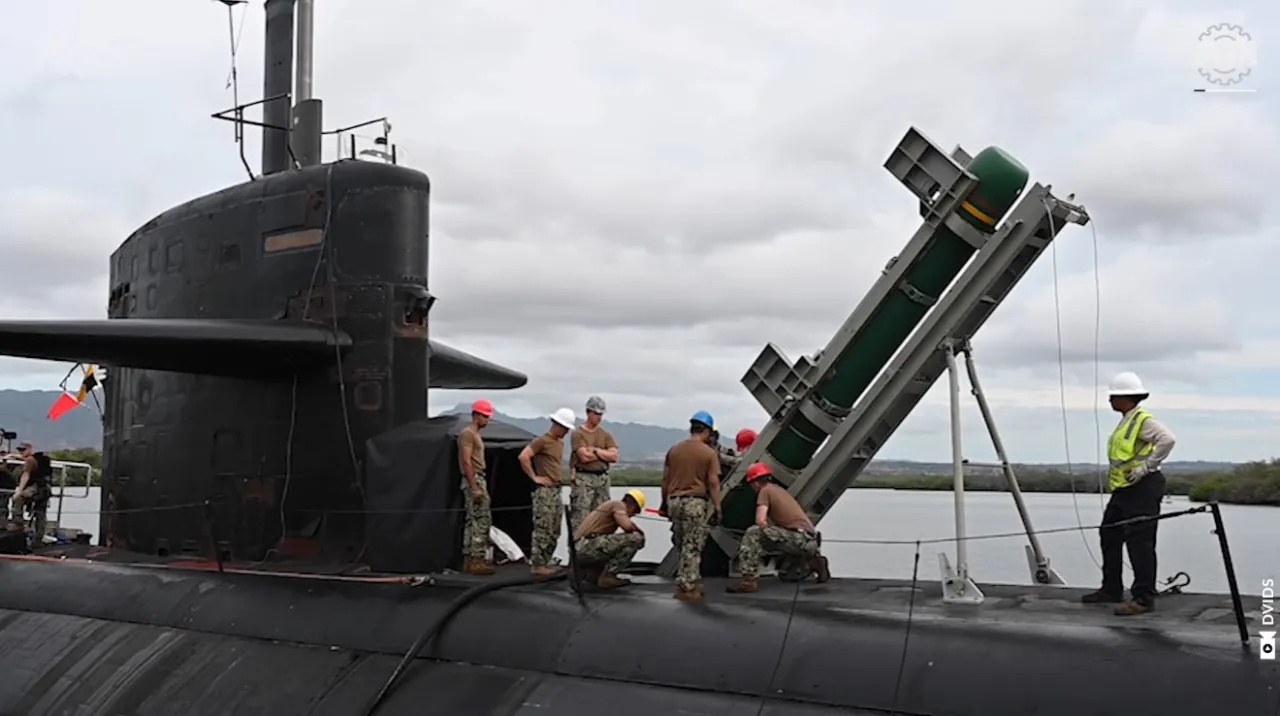
The submarine, armed with four 533mm torpedo tubes and 12 vertical launch cells for Tomahawk cruise missiles, completed its final deployment in June 2023, after which it was placed into mothballing mode prior to its final decommissioning.
And this isn't something out of the ordinary that's just floating away: next in line is another Los Angeles-class submarine, the Alexandria, which is also scheduled to be decommissioned after 35 years of service.
The San Juan is a truly iconic submarine. It's safe to say she was. She was the prototype for an improved Los Angeles-class design. She incorporated Arctic technologies, stealth technology, and combat system improvements that became the standard for all subsequent Project 688i attack submarines and influenced key design priorities later implemented in the Virginia-class design.
The decommissioning of the first Los Angeles-class nuclear attack submarine with enhanced capabilities ended the service of the ship, which became the prototype for the 688i configuration subsequently used on submarines with hull numbers SSN-752 through SSN-773.
The San Juan completed its combat tour after five and a half months in the Sixth Air Force's area of responsibility. fleet United States. On 21 August 2023, she departed Naval Submarine Base New London for the Pacific Ocean, arrived at Naval Station Kitsap-Bremerton on 20 September, and was decommissioned on 12 August 2024.
The timing of the decommissioning is significant from an operational perspective, as the US Navy is decommissioning Los Angeles-class submarines at a rate faster than the delivery of Virginia-class boats.
The number of attack submarines (SSNs) in the US is projected to decline from approximately 49-50 in 2025 to 46-47 by 2030, leaving a long-term requirement of 66 submarines.
General Dynamics Electric Boat was awarded the contract to build the USS San Juan on November 30, 1982. Keel laying took place in Groton, Connecticut, on August 9, 1985, the submarine was launched on December 6, 1986, and commissioned on August 6, 1988.
By that time, the US Navy had already divided the Los Angeles-class submarines into three production groups:
- 31 submarines of the I series from "Los Angeles" (SSN-688) to "Providence" (SSN-718);
- 8 submarines of series II from "Pittsburgh" (SSN-719) to "Newport" (SSN-750);
- 23 Series III boats from "San Juan" (SSN-751) to "Cheyenne" (SSN-773).
The Series II submarines were equipped with a battery of 12 vertical launch tubes for Tomahawk missiles, allowing them to launch cruise missiles without using the four bow torpedo tubes. However, the Series III submarines (also known as 688i or "Improved Los Angeles") addressed other issues related to the modernization of the Soviet submarine force.
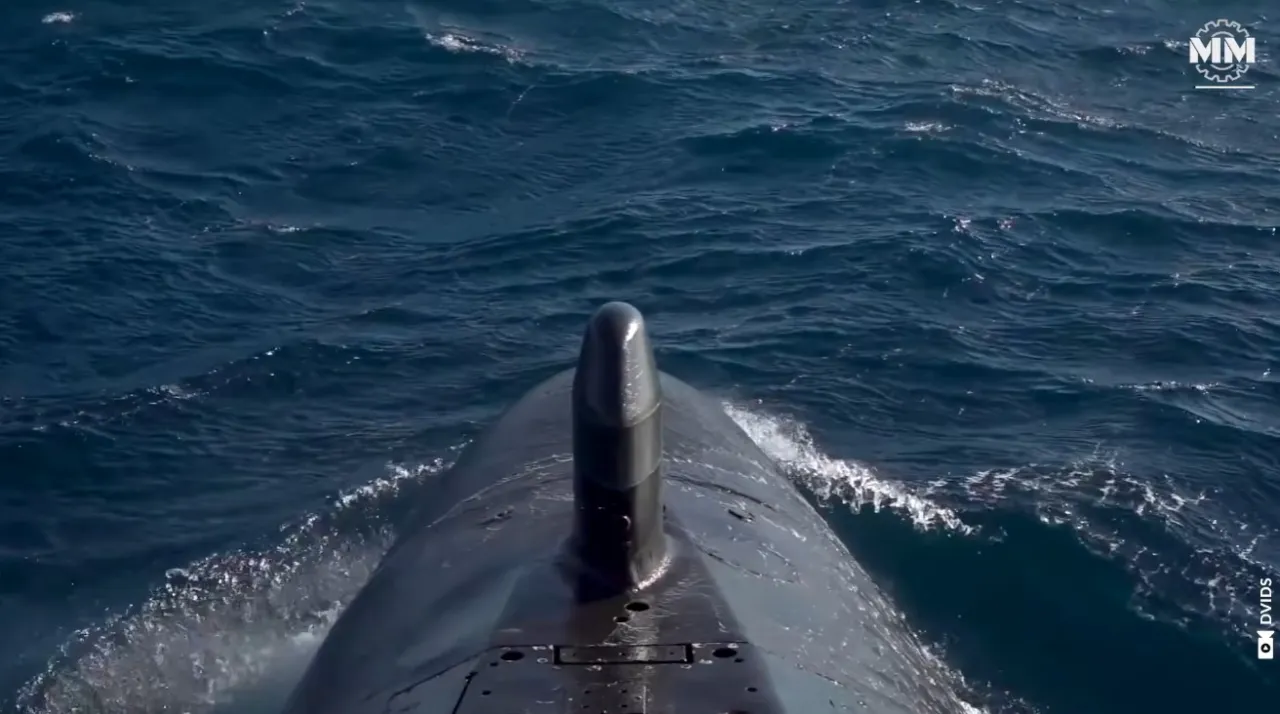
On the San Juan submarine, the rudder jets were moved from the sail to retractable positions in the bow, a reinforced sail designed to overcome Arctic ice was installed, additional noise reduction measures were taken, the ability to lay mines was added, and the AN/BSY-1 combat system was installed.
These changes were intended to improve the submarine's effectiveness against quieter Soviet attack submarines, including the Barracuda and Akula classes, and its ability to operate under Arctic ice in areas where Soviet ballistic missile submarines patrol.
The power plant was a single General Electric S6G pressurized water reactor with a D2W core and a thermal output of 165 MW. This reactor generated steam for two main turbines, which, through a single shaft, drove a 33,500-horsepower propeller.
The official speed of the Los Angeles-class submarines exceeded 25 knots. The stated endurance of this class was approximately 90 days, with the nuclear propulsion system eliminating the fuel issue as the main limitation for conventional submarines. Endurance depended on provisions, maintenance, crew, and mission completion.
The crew of the submarine San Juan usually consisted of 12 officers and 98 sailors and petty officers.
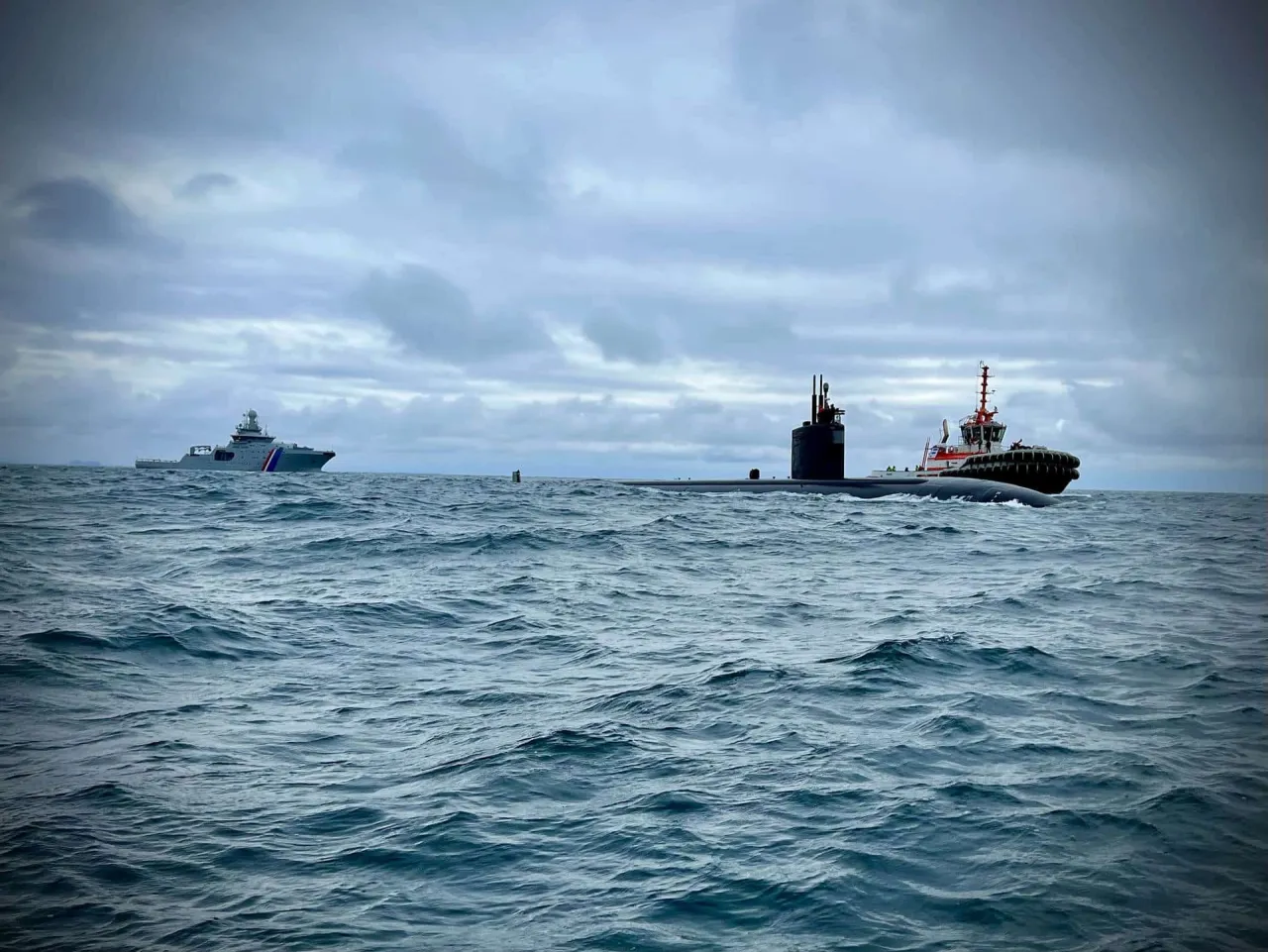
The San Juan carried four 533-millimeter torpedo tubes and 12 vertical launchers located forward of the conning tower/sail. The torpedo tubes could fire Mk 48 ADCAP heavy torpedoes for attacking underwater and surface targets, UGM-84 Harpoon anti-ship missiles, Tomahawk missiles if necessary, and mines, including the Mk.67 mobile mine.
The last 31 Los Angeles-class submarines, class II and III, had a 12-tube Tomahawk vertical launch system installed in the internal torpedo compartment. This allowed the Project 688i submarine to deploy with a missile battery suitable for striking land targets, separate from the torpedo armament needed for anti-submarine warfare. This meant that the strike armament did not interfere with other missions by occupying the torpedo tubes. Thus, a submarine performing strike missions could keep the Mk 48 operational and not use the torpedo tubes to launch missiles.
This pattern became increasingly important after the end of the Cold War, as the Los Angeles-class boats shifted from primarily anti-submarine warfare missions to anti-submarine warfare, reconnaissance, and precision strike missions against land targets.
The San Juan demonstrated this transition in March 2003 when it fired Tomahawk missiles at land targets from the Red Sea in support of Operation Iraqi Freedom.
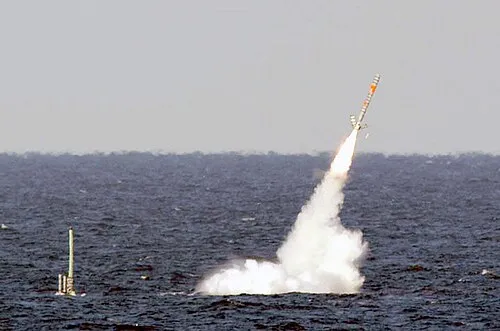
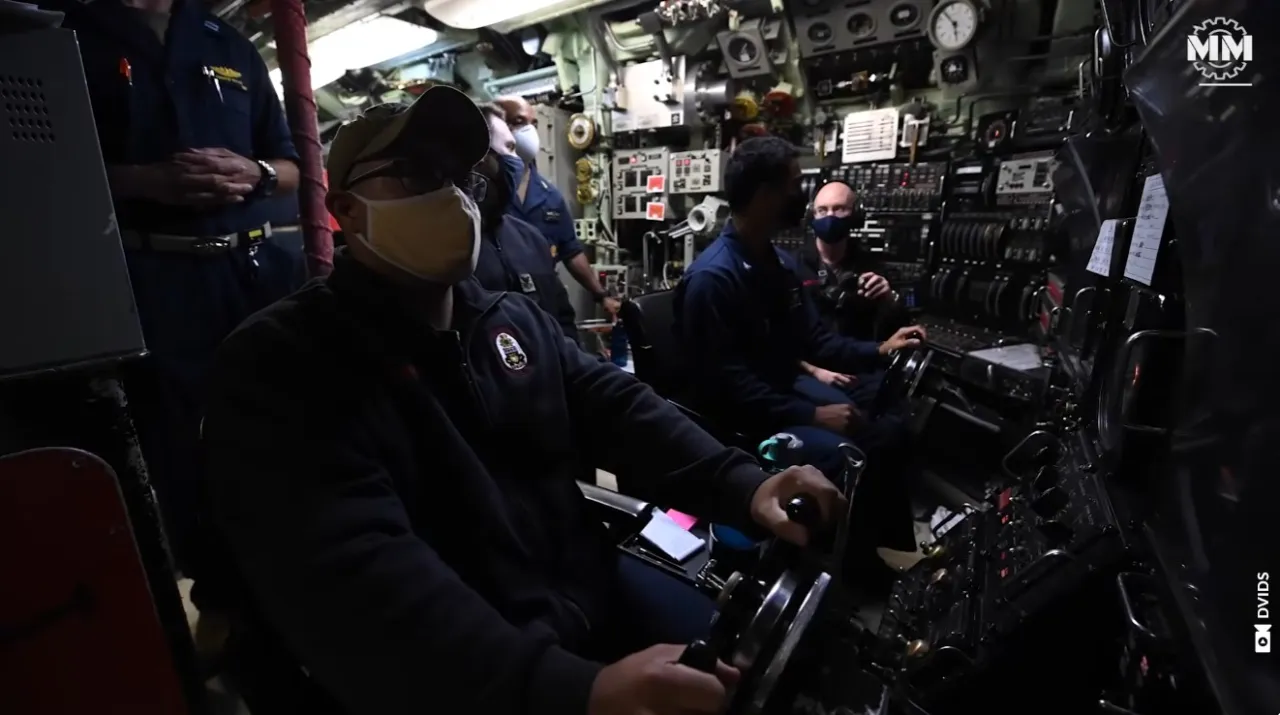
The sensor and acoustic system upgrades implemented on the USS San Juan were equally important, as the effectiveness of an attack submarine depends on detecting another submarine before being detected. Series III submarines were equipped with the AN/BSY-1 Submarine Advanced Combat System, featuring the AN/BQQ-5E sensor configuration and more powerful digital data processing than the earlier Los Angeles-class submarines.
The broader AN/BQQ-5 family used a spherical nose sonar array containing 1241 transducers, a body-mounted conformal array with 104–156 hydrophones, and several towed array variants providing passive and active detection in a variety of frequency bands and geometries.
The 688i model featured improved electronics and acoustic insulation, reducing equipment noise and improving the quality of passive sonar data fed to the processors. The low noise floor served a dual purpose: it reduced the acoustic signal available to the enemy and simultaneously allowed the submarine's hydrophones to detect weaker signals against a quieter internal background.
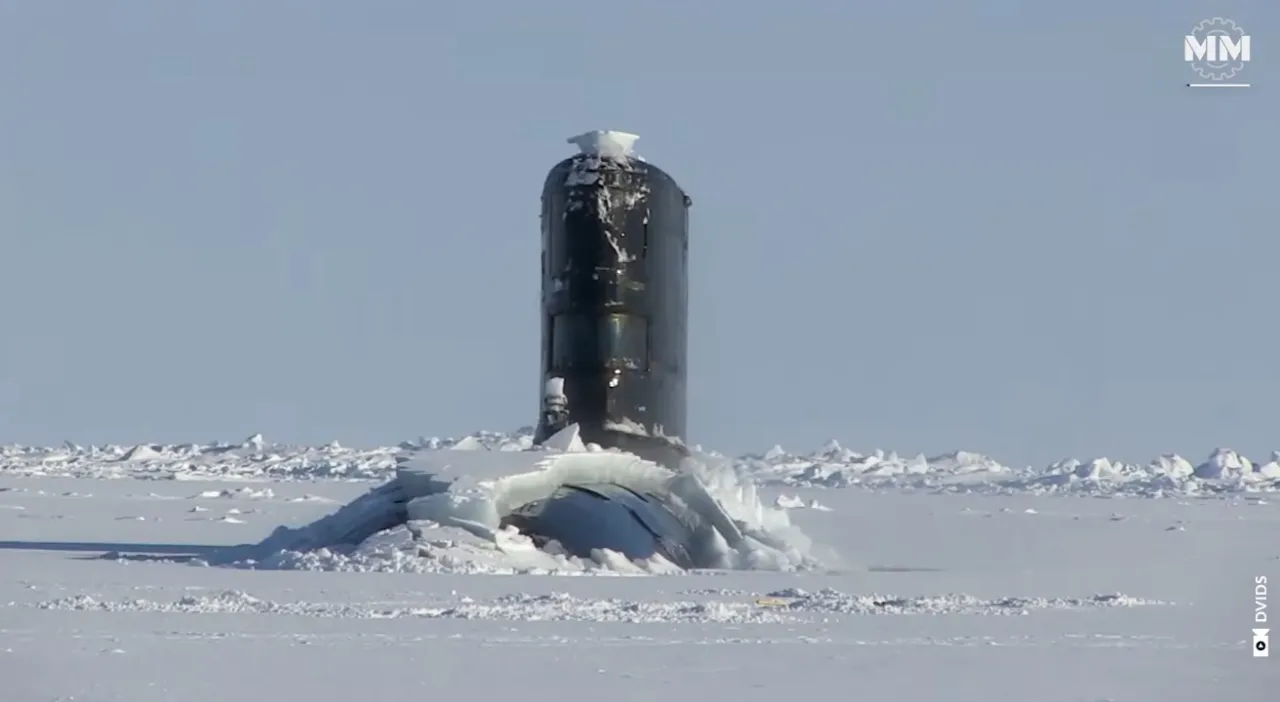
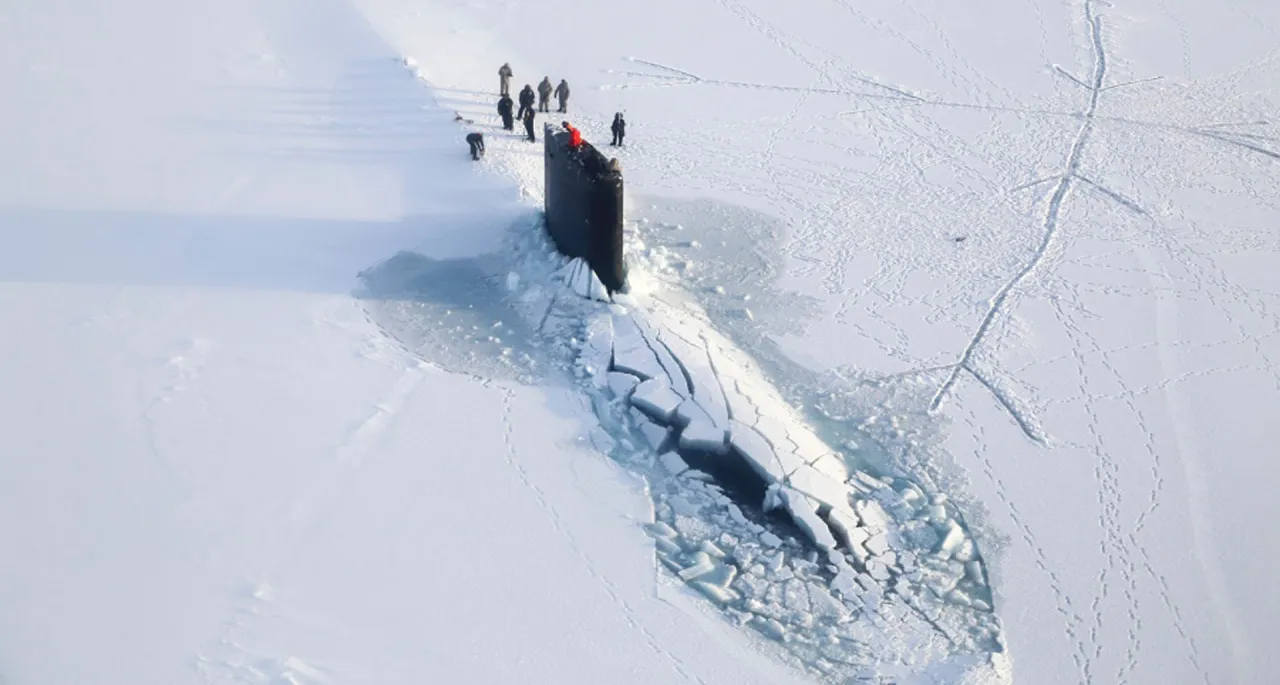
Removing the large horizontal rudders from the sail improved the flow around the top of the hull and allowed the rudders to be retracted when not needed, and the strengthened sail was able to withstand the stresses of passing through ice.
In 1993, the San Juan submarine tested its Arctic configuration when it surfaced from beneath the ice for the first time. The result was a submarine designed to operate not only in the open Atlantic or Pacific Oceans, but also under the Arctic ice, where access routes, acoustic wave propagation, and the inability to freely surface significantly complicate missions. The San Juan subsequently participated in numerous operations in the Atlantic Ocean, Mediterranean Sea, North Atlantic, Arctic, and Middle East, including in the areas of the US Fifth and Sixth Fleets.
The March 2003 Tomahawk launches from the Red Sea were followed by further deployments to Bahrain, Jebel Ali in the United Arab Emirates, Souda Bay in Greece, Rota in Spain, Lisbon in Portugal, Faslane in Scotland, Bergen in Norway, Limassol in Cyprus, and in Icelandic waters.
In November 2009, San Juan arrived in Simon's Town and conducted joint exercises with the South African Navy. In September 2020, the submarine participated in Exercise Black Widow, serving both as a target for an attack submarine and as an active participant in a multi-role anti-submarine warfare scenario. In 2021, she participated in Exercise Dynamic Manta, after which she again transited the Mediterranean and North Atlantic. Her final deployment began on 21 December 2022 and concluded in New London on 6 June 2023.
During her most recent deployment, the submarine traveled nearly 37,600 nautical miles, or 69,635 km, made a 13-day stopover in Rota in March, visited Limassol from 3 to 7 April, carried out personnel transfers in Gibraltar on 18 April and off the coast of Iceland on 26 April, and also carried out missions in the Far North.
During its 38 years of service, the submarine repeatedly required expensive maintenance and suffered incidents that affected its hull and operational readiness.
On March 19, 1998, the San Juan collided submerged with the Ohio-class ballistic missile submarine USS Kentucky (SSBN-737), which was surfaced south of Long Island. The San Juan sustained damage to its forward ballast tank, and the Kentucky sustained damage to its rudder. No crew members were injured, and both submarines remained operational enough to continue their missions safely.
On March 13, 2007, contact with the USS San Juan was lost during operations with the USS Enterprise Carrier Strike Group, and a red flare was spotted in the submarine's suspected area. This prompted a search and rescue operation, which continued until contact was restored early on March 14, and the submarine confirmed that no emergency had occurred on board.
The most significant maintenance work occurred on April 8, 2010, when the submarine San Juan arrived at Portsmouth Naval Shipyard for a major overhaul.
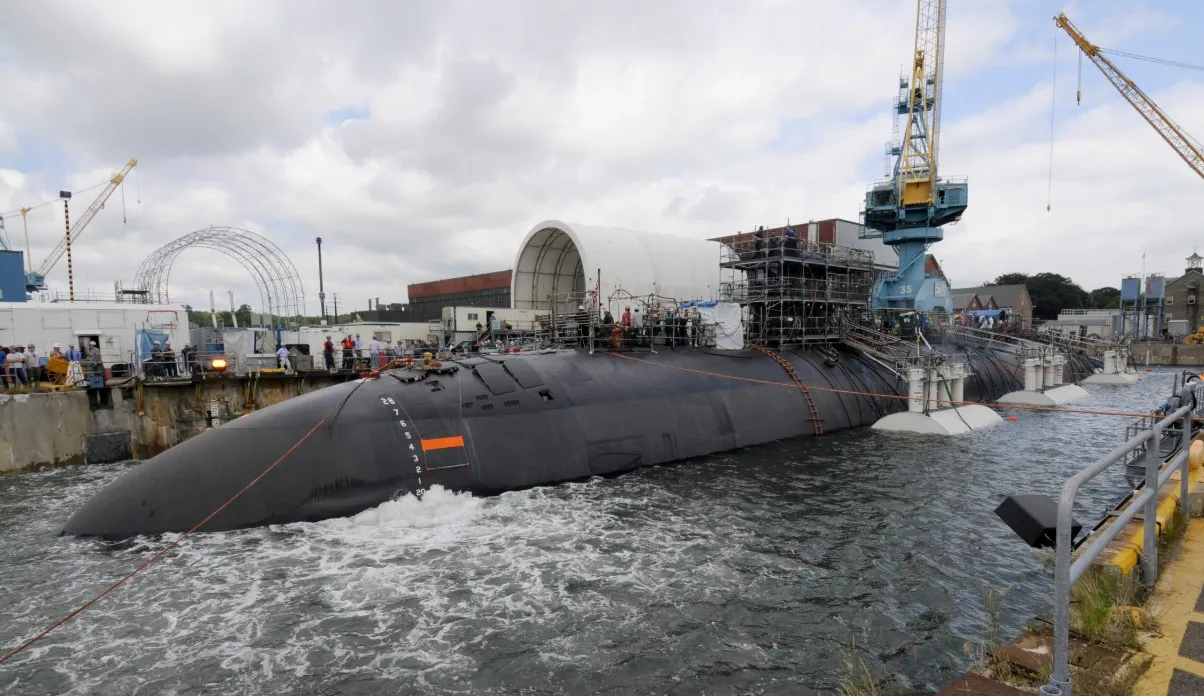
She left drydock on August 4, 2011, and returned to Naval Submarine Base New London on February 10, 2012. This overhaul provided more than a decade of useful service, including in several European countries, but it also demonstrates a maintenance pattern that is becoming increasingly expensive to replicate for surviving 688i aircraft.
As the hulls reach their 30-35 year service life, continued operation may require reactor maintenance, piping replacement, powerplant maintenance, sonar upgrades, electrical equipment upgrades, and structural maintenance. All of this requires specialists with nuclear certification, which is also required for the construction of Virginia- and Columbia-class ships. And the United States has long been experiencing shortages of such specialists, a fact that has long been an open secret.
Project 688i also represents a clear technological bridge between the original Project Los Angeles and the Virginia-class. The USS San Juan embodied or reinforced several priorities that remain key to modern U.S. attack submarines: reduced acoustic signature, an integrated digital combat management system, Arctic capability, specialized conventional land attack capabilities, and the ability to perform anti-submarine, anti-ship, strike, and reconnaissance missions in a single vessel. The Virginia-class submarines retain these capabilities but change the way they are implemented.
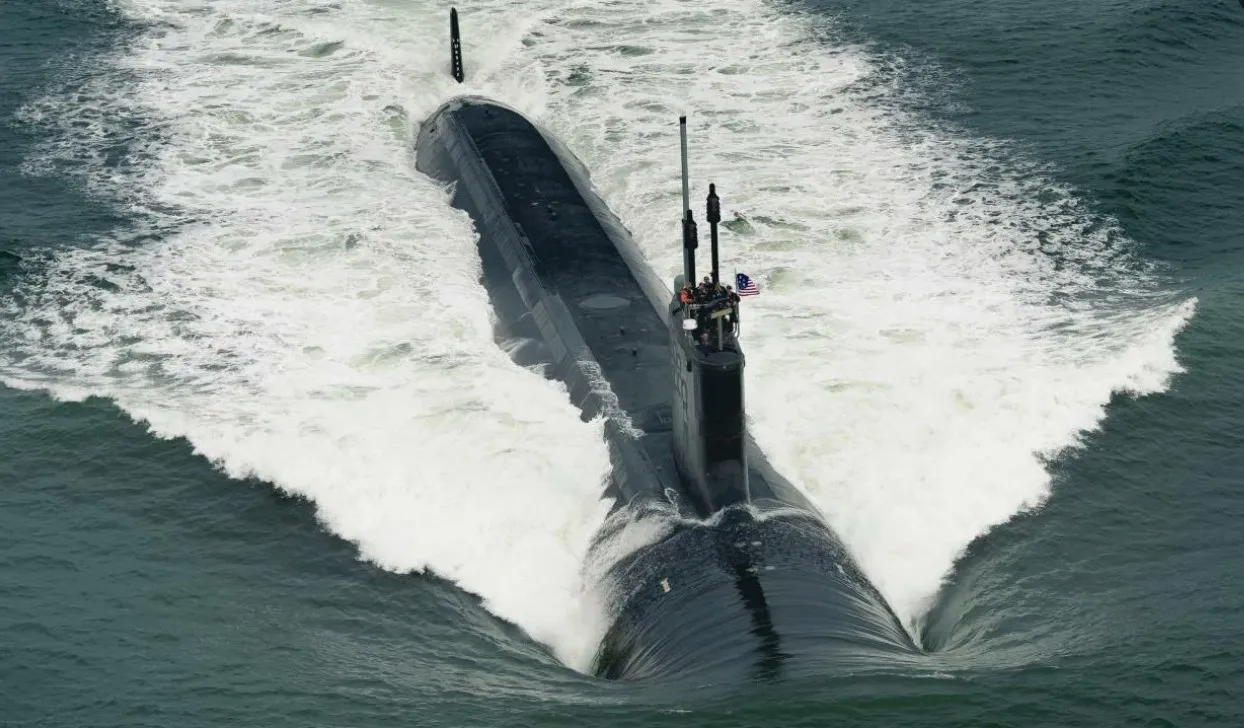
The AN/BYG-1 combat architecture utilizes modular software installations, allowing for more frequent upgrades than the AN/BSY-1. Later Virginia-class boats utilize a Large Aperture Bow passive sonar array rather than the traditional spherical array, and the payload architecture has evolved from 12 individual vertical Tomahawk launchers on the early Virginia-class boats to two Virginia Payload Tubes, with the Block V adding the Virginia Payload Module to increase the number of missiles.
The Virginia also features an internal airlock for special forces, reflecting the specific nature of the mission, which required more extensive external adaptations on older submarines. The biggest change concerns the nuclear propulsion system. The Virginia's reactor core is designed to last the submarine's entire planned service life, eliminating the need for mid-life refueling, which can keep older submarines out of service for years.
From a fleet management perspective, this is as important as individual improvements in sonar or weapons, since a submarine that spends less time in overhaul allows for more deployment days per hull.
Thus, the San Juan is a ship that embodied many of the operational concepts later implemented on the Virginia, but it did not address the maintenance and reactor lifespan issues inherited from the older Model 688. Nevertheless, the problem associated with the San Juan's decommissioning is measurable. Between 1972 and 1996, the US Navy built 62 Los Angeles-class submarines—more nuclear attack submarines than any other US Navy class. However, by 2026, only a fraction of that fleet remained in service.
The remaining active force consists primarily of third-generation Virginia-class submarines commissioned between 1988 and 1996. This means that most of the remaining ships are now between 30 and 38 years old. This leads to a concentration of age rather than a gradual decommissioning. At the end of the Cold War, the US Navy sometimes commissioned four or five Los Angeles-class submarines per year. About four decades later, several boats have reached the limits of their economic and nuclear safety service life, but the Virginia-class production rate does not keep pace with these figures.
To stabilize the US nuclear submarine fleet, two Virginia-class submarines need to be built per year, and taking into account the transfer of submarines under AUKUS and domestic needs, more than 2,3 submarines per year.
Actual production is between 1,1 and 1,3 submarines per year. If two or three Los Angeles-class submarines are retired next year and only one Virginia-class submarine enters service, the Navy will lose one to two nuclear submarines per year, despite continued construction of new ones. The cumulative effect is evident in the submarine force's size: in 2020, the US Navy had 52 attack submarines, in 2025 it will be approximately 49-50, and by 2030, this number is projected to decrease to 46-47, while the long-term goal is 66 attack submarines.
It's not a very pleasant prospect, but the situation isn't at all critical; the US Navy has more than enough submarines to address security issues at home. Operations around the world are questionable, for there are more than enough reasons, all directly related to the submarines' age.
In the modern world, many experts agree that the maximum service life of a warship is 35-40 years, after which the risk zone begins. For a submarine, of course, this lifespan is much shorter, around 30 years. Any longer, no matter how you look at it, comes with the risk of breakdowns and accidents. An accident on an aircraft carrier is one risk, but on a submarine, it's an entirely different one.
However, the story already contains a considerable list of various accidents on nuclear submarines.
Information