Russian diesel engines
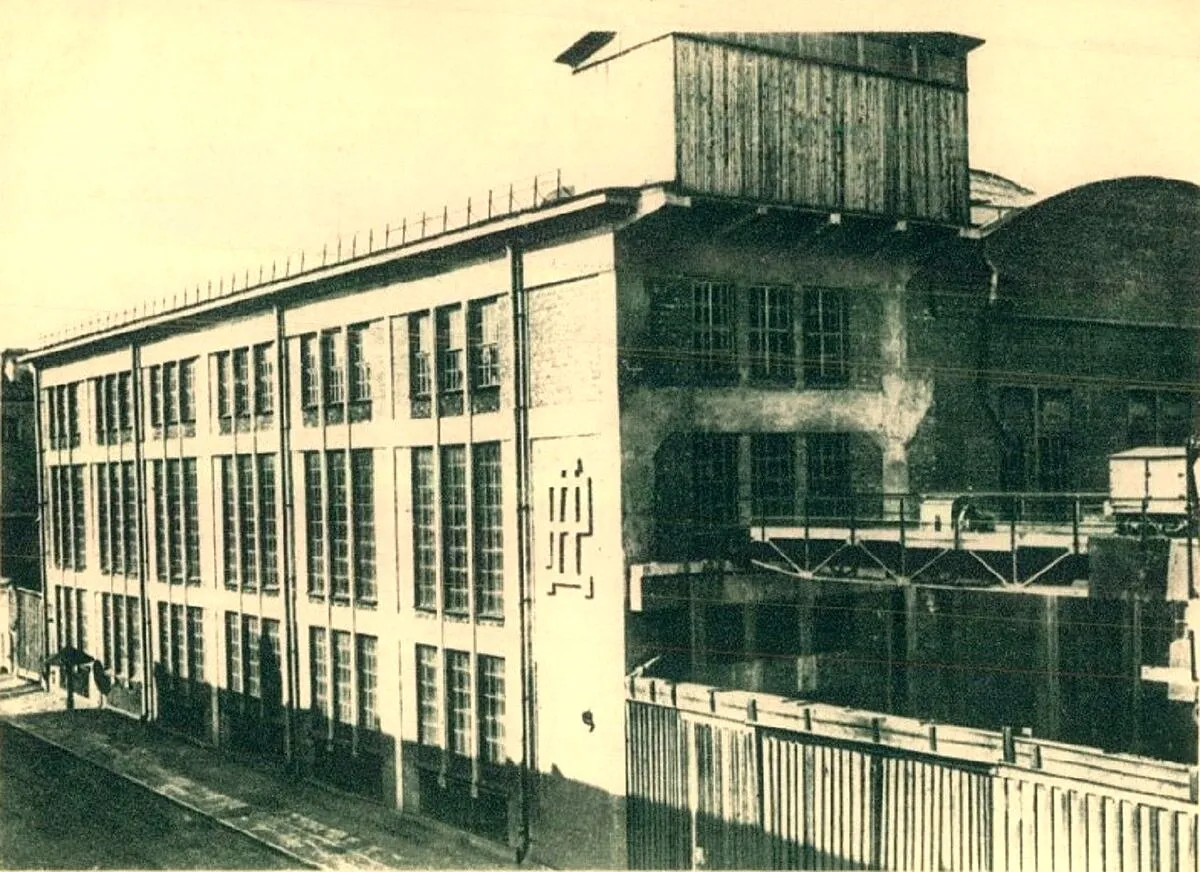
4 777 68
Russian diesel engines

"As we see, not a single one of the [claimed in the patent] 'fundamental conditions for perfect combustion' is fulfilled in the actual Diesel engine; but precisely for this reason, it achieved not only its practical suitability in general, but also its economic superiority. The fact that, since 1897, parallel to the change in the diagram, there has been a constant decrease in kerosene from 240 to 185 g gives us the right to quite seriously assert that the thermal effect will be more perfect the further the 'rational heat engine' deviates from its prototype..."

Hugo Güldner, engineer, director of the Güldner Motor Society in Munich.


Since ancient times, the rulers of our kingdom-state have had a glorious tradition of criticizing or ignoring all the successes achieved before them, while loudly praising their own, sometimes quite modest, accomplishments. Even during the Soviet era (which is now so vigorously criticized), every book wrote that before 1917, Tsarist Russia's industry was in a semi-artisanal state, and nothing particularly remarkable occurred in its numerous factories and plants except the exploitation of the proletariat. Therefore, many modern citizens sincerely believe that in Tsarist Russia, people traveled the streets exclusively in carts and sleighs, the most typical Russian mechanic was the village blacksmith, and the crowning achievement of Russian engineering was a blazing, beautiful steam locomotive.

But sometimes, for the sake of exception, Soviet journalism suddenly and unexpectedly came out of historical stupor and revealed some amazing facts from the pre-revolutionary past.

For example, in 1949, when Soviet industry had caught its breath a little after the difficult war years, and the USSR was under an economic blockade, organized by the large capitalist countries that had conspired with each other, it was decided to remind the bourgeois world of some glorious technical achievements that had been made in Russia even before the revolution.
It was then that they remembered that even at the beginning of the last century, Russian factories were producing magnificent engines that they were not ashamed to boast about to the whole world.

And so, in November 1949, a scientific conference was opened, at which gray-bearded scientists and engineers recalled the glorious deeds of bygone days, and ultimately drew up a curious resolution:

…Russian engineers and scientists are credited with developing and first applying all the key technical solutions that determined the success and widespread use of compression-ignition engines…
…The modern compression ignition engine is completely different from the “rational” engine proposed by R. Diesel, but never realized and unfeasible…

I have a feeling that the reader is now smiling slyly and shaking his head in disbelief, as if to say, here again our country is being declared the “homeland of elephants”... And completely in vain.

It's worth remembering that Russian industrial production was founded back in the 16th century, when Peter the Great began luring large numbers of foreign specialists in various fields of science and technology to Russia. Among the arriving foreigners were remarkable, natural-born mechanics, many of whom subsequently married beautiful Russian women and, as a result, found themselves forever stranded in the snowy expanses of our vast Motherland. And the technical genes of the old masters, like sparks flaring brightly in distant descendants, periodically poured into the Russian engineering community astonishingly talented Russians with non-Russian, German and Swedish surnames reminiscent of medieval Germans and Swedish. Even after Peter, some intelligent rulers continued this glorious tradition.

The harbinger of the era of compression ignition engine design in our country was the chairman of the Russian Technical Society, the "Russian German" Professor Georgy (Georg) Filippovich von Depp, who came to Kassel in June 1897 and attended the historic congress of the Union of German Engineers, where his classmate from the Munich School, Rudolf Diesel, gave a report on his new engine.
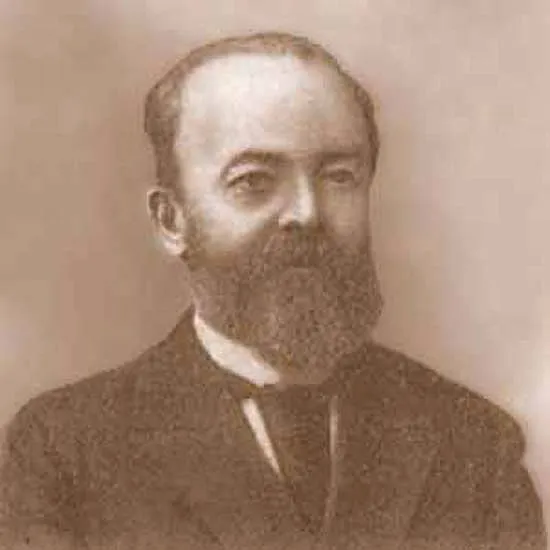

G.F. Depp

Depp immediately appreciated the undoubted benefits of such an engine for Russian industry and, after the meeting, met with the inventor and proposed considering the possibility of transferring the right (patent) to manufacture engines of his design in Russia.

The arrogant inventor, at the height of his fame at the time, was highly skeptical of this undertaking. He told his old friend that, in his opinion, Russian mechanical engineering was still in its infancy, and that low-skilled, sloppy Russian workers were unable to ensure the necessary precision in manufacturing engine parts, making its trouble-free operation impossible. This would only undermine the designer's reputation and tarnish the honor of his "rational heat engine." Depp gently explained to the inventor that Russia (besides bears) also had an industry that had achieved a good technical level. Ultimately, Diesel agreed to consider the matter (a little extra money never hurt anyone) and soon hastened to protect the rights to his engine with a Russian patent (privilege), which was issued on August 9, 1897, under No. 261.

A very important remark needs to be made here.

The description attached to the Russian Privilege No. 261 stated that in the invented engine the air is first compressed so strongly that the resulting temperature exceeds the ignition temperature of the fuel used; then a “combustible material” is gradually introduced into the cylinder, the combustion of which “not accompanied by a noticeable increase in temperature and pressure" Moreover, Diesel wrote that "cooling is the result of the work of the gases themselves, without requiring artificial cooling of the cylinder walls, which, on the contrary, are supplied with an insulating cover».

Simply put, in a Russian patented diesel engine, fuel combustion occurs at a constant temperature and pressure; the engine does not require a cooling system (water jacket), and it even requires additional cylinder insulation to ensure that precious heat is not lost to the atmosphere, but is used for useful work.

From the analysis of the description, one can draw an objective conclusion: Rudolf Diesel protected with the Russian privilege not the actual engine that was built at the Augsburg plant (sample No. 3), but the engine that was the fruit of his theoretical research - the very same “rational heat engine” that was never embodied in metal and existed only in the inventor’s dreams.

It is this science fiction engine imagined by Rudolf Diesel that can and should be called a “diesel motor”.

This was reported by one of the speakers during the above-mentioned scientific conference held in 1949.

Продолжение следует ...
68 comments
Information
Dear reader, to leave comments on the publication, you must sign in.
  1. +6
    13 August 2026 04: 32
    That's why many modern citizens sincerely believe that in Tsarist Russia, people rode the streets exclusively in carts and sleighs, the most typical Russian mechanic was the village blacksmith, and the highest achievement of the Russian engineering school was the glowing, beautiful steam locomotive.

    So, like... You open the first photos you come across (and these are only Moscow and St. Petersburg) and:
    1. +3
      13 August 2026 07: 32
      In all of Russia, the number of cars in 1914 was roughly the same as the number of taxis in Paris. And all of them were imported. The legendary Russo-Balt was roughly equivalent to the Moskvich-3. Equally Russian.
      And here they tell us about the developed industry in the Russian Empire.
      1. 0
        13 August 2026 08: 38
        The smell of Cornet Obolensky and millions of illiterate peasants reeked...
      2. +1
        13 August 2026 09: 16
        Quote: belost79
        The legendary Russo-Balt is roughly equivalent to the Moskvich-3.

        More like aurus.
        Quote: belost79
        And here they tell us about the developed industry in the Russian Empire.

        You don't understand, it is Russia that we have lost! wassat Since Govorukhin's time, the meme...
      3. +4
        13 August 2026 11: 32
        Quote: belost79
        In all of Russia in 1914 there were about as many cars as there were taxis in Paris.

        They write that it is slightly more: about 13,000 cars in the entire Empire versus more than 10,000 taxis in Paris.
        Quote: belost79
        The legendary Russo-Balt is roughly equivalent to the Moskvich-3. Equally Russian.
        And here they tell us about the developed industry in the Russian Empire.

        The market has decided. ©
        In the sense that for private business, it was more profitable to cover the small needs of the domestic market with cheaper and more efficient imported products than to develop domestic industries from scratch. From scratch This isn't excessive: according to the Russian Automobile Society, Russia even needed to import steel to produce its own cars. The only option for private companies was government procurement.
        But for the state... for the state, all this was uninteresting until the moment when things started to go south. RBVZ couldn't supply the army with heavy trucks before the war—well, let's order them from abroad... from Germany. belay
        But once the war began, loans and a guaranteed order were found in the second year. But it was too late, and the Ryabushinsky factory only fully operational under the Bolsheviks.

        Mikhail Ilyich Kazi, director of the Baltic Shipyard, wrote at the end of the 19th century that the Russian shipbuilding industry was a chimera, sustained by government contracts. This could be applied to virtually any more or less high-tech industry.
        1. +3
          13 August 2026 13: 41
          They write that it is slightly more: about 13,000 cars in the entire Empire versus more than 10,000 taxis in Paris.
          The number of automobiles in the Republic of Ingushetia cannot serve as an evaluation criterion for the development of industry in the country.
          In the Russian Empire, a car was a luxury item, and the modest number of them corresponded to demand and the level of development of the country's road network.
          Well, if they produced, say, 10,000 of them a year, who would buy them?
          1. -1
            13 August 2026 16: 18
            Quote: Lewww
            The number of automobiles in the Republic of Ingushetia cannot serve as an evaluation criterion for the development of industry in the country.

            So, the absence of an entire industrial sector in no way affects the assessment of the level of industrial development in the country? smile
            Well then, our industry is now in its best form: if everything we cannot make is declared a luxury item.
            Quote: Lewww
            Well, if they produced, say, 10,000 of them a year, who would buy them?

            The state – if it has a sensible policy. At least up to a thousand a year.
            Quote: Alexey RA
            The only option for a private individual is a government order.
            But for the state... for the state, all this was uninteresting until the moment when things started to go south. RBVZ couldn't supply the army with heavy trucks before the war—well, let's order them from abroad... from Germany. belay
            But once the war began, loans and a guaranteed order were found in the second year. But it was too late, and the Ryabushinsky factory only fully operational under the Bolsheviks.
            1. +3
              13 August 2026 17: 27
              So, the absence of an entire industrial sector in no way affects the assessment of the level of industrial development in the country?
              When assessing, it is necessary to consider the state of all branches of industry as a whole.
              It is impossible to draw a conclusion like "there was no auto industry in this country, therefore the industry was in its infancy."
              1. 0
                14 August 2026 11: 02
                Quote: Lewww
                When assessing, it is necessary to consider the state of all branches of industry as a whole.

                Thus, the auto industry is, in some ways, an integral indicator of industrial development, since car production is at the top of the subcontractor pyramid.
                And if the country's only automobile plant partially purchases even steel from abroad, this does not speak well of the Empire's industry.
                In 1916, the Russo-Baltic Plant didn't manufacture everything in-house, but rather imported (via Stockholm) the steel, ball bearings, spark plugs, pumps, tires and inner tubes, carburetors, magnetos, wheels, oilers, instruments, shafts, cables, screws, bolts, and various other materials needed for automobile production. By the end of 1914, the plant had mastered the art of making radiators, and later bevel gears. This is the automotive industry that Russia actually possessed in 1914–1917: according to Shugurov, "the only, albeit small, automobile plant."
                © Polikarpov V.V. Russian military-industrial policy 1914-1917.
                And yes, the army was, to put it mildly, not thrilled with RBVZ and its products:
                The Russo-Baltic Plant also received an order for 60 passenger cars, specifically “with the aim of encouraging the domestic automobile industry,” despite the fact that its products were “of such low quality that both private consumers and the state preferred to buy cars abroad.”

                The plant agreed (contract dated February 15, 1912) to deliver the first two trucks in January 1913, and the rest no later than May. "However, to this day," the State Automobile Inspectorate noted on November 30, 1913, "the said plant has not yet delivered a single one of the six trucks ordered."

                The Main Artillery Directorate decided to submit to the “necessity of acquiring Russian-made trucks” as an inevitability, and, “despite the higher prices and excessively long delivery times,” the order “is to be given to the Russo-Baltic Plant,” which is a monopoly as the only plant in Russia that manufactures trucks, although the Main Artillery Directorate already knows that the said plant, even with the long deadlines it sets, is extremely incompetent in meeting delivery deadlines.”
    2. -1
      13 August 2026 10: 56
      Quote from: AllX_VahhaB
      That's why many modern citizens sincerely believe that in Tsarist Russia, people rode the streets exclusively in carts and sleighs, the most typical Russian mechanic was the village blacksmith, and the highest achievement of the Russian engineering school was the glowing, beautiful steam locomotive.

      So, like... You open the first photos you come across (and these are only Moscow and St. Petersburg) and:

      I came across some information somewhere that in the Russian police until 17 (I don’t remember the exact number), I think there were 14 thousand MOTORCYCLES.
      This is about the backwardness of Russians!
      1. +6
        13 August 2026 11: 33
        A conversation about Russian industry
        The largest domestic motorcycle manufacturer, Dux, produced three motorcycles:
        a lightweight "Moto-rev" with a single-cylinder 300 cc engine producing 2,5 hp, designed to replace a regular bicycle for short-distance trips,
        a versatile motorcycle with a much more powerful V-shaped 2-cylinder engine producing 4 hp, which was another modification of the very successful first model,
        A "top-of-the-line" vehicle with a 4,5 hp (500 cm3) V-engine with overhead valves, a 2-speed gearbox, a clutch, and the ability to attach a sidecar.
        The "Moto-reva" model sold 72 units in its first year, and five years later, the number of motorcycles sold reached 136. In total, over 600 motorcycles were manufactured during the period of active production, which lasted from 1909 to 1915.
        Where did 14000 units come from? Probably imported.
        1. -1
          13 August 2026 13: 04
          Quote: balabol
          Where did 14000 units come from? Probably imported.

          Imports for sure. I'm just talking about quantity first. It was a fairly well-equipped structure.
          1. +1
            13 August 2026 13: 13
            Quote: APASUS
            I'm just talking about quantity first and foremost. It was a fairly well-equipped structure.

            You're talking nonsense! Without citing a source or analyzing it, your figures are just: an old woman on a bench in the yard said it!
            1. 0
              13 August 2026 13: 28
              Quote from: AllX_VahhaB
              You're talking nonsense! Without citing a source or analyzing it, your figures are just: an old woman on a bench in the yard said it!

              Guys, let's do without fingerprints, genetic analysis of saliva, and orders from the Tsar himself! I write what I read, I don't claim to have the truth!
              1. 0
                13 August 2026 13: 39
                Quote: APASUS
                I don't claim to know the truth!

                Well, here we go
                Quote: APASUS
                I came across some information somewhere.

                It was exactly like that.
                But here is the last phrase:
                Quote: APASUS
                This is about the backwardness of Russians!

                This means that you treat this as a historical fact, that is, you are claiming the Truth!
                There's a lot to read: about the flat Earth, about Great Tartary, about mountains being the stumps of giant trees, and about nuclear war in the 19th century...
                1. 0
                  14 August 2026 08: 29
                  Quote from: AllX_VahhaB
                  This means that you treat this as a historical fact, that is, you are claiming the Truth!

                  I've expressed my thoughts, and this is a friendly dialogue, not a court hearing! You're being too demanding of your opponent. Offer a money bet and then dig in your heels, but demanding proof from someone who shared information is ridiculous.
                  1. 0
                    14 August 2026 08: 38
                    Quote: APASUS
                    and demanding any kind of evidence from someone who shared information is ridiculous.

                    Information that you heard something somewhere? Well, I think that's a whole other level of discussion...
                    And I don’t demand anything from you, I just expressed my opinion that it’s impossible to draw conclusions from this kind of “information”...
                    Quote: APASUS
                    This is about the backwardness of Russians!

                    somewhat inappropriate... hi
                    1. 0
                      14 August 2026 09: 45
                      Quote from: AllX_VahhaB
                      Information that you heard something somewhere? Well, I think that's a whole other level of discussion...

                      You think we should post the orders of V.P. Kochubey in their original form. I don't think such expenses would have been possible otherwise. Is this just to stroke your ego? You've come to the wrong forum; you need to consult a lawyer, although I was being a bit hasty!
                      I specifically looked through your comments and didn’t see a single document posted by you. Haven’t you grown up, sir? Are you trying to catch someone in their word?
                      1. 0
                        14 August 2026 10: 31
                        Quote: APASUS
                        I specifically looked through your comments and didn’t see a single document posted by you. Haven’t you grown up, sir? Are you trying to catch someone in their word?

                        Where did you look? Here's a specific thread with specific comments. The photos I posted from the beginning of the last century (aren't they documents?) versus yours— "I read it somewhere" fellow
                        I see you're upset, since you've been scribbling away my posts and even invading my story... wassat Relax! I'm no longer interested in your opinion. hi
                      2. 0
                        14 August 2026 12: 01
                        Quote from: AllX_VahhaB
                        Where did you look? Here's a specific thread with specific comments. The photos I posted are from the beginning of the last century (aren't they documents?)

                        I looked through your comments and don't pretend you didn't understand. I didn't find any posted orders, documents, or originals in the 6122 comments. That's exactly what you're asking for.
                        Quote from: AllX_VahhaB
                        The photos I posted are from the beginning of the last century (are they not documents?)

                        Post a photo of "Moto-Rev-Dux"?
                        Quote from: AllX_VahhaB
                        I see you're upset, since you've been scribbling away my posts and even invading my story...

                        What struck me was the strange way you demand proof, and always with documents. Although I was simply sharing a rumor. You need a genetic analysis of my saliva, otherwise I'm a criminal.

                        Quote from: AllX_VahhaB
                        Relax! I'm no longer interested in your opinion.

                        Have a nice one you too
                      3. 0
                        14 August 2026 13: 04
                        Quote: APASUS
                        And I didn't find any posted orders, documents, or originals in the 6122 comments. This is exactly what you're asking for.

                        If you didn't understand, let me clarify. I, or anyone else, don't need the documents, orders, and so on that are posted. They post links to documents: title, date... And if you've actually looked at all my comments, you couldn't help but notice that when people ask me where the information came from, I always provide the source: document, date, section, or paragraph. Even when I quote someone, like Comrade Stalin, I specify where and when it was said! Finding the transcript of the meeting isn't a problem. That happened even this week. And you couldn't have missed it. wink

                        Quote: APASUS
                        Post a photo of "Moto-Rev-Dux"?


                        Post a photo of the police on Moto-Rev-Dux! If there were so many of them, then their massive scale couldn't have been missing from the photo, in large numbers...
                        Quote: APASUS
                        Although I was just sharing a rumor.

                        And based on hearsay, they drew conclusions! I wrote: I'm no longer interested...
                        Quote: APASUS
                        Have a nice one you too

                        And with that, let's finish...
        2. -1
          13 August 2026 13: 12
          Quote: balabol
          Where did 14000 units come from? Probably imported.

          What do you mean from where? The man clearly wrote:
          Quote: APASUS
          I came across some information somewhere.

          wassat
        3. 0
          13 August 2026 13: 43
          Where did 14000 units come from? Probably imported.
          More like numbers pulled out of thin air
      2. 0
        13 August 2026 13: 10
        Quote: APASUS
        I came across some information somewhere.

        Quote: APASUS
        This is about the backwardness of Russians!

        Wonderful source! laughing laughing laughing
    3. +2
      13 August 2026 17: 38
      Photos are more convincing when they have descriptions and attribution.
      The first photo shows Nevsky Prospect in St. Petersburg. The shot was taken from the Danone restaurant, looking toward Gostiny Dvor and the City Duma.
      The restaurant opened in 1849 at the intersection of the Moika River embankment and Nevsky Prospekt. It was founded by the French entrepreneur Jean-Baptiste Donon. Donon was one of the most famous fashionable restaurants in St. Petersburg.
      What year is the photo? A horse-drawn tram is visible in the photo. We know that the first electric tram lines on Nevsky Prospekt in St. Petersburg appeared in late 1907.
      The route ran from Znamenskaya Square (now Vosstaniya Square) along Nevsky and Admiralty Avenues, Konnogvardeisky Boulevard, across Nikolaevsky Bridge to Vasilievsky Island.
      Regular electric tram service on the streets of St. Petersburg opened on September 29, 1907. The first line connected the General Staff Building with the 8th line of Vasilievsky Island.
      So this photo is no later than 1907. Let's be honest, the car situation wasn't great back then, even in Europe.
      The delay in launching electric trams in St. Petersburg was not due to Russia's backwardness, but to the horse-drawn tram concession. Electric traction was introduced immediately after the exclusive concession for horse-drawn urban transport companies expired. Since 1898, electric trams have been running on the frozen Neva River in winter, as the ice route was not included in the concession's restrictions.
      Steam trams ran on the outskirts.
      I included a photo from 1914. Trams on the corner of Nevsky Prospekt and Sadovaya. There are no cars, but there are so many trams.
  2. +2
    13 August 2026 05: 27
    . Even in Soviet times (which is now so vigorously criticized), all the books wrote that before 1917, the industry of Tsarist Russia was in a semi-artisanal state, and in the numerous factories and plants there was nothing particularly outstanding, except the exploitation of the proletariat, did not happen.

    What was happening? Capitalism was in its infancy. By 1917, Tsarist Russia's industrial potential was 5-7 times smaller than that of the United States, and 2-3 times smaller than that of Germany.
    In 1913, all of Russia produced as much cast iron as a single U.S. plant in Pittsburgh. At the time, Russia had very few engineers and technical specialists. And electricity was a complete disaster. Therefore, when Soviet power came to power, they began with the mass education of the illiterate population and the electrification of the entire country (the GOELRO plan). The Soviet Union made a leap forward in development and caught up with the developed capitalist countries. The USSR became an industrial giant.
    1. +2
      13 August 2026 09: 19
      Quote: Stas157
      electrification of the entire country (GOELRO plan).

      About which, when visiting Moscow, Herbert Wells said that it was utopian science fiction wassat , which will never be implemented within the allotted time!
      1. +2
        13 August 2026 09: 31
        Quote from: AllX_VahhaB
        H.G. Wells said that it is utopian science fiction wassat, which will never be implemented within the allotted time!

        The GOELRO plan was not only implemented on time, but was also exceeded.

        The plan was designed for 10-15 years (from 1920 to 1935), but its main indicators were achieved significantly ahead of the established deadlines. British science fiction writer Wells, who visited Russia in 1920, considered the plan unfeasible. Returning in 1934, he was forced to admit his mistake after seeing the scale of the work accomplished.
        1. +1
          13 August 2026 09: 57
          Quote: Stas157
          The GOELRO plan was not only implemented on time, but was also exceeded.

          Well, I didn't mention that as a matter of course...
    2. +1
      13 August 2026 09: 47
      What happened?
      In particular, the production of advanced compression ignition engines was established.
      This is what this publication is about.
      1. +1
        13 August 2026 09: 49
        Quote: Lewww
        Well, in particular, the production of engines with compression ignition was established.

        So, tell me the production volume of that series. How many were produced?
        1. +3
          13 August 2026 09: 49
          Everything in its time, there will be 3 more parts - the material is voluminous.
          The first part is "theoretical"
          1. +1
            13 August 2026 13: 02
            Quote: Lewww
            Everything in its time, there will be 3 more parts

            Hello. hi Will you write about Borya-Vanya?
            1. +1
              13 August 2026 14: 03
              And may you be well, and who is this?
              1. 0
                13 August 2026 14: 05
                DKRN engines from the BMZ plant under license from Burmeister & Wain.
                1. +2
                  13 August 2026 14: 19
                  This subject was not included in my research.
                  The publication will cover in detail only the activities of the enterprise "Iron-Copper-Steel Foundry and Boiler Plant of the Joint-Stock Company Ludwig Nobel".
                  That is, the pre-revolutionary period of the future Russian Diesel plant
                  1. +1
                    13 August 2026 14: 23
                    I see, thank you. And it would be interesting to hear about our time too. hi
          2. 0
            13 August 2026 13: 23
            "Writeеthose", of course. feel
  3. +7
    13 August 2026 06: 24
    Russia's industrial development was, first and foremost, extremely uneven. Before WWI, naval artillery production made a sharp leap. The 4"/60, 130mm/55, and 12"/52 calibers were significantly superior to anything developed in other countries. The Russian modification of the Maxim gun significantly outperformed the original Vickers design. Shipbuilding engineering was at the highest level. About 300 men died on the Marat, which was torn apart by an explosion in its magazines. The ship itself was raised and recommissioned as a floating battery and later as a training ship. The larger and more modern Arizona was gutted by an explosion, killing almost the entire crew.
    The quality of the armor steel was at least no worse than Krupp and Vickers.
    It really is.
    On the other hand, at the peak of production in 1916, Russia produced 10,180 machine guns—ten times more than before the war. Meanwhile, Germany produced 10,000, England 5,000, and France 8,000 machine guns per month. I'm writing this from memory; the exact figures can be found in Fedoseyev's "Machine Guns of Russia."
    When it became necessary to sharply increase production, it turned out that, apart from ITZ, no one in the country could process parts with an accuracy of one thousandth of an inch.
    So the presence of individual breakthroughs did not change the overall picture of Russia’s monstrous lag in industrial development.
    Now, on to the topic. Yes, at the beginning of the last century, Russia was ahead of the rest of the world in the development of, as they used to say, "Russian-style engines." But this was limited to low-power marine engines. When the logic of development led to the need to build large units for ocean-going vessels, the country's industrial weakness played a tragic role.
    In general, for those interested in the topic, I recommend the excellent book by S. V. Gavrilov, "Ship Power Plants. History of Development."
    1. 0
      13 August 2026 11: 41
      Quote: Grossvater
      Before WWI, naval artillery production made a sharp leap. The 4"/60; 130mm/55; and 12"/52 calibers were significantly superior to anything produced in other countries.

      But the main guns for the Izmails had to be partially ordered from Vickers. And we only received finished guns from the British.
      Quote: Grossvater
      Shipbuilding engineering was at the highest level. About 300 people died on the Marat, whose magazines were torn apart by an explosion. The ship itself was raised and recommissioned as a floating battery and later as a training ship. The larger and more modern Arizona was gutted by an explosion, killing almost the entire crew.

      On the other hand, the Sev and Mariy anti-torpedo protection was a joke - it couldn't even withstand a 450mm torpedo.
  4. +5
    13 August 2026 07: 34
    My grandfather Semyon moved to Leningrad in the 20s, where he found work at Russian Diesel. He rose to the highest rank of lathe operator. In the early 30s, the old specialists were still working, but by the end of the 30s, they were all fired, believing they could be replaced by new, more class-related workers. And so it began...
    It's not that they were poor students, but they had neither the background of production nor experienced comrades behind them. As a result, by the early 40s, having lost many (and of course – they were saboteurs!), they were slowly getting back on track, but then the war began.
  5. +5
    13 August 2026 08: 28
    Russian industrial production was founded back in the 16th century, when Peter I
    A very bold statement, considering that the 16th century is the years from 1500 to 1599 – the time of the reign of Ivan the Terrible, among others, and Peter the Great lived in the 17th-18th centuries.
    1. +3
      13 August 2026 09: 33
      Quote: pyagomail.ru
      A very bold statement, considering that the 16th century is the years from 1500 to 1599 – the time of the reign of Ivan the Terrible, among others, and Peter the Great lived in the 17th-18th centuries.
      A useful correction - I didn't notice the typo, my eyes were blurry.
      Correct: 18th century.

      There will be 3 more parts published - follow the section
  6. 0
    13 August 2026 08: 28
    That is why many modern citizens sincerely believe that in Tsarist Russia people traveled along the streets exclusively in carts and sleighs,

    That's right, before 1917, there were very few cars; horse-drawn transport was the main mode of transport. What's more, during WWI, they ordered three-line rifles from Smith & Wesson in America! And they even ordered not only shells but also cartridges from abroad.
    1. 0
      13 August 2026 09: 19
      Quote: dragon772
      During WWI, three-line rifles were ordered from America

      And during WWII, they ordered (leased) tanks, planes, cars and much more from the USA, including gunpowder and fuel - and so what?!
      1. 0
        14 August 2026 09: 40
        This is about the industry of Tsarist Russia, not the USSR. Production volumes were incomparable, even during the war. Incidentally, during WWI there was a mass evacuation of factories to the Urals, but they couldn't get them up and running, whereas in the USSR during WWII they were able to.
        1. +1
          14 August 2026 10: 48
          Quote: dragon772
          The subject is about the industry of Tsarist Russia, not the USSR.

          I wrote my comment because I don't like the opinion some people have that Russia before 1917 was a place of complete darkness and backwardness, producing nothing but bast shoes and horse collars. Furthermore, receiving aid (rifles and shells in WWI or tanks and planes in WWII) isn't absolute evidence of a country's backwardness, but simply a sign of certain problems. There were good and bad times in the Russian Empire, the USSR, and today.
          1. 0
            8 September 2026 09: 31
            Okay, for me, here's an example: many ships of the Russian Imperial Navy in the early 20th century were built abroad: in Germany, France, and the USA. This suggests that domestic capacity was insufficient for construction.
            1. 0
              8 September 2026 13: 04
              Quote: dragon772
              Many ships of the Russian Imperial Navy were built abroad at the beginning of the 20th century

              And the US recently ordered icebreakers from Finland—is that also a capacity shortage? Let me remind you that the Russian Empire ordered single-engine aircraft from abroad, but it produced the four-engine Ilya Muromets itself, and even its submarines.
              1. 0
                9 September 2026 09: 07
                Trump wants to build a new frigate, but not at home, but to choose from
                - Japanese class "Mogami";
                - South Korean class "Chungnam";
                - Turkish class "Istanbul".
                Overseas there is simply monstrous capacity for building any class of ship.
    2. -1
      13 August 2026 09: 22
      Quote: dragon772
      And not only shells, but also cartridges were ordered from abroad.

      I'll tell you more: even Cossack sabers and peasant scythes! In Japan, for example...
      1. 0
        14 August 2026 09: 47
        Did you buy sabers and scythes in Japan? I only know that you bought Arisaka rifles and ammunition for Serbia, but then they were shipped to Harbin in the first batch.
    3. +1
      13 August 2026 12: 07
      Quote: dragon772
      If during WWI they ordered three-line rifles from Smith & Wesson in America!

      And England bought up all the available Arisakas from the Japanese. So what, is England no longer considered an industrialized country?
  7. 0
    13 August 2026 10: 01
    Diesel protected with the Russian privilege not the actual engine, which was built at the Augsburg plant (sample No. 3), but the engine that was the fruit of his theoretical research.

    So, the respected inventor, knowing about the significantly lesser capabilities of the Russian Empire in terms of technology, sold her something that advanced European technologists had already broken their teeth on?
    Previously, when I read about Rudolf Diesel's fate, I was a little saddened by his bad luck and tragic end. Now I look at him in a new light.
    1. +1
      13 August 2026 12: 07
      From what I read in books, I got the impression that Diesel was selling the same thing to everyone: drawings. not tested by long-term trials experimental engine, supplied with a description of the working process that did not occur in it
      1. 0
        13 August 2026 15: 17
        So he was selling an idea, but the real results were achieved through the process of bringing it to a working state by others? Then much about his life becomes clear.
        1. +1
          13 August 2026 17: 20
          Well, to put it simply, he patented an engine he imagined. He also included drawings of a real engine, which didn't match the patent's specifications and, in its current form, wasn't viable in production. It required further design improvements, which is what designers around the world, and in Russia in particular, were working on.
  8. +3
    13 August 2026 10: 30
    I always read with interest the debates about what Russia was like before 1914. Both sides find real evidence of the country's strengths and weaknesses. They compare breakthroughs and failures, so to speak. You can find both in the history of any country. Moreover, an example taken out of historical context doesn't mean anything serious. It's a phenomenon and nothing more. To compare a country's "power," we need to compare certain average indicators. Per capita income, gross national income, the structure of industrial output by industry, energy intensity, and import/export structure. Unbiased readers will add other criteria themselves. And here, Russia is clearly not a leader, but it's certainly in the top five.
    And of course, when starting a comparative analysis, it is necessary to first agree on a rating system.
    1. 0
      13 August 2026 12: 55
      Quote: balabol
      Every time I read with interest the debates about that

      And I'm disappointed. Someone actually writes, "Before the Revolution, Russia had this and that," and the immediate response is, "But everywhere else, there was gloom, poverty, and hopelessness..."
      Do people really enjoy smearing their own country's history? Of course, the empire wasn't a beacon of democracy or a leader in industrial development, but it wasn't completely backward either... If you look at how all capitalist countries developed, you'll see horrific child labor, the disenfranchised workers, the oppression of the downtrodden, and the exorbitant luxury of the rich—it was everywhere, but only in our country does it seem so out of the ordinary.
      I completely agree with your assessment.
      1. +1
        13 August 2026 15: 57
        I'm actually in favor of balanced and objective assessments, taking into account the historical context and specific features. Broad coverage and thorough analysis.
      2. 0
        13 August 2026 22: 27
        Quote: Trapper7
        Do people really enjoy smearing their own country's history? Of course, the empire wasn't a beacon of democracy or a leader in industrial development, but it wasn't completely backward either... If you look at how all capitalist countries developed, you'll see horrific child labor, the disenfranchised workers, the oppression of the downtrodden, and the exorbitant luxury of the rich—it was everywhere, but only in our country does it seem so out of the ordinary.
        I completely agree with your assessment.


        It's not a question of "smearing" but rather of cleansing it. It's perfectly clear that the 20th century was unprecedented in the amount of deliberate lies spewed by various political camps on Russian history. Everyone made their mark: left and right, monarchists and republicans, democrats and conservatives, liberals and totalitarians, Whites and Reds, Soviets and émigrés, Russians and foreigners. And they lied and fabricated everything, from every angle, in the '20s, '30s, '40s, and '60s. For a while, it was possible that some lied in one direction and others in the opposite, but by the '90s, everyone was lying in concert.
        This is precisely why it is important to understand what Russia actually was like at the beginning of the century, since this is a fundamental question that determines the OBJECTIVITY of the revolution and the justification of the sacrifices that Russia suffered during the Civil War and the Revolution.

        Industrial development is one of the key issues. The dilemma here has been exaggerated to the point of emotional idiocy. Some say industrialization wasn't worth the costs and sacrifices, while others claim that had it not been carried out at such a pace, Russia would simply have collapsed under the attacks of the Third Reich. We can fairly well assess Soviet industry in 1940, but Russian industry in 1904 and 1914 is a mystery. Moreover, on the one hand, there are instances of rapid industrial growth, and on the other, evidence of total, appalling technological backwardness. For example, they talk about Diesel engines, but they don't mention Trinkler's engine—a Russian engineer who developed his own heavy-fuel engine. And when discussing production, for some reason they don't mention the diesel engines of the Kolomna plant, which was producing steamships even before the Revolution and even proposed equipping the warships of the Russian Navy with marine diesel engines.
        These are achievements. The failure was the shell and cartridge shortage of 1914-1916 and the shortage of rifles at the front. This was not observed in 1943, 1942, or 1941.
        1. +1
          14 August 2026 09: 32
          Here, for example, they talk about Diesel engines, but they don't mention Trinkler's engine—the Russian engineer who developed his own heavy-fuel engine. And when they talk about production, for some reason they don't mention the diesel engines of the Kolomna plant, which was producing steamships even before the Revolution.
          The Kolomna Plant engines will be mentioned in Part 4 of the publication. I'm considering writing a comprehensive article about G.V. Trinkler; I have the material, but the inspiration hasn't arrived yet.
      3. +1
        14 August 2026 06: 41
        Trapper7:
        "Someone will actually write, 'In Russia before the revolution, this and that was the case,' and he'll immediately get the answer - but in everything else, there was darkness, poverty, and hopelessness...
        Do people really enjoy smearing their country's history?

        Well said. I don't think it's quite right to hate your country's past so much. It wasn't the worst country, and it was developing rapidly in those years.
        And serial production follows experimental development. Yes, this requires the right conditions. That's how they were created. Moscow wasn't built in a day.
  9. 0
    13 August 2026 11: 50
    Russian industrial production was founded back in the 16th century, when Peter the Great began to lure large numbers of people from overseas to Russia

    marvelous are your works, Lord... Peter was born in 1672, and the 16th century is like from 1501 to 1600... did Peter have a time machine?
    1. +2
      13 August 2026 13: 44
      I already wrote above - there was a typo with the number 6
  10. +3
    13 August 2026 15: 45
    I see from the comments that some readers are misinterpreting the content of the publication.
    It does not claim that the industry of the Russian Empire was one of the most powerful in the world.
    But in particular, in the design and production of compression-ignition engines, our country suddenly and unexpectedly took a leading position in the world during that period.
    This is exactly what will be discussed in detail in the following parts of this historical study.
    1. 0
      13 August 2026 22: 32
      Quote: Lewww
      But in particular, in the design and production of compression-ignition engines, our country suddenly and unexpectedly took a leading position in the world during that period.


      Back then, the issue wasn't so much one of design as of mass production. Russian manufacturing technologies were often quite archaic; machine production was far from ubiquitous; files were used almost more often than lathes. Furthermore, the general level of technical literacy among the population was horribly low. Over 80 percent of the population either couldn't read at all or read with great difficulty; none of this number had even a basic understanding of physics or chemistry. After all, it's not enough to invent an engine; it has to be mass-produced. Fuel and lubricants have to be made for it. That's what industry is.
  11. +3
    13 August 2026 16: 34
    More publications like this! I'm tired of reading about all these knights, Napoleons, Suvorovs, and the war in Ukraine – it makes my cheekbones ache. A plus for this article...